CHAPTER 20
Regulation of Gene
Expression in Eukaryotes
Peter J. Russell
edited by Yue-Wen Wang Ph. D.
Operons in Eukaryotes
1. It was once believed that eukaryotes do not have operons, but recent discoveries in
nematodes indicate otherwise. Caenorhabditis elegans contains operons as well as
typical eukaryotic genes with introns.
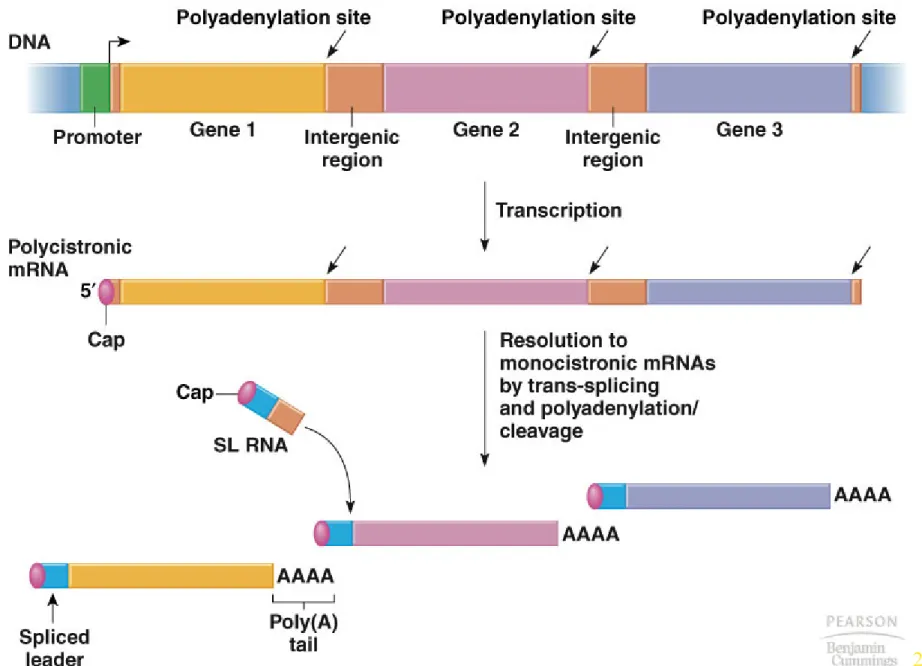
2. In nematodes, the operons are controlled from a single promoter, as in prokaryotes.
a. Unlike prokaryotes, however, only one protein can be produced from the mRNA. i. Ribosomes cannot reinitiate at a different start codon on the eukaryotic mRNA.
ii. Instead, pre-mRNAs are processed into monogenic mRNAs for individual translation. b. Processing of pre-mRNAs is shown in Figure 20.1:
i. RNA polymerase II produces a capped polygenic pre-mRNA.
ii. Cotranslational processing includes transsplicing and generation of the 3 end by cleavage and polyadenylation.
iii. Transsplicing using snRNP puts SL-RNA (splice leader) onto the 5 end of a gene in the operon, making the donated SL RNA the leader sequence for each mRNA in the operon.‑ iv. Cleavage and polyadenylation generate 3 ends.
c. About 15 percent of C. elegans genes are in operons that range from 2–8 genes in size. i. Unlike in prokaryotes, no single operon includes all proteins needed for a pathway or a multiprotein complex.
Fig. 20.1 An operon of C. elegans and the production of monogenic mRNAs
from a polygenic mRNA by trans-spicing and polyadenylation/cleavage
Levels of Control of Gene Expression in
Eukaryotes
1. Prokaryotes respond quickly to their environments mainly by
transcriptional (regulatory proteins bind DNA) control. Translational
control also occurs, mediated by stability of the mRNAs.
2. Eukaryotes have more complex means to regulate gene expression,
because they have compartments (e.g., nucleus) within cells, and often
multicellular structures that require differentiation of cells.
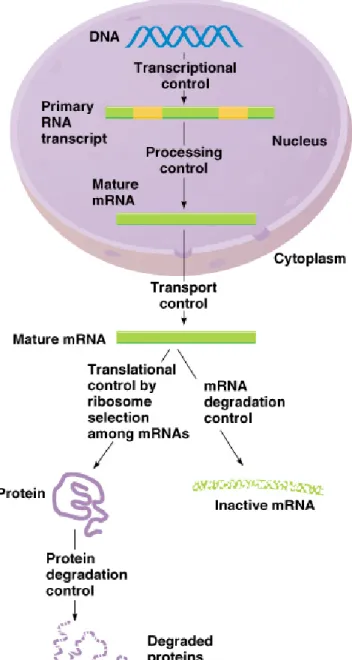
3. Levels at which expression of protein-coding genes is regulated in
eukaryotes (Figure 20.2):
a. Transcription.
b. mRNA processing and transport.
c. Translation.
d. Degradation of mRNA.
e. Protein processing.
Control of Transcription Initiation
1. In eukaryotes, most control of protein gene expression is at the level of
transcription initiation, controlled by promoter (immediately upstream)
and enhancers (distal from the gene).
a. Expression from the promoter alone is at basal level.
b. For maximal transcription, activator proteins bind to:
i. Promoter proximal elements.
ii. Enhancer elements.
2. Binding of activators:
a. Recruits proteins that make the chromatin accessible to the
transcription machinery.
b. Increases binding of the transcription machinery to the promoter.
3. Variations occur in different genes.
Chromatin Remodeling
1. In eukaryotes, binding of histones to form chromatin generally represses gene
expression, making specific repressor proteins unnecessary.
2. Evidence for the role of chromatin structure includes:
a. Increased sensitivity to DNaseI of transcriptionally active genes.
b. Hypersensitive DNaseI digestion sites upstream of transcription start sites,
corresponding to promoter regions.
c. In vitro experiments showing directly that histones can repress gene expression.
i. If DNA is simultaneously mixed with both histones and promoter-binding
proteins, it binds more readily to the histones, forming nucleosomes at the TATA
box and preventing transcription.
ii. If DNA is first mixed with promoter-binding proteins, adding histones does not
produce nucleosomes, and transcription occurs.
iii. If DNA is simultaneously mixed with histones, binding proteins:
(1) Enhancer-binding proteins bind the enhancer sequences.
(2) Promoter-binding proteins bind the promoter sequences.
(3) Histones are unable to bind, and so transcription occurs.
Activating Genes by Remodeling Chromatin
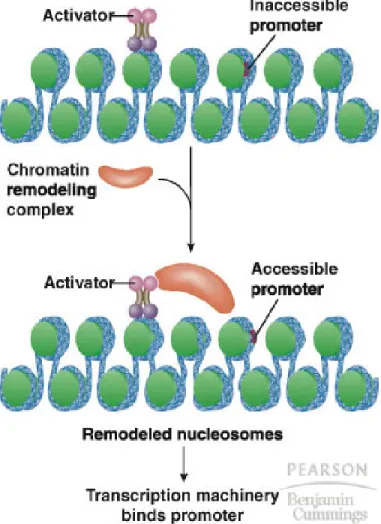
1. Activation of eukaryotic genes requires alteration off the chromatin structure near the core
promoter, a process called chromatin remodeling. Two classes of protein complexes cause
chromatin remodeling (Figure 20.3):
a. Acetylating and deacetylating enzymes act on core histones. Histone acetyl transferases (HATs) are part of multiprotein complexes recruited to chromatin when activators bind DNA.
i. HATs acetylate lysines in the amino-terminus of core histones.
ii. The negative charges of acetyl groups decrease the positive charges of the histones, reducing their affinity for DNA.
iii. Acetylation of histones changes 30-nm chromatin to 10-nm fiber, making promoter more accessible for transcription.
iv. The effect is reversible. When histone deacetylases (HDACs) remove acetyl groups, 30-nm chromatin reforms.
b. Nucloesome remodeling complexes (Figure 20.4) are ATP-dependent multiprotein complexes that alter nucleosome positions on the chromatin in response to binding of activators to DNA, increasing transcription. Different types of nucleosome remodeling complexes are known, and some have more than one function:
i. Some slide a nucleosome along the DNA, exposing DNA-binding sites for proteins. ii. Some restructure the nucleosome in place.
iii. Some transfer the nucleosome from one DNA molecule to another.
iv. An example is SWI/SNF, which can remodel using all three methods. Originally discovered in yeasts, where it affects mating type switch and sucrose fermentation pathways, this complex is now
Fig. 20.3 Chropmatin modeling by (a) histone acetylases and (b)
nucleosome remodeling complexes
Fig. 20.4 Activation of transcription by general transcription factors,
activators, and a coactivator (“Mediator”)
Activation of Transcription by Activators and
Coactivators
1. Three classes of proteins are involved in transcription activation:
a. General transcription factors (GTFs), discussed earlier, are required for basal transcription but do not change the rate of transcription initiation.
b. Activators (transactivators) are involved in chromatin remodeling to activate transcription.
i. There are two key domains, DNA-binding and transcription activation, with a flexible region between. Homodimers are often used.
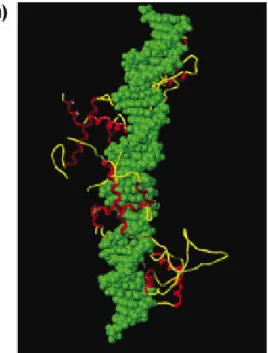
ii. Structural motifs for DNA binding regions include (Figure 20.5): (1) Helix-turn-helix
(2) Zinc finger (3) Leucine zipper
iii. Activation domains are variable. They stimulate transcription initiation up to 100-fold. c. Coactivators are multiprotein complexes that bind to activators and transcription factors,
creating loops in DNA.
i. Their presence recruits RNA polymerase II to initiate transcription.
ii. Several types of coactivators exist in cells, and their large numbers of proteins make their study difficult.
iii. An example of a coactivator is the mediator complex, consisting of 20 or more proteins that bind to activators and to the carboxy-terminal domain of RNA polymerase II.
Fig. 20.5 Examples of the structure motifs (DNA-binding domains) found in
DNA-binding proteins such as transcription factors and transcription
Blocking Transcription with Repressors
1. Repressors counteract activators for some genes, blocking
transcription.
a. Two domains occur in repressors, a DNA-binding region and
a repressing domain.
b. Repressors work in a variety of ways. Examples:
i. Repressor binds near activator’s binding site, and repressor
domain interacts with activation domain of the activator,
preventing activation.
ii. Repressor binding site overlaps activator binding site,
preventing activator binding.
iii. Chromatin remodeling can also block transcription if
repressor binds its site and recruits HDAC (histone deacetylase)
to cause chromatin compaction.
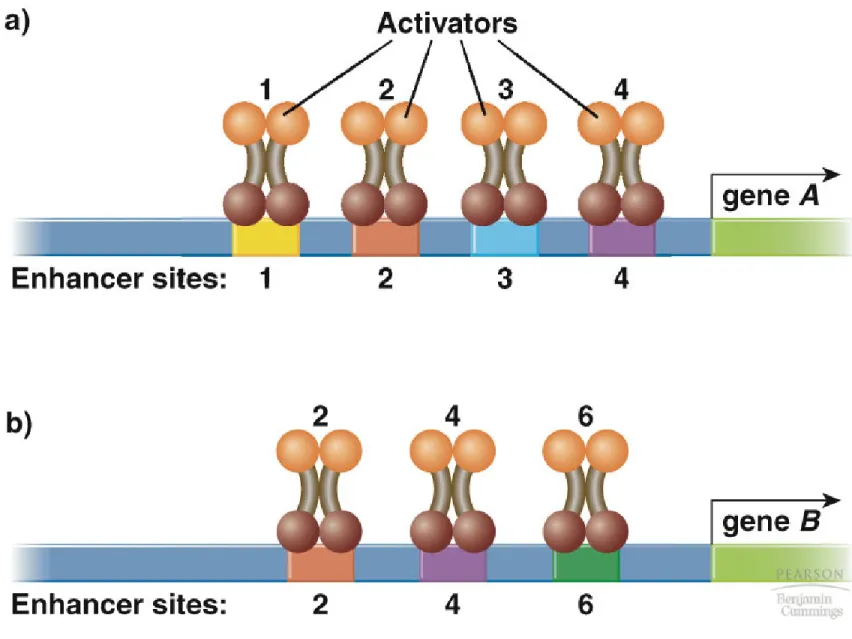
Combinatorial Gene Regulation
1. Eukaryotic protein-coding gene expression is controlled by:
a. Promoters situated just upstream of the transcription start site.
i. Some promoter elements (e.g., TATA) are required to specify the start of
transcription, through binding of transcription factor proteins.
ii. Regulatory promoter elements are specialized, involving binding by
regulatory proteins specific for control of one or a few genes.
iii. A particular gene may have 1 to many regulatory promoter elements,
and one to many regulatory proteins involved in controlling its function.
iv. Binding of regulatory proteins to promoters is highly specific to ensure
that only the correct genes are activated.
b. Enhancers located some distance away, either upstream or downstream.
i. Enhancers determine whether maximal transcription of the gene occurs.
ii. Regulatory proteins bind specific enhancer elements. Which ones bind is
determined by the DNA sequence recognized by each protein.
iii. Protein interactions determine whether transcription is activated or
repressed.
2. Promoters and enhancers bind specific regulatory proteins.
a. Some regulatory proteins occur in most or all cell types, but others are
very specific.
b. Each promoter and enhancer has a particular set of proteins that can
bind it, and the combination of proteins bound will determine its
expression.
c. If both positive and negative regulatory proteins are bound, interactions
between them will control the rate of expression.
d. When regulatory proteins bind an enhancer and have strong negative
effect, the enhancer is a silencer element.
e. Enhancers and promoters appear to bind many of the same proteins,
implying interactions of regulatory proteins.
i. Relatively few proteins are combined in a variety of ways, regulating
the transcription of different arrays of genes.
ii. A large number of cell types can be specified by combinatorial gene
regulation.(Figure 20.6)
Case Study: Regulation of Galactose Utilization in
Yeast
1. Three genes encode enzymes for metabolizing galactose (Figure 20.7):
a. GAL1 encodes galactokinase.
b. GAL7 encodes galactose transferase. c. GAL10 encodes galactose epimerase.
2. The GAL genes are not transcribed in the absence of galactose, but are rapidly and coordinately induced when galactose is present and glucose is low or absent. Glucose therefore exerts catabolite repression.
a. The GAL genes are near each other, but do not constitute an operon. b. Another nearby gene, GAL4, encodes an activator protein, Gal4p.
c. The DNA binding domain of the Gal4p homodimer is a zinc finger that binds the promoter element called an upstream activator sequence-galactose (UASG).
i. Each UASG has four Gal4p binding sites.
ii. There is a UASG upstream of the GAL7 gene, and another between the GAL1 and GAL10 genes, which are divergently
transcribed from this site.
3. Regulation in response to glucose and galactose also involves the protein Gal80p.
a. When galactose is absent, a Gal4p dimer binds UASG, along with the repressor protein, Gal80p. No transcription occurs
(quenching).
b. If galactose is added, its metabolite (produced by Gal3p) binds Gal80p, preventing quenching and allowing Gal4p to activate transcription of GAL7, GAL1, and GAL10.
c. Thus:
i. Gal4p acts as a transcriptional activator. ii. Gal80p acts as a repressor.
Case Study: Regulation of Gene Expression
by Hormones
Animation: Regulation of Gene Expression by Steroid Hormones
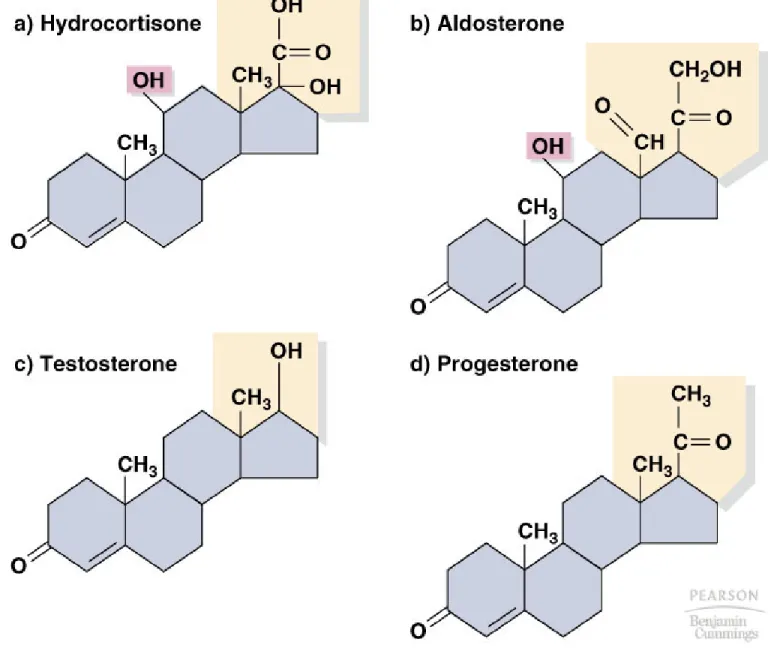
1. Steroid hormone regulation in animals is another example of short-term control of gene
expression.
a. Cells of higher eukaryotes perform specialized functions, and are shielded from rapid changes in their environments. One way that a constant environment is maintained in a multicellular
organism is by hormone signals.
i. Levels of each hormone are maintained by complex feedback loops.
ii. Hormones are effector molecules produced by one cell and causing a physiological response in another cell.
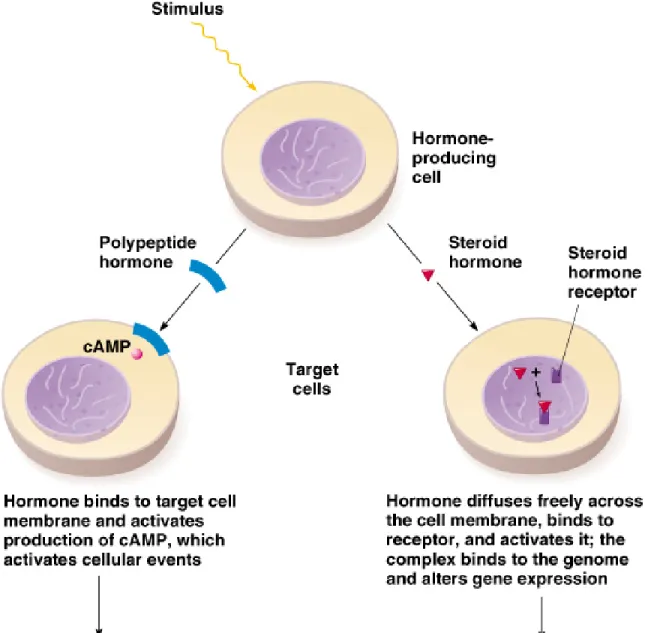
b. Hormones may deliver their signals in different ways:
i. Some (e.g., steroid hormones) bind cytoplasmic receptors (e.g., steroid hormone receptor, SHR) and then the complex binds directly to DNA, regulating gene expression (Figure 20.8). ii. Others (e.g., polypeptide hormones such as insulin and vasopressin) work at the cell surface by activating a transmembrane enzyme such as adenylate cyclase. The cAMP then acts as a second messenger, transducing the signal to activate cellular events.
c. Hormones act only on target cells that have receptors capable of binding the hormone. Receptors for polypeptide hormones are generally on the cell surface, while steroid hormone receptors are inside the cell.
Fig. 20.8 Mechanisms of action of polypeptide hormones and steroid
hormones
e. Steroid hormones show tissue-specific effects. Examples (Table 20.1):
i. Estrogen induces prolactin in rat pituitary, vitellogenin in frog liver, and conalbumin,
lysozyme, ovalbumin, and ovomucoid in the hen oviduct.
ii. Glucocorticoids induce synthesis of growth hormone in rat pituitary, and
phosphoenolpyruvate carboxykinase in rat kidney.
f. Hormone receptors control the specificity of the response, because only cells with
receptors can detect and respond to the hormone.
i. Steroid hormones affect transcription and stability of mRNAs, and possibly processing
of mRNA precursors.
ii. SHRs have high affinity for their respective hormones, and all work in the same way.
(1) If the hormone is absent, its SHR is found associated with chaperone proteins, including Hsp90. The SHR is inactive.
(2) When hormone enters the cell, it binds its specific SHR, displacing Hsp90 and forming a glucocorticoid-SHR complex (Figure 20.10).
(3) When steroid hormone binds SHR, the complex is found in the nucleus, where it binds specific DNA regulatory sequences, often by a zinc finger domain, activating or inactivating
Fig. 20.10 Model for the action of steroid hormone glucocorticoid in
mammalian cells
g. Genes responsive to a specific steroid hormone have a common DNA
sequence, the steroid hormone response element (HRE) for steroid-receptor
complex binding.
i. The H is replaced with a letter to indicate the specific steroid hormone
involved.
ii. For example, GRE is glucocorticoid response element, and ERE is estrogen
response element.
iii. HREs are located in enhancer regions, often in multiple copies that show
twofold symmetry.
h. The mechanism of transcription regulation is not known, but presumably
involves interactions between bound hormone-receptor complexes and
transcription factors.
i. In different types of cells, the same steroid hormone may activate different sets
of genes, even with the same SHRs. Many regulatory proteins are involved,
yielding different patterns of gene expression.
j. In sum, steroid hormones act as effectors, and SHRs as regulatory molecules.
Together, they bind DNA and regulate gene transcription.
Hormone Control of Gene Expression in Plants
1. Plants also exhibit control by hormones.
a. There are five main types of plant hormones (Figure 20.11): i. Ethylene
ii. Abscisic acid iii. Auxins iv. Cytokinins v. Gibberellins
b. Each hormone is responsible for many activities. Gibberellins are an example: i. Gibberellins stimulate transcription, resulting in cell form and differentiation. ii. Gibberellins can make dwarf mutant plants grow tall, or normal plants grow taller.
iii. They are also present in the aleurone layer of seeds, where they stimulate transcription of the gene for -amylase, which breaks down endosperm, releasing nutrients for the embryo (Figure 20.12).
Gene Silencing and Genomic Imprinting
1. In gene silencing, a gene is not transcribed because of its location, rather than by the
action of a specific repressor. Heterochromatin is commonly involved in gene silencing,
and affects large sections of DNA.
2. An example is found in gene silencing at the yeast telomere (TEL) (Figure 20.13).
a. Yeast telomeres are telomere repeat sequences with complex hairpin structure, and no protein-coding sequences.
b. If active genes are moved to the telomeres, they are silenced. This telomere position effect is associated with binding of telomeres in groups to the nuclear envelope.
3. Active genes moved to the telomeres and thus silenced are used to find mutations that
relieve silencing, which define the SIR (silent information regulation) genes.
a. Rap1p (produced by the repressor-activator protein gene, RAP1) binds telomere repeat sequences.
b. The bound Rap1p recruits the SIR silencing complex (SIR2p, SIR3p, SIR4p).
c. The SIR silencing complex contacts the histones, and Sir2p (a histone deacetylase) removes acetyl groups from histone tails.
d. Deacetylated histones are recognized by the silencing complex, and a wave of binding and deacetylation moves along the chromosome. Heterochromatin is generated.
e. The spread of silencing is stopped by methylation of histone H3 tails by histone methyl transferases (HMTs).
4.
Methylation of particular DNA sequences can also silence transcription in
many eukaryotes. DNA methylase alters cytosine to 5-methylcytosine (5mC)
(Figure 20.14)
a. Higher eukaryotes such as mammals have about 3 percent of their cytosines
modified to 5mC, while lower eukaryotes have virtually 0 percent.
b. 5mC is nonrandomly distributed, with most found in the symmetrical sequence
CpG. This allows patterns of methylation to be studied by using restriction
enzymes that contain the CG sequence in their recognition sites. For example:
i. HpaII cuts at 5¢-CCGG-3¢, but only if the cytosines are unmethylated.
ii. MspI also cuts at 5¢-CCGG-3¢, regardless of methylation.
iii. Differences in the array of DNA fragments produced by these enzymes on
Southern blotting allow methylation patterns to be inferred (Figure 20.15).
c. CpG dinucleotides are found in clusters called CpG islands in specific regions of
the genome.
i. Human CpG islands often occur in the promoters of protein-coding genes.
ii. Generally the CpG islands are unmethylated and transcription occurs.
Fig. 20.15 Effect of 5-methylcytosine on cleavage of DNA with HpaII and
5. An example of methylation affecting gene expression is fragile X syndrome (OMIM 309550).
Expansion of a triplet repeat and abnormal methylation in the FMR-1 gene silence its expression.
6. Another example of methylation affecting gene expression is genomic imprinting, which
distinguishes genes inherited from each parent.
a. An example involves a pair of linked genes Igf2 (insulinlike growth factor 2) and H19 (an untranslated mRNA of unknown function), located about 80kb apart in humans and mice (Figure 20.16).
b. In mice, deletion of Igf2 had different effects:
i. If the deletion is inherited from the father, the mice are small.
ii. If the deletion is inherited from the mother, the mice are normal size.
c. Thus, Igf2 is an imprinted gene, expressed from the paternal chromosome. Likewise, H19 is a maternally imprinted gene.
d. Expression of both these genes is influenced by an enhancer downstream of H19, where activator binding recruits transcription machinery for both genes unless blocked by an insulator (regulatory element able to block activation of a promoter to one side of it).
i. On the maternal chromosome, genes and regulatory sequences are not methylated, allowing insulator to be bound by a CRCF protein, blocking activation of Igf2 but allowing transcription of H19.
ii. On the paternal chromosome, the promoter of the H19 gene and the insulator are methylated, preventing CRCF binding. This allows Igf2 transcription, but methylation of the promoter prevents H19 activation. e. Imprinting is controlled by inheritance of methylated sequences. Methylation varies in mitosis and meiosis.
i. In mitosis, the chromosomes are hemimethylated after DNA replication. Maintenance methylases methylate the new strand, restoring the parental methylation pattern.
ii. In meiosis, the methylation imprint is reset with methylation by de novo methylases, so that appropriate patterns are inherited from each parent.
7. Human examples of genomic imprinting include:
a. Prader-Willi syndrome (PWS):
i. Affected individuals are small and weak at birth, with retardation and poor
feeding.
ii. Feeding difficulty resolves into uncontrollable eating and associated problems
that are typically fatal by age 30.
iii. The cause is a disruption in chromosomal region 15q11-q13.
(1) In 70–80 percent of cases, the disruption is on the father’s chromosome 15.
(2) In PWS patients, the maternal 15q11-q13 region is normally suppressed by
methylation of the genes. Paternal genes are needed for normal development, and
when they are disrupted PWS results.
b. Angelman syndrome (AS) produces severe motor and intellectual retardation, small
head, jerky movements, hyperactivity, and unprovoked laughter.
i. About 50 percent of AS patients have a deletion of region 15q11-q13.
ii. In AS, maternal alleles are needed for normal development, because paternal
genes are inactivated by methylation prescribed by genomic imprinting. Defective
maternal genes result in disease.
Posttranscriptional control
RNA Processing Control
Animation: RNA Processing Control
1. RNA processing control regulates mRNA production
from precursor-RNAs.
a. Alternative processing options exist, including:
i. Alternative polyadenylation.
ii. Differential splicing (alternative splicing).
b. Alternative polyadenylation and splicing occur independently of
each other, and their activities may be tissue specific.
c. Specific products depend on regulatory signals. Alternative
polyadenylation and splicing produce proteins encoded by the
same gene but structurally and functionally different (protein
isoforms).
d. An example of alternative polyadenylation and splicing involves the
human calcitonin gene (CALC), which has five exons and four introns
(Figure 20.17).
i. Alternative polyadenylation sites exist next to exon 4 (pA
1, used in
thyroid cells) and exon 5 (pA
2, used in neurons).
ii. Alternative splicing also occurs:
(1) In the thyroid, pre-mRNA is spliced, bringing together
exons 1, 2, 3 and 4.
(2) In neurons, pre-mRNA is spliced to bring together introns 1,
2, 3 and 5. Exon 4 is excised and discarded.
iii. The mRNAs are translated to produce prehormones, from which
hormones are generated by protease cleavage. The products
produced are:
(1) Calcitonin in the thyroid, a circulating calcium-ion
homeostatic hormone.
(2) Calcitonin-gene related peptide (CGRP) in the
hypothalamus, which has neuromodulatory and trophic
(growth-promoting) activities.
Fig. 20.17 Alternative polyadenylation and alternative splicing resulting in
Transport Control
1. In eukaryotes, transport control regulates movement of
transcripts from nucleus to cytoplasm.
a. Studies show that about ½ of primary (hnRNA) transcripts never
leave the nucleus and are degraded there.
b. Mature mRNAs appear to exit through nuclear pores, but the
mechanism and signals are not understood.
c. The spliceosome retention model proposes that snRNPs
complete with nuclear export by staying bound to spliced introns
and preventing their export, while releasing the spliced exons
and allowing them to interact with nuclear pores.
mRNA Translation Control
1. Ribosomal translational control, selecting mRNAs for translation, also has an
impact on gene expression.
a. Unfertilized eggs are an example, in which mRNAs show significant increases in
translation after fertilization, without new mRNA synthesis.
b. Stored mRNAs are associated with proteins that both protect them and inhibit their
translation.
c. Poly(A) tails promote translation initiation, and stored mRNAs generally have
shorter tails.
i. In some mRNAs of mouse and frog oocytes, a normal-length poly(A) tail is
added, and then trimmed enzymatically.
ii. Particular mRNAs are marked for deadenylation by a region in the 3’
untranslated region, called the adenylate/uridylate (AU)-rich element (ARE),
with the consensus sequence UUUUUAU.
iii. Activation of the stored mRNA occurs when a cytoplasmic polyadenylation
enzyme recognizes the ARE and adds about 150 A residues, making a
full-length poly(A) tail.
mRNA Degradation Control
1. Breakdown (turnover) of mRNAs occurs in the cytoplasm, with mRNAs showing a wide
range of stability (from minutes to months). Regulatory signals may modify the stability
of an mRNA (Table 20.2).
2. mRNA degradation is believed to be a major control point in eukaryotic gene expression.
Sequences or structures that affect the 1/2-life of mRNAs include:
a. AU-rich elements (ARE, discussed above). b. Various secondary structures.
c. Deadenylation-dependent mRNA decay involves removal A nucleotides from poly(A) tails, until they are too short to bind PAB (poly(A) binding protein).
i. In yeast, PAB-dependent poly(A) nuclease (product of the PANJ gene) may catalyze deadenylation.
ii. When the tail is almost removed, decapping removes the 5’cap. The yeast decapping enzyme is at least partially encoded by the DCPJ gene.
iii. After decapping in yeast an enzyme (from,the XRNJ gene) aggressively degrades the mRNA from the 5’end by 5’-3’exonuclease activity.
iv. Degradation still occurs in dcpl mutants, indicating that other mRNA degradation pathways exist.
d. Deadenylation-independent mRNA decay includes two types of pathways: i. Direct decapping, exposing the 5’end to 5’-3’exonucleases.
ii. Internal cleavage of the mRNA, and then degradation of the fragments.
3. Mammalian mRNA degradation mechanisms are less clear than those of yeast. Both
deadenylation-dependent and deadenylation-independent pathways are found in
Protein Degradation Control
1. Protein regulation occurs in many ways. Examples:
a. A constitutively produced mRNA may be translated continuously, and
so the protein degradation rate determines its level.
b. A short-lived mRNA may make a very stable protein, so that it persists
for long periods in the cell.
2. Protein stability varies from very stable (e.g., lens proteins in the eyes
of higher vertebrates) to short-lived (e.g., steroid receptors and heat
shock proteins).
3. Proteolysis (protein degradation) in eukaryotes requires ubiquitin, a
protein cofactor.
a. Ubiquitin bound to a protein identifies it for degradation by proteolytic
enzymes.
b. Ubiquitin is released intact, and able to tag other proteins for
degradation.
4. Protein stability is directly related to the amino acid at the N-terminus of
the protein (the N-end rule). In yeast, stability of the same protein was
measured with different N-terminal amino acids:
a. The amino acids Arg, Lys, Phe, Leu and Trp all specified a 1/2-life of
3 minutes.
≦
b. The amino acids Cys, Ala, Ser, Thr, Gly, Val, Pro, and Met all
specified 1/2-lives of 20 hours.
≧
c. Similar results are seen in experiments with E. coli.
5. The N-terminal amino acid directs the rate of ubiquitin binding which,
in turn, determines the 1⁄2-life of the protein.
6. To summarize, prokaryotes control gene expression mainly at the
transcriptional level, while eukaryotes regulate at transcriptional,
post-transcriptional and post-translational levels. Eukaryotic systems
control:
a. Transcription.
b. Precursor-RNA processing.
c. Transport from the nucleus.
d. Degradation of mature RNAs.
e. Translation of mRNAs.
RNA Interference: A Mechanism for
Silencing Gene Expression
1. Small dsRNA fragments can silence the expression of a matching gene. This is
RNA interference (RNAi), recently discovered in C. elegans.
a. Injecting dsRNA into adult worms results in specific loss of the corresponding
mRNA in the worm and its progeny.
b. RNAi also occurs in many other organisms, where it protects against viral infection
and regulates developmental processes.
2. RNAi is highly specific and sensitive, with only a few molecules of dsRNA
needed, making it an excellent research tool.
3. The mechanism of RNAi silencing of a gene includes (Figure 20.17):
a. Specific matching of the mRNA exon and dsRNA. dsRNA matching the promoter
or introns does not cause silencing.
b. The enzyme Dicer cleaves dsRNA into short interfering RNA (siRNA) fragments
with 3 overhangs.
c. The siRNA-Dicer complex recruits other proteins, which have the siRNA
transferred to them to form the RNA-induced silencing complex (RISC).
d. The RISC is activated in an ATP-dependent manner, leading to unwinding of the siRNA. e. The single-stranded siRNA is then paired with the complementary mRNA by the activated
RISC.
f. An endoribonuclease (as yet unidentified) cleaves the mRNA, silencing the gene. g. Activated RISC may also function by:
i.Allowing the single-stranded siRNA to remain bound to the mRNA, preventing translation. ii. Migration of the complex into the nucleus, where siRNA directs binding to the
complementary DNA, recruiting a chromatin remodeling complex and silencing transcription.
4. The activated RISC may also cause amplification of RNAi. When the siRNA binds
mRNA, it may prime RNA synthesis, generating a dsRNA molecule that becomes a new
substrate for Dicer, repeating the cycle and amplifying interference.
5. In vivo roles of RNAi include:
a. Regulating gene expression, as noted above for C. elegans.
b. Blocking expression of foreign genes (e.g., viral infections or transposon activity).