行政院國家科學委員會專題研究計畫 成果報告
利用基因晶片探討活血化瘀中藥改善氣球擴張所引起血管
再阻塞的作用(2/2)
計畫類別: 個別型計畫 計畫編號: NSC91-2320-B-039-011- 執行期間: 91 年 08 月 01 日至 92 年 07 月 31 日 執行單位: 中國醫藥大學藥理學科 計畫主持人: 吳介信 報告類型: 完整報告 處理方式: 本計畫涉及專利或其他智慧財產權,2 年後可公開查詢中 華 民 國 92 年 10 月 31 日
行政院國家科學委員會專題研究計畫期中報告
利用基因晶片探討活血化瘀中藥改善氣球擴張所引起血管
再阻塞的作用
Microarray analysis of the preventive effects of Chinese Herbal
Medicines on balloon injury-induced restenosis
計畫編號:NSC 91-2320-B-039-011
執行期限:91 年 08 月 01 日至 92 年 07 月 31 日
主持人:吳介信 執行機構及單位名稱: 中國醫藥大學醫學系藥理學科 摘要 關鍵詞:氣球擴張術,血管再阻塞,生物基因晶片 心血管疾病一直以來均高居國人死亡原因的 前幾名,其中心肌梗塞更是佔了相當高的比例。目 前臨床最常施行的急救方法之一,是利用氣球擴張 術使阻塞之血管恢復血流供應。然而,在美國每年 大約有百分之 30 至 50(約二十五萬)的心肌梗塞患 者,在接受冠狀動脈氣球擴張術的治療之後,六個 月之內有血管再阻塞的現象。本計畫之研究目標希 望藉由目前已發展出來的生物基因晶片作一系統性 的探討,以進一步了解眾多引起血管再阻塞之基因 協同作用。再探討具有活血化瘀功效的中藥包括 Salvia miltiorrhiz (丹參)、Magnolia officinalis (厚朴),以口服餵藥的方式給予二週,藉其作用在 氣球擴張的大鼠動物模型,評估藥物改善血管再阻 塞的分子機轉。Abstract
Keywords:angioplasty,restenosis,cDNA microarray Cardiovascular diseases have been the major leading cause of death in recent years. Among which myocardial infarction was accounted for the great proportion. Percutaneous transluminal coronary angioplasty (PTCA) is one of the most effective approaches in rescuing people from myocardial infarction. However, there are about 30 to 50% of people receiving PTCA in the United States (about 250,000 people) each year suffered from balloon injury-induced restenosis within six months of surgery. The primary goal of this 2-year proposal is to explore the overall gene expression involved in restenosis formation by the newly developed microarray analysis.
We have established the gene expression pattern for restenosis by cDNA microarray analysis. Two major circulation activators of Chinese herbal medicine, Salvia miltiorrhiz (丹參), Magnolia officinalis (厚朴), have been selected to study their anti-restenosis effects. These circulation activators was administered P.O. for two weeks after balloon injury. The pharmacological mechanism of circulation activators of Chinese herbal medicine against restenosis formation can then be elucidated.
II、Background and Specific Aims
Coronary heart disease has been rated as one of the leading causes of death worldwide. Percutaneous Transluminal Coronary Angioplasty (PTCA) has been extensively applied as a clinical approach to treat coronary heart disease. However, the injury denudes the vascular endothelial cells and traumatizes the media. This damage results in activation of multiple signal transduction pathways leading to restenosis. The affected genes involved in the process of restenosis include transforming growth factor β-1 (Hartsough et al., 1996), intercellular adhesion molecule 1 (ICAM-1), vascular adhesion molecule-1 (VCAM-1) (Walpola et al., 1995), endothelin-1 (Malek et al., 1993; Morita et al., 1993), heparin-binding epidermal growth factor-like growth factor (Biro et al., 1992), the proto-oncogenes c-fos, c-jun, and c-myc, and platelet-derived growth factor (PDGF) (Benett et al., 1994), etc. These molecules have been attributed to the formation of restenosis at the site of angioplasty in 30-50% of patients within 6 months after PTCA (Nikol and Hofling, 1995). Therefore, even though PTCA is a very
2
effective remedy in saving people’s lives from myocardial infarction, restenosis has significantly limited its clinical application. Although the deployment of endovascular stents at the time of angioplasty improve the short-term outcome, “in-stent” stenosis remains an enduring problem.
Together with the newly innovated tool provided by recent advances in molecular biology and catheter design, the systematic investigation of restenosis in detail can then be made possible. However, most of these approaches are quite laborious and limited by the number of samples and genes that can be compared simultaneously. In this proposal, we have applied a complementary DNA (cDNA) microarray anaylsis as an efficient tool for solving the difficulties in quantifying expression of a large number of genes involved in the balloon injury-induced restenosis. The merit of this technique is due to its high throughput identification of the cDNA library from the known human genes. In contrast to the conventional approaches in elucidating the genetic regulation for each disease, which was mostly working on one or two genes at a time, cDNA microarray analysis is dealing with thousands of genes simultaneously. Due to the high degree of homology between human and mammalian genes, it is plausible to study gene expression in rat model subjected to balloon injury using human cDNA microarray under lower stringency of hybridizing conditions (Huang et al., 2000). These results can provide a general insight into the interrelation of those genes previously reported to be responsible for restenosis. The molecular basis of genes responsible for neointimal formation can then be used to elucidate the mechanisms of Chinese herbal medicines in preventing restenosis.
III、Results and Discussion
In this grant proposal, we aimed to explore the genomic profiles of those genes elicited by balloon injury in rat carotid arteries via cDNA microarray analysis. Description of the materials and methods are as follows.
Administration of Chinese herbal medicine to balloon injury rat models
Two pure compounds, salvinolic acid B and magnolol extracted from Salvia
miltiorrhiz(丹參) and Magnolia officinalis(厚
朴 ), respectively, were tested in the rat balloon injury model. After establishing the genomic profiles of restenosis induced by balloon injury in rat carotid arteries by cDNA microarray analysis, the aim of this proposal was to explore the preventive effects of two Chinese herbal medicines on restenosis at genomic level. Three concentrations ranging from 100 nM to 100 µM for each compound were given to determine the most effective dose in preventing restenosis. SD Rats with 300-400g of body weight were subjected to balloon injury as described (Wu et al., 2001). The rat common carotid arteries receiving balloon injury were rendered for mRNA extraction for the subsequent RT-PCR analysis. One cm of arteries was collected for paraffin sectioning at the thickness of 10 µm to determine the vascular morphology. The measurements of the neointimal thickness or vascular remodeling are then processed with the computer program Matrox Inspector (Matrox Electronic Systems Ltd., USA). Our results demonstrated a significant neointimal formation on common carotid arteries 14 days after balloon injury.
Constant drug delivery by osmotic pump
In the conventional drug delivering system, both I.P. injection or P.O. feeding can not ensure a steady blood concentration. In this proposal, we will use ALZET osmotic pumps (ALZA Corp. Palo Alto, CA, USA) for direct drug delivery into blood circulation to maintain a constant plasma level. These pumps were embedded subcutaneously and cannulated into the right jugular veins. Drugs were delivered via such devices one week prior to balloon injury and continued thereafter for two weeks
Analysis and confirmation of drug effects on restenosis by RT-PCR
The changes of gene expression by salvianolic acid B and magnolol in balloon
3
injury-induced restenosis were analyzed according to the microarray analysis of differential gene expression by balloon injury. F635 represents the Cy5 (red fluorescence) Twenty of the most up-regulated and most down-regulated genes were chosen from the cDNA microarray results to decipher the changes of mRNA levels throughout the time course of drug treatment. Since primers specific to those 7680 clones of rat cDNAs spotted onto microarray membrane have been identified, those twenty genes affected by salvianolic acid B and magnolol can be confirmed by RT-PCR. These results explore the genetic profiles of restenosis affected by salvianolic acid B and magnolol.
Analysis of genes involved in balloon injury-induced restenosis
The scanning signals of each corresponding gene from control and balloon injured arteries were presented as scattered plot using KaleidaGraph of ScanAlyze (Michael Eisen, Stanford University). A dispersed distribution of genes on the scattered plot from a 45-degree diagonal line as shown in Figure 1 indicated a greater difference in gene expression profile between F635 and F532, representing the experimental and control groups, respectively. The ratio of means between balloon injured and normal group was expressed as histogram analysis in figure 2.
Analysis of gene expression affected by Chinese Herbal medicine involved in restenosis by semi-quantitative RT-PCR
Among the 7680 genes tested by rat cDNA microarray analysis between balloon injured and normal group, 20 most affected genes were selected to evaluate the molecular mechanisms of Salvia miltiorrhiz and Magnolia officinalis on prevention of restenosis. Figure 3 shows the RT-PCR results on the effects of these two herbal medicines on up-regulated geen expression by injury.
Figure 1. The differential gene expression between balloon-injured rat carotid artery (F635) vs normal control (F532). F635 at Y-axis represents the balloon injured genes while F532 at X-axis represents the normal control genes.
F635 Means vs F532 Means 0 10000 20000 30000 40000 50000 60000 70000 0 10000 20000 30000 40000 50000 60000 70000 F635 F532 -1.0 -0.6 -0.2 0.2 0.6 1.0 1.4 1.8 2.2 2.6 3.0 Ratio.of.Means 0 100 200 300 F req ue n c y
Figure 2. Histogram analysis of the ratio of means for F635 over F532. The number of gene expression ratio at each fold were demonstrated as frequency at Y-axis
fibronectin C B S M TPA connexin Tubulin, alpha collagen, alpha 1 lactate dehydrogenase integrin beta-1 Alcohol dehydrogenase annexin IV Topoisomerase II
Figure 3. Effects of Salvia miltiorrhiz (S) and Magnolia officinalis (M) on various up-reulated genes induced by balloon injury. Most genes up-regulated by balloon injury
4
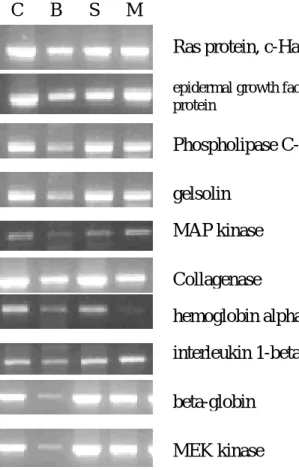
Figure 4 shows the RT-PCR results on the effects of these two herbal medicines on down-regulated geen expression by injury.
IV. Self Evaluation
The aim of this study is to elucidate the balloon injury-induced gene profile in rat carotid arteries. With microarray analysis using 7680 rat cDNAs to screen rat genes affected by balloon injury, we found that there were more than 500 genes with differential expression levels. Twenty genes with most significant differences in expression levels were tested to evaluate the effects of Salvia miltiorrhiz and Magnolia officinalis on balloon injury-induced neointima formation. Together with microarray and RT-PCR results, we found quite a few interesting genes affected by balloon injury, including collagenase 、 Ras Protein c-Ha 、
Phospholipase C 、 Tissue plasminogen activator、MAP kinase、 fibronectin. Those genes constructed a genetic profile responsible for balloon injury-mediated neointimal formation. In this grant proposal, we have elucidated the molecular mechanism of Salvia miltiorrhiz and Magnolia officinalis in preventing restenosis through affecting such genetic profile. These interesting data may provide the insight into the potential application of Salvia miltiorrhiz and Magnolia officinalis for clinical prevention on PTCA-induced restenosis.
Reference
Hartsough MT; Frey RS; Zipfel PA; Buard A; Cook SJ; McCormick F and Mulder KM. “Altered transforming growth factor signaling in epithelial cells when ras activation is blocked” Journal of Biological Chemistry, 1996, 271(37):22368-75.
Malek AM.; Greene AL. and Izumo S. “Regulation of endothelin 1 gene by fluid shear stress is transcriptionally mediated and independent of protein kinase C and cAMP” Proceedings of the National Academy of Sciences of the United States of America. 1993, 90(13):5999-6003.
Walpola PL.; Gotlieb AI.; Cybulsky MI. and Langille BL. “Expression of ICAM-1 and VCAM-1 and monocyte adherence in arteries exposed to altered shear stress” Arteriosclerosis, Thrombosis & Vascular Biology. 1995, 15(1):2-10.
Morita T.; Kurihara H.; Maemura K.; Yoshizumi M. and Yazaki Y. “Disruption of cytoskeletal structures mediates shear stress-induced endothelin-1 gene expression in cultured porcine aortic endothelial cells. Journal of Clinical Investigation.1993, 92(4):1706-12. Biro S; Siegall CB; Fu YM; Speir E; Pastan I and Epstein SE. “In vitro effects of a recombinant toxin targeted to the fibroblast growth factor receptor on rat vascular smooth muscle and endothelial cells” Circulation Research, 1992, 71(3):640-5.
Chen J.J., Wu R., Yang P.C., Huang J.Y., Sher Y.P., Han M.H., Kao W.C., Lee P.J., Chiu T.F., Chang F., Chu Y.W., Wu C.W. and Peck K. Profiling expression patterns and isolating differentially expressed genes by cDNA microarray system with colorimetry detection. Genomics 1998;51 (3):313–24.
Huang G. S., Yang S.M., Hong M.Y., Yang P.C., and Liu Y.C. Differential gene expression of livers from ApoE deficient mice Life Sciences 2000; 68:19–28. Liang P. and Pardee A.B. Differential display of eukaryotic messenger RNA by means of the polymerase chain re-action. Science 1992, 257 (5072): 967–71. Lockhart D.J., Dong H., Byrne M.C., Follettie M.T., Gallo M.V., Chee M.S., Mittmann M, Wang C.,
C B S M
Ras protein, c-Ha
epidermal growth factor-like protein Phospholipase C-beta4 gelsolin MAP kinase Collagenase hemoglobin alpha interleukin 1-beta beta-globin MEK kinase
Figure 4. Effects of Salvia miltiorrhiz (S) and Magnolia officinalis (M) on various down-reulated genes induced by balloon injury. Most genes down-regulated by balloon injury were found to be activated by these two durgs. C: control: B: Balloon injury.
Kobayashi M., Horton H. and Brown E.L. Expression monitoring by hybridization to high-density oligonucleotide arrays Nat Biotechnol 1996, 14 (13): 1675–80.
Pietu G., Alibert O., Guichard V., Lamy B., Bois F., Leroy E., Mariage-Sampson R., Houlgatte R., Soularue P. and Auffray C. Novel gene transcripts preferentially expressed in human muscles revealed by quantitative hybrid-ization of a high density cDNA array. Genome Res. 1996, 6 (6): 492–503.
Vasmatzis G., Essand M., Brinkmann U., Lee B. and Pastan I. Discovery of three genes specifically expressed in human prostate by expressed sequence tag database analysis. Proc Natl Acad Sci U. S. A. 1998, 95(1): 300–4.
Velculescu V.E., Zhang L., Vogelstein B. and Kinzler K.W. Serial analysis of gene expression Science 1995, 270 (5235): 484–7.
Wu C.H., Tsai B.R., Chang G.Y., Tsai H.Y.and Chang
W.C. (2001) “Characterization of G115 in preventing balloon injury-induced restenosis in rat carotid arteries” Life Sci 70(6): 669-679.rat brains. Chinese Journal of Pharmacological and Toxicological Methods 1996; 199: 8:7-12.