行政院國家科學委員會專題研究計畫 成果報告
細胞激素的基因療法在過敏氣喘疾病上的應用
計畫類別: 個別型計畫
計畫編號: NSC93-2314-B-038-019-
執行期間: 93 年 08 月 01 日至 94 年 07 月 31 日 執行單位: 臺北醫學大學微免學科
計畫主持人: 李岳倫 共同主持人: 江伯倫 計畫參與人員: 許斐怡
報告類型: 精簡報告
報告附件: 出席國際會議研究心得報告及發表論文 處理方式: 本計畫可公開查詢
中 華 民 國 94 年 11 月 14 日
行政院國家科學委員會補助專題研究計畫
█期末進度報告
細胞激素的基因療法在過敏氣喘疾病上的應用
計畫類別:█個別型計畫 □ 整合型計畫
計畫編號:NSC 93- 2314-B- 038- 019-
執行期間: 93年 8月 1日至 94年 7月31日
計畫主持人:李岳倫
共同主持人:江伯倫
計畫參與人員:許斐怡
執行單位:台北醫學大學微免科
中華民國94年10月30日
中英文摘要:
從 1970 年代以來,許多報告都指出,全世界氣喘病的罹患率持續在增加,病 情轉趨嚴重,住院率和死亡率也隨著增高,台灣地區也不例外。在氣喘病人身上 可觀察到幾項特徵:包括血液中的 IgE 增加,體內第二型 T 輔助細胞(Th2)數目 增加,氣管聚集大量的嗜伊紅性白血球細胞(eosinophilia)以及發炎媒介物的產 生。過去對氣喘疾病的治療大部分偏重於抑制氣管的發炎現象和舒緩氣管的收縮 程度,而吸入性類固醇的使用為目前對於氣喘症狀控制和肺功能的改善最有效的 方法;但是類固醇的使用只能抑制發炎現象,對氣喘仍無法根治,而且對於人體 仍有潛在的副作用,所以病人除了儘量避免接觸過敏原外,要徹底治療氣喘疾 病,目前治療方法為減敏療法。減敏治療必須持續幾年的治療,此種耗時並且需 要大量純化過敏原的治療方式並不是最理想的治療方法。基於此,其病因的探討 和研發過敏氣喘新治療的方法則刻不容緩。
目前已經知道細胞激素 IL-12 會促進 T 細胞分化為 Th1 輔助細胞,使其產生 大量的 Th1 型細胞激素 IFN-γ以及 IL-2,並抑制 Th2 型細胞激素 IL-4 以及 IL-5 的分泌。多年前我們實驗室就已經開始將 IL-12 應用到過敏氣喘動物的治療,在 對於將 IL-12 蛋白質以及 IL-12 基因治療氣管發炎的小鼠上皆獲得不錯的成績。
目前,則更進一步將具有單一鏈的 IL-12 融合基因之腺病毒載體送到有氣喘症狀 的小鼠肺部,來治療其氣管發炎的現象,而初步的研究成果令人滿意。
英文摘要:
The frequency of allergic diseases such as asthma and allergic rhinitis has increased rapidly during the past decade. Allergic asthma is characterized by airway hyperresponsiveness(AHR) to specific and nonspecific stimuli with elevated serum IgE levels and eosinophilic inflammation. Thus far, a broad range of therapeutic strategies is now under development. Although the topical glucocorticoids are now considered the cornerstone of therapy in the management of allergic diseases, many patients continue treatment with glucocorticoids despite the onset of serious adverse effects and poor clinical response. Immunotherapy, the intradermal injection of small but gradually increasing amounts of allergen, has been used as an effective treatment for allergic diseases. However, injection of allergen involves the risk of induction of mild and sometimes severe anaphylactic reactions. Allergic asthma is thought to be regulated by Th2 cells, thus inhibiting Th2 response or developing Th1 cells is a promising mode of intervention.IL-12 is a heterodimeric cytokine, which strongly promotes the differentiation of naïve CD4+ T cells to the type-1 Th1 phenotype and suppresses the expression of Th2 cytokines.
Preliminary data have demonstrated that IL-12 is a good candidate for the cytokine treatment of allergic diseases. In mice with ovalbumin-induced asthma, the local administration of IL-12-expressing adenovirus (Ad-IL-12) into the lungs
2
significantly prevented the development of AHR, abrogated airway eosinophilia, and inhibited type-2 cytokine production.
Recently, a novel cytokine, IL-27, is discovered and drives rapid clonal expansion of mouse naive T cells. It also strongly synergizes with IL-12 to trigger IFN-γ production of naïve CD4+ T cells. Thus, these immunoregulatory properties of IL-27 will lead to its therapeutic use in allergic asthma.
In general, the aims of our study are as follow:
First year: Construction of recombinant IL-27-expressing adenovirus (Ad-IL-27) and investigation the biological effects of recombinant IL-27 in vitro.
Second year: Combination of Ad-IL-12 and Ad-IL-27 will be used to apply the DNA vaccine or gene therapy in a murine asthma model in vivo.
In summary, our project might shed light further understanding the regulatory mechanisms and designing immunotherapy for atopic diseases.
報告內容:
(一)前言以及研究目的
Asthma is strongly associated with the airway inflammation and hyperresponsiveness caused by the dysregulated production of cytokines. As we know that interleukin-12 (IL-12) promotes the differentiation of naïve CD4+ T cells to the Th1 cells phenotype and suppresses the expression of Th2 cytokines.
In other way, IL-10 has well-documented anti-inflammatory and immunoregulatory activities. Therefore, IL-10 may be a possible another therapeutic tool for asthma. In this study, we use IL-12 combine with different dose of IL-10 to observe the therapeutic effect of asthma in a murine model.
(二)研究方法
1. Experimental design :
i.p.OVA i.p. OVA i.p. OVA i.n. vectors
sacrifice OVA inhalation
Day 0 14 28 41 43 44 45 AHR
BALB/c mice are divided to seven groups and each group contains 6-8 mice.
(1) Positive control
(2) Ad-Mock 1*108 pfu/mouse (3) Ad-IL-12 1*108 pfu/mouse
(4) Ad-IL-10 1/100*1*108 pfu/mouse +Ad-IL-12 1*108 pfu/mouse (5) Ad-IL-10 1/10*1*108 pfu/mouse +Ad-IL-12 1*108 pfu/mouse (6) Ad-IL-10 1*108 pfu/mouse +Ad-IL-12 1*108 pfu/mouse (7) Ad-IL-10 10*1*108 pfu/mouse +Ad-IL-12 1*108 pfu/mouse 2. Antibody assays :
Sera anti-OVA Ig E , IgG1 and IgG2a antibody titers are measured by ELISA.
3.BALF cytokines measurement :
The quantities of IFN-γ, IL-5, IL-12, IL-10 and eotaxin in the BALF are evaluated by using ELISA kits.
(三)研究結果
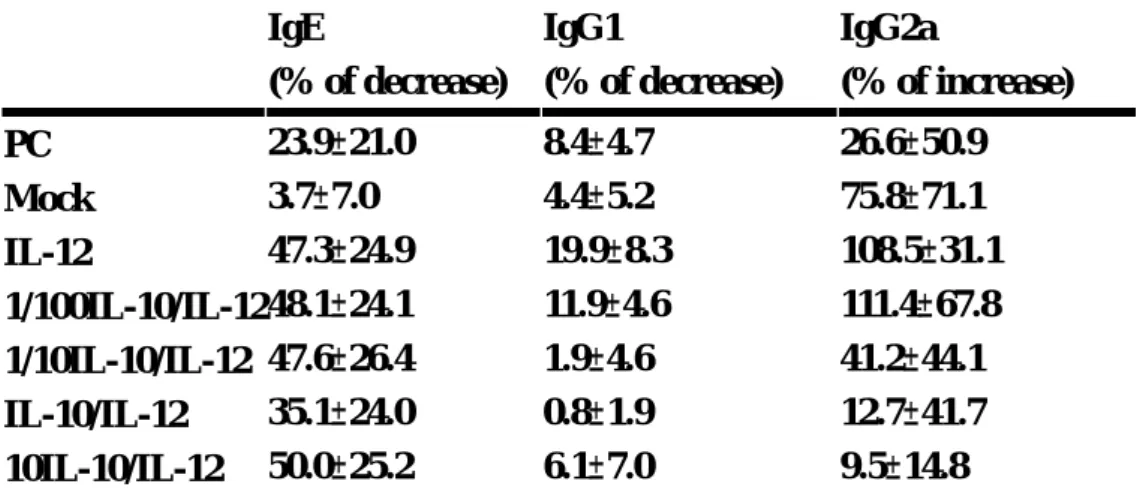
Table 1. The changes of serum antibodies in mice
IgE
(% of decrease)
IgG1
(% of decrease)
IgG2a
(% of increase)
PC 23.9±21.0 8.4±4.7 26.6±50.9
Mock 3.7±7.0 4.4±5.2 75.8±71.1
IL-12 47.3±24.9 19.9±8.3 108.5±31.1
1/100IL-10/IL-1248.1±24.1 11.9±4.6 111.4±67.8 1/10IL-10/IL-12 47.6±26.4 1.9±4.6 41.2±44.1 IL-10/IL-12 35.1±24.0 0.8±1.9 12.7±41.7 10IL-10/IL-12 50.0±25.2 6.1±7.0 9.5±14.8
Fig.1 The expression levels of IL-5 in BALFs
IL-5
0 50 100 150 200 250
PC Mock IL-12
1/100IL-10/IL-12 1/10IL-10/IL-12
IL-10/IL-12 10IL-10/IL-12
pg/ml
IL-5
4
Fig. 2 The expression levels of IFN-γin BALFs
IFN-γ
0 50 100 150 200 250
PC Mock IL-12
1/100IL-10/IL-12 1/10IL-10/IL-12
IL-10/IL-12 10IL-10/IL-12
pg/ml
IFN-γ
Fig.3 The expression levels of IL-12 in BALFs
IL-12
0 1000 2000 3000 4000
PC Moc
k IL-12 1/100IL-10/
IL-1 2
1/10IL-10/IL- 12
IL-10/IL-12 10IL-10/IL-12
pg/ml
IL-12
Fig.4 The expression levels of IL-10 in BALF
ig.5 The expression levels of eotaxin in BALFs s
IL-10
0 5000 10000 15000 20000 25000
PC Mock IL-12
1/100IL-10/IL-12 1/10IL-10/IL-12
IL-10/IL-12 10IL-10/IL-12
pg/ml
IL-10
F
eotaxin
0 50 100 150
PC Mock IL-12
1/100 IL-10/IL-12
1/10IL-10/IL-12 IL-10/IL-12
10IL-10/IL-12
pg/ml
eotaxin
1.Either the treatment of Ad-IL-10 or Ad-IL-12 inhibited the production of VA-specific IgE antibody. However, given IL-12 only could significantly
ion with
press eotaxin production.(Fig.5)
is animal
討論
he incidence of asthma has increased substantially in the last two decades, d variety of therapeutic agents. It is caused by the dysregulated O
suppress the secretion of IgG1 and enhance IgG2a production(Table1.).
2.The treatment with Ad-IL-12 only could markedly suppress the expression of IL-5 and induce the production of IFN-γ. However, the combinat
Ad-IL-12 and Ad-IL-10 did not show synergistic effect.(Fig.1, Fig.2)
3.High levels of IL-12 and IL-10 were detected in BALF from Ad-IL-10 and Ad-IL-12 treated-mice.(Fig.3,Fig.4)
4.In the dose of 108pfu, Ad-IL-12 could not significantly inhibit the secretion of eotaxin. However, Ad-IL-10 might sup
5.In conclusion, 1x10⁸pfu of Ad-IL-12 combines with 1x10⁷pfu of Ad-IL-10 had the best therapeutic effect to inhibit the airway inflammation in th
model.
(四)研究 T
despite increase
production of cytokines secreted by the allergen-specific type 2 T helper (Th2) cells. Th2 cells secrete IL-4, IL-5, IL-10, and IL-13 and there by induce the production of IgE and promote eosinophil mediated inflammation. In contrast, Th1 cells secrete IL-2 and IFN-γ and promote cellular immunity and the production of IgG2a. In this study, we prepared IL-12 and IL-10 cytokines-expressing adenoviruses (Ad-IL-12, Ad-IL-10) and apply these vectors in an ovalbumin (OVA)-induced murine animal model of asthma. The cytokine patterns in BALF and the antibody titers were measured to evaluate the therapeutic effects of cytokines in this murine model of asthma. Compared to the positive control, we found that combination of IL-12 and IL-10 significantly suppressed the IgE production, enhanced IgG2a secretion, and inhibited the production of IL-5 and eotaxin.
6