行政院國家科學委員會專題研究計畫 成果報告
電漿沈浸式離子植入處理對受應力狀態下之含鈦矯正線在 不同酸鹼值含氟人工唾液中耐蝕性質之影響
計畫類別: 個別型計畫
計畫編號: NSC94-2314-B-040-021-
執行期間: 94 年 08 月 01 日至 95 年 07 月 31 日 執行單位: 中山醫學大學牙醫學系
計畫主持人: 李慈心 共同主持人: 黃何雄
計畫參與人員: 陳靜宜,王祈力
報告類型: 精簡報告
處理方式: 本計畫涉及專利或其他智慧財產權,2 年後可公開查詢
中 華 民 國 95 年 11 月 1 日
Abstract
The aim of this study was to investigate the effects of fluoride ion concentration and plasma immersion ion implantation (PIII) treatment on the corrosion behavior of different titanium (Ti)-containing dental orthodontic archwires (including Ni-Ti, Ni-Ti- Cu, Ti-Mo-Zr-Sn, and Ti-Nb alloys) using cyclic potentiodynamic polarization curve measurements in acidic artificial saliva. Different NaF concentrations (of 0%, 0.2%, and 0.5%), simulating the fluoride contents in commercial toothpastes, were added to the artificial saliva. The PIII surface treatment was carried out in a mixed Ar/N2
environment with an implantation density of 5 x 10¹⁷ ions/cm2. Surface characterization was analyzed using x-ray photoelectron spectrometry. Cyclic potentiodynamic polarization curves showed that the presence of fluoride ions destroyed the protective ability of the TiO2 film on the Ti-containing archwires, thus significantly decreasing the corrosion resistance of the tested alloys. Among the tested Ti-containing archwires, the Ni-Ti and Ni-Ti-Cu archwires were more susceptible to fluoride-enhanced corrosion, while the Ti-Nb archwire showed the lowest susceptibility. Furthermore, the PIII surface treatment improved the corrosion resistance of the tested Ti-containing archwires in acidic artificial saliva, by decreasing the corrosion rate and anodic current density.
Key words: fluoride, plasma immersion ion implantation, corrosion, titanium, orthodontic archwire.
INTRODUCTION
Nickel-titanium (NiTi) archwires are widely used for dental orthodontic applications due to their good working, mechanical1-3, and anticorrosion1,4-7 properties.
However, although NiTi archwires have a protective surface passive film (containing mainly TiO2), Ni and/or Ti ions may still be released from the alloy surface into the oral environment through corrosion processes7. The corrosion resistance of orthodontic wire is an important factor determining its biocompatibility, because the corrosion process has negative consequences on its biocompatibility. Therefore, extensive studies on the corrosion resistance of NiTi orthodontic archwires have been reported4,8-13. However, the information on the corrosion resistance of other commercial Ti-containing archwires (e.g., NiTiCu, TiMo, and TiNb alloys) is not well known.
In oral environments, fluoride-containing commercial mouthwashes, toothpastes, and prophylactic gels are widely used to prevent dental caries and relieve dental sensitivity. However, detrimental effects of fluoride ions on the corrosion resistance of Ti and Ti alloys have been extensively reported in the past decade14-20. Fluoride ions are very aggressive toward the protective TiO2 film formed on pure Ti, and Ti and NiTi alloys. Because the outermost surface of a Ti-containing archwire may contain a TiO2
film with various amounts of other oxides, fluoride-enhanced corrosion of commercial Ti-containing orthodontic archwire can also occur. To the present, research on this issue is still very limited.
Biomaterial surface treatments have a critical influence on biocompatibility. The formation of an additional surface barrier layer against ion diffusion by implantation with different species has been considered for improving the corrosion resistance and performance of NiTi alloys21-25. For example, the implantation of nitrogen ions into the surface of NiTi wire causes surface hardening and can decrease frictional forces by as much as 70%26. In this study, surfaces of Ti-containing orthodontic archwires were modified using the plasma immersion ion implantation (PIII) technique, implanted with argon (Ar) and nitrogen (N2).
The purpose of this study was to investigate the effects of the fluoride concentration and plasma immersion ion implantation (PIII) surface treatment on the corrosion resistance of different Ti-containing dental orthodontic archwires in acidic artificial saliva.
MATERIALS AND METHODS Specimen preparations
Four different commercial Ti-containing dental orthodontic archwires from the same manufacturer (Ormco, Glendora, CA) were used in this study. The archwires examined included NI-TI®, COPPER NI-TI®, TMA®, and TITANIUM NIOBIUM FATM, respectively designated Ni-Ti, Ni-Ti-Cu, Ti-Mo-Zr-Sn, and Ti-Nb. The surface chemical compositions (wt%) of the as-received commercial Ti-containing archwires were identified using energy dispersive spectrometry (EDS) and are listed as follows:
Ni-Ti contained 56% Ni and 44% Ti; Ni-Ti-Cu contained 48% Ni, 41% Ti, and 11%
copper (Cu); Ti-Mo-Zr-Sn contained 78% Ti, 11% molybdenum (Mo), 6% zirconium (Zr), and 5% tin (Sn); and Ti-Nb contained 57% Ti and 43% niobium (Nb).
To improve the corrosion resistance of the tested Ti-containing archwires, a PIII surface treatment was carried out in a mixed Ar/N2 environment with an implantation density of 5 x 10¹⁷ ions/cm2. During the PIII treatment, the tested archwires were first cleaned using Ar plasma (from a radio frequency sputtering system) at 5 kV and 500 Hz for 5 min, followed by ion implantation at 30 kV and 100 Hz for 40 min in a mixed Ar/N2 environment (Ar: 8 sccm; N2: 25 sccm; 1.3 x 10⁻³ torr).
Surface chemical compositions of the passive film on the tested Ti-containing archwires with and without PIII treatment were analyzed using x-ray photoelectron spectroscopy (XPS).
Cyclic potentiodynamic test
An AUTOLAB PGSTAT 30 potentiostat (Eco Chemie BV, Utrecht, The Netherlands) was used to perform the cyclic potentiodynamic polarization curve measurements. The Ti-containing archwires with and without PIII treatment were used as the working electrode. The test archwire specimens were rinsed with alcohol followed by deionized water before the corrosion test. None of the tested archwires was subjected to any mechanical deformation during the corrosion tests. A saturated calomel electrode (SCE) and platinum sheet were used as the reference electrode and counter electrode, respectively. Modified Fusayama artificial saliva7,9,13 was used as the corrosion test electrolyte. This artificial saliva contained 400 mg/L NaCl, 400 mg/L KCl, 795 mg/L CaCl2·2H2O, 690 mg/L NaH2PO4·H2O, 300 mg/L KSCN, 5 mg/L Na2S·9H2O, and 1000 mg/L urea. To evaluate the fluoride ion concentration effect on the corrosion resistance of the as-received Ti-containing archwires, different NaF contents were added to the artificial saliva to prepare the 0.2 and 0.5 wt% NaF concentrations, simulating fluoride concentrations contained in commercial fluorinated toothpastes. The fluoride ion concentrations in the 0.2 and 0.5 wt% NaF-containing artificial saliva solutions were measured using a Cole-Parmer (Cole-Parmer Instrument Co., Vernon Hills, Ill) fluoride electrode (no. 27502-19) and revealed about 950 and 2300 ppm, respectively. Before the corrosion tests, all electrolytes (both with and without NaF addition) were adjusted to pH 5.0 using lactic acid, and were maintained at 37 °C. The electrolyte was deaerated with Ar gas for 1 hour before the archwires were dipped into the electrolyte for the subsequent corrosion test. At least 3 Ti-containing archwires were used for each corrosion test group. The corrosion test results showed good similarities.
RESULTS Surface analysis
The XPS surface analysis results for the as-received Ti-containing archwires before and after PIII treatment are listed in table 1. The oxides formed on the outermost surface of the as-received Ti-containing archwires were as follows: TiO2 (main) and NiO for the NiTi archwire; TiO2 (main), NiO, and CuO for the Ni-Ti-Cu archwire; TiO2 (main), MoO3, ZrO2, and SnO for the Ti-Mo-Zr-Sn archwire; and Nb2O5 (main) and TiO2 for the Ti-Nb archwire. TiO2 was obviously formed on the outermost surface of all Ti- containing archwires. After the PIII surface treatment, the oxides formed on the outermost surface of the 4 tested archwires contained NO and Ar in addition to the oxides mentioned above (except that there was no SnO on the T-Mo-Zr-Sn archwire).
Cyclic potentiodynamic polarization curve
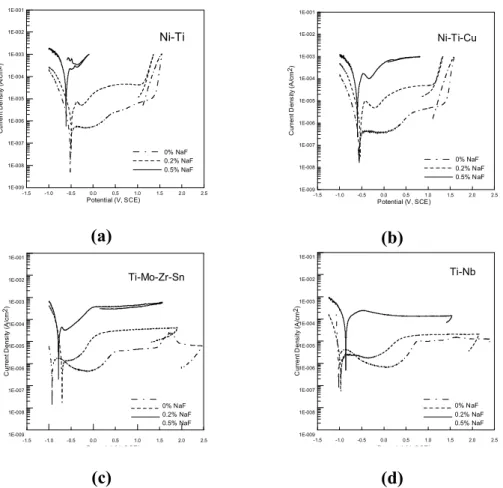
Figure 1 shows the cyclic potentiodynamic polarization curves of the as-received Ti-containing archwires in acidic artificial saliva with different NaF concentrations (0%,
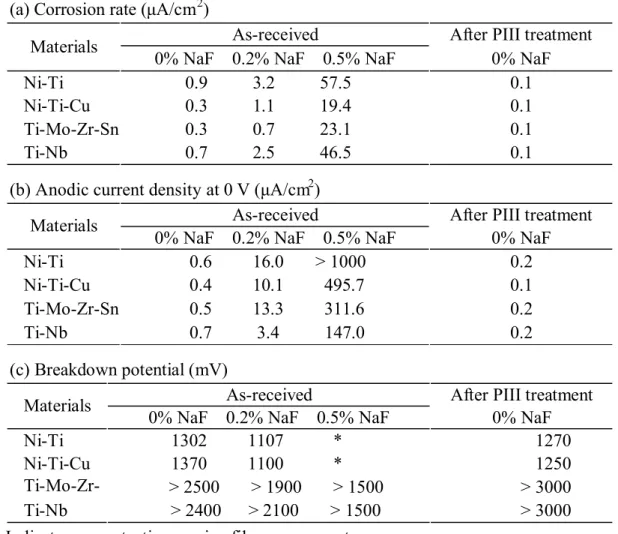
0.2%, and 0.5%). The corresponding corrosion parameters obtained from the polarization curves of the tested archwires are listed in table 2.
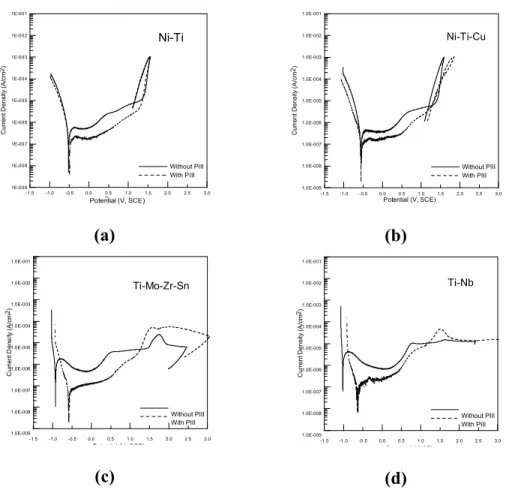
Figure 2 shows the cyclic potentiodynamic polarization curves of the Ti-containing archwires, with and without PIII treatment, in acidic fluoride-free artificial saliva. The corresponding corrosion parameters obtained from the polarization curves of the tested archwires are listed in table 2.
DISCUSSION Fluoride concentration effect
As shown in figure 1 and table 2, increasing the NaF concentration led to a decrease in corrosion resistance, thus decreasing the breakdown potential and significantly increasing the corrosion rate and anodic current density at 0 V (a few to thousands of times higher) of the tested Ti-containing archwires in acidic artificial saliva. However, the corrosion rate and anodic current density (at 0 V) of the tested Ti- containing archwires in 0.2% NaF-containing artificial saliva (Table 2) were still lower than those of the Ti-6Al-4V alloy in 0.25% NaF-containing artificial saliva27.
Note that in the artificial saliva with the highest NaF concentration (0.5%) (Figure 1), anodic active polarization behavior was observed for the Ni-Ti archwire instead of the active-to-passive transition behavior observed for the other 3 archwires.
Furthermore, we believe that no protective passive film was present on the Ni-Ti-Cu archwire at higher anodic potentials (> 750 mV) because the current density reached 1 mA/cm2. Huang27 reported that the protectiveness of TiO2 formed on Ti alloy is destroyed by fluoride ions when the NaF concentration exceeds 0.1% via the formation of a Ti–F complex compound (Na2TiF6). However, to the present, no comprehensive information concerning differences in fluoride-enhanced corrosion of various Ti- containing alloys has been available in the literature. According to the present results, it was clear that the TiO2-based passive film on the Ni-Ti and Ni-Ti-Cu archwires was destroyed in the 0.5% NaF-containing artificial saliva. However, the TiO2-containing passive film on the Ti-Mo-Zr-Sn and Ti-Nb archwires was not seriously attacked by the fluoride ions, which might have been related to the presence of some other oxides (except TiO2) in the surface passive film. In other words, the presence of MoO3, ZrO, and/or SnO on the Ti-Mo-Zr-Sn archwire and Nb2O5 on the Ti-Nb archwire might play an effective role in the corrosion resistance in fluoride-containing environments.
Furthermore, as shown in figure 1 and table 2, the Nb2O5 formed on the Ti-Nb archwire seemed to be more protective against fluoride ion attack compared to the oxides on the other 3 Ti-containing archwires.
On the other hand, the presence of Na2TiF6 on the fractured surface of cast Ti joint after the CERT in acidic fluoride-containing environment (Fig. 6) implied that
fluoride ions could destroy the protective passive film on Ti weld zone via the formation of Ti-F compound. In an acidic medium, NaF can induce hydrofluoric acid (HF)17). Then, the HF reacts with titanium oxides and locally dissolves the protective oxides layer by forming Ti-F compound on Ti surface18,19). In other words, fluoride ions can form a soluble complex with titanium ions derived from the protective titanium oxide layer. Without the protective oxide layer, acid corrosion can take place and Ti metal surface will be locally attacked. This might result in the acceleration of crack initiation on Ti weld zone during the CERT and FT. As the crack propagated inwards to the weld zone, the new crack tip would be generated and then attacked by acidic fluoride solution. This process would occur repeatedly during the crack propagation.
Consequently, the crack propagation was assisted. Therefore, the presence of 0.5% NaF in the acidic artificial saliva was detrimental to the mechanical properties of the cast Ti joint under the same welding pulse energy, leading to decreases in tensile strength, elongation, and fatigue life (Tables 1 and 2).
Effect of PIII surface treatment
As shown in figure 2 and table 2, the PIII treatment significantly improved the corrosion resistance, decreasing the corrosion rate (3~9-times lower) and anodic current density (2.5~4-times lower) of the tested Ti-containing archwires in artificial saliva. The improvement in the corrosion resistance of the Ti-containing archwires was believed to be related to the presence of NO and/or Ar on the outermost surface of the alloys, as listed in table 1. According to the present results, the PIII technique is a potential candidate for improving the corrosion resistance of Ti-containing archwires. However, further investigation should be carried out to obtain the optimal parameters for PIII surface treatment.
Tan et al.28 found that the breakdown potential of NiTi alloy in Hank’s solution, a simulated body environment, can be slightly increased by plasma source ion implantation with oxygen. Similar results were also reported by Sawase et al.29 However, in this study, the PIII treatment had no significant influence on the breakdown potential of the tested Ti-containing archwires in acidic artificial saliva (Figure 2a, b).
CONCLUSIONS
The presence of fluoride ions in artificial saliva was detrimental to the corrosion resistance of the tested Ti-containing archwires, especially at the higher fluoride concentration (NaF of 0.5%). This led to an increase in the corrosion rate and anodic current density (a few to thousands of times higher), and a decrease in the breakdown potential. Among the tested archwires, the TiO2-based passive film on the Ni-Ti and Ni- Ti-Cu archwires was more susceptible to fluoride-enhanced corrosion, while the Nb2O5- based passive film on the Ti-Nb archwire showed much lower susceptibility. The PIII
surface treatment improved the corrosion resistance of Ti-containing archwires in artificial saliva, leading to a decrease in the corrosion rate (3~9-times lower) and anodic current density (2.5~4-times lower).
ACKNOWLEDGEMENTS
The authors would like to thank the National Science Council, Taiwan for financial support (grant no. NSC 94-2314-B-040-021).
References
1. Moorleghem WV, Chandrasekaran M, Reynaerts D, Peirs J, Brussel HV. Shape memory and superelastic alloys: The new medical materials with growing demand.
Biomed Mater Eng, 8: 55-60, 1998.
2. Torrisi L. The NiTi superelastic alloy application to the dentistry field. Biomed Mater Eng, 9: 39-47, 1999.
3. Brantley WA, Eliades T. Orthodontic Materials: Scientific and Clinical Aspects.
Thieme, Germany, pp. 77-104, 2001.
4. Rondelli G, Vicentini B. Evaluation by electrochemical tests of the passive film stability of equiatomic NiTi alloy also in presence of stress-induced martensite. J Biomed Mater Res, 51: 47-54, 2000.
5. Thierry B, Tabrizian M, Trepanier C, Savadogo O, Yahia L’H. Effect of surface treatment and sterilization processes on the corrosion behavior of NiTi shape memory alloy. J Biomed Mater Res, 51: 685-693, 2000.
6. Shabalovskaya SA. Physicochemical and biological aspects of Nitinol as a biomaterial. Int Mater Rev, 46: 1-18, 2001.
7. Huang HH, Chiu YH, Lee TH, Wu SC, Yang HW, Su KH, Hsu CC. Ion release from NiTi orthodontic wires in artificial saliva with various acidities. Biomaterials, 24:
3585-3592, 2003.
8. Veldhuizen AG, Wever DJ, De Vries J, Busscher HJ, Uges DRA, Van Horn JR.
Electrochemical and surface characterization of a nickel-titanium alloy.
Biomaterials, 19: 761-769, 1998.
9. Huang HH. Corrosion resistance of stressed NiTi and stainless steel orthodontic wires in acid artificial saliva. J Biomed Mater Res Part A, 66A: 829-839, 2003.
10. Shin JS, Oh KT, Hwang CJ. In vitro surface corrosion of stainless steel and NiTi orthodontic appliances. Aust Orthod J, 19: 13-18, 2003.
11. Kim H, Johnson JW. Corrosion of stainless steel, nickel-titanium, coated nickel- titanium, and titanium orthodontic wires. Angle Orthod, 69: 39-44, 1999.
12. Hunt NP, Cunningham SJ, Golden CG, Sheriff M. An investigation into the effects of polishing on surface hardness and corrosion of orthodontic archwires. Angle Orthod, 69: 433-440, 1999.
13. Huang HH. Surface characterizations and corrosion resistance of nickel-titanium dental orthodontic wires in artificial saliva of various degrees of acidity. J Biomed Mater Res Part A, 74A: 629-639, 2005.
14. Di Carlo F, Ronconi LF, Gambarini G, Andreasi Bassi M, Quaranta M. The influence of fluorides on the electrochemical interaction between titanium and amalgam couples. J Dent Res, 80: 663 (Abstract #1096), 2001.
15. Watanabe E, Watanabe I, Okabe T, Goto G, Effect of topical fluoride on surfaces of Ti-based orthodontic wires. J Dent Res, 80: 663 (Abstract #1092), 2001.
16. Horasawa N, Marek M, Effect of fluoride from glass ionomer on discoloration and corrosion of titanium. J Dent Res, 80: 546 (Abstract #0153), 2001.
17. Nakagawa M, Matsuya S, Udoh K. Corrosion behavior of pure titanium and titanium alloys in fluoride-containing solutions. Dent Mater J, 20: 305-314, 2001.
18. Nakagawa M, Matsuya S, Udoh K. Effects of fluoride and dissolved oxygen
concentrations on the corrosion behavior of pure titanium and titanium alloys. Dent Mater J, 21:83-92, 2002.
19. Watanabe I, Watanabe E. Surface changes induced by fluoride prophylactic agents on titanium-based orthodontic wires. Am J Orthod Dentofac Orthop, 123: 653-656, 2003.
20. Huang HH. Effects of fluoride concentration and elastic tensile strain on the corrosion resistance of commercially pure titanium. Biomaterials, 23: 59-63, 2002.
21. Green SM, Grant DM, Wood JV, Johanson A, Johnson E, Sarholt-Kristensen L.
Effect of N+ implantation on the shape memory behaviour and corrosion resistance of an equiatomic NiTi alloy. J Mater Sci Lett, 12: 618-619, 1993.
22. Wu SK, Chu CL, Lin HC. Ion nitriding of equiatomic TiNi shape memory alloys II:
corrosion properties and wear characteristics. Surf Coat Tech, 92: 206-211, 1997.
23. Fu Y, Wu XF, Wang Y, Li B, Yang SZ. Study of corrosion resistance property and microstructure of TiNi shape memory alloys modified by pulsed high-energy density plasma. Appl Surf Sci, 157: 167–177, 2000.
24. Chen J, Conrad JR, Dodd RA. Methane plasma source ion implantation (PSII) for improvement of tribological and corrosion properties. J Mater Process Tech, 49:
115–124, 1995.
25. Riviere JP. Formation of hard coatings for tribological and corrosion protection by dynamic ion mixing. Surf Coat Tech, 108–109: 276–283, 1998.
26. Kusy RP, Tobin EJ, Whitley JQ, Sioshansi P. Frictional coefficients of ion-implanted alumina against ion-implanted beta-titanium in the low load, low velocity, single pass regime. Dent Mater, 8: 167-172, 1992.
27. Huang HH. Effect of fluoride and albumin concentration on the corrosion behavior of Ti-6Al-4V alloy. Biomaterials, 24: 275-282, 2003.
28. Tan L, Dodd RA, Crone WC. Corrosion and wear-corrosion behavior of NiTi modified by plasma source ion implantation. Biomaterials, 24:3931-3939, 2003.
29. Sawase T, Wennerberg A, Baba K, Tsuboi Y, Senerby L, Johansson CB, Albrektsson T. Application of oxygen ion implantation to titanium surfaces: effects on surface characteristics, corrosion resistance, and bone response. Clin Implant Dent Relat Res, 3:221-229, 2001.
Table 1. Results of the x-ray photoelectron spectrometric surface analysis for the Ti-containing archwires before (in the as-received condition) and after PIII treatment.
Outermost surface passive film structure Materials
As-received After PIII treatment
Ni-Ti TiO2*, NiO TiO2*, NiO, NO, Ar
Ni-Ti-Cu TiO2*, NiO, CuO TiO2*, NiO, CuO, NO, Ar Ti-Mo-Zr-Sn TiO2*, MoO3, ZrO2,
SnO TiO2*, MoO3, ZrO2, NO, Ar
Ti-Nb Nb2O5*, TiO2 Nb2O5*, TiO2, NO, Ar
* Indicates that this compound was the main oxide of the passive film.
Table 2. Corrosion parameters obtained from the polarization curves in artificial saliva with and without NaF, of Ti-containing archwires before (in the as-received condition) and after PIII treatment.
(a) Corrosion rate (μA/cm2)
As-received After PIII treatment
Materials 0% NaF 0.2% NaF 0.5% NaF 0% NaF
Ni-Ti 0.9 3.2 57.5 0.1
Ni-Ti-Cu 0.3 1.1 19.4 0.1 Ti-Mo-Zr-Sn 0.3 0.7 23.1 0.1
Ti-Nb 0.7 2.5 46.5 0.1
(b) Anodic current density at 0 V (μA/cm2)
As-received After PIII treatment
Materials
0% NaF 0.2% NaF 0.5% NaF 0% NaF
Ni-Ti 0.6 16.0 > 1000 0.2
Ni-Ti-Cu 0.4 10.1 495.7 0.1
Ti-Mo-Zr-Sn 0.5 13.3 311.6 0.2
Ti-Nb 0.7 3.4 147.0 0.2
(c) Breakdown potential (mV)
As-received After PIII treatment
Materials 0% NaF 0.2% NaF 0.5% NaF 0% NaF
Ni-Ti 1302 1107 * 1270
Ni-Ti-Cu 1370 1100 * 1250
Ti-Mo-Zr-
Sn > 2500 > 1900 > 1500 > 3000 Ti-Nb > 2400 > 2100 > 1500 > 3000
* Indicates no protective passive film was present.
-1.0 0.0 1.0 2.0
-1.5 -0.5 0.5 1.5 2.5
Potential (V, SCE) 1E-009
1E-008 1E-007 1E-006 1E-005 1E-004 1E-003 1E-002 1E-001
CurrentDensity(A/cm
2 )
0% NaF 0.2% NaF 0.5% NaF
NiTi
(a)
-1.0 0.0 1.0 2.0
-1.5 -0.5 0.5 1.5 2.5
Potential (V, SCE) 1E-009
1E-008 1E-007 1E-006 1E-005 1E-004 1E-003 1E-002 1E-001
CurrentDensity(A/cm
2 )
0% NaF 0.2% N aF 0.5% N aF
NiTiCu
(b)
-1.0 0.0 1.0 2.0
-1.5 -0.5 0.5 1.5 2.5
Potential (V, SCE) 1E-009
1E-008 1E-007 1E-006 1E-005 1E-004 1E-003 1E-002 1E-001
CurrentDensity(A/cm
2 )
0% N aF 0.2% NaF 0.5% NaF
TMA
(c)
-1.0 0.0 1.0 2.0
-1.5 -0.5 0.5 1.5 2.5
Potential (V, SCE) 1E-009
1E-008 1E-007 1E-006 1E-005 1E-004 1E-003 1E-002 1E-001
CurrentDensity(A/cm
2 )
0% N aF 0.2% NaF 0.5% NaF
TiNb
(d)
Figure 1. Cyclic potentiodynamic polarization curves of the Ti-containing archwires (Ni-Ti, Ni-Ti-Cu, Ti-Mo-Zr-Sn, and Ti-Nb archwires) in acidic artificial saliva with different NaF concentrations.
Ni-Ti
Ti-Mo-Zr-Sn Ti-Nb
Ni-Ti-Cu
-1.0 0.0 1.0 2.0 3.0
-1.5 -0.5 0.5 1.5 2.5
Potential 1E-009
1E-008 1E-007 1E-006 1E-005 1E-004 1E-003 1E-002 1E-001
CurrentDensity(A/cm
2 )
Without PIII With PIII
N iTi
(a)
-1.0 0.0 1.0 2.0 3.0
-1.5 -0.5 0.5 1.5 2.5
Potential (V, SCE) 1.0E-009
1.0E-008 1.0E-007 1.0E-006 1.0E-005 1.0E-004 1.0E-003 1.0E-002 1.0E-001
CurrentDensity(A/cm
2 )
Without PIII With PIII
NiTiCu
(b)
-1.0 0.0 1.0 2.0 3.0
-1.5 -0.5 0.5 1.5 2.5
Potential (V, SCE) 1.0E-009
1.0E-008 1.0E-007 1.0E-006 1.0E-005 1.0E-004 1.0E-003 1.0E-002 1.0E-001
CurrentDensity(A/cm
2 )
Without PIII With PIII
TMA
(c)
-1.0 0.0 1.0 2.0 3.0
-1.5 -0.5 0.5 1.5 2.5
Potntial (V,SCE) 1.0E-009
1.0E-008 1.0E-007 1.0E-006 1.0E-005 1.0E-004 1.0E-003 1.0E-002 1.0E-001
CurrentDensity(A/cm
2 )
Without PIII With PIII
TiN b
(d)
Figure 2. Cyclic potentiodynamic polarization curves of the Ti-containing archwires (Ni-Ti, Ni-Ti-Cu, Ti-Mo-Zr-Sn, and Ti-Nb archwires), with and without PIII treatment, in acidic fluoride-free artificial saliva.
Ni-Ti
Ti-Mo-Zr-Sn Ti-Nb
Ni-Ti-Cu
Potential (V, SCE)