1,2 2 2
1 2
94ѐ8͡23͟צந 94ѐ9͡27࣒͟Լ 94ѐ9͡28͟ତצΏྶ
ᓑඛˠĈӓڔ౾̀ έ̚ξ406Δ͏ડ ֧̄ ̄ޒ11ཱི ̚έࡊԫ̂ጯٸडԫఙր
ྖĈ0928246662 ็ৌĈ(03) 4891792 ̄ܫቐĈ[email protected]
(PET)
septa
(coincident events)
50% PET
ᙯᔣෟĈ
८̄ᗁᄫ2005;18:225-233
݈֏
ᐌ Ϡ ᗁ ̶ ̄ ᇆ ည ۞ ൴ ण Ă ϒ ̄ ཝ ᕝ ᆸ ౄ ᇆ
(positron emission tomography; PET) Яࠎ౯ីୂޘᄃ
ؠณਕ˧Ăдன̫८̄ᗁጯ̏̚ҫѣࢦࢋ̝гҜĄϒ̄ཝᕝᆸౄᇆ۞ؠณপّਕឰᇆညࢦޙޢ̝វ৵ࣃܑ
߿វ̚Ԋొٸडّ८፧ޘ۞၆ณĂ่̙Ξϒቁ۞ቁ
ܲۏநຍཌྷ֭೩ֻᓜԖ۞ˠវྤੈĂՀΞӀϡᇾᆽᘽ ۏдវ̰ᐌॡԔត̶̼̝ҶĂෞҤᘽநણᇴĂͽΐ
ిາᘽ۞ฟ൴Ą҃ĂϤٺϒ̄ཝᕝᆸౄᇆߏӀϡ
Ъ (coincidence) ઍീ۞ࣧநֽјညĂ̚хдధкሕд ણᇴᑝPETณീ۞ቁّĂֱЯ৵Β߁ઍᑭጡ۞
ຏॡมड़ᑕ (dead time effect) ౄј۞ࢍᇴதຫεăઍᑭጡ ड़தត̼ăਕ̂̈నؠăᐌְ፟Іड़ᑕăᖐഴड़ ᑕᄃडड़ᑕඈĄ
ϒ̄дវ̰ᄃ̢̄໑யϠ511 keV۞Ѝ̄ĂΞਕ ᄃᖐயϠ۞Ϲ̢үϡߏӌड (Compton scatter-
ing)ĂЍ̄ົᖼொొЊਕณගᖐ̚۞֭̄ͷயϠ֎ޘ
۞ઐԶĄЪְІܮ̙Г၆ᑕٺࣧώ۞តҜཉĂซ҃
ౄј८Ҝཉ۞ҤĂࢫҲ˞ؠณ۞ቁّĄѩγĂॲ ፂҹֽЯů̥ࡊ (Klein Nishina) ̳ё [1]Ă༊डЍ̄ઐ Զ֎ޘ̈ٺ45ޘॡĂΞਕΪᖼொ115 keV۞ਕณග̟аྯ
̄Ă̪֭ܲѣ396 keVĄފٺPETઍᑭጡ۞ਕณྋژޘ ࢨט (15%~30% FWHMд511 keV)â࣎Βӣडүϡ
۞ЪְІޝΞਕ̪జਕ (350~650 keV) ତצĂЯ ѩĂ̙टٽӀϡਕ̶ֽडЪְІᄃϏडְ
ІĂซ҃ౄјᇆညݡኳ۞ሀቘᄃؠณቁޘ۞ࢫҲĄ дٙତќז۞ЪְІ̝̚Ăӌडٙҫ۞ͧ
ּჍࠎड̶தĂ̂̈פՙٺᇴ࣎ણᇴĂΒӣडۏ វ۞̂̈ᄃޘăPETବೡጡ۞ೀңඕၹăਕቑಛ ඈĄ˟ჯPET۞ड̶தࡗࠎ15% (ѣinter-slice septa)Ă Ӏϡseptaֽ֨ͤҋπࢬ۞डԛјШ۞LOR (line
of response)ĂЯѩਕѣड़ࢫҲडְІĂҭ˵࠹၆ᜁࠗ
˞ࢋְІ۞ីୂޘĄܕѐֽࠎ˞ᆧΐրីୂޘĂ૱
septa྅ཉொੵĂͽᕜפྭπࢬ (cross plane) ۞ࢋְ
ІĂჍࠎˬჯሀёĂड̶த˘ਠౌ྿30~50%
[2]Ăٙͽдˬჯϒ̄ཝᕝᆸౄᇆր̚Ăтңѣड़ঐ
ੵडְІࠎԼචޢᜈ۞ؠณඕڍ۞ࢦࢋᙯᔣĄ
डᒣϒ
ᔵೡ̢໑Ѝ̄யϠӌड۞ۏநপّᅲࠎ ኑᗔĂҭѣೀ࣎LOR۞পّΞͽϡֽෞҤड̶ҶĂ
֭೩ֻडᒣϒ۞ΞਕّĈ(1) дۏវγLORٙᐂז۞
ְІᇴкࠎडְІĂЯࠎࢋְІ (primary event) ԛ ј۞LOR˘ؠົజԊࢨдۏវ̰ (నᐌְ፟І̏གྷజ
ொੵ)ć(2) ड̶Ҷߏ˘࣎ត̼ቤၙ۞בᇴĂͷ̙۩
มྤੈć(3) дਕᙉ̚ĂҲٺࢋਕਕณ۞ְІ̂ొ̶
ࠎडְІć(4) डְІࡶརдਕ̰ĂкΗֽҋಏ ѨडĄॲፂֱ̙Т۞পّࢉϠЧёЧᇹ۞डᒣ ϒ͞ڱĂࢋડ̶ࠎ̂ቑᘞĈ(1) ॲፂٙԸᇆྤੈ
ീड̶ҶĂּтĈ̰೧Ъڱ (curve fitting method)ă ਕૄغڱ (energy-baesd method)ăଡ᎕ഴᖴڱ (convo-
lution subtraction method)ć(2) ͽࢦޙޢᇆညࠎૄᖂ۞
ड࣒ϒڱĂּтĈሀё᎕غڱ (model-based method)ăࢦ ޙૄغڱ (reconstruction-based method)Ą
ѩγĂܕѐֽԧࣇࡁ൴डՁܡጿ྅ཉڱ (beam-
stopper method) ͽซҖडᒣϒĄѩᄃ݈͞ڱࢋम
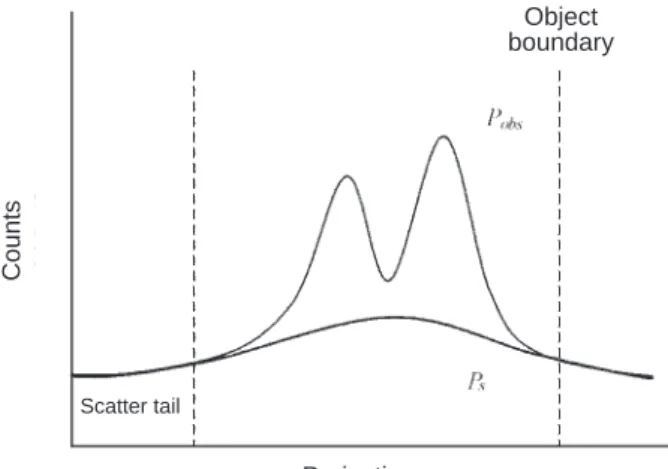
ளдٺՐड̶Ҷ۞ԫఙ̙ТĂᖰ̶тޢĄ̰೧Ъڱ
ѩᙷडᒣϒڱ [3,4] ߏӀϡԸᇆྤफ़̚ۏវγड
۞ณͽᑢЪྋژ͞ёĂтFigure 1ٙϯĂͽ˟Ѩкีё
ٕߏ̳ёֽᑢЪᙝቡ۞डԍ͐ (Ps
)Ąѩڱࢋߏ
ॲፂ၁ᅫ۞៍ീྤफ़ (Pobs
)Ă֭నдۏវγజᐂ۞
ЪְІБొౌֽҋٺड (నᐌְ፟І̏ԆБజொੵ
۞݈೩˭)Ă֭ͷड̶Ҷࠎ˘ҲᐛבᇴĄѩ͞ڱਕѣड़
࣒ϒֽҋFOV (field of view) γ۞डᚥĂͷѣങˢ ᖎಏᄃࢍზड़த̝ᐹᕇĄࢋᕇࠎड̶Ҷ̙֍
Ξͽϡπ۞בᇴֽܕҬĂ͍дටౄᇆĂᖐޘ ត̼ܧ૱̂ĂΞਕົҤٕҲҤडְІĄΩ˘࣎યᗟ дٺొବೡॡĂ֗វҫፂFOV̰ྵ̂۞ቑಛĂጱ
डԍ͐࠹၆ޝ̙̈҃ٽᑢЪĂЯѩౄј֗វ͕̚डณ
ෞҤ۞̙ቁĄ̰೧ЪڱΞͽѣड़ᑕϡٺᐝొPETࡁ տĂЯࠎᐝొౄᇆѣҫፂFOV̰̈ቑಛ̝পّĂΞቁ
ܲۏវγ۞डԍ͐ົᔌܕٺĄ
ਕૄغڱ
ТՎќפкਕྤੈ۞ԫఙ̏ᇃھϡٺಏЍ̄ཝ ᕝᆸ (single photon emission tomography; SPECT) ౄᇆĄ
ᙷݭ۞͞ڱ [5-9] Ӏϡ̙Тਕม۞ྤੈͽീडְ
ІᄃࢋְІĂ֭ͷన۩ม̙̚Тਕ۞ࢍᇴࣃѣ
ؠּͧĄдPET̚Ăਕૄغڱࢋ̶ࠎԫఙĈ
DEW (dual-energy window) ͞ڱֹϡ˘࣎Ҳٺਕ۞
ӌਕĂ҃ETM (estimation of trues method) ͞ڱֹ
ϡΩ˘࣎నཉдਕ̝̚۞ਕĂֱ͞ڱౌֹϡ ᗝγਕ۞ീณࣃͽෞҤдਕ̚۞डᚥĄ
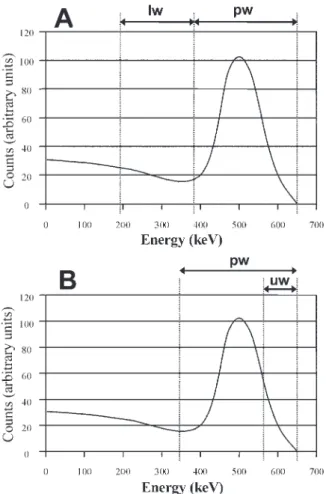
DEW [5-6]
͞ ڱ ̚ Ă д ਕ ̚ ۞ Ϗ ड ְ ІUEunsc ؠཌྷт˭Ĉ
(1)
тFigure 2 (A) ٙϯĂ̚UELE̶Ҿܑਕ
(photopeak window) ᄃҲਕ (lower window)ĂR
scࠎਕ̚डְІ۞ּͧ (LEsc
/UE
sc)ĂR
unscࠎਕ̚ϏडְІ۞ּͧ (LEunsc
/UE
unsc)ćѩ˟ણᇴߏӀϡቢडٕᕇड
дͪវ۞၁រ̚ՐĄ၁រ̚Ξͽ៍၅זRunscд
transaxial FOV̚ೀͼࠎ˘૱ᇴĂ҃R
scѣྵ̂۞ត̼Ą дaxial͞ШĂϤٺઍᑭೀңඕၹ۞યᗟĂRunscᄃRsc࠰ࠎ̙Ӯ̶̹ҶĄд˘ؠ۞ቑಛ̰Ăֱּͧᄃۏវ̂̈
ᙯĂЯѩΞͽְА੫၆পؠ۞PETବೡᆇซҖሀᑢĄ
҃Ăдྵ̂ۏវ۞ౄᇆ̚ĂRscдradial͞Шត̼ྵ̂Ăౄ
јۏវγಛ۞डְІົజҤĂЯѩ੫၆ྵ̂۞ۏវ
ֹϡؠ۞RscࣃĂּтටౄᇆĂΞਕ̙ዋ༊ĄѩγĂ
Scatter tail
Projection
Object boundary
Counts
Figure 1. Curve fitting method
ϤٺRscᄃۏវ۞ഴܼᇴѣᙯĂѩ͞ڱ၆ܧӮ̹ۏኳϺ
ڱઇዋ༊۞ᒣϒĄ
ETM͞ڱ [7] నдߙ࣎ਕณ⼈ࣃͽ˯జᐂ۞
ЪְІΪΒӣϏडְІĄѩనߏЪந۞ĂЯࠎֹϡ
BGOវ۞PETବೡጡĂ༊ਕณࠎ511 keVॡĂਕณྋ
ژޘࡗࠎ20%ĄETM͞ڱ۞ֹϡĂтFigure 2 (B) ٙϯĂ ᗝγ۞ਕనؠд550Ҍ650 keV̝มĂ֭ͷᄃࢋਕ (350-650 keV) ۞ਕณቑಛొ̶ࢦᝑĄ̳ёؠཌྷт
˭Ĉ
(2)
Ӏϡдਕٙפ۞ࢍᇴࣃࢷ˯˘ּͧЯ̄ޢĂ ΞՐৌ၁ЪְІ۞ീࣃĂГӀϡਕࢍᇴࣃᄃ
ീ۞ৌ၁ЪְІᇴ࠹ഴĂགྷ࿅πᕭጡ (smooth fil-
ter) நͽࢫҲϒဦ (sinogram) ˯۞ࢍᄱमĂΞ
ड̶ҶĄ̚fࠎּͧЯ̄ĂᄃLORăઍᑭጡϲវ
֎ăਕቑಛѣᙯĂ҃ᄃड̶ҶᙯĂЯѩΞְАՐ
Ąਕૄغڱ۞ࢋрдٺΞͽ҂ᇋֽҋFOVγ۞
डᚥĂтڍֹϡдਕณྋژޘՀр۞វ˯Ăּт
LSOĂѩڱᑕྍਕזՀр۞ड़ڍĄਕૄغڱࢋ۞
ᕇдٺॲፂ˪ڗ (Poisson) ീณ۞ඕڍซҖडࢍზΞ ਕົ͔ˢޝкᗔੈĂ͍ߏдજၗౄᇆٕߏࢍᇴࣃѣࢨ
۞ଐڶ˭Ą
᎕ഴᖴڱ
࠹၆ٺਕૄغڱଂᗝγ۞ീณ̚ଯኢडྤ
ੈĂ᎕ഴᖴڱ (convolution subtraction methodĂᖎჍ
CVS) [2,10-12] నड८͕ᄃۏវ̂̈ͽ̈́߿ޘ̶Ҷ
ᙯ۞݈೩̝˭Ăड̶ҶΞۡତӀϡ˘࣎ᇾ۞ਕ
Ըᇆྤੈᄃड८͕ү᎕ᖼೱՐĄѩ͞ڱܐֹ
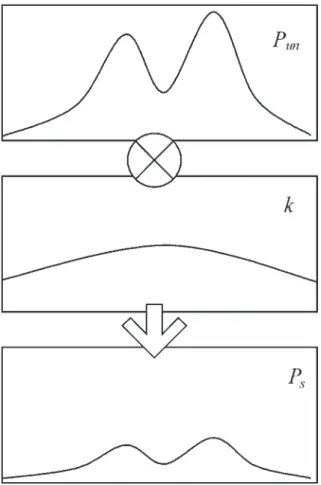
ϡٺᒖё2D PET̚Ăдߙ˘࣎পؠ̷ࢬ۞डԸᇆ̶Ҷ Ξϡ˘ჯ᎕̳ёܑϯĈ
(3)
тFigure 3ٙϯĂ̚PunࠎࢋְІ۞˘ჯԸᇆćk ࠎᄃ۩ม࠹ᙯ۞ड८͕בᇴ (scatter kenel) ΞӀϡٸཉ ቢडٺវ̰̙ТҜཉՐĄҭߏ̳ё (3) д၁ү˯
ѣӧᙱĂЯࠎԧࣇڱפPun۞ྤੈĄٙضԧࣇΞͽ
ֹϡീณࣃPobsͽפ̳ё (3) ̚۞Pun̪҃Ξჯ˘ؠ۞
ቁّĄ˘ჯ᎕ഴᖴڱ၆ٺ2D PETߏޝቁ۞ć
҃ĂϤٺ3D PET̚FOVγ۞डҫ࠹༊۞ּͧ [13]ĂЯ ѩĂࠎ˞҂ᇋFOVγ۞डᚥĂؼҩؠཌྷ˟ჯड ८͕בᇴĂ֭ͷ੫၆Ըᇆྤफ़ેҖ˟ჯ᎕т˭Ĉ
(4)
̚Ըᇆྤੈᄃड८͕בᇴؠཌྷࠎradialᄃaxial
࣎͞ШĂ ܑ˟ჯ᎕ፆү̄Ą˯۞˟ჯ᎕ഴᖴ ڱͽᝑڱΐͽࢍზĂ֭ͷӀϡീณࣃPobs̙ᕝᝑҌќ ᑦĂͽҹڇ၁រ̚ڱۡତפPunྤੈ۞યᗟćҌٺ
ड८͕ТᇹΞͽӀϡᕇٕቢडפᇹ҃זĄѩ͞ڱ̏
జᙋ၁дᐝొବೡΞயϠ։р۞ᒣϒड़ڍĄ᎕ഴᖴڱ дજၗౄᇆ˯ѣ࠹༊۞ᐹ๕ĂЯࠎडෞҤૄώ˯
ߏᗔੈ۞Ăٙͽ̙ົᚥᗝγ۞ᗔੈҌडᒣϒޢ۞
Figure 2. The dual-energy windows set for (A) the DEW method and (B) the ETM method
Ըᇆྤफ़ĄΩ˘ᐹᕇࠎѩ͞ڱ̙ᅮࢋќะᗝγ۞ਕྤ
ੈĂЯѩдཝࢍზ˯Հѣड़தĄ҃Ă༊ዎ࿃Հኑᗔ
۞߿ޘ̶ҶĂּтටٕཛొౄᇆॡĂؕ۞నܮ
ڱјϲĄࠎ˞Լචѩ˘ዋᑕّ۞ᕇĂధкࡁտ˧ٺ ܧؠّన (non-stationary assumption) ۞ֹϡĂۏ វ̂̈ă߿ޘ̶Ҷăઍᑭጡϲវ֎ৼˢ҂ᇋĂ൴णՀ ࠎჟቁ۞ड८͕ሀݭ [14]ĂЯѩܧؠّ᎕ഴᖴڱ ܮјࠎ˘ໂሕ˧ͷ΄ˠຏᎸ̝ᛉᗟĄ
ሀёૄغڱ
ЯࠎЍ̄дۏኳ̚үϡ۞ۏந፟ט̏జ˞ྋĂԧࣇ ΞᖣϤѩϹ̢үϡ۞পّᄃPETٙפ۞ࢦޙᇆညྤ
फ़Ă֭੨Ъᇴࣃ̶ژٕᄋгΙᘲԫఙሀᑢፋ࣎࿅ͽࢍ
ზड၆Ըᇆྤफ़۞ᚥĂѩᙷݭ۞डᒣϒჍࠎሀ ёૄغڱ [15-21]Ąᙷ͞ڱࢋߏӀϡਕ̚ಏѨ
ӌडҫፋវडְІ̂ొЊ۞পّ (~75%) [14]Ă
֭ Ӏ ϡ ቢ ᎕ ̶ ڱ ͽ ಏ Ѩ ड ෞ Ҥ к Ѩ ड ۞ ณ Ą
Watson [15-17] ያሀᑢЍ̄۞ዏொĂ൴णϫ݈జᇃھ
ֹϡ۞Single Scatter Simulation (SSS) ͞ڱĂѩ͞ڱΪ҂
ᇋ̚˘̢࣎໑Ѝ̄யϠಏѨӌडĂͽࢍზ
ЪְІ̚πӮ۞डᚥĄ
SSS
͞ڱᑕϡ˞ҹֽЯů̥ࡊ̳ёͽ̶ᏰՏ˘࣎LORֽ̚ҋߙ˘̈डડા۞ᚥĂֱ֭̈डᕇ
ͽშॾ͞ё̶Ҷдፋ࣎ۏវ̝̚ĂГᖣϤֱडᕇᚥ۞᎕̶҃ՐಏѨड۞ᓁณĄдЇຍ˘࣎LOR̚ಏ ѨडᚥΞͽӀϡड८͕ᄃडۏវ۞វ᎕̶Ր
Ă̳ёт˭Ĉ
(5)
̚
RscattܑಏѨडְІҫБొЪְІ۞ּͧ (ኛણ
҂Figure 4ពϯ̝ೀңඕၹ)ćLOR (ቢAB) ߏֽҋಏ˘
डᕇSٙౄј۞ᚥćVsࠎፋ࣎डវ᎕ćneࠎ൴डវ
ޘ (emitter density)Ăӈࠎࢦޙ۞emission imagećµࠎ
ّഴܼᇴĂӈࠎࢦޙ۞transmission imagećEࠎࣧؕЍ Figure 3. The scatter distribution (Ps) calculated using a
scatter kernel (k) convoluting with the photopeak data (Pun) in projection space
Figure 4. The scheme of trajectories of scattered photons in the SSS algorithm
̄ਕณ (511 keV)ĂE’ࠎडЍ̄ਕณĂΩSࠎड֎ޘć
σ
Αᄃσ
ΒࠎઍᑭጡၟࢬĂR1R2ܑϯଂडᕇזઍᑭጡ۞ᗓĂઍᑭጡड़தͽ
ε
Αᄃε
ΒܑϯĄSSS͞ڱͽֱણ ᇴሀ̼ፋ࣎ड࿅ĂΞͽ࠹༊ჟቁ۞ീਕૄغڱڱෞҤ۞̈֎ޘडĄ
SSS͞ڱ۞ࢋᕇࠎӀϡϏགྷडᒣϒ۞ܐؕᇆ
ညֽࢍზड̶ҶĂѩܐؕᇆည̏གྷΒӣ˞ड۞ઐ मĄྋՙ͞ڱΞӀϡᝑ͞ёͽפќᑦĂซ҃Լචѩ યᗟćҭߏ੫၆ٙѣडᕇ۞ࢦኑᝑܧ૱ਈࢍზॡ มĄѩγĂSSSڱ၆ШπࢬซҖᒣϒĂ˵ڱۡତࢍზֽҋFOVγ۞डᚥĄѣ͛ᚥ၆ѩ೩̙Т۞ྋ ՙ͞ڱ [21,22]Ăҭ၆ٺѣྵ̂axial FOV۞Б֗ౄᇆĂ
SSS͞ڱ۞ֹϡ̪ߏ˘࣎ᅮࢋᜈᙯڦ۞ᛉᗟĄ
ࢦޙૄغڱ
ࢍࢦޙૄغڱ (statistical reconstruction-based scat-
ter correctionĂᖎჍSRBSC) [23]ᄃSSS͞ڱ࠹ТĂ˵Ӏϡ
ࢦޙޢ۞ᇆညүࠎෞҤड۞ૄᖂĄѩ͞ڱࢋ۞న ߏૄٺԸᇆྤੈ̚۞डְІ̂ొ̶ࠎҲᐛٙјĂ҃дࢍёᝑࢦޙ۞࿅̚ĂҲᐛొ̶ќᑦ۞ిޘٺ
ᐛќᑦిޘ [24]ĂЯѩड̶ҶΞӀϡ݈ೀѨᝑ۞
ܐؕᇆညՐĄ̳ёт˭Ĉ
(6)
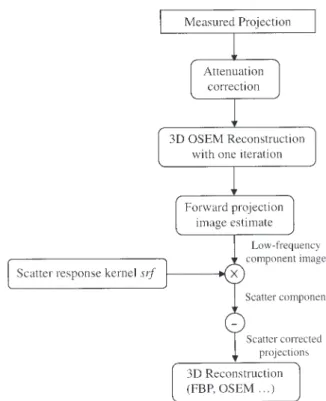
̚fࠎৌ၁߿ޘ̶ҶĂΞડ̶ࠎϤҲᐛᇆညfLᐛᇆ ညfHٙјĄӀϡ˯న۞পّâѨᝑޢ۞ᇆ ည (ֹϡOSEMࢦޙڱ) གྷϤϒШԸᇆ̝ٙԸᇆྤੈГ ᄃड८͕בᇴsrfү᎕ᖼೱޢĂΞՐड̶ҶĂ
ႊზڱтFigure 5ٙϯĄ
SRBSC͞ڱࣘ˘ֱ᎕ഴᖴڱ۞পّĂТᇹυื
Րჟቁ۞ड८͕ሀݭĄѩ͞ڱ۞ᐹᕇдٺۡତӀϡ
˘Ѩᝑࢦޙޢᇆည۞Ըᇆྤੈү᎕ᖼೱĂ̙ืт
CVS͞ڱᅮࢋкѨᝑநĂЯѩࢍზՀ֝ిĄѩ͞ڱ
ΞͽᔖҺ͔ˢᗝγ۞ᗔੈĂዋЪᑕϡٺҲ߿ޘౄᇆĄ҃ĂSRBSC͞ڱ۞ᕇϺтCVS͞ڱĂ༊ዎ࿃זኑᗔ۞
ۏវॡΞਕڱቁീड̶ҶĂЯ҃ѣυࢋ൴ण
ܧؠडሀݭĄѩγĂ၆ٺFOVγडҫ˘ؠּͧ
̝͕ବೡᄃБ֗ౄᇆĂSRBSC͞ڱڱ҂ᇋזFOVγ
ֽ۞डְІĂ̪ޞྋՙĄ
डՁܡጿ྅ཉڱ
डՁܡጿ྅ཉڱ (beam stopper device methodĂᖎჍ
BS) [25]Ăࠎԧࣇ၁រވܕೀѐ۞ࡁտјڍĄܡጿጡߏӀ
ϡࣧ̄Ԕ۞ۏኳٙјĂтFigure 6 ( A) ٙϯĂܡጿ ጡཉٺޞീۏវಛĂд̙ᇆᜩडЍ̄ซˢઍᑭጡ۞న୧І˭Ăܡጿጡົͽ˘ؠ۞ּͧഴࢋЍ̄ĄӀ ϡѣٸཉѩडՁܡጿ྅ཉ۞मளĂड۞ณٕߏड
̶தΞͽۡତଂజܡጿ۞LOR̚ՐĂ̳ёт˭Ĉ
(7)
̚SăP̶Ҿܑϯࣧؕੈཱི̚डొЊᄃࢋडՁొ
ЊĂCRܑϯ̙ӣडՁܡጿ྅ཉ۞ౄᇆ̚LOR (t,
θ ) ˯۞ࢍ
ᇴࣃĂCBܑϯӣडՁܡጿ྅ཉ۞ౄᇆ̚LOR (t,
θ ) ˯۞ࢍ
ᇴࣃĄӀϡѣܡጿ྅ཉ۞۩ঈବೡ (air scan) ၁រĂӈ ΞീࡍѺ̶ͧTࣃĂᖣѩࢍზ˯̳ё̚ᑫ྅
ཉפᇹᕇti˯۞डྤੈĄనड۞۩ม̶Ҷߏቤၙត
̼۞בᇴĂԧࣇΞͽӀϡcublic splinḛ೧ڱՐдϒ
ဦ̚ፋ࣎ड۞̶ҶтFigure 6 (B) ٙϯĄ
Figure 5. The flow chart illustrating the general principle of the SRBSC algorithm
BS
͞ڱ۞ᐹᕇࠎࢍზԣిĂ֭ͷΞۡତീณֽҋFOVγ۞डᚥĂ၆ٺྵኑᗔ۞ۏវᄃ̙Ӯ̹۞߿ޘ
̶ҶĂBS͞ڱౌΞ྿ז։р۞ᒣϒड़ڍĄBS͞ڱ۞ࢋ
ᕇࠎडՁܡጿ྅ཉώ֗ϺΞਕౄјडְІ۞ഴĂ ซ҃ౄјडЪְІ۞ҤĂ̙࿅࣎ᕇΞགྷϤ
ָ̼डՁܡጿጡ۞̂̈ᄃᇴϫΐͽҹڇĄԧࣇགྷϤԼត
̙ТܡጿጡΗशᄃᇴϫ۞ЪĂ൴னܡጿጡ۞Ηश
̈Ăडᒣϒ۞ඕڍрĂ੫၆۱ొ۞ˠݭវ҃֏Ă
16࣎Ηश3̳ᗃ۞ܡጿጡΞͽயϠቁ۞ᒣϒඕڍĄѦ
ᚗវ (Zubal phantom) ۞ᒣϒඕڍтFigure 7ٙϯĄኢ
ტЪЧडᒣϒڱ۞ᐹКΞͽ൴னĂडᒣϒٙ
ਕ྿ז۞ቁޘᄃᑕϡפՙٺޞീۏវ۞̂̈ᄃ
ޘăۏវ̰߿ޘ̶Ҷăઍᑭጡ۞ԛёăਕቑಛͽ̈́פ ᇹሀё҃ѣ̙Т۞ܑனĄдཝొବೡ̚ĂϤٺᐝొ۞
ഴܼᇴត̼࠹၆ྵ̈ᄃٙҫFOVቑಛྵ̈۞পّĂֹ
डᒣϒྵࠎटٽĂٙѣᒣϒڱٙז۞ඕڍ˵ྵࠎ
ቁĄҭߏ၆ٺొᄃཛొବೡ҃֏Ăੵ˞ТҜ৵̶Ҷ̙
Ӯ̹γĂᖐޘ۞मளĂ˵ౄјडᒣϒ۞ӧᙱĂ
͞ࢬሀёૄغڱ̏జរᙋਕѣड़۞ொੵडѳߖĂҭߏ ҡᐌֽ҃۞̂ณྻზ˵ឰֱӀϡᝑёႊზڱ۞ᓜԖ ᑕϡனᐚĄ
д3Dפᇹሀё̚ĂFOVγֽ۞डᚥΞ྿זБొ
डְІ۞50% [13]Ăѩॡᑕϡ̰೧Ъڱᄃਕૄغ ڱΞѣड़ொੵкѨड۞ᚥĂ҃ૄٺᗝγਕ۞ྤ
फ़఼૱ົҡᐌᗝγ۞ᗔੈĂᙷ͞ڱྵ̙ዋЪᑕϡд Figure 6. (A) For each projection angle, the primary events
are blocked at several radial bins. (B) The scatter distribution (dotted line) is interpolated based on the scatter components (solid arrow) estimated at those blocked bins.
Figure 7. The reconstructed images of the Zubal phantom. (A) The reference image used as input to the simulator, (B) uncor- rected image, and (C) image corrected by the BS method
જၗౄᇆ˯ĄBS͞ڱტЪ˞˯۞ᐹᕇĂੵ˞Ξͽᑕϡ ٺྵ̂ͷྵኑᗔ۞ۏវౄᇆ˯Ă၆ٺFOVγֽ۞डѳ ߖ˵ΞͽΐͽொੵĂЯѩĂ೩ֻ˞ቁडᒣϒ۞Ξਕ
ّĄ
ܕѐֽ੫၆ϒ̄ཝᕝᆸؠณ۞υᅮّĂቁ၁͔൴
˞˘ֱኢ [26]ĂӀϡߴ-18ซҖ၆ؠณੵ˞צࢨٺొ
Њវ᎕ (partial volume) યᗟͽγĂՀᅮࢋࢬ၆ኑᗔ۞ᒣ ϒՎូĂֹ၆ؠณдᓜԖ˯۞ᑕϡ̙ٽଯҖĂϫ݈
кΗ˵Ϊϡٺߴ-18-FDGᇾӛќࣃ (standard uptake
value)
۞ෞҤĄѩγĂࡁտඕڍϺពϯ၆ؠณᄃӎĂ̙֭ົᇆᜩᒛা۞ડ̶ᄃҿؠ [27]Ăҭߏ၆ٺ˘ֱপঅ ८۞ᑕϡᄃߴ-18-FDG۞࠹၆ؠณ (ᇆညᇴࣃϒͧٺߙ
˘តᇴ)ĂᓜԖ˯ᔘߏѣ˘ؠ۞ຍཌྷхдĂּтĈֹϡ Ḳ-86 (86
Y) ۞၆ؠณͽቁෞҤḲ-86 (
90Y) ۞ТҜ৵ڼ
ᒚณ [28]Ă҃՟ѣडᒣϒυ̙Ξਕ྿זѩ˘ϫ۞ĄҌٺडᒣϒ၆ٺཚሳઍീத۞೩̿ߏӎѣड़ ڍĂϫ݈إϏז˘۞ඕኢĂ੫၆̈ٺ2̶̳۞۱ొᒛ
াĂࡁտඕڍᄮࠎडᒣϒᄃഴᒣϒΞͽᆧΐઍീத
[29]Ăҭߏ၆ٺྵ̂ཚሳઍീத۞Լត̙ࢍຍ
ཌྷĄཝొౄᇆ۞ࡁտ [30] ඕڍពϯֹϡሀёૄغڱ ቁ၁ֹߴ-18-FDG۞̶ҶயϠ˞ځព۞मளĂซ҃Ξ ਕົᇆᜩҿ۞ඕڍĄඕኢ
ͧྵЧडᒣϒ͞ڱĂΞͽ࠻̱ᙷ۞ԫఙౌ
ЧѣᐹᕇĂ˵ពϯडᒣϒ۞ࢦࢋّᄃ઼ᅫม дडᒣϒᅳા˯ٙઇ۞Ӆ˧ĄტЪ˯ᒣϒ͞ڱ̝ᐹ Кᕇâ࣎јሢ۞डᒣϒڱᑕྍѣ˭Е۞পّĈ (1) ਕТॡநFOV̰ᄃγயϠ۞डְІć(2) ਕۡତᒣϒ ಏѨडᄃкࢦड۞ᚥć(3) ਕ҂ᇋ̈֎ޘ۞डְ
Іć(4) ਕזቁ۞ड̶Ҷᄃड̶த̶Ҷć(5) ਕ
҂ᇋޞീۏវᄃPETବೡᆇ۞পّć(6) ਕԣిซҖᒣϒ үຽĄ
ϫ݈إԆ࡚۞डᒣϒڱĂ҃Տ˘͞ڱ˵ౌื
ࢋֶፂߙপؠ۞న୧І˭̖ਕ྿זቁ۞ᒣϒඕ ڍĂЯѩ࠹ᙯ۞ࡁտ̪ืᚶᜈซҖĄडᒣϒϏֽ൴ण ᔌ๕Ξ̶ࠎᇴ࣎͞ШĂඕЪ̙Тᙷݭ۞ᒣϒڱၟܜྃ
ൺĂͽՀჟቁ۞ෞҤड۞̶Ҷߏ˘࣎ΞҖ۞͞ڱĂּ
тĈඕЪBS͞ڱᄃਕૄغڱͽࢍზड̶த۞̶ҶĄ ᐌཝ۞ԣి൴णĂԧࣇΞͽޙၹՀჟ۞ણᇴሀݭ
ͽநड۞યᗟĂּтĈܧؠ᎕ഴᖴڱᄃࢦޙૄ
غڱ۞൴णᄃॲፂࢦޙᇆညࠎૄᖂٙ൴ण۞ሀёૄغ ڱĄѩγĂӀϡᕍะཝ۞πҖநਕ˧ٺᄋгΙᘲ۞
ӈॡሀᑢ˯Ă಼̂۞ᒺൺྻზॡมĂ࠹ܫ̙˳۞
ֽĂ੫၆࣎ҾঽˠซҖӈॡᄋгΙᘲሀᑢͽՐड̶
ҶĂΞۡତᑕϡٺᓜԖ۞ˬჯϒ̄ཝᕝᆸౄᇆ˯Ą
ણ҂͛ᚥ
1. Johns HE, Cunningham JR eds. The Physics of Radiology. 4th ed. Springfield, USA: Charles C.
Thomas; 1983:176-179.
2. Bailey DL, Meikle SR. A convolution-subtraction scatter correction method for 3D PET. Phys Med Biol 1994;39:411-424.
3. Cherry SR, Meikle SR, Hoffman EJ. Correction and characterization of scattered events in three-dimensional PET using scanners with retractable septa. J Nucl Med 1993;34:671-678.
4. Cherry SR, Huang SC. Effects of scatter on model para- meter estimates in 3D PET studies of the human brain.
IEEE Trans Nucl Sci 1995;42:1174-1179.
5. Grootoonk S, Spinks TJ, Jones T, Michel C, Bol A.
Correction for scatter using a dual energy window tech- nique with a tomograph operating without septa. IEEE Med Imag Conf Rec 1991;3:1569-1573.
6. Grootoonk S, Spinks TJ, Sashin D, Spyrou NM, Jones T.
Correction for scatter in 3D brain PET using a dual ener- gy window method. Phys Med Biol 1996;41:2757-2774.
7. Bendriem B, Trebossen R, Frouin V, Syrota A. A PET scatter correction using simultaneous acquisitions with low and high energy thresholds. IEEE Med Imag Conf Rec 1993;3:1779-1783.
8. Shao L, Freifelder R, Karp JS. Triple energy window scatter correction method for PET. IEEE Trans Med Imag 1994;13:641-648.
9. Jaszczak RJ, Greer KL, Floyd CE Jr, Harris CC, Coleman RE. Improved SPECT quantification using compensation for scattered photons. J Nucl Med 1984;25:893-900.
10. McKee BTA, Gurvey AT, Harvey PJ, Howse DC. A
deconvolution scatter correction for a 3D PET system.
IEEE Trans Med Imag 1992;11:560-569.
11. Shao L, Karp JS. Cross-plane scattering correction- point source deconvolution in PET. IEEE Trans Med Imag 1991;10:234-239.
12. Bentourkia M, Msaki P, Cadorette J, Lecompte R.
Assessment of scatter components in high-resolution PET: correction by nonstationary convolution subtrac- tion. J Nucl Med 1995;36:121-130.
13. Adam LE, Karp JS, Brix G. Investigation of scattered radiation in 3D whole-body positron emission tomogra- phy using Monte Carlo simulations. Phys Med Biol 1999;44:2879-2895.
14. Zaidi H, Koral KF. Scatter modelling and compensation in emission tomography. Eur J Nucl Med Mol Imag 2004;31:761-782.
15. Watson CC, Newport D, Casey ME, deKemp RA, Beanlands RS, Schniand M. Evaluation of simulation- based scatter correction for 3-D PET cardiac imaging.
IEEE Trans Nucl Sci 1997;44:90-97.
16. Watson CC. New, faster, image-based scatter correction for 3D PET. IEEE Trans Nucl Sci 2000;47:1587-1594.
17. Watson CC, D Newport, Casey ME. A single scatter sim- ulation technique for scatter correction in 3D PET. In:
Grangeat P, Amans JL, eds. Three-Dimensional Image Reconstruction in Radiology and Nuclear Medicine.
Dordrecht: Kluwer Academic; 1996:255-268.
18. Ollinger JM. Model-based scatter correction for fully 3D PET. Phys Med Biol 1996;41:153-176.
19. Levin CS, Dahlbom M, Hoffman EJ. A Monte Carlo cor- rection for the effect of Compton scattering on 3-D PET imaging. IEEE Trans Nucl Sci 1995;42:1181-1185.
20. Wollenweber SD. Parameterization of a model-based 3- D PET scatter correction. IEEE Trans Nucl Sci 2002;49:722-727.
21. Werling A, Bublitz O, Doll J, Adam LE, Brix G. Fast implementation of the single scatter simulation algorithm and its use in iterative reconstruction of 3D PET data.
Phys Med Biol 2002;47:2947-2960.
22. Ferreira NC, Trebossen R, Lartizien C, Brulon V, Merceron P, Bendriem B. A hybrid scatter correction for 3D PET based on an estimation of the distribution of unscattered coincidences: implementation on the ECAT EXACT HR+. Phys Med Biol 2002;47:1555-1571.
23. Zaidi H. Reconstruction-based estimation of the scatter component in positron emission tomography. Ann Nucl Med Sci 2001;14:161-171.
24. Pan TS, Yagle AE. Numerical study of multigrid imple- mentations of some iterative image reconstruction algo- rithms. IEEE Trans Med Imag 1991;10:572-588.
25. Chuang KS, Wu J, Jan ML, Chen S, Hsu CH. Novel scatter correction for three-dimensional positron emis- sion tomography by use of a beam stopper device. Nucl Instr and Meth A 2005 (in press).
26. Marsden PK. Quantification in PET: what is it? Can we do it? Do we need it? Nucl Med Commun 2004;25:635- 636.
27. Strother SC, Liow JS, Moeller JR, Sidtis JJ, Dhawan VJ, Rottenberg DA. Absolute quantitation in neurological PET: do we need it? J Cereb Blood Flow Metab 1991;11:A3-A16.
28. Pentlow KS, Finn RD, Larson SM, Erdi YE, Beattie BJ, Humm JL. Quantitative imaging of yttrium-86 with PET.
The occurrence and correction of anomalous apparent activity in high density regions. Clin Positron Imag 2000;3:85-90.
29. Zhang H, Tian M, Oriuchi N, Higuchi T, Tanada S, Endo K. Detection of lung cancer with positron coincidence gamma camera using fluorodeoxyglucose in comparison with dedicated PET. Eur J Radiol 2003;47:199-205.
30. Montandon ML, Slosman DO, Zaidi H. Assessment of
the impact of model-based scatter correction on
18F-FDG
3D brain PET in healthy subjects using statistical para-
metric mapping. Neuroimage 2003;20:1848-1856.
A Review of Scatter Correction Methods for Three-Dimensional Positron Emission Tomography
Jay Wu
1,2, Hsing-Hon Lin
2, Keh-Shih Chuang
21
Department of Radiological Technology, Central Taiwan University of Science and Technology, Taichung, Taiwan
2
Department of Nuclear Science, National Tsing-Hua University, Hsinchu, Taiwan
Received 8/23/2005; revised 9/27/2005; accepted 9/28/2005.
For correspondence or reprints contact: Jay Wu, Ph.D., Department of Radiological Technology, Central Taiwan University of Science and Technology, 11 Pu-Tzu Lane, Pei-tun District, Taichung 406, Taiwan. Tel: (886)-928246662, Fax: (886)3-4891792, E-mail: [email protected]
Positron emission tomography (PET) offers the possibility of quantitative assessment of tracer concentration in vivo.
Fully 3D PET can achieve higher system sensitivity of coincidence events than the 2D mode, but the absence of inter-slice septa inevitably leads to increased scattered events. The scattered events can contribute as much as 50% of the total detected events. Therefore, accurate correction for the scatter component is necessary for mean- ingful quantitative image analysis and tracer kinetic modeling. A number of scatter correction methods have been proposed and successfully implemented for 3D PET. In this article, we comprehensively reviewed five scatter cor- rection approaches, including curve fitting method, energy-based method, convolution subtraction method, model- based method, reconstruction-based method, and our newly developed beam stopper approach.
Key words: 3D PET, scatter correction, beam stopper device