Effect of Ionic Liquid on Structure and Properties of Polysquaraines
Mei-Chan Ho,
†Ching-Hsun Chao,
‡Chun-Hua Chen,
†Ren-Jye Wu,
§and Wha-Tzong Whang
†,*
†Department of Materials Science and Engineering, National Chiao Tung University, 1001 University Road, Hsinchu, Taiwan, 30010,R.O.C
‡Advanced Materials, Electronic Materials, Dow Chemicals, No. 6, Kesi second Road, Jhunan, Miaoli, Science-Based Industrial Park,
Taiwan, 35053, R.O.C
§Material and Chemical Research Laboratories, Industrial Technology Research Institute, Room 104, Building 67, 195, Sec. 4, Chung
Hsing Road, Chutung, Hsinchu, Taiwan, 31040, R.O.C
*
S Supporting InformationABSTRACT: Polycondensation of 4-bis[2-(1-methylpyrrol-2-yl)vinyl]-2,5-didodecyloxybenzene and squaric acid yielded the polysquaraine SQ with two isomeric subunits1,3-addition (zwitterionic) and 1,2-addition (diketonic) moietiesin the main chain structure. The former featured a C−O/CO infrared (IR) absorption frequency at 1622 cm−1; the latter, a CO signal at 1716 cm−1. Traditional synthesis yielded SQ as a powder with metallic luster that could not be cast as a polymer film from solution. When the ionic liquid [Oct3NMe][TfO] (IL) was present in the cosolvent of
BuOH and benzene (1:3), however, the resulting SQIx polymers (x = 0.01−5 wt %) did not precipitate from solution,
making it possible to cast continuous free-standing films with a large area (>1× 1 cm2). A greater content of IL in the solution
favored the formation of the 1,3-addition zwitterionic subunits in the SQIxpolymer main chains, thereby changing the physical
and optical properties of the polysquaraine, as evidenced in IR and optical absorption spectra. The features in the UV−Vis−NIR absorption spectra of SQ and SQIx were dependent on the IL concentration and the nature of the solvent. Among our
synthesized SQIxpolymers, SQI0.01and SQI0.1formed flexible free-standing films with metallic luster, smooth surfaces, and good
semiconductivities (2.27× 10⁻⁵and 4.74× 10⁻⁵S/cm, respectively). X-ray diffraction patterns revealed that the presence of IL in the polymerization medium increased the SQIxinterchain packing distance. SQI0.01and SQI0.1possessed thermal stabilities
comparable with that of SQ. Our successful use of IL in the preparation of SQIxpolymers appears to have great potential for application in ionic liquid−related organic or polymeric preparation and processing.
■
INTRODUCTIONSquaraines, zwitterionic dyes possessing donor/acceptor-type resonance-stabilized structures, exhibit unique optoelectronic properties.1−3 The combination of intramolecular charge transfer through S0−S1 electronic excitation and extended π-conjugated networks gives rise to squaraine dyes displaying intense absorption bands extending from the visible to the near-infrared (NIR) region.4,5 In general, larger π-conjugated systems and stronger donor/acceptor interactions endow a polymer with a lower optical band gap (Eg)6 and intrinsic semiconducting properties.7 Because of their unique optoelec-tronic properties and intrinsic conductivity, NIR squaraine dyes are used widely in a variety of electronic and photonic materials, with applications in such fields as optical recording,8,9 solar cells,10,11photodynamic therapy,12,13laser printing,14and infrared (IR) photography.15
π-Conjugated squaraine dyes are functional materials with tailorable optoelectronic and photophysical properties, which can be tuned through structural modification to achieve optimal performance. The properties of NIR low-Eg squaraines can be
modulated by modifying theπ-conjugation length, the nature of
the donor/acceptor interactions,16,17and the polycondensation reaction conditions. The addition of metal ions in the reaction solution can influence the ratio of the two isomeric repeating units in the polysquaraine18and the selectivity and sensitivity of squaraine-based sensors.19−21Metal ions also can influence the conformations and photoabsorption spectra of polysquaraines through reversible isomerization.22,23 Unfortunately, the low solubility of polysquaraines (i.e., intrinsic aggregation) limits their practical applications.24−26
Ionic liquids (ILs) are organic salts that usually have melting points below 100°C. Their melting points are much lower than those of traditional inorganic salts because of the asymmetric structures of the cations and the presence of bulky organic groups, resulting in lower charge density and, in turn, weaker ion pairing interactions.27,28 In addition, ILs also exhibit low vapor pressures, nonvolatility, good thermal stabilities, high ionic conductivities, and good solubilities in many organic and Received: November 20, 2011
Revised: February 21, 2012 Published: March 21, 2012
inorganic solvents.29,30 The solvation and solubility effects of ILs can have favorable effects during chemical and material processing.31ILs have also been employed as key components in dispersion media; for example, as solvents in polymer-izations,32 steric stabilizers in organic dispersions,33,34 and electrolytes for electrochemical polymerizations.35,36
For the purposes of easy processing and good free-standing film quality, the methyltrioctylammonium trifluoromethanesul-fonate, [Oct3NMe][TfO] (IL), has been used in the
preparation of bispyrrole-based polysquaraines (SQIx) and in the casting of SQIxfilms. IL does not react with either of the monomers during the polymerization leading to SQ polymers. Ion−ion solvation interactions between IL and the SQIxchains can lead to the stable dispersion of SQIx polymer chains in
solution, thereby decreasing their intrinsic tendency to aggregate and precipitate. Here, we report the influence of IL on the structures and physical properties of SQIxchains. We used Fourier transform infrared (FTIR) and UV−vis−NIR optical absorption spectrometry to characterize the SQIx polymer chains and a four-point probe electrical measurement device, scanning electron microscopy, X-ray diffraction (XRD), and thermogravimetric analysis (TGA) to study their morphological and physical properties.
■
EXPERIMENTAL SECTIONMaterials and Measurements. All reagents were of analytical reagent grade and used as received without further treatment. Hydroquinone (99%, Sigma−Aldrich), 1-bromododecane (98.0%, T.C.I.), K2CO3 (anhydrous, 99%, Alfa Aesar), formaldehyde (37% solution, Tedia), AcOH (99.7%, Showa), HBr (33 wt % solution in glacial AcOH, Acros), triethyl phosphite (97%, Sigma−Aldrich), N-methylpyrrol-2-carboxaldehyde (98%, Aldrich), squaric acid (99%, Acros), IL (99%, UR-MATOATS), NaH (60% dispersion in mineral oil, Acros), NaCl (99.5%, Showa), MgSO4(anhydrous, 99%, Showa), MeCN (99.9%, Tedia), MeOH (99.9%, Echo), hexane (99.8%, Echo), CHCl3 (99%, Sigma−Aldrich), tetrahydrofuran (THF, anhydrous, 99.9%, Tedia), CH2Cl2(99.9%, Echo), butanol (99.9%, Echo), and benzene (99.9%, Echo) were obtained from the indicated suppliers. Bis(dodecyloxy)-1,4-dibenzyl phosphonate was prepared from 2,5-bis(dodecyloxy)-1,4-bis(bromomethyl)benzene and triethyl phosphite using a previously reported procedure.37
Analysis and Characterization.1H and13C NMR spectra were recorded using a Varian Inova (500 MHz) spectrometer and CDCl3 solutions. Fast atom bombardment (FAB) mass spectra were recorded using a MICROMASS TRIO-2000 mass spectrometer. FTIR spectra were measured using KBr pellets on a Perkin−Elmer Spectrum 100 spectrometer. UV−Vis−NIR spectra were recorded using a Jasco V-670 spectrophotometer. The specimens for UV−vis-NIR are prepared by ultrasonically dissolving the formed films following with filtrating (filter paper: pore size =3 μm). The filtrated solution and the corresponding solubility are shown in Figure S5 and Table S1,
Supporting Information, respectively. Elemental analyses were performed using a Heraeus CHN-O-RAPID elemental analyzer. TGA curves are performed using a TGA Q500 analyzer, in N2 atmosphere (99.99%) and operated at a heating rate of 15°C/min. Powder XRD patterns were performed on a Bruker NanoStar SAXS system (Cu Kα radiation). The electrical conductivities of the polymers were measured using a four-point probe electrical measure-ment device.
1,4-Bis[2-(1-methylpyrrol-2-yl)vinyl]-2,5-didodecyloxybenzene (Bispyrrole). A N2-purged flask equipped with a reflux condenser was charged with anhydrous THF (30 mL), NaH (40 mmol), 2,5-bis(dodecyloxy)-1,4-dibenzyl phosphonate (1.8 mmol), and N-methylpyrrole-2-carboxaldehyde (3.6 mmol). The mixture was heated under reflux with stirring at 65°C for 24 h.38The dark-yellow solution was concentrated through vacuum distillation; the residue was poured into water and extracted with CH2Cl2. The organic layer was dried (MgSO4) and concentrated to give a crude product, which was purified chromatographically (hexane/EtOAc, 25:1) to yield a bright yellow product (76%).1H NMR (CDCl 3):δ 7.15 (d, J = 16.5 Hz, 2H), 7.05 (d, J = 16.5 Hz, 2H), 6.98 (s, H), 6.63 (s, 2H), 6.49 (m, 2H), 6.15 (t, J = 2.5 Hz, 2H), 4.01 (t, J = 6.5 Hz, 4H), 3.70 (s, 6H), 1.84 (m, 4H), 1.52 (m, 4H), 1.26 (m, 32H), 0.88 (t, J = 7.0 Hz, 6H).13C NMR (CDCl3): δ 150.95, 132.88, 126.58, 123.44, 121.45, 117.53, 110.94, 108.24, 106.67, 104.99, 69.51, 34.22, 31.92, 29.68, 29.64, 29.50, 29.35, 26.31, 22.69, 14.12. IR (KBr) νmax: 2921, 2847, 1464, 1392, 1284, 1204, 1049, 966, 721 cm−1. FAB-MS m/z: calcd for C44H68N2O2[M] +, 656; found, 657.
Poly(bispyrrole-co-squaric acid) (SQ). A solution of bispyrrole (0.08 mmol) and squaric acid (0.08 mmol) in butanol and benzene (1:3, 30 mL) was heated under reflux at 120°C for 24 h and then cooled to room temperature and filtered. The filtrate was concentrated through vacuum distillation and washed sequentially with hexane, Et2O, and MeOH. The final product was dried in a vacuum oven at 100°C for 24 h to yield a dark-green powder (70%). IR (KBr) νmax: 2924, 2853, 1716, 1622, 1439, 1347, 1278, 1088, 942 cm−1. Calcd for (C48H66N2O4·H2O)n: C, 76.56; H, 9.10; N, 3.72; Found: C, 76.49; H, 8.85; N, 3.99.
Poly(bispyrrole-co-squaric acid) (SQIx). The polymers SQIx were prepared in butanol/benzene mixed solvents in which IL was present solvent at concentrations (x) in the range 0.01−5 wt %. Bispyrrole (0.08 mmol) and squaric acid (0.08 mmol) in butanol and benzene (1:3, 30 mL) were heated under reflux at 120 °C for 24 h. The reaction mixture was cooled to room temperature and filtered to cast thin film (drop casting method). The SQIxfilms were immersed in MeOH to remove any remaining IL and then dried in a vacuum oven at 100°C for 24 h. SQI5(5 wt %): powder film; IR (KBr)νmax: 2923, 2852, 1738, 1623, 1439, 1348, 1279, 1092, 944 cm−1. Anal. Calcd for (C48H66N2O4·H2O)n: C, 76.56; H, 9.10; N, 3.72. Found: C, 76.48; H, 9.18; N, 3.24. SQI1(1 wt %): powder film; IR (KBr)νmax: 2920, 2850, 1736, 1622, 1438, 1347, 1277, 1089, 942 cm−1. SQI0.1(0.1 wt %): metallic luster film; IR (KBr) νmax: 2920, 2850, 1736, 1620, 1436, 1345, 1272, 1089, 940 cm−1. SQI0.01(0.01 wt %): metallic luster film; IR (KBr)νmax: 2920, 2850, 1735, 1620, 1436, 1345, 1274, 1088, 940
cm−1. Anal. Calcd for (C48H66N2O4·H2O)n: C, 76.56; H, 9.10; N, 3.72. Found: C, 74.37; H, 8.79; N, 3.66.
■
RESULTS AND DISCUSSIONThe monomer bispyrrole was synthesized and characterized using 1H and 13C NMR spectroscopy, IR spectroscopy, and
mass spectrometry. We then polymerized bispyrrole with squaric acid to form SQ (Scheme 1), a low−band gap polysquaraine that presumably contained 1,2- and 1,3-addition moieties (the latter zwitterionic) in the polymer main chains. The zwitterionic subunits in the SQ main chains should have induced strong intermolecular interactions, implying that the polymer would have a strong tendency for aggregation and precipitation from solution. In general, it is hard to find a proper solvent to make quality films of polysquaraines. Thus, we expected IL to solvate the zwitterionic polymers well in solution to ensure the absence of precipitation.
Figure 1 reveals the success of our IL-based polymerization approach. The ion−ion interactions between IL and SQ
resulted in the polymer being dispersed stably in solution without precipitation, overcoming the intrinsic aggregation behavior, and finally enhancing the film formation quality. Figure 1a presents a photograph of the broken tiny pieces of the cast SQ film after drying, which had a metallic luster but could not be dissolved in the reaction solvent or any other organic solvent. Figure 1b−e presents photographs of the thin films of SQIxobtained for values of x (IL concentration, wt %) of 5, 1, 0.1, and 0.01 respectively. The SQI5 and SQI1films
were readily crushed, which might originate from the greater conformational relaxation as more IL is extracted out, whereas the SQI0.1 and SQI0.01films were of good quality with a large
area (>1× 1 cm2) and had metallic luster. The free-standing films can be bended without breaking as shown in Figure 1(f). Thus, the properties of these films were affected by the content of IL; in other words, a suitable amount of IL in the SQIx
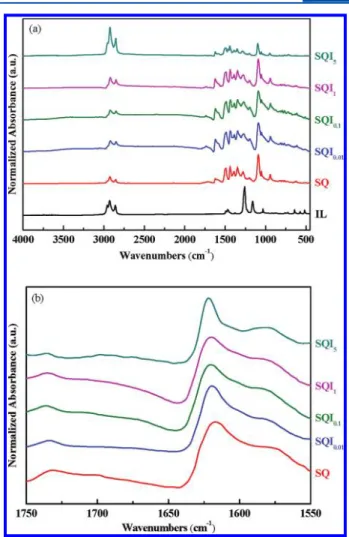
polymerization solution can optimize the resulting film quality. FTIR Spectroscopic Structural Analysis. The FTIR spectra in Figure 2 reveal structural information regarding the polymer chains of SQ and SQIx. At first glance, the features in
the FTIR spectra of the polymers SQ and SQIxin Figure 2a appear similar. Notably, the characteristic absorptions of IL were almost completely absent in the spectra of SQIx; that is,
IL was effectively absent in the final polymeric products. Usually, polysquaraines prepared from bispyrrole and squaric acid feature two types of repeating units: 1,3-addition
(zwitterionic) and 1,2-addition (diketonic) products.39−42 The FTIR spectroscopic absorptions of the zwitterionic 1,3-addition moieties and weak absorptions at 1716 cm−1for the 1,2-addition (diketonic) moieties. From these FTIR spectra, Table 1 reveals that the 1,3-addition moieties were of the
zwitterionic moieties and weak absorptions at 1716 cm−1 for the 1,2-addition (diketonic) moieties. The 1,3-addition moieties were more predominant in SQIx than they were in SQ. The ratio of 1,3- to 1,2-addition moieties increased upon increasing the IL concentration in the polymerization solution. In other words, the formation of zwitterionic 1,3-addition moieties was more favorable (i.e., they were stabilized) in solutions containing higher IL concentrations because of the excellent ion solvation capability of IL in polar organic solvents.
Figure 1.Photographs of (a) the SQ powder with metallic luster and (b−e) the SQIxfilms (b) SQI5, (c) SQI1, (d) SQI0.1, (e) SQI0.01, and (f) flexible SQI0.1film.
Figure 2.FTIR spectra of neat IL and the polysquaraines SQ and SQIx: (a) 4000−500 cm−1; (b) 1750−1550 cm−1.
Table 1. FTIR Spectroscopic Analysis of the Effect of IL on the Main Chain Structures of SQ Powder and SQIxFilmsa
SQ dye νC−O (cm−1)
1,3-addition intensity νC−O (cm−1) 1,2-addition intensity ratio 1,3-/ 1,2-addition SQ 1622 0.071 1716 0.024 2.96 SQI0.01 1619 0.099 1735 0.034 2.91 SQI0.1 1620 0.054 1736 0.010 5.40 SQI1 1622 0.232 1736 0.036 6.44 SQI5 1623 0.036 1737 0.005 7.20 aSQI
X:“x” denotes the concentration (wt %) of IL relative to the n-BuOH/benzene (1:3) reaction solvent.
Since the 1,2-addition moieties have a neutral structure compared with the 1,3-addition ones, the stability is relatively low in the presence of IL in the polymerization solution. Therefore, the polycondensation of squaric acid with bispyrrole in IL-containing solutions favored the production of the 1,3-addition configuration.
Electronic Absorption Spectral Properties. Figure 3 displays the UV−vis−NIR absorption spectra of the
poly-squaraines SQ and SQIx. The spectrum of SQ (prepared in the absence of IL) featured two intensity maxima at long wavelengths (734 and 874 nm, curve a). SQ0.01 and SQ0.1,
which we prepared in the presence of low concentrations of IL, featured their maximum intensities at 743−757 nm with a shoulder near 1012 nm (curves b and c, respectively). This feature appears to correlate with the presence of relatively higher ratios of addition covalent repeat units. The 1,2-addition structure provides electronic structures of lower symmetry and electronic interactions split into different energy levels, resulting in splitting of the absorption band. Splitting of the absorption bands occurs in the case of mesomeric substituents.43 Hence, the intensity of the shoulder signal, attributed to the 1,2-addition moieties, decreased upon increasing the ratio of the 1,3-addition moieties. The spectrum of SQI5, display a maximum absorption at 730 nm, without the
shoulder. The absorption peaks at 540−840 nm predominantly represented the electron transitions of the 1,3-addition moieties.
Figure 4 presents the electron absorption spectra of SQI0.01
and SQI5 prepared in solvents of high (BuOH) and low
(benzene) polarity. The spectra of both SQI0.01 and SQI5
featured broader absorptions when prepared in BuOH than in benzene, with the broadening effect on SQI0.01 being more
evident than that on SQI5. These phenomena are consistent
with SQI0.01 featuring a higher ratio of neutral 1,2-diketonic
moieties. In the excited state, the 1,2-diketonic structure features significant charge separation,44,45withδ−localized on CO oxygen atoms and δ+ accumulated on the pyrrolyl
nitrogen atoms, producing a greater change in dipole moment with respect to the ground state than that of the 1,3-moieties, which already possess ionic character. The more highly polar solvent (BuOH) provides greater stabilization of the excited 1,2-moieties, thereby inducing a red−shift of the absorption
signal. The increase in absorption for SQI0.01was more evident
than that for SQI5upon increasing the solvent polarity.
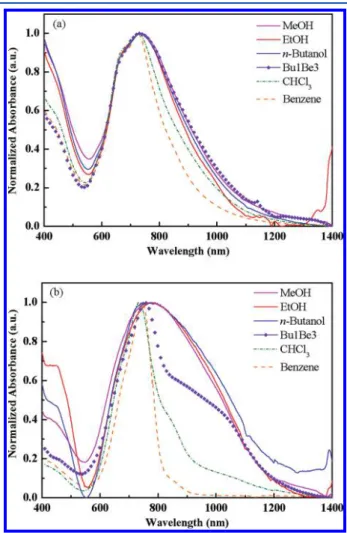
Figure 5 displays the UV−vis−NIR spectra of the polysquaraines SQI0.01 and SQI5 dissolved in six different
solvents. The signals for SQI5were relatively unchanged upon
increasing the solvent polarity from benzene (lowest polarity) to MeOH (highest polarity). Ionic bonds usually undergo much less of a change in dipole moment upon photon
Figure 3.UV−vis−NIR spectra of the polysquaraines SQ and SQIxin n-BuOH/benzene (1:3).
Figure 4. UV−vis−NIR spectra of SQI0.01 (solid line) and SQI5 (dashed dotted line) in (a, b) n-BuOH and (c, d) benzene.
Figure 5.UV−vis−NIR spectra of (a) SQI5and (b) SQI0.01in polar and nonpolar solvents [“Bu1Be3” denotes a mixed solvent of BuOH/ benzene (1:3)].
absorption than do neutral covalent bonds. Because of its higher content of zwitterionic 1,3-addition moieties, SQI5
underwent a less significant change in dipole moment upon photon absorption; therefore, the solvent polarity had no significant impact on the photon absorption spectra. In contrast, the spectra of SQI0.01 featured a more noticeable
change in absorption upon varying the solvent polarity (Figure 5b). SQI0.01featured a higher ratio of 1,2-diketone repeat units,
which undergo a greater change in dipole moment upon photon absorption. A higher-polarity solvent would better stabilize the dipole moment change upon photon absorption, thereby broadening the absorption spectrum. Hence, the UV− vis−NIR absorption spectrum of SQI0.01was more sensitive to
the solvent polarity.
Surface Morphology and Conductivity. Figure 6 displays the surface morphologies of SQIx films prepared
using the drop casting method. The films of SQI5 and SQI1
were readily crushed; their surface morphologies were relatively rough and noncontinuous (Figures 6a and 6b, respectively; cf. Figures 1b and 1c). In contrast, the films of SQI0.1and SQI0.01
exhibited smooth surfaces, good film quality, and metallic luster (Figure 6, parts c and d; cf. Figure 1, parts d and e). We suspect that this behavior is related to the IL content in the drop-casting solution affecting the packing of the polysquaraine chains. A small amount of IL in the SQIx solution forms a more-stable dispersion of SQIx, allowing ready stacking of the
chains with less interference from IL during the film formation process. In contrast, large amounts of IL caused the SQIx chains to interact with the; when residual IL was removed from the film, the resulting SQIxfilm featured much free space and, therefore, a noncontinuous surface structure.
Table 2 lists the electrical conductivities of the polymers SQIx, as measured using the four-point probe method. The conductivities of SQI0.1and SQI0.01were 4.74× 10⁻⁵and 2.27
× 10−5 S/cm, respectively; notably, the former is double the
latter. These values are higher than those for SQI1and SQI5,
presumably because of the better molecular close packing and film quality of SQI0.1and SQI0.01. Therefore, a low IL content
in the solution used for polysquaraine preparation enhanced the final polymer film quality, surface morphology, and electrical conductivity.
X-ray Diffraction Studies. The wide-angle X-ray diffrac-tion patterns of solid SQ and SQIx films (Figure 7) feature
common reflection peaks at angles of 2θ of approximately 4.5 and 3.7−3.9°, corresponding to d-spacings of 19.6 and 22.6− 23.9 Å, respectively, for the O-dodecyl side chains. The interchain packing distance increased from 19.6 Å for SQ to 23.9 Å for SQI0.1, presumably because the presence of IL
weakened the electrostatic interactions between the SQ chains and, thereby, increased the interchain distance. The XRD patterns of the polymers SQ and SQIxfeatured broad signals near 19.6−19.2°, corresponding to interlayer spacings of 4.5− 4.6 Å. The reflections at values of 2θ near 25.8−26.2° correspond to d-spacings of approximately 3.4 Å, consistent with interlayerπ-stacking of the SQ and SQIxchains. The XRD pattern of SQI5 lacks the signal for π-stacking, presumably
because this film possessed a disordered phase associated with more free volume originally occupied by the IL. The greater content of IL in solution led to more-disordered packing of the
Figure 6.SEM micrographs of the films of (a) SQI5, (b) SQI1, (c) SQI0.1, and (d) SQI0.01.
Table 2. Electrical Conductivities of SQ and SQIxFilms
polymer film cnductivity (S/cm)
SQ a
SQI5 b
SQI1 8.67× 10⁻⁷
SQI0.1 4.74× 10⁻⁵
SQI0.01 2.27× 10⁻⁵
aPowder.bnot measured.
polysquaraine layers. Thus, the XRD patterns confirmed the effect of IL on the layer packing disorder.
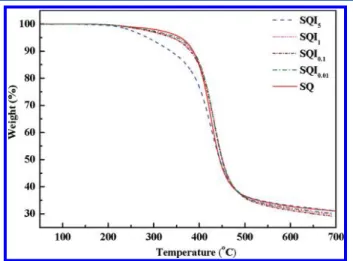
Thermogravimetric Analysis. Figure 8 displays TGA traces of the polymers SQ and SQIx. These polymers were all
very stable at temperatures below 200°C, exhibiting negligible weight losses. Consistent with a previous report of regarding structural stability, we found that polymer backbones richer in 1,2-addition moieties were more stable than those richer in zwitterionic 1,3-addition moieties.27 The SQIx polymers
featured fewer 1,2-addition moieties than did SQ, resulting in their lower thermal degradation temperatures in Figure 8 and Table 3. The dynamic thermal stabilities among the SQIxfilms
followed the trend SQI0.01> SQI0.1> SQI1> SQI5; that is, the
greater the content of 1,3-addition moieties on the main chain, the lower the value of Td. Nevertheless, appropriate control
over the IL concentration can provide polysquaraines SQIx with thermal stability comparable with that of SQ. Therefore, our SQIx polymers that exhibited good film quality has also featured excellent thermally stability, combined with other excellent physical properties.
■
CONCLUSIONSThe polycondensation of bispyrrole with squaric acid results in the formation of polysquaraines featuring both 1,3-addition (zwitterionic) and 1,2-addition (diketonic) moieties. We applied an organic IL to the successful preparation of polysquaraine films, because its organic anions and cations solvated the ionic polymer chains effectively in organic solvents. Such solvation induced stable dispersions of the SQ chains in solution and decreased the natural tendency for aggregation and precipitation from solution. The polymers SQI0.01 and
SQI0.1 provided lustrous semiconductive films exhibiting
electron conductivities of 2.27× 10⁻⁵and 4.74× 10⁻⁵S/cm,
respectively. The presence of IL during the polymerization of bispyrroleand squaric acid enhanced the ratio of 1,3- to 1,2-addition moieties in the polymers SQIx. We attribute this behavior to ion−ion interactions between IL and the SQ chain’s zwitterionic moieties, thereby stabilizing the 1,3-addition structures during polymerization. The changing ratio also influenced the UV−vis−NIR absorption spectra and could be used to determine the influence of the solvent polarity on the absorption signals. The UV−Vis absorption spectrum of SQI0.01was more sensitive to the solvent polarity than was that
of SQI5. The presence of IL in the reaction solutions not only
affected the ratio of the two isomeric moieties in the resultant polymers SQIxbut also the d-spacings for the packing of the O-dodecyl side chains. The interchain packing distance increased from 19.6 Å for SQ to 23.9 Å for SQI0.1, due to weaker
electrostatic interactions between IL and the latter polymer. A suitable concentration of IL in the solution enhances the optical properties, film morphology, polymer chain packing, and electrical conductivity, while maintaining excellent thermal stability. We suspect that the use of IL as an additive will also have other applications in organic synthesis and polymer chemistry.
■
ASSOCIATED CONTENT*
S Supporting InformationThe thermal stability of the IL, IR absorption spectra of SQI5
before and after IL removing processes, photographs of flexible SQI0.1 film, and the solubility of SQI0.01. This material is
available free of charge via the Internet at http://pubs.acs.org.
■
AUTHOR INFORMATIONCorresponding Author
*E-mail: [email protected]. Notes
The authors declare no competing financial interest.
■
ACKNOWLEDGMENTSThe authors would like to thank the National Science Council Republic of China, Taiwan, for financially supporting in this research under Grant NSC100-2221-E009-023-MY3.
■
REFERENCES(1) Chung, S. J.; Zheng, S.; Odani, T.; Beverina, L.; Fu, J.; Padilha, L. A. J. Am. Chem. Soc. 2006, 128, 14444−14445.
(2) Shi, Q.; Chen, W. Q.; Xiang, J.; Duan, X. M.; Zhan, X. Macromolecules 2011, 44, 3759−3765.
(3) Ajayaghosh, A. Acc. Chem. Res. 2005, 38, 449−459.
(4) Zhang, T. Q.; Tour, J. M. J. Am. Chem. Soc. 1998, 120, 5355− 5362.
(5) Cornelissen-Gude, C.; Rettig, W.; Lapouyade, R. J. Phys. Chem. A. 1997, 101, 9673−9677.
(6) Ajayaghosh, A.; Eldo, J. Org. Lett. 2001, 3, 2595−2598. (7) Zhang, X.; Jenekhe, S. A. Macromolecules 2000, 33, 2069−2082. (8) Emmelius, M.; Pawlowski, G.; Vollmann, H. W. Angew. Chem., Int. Ed. Engl. 1989, 28, 1445−1471.
(9) Natansohn, A. Macromolecules 1994, 27, 2580−2585.
(10) Silvestri, F. M.; Irwin, D.; Beverina, L.; Facchetti, A.; Pagani, G. A.; Marks, T. J. J. Am. Chem. Soc. 2008, 130, 17640−17641.
(11) Hagfeldt, A.; Boschloo, G.; Sun, L.; Kloo, L.; Pettersson, H. Chem. Rev. 2010, 110, 6595−6663.
(12) Cauchon, N.; Tian, H.; Langlois, R.; Madeleine, C. L.; Martin, S.; Ali, H.; Hunting, D.; Lier, J. E. Bioconjugate Chem. 2005, 16, 80−89. (13) Comuzzi, C.; Cogoi, S.; Overhand, M.; Van der Marel, G. A.; Overkleeft, H. S.; Xodo, L. E. J. Med. Chem. 2006, 49, 196−204. Figure 8.Dynamic thermogravimetric analysis traces of SQ and SQIx.
Table 3. Thermal Stabilities of SQ and SQIxFilms
polymer film Tda(°C) SQ 357 SQI5 286 SQI1 339 SQI0.1 340 SQI0.01 349
(14) Law, K. Y. Chem. Rev. 1993, 93, 449−486.
(15) Fabian, J.; Nakazumi, H.; Matsuoka, M. Chem. Rev. 1992, 92, 1197−1226.
(16) Cho, H. S.; Jeong, D. H.; Cho, S.; Kim, D.; Matsuzaki, Y.; Tanaka, K.; Tsuda, A.; Osuka, A. J. Am. Chem. Soc. 2002, 124, 14642− 14654.
(17) Sreejith, S.; Carol, P.; Chithra, P.; Ajayaghosh, A. J. Mater. Chem. 2008, 18, 264−274.
(18) Chenthamarakshan, C. R.; Eldo, J.; Ajayaghosh, A. Macro-molecules 1999, 32, 251−257.
(19) Oguz, U.; Akkaya, E. U. Tetrahedron Lett. 1998, 39, 5857−5860. (20) Arunkumar, E.; Chithra, P.; Ajayaghosh, A. J. Am. Chem. Soc. 2004, 126, 6590−6598.
(21) Chenthamarakshan, C. R.; Eldo, J.; Ajayaghosh, A. Macro-molecules 1999, 32, 5846−5851.
(22) Lu, H. C.; Whang, W. T.; Cheng, B. M. Chem. Phys. Lett. 2010, 500, 267−271.
(23) Lu, H. C.; Whang, W. T.; Cheng, B. M. J. Mater. Chem. 2011, 21, 2568−2576.
(24) Eldo, J.; Ajayaghosh, A. Chem. Mater. 2002, 14, 410−418. (25) Treibs, A.; Jacob, K. Angew. Chem., Int. Ed. Engl. 1965, 4, 694− 695.
(26) Lu, H. C.; Whang, W. T.; Cheng, B. M. Synth. Met. 2010, 160, 1002−1007.
(27) Seddon, K. R.; Stark, A.; Torres, M. J. Pure Appl. Chem. 2000, 72, 2275−2287.
(28) Winterton, N. J. Mater. Chem. 2006, 16, 4281−4293.
(29) Wilkes, J. S.; Levisky, J. A.; Wilson, R. A.; Hussey, C. L. Inorg. Chem. 1982, 21, 1263−1264.
(30) Welton, T. Chem. Rev. 1999, 99, 2071−2083. (31) Lu, J.; Yan, F. Prog. Polym. Sci. 2009, 34, 431−448. (32) Kubisa, P. Prog. Polym. Sci. 2004, 29, 3−12.
(33) Marcilla, R.; Ochoteco, E.; Pozo-Gonzalo, C.; Grande, H.; Pomposo, J. A.; Mecerreyes, D. Macromol. Rapid Commun. 2005, 26, 1122−1126.
(34) Guerrero-Sanchez, C.; Erdmenger, T.; Sereda, P.; Wouters, D.; Schubert, U. S. Chem.Eur. J. 2006, 12, 9036−9045.
(35) Kubo, W.; Kitamura, T.; Hanabusa, K.; Wada, Y.; Yanagida, S. Chem. Commun. 2002, 4, 374−375.
(36) Ikeda, A.; Sonoda, K.; Ayabe, M.; Tamaru, S.; Nakashima, T.; Kimizuka, N. Chem. Lett. 2001, 11, 1154−1155.
(37) Arbuzov, B. A. Pure Appl. Chem. 1964, 9, 307−335.
(38) Eldo, J.; Arunkumarand, E.; Ajayaghosh, A. Tet. Lett. 2000, 41, 6241−6244.
(39) Lynch, D. E.; Geissler, U.; Peterson, I. R.; Floersheimer, M.; Terbrack, R.; Chi, L. F.; Fuchs, H.; Calos, N. J.; Wood, B.; Kennard, C. H. L.; Langley, G. J. J. Chem. Soc., Perkin Trans. 1997, 2, 827−832.
(40) Lynch, D. E.; Geissler, U.; Byriel, K. A. Synth. Met. 2001, 124, 385−391.
(41) Ashwell, G. J.; Jefferies, G.; Green, A.; Skjonnemand, K.; Rees, N. D.; Bahra, G. S.; Brown, C. R. Thin Solid Films 1998, 327, 461− 464.
(42) Chenthamarakshan, C. R.; Eldo, J.; Ajayaghosh, A. Macro-molecules 1999, 32, 251−257.
(43) Lewis, F. D.; Kalgutkar, R. S.; Yang, J. S. J. Am. Chem. Soc. 1999, 121, 12045−12053.
(44) Neuse, E. W.; Green, B. R.; Holm, R. Macromolecules 1975, 8, 730−734.
(45) Neuse, E. W.; Green, B. R. J. Am. Chem. Soc. 1975, 97, 3987− 3991.