Elsevier Editorial System(tm) for Process Biochemistry Manuscript Draft
Manuscript Number: PRBI-D-10-00505R1
Title: Influence of gamma irradiation on microbial load and antioxidative characteristics of Polygoni Multiflori Radix
Article Type: Full Length Article
Keywords: Polygoni Multiflori Radix; Gamma irradiation, Antiseptic effect; Antioxidation Corresponding Author: Dr. Yuan Shiun Chang, Ph.D.
Corresponding Author's Institution: China Medical University First Author: Ying-Chen Chiang, M.S.
Order of Authors: Ying-Chen Chiang, M.S.; Guan-Jhong Huang, Ph.D.; Yu-Ling Ho, Ph.D.; Po-Chow Hsieh, M.S.; Hsiao-Ping Chung, M.S.; Fong-In Chou, Ph.D.; Yuan Shiun Chang, Ph.D.
Abstract: Gamma radiation is a physical process commonly used for the eradication of microorganisms distributed in food ingredients, medicinal plants and other bioresearches. The aim of this study was to investigate the effect of radiation dosage on the microbial load, chemical compounds and antioxidative characteristics of Polygoni Multiflori Radix (POMU). Ten commercial POMUs were purchased from different herbal markets and treated with 2 kGy, 4 kGy, 6 kGy, 8 kGy and 10 kGy gamma radiation doses to evaluate the microbial burdens of irradiated and unirradiated POMUs.
Our results confirmed that 2 kGy was sufficient for the inactivation of enterobacteria; at 4 kGy, mold and yeast counts were obviously reduced; and at 6 kGy, neither yeasts nor fungi were observed any longer.
The antioxidative effects and major antioxidant components of 0 kGy, 5 kGy, 10 kGy and 15 kGy irradiated POMU samples were also examined. Our results confirmed that 5 kGy irradiated POMU had both the highest antioxidative activity and lowest value in IC50 of DPPH radical-scavenging activity. The content of total phenols had no statistically significant changes. Therefore gamma irradiation at 5 kGy could be a potential method for decontaminate the microbial load of POMU to prolong shelf life and to improve hygienic quality.
中國醫藥大學
China Medical University
台中市 404 學士路 91 號
91, Hsueh Shih Road, Taichung 404 Taiwan, Republic of China
中國藥學研究所
Institute of Chinese Pharmaceutical Sciences TEL No:+886-4-2203-0380 FAX No:+886-4-2208-3362 November 30, 2010 Jian-Jiang Zhong, Ph.D. Editor, Process Biochemistry E-mail:[email protected]Dear Dr. Zhong:
This is to resubmit our revised manuscript (Ms. Ref. No.: PRBI-D-10-00505) entitled Influence of gamma irradiation on microbial decontamination and antioxidative characteristics of Radix Polygoni Multiflori for publication in Process Biochemistry
First, I like to thank you and the reviewers for detailed and helpful comments. We had revised the manuscript accordingly. The response to the reviewers’ comments is provided in a separated sheet. I also like to apologize for the delay of the resubmission of our revised manuscript due to a two week long overseas travel during the periods.
We wish the revised manuscript will be considered for publication in Process Biochemistry. Thanks again for all your help. We look forward to hearing from you again very soon.
The corrected manuscript has been resubmitted to your Journal. Any additional comments and suggestions concerning this manuscript will be highly appreciated. Thank you very much.
Yours sincerely
Yuan Shiun Chang, Ph.D. Professor of Pharmacognosy
Institute of Chinese Pharmaceutical Sciences China Medical University
91, Hsueh Shih Road Taichung, 40402 TAIWAN Tel: +886-4-2203-0380 Fax: +886-4-2208-3362
E-mail: [email protected] Cover Letter
Detailed Answers to the Editors’ Comments of Manuscript PRBI-D-10-00505
November 30, 2010
Reviewer #1:
The present data provide important information for the use of Gamma radiation in microbes elimination of Radix Polygoni Multiflori, though Gamma radiation have been widely used for the antisepsis of herbs. The MS gave the appropriate irradiation dose and demonstrated that, after gamma radiation treatement, the antioxidative activity was not affected and the content of bioactive component was not decreased. But some questions were important, which need to be clarified:
1. Orinigal source or place of product of materials should be given: 10 samples were assayed in table 1, but samples were unknown for table 2, table 3, table 4, Figure 1, and Figure 2.
Ans: The source or place of product of materials had been added. "Ten samples of Polygoni Multiflori
Radix were used throughout the manuscript. The samples were purchased from 8 traditional
Chinese medicine importers, 1 manufactory and 1 Chinese drugstore, of which all herbs
originated from Mainland China." was added in line 16 on page 5. " The POMU sample which
purchased from traditional Chinese medicine importer" was added in line 9 on page 7.
2. I do not know whether the active compounds and antioxidant activity of materials from different original place of product have the same response pattern after gamma irradiation.
Ans: In this manuscript, we had repeated the experiments for three times. We found that the active
compound of THSG and antioxidant activity of materials from different original place of product have the same response pattern after gamma irradiation.
3. Why select the antioxidant activity?
Ans: According to Chinese medicine theory, Polygoni Multiflori Radix counteracts toxicity, cures
carbuncles and relaxes the bowels whereas processed Polygoni Multiflori Radix replenishes the liver and kidney with vital essence and blood, blackens the hair and strengthens the tendons and bones. The antioxidant activity is an easy method to detect the tissue or cell damage after gamma irradiation and THSG is the active compound with strong antioxidant activity, so we *Response to Reviewers
selected it for comparison..
4. Was other important activity related to main effectiveness of Polygoni Multiflori Radix decreased after gamma irradiation?
Ans: We did not know whether other important activity related to main effectiveness of Polygoni
Multiflori Radix decreased after gamma irradiation. A previous study investigated the differences of chemistry between raw and processed Polygoni Multiflori Radix. Two anthraquinones, namely, emodin-8-O-(6 ′ -O-malonyl)-glucoside and physcion-8-O-(6 ′ -O-malonyl)-glucoside, either disappeared or greatly decreased. Similarly, the contents of 2,3,5,4′-tetrahydroxystilbene-2-O-β-D-glucopyranoside, emodin-8-O-β-D-glucopyranoside and physcion-8-O-β-D-glucopyranoside also decreased. Conversely, the contents of emodin and physcion generally increased. (Liang, et al., 2010). The processing Polygoni Multiflori Radix may change the contents and types of chemicals in it. These changes are probably responsible for the various pharmacological effects of raw and processed Polygoni Multiflori Radix as well as hepatotoxicity.
Reference:
Liang Z, Chen H, Yu Z, Zhao Z. Comparison of raw and processed Polygoni Multiflori Radix (Heshouwu) by high performance liquid chromatography and mass spectrometry. Chin Med. 2010; 5: 29.
5. The main effectiveness aspects of Polygoni Multiflori Radix as one kind herb should be stated directly.
Ans: The main effectiveness aspects of Polygoni Multiflori Radix had been added in line 7 on page
4 as follows: “POMU also counteracts toxicity, cures carbuncles and relaxes the bowels whereas processed POMU replenishes the liver and kidney with vital essence and blood, blackens the hair and strengthens the tendons and bones. [14]”.
Reviewer #2: Comments-
The full length article had addressed major aspects on gamma radiation processing of Radix Polygoni Multiflori viz. microbial decontamination, effect on TSHG and other antioxidant compounds. The article should be further improved in its presentation, sentences formation and clarity in results discussion. However, it has content that could be of interest to the readers of the journal. There are several minor issues to be rectified and few logical questions to be clarified by the authors.
1) Page 2, line no.2; Gamma radiation is not a "bio-process" it should be mentioned as physical process.
Ans: We corrected it as suggested, on page 2, line 2.
2) In the manuscript, instead of words like "antisepsis", "antiseptic level", words like "microbial decontamination", "microbial load" and "Hygienization" shall be used appropriately to convey the meaning more clearly.
Ans: We used the word "microbial load" instead of "microbial decontamination" on page 1, line1; page
18, line 14 and page 20, line 14.;using "microbial load" instead of "antiseptic level" on page 2, line 5; using " decontaminate the microbial load instead of "the microbial decontamination" on page 2, line 18; using " Hygienization " instead of " antisepsis " on page 18, line 12, 17 and 18, page 20, line 9 of this manuscript.
3) Page 2, line 12-14; the paragraph shall include control (non-irradiated) samples along with irradiated samples (5, 10 and 15 kGy) while comparing their antioxidative effects and major antioxidant components. (i.e. 5 kGy samples should be compared with
both control and other irradiated samples)
Ans: We more described it as suggested, on page 2, line13.
4) Page 3; "Gamma irradiation" should be added as one of the key words. Ans: We added "Gamma irradiation" as the key words as suggested, on page 3, line 1.
5) Page 3, line no.3; Clostridium is not an aerobic spore former, it is an anaerobic spore former.
Ans: We deleted Clostridium as suggested.
6) Page 3, line no.4; the word "fumigation" is the appropriate word instead of "gas". Ans: We corrected the word "fumigation" as suggested, on page 3, line 8.
7) Page 4, line no.1; use the word "doses" instead of "power".
Ans: We used the word "doses" instead of "power" as suggested, on page 4, line 2.
8) Page 4, line no.14; include word "antioxidants" in the line, so that the sentence will be like, "whether they bring about any changes in the antioxidants composition of POMU and to find the…"Page 4, line no.15
Ans: We added "antioxidants" as suggested, on page 4, line 18.
9) Page 7, line no.5; "0 kGy" should be included, in different gamma radiation doses as (0 kGy, 5 kGy, 10 kGy and 15 kGy).
Ans: We added "0 kGy" as suggested, on Page 7, line 10.
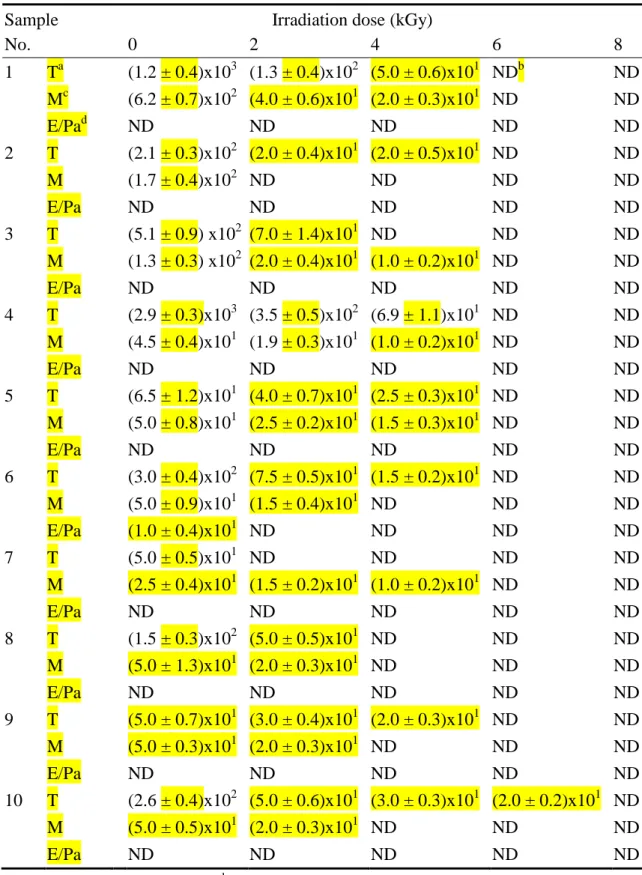
10) Table.1, the values of microbial counts should be depicted uniformly. Same values of counts are given in tens of power in some places and as a mere number elsewhere. Also, an approximately narrow range like 10-20, 20-30, 30-40 and so on should be given, instead of using less than symbol (i.e. <), since this will not differentiate values like 10 and 50 if it is given as <70. Besides, no details on analyses of statistical significance between values were given. In sample No. 7, fungal counts are in ascending order i.e. control< 2 kGy <4 kGy in contrary to the logical expectation.
[Ans: We corrected the data expression form as suggested. The values of microbial counts was revised and depicted uniformly. It was given in tens of power. Three replicate experiments were done and the range of microbial count was shown in the Table 1.
11) Page 14, line no. 10 -16 and their corresponding values in table.3; the standard deviations of IC50 values of irradiated samples were very small with larger mean
values, while the same for THSG and BHT were large with small means. Under this circumstance, the proposed significant differences between samples are questionable.
Ans: We have done this experiment again, and the result of the experiment was that we got the DPPH
EC50 value for THSG and BHT about 21.51 ± 0.08 g/mL and 23.46 ± 0.14 g/mL. We
corrected it in line 2 on page 15 in the manuscript.
12) Page 16, lines 1-10; rewrite the paragraphs in plain sentences explaining the differences, instead of giving them in decreasing orders using > symbol. Since some values are not significantly different from others in the column, it cannot be written plainly that one value is less than or greater than the other.
and 11~13.
13) Page 18, line no. 3; change words "insect infection" to "insect infestation". Ans: We changed words "insect infection" to "insect infestation" on page 18, Line 3.
14) Page 20, line no. 3; it is "physicochemical" instead of "physiochemical" Ans: We used "physicochemical" instead of "physiochemical" on Page 20, line 10.
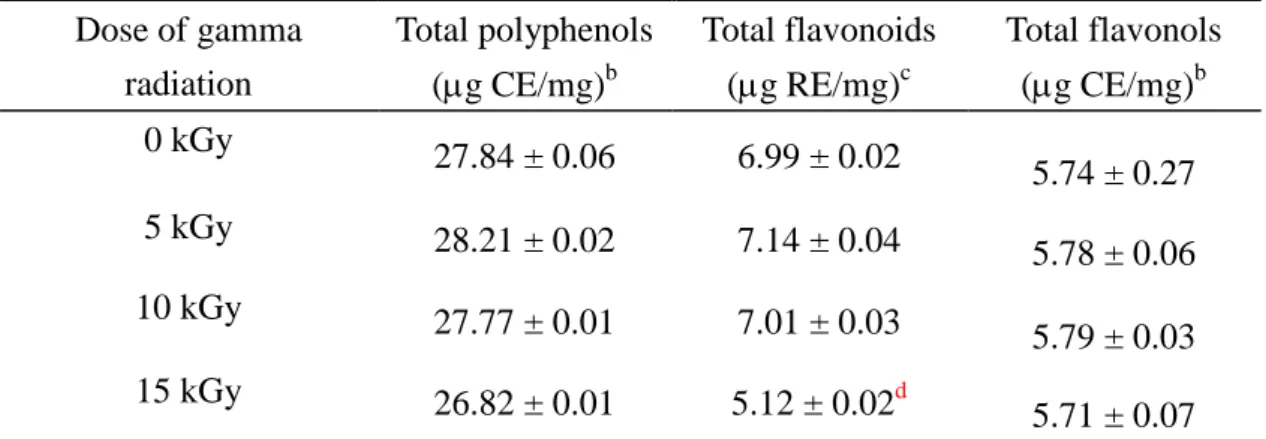
15) Table 4, values significantly differing from others at 5% level should be marked from others.
Ans: We added"d values significantly differing from others at 5%" in Table 4.
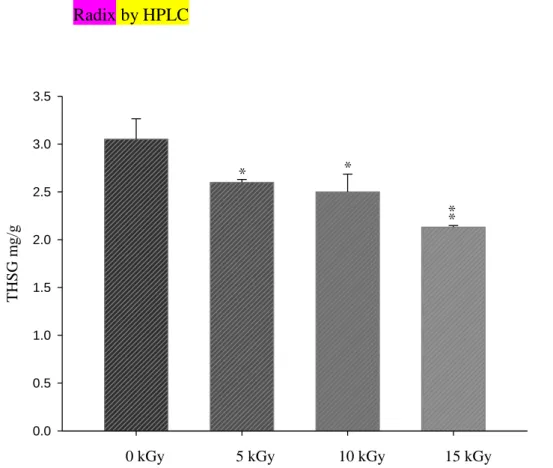
16) Figure 2, the caption should be 'Quantitation of THSG in the methanol extracts of Polygoni Multiflori Radix by HPLC." Also give legends for * and ** in the figure. Ans: We corrected the caption to "Quantitation of THSG in the methanol extracts of Polygoni
Multiflori Radix by HPLC."
17) Figure 1. may be removed since the written part on this matter is sufficiently conveying the results.
Ans: We deleted it as suggested.
Besides, Radix Polygoni Multiflori had been corrected as Polygoni Multiflori Radix based on the format of PRC Pharmacopeia, 2010. Other minor typing errors were also corrected. All corrections were marked with color shadow in the revised manuscript for easy comparison.
1
Influence of gamma irradiation on
microbial load
and antioxidative
1
characteristics of Polygoni Multiflori Radix
2
3
Ying-Chen Chianga,1, Guan-Jhong Huanga,1, Yu-Ling Hob, Po-Chow Hsieha, 4
Hsiao-Ping Chungc, Fong-In Chouc, Yuan-Shiun Changa* 5
6 a
Institute of Chinese Pharmaceutical Sciences, China Medical University, Taichung, 7
Taiwan. 8
b
Department of Nursing, Hung Kuang University, Taichung, Taiwan. 9
c
Nuclear Science and Technology Development Center, National Tsing Hua 10
University, Hsinchu, Taiwan. 11
12
Running Title: Radiation effects on Polygoni Multiflori Radix 13
14 1
These two authors contributed equally to this work 15
16
*Author for Correspondence: Dr. Yuan-Shiun Chang 17
Institute of Chinese Pharmaceutical Sciences, College of Pharmacy, China Medical 18
University, 91, Hsueh-Shih Road, Taichung 40402, Taiwan 19 Tel: +886-4-22030380 20 Fax: +886-4-22083362 21 E-mail: [email protected] 22 *Manuscript
Abstract
1
Gamma radiation is a physical process commonly used for the eradication of 2
microorganisms distributed in food ingredients, medicinal plants and other 3
bioresearches. The aim of this study was to investigate the effect of radiation dosage 4
on the microbial load, chemical compounds and antioxidative characteristics of 5
Polygoni Multiflori Radix (POMU). Ten commercial POMUs were purchased from 6
different herbal markets and treated with 2 kGy, 4 kGy, 6 kGy, 8 kGy and 10 kGy 7
gamma radiation doses to evaluate the microbial burdens of irradiated and 8
unirradiated POMUs. 9
Our results confirmed that 2 kGy was sufficient for the inactivation of 10
enterobacteria; at 4 kGy, mold and yeast counts were obviously reduced; and at 6 kGy, 11
neither yeasts nor fungi were observed any longer. 12
The antioxidative effects and major antioxidant components of 0 kGy, 5 kGy, 10 13
kGy and 15 kGy irradiated POMU samples were also examined. Our results 14
confirmed that 5 kGy irradiated POMU had both the highest antioxidative activity and 15
lowest value in IC50 of DPPH radical-scavenging activity. The content of total phenols 16
had no statistically significant changes. Therefore gamma irradiation at 5 kGy could 17
be a potential method for decontaminate the microbial load of POMU to prolong shelf 18
life and to improve hygienic quality. 19
3
Keywords: Polygoni Multiflori Radix; Gamma irradiation, Antiseptic effect;
1 Antioxidation 2 3 1. Introduction 4
Herbs quite commonly harbor large quantities of bacteria, fungi and 5
spoilage-inducing organisms [1]. The most common bacteria are aerobic sporeformers, 6
such as Bacillus and Salmonella species [2-4]. Today, three major methods are in use 7
for the antisepsis of herbs, namely steam, fumigation (ethylene oxide and propylene 8
oxide) and irradiation [5]. However, steam degrades light-weight leafy herbs, and 9
ground products are difficult and sometimes impossible to handle in the steam system 10
[5-8]. As for ethylene oxide gas, such disinfection method has been banned in the 11
European Union and many other countries [9]. Gamma radiation within 3 to 10 kGy 12
proved to be a viable alternative to fumigation or steam to ensure the hygienic quality 13
of herbs; and there has been a steady increase of radiation utilization in the last 10 14
years after the banning of ethylene oxide [1, 10-12]. 15
According to the standards established by world health organization (WHO) [13], 16
most untreated herbs, harvested and handled under hygienic conditions and tested by 17
appropriate methods of sampling and examination, should contain no more than 1 x 18
104 bacteria cfu/g. However there are no literatures available on POMU regarding its 19
variance in microbial burdens and chemical contents due to different doses of 1
irradiation, especially when high doses (up to 15 kGy) are employed. 2
Polygoni Multiflori Radix (POMU), “He Shou Wu” in Chinese, is the dried root 3
of Polygonum multiflorum Thunb. (Polygonaceae). It is an herb that has been used in 4
traditional Chinese medicine for the treatment of liver diseases, anemia, and 5
hypopigmentary skin diseases, as well as for the prevention of hair-graying and other 6
diseases associated with aging. POMU also counteracts toxicity, cures carbuncles and 7
relaxes the bowels whereas processed POMU replenishes the liver and kidney with 8
vital essence and blood, blackens the hair and strengthens the tendons and bones. [14]. 9
2,3,5,4′-tetra-hydroxystilbene-2-O-glucoside (THSG), a water-soluble active 10
component extracted from dried tuberous root of POMU, can promote the release of 11
nitric oxide (NO) from vascular endothelial cells and has a strong antioxidative effect 12
[15]. Structurally, THSG belongs to hydroxystilbene, and its structure is similar to that 13
of resveratrol in red wine which has significant protective effects on myocardial 14
ischemia-reperfusion injury. 15
The present work was mainly undertaken to investigate the effect of different 16
doses of gamma radiation on the elimination of microbes; whether they bring about 17
any changes in the antioxidants composition of POMU and to find the lowest possible 18
effective radiation dosage for POMU. 19
5 1
2. Materials and Methods
2
2.1 Materials 3
BHT, GSH, potassium peroxodisulfate (K2S2O8), 1,1-diphenyl-2-picrylhydrazyl 4
radical (DPPH), Tris (hydroxylmethyl) aminomethane, trypsin, potassium 5
ferricyanide (K3Fe(CN)6), TCA, ferric chloride (FeCl3), catechin, MTT, aluminum 6
chloride hexahydrate (AlCl3· 6H2O), rutin, 2,2‟-azinobis-(3-ethylbenzothiazoline) 7
-6-sulphonic acid (ABTS), sodium bicarbonate (Na2CO3), sodium phosphate dibasic 8
(Na2HPO4), sodium phosphate monobasic (NaH2PO4) and other chemicals were 9
purchased from Sigma Chemical Co. (St. Louis, MO, USA). Folin-Ciocalteu solution 10
and 95% ethanol were purchased from Merck Co. (Santa Ana, CA, USA). THSG was 11
purchased from the National Institute for the Control of Pharmaceutical and 12
Biological Products. 13
14
2.2 Sampling and irradiation of Polygoni Multiflori Radix 15
Ten samples of Polygoni Multiflori Radix were all used in this manuscript. The 16
samples were purchased from 8 traditional Chinese medicine importers, 1 17
manufactory and 1 Chinese drugstore, of which all herbs originated from Mainland 18
China. POMU was packaged as 15 g samples in PVC (poly-vinyl chloride) containers 19
for irradiation. Gamma irradiation was performed at National Tsing Hua University 1
according to the method of Wen et al. (2008) with slight changes [16]. Samples were 2
placed on a hot cell stand and irradiated with cobalt-60 at room temperature. The 3
irradiated stand rotated 10 rounds per minute to ensure a well-distribution of radiation 4
applied to each sample. The samples were treated for various time intervals in order to 5
achieve absorbed doses of 2, 4, 6, 8 and 10 kGy. Additional samples were treated with 6
5, 10 and 15 kGy of gamma radiation in the same way to evaluate any changes in 7
antioxidant activities and active compounds. The absorbed dose was measured with 8
silver dichromate dosimeter [17]. 9
10
2.3 Enumeration of microbes 11
The microbial contents of POMU samples were measured immediately after 12
irradiation. Direct observation and spread plate method were applied for the 13
quantification of microorganisms [18]. The solid culture media used in this study 14
included plate count agar (PCA; Difico, Detroit, USA), potato dextrose agar (PDA; 15
Difico, Detroit, USA) and violet red bile glucose agar (VRBGA; Difico, Detroit, 16
USA), and the liquid culture medium used in this experiment was plate count broth 17
(PCB, Difico, Detroit, USA). 18
Appropriate dilutions of the homogenates with PBS were spread and plated onto 19
7 PCA culture plates for total aerobic bacterial enumeration. Molds and yeasts were 1
enumerated by the spread plate method using PDA. Each sample was examined on 2
violet red bile glucose agar (VRBGA, Difico, Detroit, USA) to determine the total 3
number of Enterobacteriaceae bacteria. Counts were recorded in colony forming units 4
(cfu/g). The presented data was the average count in three petri dishes for each diluted 5
suspension [16]. 6
7
2.4 Preparation of the methanol extract of Polygoni Multiflori Radix 8
The POMU sample which purchased from traditional Chinese medicine importer 9
was treated with different gamma radiation doses (0 kGy, 5 kGy, 10 kGy and 15 kGy) 10
and macerated with methanol for 24 hours at room temperature. Filtration and 11
collection of the extracts were done three times. The methanol extracts were dried in 12
vacuum at 40℃. The dried extracts were weighed and dissolved in methanol (stock 10 13
mg/mL) and stored in -20°C for further use. 14
15
2.5 Determination of antioxidant activity by ABTS·+
16
ABTS·+ scavenging ability was determined according to the method of Chang et al. 17
(2009) [19]. Aqueous solution of ABTS (7 mM) was oxidized with potassium 18
peroxodisulfate (2.45 mM) for 16 hours in the dark at room temperature. The ABTS·+ 19
solution was diluted with 95% ethanol to an absorbance of 0.75 ± 0.05 at 734 nm 20
(Beckman UV-Vis spectrophotometer, Model DU640B). An aliquot (20 μL) of each 1
sample (125 μg/mL) was mixed with 180 μL ABTS·+
solution and the absorbance was 2
read at 734 nm after 1 min. Trolox was used as the reference standard. A standard 3
curve was constructed for Trolox at 0, 15.625, 31.25, 62.5, 125, 250, 500 μM 4
concentrations. TEAC was expressed as millimolar concentration of Trolox solution 5
with the antioxidant equivalent to a 1000 ppm solution of the sample under 6
investigation. 7
8
2.6 Determination of antioxidant activity by DPPH radical scavenging ability 9
The effect of crude extracts and positive controls (GSH and BHT) on DPPH 10
radicals was estimated according to the method of Huang et al. (2005) [20]. 20 μL of 11
sample extract was mixed with 100 mM Tris-HCl buffer (80 μL, pH 7.4) and 100 μL 12
of DPPH in ethanol to a final concentration of 250 μM. The mixture was shaken 13
vigorously and left to stand at room temperature for 20 min in the dark. The 14
absorbance of the reaction solution was measured spectrophotometrically at 517 nm. 15
The percentage of DPPH decolorization was calculated according to the equation: % 16
decolorization = [1 - (ABS sample/ABS control)] × 100. IC50 value is the effective 17
concentration by which 50% of DPPH radicals are scavenged and was obtained by 18
interpolation with linear regression analysis. A lower IC50 value indicated a greater 19
9 antioxidant activity.
1
2
2.7 Determination of antioxidant activity by reducing power measurement 3
The reducing power of the crude extracts and BHT was determined according to 4
the method of Yen and Chen (1995) [21]. POMU samples (0, 0.2, 0.4, 0.6, 0.8 and 1 5
mg/mL) and BHT were each mixed with an equal volume of 0.2 M phosphate buffer, 6
pH 6.6, and 1% potassium ferricyanide. The mixture was incubated at 50℃ for 20 7
min, during which time ferricyanide was reduced to ferrocyanide. Then an equal 8
volume of 1% trichloroacetic acid was added to the mixture before centrifugation at 9
6,000 g for 10 min. The upper layer of the solution was mixed with distilled water and 10
0.1% FeCl3 at a ratio of 1:1:2, then the absorbance was measured at 700 nm to 11
determine the amount of ferric ferrocyanide (Prussian Blue) formed. Increased 12
absorbance of the reaction mixture indicated increased reducing power of the sample. 13
14
2.8 Determination of total polyphenol content 15
The total polyphenol content of the crude extracts was determined according to the 16
method of Huang et al., (2004) [22]. 20 μL of sample extract (125 μg/mL) was added 17
to 200 μL distilled water and 40 μL of Folin-Ciocalteu reagent. The mixture was 18
allowed to stand at room temperature for 5 min, and then 40 μL of 20% sodium 1
carbonate was added to the mixture. The resulting blue complex was measured at 680 2
nm. (+)-Catechin was used as standard for the calibration curve. The polyphenol 3
content was calibrated using a linear equation based on the calibration curve. The total 4
polyphenol content was expressed as g (+)-catechin equivalent/mg dry weight (g 5
CE/mg/). The dry weight indicated was the sample dry weight. 6
7
2.9 Determination of total flavonoid content 8
The total flavonoid content of the crude extracts was determined according to the 9
method of Huang et al. (2004) [22]. 1.5 mL aliquot of each extract was added to an 10
equal volume of 2% AlCl3·6H2O (2 g in 100 mL methanol) solution. The mixture was 11
vigorously shaken, and the absorbance at 430 nm was read after 10 min of incubation. 12
Rutin was used as the standard for the calibration curve. The total flavonoid content 13
was calibrated using a linear equation based on the calibration curve. The total 14
flavonoid content was expressed as g rutin equivalent/mg dry weight (g RE/mg). 15
The dry weight indicated was the sample dry weight. 16
17
2.10 Determination of total flavonol content 18
11 The total flavonol content of the crude extracts was determined according to the 1
method of Chang et al. (2007) [23]. 200 μL of sample extract was added to 1 mL of 2
0.1% p-dimethylaminocinnamaldehyde (DMACA) in methanol/HCl (3:1, v/v). The 3
mixture was vigorously shaken, and the absorbance was read after 10 min of 4
incubation at 640 nm. (+)-Catechin was used as standard for the calibration curve. The 5
total flavonol content was calibrated using a linear equation based on the calibration 6
curve, and expressed as g (+)-catechin equivalent/mg dry weight (g CE/mg). 7
8
2.11 Analyses of THSG by HPLC 9
Moderate amount of the methanol extracts from POMU was weighed and 10
dissolved in methanol. At first, the solutions were filtered through 0.45 μm PVDF 11
filters. HPLC (Waters 2695 separations module; detector: Waters 996 photodiode 12
array detector) analysis was carried out under the following conditions: Waters XTerra 13
RP18 column (5 μm, 4.6 × 250 mm) was used with deioned water as mobile phase A, 14
and acetonitrile was used as mobile phase B; in a ratio of 25:75 and ran for 30 min at 15
a flow rate of 0.6 mL/min. The injection volume was 10 μL, and a wavelength of 320 16
nm was used for detection. THSG was also analyzed by HPLC under the same 17
conditions, and the retention time was used to identify THSG contents in the samples. 18
2.12 Statistical analyses 1
Experimental results were presented as the mean ± standard deviation (SD) of 2
three parallel measurements. Statistical analyses were performed by one-way ANOVA, 3
followed by Dunnett‟s t test. The difference was considered to be statistically 4
significant when p value was less than 0.05. 5
6
3. Results
7
3.1 Effect of gamma irradiation on the microbial burden of Polygoni Multiflori Radix 8
The microbial loads in POMU specimens of different origins were analyzed 9
immediately after irradiation by the spread plate method. The viability of 10
microorganisms in POMU specimens irradiated with different gamma-ray doses of 0, 11
2, 4, 6, 8 and 10 kGy are shown in Table 1. POMU specimens contained total 12
mesophilic bacterial counts of 5.0 x 101 to 2.9 x 10³ cfu/g, and mould and yeast counts 13
of 1.0 x101 to 6.2 x10² cfu/g. Total bacterial counts were much higher than the mould 14
and yeast counts in all examined samples. Enterobacteria were also found in seven of 15
the ten POMU specimens, and ranged from not detectedto 1.0 x101 cfu/g. Although 16
the microbial profiles of specimens from different sources varied markedly, following 17
irradiation at 2 kGy, enterobacteria were inactivated; at 4 kGy, mold and yeast counts 18
were obviously reduced; and yeast and fungi were no longer observed in POMU 19
13 specimens after irradiation at 6 kGy. As the radiation dosage increased, microbial 1
profiles in the POMU specimens changed dramatically; the microbial counts 2
decreased as the irradiation dose increased. 3
4
3.2 Detecting changes in antioxidant activity after gamma irradiation by ABTS assay 5
ABTS assay is often used for the evaluation of total antioxidant power of single 6
compounds and complex mixtures of various plants [24]. In this assay, ABTS radical 7
monocation was generated directly in stable form from potassium peroxodisulfate. 8
Radicals were generated before antioxidants were added; this modification made the 9
assay less susceptible to interruptions and prevented overestimation of antioxidant 10
power [25]. The sample was added to the reaction medium when stable absorbance 11
was obtained, and the antioxidant activity was measured in terms of decolorization. 12
The results of ABTS assay were expressed in TEAC values. A higher TEAC 13
value meant that the sample had a stronger antioxidant activity. TEAC values 14
determined from the calibration curve for POMU are shown in Table 2. Antioxidant 15
activities of the POMU extracts were in the following decreasing order: 5 kGy (63.62 16
± 0.84 M /mg extract) > 10 kGy (59.77 ± 1.03 M /mg extract) > 15 kGy (55.92 ± 17
0.80 M /mg extract) > 0 kGy (52.08 ± 0.79 M /mg extract). The antioxidant 18
potency of THSG (positive control) was 1,871.53 ± 15.38 M/mg extract. 19
ABTS assay was used to estimate the total antioxidant power because it is quick 1
and simple to perform, and reactions are reproducible and linearly related to the molar 2
concentration of antioxidants [26]. Furthermore it can also be used to measure the 3
antioxidant capacity of a wide range of biological samples, pure compounds, fruits, 4
wines, and animal tissues [27]. 5
6
3.3 Detecting the effect of gamma irradiation on antioxidant activity by DPPH assay 7
The relatively stable organic radical DPPH is widely used in modeling systems 8
to investigate the scavenging activity of several natural compounds, such as phenolics 9
and anthocyanins, or crude mixtures. DPPH radical is scavenged by antioxidants 10
through the donation of a proton to form reduced DPPH. The color changes from 11
purple to yellow after reduction, and can be quantified by the decrease in absorbance 12
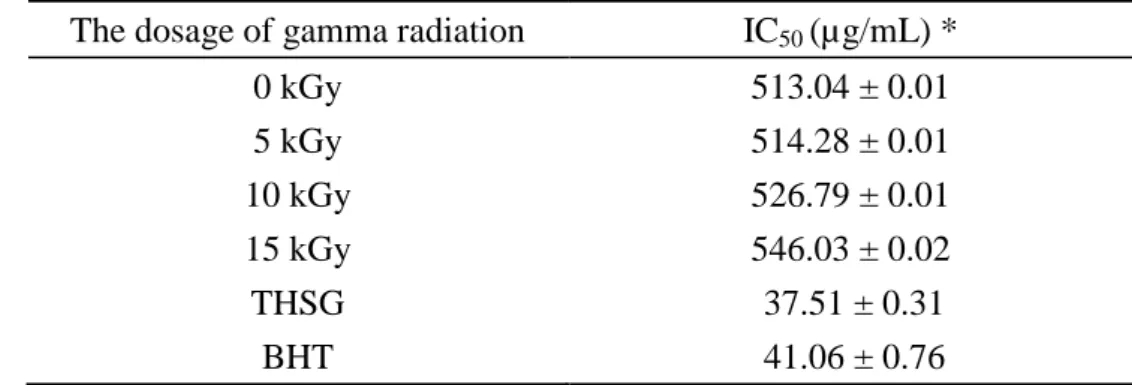
at wavelength 517 nm. Table 3 shows IC50 values for the radical-scavenging activities 13
of POMU, THSG, GSH, and BHT using the DPPH colorimetric method. It was found 14
that 0 kGy had the lowest IC50 value (513.04 ± 0.01 μg/mL), followed by 5 kGy 15
(514.28 ± 0.01 μg/mL), 10 kGy (526.79 ± 0.01 μg/mL) and 15 kGy (546.03 ± 0.02 16
μg/mL). The four extracts showed significant differences (p < 0.05) in 17
radical-scavenging activity. As shown from the above results, the sample without any 18
treatment of gamma radiation (0 kGy) had the highest DPPH radical scavenging 19
15 activity. However, its capacity was still much lower compared to the positive controls 1
of BHT and THSG (23.46 ± 0.14 and 21.51 ± 0.08 μg/mL). 2
3
3.4 Detecting changes in antioxidant activity after gamma irradiation by reducing 4
power measurement 5
We investigated Fe3+-Fe2+ transformation in POMU samples for the 6
measurement of their reducing capacity. The reducing capacity of a compound may 7
serve as an important indicator of its potential antioxidant activity [28]. The 8
antioxidant activity of putative antioxidants have been attributed to various 9
mechanisms, such as prevention of chain initiation, binding of transition metal ion 10
catalysts, decomposition of peroxides, prevention of continued hydrogen abstraction, 11
and radical scavenging [29]. In this assay, potassium ferricyanide was added to 12
POMU samples and positive controls of THSG and BHT for the determination of any 13
changes in reducing power after gamma irradiation. The mixtures were allowed to 14
incubate during which time ferricyanide was reduced to ferrocyanide. 15
The reducing power was measured in terms of absorbance of the reaction 16
mixtures at 700 nm. A higher absorbance indicated a stronger reducing power, vice 17
versa. The reducing powers of the samples were in the following decreasing order: 0 18
kGy (0.79 ± 0.02) > 5 kGy (0.55 ± 0.02) > 10 kGy (0.52 ± 0.01) > 15 kGy (0.46 ± 19
0.01) at the dose of 1 mg/mL of POMU. The reducing powers of THSG and BHT 1
were 1.98 ± 0.04 and 1.30 ± 0.02 respectively (data not shown). 2
3
3.5 Effect of gamma irradiation on total polyphenol, flavonoid, and flavonol contents 4
The total polyphenol, total flavonoid, and total flavonol contents of POMU are 5
shown in Table 4. The total polyphenol content of POMU extracts ranged from 26.82 6
to 28.21 μg CE/mg. 0 kGy was 27.84, 5kGy was 28.21, 10kGy was 27.77 and 15kGy 7
was 26.82μg CE/mg. 5 kGy had the highest polyphenolic content and 15kGy was the 8
lowest. 9
The total flavonoid content was expressed as g rutin equivalent/mg dry weight, 10
and ranged from 7.14 to 5.12 μg RE/mg.0 kGy was 6.99, 5kGy was 7.14, 10kGy was 11
7.01 and 15kGy was 5.12μg RE/mg. 5 kGy had the highest flavonoid content. 15kGy 12
was the lowest and significant different from others. 13
The total flavonol content was expressed as g catechin equivalent/mg dry 14
weight. The total flavonol content of POMU extracts varied slightly and ranged from 15
5.79 to 5.71 μg CE/mg. 16
Both flavonoids and flavonols are polyphenolic compounds. Polyphenolic 17
compounds have important roles in stabilizing lipid oxidation and are associated with 18
antioxidant activities [30]. Phenolic compounds may contribute directly to 19
17 antioxidative actions [19]. It is suggested that when as much as 1.0 g of polyphenolic 1
compounds is ingested from a daily diet rich in fruits and vegetables, there may be 2
inhibitory effect on mutagenesis and carcinogenesis in humans [31]. The antioxidative 3
activities observed could be ascribed both to variant mechanisms exerted by different 4
phenolic compounds and to their synergistic effects. The antioxidant assays used in 5
this study measured the oxidative products at the early and final stages of oxidation. 6
Antioxidants have different functional properties, such as reactive oxygen species 7
scavenging, e.g. quercetin, rutin, and catechin [32]; and inhibition of free radical 8
generation and chain-breaking activity, e.g. p-coumaric acids [33] and metal chelation 9
[34]. These compounds are normally phenolic compounds, which are effective proton 10
donors, such as tocopherols, flavonoids and other organic acids. However, the 11
components responsible for the antioxidative activity of POMU are still currently 12
unclear. 13
14
3.6 Compositional changes of Polygoni Multiflori Radix after gamma irradiation 15
The effect of different doses of gamma radiation on the compositional changes of 16
POMU was assessed. Quantitative analyses of POMU were conducted with 17
HPLC-UV. THSG content of unirradiated and irradiated POMU was quantified based 18
on a previously constructed HPLC-UV calibration curve for THSG standard 19
(R2=0.996). The content ranged from 2.13 to 3.05 mg/g of dry weight (DW) for 1
unirradiated or irradiated POMU. Irradiation treatment resulted in significant changes 2
in THSG content at different doses. 3
In this database, THSG showed statistically significant decreases from 3.05 mg/g 4
(0 kGy, p <0.05) to 2.60 mg/g after 5 kGy of irradiation (p <0.05), 2.50 mg/g at 10 5
kGy (p <0.05) and 2.13 mg/g at 15 kGy (p <0.01) (Figure 2; N = 3). Therefore, it was 6
indicated that gamma irradiation caused damage to THSG content in POMU. 7
8
4. Discussion
9
POMU has long been used as a medicinal herb in Asia. Insect infestation and 10
microbial contamination are serious problems for POMU storage. Gamma irradiation 11
is able to penetrate deeply, and has been found to be useful for the hygienization of 12
herbal products even when they are already in packages or sacks. The choice of a 13
suitable radiation dosage is particularly important for decontaminate the microbial 14
load of stored POMU. In this research, the optimal dosage for the inactivation of 15
microorganisms in POMU was evaluated. 16
2 kGy was sufficient for the hygienization of enterobacteria, whereas a dosage of 17
6 kGy was required for the hygienization of yeasts and fungi. Since the dosage 18
required removing microbial contamination is higher than that required killing insects, 19
19 insects would be killed at the same time [35].
1
Our results confirmed that at the dose of 4 kGy, mold and yeast counts were 2
obviously reduced; and at 6 kGy, neither yeasts nor fungi were observed any longer in 3
POMU specimens. Thus in our research, it was demonstrated that 4~6 kGy of 4
treatment was effective for the inactivation of microorganisms and 8 kGy treatment 5
could induce complete inactivation. 6
Phenols are regarded as main contributors to antioxidant activities, the 7
measurements are based on radical scavenging. Antioxidant capacity depends on 8
various factors, such as the number and location of hydroxyl groups on the aromatic 9
ring, as well as their mutual positions [36]. Our results demonstrated that the 10
irradiation dosage on POMU (5 kGy, 63.62 ± 0.84 M/mg extract) had both the 11
highest antioxidative activity and the lowest value in IC50 of DPPH 12
radical-scavenging activity, and as expected, an increase of radiolytic products, which 13
agreed with literary reports for other foods and medicines. In this study, 5 kGy 14
γ-irradiation increased radiolytic products of POMU; however it seemed to increase 15
the antioxidant effect of POMU in the ABTS assay. 16
The content of total phenols, expressed as g (+)-catechin equivalent/mg dry 17
weight value, did not vary distinctively in irradiated POMU samples. The values were 18
slightly lower; however variations were not statistically significant (Table 4). THSG 19
content of POMU had decreased as the γ-radiation increased (Figure 1). However, the 1
total phenolic compounds and antioxidative activities were increased, probably 2
because other phenolic compounds were formed during irradiation. It has to be 3
mentioned that irradiation of aqueous systems containing aromatic compounds can 4
implicate the formation of phenols. 5
6
5. Conclusion
7
The results of this study indicated that 5 kGy of gamma irradiation was effective 8
for the hygienization of POMU. It did not alter the appearance of POMU before and 9
after gamma irradiation. Though, after 5 kGy of irradiation, some physicochemical 10
properties were slightly changed or compensated for the improved hygiene of this 11
medicinal herb, such as the decrease in THSG content. However, the total phenolic 12
compounds and antioxidative activities were increased. Therefore gamma irradiation 13
at 5 kGy could be a potential method for decontaminate the microbial load of POMU 14
to prolong shelf life and improve hygienic quality. 15
References
16
[1] Farkas J. Irradiation of dry food ingredients. Florida: CRC Press Inc; 1988. p. 2. 17
[2] McKee LH. Microbial contamination of spices and herbs: a review. Lebensm Wiss 18
Techno 1995;28:1-11. 19
21 [3] Kneifel W, Berger E. Microbiological criteria of random samples of spices and 1
herbs retailed on the Austrian market. J Food Prot 1993;57:893-901. 2
[4] Pafumi J. Assessment of the microbiological quality of spices and herbs. J Food 3
Prot 1986;49(12):958-963. 4
[5] Eiss I. Growing impact of irradiation on global production of and trade in spices. 5
Irradiation for food safety and quality. In: Loaharanu P, Thomas P editors. 6
FAO/IAEA/WHO International Conference on Ensuring the Safety and Quality 7
of Food through Radiation Processing. Turkey: American Spice Trade 8
Association; 2001. p. 178-191. 9
[6] Ehrenberg L, Hussain S. Genetic toxicity of some important epoxides. Mutat Res 10
1981;86:112-113. 11
[7] Kligerman AD, Erexson GL, Phelp ME, Wilmer JL. Sister-chromatid exchange 12
induction of peripheral blood lymphocytes of rats exposed to ethylene oxide by 13
inhalation. Mutat Res 1983;120:37-44. 14
[8] Pfeiffer EH, Dunkelberg H. Mutagenicity of ethylene oxide and propylene oxide 15
and of the glycols and halohydrins formed from them during the fumigation of 16
foodstuffs. Food Cosmet Toxicol 1980;18(2):115-118. 17
[9] Intergovernmental Negotiating Committee. Operation of the interim prior 18
informed consent procedure for banned or severely restricted chemicals in 19
international trade. In: Debois M, Karmen K editors. Proceedings of the 1
Rotterdam convention on the prior informed consent procedure for certain 2
hazardous chemicals and pesticides in international trade. Rotterdam: United 3
Nations Environment Program; 2001. p. 12. 4
[10] Farkas J, Andrassy E. Increased sensitivity of surviving bacterial spores in 5
irradiated spices. In: Dring GJ, Ellar DJ, Gould GW editors. Fundamental and 6
Applied Aspects of Bacterial Spores. London: Academic press, London; 1985. 7
p. 397-407. 8
[11] Farkas J. Irradiation as a method for decontaminating food - a review. Int J Food 9
Microbiol 1998;44(3):189-204. 10
[12] Ito H, Kamakura G, Sekita H, Kamiyoga S. Distribution of microorganisms in 11
herb medicines and their decontamination by gamma-irradiation. 12
Shokuuhin-shosha 1999;34(1-2):16-22. 13
[13] World Health Organization. Report of an ICGFI consultation on microbiological 14
criteria for foods to be further processed including irradiation. Geneva: 15
WHO/EHE/FOS/89.5 WHO; 1989. p. 1. 16
[14] Chinese Pharmacopeia Commission. Pharmacopoeia of the People‟s Republic of 17
China. vol I. People‟s Medical Publishing House, Beijing; 2010, p. 164-165. 18
23 [15] Ye S, Tang L, Xu J, Liu Q, Wang J. Postconditioning's protection of THSG on 1
cardiac ischemia-reperfusion injury and mechanism. J Huazhong Univ Sci 2
Technolog Med Sci 2006;26(1):13-6. 3
[16] Wen HW, Wang YT, Chung HP. Efficacy of gamma irradiation for protection 4
against postharvest insect damage and microbial contamination of the adlay. 5
Postharvest Biology and Technology 2008;50(2-3):208-215. 6
[17] Janovsky I. Response of three types of aqueous chemical dosimeters to gamma 7
and electron radiations in the dose range 0.1–10 kGy. Int J Radiat Appl Instrum 8
1986;37(1):61-63. 9
[18] Wen HW, Chung HP, Chou FI, Lin IH, Hsieh PC. Effect of gamma irradiation on 10
microbial decontamination, and chemical and sensory characteristic of Lycium 11
Fruit. Radiat Phys Chem 2006;75:593-603. 12
[19] Chang TN, GJ Huang, YL Ho, SS Huang, HY Chang, YS Chang. Antioxidant 13
and antiproliferative activities of Crossostephium chinensis (L.) Makino. Am J 14
Chin Med 2009;37:797-814. 15
[20] Huang DJ, Chen HJ, Lin CD, Lin YH. Antioxidant and antiproliferative activities 16
of water spinach (Ipomoea aquatica Forsk) constituents. Bot Bull Acad Sin 17
2005;46: 99-106. 18
[21] Yen GC, Chen HY. Antioxidant activity of various tea extracts in relation to their 19
antimutagenicity. J Agric Food Chem 1995;43:27-32. 1
[22] Huang DJ, Lin CD, Chen HJ, Lin YH. Antioxidant and antiproliferative activities 2
of sweet potato (Ipomoea batatas [L.] Lam „Tainong 57‟) constituents. Bot Bull 3
Acad Sin 2004;45:179-186. 4
[23] Chang HC, Huang GJ, Agrawal DC, Kuo CL, Wu CR, Tsay HS. Antioxidant 5
activities and polyphenol contents of six folk medicinal ferns used as 6
“Gusuibu.” Bot Stud 2007;48:397-406. 7
[24] Jagetia GC, Baliga MS. Evaluation of the radioprotective action of geriforte in 8
mice exposed to different doses of γ-irradiation. Am J Chin Med 9
2004;32(4):551-567. 10
[25] Sanchez-Moreno C. Methods used to evaluate the free radical scavenging activity 11
in foods and biological systems. Food Sci Technol Int 2002;8:121-137. 12
[26] Benzie IFF, Wai Y, Strain JJ. Antioxidant (reducing) efficiency of ascorbate in 13
plasma is not affected by concentration. J Nutr Biochem 1999;10: 146-150. 14
[27] Katalinic V, Milos M, Kulisic T, Jukic M. Screening of 70 medicinal plant 15
extracts for antioxidant capacity and total phenols. Food Chem 2006;94: 16
550-557. 17
[28] Meir S, Kanner J, Akiri B, Hadas SP. Determination and involvement of aqueous 18
reducing compounds in oxidative defense systems of various senescing leaves. J 19
25 Agric Food Chem 1995;43:1813–1819.
1
[29] Diplock AT. Will the ‛good fairies‟ please proves to us that vitamin E lessens 2
human degenerative of disease? Free Radical Res 1997;27:511-532. 3
[30] Oh YC, Kang OH, Choi JG, Chae HS, Lee YS, Brice OO, Jung HJ, Hong SH, 4
Lee YM, Kwon DY. Anti-inflammatory effect of resveratrol by inhibition of 5
IL-8 production in LPS-induced THP-1 cells. Am J Chin Med 6
2009;37(6):1203-1214. 7
[31] Tanaka M, Kuei CW, Nagashima Y, Taguchi T. Application of antioxidative 8
maillrad reaction products from histidine and glucose to sardine products. 9
Nippon Suisan Gakkai Shi 1988;54:1409-1414. 10
[32] Hatano T, Edamatsu R, Hiramatsu M, Moti A, Fujita Y, Yasuhara T, Yoshida T, 11
Okuda T. Effects of tannins and related polyphenols on superoxide anion 12
radical, and on 1,1-diphenyl-2-picrylhydrazyl radical. Chem Pharm Bull 13
1989;37:2016-2021. 14
[33] Laranjinha J, Vieira O, Madeira V, Almeida L. Two related phenolic antioxidants 15
with opposite effects on vitamin E content in low density lipoproteins oxidized 16
by ferrylmyoglobin: consumption versus regeneration. Arch Biochem Biophys 17
1995;323(2):373-381. 18
[34] Van-Acker SABE, Van-Balen GP, Van-den-Berg Bast A, Van der vijgh WJF. 19
Influence of iron chelation on the antioxidant activity of flavonoids. Biochem 1
Pharmacol 1998;56(8):935-943. 2
[35] Younes MWF, Shehata NF, Mahmoud YA. Histopathological effects of gamma 3
irradiation of the peach fruit fly, Bactrocera zonata (Saund.) female gonads. J 4
Appl Sci Res 2009;5(3):305-310. 5
[36] Rahman A, Rahman MM, Mominul IS, Mashiar R, Sheik MMI, Rahman MM, 6
Shadli SM, Alam FM. Free radical scavenging activity and phenolic content of 7
Cassia sophera L. Afr J Biotechnol 2008;7(10): 1591-1593. 8 9 10 Figure Legends 11
Figure 1. Quantitation of THSG contents in the methanol extracts of Polygoni 12
Multiflori Radix by HPLC. 13
Table 1. Effect of gamma irradiation on the microbial count (CFU/g ± SD) of Polygoni Multiflori Radix samples.
Sample Irradiation dose (kGy)
No. 0 2 4 6 8 1 Ta (1.2 ± 0.4)x103 (1.3 ± 0.4)x102 (5.0 ± 0.6)x101 NDb ND Mc (6.2 ± 0.7)x102 (4.0 ± 0.6)x101 (2.0 ± 0.3)x101 ND ND E/Pad ND ND ND ND ND 2 T (2.1 ± 0.3)x102 (2.0 ± 0.4)x101 (2.0 ± 0.5)x101 ND ND M (1.7 ± 0.4)x102 ND ND ND ND E/Pa ND ND ND ND ND 3 T (5.1 ± 0.9) x102 (7.0 ± 1.4)x101 ND ND ND M (1.3 ± 0.3) x102 (2.0 ± 0.4)x101 (1.0 ± 0.2)x101 ND ND E/Pa ND ND ND ND ND 4 T (2.9 ± 0.3)x103 (3.5 ± 0.5)x102 (6.9 ± 1.1)x101 ND ND M (4.5 ± 0.4)x101 (1.9 ± 0.3)x101 (1.0 ± 0.2)x101 ND ND E/Pa ND ND ND ND ND 5 T (6.5 ± 1.2)x101 (4.0 ± 0.7)x101 (2.5 ± 0.3)x101 ND ND M (5.0 ± 0.8)x101 (2.5 ± 0.2)x101 (1.5 ± 0.3)x101 ND ND E/Pa ND ND ND ND ND 6 T (3.0 ± 0.4)x102 (7.5 ± 0.5)x101 (1.5 ± 0.2)x101 ND ND M (5.0 ± 0.9)x101 (1.5 ± 0.4)x101 ND ND ND E/Pa (1.0 ± 0.4)x101 ND ND ND ND 7 T (5.0 ± 0.5)x101 ND ND ND ND M (2.5 ± 0.4)x101 (1.5 ± 0.2)x101 (1.0 ± 0.2)x101 ND ND E/Pa ND ND ND ND ND 8 T (1.5 ± 0.3)x102 (5.0 ± 0.5)x101 ND ND ND M (5.0 ± 1.3)x101 (2.0 ± 0.3)x101 ND ND ND E/Pa ND ND ND ND ND 9 T (5.0 ± 0.7)x101 (3.0 ± 0.4)x101 (2.0 ± 0.3)x101 ND ND M (5.0 ± 0.3)x101 (2.0 ± 0.3)x101 ND ND ND E/Pa ND ND ND ND ND 10 T (2.6 ± 0.4)x102 (5.0 ± 0.6)x101 (3.0 ± 0.3)x101 (2.0 ± 0.2)x101 ND M (5.0 ± 0.5)x101 (2.0 ± 0.3)x101 ND ND ND E/Pa ND ND ND ND ND a
T: Total aerobic microbes; b ND: No microbe detected on plates; c M: Molds; d
E: Enterobacteriaceae, Pa: Pseudomonas aeruginosa Table 1
Table 2. Total antioxidant activity assessed by TEAC
Samples and positive control TEAC (M Trolox/mg ± SD) *
0 kGy 52.08 ± 0.79 5 kGy 63.62 ± 0.84 10 kGy 59.77 ± 1.03 15 kGy 55.92 ± 0.80 THSG 1,871.53 ± 15.38 BHT 1,869.41 ± 34.63 GSH 1,827.68 ± 76.84
* All values are expressed as mean ± S.D. of triplicate tests (n = 3). Values represented mean ± S.D. of three parallel measurements (p < 0.05) when analyzed by ANOVA and Ducan’s multiple-range tests.
Table 3. IC50 values of the DPPH radical scavenging activities of the methanol extracts of Polygoni Multiflori Radix that had been irradiated with different dosages of gamma ray.
The dosage of gamma radiation IC50 (µg/mL) *
0 kGy 513.04 ± 0.01 5 kGy 514.28 ± 0.01 10 kGy 526.79 ± 0.01 15 kGy 546.03 ± 0.02 THSG 37.51 ± 0.31 BHT 41.06 ± 0.76
* Values represented mean ± S.D. of three parallel measurements (P<0.05). Table 3
Table 4. Total polyphenol, flavonoid and flavonol contents of the methanol extracts of Polygoni Multiflori Radix that had been exposed to different doses of gamma radiation. Dose of gamma radiation Total polyphenols (g CE/mg)b Total flavonoids (g RE/mg)c Total flavonols (g CE/mg)b 0 kGy 27.84 ± 0.06 6.99 ± 0.02 5.74 ± 0.27 5 kGy 28.21 ± 0.02 7.14 ± 0.04 5.78 ± 0.06 10 kGy 27.77 ± 0.01 7.01 ± 0.03 5.79 ± 0.03 15 kGy 26.82 ± 0.01 5.12 ± 0.02d 5.71 ± 0.07 a
Values represented mean ± S.D. of three parallel measurements. b
Data expressed in g (+)-catechin equivalent / mg dry weight (g CE/mg). c
Data expressed in g rutin equivalent / mg dry weight (g RE/mg).
d
values significantly differing from others at 5% Table 4
1
Figure 1. Quantitation of THSG in the methanol extracts of Polygoni multiflori
Radix by HPLC
0 kGy 5 kGy 10 kGy 15 kGy
THSG m g /g 0.0 0.5 1.0 1.5 2.0 2.5 3.0 3.5 * * **
Dosages of Gamma Irradiation Figure 1