Preface...
ⅰ
Opening Ceremony
Opening remarks Dr. Wu-Hsiung Chen...ⅲ
Welcome remarks Dr. Dah-Jiang Liu...
ⅴ
Congratulatory remarks Dr. Dyno Keatinge...ⅶ
Keynote Speeches
Experiences from Establishing an International Seed Bank – Svalbard Global Seed Vault – Practical Management Measures
Jessica Kathle
...
1Preserving the Future of Vegetable Improvement
JDH Keatinge, J. d’A Hughes, A. Ebert, D. Ledesma, K. Luther, R. de la Peña, and E. Javier.
...
21Management of Germplasm Collections and Enhancing Their Use by Mini Core
and Molecular Approaches
HD Upadhyaya, CLL Gowda, and DVSSR Sastry ...35
Establishing a Taiwan Biodiversity Information Network and ItsIntegration with Germplasm Databanks
Kwang-Tsao Shao, Sheng-Chung Huang, Shu Chen, Yung-Chang Lin, Kun-Chi Lai,
Burke Chih-Jen Ko, Lee-Sea Chen, and Alan Jieluen Yang ...71
Enhanced Conservation and Management of Canadian Bioresources
Ken Richards ...79
Risk Management of Microbial Genetic Resources in the BCRC/FIRDI ofTaiwan
Conservation and Utilization of Genetic Resources in Canada
Ken Richards ...115
Plant Genetic Resource Management in Indonesia Sutoro ...127
The Present Status and Future Prospects of the NIAS Genebank Project inJapan Makoto Kawase and Duncan A. Vaughan...135
Status and Progress of Conservation and Utilization of Agricultural Genetic Resources in the Republic of Korea Jung-Hoon Kang and Tae-San Kim ...145
Status of Management of Plant and Animal Genetic Resources in Papua NewGuinea Workneh Ayalew and Rosa Kambuou...159
Management of Biodiversity and Conservation of Genetic Resources for Food and Agriculture in Peru Manuel Sigüeñas ...173
Management of Plant Genetic Resources for Food and Agriculture in the Philippines: Status and Risks Susan Sandra L. Ilao and Noel A. Catibog...189
The Status of Conservation, Utilization, and Risk Management ofGenetic Resources in Taiwan Sheng-Chung Huang, Ming-Che Wu, Fu-Guang Liu, and Ching-Te Chien ...205
Conservation and Risk Management of Plant Genetic Resources inThailand Assanee Songserm...233
Status of Conservation of Agriculture Genetic Resource in Vietnam Tran Thi Tuyet Lan ...245
Summary Report ... 253
Appendix 1: Workshop Program... 267
Preface
The APEC-ATCWG International Workshop, “Capacity Building for Development and Implementation of Risk Management Systems on Genetic Resources for Food and Agriculture”, was held at the Taiwan Agricultural Research Institute (TARI), Council of Agriculture, Chinese Taipei, on 14~17 October, 2008.
Genetic resources are the basis to not only the conventional breeding for improving crop yield and quality, but also the innovated biotechnology in utilizing crop traits for further improvement. However, there is a potential risk of losses of genetic resources due to factors such as human incautiousness, nature disaster, and climate change. As food supply remains an important global issue, it is so crucial to find effective measures for the improvement of risk management and conservation of genetic resources.
The objective of the APEC-ATCWG Workshop is to share experiences and knowledge on risk management of germplasms among APEC member economies. Through the multilateral communication and discussion on risk management of genetic resources at this workshop, I believe all member economies could actively promote further cooperation to ensure effective conservation and efficient utilization of all genetic resources. In addition, the workshop would also benefit all member economies by improving food supply, agricultural product, and social prosperity as well.
A total of 32 participants from 12 member economies attended the workshop, including six invited resource speakers and representatives. The Workshopconsisted of plenary sessions, major symposia (including resource presentations and country reports), and field tours to visit scientific institutions, project areas, etc. In the symposium, Dr. Jessica Kathle, Director of NordGen addressed the experiences and practical measures for establishing an international seed bank “Svalbard Global Seed Vault” which is the most secure possible backup storage site for a global system of ex situ collections of crop diversity. The proceedings containing expert papers as well as country reports presented in the workshop would be useful and valuable to risk management to the APEC member economies.
I would like to express my sincerest appreciation to all participants for their attendance and valuable contributions in this workshop. The publication of the proceedings would not have been possible without the financial support from the Council of Agricultural and the excellent assistance of the staff of TARI.
Dah-Jiang Liu, Ph.D.
Director General
Taiwan Agricultural Research Institute Council of Agriculture, Chinese Taipei
Opening Remarks
Dr. Wu-Hsiung Chen
Minister
Council of Agriculture, Chinese Taipei
Director General Liu, Honorable Participants, Ladies and Gentlemen:
On behalf of the host economy Chinese Taipei, I would like to welcome all of you to this meaningful activity of APEC, namely the “2008 APEC-ATCWG International Workshop on Capacity Building for Development and Implementation of Risk Management Systems on Genetic Resources for Food and Agriculture”, held here at the Taiwan Agricultural Research Institute. Dr. Liu and his capable staff have worked hard to ensure a good start for this important workshop.
As we all know, agriculture is crucial to economic development and social stability in the APEC economies. Recently, with the soaring food prices which have led to social and economic disruptions in parts of the world, people around the world once more realize how important agriculture is in their economies.
In order to ensure adequate food supply to all human beings, improvement in food production by traditional or biotechnological methods is happening almost every minute and everywhere in the world. But the improvement has to depend upon the full utilization of genetic resources and the effective application of research findings. Genetic resources have been recognized worldwide as essential assets for food and agricultural development, and they exert strong impacts on the global economy, social welfare, and the environment.
In the past few decades, rapid economic growth in many APEC economies may have resulted in losses of genetic resources of plants and wildlife. Therefore, risk management is a key strategy to reduce or prevent potential losses of genetic diversity so as to ensure sustainable development in the food and agricultural sector. The strategy should include the development of technologies for the management of all genetic resources and the application of these technologies in preventing further losses of genetic resources caused by human activities or natural disasters. Therefore, we can say that the preservation of genetic resources also serves as the basis for agricultural development. The establishment of the
Arctic Noah's Ark plant kingdom in Norway provides a significant example of public awareness of the urgent need for worldwide preservation of genetic resources.
In the realm of genetic resources preservation, there are lots of experience and expertise which could be shared among APEC economies. Chinese Taipei is greatly honored to host a workshop dedicated to this cause. Through the sharing of research findings of the experts and the exchange of experience and expertise among the participants, I think we are confident that this workshop will proves a great aid in helping APEC economies to formulate effective risk management systems on genetic resources for food and agriculture.
It is my hope that all the participants of this workshop will utilize this valuable opportunity to deliberate not only on the core issues but also on related issues and problems faced in the vast domain of genetic resources preservation. I believe through your active participation and contribution on this workshop will be of help to future sustainable development in agriculture.
In addition to the workshop itself, we have arranged field trips to the Livestock Research Institute, the Fisheries Research Institute, the World Vegetable Center, the Food Industry Research and Development Institute, a recreational farm, and the National Palace Museum. We hope the tour will enable all participants from abroad to know more about Taiwan’s animal, vegetable, freshwater fish, and microorganism genebanks and its cultural heritage.
Before concluding my remarks, I wish all the participants a rewarding experience and the workshop a great success.
Welcome Remarks
Dr. Dah-Jiang Liu
Director General
Taiwan Agricultural Research Institute
Council of Agriculture, Chinese Taipei
Mr. Minister of the Council of Agriculture of Chinese Taipei, Dr. Keating, Director General of the World Vegetable Center; Dr. Kathle, Director of the Nordic Genetic Resource Center from Sweden, Distinguished Speakers, Dear Participants, Ladies and Gentlemen:
On behalf of the Taiwan Agricultural Research Institute, I sincerely welcome all of you attending the “2008 APEC Workshop on the Risk Management Systems on Genetic Resources”, especially those international friends coming all the way to Taiwan.
The importance of genetic resources has long been recognized as valuable treasures for human beings. It is important not only to global economy through facilitating food and agricultural production, but also to the sustained development of human culture and welfare by its impacts on the environment. Back in 1997, with the support from the APEC authorities, Chinese Taipei initiated and held the first workshop on agricultural genetic resources here in this Institute. Five more workshops have been held in different Member Economies during the past 10 years. We are happy to see that the mainstream still keeps moving strong. And today, we are here again to move one step forward to the seventh Workshop.
Our past experiences have taught us more than enough lessons that there are always high risks of losing genetic resources under various occasions. Any plant or animal species, once being extinct, can never be recovered. On the other hand, it’s negative or harmful influence on the environment and human beings lasts endlessly. This is why risk management is so critical to germplasm conservation. This is also why we are here today trying to equip ourselves better in order to save more genetic resources which mean so much to us and to the earth we live on.
We believe that minimizing the risk can be achieved if we utilize and maintain properly the precious genetic resources. Improving the strategies of risk management will be targeted in many presentation and discussion sections of this Workshop. I am confident that all the experts and representatives from APEC Member Economies could benefit by attending this
very meaningful Workshop. However, may be we can do a little bit more beyond the workshops we have held for seven times. For example, holding training courses for and facilitating the exchange of agricultural germplasm among APEC Member Economies might be issues worth to be considered. Should such issues be raised and approved by the participants of this Workshop, I would like to report it to Mr. Minister of COA for his consent and possible materialization in the near future.
Finally, I would like to express my appreciation to Mr. Sheng-Chung Huang, Director of the Plant Germplasm Division, and my colleagues of this Institute for their hard working and thoughtful arrangement of the Workshop. My best wishes to all the participants and observers. I wish that in addition to risk management of genetic resources, you have warm friendship and happy memories packed in your hearts when you go back home a few days later. To our foreign friends, please enjoy your stay in Taiwan to the utmost you can. Believe me, this is a very beautiful, lovely and friendly country.
Congratulatory Remarks
Dr. Dyno Keatinge
Director General
AVRDC – The World Vegetable Center
Shanhua, Tainan, Taiwan
Your Excellency Mr. Chen, Director General Dr. Liu,
I would like to say first of all that I heartily congratulate the Government of the Republic of China for taking on board this particular workshop. I would like to pick out one word that I believe to be the most important for this workshop and that is the word: risk. I believe that we are entrusted with genetic resources not just for today but for many generations in the future, and it is amazing when we consider the seriousness of the responsibility we undertake with that promise to our great, great, great grand children. I believe that to be the most risky thing we need to consider when we are here today.
When we take on the responsibility for germplasm on behalf of FAO, it is in perpetuity. Now that is a very scary word in English, which could mean forever, ever and ever. Now I can see my budget for this year and perhaps next but I can’t see much beyond that. But nevertheless it is something that we have to tackle but I believe it is necessary for us to tackle it together and that is why it is important that the international community in this particular case, APEC, have gathered us together today because I don’t believe the responsibility lies with one institution, one government or whatever. It is the responsibility for all of us here globally and we need to maximize our collaboration in order to do so.
Many people who are new to Taiwan are not aware that it there is a very long history of agriculture research here and I congratulate this nation for doing that. I think in the UK as early as in 1870s Rothamsted Agricultural Research Institute was founded, the first in the world perhaps, but not much earlier than here in Taiwan in 1895. This nation has been involved in strategic research for a very long period. I believe that is one of the reasons why when we had the recent food crisis here, people could say rice price crisis in Taiwan because food insecurity has never been a common problem in this particular beautiful island.
At least before that time the Government has set their policy over the years of allowing their agriculture institutions to keep pace with industrial development and they have not sacrificed their agriculture industry as so many other countries have over the last few years. Because of that when the food crisis came, then they had adequate spare capacity to deal with it.
I do recognize that as agriculture becomes of higher and higher importance and is intensifying itself more and more there is a tendency towards the erosion of species, the erosion of germplasm. Nevertheless I believe that there is now a recognition that crop diversification is important. This is a dimension of agriculture which the World Vegetable Center currently believes in and that we presently represent, I believe, one of the leading edges of research in that area.
But if you look around in Taiwanese agriculture you can see hundred and hundred of species have successfully been employed in the agriculture sector from dragon fruit, rice, different vegetables, and livestock etc. There is a broader base for agriculture here which I believe to be an important conclusion which perhaps probably countries in the EU, like the UK, might learn from as they have been eroding their agriculture base for many years now.
So I would like to congratulate again the Government of this country for setting us all an excellent example on how to maintain and use their genetic resources, how to maintain and develop their agricultural industry, how to maintain and develop their agriculture research, and I believe that is very important too in long term and I would ask you all to join me in another round of applause for Taiwan so that they can continue to behave as an excellent example to the whole world.
Capacity Building for Risk Management Systems on Genetic Resources 1~20
Experiences from Establishing an International Seed
Bank – Svalbard Global Seed Vault –
Practical Management Measures
Jessica Kathle
1NordGen and Martin Cleemann Rasmussen, Advisor, NordGen
Abstract
The experiences and practical measures from establishing an international seed bank – Svalbard Global Seed Vault (SGSV) – are described in this paper. Build to serve as the most secure safety backup storage site for seeds on food crops conserved by seed banks worldwide and for a global system of ex situ collections of crop diversity, the paper presents the background for establishing the SGSV, its vision and framework, the structure and organization, the depositor agreement and the present day status of the SGSV.
Introduction of NordGen
The Nordic Genetic Resource Center (NordGen) was established by the Nordic Ministries on the first of January 2008 by merging the Nordic Gene Bank (NGB), the Nordic Gene Bank for Farm Animal (NGH) and the Nordic Council of Forest Reproductive Material (NSFP). The new institution is based upon more than 30 years of successful cooperation within genetic resources between the 5 Nordic countries; Norway, Sweden, Finland, Denmark, and Island. NordGen’s main office is in Sweden (Alnarp), where the Nordic gene bank for seeds is also located, while the departments of farm animal and forest trees are in Norway. In addition there are networks and focal persons in all of the Nordic countries. The activities of NordGen cover conservation and sustainable use of genetic resources within crops, farm animal and forest trees. NordGen has a strong engagement both in influencing the international regulations and framework of genetic resources, and in assisting in the building and the managing of gene banks in developing countries. The mandate of NordGen has
recently been expanded to include environmental issues linked to genetic resources relevant for food and agriculture which underlines our interdisciplinary approach.
Background for Svalbard Global Seed Vault
The history of what is today known as the Svalbard Global Seed Vault (SGSV) starts in 1984, when NordGen (at that time the Nordic Gene Bank) established its safety storage for its Nordic collections of seed on Svalbard in the permafrost of the closed down mine in the vicinity of the Svalbard capital Longyearbyen.
The positive experience of the storage by NordGen in the permafrost at Svalbard quickly led to the question of a safety deposit of seeds for the whole world being taken up by scientists and by the UN’s Food and Agriculture Organization and the International Board for Plant Genetic Resources (IBPGR). Unfortunately a lack of funding and the lack of international frameworks and rules for the exchange of seeds between countries severely hampered the process. The necessary frameworks came in place when the International Treaty on Plant Genetic Resources for Food and Agriculture (ITPGRFA) came into force in 2004 which regulated the exchange of crop material. A real breakthrough appeared at the end of 2004, when an expert group strongly recommended the establishment of safety storage of seeds from the whole world at Svalbard and presented this to the FAO’s Commission for Genetic Resources for Food and Agriculture. The report pointed to the important combination of Svalbard’s geographical location, the very positive storage experiences since 1984 and the fact that several developing countries could already point to the very positive collaboration with the Nordic countries and NordGen. The group also pointed out, that Svalbard fulfilled even the worst case security requirements for long term storage. The recommendations of the report received the support of FAO’s Commission for Genetic Resources for Food and Agriculture and in the autumn of 2005 a steering group led by the Norwegian Ministry for Food and Agriculture and consisting of the Global Crop Diversity Trust (GCDT), NordGen, CGIAR and others commenced the planning for world seed storage at Svalbard. In May 2007 the construction of the facility was commenced and in February 2008, the Svalbard Global Seed Vault (SGSV) was officially opened to the world.
The vision and the framework
The tasks and challenges facing the genetic resources and the gene banks of the world today are many. War, natural disasters, climate change and a lack of adequate funding all constitute severe risks for the gene banks and the material stored in these. The SGSV plays a crucial role in meeting these tasks and challenges, and this is reflected in the vision of the SGSV, which states that:
– the Svalbard Global Seed Vault will provide a global security net;
– the Svalbard Global Seed Vault shall be the securest possible backup storage site for a global system of ex situ collections of crop diversity; and
– Svalbard Global Seed Vault shall have the capacity to conserve all unique plant genetic diversity relevant for food and agriculture held in conventional seed banks around the world.
To achieve this, the SGSV is run in accordance with the international framework – The Convention on Biological Diversity (CBD) and the International Treaty on Plant Genetic Resources for Food and Agriculture (ITPGRFA). The SGSV therefore has the same objectives i.e. the conservation and sustainable use of biodiversity and a fair and equitable sharing of the benefits derived from their use.
The structure of the SGSV
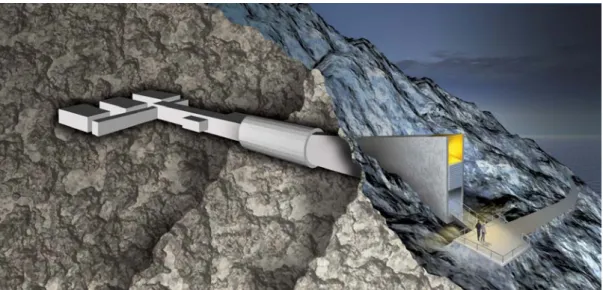
The actual structure of the SGSV is designed to meet all the requirements for long-term storage with maximum security. The capacity of the vault is twice the amount of all known seeds stored in the gene banks of today. The facility is located at a geologically stable location 130 meters above sea level (above even the worst climate change scenario), the three storage halls are embedded 120 meters into the mountainside in solid rock, the temperature is maintained at a constant –18°C and permafrost works as a natural freeze guarantee at –4°C in the event of equipment failure (Fig. 1 and 2). The facility is further secured through a number of monitoring and surveillance with gas-, temperature- and motion- detectors. The many polar bears roaming the area of Svalbard provide yet another – though less controllable security for the facility!
Fig. 1. The entrance of SGSV and a cross-section of the seed vault deep inside the mountain.
Fig. 2. The SGSV structure with the tunnel and three seed storage halls.
The organization
The organization of the SGSV reflects its international character and its long-term purpose for the whole world. Since Svalbard is Norwegian territory, the Norwegian government is the liable national authority. NordGen with its many years of experience with long-term storage and international work has the responsibility for the management and operation and sign the agreement with the depositors. The Global Crop Diversity Trust (GCDT) funds the operation and GCDT is also helping to secure operations by assisting
developing countries in the packing and dispatch of seed samples to Svalbard from eligible collections. Finally an International Advisory Council oversees the operation of the Vault, thereby ensuring that the SGSV is fulfilling its mandate and is meeting any unforeseen events according to the highest scientific expertise and in line with the international treaties.
How it all works – the terms of agreement
A number of terms apply for the seed-material placed in the SGSV and these are all specified in the depositor agreement signed by the depositors placing material in the SGSV. This agreement states, that:
– Storage in SGSV is free of charge for public and private holders of PGRFA;
– Shipment of seeds from developing countries will be supported by GCDT (while developed countries have to cover the shipment themselves);
– Material is stored in a Black box: meaning that it will never be opened and that the deposit of the seeds will not affect any property or other rights pertaining to the material;
– Viability testing, regeneration, and multiplication responsibility remains with the depositor;
– Information access is to be on public online data portal (SESTO); – The depositor can on request at any time withdrawal the deposit; and
– The availability of the samples of accessions and non confidential information are regulated by Annex 1 of International Treaty (IT), Article 15.1(b) or Article 15.3 of IT or in case of none of these then terms and conditions that are substantially the same as Part IV of IT and applicable international agreements for material, which originated in the country of the depositor.
Status
The number of accessions stored in SGSV today (Oct. 2008) is 330,000 from more than 200 countries or regions. In particular, many large gene banks have deposited seeds in SGSV like CGIAR institutions (Fig. 3). Complements from local, national and regional gene banks are wanted and NordGen has send invitations for seeds depositing to all gene banks worldwide. The status with an overview of all deposited accessions in SGSV will continuously be up-dated on the website (www.nordgen.org/sgsv/).
Fig. 3. Preparation of the SGSV seed shipment
Conclusion
The experiences of the SGSV clearly show that to meet the challenges of securing the genetic resources of the world an active international collaboration and commitment is essential. The process can at times seem slow and painstaking, but the international collaboration and the framework for regulating this have progressed much during the last years. Also the political and financial will to provide the territorial location and the funding for the running costs and financial assistance to developing countries make a long-term storage project like the SGSV possible. The process has undoubtedly also been facilitated by the increasing public focus on the need to preserve the genetic resources of the world for the future. The media interest has been overwhelming. However, due to the vision of SGSV to be the most secure possible seed storage, the visiting policy has been very strict. In general, nobody except for the operators have entrance to Vault 2 where the seeds so far are stored. There is however, an informative model of SGSV with all relevant information in the Svalbard Museum open for everybody. The establishment of SGSV may be crucial in securing the plant genetic resources, but we have to remember that this is only one of the many steps needed to secure the future of mankind.
Standard Agreement between the Depositor and
the Royal Norwegian Ministry of Agriculture and Food
Preamble
Whereas
1. The Government of the Kingdom of Norway has established the Svalbard Global Seed Vault to provide a safety net for the international conservation system of plant genetic resources, and to contribute to securing the maximum amount of plant genetic diversity of importance to humanity for long-term in accordance with the latest scientific knowledge and most appropriate techniques;
2. The Svalbard Global Seed Vault will be under the ownership of the Government of the Kingdom of Norway, and situated in Longyearbyen, Svalbard. The Royal Norwegian Ministry of Agriculture and Food is the national authority liable for the Svalbard Global Seed Vault;
3. The Royal Norwegian Ministry of Agriculture and Food, the Global Crop diversity Trust and the Nordic Gene Bank have entered into an agreement providing for the management, operation and long-term funding of the Svalbard Global Seed Vault. Under the agreement, the Nordic Gene Bank is required to liaise with depositors with respect to the material to be deposited and timetable and process for deposition, including guiding the depositors with regard to the packaging and labeling of the material to be deposited consistent with the guidelines and relevant national and international law, and is required, on behalf of the Royal Norwegian Ministry of Agriculture and Food, to enter into and sign the deposit Agreements with depositors on the basis of the Standard Deposit Agreement;
4. [**************] (hereinafter referred to as “the depositor”) holds a collection of seeds of distinct plant genetic resources of importance to humanity, and wishes to ensure the long-term safety of its collection by depositing samples of that collection in the Svalbard Global Seed Vault.
Now therefore, the Royal Norwegian Ministry of Agriculture and Food and the Depositor (hereinafter referred to collectively as “the Parties”) hereby agree as follows:
Article 1
Deposit of Plant Genetic Resources
1. The Depositor agrees to deposit in the Svalbard Seed Vault samples of plant genetic resources described generally in Annex 1 to this Agreement (hereinafter referred to as “the Deposited Materials”), and the Royal Norwegian Ministry of Agriculture and Food agrees to accept such deposit, in accordance with the terms and conditions set out in this Agreement.
2. The depositor recognizes the right of the Royal Norwegian Ministry of Agriculture and food to refuse to accept samples for deposit, or to terminate the deposit
a. if the Depositor fails to comply fully with the terms and conditions set out in this Agreement; or
b. for reasons of force majeure.
3. In particular and without prejudice to the generality of the above, the Depositor recognizes the right of the Royal Norwegian Ministry of Agriculture and Food to refuse to accept samples for deposit or to terminate the deposit of samples already deposited if the samples constitute duplicates of materials already held in deposit in the Svalbard Global Seed Vault.
Article 2
Effect of the Deposit on Property rights
1. The act of depositing the Deposited Materials in the Svalbard Global Seed Vault shall have no affect whatsoever on the nature and extent of any property rights pertaining to the Deposited Materials.
2. In particular and without prejudice to the generality of the above, the act of deposit shall not act in any way to convey any property rights over the Deposited Materials to the Nordic Gene Bank or the Royal Norwegian Ministry of Agriculture and Food.
Article 3
Obligations of the Depositor
1. Subject to paragraph 2 of this Article, the Depositor shall deposit only samples of plant genetic resources that
i. of importance to food security and sustainable agriculture;
ii. the samples of plant genetic resources that have not yet been deposited in the Svalbard Global Seed Vault;
b. have been safety duplicated in a suitable genebank.
2. Any or all of the requirements set out in paragraph 1 of this Article may be waived by the Royal Norwegian Ministry of Agriculture and Food, or by the Nordic Gene Bank or other institution designated by the Royal Norwegian Ministry of Agriculture and Food to act on its behalf as manager of the Svalbard Global Seed Vault. Any waiver granted shall be in writing.
3. The Depositor shall provide an inventory of each shipment of Deposited Materials under this Agreement in accordance with the standards set out in Annex 2.
4. The Depositor shall ensure that Deposited Materials in each shipment:
a. conform fully to the general descriptions of the Deposited Materials in Annex 1 and to the specific descriptions in the inventory for that shipment;
b. are accompanied by any necessary certificates relating to the plant health of the samples as may be required by the laws of the country of export, the Government of the Kingdom of Norway, and any other country through whose territory the Deposited Materials are to transit, and that other procedures required by those laws in respect of that shipment have been complied with;
c. are deposited consistent with other relevant national and international law;
d. have been packed, sealed and labelled and are accompanied by appropriate documentation in conformity with the standards set out in Annex 2 to this Agreement, taking into account such guidelines as may be issued from time to time by the Royal Norwegian Ministry of Agriculture and Food; and
e. will be dispatched in accordance with the schedule set out in Annex 1 to this agreement.
Article 4
Conditions of Deposit
1. The material deposited will be maintained in permafrost conditions supplemented by refrigeration in accordance with internationally agreed standards for long-term seed storage.
2. All storage costs pertaining to the Deposited Materials shall, unless otherwise agreed between the Parties, be the responsibility of the Royal Norwegian Ministry of Agriculture and Food. Costs pertaining to the packaging and shipping of the Deposited Materials shall be borne by the Depositor.
3. The Deposited Materials will remain in sealed envelopes packed in sealed boxes, unless otherwise agreed with the Depositor. Where packages or boxes are damaged during transport or storage, or where packages or boxes have been opened for inspection by customs or other authorities, the Royal Norwegian Ministry of Agriculture and Food shall notify the Depositor. In the event that seeds have been spilled they will be destroyed. In the case of other damage the Royal Norwegian Ministry of Agriculture and Food will endeavour to repair the damage where possible, or provide for the repackaging or resealing of the Deposited Materials in consultation with, and with the agreement of, the Depositor.
4. The Royal Norwegian Ministry of Agriculture and Food will not accept responsibility for any germination testing of Deposited Materials, except as may be otherwise agreed in writing with the Depositor. The Royal Norwegian Ministry of Agriculture and Food will return testing samples of the Deposited Material for germination testing by the Depositor at the Depositor's request and expense, where such testing samples have been provided by the Depositor for that purpose in agreement with the Royal Norwegian Ministry of Agriculture and Food. Testing samples shall be packed in separate boxes.
5. The Royal Norwegian Ministry of Agriculture and Food shall inform the Depositor of the location of the Deposited Materials in the Svalbard Global Seed Vault.
Article 5
Withdrawal of Deposited Materials
1. The Depositor shall have the right to withdraw all or any of the Deposited Materials at any time on the giving of written notice.
2. Any written notice given under this Article shall identify the individual boxes of Deposited Materials that are to be withdrawn. No Deposited Materials will be returned where this requires the opening of a box or boxes in which the Deposited Materials are packed.
3. The Royal Norwegian Ministry of Agriculture and Food undertakes to return the Deposited Materials within a period of one year from the date of receipt of such written notice.
4. The costs of packaging and shipping in respect of the return of Deposited Materials shall, unless otherwise agreed between the Parties, be borne by the Depositor.
5. The Depositor shall be responsible for complying with all export clearance procedures required by the Government of the Kingdom of Norway of the Deposited Materials and for all import or transit procedures required by the country of import or transit. The Royal Norwegian Ministry of Agriculture and Food shall use its best efforts to provide such documentation regarding the Deposited Materials and the conditions under which the Deposited Materials were deposited as may be necessary to facilitate such procedures.
6. The Depositor shall notify the Royal Norwegian Ministry of Agriculture and Food in writing if it wishes the Deposited Materials to be no longer retained in the Svalbard Global Seed Vault but does not wish the Deposited Materials to be returned to it; in such case, the Deposited Materials will be disposed of by the Royal Norwegian Ministry of Agriculture and Food in accordance with its operating rules and procedures applicable to the Svalbard Global Seed Vault.
Article 6
Right of the Royal Norwegian Ministry of Agriculture and Food
to Terminate the Deposit
1. The Royal Norwegian Ministry of Agriculture and Food shall have the right to terminate the deposit, or part thereof, on the giving of one year's written notice, where such termination is required as the result of any change in the policy of the Svalbard Global Seed Vault or the Government of the Kingdom of Norway with respect to the Svalbard Global Seed Vault.
2. Where Deposited Materials are returned as a result of the exercise by the Royal Norwegian Ministry of Agriculture and Food of its right of termination under this Article, the costs of packaging and shipping in respect of the return of Deposited Materials shall be borne by the Royal Norwegian Ministry of Agriculture and Food.
Article 7
Availability of Plant Genetic Resources
1. In consideration for the right to deposit samples of plant genetic resources in the Svalbard Global Seed Vault, the Depositor agrees to make available from their own stocks samples of accessions of the deposited plant genetic resources and associated available non-confidential information to other natural or legal persons in accordance with the following terms and conditions:
a. Where the plant genetic resources are plant genetic resources for food and agriculture of crops listed in Annex 1 of the International Treaty on Plant Genetic Resources for Food and Agriculture [hereinafter referred to as “the Treaty”], in accordance with the terms and conditions set out in Part IV of the Treaty; or
b. Where the plant genetic resources are plant genetic resources for food and agriculture covered by Article 15.l.(b) or Article 15.3 of the Treaty, in accordance with the terms and conditions provided for in Article 15.l(b) or Article 15.3 of the Treaty, as the case may be; or
c. Where the plant genetic resources for food and agriculture are not of crops listed in Annex 1 of the Treaty or covered by Article 15.l (b) or Article 15.3 of the Treaty, either:
i. In accordance with terms and conditions that are substantially the same as the terms and conditions set out in Part IV of the Treaty; or
ii. Where the plant genetic resources for food and agriculture originated in the country of the Depositor, and are not available for facilitated access under the terms of the Treaty, in accordance with the provisions of applicable international agreements.
d. Where the plant genetic resources are not plant genetic resources for food and agriculture, in accordance with the terms and conditions set out in paragraph c. above as appropriate.
2. The Royal Norwegian Ministry of Agriculture and Food reserves the right to give the highest priority to the safety storage of plant genetic resources for food and agriculture that are available in accordance with the terms and conditions set out in Part IV or Article 15 of the Treaty or terms and conditions that are substantially the same as those terms and conditions.
Article 8
Liability
1. The Royal Norwegian Ministry of Agriculture and Food shall not be liable for any damage caused to the Deposited Materials by any reason whatsoever, unless such damage has been caused as a result of any act of malfeasance or negligence on the part of the Royal Norwegian Ministry of Agriculture and Food or any employee or agent of the Royal Norwegian Ministry of Agriculture and Food.
2. In the event of any damage caused by malfeasance or negligence on the part of the Royal Norwegian Ministry of Agriculture and Food or any employee or agent of the Royal Norwegian Ministry of Agriculture and Food, the liability of the Royal Norwegian Ministry of Agriculture and Food shall be limited to the costs of packaging and shipping of new samples, and shall not include costs of regeneration of the plant genetic resources, or similar costs.
Article 9
Amendment
1. This Agreement, including the annexes to this Agreement, may be amended by mutual written agreement of the Parties.
2. Any amendment shall enter into force on the date provided for in the amending agreement.
Article 10
Entry into Force
This Agreement shall come into force on its signature by the authorized representatives of both the Depositor and the Royal Norwegian Ministry of Agriculture and Food.
Article 11
Duration of the Agreement
1. This Agreement shall remain in force for a period of ten (10) years and shall be renewed automatically for further periods of ten (10) years unless either Party gives notice in writing to the other Party at least six months prior to the expiry of any ten (10)
years period that it does not wish this Agreement to be renewed.
2. This Agreement may be terminated by mutual agreement between the Parties to this Agreement.
Article 12
Settlement of disputes
1. Any dispute that cannot be settled by negotiations between the Parties to this Agreement, or through such other procedure as may be agreed between the Parties, shall be finally settled by arbitration in accordance with the Rules or Arbitration of the International Chamber of Commerce by one or more arbitrators appointed in accordance with the said Rules.
2. This Agreement shall be governed by the laws of the Kingdom of Norway.
Article 13
Signature
This Agreement will be signed in three copies.
Signed on behalf of the Depositor: Signed on behalf of the Royal
Norwegian Ministry of Agriculture and Food: ____________________________ _____________________________ Signature Signature ____________________________ _____________________________ Name Name ____________________________ _____________________________ Title Title ____________________________ _____________________________ Date Date
Annex 1
General Description of the Deposited Materials
Depositors are required to provide the following information describing their planned deposit of materials under the Agreement.
Provide a listing of the genera/species and crop to be deposited
Provide the approximate total number of samples and the approximate number by crop Provide a provisional schedule for the deposit shipments, giving the approximate
month and year of each shipment and the approximate number of samples per shipment
The information should be provided in the following tabular format:
Crop/Species Month/2008 Month/Year Month/Year Month/Year etc. Total
Wheat 10,000* 5,000 etc.
Rice
etc.
Total 100,000
* Number of samples
Provide any additional information that the Royal Norwegian Ministry of Agriculture and Food may request in order to be able to arrange the deposits.
Annex 2
Requirements for the Quality, Quantity, Packing, Inventory, and Shipment of
Deposit Materials
2. The samples of plant genetic resources for food and agriculture (PGRFA) must be of seed of high viability, free from diseases and pests as far as possible, and able to maintain adequate levels of germination for at least 10 years.
3. Each sample should contain sufficient seeds to maintain the genetic integrity of the accession of PGRFA through at least two independent regenerations. In general, this may require a sample size in the order of 500 seeds; however actual sample size shall be at the discretion of the Depositor in accordance with latest scientific best practice.
4. The seed samples must be packed and sealed in laminated aluminum foil packets. The foil packets must be durable and impervious to moisture, and generally conform to standards recommended for low temperature seed storage. Where packets contain sharp seeds, appropriate linings must be used to minimize the risk of puncturing the packets.
5. Each seed packet must be labelled with the Depositor's accession identifier/number for the PGRFA in question. Labels must be durable under the conditions of long-term low temperature storage.
6. The seed packets must be packed and sealed in deposit boxes. The boxes must be durable, constructed of a material that is strong enough to support the weight of the seed packets they contain, withstand handling during shipping and remain rigid during cold storage, and generally conform to standards recommended for low temperature storage.
7. A deposit box should be filled with samples that are expected to have the same life span (ie. are of the same species and regeneration cycle), thus in general needing replacement at the same time.
8. Each deposit box must be labelled with the Depositor’s name and box identification number. Labels must be durable under the conditions of long-term low temperature storage, and must be placed on the top and four sides of the box.
9. The deposit boxes must have an external dimension no greater than 60cm long by 40cm wide by 28cm high and no less than 55cm long by 35cm wide by 25cm high. Where deposit boxes of a smaller dimension are necessary (see point 6) then two but no more than three deposit boxes may be placed in a storage box that conforms with required maximum and minimum dimensions. In these cases the outside box munt also be labeled with the Depositor's name and the identification numbers for the deposit boxes inside.
10. Any boxes of testing samples for germination checking (as may have been agreed with the Nordic Gene Bank) must be clearly marked accordingly.
11. All deposit boxes must include a list of their contents within the sealed box. The list must provide at the minimum the following information for each seed sample in the box: – the Depositor’s accession number/identifier;
– the crop and full scientific name; – the country of collection or source; – the number of seeds in the sample; and – the month and years of regeneration.
12. For each planned shipment of Deposit Materials to the Svalbard Global Seed Vault (as described in Annex 1):
Notice of the deposit must be confirmed to the Nordic Gene Bank at least six weeks in advance of the planned date of shipping. This notice must include an electronic inventory of the contents of all the deposit boxes in the planned shipment. The inventory should include the Depositor’s name, the deposit box numbers and for each deposit box the data required on the contents as listed under paragraph 10. In general, the electronic inventory should conform to data standards widely used for inventorying PGRFA collections and to the data template provided by the Nordic Gene Bank.
Following receipt of confirmation from the Nordic Gene Bank that the deposit can proceed and the import document for Svalbard, the shipment should be made by air courier to Longyearbyen, Svalbard following the fastest and most direct routing, where possible avoiding transit through airports where temperatures are high.
All shipments must conform to the requirements set out in this Annex and any additional guidelines provided by the Nordic Gene Bank, and include all necessary export, phytosanitary and import documentation.
The shipment must be addressed to: The Svalbard Global Seed Vault The Governor of Svalbard PO Box 633
9171 Longyearbyen Svalbard
Norway
Further information can be sought from:
The Coordinator for the management of the Svalbard Global Seed Vault, The Nordic Gene Bank
PO Box 4 1 Smedjevägen 3, Alnarp S-23053 Alnarp Sweden Tel: +46 4053 6640 Fax: +46 4053 6650 www.nordgen.org/ngb
Data Submission Template for the
Svalbard Global Seed Vault (SGSV)
The spreadsheets below are the data submission template for the Svalbard Global Seed Vault (SGSV). You will find here two template sheets for data entry: Accessions and Institutions. The template sheet for reporting data about the accessions is mandatory. The template sheet for reporting additional information about institutes is optional.
You may want to report the inventory of the seeds in your shipment in another data format. Currently supported data formats include tab-separated text (txt), comma separated values (CSV) and XML data. Please contact the staff at SGSV if you have other favorite data formats you wish to use when reporting your inventory of seeds.
A data portal for the Svalbard Global Seed Vault (SGSV) is now available online from the link below. From the SGSV data portal you will find a tool to submit this template spreadsheet online. For access and permissions to this online tool to upload your template you will be provided with a personal password. You may also send your completed data submission template by email addressed to the staff at the SGSV ([email protected]).
http://www.nordgen.org/sgsv/
Depositor (contact data for the seed shipment)
The contact data for all seed depositors will be registered at the data portal site. The registered seed depositors will be able to update their own contact data at the portal web site, authenticated by a personal password. Please include at least one contact person and email address to be used by the SGSV to make contact about the seed shipment or for later correspondence about the deposited box.
Accessions (list of seeds in the shipment)
Please use the format of the SGSV data submission template to report your inventory of seed accessions you want to send to the Svalbard Global Seed Vault. Please note that the descriptors for Institute code, Collection name, Accession number, Full scientific name, Country of collection or source, and Regeneration month and year are mandatory.
Accessions: Descriptors
Institute code WIEWS Institute Code (INSTCODE) for the institute holding the genebank accession.
(You may access the WIEWS institute database at http://apps3.fao.org/wiews/)
Deposit box number Give each box in your shipment a unique number, and record here those numbers.
Collection name If your genebank uses parallel numbering systems for different collections, give here the name of the collection, e.g. Bean Collection.
Accession number Please make sure that the combination of Institute Code, Collection name and Accession number is globally unique. Full scientific name Genus species subspecies, including authority and year of
description if available. Country of collection or
source
Where the accession is originally from.
Please use ISO-3166-1 (alpha 3) country codes if possible. Number of seeds This number can be based on a full count or on an estimate from
the weight of the sample. Regeneration month
and year
The harvest year is mandatory to be able to identify the regeneration cycle of the seed sample.
(Examples: 2005, 2005-10-08) Other accession
designations
You may report other accession designations here (L.e.
accession number for the same accession in another genebank). A semi-colon should separate each designation.
Institutions (if needed, additional information about referred institutes)
You may report additional data on institutions using the template sheet labeled "Institutions". Please note that a valid WIEWS Institute Code (FAO’s World Information and Early Warning System on Plant Genetic Resources for Food and Agriculture) is required for the holding genebank institute. This sheet for the Institute data is voluntarily, if all the institutes you refer to are described by the WIEWS Institute Code (INSTCODE) the data you report here need not be used.
Capacity Building for Risk Management Systems on Genetic Resources 21~34
Preserving the Future of Vegetable Improvement
JDH Keatinge
1, J. d’A Hughes, A. Ebert, D. Ledesma, K. Luther,
R. de la Peña, and E. Javier
AVRDC – The World Vegetable Center
P.O. Box 42, Shanhua, Tainan 74199, Taiwan
Abstract
Diverse and readily accessible genetic resources are vital for any crop improvement program oriented toward high and stable yields and specific consumer preferences to finally contribute to food security and a diverse diet for the ever increasing global population. Molecular tools to identify and use genes responsible for specific traits in gene bank accessions of wild and cultivated species have great potential to enhance germplasm utilization and to shorten breeding cycles. Complementary approaches of in situ and ex situ conservation are used to preserve germplasm for improvement programs. AVRDC – The World Vegetable Center conserves approximately 56,000 accessions and is therefore the world’s most important gene bank for vegetable crops. More than 35,000 samples of regular and improved vegetable germplasm have been distributed over the last 10 years to a range of users in the public and private sectors. Another 10,000 samples have been used by the Center’s scientists for their research. After extensive screening and breeding efforts, five anthracnose-resistant pepper lines have been released by the Center. Similarly, Solanum pimpinellifolium, a wild tomato species is being used to develop resistant varieties against bacterial wilt. Resistance against the damage from aphids was detected in Capsicum annuum accessions from Costa Rica. Moderate to highly resistant lines to bruchid, a destructive storage insect pest of mungbean resulted from extensive screening trials at the Asian Regional Center. The AVRDC Vegetable Genetic Resources Information System (AVGRIS) provides direct access to information pertaining to the accessions in the gene bank to all potential users through the internet. To secure the future of variety improvement programs of staple crops including fruits and vegetables, gene bank capacities for medium to long-term
conservation, germplasm characterization and evaluation, and information exchange need to be given priority attention.
Introduction
The foundation of the current world food supply is based on thousands of years of crop selection and improvement carried out on traits of wild species (McCouch, 2004). The present-day cultivated breeds are descendants of wild species which had low yields and poor eating quality, but nevertheless provided the modern varieties with genes that can enhance crop performance. Over 60 years ago, Vavilov drew attention to the potential of crop relatives as a source of genes for improving crop performance (Vavilov, 1940, as cited by Tanksley & McCouch, 1997). This possibility motivated the setting up of gene banks which initially were focused on species that are closely related to ‘exotic’ crops. However, the future productivity of all agricultural crops – both exotic and local – can only be ensured if collection and preservation of genetic variation in genebanks is tied in with active utilization of the materials in the collection (Tanksley & McCouch, 1997).
There is no a single country that is self-sufficient in genetic resources for food and agriculture. All countries greatly depend on plant genetic resources for food and agriculture from other parts of the world for their food production and sustainable agricultural development. Concern over the dramatic loss of agrobiodiversity in farmers’ fields and in nature has led to efforts to conserve plant germplasm in several ex situ collections maintained by national and international research centers throughout the world. According to FAO, approximately 6.1 million accessions of plant genetic resources for food and agriculture are currently stored in over 1400 recorded genebanks around the world (Hodgkin and Anishetty, 1998).
Genetic resources are vital for the world’s future. All living things exist in a range of forms and types and this diversity must be preserved. Collecting and conserving this diversity in a form that will serve for current and future use for food and other purposes is essential for the survival of mankind. In terms of botanical diversity, there are around 400,000 known species of plants (www.bgci.org/conservation) and many are yet awaiting to be described. However, of this tremendous biological diversity, only a small number of species is currently preserved in ex situ or in situ collections of plant genetic resources. The Kew’s Millennium Seed Bank worldwide collaboration, for example, only aims to safeguard approximately 24,000 plant species (Kew’s MSB, 2004).
Issues on germplasm conservation, sharing and use
Plant genetic resources have been collected for different reasons over the last centuries. Often collections are held for specific commercial uses, for example, the collection of cocoa genetic materials maintained by the Malaysian Cocoa Board (Carrizosa, 2004) is meant to support commercial cocoa production at a national level. Other collections have been initiated for more academic or philosophical reasons such as the collections made by Linnaeus stored in London by the Linnean Society and by Darwin, housed at the Natural History Museum, London.
In more recent times there has been increasing concern over the status of the world’s plant genetic resources in relation to humanitarian, commercial, intellectual property and environmental issues. Humanitarian concerns are particularly linked to possible losses of genetic materials resulting from civil unrest (for example the civil war in Cambodia, the military conflict in Darfur, Sudan, or the religious conflict in the Mollucan islands, Indonesia). Varieties or specific, locally adapted types may be lost forever in the wake of civil unrest. In some cases it has been possible to repatriate genetic materials to their countries of origin through the use of genetic resources collections, enabling those countries to restore the natural crops and cropping patterns of the area. Some examples of these efforts are: the reintroduction of various rice varieties in Cambodia by the International Rice Research Institute (Pearce, 1998), and the repatriation of indigenous crop varieties to Afghanistan by the Future Harvest Consortium led by the International Center for Agricultural Research in the Dry Areas (www.icarda.org). The largest effort to repatriate local seed to date is probably the “Seeds of Hope” project, an international joint venture launched to restore agricultural biodiversity in war-torn Rwanda (CGIAR, 1996).
Commercial interests are very broad and often historically linked to patterns of human movement and needs for food, or medicinal or industrial purposes. Genetic resources have been vital in developing new and improved lines of crops and also for ensuring diversity in the human diet. High lycopene and beta carotene tomatoes, for example, provide more antioxidants and vitamin A than the regular varieties. Many of the world’s medicines are derived from plants. It is reported that approximately 25% of all the world’s medicines are derived from 10,000-20,000 plant species (Duke, 1993).
Ownership of traditional plant genetic resources, equitable sharing of benefits arising from their use, and emerging national plant variety protection laws are intellectual property
issues affecting the way those resources are currently collected, exchanged and utilized. The United Nations’ Convention on Biological Diversity and the International Treaty on Plant Genetic Resources for Food and Agriculture (FAO, 2001) are international agreements with the aim to ensure that plant genetic resources are conserved and remain available to mankind while recognizing sovereign rights of the countries from which the plants originated.
Environmental issues are also becoming increasingly important, as issues of climate change are discussed internationally. The impacts of climate change on natural environments could result in the loss of genetic diversity from areas which experience major environmental or climatic disturbances. Changes in seasonal variability, ambient carbon dioxide concentration, rainfall amount and distribution and air temperature will have a major impact globally. In addition, the effects of natural disasters such as the Indian Ocean’s 2004 Tsunami; the 2008 earthquake in Sichuan, China, hurricane “Nargis” in Myanmar, and the monsoon flood in Bihar, India, for example, on the loss of local plant species cannot be underestimated.
Value of genetic resources in crop improvement
Genetic improvement is vital for ensuring food security in an ever increasing global population. Traditional varieties or land races originated as low yielding, relatively weedy species that had undergone natural selection and farmers’ selection processes for thousands of years. New varieties have been developed through conscious efforts of plant breeders who are targeting not only yield and stabilizers of yield performance (resistance to abiotic and biotic stresses) over time but also consumer preferences, whether in terms of taste, color, storability, postharvest processing attributes or nutritional values.
To a large extent, the success of any crop improvement work depends on the genetic diversity available to the breeders. The more diverse and readily available the genetic resources are, the better the chances that the genetic improvement efforts will provide the desired plant characteristics. All genetic improvement requires an existing base of genetic material which is modified using conventional plant breeding and/or molecular genetic techniques. The latter could involve application of molecular marker aided selection and/or insertion of a specific gene to produce a genetically modified variety. Examples of the genetically-modified crop include rice with high beta-carotene content and herbicide-resistant soybeans.
The application of molecular tools to identify genes controlling specific traits in accessions of cultivated species and their wild relatives constitutes an important new role of gene banks to enhance germplasm utilization. The introgression of identified genes into genotypes with a more desirable genetic background using marker-assisted selection (MAS) has been a component of this approach (Tanksley and Nelson, 1996; Xiao et al., 1996; Ortiz and Engels, 2004). As an example, the MAS scheme discussed by Causse et al. (2001) for the transfer of the five most important QTLs involved in the organoleptic fruit quality of tomato can be mentioned.
The analysis of genetic variation in germplasm collections and the proper documentation of the number and types of useful polymorphisms provide opportunity to estimate the value of the conserved accessions and enable the gene bank to offer specific accessions with desired characteristics to plant breeders and users in general. They can then make informed choices and select only those genotypes which best fit their objectives (Ortiz and Engels, 2004).
The rate of discovery of nucleotide variation at QTLs contributing to phenotypic variation of complex traits is expected to increase with the adoption of linkage disequilibrium and candidate gene strategies for QTLs fine mapping and cloning (Rafalski, 2002; Morgante and Salamini, 2003). This approach would eliminate the requirement for structured segregating populations and genetic studies could be directly performed on the accessions deposited in the genebank (Graner et al., 2004). The feasibility of association mapping between DNA markers and agronomic traits has been successfully demonstrated in a genebank collection of 600 potato varieties. Highly significant association with QTLs for resistance to late blight and plant maturity was detected with PCR markers, specific to a major gene for resistance to late blight (Gebhardt et al., 2004).
Developing these ideas further, DNA banks may evolve as a strategic component of modern gene banks providing the basis for improved gene bank management and facilitating high throughput germplasm characterization, association genetics and marker-assisted selection. DNA samples can be exchanged much easier and at lower costs than living plant materials, without the inherent risk of spreading diseases and pests (Ebert et al., 2006). In addition, DNA banks may serve as reference basis for evolutionary and comparative genomic studies and may offer a complementary conservation strategy for species under threat of extinction. They can also serve as safety duplicate for the physical seed, field or in vitro collections, although it is not yet possible to regenerate plants from stored DNA.
In situ and ex situ conservation of genetic resources
Genetic resources include wild and domesticated species, landraces, advanced breeding lines and improved varieties. Collecting expeditions, sharing of genetic resources between gene banks, and the assembly of advanced breeding lines and improved materials are important pillars of crop germplasm collections held in gene banks.
Conservation of genetic resources can be in situ, at the plant’s natural habitat (e.g. Yayu-Harumu region in Ethiopia to conserve diversity of Arabica coffee, Coffea arabica [Abebaw and Virchow, 2003]) or ex situ, outside their natural habitat, such as in gene banks or botanical gardens. Ex situ conservation consists of a number of different methods, including seed storage, in vitro and cryopreservation, the maintenance of living plants in field gene banks and pollen storage. Ex situ seed collections are usually stored at +5 oC or less than 0oC for short to medium-term storage (active collections) and at approximately –18 oC or less for long-term storage (base collections). The aim of ex situ collections is often long term storage including safety back-up of valuable accessions at other gene banks to reduce risks of genetic erosion or complete loss due to biotic or abiotic effects or natural disasters. All forms of ex situ conservation offer the possibility of reintroduction of the plants into their natural habitat.
Both types of conservation have different roles. In situ collections are generally used to conserve species diversity within natural habitats and ecosystems where populations of plants naturally exist, while ex situ conservation provides opportunities for characterization, evaluation, documentation, and supply of germplasm to users and other gene banks.
There are many other criteria which must be observed to ensure longevity of the seed collections, including appropriate physiological maturity of the seeds, absence of mechanical damage, adequate seed processing and drying, good health status and purity of the seeds, low seed water content, packaging in impermeable containers or bags, low storage temperatures, periodic viability controls and rejuvenation of seed lots when viability has declined.
Genetic resources at AVRDC – The World Vegetable Center
Vegetable genetic resources are a very important global asset, given that micronutrients and bioactive compounds which are important in human diet are found in
vegetables. This increasing recognition of the important role of fruits and vegetables in nutrition and health has increased interest in the preservation of genetic resources to support vegetable improvement. It is particularly important to locate and conserve underutilized species and types, often known as indigenous vegetables. Indigenous vegetables include species that are native to a particular region or introduced historically to a region from other areas, such as nightshade, tropical violet and amaranth. Other vegetables such as carrot, onion or tomato, which have been grown and enjoyed in almost all regions in the world, are generally considered exotic vegetables.
Vegetable genetic resources are assembled by both the private and the public sectors. The private sector collections include collections of brassicas (China Long, Taiwan), tomatoes (Tomato Fest Organic Heirloom, USA), and various other vegetables (Sakata, Japan) whereas the public sector collections include among other vegetables, Brassica (2262 accessions) and tomato (approximately 5000 accessions) collections held by the US Department of Agriculture, the C.M. Rick Tomato Genetics Resource Center located at the University of California in Davis with approximate 3000 accessions, most of which are genetic mutants or wild genotypes (Mueller, 2007). The Tropical Agricultural Research and Higher Education Center (CATIE) at Turrialba, Costa Rica conserves a total of 4753 accessions of vegetable crops with cucurbits, chili pepper and tomatoes constituting the major crops. AVRDC – The World Vegetable Center conserves a total of 56,000 accessions and is therefore the world’s most important gene bank for vegetable crops.
Vegetables are generally stored as true seed (e.g. eggplant, cabbage, cucumber, tomato, cucurbits, chili pepper), however some species must be maintained as vegetative propagules (such as onion, garlic and shallot).
Vegetable germplasm collecting
Germplasm conserved in the Center’s genebank are collected through many ways. Most of the collection came from national partners and other institutes’ voluntary and requested contributions. Many friends of the Center staff became donors of traditional cultivars. While conducting research activities, scientists are not only utilizing the existing genetic resources collection, but also add to the collection from the germplasm they acquire through research projects and from results of their breeding activities. These processes of germplasm collections are invaluable, but the exact cost is difficult to estimate. In addition, there are efforts or expeditions designed specifically toward germplasm collection. An