ContentslistsavailableatScienceDirect
Sensors
and
Actuators
B:
Chemical
j ou rn a l h o m ep a g e :w w w . e l s e v i e r . c o m / l o c a t e / s n bA
highly
selective
turn-on
fluorescence
chemosensor
for
Hg(II)
and
its
application
in
living
cell
imaging
Shiang-Yi
Yu,
Shu-Pao
Wu
∗DepartmentofAppliedChemistry,NationalChiaoTungUniversity,Hsinchu300,Taiwan,ROC
a
r
t
i
c
l
e
i
n
f
o
Articlehistory: Received4March2014
Receivedinrevisedform23April2014 Accepted23April2014
Availableonline2May2014 Keywords: Sensors Mercury Fluorescence Imagingagents Coumarin
a
b
s
t
r
a
c
t
Anewcoumarinderivative(MS1)containinganiminemoietyandahydroxylmoietyexhibitsanenhanced fluorescenceinthepresenceofHg2+ions.OthermetalionsAl3+,Ca2+,Co2+,Cr3+,Cu2+,Fe2+,Fe3+,Hg2+,
K+,Mg2+,Mn2+,Ni2+,Pb2+,andZn2+producedonlyminorchangesinthefluorescencevaluesofMS1.The
bindingratioofMS1–Hg2+complexeswasdeterminedfromtheJobplottobe1:1.Thebindingconstant
(Ka)ofHg2+bindingtoMS1wasfoundtobe6.85×103M−1.Themaximumfluorescenceenhancement
causedbyHg2+bindingtoMS1wasobservedinthepHrangeof6.5–9.0.Confocalfluorescencemicroscopy
imagingusingRAW264.7cellsshowedthatMS1couldbeusedasaneffectivefluorescentprobefor detectingHg2+inlivingcells.
©2014ElsevierB.V.Allrightsreserved.
1. Introduction
Thedevelopmentofchemosensorsthatdetectheavymetalions, suchasCd2+,Cu2+,Fe3+,Hg2+,Pb2+,andZn2+,hasbeenanimportant
researchissueonbiologicalimaging,environmentalmonitoring, andmedicaldiagnostics[1–3].Amongthem,mercuryisoneofthe mosttoxicheavymetalelementsandexistsinthreeforms: ele-mental,inorganic,andorganicmercury.Mercuryionshaveshown highaffinityforthiolgroupsinproteins,leadingtothe malfunc-tionofcells andconsequentlycausingmanyhealthproblemsin thebrain,kidney,andcentralnervoussystem.Itsaccumulation in the body resultsin a wide variety of diseases, suchas pre-natalbraindamage;seriouscognitiveandmotiondisorders;and Minamatadisease[4].Therefore,inordertospecificallydetect mer-curyionsinbiologicalandenvironmentalsamples,thedesignof highlyselective andsensitivemercury chemosensors is in high demand.
Several methods for the detection of mercury ions in vari-oussamples havebeen developed,including atomicabsorption – emission spectroscopy [5], inductively coupled plasma mass spectroscopy(ICPMS)[6],andinductivelycoupledplasma–atomic emissionspectrometry(ICP-AES)[7].Althoughthesemethodsare
∗ Correspondingauthor.Tel.:+88635712121x56506.
E-mailaddresses:[email protected],[email protected] (S.-P.Wu).
quantitative,mostofthesemethodsrequireexpensiveinstruments andarenotgoodforon-siteanalysis.Recently,moreattentionhas beenfocusedonthedevelopmentoffluorescentchemosensorsfor thedetectionofHg2+ionsinbiologicalandenvironmentalsamples
[8–23].
Numerousmolecularprobesusingdifferentreceptorsand flu-orescentunitshavebeendevelopedfor Hg2+detection.Because
Hg2+isknownasafluorescencequencherduetospin–orbit
cou-pling[24],mostfluorescentchemosensorsdetectHg2+througha
fluorescencequenching.Duetosensitivityconcerns,fluorescent chemosensorsdetectingmetalionsusingfluorescence enhance-ment are moreeasily monitoredthan those usingfluorescence quenching.Thispaperreportsonanewlydesigneda coumarin-basedfluorescentenhancementHg2+chemosensor.
Inthisstudy,afluorescentchemosensor(MS1)containingan iminemoietyandahydroxylmoietywasdesignedformetalion detection.MS1exhibitsweakfluorescenceduetotheimine isom-erizationwhich hasbeenknowntohavea non-radiativedecay processintheexcitedstate[25].Thebindingofmetalionstothe chemosensorblockstheimineisomerizationandresultsin consid-erablefluorescenceenhancementofcoumarin.ThemetalionsAl3+,
Ca2+,Cd2+,Co2+,Cr3+,Cu2+,Fe2+,Fe3+,Hg2+,Mg2+,Mn2+,Ni2+,Pb2+,
andZn2+weretestedformetalionbindingselectivitywithMS1,
butHg2+wastheonlyionthatcausedablueemissionuponbinding
withMS1.Thefluorescencemicroscopyexperimentsalso demon-stratedthatMS1canbeusedasafluorescentprobefordetecting Hg2+inlivingcells.
http://dx.doi.org/10.1016/j.snb.2014.04.077 0925-4005/©2014ElsevierB.V.Allrightsreserved.
2.1. Materialsandinstrumentations
All solvents and reagents were obtained from commercial sourcesandusedasreceivedwithoutfurtherpurification.UV/vis spectrawererecordedonanAgilent8453UV/visspectrometer. NMRspectrawereobtainedonaBrukerDRX-300NMRand Var-ian Unity INOVA-500 NMR spectrometer. Fluorescence spectra measurementswereperformedonaHitachiF-7000fluorescence spectrophotometer.FluorescentimagesweretakenonaLeica TCS-SP5-XAOBSConfocalFluorescenceMicroscope.
2.2. SynthesisofchemosensorMS1
Hydrazine(50%,333L,10.3mmol) wasaddedtoasolution of 7-hydroxy-2-oxo-2H-chromene-8-carbaldehyde [26] (80mg, 0.42mmol)inMeOH(10mL)andthereactionmixturewasreflux forovernight.Thesolventwasremovedunderreducedpressure andthecrudesolidwastakenupintoamixtureofwaterandEtOAc. ThecombinedaqueouslayerwasextractedfourtimeswithEtOAc. Thecombinedorganiclayerwaswashedwithbrine,andthendried withNa2SO4.Thesolventwasremovedunderthereduced
pres-sureandtheresiduewaspurifiedbycolumnchromatographyusing hexane/ethylacetate(v/v=1:1)asaneluenttoaffordMS1asa yel-lowsolid.Yield:40mg(47%);mp:257–258◦C.1HNMR(500MHz,
DMSO-d6)␦12.77(b,1H),8.38(s,1H),7.96(d,J=9.5Hz,1H),7.47(d,
J=8.5Hz,1H),7.36(s,2H),6.83(d,J=8.5Hz,1H),6.26(d,J=9.5Hz, 1H).13CNMR (125MHz,DMSO-d
6)␦160.3,159.7,151.3,144.9,
134.6,128.3,113.2,111.6,110.9,106.8.MS(EI): m/z(%)=204.0 (100)[M+H]+,188(52),175(48),159(39).HRMS(EI):calcd.for
C10H7NO4[M+H]+204.0535;found204.0529.
2.3. MetalionbindingstudybyUV–visandfluorescence spectroscopy
ChemosensorMS1(10.0M)wasaddedwithdifferentmetal ions(60.0M).Allspectraweremeasuredin1.0mLmetanol–water solution(v/v=4:1,10mMHEPES,pH7.0).Thelightpathlengthof cuvettewas1.0cm.
studiedbyfluorescencespectroscopy
ChemosensorMS1(10.0M)wasaddedwithHg2+(10.0M)
in1.0mLmetanol–watersolution(v/v=4:1,10mM buffer).The bufferswere:pH3–4,AcONa/AcOH;pH5–10,HEPES;pH11–12, Tris.
2.5. Determinationofthebindingstochiometryandtheapparent associationconstantsKaofHg(II)bindinginchemosensorMS1
ThebindingstochiometryofMS1–Hg2+complexeswas
deter-mined by Job plot experiments. The fluorescence intensity at 455nmwasplottedagainstmolarfractionofMS1undera con-stanttotalconcentration(20.0M).Thefluorescenceapproacheda maximumintensitywhenthemolarfractionwas0.5.Theseresults indicatethatchemosensorMS1formsa1:1complexwithHg2+.The
associationconstant(Ka)ofMS1–Hg2+complexeswasdetermined
bytheconsequentEq.(1)[27]: 1 (I−I0)= 1 {ka×(Imax−I0)×[Hg2+]} + 1 (Imax−I0) (1) whereIisthefluorescenceintensityat455nmatanygivenHg2+
concentration,I0isthefluorescenceintensityat455intheabsence
of Hg2+. The associationconstant K
a was evaluated graphically
byplotting 1/(I−I0)against 1/[Hg2+].Typical plots{1/(I−I0)vs.
1/[Hg2+]}areshowninFig.5.Datawerelinearlyfittedaccordingto
Eq.(1)andtheKavaluewasobtainedfromtheslopeoftheline.
2.6. Cellculture.
RAW264.7cellsweregrowninH-DMEM(Dulbecco’sModified Eagle’sMedium,highglucose)supplementedwith10%FBS(Fetal BovineSerum)inanatmosphereof5%CO2at37◦C.
2.7. Cytotoxicityassay
Themethylthiazolyltetrazolium(MTT)assaywasusedto mea-surethecytotoxicityofMS1inRAW264.7cells.RAW264.7cells wereseededintoa96-wellcell-cultureplate.Various concentra-tions(0,5,10,15,20,30M)ofMS1wereaddedtothewells.The
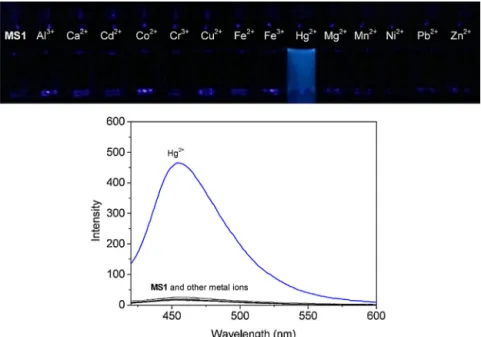
Fig.1.FluorescenechangeofchemosensorMS1(10M)uponadditionofvariousmetalions(60M)inmethanol–H2O(v/v=4/1,10mMHEPES,pH7.0)solutions.The
O O CHO HO O O HO N NH2 NH2NH2-H2O EtOH-THF
Scheme1.SynthesisofchemosensorMS1.
450 500 550 600 0 100 200 300 400 500 0 2 4 6 8 10 0 200 400 Intensity (455 nm) [ Hg2+ ] / [ MS1 ] In tn es it y Wavelength (nm) 455 nm
Fig.2.FluorescenceresponseofMS1(10.0M)tovariousequivalentsofHg2+in
methanol–water(v/v=4:1,10mMHEPES,pH7.0)solutions.Theexcitation wave-lengthwas330nm.
cellswereincubatedat37◦C under5%CO2 for24h. 10LMTT
(5mg/mL)wasaddedtoeachwellandincubatedat37◦Cunder 5%CO2for4h.RemovetheMTTsolutionandyellowprecipitates
(formazan)observedinplatesweredissolvedin200LDMSOand 25LSorenson’sglycinebuffer(0.1Mglycineand0.1MNaCl). Mul-tiskanGOmicroplatereaderwasusedtomeasuretheabsorbanceat 570nmforeachwell.Theviabilityofcellswascalculatedaccording tothefollowingequation:
Cellviability(%)= (mean(meanofofabsorbanceabsorbancevaluevalueofoftreatmentcontrolgroup)group).
2.8. Cellimaging
ThecellsculturedinDMEMweretreatedwith10mMsolutions ofHg2+(2L;finalconcentration:20M)dissolvedinsterilized
0
200
400
600
In te ns it y (4 55 nm ) MS1+ metal ions MS1+metal ions + Hg2+ Hg2+Al3+ Ca2+ Cd2+ Co2+ Cr3+Cu2+Fe2+Fe3+Mg2+Mn2+Ni2+ Pb2+Zn2+Fig.3. FluorescenceresponseofchemosensorMS1(10.0M)toHg2+(60.0M)or
60.0Mofothermetalions(blackbars)andtothemixtureofothermetalions (60.0M)with60.0MofHg2+(graybars)inmethanol–water(v/v=4:1,10mM
HEPES,pH7.0)solutions. 0.0 0.2 0.4 0.6 0.8 1.0 0 5 10 15 20
(I
-I
0
)*
X
X = { [MS1] / ( [MS1] + [Hg2+] ) }Fig.4. JobplotoftheMS1–Hg2+complexesinamethanol–water(v/v=4:1,10mM
HEPES,pH7.0)solutions.ThetotalconcentrationofMS1andHg2+was20.0M.The
monitoredwavelengthwas455nm.
PBS(pH 7.4)andincubatedat37◦ for30min.The treatedcells werewashedwithPBS(2mL×3)toremoveremainingmetalions. DMEM(2mL)wasaddedtothecellculture,whichwasthentreated witha10mMsolutionofchemosensorMS1(2L;final concentra-tion:20M)dissolvedinDMSO.Thesampleswereincubatedat 37◦for30min.Theculturemediumwasremoved,andthetreated cellswerewashedwithPBS(2mL×3)beforeobservation. Fluo-rescenceimaging was performedwitha LeicaTCS-SP5-X AOBS Confocalmicroscope.Thecellswereexcitedwithawhitelightlaser at350nm,andemissionwascollectedat460±25nm.
2.9. Computationalmethods
Quantumchemicalcalculationsbasedondensityfunctional the-ory(DFT)werecarriedoutusingaGaussian09program.Ground state geometry optimization of MS1 was performed using the B3LYPfunctionalandthe6-31G basisset.Groundstate geome-tryoptimizationofMS1–Hg2+complexeswasperformedusingthe
B3LYPfunctionalandtheLANL2DZbasisset.
3. Resultsanddiscussion
3.1. CharacterizationofchemosensorMS1
ChemosensorMS1wassynthesizedbythereactionofhydrazine and 7-hydroxy-2-oxo-2H-chromene-8-carbaldehyde to form an
Fig.5.Benesi–HildebrandplotofMS1withHg2+ inmethanol/water(v/v=4:1,
10mMHEPES,pH 7.0)solutions.Theexcitationwavelengthwas 300nmand observedwavelengthwas455nm.Thebindingconstantwas6.85×103M−1forHg2+
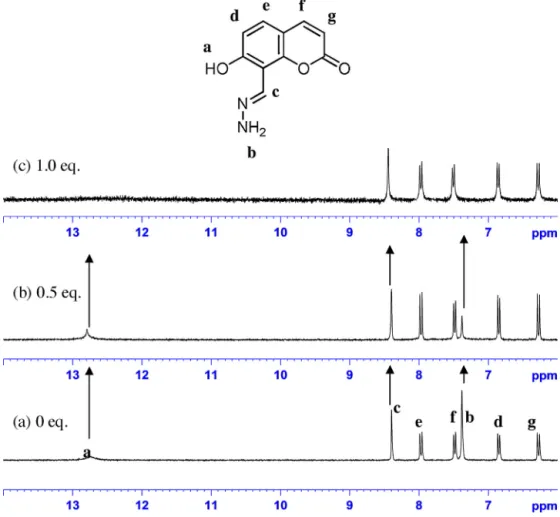
Fig.6. 1HNMR300MHzspectraofMS1(10.0mM)upontitrationwithvariousequivalentsofHg2+inDMSO-d6.
iminebond(Scheme1).ChemosensorMS1isyellowandhasan absorptionbandcenteredat330nm.ChemosensorMS1exhibits weakfluorescence(˚=0.002)comparedtocoumarin(˚>0.5).This isduetotheimineisomerizationwhichhasbeenknowntohavea non-radiativedecayprocessintheexcitedstate[25]
3.2. Cation-sensingproperties
ThesensingabilityofMS1wastestedbymixingitwiththemetal ionsAl3+,Ca2+,Co2+,Cr3+,Cu2+,Fe2+,Fe3+,Hg2+,Mg2+,Mn2+,Ni2+,
Pb2+,andZn2+.Hg2+wastheonlyionthatcausedablueemission
fromMS1(Fig.1).DuringHg2+titrationwithMS1,anew
emis-sionbandcenteredat455nmwasformed(Fig.2).Afteradding 6equivalentsofHg2+,theemissionintensityreachedamaximum.
Thequantumyieldoftheemissionbandwas0.039,whichis19-fold thatofMS1at0.002.TheseobservationsindicatethatHg2+isthe
onlymetalionthatreadilybindswithMS1,causingsignificant flu-orescenceenhancementandpermittinghighlyselectivedetection ofHg2+.
TostudytheinfluenceofothermetalionsonHg2+bindingwith
MS1,competitiveexperimentswereperformedwithothermetal ions(60.0M)inthepresenceofHg2+(60.0M)(Fig.3).It was
foundthatfluorescenceenhancementcaused bythemixtureof Hg2+ withmostmetalionswas similartothat causedby Hg2+
alone.Noneoftheothermetalionswerefoundtointerferewith thebindingofMS1withHg2+.
InordertounderstandthebindingstoichiometryofMS1–Hg2+
complexes,Jobplotexperimentswerecarried out.InFig.4,the emissionintensityat455nmisplottedagainstmolarfractionof MS1 undera constanttotal concentration(20.0M).Maximum emissionintensitywasreachedwhenthemolarfractionwas0.50. Resultsindicateda1:1ratioforMS1–Hg2+complexes,inwhichone
Fig.7. DFT-optimizedstructuresof(a)MS1and(b)MS1–Hg2+complexes.Blueatom,N;redatom,O;gray-whiteatom,Hg.(Forinterpretationofthereferencestocolorin
4 6 8 10 0 200 400 600 MS1 + Hg2+ MS1 Intensity ( 455 nm ) pH
Fig.8. Fluoresceneresponse(455nm)offreechemosensorMS1(10M)andafter additionHg2+(60M)inMeOH–H
2Osolutions(v/v=4/1,10mMbuffer).The
exci-tationwavelengthwas330nm.
Hg2+ionwasboundtooneMS1.TheassociationconstantK
awas
evaluatedgraphicallybyplotting1/(I−I0)against1/[Hg2+](Fig.5).
ThedatawaslinearlyfitandtheKavaluewasobtainedfromthe
slopeandinterceptoftheline.Theassociationconstant(Ka)ofHg2+
bindinginMS1wasfoundtobe6.85×103M−1.Thedetectionlimit
ofMS1asafluorescentsensorfortheanalysisofHg2+was
deter-minedfromtheplotoffluorescenceintensityasafunctionofthe concentrationofHg2+(seeFig.S3inthesupportinginformation).
MS1wasfoundtohaveadetectionlimitof0.193M,whichmeans itisabletodetectHg2+concentrationsinthemicro-molarrange.
TogainaclearerunderstandingofthestructureofMS1–Hg2+
complexes,1HNMRspectroscopywasemployed(Fig.6).Hg2+isa
heavymetalionandcanaffecttheprotonsignalsthatareclose totheHg2+binding site.The 1HNMR spectraofMS1 recorded
withincreasingamountsofHg2+showthattheproton(H
aandHb)
signalsat12.75ppmand7.38ppmdisappearasHg2+wasadded.
AdditionofHg2+alsocausedtheproton(H
c)signalat8.38ppm
shifteddownfield.TheseobservationsindicatethatHg2+bindsto
MS1mainlythroughoneoxygenatomandonenitrogenatom. ToelucidatethestructuresofMS1andMS1–Hg2+complexes,
density functional theory (DFT) calculations were undertaken usingtheGaussian09softwarepackage.Chemosensor MS1and
MS1–Hg2+ complexesweresubjectedtoenergyoptimizationby
usingB3LYP/6-31GandB3LYP/LANL2DZ,respectively.Theglobal
0 20 40 60 80 100 15 20 30 5 0 10 V ia bi lity ( % ) [MS1], 10-6 M
Fig.9.Cellviabilityvalues(%)estimatedbyanMTTassayversusincubation concen-trationsofMS1.RAW264.7cellswereculturedinthepresenceofMS1(0–30M) at37◦Cfor24h.
minimastructuresforMS1andMS1–Hg2+complexesareshown
inFig.7.ThedistancesofHg2+fromthetwonitrogenatomswere
3.12 ˚Aand2.15 ˚A,andfromtheoxygenatomwas2.11 ˚A.
WeperformedpHtitrationofMS1toinvestigateasuitablepH rangeforHg2+sensing.AsdepictedinFig.8,theemissionintensities
ofmetal-freeMS1wereverylow.AftermixingchemosensorMS1 withHg2+,theemissionintensityat455nmsuddenly increased
at pH6.5and reacheda maximumin thepHrange of 6.5–9.0. TheemissionintensitydecreasesatpH>9.0.Thisindicatespoor stability of the MS1–Hg2+ complexes at high pH. For pH<6.5,
the emission intensity is very low due to the protonation on the amine group, which prevents the formation of MS1–Hg2+
complexes.
3.3. Livingcellimaging
ThepotentialofMS1forimagingHg2+inlivingcellswas
investi-gatednext.First,anMTTassaywithaRAW264.7celllinewasused todeterminethecytotoxicityofMS1.InFig.9,thecellularviability wasestimatedtobegreaterthan80%after24h,whichindicates thatMS1(<30M)haslowcytotoxicity.Furthermore,theimages ofcellswereobtainedusingaconfocalfluorescencemicroscope. WhenRAW264.7cellswereincubatedwithMS1(10M),no fluo-rescencewasobserved(Fig.10a).AfterthetreatmentofHg2+,bright
Anoverlayoffluorescenceandbright-fieldimagesshowsthatthe fluorescencesignalsare localizedintheintracellular area, indi-catingasubcellulardistributionofHg2+andgoodcell-membrane
permeabilityofMS1.
4. Conclusion
In conclusion, we developed a coumarin-based fluorescent chemosensorforHg2+ sensing.Weobserved significant
fluores-cenceenhancementwithMS1inthepresenceofHg2+.However,
addingAl3+,Ca2+,Cr3+,Co2+,Fe2+,Fe3+,Hg2+,K+,Mg2+,Mn2+,Ni2+,
Pb2+,orZn2+tothechemosensorsolutioncaused onlyminimal
changesinfluorescenceemission.TheoptimalpHrangeforHg2+
detectionbyMS1is6.5–9.0.Inaddition,thechemosensorMS1has lowcytotoxicityandthereforecanbeappliedfordetectingHg2+in
livingcells.
Supplementaryinformation
1Hand13CNMRspectraofMS1,calibrationcurveofMS1–Hg2+
inawater–MeOH(v/v=1/4,10mMHEPES,pH7.0)solutions. Acknowledgements
WegratefullyacknowledgethefinancialsupportoftheNational ScienceCouncil(ROC)andNationalChiaoTungUniversity.
AppendixA. Supplementarydata
Supplementarydataassociatedwiththisarticlecanbefound,in theonlineversion,athttp://dx.doi.org/10.1016/j.snb.2014.04.077. References
[1]E.M.Nolan,S.J.Lippard,Toolsandtacticsfortheopticaldetectionofmercuric ion,Chem.Rev.108(2008)3443–3480.
[2]N.Kaur,S.Kumar,Colorimetricmetalionsensors,Tetrahedron67(2011) 9233–9264.
[3]H.N.Kim,W.X.Ren,J.S.Kim,J.Yoon,Fluorescentandcolorimetricsensors fordetectionoflead,cadmium,andmercuryions,Chem.Soc.Rev.41(2012) 3210–3244.
[4]M.Harada,Minamatadisease:methylmercurypoisoninginJapancausedby environmentalpollution,Crit.Rev.Toxicol.25(1995)1–24.
[5]Y.Gao,S.DeGalan,A.DeBrauwere,W.Baeyens,M.Leermakers,Mercury speci-ationinhairbyheadspaceinjection-gaschromatography-atomicfluorescence spectrometry(methylmercury)andcombustion-atomicabsorption spectrom-etry(totalHg),Talanta82(2010)1919–1923.
[6]F.Moreno,T.Garcia-Barrera,J.L.Gomez-Ariza,Simultaneousanalysisof mer-cury andseleniumspeciesincludingchiralformsofselenomethioninein humanurineandserumbyHPLCcolumn-switchingcoupledtoICP-MS,Analyst 135(2010)2700–2705.
[7]X.Chai,X.Chang,Z.Hu,Q.He,Z.Tu,Z.Li,Solidphaseextractionoftrace Hg(II)onsilicagelmodifiedwith2-(2-oxoethyl)hydrazinecarbothioamideand determinationbyICP-AES,Talanta82(2010)1791–1796.
[8]B.N.Ahamed,P.A.Ghosh,Chelationenhancedselectivefluorescencesensingof Hg2+byasimplequinolinesubstitutedtripodalamidereceptor,DaltonTrans.
40(2011)12540–12547.
fluorescencesensingofmercuryions,Tetrahedron68(2012)5279–5282. [10]C.Li,F.Xu,Y.Li,K.Zhou,Y.Zhou,AfluorescentchemosensorforHg2+basedon
naphthalimidederivativebyfluorescenceenhancementinaqueoussolution, Anal.Chim.Acta717(2012)122–126.
[11]X.Ma,J.Wang,Q.Shan,Z.Tan,G.Wei,D.Wei,Y.A.Du,turn-on fluores-centHg2+chemosensorbasedonferriercarbocyclization,Org.Lett.14(2012)
820–823.
[12]M. Vedamalai, S. Wu, A BODIPY-based colorimetric and fluorometric chemosensorforHg(II)ionsanditsapplicationtolivingcellimaging,Org.Biom. Chem.10(2012)5410–5416.
[13]J.Fan,C.Chen,Q.Lin,N.Fu,Afluorescentprobeforthedual-channel detec-tion ofHg2+/Ag+ and its Hg2+-basedcomplex for detection ofmercapto
biomoleculeswithatunablemeasuringrange,Sens.ActuatorsB173(2012) 874–881.
[14]L. Shi,Y. Li, Z. Liu, T.D. James, Y. Long, Simultaneousdetermination of Hg(II) and Zn(II) usinga GFPinspiredchromophore,Talanta100 (2012) 401–404.
[15]Z.Dong,X.Tian,Y.Chen,J.Hou,J.Ma,RhodaminegroupmodifiedSBA-15 fluorescentsensorforhighlyselectivedetectionofHg2+anditsapplication
asanINHIBITlogicdevice,RSCAdv.3(2013)2227–2233.
[16]H.F.Wang,S.P.Wu,Highlyselectivefluorescentsensorsformercury(II)ionsand theirapplicationsinlivingcellimaging,Tetrahedron69(2013)1965–1969. [17]A.K.Atta,S.B.Kim,J.Heo,D.G.Cho,Hg(II)-mediatedintramolecular
cyclization-reactioninaqueousmediaanditsapplicationasHg(II)selectiveindicator,Org. Lett.15(2013)1072–1075.
[18]J.Chen,W.Liu,Y.Wang,H.Zhang,J.Wu,H.Xu,W.Ju,P.Wang,Turn-on fluorescencesensor basedontheaggregationof pyrazolo[3,4-b]pyridine-basedcoumarinchromophoresinducedbyHg2+,TetrahedronLett.54(2013)
6447–6449.
[19]M.G.Choi,H.G.Im,J.H.Noh,D.H.Ryu,S.Chang,SpacerdependencyoftheHg2+
-selectivefluorescentsignallingbydesulfurizationofthioamideasaturn-on switch,Sens.ActuatorsB177(2013)583–588.
[20]P.Srivastava,R.Ali,S.S.Razi,M.Shahid,A.Misra,Thioureabasedmoleculardyad (ANTU): fluorogenicHg2+selectivechemodosimeterexhibitingblue–green
fluorescenceinaqueous-ethanolenvironment,Sens.ActuatorsB181(2013) 584–595.
[21]J.Zhang,Y.Zhou,W.Hu,L.Zhang,Q.Huang,T.Ma,Highlyselective fluo-rescenceenhancementchemosensorforHg2+ basedonrhodamineandits
applicationinlivingcellsandaqueousmedia,Sens.ActuatorsB183(2013) 290–296.
[22]H.Ye,F.Ge,X.Chen,Y.Li,H.Zhang,B.Zhao,J.Miao,Anewprobeforfluorescent recognitionofHg2+inlivingcellsandcolorimetricdetectionofCu2+inaqueous
solution,Sens.ActuatorsB182(2013)273–279.
[23]B.Zhu,W.Wang,L.Liu,H.Jiang,B.Du,Q.Wei,Ahighlyselectivecolorimetric andlong-wavelengthfluorescentprobeforHg2+,Sens.ActuatorsB191(2014)
605–611.
[24]D.S.McClure,Spinvorbitinteractioninaromaticmolecules,J.Chem.Phys.20 (1952)682–686.
[25]X.Cheng,H.Jia,T.Long,J.Feng,J.Qin,Z.Li,A“turn-on”fluorescentprobe forhypochlorousacid:convenientsynthesis,goodsensingperformance,anda newdesignstrategybytheremovalofC Nisomerization,Chem.Commun.47 (2011)11978–11980.
[26]K.S.Lee,H.J.Kim,G.H.Kim,I.Shin,J.I.Hong,Fluorescentchemodosimeterfor selectivedetectionofcyanideinwater,Org.Lett.10(2008)49–51.
[27]H.A.Benesi,J.H.Hildebrand,Aspectrophotometricinvestigationofthe inter-actionofiodinewitharomatichydrocarbons,J.Am.Chem.Soc.71(1949) 2703–2707.
Biographies
Shiang-YiYuhadMSin2013,DepartmentofAppliedChemistryatNationalChiao TungUniversity.
Dr.Shu-PaoWuhadPhDin2004,DepartmentofChemistry,TheOhioState Uni-versity,USA.Currently,heisworkingasanAssociateProfessorinDepartmentof AppliedChemistryNationalChiaoTungUniversity,Taiwan,RepublicofChina.His currentinterestsaremetalionchemosensorsandAlkB.