A mesoporous MCM-41 aluminosilicate containing Au nanoparticles catalyst of high surface area and porosity has been conveniently prepared in a simple embedding approach.
Mesoporous silica, possessing the advantages of high sur-face area (~1000 m2/g) and tunable pore size (2.0–30 nm), has been considered as useful catalytic supports.1,2 Among the alysts, the noble metal Au nanoparticle is interesting for its cat-alytic activity in many important reactions.3,4 A nano-hybrid of Au nanoparticles and mesoporous silica could be an interesting catalyst system for versatile applications, especially for mole-cules too large to fit in the pore of traditional zeolites.
In the literatures, chemical vapor deposition (CVD) and precipitation methods by using various Au precursors are the two common approaches for preparing the Au/mesoporous sili-ca sili-catalyst system.5,6 Recently an efficient catalyst prepared from a CVD method had been reported,6however, the organic Au precursors for CVD are expensive. In the precipitation pro-cedure, the affinity of Au source may not be strong enough to deposit on silica. A simple and economic method is thus still desirable. In this paper, we report a convenient way directly to synthesize a nanocomposite of Au / mesoporous aluminosilicate material (denoted as Au / MCM-41 hereafter) with high surface area in aqueous solution. We then use the CO oxidation reac-tion to test its catalytic activity.
The basic idea for preparing the mesoporous MCM-41 alu-minosilicates containing Au nanoparticles in aqueous solution is: (1) the hydrophobic Au nanoparticles can be formed and preserved in the micelles of quaternary ammonium surfactants,7 and (2) the Au / surfactant system is used directly in a typical synthesis of MCM-41 mesoporous materials where the same surfactant is employed as template. The synthesis process is as follows: an aqueous solution of a tetrachloroaurate salt (AuCl4–) was mixed with cetyltrimethylammonium bromide (C16TMAB) solution to give a yellow-colored solution. This solution was reduced by adding aqueous sodium borohydride (NaBH4) drop-wise at 40 °C, and a red-brown Au-nanoparticles solution was formed. Then the desired amount of sodium silicate and sodi-um alsodi-uminates was added into the Au-surfactant solution. After a neutralization procedure (the final pH value of the gel solu-tion is about 8–10), a red precipitate-gel solusolu-tion was formed. Overall, the molar ratio of the gel is 1.0 SiO2 : 0.028 NaAlO2 : 0.71 C16TMAB : (0–0.042) HAuCl4: (0–0.285) NaBH4: 0.6 NaOH : 0.24 H2SO4: 300 H2O. The gel solution was then transferred to an autoclave to undergo hydrothermal reaction at 100 °C for 2 days. Finally, filtration, washing, drying and cal-cination at 560 °C gave the Au/MCM-41 materials.
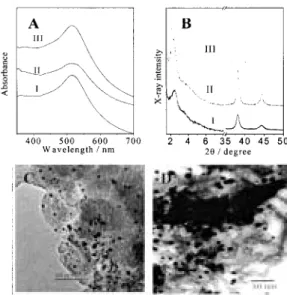
Figure 1A shows the reflectance UV–vis spectra of the
cal-cined Au / MCM-41 materials at various Au loading. All the samples show the surface plasmon resonance absorption peaks at about 520 nm, indicating the existence of the Au nanoparti-cles in these samples. In Figure 1B, the XRD peak at low angle corresponds to the mesostructures of MCM-41, and the two peaks at high angle are due to the Au nanoparticles. Compared with unloaded MCM-41 materials where at least three low angle peaks can be seen, the absence of (110) and (200) peaks in Au / MCM-41 indicates the pore structure is less ordered. Using Scherrer equation, the average size of the Au particles was estimated to be about 8–10 nm. To further examine the form of deposited Au nanoparticles and the mesostructures of MCM-41 materials, TEM micrographs of the samples with var-ious Au content were taken (Figures 1C and 1D). As shown in both TEM micrographs, the mesostructures of the MCM-41 aluminosilicates containing Au nanoparticles are less ordered as that of typical MCM-41 samples. Nonetheless, aligned linear array of channels can be observed. However, the order is dis-rupted around the embedded Au nanoparticles. With careful observation, one can find that the Au nanoparticles (> 5 nm) are always larger than the mesopore size (< 3 nm) of the MCM-41 aluminosilicates. Thus, most of Au nanoparticles are not con-fined within single nanochannel of the MCM-41 aluminosili-cates. This explains that the structural order of Au / MCM-41 was relatively poor. One can also find some of the Au
nanopar-1116
Chemistry Letters 2001
Copyright © 2001 The Chemical Society of Japan
Direct Synthesis of MCM-41 Mesoporous Aluminosilicates Containing
Au Nanoparticles in Aqueous Solution
Hong-Ping Lin,*†Yu-Shan Chi,††Jiunn-Nan Lin,†††Chung-Yuan Mou,††and Ben-Zu Wan††† †Institute of Atomic and Molecular Sciences, Academia Sinica, P.O. Box 23-166, Taipei, Taiwan 106
††Department of Chemistry and Center of Condensed Matter Science, National Taiwan University, Taipei, Taiwan 106 †††Department of Chemical Engineering, National Taiwan University, Taipei, Taiwan 106
ticles are attached to the outer surface of the micro-particles of MCM-41 aluminosilicates, but most are embedded in the particu-late of MCM-41 aluminosilicates (Figures 1C and 1D). The sizes of the Au nanoparticles are measured, and they are distributed from 5 to 15 nm with mean value of about 8 nm. This value is in agreement with the size calculated from Scherrer equation. Analyzing the TEM micrographs of samples with two different Au contents, we found that the percentage of Au nanoparticles larger than 10 nm increases with the increase of Au content.
Combined with the N2adsorption–desorption isotherm data of all the samples aforementioned, the basic physical properties are listed in Table1. The Au / MCM-41 aluminosilicates have the advantages of high surface area (> 900 m2/g) and large pore volume (> 0.7 cm3/g) as well as MCM-41 materials. This also shows that incorporation of Au nanoparticles in MCM-41 does not have a drastic pore-blocking effect on its nanochannels. In addition, the Au / MCM-41 still preserves the thick structural wall (about 2.0 nm) and uniform pore size characteristic of the delayed acidification synthesis of unloaded MCM-41.8 The Au/MCM-41 thus possesses the good thermal and hydrothermal stability, and high adsorption ability for reaction agents.1,2
This synthesis procedure can be easily extended to other alkyltrimethylammonium bromides (CnTAMB, with n = 12–18)-silica systems. By changing the chain length of surfactant tem-plates, one could control the pore size of Au/ MCM-41 materials. It is expected that the Au / MCM-41 nanocomposite porous materials regarded as a kind of highly dispersed Au nanoparti-cles within high surface area supports, would possess versatile catalytic capability. To investigate the catalysis activity of the Au/MCM-41 system, CO oxidation reaction was chosen as the test reaction. Figure 2 shows that the Au/MCM-41 with Au loading of 4 to 12 wt% has the capability to catalyze the CO oxidation reaction at 80 °C. The relatively low reactivity (less than 16% conversion) in CO oxidation of our Au/ MCM-41 cat-alysts is due to the large size of Au nanoparticles (> 5 nm) we made.5 Further reduction of the size of Au nanoparticle would be desirable for optimizing the catalytic activity. Nevertheless, we have demonstrated a well-dispersed nanoparticles of gold in
Au / MCM-41 catalytic system, which possesses the advantages of high surface area, large porosity and pore size, and thermal stability that may be useful in other catalytic reaction involving larger molecules. Further studies for this system is undergoing.
There exist many factors, such as surface area, porosity, dispersion of the catalytic centers, which would significantly influence the activity of the catalyst.5 Furthermore, the surface silanol groups on the wall of the MCM-41 aluminosilicates would allow us to functionalize them to help the adsorption of the selected reactants. Thus, the strategies for synthesizing the supported nanoparticles for catalysis need to be further devel-oped.
This research was financially supported by the Chinese Petroleum Co. and the National Science Council of Taiwan (NSC 89-2113-M-002-028).
References and Notes
1 T. Yanagisawa, T. Shimizu, K. Kuroda, and C. Kato, Bull.
Chem. Soc. Jpn., 63, 988 (1990).
2 C. T. Kresge, M. E. Leonowicz, W. J. Roth, J. C. Vartuli, and J. S. Beck, Nature, 359, 710 (1992).
3 M. Haruta, Catal. Today, 36, 153 (1997).
4 J. –D. Grunwaldt, C. Kiener, C. Wogerbauer, and A. Baiker, J. Catal., 181, 223 (1999).
5 A. I. Kozlov, A. P. Kozlov, H. Liu, and Y. Iwasawa,
Applied Catalysis A, 182, 9 (1999).
6 M. Okumura, S. Tsubota, M. Iwamoto, and M. Haruta,
Chem. Lett., 1998, 315.
7 T. Miyao, N. Toyoizium, S. Okuda, Y. Imai, K. Tajima, and S. Naito, Chem. Lett., 1999, 1125.
8 a) H. P. Lin and C. Y. Mou, Science, 273, 765 (1996). b) H. P. Lin, S. Cheng, and C. Y. Mou, Microporous Mater., 10, 111 (1997).