直接序列/分碼多工接取蜂巢式系統之
功率控制機制效能分析
Performance Analysis for Power Control Schemes in
DS/CDMA Cellular Systems
研究生:李界和
Student: Chieh-Ho Lee
指導教授:張仲儒 博士
Advisor: Dr. Chung-Ju Chang
國立交通大學
電信工程學系
博士論文
A Dissertation
Submitted to Institute of Communication Engineering
College of Electrical Engineering and Computer Science
National Chiao Tung University
in Partial fulfillment of the Requirements
for the Degree of Doctor of Philosophy
in
Communication Engineering
Hsinchu, Taiwan
直接序列/分碼多工接取蜂巢式系統之
功率控制機制效能分析
研究生:李界和 指導教授:張仲儒
國立交通大學電信工程學系
摘要 對直接序列/分碼多工接取(DS/CDMA)蜂巢式系統的運作而言,功率控制是非常重要的 一環。若沒有功率控制,系統容量將受到遠近效應的影響而變得很低,若有適當的功率控 制,系統資源才得以公平地互享而展現系統應有的容量。在本論文中,我們將深入分析 DS/CDMA 蜂巢式系統在功率控制機制的運行下,其系統容量的表現。首先,我們分析了一種暫停式閉迴路功率控制(Truncated Closed-loop Power Control, TCPC)機制下的系統上鏈容量。該 TCPC 功率控制機制屬強度型(Strength-based)功率控制機 制的一種。在TCPC 機制下,當短程衰耗小於一預設遮斷準位(cutoff threshold)時,行動台 暫停其傳輸作業;否則,控制行動台的發射功率以補償短程衰耗,使得在基地台處的接收 功率盡量維持在一預設準位。我們成功地導出了下列各效能指標的公式:系統容量、平均 系統傳輸量、行動台平均傳輸量、行動台消耗功率、及行動台傳輸延遲。數值結果顯示, 所導出的公式具有相當的準確度,此外亦顯示這種 TCPC 功率控制機制可以達到比傳統的 強度型功率控制機制更好的系統效能。另一方面,我們更進一步分析 TCPC 功率控制機制 在考量有功率控制誤差的情形下的效能表現。所導出的公式可以相當準確地算出其系統容 量。
接著,我們提出一種AM-CF(Approximation Method by Characteristic Function)估算方 法,用以估算 DS/CDMA 蜂巢式系統中干擾功率的機率分佈。干擾功率是分析 DS/CDMA 蜂巢式系統效能的重要因子。雖然一般所常用的高斯近似法可以很容易地套用到複雜的系 統,但是高斯近似法被發現並不是很準確,造成所據以分析出來的系統容量都是過於樂觀 的值。所提出的AM-CF 估算方法可適用於考量了多路徑衰耗和具有功率控制的複雜環境, 片元波形可以是方波形式或sinc 形式。與模擬結果為參考標的,AM-CF 估算方法比傳統之 高斯近似法有更好的估算準確度。 最後,我們提出一種分析方法,可成功地分析非理想之訊擾比型(SIR-based)功率控制機 制的系統容量。透過對研究觀察所得的平均接收訊擾比獨特的性質,我們發現功率控制機 制下的系統行為可以用一組線性聯立方程式表示之,並可據以解出每條上鏈的接收功率 值。系統容量由接收功率值合理性的機率與平均位元錯誤率所定義並據以求得。只需該聯 立方程式係數矩陣各子元素的一階級二階統計特性,並套用中央極限定理,我們成功地導 出了系統容量的公式。結果顯示,分析結果與模擬結果分常接近,這顯示所提出的分析方 式可以很準確地分析非理想之訊擾比型(SIR-based)功率控制機制的系統容量。
Performance Analysis for Power Control Schemes
in DS/CDMA Cellular Systems
Student: Chieh-Ho Lee Advisor: Chung-Ju Chang
Institute of Communication Engineering
National Chiao Tung University
Abstract
Power control is an important system requirement for DS/CDMA (direct-sequence/code division multiple access) cellular systems. In the absence of power control the effect of near-far phenomena is dominant, and the system capacity is very low. On the other hand, when the power control exists, it allows users to share resources of the system equally between themselves. In this dissertation, the system capacity of a power controlled DS/CDMA cellular system is investigated.
Firstly, we investigate the system performance of a truncated closed-loop power control (TCPC) scheme for uplinks in DS/CDMA cellular systems over frequency-selective fading channels. The TCPC scheme adopts strength-based power control. In this scheme, a mobile station (MS) suspends its transmission when the short-term fading is less than a preset cutoff threshold; and otherwise, the MS transmits with power adapted to compensate for the short-term fading so that the received signal power level remains constant. Closed-form formulae are successfully derived for performance measures, such as system capacity, average system transmission rate, MS average transmission rate, MS power consumption, and MS suspension delay. Numerical results show that the analysis provides reasonable accuracy; and the TCPC scheme can substantially improve the system capacity, the average system transmission rate, and power saving over conventional closed-loop power control schemes. Moreover, the TCPC scheme under realistic considerations of power control error due to power control step size, power control
period, power control delay, and MS velocity is further investigated. A closed-form formula is obtained to effectively approximate the system capacity of the realistic TCPC scheme. A closed-form formula is obtained to effectively approximate the system capacity of the realistic TCPC scheme.
Next, an approximation method by characteristic function (AM-CF) method to approximate the distribution of interference in DS/CDMA cellular systems is proposed. The interference statistics is an important factor for analyzing the performance of a DS/CDMA cellular system. Although the most widely used method, the SGA (standard Gaussian approximation) method, is easy to use and applicable to a complicated circumstance, it is known that the SGA is not very accurate and leads to an optimistic analytical result of the system capacity. This method considers the effects of frequency-selective multipath fading; it also considers perfect power control and a rectangular/sinc chip waveform. The AM-CF method can yield results that fit the Monte Carlo simulation results more accurately than the conventional standard Gaussian approximation method.
Finally, a novel analytical method for analyzing the system capacity of an imperfect signal-to-interference ratio (SIR)-based power control scheme is proposed. Based on investigated properties of average received SIR, a set of linear equations is derived to obtain the average received power on each uplink. The system capacity is then obtained according to the feasibility of the average received powers and the corresponding average bit error rates. A closed-form solution for system capacity is successfully derived by employing the first and second order statistics of each element in the coefficient matrix and applying central limit theorem. Results show that the analytical results are consistent with the simulation results; this implies the novel analytical method is quite accurate.
Acknowledgements
First of all, I would like to express my sincere gratitude to my advisor, Dr. Chung-Ju Chang, for his patient guidance and profound influence down the road to graduation.
Special thanks go my colleagues in the Broadband Network Lab. and all of my friends, for their genuine encouragement, kind help, and sweet memories.
Finally, I am deeply indebted to my wife and family for their love and supports. This dissertation is dedicated to my wife and children. Without their wholehearted care and full support, it is impossible for me to exploit the life in an unburdened way.
Contents
Mandarin Abstract ...i
English Abstract ...iii
Acknowledgements ...v
Contents ...vi
List of Figures ...viii
Chapter 1 Introduction...1
1.1 Motivation ...1
1.2 Related Work ...3
1.3 Dissertation Organization...9
Chapter 2 An Overview of the Power Control Techniques for DS/CDMA Cellular Systems . 11 2.1 Introduction ...12
2.2 Cellular Systems...12
2.3 Power Control in DS/CDMA Cellular Systems ...13
2.3.1 Uplink/Downlink Power Control ...14
2.3.2 Centralized/Distributed Power Control ...14
2.3.3 Open-loop/Closed-loop/Outer-loop Power Control ...15
2.3.4 Strength-based/SIR-based/BER-based Power Control...18
2.3.5 Perfect/Imperfect Power Control...21
2.3.6 Power Control with Fixed Step Size/Adaptive Step Size...23
2.3.7 Truncated Power Control...24
2.3.8 Predictive Power Control ...25
2.3.9 Combined Rate and Power Control...26
2.4 Concluding Remarks ...28
Chapter 3 Performance Analysis of a Truncated Closed-Loop Power Control Scheme for DS/CDMA Cellular Systems ...29
3.1 Introduction ...30 3.2 System Model...32 3.2.1 Channel Model ...32 3.2.2 Transmitter Model ...34 3.2.3 Receiver Model ...34 3.3 Performance Analysis...37 3.3.1 Ideal TCPC ...38 3.3.2 Realistic TCPC ...46
3.4 Numerical Results ...50
3.5 Concluding Remarks ...57
3.6 Notation List...57
Chapter 4 An Accurate Method for Approximating the Interference Statistics of DS/CDMA Cellular Systems with Power Control over Frequency-Selective Fading Channels61 4.1 Introduction ...62
4.2 System Model...62
4.3 The AM-CF Method...68
4.3.1 Approximating the Statistics of the Intra-cell Interference ...68
4.3.2 Approximating the Statistics of the Other-cell Interference...70
4.3.3 Approximating the Statistics of MAI Interference...71
4.4 Results and Discussions ...72
4.5 Notation List...75
Chapter 5 Capacity Analysis of an Imperfect SIR-based Power Control Scheme for Uplinks in DS/CDMA Cellular Systems ...78
5.1 Introduction ...79
5.2 System Model...81
5.3 Capacity Analysis ...83
5.3.1 Properties of Ensemble Average Received SIR...83
5.3.2 Outage Probability...86
5.3.3 System Capacity ...88
5.4 Numerical Results ...90
5.5. Concluding Remarks ...95
5.6 Notation List...96
Chapter 6 Conclusions and Future Works ...98
Appendices ...101
A. Proof the Equivalence Between the Event {Y>0} and {det(A)>0} ...101
B. Abbreviations and Acronyms...104
Bibliography...105
List of Figures
Figure 3.1: Functional blocks of the realistic TCPC scheme ... 46
Figure 3.2: System capacity C versus cutoff threshold X0 ... 51
Figure 3.3: System capacity C of various realistic power control schemes versus cutoff threshold 0 X ... 52
Figure 3.4: Average system transmission rate ℜ versus cutoff threshold X0 ... 53
Figure 3.5: MS average transmission rate R versus cutoff threshold X0... 54
Figure 3.6: MS average transmission energy per bit E versus cutoff threshold X0... 54
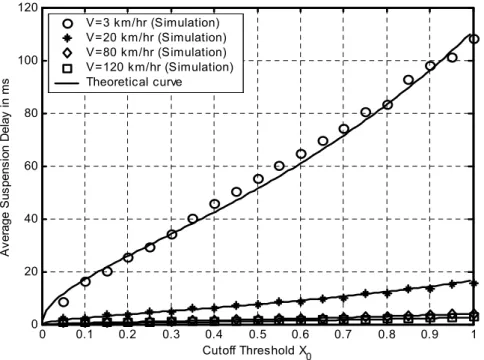
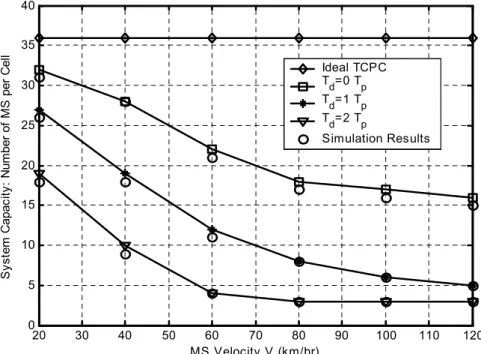
Figure 3.7: MS average suspension delay D versus cutoff threshold X ... 55 0 Figure 3.8: System capacity versus MS velocity for power control delay... 56
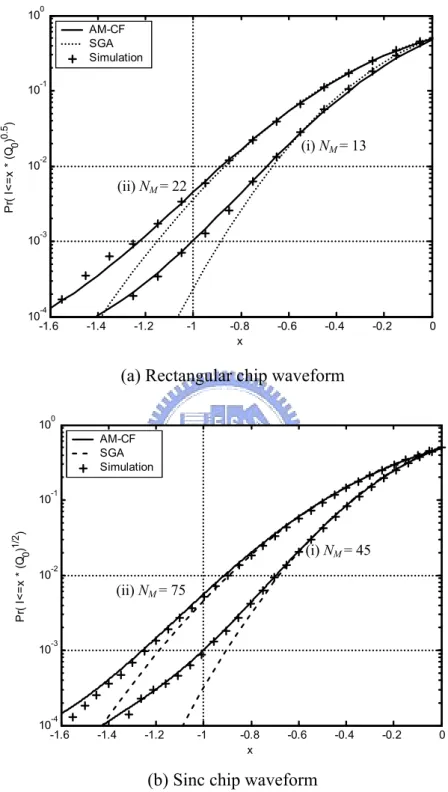
Figure 4.1: Comparison of cdf curves of interference signals ... 74
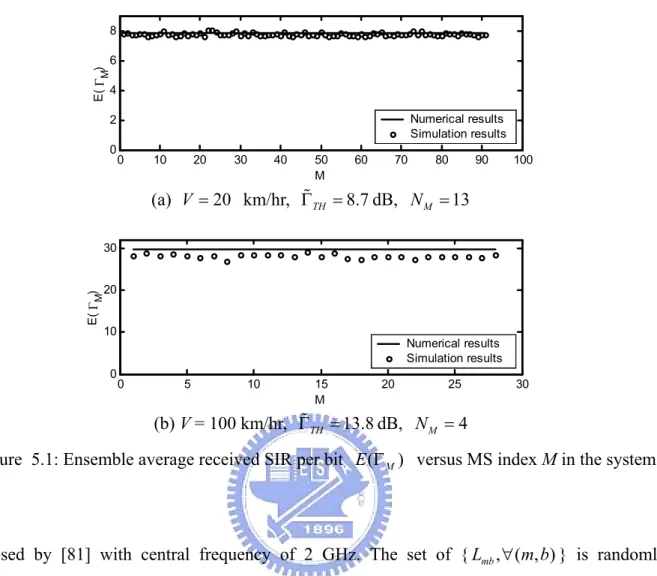
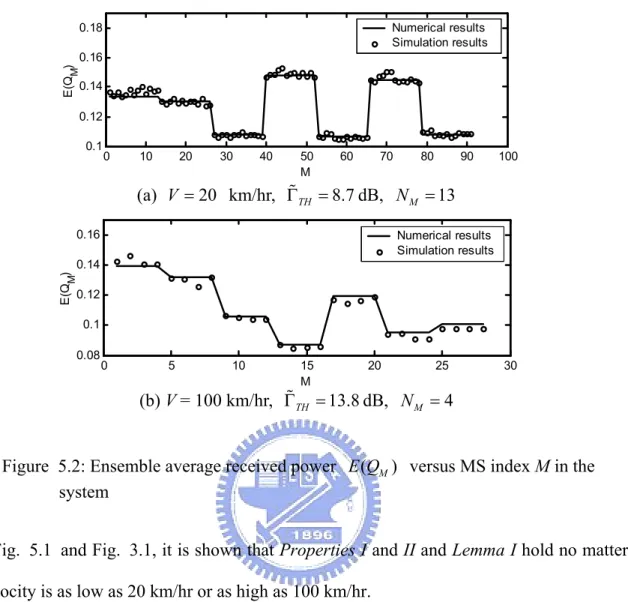
Figure 5.1: Ensemble average received SIR per bit (E ΓM) versus MS index M in the system 91 Figure 5.2: Ensemble average received power E Q( M) versus MS index M in the system ... 93
Figure 5.3: System capacity C versus the target SIR threshold ΓTH ... 94
Chapter 1
Introduction
1.1 Motivation
The wireless communications market has exploded in recent years. People love to and even have become used to have a mobile phone to communicate with others. The mobile phone is so convenient and can be used to promptly communicate with other people such that it has become an indispensable part of people's daily life. With more and more people joining into the mobile communication club, the technical progress of the mobile communication systems are driven by the market force. Among the technical issues, system capacity, service quality, and variety of communication services are the most important.
The fundamental problem of the wireless communication system is how to share the common wireless channels, e.g. a radio frequency band, by many mobile users in order to accommodate as many users as possible. Due to the very limited resource of the frequency spectrum allocation, the characteristics of the wireless channel and the requirement of the user mobility, it is indeed not an easy task to design the mobile communication systems to fulfill the ever-increasing demand.
In the evolution of mobile communications, mobile communication has evolved from the first-generation (1G) to the second-generation (2G) and is now evolving towards the second and a half-generation (2.5G), as well as the third-generation (3G), with the fourth-generation (4G) in the horizon. The 1G cellular mobile systems, such as the Nippon telephone and Telegraph (NTT)
system launched in 1979 in Japan, the Nordic Mobile Telephone (NMT) system in 1981 in Scandinavia, the Advanced Mobile Phone Service (AMPS) system in 1983 in United States, and the Total Access Communication System (TACS) in 1990 in United Kingdom, are all analog systems based on FDMA technique and mainly for voice facility. When look back to the history, the mobile communication is really successful service. The mobile market showed annual growth rate of 30~50 per cent, rising to nearly 20 million subscribers by 1990. The insufficiency of the 1G system capacity, as well as the problems with communication security, roaming, and transmission quality, together trigger the development of the second generation systems.
In the 2G cellular mobile systems, the Global Standard for Mobile Communications (GSM) system, based on TDMA technique, was deployed in 1992 in Europe. Also the Digital AMPS (D-AMPS, also known as IS-136), based on TDMA, launched in 1992 in North America. The Interim-Standard-95 (IS-95), based on narrow-band DS-CDMA, was commercially operated in 1998 in the United States, Hong Kong, Singapore, and Korea. On the other hand, the 2G system in Japan was Personal Digital Cellular (PDC), introduced in 1994. In order to improve audio quality, digital modulations are employed in 2G systems. Therefore, the 2G systems can also serve, but low bit-rate, data communications. The 2G systems offer higher spectrum efficiency, higher system capacity, better data services, and more advanced roaming than the 1G systems. The fraud prevention and encryption of user data has become standard feature. Speech service still dominates the airways, but the demand for the data services, such as short message, fax, etc, is growing rapidly.
The 2G systems have been very successful in many countries. However, there are still limitations in 2G systems in terms of system capacity, service quality and flexibility to accommodate various wideband services with different data rates. Specifically, in order to meet the growing demands of users for different kind of services, such as E-mail, Internet browsing, multimedia, data base access, etc., the system needs to have higher data rates up to 2Mbps and
more stringent Quality of Service (QoS) requirements. Therefore, third-generation (3G) systems are being developed to transcend the 2G systems.
3G cellular services, known as IMT-2000, will sustain higher data rates and open the door to many Internet style applications. The most important IMT-2000 proposals are the W-CDMA as the successor to GSM, cdma2000 as the successor to IS-95, and time-division synchronous CDMA (TD-SCDMA). In 3G systems, wideband CDMA has been chosen because theoretically it can provide higher capacity as compared to FDMA and TDMA schemes. However, in order to achieve this promised high capacity, good techniques are needed to overcome several wireless impairments. This is why significant research works are currently being devoted to improve the performance of DS/CDMA cellular systems, such as interference cancellation or multiuser detection, smart antennas, and power control, etc. Among those areas of researches, power control is the most crucial aspect since it plays an important role in a DS/CDMA cellular system.
Without power control schemes, the capacity of a DS/CDMA cellular system may be comparable with or even less than the capacity of FDMA or TDMA systems. Henceforth, in this dissertation, it is motivated to analyze the performance of the power control schemes in DS/CDMA cellular systems. The most important two kinds of power control schemes, the strength-based and SIR-based power control schemes, are considered, and more importantly, not only the ideal power control schemes but also the realistic, or say imperfect, power control schemes are investigated in the dissertation.
1.2 Related Work
The cellular system has evolved from the first-generation (1G) to the second-generation (2G), and is now evolving towards the second and a half-generation (2.5G), as well as the third-generation (3G), with the fourth-generation (4G) in the horizon. In order to provide service
to as many users as possible, the multiple access techniques adopted in each generation of the cellular systems also evolve from FDMA, TDMA, to CDMA. In 3G systems, wideband CDMA has been chosen because theoretically it can provide higher capacity as compared with FDMA and TDMA schemes. However, in order to achieve this promised high capacity, effective techniques are needed to overcome several wireless impairments. This is why significant research works are currently being devoted to improve the performance of DS/CDMA cellular systems, such as interference cancellation or multiuser detection, smart antennas, and power control, etc. Among those areas of research, power control is the most crucial aspect because it plays an important role in a DS/CDMA cellular system. Without good power control schemes, the capacity of a DS/CDMA system may be only comparable with or even less than the capacity of FDMA or TDMA systems.
The driving forces to use the spread spectrum or CDMA for terrestrial cellular systems are mainly the requirement to improve the system capacity. Many early researches focused on comparing the CDMA with the conventional TDMA and FDMA in order to understand the advantages of the CDMA. In 1985, A. J. Viterbi conducted a straightforward comparison of the capacity of CDMA to that of TDMA and FDMA for satellite applications and concluded that FDMA can achieve higher capacity than CDMA [1]. However, Gilhousen et al. [2] pointed out that in the mobile satellite environment, there are four major factors utilized by a CDMA system to render system capacity at least double that of FDMA and TDMA. These four major factors are: voice activity, spatial discrimination provided by multi-beam antenna, cross-polarization frequency reuse, and discrimination between multiple satellites providing co-coverage. The key point is that the CDMA capacity is only interference limited; unlike FDMA and TDMA whose capacities are basically bandwidth limited. Any reduction in interference in a CDMA system will convert directly and linearly into an increase in capacity [2]. Gilhousen at el. [3] further showed that the CDMA still exhibits its greatest advantage over TDMA and FDMA in terrestrial digital
cellular systems. The net improvement in capacity of CDMA over digital TDMA or FDMA is on the order of 4 to 6 and over the conventional analog FM/FDMA it is nearly a factor of 20.
It has been clear that power control is the single most important system requirement for CDMA, since only by control of each mobile's transmission power can resources be shared equitably among mobiles and capacity maximized [3]. Lot of literature can be found in the last decade having their focus on the power control issue. In [4], Aein investigated cochannel interference management in satellite systems. The important concept of carrier-to-interference (C/I) balancing, or equivalently the SIR balancing, was introduced by him wherein all users experience the same C/I level. And the problem is identified as an eigenvalue problem for positive matrices. Nettleton and Alavi further extend the results to spread spectrum cellular radio systems wherein the adjacent code channel interference becomes the dominant interference source, and show that C/I balancing substantially improves the system capacity [5], [6], [7].
In [8], Zander proposes an optimal centralized power control scheme to minimize the outage probability with the assumption that the knowledge of all the channel gains is obtainable and also studies the corresponding performance bound. Obviously, the centralized power control is not practical since it is impossible to know the gains in all the radio paths in the system. In view of this, the distributed power control that uses only the local obtainable information, e.g. the SIR ratio of the communicating link, is studied by lots of literature. In [9], Zander proposed a distributed C/I balancing scheme, named limited-information SRA-algorithm (LI-SRA). Although some performance gain is lost compared to the centralized power control in [8], the capacity gain on the order of 3-4 are still feasible as compared to fixed power control scheme. The LI-SRA scheme is found robust to measurement error and should be useful even if the C/I measurements were slow and less accurate.
In a DS/CDMA cellular system, many users can transmit messages simultaneously over the same radio channel, each using a specific spread-spectrum pseudo-noise (PN) code [10]. Within a
cell, the code channels in downlinks can be considered as mutually orthogonal because downlinks may exhibit synchronous CDMA transmission. However, these code channels in uplinks cannot be exactly mutually orthogonal for a set of asynchronous users, and thus mutual interference occurs among the uplinks. In such a case, a strong signal increases communication quality, and a weak signal may suffer from strong interference. This problem is referred to as the near-far effect and limits the CDMA system capacity [11]. Hence, power control is an essential issue in a DS/CDMA system.
Open-loop power control, that is, the average power control, is applied to compensate for the long-term channel fading such that the average received signal power level is constant and the near-far problem is solved [12]. Closed-loop power control, however, is typically used to mitigate the short-term channel fading so that an acceptable received signal quality can be attained for the uplink communication. Several closed-loop/open-loop power control schemes have been investigated, such as (i) the well-known perfect power control, within which MS transmission power is adjusted to the exact inverse of the short-term fading and thus the received signal power level remains constant. Such a method is also referred to as the channel inversion scheme [13], [14]; (ii) combined power/rate control proposed in [15], which is the same as the perfect power control except in that MS holds its transmission power at Q0/X0 and adapts its transmission rate to
S(t)⋅R0/X0 when S(t)<X0, where Q0 is the desired received power level, X0 is a preset cutoff
threshold, S(t) is the short-term fading at time t, and R0 is the data symbol rate; (iii) truncated
average power control (TAPC) proposed in [16], which applies a truncated channel inversion scheme to conventional average power control. This truncated channel inversion scheme suspends transmission when the long-term channel fading falls below a cutoff threshold; otherwise it adaptively controls power according to the channel inversion scheme. By suspending transmission in this way, an improvement of system capacity was reported.
understanding of the system’s dynamics. Approximating interference statistics has received a lot of attention. In the literature, the most widely used method is the SGA (standard Gaussian approximation) method. Although the SGA is easy to use and applicable to a complicated circumstance, e.g. the cellular system over the frequency-selective fading channel in [17], it is known that the SGA is not very accurate [18]. In order to improve accuracy, many other methods have been proposed, such as the improved Gaussian approximation (IGA) method [18], the simplified IGA method [19], and the characteristic function method [20]. These methods have better accuracy, however they are only applicable to the limited circumstance of a single cell system over the AWGN channel. Therefore, an approximation method that has better accuracy and can be applied to a complicated circumstance is still desirable. Therefore, the chapter 2 proposes an approximation method by characteristic function (AM-CF) to approximate the distribution of MAI (multiple access interference) signals in DS/CDMA cellular systems. The method considers the effects of a frequency-selective multipath fading channel; it also assumes perfect power control and a rectangular/sinc chip waveform. Using this method, the distribution of the MAI signals is more accurately approximated.
As above mentioned, [5], [6], [7] report that the SIR-balancing can improve the system capacity. However, the short-term fading effect is not considered in these works. In [12], [21], the short-term fading is considered in the system model, and the simulation results show that the SIR-based power control has the potential to achieve higher system capacity as compared the strength-based power control.
There were many works related to the strength-based power control scheme, such as the system capacity analysis, e.g. [3], the interference statistics, e.g. [22], the error probability, e.g. [17], etc. Nevertheless, the SIR-based power control is in fact more important, and the SIR-based power control system was reported as having the potential for higher system capacity [5], [6], [7], [21]. Actually, the SIR-based power control had been adopted in IMT-2000 systems as well as
IS-95 system. However, the corresponding analysis for the SIR-based power control is very complicated [21] and is found significantly different from that of the strength-based power control [23]. The reason is that the distribution of the received SIR, which is the key factor in conventional methods for analyzing the system capacity of power control schemes, e.g. [3], [24], is almost impossible to be derived for the SIR-based power control scheme because of the inherent interaction between the desired signal power and the interference power. Due to such a difficulty, few literature had successfully provided new analytical method for investigating the SIR-based power control scheme, e.g. [23], [25], [26], and most works make their study via simulation, e.g. [21], [27],[28], [29], for the SIR-based power control schemes.
Kim and Sung [23] proposed a methodology for analyzing the system capacity of the SIR-based power control scheme with consideration of the voice activity, the maximum received power, and the long-term fading. The analysis was extended to a multicode CDMA system and an overlaid multiband CDMA system in [25]. However, they did not take the multipath fading into account in the channel model. Kim and Adachi [26] further proposed a method to analytically evaluate the reverse link capacity of a CDMA system in a multipath fading environment. In [23], [25], and [26], by recursively calculating the statistics of both the received power of the uplink and the interference power to mimic their inherent interaction, the system capacity of an SIR-based power control scheme is numerically obtained. Note that, all of these analyses assume that the SIR-based power control is perfect such that the received SIR is kept at a preset level. However, in practical, the received SIR would be a random variable rather than a constant. It can be found that the analysis of the imperfect SIR-based power control scheme is further different from that of the ideal SIR-based power control scheme. There has been no analytical approach for analyzing the capacity of an imperfect SIR-based power control scheme. Therefore, in Chapter 5, we propose a novel analytical method by which the analysis of an imperfect power control scheme becomes mathematically tractable and the closed-form solutions for uplink capacity of
DS/CDMA cellular systems are successfully derived.
1.3 Dissertation Organization
In this introductory chapter we provide the synopsis of the thesis. This chapter presents the research motivation, paper survey, and thesis outline.
In Chapter 2, the evolution of the mobile systems is briefly reviewed. The importance of power control in the reverse link of a CDMA system is highlighted. Various kinds of the power control schemes in CDMA systems are described in this chapter. Among these power control schemes, the most important two schemes are the strength-based and the SIR-based power control schemes. The analysis of these two kinds of power control schemes is the scope of this dissertation.
In Chapter 3 we focus on the strength-based power control scheme. The system performance of a truncated closed-loop power control (TCPC) scheme for uplinks in DS/CDMA cellular systems over frequency-selective fading channels is conducted. It is shown that the TCPC scheme can achieve higher system capacity than the conventional strength-based power control scheme. We also successfully analyze an imperfect TCPC scheme (or called realistic TCPC scheme), i.e. TCPC scheme under realistic consideration of power control error due to power control step size, power control period, power control delay, and MS velocity. A closed-form formula is obtained to accurately approximate the system capacity of the imperfect TCPC scheme.
In Chapter 4 we turn to focus on one important factor, the interference statistics, in a strength-based power controlled DS/CDMA cellular system. The interference statistics of a DS/CDMA system are essential to the understanding of the system’s dynamics. Although the conventional SGA (standard Gaussian approximation) method is easy to use and applicable to a complicated circumstance, e.g. the cellular system over the frequency-selective fading channel in
[17], it is known that the SGA is not very accurate [18]. In order to improve accuracy while still applicable to a complicated circumstance, we propose an approximation method by characteristic function (AM-CF) to approximate the distribution of the MAI (multiple access interference) signals in DS/CDMA cellular systems. The method considers the effect of a frequency-selective multipath fading channel; it also assumes perfect power control and a rectangular/sinc chip waveform. Using this method, the distribution of the MAI signals is more accurately approximated.
In Chapter 5 we focus on another important kind of power control scheme ― the SIR-based power control scheme. In this chapter, we propose a novel analytical method to analyze the system capacity of an imperfect SIR-based power control scheme for uplinks in DS/CDMA cellular systems wherein the received SIR is a random variable. The system behavior can be described by a set of linear equations. A closed-form solution for the system capacity is successfully derived. And the derived formula needs only the first and second order statistics of each element in the coefficient matrix of the linear equation. Results show that the analytical and the simulation results are substantially matched together, which implies the novel analytical method is quite accurate.
Chapter 2
An Overview of the Power Control Techniques for
DS/CDMA Cellular Systems
Abstract In this chapter, the cellular systems and various power control schemes are briefly reviewed. Power control is one of the most important factors for DS/CDMA cellular systems due to the near-far problem and the multipath fading. Without power control, the capacity of the DS/CDMA cellular system could become lower than that of cellular systems based on FDMA. A proper power control will make users to share resources of the system equally between themselves and thus enhance the system capacity to meet the demanding requirements.
2.1 Introduction
Code Division Multiple Access (CDMA) has become the technology of choice for the third generation of cellular mobile systems because theoretically it can provide higher capacity compared with FDMA and TDMA schemes. However, in order to achieve the high capacity, techniques are needed to overcome several wireless impairments. One of the most important key aspects of CDMA is the power control. Many research works have been devoted to investigate the power control of DS/CDMA cellular systems and even design the power control algorithm to achieve an optimal performance. This chapter wills briefly overview the relevant background related to this hot topic in DS/CDMA cellular systems.
The rest of this chapter is organized as follows. An overview of the cellular systems is given in section 2.2. The power control techniques in DS/CDMA cellular systems and their corresponding classifications are presented in section 2.3. Finally, the concluding remarks are given in section 2.4.
2.2 Cellular Systems
The 3G cellular services, known as IMT-2000, will sustain higher data rates and open the door to many Internet style applications. The most important IMT-2000 proposals are the W-CDMA as the successor to GSM, cdma2000 as the successor to IS-95, and time-division synchronous CDMA (TD-SCDMA). In 3G systems, wideband CDMA has been chosen because theoretically it can provide higher capacity compared with FDMA and TDMA schemes. However, in order to achieve this “promised” high capacity, good techniques are needed to overcome several wireless impairments. This is why significant research works are currently being devoted to improve the performance of DS/CDMA systems, such as interference cancellation or multiuser detection, smart antennas, and power control, etc. Among those areas of research, power control is the most crucial aspect because it plays an important role in a DS/CDMA cellular system.
Without good power control scheme, the capacity of a DS/CDMA system may be only comparable with or even less than the capacity of FDMA or TDMA systems. Henceforth, in this dissertation, it is motivated to analyze the performance of the power control schemes in DS/CDMA cellular systems.
2.3 Power Control in DS/CDMA Cellular Systems
The necessity for power control in FDMA/TDMA-based cellular networks stems from the requirement for co-channel interference management. This type of interference is caused by frequency reuse due to limited available frequency spectrum. By a proper power adjustment, the harmful effects of co-channel interference can be reduced. This allows a more “dense” reuse of resources and thus higher capacity.
The reason why the power control is the most important issue for a DS/CDMA cellular system is related to the unique feature of the CDMA system, MSs in the system are interfering with each other. In a DS/CDMA system, many users can transmit messages simultaneously over the same radio channel, each using a specific spread-spectrum pseudo-noise (PN) code [10]. Within a cell, the code channels in downlinks can be considered as mutually orthogonal because downlinks may exhibit synchronous CDMA transmission. However, these code channels in uplinks cannot be exactly mutually orthogonal for a set of asynchronous users, and thus mutual interference occurs among the uplinks. In such a case, a strong signal increases communication quality, and a weak signal may suffer from strong interference. This problem is referred to as the near-far effect and limits the CDMA system capacity [11]. Hence, well-designed power control is essential for proper functioning of the DS/CDMA cellular system. In the absence of power control the capacity of the DS/CDMA cellular system is very low, even lower than that of mobile systems based on FDMA or TDMA. Power control techniques in DS/CDMA systems can be classified in many different ways, which are described in-detail in the following subsections.
2.3.1 Uplink/Downlink Power Control
Power control schemes can be classified into two categories: uplink power control scheme, and downlink power control scheme. The uplink is also known as the reverse link, and the downlink is also known as the forward link. Uplink power control is found the single most important requirement for DS/CDMA systems due to the near-far problem [3]. Without uplink power control, i.e., each MS's transmission power is the same; the system capacity is found to be unacceptably low. In order to achieve the same average received signal power level, it is reported that a dynamic range of around 80dB while adapting MS's transmission power is required [3].
For the downlink link, there is no near-far problem since all signals are transmitted and hence vary together. In a single cell system, no downlink power control is required. However in a cellular system, interference from neighboring cell sites fades independently from the given cell site and thereby degrades performance. Thus it is necessary to apply power control in this case also, to reduce intercell interference. In this dissertation, we will focus on the uplink power control. And the contents in next coming sub-sections are all based on the uplink power control.
2.3.2 Centralized/Distributed Power Control
Power control schemes can be classified into two categories: centralized power control and distributed power control. A centralized power control is assumed to have all information about the gain of each link between any MS and any BS, and accordingly is capable of well controlling all the MSs' transmission power levels such that carrier-to-interference (CIR) balancing is met [31]. The concept of CIR-balancing is firstly introduced by Aein [4], in which all receivers experience the same CIR. As one can see, CIR-balancing implies fair resource usage among the users, therefore the outage probability is reduced and the system capacity is enhanced as compared CIR-unbalanced situation. The centralized power control for achieving CIR-balancing was identified as an eigenvalue problem for positive matrices for satellite systems [4],
FDMA/TDMA cellular systems [8], and DS/CDMA cellular systems [32]. The transmission power allocations are determined by the eigenvector corresponding to the minimum positive eigenvalue of the link-gain matrix. The study of the centralized power control reveals the optimal transmission power allocation to achieve CIR-balancing. However, to obtain the link-gain matrix need to know all of the link gains, which is obviously not practical.
The distributed power control is also known as decentralized power control. A decentralized power control scheme [9], [33], [34] adapts only one MS's power, and the algorithm depends only on local information, such as the measured SIR or the estimated gain of the channel from the specific MS to its serving BS. Due to depending only on local information, the distributed power control is more practical than the centralized one. However, the distributed power control would not perform better than the centralized one, e.g. in the aspect of convergence speed. Lee [35] proposed an algorithm to adapt each MS's power merely based on the local information, especially focused on the convergence issue of the power adaptation.
All the works studying either the centralized or distributed power control are also assumed rather ideal system model without considering the practical issues such as, (1) the power is practically adapted according to the periodically issued power control commands, (2) a power control command can only contain finite bits, (3) the existence of the power control command delay, (4) the short-term channel fading. Once these practical factors are further considered, the convergence of the distributed power control can become a very complex problem. The study of the centralized/distributed power control can indeed provide the first view to the power control scheme in a DS/CDMA cellular system without getting into the detail of practical issues.
2.3.3 Open-loop/Closed-loop/Outer-loop Power Control
From a viewpoint of realistic system, the power control techniques can be classified into three categories: open-loop power control, closed-loop power control, and outer-loop power
control.
The open-loop power control, also called average power control, is used to overcome the near-far and shadowing effects on the reverse link of a DS/CDMA cellular system. The open-loop power control is designed to ensure that the average received powers from all MSs in the same cell are equal to a preset level. By utilizing that the large-scale propagation loss is substantially reciprocal between uplink and downlink channels, the MS can compute the required transmission power based on the estimated channel gain on the downlink [3]. Such a task can be done by the MS itself without needing any feedback information from its serving BS, therefore this kind of power control is of an open-loop type. Due to the mechanism of the open-loop power control is so simple that only few literature, e.g. [36], [37], can be found.
Closed-loop power control aims at compensating for the received signal fluctuation due to short-term channel fading (or called multipath fading), which cannot be eliminated by the open-loop algorithm since the short-term channel fading can be very difference for the forward and reverse links. Usually, when talking about the closed-loop power control, it has implicitly assumed that the open-loop power control is a perfect one such that the near-far effect is perfected compensated. Due to the short-term fading is uncorrelated between uplink and downlink, the BS needs to measure some quality indicator, e.g. the received signal or the received SIR, and then sends a corresponding power control command back to the MS, so that the MS can adjust its transmission power accordingly. Obviously, this is a control mechanism in a closed-loop manner. Depending on what kind of quality indicator is measured at the BS, the closed-loop power control is further divided into three major classes. Please refer to section 2.3.4 for further detail.
Typical operation of a closed-loop power control is described as follows. The quality indicator, such as the received signal power, received SIR, or the bit error rate (BER) is estimated or measure at the BS for every power control period, Tp. In order to efficiently compensate for the
the short-term fading. Then estimated quality indicator is compared with a preset target threshold. A finite-bit power control command is generated based on the difference between the estimated quality indicator and the target threshold and sent back to the MS via the downlink channel. The power control command is usually multiplexed with the downlink user data. The MS then extracts the power control command from the downlink data stream and adjust its transmission power by an amount of CMD*∆p (dB) for the next power control period, where CMD denotes the power
control command and ∆p is a preset step size in dB. Note that a delay is always introduced by
such a control loop. This delay is called the power control loop delay. Due to lots of factors such as the power control period, finite-bit power control command, power control loop delay, etc., each MS's transmission power adaptation can never compensate the channel fading such that the corresponding quality indicator seen by the BS is always kept at the target threshold. In other words, the quality indicator seen by the BS would be a random variable. The quality indicator will have its mean around the target threshold. The difference between the estimated quality indicator and the target threshold is usually called power control error.
Note that closed-loop power control is only effective if and only if the validity of the power control command is good enough. A factor affects the validity of the power control command is the power control loop delay. A too-long power control loop delay will reduce the validity of the power control to reflect the current channel variation. Due to this fact, closed-loop power control is feasible in a terrestrial cellular environment, while not in a mobile satellite communications systems. Another factor is the speed of the multipath fading, or the MS mobility or velocity, which can also reduce the validity of the power control. The study of impact of the MS mobility on the system performance can be found in [38].
The outer-loop power control always cooperates with the SIR-based closed-loop power control, since for a typical strength-based power control, the target threshold is considered fixed and there is no corresponding outer-loop power control. The outer-loop power control is
employed to adapt the target SIR threshold used in the SIR-based power control such that the ultimate goal, the average BER, can be maintained at a certain level [39]. Note that, identical target SIR threshold for communication links does not imply identical BER performance. To speak more specifically, although identical target SIR threshold does imply that the received SIR at BS has its average around the same target SIR threshold, however, the variance of the received SIR is affected not only by the target SIR threshold but also by many other factors such as channel fading conditions, MS velocity, etc. Therefore, identical target SIR threshold can not guarantee identical distribution of the received SIR as well as identical average BER performance. In realistic system, different MSs may require different target SIR threshold and the outer-loop power control is needed to adaptively adjust the target SIR threshold in order to achieve the target BER performance for each uplink. The algorithm of updating target SIR threshold can be found in [40], [41], [42], [43]. To determine a proper target SIR threshold, the BS should be capable to estimate the average BER. The estimated average BER is then compared with a target BER, which might be difference for different type of communication services. If the estimated average BER is better than the target BER, the target SIR threshold is decreased; otherwise the target SIR threshold is increased. In fact, the outer-loop power control is a kind of BER-based power control.
2.3.4 Strength-based/SIR-based/BER-based Power Control
According to what kind of quality indicator is measured to determine the power control command, the closed-loop power control can be classified into three categories: strength-based, SIR-based, and BER-based power control schemes.
In the strength-based power control scheme, the strength of the signal received by the BS from an MS is measured and compared with a preset target threshold. A one-bit power control command 'UP'/'DOWN' is periodically issued depending on whether the received signal power is lower/higher than the target threshold. In general, the power control command can be of more
than one bit, however in practical system the one-bit power control command is implemented due to its simplicity and light bandwidth requirement. For a typical strength-based power control scheme, the target threshold used in each BS is the same. Such a strength-based power control scheme will never diverge since the received power at the BS as well as the MS's transmission power will always converge. This is an advantage of the strength-based power control scheme. However, as can be easily found, the unification of the target threshold in the whole system is a negative factor to the system capacity. Typically, the central cells in the system will suffer from much interference than the boundary cells. Therefore the received SIR in the boundary cells will be unnecessary high and therefore the corresponding MSs will induce too much interference to the system. If these target thresholds that are unnecessary high can be somehow lowered down, the system capacity will be no doubt increased accordingly. There were many works related to the strength-based power control scheme, such the system capacity analysis [3], [44], the interference statistics [22], [45], the error probability analysis [17].
In a DS/CDMA cellular system, however, power control based on SIR is more suitable than that based on signal strength because the DS/CDMA cellular system is interference limited. It is shown in [21] that power control based on SIR appears to perform better than that based on the signal strength. Actually, the SIR-based power control had been adopted in IMT-2000 systems as well as IS-95 systems. In the SIR-based power control scheme the measured quality indicator is the received SIR. The operation of the SIR-based power control is basically the same as that of the strength-based power control, except for that the employed quality indicators are different. To speak more specifically, in the SIR-based power control scheme, the SIR received by the BS from an MS is measured and compared with a preset target SIR threshold. A one-bit power control command 'UP'/'DOWN' is periodically issued depending on whether the received SIR is lower/higher than the target SIR threshold. The MS adapts its transmission power based on power control command. It seems that the only difference between the strength-based and SIR-based
power control scheme is just the quality indicator. However, the characteristic of the SIR-based power control is very different from that of the strength-based power control. The corresponding theoretical analysis for the SIR-based power control becomes very complicated [21], and is found significantly different from that of the strength-based power control [23]. Due to such a difficulty, few literature had successfully provided theoretical methods for investigating the SIR-based power control scheme, e.g. [23], [25], [26], and most works made the study via simulation, e.g. [21], [27], [28], [29], for the SIR-based power control schemes.
In reality, the received SIR becomes dispersed with its mean around the target threshold. It can be found that the corresponding average BER becomes lower than that corresponds a SIR ideally fixed at the target threshold. Therefore the target SIR threshold for a realistic system should be set to a value higher than the Γ0, where Γ0 is the SIR value for achieving the target BER
performance. Moreover, the target threshold should become even higher, if the variance of the received SIR becomes larger. Adjusting the SIR target can be done by the outer-loop power control. How to set and adapt the target threshold is the key point of the SIR-based and can be found in lot of literature [40], [41], [42], [43], [46].
The major advantage of the SIR-based scheme is its better system performance on the system capacity. However, one of the side effects of the SIR-based schemes is the potential to get positive feedback to endanger the stability of the system when the number of active users exceeds the maximum system capacity. Positive feedback arises in a situation when one MS under instructions from the BS has to raise its transmission power, but the increase in its power also results in an increase in interference to other MSs so that these other MSs are then forced to also increase their power, etc. Once such a positive feedback situation occurs, it in fact implies that the overall interference has become too high and the system has become overloaded. The only way to dispel the positive feedback situation is to remove one or more MSs from the system. Once the overall interference is reduced, the system will leave from the overloaded state to a normal state,
wherein what occurs will be a negative feedback instead of the original positive feedback. When the SIR-based scheme operates at its normal state, the negative feedback will lead each MSs to use the transmission power as less as possible, which in turn reveals another advantage of the SIR-based power control scheme – power saving.
To avoid positive feedback effect, a strength-and-SIR-combined power control scheme is proposed in [47], [48]. In this scheme, SIR is used to control the target signal quality, while signal strength is used to control the interference level. For example when an MS’s SIR is below the target threshold but its signal strength is already high enough, that MS cannot increase its transmission power. Moreover, power control should be also operated together with another technique, such as call admission control in order to prevent positive feedback [49], [50], [51] by assuming that the maximum system capacity is not exceeded.
In BER-based power control schemes, BER is defined as an average number of erroneous bits compared to the original sequence of bits. If the signal and average interference powers are constant, the BER will be a function of the received SIR, and in this case these two quality indicators are equivalent to each other. However, in reality the SIR is time-variant and thus the average SIR will not correspond to the average BER. Since the channel coding is implemented in every practical system, power control can be based on the average number of erroneous frames as well. Although the BER is a better quality indicator than the SIR, the accurate measurement of BER is not an easy job to do. Therefore the corresponding literature, e.g. [52], is few.
2.3.5 Perfect/Imperfect Power Control
According to characteristics of the quality indicator seen by the BS, power control schemes can be classified into: perfect power control and imperfect power control schemes. Since the quality indicator can be either the received signal power or the received SIR, the corresponding perfect power control schemes are referred as the perfect strength-based and perfect SIR-based
power control scheme, respectively. To speak more specifically, a perfect strength-based power control implies that the received signal power on each communication link is perfectly controlled to equal to the target threshold. In this case, each MS's transmission power will be a value proportional to the inverse of the short-term fading. On the other hand, a perfect SIR-based power control implies that the received SIR on each communication link is perfectly controlled to equal to the target SIR threshold. In this case, each MS's instantaneous transmission power can be calculated based on the analytical results derived by Zander [8] by letting short-term fading factors be included in the channel gain. Note that, since the global information is needed while calculating the MSs' transmission powers, a perfect SIR-based power control is a kind of centralized power control. Although such an ideal model is not practical, it makes the system analysis easy to be conducted. There is many analytical works can be found based on the perfect strength-based power control, while few are based on the perfect SIR-based power control, e.g. [23], [25], [26].
In an imperfect power control scheme, the quality indicator seen by the BS is modeled as a random variable. The difference between the quality indicator and the target threshold is called the power control error. In a strength-based power control, the power control error is the difference between the received signal and the target threshold and is usually modeled as a log-normal distributed random variable [53], [54], [55]. In a SIR-based power control, the power control error is the difference between the received SIR and the target threshold and seems can also be modeled as a log-normal distributed random variable. The mean of the quality indicator, in dB scale, can be well approximated by the target threshold, in dB scale [40]. However, how to model the corresponding variance is a big problem which is really hard to be derived, since the power control error is affected by too many factors such as power control step size, power control period, finite-bit power control command, power control loop delay, power control command error, and especially the MS's velocity. Some analytical results regarding to the distribution of
SIR can be found in [56], [57]. The imperfect power control is definitely more realistic than the perfect one. There are many works can be found, which are regarding e.g. system capacity [58], [59], [60], outage probability analysis [61].
2.3.6 Power Control with Fixed Step Size/Adaptive Step Size
According to strategies on the power adaptation step size, power control algorithms can be classified as follows: those where the power adaptation step size is fixed, and those where the power adaptation step size is made adaptive to the channel variation. Power control command in fixed step size scheme is a simple 1-bit command, which can only instruct the MS to increase or decrease the transmission power by a preset amount. Although with the cost of maybe worse performance due to the low adaptation resolution, the fixed step size scheme is easier to implement and is actually employed in the real systems like cdma2000. As can be seen, such a scenario is like a delta modulation.
Power control command in adaptive step size scheme is generally a multi-bit command. A specific example is the perfect strength-based power control, wherein an infinite-bit command would be needed to let MS's transmission power be adapted based on the actual difference between the received signal power and the target threshold. This is impractical since an infinite-bit command needs infinite communication bandwidth. In order to reduce the needed bandwidth for transmit the power control commands, the number of the power control command bits should be reduced to a certain amount. The difference between the estimated quality indicator and the target threshold is quantized according to a pulse code modulation (PCM) realization [62]. In such a case, the operation of a power control with adaptive step size acts like an adaptive delta-modulation algorithm.
The variable-step algorithm can be expected to have a good performance because the fading factor can be directly compensated during one power control intervalwith multiple power control
command bits. However in practice, this method is not efficient because it will require lot of downlink bandwidth to convey the power control commands to the respective MS. On the other hand, the fixed step size algorithm is also preferred due to the fact that it can reduce peak transmit power during deep fades. In a variable-step algorithm, the peak transmit power would be high to compensate for deep fades, and therefore may decrease the capacity due to excessive interference to other MSs. Due to this issue, the most existing schemes of closed-loop power control employ a fixed step algorithm, e.g. [24], [42], [50].
2.3.7 Truncated Power Control
Truncated power control is a kind of strength-based power control. The key point of a truncated power control is that the MS will suspend its transmission when the channel fading is less than a preset cutoff threshold; otherwise, the MS transmits with power adapted to compensate for the channel fading such that the received signal power level approaches to the target threshold. Conventional strength-based power control is a special case of the truncated power control by letting the cutoff threshold to be zero. Herein, the channel fading could mean the long-term fading, in this case the truncated power control is a truncated average power control [16] which is a kind of open-loop power control, or the short-term fading, in this case the truncated power control is a truncated closed-loop power control [63].
Since the DS/CDMA cellular system is an interference-limited system. Any way to reduce the overall interference in the system will equivalently increase the system capacity. This idea is proven true by the truncated power control [16], [63]. By suspending the transmission temporarily, or otherwise a high transmission power in order to compensate for the deep fading would occur and thus introduce high interference to others, the overall interference in the system can be reduced. A satisfactory capacity gain is reported and the corresponding analysis can be found in [63].
2.3.8 Predictive Power Control
The performance of a power control scheme is degraded by the power control loop delay. The following factors contribute to the total power control loop delay. First, quality indicator measurement at the BS takes time. Normally, the quality indicator measurement is performed during part of the power control period and hence, contributes to a one power control period delay. Once the quality indicator measurement is completed, it needs to be compared with the target threshold to generate the power control command. Although the processing time at the BS can be negligible, the power control command may not be transmitted on the next immediate time slot on the downlink channel, because it depends on the synchronization between the uplink and downlink channels. Therefore, the second contributor is the synchronization delay between uplink and downlink channel. The third contributor to the loop delay is the propagation time of the power control command from the BS to the MS.
In order to compensate for the power control loop delay, many predictive power control schemes are employed such that the generation of the power control command is based on the predicted quality indicator, rather than the present estimated quality indicator, and the target threshold. The problem of feedback delay has been identified in [64], [65], [66]. A technique to compensate for feedback delay is proposed in [67] using a time delay compensation method. In this method, the estimated SIR at the BS is adjusted according to the power control commands that have been sent by the BS but whose effect have not taken place at the MS. In [64] the problem of feedback delay is overcome by using a linear prediction filter at the BS to predict the future channel strength. The prediction filter utilizes the previous and present channel correlation to perform the prediction. The filter coefficients can be computed in several ways. In [66], a recursive least squares algorithm is used to compute the predictor coefficients. And [28] proposes a new scheme, which makes use of the current and past information of the MS to predict future power gain due to channel variation and RAKE combing.
Note that if the prediction performs good enough, the variance of the received quality indicator can be thereby reduced which will in turn increase system capacity. A perfect predictive power control is equivalent to a system with zero power control loop delay. Therefore, the performance of a system with zero power control loop delay acts as the upper bound of any kind of predictive power control.
2.3.9 Combined Rate and Power Control
Perfect power control can result in high intercell interference due to tracking of deep fades. This translates into large interference to other users, leading to a capacity reduction. Limiting the user transmission power will not solve this problem because this will suppress both the interference and the signal itself. One solution is to jointly adapt the transmission power and the transmission rate according to the channel variation, if the users can tolerate some delay in their transmission.
From the SIR formula, it can be found that not only the transmission power but also the processing gain can be utilized to combat the channel variation. To speak more specifically, when a low channel gain is encountered, to increase the transmission power or to increase the processing gain is equivalent to obtain an identical SIR value. From such an observation, another kind of power control scheme, combined rate and power control, is proposed [15], [68], [69]. The main idea of the combined rate and power control scheme is to limit the increase in transmission power by some fixed level and gets the extra gain required by reducing the transmission rate, which in turn increases the processing gain in a CDMA system. By limiting the transmission power, which translates into a reduction of interference to other MSs as compared with the strength-based power control, the system capacity is thereby increased.
Many control algorithms adapting both the transmission rate and power can be found. The adaptation of transmission rate was first studied in [70] for Rayleigh fading channel. In [15], a
combined power/rate control scheme is considered that limits the increase in power by some fixed value and gets the extra gain required by reducing the rate. In [68], two combined rate and power control schemes are proposed to reduce the average transmission power, while still maintain the same average data rate and BER. (1) Power and rate adaptation, the power and rate adaptation scheme which performs the rate adaptation when the transmission power exceeds a preset threshold and adapts otherwise the transmission power to ensure a fixed-rate transmission; (2) truncated rate adaptation, which suspends transmitting data when the channel gain is below a threshold and then otherwise adapts the rate with a constant power. In [71], a SIR-based soft power control is proposed which has an upper and a lower threshold, perform the rate adaptation with fixed transmission power as the received SIR falls between the lower and higher thresholds, otherwise perform the power adaptation with fixed transmission rate.
There are two main techniques to adapt the processing gain. One technique is the flexible multi-rate CDMA radio interface architecture with different chip rate, which controls the processing gain according to the channel variation [72]. The other technique is the multi-code CDMA, which controls the number of given spreading code according to the channel variation [73]. The former method needs a sophisticated synchronization technique, and the latter method needs high transmission power.
Due to the transmission rate is adapted in accordance with the channel variation, the transmission rate is no longer a constant level. Thus the combined rate and power control is suitable for these delay-insensitive services, like data and image service, and not suitable for these services like voice and video that require constant bit rate transmission. Another side effect is that the average transmission rate of the MS would become smaller as compared with that in the conventional strength-based power control. This can be easily solved by setting appropriate processing gain in advance. For the performance comparison, the system capacity is no longer a proper indicator. A fair indicator would be the average system transmission rate, which is defined
as the product of the system capacity and average transmission rate. It is found that the combined rate and power control can achieve higher average system transmission rate than the conventional strength-based power control.
2.4 Concluding Remarks
This chapter provides a fundamental overview of the DS/CDMA cellular systems, the power control techniques, and the classification of these power control techniques. As a basis of a multi-user system, the multiple access techniques adopted by the cellular systems has evolved from 1G's and 2G's FDMA, TDMA to 3G's wideband CDMA. The reason is that the wideband CDMA theoretically can provide higher capacity compared with FDMA and TDMA schemes. However, in order to achieve the high capacity, one of the crucial techniques is the power control. This chapter further reviews the various classifications of the power controls in a DS/CDMA system. The power control can be classified as uplink/downlink power control, centralized/distributed power control, open-loop/closed-loop/outer-loop power control, strength-based/SIR-based/BER-based power control, perfect/imperfect power control, power control with fixed step size/adaptive step size. Aiming to further improve system capacity, the truncated power control and the predictive power control are also introduced. From the viewpoints of the above power control classifications, what this dissertation focuses on is the uplink, distributed, closed-loop, either truncated strength-based or SIR-based, either perfect or imperfect power control scheme with fixed step size. In the following chapters, the performance of the truncated strength-based and the SIR-based power control schemes are analyzed, respectively. Also, the problem of distribution estimation of the multiple access interference in the strength-based power control is addressed in yet another chapter.
Chapter 3
Performance Analysis of a Truncated
Closed-Loop Power Control Scheme for
DS/CDMA Cellular Systems
Abstract This chapter analyzes the system performance of a truncated closed-loop power control (TCPC) scheme for uplinks in DS/CDMA cellular systems over frequency-selective fading channels. In this TCPC scheme, a mobile station (MS) suspends its transmission when the short-term fading is less than a preset cutoff threshold; and otherwise, the MS transmits with power adapted to compensate for the short-term fading so that the received signal power level remains constant. Closed-form formulae are successfully derived for performance measures, such as system capacity, average system transmission rate, MS average transmission rate, MS power consumption, and MS suspension delay. Numerical results show that the analysis provides reasonable accuracy; and the TCPC scheme can substantially improve the system capacity, the average system transmission rate, and power saving over conventional closed-loop power control schemes. Moreover, the TCPC scheme under realistic consideration of power control error due to power control step size, power control period, power control delay, and MS velocity is further investigated. A closed-form formula is obtained to accurately approximate the system capacity of the realistic TCPC scheme. A closed-form formula is obtained to accurately approximate the system capacity of the realistic TCPC scheme.
3.1 Introduction
In a DS/CDMA system, many users can transmit messages simultaneously over the same radio channel, each using a specific spread-spectrum pseudo-noise (PN) code [10]. Within a cell, the code channels in downlinks can be considered as mutually orthogonal because downlinks may exhibit synchronous CDMA transmission. However, these code channels in uplinks cannot be exactly mutually orthogonal for a set of asynchronous users, and thus mutual interference occurs among the uplinks. In such a case, a strong signal increases communication quality, and a weak signal may suffer from strong interference. This problem is referred to as the near-far effect and limits the CDMA system capacity [11]. Hence, power control is an essential issue in a DS/CDMA system.
Open-loop power control, that is, the average power control, is applied to compensate for the
long-term channel fading such that the average received signal power level is constant and the near-far problem is solved [12]. Closed-loop power control, however, is typically used to mitigate the short-term channel fading so that an acceptable received signal quality can be attained for the uplink communication. Several closed-loop/open-loop power control schemes have been investigated, such as: 1) the well-known perfect power control, within which MS transmission power is adjusted to the exact inverse of the short-term fading and thus the received signal power level remains constant. Such a method is also referred to as the channel inversion scheme [13], [14]; 2) combined power/rate control proposed in [15], which is the same as the perfect power control except in that MS holds its transmission power at Q0/X0 and adapts its transmission rate to
S(t)⋅R0/X0 when S(t)<X0, where Q0 is the desired received power level, X0 is a preset cutoff
threshold, S(t) is the short-term fading at time t, and R0 is the data symbol rate; 3) truncated
average power control (TAPC) proposed in [16], which applies a truncated channel inversion scheme to conventional average power control. This truncated channel inversion scheme suspends transmission when the long-term channel fading falls below a cutoff threshold; otherwise it