行政院國家科學委員會補助專題研究計畫成果報告
※※※※※※※※※※※※※※※※※※※※※※※※※※
※ ※
※ 寬頻網際網路之允入控制與訊務排程 ※
※ ※
※※※※※※※※※※※※※※※※※※※※※※※※※※
計畫類別:□個別型計畫 ■整合型計畫
計畫編號:NSC89-2219-E-009-001
執行期間:88 年 8 月 1 日至 89 年 7 月 31 日
計畫主持人:楊啟瑞
共同主持人:
計畫參與人員:
本成果報告包括以下應繳交之附件:
□赴國外出差或研習心得報告一份
□赴大陸地區出差或研習心得報告一份
□出席國際學術會議心得報告及發表之論文各一份
□國際合作研究計畫國外研究報告書一份
執行單位:國立交通大學資訊工程研究所
中 華 民 國 89 年 10 月 25 日
行政院國家科學委員會專題研究計畫成果報告
寬頻網際網路之允入控制與訊務排程
Admission Contr ol and Tr affic Scheduling in Br oadband Inter net
計畫編號 : NSC89-2219-E-009-001
執行期限 : 88 年 8 月 1 日至 89 年 7 月 31 日
主持人 : 楊啟瑞
國立交通大學資訊工程研究所
1. 中文摘要 寬頻網際網路上的QoS (Quality-of-Service) 排程必須提供有限延遲與公平性的考量且保 持最小之計算複雜度。Prevailing weight-based 的排程原則提倡應用multiple queues和engage 於timestamp的計算。這些原則在高複雜度的 花費下,可以達到最佳之QoS效能,也可以 為了計算簡化,達到次級之效能。在今年度 的 計 畫 中 , 我 們 設 計 了 一 個 weight-based Versatile QoS Scheduler (VQS) 和其可行之 VLSI硬體實作架構。為了促進較適當之效能 與複雜度間的平衡,VQS可以在寬頻網際網 路內用不同之網路元件來實作。VQS利用較 簡單之single-queue與不需timestamp計算之 優點,以weight來控制封包插入於一分享式 之資料結構。此資料結構包含了一系列固定 大小之windows。在一給定的window內,由 一 個 session 來 的 最 大 封 包 個 數 , 是 和 此 session的weight和window大小成正比。實驗 結果證明,應用較小之window於high-power 的 網 路 元 件 , VQS 可 以 在 throughput fairness 、 mean delay 、 與 worst-case delay fairness等項目上表現和WF2 Q一樣好。甚至在 和WF2 Q相容與具備traffic burstiness的情況 下,VQS較WFQ優越約99%之delay bound和 jitter。 關鍵字: 服務品質排程、產出公平性、99% 延 遲限制。 Abstr actQuality-of-Service (QoS) scheduling for broadband Internet is aimed to provide bounded delay and fairness while retaining a minimum of computational complexity. Prevailing weight-based scheduling disciplines advocate the use of multiple queues and engage in timestamp computation. These disciplines achieve either superior QoS performance at the expense of higher complexity or degraded performance in return for computational simplicity. In the project of this year, we have designed a weight-based Versatile QoS Scheduler (VQS) and its feasible VLSI hardware implementation architecture. VQS is capable of being implemented in various network elements in broadband Internet facilitating proper trade-off balance between performance and complexity. Taking advantage of simpler single-queue management and lack
of timestamp computation, VQS governs packet insertion in a shared data structure comprising a sequence of fixed-size windows
based on weights. Within a given widow, the maximum number of packets from a session is proportional to the session weight and the Window Size (WS). Simulation results demonstrate that, applying a smaller WS for
high-power network elements, VQS performs as superior as WF2
Q with respect to throughput fairness, mean delay, and worst-case delay fairness. Moreover, compatible to WF2
Q, VQS outperforms WFQ with respect to 99-percentile delay bound and jitter in the presence of traffic burstiness.
Keywords: Quality-of-Service (QoS) scheduling, throughput fairness, 99% delay bound, jitter.
2. Appr oaches
2.1. Background and Concept
Scheduling disciplines proposed in the literature have been either single-queue [1-3] or multiple-queue-based [4-7]. Single-queue-based disciplines advocate the maintenance of a single shared queue for each output link. Different-session packets destined to the same output link are inserted in the shared queue in accordance with, for instance, the deadlines or priorities of packets. Packets are then transmitted in a FIFO manner. Consequently, scheduling complexity completely resides in the enqueueing process. Examples of this class
include Earliest Deadline First (EDF) [1], Threshold Based Priority (TBP) [2], and Precedence with Partial Push-Out (PPP) [3]. The EDF discipline was shown to successfully support tight delay bound. However, it undergoes two major limitations- a priori deadline assumption and high implementation complexity due to packet sorting. Although TBP and PPP were justified effective for switches supporting two priorities, they fail to provide bounded delay and throughput fairness in the presence of malicious sessions.
Multiple-queue-based disciplines, on the other hand, adopt multiple queues maintained at each output link, one for each session. Packets arriving from different sessions are simply placed at the end of their corresponding queues. Scheduling complexity in this class resides in the dequeueing process instead. Prevailing disciplines in this class, which are weight-based, include Weighted Fair Queueing (WFQ) [4], Worst-case Fair Weighted Fair Queueing (WF2Q) [5], Self-Clocked Fair Queueing (SCFQ) [6], and Frame-based Fair Queueing (FFQ) [7].
In this project, we aim to design a weight-based, highly versatile QoS scheduler, referred to as VQS, capable of being implemented in diverse network elements facilitating proper trade-off balance between performance and complexity. Taking advantage of simpler single-queue management and lack of timestamp computation, VQS governs the insertion of packets belonging to the same
output link in a shared data structure comprising a sequence of fixed-size windows.
Within a given widow, the maximum number of packets from a session is proportional to the session weight and the Window Size (WS).
Packets being placed at the same window are transmitted on a FIFO basis, limiting short-term unfairness to within a window interval. Packets being arranged outside of the window trigger new windows to be activated, enforcing weight-proportional service to be exerted.
2.2. The VQS System
VQS is assumed cut-through and non-preemptive. In other words, a packet is not served until its last bit has arrived, and once a packet is being served, no interruption is permitted until the whole packet is completely served. It is also work conserving in the sense that the server remains busy as long as there are packets in the queue. Packets are served under a normalized service rate of one cell/slot. Given a backlogged session, i, assigned with weight
i
w , VQS allocates the session a minimum
service rate of wi/W (cells/slot), where
∑ = = N i i w W 1
and N is the total number of
sessions in the system. For ease of description, we assume the packet size is fixed (=L cells).
The VQS algorithm, as will be shown, requires little modification for supporting variable-size packets.
For generalization, we consider two different VQS systems- a standalone VQS and an embedded VQS. While the former directly accepts input traffic from each session, the latter exerts a leaky-bucket regulator [8] between each session's input traffic and VQS. First, the input traffic from each session is generally modeled by a discrete-time Switched Bernoulli Process (SBP) [9]. The process alternates between the High and the Low states. Second, the leaky-bucket regulator for session i
is defined by (ρ ,i σ ), where i ρ (cells/slot) isi the token generation rate and σ (cells) is thei maximum token bucket size. Thus, under the embedded system, traffic from session i
exhibits a mean arrival rate of ρi /L
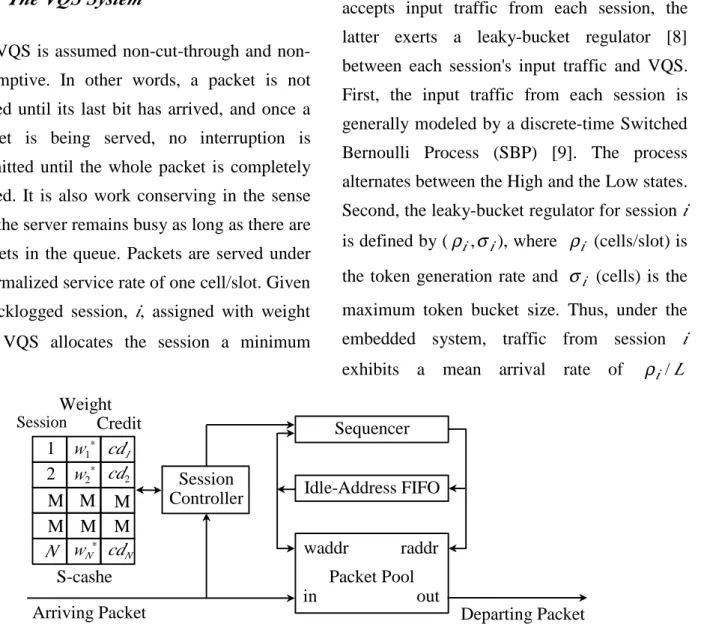
Figure 1. VQS implementation architecture. waddr raddr
in out
Arriving Packet Departing Packet Session Controller Sequencer Idle-Address FIFO Packet Pool Μ Session Weight A Ak 1 1 w1 ∗ cd 1 2 Ah w2∗ cd2 N wN ∗ cd N Μ Μ Μ Μ Credit S-cashe Μ
(packets/slot) and burstiness which increases with σ .i
2.3. Implementation Architecture
The architecture (see Figure 1) includes a VLSI chip, called the Sequencer [10], as a key component. The Sequencer is essentially a sorting-memory chip. By cascading multiple Sequencer chips in series or in parallel, a large linked list type packet pool could be implemented. As depicted in Figure 2, when a packet arrives, the packet is stored in the packet pool at the address provided by the Idle-Address FIFO, which contains the addresses of unused space in the packet pool. Before the packet is written into the packet pool, its session identifier is extracted and used as an
index into the Session (S)-cache. The S-cache maintains a separate entry for each session, including the normalized weight and credit. Notice that since we assume WS=1 in this
architecture, the sum of normalized weights of all sessions is equal to 1. The Session Controller is responsible for determining the index of the window in which this arriving packet can be placed, based on the normalized weight of the session to which the packet belongs.
3. Results and Mer it Review of the Pr oject
The performance of VQS is evaluated via simulation. Simulation results demonstrate that, applying a smaller WS for network elements
VQS-S1 VQS-S2 VQS-S3 VQS-S4 WFQ-S1 WFQ-S2 WFQ-S3 WFQ-S4 WF2 Q-S1 WF2 Q-S2 WF2 Q-S3 WF2 Q-S4
Figure 2. Mean delay under an increasing S1 weight.
7 2 = S w 3 3 = S w 1 4 = S w M ea n D el ay ( D ) 0 50 100 150 200 250 300 350 400 10 20 30 40 50 60 70 80 90 100 1 S w
with sufficient computation power, VQS performs as superior as the optimal scheme, WF2Q, with respect to mean delay, throughput fairness, and worst-case delay fairness (see Figure 2). Moreover, compatible to WF2Q, VQS outperforms WFQ with respect to 99-percentile delay bound and jitter in the presence of traffic burstiness. For network elements with limited power, VQS provides the best possible QoS using a larger window size.
The design and experimental results have been presented and demonstrated in various conferences and meetings, including IEEE ICC’00. Moreover, we have designed several networking control systems making use of the mechanism, which has been submitted to IEEE ICC 2001.
4. Refer ences
[1] J. Liebeherr, D. Wrege, and D. Ferrari, “Exact Admission Control for Networks with a Bounded Delay Service,”
IEEE/ACM Trans. on Networking, vol. 4,
no. 6, Dec. 1996, pp. 885-901.
[2] D. Lee, and B. Sengupta, “Queueing Analysis of a Threshold Based Priority Scheme For ATM Networks,” IEEE/ACM Trans. on Networking, vol. 1, no. 6, Dec.
1993, pp. 709-717.
[3] J. Hah, and M. Yuang, “A Delay and Loss Versatile Scheduling Discipline in ATM Switches,” Proc. IEEE INFOCOM, 1998,
pp. 939-946.
[4] A. Demers, S. Keshav, and S. Shenker, “Analysis and Simulation of a Fair Queueing Algorithm,” Proc. SIGCOMM,
1989.
[5] J. Bennett, and H. Zhang, “WF2
Q: Worst-case Fair Weighted Fair Queueing,”IEEE INFOCOM, 1996, pp. 120-128.
[6] S. Golestani, “A Self-Clocked Fair Queueing Scheme for Broadband Applications,”IEEE INFOCOM, 1994, pp.
636-646.
[7] D. Stiliadis, and A. Varma, “Efficient Fair Queueing Algorithms for Packet-Switched Networks,” IEEE JSAC, vol. 6, no. 2,
April 1998, pp. 175-185.
[8] R. Cruz, “A Calculus for Network Delay, Part I: Network Elements in Isolation,”
IEEE Trans. on Information Theory , vol.
37, no. 1, Jan. 1991, pp. 114-131. .
[9] H. Saito, Teletraffic Technologies in ATM Networks, Artech House, 1994.
[10] H. Chao, and N. Uzun, “An ATM Queue Manager Handling Multiple Delay and Loss Priorities,”IEEE/ACM Trans. on Networking, vol. 13, no. 6, Dec. 1995, pp. 652-659.