Antimicrobial activity of essential oil of Glossogyne tenuifolia against
selected pathogens
Tsung-Shi Yanga Louis Kuop-Ping Chaoa§ and Tai-Ti Liub *
a Department of Cosmeceutics, China Medical University, No. 91, Hsueh-Shih Road,
Taichung 40402, Taiwan and
bDepartment of Food Science, Yuanpei University, No. 306 Yuanpei Street, Hsinchu
30015, Taiwan
*Author to whom correspondence should be addressed (e-mail: [email protected], Tel: 886-3-5381183, Fax: 886-3-5382341)
§ Co-first author (the author has contributed equally to this work)
1 2 3 4 5 6 7 8 9 10 11 12 13 14
Abstract
BACKGROUND:
Glossogyne tenuifolia (GT) is a perennial herb widely distributed in the areas from South Asia to Australia. Many biological effects of Glossogyne tenuifolia have been reported; however, the information about antimicrobial activity of the essential oil (EO) of the herb remains unavailable. Therefore, the aims of this study were to investigate the antimicrobial activity of the GT-EO in vitro and food systems, the antimicrobial impact (AI) of its individual compounds, and interactive effects of major active compounds (linalool, 4-terpineol, α-terpineol, ρ-cymene) on selected Gram-positive [Gram(+): S. aureus, L. monocytogenes, S. mutans, and S. sanguinis] and Gram-negative [Gram(-): E. coli O157:H7, V. parahaemolyticus, S. enteric) pathogens.RESULTS:
The minimal microbicidal concentration (MMC) of the GT-EO ranged from 0.75-12 mg mL-1 against the test bacteria in vitro. Except for L. monocytogenes,the GT-EO exhibited more inhibitory effect on the selected Gram (+) than against the Gram (-) bacteria at the GT-EO concentrations ≤ 12 mg mL-1. The interactive effects of
major active compounds (linalool, 4-terpineol, α-terpineol, ρ-cymene) are additive instead of synergistic via the checkerboard analysis. The bacteria with a microbial load of ca. 102 CFU/ml in the milk tea could be completely inactivated by the GT-EO with
15 16 17 18 19 20 21 22 23 24 25 26 27 28 29 30 31 32 33
the MMC of 1.5 mg mL-1.
Conclusion:
ρ-Cymene is the largest component in the GT-EO; however, it is not the compound predominantly affecting the entire antimicrobial activity of the EO. Instead, 4-terpineol is most influential among the test compounds that contribute to the antimicrobial activity of the GT-EO.Keywords: Antimicrobial activity; Glossogyne tenuifolia; essential oil; pathogens; interaction; antimicrobial impact.
INTRODUCTION
A spectrum of herbs have been used as food or medicine since
ancient times. Herbs contain a wide variety of active phytochemicals, which have been reported to reduce the risk of diseases and promote health.1 Glossogyne
tenuifolia is a perennial herb widely distributed in the areas from South Asia to Australia. This herb can grow in harsh environments such as droughty, windy, salty, and infertile conditions. These characteristics render it easily cultivated in the areas where are unsuitable for normal crops. Many biological effects of Glossogyne tenuifolia (GT) have been reported such as anti-viral,2 anti-inflammatory,2 hepatoprotective,3
anti-mutagenic,4 and anti-oxidant effects.5-6
34 35 36 37 38 39 40 41 42 43 44 45 46 47 48 49 50 51 52 53 54
The herb is generally sun-dried after harvest and directly cooked in water or prepared as a tea bag infused with hot water to make herbal tea. As with Yerba Mate tea (Ilex paraguariensis) concentrate with diverse use,7 the GT may be extracted with
hot water and prepared as a concentrate. The concentrate can be directly diluted with water upon consumption or be an ingredient in the food or dietary supplement industries to make related beverages such as milk tea. The microbial stability of the herbal tea concentrate cannot be neglected because it may affect the safety and shelf life of the product due to unintentional microbial contamination during processing, handling, and storage. Because of having beneficial effects on human health, this herb may become a valuable economic crop for parts of the world where the environments are unfavorable
to normal agricultural development such as The Pescadores Islands (Penghu County,
Taiwan). Currently, the herbal tea of GT has become a popular healthy beverage in
Taiwan.
EOs are mainly responsible for the aroma of aromatic plants and the antimicrobial activity of the EOs has been widely reported in the literature.8-10 The composition of
essential oil of GT (GT-EO) has been investigated. ρ-Cymene is the largest constituent of the GT-EO and accordingly the EO is suggested to have potential antimicrobial activity.11 Nevertheless, generally monoterpene hydrocarbons do not have strong
antimicrobial activity.12 Moreover, ρ-cymene may interact with other compounds to
55 56 57 58 59 60 61 62 63 64 65 66 67 68 69 70 71 72 73
influence the antimicrobial activity of the EO.13 Therefore, it is necessary to investigate
the antimicrobial activity of GT-EO in more detail in order to know what components of the EO may be responsible for the antimicrobial activity. However, the information has been unavailable. The analysis of antimicrobial impact of individual compounds in an EO can provide useful information about their relative importance in the antimicrobial activity of the EO.14
Therefore, the aims of this study were to investigate the antimicrobial activity of the GT-EO in vitro and food systems, the antimicrobial impact of its individual compounds, and interactive effects of major active compounds on selected Gram-positive and Gram-negative pathogens.
MATERIALS AND METHODS
Materials
The dried GT grass was purchased from a local store from The Pescadores Islands (Penghu County, Taiwan). Milk was obtained from a local supermarket. The composition of major ingredients in the milk (100 mL) from the label was the following: proteins 3.2 g, fats 1.4 g, and carbohydrates 5.3 g.
Chemicals
α-Pinene (≥98%), β-pinene (≥97%), myrcene (≥90%), ρ- cymene (≥97%), 74 75 76 77 78 79 80 81 82 83 84 85 86 87 88 89 90 91 92 93
limonene (≥93%), sabinene (≥99%), γ- terpinene (≥95%), camphene (≥95%), linalool (≥97%), nerolidol (≥98%), α-terpineol (≥96%), α-phellandrene (≥95%), hexanal (≥98%), 4-terpineol (≥95%), caryophyllene oxide (≥95%), Tween 20, and Tween 80 were purchased from Sigma-Aldrich Co. (St. Louis, MO). Tryptic soy broth (TSB) (Bacto™), TSB with 0.6% yeast extract (TSBYE), Nutrient broth (NB) (Difco®) were obtained from Becton Dickinson & Company (San Jose, CA, USA).
Microbial strains
Escherichia coli O 157: H7 (ATCC 43895), Vibrio parahaemolyticus (ATCC
17803), Salmonella enterica (ATCC 6539), Staphylococcus aureus (ATCC
25923), Listeria monocytogenes (ATCC 19114), Streptococcus mutans (ATCC 25175), and Streptococcus sanguinis (ATCC 49295) were acquired from Bioresource Collection and Research Center (BCRC) at the Food Industry Research and Development Institute, Hsinchu , Taiwan.
Isolation of essential oil
An amount of 200 g of GT in dry weight was ground and placed in a glass flask. Double de-ionized water was added into the flask to make the final volume of 1500 mL. The sample was subjected to hydrodistillation using a Clevenger-type apparatus. The vapor mixture of water-EO produced in the flask passed through a condenser and then 94 95 96 97 98 99 100 101 102 103 104 105 106 107 108 109 110 111 112 113
the distillate was collected. The EO in the upper layer of the distillate was obtained and dried over anhydrous sodium sulfate.
Analysis of essential oil by GC-MS and GC-FID
The volume of 0.5μL of EO was injected into a gas chromatograph (GC, model 6890N, Agilent Technologies, Palo Alto, CA) equipped with a quadruple mass analyzer (MS, Agilent 5975). Capillary columns (DB-WAX or DB-5, 60 m x 0.25 mm x 0.25 μm, J &W Scientific, Folsom, CA) was used with helium as a carrier gas at a constant flow of 1 mL/min. The oven temperature was programmed as the following: initial holding at 40°C for 1 min, then 140 °C (2 min) at 5°C/ min, and 200 °C (30 min) at 3°C/ min. The MS operating parameters were the following: electron impact (EI) mode for molecular ionization with a voltage of 70 eV; ion source temperature, 200°C; total ion scan mode with a scan rate of 4.37 scans/s and mass scan range of 29-350 m/z.15 The
amounts of volatiles were quantified by peak areas integrated by a computer system (Chem stationTM, Agilent Technologies, Palo Alto, CA). The volatiles were identified by
comparing their mass spectra with those in the library of MS data system (Wiley 275, G1035A, Agilent Technologies, Palo Alto, CA) and with those of standard compounds. The amounts of individual volatiles of the EO were expressed as percentages of the peak area relative to the total peak area obtained from a flame ionization detector (FID) 114 115 116 117 118 119 120 121 122 123 124 125 126 127 128 129 130 131 132
at 250°C under the same GC conditions as above.
Antimicrobial activity assay in vitro
A stock EO or volatile compound emulsion was prepared with a mixture of Tween 80 and Tween 20 (1:1, w/w) and double de-ionized water at the EO or volatile compound concentration of 24 mg mL-1. The bacteria from stock cultures were
inoculated in 5-mL broth and incubated at 37ºC for 24 h to increase the bacterial population. The enriched cultures were controlled with dilution to optical density (O.D.) of 1 at 600 nm, which were further diluted with appropriate media for each bacterium to ca. 105 (CFU/mL) as an inoculum16 E. coli O157: H7, S. enterica,
and S. aureus were inoculated in the NB; V. parahaemolyticus in the TSB-3%NaCl; L. monocytogenes, S. mutans, and S. sanguinis in the TSBYE.
A bacterial suspension (0.5 mL) was mixed with an equal volume of emulsion containing EO or a volatile compound at a series of concentrations, and then added into a 12-mL test tube. The tubes were tightly capped and incubated at 37˚C for 48 h. The population of the bacteria was determined by a pour plate method. The inhibition ratios were calculated as the following: inhibition ratio (%)= (the number of the bacteria without the EO or compound- the number of the bacteria with the EO or compound) x
100%/ the number of the bacteria without the EO or compound. All the experiments
133 134 135 136 137 138 139 140 141 142 143 144 145 146 147 148 149 150 151
were performed in triplicate and the average values were reported as MMCs. The MMC is defined as the lowest concentration of the EO or compound that results in no viable cells in a culture plate. AI is calculated based on the MMC and component content. To know the ultimate antimicrobial ability of a compound, the MMC rather than minimal inhibitory concentration (MIC) was used in the calculation of the AI. The AI = [MMC (max) / MMC (component)] x component content (%, 1g kg-1= 0.1%), where the relative
antimicrobial activity of MMC (max) is assumed to be unity. The MMC (max) is the highest value of MMC used in a test; the MMC (component) is the MMC of a component that will be compared. In this study, the MMC (max) is 12 mg mL-1, which
is the maximal concentration of the antimicrobial substances used in this assay.
Antimicrobial activity assay for interaction of compounds
Linalool, 4-terpineol, α-terpineol, and ρ-cymene were investigated for interactive antimicrobial effects. The concentrations of the test compounds are listed in Table 1. A checkerboard method was employed to quantitatively examine the interactive effect of active compounds via calculation of fractional inhibitory concentration (FIC) index. FIC index = FICA + FICB, where the FICA= MMCA in combination/ MMCA alone, and the
FICB= MMCB in combination/MMCB alone. The results were interpreted as synergy
(FIC <0.5), addition (0.5≤FIC≤1), indifference (1<FIC≤4) or antagonism (FIC>4).17 The
152 153 154 155 156 157 158 159 160 161 162 163 164 165 166 167 168 169 170
procedures of antimicrobial activity assay are the same as described above. The assays were performed in duplicate and then replicated.
Antimicrobial activity assay in a food system
An amount of 5-mL milk was put into a sterilized 12-mL test tube with a cap and inoculated with L. monocytogenes suspension. The bacterial load was ca. 1×10² or
1×10⁵ colony forming units (CFU)/mL in the milk sample. The prepared samples with
or without the GT-EO at various concentrations were incubated at 4°C for 48 h. Then, the plate count method was carried out to determine the number of viable cells in the agar plate and subsequently the bacterial population was calculated via dilution factors.
Sensory evaluation
Sensory evaluation of the milk tea treated with the GT-EO was assessed by a panel consisting of 30 untrained panelists, who were selected from the students and staff in the Yuanpei University. The qualification for the panelists is that they either like drinking herbal tea or are not averse to herbal flavor. A serving size of 5-mL milk with the emulsified GT-EO at 0.75-3 mg mL-1 was prepared. The panelists were asked to
evaluate overall acceptance of the sample via aroma and taste on a hedonic scale from 1 to 9, where 1: dislike extremely, 2: dislike very much, 3: dislike moderately, 4: dislike slightly, 5: neither like nor dislike, 6: like slightly, 7: like moderately, 8: like very much, 171 172 173 174 175 176 177 178 179 180 181 182 183 184 185 186 187 188 189 190
and 9: like extremely.18
Statistical analysis
Statistical analysis of variance (ANOVA) was conducted using Statistica for Windows (StatSoft, Tulsa, OK, USA). Fisher’s LSD test was used to compare the mean values of data for significant difference at a 95% level.
RESULTS AND DISCUSSION
Identification and composition of volatile compounds in GT-EO
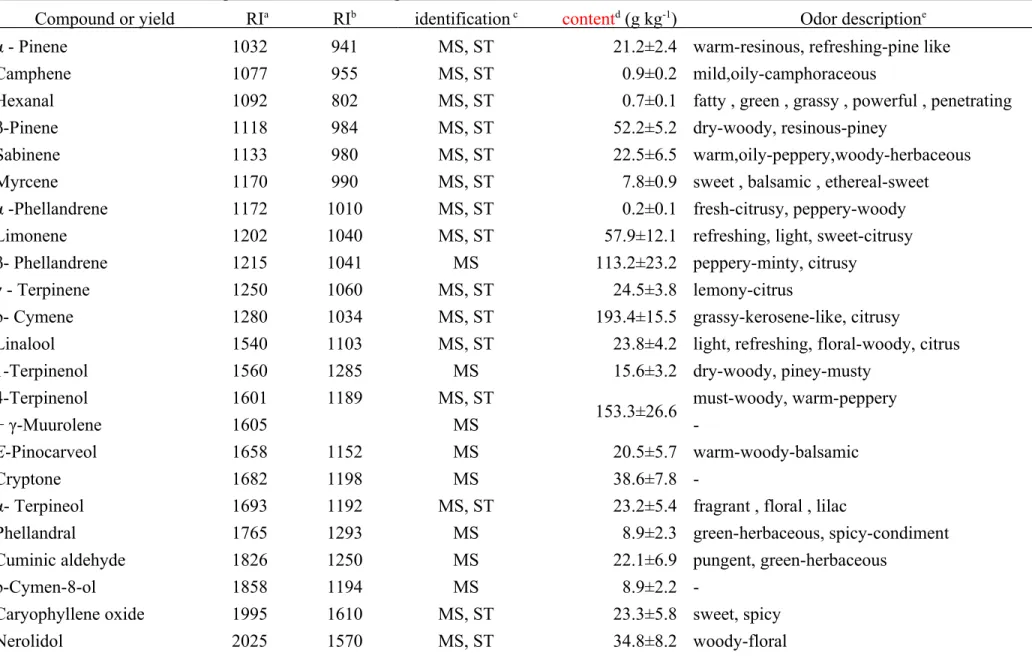
Excluding the compounds that were trace in quantity (<0.02%), 23 compounds accounting for ca. 83% of the total amount in the GT-EO were tentatively identified by GC-MS, of which 15 compounds were positively identified with corresponding standard compounds. The composition of the volatile compounds is listed in Table 2. The majority of the compounds belong to terpenes and terpenoids. In terms of the
abundance of compounds in the GT-EO, monoterpene hydrocarbons were the
largest group among the identified compounds. Noticeably, ρ-cymene was the largest compound in the EO, which was consistent with the reported data about the GT-EO composition.11 However, the relative composition of the EO was not the same as that of
the reported data because the extraction and detection methods used were different 191 192 193 194 195 196 197 198 199 200 201 202 203 204 205 206 207 208 209 210
between the two studies.
Antimicrobial activity of GT-EO
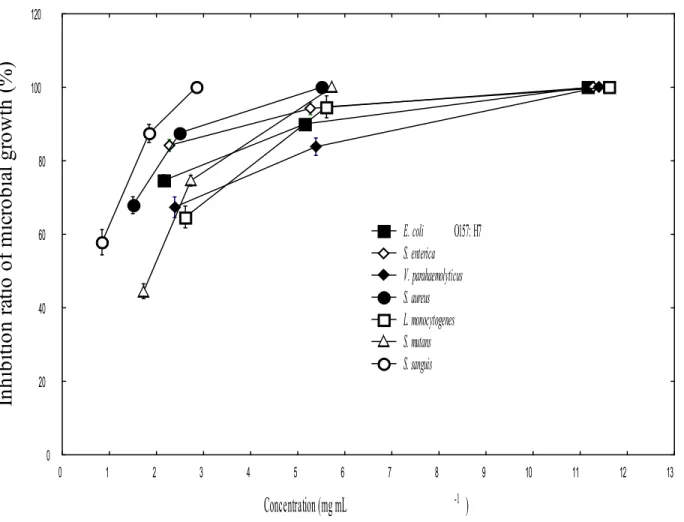
The inhibition ratios of E. coli O157:H7, S. enterica, V. parahaemolyticus, S. aureus , L. monocytogenes, S. mutans, and S. sanguinis in the presence of the GT-EO are shown in Fig.1. For inhibition of Gram negative (G-) bacteria, using 3 mg mL-1 of
the EO could inhibit ca. 70% of the microbial population of E. coli O157:H7. Doubling the EO concentration to 6 mg mL-1 further suppressed ca. 90% of the microbial
population. Eventually, E. coli O157:H7 could be completely inactivated at the GT-EO of 12 mg mL-1. As for S. enterica, ca. 80% of the bacteria could be repressed by the
treatment of the EO at 3 mg mL-1. There was still ca. 10% of the bacteria alive even
though the EO concentration was doubled to 6 mg mL-1. No survival of the bacteria was
found at the EO of 12 mg mL-1. With respect to V. parahaemolyticus, the microbial
population decreased ca. 70% in the presence of EO at 3 mg mL-1 and ca. 80% at 6 mg
mL-1. A complete bactericidal effect could be achieved by the EO of 12 mg mL-1.
As for inhibition of Gram positive (G+) bacteria, ca. 70, 90, and 100 % of the microbial population of S. aureus were suppressed at the EO of 1.5, 3, and 6 mg mL-1,
respectively. With respect to L. monocytogenes, this strain displayed a higher resistance to the antimicrobial effect at the EO of 3 mg mL-1, as compared with the other test
211 212 213 214 215 216 217 218 219 220 221 222 223 224 225 226 227 228 229
bacteria, with ca. 40% of the microbial population surviving the treatment. Despite having higher resistance, L. monocytogenes could still be completely inhibited at the EO of 12 mg mL-1. Regarding the two Streptococci, the inhibition ratios for S. mutans were
ca. 50, 80, and 100% at the EO of 1.5, 3, and 6 mg mL-1, respectively. In contrast, the
inhibition ratios for S. sanguinis were ca. 60, 90, and 100% at the EO of 0.75, 1.5, and 3 mg mL-1, respectively. Comparatively, the antimicrobial activity of the EO against S.
sanguinis was double that against S. mutans. Since S. mutans and S. sanguinis are cariogenic bacteria,19 the results imply that consumption of GT may also reduce the risk
of dental caries.
The above results indicate that the GT-EO was most effective against S. sanguinis but least effective against L. monocytogenes at the EO < 6 mg mL-1; however, all the
bacteria could be completely inactivated at the EO of 12 mg mL-1.
Antimicrobial impact of individual volatile compounds in GT-EO
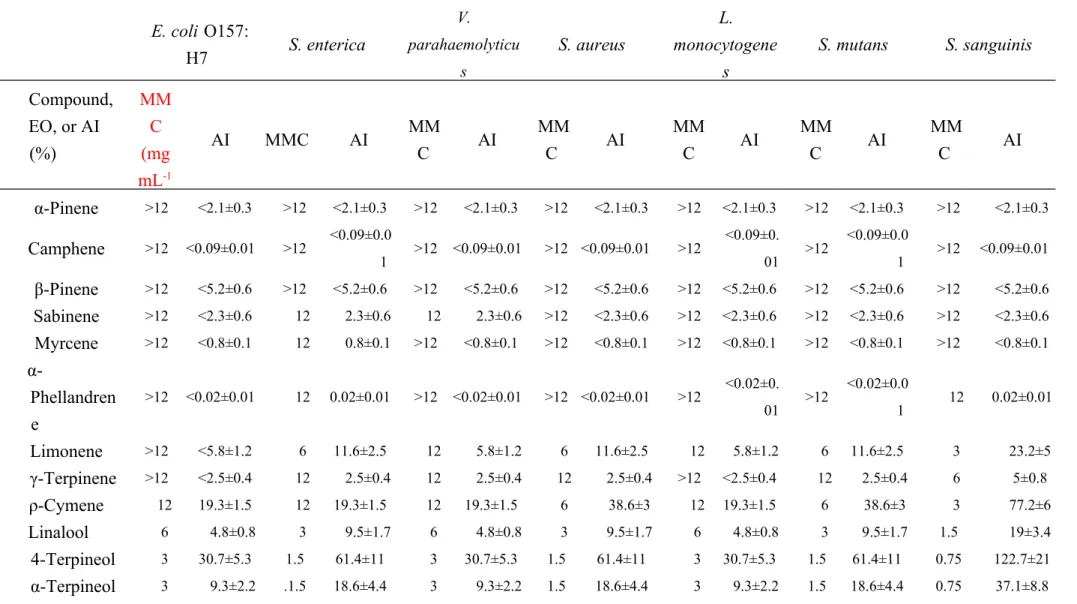
Effects of individual volatile compounds on the entire antimicrobial activity of the EO depend on their individual antimicrobial activity and their amounts in the EO. The MMC and composition of each volatile compound in the GT-EO were determined and the AI was calculated accordingly. The AI of each identified volatile compound in the EO is shown in Table 3. The results show that generally oxygenated monoterpenes had 230 231 232 233 234 235 236 237 238 239 240 241 242 243 244 245 246 247 248
greater antimicrobial activity than monoterpene hydrocarbons in this research. Of monoterpene hydrocarbons, α-pinene, β-pinene and camphene seemed not to have antimicrobial activity (MMC > 12 mg mL-1) against all the test bacteria at the maximal
test concentration used. In addition, the analysis of AIs indicates that α-pinene, camphene, and β-pinene had negligible contribution to the entire antimicrobial activity of the GT-EO. Myrcene was effective on inhibiting S. entrica but ineffective on the other bacteria at the EO of 12 mg mL-1. Sabinene inhibited S. entrica and V.
parahaemolyticus; and α-phellandrene exhibited antimicrobial activity against S. entrica and S. sanguinis with the same MMC of 12 mg mL-1, whereas both compounds
were ineffective on the other bacteria. Despite having antimicrobial activity against certain bacteria, sabinene, myrcene, and α-phellandrene had low AI values (<3); therefore, their influence on the antimicrobial activity of the EO should be very limited. Limonene displayed the same MIC of 6 mg mL-1 for S. entrica, S. aureus, and S.
mutans; however, it was less effective on V. parahaemolyticus and L. monocytogenes with the MMC of 12 mg mL-1. Noticeably, limonene was most effective on S. sanguinis
with the MMC of 3 mg mL-1 but ineffective on E. coli O157: H7 among the test
bacteria. γ-Terpinene had antimicrobial activity against S. entrica, V. parahaemolyticus, S. aureus, S. mutans and S. sanguinis, whereas it was ineffective on E. coli O157: H7 and L. monocytogenes. Since the AI of γ-terpinene was low (2.5-5), this compound 249 250 251 252 253 254 255 256 257 258 259 260 261 262 263 264 265 266 267
should have only little impact on the antimicrobial activity of the EO. ρ-Cymene could completely inactivate E. coli O157: H7, S. entrica, V. parahaemolyticu, and L. monocytogenes with the MMC of 12 mg mL-1. Furthermore, it displayed higher
antimicrobial activity against S. aureus, S. mutans, and S. sanguinis with the MMC of 6, 6, and 3 mg mL-1, respectively. Comparatively, ρ-cymene does not show any
antimicrobial activity against E. coli and S. aureus at the concentration up to 8% (v/v) in some studies.13, 20 The variation may be due to differences in the test method, microbial
strains, type of emulsifier used, and incubation time.
Linalool, 4-terpineol, and α-terpineol are alcohol terpenoids and exhibited good antimicrobial effects against the test bacteria in this study. As with other bactericidal alcohols, the antibacterial mechanisms of these alcohol terpenoids may be attributed to protein denaturation or dehydration on the vegetative cells.21 4-Terpineol is also
reported to cause the damage of cell membranes of E. coli and S. aureus and inhibits the oxidative respiration system in the cells.22 α-Terpineol is found to damage the cell wall
and cause the leakage of proteins and lipids.23 The MMCs for these alcohol terpenoids
ranged from 0.75 to 6 mg mL-1 against the test bacteria (Table 3). Of these compounds,
4-terpineol and α-terpineol exhibited the strongest antimicrobial activity with the maximal MMC of 3 mg mL-1 and both isomers did not show any structural effect on
antimicrobial activity. The similar inhibitory effects of the both compounds on E. coli 268 269 270 271 272 273 274 275 276 277 278 279 280 281 282 283 284 285 286
and S. aureus are also reported in another study.20
The AI ratio (%) is defined as the following: (the sum of AIs of all the positively identified compounds) x 100% / (the AI of GT-EO) (Table 3). The AI ratios ranged from 63-75 % against the test bacteria with an average of ca. 70%. By the way, the composition of these compounds all together was ca. 60%. This means that the compounds used in this study accounted for ca. 70% of the entire antimicrobial activity of the GT-EO averagely, and the rest of the antimicrobial activity was contributed by those tentatively identified compounds and the unknown ones in the EO. The result clearly indicates the consistency between the amount of the compounds and the antimicrobial activity they represent. In addition, the results show that despite ρ-cymene being the largest component of the GT-EO, it is not the compound predominantly affecting the entire antimicrobial activity of the EO. Instead, 4-terpineol has greater influence than ρ-cymene on the antimicrobial activity of the GT-EO via the comparison of their AI values.
Interaction of individual volatile compounds on antimicrobial activity
Because linalool, 4-terpineol, α-terpineol and ρ-cymene were relatively more effective than the other identified compounds via the AI analysis, their interaction was further investigated. The concentration ranges of these compounds used for the 287 288 289 290 291 292 293 294 295 296 297 298 299 300 301 302 303 304 305
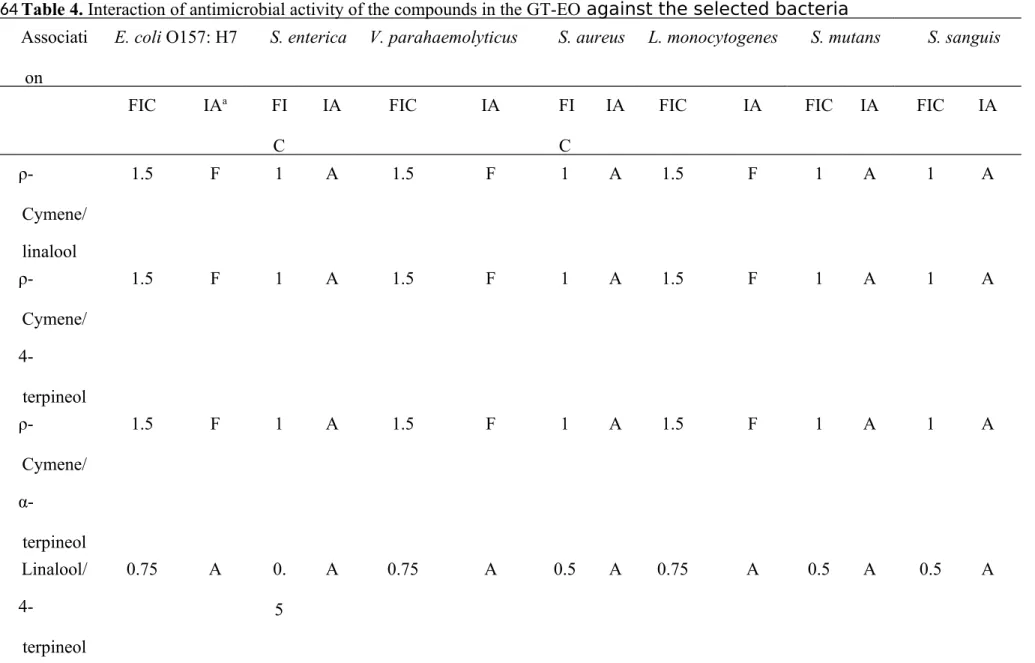
interactive effect on the test bacteria are listed in Table 1. When ρ-cymene was combined with any of the above alcohol terpenoids, the interaction of antimicrobial activity between the two compounds was additive or indifferent. Noticeably, the interactive effect was indifferent for E. coli O157: H7. Comparatively, the combination of ρ-cymene (0.1 %, w/v) and 4-terpineol (0.1 %, w/v) in other study gives greater activity against E. coli than that of each component on its own at 0.1% .13 The variation
of the results may be due to the difference in the test methods and bacterial strains. We used the MMC to express antimicrobial efficacy and the checkerboard method to interpret the interactive effect, whereas the previous study only observes the change of bacterial viability with a limit of detection of 2 log units.
On the other hand, the results of interaction between linalool and the two terpineol
isomers (α-terpineol and 4-terpineol) displayed an additive relationship in the antimicrobial activity against all the test bacteria. The monoterpene alcohols are thought to be antimicrobially active due to their relatively high water
solubility and the presence of the alcohol moiety.24 Probably because
the test monoterpene alcohols have similar chemical properties, they tend to give an additive rather than a synergistic effect on the antimicrobial activity. The synergism is likely derived from complementary effects between the compounds with different
306 307 308 309 310 311 312 313 314 315 316 317 318 319 320 321 322 323 324
chemical properties when used in combination. This deduction may be supported by other studies. For instance, the two structurally
similar major components of oregano EO, carvacrol and thymol, have
been found to give an additive effect when tested against S. aureus
and P. aeruginosa.25 In contrast, structurally different compounds,
carvacrol and ρ-cymene, show a synergistic effect when acting on B. cereus. ρ-Cymene seems to swell bacterial cell membranes to a greater extent than carvacrol does. By this mechanism, ρ-cymene probably enables carvacrol to be more easily transported into the cell so that a synergistic effect is achieved via this complementary effect.26
Antibacterial activity of GT-EO in a food system
Usually made with black tea, milk tea continues to gain popularity around the world. In the present study, extended application of GT was employed to make the
GT-EO flavored milk tea. Milk tea is generally stored in a refrigerator for preserving
freshness and giving a cooling flavor sensation. L. monocytogenes can grow in refrigerator temperature and may potentiate a risk of contamination for foods stored in such environment. Therefore, the GT-EO in the milk tea against L. monocytogenes was 325 326 327 328 329 330 331 332 333 334 335 336 337 338 339 340 341 342 343
studied. The result shows that the MMC for the GT-EO in the milk tea was 6 mg mL-1 at
4°C, which was lower than that of the GT-EO in the broth at 37°C. The L. monocytogenes grows more slowly in the refrigerator temperature than in the broth and thus has a lower bacterial population which requires a lower amount of the EO for inactivation. Similar phenomenon is also observed in the inhibition of L. monocytogenes in another food system (tofu) by the EO of Litsea cubeba (LC-EO) at different temperature. The results in that study reveal that L. monocytogenes incubated at low temperature is more easily inactivated by the EO than at high temperature.14
Raw milk was investigated for L. monocytogenes contamination and the results
showed that the polluted samples in most cases belong to weak contamination (<102
CFU/g).27 If the raw milk were inadequately pasteurized, the microbial load of L.
monocytogenes would have been much lower than that (ca 105 CFU/ml) used in this
experiment; therefore, the use of GT-EO can be greatly reduced in practice to meet the flavor requirement of the product. The bacteria with a microbial load of ca. 102 CFU/ml
in the milk tea could be completely inactivated by the GT-EO with the MMC of 1.5 mg
mL-1. In order to know the influence of the GT-EO concentration on the flavor
acceptance, the sensory study was conducted for the milk tea with the GT-EO from
0.75-3 mg mL-1 (Table 5). The sensory score from the hedonic analysis was 7.5 for the
milk tea with the GT-EO of 1.5 mg mL-1, which indicates the flavor of the milk tea with
344 345 346 347 348 349 350 351 352 353 354 355 356 357 358 359 360 361 362
GT-EO at this concentration is not only acceptable but favorable.
CONCLUSIONS
The composition of the GT-EO was analyzed and ρ-cymene was the largest component in the EO. However, through the AI analysis of individual compounds in the GT-EO, ρ-cymene is not the compound predominantly affecting the entire antimicrobial activity of the EO. Instead, 4-terpineol showed greater influence than ρ-cymene on the antimicrobial activity of the GT-EO. The interactive effects of major active compounds (Linalool, 4-terpineol, α-terpineol, ρ-cymene) are additive instead of synergistic. The GT-EO shows good antimicrobial activity against some frequently encountered food pathogens in this study; therefore, GT-EO can be used as a flavoring as well as antimicrobial substance to make new product such as GT-milk tea or be added into the tea concentrate of GT to replenish the lost natural flavor during the concentration process while enhancing its microbial stability.
REFERENCES
1. Craig WJ, Health-promoting properties of common herbs. Am J Clin Nutr 70:491s-499s (1999).
2. Wu MJ, Weng CY, Ding HY and Wu PJ, Anti-inflammatory and antiviral effects of Glossogyne tenuifolia. Life Sci 76:1135-1146 (2005).
363 364 365 366 367 368 369 370 371 372 373 374 375 376 377 378 379 380 381 382
3. Hsieh WC, Hsieh MT, Chiu NY and Lin JK, Investigation and study on the resources of Chinese crude drugs in Taiwan (VI): Investigation and study on the medicinal plants in Penghu County. Annu Rep Chin Med 17:245-407 (1999). 4. Tsai CH, Wang TC and Wu MC, Antimutagenic activity of Vitis thunbergii var.
taiwaniana and Glossogyne tenuifolia. Sci Agric 49:186-191 (2001).
5. Hsu HF, Houng JY, Chang CL, Wu CC, Chang FR and Wu YC, Antioxidant
activity, cytotoxicity, and DNA information of Glossogyne tenuifolia. J Agric Food Chem 53:6117-6125 (2005).
6. Wu MJ, Huang CL, Lian TW, Kou MC and Wang L, Antioxidant activity of
Glossogyne tenuifolia. J Agric Food Chem 53:6305-6312 (2005).
7. Heck C and De Mejia EG, Yerba Mate Tea (Ilex paraguariensis): a comprehensive review on chemistry, health implications, and technological considerations. J Food Sci 72:R138-R151 (2007).
8. Donsì F, Annunziata M, Sessa M and Ferrari G, Nanoencapsulation of essential oils to enhance their antimicrobial activity in foods. LWT-Food Sci Technol 44:1908-1914 (2011).
9. Sarrazin SLF, Oliveira RB, Barata LES and Mourão RHV, Chemical composition and antimicrobial activity of the essential oil of Lippia grandis Schauer (Verbenaceae) from the western Amazon. Food Chem (2012).
10. Yang TS, Liou ML, Hu TF, Peng CW and Liu TT, Antimicrobial activity of the 383 384 385 386 387 388 389 390 391 392 393 394 395 396 397 398 399 400 401 402
essential oil of Litsea cubeba on cariogenic bacteria. J Essent Oil Res 25:120-128 (2013).
11. Chyau CC, Tsai SY, Yang JH, Weng CC, Han CM, Shih CC and Mau JL, The
essential oil of Glossogyne tenuifolia. Food Chem 100:808-812 (2007).
12. Ait-Ouazzou A, Cherrat L, Espina L, Lorán S, Rota C and Pagán R, The antimicrobial activity of hydrophobic essential oil constituents acting alone or in combined processes of food preservation. Innov Food Sci Emerg Technol 12:320-329 (2011).
13. Cox SD, Mann CM and Markham JL, Interactions between components of the
essential oil of Melaleuca alternifolia. J Appl Microbiol 91:492-497 (2001). 14. Liu TT and Yang TS, Antimicrobial impact of the components of essential oil of
Litsea cubeba from Taiwan and antimicrobial activity of the oil in food systems. Int J Food Microbiol 156:68-75 (2012).
15. Yang TS, Liu TT and Hu TF, Effects of lecithin and pectin on riboflavin-photosensitized oxidation of orange oil in a multilayered oil-in-water emulsion. J Agric Food Chem 59:9344-9350 (2011).
16. Liu TT and Yang TS, Stability and antimicrobial activity of allyl isothiocyanate during long‐term storage in an oil‐in‐water emulsion. J Food Sci 75:C445-C451 (2010).
17. Gutierrez J, Barry-Ryan C and Bourke P, The antimicrobial efficacy of plant 403 404 405 406 407 408 409 410 411 412 413 414 415 416 417 418 419 420 421 422
essential oil combinations and interactions with food ingredients. Int J Food Microbiol 124:91-97 (2008).
18. Meilgaard M, Civille, G.V., Carr, B.T., Sensory Evaluation Techniques. CRC Press, Boca Raton, FL, p 213 (1991).
19. Ge Y, Caufield PW, Fisch GS and Li Y, Streptococcus mutans and Streptococcus sanguinis colonization correlated with caries experience in children. Caries Res 42:444-448 (2008).
20. Carson CF and Riley TV, Antimicrobial activity of the major components of the essential oil of Melaleuca alternifolia. J Appl Microbiol 78:264-269 (1995). 21. Dorman HJD and Deans SG, Antimicrobial agents from plants: antibacterial
activity of plant volatile oils. J Appl Microbiol 88:308-316 (2000).
22. Cox SD, Mann CM, Markham JL, Bell HC, Gustafson JE, Warmington JR and
Wyllie SG, The mode of antimicrobial action of the essential oil of Melaleuca alternifolia (tea tree oil). J Appl Microbiol 88:170-175 (2000).
23. Oyedemi SO, Okoh A, Mabinya LV, Pirochenva G and Afolayan AJ, The proposed mechanism of bactericidal action of eugenol, α-terpineol and γ-terpinene against Listeria monocytogenes, Streptococcus pyogenes, Proteus vulgaris and Escherichia coli. Afr J Biotechnol 8:1280-1286 (2009).
24. Hammer KA, Carson CF and Riley TV, Antifungal activity of the components of Melaleuca alternifolia (tea tree) oil. J Appl Microbiol 95:853-860 (2003).
423 424 425 426 427 428 429 430 431 432 433 434 435 436 437 438 439 440 441 442
25. Lambert RJW, Skandamis PN, Coote PJ and Nychas GJE, A study of the minimum inhibitory concentration and mode of action of oregano essential oil, thymol and carvacrol. J Appl Microbiol 91:453-462 (2001).
26. Ultee A, Slump RA, Steging G and Smid EJ, Antimicrobial activity of carvacrol toward Bacillus cereus on rice. J Food Prot 63:620-624 (2000).
27. Meyer-Broseta S, Diot A, Bastian S, Rivière J and Cerf O, Estimation of low bacterial concentration: Listeria monocytogenes in raw milk. Int J Food Microbiol 80:1-15 (2003).
28. Arctander S, Perfume and flavor chemicals (aroma chemicals). Montclair, NJ (1969). 443 444 445 446 447 448 449 450 451 452
Table 1. The concentration ranges of the selected compounds in the GT-EO used for the interaction tests
Compound E. coli O157:
H7
S. enterica V.
parahaemolyticus
S. aureus L. monocytogenes S. mutans S. sanguis
ρ-Cymene 1.5-12 (mg/ml) 1.5-12 1.5-12 1.5-12 1.5-12 1.5-12 1.5-12
Terpineols 0.75-3 0.75-3 0.75-3 0.75-3 0.75-3 0.75-3 0.75-3
Linalool 0.75-6 0.75-6 0.75-6 0.75-6 0.75-6 0.75-6 0.75-6
453 454
Table 2. Identification and composition of volatile compounds in the GT-EO
Compound or yield RIa RIb identification c contentd (g kg-1) Odor descriptione
α - Pinene 1032 941 MS, ST 21.2±2.4 warm-resinous, refreshing-pine like
Camphene 1077 955 MS, ST 0.9±0.2 mild,oily-camphoraceous
Hexanal 1092 802 MS, ST 0.7±0.1 fatty , green , grassy , powerful , penetrating
β-Pinene 1118 984 MS, ST 52.2±5.2 dry-woody, resinous-piney
Sabinene 1133 980 MS, ST 22.5±6.5 warm,oily-peppery,woody-herbaceous
Myrcene 1170 990 MS, ST 7.8±0.9 sweet , balsamic , ethereal-sweet
α -Phellandrene 1172 1010 MS, ST 0.2±0.1 fresh-citrusy, peppery-woody
Limonene 1202 1040 MS, ST 57.9±12.1 refreshing, light, sweet-citrusy
β- Phellandrene 1215 1041 MS 113.2±23.2 peppery-minty, citrusy
γ - Terpinene 1250 1060 MS, ST 24.5±3.8 lemony-citrus
ρ- Cymene 1280 1034 MS, ST 193.4±15.5 grassy-kerosene-like, citrusy
Linalool 1540 1103 MS, ST 23.8±4.2 light, refreshing, floral-woody, citrus
1-Terpinenol 1560 1285 MS 15.6±3.2 dry-woody, piney-musty
4-Terpinenol 1601 1189 MS, ST
153.3±26.6 must-woody, warm-peppery
+ γ-Muurolene 1605 MS
-E-Pinocarveol 1658 1152 MS 20.5±5.7 warm-woody-balsamic
Cryptone 1682 1198 MS 38.6±7.8
-α- Terpineol 1693 1192 MS, ST 23.2±5.4 fragrant , floral , lilac
Phellandral 1765 1293 MS 8.9±2.3 green-herbaceous, spicy-condiment
Cuminic aldehyde 1826 1250 MS 22.1±6.9 pungent, green-herbaceous
ρ-Cymen-8-ol 1858 1194 MS 8.9±2.2
-Caryophyllene oxide 1995 1610 MS, ST 23.3±5.8 sweet, spicy
Nerolidol 2025 1570 MS, ST 34.8±8.2 woody-floral
Oil yield (g kg-1) 1.1±0.5 a Retention indices calculated based on DB-Wax column.
b Retention indices calculated based on DB-5 column.
cMS: identified by mass spectrum; ST: confirmed with an standard compound dValues are expressed as mean±standard deviation (n=3) and based on a dry weight. e As reported in the reference27
456 457 458 459 460
Table 3. Minimal microbicidal concentration (MMC) and antimicrobial impact (AI) of the identified individual compounds in the GT-EO on the selected bacteria
E. coli O157: H7 S. enterica V. parahaemolyticu s S. aureus L. monocytogene s S. mutans S. sanguinis Compound, EO, or AI (%) MM C (mg mL-1 AI MMC AI MM C AI MM C AI MM C AI MM C AI MM C AI α-Pinene >12 <2.1±0.3 >12 <2.1±0.3 >12 <2.1±0.3 >12 <2.1±0.3 >12 <2.1±0.3 >12 <2.1±0.3 >12 <2.1±0.3 Camphene >12 <0.09±0.01 >12 <0.09±0.0 1 >12 <0.09±0.01 >12 <0.09±0.01 >12 <0.09±0. 01 >12 <0.09±0.0 1 >12 <0.09±0.01 β-Pinene >12 <5.2±0.6 >12 <5.2±0.6 >12 <5.2±0.6 >12 <5.2±0.6 >12 <5.2±0.6 >12 <5.2±0.6 >12 <5.2±0.6 Sabinene >12 <2.3±0.6 12 2.3±0.6 12 2.3±0.6 >12 <2.3±0.6 >12 <2.3±0.6 >12 <2.3±0.6 >12 <2.3±0.6 Myrcene >12 <0.8±0.1 12 0.8±0.1 >12 <0.8±0.1 >12 <0.8±0.1 >12 <0.8±0.1 >12 <0.8±0.1 >12 <0.8±0.1 α-Phellandren e >12 <0.02±0.01 12 0.02±0.01 >12 <0.02±0.01 >12 <0.02±0.01 >12 <0.02±0. 01 >12 <0.02±0.0 1 12 0.02±0.01 Limonene >12 <5.8±1.2 6 11.6±2.5 12 5.8±1.2 6 11.6±2.5 12 5.8±1.2 6 11.6±2.5 3 23.2±5 γ-Terpinene >12 <2.5±0.4 12 2.5±0.4 12 2.5±0.4 12 2.5±0.4 >12 <2.5±0.4 12 2.5±0.4 6 5±0.8 ρ-Cymene 12 19.3±1.5 12 19.3±1.5 12 19.3±1.5 6 38.6±3 12 19.3±1.5 6 38.6±3 3 77.2±6 Linalool 6 4.8±0.8 3 9.5±1.7 6 4.8±0.8 3 9.5±1.7 6 4.8±0.8 3 9.5±1.7 1.5 19±3.4 4-Terpineol 3 30.7±5.3 1.5 61.4±11 3 30.7±5.3 1.5 61.4±11 3 30.7±5.3 1.5 61.4±11 0.75 122.7±21 α-Terpineol 3 9.3±2.2 .1.5 18.6±4.4 3 9.3±2.2 1.5 18.6±4.4 3 9.3±2.2 1.5 18.6±4.4 0.75 37.1±8.8 461 462
Caryophylle ne oxide >12 <2.3±0.6 >12 <2.3±0.6 >12 <2.3±0.6 >12 <2.3±0.6 >12 <2.3±0.6 >12 <2.3±0.6 12 2.33±0.6 Nerolidol >12 <3.5±0.8 >12 <3.5±0.8 >12 <3.5±0.8 >12 <3.5±0.8 >12 <3.5±0.8 >12 <3.5±0.8 >12 <3.5±0.8 Hexanal 12 0.07±0.01 6 0.14±0.03 12 0.07±0.01 12 0.07±0.01 >12 <0.07±0. 01 12 0.07±0.01 6 0.14±0.03 GT-EO 12 100 12 100 12 100 6 200 12 100 6 200 3 400 Total AI (%)a 64 63 75 71 70 71 72
a (the sum of AI values of all the compounds) x 100% / (the AI value of the GT-EO)
Table 4. Interaction of antimicrobial activity of the compounds in the GT-EO against the selected bacteria Associati
on
E. coli O157: H7 S. enterica V. parahaemolyticus S. aureus L. monocytogenes S. mutans S. sanguis
FIC IAa FI
C
IA FIC IA FI
C
IA FIC IA FIC IA FIC IA
ρ-Cymene/ linalool 1.5 F 1 A 1.5 F 1 A 1.5 F 1 A 1 A ρ-Cymene/ 4-terpineol 1.5 F 1 A 1.5 F 1 A 1.5 F 1 A 1 A ρ-Cymene/ α-terpineol 1.5 F 1 A 1.5 F 1 A 1.5 F 1 A 1 A Linalool/ 4-terpineol 0.75 A 0. 5 A 0.75 A 0.5 A 0.75 A 0.5 A 0.5 A 464
Linalool/ α-terpineol 0.75 A 0. 5 A 0.75 A 0.5 A 0.75 A 0.5 A 0.5 A
a IA, interaction; synergy (S, FIC <0.5), addition (A, 0.5≤FIC≤1), indifference (F, 1<FIC≤4) or antagonism (AN, FIC >4).
465 466 467
Table 5. Sensory evaluation of GT-EO milk tea GT-EO concentration (mg mL-1) 0.75 1.5 3 Scor ea 7.8a 7.5a 6.5b
aThe figures in the same row with different letters are significantly different at p<0.05.
468 469 470 471 472 473
0 1 2 3 4 5 6 7 8 9 10 11 12 13
Concentration (mg mL
-1)
0 20 40 60 80 100 120In
hi
bi
tio
n
ra
tio
o
f
m
ic
ro
bi
al
g
ro
w
th
(
%
)
E. coli O157: H7 S. enterica V. parahaemolyticus S. aureus L. monocytogenes S. mutans S. sanguisFigure 1. Inhibition ratios of microbial population for the test bacteria in the presence of the GT-EO at various concentrations. 474
475 476