西藥藥品優良製造規範
(第一部、 附則)
PIC/S:Guide to Good Manufacturing Practice for Medicinal Products
(Part I、Annexes)
PE009-12 (1 October 2015)
© PIC/S October 2015
第一部(Part I)
目 錄
第一章 品質管理(QUALITY MANAGEMENT) ... 5
第二章 組織與人事(PERSONNEL) ... 14
第三章 廠房設施與設備(PREMISES AND EQUIPMENT) ... 20
第四章 文件(DOCUMENTATION) ... 28
第五章 生產(PRODUCTION) ... 43
第六章 品質管制(QUALITY CONTROL) ... 55
第七章 委受託製造與檢驗(CONTRACT MANUFACTURE AND
ANALYSIS) ... 65
第八章 申訴與產品回收(COMPLAINTS AND PRODUCT RECALL) ... 69
第九章 自我查核(SELF INSPECTION) ... 72
附 則(Annexes)
目 錄
附則 1 無菌藥品的製造(MANUFACTURE OF STERILE MEDICINAL
PRODUCTS) ... 73
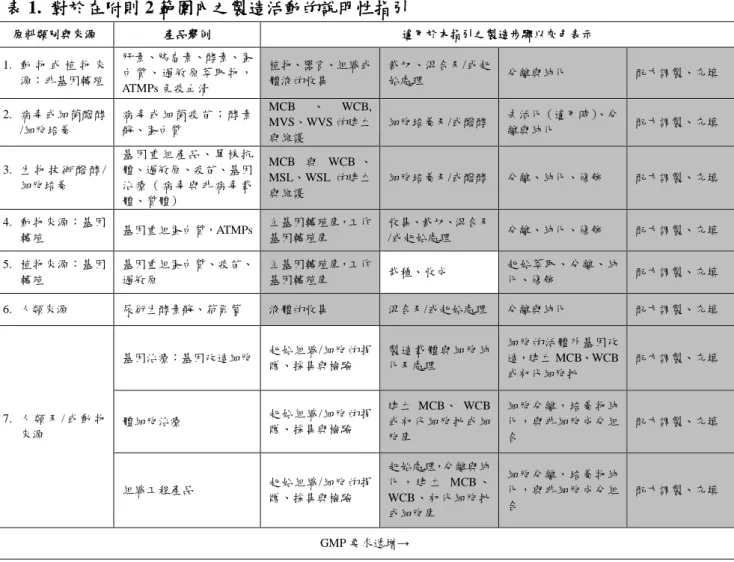
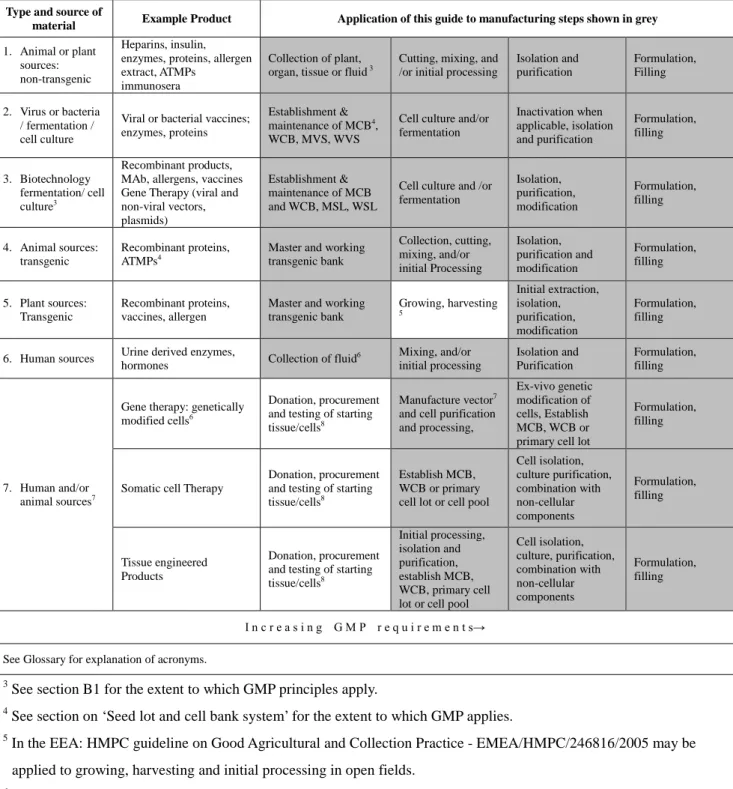
附則 2 人用生物原料藥及產品的製造 (MANUFACTURE OF BIOLOGICAL
MEDICINAL SUBSTANCES AND PRODUCTS FOR HUMAN USE)
………102
附則 3 放射性藥品的製造(MANUFACTURE OF
RADIOPHARMACEUTICALS) ... 164
附則 6 醫用氣體的製造(MANUFACTURE OF MEDICINAL GASES) .. 176
附則 8 原料及包裝材料的抽樣(SAMPLING OF STARTING AND
PACKAGING MATERIALS) ... 193
附則 9 液劑、乳膏及軟膏的製造 (MANUFACTURE OF LIQUIDS, CREAMS
AND OINTMENTS) ... 196
附則 10 加壓計量劑量之吸入用氣化噴霧劑的製造(MANUFACTURE OF
PRESSURISED METERED DOSE AEROSOL PREPARATIONS FOR INHALATION) ... 198
附則 11 電腦化系統(COMPUTERISED SYSTEMS) ... 201
附則 12 游離輻射在藥品製造上的應用(USE OF IONISING RADIATION IN
THE MANUFACTURE OF MEDICINAL PRODUCTS) ... 208
附則 13 研究用藥品的製造(MANUFACTURE OF INVESTIGATIONAL
MEDICINAL PRODUCTS) ... 218
附則 14 人類血液或血漿衍生之藥品的製造(MANUFACTURE OF
MEDICINAL PRODUCTS DERIVED FROM HUMAN BLOOD OR PLASMA) ... 244
附則 15 驗證與確效(QUALIFICATION AND VALIDATION) ... 269
附則 19 對照樣品與留存樣品(REFERENCE AND RETENTION SAMPLES)
………299
附則 20 品質風險管理(QUALITY RISK MANAGEMENT) ... 306
第一章 品質管理(QUALITY MANAGEMENT)
原則(PRINCIPLE)
製造許可的持有者製造藥品時,應確保該 藥品適合其預定用途,符合上市許可的要 求,且不會由於安全性、品質或有效性的 不足而使病人陷於危險。該品質目標之達 成是高層管理者的責任,且需要公司內各 部門及所有階層之人員,以及公司之供應 商與經銷商的參與和許諾。
The holder of a manufacturing authorisation must manufacture medicinal products so as to ensure that they are fit for their intended use, comply with the requirements of the Marketing Authorisation and do not place patients at risk due to inadequate safety, quality or efficacy. The attainment of this quality objective is the responsibility of senior management and requires the participation and commitment by staff in many different departments and at all levels within the company, by the company’s suppliers and by the distributors.
為可靠達成該品質目標,應有全面設計並 正確實施的品質保證系統。該系統涵蓋優 良製造規範、品質管制及品質風險管理,
應充分文件化,並監測其效果。品質保證 系統的所有部門應適當配置能勝任的人 員,以及合適且足夠的廠房、設備與設 施。製造許可的持有者及被授權人員另有 其他法律責任。
To achieve the quality objective reliably there must be a comprehensively designed and correctly implemented system of Quality Assurance incorporating Good Manufacturing Practice, and thus Quality Control and Quality Risk Management. It should be fully documented and its effectiveness monitored. All parts of the Quality Assurance systems should be adequately resourced with competent personnel, and suitable and sufficient premises, equipment and facilities. There are additional legal responsibilities for the holder of the manufacturing authorisation and for the authorised person(s).
品質保證、優良製造規範、品質管制及品 質風險管理的基本概念是相互關聯的。在 本章中將予以描述,以強調其間之關係及 其對於藥品生產及管制之基本的重要性。
The basic concepts of Quality Assurance, Good Manufacturing Practice, Quality Control and Quality Risk Management are inter-related. They are described here in order to emphasise their relationships and their fundamental importance to the production and control of medicinal products.
品質保證(QUALITY ASSURANCE)
1.1. 品質保證是一個廣泛的概念。該概念涵蓋 單獨或共同影響產品品質的所有事項。品 質保證是經組織之安排的總和,以確保藥 品具有預定用途所需之品質。因此,品質 保證係結合優良製造規範加上本指引範 圍外之其他因素。該適合於藥品製造的品 質保證系統應確保下列事項:
1.1 Quality Assurance is a wide-ranging concept, which covers all matters, which individually or collectively influence the quality of a product. It is the sum total of the organised arrangements made with the objective of ensuring that medicinal
products are of the quality required for their intended use. Quality Assurance therefore incorporates Good Manufacturing Practice plus other factors outside the scope of this Guide. The system of Quality Assurance appropriate for the manufacture of medicinal products should ensure that:
i. 藥品之設計與開發方式應考慮優良製造 規範的要求;
i. medicinal products are designed and developed in a way that takes account of the requirements of Good Manufacturing Practice ;
ii. 生產和管制作業應予清楚界定,並採用 優良製造規範;
ii. production and control operations are clearly specified and Good Manufacturing Practice adopted;
iii. 管理責任應予清楚界定; iii. managerial responsibilities are clearly specified;
iv. 為正確之原料及包裝材料的製造、供應 與使用做出安排;
iv. arrangements are made for the
manufacture, supply and use of the correct starting and packaging materials;
v. 半製品/中間產品的所有必要管制,以及 任何其他製程中管制與確效均已執行;
v. all necessary controls on intermediate products, and any other in-process controls and validations are carried out;
vi. 最終產品依界定的程序,正確地操作及 核對;
vi. the finished product is correctly processed and checked, according to the defined procedures;
vii. 未經被授權人員認可每一生產批次皆 已依上市許可及任何有關藥品之生產、
管制及放行的法規之要求生產與管制 前,該藥品不得銷售或供應;
vii. medicinal products are not sold or supplied before an authorised person has certified that each production batch has been produced and controlled in
accordance with the requirements of the marketing authorisation and any other regulations relevant to the production, control and release of medicinal products;
viii. 藥品之儲存、運銷及後續的處理應有 妥善的安排,以確保在架儲期間能維持 其品質;
viii. satisfactory arrangements exist to ensure, as far as possible, that the medicinal products are stored, distributed and subsequently handled so that quality is maintained throughout their shelf life;
ix. 有自我查核及/或品質稽查的程序,以 定期評估品質保證系統之有效性及適用 性。
ix. there is a procedure for self-inspection and/or quality audit which regularly appraises the effectiveness and applicability of the quality assurance system.
藥品優良製造規範(GMP)
GOOD MANUFACTURING PRACTICE FOR MEDICINAL PRODUCTS (GMP) 1.2. 優良製造規範係品質保證的一部分,用以
確保藥品一致地生產及管制,以達到適合 其預定用途及如同上市許可或產品規格 所要求之品質標準。GMP 的基本要求為:
1.2 Good Manufacturing Practice is that part of Quality Assurance which ensures that Medicinal products are consistently produced and controlled to the quality standards appropriate to their intended use and as required by the marketing
authorisation or product specification. The basic requirements of GMP are that:
i. 所有製造過程均已清楚地界定,按照經
驗有系統地檢討,顯示其能一致地製造 所要求之品質並符合其規格的藥品。
i. all manufacturing processes are clearly defined, systematically reviewed in the light of experience and shown to be capable of consistently manufacturing medicinal products of the required quality and complying with their specifications:
ii. 製程的關鍵步驟及對製程的重大變更 業經確效;
ii. critical steps of manufacturing processes and significant changes to the process are validated;
iii. 提供優良製造規範所需之資源包括: iii. all necessary facilities for GMP are provided including:
a. 經適當資格檢定與訓練的人員; a. appropriately qualified and trained personnel;
b. 足夠的廠房與作業空間; b. adequate premises and space;
c. 適當的設備及支援服務; c. suitable equipment and services;
d. 正確的原物料、容器及標籤; d. correct materials, containers and labels;
e. 經核定之程序及指令; e. approved procedures and instructions;
f. 適當之儲存及運送; f. suitable storage and transport;
iv. 以清楚且不含糊的表達方式,將指令及 程序書寫成指導性的型式。這特別適用 於提供的資源;
iv. instructions and procedures are written in an instructional form in clear and unambiguous language, specifically applicable to the facilities provided;
v. 訓練操作者正確地執行程序; v. operators are trained to carry out procedures correctly;
vi. 製造過程中,以手寫及/或記錄儀器所 作紀錄,證明界定的程序與指令所要求 之所有步驟皆已實際執行,且產品的數 量與品質皆如所預期。任何重大的偏差 均已完整記錄並經調查;
vi. records are made, manually an(and)/or by recording instruments, during manufacture which demonstrate that all the steps required by the defined procedures and instructions were in fact taken and that the quantity and quality of the product was as expected.
Any significant deviations are fully recorded and investigated;
vii. 包含運銷在內之製造紀錄,應以可理解 及可取得的形式保存,以利追溯批次之 完整歷程;
vii. records of manufacture including distribution which enable the complete history of a batch to be traced, are retained in a comprehensible and accessible form;
viii. 產品的運銷(批發)應使其對於產品品質 的任何風險降到最低;
viii. the distribution (wholesaling) of the products minimises any risk to their quality;
ix. 應有一套自銷售或供應點回收任何批 次產品之系統;
ix. a system is available to recall any batch of product, from sale or supply;
x. 審查關於上市產品的申訴,調查品質瑕
疵的原因,且對於該瑕疵產品採取適當 的措施,以防止其再度發生。
x. complaints about marketed products are examined, the causes of quality defects investigated and appropriate measures taken in respect of the defective products and to prevent re-occurrence.
品質管制(QUALITY CONTROL)
1.3. 品質管制是優良製造規範的一部分,涉及 抽樣、規格及檢驗,且與組織、文件與放 行程序有關,用以確保必要且相關的試驗 已確實執行,並確保品質判定合格前,原 物料不會放行使用,產品不會放行銷售或 供應。品質管制的基本要求是:
1.3 Quality Control is that part of Good Manufacturing Practice which is concerned with sampling, specifications and testing, and with the organisation, documentation and release procedures which ensure that the necessary and relevant tests are actually carried out and that materials are not released for use, nor products released for sale or supply, until their quality has been judged to be satisfactory. The basic requirements of Quality Control are that:
i. 具有適當的設施、受過訓練的人員及經
認可的程序,以供抽樣、檢查和檢驗原 料、包裝材料、半製品/中間產品、待 分/包裝產品及最終產品,並於適當時 為優良製造規範之目的監測環境條件;
i. adequate facilities, trained personnel and approved procedures are available for sampling, inspecting and testing starting materials, packaging materials, intermediate, bulk, and finished products, and where appropriate for monitoring environmental conditions for GMP purposes;
ii. 原料、包裝材料、半製品/中間產品、
待分/包裝產品及最終產品的樣品應經 品質管制部門核准的人員及方法抽取 之;
ii. samples of starting materials, packaging materials, intermediate products, bulk products and finished products are taken by personnel and by methods approved by Quality Control;
iii. 檢驗方法業經確效; iii. test methods are validated;
iv. 應以手寫及/或記錄儀器製作紀錄,證 明所有要求的抽樣、檢查及檢驗程序皆 已實際執行。任何偏差均完整記錄並經 調查;
iv. records are made, manually and/or by recording instruments which demonstrate that all the required sampling, inspecting and testing procedures were actually carried out. Any deviations are fully recorded and investigated;
v. 含符合上市許可的定性與定量組成之
有效成分的最終產品,應符合所要求之 純度,且密封在適當容器內,並正確地 標示;
v. the finished products contain active ingredients complying with the
qualitative and quantitative composition of the marketing authorisation, are of the purity required, and are enclosed within their proper containers and correctly labelled;
vi. 原物料、半製品/中間產品、待分/包裝 產品及最終產品的檢查與檢驗結果均 應予記錄,並對照其規格正式評估之。
產品評價包含相關生產文件的審核與 評估,以及與規定程序偏差的評價;
vi. records are made of the results of inspection and that testing of materials, intermediate, bulk, and finished products is formally assessed against
specification. Product assessment includes a review and evaluation of relevant production documentation and an assessment of deviations from specified procedures;
vii. 每批產品,非經被授權人員認可符合相 關許可之要求,不得放行銷售或供應;
vii. no batch of product is released for sale or supply prior to certification by an
authorised person that it is in accordance with the requirements of the relevant authorisations;
viii. 應保留足夠的原料與產品的對照樣 品,以容許未來必要時對該產品的檢查 與檢驗。除非該產品以特別的大包裝生 產,否則應保留在其最終包裝中。
viii. sufficient reference samples of starting materials and products are r etained to permit future examination of the product if necessary and that the product is retained in its final pack unless
exceptionally large packs are produced.
產品品質檢討(PRODUCT QUALITY REVIEW)
1.4. 所有經許可的藥品,含外銷專用產品,其 常規定期性或輪動式的品質檢討應以證 實既有製程的一致性、現行規格對原料與 最終產品的適當性為目標執行之,以凸顯 任何趨勢並確認產品與製程之改善事項。
1.4 Regular periodic or rolling quality reviews of all licensed medicinal products,
including export only products, should be conducted with the objective of verifying the consistency of the existing process, the appropriateness of current specifications for both starting materials and finished product to highlight any trends and to identify product and process improvements.
考量先前之檢討,通常應每年執行一次並 加以文件化,且至少包含下列項目:
Such reviews should normally be conducted and documented annually, taking into account previous reviews, and should include at least:
i. 用於產品之起始原料及包裝材料,特
別是那些來自新來源者之檢討。
i. A review of starting materials including packaging materials used in the product, especially those from new sources.
ii. 關鍵之製程中管制及最終產品結果
的檢討。
ii. A review of critical in-process controls and finished product results.
iii. 不符合既定規格的所有批次及其調查 之檢討。
iii. A review of all batches that failed to meet established specification(s) and their investigation.
iv. 所有顯著的偏差或不符合、其相關的調 查及採取的矯正預防措施效果之檢討。
iv. A review of all significant deviations or non- conformances, their related
investigations, and the effectiveness of resultant corrective and preventative actions taken.
v. 製程或分析方法所有變更之檢討。 v. A review of all changes carried out to the processes or analytical methods.
vi. 上市許可變更所提交/核准/否准文件之 檢討,包含外銷專用文件在內。
vi. A review of Marketing Authorisation variations submitted/granted/ refused, including those for third country (export only) dossiers.
vii. 安定性監測計畫的結果及任何不良趨 勢之檢討。
vii. A review of the results of the stability monitoring programme and any adverse trends.
viii. 所有與品質相關之退回、申訴、回收及 當時所執行調查之檢討。
viii. A review of all quality-related returns, complaints and recalls and the
investigations performed at the time.
ix. 任何其他先前產品製程或設備矯正措 施適當性之檢討。
ix. A review of adequacy of any other previous product process or equipment corrective actions.
x. 為新上市許可及變更上市許可所做
之上市後許諾之檢討。
x. For new marketing authorisations and variations to marketing authorisations, a review of post-marketing commitments.
xi. 相關設備與公用設施,例如,空調系統
(HVAC)、水系統、壓縮氣體等的驗 證狀態。
xi. The qualification status of relevant equipment and utilities, e.g. HVAC, water, compressed gases, etc.
xii. 如同在第七章所界定之任何合約安排 的檢討,確保其為最新。
xii. A review of any contractual
arrangements as defined in Chapter 7 to ensure that they are up to date.
製造者與上市許可持有者不同時,雙方應 評估本檢討的結果,而且應評估是否採取 矯正預防措施或任何再確效。該矯正措施 之理由應予文件化。雙方同意之矯正預防 措施應以適時且有效的方式完成。對於持 續進行之管理及這些行動的檢討應有管 理程序,且在自我查核期間應證明這些程 序之有效性。當符合科學正當性時,品質 檢討得按其產品類型,例如固體劑型、液 體劑型、無菌製劑等予以分組。
The manufacturer and marketing
authorisation holder should evaluate the results of this review, where different, and an assessment made of whether corrective and preventative action or any revalidation should be undertaken. Reasons for such corrective actions should be documented.
Agreed corrective and preventative actions should be completed in a timely and effective manner. There should be management procedures for the ongoing management and review of these actions and the effectiveness of these procedures verified during self inspection. Quality reviews may be grouped by product type, e.g. solid dosage forms, liquid dosage forms, sterile products, etc. where scientifically justified.
若上市許可持有者不是製造者時,雙方應 有一份界定其各自在產品品質檢討上所 負職責之技術協議書。負責批次之最終核 定的被授權人員與上市許可持有者應確 保品質檢討係適時執行且為準確的。
Where the marketing authorisation holder is not the manufacturer, there should be a technical agreement in place between the various parties that defines their respective responsibilities in producing the quality review. The authorised person responsible for final batch certification together with the marketing authorisation holder should ensure that the quality review is performed in a timely manner and is accurate.
品質風險管理(QUALITY RISK MANAGEMENT)
1.5. 品質風險管理是針對藥品品質風險之評 價、管制、溝通及檢討的系統過程。可用 前瞻性及回溯性的方式來執行。
1.5 Quality risk management is a systematic process for the assessment, control, communication and review of risks to the quality of the medicinal product. It can be applied both proactively and
retrospectively.
1.6 品質風險管理系統應確保下列項目: 1.6 The quality risk management system should ensure that:
- 品質風險的評估是基於科學知識、製程 的經驗,最終並連結至病患之保護;
- the evaluation of the risk to quality is based on scientific knowledge, experience with the process and ultimately links to the protection of the patient;
- 品質風險管理過程的努力、正式化及文 件化之程度應與風險程度相稱。
- the level of effort, formality and documentation of the quality risk management process is commensurate with the level of risk.
此外,品質風險管理之過程及應用的實例 詳見附則 20。
Examples of the processes and applications of quality risk management can be found inter alia in Annex 20.
第二章 組織與人事(PERSONNEL)
原則(PRINCIPLE)
一套令人滿意之品質保證系統的建立和 維持,以及藥品的正確製造,均仰賴人 員。因此,藥廠有責任配置足夠的合格人 員。個別工作人員應清楚瞭解其負責之工 作並作成紀錄。所有人員均應認知優良製 造規範的原則與其息息相關,並接受職前 及持續的訓練,包括與工作有關的衛生指 導。
The establishment and maintenance of a satisfactory system of quality assurance and the correct manufacture of medicinal products relies upon people. For this reason there must be sufficient qualified personnel to carry out all the tasks which are the responsibility of the manufacturer.
Individual responsibilities should be clearly understood by the individuals and recorded. All personnel should be aware of the principles of Good Manufacturing Practice that affect them and receive initial and continuing training, including hygiene instructions, relevant to their needs.
一般規定(GENERAL)
2.1 藥廠應配置足夠人員,且具必要資格及 實務經驗。賦予每一個人的責任不應過 廣,以致呈現對於品質的風險。
2.1 The manufacturer should have an adequate number of personnel with the necessary qualifications and practical experience.
The responsibilities placed on any one individual should not be so extensive as to present any risk to quality.
2.2 藥廠應有組織圖。各職位的負責人應有 書面工作說明記載的特定職責,並經適 當授權,以執行其職責。其職責得委由 足以勝任的指定代理人行之。適用優良 製造規範之有關人員,其職責不應有漏 洞或未經說明的重疊。
2.2 The manufacturer must have an
organisation chart. People in responsible positions should have specific duties recorded in written job descriptions and adequate authority to carry out their responsibilities. Their duties may be delegated to designated deputies of a satisfactory qualification level. There should be no gaps or unexplained overlaps in the responsibilities of those personnel concerned with the application of Good Manufacturing Practice.
關鍵人員(KEY PERSONNEL)
2.3 關鍵人 員包 括生 產主 管、品 質管 制主 管,以及如果這兩個人中至少有一位不 負責產品之放行時,為放行之目的所指 定的被授權人員。重要的職位通常應由 專職人員擔任。生產和品質管制部門的 主管應相互獨立。大藥廠可能有必要委 派人員,擔任 2.5、2.6 及 2.7 中所列之部 分職務。
2.3 Key Personnel includes the head of Production, the head of Quality Control, and if at least one of these persons is not responsible for the release of products the authorised person(s) designated for the purpose. Normally key posts should be occupied by full-time personnel. The heads of Production and Quality Control must be independent from each other. In large organisations, it may be necessary to delegate some of the functions listed in 2.5., 2.6. and 2.7.
2.4 … 2.4 …
2.5 生產部門的主管通常有下列職責: 2.5 The head of the Production Department generally has the following
responsibilities:
i. 為獲得要求的品質,應確保該等產品依 適當的文件生產與儲存;
i. to ensure that products are produced and stored according to the appropriate documentation in order to obtain the required quality;
ii. 核准與生產作業有關的指令,並確保其 嚴格的實施;
ii. to approve the instructions relating to production operations and to ensure their strict implementation;
iii. 確保生產紀錄送到品質管制部門前,已 由被授權人員評估與簽章;
iii. to ensure that the production records are evaluated and signed by an authorised person before they are sent to the Quality Control Department;
iv. 檢查/核對其部門、廠房設施及設備的維 護保養;
iv. to check the maintenance of his department, premises and equipment;
v. 確保已完成適當的確效; v. to ensure that the appropriate validations are done;
vi. 確保其部門的人員已執行所要求的職 前與持續訓練,並依需求進行調適。
vi. to ensure that the required initial and continuing training of his department personnel is carried out and adapted according to need.
2.6 品質管制部門的主管通常有下列職責: 2.6 The head of the Quality Control
Department generally has the following responsibilities:
i. 合適時,核准或拒用原料、包裝材料、
半製品/中間產品、待分/包裝產品及最 終產品;
i. to approve or reject, as he sees fit, starting materials, packaging materials, and intermediate, bulk and finished products;
ii. 評估批次紀錄; ii. to evaluate batch records;
iii. 確保已執行所有必要的試驗; iii. to ensure that all necessary testing is carried out;
iv. 核准規格、抽樣指令、檢驗方法及其他 品質管制程序;
iv. to approve specifications, sampling instructions, test methods and other Quality Control procedures;
v. 受託檢驗者之核准及監督; v. to approve and monitor any contract analysts;
vi. 檢查/核對其部門、廠房設施與設備的維 護保養;
vi. to check the maintenance of his department, premises and equipment;
vii. 確保已完成適當的確效; vii. to ensure that the appropriate validations are done;
viii. 確保其部門的人員已執行所要求的職 前與持續訓練,並依需求進行調適。
品質管制部門的其他職責概述於第六 章。
viii. to ensure that the required initial and continuing training of his department personnel is carried out and adapted according to need. Other duties of the Quality Control Department are summarised in Chapter 6.
2.7 生產和品質管制的主管通常有一些分擔 或共同負擔之關於品質的職責。這些職 責應受國家法規的規範,包括:
2.7 The heads of Production and Quality Control generally have some shared, or jointly exercised, responsibilities relating to quality. These may include, subject to any national regulations:
書面的程序和其他文件的認可,包括修 訂在內;
the authorisation of written procedures and other documents, including
amendments;
製造環境的監測與管制; the monitoring and control of the manufacturing environment;
工廠衛生; plant hygiene;
製程確效; process validation;
訓練; training;
原物料供應商的認可及監督; the approval and monitoring of suppliers of materials;
受託製造廠的認可及監督; the approval and monitoring of contract manufacturers;
原物料及產品之儲存條件的指示與監 測;
the designation and monitoring of storage conditions for materials and products;
紀錄的保存; the retention of records;
符合 GMP 要求之監督; the monitoring of compliance with the requirements of GMP;
樣品的檢查、調查與抽取,以便監測可 能會影響產品品質的因素。
the inspection, investigation, and taking of samples, in order to monitor factors which may affect product quality.
訓練(TRAINING)
2.8 藥廠對於因其職責會進入生產區或管制 實驗室的所有人員(包括技術、維修保養 及清潔人員),以及對於其活動可能影響 產品品質的其他人員,應提供訓練。
2.8 The manufacturer should provide training for all the personnel whose duties take them into production areas or into control laboratories (including the technical, maintenance and cleaning personnel), and for other personnel whose activities could affect the quality of the product.
2.9 除了有關優良製造規範的理論與實務的 基本訓練之外,新招募的人員應接受適 合於其指定職責之適當訓練。同時也應 提供持續的訓練,並應對訓練的實際效 果定期予以評估。應有視情況經生產部 門或品質管制部門的主管核准的訓練計 畫。訓練紀錄應予保存。
2.9 Beside the basic training on the theory and practice of Good Manufacturing Practice, newly recruited personnel should receive training appropriate to the duties assigned to them. Continuing training should also be given, and its practical effectiveness should be periodically assessed. Training
programmes should be available, approved by either the head of Production or the head of Quality Control, as appropriate.
Training records should be kept.
2.10 對於在一有污染即產生危害之區域,例 如在潔淨區域或在處理高活性、毒性、
傳染性或致敏性物質之區域中工作的人 員,應給予特別的訓練。
2.10 Personnel working in areas where contamination is a hazard, e.g. clean areas or areas where highly active, toxic, infectious or sensitising materials are handled, should be given specific training.
2.11 對於參訪人員及未受過訓練的人員,盡 量不要帶入生產區及品質管制區中。無 法避免時,應予事先提供資訊並密切監 督,特別是關於個人衛生及規定的防護 裝。
2.11 Visitors or untrained personnel should, preferably, not be taken into the
production and Quality Control areas. If this is unavoidable, they should be given information in advance, particularly about personal hygiene and the
prescribed protective clothing. They should be closely supervised.
2.12 訓練期間,應充分討論品質保證的概念 及所有能增進其理解與執行的措施。
2.12 The concept of Quality Assurance and all the measures capable of improving its understanding and implementation should be fully discussed during the training sessions.
個人衛生(PERSONAL HYGIENE)
2.13 詳細的衛生計畫應予建立,並針對工廠 內的不同需求調適。該計畫應包括人員 健康、衛生習慣及服裝等相關程序。因 其職責而進入生產區及管制區的每個人 員,皆應了解這些程序並嚴格遵守。管 理階層應推動衛生計畫並在訓練期間予 以廣泛討論。
2.13 Detailed hygiene programmes should be established and adapted to the different needs within the factory. They should include procedures relating to the health, hygiene practices and clothing of
personnel. These procedures should be understood and followed in a very strict way by every person whose duties take him into the production and control areas.
Hygiene programmes should be promoted by management and widely discussed during training sessions.
2.14 所有人員於雇用時皆應接受體檢。藥廠 應有職責建立指令,以確保人員與產品 品質可能有關之健康狀況會為藥廠所 悉。第一次體檢後,視工作與人員健康 之需要,應再執行體檢。
2.14 All personnel should receive medical examination upon recruitment. It must be the manufacturer's responsibility that there are instructions ensuring that health conditions that can be of relevance to the quality of products come to the
manufacturer's knowledge. After the first medical examination, examinations should be carried out when necessary for the work and personal health.
2.15 應盡可能採取步驟,確保不會有受到傳 染性疾病感染的人或在暴露的身體表面 上有開放性傷口的人從事於藥品的製 造。
2.15 Steps should be taken to ensure as far as is practicable that no person affected by an infectious disease or having open lesions on the exposed surface of the body is engaged in the manufacture of medicinal products.
2.16 進入製造區的每個人員皆應穿戴適合其 所要執行操作之防護裝。
2.16 Every person entering the manufacturing areas should wear protective garments appropriate to the operations to be carried out.
2.17 生產區及儲存區應禁止飲食、嚼食或吸 煙,或是儲存食物、飲料、菸類或個人 的醫療用品。通常在製造區或產品可能 會受到不良影響的任何其他區域中,應 禁止任何不合衛生的行為。
2.17 Eating, drinking, chewing or smoking, or the storage of food, drink, smoking materials or personal medication in the production and storage areas should be prohibited. In general, any unhygienic practice within the manufacturing areas or in any other area where the product might be adversely affected, should be forbidden.
2.18 工作人員應避免雙手直接接觸暴露的產 品及與產品接觸之設備的任何部分。
2.18 Direct contact should be avoided between the operator's hands and the exposed product as well as with any part of the equipment that comes into contact with the products.
2.19 應指導工作人員使用洗手設施。 2.19 Personnel should be instructed to use the hand-washing facilities.
2.20 其他任何特定的要求,例如製造無菌製 劑等特殊類別的產品,收載於相關補充 指引中。
2.20 Any specific requirements for the manufacture of special groups of products, for example sterile preparations, are covered in the Supplementary Guidelines.
第三章 廠房設施與設備(PREMISES AND EQUIPMENT)
原則(PRINCIPLE)
廠房設施及設備的定位、設計、建造、調 適 及 維 護 皆 應 適 合 於 其 所 要 執 行 的 作 業。其配置與設計應將產生錯誤的風險降 到最低並容許有效的清潔及維護保養,以 避免交叉污染、聚積粉塵或污垢,總之應 以避免對產品品質有任何不利影響為目 標。
Premises and equipment must be located, designed, constructed, adapted and maintained to suit the operations to be carried out. Their layout and design must aim to minimise the risk of errors and permit effective cleaning and maintenance in order to avoid cross-contamination, build up of dust or dirt and, in general, any adverse effect on the quality of products.
廠房設施(PREMISES)
一般規定(General)
3.1 當與保護產品製造的措施一併考量時,
廠房設施應坐落於引起原物料或產品之 最低污染風險環境中。
3.1 Premises should be situated in an environment which, when considered together with measures to protect the manufacture, presents minimal risk of causing contamination of materials or products.
3.2 廠房設施應謹慎維護,以確保其修理及 維護作業不會危害於產品品質。廠房應 予清潔,適當時並依詳細的書面程序消 毒之。
3.2 Premises should be carefully maintained, ensuring that repair and maintenance operations do not present any hazard to the quality of products. They should be
cleaned and, where applicable, disinfected according to detailed written procedures.
3.3 照明、溫度、濕度及通風均應適當,且 不會對製造及儲存中的藥品或設備的正 確功能有直接或間接之不利影響。
3.3 Lighting, temperature, humidity and ventilation should be appropriate and such that they do not adversely affect, directly or indirectly, either the medicinal products during their manufacture and storage, or the accurate functioning of equipment.
3.4 廠房設施的設計與配置應提供最大的保 護,以防止昆蟲或其他動物的入侵。
3.4 Premises should be designed and equipped so as to afford maximum protection
against the entry of insects or other animals.
3.5 為防止未被授權的人員進入廠房,應採 取步驟。生產區、儲存區及品質管制區 應不得作為非該區工作人員的通路。
3.5 Steps should be taken in order to prevent the entry of unauthorised people.
Production, storage and quality control areas should not be used as a right of way by personnel who do not work in them.
生產區(Production Area)
3.6 為使因交叉污染所引起之嚴重醫療傷害 的風險降到最低,對於一些特殊藥品的 生產,例如高致敏性物質(例如:青黴 素類)或生物性製劑(例如:來自活的 微生物),應有專用且自足圍堵的設施;
尚有一些產品,例如某些抗生素、某些 荷爾蒙、某些細胞毒類、某些高活性藥 物及非藥品的生產不得在同一設施中為 之。如採取特別的預防措施,並執行必 要的確效時,在例外的情形下,可以接 受在同一設施中的時段切換生產原則。
工業毒物諸如殺蟲劑及除草劑,不得於 藥品之廠房設施中製造。
3.6 In order to minimise the risk of a serious medical hazard due to cross
contamination, dedicated and
self-contained facilities must be available for the production of particular medicinal products, such as highly sensitising materials (e.g. penicillins) or biological preparations (e.g. from live
micro-organisms). The production of certain additional products, such as certain antibiotics, certain hormones, certain cytotoxics, certain highly active drugs and non-medicinal products should not be conducted in the same facilities. For those products, in exceptional cases, the
principle of campaign working in the same facilities can be accepted provided that specific precautions are taken and the necessary validations are made. The manufacture of technical poisons, such as pesticides and herbicides, should not be allowed in premises used for the
manufacture of medicinal products.
3.7 廠房設施應配合作業順序及所要求的潔 淨度等級予以配置,以容許在合乎邏輯 順序的相連區域中生產。
3.7 Premises should preferably be laid out in such a way as to allow the production to take place in areas connected in a logical order corresponding to the sequence of the operations and to the requisite cleanliness levels.
3.8 作業空間與製程中儲存空間的適當性,
應允許設備與原物料有條理且合乎邏輯 的放置,使不同藥品或其組成物/組件間 之混淆風險降到最低、避免交叉污染,
並使任何製造或管制步驟的遺漏或是誤 用的風險降到最低。
3.8 The adequacy of the working and
in-process storage space should permit the orderly and logical positioning of
equipment and materials so as to minimise the risk of confusion between different medicinal products or their components, to avoid cross-contamination and to minimise the risk of omission or wrong application of any of the manufacturing or control steps.
3.9 原料與直接包裝材料、半製品/中間產品 或待分/包裝產品暴露的環境,其內部表 面(牆壁、地板及天花板)應平滑、無裂縫 及無開口接縫,且不得脫落微粒物質,
並應容易且有效地清潔,如有必要,還 可消毒。
3.9 Where starting and primary packaging materials, intermediate or bulk products are exposed to the environment, interior surfaces (walls, floors and ceilings) should be smooth, free from cracks and open joints, and should not shed particulate matter and should permit easy and effective cleaning and, if necessary, disinfection.
3.10 管路工程、照明裝置、通氣口以及其他 設施之設計與定位應避免產生難以清潔 的凹處。為維護保養之目的,應盡量從 製造區外進行。
3.10 Pipe work, light fittings, ventilation points and other services should be designed and sited to avoid the creation of recesses which are difficult to clean. As far as possible, for maintenance purposes, they should be accessible from outside the manufacturing areas.
3.11 排水孔的大小應合適,並備有隔氣彎管 的集水溝。應盡量避免開放式溝渠,必 要時,應為淺溝,以利清潔與消毒。
3.11 Drains should be of adequate size, and have trapped gullies. Open channels should be avoided where possible, but if necessary, they should be shallow to facilitate cleaning and disinfection.
3.12 生產區應有效通風,並備有適合於所處 理的產品、在該區域內從事的作業及外 在環境等之空調設備(包含溫度,必要 時包含濕度與過濾)。
3.12 Production areas should be effectively ventilated, with air control facilities (including temperature and, where necessary, humidity and filtration) appropriate both to the products handled, to the operations undertaken within them and to the external environment.
3.13 原料的秤重,通常應在專為該用途所設 3.13 Weighing of starting materials usually
計之一間隔離的秤量室內為之。 should be carried out in a separate weighing room designed for that use.
3.14 會產生粉塵的情況 (例如:抽樣、秤重、
混合、製程操作及乾燥產品的分/包裝等 期間中),應採取特別的措施,以避免交 叉污染並利於清潔。
3.14 In cases where dust is generated (e.g.
during sampling, weighing, mixing and processing operations, packaging of dry products), specific provisions should be taken to avoid cross-contamination and facilitate cleaning.
3.15 藥品分/包裝的廠房設施,應特別設計與 配置,以避免混雜或交叉污染。
3.15 Premises for the packaging of medicinal products should be specifically designed and laid out so as to avoid mix-ups or cross-contamination.
3.16 生產區應有良好的照明,特別是在執行 線上目視管制的場所。
3.16 Productions areas should be well lit, particularly where visual on-line controls are carried out.
3.17 製程中管制不會對生產帶來任何風險 者,可在生產區內執行。
3.17 In-process controls may be carried out within the production area provided they do not carry any risk for the production.
儲存區(Storage Areas)
3.18 儲存區應有足夠的容量,以容許各種類 別的原物料及產品有條理的儲存,包 括:原料、包裝材料、半製品/中間產品、
待分/包裝產品及最終產品、待驗產品、
放行產品、拒用產品、退回產品或回收 產品等。
3.18 Storage areas should be of sufficient capacity to allow orderly storage of the various categories of materials and
products: starting and packaging materials, intermediate, bulk and finished products, products in quarantine, released, rejected, returned or recalled.
3.19 儲存區應經設計或調適,以確保良好的 儲存條件。特別是儲存區應保持潔淨與 乾燥,並維持在可接受的溫度範圍內。
有特別儲存條件要求時(例如溫度及濕 度),應提供這些儲存場所,並加以檢查 /核對與監測。
3.19 Storage areas should be designed or adapted to ensure good storage conditions.
In particular, they should be clean and dry and maintained within acceptable
temperature limits. Where special storage conditions are required (e.g. temperature, humidity) these should be provided, checked and monitored.
3.20 收貨區及出貨區應保護原物料及產品免 於受天氣的影響。收貨區應加以設計並 配置,以容許必要時能在儲存前清潔進 廠原物料之容器。
3.20 Receiving and dispatch bays should protect materials and products from the weather. Receptions areas should be designed and equipped to allow containers of incoming materials to be cleaned where necessary before storage.
3.21 藉由儲存於分開的區域來確保隔離/待驗 狀態者,該區域應標識清楚,其進入應 限於經授權之人員。任何取代該實體隔 離的系統,應提供同等的安全性。
3.21 Where quarantine status is ensured by storage in separate areas, these areas must be clearly marked and their access
restricted to authorised personnel. Any system replacing the physical quarantine should give equivalent security.
3.22 原料通常應有隔離的抽樣區域。在儲存 區內執行抽樣者,應以可防止污染或交 叉污染的方式執行之。
3.22 There should normally be a separate sampling area for starting materials. If sampling is performed in the storage area, it should be conducted in such a way as to prevent contamination or
cross-contamination.
3.23 對於拒用、回收或退回的原物料或產品 應提供隔離的儲存區域。
3.23 Segregated areas should be provided for the storage of rejected, recalled or returned materials or products.
3.24 高活性物質或產品應儲存於安全且牢靠 的區域中。
3.24 Highly active materials or products should be stored in safe and secure areas.
3.25 印刷的包裝材料對於藥品的符合性是很 重要的,應特別注意這些包裝材料之安 全及牢靠的儲存。
3.25 Printed packaging materials are considered critical to the conformity of the medicinal products and special attention should be paid to the safe and secure storage of these materials.
品質管制區(Quality Control Areas)
3.26 通常,品質管制實驗室應與生產區隔 離。這對生物學、微生物學及放射性同 位素的管制實驗室特別重要。這些實驗 室亦應互相隔離。
3.26 Normally, Quality Control laboratories should be separated from production areas.
This is particularly important for
laboratories for the control of biological, microbiological and radioisotopes, which should also be separated from each other.
3.27 管制實驗室應設計成適合於在這些實驗 室內執行的作業,並應給予足夠空間,
以防止混雜及交叉污染。對於樣品與紀 錄亦應有足夠且適當的儲存空間。
3.27 Control laboratories should be designed to suit the operations to be carried out in them. Sufficient space should be given to avoid mix-ups and cross contamination.
There should be adequate suitable storage space for samples and records.
3.28 為保護靈敏的儀器設備免於受振動、電 子干擾及濕氣等之影響,分開的儀器室 可能是必需的。
3.28 Separate rooms may be necessary to protect sensitive instruments from
vibration, electrical interference, humidity, etc.
3.29 處理特別物質,例如生物樣品或放射性 樣品的實驗室,需要有特別的要求。
3.29 Special requirements are needed in laboratories handling particular substances, such as biological or radioactive samples.
附屬區域(Ancillary Areas)
3.30 休息室與餐廳應與其他區域隔離。 3.30 Rest and refreshment rooms should be separate from other areas.
3.31 以更衣、盥洗及如廁為目的之設施應易 於使用並適合使用之人數。廁所與生產 區或儲存區不得直接相通。
3.31 Facilities for changing clothes, and for washing and toilet purposes should be easily accessible and appropriate for the number of users. Toilets should not directly communicate with production or storage areas.
3.32 維修保養之工場應與生產區隔離並盡可 能遠離。在生產區儲存零件及工具者,
應儲存在其專用室或專用櫃中。
3.32 Maintenance workshops should as far as possible be separated from production areas. Whenever parts and tools are stored in the production area, they should be kept in rooms or lockers reserved for that use.
3.33 動物室應與其他區域妥善隔離,並有分 別的入口(動物的出入口)及空調處理 設施。
3.33 Animal houses should be well isolated from other areas, with separate entrance (animal access) and air handling facilities.
設備(EQUIPMENT)
3.34 製造設備應經設計、配置及維修保養,
以符合其預定目的。
3.34 Manufacturing equipment should be designed, located and maintained to suit its intended purpose.
3.35 修理及維修保養作業不得對產品的品質 呈現任何危害。
3.35 Repair and maintenance operations should not present any hazard to the quality of the products.
3.36 製造設備之設計,應使其能容易且徹底 地清洗。該設備應依詳細的書面程序清 洗,並僅以潔淨且乾燥的狀態儲存。
3.36 Manufacturing equipment should be designed so that it can be easily and thoroughly cleaned. It should be cleaned according to detailed and written
procedures and stored only in a clean and dry condition.
3.37 洗滌及清潔設備應加以選擇與使用,使 其不會成為污染的來源。
3.37 Washing and cleaning equipment should be chosen and used in order not to be a source of contamination.
3.38 設備應以適當的方式安裝,以防止任何 錯誤或污染的風險。
3.38 Equipment should be installed in such a way as to prevent any risk of error or of contamination.
3.39 生產設備不得呈現對產品有任何危害。
生產設備與產品接觸的部分,其反應 性、加成性或吸附性不得高到足以影響 產品的品質,而呈現任何危害。
3.39 Production equipment should not present any hazard to the products. The parts of the production equipment that come into contact with the product must not be reactive, additive or absorptive to such an extent that it will affect the quality of the product and thus present any hazard.
3.40 應備有適當測量範圍與精密度的天平與 量測設備,以供生產與管制作業使用。
3.40 Balances and measuring equipment of an appropriate range and precision should be available for production and control operations.
3.41 量測、秤重、記錄及管制之設備應在界 定的時間間隔內,使用適當的方法校正 並核對之。這些檢測的適當紀錄應予保 存。
3.41 Measuring, weighing, recording and control equipment should be calibrated and checked at defined intervals by appropriate methods. Adequate records of such tests should be maintained.
3.42 固定的管線應清楚標示其內容物,可行 時,流向亦應標示。
3.42 Fixed pipework should be clearly labelled to indicate the contents and, where
applicable, the direction of flow.
3.43 蒸餾水、去離子水及合適時其他用水之 配管應依書面程序執行減菌處理。該文 件應詳載微生物污染的行動限量及應採 取的措施。
3.43 Distilled, deionized and, where
appropriate, other water pipes should be sanitised according to written procedures that detail the action limits for
microbiological contamination and the measures to be taken.
3.44 有缺陷的設備,如果可能,應從生產區 及品質管制區移出,或至少清楚標示其 為有缺陷的設備。
3.44 Defective equipment should, if possible, be removed from production and quality control areas, or at least be clearly labeled as defective.