行政院國家科學委員會專題研究計畫 成果報告
化妝品中荷爾蒙雌激素系列化合物測定方法之研究
計畫類別: 個別型計畫
計畫編號: NSC91-2113-M-041-004-
執行期間: 91 年 08 月 01 日至 92 年 07 月 31 日 執行單位: 嘉南藥理科技大學醫藥化學系
計畫主持人: 王來好
報告類型: 精簡報告
處理方式: 本計畫可公開查詢
中 華 民 國 92 年 9 月 26 日
行政院國家科學委員會專題研究計畫成果報告
化妝品中荷爾蒙雌激素系列化合物測定 計畫編號:NSC 91-2113-M-041-004 執行期限:91 年 8 月 1 日 至 92 年 7 月 31 日
主持人:王來好 教授 中文摘要
以液相層析連線電化學法偵測五個人 類與兔子尿液中雌激素衍生物(雌素 酮、雌二醇、雌三醇、2-甲基雌素酮 與乙炔氧偶素)。偵測電池以玻璃碳電 極為工作電極,移動相為甲醇 - 乙 青 –磷酸 (pH 6.0)( 40:25 : 35v/v/v )。此測定法已實際應用於女 性排卵期間與兔子懷孕尿液中的雌激 素。
關鍵詞:雌激素衍生物, 液相層析-電
化學偵測法,女性排卵期間與兔子懷 孕尿液.
Abstr act
A liquid chromatography method with electrochemical detection has been developed of the quantitative measurement for the five estrogens derivatives (estrone, estradiol, estriol, 2-methoxyestrone and ethinylestradiol) in human and rabbit urine. The detection cell consisted of a dual thin –layer glassy carbon electrochemical signal was obtained with a supporting
electrolyte containing 40 % methanol –
25 % acetonitrile- 35 % phosphate buffer (pH 6.0) as the mobile phase. The method was applied to the determination of the four compounds in menstrual women and the urine of pregnant rabbit
Keywords: estrogens derivatives, liquid chromatography-electrochemical detection, menstrual women and the urine of pregnant rabbit.
報告內容 前言
Estradiol (E2) has many biological effects, and some of its metabolites many contribute to the physiological actions of this steroid. Major pathways for the metabolism of E2 by cytochrome P – 450 dependent enzymes in liver microsomes include hydroxylation at the 16 á. - position to estriol (E3) and
oxidation at the 17 â - position to estrone (E1) [1]. Another pathway: 2 – hydroxyestrone is converted into a stable 2 – methoxyestrone [2]. Nearly a half century ago it was recognized that a substantial increase in estrogen
excretion accompanied pregnancy. The predominant estrogen was identified as estriol, not the usual ovarian estrogens – estradiol or estrone [3].
研究目的
This paper describes an RP- HPLC method with electrochemical detection and UV absorbance for the simultaneous determination of estrone, estradiol, estriol, 2-methoxyestrone and
ethinylestradiol after acid hydrolysis of their conjugates in biological fluids.
文獻探討
Many immunoassays for estriol, with different markers ( 125 I, Tritium and Europium chelates ) and detector system, had been described [4-6]. In derivative UV/VIS spectrophotometry for
ethinylestradiol had been reported [7].
Estradiol and estriol cannot be reduced at a dropping mercury electrode because they do not contain the ketonic group or á, â –unsaturated ketonic groups. These compounds must be derivated and determined by polarography or stripping voltammetry [8-10]. Electrochemcial oxidation of estrogens at modified carbon paste electrode was not a selective electroanalytical method for the simultaneous determination of some estrogens [11]. Estrogens had been analyzed by HPLC with UV-detection [12-15], fluorescence [16-21],
electrochemical detection [22-26] and mass spectrometry [27-29]. HPLC method after fluorimetric pre-column derivatization can improve specificity and sensitivity. However, The
derivatization process must be carried out 60 ℃ for 20 min to form the fluorescent derivatives. In recent years,
liquid chromatography/mass
spectrometry( LC/MS) had been used for steroid analysis. Although, that LC/MS techniques have high sensitivity and specificity and permit rapid sample throughout. However, the LC/MS methodology, atmospheric pressure chemical ionization (APCI) and
electrospray ionization, the mobile phase composition, in the analysis steroids in biological matrix have not been fully explored, and the instrumental is
expensive. Most chromatographic paper that had been investigated of estrogens in serum and tissue. Some in
investigations deal with the metabolites excreted in the urine of fluorescence detection [14,17,21] and micellar electrokinetic chromatography [25].
There are, however, no repots of the simultaneous determination of estrone, estradiol, estriol, 2-methoxyestrone and ethinylestradiol, which are present in urine. For example, the metabolite of 2 – methoxyestrone which little was
determined in the literature.
研究方法
Human volunteers
The volunteer population was composed of 5 healthy female subjects (ages 20-24 y ) who had not received any estrogens during the previous one months
participated in the experiment. The urine samples were obtained from women during the follicular phase of their menstrual cycle.
Rabbits
Female rabbits, weighing 2836 - 4200 g, were used. The urine was collected for each time period i.e. 1 - 31 day during the gestation and stored at -30℃ until analyzed.
Extraction of estradiol and its metabolites
Sample urine from rabbit and human were taken to the centrifugal tube and centrifuged at 3000 g for 30 min, respectively. 1 ml and 10 ml of rabbit and human supernatant urine were transferred to another reaction vial containing 1 ml 12 M hydrochloric acid and heated with a reflux module at 90 -100 ℃ for 15 min, respectively. The resulting solution was cooled to room temperature and extracted three times with 10 ml of chloroform. A aliquot of 20 ml of the solution containing 0.1 M sodium hydroxide and 0.1 M sodium bicarbonate was added to the organic phase, washed two times and then distilled water was used to wash to the organic phase. The organic layer
evaporated at 40℃ under dry nitrogen.
The dried extract was reconstituted with 0.5 ml of 50 ﹪(v/v) methanol-water and loaded onto a Sep-Pak C18 waters cartridge which had been conditioned with 2ml of methanol and 2ml water prior to sample loading. An additional 0.5 ml of methanol was used to rinse the sample vial and was also loaded onto the C18 cartridge. The sample on the C18
cartridge was washed with 2.0 ml of
water (eluent discarded), 2.0 ml of 22%
acetonitrile–water solution, 1.0 ml of 30% acetonitrile–water solution, 1.0 ml of 40% acetonitrile–water solution and 1.0 ml of 55% acetonitrile–water solution. These four fractions were combined and extracted three times with 10 ml of chloroform then dried under nitrogen at 45 ℃. The dry extract was reconstituted with 1 ml of pure methanol and filtered through 0.45 ìm membrane filters before LC analysis.
Determination by liquid chromatography Stock solution of standards were
prepared 1000μg/ ml of estrogens in methanol-deionized water ( 1:1, v/v ), respectively. Working standard solutions were prepared from a stock standard solution in methanol -deionized water (1:1, v/v ) in the range 10- 1000 ng/ml l.
A Phenomenex Luna analytical column ( particle size 5μm, 4.6 ×250
mm )( purchased from Phenomenex Corporation, USA) eluted methanol – acetonitrile- phosphate buffer (pH 6.0)(40 : 25 : 35 , v/v ) as the mobile phase at 1 ml/min. Detection after separation on the Phenomenex Luna column was carried out using ultraviolet detector set at 280 nm. The EC detector was operated at +0.9 V. By means of the injection value, 20μl of the prepared sample solution and standard solution was chromatographed under the operating conditions described above.
Quantitation was based on the peak height of the sample.
結果與討論
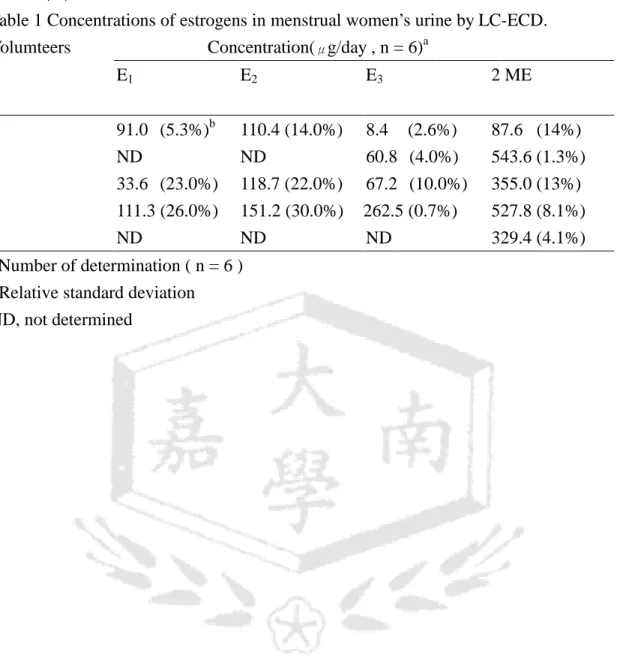
Table 1 Concentrations of estrogens in menstrual women’s urine by LC-ECD.
Volumteers Concentration(μg/day , n = 6)a
E1 E2 E3 2 ME
1 91.0 (5.3%)b 110.4 (14.0%) 8.4 (2.6%) 87.6 (14%)
2 ND ND 60.8 (4.0%) 543.6 (1.3%)
3 33.6 (23.0%) 118.7 (22.0%) 67.2 (10.0%) 355.0 (13%) 4 111.3 (26.0%) 151.2 (30.0%) 262.5 (0.7%) 527.8 (8.1%)
5 ND ND ND 329.4 (4.1%)
aNumber of determination ( n = 6 )
b Relative standard deviation ND, not determined
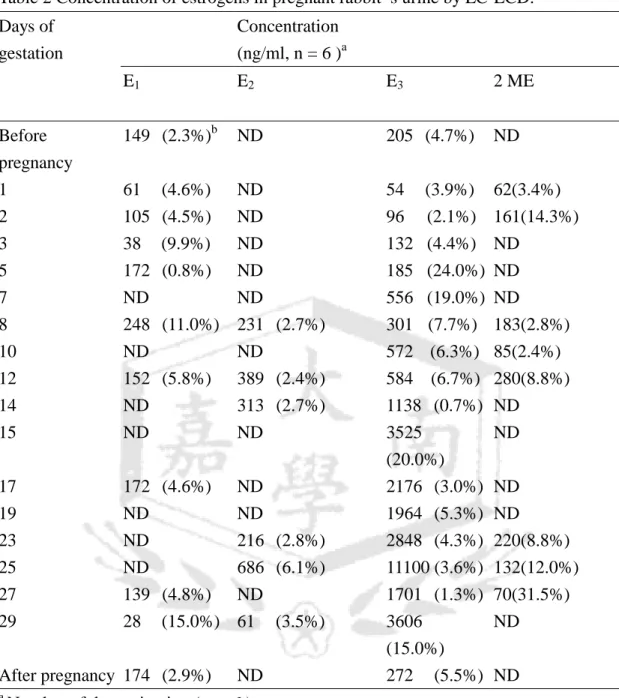
Table 2 Concentration of estrogens in pregnant rabbit,s urine by LC-ECD.
Days of gestation
Concentration (ng/ml, n = 6 )a
E1 E2 E3 2 ME
Before pregnancy
149 (2.3%)b ND 205 (4.7%) ND
1 61 (4.6%) ND 54 (3.9%) 62(3.4%)
2 105 (4.5%) ND 96 (2.1%) 161(14.3%)
3 38 (9.9%) ND 132 (4.4%) ND
5 172 (0.8%) ND 185 (24.0%) ND
7 ND ND 556 (19.0%) ND
8 248 (11.0%) 231 (2.7%) 301 (7.7%) 183(2.8%)
10 ND ND 572 (6.3%) 85(2.4%)
12 152 (5.8%) 389 (2.4%) 584 (6.7%) 280(8.8%)
14 ND 313 (2.7%) 1138 (0.7%) ND
15 ND ND 3525
(20.0%)
ND
17 172 (4.6%) ND 2176 (3.0%) ND
19 ND ND 1964 (5.3%) ND
23 ND 216 (2.8%) 2848 (4.3%) 220(8.8%)
25 ND 686 (6.1%) 11100 (3.6%) 132(12.0%)
27 139 (4.8%) ND 1701 (1.3%) 70(31.5%)
29 28 (15.0%) 61 (3.5%) 3606
(15.0%)
ND
After pregnancy 174 (2.9%) ND 272 (5.5%) ND
a Number of determination ( n = 6 )
b Relative standard deviation ND, not determination
Fig.1 Chromatogram of a mixture estradiol and its metabolites. The peaks are as follows: (1) estriol; (2) estradiol; (3) ethinylestradiol; (4) estrone;
(5) 2-methoxyestrone.
Fig.2 Chromatograms obtained by LC-ECD from before (A) and after (B) urine of a pregnant rabbit (14th day of the menstrual cycle). Peaks: 1 = estriol; 2 = estradiol; 4 = estrone; 5 = 2-methoxyestrone; other peaks are endogenous substance and reagent blank..
參考文獻
[1] L. A. Suchar, R. L. Chang, R.T. Rosen, J. Lech and A. H. Conney, High – performance liquid chromatography separation of hydroxylated estradiol metabolites: Formation of estradiol metabolites by liver microsomes from male and female rats, J. Pharm. and Expers. Thearpe, 272 (1995) 197-206.
[2] H. Parvez, M. Bastart-Malsot, S. Parvez, T. Nagatsu and G. Carpentier, Progress in HPLC Vol. 2. (1987), Analysis of estrogens by High – performance liquid
chromatography with electrochemical detection, VNU Science Press B V.
pp235-260.
[3] L. A. Kaplan, A. J. Pesce, Clinical Chemistry Theory, Analysis, Correlation, 3rd, Chaper 40 Pregnancy and fetal development, Mosby-year Book, Inc. (1996) 797-819.
[4] J. MacNaughton, M. Banah, P. McCloud, J. Hee and H. Burger, Age related changes in follicle stilmulating hormone, luteinizing hormone, oestradiol and immunoreative inhibin in women of reproductive age, Clin. Endocrinology, 36 (1992) 339-345.
[5] H. Ueshiba, M. Segawa, T. Hayashi, Y. Miyachi and M. Itie,Serum profiles of steroid hormones in patients with cushing’s syndrome determined by a new HPLC/RIA method, Clin. Chem, 37(1991) 1329-1333.
[6] A. Ins, L. Ferrara, G. Meronj and M. A. Bacigalupo, Direct time- resolved
fluoroimmunassay of estriol in serum, J. Steroid Biochem Molec. Biol., 39 (1991) 189-192.
[7] J. J. B. Nerado, J. R. Flores, G. C. Penalva and F. J. G. Bernardo, Simultaneous determination of ethinylestradiol and gestodene in oral contraceptives by derivative spectrophotometry, Anal. Lett., 30 (1997) 2221-2233.
[8] W. F. Smyth and C. Yarnitzky, An analytical study of drug adsorption at mercury electrodes using square wave polarography, Inter. J. Pharm., 42 (1988) 235-241.
[9] S. S. Hu, O. He and Z. F. Zhao, Determination of trace amounts of estriol and estradiol by adsorptive cathodic strippin voltammetry, Analyst, 117 (1992) 181-183.
[10] M. I. Paredes, M. C. Gonzalez, M. D. Vazquez, M. L. Tascon, P. S. Batanero and G. J. Patriarcbe, Determination of hydrophobic substances in queous-organic and micellar media by use of electrochemical techniques, Electroanalysis, 6 (1994) 791-798.
[11] S. S. Hu. M. D. Guo and G. Hu and Jiang, Electrochemcial oxidation and analytical applications of estrogens at modified carbon paste electrode, Anal.
Lett., 28 (1995) 1993-2003.
[12] S. Y. Su and G. K. Shiu, High – performance liquid chromatographic analysis of
six conjugated and unconjugated estragens in serum, Biomed. Chromatogr., 6 (1992) 265-268.
[13] A. Dorantes and S. Stavchansky, Modification of the U. S. P. dissolution method for the analysis of norethindrone and ethinyl estradiol tablets, J. Pharm. Sci., 83 (1994) 379-381.
[14] H. Lamparczyk, P. K. Zarzycki, J. Nowakowska, R. J. Ochocka, Application of â–cyclodextrin for the analysis of estrogenic steroids in human urine by high – performance liquid chromatography, Chromatographia., 38 (1994) 168-172.
[15] B. J. Spencer and W. C. Purdy, High – performance liquid chromatographic separation of equilin, estrone, and estrone derivatives with cyclodextrins as mobile phase additives, J. Liq. Chromatogr., 18 (1995) 4063-4080.
[16] M. H. Simonian and M. W. Cap. Reversed-phase high – performance liquid chromatography of steroid-3-sulfates and the corresponding unconjugated steroids, J. Chromatogr., 287 (1984) 97-104.
[17] J. Ishida. M. Kaiand, Y. Ohkura,Determination of oestrogens in prehnancy urine by high – performance liquid chromatography with fruoresence detection, J.
Chromatogr., 431 (1988) 249-257.
[18] Z. Kondo, T. Makino and R. Lizuka, Measurement of serum unconjugated estriol and estradiol by high – performance liquid chromatography, J. Clin. Lab. Anal., 4 (1990) 410-413.
[19] M. Katayama and H. Taniguchi, Determination of estrogens in plasma by high – performance liquid chromatography after pre-column derivatization with 2-(4- carboxyphenyl)-5,6-dimethylbenzimidazole, J. Chromatogr., 616 (1993) 317-322.
[20] A. Chandrasekaran, M. Osman, S. J. Adelman, J. Warsheski, J. Scatina, S. F.
Sisenwine, Determination of 17á-dihydroequilenin in rat, rabbit and monkey plasma by high – performance liquid chromatography, J. Chromatogr., 676 (1996) 69-75.
[21] R. Gatti, M. Franchina, M. G. Gioia and V. Cavini, HPLC-fluorescence detection of equilin and equilenin in postmenopausal women’s urine, Biomed. Chromatogr., 14 (2000) 82-88.
[22] N. Hayashi, K. Hayata and K. Sckiba, Rapid and simultaneous measurement of estrone, estradiol, estriol and estetrol in serum by high – performance liquid chromatography with electrochemical detection, Acta Med Okayama., 39 (1985) 143-153.
[23] J. Noma, N. Hayashi and K. Sekiba, Automated direct by high – performance liquid chromatographic assay for estetrol, estriol, cortisone and cortisol in serum and amniotic fluid, J. Chromatogr., 568 (1991) 35-44.
[24] N. Fernandez, J. J. Garcia, M. J. Diez, M. T. Teran and M. Sierra, Rapid high – performance liquid chromatographic assay of estyintloestradiol in rabbit plasma, J. Chromatogr., 619 (1993) 143-147.
[25] A. J. Ji, M. F. Nunez, D. Machacek, J. E. Ferguson, M. F. Iossi. P. C. Kao, J. P.
Landers, Separation of urinary estrogens by micellar electrokinetic chromatography, J. Chromatogr. B., 669 (1995) 15-26.
[26] S. K. Poole, C. F. Poole. Separation of pharmaceutically important estrogens by micellar electrokinetic chromatography, J. Chromatogr. A., 749 (1996) 247-255.
[27] Y. C. Ma and H.Y. Kin, Determination of steroids by liquid chromatography/
mass spectrometry, J. Am. Soc. Mass Spectrom., 8 (1997) 1010-1020.
[28] T. R. Croley, R. J. Hughes, B. G. Koenig, C. D. Metcalfe and R. E. March, mass spectrometry applied to the analysis of estrogens in the environment, Rapid Commun. Mass Spectrom., 14 (2000) 1087-1093.
[29] A. Lagana, A. Bacaloni, G. Fago and A. Marino,Trace analysis of estrogenic chemicals in sewage effluent using liquid chromatography combined with tandem mass spectrometry, Rapid Commun Mass Spectrom., 14 (2000) 401-407.
計劃成果自評
The coupling of liquid chromatography with electrochemistry offers a selective and sensitive for the determination of a wide variety of compounds in body fluids and tissues. The LC-ECD method described in this study, it is possible to observed the.
Total run times at a flow-rate of 1.0 ml / min were approximately 15 min.
Simultaneous determination of the estradiol metabolites should provide a better approach to biotransformations by aryl hydroxylation.