第 1 頁,共 4 頁
高雄醫學大學九十五學年度學士後醫學系招生考試試題
科目:國文 考試時間: 80 分鐘
說明:一、選擇題用 2B 鉛筆在「答案卡」上作答,修正時應以橡皮擦擦拭,切勿使用修
正液(帶),未遵照正確作答方法而致電腦無法判讀者,考生自行負責。
二、非選擇題限黑色或藍色墨水之鋼筆、原子筆或鉛筆,在「答案卷」上作答。
三、試題及答案卡必須繳回,不得攜出試場。
一、綜合測驗:單選題,每題 2 分,共 60 分 請選出一個最適當的選項,標示在答案卡上。答錯一題倒扣 0.5 分,倒扣至本大題 0 分為止;未作答者,不給分 亦不扣分。 1. 下列各項,前後文句「」中的國字,何者兩兩相同? (A) 「ㄑㄧㄥˋ」竹難書--懸然如「ㄑㄧㄥˋ」 (B) 鳶飛「ㄌㄧˋ」天--性情乖「ㄌㄧˋ」 (C) 時光遞「ㄕㄢˋ」--獨「ㄕㄢˋ」勝場 (D) 整「ㄔˋ」吏治--火焰「ㄔˋ」烈 (E) 「ㄒㄧㄝˋ」逅之緣--夙夜匪「ㄒㄧㄝˋ」 2. 下列「」中的字音字義,何組相同? (A) 行李之往來,「共」其乏困/願車馬衣裘與朋友「共」 (B) 「闕」地及泉,隧而相見/「闕」秦以利晉,唯君圖之 (C) 兌命曰:念終始典于「學」/「學」學半 (D) 「比」物醜類/「比」年入學 (E) 然公不「見」信於人,私不見助於友/匹夫「見」辱,拔劍而起 3. 對於歷史已有定論的史事,提出質疑,進行批判的文章,稱為「翻案文章」,下列何者非屬於「翻案文章」? (A) 方孝孺〈深慮論〉 (B) 王安石〈讀孟嘗君傳〉 (C) 歐陽脩〈縱囚論〉 (D) 蘇軾〈留侯論〉 (E) 蘇洵〈管仲論〉 4. 下列詩句何者與「尋常一樣窗前月,才有梅花便不同」表達的季節相同? (A) 隨意春芳歇,王孫自可留 (B) 稻花香裡說豐年,聽取蛙聲一片 (C) 南風不用蒲葵扇,清爽得自然 (D) 朔氣傳金柝,寒光照鐵衣 (E) 採菊東籬下,悠然見南山 5. 下列何句寫出閒適的心情? (A) 直須看盡洛城花,始共春風容易別 (B) 風鳴兩岸葉,月照一孤舟 (C) 缺月掛疏桐,漏斷人初靜 (D) 前不見古人,後不見來者 (E) 倚仗柴門外,臨風聽暮蟬 6. 《世說新語》:「潘安仁、夏侯湛並有美容,喜同行,時人謂之『連璧』。」「連璧」一詞以下列哪一選項替換後, 意思改變了? (A) 一時瑜亮 (B) 判若雲泥 (C) 地醜德齊 (D) 伯仲之間 (E) 不分軒輊 7. 下列的對話,「」中的稱呼語,何者運用錯誤? (A) 「賢昆仲」大駕光臨,歡迎之至--能到「府上」拜訪是我們的榮幸 (B) 「令嫒」端莊大方,結婚了沒--「小女」至今待字閨中 (C) 「尊夫人」的手藝出色,不輸易牙--不瞞您說,「拙荊」可是無師自通的 (D) 「賢喬梓」真是虎父無犬子--承蒙不棄,「愚父子」愧不敢當 (E) 「令堂」高壽康健,實在有福氣--「家父」注重飲食,定期運動,才能常保健康 8. 下列各選項皆報紙標題,何者摻雜了記者個人強烈的情緒批判? (A) 北宜高大塞 雪隧回堵十五公里 (B) 險象環生 荷蘭挺進 16 強 (C) 王建民跨聯盟 抗華盛頓國民隊 (D) 勿蹈覆轍 幼教法草案 業者批不周延 (E) 大學生跳河尋短 冷血小偷摸走遺物第 2 頁,共 4 頁 9. 你是一種四足的獸/被馴服了/再也不動/無論誰來坐/都不吭聲(蔣勳〈椅子〉)下列敘述何者錯誤? (A) 這首詩的主旨是在歌頌椅子 (B) 「馴服」與「都不吭聲」前後呼應 (C) 這首詩的「馴服」是指人在體制與世俗的規範下的妥協 (D) 「椅子」在這首詩中,只是一種象徵 (E) 全文都用虛筆 10. 關於現代文學的作家,下列敘述何者錯誤? (A) 琦君以散文創作為主,展現溫柔細膩的風格。 (B) 黃春明的作品主要是書寫台灣歷史的大河小說。 (C) 吳晟的作品質樸自然,表達對土地的熱愛。 (D) 曾貴海身兼詩人、醫生、社會運動者等多重身份,是醫生作家的代表人物之一。 (E) 簡媜致力於散文創作,題材隨著生命的成長多所轉折。 11. 下列四句都有「易」字,請選出「易」字意義與其他四句不同者: (A) 賢賢「易」色 (B) 以羊「易」之 (C) 喪,與其「易」也,寧戚 (D) 以亂「易」整 (E) 古之為市也,以其所有「易」其所無者 12. 《老子》強調柔弱的思想,下列何者不是表達這樣的思想? (A) 上善若水 (B) 無為而無不為 (C) 知雄守雌 (D) 物壯則老 (E) 將欲弱之,必固強之 13. 關於中國的古典小說,下列敘述何者錯誤? (A) 章回長篇小說在宋代已經成熟,《水滸傳》就是代表性的作品。 (B) 魏晉以志怪小說為主,形式以短篇為主。 (C)《三國演義》是根據《三國志》寫成的歷史小說。 (D)《紅樓夢》以家族的興衰為背景,寫人間的貪嗔怨癡,是成就極高的長篇小說。 (E)《儒林外史》描寫科舉時代讀書人的醜態,是中國重要的諷刺小說。 14. 下列文句中,「」內的成語,使用不正確的選項是: (A) 他的品德操守很差,再有權勢也只不過是「沐猴而冠」而已。 (B) 為了能洗雪前恥,他「朝乾夕惕」,使自己的技藝更加精湛。 (C) 這件案子「輾轉反側」,負責辦案的治安人員,細心的找尋線索,希望能早日偵破。 (D) 這本《唐詩三百首》印得很馬虎,「魯魚亥豕」的情形非常多。 (E) 做事要先「曲突徙薪」,想好萬全之策,才有穩操勝算的把握。 15. 下列敘述何者不正確? (A)〈醉翁亭記〉一文,歐陽脩雖貶官滁州,不但能自適自樂,更能樂民之樂。 (B)〈超然台記〉一文,蘇軾言及為功名得失而眩亂憂慮,乃是「遊於物之內,而不遊於物之外」。 (C)〈黃州快哉亭記〉一文,蘇轍所謂「快哉」是人的心境,調整自己的心境,自能不受環境影響。 (D)〈晚遊六橋待月記〉一文,袁宏道描述杭州西湖月夜的景色:「花態柳情,山容水意,別是一種趣味」。 (E)〈湖心亭小記〉一文,張岱描寫炎夏欣賞湖心亭的雅興,有「天與雲與山與水,上下一白」的佳句。 16.「少年讀書,如□中□月;中年讀書,如□中□月;晚年讀書,如□上□月。皆以閱歷之淺深,為所得之淺深耳。」 (《幽夢影》),句中的空格依序應是: (A) 井、觀;庭、看;樓、玩 (B) 隙、窺;庭、望;臺、玩 (C) 水、撈;庭、觀;臺、望 (D) 庭、望;水、撈;樓、玩 (E) 海、玩;湖、望;水、撈 17. 中國文人觀水有得,取喻於水,下列說明何者不正確: (A) 老子以「天下莫柔弱於水,而攻堅強者莫之能勝。」說明柔能勝剛。 (B) 孟子以「原泉混混,不舍晝夜。盈科而後進,放乎四海,有本者如是,是之取爾。」勉人惜時進取。 (C) 李後主以「問君能有幾多愁?恰似一江春水向東流。」表達永無止盡的國仇家恨。 (D) 蘇軾以「逝者如斯,而未嘗往也。」喻說常變之理。 (E) 朱熹以「問渠那得清如許,為有源頭活水來。」說明讀書的重要。
第 3 頁,共 4 頁 18. 下列敘述何者為非? (A) 台灣第一本漢語新詩集《亂都之戀》的作者是張我軍 (B) 「海東文獻初祖」「開台文化祖師」是沈光文 (C) 「台灣新文學之父」是賴和 (D) 「鐵血詩人」是陳映真 (E) 「倒在血泊裏的筆耕者」是鍾理和 19. 有關班固〈漢書藝文志諸子略序〉,下列敘述何者正確? (A) 縱橫家者流,出於理官 (B) 儒家者流,出於禮官 (C) 農家主張貴儉、右鬼、非命 (D) 名家的流弊是:譥者為之,苟鉤釽析亂 (E) 墨家的流弊是:殘害至親,傷恩薄厚 20. 詩人歌詠人物,除了舉其重要事蹟外,有時也間接寄託了詩人的感慨。下列詩詞文句,屬於歌詠屈原之作的選項 有幾個? 【甲】漢文有道恩猶薄,湘水無情弔豈知?寂寂江山搖落處,憐君何事到天涯 【乙】巴峽過了過巫峽/襄陽下了轉衡陽/瀟湘是深闊的弱水/……自然也載不住你/公孫大娘弟子白帝城那一舞 【丙】何處招魂,香草還生三戶地/當年呵壁,湘流應識九歌心 【丁】裹一條水殤的白頭巾/ 把一個淒漓的情意結/年去年來結成了五月/不甘的英靈啊/今年的五月/該去怎樣的 逆流滔滔/怎樣呼嘯的漩渦裡尋找 【戊】怨長安城小而壺中天長/在所有的詩裡你都預言/會突然水遁,或許就在明天 (A) 一個 (B) 二個 (C) 三個 (D) 四個 (E) 五個 21. 六朝駢文〈與陳伯之書〉是一篇擲地有聲,膾炙人口之作,文中作者藉以勸降的文句,最能呼應王粲〈登樓賦〉: 「雖信美而非吾土兮,曾何足以少留」之思者,是哪一句? (A) 將軍獨靦顏借命,驅馳氈裘之長,寧不哀哉 (B) 將軍松柏不翦,親戚安居,高臺未傾,愛妾尚在 (C) 暮春三月,江南草長,雜花生樹,群鶯亂飛 (D) 故知霜露所均,不育異類;姬漢舊邦,無取雜種 (E) 夫迷途知反,往哲是與,不遠而復,先典攸高 22. 為古書配上可以概括其內容的新標題,是一種「古典新詮」的作法,藉此可以拉近讀者閱讀的視角。如果你要製 作「古籍推廣」活動的海報,請問下列那一個標題與書的內容最不相符? (A)《荀子》────人性的批判 (B)《山海經》───神話的故鄉 (C)《楚辭》────澤畔的悲歌 (D)《韓非子》───國家的秩序 (E)《洛陽伽藍記》─太學的揺籃 23. 國內若干出版社名稱乃直接援用自古代的典籍或篇章,以下有關出版社名稱出處,何者為非?: (A) 谷風出版社──《詩經》 (B) 爾雅出版社──《說文》 (C) 里仁出版社──《論語》 (D) 洪範出版社──《尚書》 (E) 健行出版社──《周易》 24. 你可知道台灣有好幾座「水仙宮」廟宇,其所崇祀的神明大多聯繫著歷史人物與掌故,除了治水有功的大禹是奉 祀的主神外,也配祀一些與水有關的人物。試依據你平日的文史知識,判斷何人可能成為陪祀的水神? (A) 李白 (B) 伍子胥 (C) 屈原 (D) 王勃 (E) 以上皆是 25. 「鳳尾龍香撥,自開元、霓裳曲罷,幾番風月。最苦潯陽江頭客。畫舸亭亭待發。記出塞、黃雲堆雪。馬上離愁 三萬里,望昭陽、宮殿孤鴻沒,絃解語,恨難說。」(辛棄疾〈賀新郎〉)詞中所提及之古人,何者不在其列? (A) 楊貴妃 (B) 陶淵明 (C) 王昭君 (D) 白居易 (E) 無適當選項 26. 有關中國經典之敘述,何者正確? (A) 儒家首先使用「經」字稱自己學派的權威性著作。 (B) 四子書是指論、孟、學、庸四本書,其中學、庸二書乃從《禮記》中擇篇而出。 (C) 十三經之《禮記》所指乃《大戴禮記》,記古代禮儀。 (D)《老子》稱《道德經》,《莊子》又稱《沖虛真經》。 (E)《尚書》從象數到哲理,深深影響魏晉玄學與宋明理學,顯見其在學術、思想史上的價值。
第 4 頁,共 4 頁 27. 網路作家九把刀要繳交一篇有關「國學概論」的報告,可是他的報告略有瑕疵,好朋友敷米漿幫他指出說法正確, 無須修改的選項是: (A) 唐朝雖是「詩的黃金時代」,但宋代詩人及作品數量上遠勝於唐代。 (B) 韓非子〈買櫝還珠〉、荀子〈勸學〉、丘遲〈與陳伯之書〉等篇章,均可從四庫全書「集部」尋獲。 (C) 清代以章回小說為盛,如《紅樓夢》、《儒林外史》、《二十年目睹之怪現象》、《聊齋志異》等。 (D) 《昭明文選》標舉「事出於沈思,義歸乎翰藻」,諸葛亮〈出師表〉、李密〈陳情表〉、韓愈〈祭十二郎文〉三 大抒情佳構均收錄於內。 (E) 劉勰言:「有文有筆,以為無韻者筆也,有韻者文也。」由此可推知駢文為「文」。 28. 南方朔在《語言是我們的居所》一書中說:「(語言)在功能上更常因語境、修辭,以及更大的論述習慣及模型 而變動。」因此某個詞語在一個時代會有某種意義,但時代改變,即會出現新義。以下選項何者未見古今語義轉 變的軌跡? (A) 姊妹兄弟皆列士,「可憐」光彩生門戶,遂令天下父母心,不重生男重生女。(白居易〈長恨歌〉) (B) 足下沈識淹長,思綜通練,起而明之,足以「經濟」。(《晉書.殷浩傳》) (C) 臣少多疾病,九歲「不行」;零丁孤苦,至於成立。(李密〈陳情表〉) (D) 千觴亦不醉,感子「故意」長。(杜甫〈贈衛八處士歌〉) (E) 欲信大義於天下,而智術淺短,遂用「猖獗」,至於今日。(《三國演義.隆中對》) 29. 韓愈〈爭臣論〉中言:「蓋孔子嘗為委吏矣,嘗為乘田矣,亦不敢曠其職,必曰『會計當而已矣。』必曰『牛羊遂 而已矣。』」這段文句旨在說明為官不可: (A) 越俎代庖 (B) 尸位素餐 (C) 大權獨攬 (D) 太阿倒持 (E) 行險僥倖 30. 下列有關應用文用語之陳述例句,何者正確? (A) 民國九十五年七月一日,將為小兒彌月之喜,敬備桃樽,恭請 台光。 (B) 道賀友人結婚的書信,可用「某某禮鑒」作為提稱語。 (C) 職接獲 總統閣下玉札,欣喜若狂,幸何如之! (D) 朋友紛紛致送「業紹陶朱」的匾額,慶賀小李的診所開張。 (E) 從「顯妣王母張太夫人」的神主來推斷,則推知死者本姓張,夫家姓王。 二、作文:40 分 說明:1.請抄題。 2.字數不得少於 500 字。 3.須用新式標點符號。
題目:論教養
第 1 頁,共 6 頁
高雄醫學大學九十五學年度學士後醫學系招生考試試題
科目:英文 考試時間: 80 分鐘
說明:一、選擇題用 2B 鉛筆在「答案卡」上作答,修正時應以橡皮擦擦拭,切勿使用修
正液(帶),未遵照正確作答方法而致電腦無法判讀者,考生自行負責。
二、非選擇題限黑色或藍色墨水之鋼筆、原子筆或鉛筆,在「答案卷」上作答。
三、試題及答案卡必須繳回,不得攜出試場。
Ⅰ. Grammar and Structure: Choose the best answer to complete each sentence. 5 points.
【單選題】每題 1 分,共 5 題,答錯一題扣 0.25 分,倒扣到本大題零分為止,未作答,不給分不扣分。
1. Unlike competitive runners, race walkers ______ some portion of their feet in contact with the ground.
(A) must to always keep (B) must always keeping (C) always must to keep (D) must always keep (E) always must keeping
2. When babies are around fifteen months old, they can pick up objects and put ______ into small containers.
(A) it (B) that (C) themselves (D) their own (E) them
3. For centuries large communities of people ______ on houseboats in parts of the world where the climate is warm and the
waters are calm.
(A) have been living (B) could have lived
(C) might have been living (D) have living (E) have been lived
4. Noise is a psychological term ______ unpleasant, unwanted or intolerable sound.
(A) be referred to (B) referring with (C) referring to (D) referred for (E) referred as
5. The pain-killing agent most commonly administered in dentistry is the local anesthetic, ______ loss of feeling only in a specific area.
(A) who be produced (B) which produces (C) where produces (D) that be producing (E) which is produced
Ⅱ. Definition and Synonym: Choose the word or expression that is closest in meaning to the underlined word or
expression in each sentence. 21 points.
【單選題】每題 1.5 分,共 14 題,答錯一題倒扣 0.375 分,倒扣至本大題零分為止,未作答,不給分不扣分。 6. They took him to a doctor, who prescribed an antibiotic and did a blood test.
(A) recommended (B) prepared (C) gave (D) injected (E) researched 7. He spent most of each night poring over medical journals from around the world.
(A) falling asleep (B) skimming quickly (C) studying intensely (D) searching for (E) sending out 8. That inspired her to come up with an innovative treatment.
(A) radical (B) quick (C) effective (D) complicated (E) ingenious 9. Soon the students became immersed in their work.
(A) overwhelmed (B) totally absorbed (C) lost (D) obsessed (E) bored 10. Of 100 newly released CDs, only about 12 have warning labels.
(A) sold (B) recorded (C) issued (D) produced (E) received 11. An assistant transcribed his notes into legible reports.
(A) interesting (B) brief (C) formal (D) readable (E) theoretical 12. Farmers fertilize their soil to make it more productive.
第 2 頁,共 6 頁
13. The adverse effects of this drug, including dizziness, nausea, and headaches, have caused it to be withdrawn from the market.
(A) deadly (B) harmful (C) expensive (D) many (E) different 14. Children who move to a foreign country adapt much more easily than their parents, soon picking up the language and
customs of their new home.
(A) adjust (B) struggle (C) become bored (D) learn (E) enjoy 15. Changes in such abilities as learning, reasoning, and thinking are aspects of cognitive development.
(A) physical (B) spiritual (C) mental (D) emotional (E) academic 16. A person can be very intelligent and yet be deficient in common sense.
(A) lucky (B) well supplied (C) overqualified (D) lacking (E) interested 17. Two people claimed that injuries from the impact had left them incapacitated.
(A) hurt (B) disabled (C) unharmed (D) in pain (E) dull 18. The second claimant was not even in the car at the time of the collision.
(A) accident (B) injury (C) investigation (D) clash (E) robbery 19. A microscope magnifies invisible objects so we can see them.
(A) reduces (B) induces (C) obtains (D) enlarges (E) focuses
Ⅲ. Vocabulary and Usage: Choose the best answer to complete each sentence. 21 points.
【單選題】每題 1.5 分,共 14 題,答錯一題倒扣 0.375 分,倒扣至本大題零分為止,未作答,不給分不扣分。 20. It is not always necessary for adults to ______ in children’s fights; sometimes it is best to let children handle quarrels
themselves.
(A) invent (B) include (C) demand (D) intervene (E) deserve 21. A new design of contact lens which blocks certain wavelengths of light gives athletes _______.
(A) a disadvantage (B) a job (C) a outlook (D) a look (E) an edge 22. Healthcare professionals need to fully ______ patients in order to place them in appropriate programs.
(A) hide (B) prove (C) find (D) assess (E) greet 23. What people say may not ______ accurately what they are actually feeling.
(A) return (B) remote (C) reflect (D) recruit (E) rejoice 24. The dentist’s secretary called this morning to ______ your next appointment.
(A) conclude (B) confirm (C) promote (D) include (E) review 25. Cancer cannot be ______ from one person to another.
(A) offered (B) abused (C) deserved (D) reduced (E) transmitted 26. Michael is going to spend two years in one of the American branches of his company in order to his career.
(A) attack (B) replace (C) advance (D) provide (E) spread 27. Mary has just been accepted in the ______ Harvard Law School.
(A) available (B) relative (C) success (D) prestigious (E) impulsive 28. He refused to eat anything until his nose has cleared it as ______.
(A) disgusting (B) comfortable (C) sneaky (D) edible (E) erasing 29. We must ______ their passion for knowledge.
(A) decode (B) carve (C) spell (D) cultivate (E) gather 30. The young woman was ______ by the threatening phone calls.
(A) encouraged (B) described (C) realized (D) enlarged (E) disturbed 31. On Christmas Eve, the children were so ______ to open their presents that they could not fall asleep.
第 3 頁,共 6 頁
32. I wish I ____ your advice, but I didn’t pay attention to you at that time.
(A) would take (B) took (C) would have taken
(D) had taken (E) have taken
33. The captain showed remarkable _____ in continuing to lead his men despite a painful wound.
(A) fortitude (B) fort (C) brave (D) courageous (E) longitude
Ⅳ. Reading Comprehension: Choose the best answer. 33 points.
【單選題】每題 1.5 分,共 22 題,答錯一題倒扣 0.375 分,倒扣至本大題零分為止,未作答,不給分不扣分。
Criticism of research lays a significant foundation for future investigative work, but when students begin their own projects, they are likely to find that the standards of validity in field work are considerably more rigorous than the standards for most library research. When students are faced with the concrete problem of proof by field demonstration, they usually discovered that many of the “important relationships” they may have criticized other researchers for failing to demonstrate are very elusive indeed. They will find, if they submit an outline or questionnaire to their classmates for criticism, that other students make comments similar to some they themselves may have made in discussing previously published research. For example, student researchers are likely to begin with a general question but find themselves forced to narrow its focus. They may learn that questions whose meanings seem perfectly obvious to them are not clearly understood by others or that questions which seemed entirely objective to them appear to be highly biased to someone else. They usually find that the formulation of good research questions is a much more subtle and frustrating task than is generally believed by those who have not actually attempted it.
34. What does the author think about trying to find weaknesses in other people’s research? (A) It should never be done by students.
(B) It should only be attempted by experienced teachers. (C) It may cause researchers to avoid publishing good work. (D) It is currently being done to excess.
(E) It can be useful in planning future research.
35. According to the passage, what is one major criticism students often make of published research? (A) The research has not been written in an interesting way.
(B) The research has been done in unimportant fields.
(C) The researchers did not adequately establish the relationships involved. (D) The researchers had problems with grammatical structures.
(E) The researchers failed to provide an appropriate summary.
36. According to the passage, how do students in class often react to another student’s research? (A) They react the way they do to any other research.
(B) They easily get impatient with the research.
(C) They are especially critical of the quality of the research. (D) They offer unusually good suggestions for improving the work. (E) They show a lot of sympathy for the student researcher.
37. What do student researchers often learn when they discuss their work in class? (A) Other students rarely have objective comments about it.
(B) Other students do not believe the researchers did the work themselves. (C) Some students would help the researchers to revise the work.
(D) Some students feel that the conclusions are too obvious.
(E) Some students do not understand the meanings of the researchers’ questions.
38. According to the passage, student researchers may have to change their research projects because (A) their budgets are too high. (B) their original questions are too broad. (C) their teachers do not give adequate advice. (D) their questions are too brief.
第 4 頁,共 6 頁
39. What does the author conclude about preparing suitable questions for a research project? (A) It is more difficult than the student researcher may realize.
(B) The researcher should get help from other people.
(C) The questions should be brief so that they will be understood. (D) It is important to follow formulas closely.
(E) The student researcher should stop immediately if he feels frustrated. 40. What does this passage mainly discuss?
(A) The decreasing emphasis on library research (B) How to publish controversial questionnaires (C) The lack of critical ability in students (D) The role of criticism in new research (E) How to submit an outline for criticism
Each variety of mosquito has its favored kind of water accumulation for breeding, and almost every imaginable type of still water has been used by at least one kind of mosquito to lay its eggs. After the eggs hatch, the larvae continue to be closely associated with the water’s surface, hanging from the surface film and getting air through tubes that breaks the water’s surface at the tail ends of their bodies. Because the larvae develop this way, they are never found in the open water of lakes where they would merely serve as fish food, or in places where they would be damaged by wave action or water currents.
41. According to this passage, what is true about the breeding habits of mosquitoes? (A) Different mosquitoes tend to have different kinds of breeding places. (B) Each mosquito usually breeds in several different places in one season. (C) A few mosquitoes constantly vary their breeding places.
(D) Most mosquitoes like to breed on warm water.
(E) Most mosquitoes mate in the same place in which they were bred. 42. According to this passage, most mosquito larvae develop
(A) on plants near water. (B) near sources of food. (C) under waterproof sacs. (D) in bodies of still water.
(E) on ponds and lakes where there is no fish. 43. Most mosquito larvae breathe with
(A) their bodies. (B) their wings. (C) special tubes. (D) their gills. (E) modified mouth. 44. Mosquito larvae are never found in open water because they cannot
(A) withstand much motion. (B) endure the sunlight. (C) find sufficient food there. (D) obtain enough air there. (E) tolerate too much moisture.
Artificial flowers are used for scientific as well as decorative purposes. They are made from a variety of materials, such as wax and glass, so skillfully that they can scarcely be distinguished from natural flowers. In making such models, painstaking skill and artistry are called for, as well as through knowledge of plant structure. The collection of glass flowers in the Botanical Museum of Harvard University is the most famous in North America and is widely known throughout the scientific world. In all, there are several thousand models in colored glass, the work of two artist-naturalists, Leopold Blaschka and his son Rudolph.
The intention was to have the collection represent at least one member of each flower family native to the United States. Although it was never completed, it contains more than seven hundred species representing 164 families of flowering plants, a group of fruits showing the effects of fungus diseases, and thousands of flower parts and magnified details. Every detail of these is accurately reproduced in color and structure. The models are kept in locked cases as they are too valuable and fragile for classroom use.
第 5 頁,共 6 頁
45. Which of the following is the best title for the passage? (A) An Extensive Collection of Glass Flowers
(B) The Botanical Museum of Harvard University (C) The Lives of Leopold and Rudolph Blaschka (D) Flowers Native to the United States
(E) Materials Used for Artificial Flowers
46. Which of the following statements about Leopold and Rudolph Blaschka is true?
(A) They were teachers. (B) They were brothers. (C) They were artists. (D) They were florists. (E) They were farmers.
47. It can be inferred from the passage that the goal of Leopold and Rudolph Blaschka was to (A) create a botanical garden where only exotic flowers grew.
(B) show that their skill and artistry are better than famous painters. (C) do a thorough study of plant structure.
(D) show that glass flowers are more realistic than wax flowers. (E) make a copy of one member of each United States flower family.
48. In the second sentence of the second paragraph, the word “it” refers to which of the following phrases? (A)“The intention” (B)“The collection”
(C)“The Botanical Museum” (D)“One member” (E)“Each flower family”
49. Which of the following is NOT included in the display at the Botanical Museum of Harvard University? (A) Models of 164 families of flowering plants. (B) Thousands of flower parts.
(C) Magnified details of flower parts. (D) Several species of native birds. (E) A group of diseased fruits.
50. Which of the following statements is true of the flowers at Harvard University?
(A) They form a completed collection. (B) They have a marvelous fragrance. (C) They are loaned to schools for classroom use. (D) Some of them are also made from wax. (E) They are authentic representations.
A summary of the physical and chemical nature of life must begin, not on the Earth, but in the Sun; in fact, at the Sun’s very center. It is here that is to be found the source of the energy that the Sun constantly pours out into space as light and heat. This energy is liberated at the center of the Sun as billions upon billions of nuclei of hydrogen atoms collide with each other and fuse together to form nuclei of helium, and, in doing so, release some of the energy that is stored in the nuclei of atoms. The output of light and heat of the Sun requires that some 600 million tons of hydrogen be converted into helium in the Sun every second. This the Sun has been doing for several thousands of millions of years.
The nuclear energy is released at the Sun’s center as high-energy gamma radiation, a form of electromagnetic radiation like light and radio waves, only of very much shorter wavelength. This gamma radiation is absorbed by atoms inside the Sun, to be reemitted at slightly longer wavelengths. This radiation, in its turn, is absorbed and reemitted. As the energy filters through the layers of the solar interior, it passes through the X-ray part of the spectrum, eventually becoming light. At this stage, it has reached what we call the solar surface, and can escape into space, without being absorbed further by solar atoms. A very small fraction of the Sun’s light and heat is emitted in such directions that, after passing unhindered through interplanetary space, it hits the Earth.
51. What does the passage mainly discuss?
(A) The production of solar light and heat. (B) The physical and chemical nature of life. (C) The conversion of hydrogen to helium. (D) Radiation in the X-ray part of the spectrum. (E) The nuclear energy of the Sun.
52. According to the passage, energy is released in the Sun when
(A) helium atoms bind with each other. (B) nuclei of hydrogen atoms collide.
(C) radiation is absorbed by helium. (D) gamma radiation escapes from the spectrum. (E) gamma radiation is absorbed by atoms.
第 6 頁,共 6 頁
53. The passage indicates that, in comparison to radio waves, gamma waves
(A) produce louder sound. (B) are less magnetic. (C) are not as long. (D) do not form in the Sun’s center. (E) are much more intense.
54. According to the passage, through which of the following does the energy released in the Sun pass before it becomes light? (A) The X-ray part of the spectrum. (B) Electromagnetic space. (C) The solar surface. (D) Interplanetary space. (E) The Sun’s center.
55. It can be inferred from the passage that the Sun’s light travels
(A) through solid objects in space. (B) in many different directions. (C) more slowly than scientists previously believed. (D) further in summer than in winter. (E) as fast as the spaceship.
Ⅴ. Comment: Since it is now well known that smoking is very unhealthy, cigarette companies should not be allowed to
advertise.
Write an essay in which you argue for or against this comment. Support and defend your argument by drawing upon your reasoning ability and general experience. 20 points
第 1 頁,共 8 頁【背面有試題】
高雄醫學大學九十五學年度學士後醫學系招生考試試題
科目:普通生物學 考試時間: 80 分鐘
說明:一、選擇題用 2B 鉛筆在「答案卡」上作答,修正時應以橡皮擦擦拭,切勿使用修正
液(帶),未遵照正確作答方法而致電腦無法判讀者,考生自行負責。
二、試題及答案卡必須繳回,不得攜出試場。
I. 【單選題】 1-30 題,每題 1 分,共計 30 分。答錯 1 題倒扣 0.25 分,倒扣至本大題零分為止,未作答時,不給分 亦不扣分。1. The growing season would generally be shortest in which of the following biomes? (A) tropical rain forest (B) temperate broadleaf forest (C) taiga (D) temperate grassland (E) savanna
2. The type of learning that causes specially trained dogs to salivate when they hear bells is called (A) habituation. (B) imprinting.
(C) trial-and-error learning. (D) classical conditioning. (E) insight.
3. To measure species diversity in a community, you need to know
(A) the number of species. (B) the relative abundance of each species. (C) the physical size of each species. (D) both A and B
(E) A, B, and C
4. Human use of prokaryotic organisms to help detoxify a polluted wetland would be an example of (A) keystone species introduction. (B) ecosystem augmentation.
(C) biological control. (D) population viability analysis. (E) bioremediation.
5. All of the following cell types are correctly matched with their functions except
(A) guard cell ---- regulation of transpiration (B) sieve-tube member ---- translocation (C) vessel element ---- water transport (D) mesophyll ---- photosynthesis (E) companion cell ---- formation of secondary xylem and phloem
6. An evolutionary adaptation that increases exposure of a plant to light in a dense forest is (A) lateral buds. (B) apical dominance.
(C) intercalary meristems. (D) absence of petioles. (E) closing of the stomata.
7. The amount and direction of movement of water in plants can always be predicted by measuring which of the following? (A) air pressure (B) proton gradients
(C) dissolved solutes (D) rainfall (E) water potential
8. Root hairs are most important to a plant because they
(A) anchor a plant in the soil. (B) increase the surface area for absorption. (C) contain xylem tissue. (D) store starches.
(E) provide a habitat for nitrogen-fixing bacteria.
9. What is the relationship between pollination and fertilization in flowering plants? (A) Pollination easily occurs between plants of different species.
(B) If fertilization occurs, pollination is unnecessary.
(C) Pollen is formed within megasporangia so that male and female gametes are near each other. (D) Pollination brings gametophytes together so that fertilization can occur.
第 頁,共 8 頁 2
10. The least reliable indicator of an animal's metabolic rate would be the amount of (A) ATP produced within its cells. (B) water it drinks.
(C) heat it generates. (D) oxygen it inspires. (E) carbon dioxide it expires.
11. Which of the following is not part of an older tree’s bark?
(A) cork (B) cork cambium
(C) lenticels (D) secondary xylem (E) secondary phloem
12. What do hearing, touch, and smell have in common? (A) The transducers are all proprioceptors.
(B) The sensory information from all three is sent to the thalamus. (C) The sensory receptors are all hair cells.
(D) Sensory energy is transduced to form a receptor potential. (E) Only A and B are correct.
13. To sequence the following double strand of DNA, which primer can be used?
5’AGGCAGTTACCG---//---GGCTTAAAGTCG 3’ 3’TCCGTCAATGGC---//---CCGAATTTCAGC5’ (A) 5’TCCGTCAATGGC3’ (B) 5’CCGAATTTCAGC3’ (C) 5’AGGCAGTTACCG3’ (D) 5’GGCTTAAAGTCG3’ (E) None of them.
14. Which of the following illustrates hydrolysis?
(A) The reaction of two monosaccharides to form a disaccharide with the release of water (B) The synthesis of two amino acids to form a dipeptide with the utilization of water (C) The reaction of a fat to form glycerol and fatty acids with the release of water (D) The reaction of a fat to form glycerol and fatty acids with the utilization of water
(E) The synthesis of a nucleotide from a phosphate, a ribose sugar, and a nitrogen base with the production of a molecule of water
15. Plasmodesmata in plant cells are most similar in function to which of the following structures in animal cells?
(A) peroxisomes (B) desmosomes (C) gap junctions (D) glycocalyx (E) tight junctions 16. What are the products of the light reactions that are subsequently used by the Calvin cycle?
(A) oxygen and carbon dioxide (B) ATP and NADPH (C) electrons and photons (D) water and carbon (E) carbon dioxide and RuBP
17. "Density-dependent inhibition" is explained by which of the following?
(A) As cells become more numerous, the amount of required growth factors and nutrients per cell becomes insufficient to allow for cell growth.
(B) As cells become more numerous, they begin to squeeze against each other, restricting their size and ability to produce control factors.
(C) As cells become more numerous, the level of waste products increases, eventually slowing down metabolism. (D) As cells become more numerous, more and more of them enter the S phase of the cell cycle.
(E) As cells become more numerous, they begin to squeeze against each other, restricting their size and ability to produce control factors.
18. A new DNA strand only elongates in the 5' to 3' direction because (A) Okazaki fragments prevent elongation in the 3' to 5' direction. (B) DNA polymerase begins adding nucleotides at the 5' end. (C) replication must progress toward the replication fork.
(D) the polarity of the DNA molecule prevents addition of nucleotides at the 3' end. (E) DNA polymerase adds nucleotides only to the free 3' end.
第 3 頁,共 8 頁【背面有試題】
19. When chemicals are used to control unwanted organisms, then the wisest application strategy, in light of natural selection and assuming that chemicals generally have negative effects on the environment, is to apply
(A) a small dose of a single chemical. (B) a large dose of a single chemical.
(C) moderate doses of several different chemicals. (D) large doses of several different chemicals. (E) a moderate dose of a single chemical.
20. The outcome of the conflict between bacteria and bacteriophage at any point in time results from (A) evolutionary imbalance.
(B) heterozygote advantage. (C) frequency-dependent selection. (D) neutral variation.
(E) genetic variation being preserved by diploidy.
21. HIV is ultimately a fatal disease. Which choice could be used as an analogy to describe how HIV affects the body? (A) Snipping the wires coming from a car battery so that no electricity flows to the car components.
(B) Bypassing a light switch so that electricity is constantly flowing to a light. (C) An elevator stopping at the floor of which the button has been pushed. (D) Rebooting a computer after getting a program error message.
(E) Changing the color of your house to match the color of your car.
22. Which of the following substances is incorrectly matched with its producer? (A) atrial natriuretic factor ---- heart (B) angiotensinogen ---- liver (C) renin ---- juxtaglomerular apparatus (D) aldosterone ---- kidney (E) ADH ---- hypothalamus
23. Aspirin and ibuprofen affect the production of
(A) prostaglandins. (B) hormones. (C) neurotransmitters. (D) histamine. (E) interleukins.
24. In humans, identical twins are possible because
(A) of interactions between extraembryonic cells and the zygote nucleus.
(B) of the heterozygeneous distribution of cytoplasmic determinants in unfertilized eggs. (C) the gray crescent divides the dorsal-ventral axis into new cells.
(D) of convergent extension.
(E) the blastomeres are genetically the same.
25. Which of the following glands shows both endocrine and exocrine activity?
(A) salivary (B) pancreas (C) adrenal (D) pituitary (E) parathyroid
26. The secretion of hormone A causes an increase in activity X in an organism. If this mechanism works by positive feedback, which of the following statements represents that fact ?
(A) An increase in X produces an increase in A. (B) An increase in A produces an increase in X. (C) An increase in X produces a decrease in A. (D) A decrease in A produces an increase in X. (E) Both A and B are correct.
27. Which of the following are shared by skeletal, cardiac, and smooth muscle? (A) A bands and I bands (B) transverse tubules (C) thick and thin filaments (D) motor units (E) gap junctions
28. Which of the following molecules pass through a cell membrane most easily? (A) steroid hormone (B) small peptides
(C) glucose (D) large peptides (E) water
第 頁,共 8 頁 4
29. Why do pseudogenes not express in genome?
(A) They code for RNA end products, rather than proteins. (B) They contain uracil.
(C) They do not have promoter and enhancer sites. (D) Their reading frames are wrong.
(E) They locate in different chrosome.
30. What would be the consequence if gastrulation did not occur?
(A) Cleavage would not occur in the zygote. (B) Embryonic germ layers would not form. (C) Fertilization would be blocked. (D) The blastula would not be formed. (E) The blastopore would form above the gray crescent in the animal pole.
II.【單選題】 31-65 題,每題 2 分,共計 70 分。答錯 1 題倒扣 0.5 分,倒扣至本大題零分為止,未作答時,不給分
亦不扣分。
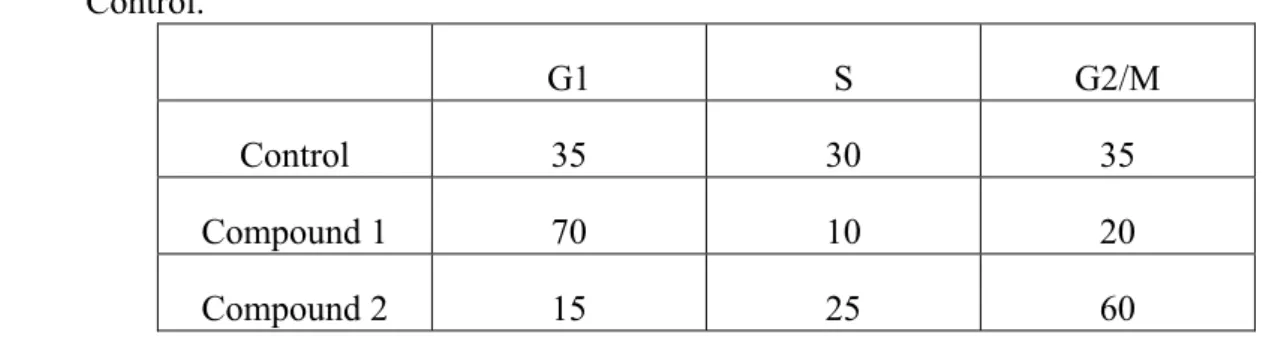
Use the data in Table.1 to answer questions31-32.
The data in Table 1 was obtained from a cancer drug screening study. The cancer cells were treated by Compound 1 and 2, and the percentage of the cells in each phase of the cell cycle was measured by flow cytometry.
Table 1: The percentage of the cells in Cell Cycle Phases after treatment of Compound 1 and 2, without any treatment as Control.
G1 S G2/M
Control 35 30 35
Compound 1 70 10 20
Compound 2 15 25 60
The following I, II, III, IV, and V represent different factors involved in the cell cycle, respectively; I: cyclin, II: cyclin-dependent kinase, III: microtubule, IV: centrosome, V: DNA polymerase
31. Which of the following might be affected by Compound 1?
(A) I, II, or III. (B) I or II. (C) II or III. (D) I, II or V. (E) III or IV 32. Which of the following might be affected by Compound 2?
(A) I, II, or III. (B) I or II. (C) III or IV. (D) I, II or V. (E) II or III.
33. Comparison of the above four constructs (I, II, III, IV) for the transcription of mRNA of gene A, which of the following is in a correct order for the expression of gene A (From high to low)?
(A) I, II, III, IV (B) IV, III, II, I (C) II, I, III, IV (D) III, II, I, IV (E) I, II, IV, III I
II III IV
第 5 頁,共 8 頁【背面有試題】
34. When Thomas Hunt Morgan crossed his red-eyed F1 generation flies to each other, the F2 generation included both red- and
white-eyed flies. Remarkably, all the white-eyed flies were male. He concluded that the involved gene was on the X chromosome. Why he could make this conclusion?
(A) Before this experiment, he already knew the genes are located at chromosome.
(B) Before this experiment, he knew that the sex was determined by X and Y chromosome. (C) He knew the phenotype of eyes was sex-linkage.
(D) His conclusion makes non-sense at all.
(E) Before this experiment, he knew that Y-chromosome carrys very few genes.
35. Which of the following ideas is not consistent with our understanding of animal structure? (A) The environment imposes similar problems on all animals.
(B) The evolution of structure in an animal is influenced by its environment.
(C) All but the simplest animals demonstrate the same hierarchical levels of organization. (D) Different animals contain fundamentally different categories of tissues.
(E) Short-term adjustments to environmental changes are mediated by physiological organ systems 36. Which sequence of blood flow can be observed in either a reptile or a mammal?
(A) left ventricle → aorta → lungs → systemic circulation.
(B) right ventricle → pulmonary vein → pulmocutaneous circulation. (C) pulmonary vein → left atrium → ventricle → pulmonary circuit. (D) vena cava → right atrium → ventricle → pulmonary circuit. (E) right atrium → pulmonary artery → left atrium → ventricle.
37. The following events occur when a mammalian immune system first encounters a pathogen. Place them in correct sequence and then choose the answer that indicates that sequence. I: Pathogen is destroyed. II: Lymphocytes secrete antibodies. III: Antigenic determinants from pathogen bind to antigen receptors on lymphocytes.
IV: Lymphocytes specific to antigenic determinants from pathogen become numerous.V: Only memory cells remain. (A) I, III, II, IV, V (B) III, II, I, V, IV (C) II, I, IV, III, V (D) IV, II, III, I, V (E) III, IV, II, I, V 38. Fossil evidence indicates that horses have gradually increased in size over geologic time.
(A) random selection (B) directional selection (C) stabilizing selection (D) disruptive selection (E) sexual selection
39. Aldosterone synthesis and release is controlled by
(A) hypothalamus-pituitary-axis. (B) the renin-angiotensin system. (C) glucose concentration in the blood. (D) ion concentration in the blood. (E) autoregulation.
40. Why would a gonad cell and a prostate cell respond differently to the same steroid hormone, testosterone? (A) They have different receptor proteins within the cell.
(B) They have different acceptor proteins on the chromatin.
(C) Steroid hormones usually transmit signals that are antagonistic.
(D) The hormone-receptor complex is transcribed and processed differently in the two kinds of cells. (E) The targets of the hormone-receptor complex are different in the two kinds of cells.
41. Which of the following statements is correct about biogeochemical cycling?
(A) The carbon cycle has maintained a constant atmospheric concentration of CO2 for the past million years.
(B) The phosphorus cycle is a sedimentary cycle that involves the weathering of rocks.
(C) The nitrogen cycle involves movement of nitrogen very little of which is chemically altered by either the biotic or abiotic components of the ecosystem.
(D) The phosphorus cycle involves the rapid recycling of atmospheric phosphorus. (E) The carbon cycle is a localized cycle that primarily reflects the burning of fossil fuels.
第 頁,共 8 頁 6
42. After an action potential, the resting potential is restored by (A) the opening of sodium activation gates.
(B) the opening of voltage-sensitive potassium channels and the closing of sodium activation gates. (C) an increase in the membrane's permeability to potassium and chloride ions.
(D) the delay in the action of the sodium-potassium pump.
(E) the refractory period in which the membrane is hyperpolarized.
43. Given the steps shown below, which of the following is the correct sequence for transmission at a chemical synapse? 1. Neurotransmitter binds with receptors associated with the postsynaptic membrane.
2. Ca2+ ions rush into neuron's cytoplasm.
3. Action potential depolarizes the synaptic terminal membrane. 4. Ligand-gated ion channels open.
5. Synaptic vesicles release neurotransmitter into the synaptic cleft.
(A) 1, 2, 3, 4, 5 ( B) 2, 3, 5, 4, 1 (C) 3, 2, 5, 1, 4 (D) 4, 3, 1, 2, 5 (E) 5, 1, 2, 4, 3 44. The signal-transduction pathway in animals that use epinephrine
(A) is a classic example of synaptic signaling.
(B) involves activation of glycogen breakdown in liver and skeletal muscle cells. (C) is a classic example of paracrine signaling.
(D) only B and C are correct.
(E) None of these describes the epinephrine system.
45. During the menstrual cycle, what is the main source of progesterone in females?
(A) growing follicle (B) mature follicle (C) corpus luteum (D)uterus (E) placenta 46. Which of the following statements about succession is correct?
(A) Secondary succession can occur where a disturbance has left soil intact. (B) Primary succession occurs in areas where soil remains after a disturbance. (C) Secondary succession occurs where no soil exists.
(D) Through successional dynamics, all communities will eventually reach a status of equilibrium.
(E) Some cases of succession involve facilitation, a phenomenon in which local species inhibit the growth of newcomers. 47. In peas, a gene controls flower color such that R = purple and r = white. In an isolated pea patch, there are 64 purple flowers
and 36 white flowers. Assuming Hardy-Weinberg equilibrium, what proportion of the population is probably heterozygous for this trait?
(A) 0.48 (B) 0.60 (C) 0.24 (D) 0.16 (E) 0.80
48. As a biologist, it is your job to look for plants that have evolved structures with a selective advantage in dry, hot conditions. Which of the following adaptations would be least likely to meet your objective?
(A) CAM plants that grow rapidly (B) large, fleshy stems with the ability to carry out photosynthesis (C) a thick cuticle on fleshy leaves (D) small, thick leaves with stomata on the lower surface
(E) plants that do not produce abscisic acid and have a thick, short root 49. Which of the following statements about energy flow is incorrect?
(A) Only net primary productivity is available to consumers.
(B) Only about one-thousandth of the chemical energy fixed by photosynthesis reaches a tertiary-level consumer. (C) Secondary productivity declines with each trophic level.
(D) About 90% of the energy at one trophic level does not appear at the next.
第 7 頁,共 8 頁【背面有試題】
50. In excess, cortisol has aldosterone-like effects in the kidney causing salt and water retention. This is because the capacity of 11-hydroxysteroid dehydrogenase type 1 enzyme that converts active cortisol to inactive cortisone in the kidney tubule is destroyed. This may be a factor in the hypertension seen in patients with Cushing's syndrome. What is the mechanism regarding this outcome?
(A) Cortisol is then available to interact with the cortisol receptor, which exist in the kidney. (B) Cortisol is then available to interact with the aldosterone receptor for which it has equal affinity. (C) Cortisol is then available to interact with the androgen receptor for which it has equal affinity. (D) Cortisol is then available to interact with the progestin receptor , which exist in the kidney. (E) none of them.
51. When an organism dies, its muscles remain in a contracted state termed "rigor mortis" for a brief period of time. Which of the following most directly contributes to this phenomenon? There is no
(A) glycogen remaining in the muscles. (B) ATP to move cross-bridges. (C) ATP to break bonds between the thick and thin filaments. (D) oxygen supplied to muscle. (E) calcium to bind to troponin.
52. What kind of data should probably have the greatest impact on animal taxonomy in the coming decades? (A) comparative morphology of living species
(B) fossil evidence
(C) the number and size of chromosomes within nuclei (D) similarities in metabolic pathways
(E) nucleotide sequences of homologous genes 53. Which is not characteristic of all mammals?
(A) having glands to produce nourishing milk for offspring (B) giving birth to live young (viviparous)
(C) a four-chambered heart that prevents mixing of oxygenated and deoxygenated blood (D) having a diaphragm to assist in ventilating the lungs
(E) having hair during at least some period of life
54. Which kind of metabolic poison would most directly interfere with glycolysis? (A) an agent that reacts with oxygen and depletes its concentration in the cell (B) an agent that reacts with NADH and oxidizes it to NAD+
(C) an agent that inhibits the formation of acetyl coenzyme A
(D) an agent that closely mimics the structure of glucose but is not metabolized (E) an agent that binds to pyruvate and inactivates it
55. A major function of the mitochondrial inner membrane is the conversion of energy from electrons to the stored energy of the phosphate bond in ATP. To accomplish this function, membrane must have all of the following features except
(A) the electron transport chain of proteins. (B) proteins to accept electrons from NADH. (C) high permeability to protons. (D) integral, transverse ATP synthase.
(E) proton pumps embedded in the membrane.
56. Which of the following is a good example of sensory adaptation?
(A) hair cells in the utricle and saccule responding to a change in orientation when you bend your neck forward after you have been reading a book
(B) hair cells in the organ of Corti not responding to high-pitched sounds after you have worked on the same construction job for 30 years
(C) immediately after putting on a shirt, your skin feels itchy. However, the itching stops after a few minutes and you are unaware that you are wearing a shirt
(D) cones in the human eye failing to respond to light in the infrared range
(E) rods in the human eye responding to mechanical stimulation from a blow to the back of the head so that a flash of light is perceived
第 頁,共 8 頁 8
57. An animal deficient in adenylyl cyclase
(A) would not respond properly to epinephrine. (B) could not convert ATP to cAMP. (C) would not be able to transmit nerve impulses via a synapse. (D) both A and B are correct.
(E) would be unable to carry out all of the above activities.
58. Which of the following events occurs during prophase I of meiosis? (A) DNA replication
(B) the homologous chromosome pairs separate because linked genes haven't been introduced (C) segregation of alleles of unlinked genes
(D) reduction in chromosome number (E) synapsis and crossing over
59. Proto-oncogenes can be converted to oncogenes by various genetic changes. Which of these mechanisms does not contribute to an abnormal cell cycle?
(A) A gene is transposed to a more active promoter.
(B) Chromosomes break and fragments are translocated from one chromosome to another. (C) Point mutations occur that result in a protein more resistant to degradation.
(D) Extra copies of the gene are made, thereby enhancing expression. (E) DNA methylation takes place.
60. Given the function of the bicoid gene product, if the gene were cloned and large amounts of the product were injected into eggs, which of the following would be true?
(A) The embryos would grow extra wings and legs.
(B) The embryos would die and probably show no anterior development. (C) Anterior structures would form in the area of injection.
(D) The embryos would develop normally. (E) The embryos would grow much larger.
61. According to the concept of punctuated equilibrium, the "sudden" appearance of a new species in the fossil record means that
(A) The species is now extinct.
(B) The species will consequently have a relatively short existence, compared to other species. (C) Speciation occurred over many thousands of years.
(D) Speciation occurred in one generation. (E) Speciation occurred instantaneously.
62. Which of the following correctly pairs a protist with one of its characteristics?
(A) Apicomplexa ---- all parasitic (B) Actinopoda ---- calcium carbonate shell (C) Foraminifera ---- abundant in soils (D) Rhizopoda ---- flagellated stages (E) Kinetoplastids ---- slender pseudopodia
63. If the amount of interstitial fluid surrounding the capillary beds of the lungs were to increase significantly, it would be expected that
(A) the amount of carbon dioxide entering the lungs from the blood would increase. (B) the amount of oxygen entering the circulation from the lungs would increase. (C) the pressure would cause the capillary beds to burst.
(D) the amount of oxygen entering the circulation from the lungs would decrease. (E) you could not make a prediction based on this information.
64. The Bohr effect on the oxygen-hemoglobin dissociation curve is produced by changes in (A) the partial pressure of oxygen. (B) the partial pressure of carbon dioxide. (C) hemoglobin concentration. (D) temperature. (E) pH.
65. Which of the following is not the steroid hormone
(A) androgen (B) testosterone
(C) estrogen (D) leuteinizing hormone (E) glucocorticoid
第 1 頁,共 10 頁 【背面有試題】 S H B H N N H N H NBS hv Br Br Br Br CN O Me A Br (D)H KOtBu (D)H H2/Pd-C (D)H (D)H (D)H H H Br H(D) Br-H(D) O H(D) OH CrO3 CN O
-Me + + CN O Me + O Me C N -N -O Me C+ + CN O -Me高雄醫學大學九十五學年度學士後醫學系招生考試試題
科目:化學 考試時間: 80 分鐘
說明:一、選擇題用 2B 鉛筆在「答案卡」上作答,修正時應以橡皮擦擦拭,切勿使用修
正液(帶),未遵照正確作答方法而致電腦無法判讀者,考生自行負責。
二、試題及答案卡必須繳回,不得攜出試場。
I. Choose one correct answer for the following questions
【單選题】每题1分,共計60分,答錯一题倒扣0.25分,倒扣至本大题零分為止,未作答,不給分不扣分。
1. Consider the resonance of compound A, which one is not its resonance form?
(A) (B) (C) (D) (E)
2. Which of the following compounds is not an aromatic compound?
(A) (B) (C) (D) (E)
3. For each compound below, which one will give 3 signals in its normal, broadband decoupled 13C NMR spectra. (assume the resolution is good to identify all different signal)
Br
NO2 Me
Br
I II III IV V
(A) I, II, III (B) II, III (C) III, IV, V (D) III, V (E) None of the above 4. What will be the major product of the following reaction?
(A) (B) (C) (D) (E) None of the above
5. Which of the following reactions would not show primary kinetic isotope effect?
(A) (B)
(C) (D)
第 2 頁,共 10 頁 H D Br Me H NaOEt H Ph H Me D Ph H Me Ph H H Me Ph D H Me
AK AK-a AK-b AK-c AK-d
O
HO
O O
H
O
6. When bromide AK is treated with NaOEt, four 2-butene are possible products.
In fact, only:
(A) AK-a and AK-b are obtained (B) AK-a and AK-d are obtained
(C) AK-a and AK-c are obtained (D) AK-b and AK-c are obtained (E) None of the above 7. Solvent is an important factor in the nucleophilic reaction. We classified solvent into several categories. What is the best
description of acetone? Acetone is:
(A) nonpolar aprotic (B) polar aprotic (C) polar protic (D) nonpolar protic (E) None of the above
8. Consider the spectrum illustrated below.
Which of the following structures will be best for this spectrum?
(A) (B) (C) (D) (E) None of the above
9. The average mass of a boron atom is 10.81. If you were able to isolate a single boron atom, what is the chance that you would randomly get an atom with mass 10.81?
(A) 0% (B) 0.81% (C) about 11% (D) 10.81% (E) greater than 50%
10. Which of the statements below correctly describes the chair conformations of trans-1,4-dimethylcyclohexane? (A) The two chair conformations are of equal energy.
(B) The higher energy chair conformation contains one axial methyl group and one equatorial methyl group. (C) The lower energy chair conformation contains one axial methyl group and one equatorial methyl group. (D) The higher energy chair conformation contains two axial methyl groups.
(E) The lower energy chair conformation contains two axial methyl groups. 11. Which is a measure of the randomness of a system?
(A) entropy (B) enthalpy (C) free energy (D) halogenation (E) stoichiometry 12. Which of the following species is the least nucleophilic?
(A) H2O (B) BF3 (C) (CH3)3N (D) CH3O- (E) CN- 13. HBr can be added to an alkene in the presence of peroxides (ROOR). What function does the peroxide serve in this
reaction?
(A) nucleophile (B) electrophile (C) radical chain initiator (D) acid catalyst (E) solvent
第 3 頁,共 10 頁 【背面有試題】
14. Which of the following terms best describes the reactive nature of a Grignard reagent?
(A) carbocation (B) free radical (C) electrophile (D) nucleophile (E) carbene
15. The mass spectrum of alcohols often fail to exhibit detectable M peaks but instead show relatively large __________ peaks.
(A) M+1 (B) M+2 (C) M-16 (D) M-17 (E) M-18
16. Absorption of what type of electromagnetic radiation results in transitions among allowed nuclear magnetic spin states? (A) X-rays (B) radio waves (C) microwaves (D) ultraviolet light (E) infrared light 17. For the reaction in which A and B react to form C, the following intial rate data were obtained.
[A] [B] Initial Rate of Formation of C (mol/L) (mol/L) (mol/L. s)
0.400 0.400 2.00 0.400 0.200 0.500 0.800 0.200 1.00
What is the rate law for the reaction?
(A) Rate = k[A][B] (B) Rate = k[A]2[B] (C) Rate = k[A][B]2 (D) Rate = k[A]2[B]2 (E) Rate = k[A]3
18. An NMR spectrometer that operates at a frequency of 60 MHz for 13C NMR spectra, operates at what frequency for 1H
NMR spectra?
(A) 15 MHz (B) 30 MHz (C) 60 MHz (D) 120 MHz (E) 240 MHz 19. How many pairs of degenerate π molecular orbitals are found in benzene?
(A) 6 (B) 5 (C) 4 (D) 3 (E) 2
20. Nitrogen's lone pair electrons occupy what type of orbital in pyridine?
(A) s (B) sp (C) sp2 (D) sp3 (E) p
21. The proton NMR spectrum of an unknown compound contains a triplet at 9.8 ppm. Which of the following could be this unknown?
(A) (CH3)3CCHO (B) CH3CH2CH2CO2H
(C) CH3CH2CH2CHO (D) CH3CO CH2Ph (E) PhCHO 22. Which of the following is also known as a Schiff base?
(A) an imine (B) a cyanohydrin (C) a hydrate (D) sodium hydroxide (E) an aldehyde
23. Carboxylic acids boil at considerably higher temperatures than do alcohols, ketones, or aldehydes of similar molecular weights. This is because they:
(A) have a greater oxygen content. (B) are more acidic.
(C) form stable hydrogen-bonded dimers. (D) are hydrophobic. (E) none of the above. 24. The hydrolysis of esters in base is called:
(A) the Fischer esterification. (B) the Hunsdiecker reaction. (C) the Dieckmann condensation. (D) transesterification. (E) saponification.
25. Peptide bonds are:
(A) ester linkages. (B) imido linkages. (C) ether linkages. (D) amide linkages. (E) disulfide linkages. 26. Nearly all naturally occurring amino acids:
(A) are racemic mixtures. (B) are achiral.
(C) have the (R) configuration at the α-carbon. (D) have the (S) configuration at the α-carbon. (E) have basic side chains.
第 4 頁,共 10 頁
27. To a solution of propyne in diethyl ether, one molar equivalent of CH3Li was added and the resulting mixture was stirred for 0.5 hour. After this time, an excess of D2O was added. Describe the major organic product(s) of this reaction.
(A) CH3C≡CD + CH4 (B) CH3C≡CCH3 (C) CD3C≡CD3 (D) CH3C≡CCD3 (E) CH3C≡CD + CH3D
28. Which of the following metric relationships is incorrect?
(A) 1 microliter = 10–6 liters (B) 1 gram = 103 kilograms
(C) 103 milliliters = 1 liter (D) 1 gram = 102 centigrams (E) 10 decimeters = 1 meter 29. A method of separation that employs a system with two phases of matter, a mobile phase and a stationary phase, is called
(A) filtration. (B) chromatography. (C) distillation. (D) vaporization. (E) homogenization. 30. You take an aspirin tablet (a compound consisting solely of carbon, hydrogen, and oxygen) with a mass of 1.00 g, burn it in air,
and collect 2.20 g of carbon dioxide and 0.400 g water. The molar mass of aspirin is between 170 and 190 g/mol. The molecular form of aspirin is
(A) C6H8O5 (B) C9H8O4 (C) C8H10O5 (D) C10H6O4 (E) none of these 31. Which of the following electrode could be a reference electrode except
(A) SHE (B) NHE (C) SCE (D) Ag/AgCl (E) all of above 32. The light source of fluorescence measurements and detector is usually at
(A) 30 (B) 60 (C) 90 (D) 120 (E) 180 degrees.
33. Consider the following system at equilibrium: N2(g) + 3H2(g) 2NH3(g) + 92.94 kJ
Which of the following changes will shift the equilibrium to the right?
I. increasing the temperature II. decreasing the temperature III. increasing the volume IV. decreasing the volume V. removing some NH3 VI. adding some NH3 VII. removing some N2 VIII. adding some N2
(A) I, IV,VI,VII (B) II, III,V,VIII (C) I,VI,VIII (D) I, III,V,VII (E) II, IV,V,VIII 34. If, at a given temperature, the equilibrium constant for the reaction
H2(g) + Cl2(g) 2HCl(g) is Kp, then the equilibrium constant for the reaction
HCl(g) (1/2) H2(g) + (1/2)Cl2 (g) can be represented as:
(A) 1
Kp2 (B) Kp2 (C)
1
Kp (D) Kp (E) none of above
35. The value of the equilibrium constant, K, is dependent on
Ⅰ . The temperature of the system. Ⅱ . The nature of the reactants and products. Ⅲ . The concentration of the reactants. Ⅳ. The concentration of the products.
(A) Ⅰ , Ⅱ (B) Ⅱ , Ⅲ (C) Ⅲ , Ⅳ (D) It is dependent on three of these choices. (E) It is not dependent on any of these choices.
36. Which of the following would produce a basic aqueous solution?
(A) P4O10 (B) KCl (C) CO2 (D) NH4Cl (E) none of these 37. Which of the following will not produce a buffered solution?
第 5 頁,共 10 頁 【背面有試題】 H H Br Br H H Me Me H2C N+ O -Me Me CH2 Me OH F Cl O Me Cl OH O Me Cl O Me Cl Br EtOH OEt I OH (C) 100 mL of 0.1 M Na2CO3 and 75 mL of 0.2 M HCl (D) 50 mL of 0.2 M Na2CO3 and 5 mL of 1.0 M HCl (E) 100 mL of 0.1 M Na2CO3 and 50 mL of 0.1 M NaOH
38. In the titration of a weak acid HA with 0.100 M NaOH the stoichiometric point is known to occur at a pH value of approximately 10. Which of the following indicator acids would be best to use to mark the endpoint of this titration? (A) indicator A, Ka = 10–14 (B) indicator B, Ka = 10–11
(C) indicator C, Ka = 10–8 (D) indicator D, Ka = 10–6 (E) none of these
39. Silver acetate (AgC2H3O2) is a sparingly soluble salt with Ksp = 1.9 × 10⁻³. Consider a saturated solution in equilibrium with the solid salt. Compare the effects on the solubility of adding to the solution either the acid HNO3 or the base NH3.
(A) Either substance would decrease the solubility.
(B) NH3 would increase the solubility, but HNO3 would decrease it.
(C) NH3 would increase the solubility, but HNO3 would have virtually no effect. (D) Either substance would increase the solubility.
(E) NH3 would decrease the solubility, but HNO3 would increase it. 40. Which of the following compounds is an achiral compound?
(A) (B) (C) (D) (E)
41. Indicate the alcohols (or acids) has the lowest pKa value?
(A) 2,2,2-trifluoroethanol (B) 2,2-dimethylpropanol
(C) 2,2,2-trichloroethanol (D) cyclopropanol (E) cyclohexanol 42. Consider the NMR spectrum of BA, which is shown below. The formula of compound BA is C8H7ClO.
The structure of BA is
(A) (B) (C) (D) (E) None of the above
43. When compound I was heated in ethanol, an ether product was collected (shown below)
The mechanism of this reaction is
(A) SN2 (B) E2 (C) SN1 (D) E1 (E) none of above
第 6 頁,共 10 頁 O O O O CH3 CH3 H H H H H CH3 CH3 H H H HO OH
(A) B2H6 then H2O2/NaOH (B) HCl (C) OsO4 then H2O2
(D) O3 then Me-S-Me (E) Hg(OAc)2 then NaBH4
45. The composition of compound AZ is C7H14O and its spectrum shows the following signals: 6H triplet at 0.9 δ, J=7 Hz; 4H
sextet at 1.6 δ, J=7 Hz; 4H triplet at 2.4 δ, J=7 Hz. What is the structure of compound AZ?
(A) (B) (C) (D) (E) None of the above
46. The rate of a reaction typically increases as the temperature increases because: (A) the A term in the Arrhenius equation increases.
(B) the fraction of molecules with kinetic energy greater than Ea increases. (C) the activation energy decreases.
(D) the activation energy increases.
(E) the molecules make more collisions with the wall of the reaction vessel.
47. If a mixture contains 75% of one compound and 25% of its enantiomer, what is the e.e. of the mixture?
(A) 100 (B) 75 (C) 50 (D) 25 (E) 3
48. How many diastereomers are there of the molecule shown below?
(A) 0 (B) 1 (C) 2 (D) 3 (E) 6
49. Which of the following most closely matches the C≡C stretching frequency?
(A) 3300 (B) 3000 (C) 2200 (D) 1700 (E) 1200 cm-1 50. Which of the following compounds will undergo Friedel-Crafts alkylation with (CH3)3CCl, AlCl3 most rapidly?
(A) toluene (B) iodobenzene (C) acetophenone
(D) benzenesulfonic acid (E) cyanobenzene 51. Which of the following is the most reactive carboxylic acid derivative?
(A) ester (B) anhydride (C) nitrile (D) acid chloride (E) amide 52. Lithium aluminum hydride reduces carboxylic acids, acid chlorides, and esters to:
(A) aldehydes. (B) primary alcohols. (C) secondary alcohols. (D) tertiary alcohols. (E) ketones. 53. Cyclic amides are called:
(A) lactones. (B) lactams. (C) aminals. (D) animals. (E) imines. 54. The structures below are:
(A) not isomers. (B) conformational isomers. (C) cis-trans isomers. (D) structural isomers. (E) both B and D
55. What two atomic orbitals or hybrid atomic orbitals overlap to form the C–C π bond in ethylene?
(A) C sp3 + C sp3 (B) C sp3 + C sp2 (C) C sp2 + C sp2 (D) C sp2 + C p (E) C p + C p 56. The following three equations represent equilibria that lie far to the right.