www.elsevier.comrlocaterpowtec
Microstructural description of packed bed using Voronoi polyhedra
Y.C. Liao
a, D.J. Lee
a,), Pinjing He
ba
Department of Chemical Engineering, National Taiwan UniÕersity, Taipei 10617, Taiwan b
State Key Laboratory of Pollution Control and Resource Reuse, School of EnÕironment Science and Engineering, Tongji UniÕersity, Shanghai 200092, China
Received 11 September 2000; received in revised form 11 December 2000; accepted 22 March 2001
Abstract
Ž .
This work has examined the feasibility of using Voronoi polyhedron VP in describing the microstructure of a simulated packed bed
Ž . Ž .
with controlled disorderness. A transition in microstructure among the regularly packed crystal-like and randomly packed liquid-like states was detected over a wide range of the critical contact angles among particles. The mean asphericity and the entropy function of VP volume were noted as adequate indices for parking characteristics of the packed bed. q 2002 Elsevier Science B.V. All rights reserved.
Keywords: Voronoi polyhedron; Packed bed; Disorderness; Transition
1. Introduction
Ž .
Voronoi polyhedra VP , defined as the convex region of the close space to their own central particle, tessellate
w x
and fill the space of the multiparticle system 1 . The Voronoi–Delaunay tessellation was introduced to analyze
w x
random close packing of hard sphere 2–5 and has found applications in a variety of fields for identifying the
mi-w x
crostructures of multiobject system 6–22 .
The analysis of VP is especially effective in examining the local structure of a multiparticle system. The distribu-tions of volume, surface area, numbers of faces, and
Ž .
asphericity parameter h of VP occupied by constituting particles are proposed as a better microstructural descriptor
Ž .
than is the radial distribution function RDF , since the latter has averaged out the structural information along the radial direction. The h value is defined as A3r36p V2,
where A and V are the surface area and volume of VP, respectively, and h is unity for a sphere and is greater than
Ž
unity for other shapes for example, body-centered cubic, 1.33; octahedron, 1.65; simple cubic, 1.91; and
tetrahe-.
dron, 3.31 . Owing to the capability to identify the shape of the VP, many investigators recommended the use of h, instead of the other VP descriptors, in the differentiation of
w x w x
the detailed structures among phases 7,9,11 . Everett 23
)
Corresponding author. Tel.: 5632; fax: q886-2-2362-3040.
Ž .
E-mail address: [email protected] D.J. Lee .
estimated the configurational entropy changes based on the
w x
face distribution of VP. Hsu and Mou 8 employed the same idea for estimating entropy change during melting an LJ solid.
w x
Liao and Lee 24 investigated the feasibility of using
Ž
VP to detect the existence of ‘channel’ particle-free
.
regime in the multiparticle systems. They concluded that VP is not capable of detecting the existence of a channel region for a largely perturbed lattice system. Later, the
w x
same authors 25 discussed the general ability of VP to describe the configurations of a multiparticle system with a controlled disorderliness for three lattice systems: a
free-Ž . Ž .
centered cubic fcc lattice, body-centered cubic bcc
Ž .
lattice, and simple cubic sc lattice. Unlike most previous studies, these authors demonstrated that no single VP descriptor is better than the other ones for detecting the microstructural changes after perturbation to particles. They also proposed that all VP descriptors should be considered so as to provide a more comprehensive description to the microstructure of the multiparticle systems.
Detailed descriptions of microstructures in a packed bed are essential to predict its associated effective transport
w x
properties 26 . A packed bed is normally composed of hard particles. Restated, a particle has to physically come into contact with the other three particles below it to reach mechanical balance. The total volume of the packed bed of a fixed number of particles would change according to the
Ž .
way the particles are packed variable–volume system .
w x
Tassopoulos and Rosner 27 discussed the employment of microstructural descriptors, such as volume fraction, mean
0032-5910r02r$ - see front matter q 2002 Elsevier Science B.V. All rights reserved.
Ž .
and distribution of coordination number, contact normal distribution, and fabric tensor, on the description of their
w x
simulated packed bed. Spedding and Spencer 28 em-ployed Voronoi polyhedron analysis to provide a much more precise measurement of the volume occupied by constituent particles in their simulated packed bed. How-ever, no comprehensive work had been devoted to examine the feasibility of using VP analysis to describe the mi-crostructure of a packed bed with well-controlled disorder-liness.
In this work, we first generated a three-dimensional simulated packed bed with well-controlled disorderliness. Then, the VP analysis was adopted for characterizing the microstructures in the packed bed. The occurrence of
Ž .
‘phase transition’ among the regularly packed crystal-like
Ž .
and randomly packed liquid-like state denotes a sudden change in the effective transport properties like thermal conductivity of the packed bed. We demonstrated that the VP are more sensitive than RDF to detect such a structural change.
2. Methods
We refined the two-dimensional rain model proposed
w x
by Ref. 29 to a three-dimensional version for making the packed bed. A parameter, termed as the critical angle uc
w30 , is adopted to represent the particle–particle interac-x
tions. A large u denotes a strong particle–particle interac-c
tion. Particles were allowed to fall down from the top end
Ž .
of a rectangular parallelepiped cell with size 20 L = 20
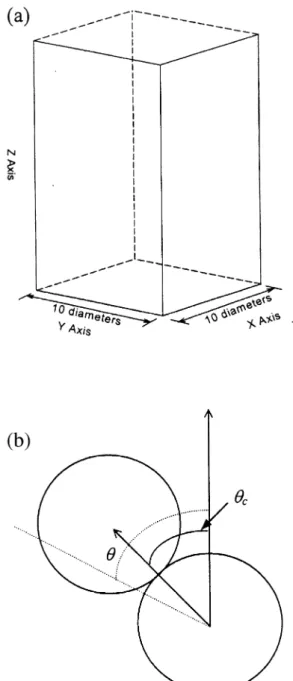
ŽW = 100 H of particle’s radius Fig. 1a . Periodical. Ž . Ž .
boundary conditions were applied along the x and the y directions to simulate a very large particle system.
At the start of the simulation, a particle was placed at the top of the cell by randomly choosing its position from the lattice of 20 = 20 even grids. The particle’s position was further perturbing by the magnitude of p with its horizontal direction randomly chosen. Then, the particle was released to fall down and stick onto the bottom of the cell. The initial position of the second particle was ran-domly chosen and perturbed by the same way. Afterward, it was released from the stop end of the cell and and allowed to fall. The second particle could fall to the cell
Ž .
bottom or hit the first particle at an angle of attack u
ŽFig. 1b . The second particle would stick to the first one.
when u - u . Otherwise, the second particle would slidec
around the first particle and fall down to the bottom of the cell. The process was repeated until 2000 particles were released and a packed bed was formed. The packing characteristics of particles were clearly controlled by the parameters p and u . With u s 908, the falling particle,c c
once it hits the other ones, would stick. With u s 08, thec
falling particle has to move down to a place contacting with the other three existing particles to attain the mechan-ical balance.
Ž . Ž .
Fig. 1. a Schematic of the packing cell. b The measure of angle of
Ž . Ž .
attack u and the critical angle u .c
The Voronoi analysis was conducted by the method
w x
proposed by Tanemura et al. 31 , from which the normal-ized probability distributions of the number of faces, area
ŽA , volume V , asphericity parameter h , and the asso-. Ž . Ž . Ž .
ciated Boltzmann–Gibbs entropy S for these distribu-tions of VP were calculated. Other details could be found
w x
in Ref. 25 . Notably, the structure of the packed bed is not homogenous in the z direction, but is bound at the cell bottom and open at the top. In the present study, the packed bed of height 20–40 particle diameters was gener-ated, depending on the value of the critical angle. To simulate a very large packed bed and eliminate the bound-ary effects, we chose a window for VP analysis of the
height of 10 particle diameters. It was noted that if only the edges of the window were at least 2 particle diameters in distance away from the cell bottom and from the top surface, the VP analysis yielded the same results regardless of the choice of the window.
3. Results and discussion
Fig. 2 demonstrates the packed bed generated at u s 08c
or 908 and p s 0.001 or 0.2, respectively. Apparently, the particles would be packed in an orderly manner when both
uc and p values are low. The corresponding bed height
had also become lesser.
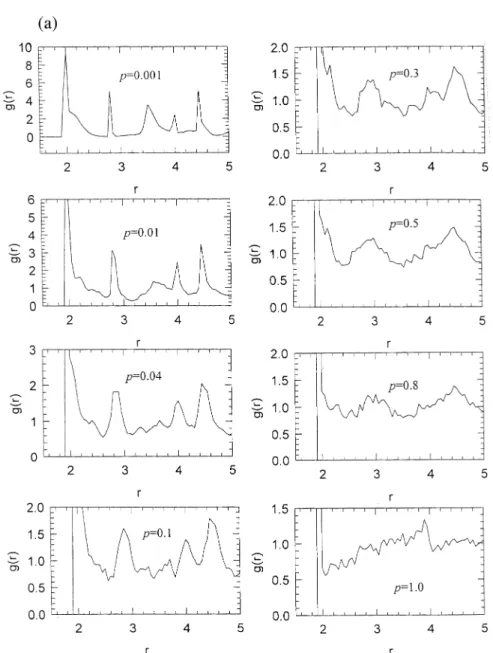
Fig. 3a and b illustrate the RDFs for the packed beds with u s 08 and 908, respectively. Notably, at u s 08, thec c
Ž . Ž .
peaks of g r appeared at the distances of one r s 2 and
Ž .
of two diameters r s 4 , indicating the perfect center-body crystal structure for hard spheres contacting with each other. At the greater p, although some noises were intro-duced, the bed structures closely correspond to a bcc lattice.
Different characteristics were noticeable for the case with the critical angle of 908. At p - 0.04, the packing structure clearly revealed a crystal-like characteristic. With increasing p value, despite the preservation of the r s 2
Ž .
peak indicating the direct particle–particle contact , the
Ž .
g r becomes flat in shape. Such an occurrence indicated
Ž . Ž . Ž . Ž .
that the packing characteristics for the system at greater p would reveal a liquid-like configuration. The occurrence of ‘phase transition’ among crystal-like and liquid-like struc-tures is, hence, noticeable. Since all particles have to contact with each other, their configuration cannot reach a
w x
gas-like state as the constant–volume system 25 .
At u s 08, since all particles would not stick to thec existing particles but have to fall down to the position satisfying static balance of forces, the formed cake would resemble a centered body structure, thereby having a solid porosity close to 0.6. As u increases, the particles tend toc
stick to the originally existing particles in the packed bed, hence, yielding a loose bed. Such a tendency becomes more apparent when the p value becomes large. At p s 1.0, the solid fraction would be reduced to 0.15 at u s 908c
Ždata not shown ..
The distributions of face number, area, and volume of VP all change with the disorderliness of packing. Fig. 4 demonstrates the mean volume of VP of the packed bed. The volume is normalized to the solid phase. Restated, the
Ž .
average volume of VP is 1r0.6 s 1.67 for the closely packed bed. Clearly, the VP volume at u s 08 andror atc
p s 0.001 is approximately 1.67. When both uc and p increase, the volume of VP increases accordingly. At
u s 908 and p s 1.0, the volume of VP becomes 6.2,c
approximately 3.6 times to the close packing. Clearly, large u and p values yield a loosely packed bed.c
With the configurational entropy defined as:
`
S s yf
H
f f ln f fŽ
.
Ž
.
df y ln Df ,Ž
.
Ž .
10
Ž . Ž . Ž .
Fig. 3. Radial distribution functions RDFs for the packed beds with a u s 08 and b u s 908. Left to right and up to down: p s 0.001, 0.01, 0.04, 0.1,c c
Ž .
Fig. 3 continued .
where f is the probability distribution of some measure f and the last term counts the bias for numerical partition, the analogy with phase change phenomena is established
w25 . Restated, the entropy Sx provides a single-value f
measure to the variance of a distribution. S s 0 for a deltaf
distribution and S ) 0 for a widely distributed function.f
Fig. 5 demonstrates the configurational entropy function
Ž .
of VP volume SV . All the entropy functions for the other microstructural descriptors resemble the shape demon-strated in Fig. 5 and are not shown here for brevity. It is
Ž .
worth noting that the fluctuations noted in SV Fig. 5 are
Ž .
more easily detectable than those in VAV E plot Fig. 4 . Hence, the former is a more sensitive microstructural descriptor to the packed bed than is the latter.
At u s 08, since the simulated packed bed would be inc
the form of bcc lattice, S s 0 regardless of the magnitudeV
of p. At a fixed u , marked increase in Sc V occurs when parameter p increases to exceed certain threshold value. Such a marked increase corresponds to the occurrence of
Ž .
phase transition detected in the RDF plots Fig. 3a and b . Restated, the increase of the configurational entropy identi-fies the occurrence of phase transition of packing charac-teristics in a packed bed.
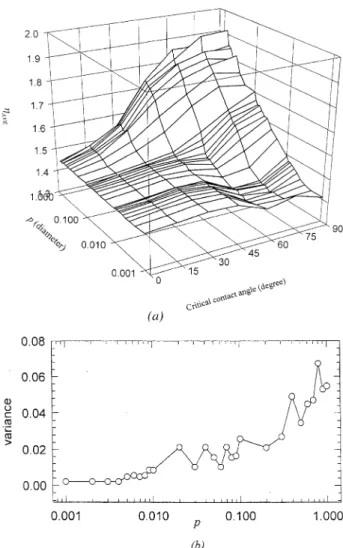
Fig. 6a demonstrates the mean values of the calculated
Ž .
asphericity distributions hAV E as the function of u and pc
values. The corresponding variances of h distributions become the largest at u s 908, which are illustrated in Fig.c 6b. Fig. 6c demonstrates the h distributions at u s 908c and under various p. Note that since the particles were randomly perturbed, these figures contain fluctuations. At
u s 08 andror p s 0.001, hc AVE values are all around
Ž .
Fig. 4. Mean volume of VP of the packed bed.
ŽFig. 6b , indicating that the VP in the packed bed all.
exhibit a shape resembling the body-centered cubic lattice. Such an observation closely corresponds to the crystal-like
Ž
structure as demonstrated in RDF functions Fig. 3a and
.
b . At greater u and p values, hc AVE value increases to around 1.9 with an increasing variance, indicating that the
h distribution has shifted to greater value region with a
broader distribution. For example, as Fig. 6c depicts, the h distribution covers a wide range from 1.3 to 2.3 at u s 908c and p s 1.0. Restated, the corresponding VP have a vari-ety of shapes, ranging from that resembling body-centered
Ž .
Fig. 5. Configurational entropy function of VP volume SV of the packed bed.
Ž . Ž .
cubic h s 1.33 to that among simple cubic h s 1.91
Ž .
and tetrahedron h s 3.31 and many other elongated, disordered shapes. As Fig. 6c reveals, the variance of h distribution starts to increase at p s 0.03 ; 0.04. This trend could be used as an index to identify the phase transition among crystal-like and liquid-like states for par-ticle packing.
Ž
By using the change in mean values VP volume or
. Ž . Ž
hAV E or entropy function SV of VP characteristics and
.
all the other indices as well , the p value at which phase change occurs could be identified. Table 1 lists the corre-sponding phase change points using VAV E, hAVE, and SV
as the indicators. As Table 1 reveals, using VAV E as an indicator the phase change could be detected at u ) 158.c
The other two indicators are apparently more sensitive than the mean volume is. Moreover, the p value required including phase transition decreases with the increasing u .c
Restated, if the particle–particle interaction has become
Ž . Ž .
Fig. 6. Asphericity of VP of the packed bed. a hAV E; b variance of h
Ž .
distributions at u s908; and c the h distributions at u s908. Left toc c
right and up to down: ps 0.001, 0.01, 0.04, 0.1, 0.3, 0.5, 0.8, and 1.0, respectively.
Ž .
Fig. 6 continued .
Ž .
strong enough larger u , the phase transition could morec
readily occur at a small perturbation of the initial position of particles.
Table 1
The p values where solid–liquid phase change occurs at various critical contact angles using VAV E, S , and hV AVE values
Critical Range of p Range of p Range of p
Ž . Ž . Ž .
contact value VAV E value SV value hAVE Ž . angle 8 a 0 NA NA NA 15 NA 0.2–0.3 0.2–0.3 30 0.2–0.3 0.1–0.2 0.1–0.2 45 0.1–0.2 0.04–0.05 0.09–0.1 60 0.07–0.08 0.03–0.04 0.05–0.06 75 0.03–0.04 0.01–0.02 0.02–0.03 90 0.006–0.007 0.004–0.005 0.005–0.006 a Not available. 4. Conclusions
We examined the feasibility of using Voronoi
polyhe-Ž .
dron VP for describing the microstructures of a simulated packed bed with controlled disorderliness using the critical
Ž . Ž .
angle uc and perturbed distance p as parameters. The RDFs revealed that the microstructure of packed bed
tran-Ž .
sited from a regularly packed crystal-like to a loosely
Ž .
packed liquid-like pattern when both the u and p hadc become large. In conjunction with the occurrence of this transition, the normalized probability distributions of the
Ž . Ž .
number of faces, area A , volume V , asphericity
param-Ž . Ž .
eter h , and the associated Boltzmann–Gibbs entropy S for these distributions of VP changed accordingly.
VP could provide more configurational information re-garding the packing characteristics in the packed bed. Among all VP descriptors investigated, the mean aspheric-ity and the entropy function of VP volume were noted
adequate indices for packing characteristics of the packed bed. The resulting asphericity distribution illustrated that all VP exhibit a shape resembling the body-centered cubic lattice in solid-like configuration. After phase transition, the VP have a variety of shapes, ranging from that resem-bling body-centered cubic to that among simple cubic and tetrahedron and many other elongated, disordered shapes. The critical p values corresponding to the occurrence of solidrliquid transition in microstructure of packed bed were identified and tabulated.
List of symbols
A surface area of VP mŽ 2.
f distribution of measure yŽ .
g radial distribution function yŽ .
p degree of disorderliness yŽ .
r radial direction mŽ .
SV entropy for VP volume yŽ .
Sf entropy for measure, f yŽ .
V volume of VP mŽ 3.
VAV E Ž
3.
average volume of VP m Greek letters
C probability density function of the physical
quan-Ž .
tity b y
u angle of attack 8Ž . uc critical contact angle 8Ž . h asphericity of VP yŽ .
hAV E average asphericity of VP yŽ . f measure of some distributions yŽ .
Acknowledgements
The authors appreciate Prof. C.Y. Mou of Department of Chemistry, National Taiwan University, for providing the VP program.
References
w x1 G.F. Voronoi, J. Reine, Angew. Math. 134 1908 198.Ž . w x2 J.D. Bernal, Proc. R. Soc. London, Ser. A 280 1964 299.Ž . w x3 J.D. Bernal, J.L. Finney, Discuss. Faraday Soc. 43 1967 62.Ž . w x4 I.L. Finney, Proc. R. Soc. London, Ser. A 319 1970 495.Ž . w x5 M.R. Hoare, J. Non-Cryst. Solids 31 1978 157.Ž . w x6 H.C. Hsu, A. Rahman, J. Chem. Phys. 71 1979 4979.Ž .
w x7 G. Ruocco, M. Sampoli, R. Vallauri, J. Mol. Struct. 250 1991 259.Ž . w x8 T.J. Hsu, C.Y. Mou, Mol. Phys. 75 1992 1329.Ž .
w x9 J.C.G. Motoro, J.L.F. Abascal, J. Chem. Phys. 97 1993 4211.Ž . w10 J.C.G. Motoro, F. Bresme, J.L.F. Abascal, J. Chem. Phys. 101x
Ž1994 10892..
w11 J.P. Shih, S.Y. Sheu, C.Y. Mou, J. Chem. Phys. 100 1994 2202.x Ž . w12 M.I. Aoki, K. Tsumuraya, J. Chem. Phys. 104 1996 6719.x Ž . w13 P. Jund, D. Caprion, R. Jullien, Europhys. Lett. 37 1997 547.x Ž . w14 A. Baranyai, I. Ruff, J. Chem. Phys. 85 1986 365.x Ž .
w15 A. Goede, R. Preissner, C. Frommel, J. Comput. Chem. 18 1997x Ž .
1113.
w16 J. Bohm, M. Bohm, R.B. Heimann, Cryst. Res. Technol. 31 1996x Ž .
1069.
w17 N.W. Thomas, Acta Crystallogr., Sect. B: Struct. Sci. 52 1996 939.x Ž . w18 S. Ghosh, Z. Nowak, K. Lee, Acta Mater. 45 1997 2215.x Ž . w19 S. Moorthy, S. Ghosh, Comput. Methods Appl. Mech. Eng. 151x
Ž1998 377..
w20 R.E. Eils, K. Bertin, B. Saracoglu, E. Rinke, F. Schrock, Y. Parazza,x
M. Usson, Z.H.K. Robertnicoud, J.M. Stelzer, T. Chassery, C.
Ž .
Cremer, J. Microsc. 177 1995 150.
w21 M. Gerstein, J. Tsai, M. Levitt, J. Mol. Biol. 249 1995 955.x Ž . w22 J.D. Rogers, R.L. Long, J. Membr. Sci. 134 1997 1.x Ž . w23 D.H. Everett, Discuss. Faraday Soc. 43 1967 82.x Ž . w24 Y.C. Liao, D.J. Lee, Chem. Eng. Commun. 176 1999 77.x Ž . w25 Y.C. Liao, D.J. Lee, B.H. Chen, Powder Technol., in press.x w26 G.J. Cheng, A.B. Yu, P. Zulli, Chem. Eng. Sci. 54 1999 4199.x Ž . w27 M. Tassopoulos, D.E. Rosner, AIChE J. 38 1992 15.x Ž .
w28 P.L. Spedding, R.M. Spencer, Comput. Chem. Eng. 22 1998 247.x Ž . w29 W.M. Lu, K.J. Huang, AIChE J. 41 1995 1443.x Ž .
w30 M. Suzuki, T. Oshima, Powder Technol. 36 1983 181.x Ž .