This article was downloaded by: [National Chiao Tung University 國立交通大學] On: 27 April 2014, At: 22:58
Publisher: Taylor & Francis
Informa Ltd Registered in England and Wales Registered Number: 1072954 Registered office: Mortimer House, 37-41 Mortimer Street, London W1T 3JH, UK
Aerosol Science and Technology
Publication details, including instructions for authors and subscription information:
http://www.tandfonline.com/loi/uast20
Design and Testing of a Personal Porous-Metal
Denuder
Chuen-Jinn Tsai , Cheng-Hsiung Huang , Si-Ho Wang & Tung-Sheng Shih Published online: 30 Nov 2010.
To cite this article: Chuen-Jinn Tsai , Cheng-Hsiung Huang , Si-Ho Wang & Tung-Sheng Shih (2001) Design and Testing of a Personal Porous-Metal Denuder, Aerosol Science and Technology, 35:1, 611-616
To link to this article: http://dx.doi.org/10.1080/02786820117809
PLEASE SCROLL DOWN FOR ARTICLE
Taylor & Francis makes every effort to ensure the accuracy of all the information (the “Content”) contained in the publications on our platform. However, Taylor & Francis, our agents, and our licensors make no representations or warranties whatsoever as to the accuracy, completeness, or suitability for any purpose of the Content. Any opinions and views expressed in this publication are the opinions and views of the authors, and are not the views of or endorsed by Taylor & Francis. The accuracy of the Content should not be relied upon and should be independently verified with primary sources of information. Taylor and Francis shall not be liable for any losses, actions, claims, proceedings, demands, costs, expenses, damages, and other liabilities whatsoever or howsoever caused arising directly or indirectly in connection with, in relation to or arising out of the use of the Content.
This article may be used for research, teaching, and private study purposes. Any substantial or
systematic reproduction, redistribution, reselling, loan, sub-licensing, systematic supply, or distribution in any form to anyone is expressly forbidden. Terms & Conditions of access and use can be found at
Published by Taylor and Francis 0278-6826=01=$12.00 C .00
Design and Testing of a Personal Porous-Metal Denuder
Chuen-Jinn Tsai,
1Cheng-Hsiung Huang,
1Si-Ho Wang,
1and Tung-Sheng Shih
2 1Institute of Environment Engineering, National Chiao Tung University, Hsin Chu, Taiwan2Institute of Occupational Safety and Health, Council of Labor Affairs, Taipei, Taiwan
A personal denuder made of porous-metal disc has been de-signed and tested. The entire casing and substrate support are made of Te on, and the sampling ow rate is 2 L/min. The sampler con-sists of a two-stage cascade impactor (having cut-off aerodynamic diameters of 9.5 and 2.0 m, respectively) to collect liquid par-ticles and two porous-metal discs (diameter: 2.54 cm; pore size: 100 m; thickness: 0.317 cm) to collect basic and acidic gases, re-spectively. The denuder was tested for gas collection ef ciency and capacity at a gas concentration of two times the permissible expo-sure limit (PEL, promulgated by Taiwan Institute of Occupational Safety and Health (IOSH)), with relative humidity (RH) of 80 §
5% and temperature of 30 § 3±C. The test data indicate that the
gas collection ef ciency is high, and the capacity is suf cient for the acidic/basic gas sampling in the workplace. Using 5% (w/v, g/mL) sodium carbonate/1% (w/v) glycerol coating on the porous-metal disc, the collection ef ciency is 91.2 § 0.26% (average §
standard deviation), 95.08 § 0.06% and 100§ 0.04%, and the
ca-pacity is 4.47, 7.2, and 2.5 mg for HNO3, HCl and HF, respectively.
The collection ef ciency for NH3 for the porous-metal disc with
4% (w/v) citric acid coating is 96.39 § 0.13%, and the capacity is
33.6 mg.
INTRODUCTION
Diffusion denuder is a sampler for removing gases from an aerosol stream to measure their concentrations separately. Gas or vapor molecules diffuse rapidly to the wall of a diffusion sampler and are adsorbed onto the wall coated with a suitable material. Particles are collected at the downstream lter. The gas concentration can be determined by extracting the coated substrates and analyzing the samples.
Original denuders were made of straight cylindrical tubes (Ferm 1979). Later, Possanzini et al. (1983) designed an annu-lar denuder system with much better gas collection ef ciency and absorptive capacity. Pui et al. (1990) designed a compact
Received 31 January 2000; accepted 25 May 2000.
Address correspondence to Chuen-Jinn Tsai, Institute of Environ-mental Engineering, National Chiao Tung University, No. 75 Poai Street, Hsin Chu, Taiwan. E-mail: [email protected]
coiled denuder with performance comparable to that of an an-nular denuder. Koutrakis et al. (1993) and Sioutas et al. (1996) developed a glass honeycomb denuder/ lter pack system to col-lect atmospheric gases and particles. The system is consider-ably smaller than the annular denuder system and can be eas-ily used for large eld studies. Wai et al. (1994) developed a high ef ciency compact diffusion denuder using porous-metal discs. The small size of the denuder makes it possible to de-sign a compact atmospheric and/or indoor denuder sampling system.
Wai et al. (1994) reported that when using 1% (w/v, g/mL) sodium carbonate/1% (w/v) glycerol coating in the porous-metal disc, the collection ef ciencies of SO2and HNO3were higher than 99% and 93% at 10 L/min, respectively. If a 2% sodium carbonate/1% glycerol coating was used, the gas collection ca-pacity of the porous-metal disc was as high as 8.4 mg for SO2. The collection ef ciency and capacity have not been determined for other gases. The particle loss in the size range 0.1–2.5 ¹m
for the porous-metal disc was below 3%.
In this study, a personal porous-metal denuder intended for workplace acidic aerosol sampling was designed and tested. The ow rate is 2 L/min. This denuder has a two-stage cascade im-pactor with the cut-off aerodynamic diameter of 9.5 and 2.0 ¹m. Two porous-metal discs (diameter: 2.54 cm; pore size: 100 ¹m; thickness: 0.317 cm; P/N 1000, Mott Inc., Farmington, CT) were placed downstream of the cascade impactor to remove basic and acidic gases, followed by a 37 mm lter holder to collect parti-cles smaller than 2.0 ¹m. The cascade impactor was tested for particle collection ef ciency and wall loss. The porous-metal discs were tested for gas collection ef ciency and capacity of HNO3, HCl, HF, and NH3at two times the permissible exposure limit (PEL, promulgated by Taiwan IOSH), with a 80 § 5% rel-ative humidity (RH) and a 30 § 3±C temperature. Currently, the PEL of Taiwan IOSH for HNO3, HCl, HF, and NH3 is 2, 5, 3, and 50 ppm, respectively. The condition at 80% RH and 30±C is a stringent condition and is speci ed in the standard procedure for certifying a reference sampling and analysis method of the Taiwan IOSH (1996).
611
612 C.-J. TSAI ET AL.
Figure 1. Schematic diagram of the present personal denuder. PRESENT DESIGN
The schematic diagram of the personal denuder sampler is shown in Figure 1 and its detailed drawing is shown in Figure 2. The sampler is made of Te on to minimize interaction between internal surfaces and reactive gases. The outside diameter is
Figure 2. Detailed drawing of the present personal denuder. (a) Cascade impactor, (b) casing, (c) porous-metal disc, and (d) lter
holder.
34.6 mm, and the total length is 90 mm. The sampling ow rate is 2 L/min.
The cascade impactor is mainly used to remove and clas-sify large liquid particles that may be collected by the down-stream porous-metal discs and interfere with gas concentration
measurement. Liquid particles collected by the cascade im-pactors can be analyzed further by the ion chromatograph to determine the concentration of particles. Each stage of the cas-cade impactor has a single round nozzle. The diameter of the nozzle is 7.2 and 1.9 mm for the rst and second stage, respec-tively. Since most of acidic aerosol particles are liquid in the workplace, a removable porous-metal disc (OD: 1.2 cm; other dimensions are the same as PN/1000, Mott Inc.) is used as the impaction substrate to make use of its capillary action to prevent particle overloading problems.
In the loading test, collection characteristics of liquid parti-cles on a at impaction plate and a porous-metal substrate were compared. Monodisperse oleic acid particles of 10.6 ¹m in aero-dynamic diameter, 5–10 #/cm3in concentration were sampled
for 2 h. The total loaded particle mass was about 0.7 mg. The results showed that liquid particle permeated into the porous-metal substrate and no liquid droplets remained on the surface. Therefore the collection ef ciency of subsequent particles is not expected to be affected. In comparison, particles pile up into a large liquid droplet on the at impaction surface, which was subsequently reentrained.
The rst and second porous-metal discs were coated with citric acid and sodium carbonate/glycerin to remove ammonia and acidic gases, respectively. Different coating concentrations were tested in order to nd a suitable concentration which has a high gas collection ef ciency and capacity for 8 h continu-ous sampling in the workplace. Fine acidic aerosol particles not collected by the impactor and denuder discs are collected by the 37 mm after lter. If volatilization loss of particles from the after lter is a problem, several other lter materials can be used after this lter to absorb volatilized gases. However, volatilization loss is not the objective of this study and was not investigated.
EXPERIMENTAL METHOD
Particle Collection Efciency and Wall Loss of the Cascade Impactor
The particle collection ef ciency and wall loss were deter-mined using monodisperse oleic acid test particles as described in Tsai and Cheng (1995). The particles containing uorescein dye tracer were generated by a vibrating ori ce monodisperse aerosol generator (VOMAG; TSI Model 3450, TSI Inc., St. Paul, MN). The aerosols were dried and the charge neutral-ized before being introduced into the testing stage of the cas-cade impactor. After sampling for 5–30 min, the impactor and the after- lter were washed with distilled water buffered with 0.001 N NaOH in known volumes. The washed solution was measured using a uorometer (10-AU Fluorometer, Turner Designs, CA) to determine the dye concentration of different portions of the impactor and after- lter. Assuming that the dye concentration is proportional to the mass concentration of col-lected particles, the collection ef ciency ´(%) and wall loss (%)
can be calculated as follows: ´(%)D M2
M1C M2 £ 100%; [1]
Loss(%) D M M3
1C M2C M3 £ 100%; [2] where M1; M2, and M3are the mass concentration of the after- lter, impactor plate, and the other portions of the impactor, respectively. An aerodynamic particle sizer (APS; TSI Model 3310A) was used to check the monodisdersity and steadiness of the testing aerosols before and after each test.
Particle Loss in the Porous-Metal Disc
Particle loss in the porous-metal disc was determined using monodisperse polystyrene latex particles (PSL) generated by an atomizer (Retec X-70/N, Cavetron Corp., Portland, OR) and dried by a silica gel diffusion drier. The PSL particles were further neutralized by a Kr-85 neutralizer before being intro-duced into a mixing chamber. From the chamber, particles were sampled through the porous-metal disc by a laser aerosol spec-trometer (PMS Model LAS-X, Particle Measuring Systems Inc., Boulder, CO) to determine the inlet and outlet particle con-centrations (N1and N2). Particle loss in the porous-metal disc, Lossp(%), was calculated as
Lossp(%) D 1 ¡ NN2
1 £ 100%: [3]
Gas Collection Efciency and Capacity of the Porous-Metal Disc
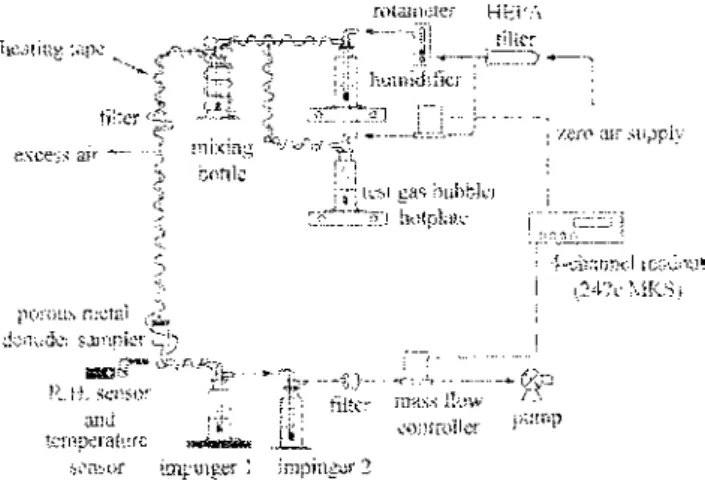
Figure 3 shows the test set up to measure the gas collection ef ciency of the porous-metal disc for HNO3, HCl, or HF gases. Desirable test gas concentration was generated by aerating clean
Figure 3. Test set up for measuring gas collection and
capa-city.
614 C.-J. TSAI ET AL.
air through a bubbler containing a known concentration of acidic solution. A hot plate was used to heat up the bubbler to facilitate gas generation. To generate NH3gas, a standard gas bottle was used instead of a bubbler. The test gas was then mixed in a mixing bottle with humid air coming from a humidi er (also a bubbler) containing deionized water. Heating tape was used throughout the sampling line to prevent gas condensation on the wall. By adjusting the concentration of bubbling liquid, hot plate temperature, and ow rate of the mixing humid air, it was possible to obtain the desirable test gas concentration at two times the PEL, 30 § 3±C and 80 § 5% RH.
A quartz lter was used to collect small particles that might be generated in the test system before introducing the test gas to the porous-metal disc. Two impingers with proper absorbing so-lutions were used in series to collect gas that penetrated through the porous-metal disc. After sampling, the porous-metal disc was extracted with distilled deionized water in a low-pressure chamber at 0.2 atm (Wai et al. 1994).
The concentration of the test gas collected on the disc and impingers (M4 and M5) was determined by an ion chromato-graph (Model 4500i, Dionex Corp., CA). Two impingers were used to collect test gas, and M5 is the sum of gas concentra-tions of the two impingers. The second impinger was used to check whether the rst one broke through. The gas collection ef ciency of porous denuder, ´g(%), was calculated as
´g(%) D M4
M4C M5 £ 100: [4]
The gas collection ef ciency was measured at the sampling time of 1, 2, 3, and 4 h. At each sampling time, the test was repeated three times to improve the precision of the experiment. Breakthrough time was de ned as the time at which the col-lection ef ciency dropped below 95%. Gas colcol-lection capacity, expressed in mg, was calculated by the sampling air volume at the breakthrough time multiplied by the test gas concentration. Two different coating concentrations were used for the test. For acidic gases, 10 ml, 3 or 5% (w/v in g/mL) sodium carbonate, 1% (w/v) glycerol in 1:1 (v/v) methanol/water solution was used. For ammonia gas, 10 ml, 2 or 4% (w/v) citric acid in ethanol was used. The coating solution concentration is higher than that of the denuder used for atmospheric sampling (Wai et al. 1993; Sioutas et al. 1996) since the latter was found to be insuf cient for the high challenging gas concentration. After coating, the porous-metal discs were dried by passing nitrogen gas through them.
Careful QA/QC procedure in this study showed that the me-thod detection limit was 1.5, 4.0, 1.5, and 15.1 ppb, in terms of gas phase concentration, for HNO3, HCl, HF and NH3, re-spectively, based on 8 h sampling at 2 L/min. The corresponding recovery ef ciency from the porous-metal disc for the above 4 gases was 94.7 § 0.4, 101.5 § 1.0, 103.6 § 2.2, and 98.1 § 3.8%, respectively.
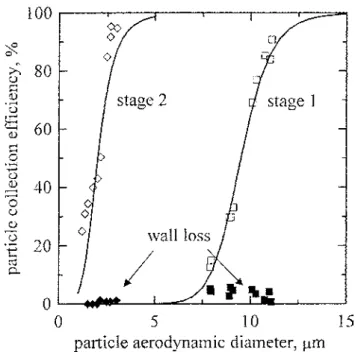
Figure 4. Particle collection ef ciency and wall loss of the
cascade impactor.
RESULTS AND DISCUSSION Results from Particle Experiments
Particle collection ef ciency and wall loss of the cascade im-pactor is shown in Figure 4. The cut-off aerodynamic diameter for the rst and second stage is 9.5 and 2.0 ¹m, respectively. The cut-off diameter is smaller than that predicted using Marple’s theory (1970), which should be 18.4 and 2.43 ¹m for the rst and second stage, respectively. This is due to partial entrainment
Figure 5. Particle loss in the porous-metal disc.
of the air streamlines into the porous substrate, resulting in ad-ditional particle collection. The collection ef ciency does not go to zero when the aerodynamic particle diameter approaches zero. In Figure 4, wall loss for the rst and second stage of the impactor is shown to < 5.7% and 1.2%, respectively.
Figure 5 indicates that the maximum particle loss in the porous-metal disc is <9% for particle aerodynamic diameters smaller than 2.0 ¹m. Loss can be much higher for larger particle sizes. Since particles larger than 2.0 ¹m are removed by the cas-cade impactor, particles collected in the porous-metal discs are not expected to interfere with gas concentration measurements.
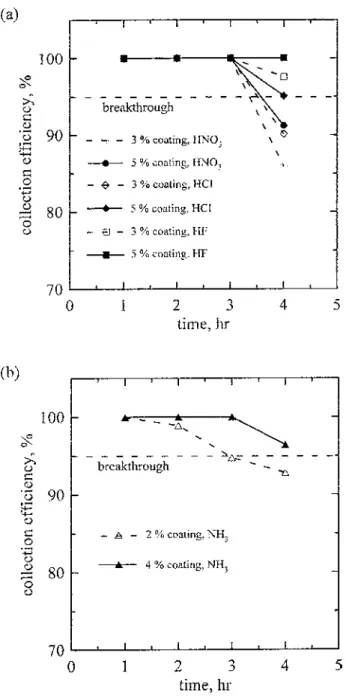
Figure 6. Gas collection ef ciency versus sampling time. (a)
acidic gas and (b) ammonia.
Results from Gas Experiments
Figures 6a and b show the gas collection ef ciency of the porous-metal disc for acidic and basic gases, respectively. Using a 3% sodium carbonate coating, the gas collection ef ciencies are all close to 100%, as shown in Figure 6a, for HNO3, HCl, and HF when the sampling time is <3.0 h. However, the ef ciency drops to 85.89 § 0.36% (average § standard deviation) and 90.1 § 0.45% for HNO3and HCl, respectively, at the sampling time of 4.0 h. Increasing the sodium carbonate concentration to 5%, the ef ciency at 4.0 h is increased to 91.2 § 0.26% and 95.08 § 0.06% for the above two gases, respectively. For HF, the gas collection ef ciency remains high at 97.57 § 0.05% and 100 § 0.4% for the sodium carbonate coating concentration of 3 and 5%, respectively.
For 3% sodium carbonate coating concentration, the break-through time (time at which the collection ef ciency drops to 95%) is 3.35, 3.5, and 4.0 h for HNO3, HCl, and HF, respec-tively. The maximum breakthrough time is assumed to be 4.0 h as in the case of HF. The breakthrough time is increased to 3.58 and 4.0 h for HNO3 and HCl, respectively, when the coating concentration is increased to 5%. The gas collection capacity of the porous-metal disc is calculated to be 4.18, 6.3, and 2.5 mg for HNO3, HCl, and HF, respectively, at 3% coating concen-tration. It is increased to 4.47 and 7.2 mg for HNO3 and HCl, respectively, when the coating concentration is increased to 5%. Since the maximum breakthrough time is 4.0 h, the capacity for HF remains the same at 2.5 mg for 5% coating concentration.
Similarly, Figure 6b shows that different citric acid coating concentrations also result in different NH3collection ef ciencies and capacities by the porous-metal disc. Increasing the concen-tration of citric acid coating solution from 2 to 4% increases the ef ciency at 4.0 h from 92.8 § 0.14 % to 96.39 § 0.13% and the breakthrough time is increased from 2.9 to 4.0 h. The corre-sponding collection capacity for 2 and 4% coating concentration is 24.36 mg and 33.6 mg, respectively.
CONCLUSION
This study extended the work of Wai et al. (1994) and showed that it is possible use the porous-metal disc as a personal denuder for sampling high concentrations of acidic and basic gases in the laboratory. The gas collection ef ciency and capacity of the denuder with suitable coating material and concentration will be suf ciently high for the 8 h sampling in the workplace, providing that the gas concentration is below the PEL.
Because loss of particles in the porous-metal disc may lead to interference with the gas concentration measurement, incor-porating a particle classi er to remove large particles before the porous-metal discs is necessary. This study uses a 2 stage cas-cade impactor for this purpose. To prevent a particle overloading problem, porous-metal discs were used as impaction substrates to collect high concentration liquid aerosol particles that may exist in the workplace. The experimental data showed that the cut-off diameters are smaller than that predicted by Marple’s
616 C.-J. TSAI ET AL.
theory, presumably due to excess particle collection because of partial air penetration into the porous-metal substrates. Further study of the particle collection characteristics and the loading effect of the impactor is necessary.
ACKNOWLEDGMENT
The authors would like to thank the Taiwan Institute of Occupational Safety and Health (IOSH), Council of Labor Affairs, for the nancial support of this project under contract number IOSH87-A105 .
REFERENCES
Ferm, M. (1979). Method for Determination of Atmospheric Ammonia, Atmos. Environ.13:1385–1393.
Koutrakis, P., Sioutas, C., Ferguson, S. T., and Wolfson, J. M. (1993). Devel-opment and Evaluation of a Glass Honeycomb Denuder/Filter Pack System to Collect Atmospheric Gases and Particles, Environ. Sci. Technol. 27:2497–
2501.
Marple, V. A. (1970). A Fundamental Study of Inertial Impactors, Ph.D. thesis, Mechanical Engineering Department, University of Minnesota, Minneapolis, MN.
Possanzini, M., Febo, A., and Liberti, A. (1983). New Design of a High-Performance Denuder for the Sampling of Atmospheric Pollutants, Atmos. Environ.17:2605–2610.
Pui, D. Y. H., Lewis, C. W., Tsai, C. J., and Liu, B. Y. H. (1990). A Compact Coiled Denuder for Atmospheric Sampling, Environ. Sci. Technol. 24:307–
312.
Sioutas, C., Wang, P. Y., Ferguson, S. T., and Koutrakis, P. (1996). Laboratory and Field Evaluation of an Improved Glass Honeycomb Denuder/Filter Pack Sampler, Atmos. Environ. 30:885–895.
Taiwan IOSH (Institute of Occupational Safety and Health). (1996). Certi ca-tion Procedure of Sampling and Analysis Reference Methods for Hazardous Pollutants in Work Environments, IOSH technical report no. IOSH85-T-011 (in Chinese).
Tsai, C. J., and Cheng, Y. H. (1995). Solid Particle Collection Characteristics on Impaction Surfaces of Different Designs, Aerosol Sci. Technol. 23:96–
106.
Wai, S. P., Pui, D.Y. H., Lee, C. T., and Liu, B. Y. H. (1994). A Compact Porous-Metal Denuder for Atmospheric Sampling of Inorganic Aerosols, J. Aerosol Sci.25:923–934.