國 立 交 通 大 學
生 物 科 技 學 院
生 化 工 程 研 究 所
碩 士 論 文
建立一光生物反應系統用於微藻的高密度養殖與二
氧化碳的減量
Establishing a Photobioreactor System in the High-Density
Microalgal Culture and Carbon Dioxide Reduction
研 究 生:高 千 雅
指導教授:林 志 生 博士
建立一光生物反應系統用於微藻的高密度養殖與二氧化碳的減量
Establishing a photobioreactor system in the high-density microalgal
culture and carbon dioxide reduction
研 究 生:高千雅 Student: Chien-Ya Kao
指導教授:林志生 博士 Advisor: Chih-Sheng Lin
國 立 交 通 大 學
生 物 科 技 學 院
生 化 工 程 研 究 所
碩 士 論 文
A Thesis
Submitted to Institute of Biochemical Engineering College of Biological Science and Technology
National Chiao Tung University in partial Fulfillment of the Requirements
for the Degree of Master in
Institute of Biochemical Engineering July 2009
Hsinchu, Taiwan, Republic of China
i
Acknowledgement
終於!!終於等到了可以寫碩士班畢業致謝的這一天,這也代表了我的求學之路又多 了一個新的里程碑(拭淚)。從擔任研究助理的兩年到現在碩士班畢業,轉眼間,我在 這個實驗室也待了快四年了(喔~我的青春小鳥一去無影蹤),經歷了這幾年在實驗室的 訓練,讓我從實驗室最年輕幼齒的小妹妹變成了實驗室最成熟幹練的大姊頭。 回想過去四年,往事依舊歷歷在目,首先,我要感謝的是實驗室的元老們:建龍、 俊旭和思豪學長,你們就像是實驗室的三大護法,白晝有俊旭,夜晚有思豪,拂曉有建 龍輪流的守護著這個實驗室。建龍學長是一個無拘無束的漂泊浪人(雖然一畢業就被綁 走了!?),爽朗的笑聲帶給我無憂的力量,感謝你在生質能源組的起步之初,給予我扶持 與幫助。俊旭學長,把實驗室物品及清單等管理得井然有序,讓我這實驗室永遠的小助 理減輕了許多的負擔。思豪學長,在你身上我學會了你油條的功力,讓我待人處事上有 著更高的EQ。而目前唯一比我資深的你們卻都博士班畢業了,不禁讓我想對你們說” 不要走,讓我們一起畢業好嗎?”,不然我就要成為了實驗室最資深的小學妹了。 再來要感謝的是我親愛的黑的像碳一樣的生質能源組員們:豆仔學長、筱晶學姐和 達達。睡眠時間超短的豆仔學長,一直是我深感佩服的組長,因為有你,生質能源組的 成就才能日漸碩大,因為有你,我們才能突破層層關卡到達了生質能源專家的境界!!超 愛吵架的筱晶學姐,謝謝你在這些日子裡壓抑你吵架的慾望,讓我有些許的安寧。高雄 部落來的原住民達達,有你的陪伴,讓我在實驗室仍然能夠感覺到濃厚家鄉味。感謝你 們在過去兩年陪我在大太陽底下與微藻一起進行光合作用,也許現在跟人家說我們這組 都是原住民也不會有人會懷疑!? 還要謝謝其他實驗室成員:因為棠青學長所擁有的大愛精神以及好好脾氣,能夠包 容我的無理取鬧以及擊打你的肉體洩憤的情緒。謝謝曜禎學長無止境的芭樂,有助於我 的養顏美容,並遠離大腸直腸癌的威脅。更要感謝同為宅大三人族的証皓和榕均,由於 你們兩人阿宅功力的加持,讓我變得更像宅宅,足不出戶,沒有了電腦與網路,就像失 去了靈魂,儼然成為宅大的模範研究生。也要謝謝四個小正妹,郡誼、子慧、庭妤和瀞 韓,讓原本極為陽剛的實驗室多添了幾份柔情的氣息,因為有妳們的協助,讓我在實驗 室雜務上不用過於操心。 在這段求學之路上,我最感謝的人就是我的指導教授兼系主任 林志生老師,當初ii 如果沒有老師的提拔,讓非本科系的我作為實驗室的研究助理,並且親自下海操刀指導 我實驗技巧,可以說,當初如果沒有遇到老師,就不會有今天擁有碩士班成就的我,更 不會有未來即將邁入博士班研究的我,老師就像人生的導師ㄧ般,無論在生活上與實驗 上老師都能給予悉心的指導、幫助及鼓勵,讓我得以成長,研究得以順利進行,在此獻 上最誠摯的感謝。 在此也要謝謝我的口試委員:曾慶平老師、林昀輝博士和李唐博士,對於我的碩士 論文給予寶貴的指教與建議。 最後,我要將此論文獻給我最親愛的家人,感謝你們一直在背後默默的支持我、鼓 勵我,讓我能夠有勇氣的持續接受一切的挑戰,沒有你們一路的栽培以及無悔的付出就 沒有今日的我,謝謝你們。 高千雅 謹誌 國立交通大學 生化工程研究所碩士班 中華民國九十八年七月
iii
建立一光生物反應系統用於微藻的高密度養殖與二氧化碳的減量
研 究 生:高千雅 指導教授:林志生 博士
國 立 交 通 大 學
生 物 科 技 學 院
生 化 工 程 研 究 所 碩 士 班
摘 要
微藻為行光合作用之生物體,可利用太陽能將水與二氧化碳(CO2)轉換成生物質 能(biomass),由於全球暖化日益嚴重,因此利用微藻減量環境中的二氧化碳並生產生 物質是最具有潛力的方法之ㄧ。本研究所採用的五種微藻分別為Chlorella sp.、Nannochloropsis oculata、Skeletonema costatum、Isochrysis aff. galbana 及 Tetraselmis chui,將此五種微藻於相同的環境下培養,並在 f/2 培養液與供給空氣的情況下,Chlorella sp.,Nannochloropsis oculata,Skeletonema costatum,Isochrysis aff. galbana 及 Tetraselmis chui 的生長率分別為 1.55、1.51、0.5、0.72 及 0.99 d-1,並且從中篩選出Chlorella sp.及
Nannochloropsis oculata 進行 CO2減量並生產生物質之研究。在本研究中,我們將
Chlorella sp.和 Nannochloropsis oculata 培養於封閉式光生物反應器中,經由半連續式的
培養技術達到CO2減量與高密度生產生物質的目標。首先,我們測量細胞密度和CO2 通入之濃度對微藻的影響,當微藻培養於10 及 15% CO2下,生長會被抑制,但可經由 高濃度微藻的接種(細胞密度 > 9 × 10⁷ cells/mL)以及藻體事先培養於 2% CO2濃度下 可改善抑制的情況發生,再將其轉入半連續式光合生物反應系統,通入2、5、10 和 15% 的CO2濃度下持續培養八天,我們測得在不同CO2濃度之間的生長曲線是非常相似的。 利用半連續式光合反應系統(800 mL)通入 2、5、10 和 15%的 CO2培養後,CO2 減量成果分別為0.261、0.316、0.466 和 0.573 g/hr,而 CO2的減量效率則分別為58、27、 20 和 16%,且即使細胞生長在通入高濃度 CO2的培養條件下,生物質產量有下降的趨 勢,但仍然看的出在15%CO2條件下生長的Chlorella sp.之生物質的生產量是具有生產 潛力的,在本研究中也建立並運作六個反應器並聯式系統,且此系統通入不同濃度的 CO2培養之CO2移除效率與單一式光合生物反應系統是相似的。於六個反應器並聯式系
iv 統中,其CO2總減量與生物質的總生產量得約為單一式的六倍。再則,在本研究中亦採 用半連續式培養系統研究CO2的濃度對於Nannochloropsis oculata 生產生物質之影響。 在2% CO2培養條件下,生物質之生產量0.480 g/L/day 為最高,即使在 15% CO2培養條 件下,生物質之生產量亦可達0.372 g/L/day。 這些結果指出光合生物反應系統若應用於CO2減量,可以藉由多組並聯的方式來針 對大量的廢氣處理。而採用每天置換1/2 的半連續式系統並通入 2% CO2培養,是對於
Chlorella sp.和 Nannochloropsis oculata 最適的生物質生產條件。
v
Establishing a photobioreactor system in the high-density
microalgal culture and carbon dioxide reduction
Graduate student: Chien-Ya Kao Advisor: Chih-Sheng Lin
Institute of Biochemical Engineering
College of Biological Science and Technology
National Chiao Tung University
Abstract
Microalgae as photosynthetic organisms can use solar energy to convert water and carbon dioxide (CO2) into biomass. Facing the increasing concerns about global warming,
the reduction of CO2 emission to acceptable levels by utilizing microalgae to consume CO2
and to produce biomass is a potential approach. Five microalgal strains, Chlorella sp.,
Nannochloropsis oculata, Skeletonema costatum, Isochrysis aff. galbana and Tetraselmis chui, were first used in this study. The growth potential of Chlorella sp., Nannochloropsis oculata, Skeletonema costatum, Isochrysis aff. galbana and Tetraselmis chui cultured in the f/2
medium (designed as normal cultural medium) and given air were 1.55, 1.51, 0.5, 0.72 and 0.99 d-1, respectively. Chlorella sp. and Nannochloropsis oculata were selected for the
studies of CO2 reduction and biomass production. In this study, Chlorella sp. and
Nannochloropsis oculata, were cultured in a closed system of photobioreactors in the
semi-continuous cultivation conditions for the exploration of CO2 reduction and high-density
microalgal biomass production. First, we determined the effects of cell density and CO2
concentration in airstreams on the growth of microalgae. The growth inhibition when the microalgal cells were cultured in 10 and 15% CO2 aeration could be overcome via a high
density of microalga inoculum (up to 9 × 10⁷ cells/mL) and pre-adapted culture with 2% CO2
aeration. The cultures were then transferred into a semi-continuous photobioreactor system aerated with 2, 5, 10 and 15% CO2. The profiles of growth curve of microalgal cultures
aerated with different CO2 concentration were similar.
Amount of CO2 reduction and CO2 reduction efficiency of the Chlorella sp. cultures in
the semi-continuous cultivation (800 mL) under 2, 5, 10 and 15% CO2 aeration were 0.261,
vi
of Chlorella sp. cultures could maintain in 15% CO2 aeration although biomass productions
showed a decreased trend when the cells exposed to the airstreams with rising CO2
concentration increased. A six-parallel photobioreactor system was also performed in this study, and the CO2 reduction efficiency in the system was similar to the single
photobioreactor in different concentrations of CO2 aeration. Performances, including total
amount of CO2 reduction and biomass production of the six-parallel photobioreactor system
was also determined and the result were around 6 folds compared those in the matched single photobioreactor. And then, the effects of concentration of CO2 aeration on the biomass
production and lipid accumulation of Nannochloropsis oculata in a semi-continuous culture were investigated in this study. The maximal biomass productivity in the semi-continuous system was 0.480 g/L/d with 2% CO2 aeration. Even the Nannochloropsis oculata cultured
in the semi-continuous system aerated with 15% CO2, the biomass productivity could reach to
0.372 g/L/d.
These results indicate that the CO2 reduction by microalgae incorporated photobioreactor
could be extended to multiple parallel units of the photobioreactor for a large amount of waste gas treatment. To optimize the condition for long-term biomass yield from Chlorella sp. and Nannochloropsis oculata, these microalgae were suggested growing in the semi-continuous system aerated with 2% CO2 and operating by one-day replacement.
Key words: Microalgae, Chlorella sp., Nannochloropsis oculata, Carbon dioxide, Photobioreactor, Biomass
vii
Content
Acknowledgement……….. i
Abstract in Chinese……… iii
Abstract in English………..……….. v
Content………..……….. vii
List of Tables………..………. x
List of Figures………..……… xi
I. Research Background and Significance………... 1
1.1. Greenhouse effect and global warming………. 1
1.1.1. Global warming……….. 1
1.1.2. Greenhouse gases……… 1
1.1.3. Carbon dioxide removal from waste gas by different method……… 1
1.2. Microalgae………. 3
1.2.1. Why microalgae……….. 3
1.2.2. Environment factor affect algae growth………. 4
1.2.3. Composition of algae……….. 7
1.2.4. Applications of microalgae………. 7
1.3. Microalgae culture system………. 10
1.3.1. Open culture system……… 11
1.3.2. Closed system………. 12
1.3.3. Comparison of open and closed culture systems for microalgae……… 14
1.4. Development of high efficient photobioreactor and utilizatior of microalgal cells produced……… 15
II. Materials and Methods ……… 17
2.1. Microalgal cultures ....………..………….……… 17
2.2. Culture medium and chemicals ………. 17
2.3. Freezing procedure ………... 18
2.4. Thawing procedure……… 18
viii
2.6. Preparation of the inoculum ……….. 19
2.7. Experimental design of batch cultivation……….. 19
2.8. Experimental design of semi-continuous cultivation ……… 20
2.9. Microalgal cell counting and dry weight ……….. 20
2.10. Analyses………... 21
2.10.1. Measurement of growth rate………. 21
2.10.2. pH measurements……….. 21
2.10.3. Light measurements……….. 22
2.10.4. Determinations of CO2(g) and CO2(aq) ……….. 22
2.11. Statistics………..………. 22
III. Results and Discussion ……….……….. 23
3.1. Evaluation of cell density ……….……….………... 23
3.2. The microalgae was screened for its potential ability of growth and biomass production ……… 23
3.3. Evaluation of biomass concentration ………..……….………. 24
3.4. Chlorella sp. culture at different cell density aerated with different CO2 concentration ……….…….…….. 24
3.5. Nannochloropsis oculata culture at different cell density aerated with different CO2 concentration ………. 25
3.6. Effect of CO2 on Chlorella sp. in semi-continuous cultivation ……… 26
3.6.1. Effect of CO2 on cell growth in semi-continuous culture………... 26
3.6.2. Effect of CO2 on biomass production in semi-continuous culture…………. 27
3.7. CO2 reduction by Chlorella sp. in semi-continuous culture……….. 28
3.8. Performance of six-parallel photobioreactor system with Chlorella sp.……... 29
3.9. CO2 utilization of Nannochloropsis oculata ………. 30
3.9.1. Effect of CO2 concentration on cell growth in semi-continuous cultures….. 30
3.9.2. Optimal CO2 concentration applied in semi-continuous cultures…………... 31
3.10. Biomass production of Nannochloropsis oculata in semi-continuous culture ………. 32
IV. Conclusions ……….………..……….. 34
4.1. The microalgae was screened for its potential ability of growth and biomass production …...……….. 34
ix
4.2. Reduction of CO2 by Chlorella sp. and Nannochloropsis oculata in
semi-continuous photobioreactor ……….……….…... 34
4.3. Biomass productivity of Chlorella sp. and Nannochloropsis oculata in semi-continuous photobioreactor ……….………. 34
4.4. Photobioreactor design……….. 35
4.5. Six-parallel photobioreactor system……….. 35
V. References ……….………..………. 36
VI. Tables ……….………..……… 46
x
List of Tables
Table 1-1. The chemical method of carbon dioxide reduction ……….. 46
Table 1-2. Chemical composition of algae expressed on a dry matter basis (%) ……… 47
Table 1-3. Product from microalgae ………..……….. 48
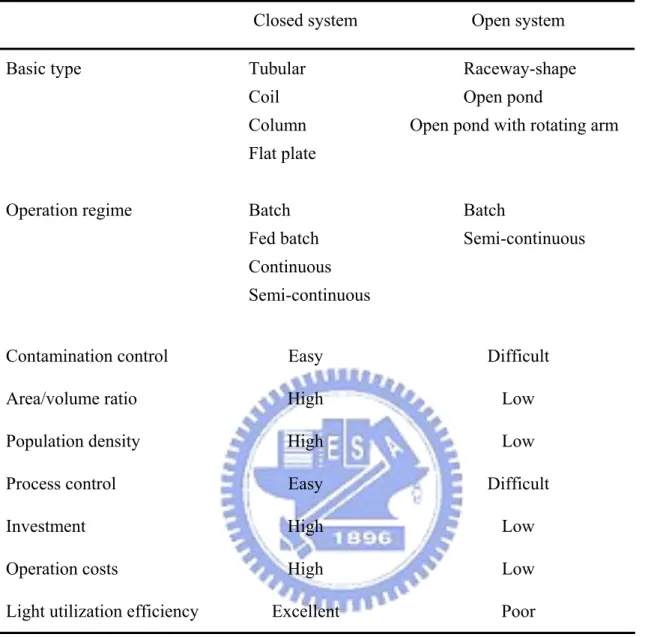
Table 1-4. Advantages and disadvantages of open and closed culture systems……….. 49
Table 1-5. Basic values of various cultivation plants………... 50
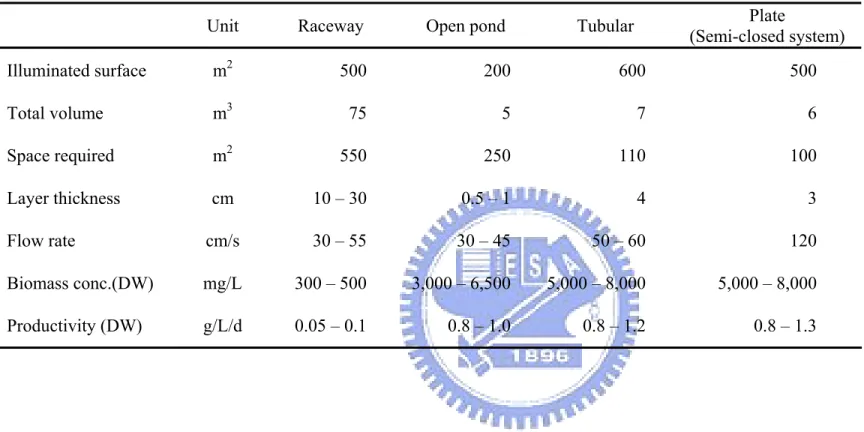
Table 1-6. Aerial productivity of biomass grown outdoors in the various photobioreactors……….. 51
Table 2-1. Artificial sea water……….. 53
Table 2-2. f/2 culture medium………. 54
Table 2-3. Preparation of micronutrient solution………. 55
Table 2-4. Preparation of the vitamin solution……… 56
Table 2-5. The modified f/2 culture medium………... 57
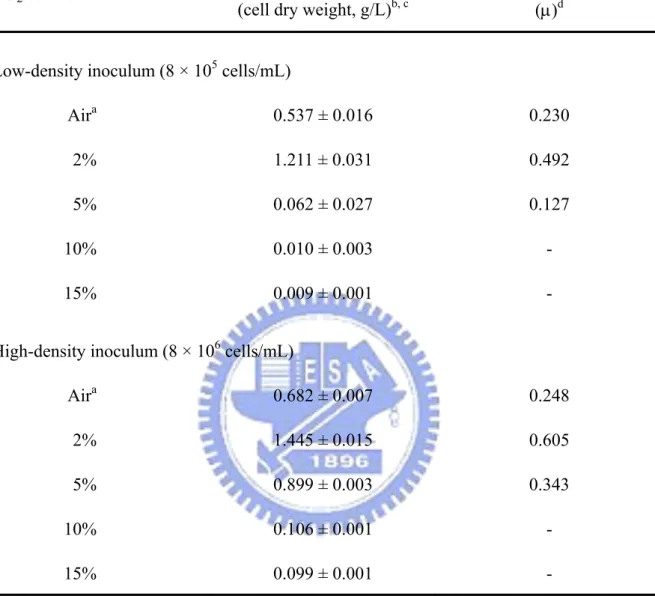
Table 3-1. The biomass production and the specific growth rate of the low- and high-density inoculums of Chlorella sp. growth depending on different concentrations of CO2 aeration……….. 58
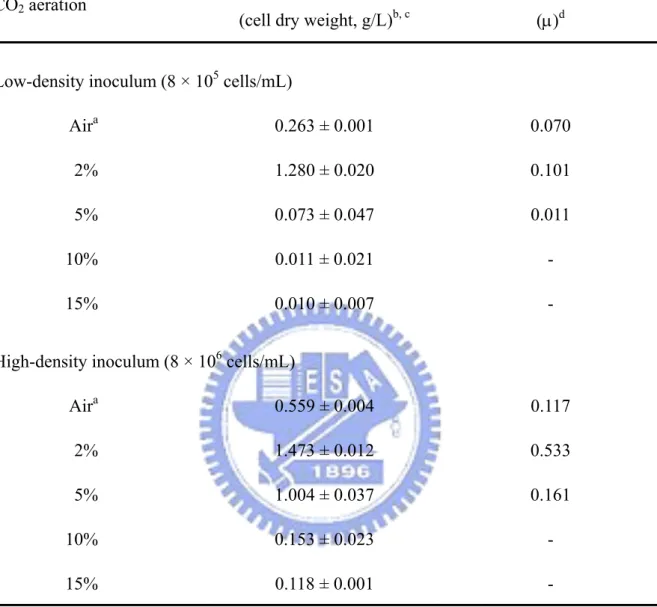
Table 3-2. The biomass production and the specific growth rate of the low- and high-density inoculums of Nannochloropsis oculata growth depending on different concentrations of CO2 aeration……… 59
Table 3-3. Daily recovery of biomass productivity of the Chlorella sp. as waste broth in the semi-continuous photobioreactor under different concentrations of CO2 aeration compared with single and six-parallel photobioreactor……… 60
Table 3-4. Daily recovery of biomass productivity of the Nannochloropsis oculata as waste broth in the semi-continuous photobioreactor under different concentrations of CO2 aeration compared with single and six-parallel photobioreactor………... 61
xi
List of Figures
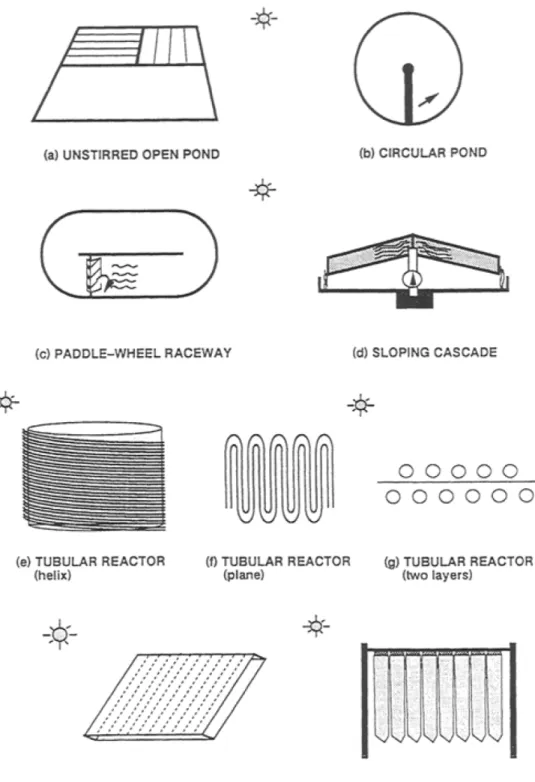
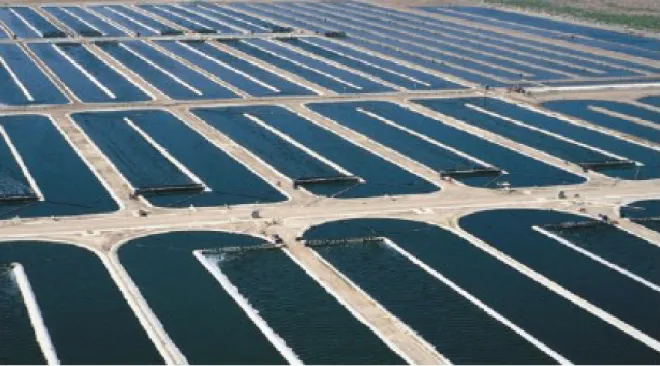
Figure 1-1. Typical examples of different algal mass culture systems………... 62 Figure 1-2. Typical open pond production site using a raceway arrangement………… 63 Figure 1-3. Closed column type photobioreactor fed with recycled CO2 from
smokestack fermentation, and geothermal gases production plant……….. 64 Figure 2-1. Schematic diagram of the photobioreactor ……….. 65 Figure 2-2. Schematic diagram of the six-parallel photobioreactor ……….. 66 Figure 3-1. Calibration curves and equations of optical density of Chlorella sp. at
A682 to the cell density ……… 67
Figure 3-2. Calibration curves and equations of optical density of Nannochloropsis
oculata at A682 to the cell density………. 68
Figure 3-3. Calibration curves and equations of optical density of Skeletonema
costatum at A682 to the cell density……….. 69
Figure 3-4. Calibration curves and equations of optical density of Isochrysis aff.
galbana at A682 to the cell density……… 70
Figure 3-5. Calibration curves and equations of optical density of Tetraselmis chui at A682 to the cell density……….. 71
Figure 3-6.The growth curve of different microalgae……… 72 Figure 3-7. Calibration curves and equations of optical density of Chlorella sp. at
A682 to the biomass………... 73
Figure 3-8. Calibration curves and equations of optical density of Nannochloropsis
oculata at A682 to the biomass……….. 74
Figure 3-9. Effects of different concentrations of CO2 aeration on the growth of
Chlorella sp……….. 75 Figure 3-10. Effects of different concentrations of CO2 aeration on the growth of
Nannochloropsis oculata……….……….….. 76 Figure 3-11. Growth profiles of Chlorella sp. cultured in the semi-continuous system
aerated with 2, 5, 10, and 15% CO2……… 77
Figure 3-12. Influent vs. effluent CO2 loading in airstreams during the operation of
single semi-continuous Chlorella sp. cultures under 2%, 5%, 10%, and
15% CO2 aeration……… 78
Figure 3-13. Comparisons of the total amount CO2 reduction in the single and
six-parallel photobioreactor of semi-continuous Chlorella sp. cultures
xii
Figure 3-14. Comparisons of the CO2 reduction efficiency in the single and
six-parallel photobioreactor of semicontinuous Chlorella sp. cultures
under 2%, 5%, 10%, and 15% CO2 aeration………. 80
Figure 3-15. Growth profiles of Nannochloropsis oculata cultured in the
semi-continuous system aerated with 2, 5, 10, and 15% CO2……… 81
Figure 3-16. CO2 removal in the airstreams during the operation of semi-continuous
Nannochloropsis oculata cultures under 2, 5, 10, and 15% CO2 aeration 82
Figure 3-17. Growth profiles of Nannochloropsis oculata NCTU-3 cultured in the semicontinuous system with 2% CO2 aeration and operated by one-day
1
I. Research Background and Significance
1.1. Greenhouse effect and global warming
1.1.1. Global warmingGlobal warming induced by increasing concentrations of greenhouse gases in the
atmosphere is of great concern. Greenhouse gases are accumulating dramatically in Earth's atmosphere as a result of human activities and industrialization. In addition, the increasing concentration of greenhouse gases causes serious global warming increasing the temperatures of the surface air and subsurface ocean.
1.1.2. Greenhouse gases
Carbon dioxide (CO2) is the principal greenhouse gas and its concentrations have
increased rapidly since the onset of industrialization [Ramanathan, 1988]. In 1997, 7.4 billion tons of CO2 were released into the atmosphere from anthropogenic sources; by the
year 2100, this number will increase to 26 billion tons [DOE, 1999]. During the last two decades, many attempts have been made to reduce atmospheric CO2 concentration, for
example by the use of renewable energy sources or by terrestrial sequestration of carbon [IPCC, 2001]. CO2 is the main greenhouse gas. Many attempts including physical and
chemical treatments have been used to recover CO2 from atmosphere. In biological
approach, microalgae appear more photosynthetically efficient than terrestrial plants and are the candidates as efficient CO2 fixers [Brown and Zeiler, 1993].
1.1.3. Carbon dioxide removal from waste gas by different method
CO2 capture from power plants entails the integration of a capture technology into a
power plant system. The primary CO2 capture technologies being considered are cryogenics,
Adsorption, chemical absorption, and biological remediation. Cryogenics
Cryogenics is refrigeration of the gas stream to reduce the vapor pressure so phase change occurs and the liquid CO2 can be distilled out of the mixture. Significant energy is
2
required to cool the gas especially since the majority of power plant processes occur at high temperature. Without substantial new system integration, cryogenics does not appear either efficient or economically feasible for power plants [Kohl. 1997].
Adsorption
Adsorption, occurs by passing the flue gas stream through a microporous solid adsorbent stream so that surface forces capture the CO2 on the surface of the adsorbent without chemical
reaction. Modifications of this process include pressure swing adsorption and temperature swing adsorption, which rely on high pressure and temperature respectively to activate surface forces and then to low pressure or temperature to regenerate the adsorbent [ESRU. 2006]. Significant process and system development work is underway to implement absorption in power plants for CO2 capture.
Chemical absorption
Chemical absorption entails passing the flue gas stream through an absorbent stream but in this case the CO2 chemically reacts with the absorbent to reduce the Gibbs free energy of
the mixture. The absorption reaction requires a low temperature of approximately 50oC and a desorption reaction to regenerate the absorbent occuring at approximately 120oC [ESRU. 2006]. Chemical absorption is most effective with low CO2 concentrations and is therefore
appropriate for flue gas processing where the CO2 is diluted with air and steam. Table 1-1
showsthe chemical method of carbon dioxide reduction. Biological remediation
Biological remediation harnesses the natural process that plants undergo to consume CO2
and convert it into biological material. Photosynthesis is the most common method of biological remediation method, but some algae are known to utilize CO2 in the absence of
light. A portion of CO2 in the atmosphere is absorbed biologically by terrestrial plant life.
However given the increased CO2 atmospheric concentration of 0.4 percent per year, the
remediation rate does not keep pace with emissions. To increase the rate of biological remediation, bioreactors are being developed to integrate into power plant systems [Bayless. 2003].
3
1.2. Microalgae
1.2.1. Why microalgaeMicroalgae are some of the most robust organisms on earth, able to grow in a wide range of conditions. The algae comprise one of the most diverse plant groups. And they grow in almost every habitat in every part of the world. A species range of 40 000 to 10 million has been estimated, with the majority being the microalgae [Hawksworth and Mound, 1991; Metting, 1996]. Microalgae are a highly diverse group of unicellular organisms comprising the eukaryotic protists and the prokaryotic cyanobacteria or blue-green algae. A diverse group of photosynthetic organisms, the algae have successfully adapted their metabolism to occupy different habitat extremes ranging from the polar regions to tropical coral reefs. The ability to withstand environmental stress is matched by the capacity of algae to produce a vast array of secondary metabolites, which are of considerable value in biotechnology programs including the aquaculture, health, and food industries [Andersen, 1996].
Microalgae are one of the earth's most important natural resources. They contribute to approximately 50% of global photosynthetic activity [Wiessner et al., 1995] and form the basis of the food chain for over 70% of the world's biomass [Andersen, 1996]. In recent years, the bio-regenerative methods using photosynthesis by microalgal cells have been made to reduce the atmospheric CO2 to ensure a safe and reliable living environment. As the
result of mild conditions for CO2 reduction, there is no requirement for further disposal of
recovered CO2 [Lee and Lee, 2003; Suh and Lee, 2003; Carvalho et al., 2006; Cheng et al.,
2006; Jin et al., 2006]. Marine microalgae are expected as a proper candidate due to their high capability for photosynthesis and easily cultured in sea water which solubilizes high amount of CO2. One of the most understudied methods of CO2 reduction is the use of
microalgae that convert CO2 from a point source into biomass. Microalgae use CO2
efficiently because they can grow rapidly and can be readily incorporated into engineered systems, such as photobioreactors. The CO2 reduction by microalgal photosynthesis and
biomass conversion into health food, food additives, feed supplements, and biofuel is considered a simple and appropriate process for CO2 circulation on Earth [Takagi et al.,
4
1.2.2. Environment factor affect algae growth
Like plants, algae use the sunlight for the process of photosynthesis. Photosynthesis is an important biochemical process in which plants, algae, and some bacteria convert the energy of sunlight to chemical energy. Algae capture light energy through photosynthesis and convert inorganic substances into simple sugars using the captured energy.
The most important parameters regulating algal growth are nutrient quantity and quality, light, pH, turbulence, salinity and temperature. The most optimal parameters as well as the tolerated ranges are species specific. Also, the various factors may be interdependent and a parameter that is optimal for one set of conditions is not necessarily optimal for another.
When cultivating algae, several factors must be considered, and different algae have different requirements. Essential factors include water, carbon dioxide, minerals and light would affect microalgal growth.
Temperature
Temperature influences respiration and photorespiration more strongly than photosynthesis. When CO2 or light is limiting for photosynthesis, the influence of
temperature is insignificant. With an increase in temperature, respiration will rise
significantly, but the flux through the Calvin cycle increases only marginally. Thus, the net efficiency of photosynthesis declines at high temperatures. This effect can worsen in suspension cultures by the difference in decrease of CO2 and O2 solubility at elevated
temperatures. The water must be in a temperature range that will support the specific algal species being grown. Optimal culture temperature vary with the species and strains. The optimal Temperature for phytoplankton cultures is generally between 20 and 30oC. Temperatures lower than 16oC slow down growth; temperatures higher than 35oC are lethal for a number of species.
Light energy
Light as the energy source for photoautotrophic life is the principal limiting factor in photobiotechnology [Kirk, 1994]. At illumination intensities above the light compensation point the rate of photosynthesis is directly proportional to light intensity, until at high
illumination intensities damage to the photosynthetic receptor system occurs within a few minutes (photoinhibition). In most microalgae, photosynthesis is saturated at about 30% of the total terrestrial solar radiation, i.e. 1,700–2,000 μmol/m2/s. Some picoplankton species
5
grow with optimal rates at 50 μmol/m2/s and are photoinhibited at 130 μmol/m2/s.
Phanerophytes, like most agricultural crops with light limitation values of 900 μmol/m2/s, are
clearly adapted to higher PFD than microalgae are. Stirred fermenters illuminated with various submersed luminous elements or light pipes facilitate an average productivity in the range of 100–1,000 mg DW/day. This appears to be the upper limit at a surface to volume ratio of 2–8 m2/m3 typical for this illumination design. Laboratory bioreactors based on this principle are very well suited to physiological and autecological studies as well as for the establishment and testing of miniature ecosystems, but they cannot be used for scaling up. In tubular or plate-type photobioreactors, surface to volume ratios of 20–80 m2/m3 and light incidence values (PAR) up to 1,150 μmol/m2/s are achieved. At a layer thickness of up to 5
mm, a productivity of 2–5 g DW/day can be achieved [Chini Zitelli et al., 2000]. Despite growing interest in recent years, there are only a few references in the literature regarding the short-term processes of photoadaptation, on light inhibition or saturation effects in closed photobioreactors. Photoadaptation requires at least 10–40 min, which can explain the discrepancy between the productivity of open-air algal cultures and their light optimum. Photoinhibitory processes are time-dependent; however, in this case irreversible destruction is supposed to occur even after only a few minutes of light stress, exceeding 50% damage after 10–20 min.
Light must not be too strong nor too weak. In most algal-cultivation systems, light only penetrates the top 3 inches (7.6 cm) to 4 inches (10 cm) of the water. This is because as the algae grow and multiply, they become so dense that they block light from reaching deeper into the pond or tank. Algae only need about 1/10 the amount of light they receive from direct sunlight. Direct sunlight is often too strong for algae.
In order to have ponds that are deeper than 4 inches algae growers use various methods to agitate the water in their ponds. Paddle wheels can be used to circulate (stir) the water in a pond. Compressed air can be introduced into the bottom of a pond or tank to agitate the water, bringing algae from the lower levels up with it as it makes its way to the surface.
Apart from agitation, another means of supplying light to algae is to place the light in the system. Glow plates are sheets of plastic or glass that can be submerged into a tank,
6 Mixing
Mixing of microbial cultures is important for homogeneous distribution of cells,
metabolites, and heat, and for transfer of gasses across gas–liquid interfaces. In microalgal cultures, mixing also affects the light regimen [Richmond, 2000; Grobbelaar, 2000]. Fluctuations in light intensity faster than 1 sec enhance specific growth rates and productivities of microalgal cultures [Nedbal et al., 1996; Ogbonna and Tanaka, 2000; Janssen et al., 2001; Yoshimoto et al., 2005]. In outdoor cultures exposed to photosynthetic photon flux densities above 1,000 μmol/m2/s light exposure times should be as short as 10
msec to maintain high photosynthetic efficiency [Janssen et al., 2001]. CO2
The CO2 reduction rate is related directly to light utilization efficiency and to cell density
of microalgae. Microalgal CO2 reduction involves photoautotrophic growth in which
anthropogenically derived CO2 may be used as a carbon source. Therefore, biomass
measurements or growth rate evaluations are critical in assessing the potential of a microalgal culture system for directly removing CO2 [Costa et al., 2004; Chen et al., 2006; Jin et al.,
2006]. Effects of the concentration of CO2 in airstreams on growth of microalgae in culture
have been evaluated in several studies [Chae et al., 2006; de Morais and Costa, 2007b; Keffer and Kleinheinz, 2002]. However, these effects remain to be largely understood.
Microalgal photobioreactor can be used for CO2 mitigation from waste gas with high
concentration of CO2 efficiently, if the effects of the CO2 concentration in airstreams on
microalgal cell growth could be well controlled. Nutrients, salinity, and pH-value
A sufficient nutrient supply for microalgae is a precondition for optimal photosynthesis. Nutrients must be controlled, so algae will not be starved and nutrients will not be waste. Some types of culture method could modulate the composition of nutrients to control the capability of some algae to take up and to metabolize fixed carbon, i.e., to grow
heterotrophically. Although this restricts the range of algae that may be grown, the system has been successfully used to produce α-tocopherol [Ogbonna et al., 1998], ascorbic acid [Running et al., 1994], aquaculture organisms [Day and Tsavalos, 1996], fatty acids [Barclay et al., 1994], and leutin [Shi et al., 1997]. Deviations from optimum pH, osmotical
conditions and salinity will cause physiological reactions and productivity problems.
7
photobioreactors. Organic carbon sources seem to be important for some mixotrophic or even pure heterotrophic microalgal biomass production systems. Therefore, organic wastes as well as pure simple organic substances like acetic acid or various sugars could be
investigated for their possible use in microalgal production.
1.2.3. Composition of algae
All microalgae primary comprise of the following, in varying proportions: proteins, carbohydrates, fats and nucleic acids. The percentages vary with the types of microalgae.
(Table 1-2)
1.2.4. Applications of microalgae
Microalgae produced in large-scale commercial systems are used for the most part as the whole biomass. There has also been an upsurge in research and development on the
utilization of microalgae as sources of a wide range of metabolites, such as bioactive compounds, pigments and oils. Dried biomass is generally utilized for health foods, food additives, feed supplements, and other uses. Live microalgae are usually served as larval diets in aquaculture. Current use of microalgal product in the world is summarized in Table
1-3.
Health foods
Microalgae health foods are available in the form of tablets, granules and drinks. This rapid spread may be due to the fact that various health-promoting effects of Chlorella have been clarified.
Yamagishi et al. [1962] reported that Chlorella showed therapeutic efficacy on gastric ulcer, clinical tests have been done actively on many kinds of disorders such as wounds [Hasuda and Mito, 1966], constipatio, leucopenia [Saito et al., 1966], anemia [Sonoda, 1972], hypertension [Miyakoshi et al., 1980], diabetes [Fukui, 1979], infant malnutrition [Tokuyasu, 1983] and neurosis [Sonoda and Okuda, 1978]. The validity may be attributable to
composite effects not only of nutritive components such as vitamins, minerals, dietary fibers and proteins but of a preventive action against atherosclerosis and hypercholesterolemia by glycolipids and phospholipids [Sano and Tanaka, 1987] and antitumor actions by
8
glycoproteins, peptides, nucleotides and related compounds [Konishi et al., 1985; Tanaka et al., 1984].
Spirulina (Arthrospira) has a long history as food; it grows profusely in certain alkaline lakes in Mexico and Africa and has been eaten since time immemorial by inhabitants in the neighborhood. Spirulina has become the object of attention around the world because of the high content of protein and the excellent nutritive value. Spray-dried Spirulina powder is fabricated into tablets with or without added calcium or vitamin C, being marketed as health foods. Since modem science revealed that they are eaten mainly as a substitute for green vegetables, because the content of vitamins and minerals in 5 g dried Spirulina corresponds to 100 g vegetables [Kato, 1991].
Dunaliella is well known to accumulate β-carotene to more than 10% dry weight under appropriate growth conditions. Beta-carotene was attracted the attention of many people in Japan because of the anticarcinogenic activity of carotenoids, especially β-carotene, in foodstuffs [Nishino, 1993]. Dried biomass of Dunaliella is imported from Australia and Israel, and its capsules and tablets are placed on the market as a health food [Yamaguchi, 1992].
Food additives
The first addition of Chlorella to foods was the production of fermented milk by utilizing a stimulating effect of a Chlorella extract on the growth of Lactobacillus [Mitsuda et al., 1961]. Nowadays dried biomass or extracts of Chlorella is used as additives to fermented soybeans (ex: natto), vinegar and liquors on account of the effects on growth of
microorganisms. Or it is used as additives to drinks, green tea, tofu (bean curds), liquors, candies, bread, noodles, etc. because of the taste- and flavor-adjusting actions. Furthermore, dried Chlorella is added to noodles and Western and Japanese cakes as a coloring agent [Maruyama and Ando, 1992].
Spirulina contains high levels of the blue biliprotein, phycocyanin [Kageyama et al., 1994]. A blue food pigmenter manufactured from phycocyanin is marketed under the commercial name of “Lina blue A” [Kato, 1985]. It is a blue powder readily soluble in water. It is used as a natural food color in ice cream, chewing gum, jelly, candy, yogurt, 'wasabi' paste, etc. [Kato, 1991].
9 Feed supplements
Dried biomass or extracts of Chlorella are added to diets to improve the quality of cultured fish; for instance, it has been reported that enhancement of resistibility to diseases [Nakagawa et al., 1981] and improvement of the flesh in quality [Nakagawa et al., 1984] were attained by adding Chlorella extract at approximately 1% to the diet of the ayu (sweet smelt) Plecoglossus altivelis. Certain strains of Chlorella become red or orange in a
nitrogen-limited and/or hypersaline medium, accumulating a large quantity of a red
carotenoid and astaxanthin. Such a biomass is considered to be an effective feed supplement for pigmentation of cultured fish and shellfish [Sano, 1993].
Over 50% of the total production of Spirulina is actually used as feed supplements, though it is generally supposed that the most part is consumed as health foods [Kato, 1992]. Spirulina is rich in carotenoids, especially zeaxanthin and β-carotene and can exert
pigmentation effects when supplemented to diets for cultured fish and shellfish such as striped jack [Okada et al., 1991], kuruma prawn [Kato, 1992], and black tiger prawn [Liao et al., 1993]. It has also been reported that the supplementation of Spirulina to a hen feed improved the yellow color of egg yolk. Feeding the diets supplemented with Spirulina to cultured yellowtail, masu salmon and eel was reported to have brought about such
health-promoting effects such as decreasing in mortality and increasing in growth [Kato, 1992]. In addition, an improving effect on the flesh quality was observed for cultured red sea bream [Yamaguchi et al., 1987] and striped jack [Liao et al., 1990; Watanabe et al., 1990]. This is largely due to a reduction of lipid content in the muscle that may be caused by
γ-linolenic acid, which is specifically rich in Spirulina [Liao, 1990].
Nannochloropsis and Chlorella are applied in the production of zooplankton such as the rotifer Brachionusplicatilis and the copepod Tigriopusjaponicus, both of which are important larval and juvenile feeds of fish [Fukusho, 1981; Kitajima, 1983; Yoneda, 1983]. It has been shown that vitamin B12 is necessary for the growth of the rotifer [Scott, 1981] and that n-3
highly unsaturated fatty acids (n-3 HUFA) such as eicosapentaenoic acid (EPA) and
docosahexaenoic acid (DHA) synthesized by some microalgae, for instance, Nannochloropsis oculata and P. tricornutum are essential for the growth and survival of marine fish [Kitajima, 1983]. Therefore, vitamin B12 and/or n-3 HUFA-fortified Chlorella products and various
types of Nannochloropsis products are in market [Hirayama et al., 1989; Maruyama et al., 1989, 1990; Okauchi, 1992]. Recently, a simple two-step culture using Chlorella regularis and I. galbana was reported for DHA enrichment of rotifers [Takeyama et al., 1996]. In this
10
context, it should be noted that the fatty acid composition as well as the proximate
composition of microalgae vary considerably depending on culture conditions and growth phases [Okauchi et al., 1990; Tatsuzawa and Takizawa, 1995].
Biofuels
Lipids from microalgae are chemically similar to common vegetable oils and have been suggested being a high potential source of biodiesel [Dunahay et al., 1996; Chisti, 2007]. Microalgal oil most accumulated as triglycerides can be transformed to biodiesel [Lee et al., 1998; Zhang et al., 2003]. The biodiesel compared with fossil-driven diesel, that is
renewable, biodegradable, and low pollutant produced [Vicente et al., 2004]. The
advantages of biodiesel from microalgae are that microalgae are easy to culture and less area occupation for cultivation [Chisti, 2007]. In addition, microalgal-based biodiesel is a potential renewable resource for displacement liquid transport fuels derived from petroleum [Chisti, 2008].
1.3. Microalgae culture system
Algae can be produced using a wide variety of methods, ranging from closely-controlled laboratory methods to less predictable methods in outdoor tanks. The terminology used to describe the type of algal culture includes:
Batch, Continuous, and Semi-Continuous
These are the three basic types of Phytoplankton culture.
Batch culture: The batch culture consists of a single inoculation of cells into a container of fertilized seawater followed by a growing period of several days and finally harvesting when the algal population reaches its maximum or near-maximum density.
Continuous culture: The continuous culture method, (i.e. a culture in which a supply of fertilized seawater is continuously pumped into a growth chamber and the excess culture is simultaneously washed out), permits the maintenance of cultures very close to the maximum growth rate.
11
cultures by partial periodic harvesting followed immediately by topping up to the original volume and supplementing with nutrients to achieve the original level of enrichment. Indoor/Outdoor
Indoor culture is mainly by photobioreactor which allows controlling over illumination, temperature, nutrient level, contamination with predators and other competing algae; whereas outdoor algal mostly of raceway pond systems makes it very difficult to grow specific algal cultures for extended periods.
Open/Closed
Open cultures such as uncovered ponds and tanks (indoors or outdoors) are more readily contaminated than closed culture vessels such as tubes, flasks, carboys, bags, etc. Closed cultures are usually ponds covered with green house or a photobioreactor.
1.3.1. Open culture system
Open ponds resemble most closely the natural milieu of microalgae. Open systems include the use of managed lakes which may be up to 300 hectares [Schlipalius, 1991],
unstirred open ponds like the β-carotene production plant at Hutt Lagoon in Western Australia [Borowitzka, 1991], circular ponds, paddle-wheel raceways, and sloping cascades [Oswald, 1988; Becker, 1994] (Figure 1-1). Despite a certain variability in shape, the most common technical design for open pond systems are raceway cultivators driven by paddle wheels and usually operating at water depths of 15–20 cm (Figure 1-2). At these water depths, biomass concentrations of up to 1,000 mg/l and productivities of 60–100 mg/day, i.e., 10–25 g/m2/day, is possible. Similar in design are the circular ponds which are common in Asia and the Ukraine [Becker 1994].
All of these generally have the advantage of being relatively cheap to construct. However, problems associated with excessive shear forces damaging the algal ceils and the need for environmental control including pH, temperature, nutrient levels, osmotic potential, contamination by other algae, and grazing have restricted their use. Significant evaporative losses, the diffusion of CO2 to the atmosphere as well as the permanent threat of
contamination and pollution, are the major drawbacks of open pond systems. Also, the large area required must not be underestimated. The main disadvantage of this principle in terms of productivity seems to be the light limitation in the high layer thickness. Technically it is
12
possible to enhance light supply by reducing the layer thickness to a few centimeters or even millimeters, using thin layer inclined types of culture systems. Another problem of open systems is the maintenance of the desired microalgal population, which is possible only for extremophilic species and even there some contamination risks remain.
Open systems were the most important design principle for microalgal production [Richmond, 1990]. However, the preparation of high-value products from microalgae for applications in pharmacy and cosmetics appears to be feasible only on the basis of closed photobioreactors with the ability to reproduce production conditions and to be GMP-relevant (GMP: good manufacturing practice following ISO and EC guidelines).
1.3.2. Closed system
Closed photobioreactor are characterized by the regulation and control of nearly all the biotechnologically important parameters as well as by the following fundamental benefits [Pulz, 1992]: a reduced contamination risk, no CO2 losses, reproducible cultivation conditions,
controllable hydrodynamics and temperature, and flexible technical design.
The scale-up of simple closed container-based systems (tanks, hanging plastic bags) as a first generation of closed photobioreactor was soon faced with serious limitations because at a volume of 50–100 L it is no longer possible to effectively introduce the light energy required for successful biomass development. Several technical approaches to underwater lighting, for instance with submersed lamps or light diffusing optical fibers on the one hand, or with pillar-shaped photobioreactors on the other hand, have been tried, but have not been successful in application [Gerbsch et al., 2000; Semenenko et al., 1992]. However, this principle seems to be of future relevance only for the aquaculture of certain selected species.
Closed photobioreactors (Figure 1-3) are currently tested for microalgal mass cultures in the following configurations: tubular systems (glass, plastic, and bag), column system,
flattened, plate-type systems, and ultrathin immobilized configurations. Vertical
arrangements of horizontal running tubes or plates seem to be preferred for reasons of light distribution and appropriate flow.
Since about the 1990s, parameters such as species efficient light incidence into the photobioreactor lumen, light path, layer thickness, turbulence and O2 release from the total
13
system volume have gained in importance (Table 1-4). Closed or almost closed systems based on very different design concepts have already been implemented and tested up to pilot scale. The latest developments seem to be directed toward photobioreactors of a tubular configuration or of the compact-plate type as well as combinations of these main design principles in order to distribute the light over an enlarged surface area [Tredici and Materassi. 1992; Gabel and Tsoglin. 2000].
Assuming that light for photosynthesis should be continuously available to the receptor in the microalgal cell, a lamination or other enlargement of the reactor surface directed toward the light source seems to be the prime aim. For microalgae this idea may include an
appropriate lowering of net light energy supply for the suspension because of the significantly lower level of light saturation needed for these organisms. The basic principle of the laminar concept for thin layer plate or thin diameter tube photobioreactors mimics the leaves of higher plants. For instance a 100-year-old, 10 m high lime tree shading an area of 100 m2 has a leaf surface area of more than 2,500 m2. Expressed as a surface to volume ratio this amounts to a value of 2.5 m2/m3.
On the basis of these considerations, the trend toward developing closed
photobioreactors as already described is paralleled by conceptions of the use of relatively thin light-exposed reactor lumina. The tube diameter in tubular photobioreactors is reduced significantly and laminar, plate-type configurations are strongly favored. The tubular or pipe design principle is the most important basis of completely or partially closed cultivators in plastic ducts and especially in glass or plastic tubes. The development of closed
photobioreactors, which had intensified by the end of the 1980s, seems to be of significant future importance. Compared with laminar, plate-type systems, the tubular systems seem to have identical configuration potentials, especially in cases of vertical packing of horizontally oriented tubes [Broneske et al., 2000; Molina Grima et al., 2000] (Table 1-5).
A large number of closed photobioreactor systems have been developed and these avoid some of the problems connected with open system use, most notably better environmental control and fewer problems associated with contamination and grazing. The least complex and probably most widely used is the hanging sleeve. These are commonly used in
aquaculture for the production of food for shrimp and mollusc larvae [McLellan et al., 1991] and also for polysaccharide production from Porphyridium [Becker, 1994]. Other types of bioreactors include tubular type reactors [Gudin and Chaumont, 1983; Torzillo et al., 1986],
14
laminar types [Tredici et al., 1991] and fermenter type reactors [Pohl et al., 1986] (Figure 1-1). Fermenter type reactors offer the greatest degree of control and may be fitted with light diffusing optical-fiber systems to avoid the necessity of external illumination and the problems associated with light limitation [Takano et al., 1992].
1.3.3. Comparison of open and closed culture systems for microalgae
Although significant progress has been made in finding a suitable microalga, there are still several major problems to over come in order to make the biological CO2 reduction
applicable is required for the system to do a meaningful CO2 sequestration. For example, a
raceway pond, the most widely used photobioreactor for commercial production of microalgae, requires 1.5 km2 to fix the CO2 emitted from a 150 MW thermal power plant
[Karube et al., 1992]. Thus, it is important to maximize both volumetric productivity and photosynthetic efficiency to reduce the capacity of the system. However, it is not an easy task because the two objectives are, in part, contradictory. In most cases, the high cell concentration may decrease the photosynthetic efficiency because of the shadowing effects by the cells themselves. Many photobioreactors with various configurations, which may
introduce light energy efficiently in to the dispersion of microalgae, have been developed. As enclosed photobioreactors have many advantages over raceway ponds, such as higher productivity and possible application for various microalgae species, the application of the closed photobioreactor has been a focus of the R&D activity to develop microalgae
greenhouse gas mitigation technologies. Thus, extensive work for the development of a highly efficient enclosed photobioreactor having a high aerial productivity and a low cost for construction has been done over the last few decades [Bayless et al., 2003; Pulz, 2001; Lee, 2001]. The aerial productivities of various photobioreactors have been compared in Table
1-6.
Several technical approaches to improve the light utilization efficiency of the reactor with higher cell densities have been tried by using Fresenel lenses and optical fibers [Takano et al., 1992; Michiki, 1995; Nishikawa et al., 1992]. Takano et al. reported that they could obtain CO2 4.44 g/L/day with a cell concentration of 6.8 g/L [Takano et al., 1992]. The CO2
removal rate is two or three times higher than that obtained at a small tubular reactor. The optical fiber reactor has not been in application because of the high capital cost. However,
15
this principle seems to be applicable only for the aquaculture of certain species in the future. Among various photobioreactors, the enclosed photobioreactor has the highest productivity based on capital cost. While many experimental photobioreactors have been designed, constructed and deemed successful, very few have been actually successful on the commercial scale [Olaizola, 2003; Hase et al., 2000].
Scaling up of the research photobioreactor to a commercial scale is not trivial. Problems related to the scale up of the photobioreactor were reviewed by Tredici [1999]. Currently only three commercial enclosed photobioreactor system, which consists of compact and verticalltarranged, horizontally running glass tubes of a total length of 500,000 m and a total reactor volume of 700 m3. The system takes 10,000 m2 for installation and 260~300 tons of CO2 which results in the annual production of 130~150 tons dry biomass. Because
the length of photobioreactor is too long, shear stress should be high. Therefore, the reactor may not be used for the cultivation of shear sensitive algal cells. The system is used for culturing Chlorella. Mera Pharmaceuricals, Inc. (formerlt Aquasearch Inc.) developed another horizontal enclosed photobioreactor suitable for the culturing of shear sensitive cells. The volume of the unit system is 25,000 L. The reactor is now used for the culturing of Haematococcus pluvialis. Dome-shaped photobioreactor has been developed and used for culturing H. pluvialis [Melis et al., 1999]. However, none of them are currently used for CO2 mitigation.
Another important factor responsible for low productivity is the light saturation effect. Microalgae cultures can utilize only a fraction of the sun light to which they are exposed, typically one third or less. The reason for this is that the algal photosynthetic pigments capture more protons under full sunlight conditions than can be processed by photosynthesis. Recent research demonstrated that algal cultures and mutants with reduced antenna sizes can exhibit increased photosynthetic rates under high light intensities [Nakajima and Ueda, 2000].
1.4. Development of high efficient photobioreactor and utilization of
microalgal cells produced.
CO2 reduction by microalgae has emerged as a promising option for CO2 mitigation.
16
from industrial exhaust gases. However, there is still several challenging point to overcome in order to make the process more practical. In this thesis, recent research activities on three key technologies of biological CO2 reduction, an identification of a suitable algal strain,
development of high efficient photobioreactor and utilization of algal cells produced, are described. Finally the barriers, progress, and prospects of commercially developing a biological CO2 reduction process are summarized.
For the mass culture of microalgae, open pond systems have mainly been the dominating systems up until now. However, closed systems of light-distributing tube or plate design, known as photobioreactors, are now increasingly finding new applications both for high value products in pharmacy and cosmetics as well as for aqua- and agricultural uses.
Advancements in basic science with impact on the knowledge of the physiology, biochemistry, and molecular genetics of carotenoid-producing microalgae will also have a profound impact on the development of this and other microalgal-based processes and technologies.
17
II. Materials and Methods
2.1. Microalgal strain
The microalgae of Chlorella sp., Nannochloropsis oculata, Skeletonema costatum, Isochrysis aff. galbana and Tetraselmis chui were obtained from Taiwan Fisheries Research Institute (Tung-Kang, Taiwan).
The species of Chlorella sp. isolated in Taiwan was unidentified. However, the partial sequence of 18S rRNA (599 bp) of the Chlorella sp. has been amplified and sequenced for species identification in this study. This result of sequence alignment was performed by NCBI nucleotide blast [Wu et al., 2001]. Chlorella sp. used in this study is identified as several Chlorella sp. strain, such as KAS001, KAS005, KAS007, KAS012, MBIC10088, MDL5-18 and SAG 211-18.
2.2. Culture medium and chemicals
Microalgae, Chlorella sp., Nannochloropsis oculata, Skeletonema costatum, Isochrysis galbana and Tetraselmis chui were cultured in artificial sea water enriched with f/2 medium and an illumination of 300 μmol/m2/s by white fluorescent light at 26 ± 1°C. Artificial sea
water has following composition (per liter): including 29.23 g NaCl (Showa, Tokyo, Japan), 1.105 g KCl (Showa, Tokyo, Japan), 11.09 g MgSO4 . 7H2O (Amresco, Solon OH, USA), 1.21
g Tris-base (Merck, Darmstadt, Germany), 1.83 g CaCl2 . 2H2O (Amresco, Solon OH, USA),
0.25 g NaHCO3 (Amresco, Solon OH, USA) (Table 2-1). f/2 medium (Table 2-2) has
following composition (per liter): 75 mg NaNO3 (Showa, Tokyo, Japan), 5 mg NaH2PO4 . H2O
(Sigma, Saint Louis, MO, USA), 1 mL of trace metal solution (Table 2-3), and 1 mL of vitamin solution (Table 2-4) [Guillard, 1975]. Trace elemental solution (per liter) includes 4.36 g Na2 . EDTA (Amresco, Solon OH, USA), 3.16 g FeCl3 . 6H2O (Sigma, Saint Louis, MO,
USA), 180 mg MnCl2 . 4H2O (Sigma, Saint Louis, MO, USA), 10 mg CoCl2 . 6H2O (Sigma,
Saint Louis, MO, USA), 10 mg CuSO4 . 5H2O (Sigma, Saint Louis, MO, USA), 23 mg ZnSO4 .
7H2O (Showa, Tokyo, Japan), 6 mg Na2MoO4 (Sigma, Saint Louis, MO, USA). Vitamin
18
vitamin B12 (Sigma, Saint Louis, MO, USA) and 0.5 mg biotin (Sigma, Saint Louis, MO,
USA).
The microalgae were selected for the studies of CO2 challenge and the high biomass
concentration which were cultured in modified f/2 medium (Table 2-5) in artificial sea water at 26 ± 1°C with an illumination of 300 μmol/m2/s by white fluorescent light.
2.3. Freezing procedure
Cryoprotective solution: cryprotectant agent was employed 1.1M glycerol. Glycerol was diluted in medium with f/2 solution. NaCl concentration was restricted to 340 mM in cryoprotective solution to prevent cells from experiencing excessive osmotic pressure.
Freezing procedure: 10 ml cultures (circa 5 × 10⁶ cells/mL) were centrifuged (1000 × g, 10 min) to obtain an approximately ten-fold higher cell density. The cultures was
resuspensed with cryoprotective solution in 2 mL cryotube and acclimatized at room
temperature in 20 min. The cryotube was keeping the cooling rate at -3oC min-1 from room temperature to -40oC. A faster cooling rate (-8oC/min) was then applied down to -90oC, after which tubes were transferred to liquid N2 [Poncet and Veron, 2003].
2.4. Thawing procedure
After storage periods (circa 1 month), cryotubes were extracted from the liquid N2 and
placed directly in a preheated water bath (30oC) until complete melting. Cells were gradually diluted ten-fold in f/2 solution. After 20 min equilibration at room temperature, cells were carefully washed in f/2 solution. The initial cell densities were adjusted to 5 × 10⁶ cells/mL. Cultures were maintained for seven days in the growth conditions by white fluorescent light on a 14:10 h light/day cycle without aeration at 26oC. And then, cultures were maintained for culture condition above. [Poncet and Veron, 2003]
19
The microalgae was incubated in a cylindrical glass photobioreactor (30 cm length, 7 cm diameter) with 800 mL of working volume. The photobioreactor for microalgal culture and CO2 reduction is presented schematically in Figure 2-1. Cultures were placed on a bench at
26 ± 1°C under continuous, cool white, fluorescent light. Light intensity was supplied approximately 300 μmol/m2/s at the surface of the photobioreactor. Gas provided as
different concentrations of CO2 mixed with ambient air were prepared with a volumetric
percentage of CO2 and filtered (0.22 μm) to give various CO2 concentrations of 2, 5, 10, and
15%. The microalgal cultures were aerated continuously with gas provided via bubbling from the bottom of photobioreactor with an aeration rate of 200 mL/min (i.e., 0.25 vvm, volume gas per volume broth per min).
2.6. Preparation of the inoculum
A stock culture of Chlorella sp. and Nannochloropsis oculata (approximately 1 × 10⁵ cells/mL) was incubated in an Erlenmeyer flask containing 800 mL working volume of modified f/2 medium at 26 ± 1°C and 300 μmol/m2/s. After Six days culture, the microalgal
cells were harvested by centrifugation at 3,000 × g for 5 min, after which the pelleted cells were resuspended in 50 mL fresh modified f/2 medium. The density of cells in the culture was then measured and the cells were separated for the further experiments.
2.7. Experimental design of batch cultivation
The photobioreactor was filled with 750 mL modified f/2 medium. The medium was aerated for 24 hr and then inoculated with 50 mL of precultured Chlorella sp. and
Nannochloropsis oculata containing either 8 × 10⁵ cells/mL (low density) or 8 × 10⁶ cells/mL (high density). The cells from a 50 mL (at the density of 1 × 10⁷ cells/mL) of precultured microalgae were subcultured into the 800 mL culture photobioreactor as low-density and the tenfold concentrated micralgae by centrifugation were subcultured into the photobioreactor as high-density culture. Different CO2 concentration was produced by mixing air and pure CO2
20
at 0.25 vvm and adjusted by gas flow meter (Dwyer Instruments, Inc., Michigan, IN, USA) to give a flow rate of 0.25 vvm. Each air/CO2 mixture was adjusted to desired concentration of
2, 5, 10, and 15% CO2 in airstreams. Cultures were incubated for 4-8 days. Every 8 hr,
each culture was sampled to determine optical density, microalgal dry weight, and culture pH.
2.8. Experimental design of semi-continuous cultivation
The semi-continuous cultivation system was setup in a single photobioreactor and a system with six-parallel photobioreactor (Figure 2-2). Each unit of photobioreactor contained 800 mL cultured microalgae. The culture was started as a batch culture. Precultured microalgae were inoculated into the photobioreactor under 2% CO2 aeration.
When cell density reached about 1 × 10⁸ cells/mL (the value of A682 > 5), half of volume of
the culture broth was replaced with fresh modified f/2 medium every 24 hr and performed for 3 d. After that, In each photobioreactor, the culture was also replaced half of broth with fresh medium at the forth day and aerated with 2, 5, 10, and 15% CO2 at 0.25 vvm. After 4
d culture, the sampling time was at 0, 6, 12 and 24 h everyday and the culture was replaced half of broth with fresh medium daily. The culture broth was sampled to estimate optical density, microalgal dry weight, lipid content, and pH. The amount of CO2 reduced from the
airstreams was estimated from the difference between the CO2 concentrations in influent and
effluent airstreams of the photobioreactors.
2.9. Microalgal cell counting and dry weight
A direct microscopic count was performed on the sample of microalgal suspension using a Brightline Hemacytometer (BOECO, Hamburg, Germany) and a Nikon Eclipse TS100 inverted metallurgical microscope (Nikon Corporation, Tokyo, Japan). Cell density (cells/mL) was measured by the absorbance at 682 nm (A682) in an Ultrospec 3300 pro
UV/Visible spectrophotometer (Amersham Biosciences, Cambridge, UK). Each sample was diluted to give an absorbance in the range of 0.1–1.0 if the optical density was greater than 1.0. Cell suspensions should be dilute enough so that the cells do not overlap each other on the
21
grid, and should be uniformly distributed. Systematically count the cells in selected squares so that the total count is approximate 300 cells.
The biomass will be underestimated when the optical density is out of the linear range. Therefore, the sample was diluted to measure getting an absorbance in the range 0.1–1.0 if the optical density was greater than 1.0. Microalgal dry weight (g/L) was measured according to the method previously reported [American Public Health Association, 1998]. Culture broth of samples was removed by centrifugation and washed twice with deionized water. Finally, the microalgal pellet was collected from the deionized water by centrifugation. Dry weight was measured after drying the microalgal pellet at 105°C for 16 hr [Takagi et al., 2006].
2.10. Analyses
2.10.1. Measurement of growth rate
A regression equation of the cell density and dry weight per liter of culture was obtained by a spectrophotometric method [Guillard, 1973; Chiu et al., 2008]. Biomass was calculated from microalgal biomass produced per liter (g/L). Specific growth rate (μ) was calculated as follows [Ono and Cuello, 2007]:
t
W
W
f oΔ
=
ln(
/
)
μ
Wf: final biomass concentration W0: initial biomass concentration △t: cultivation time (days)
2.10.2. pH measurements
Sample pH was determined directly with an ISFET pH meter KS723 (Shindengen Electric Mfg.Co.Ltd, Tokyo, Japan). The pH meter was calibrated daily using pH 4 and 7 solutions.
22
2.10.3. Light measurements
Light intensity was measured from the light-attached surface of the photobioreactor using a Basic Quantum Meter (Spectrum Technologies, Inc.,Plainfield, IL, USA).
2.10.4. Determinations of CO2(g) and CO2(aq)
The CO2 concentration in airstreams, CO2(g), was measured using a Guardian Plus
Infra-Red CO2 Monitor D-500 (Edinburgh Instruments Ltd, Livingston, UK). Free CO2 in
the aqueous solution, CO2(aq), was measured by a HANNA Carbon Dioxide Test Kit (KI 3818;
Hanna Instruments, Woonsocket, RL).
2.11. Statistics
All values are expressed as mean ± standard deviation (SD). A Student’s t test was used to evaluate differences between groups of discrete variables. A value of P < 0.05 was considered statistically significant.
23
III. Results and Discussion
3.1. Evaluation of cell density
Cell density and biomass were measured more easily by optical density than by direct counting of cells or by cell dry weight [Rocha et al., 2003]. Therefore, relationships between optical density and cell density were established by linear regression firstly. Optical density precisely predicted cell density Chlorella sp. (R2 = 0.997; p < 0.001) (
Figure 3-1),
Nannochloropsis oculata (R2 = 0.995; p < 0.001) (
Figure 3-2), Skeletonema costatum (R2 =
0.998; p < 0.001) (Figure 3-3), Isochrysis aff. Galbana (R2 = 0.992; p < 0.001) (Figure 3-4) and Tetraselmis chui (R2 = 0.993; p < 0.001) (Figure 3-5), respectively. Therefore, the values of optical density were used to calculate the related cell density of Chlorella sp., Nannochloropsis oculata, Skeletonema costatum, Isochrysis aff. galbana and Tetraselmis chui in each experiment according the equations established in this study.
3.2. The microalgae was screened for its potential ability of growth and
biomass production
We attempted to study the growth capacities of microalgae via the controlling cultural environment and medial nutrition. Five microalgae, Chlorella sp., Nannochloropsis oculata, Skeletonema costatum, Isochrysis galbana and Tetraselmis chui, were used in this study.
Figure 3-6 was screened growth potential and biomass concentration of the microalgae. The
optimal growth potential of Chlorella sp., Nannochloropsis oculata, Skeletonema costatum, Isochrysis galbana and Tetraselmis chui cultured in the f/2 medium at 26 ± 1°C and 300 μmol/m2/s for 24hr lighting with 0.25 vvm air aeration (designed as normal cultural medium)
with air aeration were 1.55, 1.51, 0.5, 0.72 and 0.99 d-1, respectively. The maximum cell density of Chlorella sp., Nannochloropsis oculata, Skeletonema costatum, Isochrysis galbana and Tetraselmis chui cultured in the f/2 medium (designed as normal cultural medium) with air aeration were 4.7 × 10⁷, 5.5 × 10⁷, 1.9 × 10⁷, 2.1 × 10⁷,and 1.9 × 10⁷ cells/mL, respectively. Chlorella sp. and Nannochloropsis oculata were selected from the study because of the higher growth potential and cell density. And then Chlorella sp. and Nannochloropsis oculata were

![Table 1-2. Chemical composition of algae expressed on a dry matter basis (%) [Becker, 1994]](https://thumb-ap.123doks.com/thumbv2/9libinfo/8437380.181627/61.892.129.788.143.846/table-chemical-composition-algae-expressed-matter-basis-becker.webp)