行政院國家科學委員會專題研究計畫 成果報告
以植物根部修復技術整治受多環芳香烴 pyrene 污染土壤之
研究
計畫類別: 個別型計畫 計畫編號: NSC94-2211-E-110-007- 執行期間: 94 年 08 月 01 日至 95 年 07 月 31 日 執行單位: 國立中山大學海洋環境及工程學系(所) 計畫主持人: 楊磊 共同主持人: 林德田,李澤民 報告類型: 精簡報告 處理方式: 本計畫可公開查詢中 華 民 國 95 年 10 月 23 日
行政院國家科學委員會專題研究計畫成果報告
以植物根部修復技術整治受多環芳香烴 pyrene 污染土壤之研究
Treatment of Pyrene Contaminated Soils by Rhizoremediation
計劃編號:NSC94-2211-E-110-007
執行期限:民國 94 年 8 月 1 日起至民國 95 年 7 月 31 日 主持人:楊磊 國立中山大學海洋環境及工程學系
(E-mail address: [email protected])
一.中文摘要 本研究是以植物復育技術處理被 pyrene 污染之土壤為目的。實驗選用香 蒲、培地茅、萬年青、蘆葦、雲林莞草、 大花咸豐草,鹹草等植物進行 pyrene 降 解分析。由結果顯示夏天 pyrene 降解百 分率大於冬天,所以適當升高溫度對 pyrene 降解百分率有正面影響且結果亦 顯示加入肥料對 pyrene 降解有促進作 用。在植物中並未發現 pyrene 故可推測 根區微生物對 pyrene 降解具有極重要的 地位,另外培地茅及萬年青樣本中加入 界面活性劑 triton X-100, tween-20 and sodium lauryl sulfate,由結果顯示培地茅 樣本中加入 triton X-100 及三種混合界 面活性劑,八週後 pyrene 降解百分率分 別達 85%及 87% 較未加界面活性劑之 樣本之 81%高出許多,同樣的在萬年青 樣本中加入界面活性劑 triton X-1000 及 三種混合界面活性劑八週後 pyrene 降解 百分率分別達 89%及 91% 比為加界面 活性劑之樣本之 86%稍高,由此可知加 入適當界面活性劑對降解 pyrene 具有極 大的潛能。除此之外根區效應中根部分 泌物及微生物之作用情形也是值得深入 探討。
關 鍵 詞 :Bioremediation, PAHs, Pyrene
Phytoremediation, , Rhizosphere effect
Abstract:
The purpose of this study was to treat soils contaminated by pyrene through phytoremediation. The plant species selected were Phragmites communis Trin.,
Typha orientalis Presl, Vetiveria zizanioides, Rohdea japonica (Thunb.) Roth et Kunth, Cyperus malaccensis. Lam. subsp. monophyllus (Vahl) T. Koyama, Bolboschoenus planiculmis (F. Schmidt) T. Koyama and Bidens pilosa respectively.
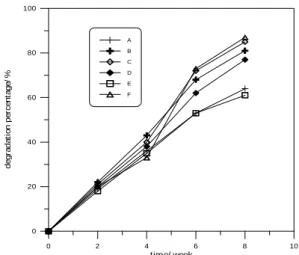
The degradation of pyrene in soils was analyzed. The experimental results of this study indicated that the removal efficiencies of the pyrene in summer were found to be higher than those in winter. These results indicated that the pyrene degradation could be promoted by properly increasing environmental temperature. In addition, fertilization was found to have a positive effect on pyrene degradation regardless of planting. That the pyrene was not found in plant tissue indicated that the rhizospheric microorganisms had a significant effect on the degradation of pyrene in soils. In addition, the two plants of Rohdea japonica and Vetiveria zizanioides were selected for the experiment adding surfactant, the three surfactant are triton X-100, tween-20 and sodium lauryl sulfate. When the triton X-100 and the mixed of three surfactants were added in the soil planted with Vetiveria zizanioides, the experimental results indicate that the degradation of Pyrene are 85% and 87%, respectively, after 8 weeks(shown in figure 2), these percentage are higher than the experiment with Vetiveria zizanioides and without adding surfactant which is 81﹪.
With the same experimental condition as planting Vetiveria zizanioides, the degradation of Pyrene are 89% and 91%, respectively, after 8 weeks with Rohdea japonica (Thunb.) Roth et Kunth (shown in figure 3), these percentage are small higher than the blank experiment with Rohdea japonica (Thunb.) Roth et Kunth and without adding surfactant which is 86%. Therefore, the degradation of Pyrene using phytoremediation was promoted by suitable surfactant adding. So the phytoremediation technology will provide great potential for pyrene soil pollution treatment, and the microorganisms and the root exudate will provide an interesting subject for study.
Keywords:Bioremediation, PAHs, Pyrene
Phytoremediation, , Rhizosphere effect
二、計畫緣由與目的 pyrene 是由四個苯還鍵結而成之 化合物,屬於多環芳香烴(PAHs),具有極 佳之抗熱解及化學穩定性,不易在自然界 中自行分解,且具有極大之毒性, 對人 體健康及環境危害之影響非常嚴重,故環 境一旦受多環芳香族碳氫化合物(PAHs) 污染,則其復育整治工作即便成為一個非 常重要之工作,而復育技術之開發也是一 個值得大家研究發展的課題。 目前土壤多環芳香烴(PAHs)有機污染物之 整治方法有物理技術,化學處理技術,微 生物之復育技術(1)(2)(3)(4)(5), 對生態環境都會造成傷害,因此植物復育 技術漸受重視,而其具有花費低、省能源、 對生態環境傷害最小,最易被大眾所接受 等優點(6)(7)(8),只須太陽能源即可 發揮處理功效。 本研究計劃,就是利用植物復育技術 來進行土壤之 pyrene 污染整治,在實驗室 中模擬現地植物復育技術。選擇適宜之本 土草本植物,探討不同條件,土壤中 pyrene 降解百分率及其流向,添加界面活性劑對 土壤中 pyrene 降解百分率之影響,加以分 析比較並探討其處理效果。 三、結果與討論 實驗材料及藥品 污染物 Pyrene 純度 90﹪ Fluka
界面活性劑 triton X-100, tween-20 and sodium lauryl sulfate 肥料 花寶 2 號 植物 香蒲、培地茅、萬年青、蘆葦、雲 林莞草、大花咸豐草,鹹草 實驗方法 多環芳香烴污染土壤之配,取 0.92 公克 之 Pyrene 溶於丙酮後,將其倒入 3 公 斤土壤中,攪拌均勻並乾燥。配置成 Pyrene 污染土壤分別裝入塑膠桶(直徑 20 ㎝ 、高 22 ㎝)中。選取蘆葦、香蒲、 培地茅、萬年青、鹹草、雲林莞草及大 花咸豐草等七種不同植物,分別種入裝 有污染土壤之塑膠桶,每種植物各種 3 筒,並作 3 桶位種植物之空白實驗。並 將部分污染樣本加入肥料或界面活性 劑,3 桶不種植植物當空白實驗。將上 述樣本移入溫室培養,定期分析 Pyrene 降解百分律率集及植物中 pyrene 之含 量。 分析方法 Pyrene 之定量分析,取 2 公克乾燥樣品 土壤加入 1 公克無水硫酸鈉,攪拌均勻 後,加入溶劑二氯甲烷 20 ml 以細胞粉 碎機萃取 6 分鐘,將萃取液倒出,重複 上數步驟三次。將翠取液濃縮後,再以 乙晴取代二氯甲完,再以高效益液相層 析儀定量。並以索氏粹取分析植物中 pyrene 之含量。 污染土壤中 Pyrene 降解百分率由表 二 可知夏天 pyrene 降解百分率大於冬
天,可知適當升高溫度對 pyrene 降解百 分率有正面影響且加入肥料(圖一)對 pyrene 降解亦有促進作用。在植物中並 未發現 pyrene(表一) 故可推測根區微 生物對 pyrene 降解具有極重要的地 位,另外培地茅及萬年青樣本中加入界 面活性劑 triton X-100, tween-20 and sodium lauryl sulfate,由結果顯示萬 年 青 樣 本 中 加 入 界 面 活 性 劑 triton X-1000 及三種混合界面活性劑八週後 pyrene 降解百分率分別達 89%及 91% 較未加界面活性劑之樣本之 86%稍高 (圖二),同樣的在培地茅樣本中加入 triton X-100 及三種混合界面活性劑, 八週後 pyrene 降解百分率分別達 85% 及 87% 較未加界面活性劑之樣本之 81 %高出許多( 圖三),因此加入適當界面 活性劑對降解 pyrene 具有極大的潛 能。除此之外根區效應中根部分泌物及 微生物之作用情形也是值得深入探討。 四、計劃成果自評 本研究係以蘆葦、香蒲、培地茅、萬 年青、鹹草、雲林莞草及大花咸豐草等植 栽植物為主要研究目標,其中研究結果顯 示種植培地茅、萬年青及香蒲比未種植植 物對土壤中 Pyrene 之降解效率明顯提 高。加入肥料對 pyrene 降解亦有促進作 用,適當升高溫度對 pyrene 降解百分率有 正面影響且土壤中微生物也是對 Pyrene 降解之重要因素。加入適當界面活性劑對 降解 pyrene 具有極大的潛能。因此植物復 育技術多環芳香烴(PAHs)Pyrene 污染應 是意一種可行且對環境破壞及二次污染最 小之復育技術,培地茅、萬年青及香蒲則 是對 Pyrene 污染之植物復育技術時值得 探討之植物種。此外根區效應,土壤中微 生物之影響及植務根部與附近微生物之關 係也是一個重要的研就究課題 五、參考文獻 1.Yang,L.and Lai,C.T.,1999.Biological Treatment of the Mineral Oil in Salty Enviroment , Proceedints of 3rd IWA Specialized Conference on Hazard Assessment and Control of Enviromental contaminants , ECOHAZARD , 99,Otsu ,Japan,pp.563-570.
2.Albert D.Venosa,Kenneth Lee,Makran T.Suidan,Susana Garcia Banco,Susan Cobanli,Moustafa Moteleb,John R.Haines,Gilles Tremblay and Melynda Hazelwood., 2002.Bioremediation and biorestoration of a crude oil contaminated freshwater wetland on the St.Lawrence River,Bioremediation ournal,Vol.6,pp.261-281.
3.Pritchard, P.H.,Mueller,J.G., Rogers, J.C., Kremer ,F. V., and Glaser ,J. A.,1992.Oill Spill Bioremediation : Experiences , lessons and results from the Exxon Valdez Oil Spill in Alaska ,Biogegradation , Vol. 3 , pp . 315-335.
4.Rosenberg , E , Legmann , R , Kushmaro , A., Taube , R. ,Adler , E. ,and Ron , E. Z.,1992.Petroleum Bioremediation – A Multiphase Problem , Biogegradation. Vol . 3 ,pp. 337-350.
5.Atlas ,R. M. ,1995. Petroleum Biodegradation and Oil Spill Bioremediation , Marine Pollution Bulletin , Vol. 31 , pp. 178-182
6.Wiltse , C.C., Rooney , W.L., Chen , Z., Schwab, A.P., Banks, M.K., 1998.
and crude oil-phyto-remediation potential among alfalfa genotypes. J. Environ . Quality, 27, pp. 169-173. 7. Lawrence C. Davis, Sigifredo Castro
Diaz,Qizhi Zhang and Larry E.Erickson., 2002. Benefits of vegetation for soils with organic contaminants.Vol 21,pp 457-491. 8. Amy k. Wolfe and David Bjornstad,
2002.Whay would anyone object? An experimention of social aspects of phytoremediation. Critical Reviews in plant sciences. VOL. 21, pp. 429-438.
0.00 5.00 10.00 15.00 20.00 25.00 Time / Week 0.00 20.00 40.00 60.00 80.00 100.00 D e g ra d a ti o n % A B C D
Fig. 1. The effect of fertilization on the pyrene degradation percentage A: With
Typha orientalis Presl and without fertilization B: Without plant and without fertilization C: With Typha orientalis
Presl and with fertilization D: Without plant
and with fertilization
Fig. 2. The effect of surfactant on the pyrene degradation percentage with Rohdea japonica (Thunb.) Roth et Kunth A: blank(without surfactant and plant); B: with plant; C: with plant and triton X-100; D: with plant and tween-20; E: with plant and sodium lauryl sulfate; F: with plant and three mixed surfactant.
0 2 4 6 8 10 time/ week 0 20 40 60 80 100 d e g ra d a ti o n p e rc e n ta g e / % A B C D E F
Fig. 3. The effect of surfactant on the pyrene degradation percentage with Vetiveria zizanioides. A: blank(without surfactant and plant); B: with plant; C: with plant and triton X-100; D: with plant and tween-20; E: with plant and sodium lauryl sulfate; F: with plant and three mixedsurfactant.
Table 1 The concentration of pyrene in the plant Time(week) Typha orientalis
Presl
Vetiveria zizanioides
Rohdea japonica (Thunb.) Roth et Kunth Root (mg/Kg) Leaf (mg/Kg) Root (mg/Kg) Leaf (mg/Kg) Root (mg/Kg) Sterm (mg/Kg) Leaf (mg/Kg) 6 2.0 0 1.9 0 2.8 0 0 12 2.1 0.3 2.0 0 3.3 0 0 0 2 4 6 8 10 time/ week 0 20 40 60 80 100 d e g ra d a ti o n p e rc e n ta g e / % A B C D E F