
以互動式故事雛形法為基礎之服務意象體驗 - 政大學術集成
103
0
0
全文
(2) Abstract Along the fast changes in technology, business should revolute not only products but also services to survive. Service innovation becomes a popular competence that every business wants to have. However, there are the gap between intentions and results. Most of business are lack of resources but forced to do service innovation because of environment factors. The result usually is a failure. This research wants to develop an interactive prototyping tool to help business avoid the risk of investing on innovation by creating their service prototypes in advance. A service is always. 政 治 大 storytelling way. For business needing unique services or products, we adopt service 立 intangible and this prototyping tool would elaborate the prototype contents in a. ‧ 國. 學. image as the main concept in constructing the story prototype. In this research, an image represents the attitude of business toward its services or products. The goal of. ‧. this research is that business can test its image and get new inspiration through the. Nat. n. al. er. io. sit. y. interactive prototyping process.. i Un. v. Keywords: Service Innovation, Interactive Story Prototyping, Emotion Annotating, Image Testing. Ch. engchi.
(3) TABLE OF CONTENTS CHAPTER 1 INTRODUCTION ............................................................................................... 7 1.1. Research Background and Motivation ..................................................................... 7. 1.2. Research Questions .................................................................................................. 9. 1.3. Research Objectives and Contributions ................................................................. 10. 1.4. Research Method.................................................................................................... 11. 1.5. Content Organization ............................................................................................. 11. CHAPTER 2 LITERATURE REVIEW .................................................................................. 13 2.1. Prototyping ............................................................................................................. 13. 2.2. Story ....................................................................................................................... 15. 2.3. Image...................................................................................................................... 18. 立. 政 治 大. ‧ 國. 學. Chapter 3 MOTIVATION APPLICATION ............................................................................ 20 uVoyage – the imagery-based service innovation platform ................................... 20. 3.2. ImageCons System Architecture ............................................................................ 21. ‧. 3.1. y. Nat. sit. CHAPTER 4 IMAGE-BASED INTERACTIVE STORY PROTOTYPING ......................... 24. 4.2. User-centric Interactive Operating Module ........................................................... 29. 4.3. Meaning Predictor (Recommender) Module ......................................................... 31. 4.4. Story Structure Finder Module .............................................................................. 36. 4.5. Story Prototype Generator Module ........................................................................ 39. n. al. er. Conceptual Framework .......................................................................................... 24. io. 4.1. Ch. engchi. i Un. v. CHAPTER 5 An Application .................................................................................................. 44 5.1. An Application Scenario – Tourism industry ........................................................ 44. CHAPTER 6 EVALUATION ................................................................................................. 51 6.1. Propositions............................................................................................................ 51. 6.2. Experiment Design................................................................................................. 53. 6.3. Experiment Results ................................................................................................ 56. 6.4. Discussion and Findings ........................................................................................ 71 2.
(4) CHAPTER 7 CONCLUSION ................................................................................................. 72 7.1. Research Contributions .......................................................................................... 72. 7.2. Managerial Implications ........................................................................................ 73. 7.3. Limitation and Future works .................................................................................. 73. 7.4. Conclusion Remarks .............................................................................................. 74. 立. 政 治 大. ‧. ‧ 國. 學. n. er. io. sit. y. Nat. al. Ch. engchi. i Un. v. 3.
(5) Figure Content Figure 1.1 Service innovation gaps to a business .................................................................. 8 Figure 1.2 Brand image gaps to a business ........................................................................... 9 Figure 1.3 Information systems research framework (Hevner et al., 2004) ........................ 12 Figure 3.1 change of operation flow.................................................................................... 20 Figure 3.2 The Architecture of Goal Image Creation (Yuan, 2011) ................................... 21 Figure 3.3 Information Flow in imageCons System............................................................ 22 Figure 3.4 Layer-based System Architecture with “uVoyage” system platform ................ 23 Figure 4.1 Conceptual Framework ...................................................................................... 24. 政 治 大. Figure 4.2 Reference framework for mixed prototyping (Bordegoni et al., 2009).............. 25. 立. Figure 4.3 Processes of translating non-colour-emotion word to a color ............................ 27. ‧ 國. 學. Figure 4.4 System Architecture ........................................................................................... 28 Figure 4.5 Level-0 Data Flow Diagram of Meaning Predictor/Recommender ................... 32. ‧. Figure 4.6 Concept of mapping emotional words onto colors (Yang, 2010) ...................... 32. y. Nat. sit. Figure 4.7 The semantic level of images (Shin et al., 2010) ............................................... 33. n. al. er. io. Figure 4.8 a color-vector ..................................................................................................... 34. i Un. v. Figure 4.9 Pseudocode of searching next possible word function....................................... 35. Ch. engchi. Figure 4.10 searching range of each state............................................................................ 35 Figure 4.11 The Ten Types of Innovation (Keeley, 1999) .................................................. 36 Figure 4.12 elements in different set (Phillips and Huntley, 2001) ..................................... 38 Figure 4.13 Elements map in Dramatica (Phillips and Huntley, 2001) ............................... 39 Figure 4.14 Levels of each element in a story prototype..................................................... 40 Figure 4.15 A Sample of story structure ............................................................................. 41 Figure 4.16 Data Flow Diagram of Inferring process ......................................................... 42 Figure 5.1 Service Journey of Story Prototyping System ................................................... 46 Figure 5.2 Story Prototyping System Description Page ...................................................... 46 Figure 5.3 Story Prototyping System Register Page ........................................................... 47 4.
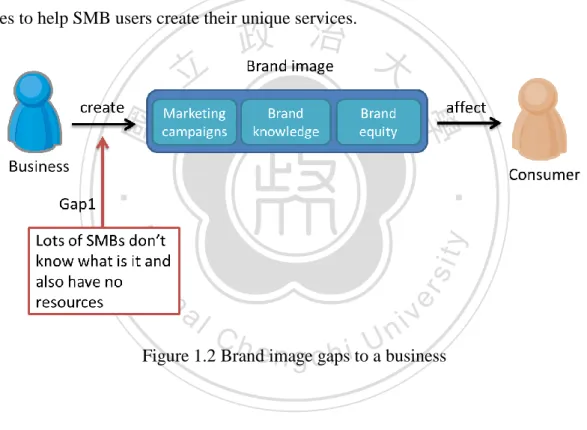
(6) Figure 5.4 Story Prototyping System Login Page ............................................................... 47 Figure 5.6 Story Prototyping System Story Prototype Page ............................................... 49 Figure 5.7 Story Prototyping System Story Prototype Page after Adjusting ...................... 50 Figure 6.1 Expectation-Confirmation Theory for building story ........................................ 53 Figure 6.2 Testing Flow ...................................................................................................... 54 Figure 6.3 Human testing questionnaires ............................................................................ 56 Figure 6.4 proposition 1 test hypotheses ............................................................................. 57 Figure 6.5 Mathematical symbols ....................................................................................... 58 Figure 6.6 Formula of Critical value method ...................................................................... 59. 政 治 大. Figure 6.7 proposition 2 test hypotheses ............................................................................. 60. 立. ‧. ‧ 國. 學. n. er. io. sit. y. Nat. al. Ch. engchi. i Un. v. 5.
(7) Table Content Table 2.1 Story creating approaches comparison ................................................................ 17 Table 4.1 Samples of input to material base ........................................................................ 43 Table 6.1 One-Sample Statistics result of Question 2 ......................................................... 58 Table 6.2 One-Sample Test result of Question 2................................................................. 58 Table 6.3 t-value distribution .............................................................................................. 59 Table 6.4 One-Sample Statistics result of Question 1, 3, 4, 5 ............................................. 60 Table 6.5 One-Sample Test result of Question 1, 3, 4, 5..................................................... 60 Table 6.6 Background of Interviewee 1 .............................................................................. 61. 政 治 大. Table 6.7 Codes of Interviewee 1 ........................................................................................ 62. 立. Table 6.8 Background of Interviewee 2 .............................................................................. 64. ‧ 國. 學. Table 6.9 Codes of Interviewee 2 ........................................................................................ 65 Table 6.10 Background of interviewee 3 ............................................................................ 67. ‧. Table 6.11 Codes of Interviewee 3 ...................................................................................... 68. n. er. io. sit. y. Nat. al. Ch. engchi. i Un. v. 6.
(8) CHAPTER 1 INTRODUCTION. Along with population grows up and information technology improves, there are more and more company start-ups in every industry on the earth. Most of them are passionate to build their business but have just a little success. This chapter gives an overview to this research: introduces the background, raises the problems and issues, concepts of solutions, and contributions.. 1.1 Research Background and Motivation. 治 政 First of all, this section mentions two states of business’ 大 issue: service innovation 立 and brand image. Doing service innovation isn’t quite an easy work and it is lack of ‧ 國. 學. tools. We consider prototyping is a convenient tool to pretest the idea before. n. al. A service is created by. sit. io. Service Innovation. er. prototyping being used in business. . This section mentions the status of. y. Nat. costs and risks of one new product or service.. ‧. production. If business could have this kind of prototyping tool, they would reduce. iv n C thehinteractions between e n g c h i U actors. under a governing. mechanism (Araomson, 1997). Nowadays, a lot of companies know that selling physical goods is not enough to fulfill with the customers, instead, they want to provide services beyond the goods for an advance profit. There are so many companies searching for a new business model and that’s a good way to extend their business by creating new services. However, innovation is not just an easy “Aha” idea.1 According to resource-based view (Wernerfelt, 1984), a business with more resources to allocate has a higher successful rate on executing the strategy than others. 1. Businessweek magazine, 2008, http://www.businessweek.com/innovate/content/oct2008/id20081020_368485.htm 7.
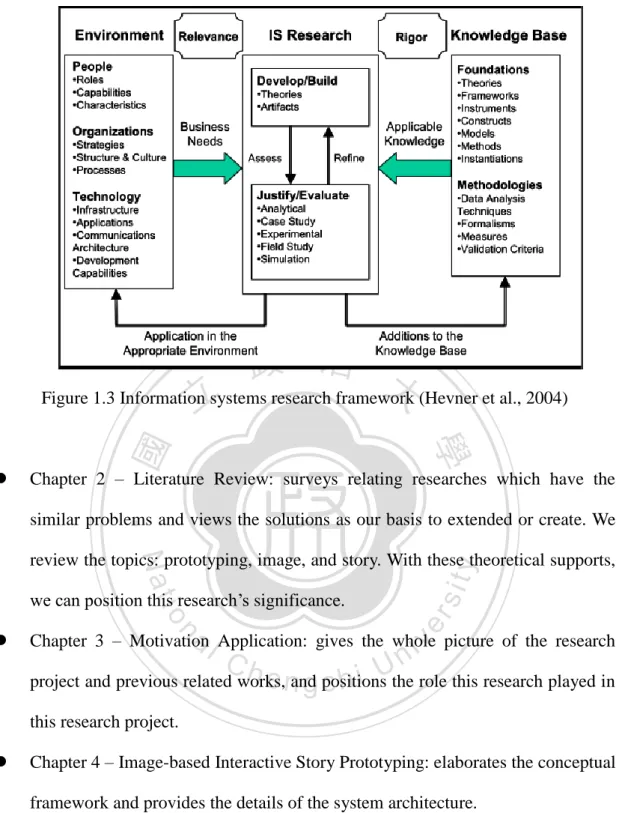
(9) Innovation as a strategy of a business becomes difficult when it is lack of resources, especially for small and medium business (SMB). Moreover, there are no ideas for SMBs to innovate their business even they have resources to do that. It needs a good methodology to help these kinds of enterprises do service innovation. In figure 1.1, we can see the relationships while SMBs want to do service innovation.. 立. 政 治 大. ‧ 國. 學. Figure 1.1 Service innovation gaps to a business. ‧. io. y. sit. Brand Image. Nat. . n. al. er. Brand image (Gardner and Levy, 1955) is another issue for business to build their. i Un. v. brand. Enterprises try to embed their image into customers’ mind. Whenever talking. Ch. engchi. about keywords or seeing the graphics, customers will soon associate the products and brand. In figure 1.2 we know that it is not easy to create the brand image and plant it into everyone’s mind. Except understanding marketing rules and strategies, creating a brand also takes time and resources. That’s a heavy burden for SMBs. However, it’s a good way that business could just focus on product or service innovation instead of finding out the brand image, if the image can be built in a systematic way. . Prototyping How do businesses do after they realize what brand image they want to give to. consumers? Prototyping, an approximation of the product that considers one or more 8.
(10) dimensions of the idea or concept, is an effective approach to test the new ideas (Blackburn, 2010). There are many types of prototypes in telling a concept, especially a story. A story delivers not only virtual ideas but also a thing that happens in the real world. However, story prototyping will make audiences feel just a virtual tale. So this research would propose a methodology which can connect image and story prototyping. Whenever prototype is closed to the audiences, they will be convinced that this prototype is almost true for them, and follow the steps in the story may lead them to the success. This research constrains the prototype into service innovation and tries to help SMB users create their unique services.. 立. 政 治 大. ‧. ‧ 國. 學. n. er. io. sit. y. Nat. al. Ch. engchi. i Un. v. Figure 1.2 Brand image gaps to a business. 1.2 Research Questions In order to provide service innovation prototype to business, it needs to convert innovated concepts to specific service contents, which are different from one to another. Whenever this research uses story prototype to represent thoughts or images, the most important thing is how to understand imagery and create comprehensive contents automatically. It is not easy for a human, let alone a computer. To make prototype closer to reality, user involved is necessary. From the above statements we 9.
(11) could summarize the following problems: . How to transform the innovated thoughts into concrete description?. . To building a story prototype with context and culture data, how to connect them with innovation concepts?. . How to find a proper structure for a story prototype with user’s data?. . For building an interactive service journey, how to measure user’s mood through their inputs and how to give the response immediately?. This research would provide solutions to above problems in chapter 4.. 立. 政 治 大. 1.3 Research Objectives and Contributions. ‧ 國. 學. The goal of this research is to automatically create a story prototype for service. ‧. innovation through service imagery.. sit. y. Nat. In the research, we define service imagery in a business as an idea or a concept. io. al. er. for creating a new service. While businesses get new service imagery for them, they can try to build a prototype automatically to realize if the imagery fit the business or. n. iv n C not. If businesses feel the image unsuitable for their services or products, h e n gorcunfeasible hi U they could go back to create or search for another imagery. Business could cost less spending on developing new services or products. That would make business have more wills to do service innovation. To achieve the objects we have to solve the problems mention in previous part. For the problem “How to transform the innovated thoughts into concrete description?” we may find theories in semantic or other proper domains. Second, we can find some story writing theory to solve problems of story structure and content. Third, about service journey design, we could follow the principles from the domain of interactive prototyping. 10.
(12) Given the achievement of research goals, the research contribution is to transfer imagery into story prototypes automatically. These prototypes also connect imagery and service innovation. That will create a new ecosystem for one industry. If one business, especially SMB, has this kind of tool, it can test its thought of creating a new service with low costs. The business put more resources in research and development after owning a good enough prototype. There will be more and more new innovated services with lower cost. And then, the question may change from “how to do service innovation” to “how to improve the service quality”.. 1.4 Research Method. 立. 政 治 大. As the research questions mentions, this research wants to build a service journey. ‧ 國. 學. to co-create value with those business users. Interactive prototyping (Cartwright, 1997). ‧. is a good for us to create the environment for users. To let users get involved in this. sit. y. Nat. service journey and provide their thought through interaction, we try to use a story. io. er. prototype to connect the experiences of users, who would project themselves as a character in the story. To relate users’ image to prototype, we would build a method to. al. n. iv n C annotate image. Then this research would implement an information system using he ngchi U above three methods to justify this research’s contributions. 1.5 Content Organization From Design Science in Information Systems Research (Hevner et al., 2004), the proposal with this framework proceeds as follows:. 11.
(13) 政 治 大 Figure 1.3 Information systems research framework (Hevner et al., 2004) 立. ‧ 國. 學. . Chapter 2 – Literature Review: surveys relating researches which have the. ‧. similar problems and views the solutions as our basis to extended or create. We. Nat. sit. y. review the topics: prototyping, image, and story. With these theoretical supports,. al. n. . er. io. we can position this research’s significance.. i Un. v. Chapter 3 – Motivation Application: gives the whole picture of the research. Ch. engchi. project and previous related works, and positions the role this research played in this research project. . Chapter 4 – Image-based Interactive Story Prototyping: elaborates the conceptual framework and provides the details of the system architecture.. . Chapter 5 – Conclusion: offers a scenario of system usage for better understanding and address future works.. 12.
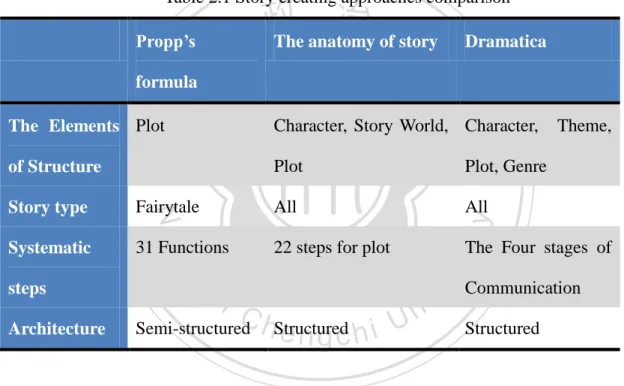
(14) CHAPTER 2 LITERATURE REVIEW. This chapter reviews three topics which are related to this research. The first one is prototyping. In prototyping we describe the literature definition of prototyping and the problems in prototyping domain. This research uses interactive prototyping to develop the method, so this part would mention the benefits of using interactive prototyping compared with other prototyping approaches. The second section provides a list of story theories and their brief introduction and then compares them. A theory would be chosen for our method development. The final section of this chapter. image-based story prototyping.. ‧ sit. y. Nat. 2.1 Prototyping. 學. ‧ 國. 治 政 is to review the theories of image and the connection to 大the enterprises and consumers. 立 In this research, we will use the above related theories to construct a model for. io. al. er. During the creation of any new design, the disparity between the desired outcome and the actual outcome was always under great uncertainty due to the yet. n. iv n C unknown fields of the new design.hA commonly used e n g c h i Umethodology to lower the risk. of new product development is prototyping – an approximation of the product that considers one or more dimensions of the idea or concept (Blackburn, 2010). Blackburn mentioned the benefits obtained from prototyping as followings (Blackburn, 2010): . Help the development team to learn whether ideas worked as anticipated or not; if customers are involved, then they can also check the concept fulfilling the requirements or not.. . While conversations and documents might express one’s idea poorly, the prototype of the design can boost the communication. 13.
(15) . Integrate the information of the design teams, while the concept might requires multi-disciplinary.. . Function as the milestones of the new design development.. The methodology of prototyping was widely accepted in many fields, examples like system design (Nunamaker, 1991), product/service design (Ragatz et al, 1997), constructions (Brooks, 1987), movies and animations (Suzuki, 1999). However, although prototyping provides plenty of advantages, the design outcome of products, systems and services still fail to meet customer’s needs, considering the level of. integrate the user into the design process (Piela et al, 1992).. 學. ‧ 國. 治 政 ambiguity of the design requirements and the non-deterministic 大 solution paths (Piela 立 et al, 1992). Aware of this raising issue, Piela and his fellow researchers argued to ‧. Some other researchers agree to this notion, but rather extend this idea to an. sit. y. Nat. extreme. According to Dym’s findings (Dym, 1994), due to the articulation and. io. er. externalization of the process of design was improving, an concept of “automating the process of design” had appeared, which argues to provide powerful tools to support. n. al. i n Cdesign. the customers and let them do the U hengchi. v. However, Piela et al (1992) argued that in non-routine design, on-going human intervention is required; and when facilitating the customers to do the design through only information systems, the output of the design process will be highly depending on how well the system is. The reason for such arguments is because while it is easy to abstract routine actions of humans into information systems, but it is also easy to wrongly- embed the preconceptions of the system designer of the solutions, no matter it is deliberately or not. While a new design often requires brand new thoughts and linkages between different knowledge and is not able to be supported by the systems, preconceptions of the system designer will jeopardize the design – because it limited 14.
(16) and shortened the user’s ability to innovate. The changing trend of the process of design and the notions Piela et al (1992) have interwoven into a new concept – interactive prototyping (Cartwright, 1997). In interactive prototyping, powerful tools to support the user (or customer) is required; but rather focusing on the system performance, interactive prototyping puts more emphasis on the interaction with the user, which intends to integrate more human intervention to create innovation during the output generation process. Other than the “innovations from users” benefit, interactive prototyping was also having another great advantages - a good expression tool and an interesting tool. 治 政 (Carbonaro et al, 2007). Due to Carbonaro et al’s research, 大 they found that for user 立 which are not good at expressing their ideas, are having good time with using the ‧ 國. 學. interactive prototyping tools to communicate with others. Also, in their research, they. sit. y. Nat. satisfied with the result than other methods.. ‧. discovered that users who are using the interactive prototyping method are more. io. al. er. In summary, interactive prototyping is a good method for prototyping for three reasons: more innovative, better communication, enhanced satisfaction. We believe. n. iv n C interactive h prototyping are good e n g c h i U match. the characteristics of. with our research. purpose – creating story prototype for service innovation through service imagery for SMBs. However, Piela et al (1992) and Carbonaro et al (2007) all agreed that interactive prototyping requires powerful systems, which would make the difficulties of development increases. In order to tackle the problem, knowledge related to story writing and brand image must be intensifying.. 2.2 Story This section lists three popular story making theories or approaches, and gives a brief introduction of them. 15.
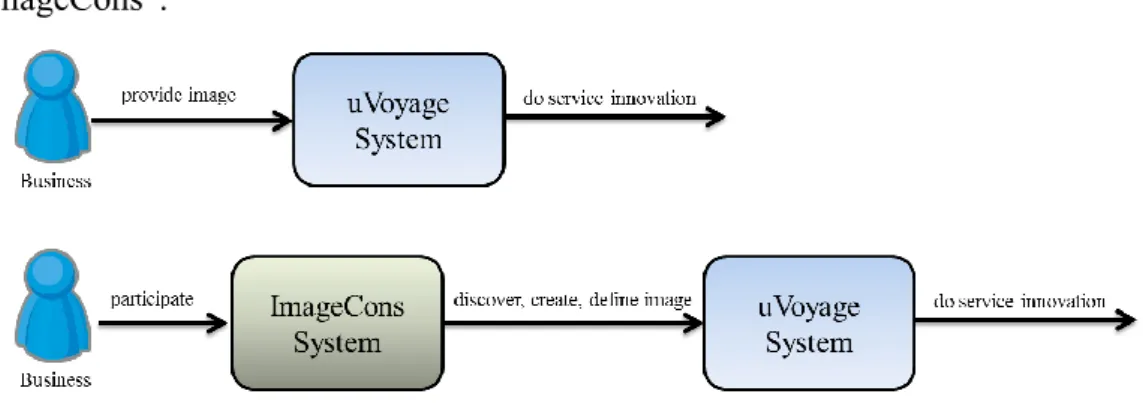
(17) . Propp’s formula (Propp, 1968) Propp was a college teacher in German2. He analyzed the structure of Russian. Formalism, a fairy tale narrative approach in Russia3, and extended the structure to 31 functions. Each function has the guideline of creating a plot of a fairytale story. For example, the function “INTERDICTION” defines the following guidelines: “An interdiction is addressed to the hero ('don't go there', 'don't do this'). The hero is warned against some action (given an 'interdiction').” (Propp, 1968). In the function, a storyteller needs to create a hero character with the action he cannot do. These functions are combined on demand. For example, a storyteller can use function. 治 政 “INTERDICTION” and “BRANDING”, which 大 means “hero is branded 立 (wounded/marked, receiving ring or scarf)”, to create a story, such as the hero does ‧ 國. 學. interdicted action and gets hurt. A storywriter can create different stories through. The anatomy of story (Truby, 2007). y. Nat. . ‧. using different functions combination.. er. io. sit. Truby is a screenwriter, director and screenwriting teacher.4 He wrote a series of books and open classes to teach writing scripts. In the book “The anatomy of story: 22. al. n. iv n C steps to becoming a master storyteller”, a systematical way to create a story. h e nandggave chi U. In this book, he uses “Character”, “Story World”, and “Plot” as the elements in a story. To make reader understand the process of creating a story, this book also provides an approach of 22 steps for creating a sequence of plots. A storyteller weaves elements as a story by using the plot creating steps (Truby, 2007). . Dramatica (Phillips and Huntley 2001) In the book “Dramatica, a new theory of story”, there are two sections of creating. a story: one is “the elements of structure” and the other is “the art of storytelling”. In 2 3 4. Wikipedia, 2011, http://en.wikipedia.org/wiki/Vladimir_Propp Wikipedia, 2011, http://en.wikipedia.org/wiki/Russian_Formalism Wikipedia, 2011, http://en.wikipedia.org/wiki/John_Truby 16.
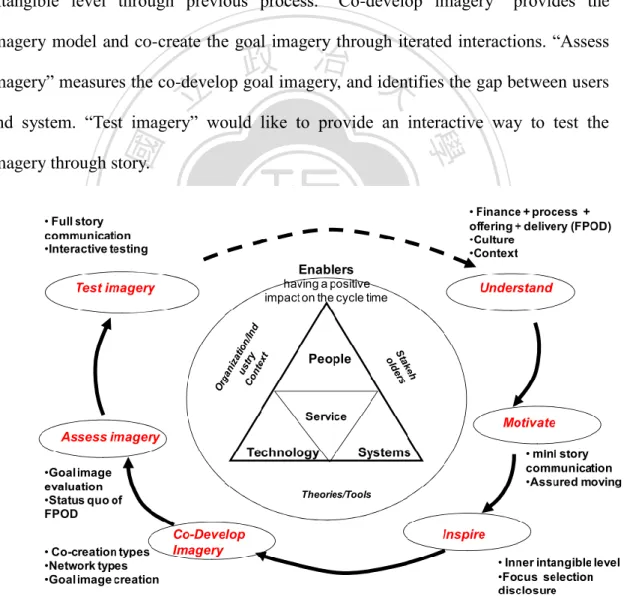
(18) the section “the elements of structure”, a storyteller can follow the definition of elements to create each kind of element in a story first, such as character, theme, plot, and genre. While having the basic elements, a storyteller can enter the next section “the art of storytelling” for creating a story with these elements. There are four stages in this section: “Storyforming”, “Storyencoding”, “Storyweaving”, and “Story Reception”. The book calls these stages are “the four stages of communication”. A storyteller can create a complete story step by step with the approach of Dramatica (Phillips and Huntley, 2001). Table 2.1 Story creating approaches comparison Propp’s formula. 政 治 大 The anatomy of story. 立. Dramatica. Character, Story World, Character,. of Structure. Plot. ‧. ‧ 國. 學. The Elements Plot. All. Systematic. 31 Functions. 22 steps for plot. n. Architecture. al. The Four stages of. er. io. steps. y. All. Plot, Genre. sit. Fairytale. Nat. Story type. Theme,. C hStructured engchi U. Semi-structured. v ni. Communication Structured. In table 2.1 we compare the three approaches. Propp’s formula is based on the narrative method of Russian folk. It focuses on the fairytale story type and provides a set of functions that can be combined as the story structure. However, it only provides functions to write plots and the other things are relied on the storyteller. We think it is not a structured architecture because it doesn’t provide a complete process to create a story. The other two approaches have the similar definition of a story structure. A storyteller can write different types of stories through these two approaches. Both of 17.
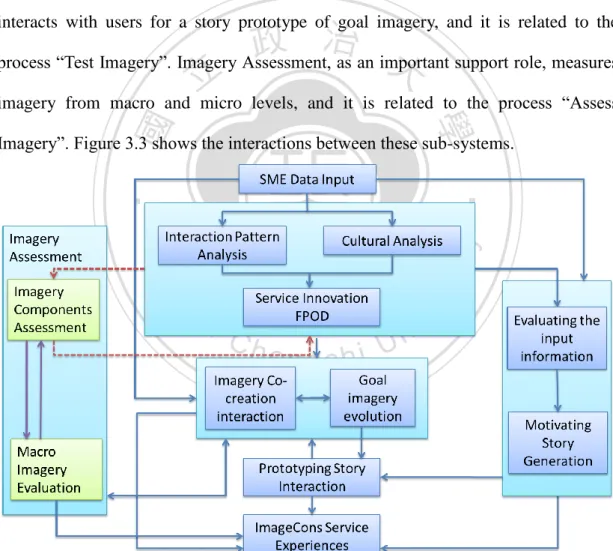
(19) the two approaches also provide a systematic way of creating a story. So we think these two approaches are structured architecture of creating a story. Hence, these approaches are proper ones, except Propp’s formula, to utilize for developing story creation methods as attempted by this research.. 2.3 Image Image, or imagery, is defined as a form of mental representation which allows the human mind to retain and manipulate the information extracted from its environment in Psychology (Denis, 1991). In this section, we discuss two topics:. 治 政 brand image and service image. A brand image is related 大to products of one business. 立 When a business provides services or products, we have to know service image. ‧ 國. 學. . Brand image. ‧. Gardner and Levy gave the notion of brand image a formal introduction: an. sit. y. Nat. awareness of social and psychological nature toward “products” (Gardner and Levy,. io. al. er. 1955). After that, a lot of researches investigated brand image, especially in marketing domain (Dobni et al., 1990). Dobni et al. analyzed the researches of brand image and. n. iv n C grouped the researchers by their h points of view: Blanket e n g c h i U definitions, emphasis on symbolism, emphasis on meanings or messages, emphasis on personification, emphasis on cognitive or psychological elements (1990). Although researchers have different points of view, they still emphasized on the survey of consumers’ attitude, such as symbolic, meanings, cognition, toward products. . Service image In business, a service is the non-material equivalent of a good (Cardoso, 2009).. Consumers would buy and experience the intangible goods. As mentioned in previous part, a brand image is related to consumers’ attitude toward products. A service image can also be related to consumers’ attitude toward services. However, the effect factors 18.
(20) of consumers’ attitude transfers from tangible goods to intangible goods, such as experience and memory. As the goal of this search is to help business do service innovation by prototyping, service image is an important part of this research. With the review from brand image, we can give a realization of service image for our work.. 立. 政 治 大. ‧. ‧ 國. 學. n. er. io. sit. y. Nat. al. Ch. engchi. i Un. v. 19.
(21) Chapter 3 MOTIVATION APPLICATION. The topic of this chapter is to give a brief introduction of existing research project called “uVoyage” (Yang, 2010) and its related research project “imageCons” which this research is belong to.. The introduction part of “ImageCons” provides the. whole picture of this research project and focuses on the architecture. The following chapter presents more detail of methodology of service imagery prototyping.. 3.1 uVoyage – the imagery-based service innovation platform. 治 政 uVoyage, the imagery-based service platform, applies 大 thoughts to reality. SMBs 立 can define feelings which they want to give to customers, and uVoyage helps them ‧ 國. 學. come true by using an information platform to find the appropriate partners to. sit. y. Nat. products if they can provide the image to deliver to consumers.. ‧. cooperate through image. Business can develop and improve their services or. io. al. er. The most important issue uVoyage faces is: businesses don’t know what kind of image they want to give or they misunderstand the meaning of image. So this research. n. iv n C would like to provide a methodology theory to discover, create, and define the h e or ngchi U imagery of services. It saves time and money that business users can get and test their service imagery before entering uVoyage platform. The new research project is called “ImageCons”.. Figure 3.1 change of operation flow 20.
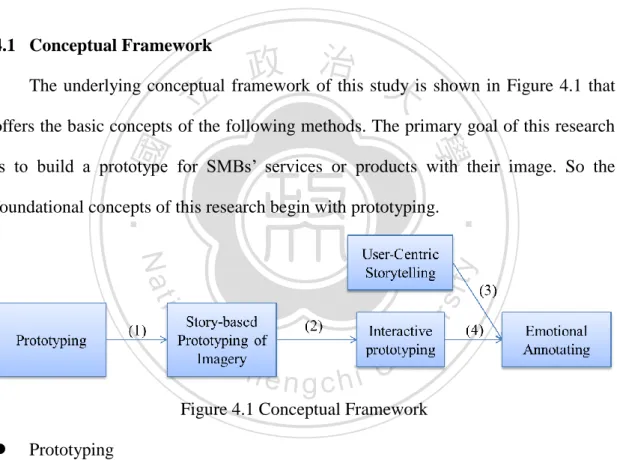
(22) 3.2 ImageCons System Architecture ImageCons project provides a service platform for users. This platform would co-create goal imagery through iterated processes: understand, motivate, inspire, co-develop imagery, assess imagery, and test imagery (Figure 3.2). Process “Understand” is to understand the culture and environmental context for finding innovation changes. “Motivate” provides a short story to stimulate coming people and motivate them to innovate with next processes. “Inspiration” would be the inner intangible level through previous process. “Co-develop imagery” provides the imagery model and co-create the goal imagery through iterated interactions. “Assess. 治 政 imagery” measures the co-develop goal imagery, and identifies 大 the gap between users 立 and system. “Test imagery” would like to provide an interactive way to test the ‧ 國. 學. imagery through story.. ‧. n. er. io. sit. y. Nat. al. Ch. engchi. i Un. v. Figure 3.2 The Architecture of Goal Image Creation (Yuan, 2011). According to the processes, the platform contains six sub-systems: Culture 21.
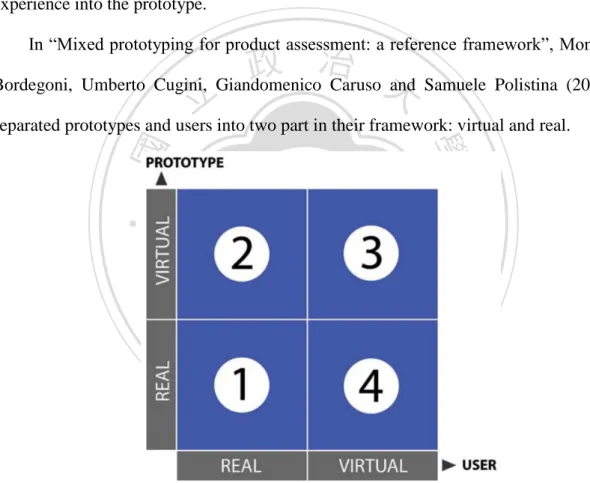
(23) Analysis, Interaction Pattern Analysis, Motivation Story Generation, Goal Imagery Evolution, Interactive Story Prototyping, and Imagery Assessment. Culture Analysis analyzes from the business culture side and Interaction Pattern Analysis are related to the process “Understand”, and their goal is to find the chances from these analyses. Motivation Story Generation” is related to the processes “Motivate” and “Inspire”, and its goal is to provide a motivated story to motivate users. Goal Imagery Evolution uses an interactive way to co-create goal imagery, and it is related to the process “Co-develop imagery”. Interactive Story Prototyping interacts with users for a story prototype of goal imagery, and it is related to the. 治 政 process “Test Imagery”. Imagery Assessment, as an important 大 support role, measures 立 imagery from macro and micro levels, and it is related to the process “Assess ‧ 國. 學. Imagery”. Figure 3.3 shows the interactions between these sub-systems.. ‧. n. er. io. sit. y. Nat. al. Ch. engchi. i Un. v. Figure 3.3 Information Flow in imageCons System. Figure 3.4 shows the relationship between ImageCons system and uVoyage system. 22.
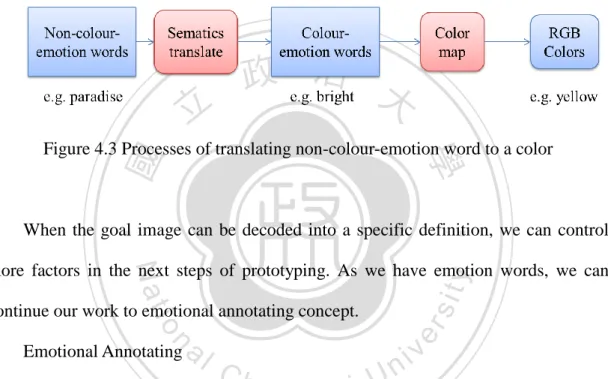
(24) Figure 3.4 Layer-based System Architecture with “uVoyage” system platform. 政 治 大 This research focuses on interactive story prototyping. As the architecture in 立. ‧ 國. 學. Figure 3.3 and Figure 3.4, interactive story prototyping needs inputs from the other sub-systems. So we give assumptions to continue this research work and the details. ‧. will be provided at chapter 4.. Goal imagery would be the input for be the goal of the story prototype.. . The analysis data from Interaction Pattern Analysis and Cultural Analysis has the. n. al. er. io. sit. y. Nat. . i Un. v. same format, or can be transformed to, as story materials.. Ch. engchi. 23.
(25) CHAPTER. 4. IMAGE-BASED. INTERACTIVE. STORY. PROTOTYPING This chapter puts forward the details of interactive story prototyping to service imagery. It is separated into two parts. First, it elaborates the relationships between different foundational concepts. Second, it describes the solutions and their implementation. Throughout the implementation we would make this research’s method logical and specific.. 4.1 Conceptual Framework. 治 政 The underlying conceptual framework of this study 大 is shown in Figure 4.1 that 立 offers the basic concepts of the following methods. The primary goal of this research ‧ 國. 學. is to build a prototype for SMBs’ services or products with their image. So the. Nat. n. al. er. io. sit. y. ‧. foundational concepts of this research begin with prototyping.. Ch. engchi. i Un. v. Figure 4.1 Conceptual Framework . Prototyping “You only know how to build the system when you have built it – and then it is. often too late.” (Floyd, 1984) Business could prevent failures or pretest the new idea by using prototyping. A “prototype” literally means “first of a type”. That means prototyping is to produce model for production in advance. (Floyd, 1984) . Story-based Prototyping of Imagery It is hard to express the feeling of one image, so does services which are always 24.
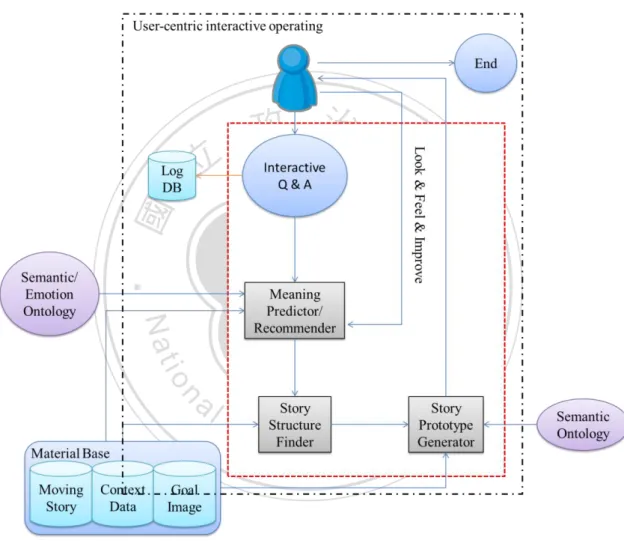
(26) intangible. This study tries to construct a prototype as a story. Through this kind of text expression, it can convey the meaning of image. And also, user can give feedbacks to improve the prototype. Every reader is delegated a role unobtrusively in a story (Braun, 2003). If there is a role in story with similar experiences to the reader, he or she would feel impressive and familiar, and they would like to trust the story, or a prototype. As the reason mentioned above, this concept connects user-centric storytelling to bring users’ experience into the prototype. In “Mixed prototyping for product assessment: a reference framework”, Monica. 治 政 Bordegoni, Umberto Cugini, Giandomenico Caruso 大 and Samuele Polistina (2009) 立 separated prototypes and users into two part in their framework: virtual and real. ‧. ‧ 國. 學. n. er. io. sit. y. Nat. al. Ch. engchi. i Un. v. Figure 4.2 Reference framework for mixed prototyping (Bordegoni et al., 2009). This research aims to help SMBs do service innovation by using story prototype. The user here is “Real”. The prototype is “Virtual” because of prototypes used for representing the service innovation directions. When the user is “Real”, there would be lots of interactions with the prototype. A user can also modify the prototype for 25.
(27) improving functionality and feasibility. So “Interactive Prototyping” is the extent topic of this concept. . User-Centric Storytelling There are two main topics raised in the story theory—Dramatica (Phillips and. Huntley, 2001): one is character and the other is theme. We can know characters and themes are important in a story. Good characters and plots make audiences have resonance and project themselves into the story. If materials in a story could easily link to audiences’ experience, it would then be easy to make audiences feel impressive. This concept explores the relationships between user and story materials. . Interactive Prototyping. 立. 政 治 大. As mentioned previously, users interact with the prototype for the purpose of. ‧ 國. 學. improving. Something interactive is effective for users to do the improvements. An. ‧. interactive tool is a good expression for users because of being easy and suitable, and. sit. y. Nat. it is also interesting to users (Szafron et al., 2005). Another reason for using. io. al. er. interactive prototyping is that SMBs do not have information technology background.. n. A new technology might be too complex to be used. This research needs an easy interface to interact with. C hto users. their efinish ngchi. iv n prototypes. U. In the end, we will. implement an interactive story prototyping system. There is a goal first before prototyping. As the assumption mentioned in chapter 3.3, there is an input called goal image which becomes the goal of service innovation in the business. Image, or imagery, is defined as a form of mental representation which allows the human mind to retain and manipulate the information extracted from its environment in Psychology (Denis, 1991). However, image is too abstract to implement. For example, a user wants to build a service to let customers have the feeling “Paradise”. That’s difficult to express the feeling because we cannot tell what a paradise is. 26.
(28) According to color emotion researches and color psychology studies, given an image is known psychological words, or colour-emotion words, these words can be mapped onto colors separately, such as red for dazzling (Ou et al., 2004). According to another extended research, non-colour-emotion words can be mapped to colour-emotion words through semantics. Hence, we can translate formal words to colour-emotion words or colors (Shin et al., 2010). Figure 4.3 shows the processes from non-colour-emotion words to colors with RGB values.. 立. 政 治 大. ‧. ‧ 國. 學. Figure 4.3 Processes of translating non-colour-emotion word to a color. When the goal image can be decoded into a specific definition, we can control. Nat. sit. y. more factors in the next steps of prototyping. As we have emotion words, we can. al. n. . er. io. continue our work to emotional annotating concept. Emotional Annotating. Ch. engchi. i Un. v. As the previous concept mentions, there are some emotion words from the goal image. We can connect the emotion to the character in a story. In the story theory Dramatica (Phillips and Huntley, 2001) provides a lot of elements about the story structure. We will focus on the character dimension and develop structures for the story. Then we can find story structures if we have the connection between characters and emotions. This research provides methods to annotate emotion to a specific structure for the different goal of stories. Therefore, constructing a story prototype can follow the steps of creating a story in Dramatica (Phillips and Huntley, 2001).. 27.
(29) 4.1 System Architecture As mentioned before, the goal of this system is to construct a prototype of service imagery. For helping users get their desired results, the system is designed to interact with users, real time analyze data, and provide appropriate contents of the prototype. To achieve this, the system architecture is built to develop the whole system.. 立. 政 治 大. ‧. ‧ 國. 學. n. er. io. sit. y. Nat. al. Ch. engchi. i Un. v. Figure 4.4 System Architecture In Figure 4.4, there four main parts in the system (the red frame): user-centric interactive operating, meaning predictor (or recommender), story structure finder, and story prototype generator. . The purpose of user-centric interactive operating is to make user feel get involved. This module is related to the concept “Interactive Prototyping”. 28.
(30) . Meaning predictor (or recommender) is to predict or to recommend the meaning of image in user’s mind, and to make the story prototype more proper for the SMB user. This module is related to the concept “Emotional Annotation”.. . Story structure finder is to find a logical structure for the story through story theory and service innovation basis. To make the story is not just a story; the story is a feasible innovating prototype. This module is related to the concepts “Emotional Annotation” and “Story-based Prototyping of Imagery”.. . Story prototype generator is to fill up the structure by proper materials. This module is related to the concepts “Story-based Prototyping of Imagery” and “User-Centric Storytelling”.. 立. 政 治 大. The following sections provide details of each module.. ‧. ‧ 國. 學. 4.2 User-centric Interactive Operating Module. sit. y. Nat. There are 3 parts in this section: interactive questionnaire, and interactive. io. al. er. parameter adjustment, interactive two-way feedback. Doing the questionnaire can gather the data from users. Adjust parameters can let users modify to fit their. n. iv n C two way can give users h efeedback ngchi U. requirements. Interactive. a good experience.. Interactive questionnaire is the first part of this whole system, but the other two parts are common functions for the system. Interactive parameter adjustment is called when the system needs it. Interactive two-way feedback gives or receives messages while the system or user has the requirement. . Interactive questionnaire As the assumptions mentioned in chapter 3.3, this information system needn’t. collect culture and context data because they are the inputs at the beginning. However, the data may not totally fulfill the next processes. This part would give some questions dynamically to fill the gap. The log database would record all the 29.
(31) interactions, and provide data for data mining to improve reliability and validity of questionnaire. There are two types of questionnaire: one is culture and context data, such as culture traits or activities; the other is personal traits of the user, such as characteristics. All the questions have the precondition that it is not contained in the input data. The story prototype would connect to users’ experiences by this data and make users feel impressive. Another goal of questionnaire is to know what direction of the story theme to guide. The user with positive attitude will have a wider scale prototype than passive users. This function is the start point of this system.. 學. ‧ 國. . 治 政 Interactive parameter adjustment 大 立 Parameters comprise two types: one is about the story prototype, and the other. one is about system configuration. Story prototype parameters affect the output of. ‧. story prototype, such as emotion words. System configuration parameters affect the. io. al. Interactive two-way feedback. n. . This function can send. er. parameters in the next modules.. sit. y. Nat. computing in each module, such as searching range value. We will introduce these. iv n C messages system side and h e nboth gchi U. user side. From the. system side, it can give recommendations to users and guide them to use this system. From the user side, users can give feedback to the interface. In the future we can improve the recommends or usability of the system. Both types of feedbacks would be recorded to the log database. This database can be mined for the improving guiding rules and user interface. This function also provides a protocol as a service for others of this research project.. 30.
(32) 4.3 Meaning Predictor (Recommender) Module This module supports users to find a new meaning of their goal image. Through the new meaning they choose, users can modify the prototype with system’s guide. This module contains three functions: mapping onto color-emotion words, calculating colors’ distance and searching next possible word. Figure 4.5 is the data flow diagram of this module. In the introduction of interactive concept we mentioned that there are color-emotion words (Ou et al., 2004) and non-colour-emotion words. These colour-emotion words come from Color Image Scale (Kobayashi, 1992). Color Image. 治 政 Scale is a coordinate system for those colour-emotion 大 words. Each word owns a RGB 立 value and an index, like positions, in the two dimensions coordinate system. One axis ‧ 國. 學. is from “warm” to “cool”, and the other is from “hard” to “soft” (Figure 4.6). The. sit. y. Nat. Image Scale (Kobayashi, 1992).. ‧. word is warmer and has higher red value if its position is near the left side of Color. io. al. er. Mapping onto color-emotion words needs to use a semantic database to correspond non-colour-emotion words to colour-emotion words. Then it can find. n. iv n C colour-emotion word’s color and h its index on Color e n g c h i U Image Scale, from database.. Calculating the distance between two colour-emotion words not only gets the distance between colors, but also detects position and direction of each other. While having the coordinate information of a colour-emotion word, searching next possible word can infer the color changing direction. With above three steps, this module would give users a set of colour-emotion words as recommendation of prototype modification.. 31.
(33) 立. 政 治 大. ‧. ‧ 國. 學. Figure 4.5 Level-0 Data Flow Diagram of Meaning Predictor/Recommender. n. er. io. sit. y. Nat. al. Ch. engchi. i Un. v. Figure 4.6 Concept of mapping emotional words onto colors (Yang, 2010) 32.
(34) . Mapping onto color-emotion words function In Figure 4.3 we synthesize two researches to let a word be mapped to a. colour-emotion word and a color with an index on Color Image Scale. Shin et al. further extended Ou et al.’s research for finding the factors of predicting people’s emotion from visual features (2010). In this research, we can follow the approach of Shin et al. to build a semantic database to convert an image word to a colour-emotion word by the abstract meaning of emotions (Figure 4.7). A colour-emotion word extracted from a non-colour-emotion word is sent to next step.. 立. 政 治 大. ‧. ‧ 國. 學. n. er. io. sit. y. Nat. al. Ch. engchi. i Un. v. Figure 4.7 The semantic level of images (Shin et al., 2010) . Calculating colors’ distance function If it is first time to enter this function, this then means there is no history data and. the module will jump this step to the next. On the other hand, this function would have two inputs: indexes of current color and previous color. A user can have two colors which are from colour-emotion words, when he or she is not the first time enter this module. The color come from previous goal image is called previous color. In this step, it defines a color-vector as the output. A color-vector has following attributes: one is distance which represents the relevance; 33.
(35) the other is position and order that means the direction.. Figure 4.8 a color-vector . Searching next possible word function For searching, we need a searching range. Fortunately, there are about 180 color. indexes, and we can get a mean “k”, which is the average distance between every two. 治 政 colors, to be the default searching radius. Users can adjust 大 this parameter if they want 立 more/less elements in the recommendation set. ‧ 國. 學. As mentioned in previous function, there are two states when entering this. ‧. function: one is having no history data; the other is having history data. In state one,. sit. y. Nat. this function uses index of current color as the center and searching range “k” as. io. al. er. radius to draw a circle. Then it uses the circle to find color elements which matches the circle. In state two, this function uses color-vector to drawing a point which has. n. iv n C the same direction and the same distance, is from previous color to current h e n gwhich chi U. color in Color Image Scale coordinate system. It draws a line by using current color and the new point. This function uses every point on the line as the center and searching range “k” as radius to draw circles, and then matches the color elements. Then this function would find the nearby color elements for recommendation. After finding color elements, this function maps them on to colour-emotion words as the output data and then end the process of this module.. 34.
(36) 政 治 大. Figure 4.9 Pseudocode of searching next possible word function. 立. ‧. ‧ 國. 學. n. er. io. sit. y. Nat. al. Ch. engchi. i Un. v. Figure 4.10 searching range of each state. 35.
(37) 4.4 Story Structure Finder Module Writing a story needs to determine a story structure at first. This module finds a fit structure from the structure database in advance. The goal of this research is to help SMBs do service innovation and we will use the types of innovation (Keeley, 1999) to be the frame of developing the structure elements.. 立. 政 治 大. ‧. ‧ 國. 學 sit. y. Nat. Figure 4.11 The Ten Types of Innovation (Keeley, 1999). io. al. er. We use the approach of the story theory, Dramatica (Phillips and Huntley, 2001). In the theory, a character has four phases in one story: having a purpose first, being. n. iv n C motivated by some reasons, using h a methodology to U e n g c h i achieve the goal, and evaluating the result. This theory composes a character of four dimensions, which are “Purpose”,. “Motivation”, et al “Methodology” and “Evaluation”, each of them has 16 elements inside (Figure 4.12). Dramatica uses these four dimensions to shape a character like real people. According to dynamic pairs, a pairing method in Dramatica, these elements can be paired one by one. A character element in one set has other three elements with the same relative position in the other sets. For example, we choose the element “Consider” in “Motivation” set as the material of building a structure, and another element mapped to “Consider” in “Methodology” set is “Certainty” because they are in the same position of the set. (Phillips and Huntley, 2001) 36.
(38) “Ten innovation types” is a direction for users to think about their innovation (Keeley, 1999). We combine these types with the elements of “Methodology” set in Dramatica and will build 160 structures in the “Methodology” part of a story (10 innovation types multiple 16 elements of “Methodology”). As mention before, each element in one dimension can be mapped to the other three dimensions with the corresponding position of element. Based on this reason, when we use an element from “Methodology” to build a structure, we can have three additional elements from the other three dimensions (Figure 4.13). So there could be 160 pre-built structures as the basic materials in this module. These structures could be attained from successful. 治 政 business cases in every industry. These structures which 大come from successful cases 立 would be defined as an innovation type with the element of “Methodology” by ‧ 國. 學. expert’s opinion. We consider that people would be stimulated by successful cases.. ‧. They feel concepts of innovation if we choose the cases with innovation types. In. sit. y. Nat. addition, choosing structures with Dramatica’s rule would let these structures easily. al. aforementioned. n. the. io. using. way. Ch. of. searching. er. be categorized. That is, this research will provide such kinds of proper story structures for. n engchi U. appropriate v i. structures.. 37.
(39) 立. 政 治 大. ‧. ‧ 國. 學. io. sit. y. Nat. n. al. er. Figure 4.12 elements in different set (Phillips and Huntley, 2001). Ch. i Un. v. This module can start from finding a composite structure after having the. engchi. materials. In last module, a goal image is mapped onto a set of colour-emotion words, and users have to choose one as the input before the starting process of this module. As the same approach provided in chapter 4.4, we can map a colour-emotion word onto an element in “Purpose” set by ontology. With the element in “Purpose”, this module can determine the elements in “Motivate”, “Methodology”, and “Evaluation”. According to users’ culture and context data, the system can also know the innovation direction. After the above steps, this module could find a basic story structure as the output. And then this module ends its process and goes to next module.. 38.
(40) 立. 政 治 大. ‧. ‧ 國. 學. Nat. n. al. 4.5 Story Prototype Generator Module. Ch. engchi. er. io. sit. y. Figure 4.13 Elements map in Dramatica (Phillips and Huntley, 2001). i Un. v. As the system architecture shows in Figure 4.4, this module is the last step of generating a story prototype and then the system will give the prototype to the user. In previous steps, we have extracted the meaning from goal image and defined a story structure. (Figure 4.14). 39.
(41) Figure 4.14 Levels of each element in a story prototype. 政 治 大 category of content linkage. The system can link contents and story structure through 立. A story structure defines a lot of content type to be filled. A content type is the. ‧ 國. 學. content types. In Figure 4.14, there are lots of terms underlined. Those are content types. These types will be mapped to materials we have now. In this research, we. ‧. define three abstract content types according to elements of structure in Dramatica. Nat. sit. y. (references in the brackets after each type): character (Character), event (Theme and. n. al. er. io. Plot), and personality (Genre). Character type decides the role in the story. Event type. i Un. v. defines events and activities of the story. Personality gives the condition in making a. Ch. engchi. decision. These three types also have attributes to define their detailed contents from the definition of Dramatica. For example, character type has the attributes “main character”, “impact character”. “Main character” could be the main character act like a hero and “impact character” may affect the actions or events to main character in a story.. 40.
(42) Figure 4.15 A Sample of story structure Before mapping to the contents, the system needs an inference engine in advance. An inference engine can decide fit and feasible resources to allocate by rules. Through. 治 政 inferring the content linkage, the story content would大 be reasonable. With the story 立 structures we will build, we define four types of rules in this engine: event order, ‧ 國. 學. character relationship, culture traits, and timestamp. These rules can be mapped to. ‧. abstract content types: character relationship to the content type “character”, culture. sit. y. Nat. traits to content type “personality”, event order and timestamp to the content type. io. al. er. “event”. Inference engine can have a better judgment with these rules. Event order rules define the queue of event happening, which can prevent unreasonable events. n. iv n C happened. Character relationship rules the relationship of competition and h e nconsider gchi U cooperation, which can determine the character that can fulfill the event. Culture traits rules define the personality and the business culture. The engine references the traits for a precise inference before inferring the next decision. For example, we can see sentence 3-1 and 3-2 in Figure 4.15. If the user has the culture trait “careful”, the inference would choose sentence 3-1 for collaboration instead of competing. Timestamp rules checks specific events, such as festivals or holidays, to make sure the inference is reasonable. Timestamp is an independent rule and can be existent with the other three rules. There are a lot of input data in this module, like culture and context data. A data 41.
(43) base, called material base, would record all the inputs and give them an abstract content type and an inference rule type through semantic database. In table 4.1, the first row of input data “discount of service” comes from the culture data, and it is judged as an “event” content type and “event order” rule through the semantics. The inference engine follows definition of content type in the story structure and maps the real reference to the structure from the material base dynamically. (Figure 4.16) For instance, we have a “Main Character” content type in the structure. After inferring, the engine can map it to “Mr. Wang”, which is a character type and has the relationship “boss of hostel”. This module repeats the inferring step till the structure finished filling up.. 立. 政 治 大. ‧. ‧ 國. 學. n. er. io. sit. y. Nat. al. Ch. engchi. i Un. v. Figure 4.16 Data Flow Diagram of Inferring process. 42.
(44) Table 4.1 Samples of input to material base Inputs. Abstract Content type. Inference rule type. Discount of service. Event. Event order. Youremap hostel. Character. Character relationship. Mr. Wang is Brave. Personality. Culture traits. Users can get a story prototype after the journey in operating the tool. They can repeat the whole process for trying another goal image, or end the process if they have. 政 治 大. inspiration in the journey and prototype.. 立. ‧. ‧ 國. 學. n. er. io. sit. y. Nat. al. Ch. engchi. i Un. v. 43.
(45) CHAPTER 5 An Application. The power of interactive story prototyping was described in previous chapters, it proves to be an excellent method for SME users to express their thoughts and stimulate motivations for the service innovation. To give a better imagination of the interactive story prototyping, we intend to provide a using scenario of the system in this chapter; also, we will summarize aforementioned concepts and elaborate the future research tasks at the end.. 學. ‧ 國. 5.1. 治 政 An Application Scenario – Tourism industry 大 立 Kenny is a hostel host owner in Puli, Nantou, with a small, clean and warm. hostel. Although he is maintaining a fine impression of his hostel, business has grown. ‧. harder for the past few years. One of the main reasons is because the fierce. sit. y. Nat. competition: price war and fast-paced evolution of other hostels; the competing. io. al. er. market of hostels in Puli makes Kenny’s revenue decrease drastically. Examining the differences between other tourist-attracting hostels and his, he discovers what have. n. iv n C them distinguished: other hostels are themselves through providing services h ebranding ngchi U. that have distinguished feature which impress every tourists and anyone who have seen their advertisements, while Kenny put his focus on improving the quality of the accommodations but neglecting the importance of making customer impressive. Realizing this, Kenny starts trying to figure out some distinguished images that his hostel might be able to provide. After days of thinking, Kenny comes up with some innovative ideas; however, the idea is still vague without testing and how to fulfill the image is also beyond his reach. For Kenny, without an actual scenario to test the idea makes him hesitated to practice his new idea; to improve his confidence of success, he needs something that 44.
(46) can give him the vision of the future. At the end, he finds the interactive story prototyping system. Through the interactive story prototyping, Kenny tests his idea with ease. He input several information of his situation and list some ideas, and the system automatically combines and interweaves them into a story. The story has a good organization, it starts with describing a dilemma of a hostel owner, then the owner figures out some ideas to confront his problems; also, it describes how the owner performs his ideas, like how much money the owner would invest into a specific equipment that the image requires. At the end of the story, it illustrates how the hostel goes well through. 治 政 the images by listing detailed figures of the outcome. 大 立 Kenny manages to create a story through the interactive story prototyping system ‧ 國. 學. that is somehow attractive, but the story still not convincing him and requires plenty. ‧. of revising. The interactive story prototyping system surprises him with its ability to. sit. y. Nat. adjust the story content with changing the keywords of the story, through the. io. al. er. fast-revising feature of the interactive story prototyping, Kenny testes plenty of ideas he already have, and even more ideas pop out during the story making. Through the. n. iv n C interactive story prototyping system’s revising feature, he can immediately test h equick ngchi U. his ideas whether fitting to his current business or could be future improvement directions or not. But the most fabulous part is yet to come, for Kenny, the story serves as a blueprint of how to implement his image; in other words, all he needs to do is to follow the story plots to build his hostel’s image; the implementation details are just something Kenny needs, because this always stops him from taking actions before. With the help of the interactive story prototyping, Kenny now acts with confidence. The following figures demonstrate the service journey of story prototyping system when Kenny uses it. 45.
(47) Figure 5.1 Service Journey of Story Prototyping System When Kenny comes to the system, he gets a description of how to use at first. Then he can choose to login with an existent account or register a new account. (Figure 5.2). 立. 政 治 大. ‧. ‧ 國. 學. n. er. io. sit. y. Nat. al. Ch. engchi. i Un. v. Figure 5.2 Story Prototyping System Description Page Kenny is the first time using this system, so he creates a new account. In this process, he has to enter his profile and company data. Then our system creates the 46.
(48) account for him. (Figure 5.3). 立. 政 治 大. ‧ 國. 學. Figure 5.3 Story Prototyping System Register Page. ‧. He signs in with his account. Our system will check the account and provide the. sit. y. Nat. profile preview in the next page. After confirming his profile, he needs to enter his. io. n. al. er. goal image of his business. (Figure 5.4 & Figure 5.5). Ch. engchi. i Un. v. Figure 5.4 Story Prototyping System Login Page. 47.
(49) 立. 政 治 大. ‧ 國. 學. Figure 5.5 Story Prototyping System User Information Page When our system receives the goal image input data, the system will find the. ‧. meaning of the goal image by mapping the image onto one specific adjective by its. y. Nat. sit. semantics. In this step, Kenny inputs a goal called “ease in the kitchen”. The Meaning. n. al. er. io. Predictor Module maps this term onto a Color-Image Scale “calm”, and the Story. i Un. v. Structure Finder Module uses “calm” to find a proper story structure in the “Purpose”. Ch. engchi. set which comes from Dramatica. The structure in “Purpose” set “equity” is found by the Color-Image Scale “calm”. Along with “equity” structure, another three structures: “Conscience”, “Reduction”, and “Expectation” are found for composed of a complete story. The system fills the structure with user profile such as company, industry, name and gender by using Story Prototype Generator Module to make Kenny feel like he is the main character in this story (Figure 5.6).. 48.
(50) Figure 5.6 Story Prototyping System Story Prototype Page. 政 治 大 inspiration that he can decorate the hostel with natural features. Although this 立. When Kenny reads this story prototype with the meaning “calm”, he gets an. ‧ 國. 學. prototype gives Kenny a new idea, it is not good enough for his business. The Meaning Recommender Module provides a set of adjectives as options for user to. ‧. change the prototype. So he decides to change prototype feeling to another adjective. sit. y. Nat. “amusing”. The system use story structure module to processes this new input and. n. al. er. io. finds a new structure to provide a new story prototype for Kenny. In the first story, our. i Un. v. system makes a “calm” style prototype for Kenny. In this story, Kenny has to do a lot. Ch. engchi. of decisions to survive in the market. He thinks this is not his characteristic on business. In the next story with amusing style, Kenny starts his business from nothing. That’s similar to his experience. He comes up with the passions in the beginning, and is reminded of the original intention, breaking through the bottleneck.. This story is. then regarded as a better story prototype. Kenny gets a new content for him and his business. (Figure 5.7). 49.
(51) 政 治 大 Figure 5.7 Story Prototyping System Story Prototype Page after Adjusting 立. ‧ 國. 學. Kenny continues this process until he gets enough fulfilling ideas with the story prototype content. After having satisfied content, Kenny finishes the process and logs. ‧. out his account to leave the system.. Nat. sit. y. Now Kenny gets a pretty good innovation idea from the story prototype without. n. al. er. io. any expends. He plans to design a new service for consumers to raise the renting rate. i Un. by 15 percent. He starts to make his business a new feature.. Ch. engchi. v. 50.
(52) CHAPTER 6 EVALUATION. In previous part, we propose ideas and mechanisms of developing an information system for research objects. We have implemented an imagery-based story prototyping system after that. This chapter provides evaluation for the system to justify the information system's performance. We found six successful cases which covered 5 innovation types and 6 structures for the experiment. The 5 innovation types are service, product system, product performance, brand, and channel. The 6 structures of “Purpose” set are desire, order, knowledge, inequity, change, and aware.. 治 政 With these limited sets of structures, we can still evaluate 大 the methodology's ideas. 立 After the evaluation we would know which type of story attracts the users. Increasing ‧ 國. 學. the structure database is believed to make the system provide more vivid and. ‧. attractive contents.. sit. y. Nat. In this chapter, first of all, we elaborate goals and reasons of evaluation into. io. al. er. propositions. Next, we design a set of experiments for these propositions. Then we attain the results from evaluation objects and explain the relationships between real. n. iv n C and expected results. In the last part, for this evaluation. hthere e n isgacdiscussion hi U 6.1 Propositions. As mentioned before, this research application starts with feeling terms of business goals retrieved from users. At the first stage, the application has to transfer these goal terms into proper meanings. Hence, we need to know the transition is fitness between goals and meanings. We then have the first proposition as follow: . Proposition 1: The users would understand the connection between goals coming from them and meanings delivered by the story prototype (that is automatically provided by our mechanism to let users know the feeling of service innovation 51.
(53) with their context and cultural data). For example, a hostel owner wants to make his house looks like “somewhere in paradise”. Our system might transfer the meaning of “somewhere in paradise” into several meanings represented in adjectives terms, such as comfortable, quiet, or dreamy. The owner can tell differences and connection between “somewhere of paradise” and adjectives terms proposed by our system. He can give the feedback through the questionnaire in our system if he cannot find any association.. 治 政 In the second step, our system will use the meanings 大 of goal to search a proper 立 story structure. In this part, we have to make sure that the story structure is fit to ‧ 國. 學. the meaning. We get the second and third propositions as follow: Proposition 2: Our system could find story structures and make a proper story. ‧. . sit. y. Nat. prototype using users' input data so as for users to realize the stories are fit or not.. io. al. personalized story prototypes.. er. In addition, the users can feel the concept of service innovation through the. n. iv n C As a hostel owner, he may get a story structure of restaurant if the meaning he ngchi U. of story is the same as his goal. He can project himself as a restaurant owner and think about business model from other domains. Otherwise, he can change the story structure until having a story structure in similar industry. . Proposition 3: Users who accept the story prototype would execute what they experience when they project themselves in the story prototypes. A hostel owner read a story prototype and has to think about the concepts of innovation from the story prototype. He will then come up with new inspiration while reading the story. Even more, he can get other thoughts by reading and comparing other story prototypes. By immersing on trying one to another story 52.
(54) prototype, a hostel owner would finally make his plan to build a new service.. Above section mentions the propositions, and then we give the experiment design in the next section.. 6.2 Experiment Design According to the problems we want to solve, we would like SMB users to find the similar meaning of the service image through using this information system. The users also have the expectation; so we use expectation-confirmation theory (Oliver,. 治 政 1980) to measure the behavior. Expectation-confirmation 大 theory is used to measure 立 the relationship between expectation and satisfaction before and after shopping. We ‧ 國. 學. modify the model to fit our research. In Figure 6.1, we assume users have their. ‧. expectation before using this image-based story prototyping system. They rebuild the. n. al. er. io. sit. y. Nat. story in the end of the process because it is different between expectation and result.. Ch. engchi. i Un. v. Figure 6.1 Expectation-Confirmation Theory for building story There are 3 measures in this evaluation: satisfaction, perceived performance, and the match degree. Satisfaction indicates that user is satisfied with the story created by image. Perceived performance display the usability of system. Confirmation shows the fitness between the story and expectation. We divide confirmation into two dimensions: usability and match degree. Usability degree means the user thinks this story is usable as he expected. Match degree means the story is matching the meaning 53.
(55) as he expected. Figure 6.2 is the flow of testing proposition. We use questionnaire to get feedback from user to test the three measures.. 立. 政 治 大. ‧. ‧ 國. 學. n. al. er. io. sit. y. Nat. Figure 6.2 Testing Flow. i Un. v. With the testing flow, we have the following steps in our system:. Ch. engchi. 1.. Login/Register: collect the user data as materials in the proposed story prototype.. 2.. Input your imagery to your business: get the goal of business and resolve meanings. Then use the meanings to search for a proper story structure for the user.. 3.. Read the story prototype: user reads the story and thinks about the meaning of the story prototype.. 4.. Adjust the prototype if anything wrong: connecting propositions in previous section, when the user has any adjustment, the system would go back to step3. Otherwise, the system would go to the final step. 54.
數據
+7
相關文件
volume suppressed mass: (TeV) 2 /M P ∼ 10 −4 eV → mm range can be experimentally tested for any number of extra dimensions - Light U(1) gauge bosons: no derivative couplings. =>
Define instead the imaginary.. potential, magnetic field, lattice…) Dirac-BdG Hamiltonian:. with small, and matrix
incapable to extract any quantities from QCD, nor to tackle the most interesting physics, namely, the spontaneously chiral symmetry breaking and the color confinement..
• Formation of massive primordial stars as origin of objects in the early universe. • Supernova explosions might be visible to the most
To complete the “plumbing” of associating our vertex data with variables in our shader programs, you need to tell WebGL where in our buffer object to find the vertex data, and
Schools will be requested to report their use of the OITG through the ITE4 annual surveys to review the effectiveness of
(Another example of close harmony is the four-bar unaccompanied vocal introduction to “Paperback Writer”, a somewhat later Beatles song.) Overall, Lennon’s and McCartney’s
• involves teaching how to connect the sounds with letters or groups of letters (e.g., the sound /k/ can be represented by c, k, ck or ch spellings) and teaching students to
