Sense of Virtual Community
Student
Teng-Tai Hsiao
Advisor
Jen-Hung Huang
A Dissertation
Submitted to Department of Management Science College of Management
National Chiao Tung University in partial Fulfillment of the Requirements
for the Degree of Doctor of Philosophy
in
Management
December 2010
/ /
417 433
Ping 1996 Interactive structural equation model,
ISEM (1)
(2)
Sense of Virtual Community
Student
Teng-Tai HsiaoAdvisor
Dr. Jen-Hung HuangDepartment of Management Science
National Chiao Tung University
ABSTRACT
Electronic word-of-mouth communication (eWOM) plays a decisive role on influencing potential consumer attitude and behavior toward a product/service. Cyberspace provides the platform for consumers issuing and acquiring information about products/services evaluations and consumption experiences. To date, many online communities focus on discussing consumption of products/services. Consumers can interact with other participants through these communities. Since consumers frequently assess online information based on their relationship with communities rather than with individuals, online communities themselves function as referents for evaluating information quality. However, no empirical study has examined whether the relationship quality perceived by members toward their virtual communities (sense of virtual community, SOVC) moderates the effect of eWOM on product judgment and consumption decisions. This study aims to examine whether sense of virtual community moderate the perceived influence of online product evaluations on product attitude and purchase intention. Two scenarios about positive eWOM and negative eWOM for a fictitious game product were respectively manipulated, and online and written questionnaires were used to collect sample. The valid sample sizes were 417 for positive
two constructs in structural equation model (SEM), the Interactive structural equation model, (ISEM) of Ping (1996) was adopted to test research hypotheses. The analytical results indicate: (1) Perceived influence of eWOM (PIEW) positively and negatively affects consumer attitude toward a product (ATT) in the positive and negative eWOM scenario. (2) SOVC positively influences ATT in both scenarios. (3) ATT positively influences purchase intention (PINT) in both scenarios. (4) SOVC reinforced the influences of PIEW on ATT in both scenarios. (5) ATT mediates the direct effects of PIEW and SOVC, and the interactive effect between PIEW and SOVC on PINT. Concluding to this study, marketers should consider the social and culture role and power of virtual communities when implementing WOM strategy online. Several theoretical and managerial implications as wel research limitation and future suggestions are also discussed.
Key Words: Electronic word ofmouth(eWOM);Sense of virtual community (SOVC); Online game community;Interactivestructuralequation model
CHINESE ABSTRACT ... I
ENGLISH ABSTRACT ... III
ACKNOWLEDGEMENT ... V
TABLE OF CONTENT ... VI
LIST OF TABLES ... X
LIST OF FIGURES ... XI
CHAPTER 1 INTRODUCTION ... 1
CHAPTER 2 LITERATURE REVIEW ... 4
2.1 Community Psychology ... 4
2.1.2 Definition of Community ... 4
2.1.2 Sense of Community ... 4
2.1.3 The Scale of Psychological Sense of Community ... 9
2.2 Virtual Community ... 12
2.2.3 Virtual Communities of Consumption ... 20
2.3 Word-of-mouth Communication ... 22
2.3.1 Word of Mouth ... 22
2.3.2 Electronic Word of Mouth ... 24
2.4 Hypotheses Development ... 26
2.4.1 The Effect of Perceived Influence of eWOM on Attitude... 26
2.4.2 The Effect of Sense of Virtual Community on Attitude ... 29
2.4.3 The Effect of Attitude on Purchase Intention ... 30
2.4.4 The Moderating Effect of Sense of Virtual Community ... 31
CHAPTER 3 METHODOLOGY ... 35
3.1 Conceptual Framework ... 35
3.2 Instruments and Data Collection ... 36
3.3 Scenario ... 37
3.4 Sample ... 39
3.5 Measures ... 41
3.5.3 The Scale for Attitude (ATT) and Purchase Intention (PINT) ... 42
3.6 Data Analysis ... 46
CHAPTER 4 RESULTS ... 51
4.1 Descriptive Statistics for Research Scales ... 51
4.2 Factor Structure of SOVC ... 53
4.3 Evaluations of Measurement Models ... 57
4.4 Calculations of Product Indicators ... 60
4.5 The Results of Research Hypotheses ... 64
4.5.1 The Effects of eWOM on Attitude ... 64
4.5.2 The Effects of SOVC on Attitude ... 64
4.5.3 The Effects of Attitude on Purchase Intention ... 66
4.5.4 The Moderating Effects of SOVC ... 66
4.5.5 The Individual Moderating Effects of SOVC ... 68
4.5.6 The Mediating effects of Attitude ... 69
5.2 Theoretical Implications ... 73
5.3 Managerial Implications ... 74
5.4 Research Limitations and Suggestions ... 75
REFERENCES ... 77
APPENDIX ... 89
Appendix A: Research Questionnaires ... 89
Appendix B: Correlations Matrix for Research Variables ... 99
Appendix C: The Results of Exploratory Factor Analysis for SOVC ... 101
Appendix D: SIMPLIS Syntax of LISREL for Ping (1996) ... 103
Table 2-1 Four Basic Interactive Mechanisms between Virtual Communities ... 16
Table 2-2 Research Hypotheses and Expected Direction ... 34
Table 3-1 Sample Statistics for Scenario Check ... 40
Table 3-2 Sample Statistics for Research Sample ... 43
Table 3-3 Research Scales Lists ... 44
Table 4-1 Descriptive Statistics of Research Scales ... 52
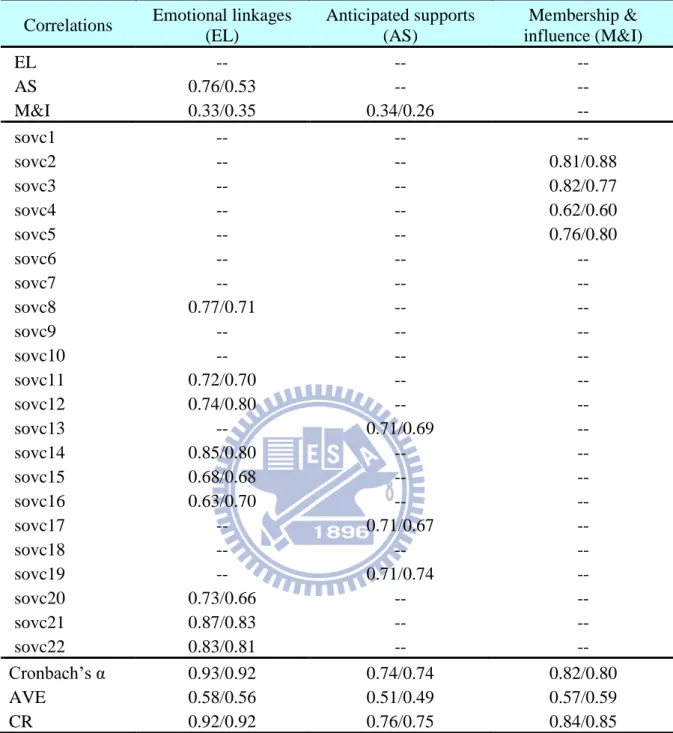
Table 4-2 Standardized Estimated Factor Loadings of Three-Factor SOVC Model .... 56
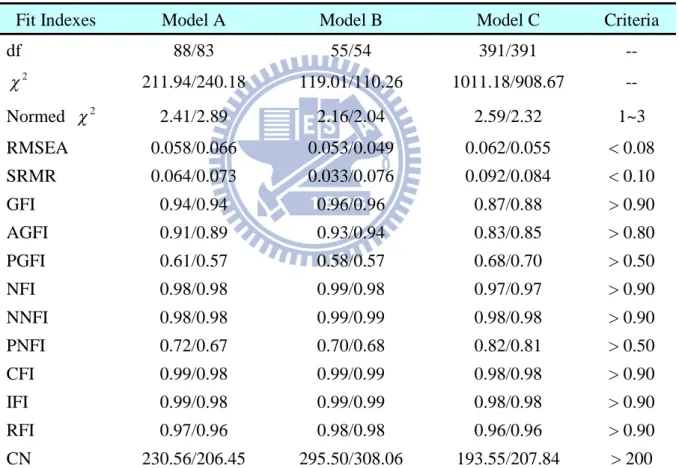
Table 4-3 Goodness of Fit Statistics for SEM Models ... 57
Table 4-4 Standardized Factor Loadings and Error Variances of Measurement Model .... 61
Table 4-5 Calculated Loadings and Error Variances of Interactive Indicators ... 62
Table 4-6 Standardized Factor Loadings of Interactive SEM of Ping (1996) ... 67
Table 4-7 Correlations among Construct for Interactive SEM of Ping (1996) ... 68
Table 4-8 Individual Moderating Effect of the Three SOVC Factors ... 69
Table 4-9 Tests for the Mediating Effects of Attitude ... 71
Table C-1 Explained variance of Exploratory Factor Analysis for SOVC ... 101
Figure 2-1 Elements and Dynamic Relationships of the Sense of Community ... 9
Figure 2-2 The Processing Framework of SOVC ... 18
Figure 3-1 Conceptual Framework ... 35
Figure 3-2 First-Step SEM for the Method of Ping (1996) ... 48
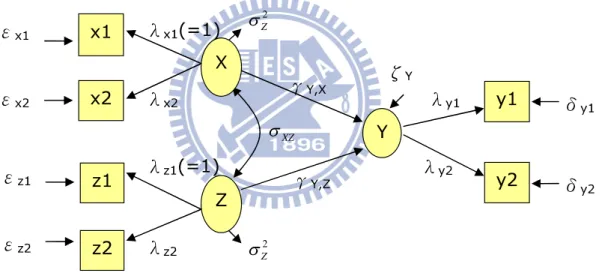
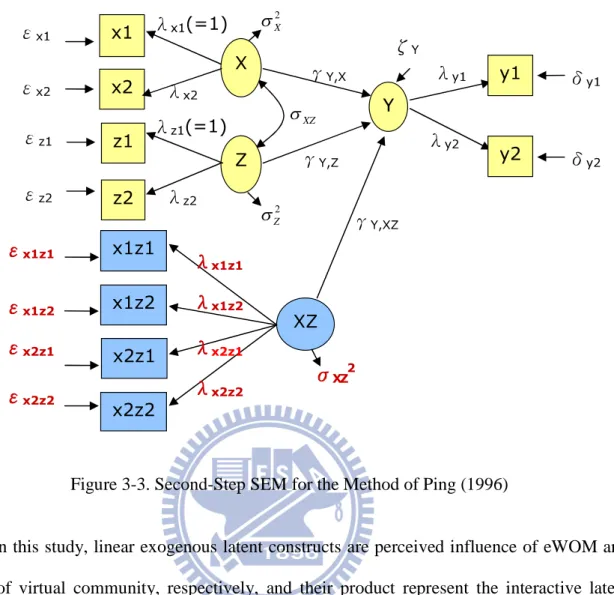
Figure 3-3 Second-Step SEM for the Method of Ping (1996) ... 50
Figure 4-1 Interactive SEM of Ping (1996) ... 62
CHAPTER 1 INTRODUCTION
The Internet has expanded the scope of human interactions into the online area. Many activities engaged in real world (e.g., communication and trade) can be performed in the cyberspace. People are not only limited to converse, interact, and transact with other people live nearby. Through accessing the Internet world, people can find partners that have common interests or goals, associated with them, exchange information and emotion, and gradually, form virtual communities in the online world. According to report of Computer Industry Almanac (Jan. 4 2006), the worldwide Internet users have exceeded one billion in 2005, and expected to reach two billion in 2011. People spend considerable time participating in the activities of virtual communities, complying with their norms, and then obtaining a sense of belonging. People thus establish a sense of virtual community, i.e., a psychological perception regarding the relationship between community member and the online community (Blanchard & Markus, 2004).1
Numerous virtual communities have developed around marketing interests or
consumption-(Kozinets, 1999). Kozinets (1999) advocated carefully investigating virtual consumption communities as a potential avenue for implementing marketing efforts and business strategies,
1
evolvement and health of a community and realize what element will be used to constitute a physical
community. Blanchard and Markus (2004) further extended the concept of SOC into virtual communities,
(1986) sense of community index. Several new items are generated to consider the unique components of
because information (e.g., product comments, criticisms, or user experiences) published via these online communities is closely related to product and service success. However, more researches still need to be conducted to understand virtual communities of consumption. Specifically, whether information received from a virtual community that people perceived higher sense of community has more influences on consumption decisions.
Internet plays a more influential role in disseminating word of mouth whatever positive or negative messages. Since information on online communities, called electronic word of mouth (eWOM), is easily accessible via the Internet, consumers frequently seek relevant product information on these virtual consumption communities rather than from inexperienced family members or friends. Because eWOMs frequently originate from market mavens or experienced users, they areconsideredtrustworthy(Gelb&Johnson,1995; Murray,1991;Richins,1983),andstronglyinfluenceattitudeformationandpurchase decisions(Bansal&Voyer,2000;Brown,Broderick,&Lee,2007).
Prior studies indicated that source credibility, similarity, and tie strength between seeker andsourcecruciallyinfluenceinformationpersuasiveness(Bansal& Voyer,2000;Gilly, Graham, Wolfinbarger, & Yale, 1998). However, existing theories regarding word of mouth (WOM) may not properly explain the influence of eWOM on product evaluation owing to the anonymity and volatility of online identity. People in online communities interact with a
website as a whole rather than based on individuals (Brown et al., 2007). Thus, the social relationships and interactions among members of an online group are closely related to the influence of eWOM on consumer decisions. Clarifying the influence of the social power of online communities on the effects of eWOM thus is critical for understanding eWOM.
According to the accessibility-diagnosticitymodel(Feldman& Lynch,1988;Herr, Kards, & Kim, 1991), when consumers perceive their interactions with online communities as high-quality, they consider information from those online communities to be more useful diagnostically than that derived from other online communities they perceive as low-quality. However, no empirical study has examined whether the sense of virtual community moderates the effect of eWOM on product judgment and consumption decisions. This study examines the interaction between consumer feelings regarding online communities and the perceived influence of received information on product judgment (attitude) and choice (purchase intention).
As described in Chapter 2, this study first discussed relevant literature and developed several research hypotheses, and then presented methodology of this study in Chapter 3. The testing results regarding research hypotheses were shown in Chapter 4, and then theoretical and managerial implication as well as limitation and suggestions for future research were discussed in the final chapter.
CHAPTER 2 LITERATURE REVIEW
2.1 Community Psychology
2.1.1 Definition of Community
The definition and development of communities are one of critical issues from the perspectives of sociology, anthropology, psychology, and sociological psychology (Gusfield, 1975;Hillery,1955;Jones,1997;McMillan& Chavis,1986). Traditionally, a community usually represents a sociological group of individuals in a physical place that share common intent, belief, resources, preferences, need, risk, and others with each other. The individuals in a community mutually interact, influence, and shape identity and group cohesion to participate community activities. The typical exemplification of the physical communities are neighborhood, family, and even clubs or collections with common of interest and goals.
The definition of community varied with academic scholars, Hillery (1955) had reviewed 94 different definitions from academic researches, and found that three common elements for defining a community: (1) A community forms in a geographic boundary, (2) social interaction exists among people, and (3) common ties and interests share with each other. Stacey (1974) identified three major elements in defining community from sociological study: territory, social system, and sense of belonging. The territory is meant as a boundary within a community. Based on above, the notion of physical place is the focus of community studies that sociologists have adopted.
2.1.2 Sense of Community
In past community studies, psychological sense of community (SOC) is an integral and overarching psychological concept to conceptualize the spirit and meaning of community.
Psychological sense of community were first introduced by Sarason (1974), and she believed
similarity with others, an acknowledged interdependence with others, a willingness to maintain this interdependence by giving to or doing for others what one expects from them,
.
Subsequent McMillan and Chavis (1986) reviewed several related researches about senseofcommunity(Doolittle& MacDonald,1978;Glynn,1981;Riger& Lavrakas,1981; Riger,LeBailly,&Gordon,1981;Ahlbrant&Cunningham,1979;Bachrach&Zautra,1985) and developed the original theory regarding psychological sense of community, which has broadly adopted and discussed by subsequent researches in both placed-based communities (Chipuer&Pretty,1999;Hill,1996;Hughey,Speer,&Peterson,1999;Long&Perlins,2003; Obst, Smith, & Zinkiewicz,2002;Obst&White,2004;Perkins, Florin, Rich, Wandersman, and Chavis, 1990)andcommunitiesofinterest(Burroughs& Eby,1998;McMillan,1996; Obst,Zinkiewicz,& Smith,2002a,2002b;Obst& White,2004). McMillan and Chavis
ense of community is a feeling that members have of belonging, a
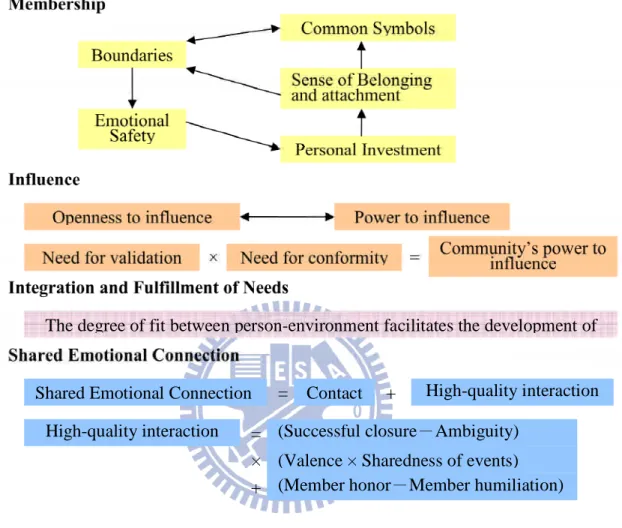
. As aforementioned definition, the proposed conceptual framework of SOC has four major elements: (1) membership, (2) influence, (3) integration and fulfillment (reinforcement) of needs, and (4) shared emotional connection.
Membership, the first element of the sense of virtual community, is feelings of belonging to collective, and identifying and being identified in that community. McMillan and Chavis (1986) recognized five interrelated attributes related to membership: (1) boundaries, (2) emotional safety, (3) a sense of belonging and identification, (4) personal
investment, and (5) a common symbol system. Boundaries refer to an intangible and tangible space to distinguish people who are and who are not part of a group. People use boundaries to preserve personal space through common symbol system such as language, dress, or ritual, and to develop intimacy and feeling of emotional safety with others. Emotional safety is analogous to the concept of security, which is a sense that people are willing to disclose true feelings. Sense of belonging and identification concerns with the faith and anticipation that one pertains to the group and the degree that one is accepted by the group and devote him/her to the group. The implication of personal investment resembles to cognitive dissonance theory (McMillan and Chavis, 1986). With time investment on participating in a group, meaningful membership will be perceived. Finally, the last attribute of developing sense of membership is common symbol system. It is considered as a significant root in sustaining and molding group boundaries.
Influence, a sense of mattering, is a bidirectional concept. It is the feelings that members influence what the group becomes and how members are moderated and motivated intangibly by the community. According to its notion, the first force is that a group endows its members with rights or powers to control over the group. This force pulls members joining the group. The second force implies that group would hold influence power (e.g., group cohesions and norms) over its members. These two forces will occur simultaneously and interdependently. In addition, McMillan and Chavis (1986) further pointed out the force
and unite, and hence, group norms will be constructed.
The third element of the sense of virtual community is integration and fulfillment of needs (i.e., reinforcement of needs), which is a feeling of the extent that members meet their needs from what they are rewarded since participating in a group. Motivation for seeking
properly satisfied in a group. Such rewards contain the status of being a member, the accomplishment of group as well as the perceived competence of others members. Although it is impossible to identify all the reinforcements (rewards), community can arrange and prioritize which need will be provided and first fulfilled through the directed force of shared
values. .
The last element of the sense of community is shared emotional connection. It is the feelings of having similar beliefs, history, or experience that members in that group are willing to devote themselves to building sympathetically intimate relationships. Shared emotional connection serves as an affective ingredient concerning sense of community. Based on a shared history that community members can identify with, the community will provide members a location to contact with others, conduct qualified interactions, share critical events, and settle the problematic events. The more emotional involvement invests in a community, the more sense of honor (less humiliation) is perceived from that community, and members will thus be conscious of stronger sense of community. In some degree, the spiritual bond which is experienced among members also plays as a kind of spiritual symbol to promote the sense of community.
In addition to define the elements of the sense of community, McMillan and Chavis (1986) also discussed how attributes for each element interact mutually and how each element interrelates to incubate the sense of community. According to their perspectives, sense of community is not a static psychological situation, and its development will evolve and decay with time elapsed. Figure 2-1 showed the dynamics occurs within the elements. Five attributes of membership interact and enhanced with a circular model. For influence, more openness to influence for a member will lead to more power to influence the community, vice
versa. Also, the community power to influence members (norms) is determined by members needs for validation and community need for conformity. With respect to reinforcement, if a community is conducive to reinforce of members needs easily, members will develop the sense of community toward that community. Finally, two formulas explained the dynamics within shared emotional connection. First, the level of shared emotional connection bases on contact frequency and interaction quality. Second, the level of high-quality interaction is conditioned with the level of event closeness, the valence of shared events, and the glory to a community.
Further, McMillan (1996) expanded and renamed the definition of four elements for the sense of community: Spirit, Trust, Trade, and Art. First, membership is relabeled as spirit. The major task of a community is to make members feel emotionally
through boundaries, which is a statement of personal own experience, and build the sense of belonging. Paying member dues serves as personal investment (cognitive dissonance) which provides people sense of entitlement to become a member. Second, the development of trust is a significant component for creating sense of influence. With the evolvement of norms order, authority based on principle, and justice for allocating power, people in community can build trustiness through exchanges of power. Third, the achievement of integrating and fulfilling members needs relied on creating a useful and trustworthy economy of trade with a driving force of similarity among members. A self-disclosed and fair economy implied that people intent to share similar values, and then process social exchanges with others who have different resources to approve their own needs. Fourth, the new implication of shared emotional connection is art. The essential of art is the member experience of contracting with others.
will become a collective art. McMillan (1996) mentioned the four principles -reinforcing circle. Spirit stimulates trust,
and then trust supports trade in a community. These three powers create a shared story that is symbolized as art. Finally, art is valuable to maintain the spirit of belonging.
Figure 2-1 Elements and Dynamic Relationships of the Sense of Community Source: Blanchard & Markus (2004, p. 68).
2.1.3 The Scale of Psychological Sense of Community
Since the concept of psychological sense of community proposed by Sarason (1974), several studies on developing scale of sense of community had been conducted (Davidson & Cotter,1986;Doolittle& MacDonald,1978;Glynn,1981;Chavis,Hogge,McMillan,& Wandersman,1986;Riger&Lavrakas,1981;Rigeret al., 1981). Doolittle and MacDonald (1978) implemented factor analysi
Boundaries Emotional Safety Membership Common Symbols Sense of Belonging and attachment Personal Investment Influence
Openness to influence Power to influence
Need for validation × Need for conformity = influence
Integration and Fulfillment of Needs
Shared Emotional Connection
The degree of fit between person-environment facilitates the development of
Shared Emotional Connection = Contact + High-quality interaction High-quality interaction = (Successful closure Ambiguity)
(Valence × Sharedness of events) (Member honor Member humiliation) ×
six factors related with community structure: (1) supportive climate, (2) family life cycle, (3) safety, (4) information interaction, (5) neighborly interaction, and (6) localism. Riger and Lavrakas (1981) recognized two distinct but correlated factors about attachment in community with factor analysis: social bonding and physical rootedness. Their works conceptualized the emotional feature included in the sense of community.
Glynn (1981), based on the study of Hillery (1995) study, identified 202 behaviors related to sense of community and developed respectively 60 items to gauge real and ideal psychological sense of community. In his work, these items were extracted into six dimensions by factor analysis: (1) objective evaluation of community structure, (2) supportive relationships in the community, (3) similarity and relationship patterns of community residents, (4) individual involvement in the community, (5) qualify of community environment, and (6) community security.
Chavis et al. (1986) empirically verified the theory of sense of community proposed by McMillan and Chavis (1986), and developed 23 items of Sense of Community Index (SCI) overall sense of community. With high degree of consensus among judges, SCI explained for 96% of the variance of mean judges perception to sense of community. However, only 27% of the variance of self-reported rating of sense of community was predicted by SCI profile. Since original edition of SCI was limited to open-ended items, Chavis and his colleagues correct these items into short edition of 12 True/False-format items. Each of four elements in the sense of community (membership, influence, integration and fulfillment of needs, shared emotional connection) consisted of three items with obverse and reverse questions (see Chipuer & Pretty, 1999, p. 646). This short edition of SCI first published in the work of Perkins et al. (1990), however, it has not been verified whether these items are valid to measure each element of sense of community in
their study (only overall internal reliability coefficient was reported and alpha coefficient was 0.80).
Since SCI had been developed, it was adopted in different context. However, as the arguments of Hill (1996), indicated that sense of community diversified dependent on research settings. Chipuer and Pretty (1999) adopted 12 true/false-format SCI to review the factor structure and reliability of sense of community in the situations of neighborhood and workplace for adults and adolescents, respectively. Their findings sustained the four-element model of McMillan and Chavis (1986) but the agreement of item-to-factor is not obtained across different settings. They suggested that further research on modifying or adding scale of SCI should follow theory-driven method. Long and Perkins (2003) administrated a confirmatory factor analysis (CFA) to verify the established theoretical constructs for the sense of community. They considered that confirmatory factor analysis should be applied for confirming theoretical formulation of the sense of community instead of exploratory factor analysis. In addition, since several studies had critiqued that sense of community should be a one-dimensional construct (Bruckner, 1988;Davidson& Cotter, 1986), the authors suggested that adopting the descriptive methods to certify the model proposed by McMillan and Chavis (1986) model is useful to understand the gap between theory and empirical work. As a result, three-factor brief SCI (social connections, mutual concerns, and community values) are recommended with CFA technique.
Obst and White (2004) proceeded a CFA to examine the factor structure of SCI in three distinct communities (i.e., neighborhood, student, and community of interest). Obst and White (2004) advocated that SCI is a cogent scale of measuring psychological sense of community under various contexts, and it is established and evolved based upon a comprehensive and confirmed theory. Rather than forgoing the established theory, it is
appropriate to modify SCI based on identical meanings proposed by McMillan and Chavis (1986). Ten of twelve items reserved in the study of Obst and White (2004), and only four items loaded on original factor. However, the four-dimensional structure remained unchanged. Obst and White (2004) also suggested that further scale development should be carried out to improve measurement of psychological sense of community.
With the controversies surrounding SCI, Peterson, Speer, and Hughey (2006) recently pointed out a methodological explanation about the disputation of SCI. They found that using negatively worded items in SCI have a restrained effect on internal consistent and stability of factor structure for the sense of community, because it may increase the complexity of scale and misdirect respondents to recognize another construct akin to central construct. Therefore, Obst and White (2004) suggested adding positively worded items for SCI grounded on accepted theoretical framework and avoiding using negatively worded items. Recent studies indicated that measure on the sense of community should continually advance as a more robust and generalized scale (Chavis & Pretty, 1999).
2.2 Virtual Community
2.2.1 Emergence of Virtual Communities
With the emergence and development of information technology, the public can easily access to the Internet. People create a virtual identity to process social interaction with othersinthecyberspace(Baym,1995;Rheingold,1993a,1993b;Rosie,2004)andform a communitywithoutgeographicrequirements(Lee,Vogel,&Limayem,2003;Ridings,2006). Early researches disputed that nonverbal social cues of human communication, such as verbal nuances (e.g., gaze, tone, body language), physical context (e.g., meeting locations), and observable information about social characteristics (e.g., age, gender, race), are hardly
discovered under the media of computer-mediated communication (CMC). This phenomenon may inhibit the transferring of real and explicit meanings and causes low quality of communication that is opposite to face-to-faceinteraction(Korenman& Wyatt,1996; Mackinnon, 1995). However, through using parallel methods (e.g., netiquette and emoticon), the distortion of meanings occurs in virtual communication can be compensated, and norms, standards, and traditions to appropriately behave in virtual environment can also be built. In this situation, a community can emerge and develop in a virtual environment with common interests and goals instead of geographical boundaries.
Gusfield (1975) discerned two types of community, i.e., geographic community and relational community. Geographic community is one kind of the communities that associated with physical location such as neighborhood, town, and city. Relational community is one kind of the communities that is formed with quality of human relationships but not physical location, such as clubs, religious groups, or work groups, and it is usually shaped based on common of interests, hobbies, or activities. Virtual communities are one kind of communities that is usually established based on a common of interest without regarding the necessity of physical association. Despite the lack of nonverbal cues, the exchanges of social resources among individuals (e.g., emotional support, sense of belonging) are obviously observed in online community (Brown et al., 2007) as well as occurred in physical community. According to the definition of Gusfield (1975), virtual communities were grouped into one sort of relational community.
Similar to the definition of community, the definition of virtual community remains debatable and varied.
from the Net when enough people carry on those public discussions long enough, with sufficient human feeling
-mediated spaces where there is a potential for an integration of content and communication with an emphasis on member-gener
some duration in an organized way over the Internet through a common location or mechan
Lee et al. (2003) reviewed the definitions of virtual community proposed by past researchers, and proposed a working definition that included four common elements for building a virtual community: A cyberspace supported by computer-based information technology, centered upon communication and interaction of participants to generate
member- . Four identified
elements are (1) cyberspace, (2) computer-based information technologies, (3) communication and interaction are the main focus and content of virtual community are driven by the participants, and (4) relationship. Compared to the definition of Hillery (1955), the place-based condition seems to not apply. However, Ridings et al. (2002) suggested that
. The location is not physical but it is an important medium to bring long-term interaction among participates who are geographically dispersed.
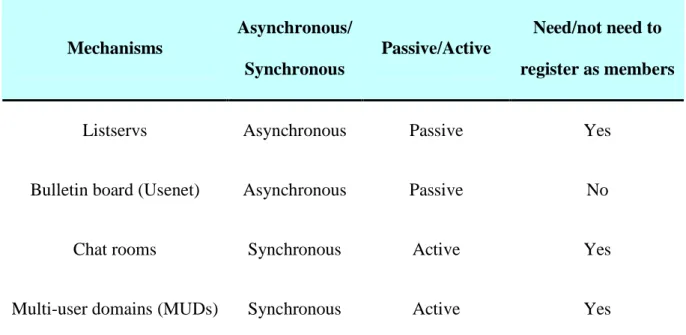
Ridings et al. (2002) identified four basic mechanisms for virtual community members to interact in a mutual location. The four mechanisms included: (1) Listservs (like e-mail distribution lists), (2) bulletin boards or Usenet newsgroups, (3) chat room, conferencing systems, or Internet relay chat (IRC), and (4) multi-user domains (MUDs). As Table 2-1
showed, listservs and bulletin board belong to asynchronous communications, which members read written messages and response in any time after reading. Chat rooms and MUDs are synchronous communications, which messages receive and reply almost at the same time like a face-to-face conversation. Besides, the communications of listservs and bulletin board are passive since members do not necessary to stay in the community when interacting with others. However, chat rooms and MUDs are active communication models, which members need to log in a community to when interacting with others. Finally, listservs, chat rooms, and MUDs need to register the community as members, however, bulletin board (Usenet) are readable publicly without registration.
as virtual communities. Jones (1997) cautioned that virtual settlements are ubiquitous as long as computer-mediated interactions surpass the threshold level of some kind of measures (e.g., website flow). However, when sentimental or emotional bonds that members share in virtual settlements do not exist, a virtual community would not be formed. Also, several researchers questioned whether or not virtual communities are pseudo-communities as Beniger (1987) described, a community where impersonal associations constitute artificial personalized communication contrary to genuine, face-to-face communication (Jones,1995; Rheingold,1993a). Although such cautions were advised, computer-mediated communications indeed provide people a efficiently perform social contacts and further build social relationship as does in a community (Harasim,1993;Jones, 1995). Similar to the contentions of Jones (1997) and sociological psychologists in the community studies (Cameron,2004;Kasarda& Janowitz,1974;Riger& Lavrakas,1981;Fried,1982), attachment is the imperative constituent for forming a healthy community.
Table 2-1 Four Basic Interactive Mechanisms between Virtual Communities Mechanisms Asynchronous/ Synchronous Passive/Active Need/not need to register as members
Listservs Asynchronous Passive Yes
Bulletin board (Usenet) Asynchronous Passive No
Chat rooms Synchronous Active Yes
Multi-user domains (MUDs) Synchronous Active Yes
Source: Modified from Ridings (2006, p. 117)
Based on relevant literatures, several distinct characteristics are discovered between virtual community and off-line community. First, besides place-based community (e.g., neighborhood), communities also included those have similar interests or goals (e.g., golf club andworkgroup)(Burroughs&Eby,1998;Hugheyet al.,1999;McMillan&Chavis,1986). Virtual communities resemble to the latter, however, there is no definite goals and organizational structure in the virtual communities. Compared to off-line communities, the components of virtual community members are usually mixed in demographic variables (such as age, gender, and social status) but harmonized in interests, activities, and attitudes (Ridings, 2006;Roberts,Smith,& Pollock,2002). Second, some nonverbal social cues (e.g., tone, posture, and dress) are inhibited because the communications in virtual communities are written. Members read the messages in bulletin board may produce numerous meanings (Chidambaram&Jones,1993;Mackinnon, 1995). Third, since it is not necessary for people meeting in face when they communicate with another, virtual community members are able to be anonymous. Based on this trait, people have larger freedom and smaller obstruction to
join into or leave from a virtual community (Roberts et al.,2002;Wellman&Gulia,1999). Moreover, anonymity helps members feel emotional safety and easy to pour themselves to others (Baym, 1995). However, anonymity may cause several problems. For example, abuse of trust and deceiving behavior easily appeared in a virtual setting. Even though some potential problems exist, however, the rapid growth of online community is still apparently observed nowadays.
2.2.2 Sense of Virtual Community
With the emergence of Internet and the popularity of virtual community, people spent more and more time on contacting with online groups. Since sense of community is extensively discussed in the physical surroundings, it is interested that whether analogous psychological perception (i.e., sense of virtual community) also exists in a virtual circumstance. Although few researches focused on exploring sense of virtual community, the four elements of McMillan and Chavis (1986) model (membership, influence, integration of needs, and shared emotional connection) also identified from many empirical studies (Baym,1997;McLaughin,Osborne,&Smith,1995;Kollock,&Smith,1994;Phillips,1996; Pliskin&Romm,1997;Preece,1999;Rheingold,1993b). Furthermore, several researches uncovered that some degree of sense of community indeed exist in a virtual environment (Blanchard & Markus,2004;Koh& Kim,2004;Robertset al., 2002, Roberts, Smith, & Pollock, 2006).
Roberts et al. (2002) recognized and examined the elements of the sense of community under MOO settings against McMillan and Chavis (1986) model. Blanchard and Markus (2004) recommended the SOC model of McMillan and Chavis (1986) is one of important theoretic basis to develop the origins of sense of virtual community. In their study, six dimensions about sense of virtual community, included (1) recognition of members, (2)
support exchange, (3) emotional attachment, (4) sense of obligation, (5) personal relationships with members, and (6) identification of self and others, were explored from multiple sports newsgroups (MSN). Most dimensions in MSN were analogous to the dimensions of sense of community proposed by McMillan and Chavis (1986). Specifically, member recognition associatedtomembership;supportexchangerelatedtointegrationofneeds,andemotional attachment and sense of obligation equated to the concept of shared emotional connection.
According to their observations of Blanchard and Markus (2004), influence was not experienced in MSN. Besides, the generation of self identity and identification of other members, and personal relationships with other members were two new features contrast to McMillan and Chavis (1986) model. However, Roberts et al. (2006) supposed identity creating and identification may place within membership, and relationship with members may put into shared emotional connection. In addition, Blanchard and Markus (2004) also proposed the processing framework to explain how sense of virtual community was developed. Three processes (exchanging support, creating and making identification, and producing trust) will work together to establish sense of virtual community, and each one is influenced by another process. As Figure 2-2 showed, frequent exchange of support among members will encourage participant to create self identify in distinguishing themselves and identify other identifies, and then common faith resulted from sense of being identified and identification will support individual produce trust toward virtual communities.
Figure 2-2. The Processing Framework of SOVC Source: Modified from Blanchard and Markus (2004, p. 76). Exchanging Support Creating and Making Identification Trust Sense of Virtual Community
Reviewing past studies, the theory and model of McMillan and Chavis (1986) was acceptably adopted into exploring sense of virtual community. Blanchard and Markus (2004) defined sense of virtual communities as a feeling of belonging and attachment toward a virtual community but it is not always happened in all virtual social groups. It directs (e.g., as exchanging support, creating norms, sustaining boundaries, and producing trust). While Blanchard and Markus (2004) and other researchers provided explicitly and extensively discussions about sense of virtual community, developing the measure of the sense of virtual community became an important research issue in understanding the evolution and influence of virtual community with members.
However, few studies have emphasized on developing the measure of sense of virtual community(Blanchard,2007;Koh& Kim,2004). Koh and Kim (2004) proposed a conceptual model of the sense of virtual communities, and empirically validated several antecedents that influenced sense of virtual community. Membership and influence, which were adopted from the theoretical model of McMillan and Chavis (1986), were introduced in their dimensions of the sense of virtual community. They also distinguished the concept of actual fulfillment of needs in their model from expected fulfillment of needs in McMillan and Chavis (1986) of the sense of community model, and considered it as one of antecedents of SOVC (e.g., enjoyability or usefulness). Furthermore, they regarded that shared emotional connection highly correlated with the concept of membership, and thus combined it with membership. In addition, one new construct,
immersion, which wa community
. In a sample of
available off-line activities, and enjoyability, had significantly effects on sense of virtual community.
Obst et al. (2002a, 2002b) reviewed the contemporary researches in the aspects of human ecology, sociology, and community psychology. They adopted the multidisciplinary scales to realize sense of community in an international community of common interest. In addition to the four elements of sense of community in McMillan and Chavis (1986) model, they also recognized the role of social identification theory on psychological sense of community. They also suggested it is necessary to thoroughly research virtually cyber-communities of similar interest. However, most SOC studies in virtual community to date still used the debatable SCI presented by Perkins et al. (1990)(Chipuer&Pretty,1999; Obst & White, 2004). Therefore, Blanchard (2007) further devised the scale for sense of virtual community based on the work of McMillan and Chavis (1986) and their observations for online multiple sports newsgroups.
2.2.3 Virtual Communities of Consumption
Virtual communities are new arena for businesses to implement effective marketing communications(Hagel&Armstrong,1997;Kozinets,1999). Hagel and Armstrong (1997) regarded that people participated and interacted in a virtual community based on meeting their basic needs such as sharing common interest, forming intimate interpersonal relationships, or trading the information. Among different sorts of virtual communities, of interested is virtual communities of consumption where provides transaction of information. Kozinets (1999) mentioned e-tribes/virtual communities are substantial important to marketing and business strategies because many affiliations based upon consumption activities. Information and interactions generated from virtual communities will play an assistant role for social and consumption behavior. Walther (1992, 1995) and Kozinets (1999) thought that the learning of consumption knowledge is relevant to social relations with virtual communities of consumption. Continuously identifying as members in a virtual community
relies on the relationships with consumption activities and the social relationships with other members (Kozinets, 1999). Thus, in order to effectively communicate with online participants, companies must consider the cultural or social influence of virtual communities.
Kozinets (1999) further indicated three discrepancies between virtual communities marketing and traditional marketing in aspect of relationship marketing. First, online consumers may actively create consumption information rather than passively receive information and deeply involved in articulating their consumption experiences. Second, the marketer-derived information or word of mouth in online community has a significant influence on consumption activities. Virtual communities provide many-to-one or many-to-many communicative channel, and thus the influence of information will explosively and extensively increase. Third, the marketing information derived from online consumers does not merely constraint on benefiting product sales. It is potential to affect in multidimensional factor, such as loyalty and retention.
In summary, virtual communities of consumption provides an opportunity to conduct efficient and widespread marketing communications. It is helpful to perform marketing communications through realizing the social relationship of online participants.
2.3 Word-of-mouth Communication
2.3.1 Word of Mouth
Word-of-mouth communication (hereafter WOM) in marketing and consumer behavior has multifaceted influences ondiffusionoftechnologicalinnovation(Czepiel,1974;Engel, Kegerreis,& Blackwell,1969),developmentofnew product(Arndt,1967;Brooks,1957; Dodson & Muller, 1978), formation of consumer attitudes and behaviors (Brown & Reingen, 1987), and choices and judgments of products (Herr et al., 1991). WOM is broadly recognized as an important source of information on which consumers rely (Gilly et al., 1998), and has more effective in persuading than mass media has (e.g., advertising) (Gelb & Johnson, 1995) because consumers believe WOM will be more trustworthy (Murray, 1991).
Several factors explained how WOM works differently. Brown and Reingen (1987) categorized the source of WOM recommendation based upon tie strength, which is the closeness of the relationship between decision maker and recommendation source. They concluded weak tie functions as bridging two or more strong tie groups, and hence, is more facilitate to the flow of information. Strong tie, however, is important to the flow of information because of source credibility. Furthermore, prior knowledge level, perceived decision task difficulty level, and types of evaluative cues, will influence the choice of recommendation sources, that is, weak tie or strong tie (Duhan, Johnson, Wilcox, & Harrell, 1997). Money, Gilly, and Graham (1998) considered the culture factors in examining how different cultures influence the WOM referral behavior. Harrison-Walker (2001) discovered affective commitment positively related to WOM activity and praise, whereas high sacrifice commitment do not related to WOM communication. In addition, they concluded the impact of service quality on WOM communication depended on industry categories. Different customer groups also had different WOM behavior (Wangenheim & Bayon, 2004a).
To explore the influence of WOM on decision making, several researches employed the conceptofperceivedinfluencefrom areferralondecision(Wangenheim & Bayon,2004a; Bansal&Voyer,2000;Gillyet al., 1998). From the perspective of information search, Gilly et al. (1998) developed a scale to measure perceived influence of sources on information seekers. Bansal and Voyer (2000) examined the relationships among noninterpersonal forces (e.g., receivers expertise, receivers perceived risk, senders expertise), interpersonal forces (e.g., ties strength, how actively WOM is sought), and perceived influence of WOM within a case of service purchase decision. Wangenheim and Bayon (2004b) suggested that perceived influence of WOM is a valid proxy variable of the true effect of a WOM referral. They concluded perceived similarity and expertise of a communicator had positive effects on perceived influence of WOM on decision of services switching, and the relationships were moderated by types of perceived risk.
In addition to positive WOM, some studies focused on researching negative WOM (Davidow,2003;Halstead,2002;Lau&Ng,2001;Richins,1983;Nyer& Gopinath,2005; Wangenheim & Bayon, 2004a). Contrasted to positive WOM, negative WOM were recognized having larger impact on making evaluation (Lutz, 1975). Based on noticeable influence of negative WOM, Richins (1983) conducted a pilot study to explore the nature of negative WOM and identified several important variables to differentiate complaining behavior WOM, including the severity of dissatisfaction, the perceptions of blame for dissatisfaction, and the perceptions of retailer responsiveness. His study provided the fundamental framework on researching negative WOM. Halstead (2002) also discussed the role of negative WOM with customer complaints, and concluded negative WOM is a supplementary to complain behavior rather than a substitution of complaining. Lau and Ng (2001) examined the influence of individual factors included personality, attitudinal and involvement, and situational factor on negative WOM behavior.
2.3.2 Electronic Word of Mouth
Explosive development in information technology, the advent of Internet provides the opportunity for consumers to gather unbiased product from opinions of other consumers, and meanwhile, offers their own consumption-related advices by engaging in electronic word-of-mouth (Hennig-Thurau & Walsh, 2003). One of the most important capabilities for Internet opposite to traditional mass communication technologies is its bidirectionality. Through the characteristic of bidirectionality, online feedback mechanisms (e.g., electronic markets) can build extensive WOM networks (Dellarocas, 2003). This trait creates an abundant potential profit for marketing product in online environment.
Traditionally, WOM were
consumers about the ownership, usage, or characteristics of particular goods and services or ing the definition to online context, eWOM we
customers about a product or company, which is made available to a multitude of people and institutions via the Internet
(Hennig-Dellarocas (2003) identified three differences to distinguish online feedback mechanisms from traditional WOM networks in realistic society. First, Internet brings an unparalleled scale to enlarge the effectiveness of WOM networks on influencing future profit. Second, the introduction of information technology allows website designer precisely measuring and controlling the powerful social force of WOM, but it is difficult to do in traditional WOM. Third, because of the volatile and anonymous nature of online identities, almost all contextual cues that facilitate to interpret the subjective information of communication are complete absent in online interaction.
Since WOM communication are believed to relate with the success of product, understanding the nature and impacts of electronic word-of-mouth (hereafter eWOM) is critical to marketing research. Godes and Mayzlin (2004) recommended using online conversations to research eWOM communication. However, they identified three significant challenges in measuring eWOM. First, it is difficult to directly observe the information that exchanged in private conversations. Second, because abundant conversations are presented in online environment, what aspect of these conversations should be measured is not clear. Finally, not only WOM is a driver of affecting future behavior, but also itself is an outcome of past behavior.
Although WOM plays an important role in determining market success and customer behavior, to date, only few researches centered on studying consumers eWOM communication (Hennig-Thurau et al., 2004; Hennig-Thurau, & Walsh, 2003). Hennig-Thurau and Walsh (2003) focused on consumer opinion platforms and explored the motives why customers want to read online articulations (i.e., evaluations or descriptions about products/services and consumption experiences). In addition, these motives were further empirically verified having noticeable influences on buying and communication behavior. Furthermore, Hennig-Thurau et al. (2004) reviewed the studies about the motives for tradition WOM communication and recognized the motive for consumers posting their own evaluations on the Internet.
Brown et al. (2007) reviewed relevant studies about WOM and argued that existing theory may be unsuitable in explaining online WOM (i.e., eWOM) and its influence on evaluation and purchase. Three significant conceptual variables (tie strength, homophily, and source credibility), which are extensively discussed in offline WOM, are reinterpreted. For offline WOM, tie strength were defined as the degree of closeness within a social
relationship. In online environment, however, tie strength we
an interactive and personalized relationship between individual and a web site (Brown et al., . Brown et al. (2007) suggested that website functioned as proxies of individuals. People in online communities interacted with the humanized website rather than with individuals, and they considered information source comes from website but not from an individual. Thus, the dimensions about online WOM should be different to those of offline WOM. The mutuality and perceived closeness with online website is more meaningful than with individual. In this study, the concept regarding sense of virtual community was applied to measure the interactive quality between online members and online communities, and to verify the advocacy proposed by Brown et al. (2007).
2.4 Hypotheses Development
This study examined the effects of eWOM on attitude and purchase intention in the situation of initial purchase when one lacks relevant product information and product use experience. The study also examined whether the centripetal degree toward the online community where people acquire relevant product information will moderate the relationships of eWOM on product evaluation. In order to conscientiously verify the hypotheses, positive eWOM and negative eWOM were both considered. The development of hypotheses are discussed as below.
2.4.1 The Effect of Perceived Influence of eWOM on Attitude
The Internet enables consumers to gather unbiased product information from other consumers while also offering their own consumption-related advice via eWOM (Hennig-Thurau & Wals, 2003). Product comments and user experiences are easily communicated electronically by online community members. These messages are retained
and classified in bulletin boards or discussion forums according to common interests or activities, such that online community members can obtain product information to assist them in decision-making while simultaneously establishing relationships with other like-minded members to share own experiences.
Consumers recognize WOM as a key source of information (Gilly et al., 1998), and moreover consider it more persuasive than mass media (e.g., advertising) because they see it asmoretrustworthythanotherinformationtypes(Gelb& Johnson,1995;Murray,1991; Richins, 1983). To examine the influence of WOM on decision-making, several studies
forthetrueeffectofspecificWOM referrals(Bansal& Voyer,2000;Gillyet al.,1998; Wangenheim & Bayon, 2004b). From the perspective of information searching, information value is assessed after information-seekers conduct a series of information exchanges, and perceived influence of WOM is considered a valid proxy variable for the true effect of a WOM referral (Wangenheim & Bayon, 2004b
information and product attitude.
WOM communications are important in attitude formation and transformation (Brown & Reingen,1987;Moneyet al., 1998). Attribution theory holds that source credibility determines message persuasiveness (Buda, 2003; Kelley, 1967). Since WOM communications are more reliable and trustworthy than information from formal marketing channels(Gelb& Johnson,1995;Richins,1983),WOM stronglyinfluences,andeven convertsattitude,particularlyinthecaseofnegativeWOM (Halstead,2002;Herret al.,1991; Mizerski,1982;Richins,1983). Productcommentsexchangedinonlinecommunities are
represent evaluations of consumption experiences, and are assigned greater credibility than the monotone and biased reviews of market experts or marketers with little or limited experienceofusingtheproduct(Huang& Chen,2006;Bickart& Schindler,2001). Thus, WOM communications,whetherverbal(Bansal& Voyer,2000;Wangenheim & Bayon, 2004b) or electronic (Hennig-Thurau&Walsh,2003;Hennig-Thurau, et al., 2004), critically influence adoption and purchase decisions (Richins, 1983).
In side of verbally WOM diffusion, Bansal and Voyer (2000) researched the processes of word of mouth within a services purchase decision context. They explored the antecedents of the influence of word of mouth that information receiver perceived and implied . Davidow (2003) examined the mediated role of word of mouth in complaint handling processes. Positive relationship was discovered between perceived fairness and purchase intention. Wangenheim and Bayon (2004b) demonstrated that perceived influence of a referral have positive relationship with services switching behavior.
In respect of electronically word-of-mouth dissemination, Hennig-Thurau and Walsh (2003) put the focus on consumer comments toward products/services in customer opinion platforms and detected motives and sequent behaviors for reading customer online articulations. Like verbal word of mouth, several motives for reading online comments have positive effects on changing buying behavior. However, not all of evaluations are admirable. A large part of evaluations are critical and arguable, that is, negative word of mouth. Many scholars supported negative word of mouth have more influence than does positive word of mouth(Halstead,2002;Lutz,1975;Richins,1983).
Frequently, consumers may lack sufficient product information even after consulting with offline friends. They may access online communities to search for relevant information
to reduce uncertainty and avoid incongruities between expected and actual product performance (Bone, 1995). Thus, eWOM communications are expected to strongly influence attitude and purchase intention when consumers confront unfamiliar products (Solomon, 2004). Based on the literature, this study hypothesizes the following:
H1a: In a positive eWOM scenario, perceived influence of eWOM positively influences online member attitude towards a reviewed product.
H1b: In a negative eWOM scenario, perceived influence of eWOM negatively influences online member attitude towards a reviewed product.
2.4.2 The Effect of Sense of Virtual Community on Attitude
Theory of Reasoned Action (TRA), Theory of Planned Behavior (TPB), and the model of goal directed behavior (MGB) all consider subjective norms as antecedent why and how people behavior (Ajzen,1991;Perugini& Bagozzi,2001). Subjective norms implies the perceived social pressure for people to behave or not to behave. The concept of subjective norms is analogous to the sense of influence presented by McMillan and Chavis (1986). They suggested that members of a community feel the pressure for conformity to direct their behavior. However, some authors questioned whether subjective norms fully capture group effects of communities (Bagozzi & Dholakia, 2002).
Bagozzi and Dholakia (2002) discussed the model of compliance, internalization, and identification in the aspect of virtual community and proposed a modified MGB introducing three kinds of social variables (i.e., subjective norms, group norms, and social identity) to explain - virtual community members. These social variables are also similar to the four elements of SOC model, that is, the major constructs which SOVC factor model. Specifically, the role of group norms is similar to reinforcement of needs that relied
on shared values or goals perceived by members. In addition, self-categorization and affective commitment in social identity theory are analogous to the concept of membership and shared emotional connection in SOC model.
In the situation of initial purchase, people may search relevant product/service information in their online community when they cannot obtain the critical information from their family or friends in real life. In this case, this online community may play a important role on influencing purchase behavior of members. Based on above, it is expected that sense of virtual community implies the complete social function of a virtual community than does subjective norms, and thus, replace subjective norms into sense of virtual community. This study hypothesizes the following:
H2a: In a positive eWOM scenario, sense of virtual community positively influences online member attitude towards a reviewed product.
H2b: In a negative eWOM scenario, sense of virtual community positively influences online member attitude towards a reviewed product.
2.4.3 The Effect of Attitude on Purchase Intention
Attitude is strongly and positively related to purchase intention (Kim & Hunter, 1993). Kim and Hunter (1993) conducted meta-analysis to confirm the linkage of attitude-intention-behavior. According to TRA (Fishbein & Ajzen, 1975), and its revision, TPB (Ajzen, 1991), Attitude significantly influences behavioral intention, and intention mediates the relationship between attitude and actual behavior. Since this study investigated an artificial scenario and product, it could not observe actual purchase behavior. It used purchase intention as a proxy of actual purchase. Based on previous studies, this study hypothesizes the following:
H3a: In a positive eWOM scenario, online member attitude towards a reviewed product positively affects purchase intention.
H3b: In a negative eWOM scenario, online member attitude towards a reviewed product positively affects purchase intention.
2.4.4 The Moderating Effect of Sense of Virtual Community
Source-attractiveness model (Kelman, 1961), theory of social comparison (Festinger, 1954), and Match-up hypothesis (Kamins, 1990) are related to explain why perceived similarity of information sender increase the influence of the transmitted information. Several researchers confirmed that the influence of WOM on the receiver is strengthened whensimilarinformantsproviderelevantinformation(Brown&Reingen,1987;Price,Feick, &Higie,1989;Gillyet al., 1998). Brown and Reingen (1987), and Bansal and Voyer (2000) believed that the greater tie strength between sender and receiver, the greater the influence of WOM on the receivers purchase decision. Specifically, source similarity (Wangenheim & Bayon,2004b)andexpertise(Bansal& Voyer,2000;Wangenheim & Bayon,2004b) positively affected the influence of a WOM switching referral. In the studies of community, McMillan and Chavis (1986) advocated that the more similar the members in a community implied the higher sense of community will be perceived. Moreover, higher competence in functioning within the community or group means higher credibility for members assessing the information value comes from their subordinate community, and thus, higher sense of community will be resulted.
Information from online communities is generally considered as weak-tie strength referral (i.e., the informants and receivers are dissimilar and unfamiliar) but it exerts a powerful influence because such online referrals can be rapidly and extensively
communicated(Brown& Reingen,1987;Granovetter,1973). Virtualcommunitiesoffer enormous potential for business to implement effective marketing communications (Hagel & Armstrong,1997;Kozinets,1999). Kozinets(1999)pointed out that consumer-oriented virtual communities are important to marketing and business strategies because many community affiliations are centered on consumption activities. He advocated that members who continuously identify with virtual communities rely on the relationships of those communities to consumption activities, and the social relationships among members. Online communities comprise a social object that executes social functions with members just as if they were in offline communities (Brown et al., 2007). Thus, to communicate effectively with potential consumers online, companies must consider the cultural and social influences of virtual communities.
With the emergence of the Internet and the popularity of virtual communities, people are spending more of their time interacting with online groups. Consequently, people are developing a sense of belonging and cohesion towards online communities, establishing behavioral norms, identifying with and coming to trust the problem-solving abilities of the community, and developing emotional attachments with other community members. When people participate in a virtual community, they become conscious of that community. This sense of a virtual community is a feeling of belonging and attachment towards a virtual community which does not always happened in all virtual social groups (Blanchard & Markus, 2004). Several studies have identified this type of consciousness in virtual environments (Blanchard&Markus,2004;Koh&Kim,2004;Robertset al., 2002;2006).
According to the accessibility-diagnosticity model, message diagnosticity increases the likelihood of a piece of information being adopted in decision-making. When a message regarding a judgment or choice is perceived as diagnostic, consumers will assign a larger
weight to this message when forming their attitude, intentions, and behavior (Feldman & Lynch,1988;Herret al., 1991). Several studies have confirmed that the influence of WOM on the receiver increases when informants similar to the receiver provide relevant information (Bansal& Voyer,2000;Brown& Reingen,1987;Gillyet al., 1998;Price et al., 1989). However, for a eWOM process the effects of traditional communicator attributes (e.g., expertise, similarity, and tie strength) on perceived influence of WOM in an online context are unclear, since consumers have little knowledge of the degree of similarity between informants and themselves.
Accordingly, people may depend upon the degree of interaction and feeling towards the online community as a whole in determining eWOM credibility owing to interacting with a humanized website rather than with an individual (Brown et al. 2007). Therefore, when consumers perceive good quality relationships and interactions with their online community, they judge information from the online community as credible. That is, member sense of online community increases message diagnosticity, and thus intensifies the influence of eWOM on attitude. This study hypothesizes the following:
H4a: In a positive eWOM scenario, the relationship between the influence of eWOM and product attitude is stronger when sense of virtual community is higher.
H4b: In a negative eWOM scenario, the relationship between the influence of eWOM and product attitude is stronger when sense of virtual community is higher.
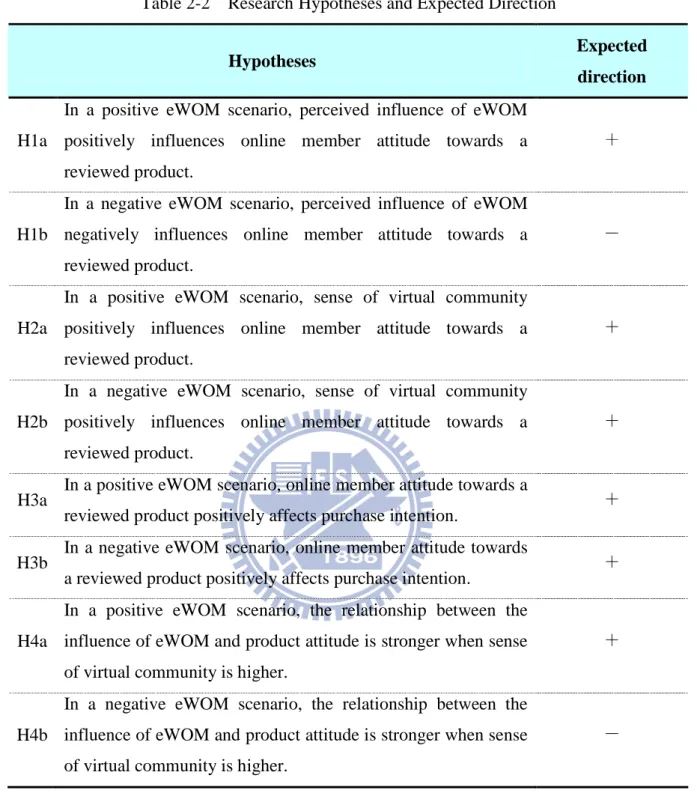
According to above hypotheses development, I compile all research hypotheses and expected direction, and shows in Table 2-2.
Table 2-2 Research Hypotheses and Expected Direction
Hypotheses Expected
direction
H1a
In a positive eWOM scenario, perceived influence of eWOM positively influences online member attitude towards a reviewed product.
H1b
In a negative eWOM scenario, perceived influence of eWOM negatively influences online member attitude towards a reviewed product.
H2a
In a positive eWOM scenario, sense of virtual community positively influences online member attitude towards a reviewed product.
H2b
In a negative eWOM scenario, sense of virtual community positively influences online member attitude towards a reviewed product.
H3a In a positive eWOM scenario, online member attitude towards a reviewed product positively affects purchase intention.
H3b In a negative eWOM scenario, online member attitude towards a reviewed product positively affects purchase intention.
H4a
In a positive eWOM scenario, the relationship between the influence of eWOM and product attitude is stronger when sense of virtual community is higher.
H4b
In a negative eWOM scenario, the relationship between the influence of eWOM and product attitude is stronger when sense of virtual community is higher.
CHAPTER 3 METHODOLOGY
3.1 Conceptual framework
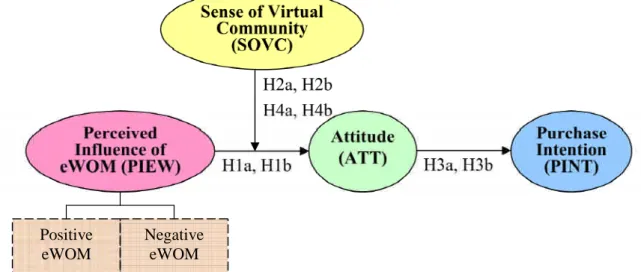
The research framework is shown as Figure 3-1. In Figure 3-1, sense of virtual community (SOVC) and perceived influence of eWOM (PIEW) were exogenous constructs. These two constructs were hypothesized to directly and indirectly influence two endogenous constructs, which were attitude (ATT) and purchase intention (PINT), and SOVC were hypothesized to moderate the effect of PIEW on ATT. In this research, two scenarios, positive eWOM and negative eWOM were manipulated and separately examined the relationship among constructs. According to the research hypotheses, PIEW were assumed having positive effect on ATT in the positive eWOM scenario (H1a) and negative effect on ATT in the negative eWOM scenario (H1b). For SOVC, this construct was hypothesized to positively influence ATT in the positive eWOM scenario (H2a) and in the negative eWOM scenario (H2b). Else, ATT were proposed positively affects PINT in the positive eWOM scenario (H3a) and in the negative eWOM scenario (H3b). Finally, the moderating effect of SOVC on the path from PIEW to ATT was inferred to have positive effect on ATT in the positive eWOM scenario (H4a) and negative effect in the negative eWOM scenario (H4b).
Figure 3-1 Conceptual Framework
Purchase Intention (PINT) Attitude (ATT) Perceived Influence of eWOM (PIEW) Sense of Virtual Community (SOVC) H2a, H2b H3a, H3b H1a, H1b H4a, H4b Negative eWOM Positive eWOM
3.2 Instruments and Data Collection
A survey was conducted to verify the impacts of eWOM on consumers attitude and behavioral intentions, and to test whether the relationship between members and the online community moderates the influence of eWOM on attitude in the positive eWOM scenario or the negative eWOM scenario.
In order to counterbalance the doubts of student sample and online sampling, two questionnaires, written and online, were designed congruently for data collection (see Appendix A). The online questionnaire was designed using an online survey website, and posted on two well-known online game community websites in Taiwan. The written questionnaires were administered by six instructors, all university lecturers or professors in northern, central, and southern Taiwan. Students in the courses taught by those instructors were invited to voluntarily participate in the survey, and their participation earned them extra course credits. To ensure sample quality, those administering the survey were instructed in proper survey administration.
Respondents were required to answer questions about their browsing habits in relation to online game communities, and moreover were asked to supply the names of the online game communities they frequented. To ensure the sample was representative, respondents who did not complete the names of the online game communities in which they participated were excluded from the analysis. Several questions about contact-period, membership, and opinion-posted behavior when joining an online community were questioned. For example,
3.3 Scenario
This study manipulated a scenario and used a factitious product but not real product to avoid the past experiences of respondents affecting the analytical results. To design a neutral product, detail product attributes t also provide in the scenario. Game software was chosen as the reviewed target product in the scenario. Since game software is considered as an experienced product, it is difficult for consumers to evaluate product quality before experiencing product performance. Consumers may search more information for experienced product (i.e., game) than functional product (e.g., computer) from the opinions of market mavens or the use experiences of other consumers (word of mouth). In other words, word of mouth plays the influential role for consumers evaluating and choosing the experienced product. Therefore, game software is appropriate to be used as target product of eWOM in this study.
Since past studies supported positive WOM and negative WOM differently impacted consumer attitude and behavior, two scenarios were designed to represent positive and negative eWOM, respectively. The scenarios described a new game becoming available in the market, with the positive and negative scenarios differing in presenting four positive and four negative product comments, respectively, regarding the new game as the following:
ecently issues and aggressively advertises on TV. The advertising
interested. However, you hesitate whether it is worthy to purchase this new game. Hence, you login your game discussion website (It is the one that you have previously referred to in the first section of this survey.), and read the product evaluations and comments experienced players.