୯ҥᆵεᏢᏢଣЈᏢࣴز܌!
ᅺγፕЎ!
Graduate Institute of Psychology College of Science
National Taiwan University Master Thesis
ᆣፓౣᆶፓขᗺޑଛ܄!
When the Means Justify the Ends: The Role of Regulatory Fit in Emotion Regulation
ጰ᐀Ϻ!
Hsiao-Tien Tsai
ࡰᏤ௲Ǻࣔᓒ!റγ!
Advisor: Jenny Chen-Yi Su, Ph.D.
ύ҇୯ 102 ԃ 6 Д!
June, 2013
i
Acknowledgements
!
!
There is a time for everything, and a season for every activity under the heavens:
a time to be born and a time to die,
a time to plant and a time to uproot,
a time to kill and a time to heal,
a time to tear down and a time to build,
a time to weep and a time to laugh,
a time to mourn and a time to dance,
a time to scatter stones and a time to gather them,
a time to embrace and a time to refrain from embracing,
a time to search and a time to give up,
a time to keep and a time to throw away,
a time to tear and a time to mend,
a time to be silent and a time to speak,
a time to love and a time to hate,
a time for war and a time for peace.
What do workers gain from their toil? I have seen the burden God has laid on the
human race. He has made everything beautiful in its time. He has also set eternity in
ii
the human heart; yet no one can fathom what God has done from beginning to end. I
know that there is nothing better for people than to be happy and to do good while
they live. That each of them may eat and drink, and find satisfaction in all their
toil—this is the gift of God. I know that everything God does will endure forever;
nothing can be added to it and nothing taken from it. God does it so that people will
fear him.
—Ecclesiastes 3:1-14
!
! !
iii
!
! ᄔा!
! !ၸѐࣴزӧຑᆣፓౣޑԋਏਔǴЬाࢂਥᏵ၀ౣࢂցૈٰၨӳ
ޑፓ่݀Ȑe.g., Gross & John, 2003ȑǴࠅ۹ౣΑ٬Ҕౣङࡕޑᐒёૈӧځ ύתᄽޑፓفՅǶਥᏵፓขᗺଛፕȐHiggins, 2000ȑǴঁᡏޑᐒ
ӛᆶځ٬ҔޑౣڀԖଛ܄ਔǴঁᡏԖၨமޑᐒᆶၨ٫ޑ߄Ƕҁࣴزట ஒ၀ፕᔈҔӧᆣፓޑፐᚒǴᔠᡍᐒӛȐߦࠠขᗺᆶႣٛࠠขᗺȑ ᆶᆣፓౣȐख़ཥຑᆶ߄ၲᓸȑϐ໔ࢂցڀԖଛ܄Ƕ२ӃǴҁࣴزଷ
ߦࠠขᗺᆶख़ཥຑౣϐ໔Ӹӧଛᜢ߯ǴԶႣٛࠠขᗺᆶ߄ၲᓸౣ
ϐ໔Ӹӧଛᜢ߯ǶԜѦǴ࣬ၨܭೀܭόଛރᄊ)ߦࠠขᗺȋ߄ၲᓸ<Ⴃٛ
ࠠขᗺȋख़ཥຑ*ǴҁࣴزႣයঁᡏӧၲډଛރᄊ)ߦࠠขᗺȋख़ཥຑ<
Ⴃٛࠠขᗺȋ߄ၲᓸ*ਔౢғၨ٫ޑᆣፓ่݀Ƕࣴزୢڔፓޑ่݀
ᡉҢǴঁᡏޑߦࠠᐒӛຫଯਔǴᄍ܄٬Ҕख़ཥຑբࣁᆣፓౣޑ ำࡋΨຫଯǴԶঁᡏޑႣٛࠠᐒӛຫଯਔǴᄍ܄٬Ҕ߄ၲᓸբࣁᆣፓ
ౣޑำࡋΨຫଯǹ࣬ϸӦǴঁᡏޑߦࠠᐒӛຫଯਔǴᄍ܄٬Ҕ߄ၲ
ᓸբࣁᆣፓౣޑำࡋΨຫեǴԶঁᡏޑႣٛࠠᐒӛຫଯਔǴᄍ܄
٬Ҕख़ཥຑբࣁᆣፓౣޑำࡋΨຫեǶࣴزΒаჴᡍݤᏹፓขᗺᆶ
ᆣፓౣǶჴᡍ่݀ᡉҢǴӧᢀ࣮Їว্܂ᆣޑቹТࡕǴ࣬ၨܭόଛ
ნΠޑୖᆶޣǴଛნΠޑୖᆶޣԖၨଯޑᆣᛙۓࡋаϷၨϿޑԾךፓၗ
ྍཞǶനࡕǴךॺΨଞჹҁࣴزޑଅᆶज़ڋՉ׳ుΕޑፕǶ
斄挝娆烉ね䵺婧䭨ˣ堐忼⡻㈹ˣ慵㕘姽Ộˣ婧㍏䃎溆ˣὫ忚✳䃎溆ˣ枸旚✳䃎溆ˣ
婧㍏怑惵⿏ˣ冒ㆹ㍏⇞
iv
When the Means Justify the Ends: The Role of Regulatory Fit in Emotion Regulation
Hsiao-Tien Tsai
Abstract
Previous research tend to infer the effects of emotion regulation strategies primarily
from the consequences they brought about, ignoring the role that motivational
orientation in goal pursuit may play in moderating such consequences. According to
regulatory fit theory (Higgins, 2000), regulatory fit occurs when there is fit between
one’s motivational orientation and one’s strategy used in goal pursuit, which in turn
leads to enhanced motivation and performance. Extending regulatory fit theory to the
realm of emotion regulation, we examined relations of fit between motivational
orientation in goal pursuit (i.e., promotion focus and prevention focus) and emotion
regulation strategy (reappraisal and suppression). We hypothesized fit of promotion
focus to reappraisal and of prevention focus to suppression. Furthermore, we expected better regulatory outcomes in the fit conditions (i.e., promotion炼reappraisal and
prevention炼suppression) than in the non-fit conditions (i.e., promotion炼suppression
v
and prevention炼reappraisal). In Study 1, we found that chronic promotion focus was
associated with greater habitual use of reappraisal, whereas chronic prevention focus
was associated with greater habitual use of suppression. By contrast, chronic
promotion focus was associated with lower habitual use of suppression, whereas
chronic prevention focus was associated with lower habitual use of reappraisal. In
Study 2, both regulatory focus and emotion regulation were manipulated in a
laboratory setting. Results showed that individuals in the fit conditions showed greater
emotional stability and lower self-regulatory resource depletion than those in the
non-fit conditions after watching a fear-eliciting film. Contributions and limitations of
the present study were discussed.
Keywords: emotion regulation, suppression, reappraisal, regulatory focus,
promotion focus, prevention focus, regulatory fit, self-control
vi
Table of Contents
1 Introduction... 1
1.1 Emotion Regulation Strategies: Reappraisal and Suppression... 1
1.2 Motivational Orientations: Regulatory Focus ...5
1.3 The Link between Regulatory Focus and Emotion Regulation Strategies.... 8
1.4 The Present Study... 10
2 Study 1: Survey ... 12
2.1 Method...13
2.2 Result...15
2.3 Summary and Discussion ...16
3 Study 2: Experiment ... 18
3.1 Method...19
3.2 Result...22
3.3 Summary and Discussion ...24
4 General Discussion... 26
3.1 Contributions and Implications ...27
3.2 Limitations and Future Directions... 28
5 Conclusion ... 33
References ... 34
Footnotes... 43
Tables and Figures ... 44
Appendix A – Emotion Regulation Questionnaire ... 48
Appendix B – General Regulatory Focus Measure ... 50
Appendix C – Regulatory Focus Priming... 52
vii
Appendix D – Post-Film Emotion Questionnaire ... 54 Appendix E – Manipulation Check Items and Demographics ... 55
1
1. Introduction
“Fear...and anger and pity and in general pleasure and pain, may be felt both too
much and too little, and in both cases not well; but to feel them…with the right
motive, and in the right way, is what is both intermediate and best, and this is characteristic of virtue.”
—Nicomachaen Ethics (Aristotle, trans. 1985)
The notion that emotions need to be regulated dates back to the ancient Greek
times, when the well-known philosopher Aristotle described the characteristics of
virtue in the Nocomachaen Ethics. To feel emotions with the right motive and by the
right means is how Aristotle thought emotions should be regulated. However,
Aristotle’s statement did not make clear what qualifies as the right motive or the right
emotion regulation strategy in a given situation or context.
1.1 Emotion Regulation Strategies: Reappraisal and Suppression
In this article, we present a set of studies that attempted to address this issue via
investigations into the interplay between motivation and emotion regulation strategy.
In order to build on existing research on emotion regulation, we focused on two
commonly studied emotion regulation strategies炼cognitive reappraisal and
expressive suppression. In the process model of emotion regulation (Gross, 1998),
emotion regulatory acts may take place at different points in the emotion generative
process. Cognitive reappraisal (hereafter referred to as reappraisal) is a form of
2
antecedent-focused strategy. Before the emotional response arises, individuals engage
in cognitive change that allows them to alter how they think about the
emotion-eliciting situation. In contrast, expressive suppression (hereafter referred to
as suppression) is a form of response-focused strategy. After the emotional response
has come under way, individuals can modulate it by inhibiting its outward behavioral
expression.
Why reappraisal and suppression? Although there are many emotion
strategies (e.g., distraction, rumination) that can be adopted at different points of time
during the emotion generative process, reappraisal and suppression have received
special attention in existing literature of emotion regulation for several reasons (John
& Gross, 2004). First, reappraisal and suppression are commonly used in everyday
life. Adaptive or maladaptive use of these strategies may not only impose immediate
impacts on current emotional states, but the impacts may also aggregate along with
time and become one of the major determents of long-term psychological adjustment.
Second, reappraisal and suppression can be both assessed as individual differences
and manipulated in laboratory settings, which enable researchers to probe research
issues on a correlational/chronic and causal/situationally-induced basis. Finally,
reappraisal and suppression are representative of emotion regulation strategies occur
at antecedent-focused and response-focused stage, respectively. By studying these two
3
specific strategies, the most important element in the process model炼the timing of
exerting emotion regulatory efforts炼is encompassed.
The ends justify the means: Reappraisal vs. suppression. Previous research
tended to justify the use of emotion regulation strategies by its ends炼that is, the
psychological consequences they brought about (e.g., Gross & John, 2003; Moore,
Zoellner, & Mollenholt, 2008). In this regard, cognitive reappraisal has been
documented as a more adaptive and effective strategy than suppression. Compared to
suppression, for instance, reappraisal has been shown to be associated with better
memory for past events, greater experience of positive emotions, better interpersonal
functioning, higher psychological well-being, and fewer stress-related symptoms after
trauma (Gross & John, 2003; Moore et al., 2008; Richards & Gross, 2000).
Despite a great body of research suggesting the relative benefits of reappraisal in
comparison to suppression, increasing efforts have been devoted to identifying
potential moderators of the link between emotion regulation and mental health
outcomes. The notion that reappraisal is beneficial does not always hold. For example,
it has been reported that reappraisal works less effectively among individuals low in
habitual use of reappraisal (Mauss, Cook, Cheng, & Gross, 2007) and under high
emotional intensity (Sheppes & Gross, 2011). On the other hand, recent findings
suggest that the negative psychological outcomes associated with suppression may be
4
attenuated under some circumstances, such as individuals higher in shyness
(Kennedy-Moore & Watson, 2001) and endorsement of cultural values that encourage
the inhibition of emotional expression (e.g., Butler, Lee, & Gross, 2007; Mauss &
Butler, 2010; Soto, Perez, Kim, Lee, & Minnick, 2011).
When the means justify the ends? Motivation in emotion regulation. A
research question remains nonetheless: Are there times when the right motives can
justify the means, which in turn, justify the ends? That is, can the use of a particular
emotion regulation strategy be justified through the adoption of a specific
motivational orientation, such that the negative outcomes typically associated with the
use of that strategy become weaker if the motivation is right? Chronically speaking,
previous research has indicated that individuals with different personalities are
motivated to experience trait-consistent emotions. For instance, neurotics prefer
increasing level of worry, whereas extraverts prefer augmenting level of happiness
when anticipating a demanding task (Tamir, 2005, 2009). Contextually speaking,
individuals are also motivated to adopt different strategies depending on the specific
goal or context. For example, with an instrumental goal in mind, participants not only
showed preference for anger induction before playing a confrontational video game,
but those in the anger condition also outperformed those in either the positive- or the
neutral-emotion conditions (Tamir, Mitchell, & Gross, 2008). Other examples of
5
different strategic preferences based on context-specific goals are fear-increasing
strategy preferred by an avoidance goal, rumination by a performance goal, and
reappraisal by a learning goal (Rusk, Rothbaum, & Tamir, 2011; Tamir & Ford, 2009).
Based on the aforementioned evidence on motivation in emotion regulation, we
can infer that reappraisal and suppression are more likely to be adopted under certain
motivational orientations, whether the motivational orientation is chronic or
situationally-induced. Moreover, once the goal is attained, the emotion regulation
strategy used can be justified as good means. Therefore, the present study aimed to
examine the role of motivation in emotion regulation by 1) finding the specific
motivational orientation associated with two emotion regulation strategies (i.e.,
reappraisal and suppression), and 2) examining how the match or mismatch between
motivational orientation and emotion regulation strategy may influence
psychologically-related outcomes.
1.2 Motivational Orientations: Regulatory Focus
According to self-discrepancy theory (Higgins, 1987), there are three self
representations imposed by oneself or by important others: the actual self (who one
actually is), the ideal self (who one ideally would like to be), and the ought self (who
one think one ought to be). Feelings of discomfort occur when there is discrepancy
between the actual self and the ideal or the ought self. To eliminate the discomfort
6
feelings result from self-discrepancy, Higgins (1997, 1998) further proposed
regulatory focus theory that distinguishes two motivational orientations in goal pursuit.
Individuals with a promotion focus aim to minimize the gap between the actual self
and the ideal self, so they tend to represent goals as ideals, such as hopes and
aspirations; moreover, since they are motivated to fulfill needs of nurturance (e.g.,
nourishment), they are more sensitive to the presence or absence of positive outcomes
(i.e., gains vs. non-gains). By contrast, individuals with a prevention focus aim to
minimize the gap between the actual self and the ought self, so they tend to represent
goals as oughts, such as duties and obligations; moreover, since they are motivated to
satisfy needs of security (e.g., protection), they are more sensitive to the presence or
absence of negative outcomes (i.e., non-losses vs. losses).
Distinct strategic preferences and emotional responses. Research indicates
that regulatory focus is associated with distinct strategic preferences in goal pursuit.
Promotion-focused individuals tend to show a preference for eagerness-to-approach
strategies, which are geared toward approaching matches to desired end-states (i.e.,
the possibility for gains), whereas prevention-focused individuals tend to show a
preference for vigilant-to-avoid strategies, which are geared toward avoiding
mismatches to desired end-states (i.e., the possibility for losses) (Higgins, 1997, 1998).
The difference in strategic preferences related to regulatory focus has been
7
demonstrated across a wide range of behavioral domains, including response biases
(Lalwani, Shrum, & Chiu, 2009), commitment and trust (Molden & Finkel, 2010;
Myer, Becker, & Vandenberghe, 2004), and risk taking (Scholer, Zou, Fujita,
Stroessner, & Higgins, 2010).
In terms of emotional responses upon goal attainment, promotion-focused
individuals tend to feel more cheerfulness炼dejection emotions (e.g., happy炼
disappointed), where high intensity positive emotions and low intensity negative
emotions are more likely to occur. On the other hand, prevention-focused individuals
tend to feel more quiescence炼agitation emotions (e.g., calm炼tense), where low
intensity positive emotions and high intensity negative emotions are more likely to
occur (Higgins, Shah, & Friedman, 1997; Idson, Liberman, & Higgins, 2000).
Value from regulatory fit. Extending from the foundation of regulatory focus
theory, Higgins (2000) proposed that when people pursue a goal with a strategy that
sustains their motivational orientation炼that is, when there is regulatory fit炼benefits
such as enhanced motivation and performance may occur. By contrast, when people
pursue a goal with a strategy that goes against their motivational orientation, they will
experience a lack of regulatory fit (aka. regulatory non-fit), which tends to undermine
motivation and performance. For example, when an eagerness-to-approach strategy
was adopted by participants with a promotion focus, or when a vigilant-to-avoid
8
strategy was adopted by participants with a prevention focus, participants reported
higher task enjoyment, higher perceived task success, and greater willingness to
repeat the task than those in the non-fit groups (Freitas & Higgins, 2002). Other
benefits shown to accrue from regulatory fit include strong motivation (Higgins,
2000), task engagement (Higgins, 2006), success in soccer penalty-shooting (Plessner,
Unkelbach, Memmert, Baltes, & Kolb, 2009), and less self-regulatory resource
depletion (Hong & Lee, 2008).
1.3 The Link between Regulatory Focus and Emotion Regulation Strategies
Existing theory and research provide some evidence in support of the possible link
between regulatory focus (i.e., promotion vs. prevention) and the two emotion
regulation strategies of interest in this article (i.e., reappraisal vs. suppression).
Approach-based vs. avoidance-based strategies. First, reappraisal is an
approach-based coping strategy that intervenes before an emotional response has fully
unfolded (Gross & John, 2003). During reappraisal, individuals engage in active
cognitive change and show a cardiovascular response pattern similar to the pattern of
other active coping strategies (Mauss et al., 2007). For these reasons, we proposed
that reappraisal resembles an eagerness-to-approach strategy befitting a
promotion-focus orientation. Conversely, suppression has been characterized as an
avoidant-based emotion regulation strategy that is applied after an emotional response
9
has risen (Gross & John, 2003). Because suppression is primarily used to avoid
aversive inner emotional experiences (Kashdan, Barrios, Forsyth, & Steger, 2006) and
to protect oneself from potential harm that may result from emotional expression
(Butler et al., 2007), we proposed that suppression resembles a vigilance-to-avoid
strategy befitting a prevention-focus orientation.
Maximal vs. minimal goals. Second, the oughts (i.e., duties and obligations)
within a prevention-focus orientation function like minimal goals that one must attain
(Brendl & Higgins, 1996; Idson et al., 2000). In the context of emotion regulation, a
minimal goal may simply be to keep emotions under behavioral control. By inhibiting
outward emotional expressive behavior, suppression may be akin to a
prevention-focused strategy aimed at avoiding potential negative outcomes associated
with emotional expression. Therefore, suppression may be compatible with a
prevention-focus orientation. By contrast, the ideals (i.e., hopes and aspirations)
within a promotion-focus orientation function like maximal goals that one hopes to
attain. Individuals with maximal goals may not be satisfied with keeping one's cool on
the surface; instead, they may actively adjust inner emotional states via cognitive
change. Reappraisal is an emotion regulation strategy aimed at approaching potential
positive outcomes by changing the way one thinks about the emotion-eliciting
situation. Therefore, we proposed that reappraisal may be an emotion regulation
10
strategy that is compatible with a promotion-focus orientation.
1.4 The Present Study
Based on the aforementioned evidence from past research, we hypothesized that
reappraisal is an emotion regulation strategy that fits a promotion-focus orientation,
whereas suppression is an emotion regulation strategy that fits a prevention-focus
orientation. Moreover, we predicted that people would achieve better outcomes
following emotion regulation in the fit conditions than in the non-fit conditions. To
test these hypotheses, we conducted two studies, each using a different research
design.
In Study 1, we examined individual differences in regulatory focus and whether
they are associated with habitual use of reappraisal or suppression. Assuming that
people tend to prefer and adopt emotion regulation strategies that fit their motivational
orientation, we expected chronic promotion focus and chronic prevention focus to be
positively correlated with habitual use of reappraisal and suppression, respectively.
Moreover, assuming that people tend to be biased against regulatory non-fit, we
expected chronic promotion focus and chronic prevention focus to be negatively
correlated with habitual use of suppression and reappraisal, respectively.
In Study 2, we examined the link between regulatory focus and emotion
regulation using an experimental research design. We predicted that participants in the
11
fit conditions (i.e., promotion–reappraisal; prevention–suppression) would show
better outcomes after emotion regulation than those in the non-fit conditions (i.e.,
promotion–suppression; prevention–reappraisal). We chose one subjective and one
objective outcome measure: self-report emotion stability (i.e., the degree to which
positive emotions are experienced relative to negative emotions) and self-regulatory
resource depletion (i.e., endurance shown during a hand-grip test, which is used to
index performance of self-control) (e.g., Muraven & Baumeister, 2000). That is,
individuals in the fit conditions were expected to show greater emotion stability and
lower self-regulatory resource depletion than those in the non-fit conditions.
12
2. Study 1: Survey
The purpose of Study 1 was to examine the link between chronic regulatory focus
and habitual use of two emotion regulation strategies (i.e., reappraisal and
suppression). To measure individual differences in habitual use of reappraisal and
suppression, the well-established Emotion Regulation Questionnaire (ERQ; Gross &
John, 2003) was administered. We used the General Regulatory Focus Measure
(GRFM; Lockwood, Jordan, & Kunda, 2002) as our measure of chronic regulatory
focus. Two measures of chronic regulatory focus commonly appear in the literature:
the GRFM and the Regulatory Focus Questionnaire (RFQ; Higgins et al., 2001).
Though theoretically identical, these two scales capture distinct aspects of regulatory
focus (Summerville & Roese, 2008). The RFQ emphasizes the self-guide aspect of
self-regulation, which characterizes promotion focus as guided by internal standards
(i.e., ideals imposed by oneself) and prevention focus as guided by external or social
standards (i.e., oughts imposed by parents/authority figures). The GRFM, however,
emphasizes the reference-point aspect of self-regulation, which characterizes
promotion focus as sensitive to the positive reference-point of a "gain" and prevention
focus as sensitive to the negative reference-point of a "loss". Since the present study is
more concerned with sensitivity to gain vs. loss rather than self- vs. other-imposed
standards in self-regulation, we chose the GRFM as our measure of chronic regulatory
13
focus. Using regulatory fit theory (Higgins, 2000) as our framework, we hypothesized
that: 1) individuals higher in chronic promotion focus should report greater habitual
use of reappraisal, whereas those higher in chronic prevention focus should report
greater habitual use of suppression; 2) individuals higher in chronic promotion focus
should report lower habitual use of suppression, whereas those higher in chronic
prevention focus should report lower habitual use of reappraisal.
2.1 Method
Participants and procedure. Two hundred undergraduates from a large
university in northern Taiwan participated in this study for extra course credit. The
sample consisted of 105 men and 95 women, with a mean age of 20.19 years (SD =
1.34). All participants completed the measures in Mandarin Chinese1.
Measures.
Emotion regulation. We used the 10-item Emotion Regulation Questionnaire
(ERQ; Gross & John, 2003) to assess participants’ habitual use of reappraisal and
suppression. Sample items include "I control my emotions by changing the way I
think about the situation I'm in" for the Reappraisal subscale, and "I control my
emotions by not expressing them" for the Suppression subscale. Each item was rated
on a seven-point Likert-type scale (1 = completely disagree, 7 = completely agree).
All items were averaged by subscale, with higher scores indicating greater use of the
14
emotion regulation strategy being assessed. Good reliability for both subscales has
been demonstrated in more than 23 countries (e.g., Gross & John, 2003; Matsumoto et
al., 2008). Previous research has indicated a positive correlation between reappraisal
and suppression among cultures that emphasized maintenance of social order (e.g.,
collectivistic cultures), whereas a negative correlation or no correlation between
reappraisal and suppression has been observed among cultures that value individual
autonomy and egalitarianism (e.g., individualistic cultures) (Matsumoto et al., 2008;
Gross & John, 2003). In addition, male participants tend to score higher on
suppression (e.g., Gross & John). In the present study, the Reappraisal subscale score
and the Suppression subscale score had an internal reliability (alpha) of .84 and .75,
respectively.
Regulatory focus. We used the 18-item general regulatory focus measure
(GRFM; Lockwood et al., 2002) to assess participants’ chronic promotion focus and
chronic prevention focus. Sample items include "I frequently imagine how I will
achieve my hopes and aspirations" for the Promotion subscale, and "I frequently think
about how I can prevent failures in my life" for the Prevention subscale. Each item
was rated on a nine-point Likert-type scale (1 = not at all true of me, 9 = very true of
me). All items were averaged by subscale, with higher scores indicating higher
tendency toward the motivational orientation being assessed. Good reliability for both
15
subscales has been demonstrated in previous studies (e.g., Joireman, Shaffer, Balliet,
& Strathman, 2012; Lockwood et al., 2002). A positive correlation between promotion
focus and prevention focus has been reported both with European American and
Taiwanese sample (e.g., Lockwood et al, 2002; Yang, 2010). In the present study, the
Promotion Focus subscale and the Prevention Focus subscale had an internal
reliability (alpha) of .83 and .76, respectively.
2.2 Result
Preliminary Analyses. Table 1 presents descriptives (mean, standard deviation,
minimum, maximum, skewness, and kurtosis) of the main variables in this study. All
variables were normally distributed of which skewness and kurtosis were not
significantly deviated from zero. Table 2 presents zero-order correlations among the
variables. Promotion focus was positively correlated with reappraisal (r = .40, p
< .001), and prevention focus was positively correlated with suppression (r = .36, p
< .001). Although promotion and prevention focus were negatively correlated with
suppression (r = -.13, p = .06) and reappraisal (r = -.10, p = .18), respectively, the
correlations failed to reach statistical significance. Promotion focus was marginally
positively correlated to prevention focus (r = .12, p = .09), and reappraisal was
marginally negatively correlated to suppression (r = -.12, p = .08). Age was unrelated
to regulatory focus or to either of the two emotion regulation strategies. Because male
16
participants reported greater use of suppression than female participants, t (198) =
3.25, p < .01, we included gender as a covariate in the main analyses.
Main Analyses. To account for the influence of one regulatory focus on the
other, we included both promotion focus and prevention focus as predictors in the
same regression model. The first regression examined reappraisal as the outcome, and
the second regression examined suppression as the outcome (see Table 3). In step 1,
gender (male = 1, female = 0) were entered into the regression as covariates. In step 2,
promotion focus and prevention focus were entered as predictors. Results from
multiple regression analyses provided evidence in support of the fit hypothesis, as
well as the unfit hypothesis. Promotion focus and prevention focus predicted greater
use of reappraisal (β = .41, p < .001) and suppression (β = .36, p < .001), respectively.
Moreover, promotion focus and prevention focus predicted lower use of suppression
(β = -.16, p = .02) and reappraisal (β = -.14, p = .03), respectively.
2.3 Summary and Discussion
Results from Study 1 indicated a fit relationship between chronic promotion
focus and reappraisal and between chronic prevention focus and suppression as we
hypothesized. When partialing out the influence of the other regulatory focus,
individuals higher in promotion focus reported greater habitual use of reappraisal,
whereas individuals higher in prevention focus reported greater habitual use of
17
suppression. The reverse pattern was also found in support of the non-fit hypothesis.
When controlling the other regulatory focus, individuals higher in promotion focus
reported lower habitual use of suppression, whereas individuals higher in prevention
focus reported lower habitual use of reappraisal.
As promising as the results from Study 1 may appear, there are two major
limitations worth noting. First, due to the correlational nature of our data, we were
unable to draw any causal inferences. Although it is reasonable to argue that
motivational orientation may propel people to adopt a particular emotion regulation
strategy, it is still possible to argue in the opposite direction: that is, habitual use of a
particular emotion regulation strategy may shape people's motivational orientation in
goal pursuit. Second, the potential benefits from regulatory fit, such as better
outcomes following emotion regulation, were not examined in this study. To address
these issues, we conducted an experiment in Study 2 by 1) manipulating regulatory
focus and emotion regulation strategies in a laboratory setting, and 2) comparing
emotion regulation outcomes (i.e., emotion stability and self-regulatory resource
depletion) between the fit and the non-fit conditions after a negative emotional state
was induced by film.
18
3. Study 2: Experiment
In study 2, we primed distinct regulatory focus by asking participants to describe
either their ideals or oughts in an essay (Freita & Higgins, 2002). Moreover, emotion
regulation strategies were manipulated by giving different instructions to each group
(Gross, 1998) before playing a fear-inducing film in a laboratory setting. Emotion regulation outcomes were evaluated by participants’ emotional stability and
self-regulatory resource depletion. Participants self-reported fear-related emotions
(i.e., calmness, relaxation, fear, and agitation) immediately after watching the
fear-inducing film, and emotion stability was indexed by the level of positive
emotions experienced relative to negative emotions (by subtracting participants’ level
of fear and agitation from their level of calmness and relaxation). In addition to
self-reported emotional states, an objective measure炼handgrip performance炼was
employed to assess self-regulatory resources that remained after emotion regulation.
The handgrip test is the most widely-used task for measuring self-regulatory resources
(i.e., self-control) and has demonstrated high sensitivity in previous studies (e.g.,
Hong & Lee, 2008; Muraven & Baumiester, 2000). Self-regulatory resource depletion
was indexed by how long (in seconds) participants can squeeze a handgrip holding a
75 × 20 × 5mm plastic pencil lead box in-between. We predicted that participants in
the fit conditions (i.e., promotion–reappraisal and prevention–suppression) would
19
show greater emotional stability and lower self-regulatory resource depletion than
participants in the non-fit conditions (i.e., promotion–suppression and prevention–
reappraisal).
3.1 Method
Participants. Seventy-six undergraduates (mean age = 19.92 years, SD = 1.36;
55.3 % men, 44.7 % women) from a large university in northern Taiwan participated
in this study for extra course credit. One participant who terminated the experiment
prematurely was excluded from the current analysis.
Procedure. Participants were randomly assigned to one of four conditions
based on a 2 (regulatory focus: promotion vs. prevention) × 2 (emotion regulation:
reappraisal vs. suppression) between-subjects design. At the beginning of the
experimental session, participants were informed that the purpose of this experiment
was to examine the relationship between personality and task performance. After
completing a pretest questionnaire containing measures of chronic regulatory focus
(i.e., promotion and prevention) and habitual use of reappraisal and suppression,
participants spent ten minutes writing an essay that was supposedly designed to assess
their personality. Participants in the promotion focus group received the following
instructions (Freita & Higgins, 2002): “Please think about something you ideally
would like to do. In other words, please write down two hopes or aspirations you
20
currently have, and explain why." In the instruction given to participants in the
prevention focus group, the words “you ideally would like to do” were substituted by
“you think you should do”, and “hopes or aspirations” were replaced with “duties or
obligations”.
Once they completed the essay, participants were asked if they were willing to
participate in an "unrelated pilot study" (to avoid social desirability to keep cool or to
exaggerate emotional responses), in which they would be asked to watch two film
clips and to rate the level of fear-related emotions (i.e., fear, agitation, calmness, and
relaxation) they experienced afterwards on a five-point Likert scale (1 = not at all, 5 =
very strongly). All participants agreed. Participants were first shown an emotionally
neutral film (beach waves; Gross & Levenson, 1995) for one minute, and then
immediately followed by a five-minute film clip (The Silence of the Lamb) that
elicited fear. The emotionally neutral film was used to accustom participants to our
experimental procedure (i.e., to follow instructions and watch films), so as to facilitate
fear induction by the second film.
Before playing the neutral film, participants received the following instructions:
“Now, we will be showing you a short film clip. It is important that you watch the
film clip carefully, but if you find the film too distressing, just say stop.” Before
playing the fear-inducing film, participants in the reappraisal group received the
21
following instructions: “Now, we will be showing you a short film clip. It is important
that you watch the film clip carefully, but if you find the film too distressing, just say
stop. This time, please try to adopt a detached and unemotional attitude as you watch
the film. In other words, as you watch the film clip, try to think about what you are
seeing objectively, in terms of the technical aspects of the events you observe. Watch
the film clip carefully, but please try to think about what you are seeing in such a way that you don't feel anything at all.” For the suppression group, the following
instructions were given: “Now, we will be showing you a short film clip. It is
important that you watch the film clip carefully, but if you find the film too distressing,
just say stop. This time, if you have any feelings as you watch the film clip, please try
your best not to let those feelings show. In other words, as you watch the film clip, try
to behave in such a way that a person watching you would not know you were feeling
anything. Watch the film clip carefully, but please try to behave so that someone watching you would not know that you are feeling anything at all.”
After the film session ended, participants completed a post-test questionnaire,
which included manipulation check items (i.e., recalling the instructions given for the
regulatory focus and emotional regulation manipulation), whether or not they had
seen the fear-inducing film before the experiment, and demographics (e.g., age and
gender). Next, participants performed the handgrip task, which involved squeezing a
22
handgrip for as long as possible. A plastic pencil lead box was inserted between the
two handles, so it would fall off once participants relaxed the handgrip. A stop-watch
was used to record the duration of the handgrip squeeze, starting from the time when
the plastic material was held steadily to when it fell off. Finally, participants went
through debriefing before leaving the experiment.
3.2 Result
Individual Differences and Manipulation Check. First, participants in the four
conditions did not differ in chronic promotion focus, F(3, 71) = 0.77 , p = .52, chronic
prevention focus, F(3, 71) = 2.22 , p = .09, habitual use of reappraisal, F(3, 71) =
1.10 , p = .35, habitual use of suppression, F(3, 71) = 0.59 , p = .63, age, F(3, 71) =
0.80 , p = .50, and gender, χ2(3, N = 75) = .76 , p = .86. Two participants failed to
pass the manipulation check (one for regulatory focus and the other for emotion
regulation), and five participants reported to have seen the fear-inducing film prior to
the experiment. Since the pattern of results remained the same whether or not these
participants were excluded, we kept these data in the following analyses. The fear
induction by film was successful, where we observed a significant increase in level of
fear, t(74) = 7.23 , p < .001, and agitation, t(74) = 8.89 , p < .001, and a significant
decrease in level of calmness, t(74) = -11.18 , p < .001, and relaxation, t(74) = -10.31,
p < .001, in a serial of paired t-tests comparing pre-film and post-film fear-related
23 emotions (see Table 4).
Emotion Stability. Since the fear-related positive emotion score (by averaging
calmness and relaxation) was highly correlated the fear-related negative emotion score
(by averaging fear and agitation), r = -.55, p < .001, we computed an emotion stability
score to index emotion regulation outcome by subtracting the negative emotion score
from the positive emotion score2. To test our hypothesis, we conducted a 2 (regulatory
focus: promotion vs. prevention focus) × 2 (emotion regulation strategy: reappraisal
vs. suppression) ANOVA on emotion stability (see Table 4)3,4. There were no main
effects of regulatory focus, F(1, 71) = 2.94, p = .09, or emotion regulation strategy,
F(1, 71) = 0.002, p = .96. As expected, the regulatory focus × emotion regulation
strategy interaction was significant, F(1, 71) = 8.72, p = .004. Follow-up analyses (see
Figure 1) showed that the prevention-focused participants who engaged in
suppression reported greater emotion stability after watching the fear-inducing film
than the prevention-focused participants who engaged in reappraisal, Msup= 0.17,
Mreap= -0.92, F(1, 71) = 4.45, p = .038. The reverse pattern was found among the
promotion-focused participants. Promotion-focused participants who engaged in
reappraisal reported greater emotion stability after watching the fear-inducing film
than promotion-focused participants who engaged in suppression, Mreap= -0.47, Msup=
-1.53, F(1, 71) = 4.27, p = .042.
24
Self-Regulatory Resource Depletion. The above analysis was repeated by
substituting the outcome variable with duration of the handgrip squeeze. Because men
performed better on the handgrip test than women, F(1, 70) = 14.78, p < .001, we
included gender as covariate in the following analyses (see Table 6)4. There were no
main effects of regulatory focus, F(1, 70) = 0.57, p = .45, or emotion regulation
strategy, F(1, 70) = 0.51, p = .48. Again, the regulatory focus × emotion regulation
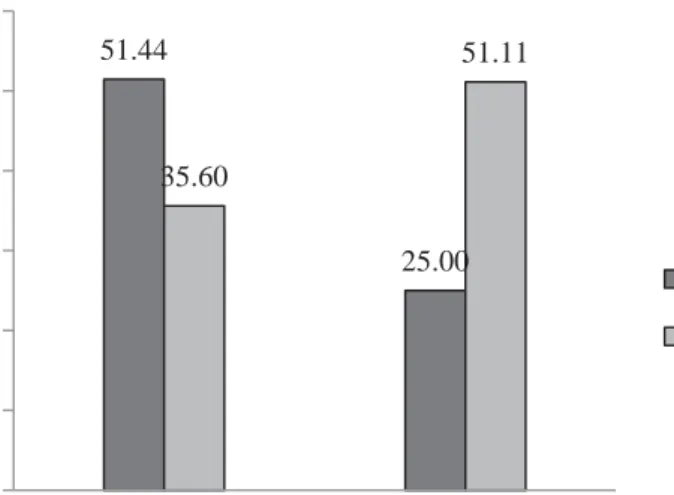
strategy interaction was significant, F(1, 70) = 5.32, p = .024. Follow-up analyses (see
Figure 2) showed that prevention-focused participants who engaged in suppression
were able to hold the handgrip for a longer period of time than the prevention-focused
participants who engaged in reappraisal, Msup= 51.11, Mreap= 25.00, F(1, 70) = 4.52,
p = .037. Although the reverse pattern was found among the promotion-focused
participants, Mreap= 51.44, Msup = 35.60, the difference between those who engaged in
suppression and those who engaged in reappraisal did not reach statistical significance,
F(1, 70) = 1.30, p = .26.
3.3 Summary and Discussion
Manipulating regulatory focus and emotion regulation strategy in study 2, we
found that participants who experienced regulatory fit (i.e., promotion–reappraisal and
prevention–suppression) showed greater emotion stability after watching a
25
fear-inducing film. Although the interaction effect was also found in self-regulatory
depletion, the benefit of fit was observed only in the prevention-focused conditions
but not in the promotion-focused conditions. One explanation for partial significance
may be related to individual differences in handgrip endurance. Some research on
self-regulatory resource depletion included pre-measure of handgrip endurance to
control for dispositional differences on handgrip performance (e.g., Hong & Lee,
2008). Therefore, if a pre-measure was included, follow-up tests on handgrip
performance might have reached statistical significance for participants in both the
promotion and prevention focus conditions. If the pattern of results of handgrip
performance remains the same even when pre-measure is included, another possible
theoretical explanation is that promotion-focused individuals may be more flexible in
strategy adoption than prevention-focused individuals. Previous research has indicated
that promotion-focused individuals showed greater variation in repeating the same
task (Smith, Wagaman, & Handley, 2009), and were more willing to give up prior
decisions for new opportunities (Molden & Hui, 2011). Therefore, it is likely that the
benefits from regulatory fit on the handgrip task performance are less observable
among promotion-focused individuals than their prevention-focused counterparts.
26
4. General Discussion
Previous research on emotion regulation mainly focused on the consequences
associated with the use of a particular emotion regulation strategy (e.g., Gross & John,
2003). Little is known about the role that motivational orientation may play in
emotion regulation. To address this issue, the present study examined the link between
motivational orientation in goal pursuit (i.e., promotion focus vs. prevention focus)
and two forms of emotion regulation (i.e., reappraisal vs. suppression). Based on
regulatory focus theory (Higgins, 1997, 1998), we hypothesized that reappraisal is an
emotion regulation strategy that fits the promotion-focus orientation, whereas
suppression is an emotion regulation strategy that fits the prevention-focus orientation.
Moreover, we predicted that people would achieve better regulatory outcomes
following emotion regulation in conditions of fit than in conditions of non-fit. In
Study 1, individuals higher in chronic promotion focus reported greater habitual use
of reappraisal, whereas those higher in chronic prevention focus reported greater
habitual use of suppression. By contrast, individuals higher in chronic promotion
focus reported lower habitual use of suppression, whereas those higher in chronic
prevention focus reported lower habitual use of reappraisal. In Study 2, both
regulatory focus and emotion regulatory strategies were manipulated, and the
experimental data showed greater emotional stability and lower self-regulatory
27
resource depletion among individuals in the fit conditions (i.e., promotion-reappraisal
and prevention-suppression) than those in the non-fit conditions (i.e., promotion–
suppression and prevention–reappraisal).
4.1 Contributions and Implications
The present study contributes to the literature by being the first to examine the
relation between regulatory focus and emotion regulation. Recent studies on
motivation in emotion regulation (e.g., Tamir et al., 2008) have begun to investigate
the notion that people may adopt different strategies based on personality traits or on
context-specific goals. The present study extended the existing literature by
connecting the well-established motivational principle (i.e., regulatory focus theory) –
which can be both individual differences and situationally-induced motives – to
individual preference for specific emotion regulation strategies (i.e., reappraisal and
suppression). The present study not only emphasizes the moderating role that
motivation may play in emotion regulation, but also highlights the fact that motivation
goes beyond context-specificity that can chronically shape individuals' preference for
emotion regulation strategy.
The most encouraging finding of the present study is that the beneficial effects of
regulatory fit extend to the realm of emotion regulation. There are times when the
means can justify the ends. As long as an emotion regulation strategy is compatible
28
with one’s motivational orientation, the outcome it produces can be as good as other
strategies, challenging the prevailing assumption that the emotion regulation strategy
per se is the major determent of the consequences associated with emotion regulation
(e.g. Gross & John, 2003).
Finally, the present study used multi-research methods (i.e., survey and
experiment) and adopted different measures to evaluate emotion regulation outcomes
(i.e., self-report measure and objective handgrip test in Study 2), where there was
converging evidence in support of our hypotheses. Although our results are relatively
more convincing than depending solely on a single measure, future research is still
encouraged to use more diverse measurement (e.g., physiological responding, fMRI)
to replicate findings from the present study.
4.2 Limitations and Future Directions
Although our findings were promising, they need to be interpreted with several
limitations in mind. First, our sample was comprised of college students. It is
unknown whether the results from the present study can be generalized to other age
groups. For example, increased ability to implement reappraisal and suppression has
been found among older adults (Shiota & Levenson, 2009). Because positive emotion
regulation outcomes may be mainly attributed to the ability to successfully regulate one’s emotions, which tends to increase with age (Shiota & Levenson, 2009), it is
29
possible that the benefits of regulatory fit that we observed may not be as salient
among older adults.
Second, typical goal-oriented emotion regulation is likely to vary across target
emotions (Gross, 1998). The present study focused only on fear, a discrete negative
emotion. The fit relationship may need to be fine-tuned across different types of
emotions. For example, promotion focus tends to be associated with greater sensitivity
to positive outcomes (Higgins, 1997, 1998). Thus in terms of up-regulating positive
emotions, the advantage of fit involving promotion focus may be even greater
compared to fit involving prevention focus.
Third, cultural variables have been shown to be an important moderator of the link
between emotion regulation and psychologically-relevant outcomes (e.g., Butler et al.,
2007; Mauss & Butler, 2010; Soto et al., 2011). Norms and goals tend to vary across
cultural groups and across cultural contexts. For example, suppression is mainly used
for self-protective reasons in individualistic cultures (Butler et al., 2007), whereas the
same emotion regulation strategy is often adopted to maintain social harmony in
collectivistic cultures (Leung, 1996). In addition, previous research has found an
association between promotion focus and the independent self-construal, which is
more prevalent in individualistic cultures, as well as an association between
prevention focus and the interdependent self-construal, which is more prevalent in
30
collectivistic cultures (Lee, Aaker, & Gardner, 2000). It is possible that regulatory
focus, emotion regulation strategy, and cultural context may all interact to influence
individual outcomes. Specifically, from the perspective of cultural congruence
(Fulmer et al., 2010), the fit combination of prevention炼suppression may be more
adaptive in collectivistic cultural contexts, whereas the promotion炼reappraisal
combination may be more adaptive in individualistic cultural contexts.
Fourth, although we took the first step towards understanding the association
between regulatory fit and emotion regulation strategy, the long-term benefits and
costs of regulatory fit on emotion regulation remain largely unknown. In terms of
potential benefits, chronic motivational orientations may increase the frequency with
which corresponding strategies are practiced over the long run, thereby reducing the
self-control effort expended during emotion regulation and consequently alleviating
fatigue and mental load (Baumeister & Heatherton, 1996). Moreover, the long-term
benefits of “feeling right” may transfer to other life domains (Higgins, Idson, Freitas,
Spiegel, & Molden, 2003), such as enhanced academic performance and better social
functioning. However, the intuitive reaction to implement strategies befitting one’s
orientation may also produce potential costs in the long run, such as lack of flexibility
to adjust oneself to situational demands (Bonanno, Papa, Lalande, Westphal, &
Coifman, 2004). Therefore, future studies using the longitudinal research design are
31
needed to explore the potential long-term benefits and costs associated with regulatory
fit, including value transfer and coping flexibility across a wide variety of life
domains.
Finally, the effects of regulatory fit on persuasion have been indicated to be
associated with the level of involvement with the target message (Avnet, Laufer, &
Higgins, 2012). Under high involvement, the fit experience brings about a sense of
confidence in one’s evaluations, which in turn increases the persuasiveness of the
message (i.e., evaluating positive message as more positive, and negative message as
more negative); under low involvement, in contrast, the fit experience brings about
good feelings toward the target, which increases the positive feelings toward target
message regardless of message valence. In the context of emotion regulation, it will
be interesting to investigate whether the level of involvement with the
emotion-eliciting situation would affect the outcomes associated with emotion
regulation. Under high involvement, fit may justify the implement of emotion
regulation in the emotion-eliciting situation (i.e., evaluating the positive feelings as
too positive and negative feelings too negative, which need to be regulated to the
proper amount), which in turn increases the effectiveness of emotion regulation (e.g.,
quick recovery from emotional arousal or lower self-regulatory resource depletion);
under low involvement, it is possible that fit brings about more positive feelings
32
toward the situation regardless of the valence of emotion (e.g., feel more calm or
interesting after watching a fear- or amusement-eliciting film).
33
5. Conclusion
Previous research primarily evaluated the usefulness of an emotion regulation
strategy by its accompanying psychological consequences. In this regard, reappraisal
has been considered as a more adaptive and effective strategy than suppression.
However, knowledge about the role motivation plays in emotion regulation is lacking.
Therefore, the present study aimed to find specific motivational orientations that
encourage the use of reappraisal and suppression, and to examine how the match and
mismatch between motivational orientation and emotion regulation strategy may
affect regulatory outcomes.
Findings from the present study underscore the need to revisit how the
adaptiveness of emotion regulation should be determined. Even strategies typically
considered maladaptive can be useful when applied for the right reasons. We hope that
future research will explore the conditions (motivational or otherwise) under which a
particular emotion regulation strategy may exert positive or negative effects on
psychological adjustment.
34 References
Aristotle. (1985). Nicomachaen ethics (T. Irwin, Trans.). Indianapolis, IN: Hackett.
Avnet, T., Laufer, D., & Higgins, E. T. (2013). Are all experiences of fit created equal?
Two paths to persuasion. Journal of Consumer Psychology, 23, 301-316. doi:
10.1016/j.jcps.2012.10.011
Baumeister, R. F., & Heatherton, T. F. (1996). Self-regulation failure: An overview.
Psychological Inquiry, 7, 1-15. doi: 10.1207/s15327965pli0701_1
Bonanno, G. A., Papa, A., Lalande, K., Westphal, M., & Coifman, K. (2004). The
importance of being flexible: The ability to both enhance and suppress
emotional expression predicts long-term adjustment. Psychological Science,
15, 482-487. doi: 10.1111/j.0956-7976.2004.00705.x
Brendl, C. M., & Higgins, E. T. (1996). Principles of judging valence: What makes
events positive or negative? Advances in Experimental Social Psychology, 28,
95-160. doi: 10.1016/s0065-2601(08)60237-3
Butler, E. A., Lee, T. L., & Gross, J. J. (2007). Emotion regulation and culture: Are the
social consequences of emotion suppression culture-specific? Emotion, 7,
30-48. doi: 10.1037/1528-3542.7.1.30
Freitas, A. L., & Higgins, E. T. (2002). Enjoying goal-directed action: The role of
regulatory fit. Psychological Science, 13, 1-6. doi: 10.1111/1467-9280.00401
35
Fulmer, C. A., Gelfand, M. J., Kruglanski, A. W., Kim-Prieto, C., Diener, E., Pierro,
A., & Higgins, E. T. (2010). On "feeling right" in cultural contexts: How
person-culture match affects self-esteem and subjective well-being.
Psychological Science, 21, 1563-1569. doi: 10.1177/0956797610384742
Gross, J. J. (1998). Antecedent- and response-focused emotion regulation: Divergent
consequences for experience, expression, and physiology. Journal of
Personality and Social Psychology, 74, 224-237. doi:
10.1037/0022-3514.74.1.224
Gross, J. J., & John, O. P. (2003). Individual differences in two emotion regulation
processes: Implications for affect, relationships, and well-being. Journal of
Personality and Social Psychology, 85, 348-362. doi:
10.1037/0022-3514.85.2.348
Gross, J. J., & Levenson, R. W. (1995). Emotion eliciation using films. Cognition &
Emotion, 9, 87-108. doi: 10.1080/02699939508408966
Higgins, E. T. (1987). Self-discrepany: A theory relating self and affect. Psychological
Review, 94, 319-340.
Higgins, E. T. (1997). Beyond pleasure and pain. American Psychologist, 52,
1280-1300. doi: 10.1037/0003-066x.52.12.1280
Higgins, E. T. (1998). Promotion and prevention: Regulatory focus as a motivational
36
principle. Advances in Experimental Social Psychology, 30, 1-46.
Higgins, E. T. (2000). Making a good decision: Value from fit. American Psychologist,
55, 1217-1230. doi: 10.1037//0003-066x.55.11.1217
Higgins, E. T. (2006). Value from hedonic experience and engagement. Psychological
Review, 113, 439-460. doi: 10.1037/0033-295X.113.3.439
Higgins, E. T., Friedman, R. S., Harlow, R. E., Idson, L. C., Ayduk, O. N., & Taylor, A.
(2001). Achievement orientations from subjective histories of success:
Promotion pride versus prevention pride. European Journal of Social
Psychology, 31, 3-23. doi: 10.1002/ejsp.27
Higgins, E. T., Idson, L. C., Freitas, A. L., Spiegel, S., & Molden, D. C. (2003).
Transfer of value from fit. Journal of Personality and Social Psychology, 84,
1140-1153. doi: 10.1037/0022-3514.84.6.1140
Higgins, E. T., Shah, J., & Friedman, R. (1997). Emotional responses to goal
attainment: Strength of regulatory focus as moderator. Journal of Personality
and Social Psychology, 72, 515-525. doi: 10.1037/0022-3514.72.3.515
Hong, J., & Lee, A. Y. (2008). Be fit and be strong: Mastering self-regulation through
regulatory fit. Journal of Consumer Research, 34, 682-695. doi:
10.1086/521902
Idson, L. C., Liberman, N., & Higgins, E. T. (2000). Distinguishing gains from
37
nonlosses and losses from nongains: A regulatory focus perspective on
hedonic intensity. Journal of Experimental Social Psychology, 36, 252-274.
doi: 10.1006/jesp.1999.1402
John, O. & Gross, J. (2004). Healthy and unhealthy emotin regulation: Personality
process, individual differences, and life span development. Journal of
Personality, 72, 1301-1334.
Johns, M., Inzlicht, M., & Schmader, T. (2008). Stereotype threat and executive
resource depletion: Examining the influence of emotion regulation. Journal of
Experimental Psychology: General, 137, 691-705. doi:10.1037/a0013834
Joireman, J., Shaffer, M. J., Balliet, D., & Strathman, A. (2012). Promotion orientation
explains why future-oriented people exercise and eat healthy: Evidence from
the two-factor consideration of future consequences-14 scale. Personality and
Social Psychology Bulletin, 38, 1272-1287. doi: 10.1177/0146167212449362
Kashdan, T. B., Barrios, V., Forsyth, J. P., & Steger, M. F. (2006). Experiential
avoidance as a generalized psychological vulnerability: Comparisons with
coping and emotion regulation strategies. Behaviour Research and Therapy,
44, 1301-1320. doi: 10.1016/j.brat.2005.10.003
Kennedy-Moore, E. & Watson, J. C. (2001). How and when does emotional
expression help? Review of General Psychology, 5, 187-212. doi:
38 10.1037//1089-2680.5.3.187
Lalwani, A. K., Shrum, L. J., & Chiu, C. Y. (2009). Motivated response styles: The
role of cultural values, regulatory focus, and self-consciousness in socially
desirable responding. Journal of Personality and Social Psychology, 96,
870-882. doi: 10.1037/a0014622
Lee, A. Y., Aaker, J. L., & Gardner, W. L. (2000). The pleasures and pains of distinct
self-construals: The role of interdependence in regulatory focus. Journal of
Personality and Social Psychology, 78, 1122-1134. doi:
10.1037//0022-3514.78.6.1122
Leung, K. (1996). Interpersonal harmony in conflict resolution: Some Chinese data.
International Journal of Psychology, 31, 3701-3701.
Lockwood, P., Jordan, C. H., & Kunda, Z. (2002). Motivation by positive or negative
role models: Regulatory focus determines who will best inspire us. Journal of
Personality and Social Psychology, 83, 854-864. doi:
10.1037//0022-3514.83.4.854
Matsumoto, D., Yoo, S. H., Nakagawa, S., & 37 members of the Multinational Study
of Cultural Display Rules. (2008). Culture, emotion regulation, and adjustment.
Journal of Personality and Social Psychology, 94, 925-937. doi:
10.1037/0022-3514.94.6.925
39
Mauss, I. B., & Butler, E. A. (2010). Cultural context moderates the relationship
between emotion control values and cardiovascular challenge versus threat
responses. Biological Psychology, 84, 521-530. doi:
10.1016/j.biopsycho.2009.09.010
Mauss, I. B., Cook, C. L., Cheng, J. Y., & Gross, J. J. (2007). Individual differences in
cognitive reappraisal: Experiential and physiological responses to an anger
provocation. Internation Journal of Psychophysiology, 66, 116-124. doi:
10.1016/j.ijpsycho.2007.03.017
Molden, D. C., & Finkel, E. J. (2010). Motivations for promotion and prevention and
the role of trust and commitment in interpersonal forgiveness. Journal of
Experimental Social Psychology, 46, 255-268. doi: 10.1016/j.jesp.2009.10.014
Molden, D. C., & Hui, C. M. (2011). Promoting de-escalation of commitment: A
regulatory-focus perspective on sunk costs. Psychological Science, 22, 8-12.
doi: 10.1177/0956797610390386
Moore, S. A., Zoellner, L. A., & Mollenholt, N. (2008). Are expressive suppression
and cognitive reappraisal associated with stress-related symptoms? Behavioral
Research and Therapy, 46, 993-1000. doi: 10.1016/j.brat.2008.05.001
Muraven, M., & Baumeister, R. F. (2000). Self-regulation and depletion of limited
resources: Does self-control resemble a muscle? Psychological Bulletin, 126,
40
247-259. doi: 10.1037//0033-2909.126.2.247
Myer, J. P., Becker, T. E., & Vandenberghe, C. (2004). Employee commitment and
motivation: A conceptual analysis and integrative model. Journal of Applied
Psychology, 89, 991-1007. doi: 10.1037/0021-9010.89.6.991
Plessner, H., Unkelbach, C., Memmert, D., Baltes, A., & Kolb, A. (2009). Regulatory
fit as a determinant of sport performance: How to succeed in a soccer
penalty-shooting. Psychology of Sport and Exercise, 10, 108-115. doi:
10.1016/j.psychsport.2008.02.001
Richards, J. M., & Gross, J. J. (2000). Emotion regulation and memory: The cognitive
costs of keeping one's cool. Journal of Personality and Social Psychology, 79,
410-424. doi: 10.1037//0022-3514.79.3.410
Rusk, N., Rothbaum, F., & Tamir, M. (2011). Performance and learning goals for
emotion. Motivation and Emotion, 35, 444-460.
Scholer, A. A., Zou, X., Fujita, K., Stroessner, S. J., & Higgins, E. T. (2010). When
risk seeking becomes a motivational necessity. Journal of Personality and
Social Psychology, 99, 215-231. doi: 10.1037/a0019715
Sheppes, G., & Gross, J. J. (2011). Is timing everything? Temporal considerations in
emotion regulation. Personality and Social Psychology Review, 15, 319-331.
doi: 10.1177/1088868310395778
41
Shiota, M. N., & Levenson, R. W. (2009). Effects of aging on experimentally
instructed detached reappraisal, positive reappraisal, and emotional behavior
suppression. Psychology and Aging, 24, 890-900. doi: 10.1037/a0017896
Smith, J. L., Wagaman, J., & Handley, I. M. (2009). Keeping it dull or making it fun:
Task variation as a function of promotion versus prevention focus. Motivation
and Emotion, 33, 150-160. doi: 10.1007/s11031-008-9118-9
Soto, J. A., Perez, C. R., Kim, Y.-H., Lee, E. A., & Minnick, M. R. (2011). Is
expressive suppression always associated with poorer psychological
functioning? A cross-cultural comparison between European Americans and
Hong Kong Chinese. Emotion, 11, 1450-1455. doi: 10.1037/a0023340
Summerville, A., & Roese, N. J. (2008). Self-report measures of individual
differences in regulatory focus: A cautionary note. Journal of Research in
Personality, 42, 247-254. doi: 10.1016/j.jrp.2007.05.005
Tamir, M. (2005). Don't worry, be happy? Neuroticism, trait-consistent affect
regulation, and performance. Journal of Personality and Social
Psychology, 89, 449-461.
Tamir, M., Mitchell, C., & Gross, J. J. (2008). Hedonic and instrumental motives in
anger regulation. Psychological Science, 19, 324-328. doi:
10.1111/j.1467-9280.2008.02088.x
42
Tamir, M. (2009). Differential preferences for happiness: Extraversion and
trait-consistent emotion regulation. Journal of Personality, 77, 447-470.
Tamir, M., & Ford, B. Q. (2009). Choosing to be afraid: Preferences for fear as a
function of goal pursuit. Emotion, 9, 488-497.
Yang, S. (2010). Maximizing tendency and regret: The moderating role of regulatory
focus (Unpublished master's thesis). National Taiwan University, Taipei,
Taiwan.