Manufacturing Technique and Bacteriostatic Property Evaluation of
Polyvinyl lcohol/Sodium Alginate/Angelicae Dahuricae Radix Fibrous
Membrane
Ching-Wen Lou
1, Meng-Chen Lin
2, Chao-Tsang Lu
3, Chien-Lin Huang
4and
Jia-Horng Lin
2, 5, 6*
1Institute of Biomedical Engineering and Material Science, Central Taiwan University of Science
and Technology, Taichung 40601, Taiwan, R.O.C.
2Laboratory of Fiber Application and Manufacturing, Department of Fiber and Composite Materials,
Feng Chia University, Taichung City 40724, Taiwan, R.O.C.
3Graduate Institute of Biotechnology, Central Taiwan University of Science and Technology,
Taichung 40601, Taiwan, R.O.C.
4Department of Fiber and Composite Materials, Feng Chia University, Taichung City 40724,
Taiwan, R.O.C.
5School of Chinese Medicine, China Medical University, Taichung 40402, Taiwan, R.O.C. 6Department of Fashion Design, Asia University, Taichung 41354, Taiwan, R.O.C.
*Corresponding author email:a[email protected], b[email protected]
Keyword: sodium alginate (SA); Angelicae dahuricae radix (AC); polyvinyl alcohol (PVA); electro-spinning.
Abstract. This study aims to produce bacteriostatic fibrous membranes, and polyvinyl alcohol (PVA), sodium alginate (SA), and Angelicae Dahuricae Radix (AC) are used to form PVA/SA/AC fibrous membranes. This study uses different solvents for the extraction of AC extracts. Fiber types, ultraviolet absorption spectrum analysis, and bacteriostatic property test are performed on the resulting fibrous membranes to evaluate bacteriostatic effects of different solvent and extraction times; thereby determining the optimal AC extract. The experiment results show that AC that extracted with ethanol for 48 hours provides resulting membranes with significant bacteriostatic effect.
Introduction
Electro-spinning has been commonly used in different fields, such as the fibrous filter material in industry, packaging material in food industry, and products in biomedicine. Due to the fact that the fibrous membranes have high porosity and large area, electro-spinning is used in biomedicine for tissue engineering scaffolds, wound dressing, and drug delivery [1, 2]. Angelicae Dahuricae Radix (AC) is proved by studies to have antibacterial and anti-inflammatory properties, decrease the precipitate of melanin, and facilitate wound healing, which qualify it as cosmetic material [3]. Polyvinyl alcohol (PVA), a water-soluble polymer, has good biocompatibility, biodegradability,
stable chemical properties, and does not have toxicity. Sodium alginate (SA), a natural polymer, has good gelling property, biocompatibility, avirulence, and a low cost. PVA and SA both are used extensively in food processing, cosmetics, and biomedicine [4]. However, for cosmetics and biomedicine, bacteriostatic effect is a concern, thus anti-bacterial material should be added with PVA and SA for electro-spinning. This study changes the solvents (water solution and ethanol) and extraction times to form two AC extract types, HAC and EAC, the bacteriostatic properties of which are then explored. HAC and EAC are respectively made into PVA/SA/HA fibrous membranes and PVA/SA/EAC fibrous membranes, and the fiber diameter of the resulting membranes is then explored.
Experimental Materials
PVA, Sigma-Aldrich Co., Ltd. U.S.A) has a molecular weight of 89000-98000 and is 99+% hydrolyzed. SA (First Chemical Manufacture Co., Ltd., Taiwan, R.O.C.) is Assay 96 % and at food grade. Ethanol (M & J Scintek Co., Ltd., Taiwan, R.O.C.) has a concentration of 95 %. AC is purchased from Xin Long, Taiwan, R.O.C.
Procedure
PVA powder is dissolved in deionized water to form 12 wt% PVA solution, and SA powder is dissolved in deionized water to form 2 wt% SA solution. PVA solution and SA solution are then mixed with an 80:20 ratio, forming PVA/SA solution. 150 ml of water solution and 150 ml of ethanol are respectively added to the conical flasks containing 15 g of AC for extraction at 50℃ in a water bath shake for 12, 24, 36, and 48 hours, after which the extracts are filtrated to yield HAC and EAC extracts. The optimal extracts are separately added to PVA/SA solution to form PVA/SA/HA and PVA/SA/EAC solutions. A 48-hour extraction that results in the highest concentration of HAC (30 mg/ml) and EAC (0.7 mg/ml) is thus used. The solutions of a specified solution volume of 10 ml are used for electro-spinning, with a voltage at 12 kV, a 10 cm distance between jet and collector, and a jet flow is at 1 ml/hr, to form the PVA/SA/HAC and PVA/SA/EAC fibrous membranes.
Tests
Ultraviolet Absorption Spectrometry
HAC and EAC extracts that are diluted 100 times serve as samples. A UV-Vis spectrophotometer (Genesys 10S, Thermo Fisher Scientific Inc., U.S.A) measures the absorbance of samples by characteristic absorption peak of 220 or 225 nm within a specified range of 190-400 nm.
Bacteriostatic Property
Disks that are immersed in EAC and HAC extracts serve as the samples. Staphylococcus aureus (S. aureus) is made into bacterial suspension. Then solid mediums are coated with 0.1 ml of suspension, then covered with the samples and left for 24 hours. The inhibition zone surrounding the samples is then observed.
PVA/SA/HAC and PVA/SA/EAC fibrous membranes are respectively cut with a release paper, and dried at an oven at 37 ˚C for 24 hours. Ion Sputter (E-1010, Hitachi, Japan) is used to coat gold on the samples for 30 seconds, and then the samples are observed by SEM (S3000, Hitachi, Japan). Image-Pro 6.2 illustration is used to calculate fiber diameter of PVA/SA/HAC and PVA/SA/EAC fibrous membranes.
Results and Discussion
Ultraviolet Absorption Spectrometry of Various AC Extracts
Figure 1 (A, B) show that HAC extract has an optimal absorption peak (λmax) at 200 nm while
EAC extract has an optimal absorption peak (λmax) at 215 nm: both absorption peaks are similar to
characteristic peaks (λmax) 220 nm and 225 nm of AC; meanwhile, the difference in absorption
peaks is due to the extraction methods, instruments, solvents, and human factors [5].
Figure 1. Ultraviolet absorption spectrometry of various AC extracts made by a solvent of a) water solution and b) ethanol.
Bacteriostatic Property of Various AC Extracts
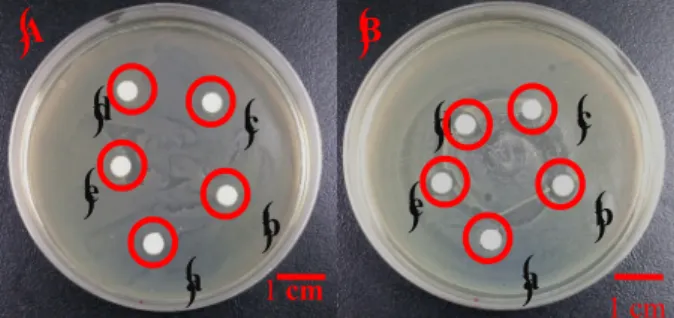
Figure 2 (A) shows that the inhibition zone of HAC extract is absent regardless of the extraction time of 12, 24, 36, and 48 hours, indicating a poor bacteriostatic property. Conversely, Figure 2 (B) shows that EAC extract causes significant inhibition zone regardless of the extraction time. The previous study stated that different solvents influence on the content of the extract; in addition, water solution cannot yield bacteriostatic constituents, only solvents of methanol and ethanol can [3]; as a result, HAC extract does not have a significant bacteriostatic effect against S. aureus.
Figure 2. Bacteriostatic effect of A) HAC and B) EAC against S. aureus. a) is the control group, and the extracts that are extracted for b)12, c) 24, d) 36, and e) 48 hours. The control group for A) is water solution and for B) is ethanol.
SEM Observation of PVA/SA/HAC and PVA/SA/EAC Fibrous Membranes
Figure 3 shows the images of PVA/SA/HAC and PVA/SA/EAC fibrous membranes. The fiber diameter of the pure PVA/SA fibrous membranes is between 200-400 nm, and that of PVA/SA/HAC and PVA/SA/EAC fibrous membranes falls between 300-450 nm and 300-500 nm,
(A) (B) (c) (a) (d) (e) (b) (c) (a) (d) (e) (b) (A ) (B) 1 cm 1 cm
respectively. It is found that a small amount of extract does not have a significant influence on the diameter of fiber, which is proved to be caused by a high viscosity of SA solution [6].
Figure 3. SEM images (3k) of a) PVA/SA/HAC and b) PVA/SA/EAC fibrous membranes that are made of an 80:20 ratio.
Conclusion
This study successfully creates PVA/SA/HAC and PVA/SA/EAC fibrous membranes, the fibrous membranes exhibit good fiber types and does not have beads. AC extract made of water solution, HAC extract, does not have bacteriostatic effect and that made of ethanol, EAC extract, possesses a significant bacteriostatic effect.
Acknowledgements
This work would especially like to thank National Science Council of the Republic of China, Taiwan, for financially supporting this research under Contract NSC 101-2621-M-166-001.
References
[1] Z.M. Huanga, Y. Z. Zhang, M. Kotaki, S. Ramakrishna. A review on polymer nanofibers by electrospinning and their applications in nanocomposites, Compos. Sci. Technol. 63(2003) 2223-2253.
[2] A. R. Unnithan, N.A.M. Barakat, P.B. T. Pichiah, G. Gnanasekaran, R. Nirmala, Y.S. Cha, C.H. Jung. Mohamed El-Newehy, Hak Yong Kim. Wound-dressing materials with antibacterial activity from electrospun polyurethane–dextran nanofiber mats containing ciprofloxacin HCl, Carbohyd. Polym. 90(2012) 1786-1793.
[3] D. Lechner, M. Stavri, M.Oluwatuyi, R. Pereda-Miranda, S. Gibbons The anti-staphylococcal activity of Angelica dahurica (Bai Zhi), Phytochemistry. 65(2004):331-335.
[4] Pattama Taepaiboon, Uracha Rungsardthong and Pitt Supaphol. Drug-loaded electrospun mats of poly(vinyl alcohol) fibres and their release characteristics of four model drugs, Nanotechnology. 17(2006) 2317-2329.
[5] H. Zhang, C. Gong, L. Lv, Y. Xu, L. Zhao, Z. Zhu, Y. Chai, G. Zhang. Rapid separation and identification of furocoumarins in Angelica dahurica by high-performance liquid chromatography with diode-array detection, time-of-flight mass spectrometry and quadrupole ion trap mass spectrometry, Rapid. Commun. Mass Sp. 23(2009) 2167-2175.
[6] D. Fang, Y. Liu, S. Jiang, J. Nie, G. Ma, Effect of intermolecular interaction on