
硒化鎵晶體中遠紅外波段的光學性質與應用
124
0
0
全文
(2) 硒化鎵晶體中遠紅外波段的光學性質與應用. A study of optical properties and application of GaSe crystal in the mid- and far-infrared. 研 究 生:陳晉瑋. Student:Ching-Wei Chen. 指導教授:潘犀靈 教授. Advisor:Prof. Ci-Ling Pan. 國 立 交 通 大 學 光 電 工 程 研 究 所 博 士 論 文. A Thesis Submitted to Department of Photonics & Institute of Electro-Optical Engineering College of Electrical Engineering National Chiao Tung University In partial Fulfillment of the Requirements for the Degree of Doctor of Philosophy in Electro-Optical Engineering. June 2008 Hsinchu, Taiwan, Republic of China. 中華民國九十七年六月.
(3) 硒化鎵晶體中遠紅外波段的光學性質與應用. 研究生:陳晉瑋. 指導教授:潘犀靈 教授. 國立交通大學光電工程研究所. 摘 要. 在本論文中,主要重點在探討由實驗室自製的高品質硒化鎵單晶於中遠紅外光波 段範圍的光學性質與應用。利用硒化鎵晶體其高非線性的特質與低吸收係數的特性來 結合非線性光學的過程來產生同調的光源。首先,利用傅利葉變換紅外光譜儀(FTIR) 與兆赫時域光譜儀(THz-TDS)來研究硒化鎵晶體於此寬波段的光學性質。並針對實驗 數據的擬合提出硒化鎵晶體於此波段的常態與非常態介電函數修正方程式。對於晶體 在高吸收區域,也以實驗檢視出橫向與縱向聲子振動模態分別為6.39 and 7.62 THz。此 外,於兆赫波段的一個位於0.586 THz的低頻聲子模態,可進一步確認硒化鎵晶體為ε 型式的晶相。我們也針對Sellmeier方程式提出了修正的參數,並能夠有效地描述晶體 的色散特性。在本研究中所提出硒化鎵晶體的介電函數修正方程式能利用於兆赫波段 實際光學組件的應用設計。 近一步,我們利用此材料良好的性質並結合非線性光學中差頻的技術來產生同調 的紅外光源輸出,其可調範圍從2.4到28 μm。而237.0 cm-1 和 213.5 cm-1兩個紅外波段 的吸收聲子模態也和光色散性質相互關聯。而Sellmeier方程式常態與非常態折射率的 兩個吸收峰的波長分別為42.2 μm和46.8 μm。其中,常態色散的吸收峰符合於紅外聲 子模態的E’對稱,並反應出硒化鎵晶體內鎵原子與硒原子於鍵結平面上的交互振盪。 另一方面,Sellmeier方程式非常態色散的吸收峰符合於紅外聲子模態的A2”對稱,並反 應出硒化鎵晶體內鎵原子與硒原子於光軸上垂直方向的交互振盪。另外,我們並完成 了利用硒化鎵晶體產生同調紅外光源時,光學吸收特性對輸出特性所造成的影響。輸 出範圍從紅外光至兆赫輻射波段的同調光源,其輸出功率的變化和此非線性差頻過程 的增益相關,並且和硒化鎵晶體本身的吸收係數也有關聯。而吸收係數對差頻過程所 造成的影響,進一步可利用在硒化鎵晶體內微量摻雜鉺原子來做部分地補償。 接著,我們在實驗與理論上提出利用多級的光整流技術於硒化鎵晶體中產生同調 的兆赫輻射光源,利用精確地調控兩級中激發光源的時間延遲,可將來自硒化鎵晶體 中產生的第二級兆赫輻射,同調疊加於第一級兆赫輻射光場。此兩級之間的高同調特 性證實了光整流的同調過程,並可應用於兆赫輻射的光譜調控技術。此多級的光整流 技術不但可以克服晶體長度與群速度色散的限制,此技術亦有發展高功率兆赫輻射光 i.
(4) 源輸出的潛力。並在此研究中進一步討論雙光子吸收所產生的自由載子對兆赫輻射輸 出的影響,並定量計算出兆赫輻射於硒化鎵晶體中的非線性吸收截面係數σTHz,其估計 範圍為(1.3-5.9)×10-17 cm2。 我們也架設了一套由高功率飛秒雷射聚焦游離空氣產生電漿,以空氣的三階非線 性係數滿足四波混頻的兆赫輻射產生源。改變雷射基頻及二倍頻間的相位差、偏振方 向夾角以及量測進入BBO晶體之前激發光源與產生兆赫輻射強度之間的功率相依關 係,來量測以此方法所產生兆赫輻射的特性。此外,硒化鎵晶體為產生高功率兆赫輻 射的良好非線性介質,並利用來做兆赫輻射光參數放大的研究。本研究中,實驗上證 實了兆赫輻射的放大現象,初步結果顯示中心頻率於1 THz的兆赫輻射經過此光參數放 大器後有2.7倍的功率增益。此技術提供了一個方法來提昇兆赫輻射的電場強度以利用 於未來兆赫輻射非線性光譜學的應用。. ii.
(5) A study of optical properties and application of GaSe crystal in the mid- and far-infrared Student: Ching-Wei Chen. Advisor: Prof. Ci-Ling Pan. Institute of Electro-Optical Engineering College of Electrical Engineering and Computer Science National Chiao Tung University. Abstract In this dissertation, the optical properties and applications of high quality, home-made GaSe single crystals are investigated in the mid- to far-infrared ranges. The major part of this study is focused on the coherent light generation by means of the nonlinear optical processes associated with the GaSe crystal, which possesses the promising characteristics including high nonlinearity and low absorption properties. First, the optical constants of a GaSe crystal are measured by the Fourier-transform infrared spectrometer (FTIR) and terahertz time-domain spectroscopy (THz-TDS) in a wide frequency range. Based on experimental data, a modified complex ordinary and extraordinary dielectric function of GaSe is presented. The transverse and longitudinal optical phonons in the reststrahlen band for the ordinary refraction index are experimentally determined to be 6.39 and 7.62 THz, respectively. Besides, a low-frequency rigid-layer phonon mode at 0.586 THz confirms the pure GaSe crystal to be in the ε-phase. Furthermore, the revised parameters of Sellmeier equation, which is expressed in an empirical formula form and that effectively describes the dispersion of this GaSe crystal, is also reported. The proposed dielectric functions of the ε-GaSe crystal in this study are applicable to practical photonic devices at terahertz frequencies. Moreover, we apply this promising material for the generation of coherent infrared radiation widely tunable from 2.4 to 28 μm through difference-frequency generation (DFG). The infrared-active modes of ε-GaSe crystal at 237.0 cm-1 and 213.5 cm-1 were found to be iii.
(6) responsible for the observed optical dispersion and infrared absorption edge. The poles of the modified Sellmeier equations occur at 42.2 μm for the e-ray and 46.8 μm for the o-ray, respectively. The pole of the o-ray dispersion corresponds to an infrared active mode of E’-symmetry with vibration involving both Ga and Se atoms on the basal plane of GaSe crystal. The pole of the e-ray dispersion corresponds to an infrared active mode of A2”-symmetry with vibration involving both Ga and Se atoms along the optical axis (c-axis). We perform a study of the effect of optical absorption on generation of coherent infrared radiation from mid-IR to THz region from GaSe crystal. The output power variation with wavelength can be properly explained with the spectral shape of parametric gain and absorption coefficient of GaSe. The adverse effect of infrared absorption on DFG process can partially be compensated by doping GaSe crystal with erbium ions. Subsequently, we propose and experimentally demonstrate the generation of single-cycle terahertz radiation with two-stage optical rectification in GaSe crystals. By adjusting the time delay between the pump pulses employed to excite the two stages, the terahertz radiation from the second GaSe crystal can constructively superpose with the seeding terahertz field from the first stage. The high mutual coherence between the two terahertz radiation fields is ensured with the coherent optical rectification process and can be further used to synthesize a desired spectral profile of output coherent THz radiation. The technique is also useful for generating high amplitude single-cycle terahertz pulses, not limited by the pulse walk-off effect from group velocity mismatch in the nonlinear optical crystal used. In addition, free carriers induced nonlinear absorption of THz radiation is also investigated in this study. The absorption cross-section, σTHz, of GaSe at terahertz frequency in the presence of free carriers are estimated in the range of (1.3-5.9)×10-17 cm2. Specially, femtosecond laser induced plasma in ambient air based on the third order nonlinearity is employed to construct a THz-TDS system in this study. The properties of the THz radiation from this configuration are characterized by altering the phase shift, the angle between polarizations of the fundamental and second harmonic beams. The dependence of the THz signal as a function of the fundamental pulse energy before the BBO crystal is also examined. Furthermore, GaSe crystal is a promising nonlinear optical medium to perform the generation of intense THz radiation. Herein, we report the experimental demonstration of terahertz wave amplification in GaSe crystal. Terahertz power amplification factor of about 2.7 times is preliminarily performed under the phase matching condition around 1 THz. The demonstration provides a potential way to further increase the terahertz electric field for nonlinear spectroscopic applications with a desktop femtosecond laser system. iv.
(7) Acknowledgement 本研究論文的完成,也意味著我博士生涯告一段落,在這多年的研究與求學過程 中,得到太多人的提攜與幫忙,在此獻上我深深的感謝之意:首先,要感謝我的指導 教授潘犀靈教授,由於您當年的提攜,讓我有這個機會進入光電的奧妙領域,謝謝您 多年來提供我研究上的資源與設備,且您對研究品質的堅持與細心更是影響我甚巨, 在此,我由衷地感謝您。再來,我要感謝多年來在研究領域中給予我諸多指導與方向 的黃中垚教授,您對實驗技術與數據的動悉能力和對物理的敏感度,更是讓我打從心 裡地佩服,學生我在此對您獻上最高的敬意。在我的實驗過程裡,我最要感謝張振雄 教授與徐裕奎學長,謝謝您們實驗室提供我研究的硒化鎵晶體,愉快的合作經驗與實 驗討論過程,更是讓我受益良多。另外,要感謝張景園教授在我博士班中期,在光參 數放大與差頻技術的實驗觀念上給予我的教導,謝謝您提供多元的研究點子與討論的 對象。特別要感謝客座教授嚴立教授在我博士班後期的合作與討論,讓我在光學理論 與多級光整流實驗上有進一步的認知。另外,我要感謝實驗上合作者顏順通教授與鐘 佩鋼學弟,提供我傅利葉變換紅外光譜儀系統與量測技術。謝謝實驗室的安惠榮教授, 平時對我實驗上的建議與生活上的鼓勵。感謝李晁逵教授在我博士班後期,生活在高 雄的那段時間,提供我實驗上的設備,讓我實驗能夠更加地順利完成。這本論文在最 後階段能順利完成,要特別感謝我的口試委員:孔慶昌教授、黃衍介教授、趙如蘋教 授、謝文峰教授的指導,謝謝您們的建議與指教,讓我對未來的路途更具信心,也更 虛心地了解到需要再多加地充實自我的能力。 當然我要感謝多年來和我一起完成眾多實驗成果的學長與學弟妹們,有您們的陪 同,讓我在這求學路途中不再孤單:感謝劉子安學長教導我架設超快雷射的相關技術; 感謝王怡超同學多年來於課業與實驗上的討論與協助;感謝黃龍進學弟於光參數放大 理論與實驗上的共同努力;感謝江文智學弟於新型基因演算法程式上的討論與幫忙; 感謝許乃今學妹於奈米晶體實驗上的共同努力完成;感謝許哲睿學弟於兆赫輻射光參 數放大的全力幫忙與協助;感謝林育賢學弟於多級光整流實驗與理論計算上的協助; 感謝湯宗達、謝卓帆、林家任學弟們於兆赫時域光譜儀實驗與程式上的幫忙;感謝林 松輝學弟於傅利葉變換紅外光譜理論程式分析上的大力協助;同時也感謝歷屆學弟妹 們在研究上的經驗分享與課餘時間的相互照顧。接著,我要對我的好友們致上謝意, 感謝你們在我博士班多年來的過程中生活上的參與,有你們的日子真的很溫馨很快 樂,在我無助時得到支持,在我失意時得到鼓勵,在我快樂時有你們分享,謝謝你們: 富美、秉其、建勳、志偉、倩如、冠文、志成、淑惠、材俊、惠鄉。有你們陪伴的日 子,讓我的博士求學生涯更多采多姿,也顯得更有意義。 最後,僅將我這個小小的榮耀獻給我最愛的家人:爸爸、媽媽,您們的期待與體 諒,是支持我繼續走下去的動力,感謝您們多年來的培育,我目前擁有的這一切是您 們的功勞,深深地感謝您們!特別感謝姐姐與姐夫和眾多的親朋好友們的鼓勵與關 愛,我會繼續再努力加油的。相信此時,不是終點,而是另一個階段的起點,我會在 未來的人生路途上為您們帶來更多的驚喜與光采! 晉瑋 於 新竹交通大學 2008年6月 v.
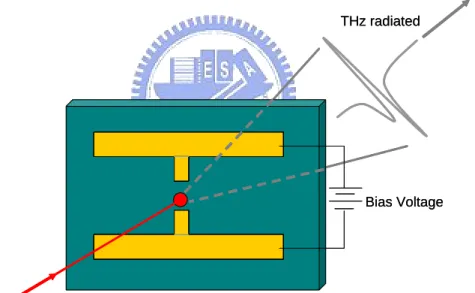
(8) Contents Page Abstract (Chinese) ………………………………………………………..……………... i. Abstract (English) ………………………………………….……………...……...…...... iii. Acknowledgement …………..………………….....………………………...…………... v. Contents ….…………………………………………………………………………….... vi. List of Figures …………………………………….…………………………...……….... x. List of Tables ………………………….…………………………………………….….... xiv. Chapter 1 Introduction ………………………………………..............………………... 1. 1.1 Background …………………………………….…………………………………….. 1. 1.2 Motivation …………………………………………………………………...……….. 5. 1.3 Organization of thesis ……………………………………………………………...…. 6. References ……………………………………………………………..…………………. 8. Chapter 2 Overview of the radiation light sources of mid-infrared to far-infrared. 10. (terahertz) ……………………………………………………………..……….………... 2.1 Introduction ……………………………………………………………………….….. 10. 2.2 Overview of coherent mid-infrared generation ………………………………………. 13. 2.3 Overview of coherent terahertz generation and detection …………………...……….. 17. 2.3.1 Generation by photoconductive antenna ………..…………………………….. 17. 2.3.2 Generation by optical rectification ……………………………...…………….. 19. 2.3.3 Generation by laser induced plasma ………………………………….……….. 20. 2.3.4 Detection by photoconductive antenna ……………………………………….. 22. vi.
(9) 2.3.5 Detection by electro-optical sampling ………………………………..……….. 22. References ………………………………………………………………..………………. 26. Chapter 3 Optical properties and potential applications of ε-GaSe crystal in. 30. terahertz frequencies ……………………………………………………………….…... 3.1 Introduction …………………………………………………………………….…….. 30. 3.2 Sample preparation and experimental method ……………………………………….. 31. 3.3 Analysis model of optical constant from THz-TDS ……….…………………………. 32. 3.4 Results and Discussions ……………………………………………………..……….. 34. 3.4.1 Raman spectroscopy ………………………………………………………………. 34. 3.4.2 Optical constant measurement by THz-TDS ……………………….………………. 35. 3.4.3 Optical properties measurement by transmitted FTIR ……………..………………. 38. 3.4.4 Optical properties measurement by reflected FTIR ………………………..………. 39. 3.4.5 Ordinary and extraordinary dielectric function determination ……………..………. 40. 3.4.6 Sellmeier equations determination …………………………………………………. 44. 3.4.7 Potential application of GaSe in terahertz frequencies ……………………...…..…. 46. 3.5 Summary ………………………………………………...………………………..….. 47. References ………………………………………………………………..………………. 49. Chapter 4 Generation properties of coherent infrared radiation in the optical. 52. absorption region of GaSe crystal ……………………………………………………... 4.1 Introduction ………………………………………………………………….……….. 52. 4.2 Experimental methods ………………………………………………….…………….. 53. 4.3 Results and Discussions …………………………………………………..………….. 56. vii.
(10) 4.3.1 Optical properties of pure and Erbium doped GaSe crystals measured by. 56. transmitted type FTIR and THz-TDS ………………………………………………….… 4.3.2 Effective nonlinear coefficient (deff) determined by SHG ………………….………. 58. 4.3.3 Picosecond mid-infrared generation by difference frequency mixing ………..……. 60. 4.3.4 Sellmeier equations determination ………………………………………….…...…. 61. 4.3.5 Relation between infrared absorption edge and optical dispersion ……………...…. 63. 4.3.6 Parametric gain and output power calculation …………………………………..…. 66. 4.4 Summary …………………………………...………………................…………..….. 68. References ………………………………………………………………..………………. 69. Chapter 5 Coherent generation and spectral synthesis of terahertz radiation with. 72. multiple stages of optical rectification ……………………………………….………... 5.1 Introduction ……………………………………………………………………….….. 72. 5.2 Theoretical model and experimental method …………………………………..…….. 73. 5.3 Results and Discussions ………………………………………………………..…….. 75. 5.3.1 THz generation by optical rectification with azimuthal φ angle dependence …........ 75. 5.3.2 High coherence between multiple stages of optical rectification ……………..……. 76. 5.3.3 THz coherent superposition and spectral synthesis by multiple stages of optical. 77. rectification …………………………………………………………………………….… 5.3.4 Nonlinear absorption of THz wave in GaSe crystal …………………………..……. 82. 5.3.5 Pump power and absorption dependence of the THz wave output ……...…………. 84. 5.4 Summary …………………………………………………...…………………..…….. 86. References ………………………………………………………………..………………. 87. viii.
(11) Chapter 6 The study of THz optical parametric amplification in ε-GaSe crystal ...... 89. 6.1 Introduction ……………………………………………………………………….….. 89. 6.2 Theoretical model and experimental method …………………………………..…….. 92. 6.2.1 The principle of OPA process ………………………..……………………….……. 92. 6.2.2 Satisfactory phase matching condition …………………………………..…………. 94. 6.2.3 Experimental setup ……………………………………………………..………..…. 95. 6.3 Results and Discussions …………………………………………………………….... 98. 6.3.1 The characteristic of THz generation by laser induced plasma by four wave. 98. mixing ……………………………………………………………………………….…… 6.3.2 GaSe crystal length determination by GVM ………………………………….……. 101. 6.3.3 Pump depleted gain prediction by taking account of the linear and nonlinear. 101. absorption …………………………………………………………………………...…… 6.3.4 THz amplification experimental achievement …………………………...……..….. 103. 6.4 Summary ………………………………………………...………………………….... 104. References ………………………………………………………………..………………. 105. Chapter 7 Conclusions and future works …………………...……………………...…. 107. ix.
(12) List of Figures Page. Chapter 1 Fig. 1-1. Layer structure of ε-GaSe crystal …..….…….……………………………... Fig. 1-2. Absorption coefficients versus wavelength for several nonlinear crystals,. 2 4. some of which were frequently used for terahertz generation. The absorption spectrum for CdSe available covers a narrow wavelength range of 63–71 μm ………………………………………………………..……… Fig. 1-3. A cleaved surface of the as-grown ε-GaSe crystal …………..…..…………. 5. Chapter 2 Fig. 2-1. Overview of frequency regions …………………………………..……….... Fig. 2-2. Generated frequency ranges for several NLO crystals in mid-infrared. 11 17. generation ……………………………………………...………………...… Fig. 2-3. Schematic of PC antenna ………………………………………...……........ Fig. 2-4. Illustration of terahertz radiation by optical rectification ……………...…... Fig. 2-5. Schematic of the THz generation via four-wave mixing in a plasma. The. 18 19 21. pulse at the fundamental contains wavelengths between 770 and 830 nm, the second harmonic between 385 and 415 nm …………………………… Fig. 2-6. The scheme of EO sampling setup …………………………………...……. Fig. 2-7. Angles of the THz wave and probe beam polarization directions ……..….. 23 25. Chapter 3 Fig. 3-1. A general sketch of the home-made terahertz time-domain spectroscopy (THz-TDS) system. Laser source : Ti: sapphire femtosecond laser with wavelength~800nm; Repetition rate~82MHz; Pulse duration~50fs; THz emitter and detector : LT- GaAs photoconductive antenna with Si lens ..... x. 32.
(13) Fig. 3-2. A general sketch of the (a) reference-purged N2 and (b) sample-GaSe. 33. crystal for the optical constants measurement in the terahertz time-domain spectroscopy (THz-TDS) experiment ………………...…… Fig. 3-3. Raman spectra of GaSe crystal. Several Raman active phonon modes. 35. could be identified in this measurement ………………………….....…… Fig. 3-4. (a) Time profiles of terahertz pulse transmitted through GaSe crystals of. 37. various thicknesses. (d=287, 1110, 2021 μm) (b) Real part of complex refractive index n of GaSe crystal. (c) Imaginary part of complex refractive index k of GaSe crystal ……………………………...………… Fig. 3-5. Absorption spectrum of pure GaSe crystal from 3 μm to 700 μm ……..…. 39. Fig. 3-6. Power reflectance measurement over wide range of terahertz frequencies.. 40. A strong infrared absorption peak in the range 6–8 THz, called the reststrahlen band, is observed ……………………………..……………... Fig. 3-7. (a) Comparisons of refractive indices n herein and published values.. 42. Revised dielectric function-fitted curve is included. (b) Comparison of absorption coefficient α herein with published values. Revised dielectric function-fitted curve is also included …………………………...………... Fig. 3-8. Fitting of the infrared generation phase matching curve [18] to obtain the. 43. extraordinary refractive indices ne. Inset: fitting the THz generation phase matching curve plotted in other works [21, 23, 32] ……………..…..…… Fig. 3-9. Comparisons of extraordinary refractive indices ne herein and published. 45. values. Inset: the extraordinary refractive indices ne in the wide frequency range 0.2–100THz ………………………….…………………. Fig. 3-10. Comparison of figures of merit (FOM) of GaSe and LiNbO3 crystals in. 47. terahertz range. Inset: birefringence of GaSe crystal at terahertz frequencies ……………………………………..………………………… Chapter 4 Fig. 4-1. (a) X-ray rocking curve of pure GaSe (b) X-ray rocking curve of 0.2%. 53. Er:GaSe …………………………………………………………….……… Fig. 4-2. (a) Photography of the GaSe-based ps-DFG system. (b) Schematic of the. 55. GaSe-based ps-DFG system ………………………………………….…… Fig. 4-3. Wide tuning range of idler output from 355nm pumped OPA ……….……. xi. 56.
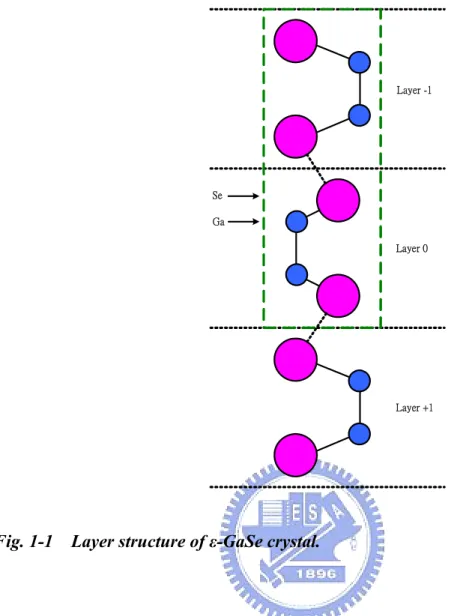
(14) Fig. 4-4. Absorption coefficients of GaSe are plotted as a function of wavelength in. 57. the mid-IR. The solid and dashed curves show our experimental results measured by FTIR and for pure and Er3+:GaSe, respectively …….……..... Fig. 4-5. Measured SHG efficiency of a 3.3 mm long pure GaSe crystal as a. 59. function of the internal pulse energy. Inset: Comparison of deff between pure and 0.5% Er:GaSe ………………………………..……...…………… Fig. 4-6. Type-I DFG output wavelength vs. external PM angle. The filled triangles. 61. show the experimental data and solid curve is the fitting curve using the modified Sellmeier equation. Dashed curve: calculated phase matching curve using dispersion of GaSe from Ref. [21]. Dotted curve: calculated phase matching curve using dispersion of GaSe from Ref. [22] …..……… Fig. 4-7. Vibrational displacements of atoms in a primitive unit cell for. 64. E’-symmetry in the hexagonal GaSe. The arrows indicate only directions of atomic displacements [26] ……………………………………………… Fig. 4-8. Vibrational displacements of atoms in a primitive unit cell for. 65. A2”-symmetry in the hexagonal GaSe. The arrows indicate only directions of atomic displacements [26] ……………………………………………… Fig. 4-9. (a) Calculated parametric gain (dash curve), calculated infrared absorption. 66. (dot curve) and measured infrared absorption (solid curve) as a function of wavelength. (b) Measured and calculated pulse energies of the DFG generator versus wavelength. Solid squares show the measured infrared pulse energies for pure GaSe, open triangles show the measured infrared pulse energies for Er3+:GaSe, solid curve and dashed curve indicate the calculated pulse energies with and without considering the crystal linear absorption coefficient, respectively. The open circles shown in the THz region are taken from Ref. [8] for comparison ………………….………… Chapter 5 Fig. 5-1. Schematic of coherent generation of terahertz radiation by multi-stage. 74. optical rectification in GaSe crystals. BS: Beam splitter; ND-Filter: Neutral Density filter; ITO: indium-tin-oxide glass plate; λ/4: quarter wave plate …………………………………….…………………………… Fig. 5-2. THz time domain waveforms at different GaSe azimuthal φ angle …….…. 75. Fig. 5-3. THz wave peak amplitude versus azimuthal φ angle for GaSe emitter ....…. 76. xii.
(15) Fig. 5-4. Time delay dependence of terahertz field amplitude after the second stage.. 77. Square-symbols present the terahertz time-domain waveform from the first stage, which are magnified for the easy comparison ……………………… Fig. 5-5. Terahertz time-domain waveforms from the first and second stage, and. 78. two stages. (a) (d) Terahertz pulse from the second stage leads that from the first stage; (b) (e) best overlapped between the terahertz pulses from two stages; (c) (f) terahertz pulse from the second stage lags behind that from the first stage. Inset: corresponding spectra of the terahertz radiation. Experimental measurement: (a) (b) (c); Theoretical simulation: (d) (e) (f) .. Fig. 5-6. Terahertz radiation attenuation by the GaSe crystal under high intensity. 83. pump laser pulses. Inset (a): fitting of the experimental data for linear and nonlinear absorption coefficient of GaSe crystal pumped by 800 nm optical pulses. Inset (b): fitting of the experimental data for the absorption coefficient αTHz,fc at terahertz frequency in GaSe crystal due to free carriers …………………………………………………………..….……… Output terahertz field amplitude under different pump intensity ……….…. 84. Fig. 6-1. The experimental configuration of collinear type of OPA ………..…….... 92. Fig. 6-2. Seeding wavelength versus corresponding external phase matching angle. 94. Fig. 6-3. The experimental setup of THz-OPA ……………………………….……. 95. Fig. 6-4. THz generation by use of the four wave mixing in the plasma (a) THz. 96. Fig. 5-7 Chapter 6. time domain waveform (b) THz spectrum ……………………..………… Fig. 6-5. The autocorrelation trace of optical pump pulses after stretching by prism. 97. pairs …………………………………………..……...…………………… Fig. 6-6. Terahertz signal from the focus (plasma) as a function of BBO crystal. 98. rotation angle …………………………………………………..……....… Fig. 6-7. Terahertz amplitude versus BBO-to-focus distance ……………..……….. 99. Fig. 6-8. Terahertz amplitude versus laser pulse energy ………………..…..…….... 100. Fig. 6-9. Theoretical gain prediction in this THz-OPA system ……………….……. 102. Fig. 6-10. THz amplification by OPA process (a) THz time domain waveform (b). 103. THz spectrum …………………..…………………………………………. xiii.
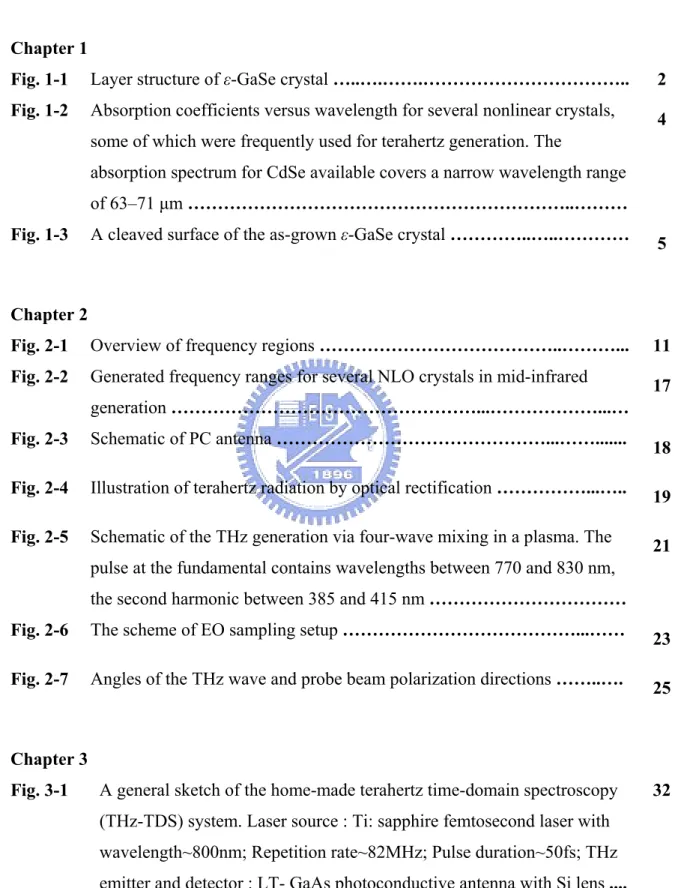
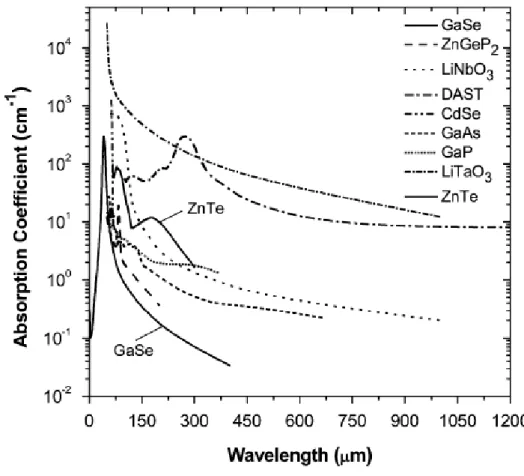
(16) List of Tables Page Chapter 1 Nonlinear optical crystals for mid-infrared applications ……..………….. 2. Table. 2-1. List of THz emitters and detectors and their advantage ..….…………….. 13. Table. 2-2. Properties of various nonlinear crystals ..……………………………...…. 14. Parameters used in the calculation of the optical constants for ε-GaSe. 44. Table. 1-1 Chapter 2. Chapter 3 Table. 3-1. from Eq. [6] and Eq. [7] ..….…………………………………….………. Table. 3-2. Parameters used in the calculation of the optical constants for ε-GaSe. 46. from Eq. [8] and Eq. [9] ..….…………………………………….………. Chapter 4 Table. 4-1. Properties of the long-wavelength lattice vibrations of ε-GaSe ..……..…. 63. List of the numerous methods for high power THz generation ..……...…. 90. Chapter 6 Table. 6-1. xiv.
(17) Chapter 1 Introduction 1.1. Background Gallium selenide (GaSe) is a native p-type semiconductor that belongs to the III-VI. layered semiconductor family [1-3]. In the stacking direction (along the crystallographic z-axis which is in the direction of the optical c-axis), the layers can be arranged in different ways, which leads to the existence of different poly-types. Four modifications (β, γ, δ and ε) have been reported in the literature [2]. A great deal of studies have made by several research groups to understand the poly-types in these compounds. The formation of a particular poly-type or a mixture of several poly-types depends substantially on the growth method of single crystals. For instance, the Czochralski and Bridgman-Stockbarger methods yield mainly the ε poly-type. Figure 1-1 presents the structure of GaSe, and atomic 1 configuration of GaSe layers. The ε-type structure has a D3h space group symmetry with. two layers, which is including four molecules (eight atoms) per unit cell. The atoms are located in the planes normal to the c-axis in the sequence Se-Ga-Ga-Se. Each GaSe layer thereby consists of two planes of Ga atoms, which are surrounded on two sides by the unit planes of the Se atoms. The strong bonding between two sheets of the same layer is covalent with some ionic contribution. But the bonds between the complete four-fold layer is essentially of the van der Waals-type. Due to the characteristics of layer, GaSe exhibits a strongly pronounced structural anisotropy. Consequently, the ε-type GaSe is a promising candidate material for nonlinear optical conversion devices in the near- to far-infrared wavelength (1-18 μm). GaSe possesses a number of exciting properties, which are listed in Table 1-1, for nonlinear optical application. Among these nonlinear optical crystals, GaSe has a transparency range extending from a wavelength of 0.62 μm to 20 μm where the optical absorption coefficient does not exceed 1 cm-1 throughout the range [1, 3]. The ε-type GaSe is a negative uniaxial crystal (no>ne, where no and ne denote the refractive indices in the ordinary and extraordinary direction). Its nonlinear optical coefficients are among the top five for birefringent crystals. Due to its large birefringence, it can satisfy phase matching (PM) conditions for optical configurations under the wide frequency range. -1-.
(18) Layer -1. Se Ga Layer 0. Layer +1. Fig. 1-1. Layer structure of ε-GaSe crystal.. Table 1-1 Nonlinear optical crystals for mid-infrared applications Crystal. Nonlinear. Merit. Transparency. Absorption. Damage. Coefficient. Factor. Range (μm). Coefficient. Threshold. (pm/V). (d2/n3). (cm-1). (MW/cm2). @ 10.6 μm. @ ~10ns,. @ 10.6 μm. 1.064 μm ZnGeP2. 68.9. 162. 0.74–12. 0.83. 3. AgGaSe2. 32.6. 63.3. 0.71–19. 0.089. 25. AgGaS2. 12.5. 12.8. 0.47–13. 0.04. 35. GaSe. 54. 217. 0.62–20. 0.081. 30. Tl3AsS3. 36.5. 42.4. 1.28–17. 0.082. 16. CdGeAs2. 217. 1090. 2.4–18. 0.5. 40. -2-.
(19) For purposes of serving as a nonlinear optical (NLO) material in the mid-infrared and far-infrared (THz), GaSe possesses excellent values for all these properties, as has been extensively studied in the literatures [4-22]. To achieve birefringent phase matching, it is generally necessary to be able to cut and polish the faces of a NLO crystal at an angle arbitrary to the optical axis (for GaSe, this is the c-axis, along the [001] direction). However, GaSe has a layered structure, with weak van der Waals-like bonds between the layers, making it extremely difficult to cut and polish, except for crystal faces in the plane of cleavage (perpendicular to the optic axis). This feature reduces the usefulness of GaSe as a NLO crystal for practical use, and also complicates access to measurement of its basic properties [4-11]. Nonlinear optical frequency mixing is a well known technique since the discovery of capability of the laser for generation of tunable coherent light using a single crystal. Recently, incoherent parametric super-radiant generation tunable in the range of 3.5–18 μm in GaSe (type-I PM) was obtained by using 110 ps pulses from the actively mode-locked Er:YAG laser as a pump source [12]. Subsequently, picosecond pulses of a mode-locked Er:Cr:YSGG laser were used to pump a traveling-wave OPG; type-I and type-II OPG provided continuous tunability in the range of 3.5–14 and 3.9–10 μm, respectively [13]. On the other hand, there have been a number of reports on difference frequency generation (DFG) to achieve tunable and coherent mid-infrared for GaSe by using variety of laser sources [14, 15]. Additionally, few papers reported on the generation of far-infrared (THz wave) from GaSe crystal [16-18]. Figure 1-2 shows that GaSe has the lowest absorption coefficients in the THz wavelength region [19]. Consequently, GaSe has the largest figure of merit for the THz generation, which is several orders of magnitude large than that for bulk LiNbO3 at 300 μm. According to Shi’s results, an efficient and coherent THz wave tunable in the two extremely wide ranges of 2.7–38.4 and 58.2–3540 μm, with typical line-widths of 6000 MHz, had been achieved for the first time [17]. The nonlinear optical crystal is the heart of the nonlinear optical processes. There has been a lot of improvement in growth technology of nonlinear materials, particularly in the infrared region, and a number of nonlinear materials have been developed for laser device application. To perform efficiently, the material should possess a unique combination of optical, thermal and mechanical properties. Recently, the doping of the GaSe crystals was investigated to improve its optical and mechanical properties [20-22]. Recently, the electrical and optical characteristics of erbium doped GaSe (Er:GaSe) crystals had reported [23, 24]. The two acceptor levels were found to originate either from the substitution of one -3-.
(20) Er3+ for one pair of Ga2+ or insertion of one Er3+ interstitial ions at interlayer sites in the unit cell. The structure of GaSe can also be slightly altered by the erbium doping. Recently, the optical properties of Er:GaSe crystals and its potential in the generation of mid-infrared radiation had been further explored [25].. Fig. 1-2. Absorption coefficients versus wavelength for several nonlinear crystals, some of which were frequently used for terahertz generation. The absorption spectrum for CdSe available covers a narrow wavelength range of 63–71 μm [19].. In this work, the GaSe crystals were grown by a vertical Bridgman furnace. All the GaSe crystals used herein are home-made and provided by Prof. Chen-Shiung Chang’s group from National Chiao Tung University (NCTU). The photograph of the as-grown GaSe crystal is shown in Fig. 1-3. The optical c-axis is perpendicular to the good optical cleaved surface, as shown in Fig. 1-3. Tuning the external angles is necessary for perform the -4-.
(21) phase-matching condictions (the angle between the optical axis and beam propagation direction) in the nonlinear optical experiments.. c-axis. Fig. 1-3. 1.2. A cleaved surface of the as-grown ε-GaSe crystal.. Motivation GaSe crystal has been widely utilized to the generation and application of infrared and. THz frequency regime. For accessing to the practical application of optoelectronics device, the realization of the basic optical properties of this crystal is very important and indispensable. Fortunately, the published literatures mentioned about the optical constants of GaSe crystal are inconsistent. The knowledge of the Reststrahlen band and vibration modes in this crystal is still limited. Therefore, we motivated to explore the optical properties of GaSe crystal by means of the optical measurements, including Raman scattering, Fourier Transform Infrared Spectroscopy (FTIR) and terahertz time domain spectroscopy (THz-TDS) in this study. After understanding fundamental optical properties, such as ordinary and extraordinary dielectric functions, Sellmeier equations and vibration frequencies, the extensive applications of GaSe crystal to perform the light source generation and nonlinear optical frequency conversion processes could be expected. Then it is proved that GaSe crystals have the promising properties such as high nonlinear coefficient and low absorption coefficient that benefits the high conversion efficiency in such frequency conversion processes. -5-.
(22) There have been numerous works described that GaSe crystal can generate light source with wide frequency range from mid-infrared to THz by use of the frequency conversion technique such as difference frequency mixing process. However, few papers concern the optical behaviors in the strong absortion region and the role of the absorption effect in the DFG process. In this work, we further explore the origin and effect of the infrared absorption edges based upon the understanding of the proposed Sellmeier equations. Moreover, we investigate the effect of infrared absorption on the generation properties of coherent infrared radiation from mid-infrared to THz region in the GaSe crystal. The conversion efficiency for generating the THz radiation is usually quite low among the several promising techniques. In order to yields the intense single cycle and high amplitude THz wave, we propse some methods to increase the output power of THz radiation. First, we propose the multiple stages of optical rectification technique which is useful for generating high amplitude single-cycle terahertz pulses, not limited by the pulse walk-off effect from group velocity mismatch in the nonlinear optical crystal used. On the other hand, we attempt to upscale the power of the weak THz radiation by utilizing the phase-matching parametric amplification technique associated with the high nonlinear coefficient property of GaSe crystal.. 1.3 Organization of thesis This section is to outline the scope of a PhD research program by the author of this thesis, and describe the structure of the thesis which contains most of the achievements of this study. This thesis consists of seven chapters including this introduction, background information and motivation (Chapter 1), and the overview of the radiation light sources of mid-infrared to far-infrared (terahertz) (Chapter 2), and optical properties and potential applications of ε-GaSe crystal in terahertz frequencies (Chapter 3), and the generation properties of coherent infrared radiation in the optical absorption region through difference frequency mixing (DFM) (Chapter 4), and coherent generation and spectral synthesis of terahertz radiation with multiple stages of optical rectification (Chapter 5), and the study of THz optical parametric amplification in ε-GaSe crystal (Chapter 6), as well as conclusion and future work (Chapter 7). Chapter 2 presents an overview of the radiation light sources of mid-infrared to far-infrared (terahertz). Several promising generation techniques, including optical parametric generation (OPG), different frequency generation (DFG), four-wave mixing -6-.
(23) (FWM), photoconductive switch and optical rectification (OR) will be introduced in this chapter. In addition, few detection methods for THz waves are also included. Chapter 3 introduces that optical constants for a single crystal ε-GaSe are investigated by use of the terahertz time-domain spectroscopy (THz-TDS) and Fourier Transform Infrared Spectroscopy (FTIR) over the frequency range from 0.2 to 3 THz. Based upon the experimental data, the modified ordinary and extraordinary complex dielectric functions of. ε-GaSe is proposed. Chapter 4 describes the application of ε-GaSe crystal in coherent generation of the picosecond wide tuning range infrared radiation. The generation properties in the absorption region are discussed herein. The origin and effect of the infrared abosorption edges are also examined in this chapter. The output power variation as a function of the wavelength can be explained by the spectral profile of the parametric gain and absorption coefficient. Chapter 5 demonstrates that multiple stages optical rectification will be useful for generation of high-field, single-cycle terahertz pulse not limited by the availability of thick GaSe crystals of good optical quality or the walk-off effect due to group velocity mismatch. Chapter 6 demonstrates the application of ε-GaSe crystal in scaling up the pulse energy of the broad band THz radiation by using the parametric amplification technique. The theoretical prediction and practical performance and the table-top system are also reported. Consequently, the conclusion to this work is given in Chapter 7. Recommendations of further work are also given in this chapter.. -7-.
(24) References [1]. V. G. Dmitriev, G. G. Gurzadyan, and D. N. Nikogosyan, Handbook of Nonlinear. Optical Crystals (Springer, Berlin, 1997), pp. 166-169. [2]. T. J. Wieting and M. Schluter (Eds.), Electrons and Phonons in Layered Crystal. Structures (D. Reidel Publishing Company, Holland, 1979). [3] E. D. Palik, Handbook of Optical Constants of Solids (Academic, New York, 1998), Vol. III. [4]. J. D. Wasscher and J. Dieleman, “Anisotropy of the optical constants of GaSe near the band edge,” Phys. Lett. 39A, 279-280 (1972).. [5]. N. Piccioli, R. L. Toullec, M. Mejatty, and M. Balkanski, “Refractive index of GaSe between 0.45 μm and 330 μm,” Appl. Opt. 16, 1236-1238 (1977).. [6]. V. M. Burlakov, E. A. Vinogradov, G. N. Zhizhin, N. N. Mel’nik, D. A. Rzaev, and V. A. Yakovlev, “Optical properties of GaSe films at lattice vibration frequencies,” Sov. Phys. Solid State 21, 1477-1480 (1979).. [7] S. Adachi and Y. Shindo, “Optical constants of ε-GaSe,” J. Appl. Phys. 71, 428-431 (1992). [8]. K. Allakhverdiev, N. Fernelius, F. Gashimzade, J. Goldstein, E. Salaev, and Z. Salaeva, “Anisotropy of optical absorption in GaSe studied by midinfrared spectroscopy,” J. Appl. Phys. 93, 3336-3339 (2003).. [9]. K. R. Allakhverdiev, T. Baykara, A. K. Gulubayov, A. A. Kaya, J. Goldstein, N. Fernelius, S. Hanna, and Z. Salaeva, “Corrected infrared Sellmeier coefficients for gallium selenide,” J. Appl. Phys. 98, 093515-1-6 (2005).. [10]. K. Allakhverdiev, T. Baykara, S. Ellialtioglu, F. Hashimzade, D. Huseinova, K. Kawamura, A. A. Kaya, A. M. Kulibekov (Gulubayov), and S. Onari, “Lattice vibrations of pure and doped GaSe,” Mater Res. Bull. 41, 751-763 (2006).. [11] C. -W. Chen, Y. -K. Hsu, J. Y. Huang, C. -S. Chang, J. Y. Zhang, and C. -L. Pan, “Generation properties of coherent infrared radiation in the optical absorption region of GaSe crystal,” Opt. Express 14, 10636-10644 (2006). [12]. K. L. Vodopyanov and V. G. Voevodin, “2.8 μm laser pumped type I and type II traveling-wave optical parametric generator in GaSe,” Opt. Commun. 114, 333-335 (1995).. [13]. K. L. Vodopyanov and V. Chazapis, “Extra-wide tuning range optical parametric generator,” Opt. Commun. 135, 98-102 (1997).. -8-.
(25) [14]. R. A. Kaindl, M. Wurm, K. Reimann, P. Hamm, A. M. Weiner, and M. Woerner, “Generation, shaping, and characterization of intense femtosecond pulses tunable from 3 to 20 μm,” J. Opt. Soc. Am. B 17, 2086-2094 (2000).. [15]. R. S. Putnam and D. G. Lancaste, “Continuous-wave laser spectrometer automatically aligned and continuously tuned from 11.8 to 16.1 μm by use of diode-laser-pumped difference-frequency generation in GaSe,” Appl. Opt. 38, 1513-1522 (1999).. [16]. W. Shi, Y. J. Ding, N. Fernelius, and K. Vodopyanov, “Efficient, tunable, and coherent 0.18–5.27 THz source based on GaSe crystal,” Opt. Lett. 27, 1454-1456 (2002).. [17]. W. Shi and Y. J. Ding, “A monochromatic and high-power terahertz source tunable in the ranges of 2.7-38.4 and 58.2-3540 μm for variety of potential applications,” Appl. Phys. Lett. 84, 1635-1637 (2004).. [18]. T. Tanabe, K. Suto, J. -i. Nishizawa, and T. Sasaki, “Characteristics of terahertz-wave generation from GaSe crystals,” J. Phys. D: Appl. Phys. 37, 155-158 (2004).. [19]. Y. J. Ding, “High-power tunable terahertz sources based on parametric processes and applications,” IEEE J. Sel. Topics Quantum Electron. 13, 705-720 (2007).. [20]. D. R. Suhre, N. B. Singh, V. Balakrishna, N. C. Fernelius, and F. K. Hopkins, “Improved crystal quality and harmonic generation in GaSe doped with indium,” Opt. Lett. 22, 775-777 (1997).. [21]. N. B. Singh, D. R. Suhre, W. Rosch, R. Meyer, M. Marable, N. C. Fernelius, F. K. Hopkins, D. E. Zelmon, and R. Narayanan, “Modified GaSe crystals for mid-IR applications,” J. Cryst. Growth 198, 588-592 (1999).. [22] S. Das, C. Ghosh, O. G. Voevodina, Yu. M. Andreev, and S. Yu. Sarkisov, “Modified GaSe crystal as a parametric frequency converter,” Appl. Phys. B 82, 43-46 (2006). [23]. Y. K. Hsu, C. S. Chang, and W. F. Hsieh, “Photoluminescence study of GaSe doped with Er,” Jpn. J. Appl. Phys. 42, 4222-4225 (2003).. [24]. Y. K. Hsu, W. C. Huang, and C. S. Chang, “Electrical properties of GaSe doped with Er,” J. Appl. Phys. 96, 1563-1567 (2004).. [25]. Y. -K. Hsu, C. -W. Chen, J. Y. Huang, C. -L. Pan, J. -Y. Zhang, and C. -S. Chang, “Erbium doped GaSe crystal for mid-IR applications,” Opt. Express 14, 5484-5491 (2006).. -9-.
(26) Chapter 2 Overview of the radiation light sources of mid-infrared to far-infrared (terahertz) 2.1 Introduction Sources of tunable high-quality, ultrashort laser pulses in the near- and mid-infrared spectral region are an important tool in various fields of optical spectroscopy. As far as comparatively compact sources are concerned, the infrared radiation can be covered best by means of nonlinear frequency conversion. Extensive experimental studies have been carried out in this field of research in both the nanosecond and picosecond / femtosecond regime. Coherent sources in the mid-infrared to far-infrared are of prime importance for molecular spectroscopy, eye-safe medical instrumentations, radar and remote sensing of atmospheric constituents, and for numerous military applications such as target tracking, obstacle avoidance, and infrared countermeasures. As virtually all fundamental vibrational modes of molecules and molecular ions lie in the 2-20 μm wavelength region, infrared spectroscopy provides a convenient and real-time method of detection for most gases. Spectroscopic techniques have been successfully applied to monitor air pollution and to identify and quantify the presence of specific gaseous constituents in the atmosphere. In the mid-infrared spectral region the fundamental vibrational–rotational absorption spectra of molecular pollutants are very rich in absorption lines and the absorption frequencies are generally located so that strong lines of a number of most pollutant gases can be well distinguished from those of the others. Absorption spectra can thus be utilized for the detection and identification of polluting molecular species in this so-called fingerprint region. After the rapid progress in ultrashort lasers and the successes in semiconductor technology and nonlinear optics, it has leaded the birth of a new area of applied physics known as optoelectronics or photonics in 1970s. One of the most promising photonic spectroscopic applications is the terahertz time-domain spectroscopy (THz-TDS). Terahertz region lies between microwave and infrared regions is relatively narrow, it is still important in condensed matter physics. There are many interesting phenomena falling right to this region, especially the soft lattice vibrations in dielectrics. - 10 -.
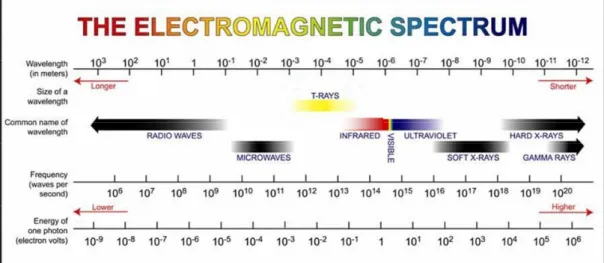
(27) THz pulses generated by sub-picosecond laser pulses based on photoconduction and optical rectification with a broad bandwidth have found many applications, such as THz imaging, THz spectroscopy for studies of carrier dynamics and intermolecular dynamics in liquids, and dielectric responses of molecules, polymers, and semiconductors. A tunable and coherent THz source is one of the key elements for applications such as chemical identification, biomedical diagnostics, and THz spectroscopy. For instance, THz-probing technology exhibits a unique potential for label-free detection of a DNA binding state. Furthermore, it was recently demonstrated that cw THz waves can be used to detect cancer. To achieve these important applications and therefore to create a new era for THz science and technology, a compact、efficient、and coherent THz source is essential. Although in the past short THz pulses were generated by means of optical rectification, by photoconduction, and by Cerenkov radiation, it was difficult to measure low conversion efficiencies directly. Quite low conversion efficiency of ~10-10 was achieved based on optical rectification. Terahertz radiation is in the frequency range from about 0.1 to 10 THz, which corresponds to wave-numbers between 3 and 300 cm-1, photon energies between 0.4 and 40 meV, temperatures between 5 and 500K and wavelengths between 3 mm and 30 μm. This frequency range, shown in the Fig. 2-1, has several names: far infrared, sub-millimeter wave and terahertz range. Until some years ago, this frequency range was known as the ‘THz gap’. The lack of efficient sources and of sensitive detectors made measurements very difficult. Accordingly, the THz range remained to a large extent unexplored.. Fig. 2-1. Overview of frequency regions. - 11 -.
(28) The appearance of ultrashort pulsed laser of ~100 ps pulse duration made it possible to generate THz waves covering the whole THz spectral range. In 1981, Mourou and Auston first demonstrated generation and detection of pulsed THz radiation by a photoconductive switch with advantages of time resolution of picosecond and high sensitivity enhanced by phase-lock technique [1, 2]. In 1988, Grischkowsky used the photoconductor dipole antenna as the THz sensor, pushing the spectrum into the order of terahertz frequency [3]. Numerous investigations on THz wave showed a modest increase, whereas after 1995 the field has experienced an impressive growth. Probably the most important single development responsible for this growth is the invention of the mode-locked Ti: sapphire laser, which has greatly facilitated the use of ultrashort pulses in all sorts of experiments, among them the generation and measurement of THz pulses. Afterward a variety of antennas was appeared, like typical dipole antenna, large aperture photoconductor dipole antenna [4] and also another method using semiconductor surface electric field [5] to generate THz pulses by the ultrashort pulsed laser. In 1996, Wu et al. developed free-space electro-optic sampling (FS-EOS) technique to enhance signal to noise ratio (S/N ratio) up to 105 and to achieve much large dynamic range [6]. Since THz spectroscopy is a time-domain method, the pump-probe experiments can be easily performed. The sample can be excited by the optical pump beam, which is split from the femtosecond laser beam the pump beam is perfectly synchronized with the THz probe pulse and gating pulse. During last few years, the femtosecond optical amplifiers and parametric generators became commercially available. The regenerative amplified laser enabled us to generate a very intense excitation pulse and the latter to tune the excitation wavelength. This makes the THz time domain spectroscopy very suitable for investigations of ultrafast dynamics on the sub-picosecond time scale for the fundamental physics. The THz wave has an infinite potential in application of science. In the bioscience, the photon energy of THz is much smaller than the traditional X-ray and the pathological changes will not be induced by THz wave in human body. Since different tissues of body have different sensitivity for THz waves, more detailed information can be obtained through the THz tomography imaging. Photon energy of THz wave is about 4 meV for 1 THz, which approximately equals to the binding energy of the excitons in many semiconductors. Most of all, recently developed THz waves possess ultrashort duration with broad bandwidth and provide both high sensitivity and time-resolved phase information. These advantages can be used in several applications, such as the study of carrier dynamics of condensed matters with high temporal and spectral resolutions. Recently, the spectroscopic technique using - 12 -.
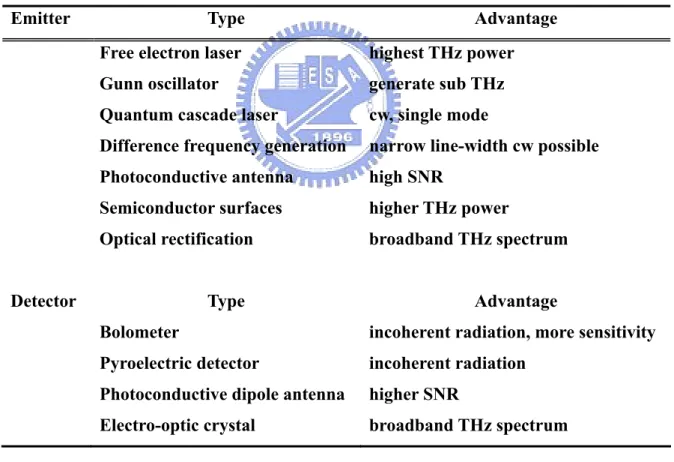
(29) pulsed THz wave, called terahertz time-domain spectroscopy (THz-TDS), has been developed, by taking advantage of short pulses of broadband THz radiation. THz-TDS has the time resolution of sub-picosecond level and the spectral resolution of 50 GHz. The ability of THz-TDS to measure both real and imaginary parts of the dielectric function in real time has made it a promising method to investigate the materials at THz frequencies. The development and spread of THz sources and receiver advance the THz time-domain spectroscopy. Table 2-1 shows a list of common use of THz emitters and detectors. Furthermore, we will only consider table-top sources herein, i.e. sources one can have in one’s own lab. Such sources are nearly always based on femtosecond lasers in the visible or near-infrared.. Table 2-1 List of THz emitters and detectors and their advantage Emitter. Type Free electron laser. highest THz power. Gunn oscillator. generate sub THz. Quantum cascade laser. cw, single mode. Difference frequency generation. narrow line-width cw possible. Photoconductive antenna. high SNR. Semiconductor surfaces. higher THz power. Optical rectification. broadband THz spectrum. Detector. 2.2. Advantage. Type. Advantage. Bolometer. incoherent radiation, more sensitivity. Pyroelectric detector. incoherent radiation. Photoconductive dipole antenna. higher SNR. Electro-optic crystal. broadband THz spectrum. Overview of coherent mid-infrared generation Ultrashort pulses in the mid-infrared (MIR) spectral range (λ = 3–20 μm) provide. powerful tools to investigate the ultrafast dynamics of non-equilibrium excitations in condensed matter [7]. Recently, structural changes in molecules or molecular complexes - 13 -.
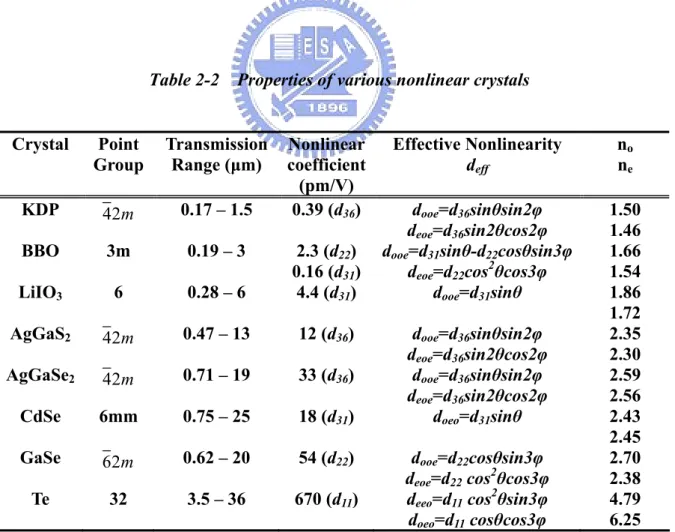
(30) were monitored directly in the time domain by means of the transient absorption of prominent molecular vibrations [8]. Vibrational dynamics and correlations in liquid water or in proteins have been successfully studied with femtosecond pulses in the MIR [9-12]. Femtosecond infrared spectroscopy has also been increasingly applied to problems in solid-state physics [13]. For instance, time-resolved investigations of the coherent [14] or incoherent [15] dynamics of intersubband excitations in semiconductor nanostructures have provided new insights that cannot be obtained by experiments based on interband transitions. Recently, the ultrafast dynamics of the electronic system in a high transition-temperature superconductor was investigated near the conductivity gap with femtosecond MIR pulses as a probe [16]. Such experiments increasingly call for sources that provide intense pulses on the micro-joule level with pulse durations of the order of 100 fs or less. In this temporal range tabletop laser systems based on parametric devices are superior to free-electron lasers, which typically provide much longer pulses and for which the realization of synchronized pulses at two different wavelengths is a difficult problem that involves additional high-power laser systems.. Table 2-2 Properties of various nonlinear crystals Crystal. Point Group. Transmission Range (μm). Nonlinear coefficient (pm/V) 0.39 (d36). KDP. 42m. 0.17 – 1.5. BBO. 3m. 0.19 – 3. LiIO3. 6. 0.28 – 6. 2.3 (d22) 0.16 (d31) 4.4 (d31). AgGaS2. 42m. 0.47 – 13. 12 (d36). AgGaSe2. 42m. 0.71 – 19. 33 (d36). CdSe. 6mm. 0.75 – 25. 18 (d31). GaSe. 62m. 0.62 – 20. 54 (d22). Te. 32. 3.5 – 36. 670 (d11). - 14 -. Effective Nonlinearity deff. no ne. dooe=d36sinθsin2φ deoe=d36sin2θcos2φ dooe=d31sinθ-d22cosθsin3φ deoe=d22cos2θcos3φ dooe=d31sinθ. 1.50 1.46 1.66 1.54 1.86 1.72 2.35 2.30 2.59 2.56 2.43 2.45 2.70 2.38 4.79 6.25. dooe=d36sinθsin2φ deoe=d36sin2θcos2φ dooe=d36sinθsin2φ deoe=d36sin2θcos2φ doeo=d31sinθ dooe=d22cosθsin3φ deoe=d22 cos2θcos3φ deeo=d11 cos2θsin3φ doeo=d11 cosθcos3φ.
(31) ※ Nonlinear coefficients and refractive indices are listed for λ=1 μm for KDP、BBO and LiIO3; and λ=10 μm for AgGaS2、AgGaSe2、CdSe、GaSe and Te. The indices of effective nonlinearity dabc denote the polarizations (o, ordinary; e, extraordinary) of phase-matched process a+b→c.. λ = 2–5 μm : Sources for this limited range are comparatively abundant. Such setups permit, for example, the generation of as much as 100 mW of 60–150 fs pulses from high repetition rate (80 MHz) parametric oscillators based on KNbO3 or KTiOAsO4 (KTA) crystals [17, 18]. At kilohertz repetition rates, parametric amplification in KTP provides equally short pulses down to ~70 fs duration with 200 nJ pulse energy in the 3–4 μm range [19]. Difference frequency mixing of signal and idler pulses in thin KTP or LiIO3 crystals generates 200 fs pulses tunable from 2.5 to 5 μm [20-23]. λ = 3–10 μm : This broader range necessitates use of nonlinear crystals with sufficient transparency. The limited number of possible materials includes AgGaS2 (see the Table 2-2) or ZnGeP2. Difference mixing of the output of an 82 MHz, two-color Ti: sapphire laser in AgGaS2 permitted the generation of 500 fs pulses tunable from 7.5 to 12.5 μm [24]. At low repetition rates, a ZnGeP2-based parametric amplifier produces 200 fs pulses (λ = 6 μm) tunable from 2.5 to 10 μm [25]. From amplified Ti: sapphire laser systems that deliver intense pulses at a 1 kHz repetition rate, 130 fs pulses tunable from 3 to 10 μm were generated by difference frequency mixing (DFM) pulses from an optical parametric amplifier (OPA) in AgGaS2 [26, 27]. λ = 10–20 μm : Generation of femtosecond pulses at wavelengths beyond 10 μm has barely been studied. Complex setups constructed from 80 MHz parametric oscillators and subsequent DFM in AgGaSe2 or GaSe deliver output powers of ≦2 mW in the 5–18 μm range [28, 29]. However, from such schemes that combine several nonlinear frequency-conversion stages and require high-power Ti: sapphire lasers (1–2 W) and synchronously pumped, stabilized external cavities, only pulse durations above 300 fs were demonstrated. Recently, some of the present authors and others demonstrated a compact scheme for the generation of pulses of typically ~150 fs duration in the spectral range from 7 to 20 μm at high repetition rates by parametric mixing within the broad spectra of 13 fs pulses from a 2 MHz cavity-dumped Ti: sapphire oscillator in GaSe [30]. Setups based on amplified systems allow for much higher pulse energies but typically produce even longer pulses. Bayanov et al. use the second harmonic of a 4 Hz, 7 mJ picosecond Nd: glass - 15 -.
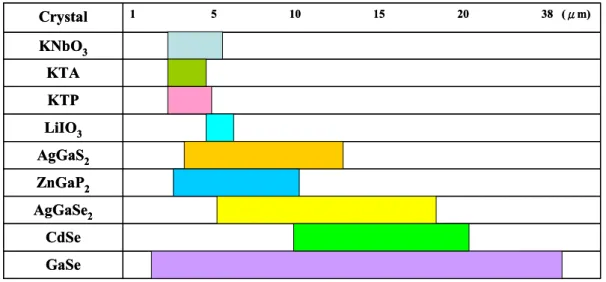
(32) amplifier to pump a three-path OPA [31]. By subsequent DFM in GaSe, pulses tunable from 4 to 20 μm and with energies of as much as 11 μJ with pulse duration 700 fs are generated. Other setups generate pulses of 1 ps [32] or 10 ps [33] duration. Recently, it was shown that non-phase-matched optical rectification of very short, ~10 fs Ti: sapphire pulses or optically switched high field transport in semiconductors can also provide higher-frequency components up to the MIR (λ>8 μm) range [34-37]. However, applications to nonlinear (e.g., pump–probe) spectroscopy with such an ultrabroadband (0–30 THz) source are rare because of the large spectral spread of group delay and diffractive properties and the very low (nanowatt) average powers. Nonlinear materials like AgGaSe2, GaSe and CdSe have been proven to be well suited in the considered wavelength range. Starting with intense but fixed-frequency radiation at 1 μm different conversion schemes depending on the pump system have been investigated. As GaSe allows for pumping at 1 μm efficient generation of MIR radiation is possible by parametric amplification of tunable near-IR (NIR) radiation delivered by dye lasers or parametric sources with tuning ranges up to 20 μm [31, 32, 38]. Kaindl et al. performed an intense mid-infrared light source that provides femtosecond pulses on a micro-joule energy level, broadly tunable in the 3–20 mm wavelength range [39]. The pulses are generated by phase-matched difference-frequency mixing in GaSe of near-infrared signal and idler pulses of a parametric device based on a 1 kHz Ti: sapphire amplifier system. Recently, Shi et al. demonstrated the phase-matched MIR generation in GaSe up to 28.7 μm by difference frequency mixing of a Nd:YAG laser (1.064 μm) and a tunable near NIR parametric source with nanosecond pulse duration [40]. A drawback of such a conversion scheme is the two-photon absorption (TPA) in GaSe still observable for high intensity radiation around 1 μm. Accordingly, pumping at longer wavelengths seems to be a reasonable choice. Therefore, several nonlinear optical crystals could be applied to generate the mid-infrared radiation through the difference frequency mixing technique. Figure 2-2 represents the yielded frequency ranges for several common used NLO crystals in the experiments for mid-infrared generation. It is obviously shown that GaSe crystal possesses the promising property which can cover widest generated mid-infrared frequency range compared with other crystals.. - 16 -.
數據
+7
Outline
Organization of thesis
Detection by electro-optical sampling
Summary
Parametric gain and output power calculation
THz coherent superposition and spectral synthesis by multiple stages of optical
Pump power and absorption dependence of the THz wave output
Pump depleted gain prediction by taking account of the linear and nonlinear
相關文件
Teachers may consider the school’s aims and conditions or even the language environment to select the most appropriate approach according to students’ need and ability; or develop
LEARN CARDS WRITE MATCH TEST... How students make use
- Informants: Principal, Vice-principals, curriculum leaders, English teachers, content subject teachers, students, parents.. - 12 cases could be categorised into 3 types, based
Wang, Solving pseudomonotone variational inequalities and pseudocon- vex optimization problems using the projection neural network, IEEE Transactions on Neural Networks 17
Hope theory: A member of the positive psychology family. Lopez (Eds.), Handbook of positive
Define instead the imaginary.. potential, magnetic field, lattice…) Dirac-BdG Hamiltonian:. with small, and matrix
Microphone and 600 ohm line conduits shall be mechanically and electrically connected to receptacle boxes and electrically grounded to the audio system ground point.. Lines in
Given a graph and a set of p sources, the problem of finding the minimum routing cost spanning tree (MRCT) is NP-hard for any constant p > 1 [9].. When p = 1, i.e., there is only
