Wei-Lin
Wu, Chih-Hsiung
1#
; Ho, Yuan-Soon
2
.
1#
Department of Surgery, School of Medicine, Taipei Medical University and Hospital, Taipei,
2Graduate Institute of Biomedical Technology, Taipei Medical University, Taipei, Taiwan, R.O.C.
Studies on the molecular mechanisms of nicotinic receptors-mediated
carcinogenic effects in human breast cancer cells
Studies on the molecular mechanisms of nicotinic receptors-mediated
carcinogenic effects in human breast cancer cells
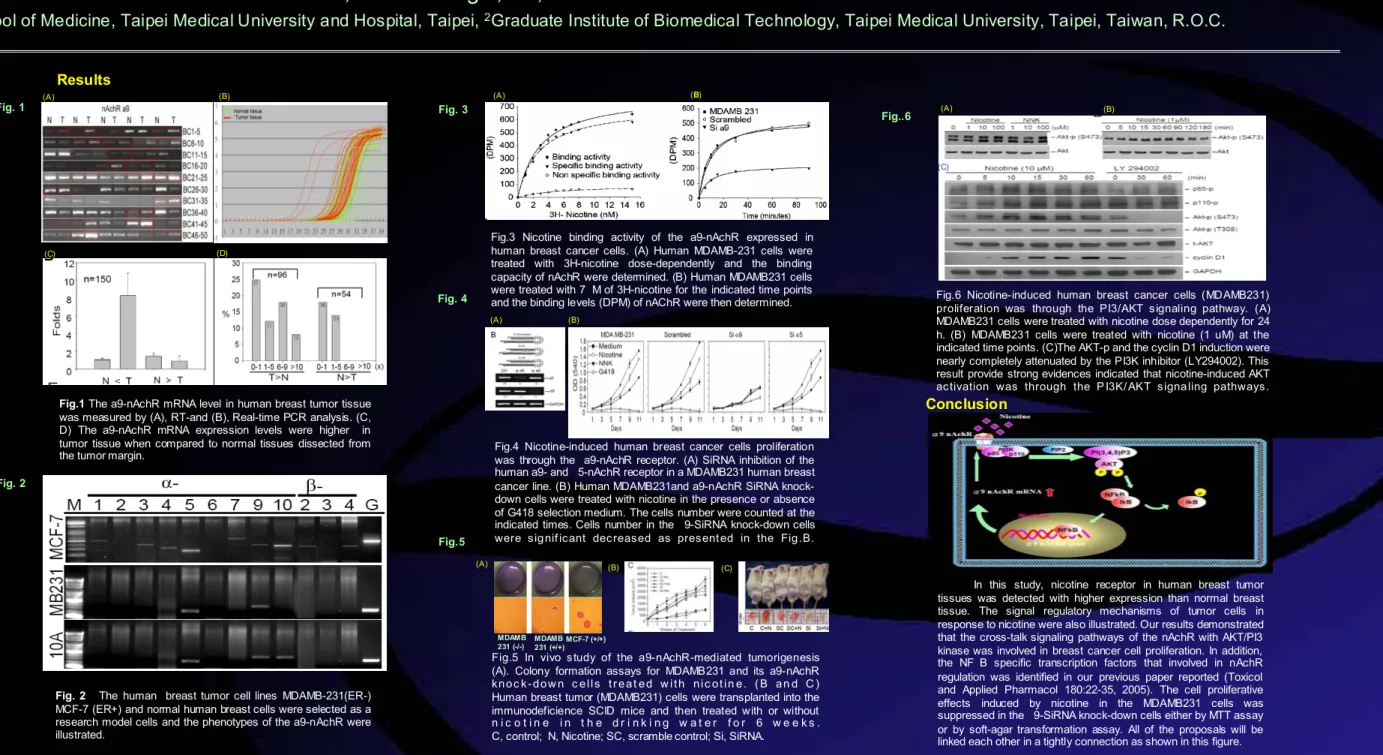
Fig.1 The a9-nAchR mRNA level in human breast tumor tissue
was measured by (A), RT-and (B), Real-time PCR analysis. (C, D) The a9-nAchR mRNA expression levels were higher in tumor tissue when compared to normal tissues dissected from the tumor margin.
Tobacco-smoking is one of the well understanding carcinogenic factors involved in breast cancer formation. In this study, we first demonstrated that the several types of nicotinic acetylcholine receptors (nAchRs) were detected in breast cancer cell lines including MCF-7 and MDA-MB-231. The expression of the nAchR mRNA levels in tumor tissues from 157 cases of breast cancer patients in Taiwan were determined and found that the α5, α9 and α10 subunits of the nAchRs were the most prevalence in both normal and tumor tissue. Quantitative assays of the nAchRs mRNA levels was performed by real-time PCR analysis which revealed that the expression levels of 9-nAchR was higher in most of the tumor tissue when compared to the normal tissues which dissected form the tumor margin. The receptor binding activity assay was performed and demonstrated that 9-nAchR significant binding to its ligand (nicotine) in a concentration as low as 7 M and reached the maximal level as soon as 60 minutes. The 9-nAchR expression in breast cancer cells was knock-downed by SiRNA technique and demonstrated that Akt-p (ser473) signaling regulatory pathways play an important role in nicotine-mediated breast cancer cells proliferation. We further demonstrated that the -9-nAchR expression was significant upregulated in the promoter level by nicotine and sex hormone (estradiol, E2) as evidenced by luciferase reporter assay. Our results further demonstrated that E2-mediated nAchR expression was through activation of the estrogen receptor (ER) as demonstrated by chromatin immunoprecipitation analysis. In vivo study was performed by nude mice model and demonstrated that the 9-nAchR-mediated cancer cell proliferation may play a major role in response to nicotine-induced breast tumor formation. Such results implied that 9-nAchR and its cooperative role with sex hormone (such as E2) may be significant in nicotine-mediated breast tumor carcinogenesis.
Previous epidemiological studies indicated that tobacco-smoking and hormone are two major suspected carcinogenic factors that involved in breast cancer carcinogenesis. Our recent report (Toxicology and Applied Pharmacology, 2005) indicated that specific binding of nicotine to the nicotinic acetylcholine receptor (nAchRs) in lung epithelial cells by activation of the cyclin D1 promoter through the NF B signaling proteins to induced cell proliferation. To further investigate the tobacco smoking habits and its correlations of hormone effects on breast tumor formation, we suggested that the nAchR will be involved the hormone-mediated carcinogenic effects identified in the breast tumor.
In this study, nicotine receptor in human breast tumor tissues was detected with higher expression than normal breast tissue. The signal regulatory mechanisms of tumor cells in response to nicotine were also illustrated. Our results demonstrated that the cross-talk signaling pathways of the nAchR with AKT/PI3 kinase was involved in breast cancer cell proliferation. In addition, the NF B specific transcription factors that involved in nAchR regulation was identified in our previous paper reported (Toxicol and Applied Pharmacol 180:22-35, 2005). The cell proliferative effects induced by nicotine in the MDAMB231 cells was suppressed in the 9-SiRNA knock-down cells either by MTT assay or by soft-agar transformation assay. All of the proposals will be linked each other in a tightly connection as shown in this figure. Fig.3 Nicotine binding activity of the a9-nAchR expressed in
human breast cancer cells. (A) Human MDAMB-231 cells were treated with 3H-nicotine dose-dependently and the binding capacity of nAchR were determined. (B) Human MDAMB231 cells were treated with 7 M of 3H-nicotine for the indicated time points and the binding levels (DPM) of nAChR were then determined.
Conclusion
Abstract
Introduction
Fig. 2 The human breast tumor cell lines MDAMB-231(ER-) MCF-7 (ER+) and normal human breast cells were selected as a research model cells and the phenotypes of the a9-nAchR were illustrated.
Fig.6 Nicotine-induced human breast cancer cells (MDAMB231) proliferation was through the PI3/AKT signaling pathway. (A) MDAMB231 cells were treated with nicotine dose dependently for 24 h. (B) MDAMB231 cells were treated with nicotine (1 uM) at the indicated time points. (C)The AKT-p and the cyclin D1 induction were nearly completely attenuated by the PI3K inhibitor (LY294002). This result provide strong evidences indicated that nicotine-induced AKT activation was through the P I3K/ AKT signaling pathways.
Fig. 2
(A) (B)
(C) Fig. 1
Fig.4 Nicotine-induced human breast cancer cells proliferation was through the a9-nAchR receptor. (A) SiRNA inhibition of the human a9- and 5-nAchR receptor in a MDAMB231 human breast cancer line. (B) Human MDAMB231and a9-nAchR SiRNA knock-down cells were treated with nicotine in the presence or absence of G418 selection medium. The cells number were counted at the indicated times. Cells number in the 9-SiRNA knock-down cells were signif icant decreased as present ed in the Fig.B.
Fig.5 In vivo study of the a9-nAchR-mediated tumorigenesis (A). Colony formation assays for MDAMB231 and its a9-nAchR knoc k- dow n c ells t r eat ed w it h nic ot in e. ( B an d C ) Human breast tumor (MDAMB231) cells were transplanted into the immunodeficience SCID mice and then treated with or without n i c o t i n e i n t h e d r i n k i n g w a t e r f o r 6 w e e k s . C, control; N, Nicotine; SC, scramble control; Si, SiRNA.
Fig. 3 Fig. 4 Fig.5 Fig..6