行政院國家科學委員會專題研究計畫 成果報告
肌腱與韌帶的組織工程 - 以間質母細胞、生物反應爐、與
力學刺激之統合研究
計畫類別: 個別型計畫 計畫編號: NSC91-2314-B-039-023- 執行期間: 91 年 08 月 01 日至 93 年 01 月 31 日 執行單位: 中國醫藥大學中醫學系 計畫主持人: 曾國峰 計畫參與人員: 許晉榮,許弘昌,張景明 報告類型: 精簡報告 處理方式: 本計畫可公開查詢中 華 民 國 93 年 8 月 30 日
行政院國家科學委員會補助專題研究計畫 X 成果報告
肌腱與韌帶的組織工程-以間質幹細胞、生物反應爐、與力
學刺激之統合研究: 第一年成果報告
計畫類別:X 個別型計畫 □ 整合型計畫
計畫編號:
NSC91- 2314- B- 039- 023
執行期間:
91 年 8 月 1 日至 93 年 1 月 31 日
計畫主持人:
曾國峰
共同主持人:
計畫參與人員:許晉榮,許弘昌,張景明。
成果報告類型(依經費核定清單規定繳交):X 精簡報告 □完整報告
本成果報告包括以下應繳交之附件:
□赴國外出差或研習心得報告一份
□赴大陸地區出差或研習心得報告一份
□出席國際學術會議心得報告及發表之論文各一份
□國際合作研究計畫國外研究報告書一份
處理方式:除產學合作研究計畫、提升產業技術及人才培育研究計畫、
列管計畫及下列情形者外,得立即公開查詢
□涉及專利或其他智慧財產權,□一年□二年後可公開查詢
執行單位:
中國醫藥大學中醫學系
中 華 民 國 93 年 8 月 27 日
行政院國家科學委員會專題研究計畫成果報告
肌腱與韌帶的組織工程-以間質幹細胞、生物反應爐
、與力學刺激之統合研究:第二年成果報告
Tissue Engineering of Tendons and Ligaments – An
Approach using Mesenchymal Stem Cells, Bioreactors, and
Mechanical Stimulation
計畫編號:NSC91-2314-B-039-023
執行期間:91 年 8 月 1 日至 93 年 1 月 31 日
主持人:曾國峰 中國醫藥大學中醫學系
一、中文摘要 韌帶與肌腱是人體肌肉骨骼系統中兩種非常重 要的組織,它們的主要功能在於力量的傳導、引 向與拮抗等。在臨床領域中,韌帶與肌腱的傷害 相當常見,而臨床上吾人也有許多治療的方式。 以韌帶受傷而言,直接修補斷裂的韌帶通常造成 不佳之結果,所以臨床上我們通常需要以肌腱或 其他人造物質來增強修補或是予以重建,但修補 或重建後之結果並非很令人滿意。肌腱受傷,包 括有撕裂傷,斷裂或是慢性的受傷,也是在臨床 上非常常見之傷害。臨床上僅有急性的肌腱撕裂 傷或是斷裂,在修補後才有較佳之結果。慢性或 是未治療之肌腱斷裂在修補後之結果常是留有 許多後遺症。由於有這些不甚理想之臨床結果, 以組織工程之方式來製造新的韌帶或是肌腱似 乎是一個最佳的選擇,因為所製造出的新韌帶或 肌腱將是自體產生的,沒有免疫排斥問題。 在此計畫中我們提出了一個兩年計畫,運用 多學門的結合來製造新韌帶以供臨床使用。此 一計畫主要是延續吾人過去兩年以間質母細胞 來修補填充巨大骨骼缺損之研究,將之延伸至 韌帶與肌腱。吾人的假說是間質母細胞在主要 伸長力學刺激下會被導引入韌帶與肌腱此一 cell Lineage 的路線。吾人利用間質幹細胞培 養技術,生物培養反應爐,以 PGA 聚合物組成 組織架構,以及不同的 Tensile 力學刺激來進 行此一研究計畫。此一成果報告敘述第二年計 畫之成果,主要在於同時以生物培養反應爐及 伸長力學刺激對於 PGA 聚合物組織架構的組成 與間質幹細胞之繁衍與分化能力,更進一步探 討所製造之 Bio-Tendon 在組織學與生物力學 上之結果。 關鍵詞:間質幹細胞,力學,細胞分化及增生, 韌帶與肌腱,生物力學。 英文摘要Abstract
Ligaments and tendons are two very important
tissues of the musculoskeletal system. Their primary functions are force transmission, direction, and resistance. Injuries to the ligaments and tendons are quite frequent in clinical settings, and there are many options in treatment. For ligament injuries, direct repair often yield poor results. Thus augmentation with graft or reconstruction with tendons is often required. Tendon injuries, including severance and chronic tear/rupture, are also common clinically. Only acute repair of the severed tendons has good clinical results. Chronic and neglected tears of the tendons are often with unsatisfactory results following repair. Thus tissue engineering of the ligaments and tendons appears to be an excellent choice for repair and regeneration of new ligaments and tendons for clinical use in that the newly engineered tissues will be autologous with no immune response and reaction. Following our previous experience with bone marrow-derived mesenchymal stem cells (MSCs) in filling and repairing bone defects, we are extending the study into ligaments and tendons. The hypothesis is that with principal tensile mechanical stimulation, the MSCs will be directed into the lineage toward formation of ligaments and tendons. An integrated approach using MSC-based techniques, tissue bioreactors, tissue scaffolds using PGA polymers, and different tensile stimulation is proposed. This proposal is formed into a two-year project. In this report, we forwarded the results of using the specifically-designed tissue bioreactor to manufacture newly engineered tendons and ligaments. The histological and biomechanical results of the newly engineered tendons and ligaments are presented and their clinical implications discussed.
Keywords: Mesenchymal stem cells, BioMechanics,
Differentiation and Proliferation, tendons, ligaments.
二、緣由與目的 (Introduction & Purpose)
Tendons and ligaments are two very important structures of the musculoskeletal system, with major functions of force transmission, direction/re-direction and force resistance. Proper function of the locomotion as well as refined movement of the humans and animals requires both integral structure and proper function of the tendons and ligaments.
Ligaments are short bands of tough but flexible fibrous connective tissue that bind the bones of the body together and support the organs in place. Anatomically, ligaments are composed of fibers arranged in a spirally wound pattern. Depending on the location and the function, ligaments are found in the forms of cords, bands or in bundles. As tendons, a hierarchical structure is found in ligaments. Also like tendons, a crimp appearance is found in ligaments. Biochemically, ligaments have similar compositions as tendons, with over 90% of type I collagen and less than 10% of type III collagen fibers. The mechanical functions of ligaments are several folds: (1) maintain normal joint kinematics; (2) provide passive joint stability; and (3) take part in normal joint proprioception. The mechanical properties of ligaments depend on several factors, including age, location, strain rate, and its viscoelastic behaviors. For example, the human anterior cruciate ligament (ACL) has a typical failure strength of 50 to 150 MPa and a failure strain ranging from 12% to 15%, depending on the testing conditions.
Injury to the tendons and ligaments is not
uncommon in humans. In the United States only, at least 120,000 patients per year undergo tendon or ligament repairs. The number of anterior cruciate ligament (ACL) reconstruction using autografts or allografts was estimated to be about 30,000 per year in the US. The incidence of tendon injuries, owing to degeneration, avulsion, and severance/laceration are also high. Similarly, the incidence of tendon and ligament injuries in Taiwan was also high, with an estimated number of 1,200 ACL reconstruction procedures performed yearly alone.
To date, repair of acute tendon laceration or severance provides some marginally satisfactory results. Repair of chronic or neglected tendon rupture, however, often results in re-rupture or severe impairment of the injured limb’s function. Reconstruction of severely damaged tendons has thus taken three directions: the use of devices to prevent scar formation, the implantation of implants to enhance pseudosheath formation before tendon grafting, and the use of artificial tendon substitutes to bridge tendon grafts. To achieve these goals, tendon substitutes, including Teflon®, Gor-Tex®, nylon, Dacron®, silicon and others, were used. All but silicon tubes result in disastrous and detrimental results in tendon repair.6 Numerous surgical techniques were also devised to enhance repair of injured tendon. Despite these therapeutic options, the results for chronic tendon repair are often un-satisfactory both for surgeons and patients.6
Ligament injuries are the most common injuries to joints in general and to the knee in particular, accounting for 25% to 40% of all knee injuries in most studies. Due to the poor results of repairing torn ligaments, reconstruction of the ACL with either augmentation or primary
substitution is the mainstay therapeutic option at present. Although reconstruction of the ACL using patellar tendon autograft provides a satisfactory short-term outcome, long-term results are often less satisfactory with complications such as re-rupture, loosening and ligamentation of the tendon.
With the high incidence of tendon and ligament injuries as well as poor long-term clinical results after repair or reconstruction, the need for bioengineered tendons and ligaments is important and crucial. Within the last few years, attempts were made to discover new biocompatible materials for ligament and tendon replacement. Newly regenerated tendons and ligaments are probably the best choice for reconstruction of tendon and ligament injuries, in that they are autologous and that, giving appropriate stimulation, they will probably possess the same biochemical and biomechanical functions as the original tissues.
Over the past few years, several approaches are proposed to produce tissue-engineered ligaments and tendons both in vitro and in vivo. However, the development of these approaches always involves the use of biocompatible and, preferably, biodegradable materials that can (1) provide mechanical resistance, and (2) can be colonized and reorganized by living cells in vitro or in situ post-grafting. Collagen fiber matrices are the most commonly used biomaterial for tissue engineering of tendons and ligaments. With its high tensile strength (30-60 MPa) and small diameter, cross-linked collagen prostheses appeared to be a good biomaterial for reconstruction of ACL, at least in rabbits. However, the absence of living cells in the prostheses make it a basic requirement that the biocompatible collagen prostheses need to be
replaced and remodeled in vivo by fibroblasts and other stem cells. One approach using cultured fibroblasts incorporated into collagen matrices are yet another option for tissue engineering of tendons and ligaments. The major advantage of co-culture of fibroblasts with collagen matrices is that, with cultivation of the fibroblasts the collagen matrices will be able to produce collagen for the regeneration of new tendons and ligaments. The newly bioengineered tissues, however, lacked the strengths and characteristic histological pattern of normal ligaments or tendons. Furthermore, the insertions of ligaments and tendons to bone remained a weak point during reconstruction and repair. Several factors may have contributed to these disadvantages. First, the biomaterials used were probably not the most suitable ones for tissue engineering of ligaments and tendons. Secondly, co-culture of fibroblasts may have less than optimal effects in re-engineering tendons/ligaments and their insertions to bone. Thirdly, the culture conditions were probably not optimal in regenerating new tissues. And finally, proper mechanical stimulation was absent for excellent regeneration and remodeling of tendons and ligaments.
The hypothesis of this proposal is that tissue engineering of tendons and ligaments require a proper integration of mesenchymal stem cell-based technology, tissue bio-reactor cultivation, proper mechanical stimulation and appropriate biomaterials. We proposed to use marrow-derived mesenchymal stem cells as the cells to differentiate and proliferate cells responsible for production and fabricating new tissues, PLA and/or PGA based matrices as the scaffolds, tissue bio-reactor techniques as the cultivation reservoir, and finally simultaneous mechanical stimulation to engineer
new tendons and ligaments. A two-year integrated project proposal is forwarded to investigate the possible tissue engineering of tendons and ligaments.
Bioreactors are closed system that can continuously supply nutrients and automatically control tissue culture parameters according to the changing needs of the growing tissue construct. Numerous investigators have successfully cultured and bioengineered cartilage explants in bioreactors. The major advantages of bioreactors are that they can continuously supply nutrients and apply mechanical or other biophysical stimulations at the same time. With appropriate mechanical stimulation, for example shearing, tissue constructs grown in tissue reactors are found to be able to resemble natural cartilage. Our hypothesis is that even with good tissue culture techniques, excellent bioengineered tendons and ligaments will not be formed without proper mechanical stimulation. For a tendon or ligament to be properly regenerated and remodeled to be with specific histological patterns and with mechanical integrity, continuous or intermittent tensile and/or torsional stress is necessary.
For the tissue constructs to be able to transform into new ligaments, a biodegradable matrix scaffold is also necessary. Among numerous biodegradable materials, including type I collagen, gelatin, chitosan, PGA, PLA, PCL, used in orthopaedics and research settings, Poly-Glycolic Acid (PGA), Poly-Lactic Acid (PLA), and their co-polymers appear to be a good choice for tissue scaffold for tissue engineering of ligaments and tendons. PGA has a high melting point and low solubility in organic solvents. Due to its hydrophilic nature, surgical sutures made from PGA polymers (e.g. Vicryl) tend to lose
their mechanical strength more rapidly, typically over a period of 4 to 6 weeks post-implantation. PLA is more hydrophobic than PGA, hence a lower backbone breakdown rate than PGA. The period for sutures made from PLA polymers range from 8 to 12 weeks. A pilot study from our laboratory showed that it took at least two to four weeks to have the MSCs generate enough cells and extra-cellular matrices for the newly engineered ligaments. Therefore, we’ll be using both PGA polymers and PLA-PGA polymers to serve as the scaffold for tissue engineering of the ligaments.
In the principal investigator’s previous articles, the relationship between skeletal tissue differentiation/proliferation and mechanical stimulation was proposed according to Carter’s mechanobiology view. Our previous results in mice and rabbits have shown that with principal compression strain history, skeletal tissue was directed into the lineage of bone, either cancellous or cortical bone, while, with shearing stress, cartilage (at least fibrocartilage) was formed in mice. These results provide some valid verifications that Carter’s view of mechanobiology was fundamentally correct, at least in terms of bone and cartilage differentiation and proliferation. In this study, we are furthering our previous studies and extending into ligaments and tendons. As proposed by Carter et al. and revised in our previous articles, our hypothesis is that for proper differentiation and proliferation of tendons and ligaments to occur, a principal tensile strain (or stress) history must be present during the differentiation and proliferation processes of the mesenchymal stem cells. The pattern of tensile strain history needs to be validated further in this study.
combination of MSC cultivation, bioreactor tissue culture system and appropriate mechanical stimulation to engineer new ligaments and tendons for possible clinical application. The global hypotheses are: (1) Bone marrow mesenchymal stem cells have the potential to differentiate into tenocytes and/or fibroblasts that are responsible for regenerating new tendons and ligaments; (2) A proper scaffold, when embedded with MSC’s, and subjected to intermittent tensile stimulation, will be engineered into normal tendons and/or ligaments; (3) Custom-made bioreactors will be able to greatly facilitate the tissue engineering of the tendons and ligaments. The purposes of this proposal are thus: (1) further evaluate the possibility of directing MSCs into the tendon/ligament lineage; (2) test the possibility of using bioreactor and mechanical stimulation simultaneously to engineer new tendons and ligaments; (3) test the theory of mechanobiology as forwarded by Pauwels and Carter.
三、研究方法 (Material and Methods)
The major purpose of the second-year project is to use the custom-made bioreactors specifically designed for the purpose of the study, using appropriate culture conditions and flow rates of the culture medium to optimize the culture of the tissue constructs in the bioreactors, and to use continuous tensile stimulation to engineer new tendons and ligaments.
(1) Isolation and cultivation of Human
Mesenchymal Stem Cells (hMSCs):
Human subjects were derived from 12 young male individuals who were admitted for lumbar discectomy. Before operation and harvest of the bone marrow, informed consent was obtained from the patients. Withdrawal of about
20 to 30 ml of bone marrow from the posterior superior iliac spine was then done simultaneously at the time of the operation under general anesthesia. At the time of withdrawal of bone marrow, 2 ml of heparin were added into the syringe to prevent clotting. Further isolation of the adherent MSCs was performed according to the protocols stated previously. Briefly, the isolation of the hMSCs involves (1) adding 2 ml of PBS solution into 10 ml of heparinized bone marrow, (2) centrifuging the mixed solution at 3000 rpm for ten minutes under 25 degrees Celsius, and (3) removing the supernatants with pipets. Then mix the remaining solution with another 5 ml of PBS solution, add 5 ml of Percoll (1.073 g/ml, 95%) via pipets carefully toward the bottom of the test tubes, and centrifuge once again at 25°C at 3000 rpm for ten minutes. Remove the interface layer to another test tube, add another 5 ml of PBS solution, mix thoroughly, centrifuge at 25°C at 3000 rpm for ten minutes, and then remove the supernatant. The remaining solution was then added with 5 ml of DMEM medium containing 10% fetal bovine serum. Cell density was then counted and the cells diluted to the density of 106/ml, ready for tissue construct culture.
The isolated MSCs were further culture expanded by changing DMEM medium with 10% FBS every other day, and the cells will be culture-expanded to a density about of 107/ml. The cells are then ready for tissue embedding and culture in the bioreactor.
(2) Design and Fabrication of Tissue Culture BioReactors:
Bioreactors can provide mixing which significantly improved the yield and spatial uniformity of cell seeding, and increased the rates
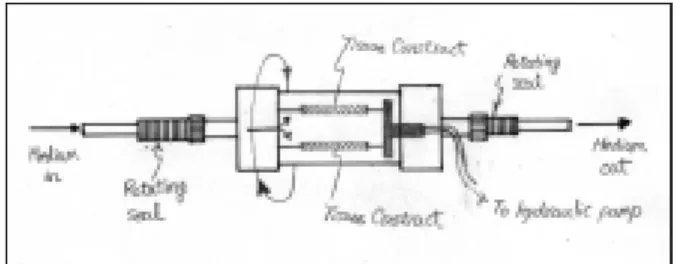
of cell proliferation and tissue regeneration. They have been used in culture of the cartilage growth and the results were better than the traditional culture methods. Based on the design used by Freed and Vynjak-Novakovic,5 We have modified and re-designed a custom-made bioreactor which will serve as the culture bioreactor for this current study. The major difference between Freed’s design and our design lies in the fact that a tensile-conpression actuator was attached to the ends of the bioreactor, providing a tensile strain on the tissue constructs in the bioreactor (Figures 1 & 2). Culture media can be infused into the bioreactor via the inlet and exit via the outlet, and the flow rate can be adjusted. Every bioreactor can harvest one tissue construct at one time.
Figure 1. Draft Design for the custom-made bioreactor
Figure 2. Custom-made Bio-tendon Bioreactors
(3) Tissue Culture Constructs:
For the tissue constructs to be able to transform into new ligaments, a biodegradable matrix scaffold is necessary. Among numerous biodegradable materials, including type I collagen, gelatin, chitosan, PGA, PLA, PCL, used in
orthopaedics and research settings, poly(glycolic acid) (PGA), Poly(Lactic Acid) (PLA), and their co-polymers appear to be a good choice for tissue scaffold for tissue engineering of ligaments and tendons. PGA has a high melting point and low solubility in organic solvents. Due to its hydrophilic nature, surgical sutures made from PGA polymers tend to lose their mechanical strength more rapidly, typically over a period of 4 to 6 weeks post-implantation.8,9 PLA is more hydrophobic than PGA, hence a lower backbone breakdown rate than PGA. The period for sutures made from PLA polymers range from 8 to 12 weeks.8, 9 A pilot study from our laboratory showed that it took at least two weeks to have the MSCs generate enough cells and extra-cellular matrices for the newly engineered ligaments. Therefore, we’ll be using both PGA polymers and PLA-PGA polymers (e.g. Vicryl) to serve as the scaffold for tissue engineering of the ligaments.
There are numerous methods of fabricating polymer scaffolds: fiber bonding, solvent casting, particulate leaching, membrane lamination, and melt molding. For a polymer that can be used as a scaffold for tissue engineering purpose, the polymer has to be biocompatible, biodegradable, and with a certain amount of mechanical integrity to withstand mechanical stimulation. Vicryl sutures have been used extensively in surgery to close wound and repair numerous tissues. It has a failure stress of about 50 to 100 MPa and an ultimate strain of about 2% at initial implantation. Degradation of the Vicryl to a failure stress less than 30 MPa takes about four to six weeks in vivo, and complete resorption of the material takes approximately three months. With its initial mechanical strength and long degradation time, Vicryl is a suitable material for the scaffold used
in this study. Two patterns of ligament scaffolds were fabricated. The first one is made with the technique of melt molding to produce a 3-dimentional ACL PGA polymer construct (8x8x35 mm in size) with a porosity of about 96%, a bulk density of about 50 g/cm3, and a strength of about 100 MPa. The constructs were sterilized with ethylene oxide. The second scaffold construct was made directly using Vicryl sutures,
by weaving 1-O Vicryl sutures into a
3-dimentional construct with the shape similar to human ACL (8x8x35 mm in size).
(4) Tissue Culture & Tensile Stimulation
Conditions in the Bioreactors:
Prior to cell seeding, the scaffolds were pre-wetted in culture medium, clamped at both ends to specially designed soft tissue grips, positioned to zero tensile strain ( no tensile strain will be applied onto the scaffolds), and fixed onto the graspers in the bioreactors (Figure 3). The bioreactors were then filled with 150 ml of culture medium and placed in a humidified 370C/5% CO2 incubator for 8-12 hours prior to cell inoculation. The scaffolds are then seeded and inoculated with the previously culture-expanded MSCs for 24 hours to allow for proper MSC seeding onto the PGA scaffolds.
The scaffolds were then subjected to a sinusoidal tensile stimulation from -2% to +2% ultimate strain at a 20-minute duration three times a day. Continual supply of the culture medium was given via the fluid influx inlet at a flow rate of 2 to 3 ml/min (Figure 3). The scaffolds are then sampled at timed intervals of 3, 7, 14, and 21 days for further analysis.
Figure 3. PGA Polymer Scaffold in the Bioreactor under Tensile Stimulation
(5) Histological Analysis:
Cultured and tension-stimulated scaffolds were then fixed with 70% alcohol solution, and embedded in glycol methecrylate (GMA) plastic materials. Four-µm thick longitudinal sections were stained with H-E and trichrome de Masson methods. Histomorphometric methods were used to examine the scaffold’s microscopic pattern. Parameters analyzed are gross histology, relative cellularity, presence of Type I and Type III collagen fibers via in situ hybridization.
(6) Biomechanical Analysis:
Tissue engineered scaffolds were then subjected to a mechanical test to failure using Instron 5543 materials testing machine (Instron Corp., Canton, MA). The testing conditions were: strain rate-controlled (0.5% per second) to failure. A typical loading graph is shown here:
四、結果 (RESULTS)
Two conference abstracts were published over the past two years and the results are shown here: I. The Effects of Different Culture Systems on the Cultivation of Mesenchymal Stem Cells: (Published in the Annual Meeting of Taiwanese Orthopaedic Association, 2002)
Introduction: MSC’s, with a great capacity of self-renewal, can give rise to cells that can differentiate into different mesenchymal cell lineages, including osteoblasts, chondrocytes, myoblasts and adipocytes, depending on various biochemical and biomechanical influences. With its great potentials in the tissue engineering of the musculoskeletal tissues, researchers have searched for the optimal methods to isolate and cultivate the MSC’s. In this study, we have sought to compare three different kinds of cultivation methods in order to find out the optimal method for cultivation of the MSC’s, especially in large tissue culture systems. A novel culture system, TideTissue® bioreactor, was used and compared with traditional spinner flask culture system as well as the static culture system.
Materials and methods: Human bone marrow was cultured in α-MEM containing 10 % FBS and antibiotics. Cells were grown in a 5 % CO2, 95 % relative humidity incubator at 37 , and culture ℃ media was changed every 3 days. Upon near confluence, cells were rinsed twice with PBS, lifted with trypsin/EDTA, concentrated by centrifugation at 1500 rpm for 5 min, and seeded into scaffolds after properly adjusting for cell density. Scaffold preparation: “FibraCel”, non-woven dressing scaffolds made by PET, was
used for culture scaffolds. One hundred FibraCel disks were placed in a mesh basket as one unit (scaffold volume: 3 cm3/unit). Cell Seeding: FibraCel scaffolds were seeded with MSC’s in spinner flasks under well-mixed conditions. Scaffolds were threaded with cotton line from the middle and sidearm, and stood 1 cm apart from the stirring bar. The spinner flask was filled with 210 ml of culture medium with medium level to just submerge the scaffolds. The concentration of seeded cells per scaffold volume was adjusted to around 5×10⁵ cells/cm3. Flasks were placed in a incubator for 18 hrs with the sidearm caps loosened to permit gas exchange. After 18 hrs of cell adhesion, these scaffolds were divided into three groups for three different culture systems, namely, a static system, a spinner flask and a TideTissue® bioreactor. We added osteogenesis stimulants (50µg/ml of Ascorbic acid, 10-mM Na β-GP, & 10nM of dexamethasone) on the day third to induce osteogenesis. Through one month of cultivation, analyses were performed as below: cells activities by MTT assay and alkaline phosphatase assay; DNA contents by the fluorescent Hoechst 33258 dye; Cultured medium glucose and lactate by enzymatic reaction (Sigma kit #315,735); Calcium deposition in MSCs culture by Sigma kit #587. Cultured scaffolds were fixed, embedded, cross-sectioned, stained and observed microscopically. Osteocalcin expression was detected by Gla-type Osteocalcin EIA Kit. Results and Discussion: Glucose concentration in the medium reduced as cells propagated during culture period. Furthermore, the glucose was
consumed more intensely in TideTissue®
represented that more cells were replicated in the TideTissue® bioreactor is than the static and spinner cultures. Alkaline phosphatase activity content per scaffold was showed in fig 2. At 2 weeks in culture, ALP activity of seeded scaffold in the TideTissue® bioreactor was slightly higher than static culture; at 3 weeks, it demonstrated statistically grater activity per scaffold as compared to the spinner-flask and static system. From histological sections, cells were observed fewer in static state culture system and were only grown on the perimeter of scaffolds. Huge amounts of cells were found in the TideTissue® bioreactor cultured samples. According to these results, the TideTissue® bioreactor could expend cells more efficiently than the other two systems, but the mineralization schedule (from Ca2+ assay, not shown) may be delayed than that in the spinner flask and petri dish culture systems.
Conclusion: In this study three different culture systems were examined for their ability to promote growth and osteoblastic function of cells seeded in nonwoven scaffolds. Although the induction stage in osteo-progenitor lineage is not quite the same in the three systems, this study still revealed that the TideTissue, utilizing fluid flow, might be an better and more effective culture system for Mesenchymal stem cell culture in vitro.
0 5 10 15 20 25 30 -1000 -800 -600 -400 -200 0 Static culture Spiner-flask TideTissue Gl u cos e d ecrem en t ( m g)
Culture period (day)
0 5 10 15 20 25 30 -1000 -800 -600 -400 -200 0 Static culture Spiner-flask TideTissue Static culture Spiner-flask TideTissue Static culture Spiner-flask TideTissue Gl u cos e d ecrem en t ( m g)
Culture period (day) Figure 1
8 12 16 20 24 28 0.0 0.5 1.0 1.5 2.0 2.5 3.0 3.5 4.0 4.5 Static culture Spinner flask TideTissue AL P O D 56 0 n m / p lat e
Culture period (day)
8 12 16 20 24 28 0.0 0.5 1.0 1.5 2.0 2.5 3.0 3.5 4.0 4.5 Static culture Spinner flask TideTissue AL P O D 56 0 n m / p lat e 8 12 16 20 24 28 0.0 0.5 1.0 1.5 2.0 2.5 3.0 3.5 4.0 4.5 Static culture Spinner flask TideTissue AL P O D 56 0 n m / p lat e
12 II. The Number and Regenerative Capacity of Bone Marrow-Derived Mesenchymal Stem Cells Decreased with Age in Human. An Implication for Osteoporosis Treatment. (Published in the Annual Meeting of Taiwanese
Orthopaedic Association, 2003)
Introduction: Osteoporosis, both senile and post-menopausal, is a significant public health problem affecting the elderly population. An imbalance between bone formation and bone remodeling has been implicated for the cause of osteoporosis. With the advents in bone cell biology, researchers have proposed that impairments in the regulation of bone cell production (rather than in bone cell function), and particularly compromises in the recruitment of osteoblasts, are central in the etiology of age-related bone loss. Few have forwarded any proofs in this regard. In this abstract, we presented a pilot study, using human bone marrow-derived mesenchymal stem cell (MSC) culture, to verify that the number and proliferative function of the MSC’s decreased with age.
Materials and methods: Human bone marrow was harvested during operative procedures (spinal decompression and fusion surgeries, total joint replacement surgeries) from a total of 15 patients. The bone marrow was harvested mainly from the PSIS, proximal femur, and distal femur, depending on the procedures performed. Every 10 ml of bone marrow was mixed with 1 ml of Heparin to prevent marrow from clotting. Before further isolation, the bone marrow was examined under microscope. The multinucleated (WBC) and mono-nucleated cells were counted and recorded. The harvested bone marrow was then separated initially by centrifugation. Mesenchymal stem cells were isolated using Percoll gradient techniques and other techniques previously described. Isolated MSC’s were then cultured in α-MEM containing 10 % FBS and antibiotics, and grown in a 5 % CO2, 95
% relative humidity incubator at 37℃, and culture media was changed every 3 days. Upon near confluence, cells were rinsed twice with PBS, lifted with trypsin/EDTA, cell number counted, concentrated by centrifugation at 1500 rpm for 5 min, and seeded onto Petri dishes. We added
osteogenesis supplement (10 mM Na β
-glycerophosphate, 50μg/ml of Ascorbic acid and 10nM of dexamethasone) into medium by day third for inducing the MSC’s into osteo-progenitor lineage. The Petri dishes were examined for colony-forming units (CFU) after 14 days of culture.
Results and Discussion:
(1) Isolation and cultivation of Human Mesenchymal Stem Cells (hMSCs): The isolation, separation and culture-expansion of the hMSCs have gone well as planned. Batches of bone marrows were harvested during surgical procedures from a total of 30 patients over the past year. Human study protocols were followed rigidly and all patients were given consent forms. The bone marrow harvest sites were from the posterior superior iliac spine (PSIS) and from the proximal femur during spinal operations and total hip replacements. Through a series of investigations, we found that the yield of hMSCs was dependent on the patients’ age and the site of bone marrow harvest. Bone marrows harvested from the iliac crests had better MSC yield than from the proximal femur or from the tibia. The younger the patient is, the better the culture yield (Figure 2). Mono-nucleated cells (e.g. MSCs) were found at a frequency of 0.01 to 0.0001% of multinucleated cells in the human bone marrow. The number of mono-nucleated cells decreased gradually with age. The negative trend was statistically significant (p<0.01).
英
文
標
y = 0.0009x2 - 0.1284x + 5.8692 R2 = 0.769 0.00 2.00 4.00 6.00 8.00 0 20 40 60 80 100 Age Nu m be r of MN C s (10^ 6) /m l BM
Figure 1. Number of MSCs vs. Age
(2). The proliferative and differentiation capacity of the MSCs decreased with Age and Implications in osteoporosis treatment:
Mean Colony Forming Unit (CFU) number per ml of bone marrow also decreased significantly with age in the current study (p<0.05). A significant linear negative relationship between the CFU number per ml of BM and age was noted (Figure 2).
y = -214.8Ln(x) + 962.32 R2 = 0.8248 0 100 200 300 400 500 600 0 10 20 30 40 50 60 70 80 Age CF U /m l
Figure 2. CFU/ml BW vs. Age
Of all the 30 patients, 20 of them had measurements of axial bone mineral density (BMD) using Dual X-ray Absorptiometry (DXA). The BMD data confirmed previous reports that axial skeleton BMD peaks at around 35 years of age and gradually decreased with age (Figure 3).
y = 6E-05x3 - 0.0089x2 + 0.3832x - 1.1464 R2 = 0.8672 0 1 2 3 4 5 0 20 40 60 80 100 Age BM D (g /c m ^2 )
Figure 3. L-spine BMD vs. Age
Further characterization of the number of CFU with axial skeleton BMD revealed an interesting relationship. A statistically significant positive relationship (p<0.05) between the number of mean CFU per ml of bone marrow and bone mineral density of the L-spine was noted (Figure 4)
. y = 0.0059x + 1.6345 R2 = 0.5997 0 1 2 3 4 5 0 100 200 300 400
Mean CFU/ml Bone Marrow
BMD (g /c m ^2 ) Figure 4. BMD vs. CFU/ml BW
Conclusion: The results showed that the number of mononucleated cells, e.g. MSC’s, decreased with age. The MSC’s capacity to differentiate into osteoblasts also decreased with age. The hypothesis that there are age-related decrease in the number of MSC’s and impairments in the regulation of bone cell production was verified. Furthermore, the potential of the MSC’s to differentiate into the bone cell lineage was also impaired. It’s possible that the decrease in the number of bone marrow MSC’s and their subsequent differentiation into the bone cell lineage play a very significant role in the pathogenesis of osteoporosis. Further studies are warranted to investigate the possibility of using culture-expanded mesenchymal stem cells to treat osteoporosis.
14 III. Tissue Engineered Tendons and
Ligaments:
1. Tissue Culture BioReactors: The designs and fabrication of the tissue culture bioreactors for the current study have shifted greatly due to a numerous reasons. The initial design draft was shown on Figure 6. The main problems were with the issue of providing culture medium inflow and outflow as well as administering intermittent tensile force on the tissue scaffolds at the same time. Connector leakage and breakage were frequently encountered. These problems were solved slowly but effectively. Two magnetic actuators were put on the ends of the Bio-Tendon and they provide tensile stimulation on the tissue scaffold, which will be mounted in the center. Continuous flow of culture medium was administered through the in and out vents on the Bio-Tendon.
2. Histological Sections of Culture scaffolds: For further detailed studies, we’ve used Polyglycolic acid (PGA) as the scaffolds for the tissue engineering of tendons. Both the custom-made and hand-woven PGA scaffolds appeared to good scaffolds for MSC seeding and tissue-engineering into tendon-like materials. Results using the Bio-Tendon along with intermittent tensile strain of -1% to 1% have resulted in promising results. Excellent cell seeding was found both in the
PGA scaffolds, and with about 14 to 28 days of culture and tensile stimulation in the Bio-Tendon bioreactor, large amounts of type-I collagen fibers were found in the scaffolds (Figures 2 & 3). A histomorphometric study showed that with no tensile stimulation the amount of type I collagen fibers in the scaffolds was significantly less than in the scaffolds with 1% sinusoidal tensile stimulations (Figures 1, 2 & 3, shown below).
Reactor
Figure 1. H& E Stain of a scaffold with no tensile stimulation (static state)
40X
40X
Figure 2. H& E Stain of a tension-stimulated scaffold, under +-1% sinusoidal Strain stimulation for 4 weeks
Figure 3. Crystal Violet Stain of a tension-stimulated scaffold, under +-1% sinusoidal Strain stimulation for 4
weeks
3. Biomechanical tests:
The newly engineered scaffolds were mounted onto an Instron 5543 materials testing machine and tested under a strain rate of 0.5% per second till failure. The testing jig and condition is shown below:
Biomechanical tests showed that with no tensile stimulation, the PGA scaffolds showed a tensile stiffness of about 90 N/mm. With continual tensile stimulation (+- 1% sinusoidal stimulation), the tensile stiffness in the PGA scaffolds increased significantly with time (p<0.05). 0 2 0 4 0 6 0 8 0 1 0 0 1 2 0 1 4 0 1 6 0 1 8 0 No T en s i o n +- 1 % T en s i o n f o r 2 week s + - 1 % T es n i o n f r o 4 week s
16 五、討論 (Discussion)
The results showed that our initial hypothesis concerning the fabrication and tissue engineering of tendons and ligaments was correct. A specially designed bioreactor, named as Bio-Tendon, was fabricated and put to test. The Bio-Tendon showed good capability to both provide culture medium for cell expansion and differentiation as well as subject the tissue scaffolds to intermittent tensile mechanical stimulation. With continual medium supply and intermittent tensile stimulation, the scaffolds (either from PE or PGA) would gradually turn into constructs with great amount of type-I collagen. With no further ossification of the type-I collagen fiber, the scaffolds appeared to be with tendon and ligament characteristics. Further characterization of the engineered constructs biochemically, biomechanically and histologically, showed that the engineered scaffolds appeared to possess about 50% of the mechanical integrity of genuine tendons and ligaments. Even though the engineered scaffolds didn’t have proper crimp-like histological appearance of tendons, they showed a pattern much more like that of the ligaments. Further elucidation of the factors will be necessary to engineer constructs with truly identical structures to tendons and ligaments.
As a side-project of the study, we’ve found that the number of MSCs decreased gradually with age. The number of MNCs (a fairly good presentation of MSCs) was present at a percentage of 0.01~0.0001% per PMNs in the human bone marrow, and the number of MNCs decreased gradually with age. Therefore, there is a decrease in MSC frequency in human bone marrow as we age. The MSC’s capacity to proliferate into
colony-forming units also decreased significant with age. Furthermore, a positive correlation between the L-spine BMD and the number of CFU per ml of bone marrow was also noted. Hence, we have hypothesized that there are age-related decrease in the number of MSC in human bone marrow and there are also impairments in the regulation of bone cell production. Although the underlying mechanisms to the findings are still unknown, numerous factors, such as gene, growth factors, leptons, and others, are thought to be important in the etiology of osteoporosis. It is possible that the decrease in the number of bone marrow MSCs and their subsequent differentiation into the bone cell lineage play a very significant role in the pathogenesis of osteoporosis. Inverse relationship between the differentiation of adipocytic and osteogenic cells in bone marrow had been forwarded by several investigators (Beresford et al., 1992; Rogers et al., 1995; Jaiswal et al., 2000). Our current results further support their findings.
From these results, it is highly possible that the occurrence of osteoporosis has to do with the degrading proliferative and differentiation capacity of the MSCs in the bone marrow. Therefore, it might be possible that we can simply inject solutions loaded with massive amount of mesenchymal stem cells and other growth factors into the elderly to help rejuvenate the MSCs, increased their bone formation capacity, and treat osteoporosis-related diseases.
The results showed that the number of mononucleated cells, e.g. MSC’s, decreased with age. The MSC’s capacity to differentiate into osteoblasts also decreased with age. The hypothesis that there are
age-related decrease in the number of MSC’s and impairments in the regulation of bone cell production was verified. Furthermore, the potential of the MSC’s to differentiate into the bone cell lineage was also impaired. It’s possible that the decrease in the number of bone marrow MSC’s and their subsequent differentiation into the bone cell lineage play a very significant role in the pathogenesis of osteoporosis. Further studies are warranted to investigate the possibility of using culture-expanded mesenchymal stem cells to treat osteoporosis.
六、References
1. Caplan AI. The mesengenic process. Clinics in Plastic Surgery, 21(3): 429-435, 1994.
2. Wakitani S, Goto T, Pineda SJ, Young RG, Mansour JM, Caplan AI, and Goldberg VM. Mesenchymal cell-based repair of large, full-thickness defects of articular cartilage. J Bone Join Surg, 76-A (4): 579-592, 1994.
3. Khouri RK, Koudsi B, and Reddi H. Tissue transformation into bone in vivo. A potential practical application. JAMA, 266(14): 1953-1955, 1991.
4. Lazarus HM, Haynesworth SE, Gerson SL, Rosenthal NS, and Caplan AI. Ex
vivo expansion and subsequent infusion of human bone marrow-derived stromal progenitor cells (mesenchymal progenitor cells): implications for therapeutic use. Bone Marrow Transplantation, 16: 557-564, 1995.
5. Connolly J, Griese R, Lippiello L, et al. Development of an osteogenic
bone-marrow preparation. J Bone Join Surg, 71-A: 684-691, 1989.
6. Khouri RK, Tark KC, and Shaw WW. Prefabrication of flaps using an
arteriovenous bundle and angiogenesis factors. Surg Forum, 39: 597-599, 1988. 7. Haynesworth SE, Goshima J, and
Goldberg VM. Characterization of cells with osteogenic potential from human marrow. Bone, 13: 81-88, 1992. 8. Langer R, Vacanti JP. Tissue
engineering. Science, 260:920-926, 1993.
9. Langer R. Vacanti JP. Artificial organs. Scientific American, 273(3):130-3, 1995. 10. Nerem RM, Sambanis A. Tissue
Engineering: from biology to biological substitutes. Tissue Engineering, 1:3-12, 1995.