Poly(dopamine) coating of 3D printed poly(lactic acid) scaffolds for
bone tissue engineering
Chia-Tze Kao1,2,a, Chi-Chang Lin3,a, Yi-Wen Chen4, Chia-Hung Yeh4, Hsin-Yuan Fang4,5,6, Ming-You Shie4,*
1School of Dentistry, Chung Shan Medical University, Taichung City, Taiwan
2Department of Stomatology, Chung Shan Medical University Hospital, Taichung City, Taiwan
3Department of Chemical and Materials Engineering, Tunghai University, Taichung City, Taiwan
43D Printing Medical Research Center, China Medical University Hospital, Taichung City, Taiwan
5Department of Thoracic Surgery, China Medical University Hospital, Taichung, Taiwan 6School of Medicine, College of Medicine, College of Public Health, Taichung, Taiwan
a: Both authors contributed equally to this work.
* Correspondence:
Ming-You Shie, 3D Printing Medical Research Center, China Medical University Hospital, Taichung City, Taiwan (E-mail: [email protected]; tel: +886-4-22052121; fax: +886-4-24759065) 1 2 3 4 5 6 7 8 9 10 11 12 13 14 15 16 17 18 19 20 21 22 23 24 25
ABSTRACT
3D printing is a versatile technique to generate large quantities of a wide variety of shapes and sizes of polymer. The aim of this study is to develop functionalized 3D printed poly(lactic acid) (PLA) scaffolds and use a mussel-inspired surface coating to regulate cell adhesion, proliferation and differentiation of human adipose-derived stem cells (hADSCs). We prepared PLA 3D scaffolds coated with polydopamine (PDA). The chemical composition and surface properties of PDA/PLA were characterized by XPS. PDA/PLA modulated hADSCs’ responses in several ways. Firstly, adhesion and proliferation, and cell cycle of hADSCs cultured on PDA/PLA were significantly enhanced relative to those on PLA. In addition, the collagen I secreted from cells were increased and promoted cell attachment and cell cycle progression were depended on the PDA content. In osteogenesis assay, the ALP activity and osteocalcin of hADSCs cultured on PDA/PLA were significantly higher than seen in those cultured on a pure PLA scaffolds. Moreover, hADSCs cultured on PDA/PLA showed up-regulation of the ang-1 and vWF proteins associated with angiogenic differentiation. Our results demonstrate that the bio-inspired coating synthetic PLA polymer can be used as a simple technique to render the surfaces of synthetic scaffolds active, thus enabling them to direct the specific responses of hADSCs.
Keywords: Poly (lactic acid); Dopamine; 3D printed-scaffold; Tissue engineering; Osteogenic; Angiogenic 26 27 28 29 30 31 32 33 34 35 36 37 38 39 40 41 42 43 44 45 46 47
1. Introduction
Therapy of large craniomaxillofacial bone lesion due to trauma or resection presents unique challenges due to the complex and three-dimensional (3D) geometry of the bone [1-6]. Tissue engineering with the aim of developing biological materials that restore, maintain, or enhance harmed tissue and organ regeneration, has been intensively studied in the past few decades [1-9]. Using traditional methods of fabricating 3D structure scaffolds, such as polyurethane foam, porogen templating, solvent casting and freeze drying, and these were very difficult to control the pore size, interconnection, and porosity of the scaffolds [10,11]. Recently, a 3D printing technique has been developed to fabricate more ideal porous scaffolds with better control of pore morphology, pore size and porosity. In brief, basis for the CAD/CAM file sets can be computer tomography or magnetic resonance morphology of the defect region, which are used to generate a 3D model that is then converted into a sequence of slices that are used to creat the corresponding real 3D object in layer-by-layer fashion [12-14]. In contrast to usual methods used for scaffold manufacture, the preparation of pattern as well as subsequent machining steps for shaping are not necessary. Thus, 3D printing was used to fabricate various versatile solid free-form structures by a high flexibility in material and geometry [4,15-17]. Several studies have utilized different 3D-printing techniques to develop synthetic scaffolds using biocompatible materials such as collagen [17,18], Poly-caprolactone [4,15], hydroxyapatite and tricalcium phosphate [19]. More recently, PLA-based materials have found more durable applications in automotive, communication and electronic industries. However, pure PLA is a typical hydrophobic polymer materials, which has a lack of cell-recognition signals and limited use in biomaterials [20].
48 49 50 51 52 53 54 55 56 57 58 59 60 61 62 63 64 65 66 67 68 69 70
Recently, a simple method for surface modification based on the mussel-inspired polydopamine (PDA) was demonstrated by Messersmith’s group, and it has since been applied in wide range of biomedical applications [21,22]. Several studies inspired by the adhesion of mussels to rocks in wet environments have reported that the adhesive proteins secreted by mussels mainly contain dihydroxyphenylalanine (DOPA) and lysine, and this has attracted great attention in the field of biomaterials [23]. Similarly, dopamine (DA) contains the same catechol functional group as that of the side chain of DOPA residues, as well as the same amine functional group, and a unique feature of polydoapmine (PDA) is its ability to deposit on various hydrophobic or hydrophilic surfaces via self-polymerization by the oxidation of DA in a weak alkaline buffer solution [24]. The material-independent PDA coating can be easily and quickly obtained by base-triggered oxidation and polymerization of DA, and the PDA adlayer serves as a platform for post-modification, including spontaneous deposition of metal and bioceramic, as well as covalent immobilization of several serum adhesive proteins [25-27]. The surface hydrophilicity and bioactive functional groups were improved cell attachment and differentiation on self-assembled PDA/calcium phosphate composite nano-layer [25].
The objective of this study was to develop a simple procedure for DA-assisted coating on the 3D printed PLA scaffolds. The polymer was incorporated into dopamine coatings, resulting in a simple one-step coating procedure. The deposited PDA films were examined by X-ray photoelectron spectroscopy (XPS), and their efficacy in accelerating protein adsorption and cell cycle of the human adipose-derived stem cells were evaluated. Finally, the proliferation, osteogenesis and angiogenesis of human adipose-derived stem cells were investigated to evaluate the efficacy of the surface modification.
71 72 73 74 75 76 77 78 79 80 81 82 83 84 85 86 87 88 89 90 91 92 93
2. Materials and methods
2.1. Fabrication of PLA scaffolds
The 3D printed scaffolds were designed using AutoCAD 2013 software (Autodesk, Inc., San Rafael, CA). The 3D CAD model was created using software and saved as stereolitography (.stl) file allowing direct import into the printer software. In the printer, a cartridge is installed to supply the feedstock PLA filament (Pitotech, Changhua City, Taiwan) into the cube 3D printer (Pitotech), where the filament is drawn and melted and extruded through the print tip to deposit beads of layer which has the ability to melt process up to three separate filaments in diameter 0.2 mm, gap 1.0 mm. The layer thickness can be set to 0.2 mm for fine details and good print quality.
2.2. PDA coating
The deposition of PDA onto PLA scaffold was conducted via direct immersion coating. All the materials were rinsed with deionized water before PDA immersion. For the PDA coating, the substrates were immersed into a dopamine solution (1 and 2 mg/mL in 10 mM Tris, pH 8.5) under 25 rpm shaker at room temperature. PLA scaffolds were soaked in 0.5 mL of DA solution at room temperature for 12 h, followed by several rinses with deionized water. The elemental compositions of the PDA-coated scaffolds were characterized with an electron spectroscope for chemical analysis (ESCA, PHI 5000 VersaProbe, ULVAC-PHI, Kanagawa, Japan). The concentration of measured elements was given in atomic percent. In addition, the water contact angle on each film was determined at room temperature. Briefly, a scaffold nanofiber sheet was placed on the top of a stainless steel base. A drop of MilliQ water (1 μL) was placed on the surface of the 94 95 96 97 98 99 100 101 102 103 104 105 106 107 108 109 110 111 112 113 114 115 116
film, and the image was taken by a CCD camera after an elapsed time of 30 s. The image was analyzed using ImageJ software (National Institutes of Health) to determine the water contact angle.
2.3. Antibacterial property
The methods for the investigating of the anti-bacterial effects of a PDA-coated PLA scaffolds has been described elsewhere [28]. First, all specimens were sterilized by soaking in 75% ethanol and exposure to UV light for 1 h. After washing three times with phosphate-buffered saline (PBS; Caisson Laboratories, North Logan, UT, USA), the specimens were placed in 24-well culture plates and mixed with 1 mL Staphylococcus
aureus in LB culture media (4.0 x 10⁴ bacteria per mL) and cultured for 3 and 24 h. At end time-points, aliquot of 0.1 mL from each group was mixed with 0.9 mL PrestoBlue® (Invitrogen, Grand Island, NY) for 20 min. The solution in each well was then transferred to a new 96-well plate. Plates were read in a multi-well spectrophotometer (Hitachi, Tokyo, Japan) at 570 nm, with a reference wavelength of 600 nm. Bacteria cultured on the plate without specimens was used as a negative control, whilst referring to the Ca(OH)2 group as a positive control. The results were obtained in triplicate from three separate experiments in terms of optical density (OD).
2.4. Human adipose-derived stem cell culture
The human adipose-derived stem cells (hADSCs) were obtained from Invitrogen at passage 3, and cells were expanded in culture medium until passages 3-8 (P3-P8) and seeded on various PDA-coated PLA scaffolds at a cell concentration of 104 cells/sample. 117 118 119 120 121 122 123 124 125 126 127 128 129 130 131 132 133 134 135 136 137 138 139
The sample size for all material groups and the tissue culture plastic control (Ctrl) was three. The culture medium consisted of Dulbecco’s modified Eagle’s medium (DMEM, Caisson) with 10% fetal bovine serum (FBS; GeneDireX), 1% penicillin (10,000 U/mL)/streptomycin (10,000 mg/mL) (PS, Caisson) and kept in a humidified atmosphere with 5% CO2 at 37°C; the medium was changed every three days. The osteogenic differentiation medium was DMEM supplemented with 10-8 M dexamethasone (Sigma-Aldrich), 0.05 g/L L-Ascorbic acid (Sigma-Aldrich) and 2.16 g/L glycerol 2-phosphate disodium salt hydrate (Sigma-Aldrich). The angiogenic induction reagent contained 2% fetal bovine serum, 1% penicillin (10,000 U/mL)/streptomycin (10,000 mg/mL), and 50 ng/mL vascular endothelial growth factor (Prospec, East Brunswick, NJ) were mixed with DMEM.
2.5. Cell proliferation
Cell suspensions at a density of 104 cells/mL were directly seeded over each specimen at different time periods. Cell cultures were incubated at 37°C in a 5% CO2 atmosphere. After different culturing times, cell viability was evaluated using the PrestoBlue® assay. Briefly, at the end of the culture period, the scaffolds were change to new well and the specimens were washed with cold PBS. Each well was then filled with the medium with a 1:9 ratio of PrestoBlue® in fresh DMEM and incubated at 37°C for 30 min, after which the solution in each well was transferred to a new 96-well plate. Plates were read in a multiwell spectrophotometer (Hitachi, Tokyo, Japan) at 570 nm, with a reference wavelength of 600 nm. Cells cultured on the tissue culture plate without the 140 141 142 143 144 145 146 147 148 149 150 151 152 153 154 155 156 157 158 159 160 161
cement were used as a control (Ctl). The results were obtained in triplicate from three separate experiments in terms of optical density (OD).
2.6. Cell morphology
After cell seeding for 3 h, the specimens were washed three times with cold PBS and fixed by 4% paraformaldehyde for 30 min and permeabilized by 0.1% Triton X-100 for 15 min [29]. Specimens were then blocked with 2% BSA for 1 h. These cells were incubated with AlexaFluor-594-conjugated phalloidin (F-actin, red color) for 1 h at room temperature. The nuclei were stained with DAPI (4’,6-diamidino-2-phenylindole, dilactate) for 1 h at room temperature. The samples were then washed with TBS-T three times and the cells were photographed under indirect immunofluorescence using a Zeiss Axioskop 2 microscope (Carl Zeiss, Thornwood, NY).
2.7. Collagen adsorption on substrates
After being cultured for different periods of time, the amounts of collagen (COL) secreted from cells onto the cement’s surface were analyzed using ELISA assay. The cells were detached using a trypsin-EDTA solution (Cassion) after being washed three times with cold PBS. Specimens were then washed three times with PBS-T (PBS containing 0.1% TWEEN-20), followed by blocking with 5% bovine serum albumin (BSA; Gibco) in PBS-T for 1 h. Dilutions of primary antibodies were set at 1:500. Following this procedure, samples were incubated with anti-human β-actin or anti-human COL I antibody (GeneTex, San Antonio, TX) for 3 h at room temperature. Afterwards, samples were washed three times with PBS-T for 5 min and incubated with horseradish 162 163 164 165 166 167 168 169 170 171 172 173 174 175 176 177 178 179 180 181 182 183 184
peroxidase (HRP)-conjugated secondary antibodies for 1 h at room temperature with shaking. The samples were then washed three times with PBS-T for 10 min each, and then One-Step Ultra TMB substrate (Invitrogen) was added to the wells and developed for 30 min at room temperature in the dark, after which an equal volume of 2M H2SO4 was added to stop and stabilize the oxidation reaction. The colored products were then transferred to new 96-well plates and read using a multiwell spectrophotometer at 450 nm with the reference set at 620 nm, according to the manufacturer’s recommendations. All experiments were carried out in triplicate. β-actin antibodies were also used as a control.
2.8. Cell cycle
After culturing for 12 h, floating and adherent cells were collected, centrifuged, and fixed with cold EtOH (99%) at -20°C for 3 h. Cell suspensions were stained in PBS containing 100 μg/mL propidium iodide (PI) (Invitrogen), 0.1% Triton X-100, and 200 μg/mL RNase A (Sigma–Aldrich) in the dark at 4 °C for 2 h. The amount of cells was analyzed using flow cytometry (Becton Dickinson, Franklin Lakes, NJ). The phase of cells in the cell cycle was analyzed using WinMDI 2.8 software (Scripps Research Institute, La Jolla, CA). The average from three different assays was recorded. All samples were performed in triplicate with 10,000 cells.
2.9. Osteogenesis assay
The level of alkaline phosphatase (ALP) activity was determined after cell seeding for 3 and 7 days [30]. The process was as follows: the cells were lysed from discs using 0.2 % NP-40, and centrifuged for 10 min at 2000 rpm after washing with PBS. ALP 185 186 187 188 189 190 191 192 193 194 195 196 197 198 199 200 201 202 203 204 205 206 207
activity was determined using p-nitrophenyl phosphate (pNPP, Sigma) as the substrate. Each sample was mixed with pNPP in 1 M diethanolamine buffer for 15 min, after which the reaction was stopped by the addition of 5 N NaOH and quantified by absorbance at 405 nm. All experiments were done in triplicate.
The OC protein released from cells was cultured on different substrates for 7 and 14 days after cell seeding [30]. An osteocalcin enzyme-linked immunosorbent assay kit (Invitrogen) was used to determine OC protein content following the manufacturer’s instruction. The OC protein concentration was measured by correlation with a standard curve. The analyzed blank plates were treated as controls. All experiments were done in triplicate.
2.10. Alizarin red S stain
The accumulated calcium deposition after 14 days was analyzed using alizarin red S staining as in a previous study [31]. After the cells were washed with PBS, photographs were observed using an optical microscope (BH2-UMA; Olympus, Tokyo, Japan) equipped with a digital camera (Nikon, Tokyo, Japan) at 200 magnification. To quantify the stained calcified nodules after staining, samples were immersed with 1.5 mL 5% sodium dodecyl sulfate in 0.5 N HCl for 30 minutes at room temperature. After that, the tubes were centrifuged to 5000 rpm for 10 minutes, and the supernatant was transferred to the new 96-well plate (GeneDireX); absorbance was measured at 450 nm (Hitachi).
2.11. Intracellular Ang-1 and vWF Measurement
208 209 210 211 212 213 214 215 216 217 218 219 220 221 222 223 224 225 226 227 228 229
The production of ang-1 and vWF were quantified using ELISA kits (Abcam, catalog no. ab99970 and ab108918) according to the manufacturer’s instructions. Briefly, hADSCswere cultured on substrates for 3 and 7 days, and proteins from whole cell lysates were collected and quantified using the ELISA kit.
2.12. Statistical Analysis
A one-way analysis of variance statistical analysis was used to evaluate the significance of the differences between the means in the measured data. Scheffe’s multiple comparison test was used to determine the significance of the deviations in the data for each specimen. In all cases, the results were considered statistically significant with a p value < 0.05. 230 231 232 233 234 235 236 237 238 239 240 241
3. Results and discussion
3.1. Characterization of PDA/PLA scaffolds
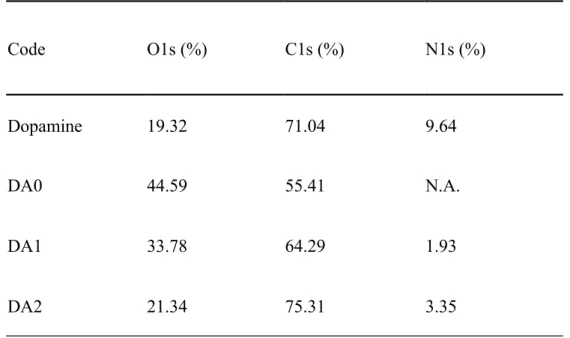
Table 1 shows a clear difference between the elemental composition of PLA scaffolds before and after dopamine coating, which show a significant increase in both the carbon and the nitrogen contents and a significant decrease in the oxygen content. As expected, it was observed that elevated amount of DA, from 0 mg/mL to 2 mg/mL, resulted in the reduction of O1s, from 44.59% to 21.34%, along with increased concentrations of C1s and N1s, from 55.41% to 75.31% and from 0% to 3.35%, respectively. The deposition of DA on PLA is also supported by the XPS O1s high-resolution spectra (Fig. 1C). The photoelectron peaks of the PDA coating appear along with emergence of N1s (Fig. 1A) and C1s (Fig. 1B) at 400 and 285 eV. After PDA coating, the carbon and nitrogen contents were much greater than those seen with the untreated PLA, indicating PDA deposition on the substrate. It is worth noting that the surface oxygen and carbon contents of the PDA-coated PLA were still much higher than the theoretical atomic composition of the PDA, suggesting that the elemental content of the underlying PLA was still dominant and contributed to the overall elemental composition of the surfaces. Moreover, the PDA coating was less than 10 nm thick, the depth limit of ESCA. The PLA scaffolds exhibit smooth surfaces and a uniform shape. However, PDA also appeared to be coated homogeneously all over the surfaces. Our results are consistent with several previous reports, in which PDA was coated on different substrates [32-34]. The pure PLA scaffold (contact angle: 131.2°) were more hydrophobic than PDA coated scaffolds (DA1: 51.9° and DA2: 0°). Nevertheless, the water contact angle of pure PLA scaffold is over 130°, which is a disadvantage for cell 242 243 244 245 246 247 248 249 250 251 252 253 254 255 256 257 258 259 260 261 262 263 264
adhesion on these materials [35]. The suitable range of contact angles for cell culture substrates is between 5° to 40°, and 0° actually is totally hydrophilic, and the cell proliferation can be promoted if they grow on the materials with such a water contact angle [26]; these results show that PLA scaffold were hydrophobic, while scaffold coated with PDA were extremely hydrophilic.
3.2. Anti-bacterial properties
Infections can be fatal, and have been reported to occur after implantation of a broad spectrum of bone substitutes [28]. For orthopedic prosthesis, the colonization of bacteria can take place between implants and the surrounding tissues, inducing osteomyelitis and reducing the success rate of biomaterial implantation [36]. The adhesion of, bacteria on biomaterials should thus be concerned when developing of novel biomaterials. The present study examined the adhesion of Staphylococcus aureus on PDA/PLA (Fig. 2). There was no significant difference in the number of bacteria found between DA0 and Ctl at any of the time points. The amount of Staphylococcus aureus adhered on DA0 and Ctl increased as a function of culturing time. However, DA2 had a significantly lower amount of Staphylococcus aureus adhered to it than DA0 (p < 0.05). The results show that PDA/PLA exhibited a higher mortality rate in comparison with PLA, indicating that the antibacterial activity of PDA could be increased in the coating layer. Additionally, PDA modified scaffold were shown to be capable of reducing protein and bacterial binding during a short-term adhesion experiment [22]. In addition, Sureshkumar et al. developed a multilayer of multimetal nanoparticles on a polymer film 265 266 267 268 269 270 271 272 273 274 275 276 277 278 279 280 281 282 283 284 285 286
surface with the help of the exceptionally adhesive and reductive self-polymerized polydopamine, and this hybrid film demonstrated enhanced antibacterial properties [37].
3.3. Cell proliferation
The increase in cell adhesion may be directly related to the improvement of surface hydrophilicity [38] and functional groups (e.g. OH-, NH2-) [26]. To consider the effects of PDA on cell adhesion and proliferation of hADSCs, various specimens were evaluated at different time-points (Fig. 3). The result shows more cell adhered to DA2 compared with DA0 and Ctl at all culture time-points. The cell proliferation gradually increased along with the amount of PDA on PLA, which indicated a significant difference (p < 0.05) compared with the PLA specimens (DA0). For example, DA2 saw an increase of approximately 32.1% in the OD value compared to DA0 on day 7. The number of hADSCs on DA1 and DA2 was even higher than that seen on Ctl, the standard cell culture vessel material.
3.4. Cell morphology and Col adsorption
The facilitation of cell adhesion on the PDA layer was confirmed and observed by immunofluorescence images (Fig. 4A). When the hADSCs were seeded onto DA0 substrates for 3 h, the cells barely adhered and spread, whereas the cells cultured on PDA/PLA exhibited normal adhesion. As the immunofluorescence images show, the expression of F-actin was found around the cells (cell edges) in all groups. In a previous study we proved that PLA materials affected the morphology and mineralization of bone cells [8]. Cell adhesion requires the presence of a suitable proteinaceous substrate to 287 288 289 290 291 292 293 294 295 296 297 298 299 300 301 302 303 304 305 306 307 308 309
which cell adhesion receptors, such as integrins unit, can adhere and form cell-anchoring points. The dominant role of protein adsorption in the effect of cell adhesion has been identified [39]. In the cases of extracellular matrix components (e.g., collagen) and polycations (e.g., poly-lysine), the improvement in cell adhesion is dependent on the type of materials and cell lines [40], but our strategy using PDA ad-layer could increase the cell adhesion efficiency on different types of substrates and cell lines. In addition, the effect of PDA/PLA on the adsorption of Col I by cells was also examined. Col I secretion was significantly (p < 0.05) higher on the substrates with the highest amount of PDA coating (DA2) than on the pure PLA (DA0) after hADSCs seeding for 1 h (Fig. 4B). Moreover, after 1 and 6 h of seeding, the percentage increases in Col I secretion were 2.24 and 2.17 times for DA2, respectively, compared with DA0. Following initial cell adhesion and spreading, hADSCs will secrete extracellular matrix components, such as cellular Col I or FN on the substrate, which promote cell behavior [39]. Col I contains numerous cells binding sites, such as RGD sequences, that are known to bind integrins on cell membranes, and thus mediate cell adhesion. The adsorbed proteins supply a provisional matrix for cell attachment. Differential ECM protein adsorption on the various material surfaces accounts for the observed variability in cell adhesion [41,42]. The covalent immobilization of Col I on the surface of the substrates through a two-step coupling process improved the uniformity and stability of Col adsorption [43].
3.5. Cell cycle
The phase percentage of hADSCs in the G0/ G1, S and G2/M is given as a function of different culture time-points (Fig. 5). The percentage of cells in the G1 phase 310 311 312 313 314 315 316 317 318 319 320 321 322 323 324 325 326 327 328 329 330 331 332
decreased significantly with increasing PDA coated, along with increases in the S and G2 phases. The populations in the S and G2/M phases of hADSCs on DA2 were increased as compared to those on DA0 and DA1. At DA2 group, the S and G2/M phase were respectively 1.43 times and 1.97 times more than that on pure PLA scaffolds (p < 0.05). ECM proteins are involved in cell signaling pathways regulating cell morphology, cell adhesion, cell cycle and cell differentiation [39].
3.8. Osteogenic differentiation
Further investigation of cell differentiation induced by PDA-coated PLA scaffolds was verified by protein secretion analysis of ALP and OC after different time-points of culture in a basal medium with osteogenic supplements (Fig. 6). ALP activity was assessed as an early indicator of the osteoblastic lineage to study the effect of DA coated on osteoblast differentiation. ELISA analysis demonstrated that the DA0 group had significantly lower protein levels of ALP and OC. Significant increasing in ALP and OC secretion were observed from DA1 and DA2. Significant increases of 30.1% and 51.7% (p < 0.05) in the ALP level were measured for DA1 and DA2 in comparison with the DA0 for 7 days (Fig. 6A). No significant difference in ALP activity was found between DA0 and Ctl. In the osteogenesis stage paradigm, Col is expressed in the cell proliferation and ECM production stage; ALP is secreted during the post proliferative period of ECM maturation [44,45]. The appropriate PDA-coating was effective in supporting the differentiation of cells through the production of bone-specific proteins [46]. Similarly, The OC secretion in the cells cultured on DA1 and DA2 was higher than that seen on the pure PLA scaffolds for 7 and 14 days (Fig. 6B). Several studies also 333 334 335 336 337 338 339 340 341 342 343 344 345 346 347 348 349 350 351 352 353 354 355
show that PDA-coated materials promote stem cells proliferation and differentiation [27,32,47]. At the last stages of bone matrix formation, OC is expressed and bound extracellular matrix Ca to the bone matrix development, and high serum levels are correlated with high bone mineral density [36,48]. Finally, we further evaluated Ca deposition on the PDA-coated PLA scaffolds for 14 days of cell culture in an osteogenic medium. Compared to the unmodified PLA scaffold, a more intense Ca staining was observed on the PDA-coated scaffolds (Fig. 7), which may result from enhanced ALP and OC secretion and increased cell growth on the PDA-coated PLA scaffold. It can be seen that the PDA-coated 3D LBL stacking PLA scaffold enhances the osteogenic differentiation of hADSCs.
3.9. Angiogenesis
The expression levels of Ang-1 and vWF in hADSCs cultured on various specimens were evaluated at days 3 and 7 (Fig. 8). ELISA analysis showed that hADSCs on pure PLA scaffold group expressed the Ang-1 and vWF protein at basal levels, similarly to the Ctl group. In contrast, in the DA1 and DA2 groups expressions of the angiogenic protein were significantly enhanced compared with Ctl and DA0 (p < 0.05). Ang-1 plays an important role in blood vessel formation at later stages, such as the stabilization of the endothelial sprout and its interaction with pericytes. Moreover, it could also decrease VEGF-mediated vascular permeability [49-51]. vWF is an important protein involved in coagulation and thrombus formation. Following synthesis, it is found in secretary granules called Weibel-Palade bodies and in vessels, and is released both constitutively and in a regulated manner [52,53]. PDA specifically regulates the vascular 356 357 358 359 360 361 362 363 364 365 366 367 368 369 370 371 372 373 374 375 376 377 378
endothelial growth factor-induced phosphorylation of vascular endothelial growth factor receptor-2 during the earliest steps of the angiogenic process [54]. Therefore, our results suggest that the production of angiogenesis factors by PDA-coated-PLA-stimulated cells is more advantageous than the local delivery of a single angiogenic protein.
379 380 381 382 383
4. Conclusions
In summary, we successfully fabricated bio-inspired PDA-coated PLA scaffolds, which improve cell adhesion and promote ECM secretion. Furthermore, PDA-coated PLA scaffolds allow hADSCs to adhere and grow better than on the unmodified PLA scaffolds. Even in 3D structures, more cells were observed to grow on the PDA-coated PLA scaffolds than on the unmodified PLA scaffolds. A PDA coating on membranes was also demonstrated to induce osteogenesis and angiogenesis differentiation. Therefore, our results demonstrate that this simple, bio-inspired surface modification of the organic PLA scaffolds using PDA is a very promising tool to regulate stem cell behavior, and may serve as an effective stem cell delivery carrier for bone tissue engineering.
384 385 386 387 388 389 390 391 392 393
Acknowledgements
The authors acknowledge receipt of a grant from the Ministry of Science and Technology grants (MOST 104-2314-B-039-004) of Taiwan. The authors declare that they have no conflicts of interest.
394 395 396 397 398 399 400
References
[1] Su CC, Kao CT, Hung CJ, Chen YJ, Huang TH, Shie MY. Regulation of
physicochemical properties, osteogenesis activity, and fibroblast growth factor-2 release ability of β-tricalcium phosphate for bone cement by calcium silicate. Mater Sci Eng C Mater Biol Appl 2014;37:156–63.
[2] O'Brien C, Holmes B, Faucett S, Zhang LG. 3D printing of nanomaterial scaffolds for complex tissue regeneration. Tissue Eng Part B Rev 2014.
[3] Fakhry A, Ratisoontorn C, Vedhachalam C, Salhab I, Koyama E, Leboy P, et al. Effects of FGF-2/-9 in calvarial bone cell cultures: differentiation
stage-dependent mitogenic effect, inverse regulation of BMP-2 and noggin, and enhancement of osteogenic potential. Bone 2005;36:254–66.
[4] Temple JP, Hutton DL, Hung BP, Huri PY, Cook CA, Kondragunta R, et al. Engineering anatomically shaped vascularized bone grafts with hASCs and 3D-printed PCL scaffolds. J Biomed Mater Res Part A 2014;102:4317–25.
[5] Liu CH, Huang TH, Hung CJ, Lai WY, Kao CT, Shie MY. The synergistic effects of fibroblast growth factor-2 and mineral trioxide aggregate on an osteogenic accelerator in vitro. Int Endod J 2014;47:843–53.
[6] Kim RY, Oh JH, Lee BS, Seo Y-K, Hwang SJ, Kim IS. The effect of dose on rhBMP-2 signaling, delivered via collagen sponge, on osteoclast activation and in vivo bone resorption. Biomaterials 2014;35:1869–81.
[7] Mikos A, Herring S, Ochareon P. Engineering complex tissues. Tissue Eng 2006;12:3307–39.
[8] Lin CC, Fu SJ, Lin YC, Yang IK, Gu Y. Chitosan-coated electrospun PLA fibers for rapid mineralization of calcium phosphate. Int J Biol Macromol 2014;68:39– 47.
[9] Song B, Wu C, Chang J. Dual drug release from electrospun poly(lactic-co-glycolic acid)/mesoporous silica nanoparticles composite mats with distinct release profiles. Acta Biomater 2012;8:1901–7.
[10] Dong GC, Chen HM, Yao CH. A novel bone substitute composite composed of tricalcium phosphate, gelatin and drynaria fortunei herbal extract. J Biomed Mater Res Part A 2008;84:167–77.
[11] Wu C, Luo Y, Cuniberti G, Xiao Y, Gelinsky M. Three-dimensional printing of hierarchical and tough mesoporous bioactive glass scaffolds with a controllable pore architecture, excellent mechanical strength and mineralization ability. Acta Biomater 2011;7:2644–50.
[12] Yuan R, Lin Y. Traditional Chinese medicine: an approach to scientific proof and clinical validation. Pharmacol Ther 2000;86:191–8.
[13] Pfister A, Landers R, Laib A, Hübner U, Schmelzeisen R, Hülhaupt R. Biofunctional rapid prototyping for tissue-engineering applications: 3D bioplotting versus 3D printing. J Polym Sci Part a: Polym Chem 2004;42:624– 38.
[14] Wang JF, Zhou H, Han LY, Chen X, Chen YZ. Traditional Chinese medicine information database. Clin Pharmacol Ther 2005;78:89–95.
[15] Liu ZG, Zhang R, Li C, Ma X, Liu L, Wang JP, et al. The osteoprotective effect 401 402 403 404 405 406 407 408 409 410 411 412 413 414 415 416 417 418 419 420 421 422 423 424 425 426 427 428 429 430 431 432 433 434 435 436 437 438 439 440 441 442 443 444
81.
[16] Hung TM, Na MK, Thuong PT, Su ND, Sok D, Song KS, et al. Antioxidant activity of caffeoyl quinic acid derivatives from the roots of Dipsacus asper Wall. J Ethnopharmacol 2006;108:188–92.
[17] Inzana JA, Olvera D, Fuller SM, Kelly JP, Graeve OA, Schwarz EM, et al. 3D printing of composite calcium phosphate and collagen scaffolds for bone regeneration. Biomaterials 2014;35:4026–34.
[18] Wong RWK, Rabie ABM, Hägg EUO. The effect of crude extract from Radix Dipsaci on bone in mice. Phytother Res 2007;21:596–8.
[19] Fielding GA, Bandyopadhyay A, Bose S. Effects of silica and zinc oxide doping on mechanical and biological properties of 3D printed tricalcium phosphate tissue engineering scaffolds. Dent Mater 2012;28:113–22.
[20] Kai D, Liow SS, Loh XJ. Biodegradable polymers for electrospinning: Towards biomedical applications. Mater Sci Eng C Mater Biol Appl 2014.
[21] Lee H, Dellatore SM, Miller WM, Messersmith PB. Mussel-inspired surface chemistry for multifunctional coatings. Science 2007;318:426–30.
[22] Liu Y, Ai K, Lu L. Polydopamine and its derivative materials: synthesis and promising applications in energy, environmental, and biomedical fields. Chem Rev 2014;114:5057–115.
[23] Yang Y, Qi P, Wen F, Li X, Xia Q, Maitz MF, et al. Mussel-inspired one-step adherent coating rich in amine groups for covalent immobilization of heparin: hemocompatibility, growth behaviors of vascular cells, and tissue response. ACS Appl Mater Interfaces 2014.
[24] Yan J, Yang L, Lin M-F, Ma J, Lu X, Lee PS. Polydopamine spheres as active templates for convenient synthesis of various nanostructures. Small 2013;9:596– 603.
[25] Wu C, Han P, Liu X, Xu M, Tian T, Chang J, et al. Mussel-inspired bioceramics with self-assembled Ca-P/polydopamine composite nanolayer: Preparation, formation mechanism, improved cellular bioactivity and osteogenic
differentiation of bone marrow stromal cells. Acta Biomater 2014;10:428–38. [26] Liu Z, Qu S, Zheng X, Xiong X, Fu R, Tang K, et al. Effect of polydopamine on
the biomimetic mineralization of mussel-inspired calcium phosphate cement in vitro. Mater Sci Eng C Mater Biol Appl 2014;44:44–51.
[27] Shi X, Li L, Ostrovidov S, Shu Y, Khademhosseini A, Wu H. Stretchable and micropatterned membrane for osteogenic differentation of stem cells. ACS Appl Mater Interfaces 2014;6:11915–23.
[28] Kao CT, Huang TH, Chen YJ, Hung CJ, Lin CC, Shie MY. Using calcium silicate to regulate the physicochemical and biological properties when using β-tricalcium phosphate as bone cement. Mater Sci Eng C Mater Biol Appl
2014;43:126–34.
[29] Huang SC, Wu BC, Kao CT, Huang TH, Hung CJ, Shie MY. Role of the p38 pathway in mineral trioxide aggregate-induced cell viability and angiogenesis-related proteins of dental pulp cell in vitro. Int Endod J 2015;48:236–45. [30] Su YF, Lin CC, Huang TH, Chou MY, Yang JJ, Shie MY. Osteogenesis and
angiogenesis properties of dental pulp cell on novel injectable tricalcium phosphate cement by silica doped. Mater Sci Eng C Mater Biol Appl 446 447 448 449 450 451 452 453 454 455 456 457 458 459 460 461 462 463 464 465 466 467 468 469 470 471 472 473 474 475 476 477 478 479 480 481 482 483 484 485 486 487 488 489 490 491
2014;42:672–80.
[31] Hung CJ, Hsu HI, Lin CC, Huang TH, Wu BC, Kao CT, et al. The role of integrin αv in proliferation and differentiation of human dental pulp cell response to calcium silicate cement. J Endod 2014;40:1802–9.
[32] Rim NG, Kim SJ, Shin YM, Jun I, Lim DW, Park JH, et al. Mussel-inspired surface modification of poly(L-lactide) electrospun fibers for modulation of osteogenic differentiation of human mesenchymal stem cells. Colloids Surf B 2012;91:189–97.
[33] Kim HW, McCloskey BD, Choi TH, Lee C, Kim M-J, Freeman BD, et al. Oxygen concentration control of dopamine-induced high uniformity surface coating chemistry. ACS Appl Mater Interfaces 2013;5:233–8.
[34] Sun X, Cheng L, Zhao J, Jin R, Sun B, Shi Y, et al. bFGF-grafted electrospun fibrous scaffolds via poly(dopamine) for skin wound healing. J Mater Chem B 2014;2:3636–45.
[35] Sequeira SJ, Soscia DA, Oztan B, Mosier AP, Jean-Gilles R, Gadre A, et al. The regulation of focal adhesion complex formation and salivary gland epithelial cell organization by nanofibrous PLGA scaffolds. Biomaterials 2012;33:3175–86. [36] Huang SH, Chen YJ, Kao CT, Lin CC, Huang TH, Shie MY. Physicochemical
properties and biocompatibility of silica doped β-tricalcium phosphate for bone cement. J Dent Sci 2014.
[37] Sureshkumar M, Lee PN, Lee CK. Stepwise assembly of multimetallic nanoparticles via self-polymerized polydopamine. J Mater Chem 2011;21:12316–20.
[38] Wu C, Zhang Y, Zhou YZ, Fan W, Xiao Y. A comparative study of mesoporous glass/silk and non-mesoporous glass/silk scaffolds: Physiochemistry and in vivo osteogenesis. Acta Biomater 2011;7:2229–36.
[39] Shie MY, Ding SJ. Integrin binding and MAPK signal pathways in primary cell responses to surface chemistry of calcium silicate cements. Biomaterials
2013;34:6589–606.
[40] Ku SH, Ryu J, Hong SK, Lee H, Park CB. General functionalization route for cell adhesion on non-wetting surfaces. Biomaterials 2010;31:2535–41.
[41] Sugiyama K, Okamura A, Kawazoe N, Tateishi T, Sato S, Chen G. Coating of collagen on a poly(l-lactic acid) sponge surface for tissue engineering. Mater Sci Eng C Mater Biol Appl 2012;32:290–5.
[42] Wagner-Ecker M, Voltz P, Egermann M, Richter W. The collagen component of biological bone graft substitutes promotes ectopic bone formation by human mesenchymal stem cells. Acta Biomater 2013;9:7298–307.
[43] Yu X, Walsh J, Wei M. Covalent immobilization of collagen on titanium through polydopamine coating to improve cellular performances of MC3T3-E1 cells. RSC Adv 2013;4:7185–92.
[44] Ge L, Li QL, Huang Y, Yang S, Ouyang J, Bu S, et al. Polydopamine-coated paper-stack nanofibrous membranes enhancing adipose stem cells' adhesion and osteogenic differentiation. J Mater Chem B 2014;2:6917–23.
[45] Shie MY, Chang HC, Ding SJ. Effects of altering the Si/Ca molar ratio of a calcium silicate cement on in vitro cell attachment. Int Endod J 2012;45:337–45. [46] Chien CY, Tsai WB. Poly(dopamine)-assisted immobilization of Arg-Gly-Asp 492 493 494 495 496 497 498 499 500 501 502 503 504 505 506 507 508 509 510 511 512 513 514 515 516 517 518 519 520 521 522 523 524 525 526 527 528 529 530 531 532 533 534 535 536 537
peptides, hydroxyapatite, and bone morphogenic protein-2 on titanium to
improve the osteogenesis of bone marrow stem cells. ACS Appl Mater Interfaces 2013;5:6975–83.
[47] Chien CY, Liu TY, Kuo WH, Wang MJ, Tsai WB. Dopamine-assisted
immobilization of hydroxyapatite nanoparticles and RGD peptides to improve the osteoconductivity of titanium. J Biomed Mater Res Part A 2013;101:740–7. [48] Saffarian Tousi N, Velten MF, Bishop TJ, Leong KK, Barkhordar NS, Marshall
GW, et al. Combinatorial effect of Si4+, Ca2+, and Mg2+ released from bioactive glasses on osteoblast osteocalcin expression and biomineralization. Mater Sci Eng C Mater Biol Appl 2013;33:2757–65.
[49] Mavrogonatou E, Kletsas D. Differential response of nucleus pulposus intervertebral disc cells to high salt, sorbitol, and urea. J Cell Physiol 2011;227:1179–87.
[50] Miller TW, Isenberg JS, Roberts DD. Molecular regulation of tumor
angiogenesis and perfusion via redox signaling. Chem Rev 2009;109:3099–124. [51] Xia L, Lin K, Jiang X, Fang B, Xu Y, Liu J, et al. Effect of nano-structured
bioceramic surface on osteogenic differentiation of adipose derived stem cells. Biomaterials 2014;35:8514–27.
[52] Bi CWC, Xu L, Tian XY, Liu J, Zheng KYZ, Lau CW, et al. Fo Shou San, an ancient chinese herbal decoction, protects endothelial function through increasing endothelial nitric oxide synthase activity. PLoS ONE 2012;7:e51670.
[53] Williamson MR, Black R, Kielty C. PCL-PU composite vascular scaffold production for vascular tissue engineering: attachment, proliferation and bioactivity of human vascular endothelial cells. Biomaterials 2006;27:3608–16. [54] Sinha S, Vohra PK, Bhattacharya R, Dutta S, Sinha S, Mukhopadhyay D.
Dopamine regulates phosphorylation of VEGF receptor 2 by engaging Src-homology-2-domain-containing protein tyrosine phosphatase 2. J Cell Sci 2009;122:3385–92. 538 539 540 541 542 543 544 545 546 547 548 549 550 551 552 553 554 555 556 557 558 559 560 561 562 563 564 565 566
Table 1. Surface chemical composition of PDA-coated PLA scaffolds by XPS. Code O1s (%) C1s (%) N1s (%) Dopamine 19.32 71.04 9.64 DA0 44.59 55.41 N.A. DA1 33.78 64.29 1.93 DA2 21.34 75.31 3.35 567 568 569
Figure Legends
Figure 1. The (a) top view and (b) side view of 3D printed PLA scaffold.
Figure 2. XPS (A) N1s, (B) C1s, and (C) O1s high-resolution spectra obtained on PLA scaffolds after coating with dopamine.
Figure 3. Anti-bacterial assay of Staphylococcus aureus cultured on PDA/PLA specimens for 3 and 24 h. “*”, statistically significant difference from DA0.
Figure 4. The proliferation of hADSCs cultured with various specimens for different time points. “*” indicates a significant difference (p < 0.05) compared to DA0.
Figure 5. The immunofluorescence images of hADSCs adhered on PDA/PLA scaffolds for 3 h (nuclei: blue and F-actin: red). (B) Col I adsorbed on PDA/PLA surface by hADSCs secretion for various time-points. “*” indicates a significant difference (p < 0.05) compared to DA0.
Figure 6. Phase percentage of hADSCs cell cycle for the various specimens at 12 h. Figure 7. (A) ALP activity and (B) OC amount of hADSCs cultured on various specimens for different time points. “*” indicates a significant difference (p < 0.05) compared to DA0.
Figure 8. (A) Alizarin Red S staining and (B) quantification of calcium mineral deposits of hDPCs cultured on various cement for 3 and 7 days. Values not sharing a common letter are significantly different at p < 0.05.
Figure 9. The protein expression of (A) Ang-1 and (B) vWF of hADSCs cultured on PDA/PLA substrates for different days. “*” indicates a significant difference (p < 0.05) compared to DA0. 570 571 572 573 574 575 576 577 578 579 580 581 582 583 584 585 586 587 588 589 590 591 592 593