一
國 立 交 通 大 學
企業管理碩士學程
碩 士 論 文
利用定價與營收最佳化技術之實施以評估總合支持
措施之最適性 – 以中國的小麥為例
Implementation of basic Pricing and Revenue Optimization technique
to assess the optimal total aggregate measure of support ‐total AMS‐
in wheat commodity for China
研 究 生:耶得加
指導教授:黃寬承 教授
中 華 民 國 九 十 九 年 七 月
二
Implementation of basic Pricing and Revenue Optimization technique to assess
the optimal total aggregate measure of support -total AMS- in wheat commodity
for China
利用定價與營收最佳化技術之實施以評估總合支持措施之最適性 –
以中國的小麥為例
研 究 生:
耶得加
Student:
De-Jia
Ye
指 導 教 授: 黃寬丞
Advisor:
Kuan-Cheng
Huang
國立交通大學
企業管理碩士學程
碩士論文
A ThesisSubmitted to Global MBA Program College of Management National Chiao Tung University
In partial Fulfillment of the Requirements for the Degree of
Master in
Global Business Administration July, 2010
Hsinchu City, Taiwan, Republic of China
i
Implementation of basic Pricing and Revenue Optimization technique to assess
the optimal total aggregate measure of support -total AMS- in wheat commodity
for China
Student:
耶得加
Edgar Renato Lira Sosa
Advisor:
黃寬丞
Kuan-Cheng Huang
College of Management
National Chiao Tung University - 國立交通大學
CHINESE ABSTRACT
商業概念通常被直覺地排除在政府的決策過程。的確,二者的決策分析受
到一些刻板模式、先入為主之成見、以至範例所制約。本論文提出一項概
念,每個國家必須像一個大企業般地運作:促成高品質、低成本的生產(也
就是極大化最終消費者的財務價值),並專注於達成上述目的的相關政策與
法規。供需的力量以及隨後價格的形成,即 Adam Smith 所謂的無形之手,
全賴我們對市場經濟的了解。這些機制根植於「理性」(利潤極大化)公司
的概念,也定義了市場均衡的方式。
另一方面,農業方面的支持也被視為在農糧研究上最為廣泛討論的課題之
一。尤其,在某些個案所造成的供給過剩、傾銷,更被視為相當負面的影
響。本論文提出一個概念性的模式,其牽涉政治的、經濟的與經濟計量的
指標。在此架構下,利用一基本的定價與營收最佳化(Pricing and Revenue
Optimization, PRO)技術,可對補金額建立一適當的評估,並藉以促使一
個貿易模式(在本論問係以中國的小麥為例)可行且合理地運作,以達到確
保價格穩定、避免市場扭曲的目標。小麥的國內價格在各國,尤其是在中
國,一向低於國際的指標價格,顯示國內政策與貿易政策已造成農民無法
獲得其作物在全球市場應得的報酬。
補貼後的食物價格被預期可能將增加食物需求量,進一步提高食物價格,
以至造成潛在性的通貨膨漲循環。然而,供給與需求的變動性最終會達到
一個新的平衡,其所對應的最佳消費者價格將確保食物供給的安全與生產
者的獲益。多邊的農業補貼機制將改善國外市場的可及性並提高全球農產
品價格。以本研究的案例而言,最終不僅中國農民收益將提高,在各國同
意適用相同政策於農民時,將使農業的生產與需求在無形之手的影響下,
使供給與需求達到平衡。
ii
ENGLISH ABSTRACT
There is an intuitive tendency to isolate business concepts from Governments policy making. Indeed, the way both parts analyze their strategies is conditioned by stereotypes, prejudges or merely by paradigms. From this thesis proposal, every country has to work as a big corporation, promoting the high quality and low cost of its production (maximizing monetary values for the final consumers) and has to focus all its policies, laws, and regulations in order to achieve that goal. “The forces of supply and demand and the resulting
process of price formation –the <invisible hand> of Adam Smith – lie at the heart of our current understanding of market economics.” They are embodied in the concept of the
“rational” (profit-maximizing) firm, and define the mechanism by which market equilibrium are reached.
On the other hand, “agricultural support is considered one of the most discussed
subjects for researches in agriculture and food. In particular, its impacts were classified negatively in some cases (among countries) where agricultural support results in overproduction and causes dumping in other countries markets.”
The thesis proposal is a conceptual model, which involve political, economical and econometric measures. In this sense applying a basic Pricing and Revenue Optimization technique, it’s possible to formulate a right assessment on the subsidy quantity that make a trade model (in this case for wheat in China) to work feasibly and logically in order to assure price stabilization and avoid distortions in the market. For wheat, and particularly in China, domestic prices were lower than the international indicator price, suggesting that domestic and trade policies prevented farmers from receiving as good a return on their wheat crop as was possible on world markets.
The subsidized food prices could be expected to increase the demanded quantity of food, thus increasing prices further, and potentially contributing to an inflationary spiral. Nevertheless, production and demand volatility eventually will find a “new equilibrium” and the resulting optimal price for customer can assure food security and profitability for producers. Multilateral subsidization in agriculture would improve access to overseas markets and stabilize world market prices for agricultural commodities.
iii DEDICATION
To:
Jehovah: “He that dwelleth in the secret place of the most High shall abide under the shadow of the Almighty. I will say of the LORD, [He is] my refuge and my fortress: my God; in him will I trust.” Psalms 91: 1-2
Jesus Christ: “And ye shall know the truth, and the truth shall make you free.” John 8: 32
My father Edgar David Lira Saavedra: I’m always trying to following you and make you proud…I love you Papa.
My mother Iracema Arellis Sosa Carpio de Lira: You gave me the most precious gift and the most important lesson; I will always have you in my heart. Love you Mama.
My brothers Luis Alberto, David Alejandro & Jose Estuardo: Each one of you taught me with wisdom and humbleness, my appreciation forever. Love you guys.
My wife Ana Bridzeyda Fuentes Ramirez de Lira: Baby, there is no one beautiful and tender as you. I remember you like that, your hair free, burning ice, different from other…I remember you like that, letting you admire, untouchable, inaccessible, unreal…unreal. I will love you forever.
My relatives: So proud of my blood, of my roots.
Fuentes – Ramírez family: you guys stayed and supported me all this time.
Guatemala: The bird-snake mansion. My Macondo, someday you’ll fly like a Royal Eagle.
Republic of China: Ilha Formosa…
台灣是生咱的所在,感念感恩在阮心內,付出情意付出愛,代代花蕊代代栽。
My friends: I’ll confide 'cause you'd been on my side. I know you did, I know you will.
My country mates: I keep you in my mind & heart, like a brother that suffers with you from unfairness. Hasta la victoria siempre!!
AND TO ALL THE PEOPLE THAT IN ONE WAY OR ANOTHER MADE ME SMILE AND PROVIDED ME THE MOTIVATION TO CONTINUING WITH MY HEAD HELD
iv ACKNOWLEDGEMENTS
To:
All my GMBA professors & staff: Then again, for all the knowledge and help generously shared.
My advisor Prof. Kuan-Cheng Huang (
黃寬丞)
:黃老師謝謝你,你的指導很重要
。 Without your support and encouragement, this research wouldn’t have been possible.My internal reviewers Prof. Tang (
唐瓔璋
) and Prof. Yao (姚銘忠
): Your kind comments and reviews greatly enriched my academic research.My external reviewer (and advisor) Prof. Liou (
劉芬美
): May, more than your appropriate comments that made this research a lot better, I have to say thanks for your enthusiasm and interest to make me a better professional.Ministry of Foreign Affairs of Taiwan: For the economic support during all these years which was invaluable. Your investment will be highly profitable.
National Chiao Tung University (
國立交通大學
): My Asian Alma Mater. Every single person working (specially the library and ISC), study or merely passing there made my studies in Taiwan a very pleasant and interesting experience.Mr. Luis Alberto Rivera Pedraza: This is just the beginning…before we had to pay the price to be Amateurs, tomorrow our guts is the limit. Keep up K…
My GMBA classmates: You guys had been part of the trip, was an honor to ride next to you.
The Ranger team: You know who you are, without your good company, pressure and tastelessness jokes, I couldn’t make it on time.
AND FINALLY HEARTFELT THANKS TO ALL THE PEOPLE THAT SOMEHOW HAVE SUPPORTED ME IN THE ACCOMPLISHMENT OF MY MASTER STUDIES &
v TABLE OF CONTENTS Page Chinese abstract……….………..i English abstract………...………ii Dedication………..iii Acknowledgement……….iv Table of contents……….v List of Tables………..vii List of Figures………vii 1. CHAPTER 1: INTRODUCTION……….…1 1.1.Background……….…..1
1.1.1. Most important indicators used to estimate agriculture support……….2
1.1.2. Other indicators used to estimate agricultural support………5
1.2.WTO & OECD domestic support and subsidies overview………...6
1.2.1. Defining and measuring agricultural support………..6
1.3.General problem description and approach………10
1.3.1. The Role of Speculation………13
1.3.2. Several explanations for the same global concern………....14
1.3.3. The Poor country paradoxes……….16
1.4.Organization of this thesis……….……..19
2. CHAPTER 2: PROBLEM STATEMENT……….20
2.1.Introduction and motivation………...….20
2.1.1. Indicators of assistance……….23
2.1.2. Necessity of adjust the balance of support………24
2.1.3. Constrained supply and control………...25
2.1.4. Support to investment in Agriculture………....29
2.2.Research Objectives………....31
2.2.1. Is it possible through subsidies & domestic support respond to high food prices?...34
2.2.2. Policy changing……….35
2.2.3. Approaching a realistic way to respond to agricultural market challenges……..……37
2.2.4. The final objective: Food security………...……….38
2.3.Delimitation and methods………...…………40
2.3.1. Policy coverage……….40
2.3.2. Product and nation treatment………42
2.3.3. Selection of reference value………..43
2.3.4. Homogeneity……….45
2.3.5. Measurement………...……..47
vi
2.3.7. To practice the principle, every country need to apply the same standard…………..48
3. CHAPTER 3: LITERATURE REVIEW………...…50
3.1.WTO domestic support and subsidies history……….50
3.2.Domestic support and subsidies concept definitions………..…51
3.2.1. Producer and consumer subsidy equivalents………....52
3.2.2. Supposition underlying the computations of PSEs/CSEs……….56
3.2.3. Other measurement concepts………....58
3.2.4. Other “distorting” measures………..………59
4. CHAPTER 4: REVENUE MGMT. CONCEPTS & APPROACH………..….61
4.1.Introduction……….61
4.1.1. Demand Forecasting………...…..61
4.1.2. Pricing……….…..62
4.2.RM applied to the Total aggregate measure support -total AMS………....63
4.2.1. Supporting the producer………...….64
4.2.2. Implementing the RM………...…66
4.2.3. The importance of international estimations for Food Security………...……67
4.2.4. Why wheat in China?...68
5. CHAPTER 5: RESEARCH METHODS & MODELING………...…….70
5.1. Basic Price Optimization………..…………70
5.1.1. The current RM systems dilemma………76
5.2. Discrete Optimization………...…………77
6. CHAPTER 6: RESULTS………...….79
6.1. Period of analysis (1993-2007)………...…..79
6.2. Increasing the wheat production: Subsidies?...82
6.3. The optimal approach for subsidization………...….83
6.4. Data analysis………...87
7. CHAPTER 7: CONCLUSIONS & FUTURE RESEARCH………..94
7.1. Main conclusion………....94
7.2. Specific conclusions………..95
8. CHAPTER 8: RECOMMENDATIONS……….98
8.1. Future research………..98
8.2. The possible approach and applied theory………...….98
9. CHAPTER 9: REFERENCES………100
9.1. References………100
10. CHAPTER 10: APPENDICES……….103
vii LIST OF TABLES
Page
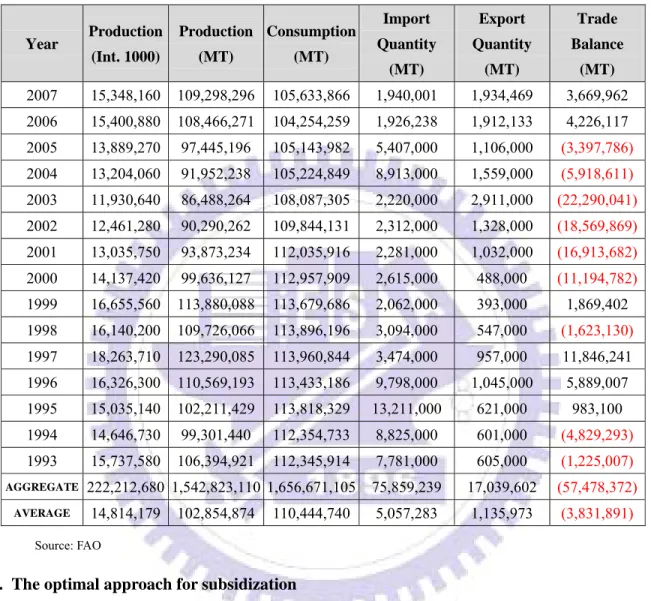
Table 1: China’s wheat trade data generated, 1993-2007……….83
Table 2: China’s crop variables and prices for wheat, 1993-2007………....85
Table 3: Price Gap, consumption, sensitivity and elasticity, 1993-2007………..……88
Table 4: China’s price response curves, incremental cost & margin for wheat, 1993-2007….89 Table 5: Optimal price, price gap with the market price and subsidy to apply……….90
LIST OF FIGURES Figure 1: OECD PSE components……….….4
Figure 2: OECD Total support estimate………..5
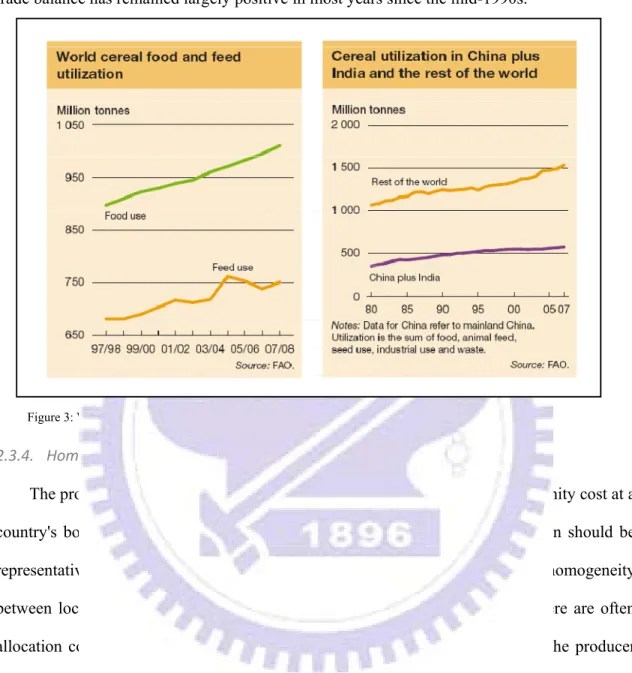
Figure 3: World Cereal food & China and India utilization………..45
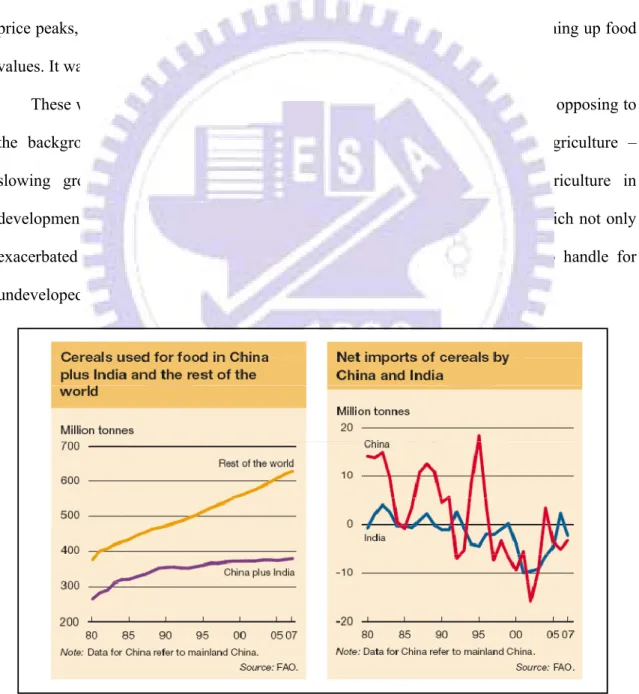
Figure 4: Cereals used and net import for China & India……….46
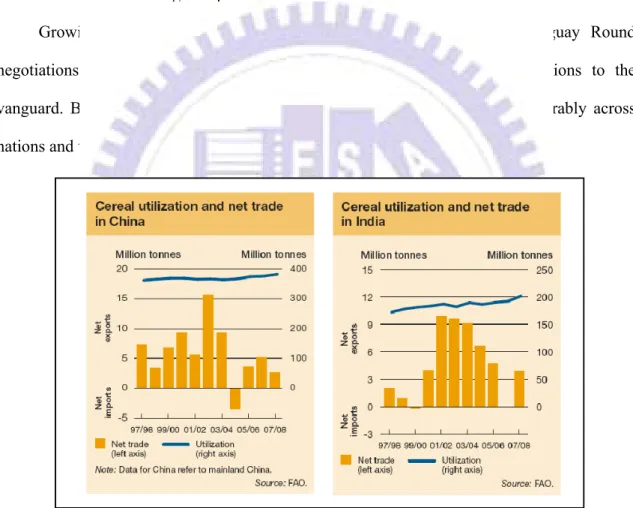
Figure 5: Cereal utilization and net trade for China and India………..48
Figure 6: Product Support Estimates VS Aggregate Measure of Support………....52
Figure 7: Market price support in an importing country………...55
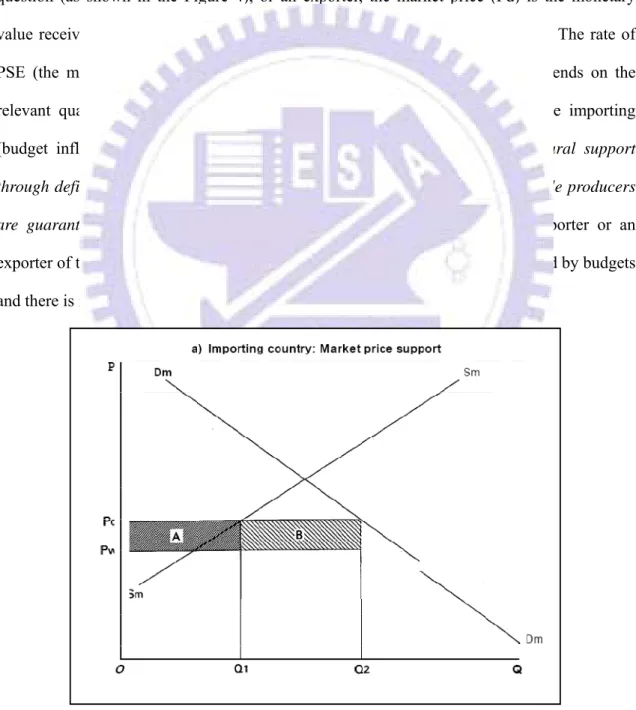
Figure 8: Deficiency payments in an exporting country……….…..…56
Figure 9: NRP, NRA & ERP concepts………..…………59
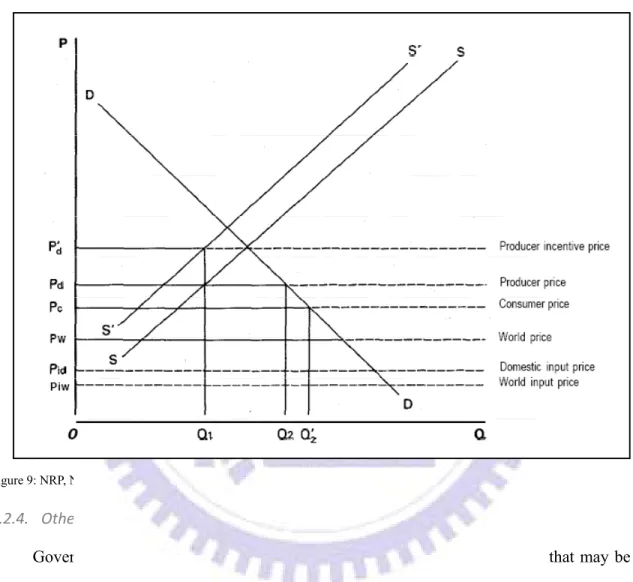
Figure 10: Typical price response curve for basic commodity prediction………....72
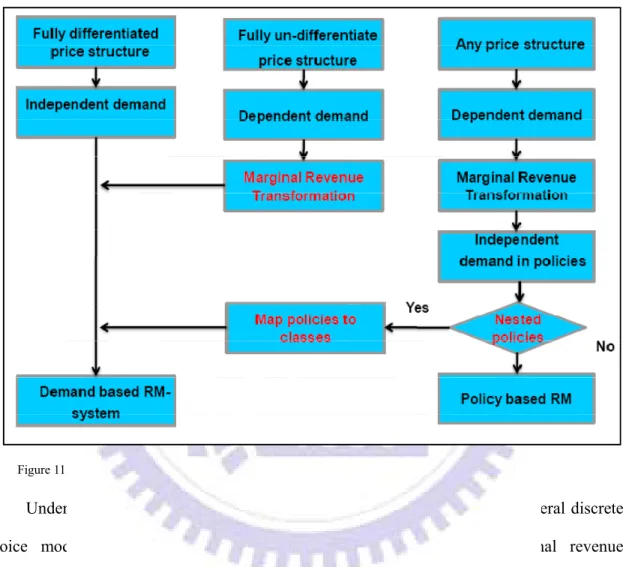
Figure 11: Marginal Revenue transformation inside the PRO process……….77
Figure 12: Composition of Producer Support Estimate for China, 1993-2003…………...….80
Figure 13: China’s Producer Support Estimate by commodity, 2000-2003 average…...…….80
Figure 14: Output indices for main crops, 1990-2003; 1990 = 100……….……….81
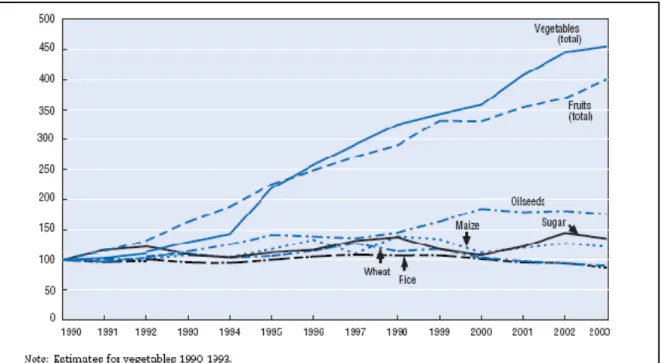
Figure 15: Total cereal production and nominal farm gate prices, 1993 – 2003……….……..81
Figure 16: Crop yields for grain production, 1990 – 2003………..….82
Figure 17: Comparison of different type of prices for Wheat, 1990 – 2003……….84
Figure 18: Chinese % PSE by commodity, average 2000-2003………...………86
1
Chapter 1: INTRODUCTION
1.1. Background
Quoting Agricultural support indicators: “Agricultural support is considered one of the
most discussed subjects in organizations and institutes that research in agriculture and food because of its impacts which classified negatively in some cases (among countries) where agricultural support results in overproduction and causes dumping in other countries markets.” (Mouhamad, A., 2008. 1 pp.) Not so long ago (June 2008), the monetary values of
basic agricultural commodities on global markets reached their highest levels for 30 years, threatening the food security of the poor worldwide.W
From that time, values have been decreasing, driven lower by the economic crisis, rising world recession, falling oil prices and an appreciating USD. Though, they are still elevated by up to date chronological values and the structural troubles underlying the vulnerability of undeveloped nations to global price increases remain. Various factors contributed to the significant increase in world food monetary values, but recent bio-fuel demands and elevated oil prices were the main reason, making some researchers to ask whether lately linkages between food and energy markets have broken down the long-run descending tendency in real agricultural commodity values.V
The sharpness of the monetary value increases and their pushiness, which left various undeveloped nations harassed to manage with the consequences, make this event unusual from precedent events of food monetary value increases. Social and political constancy was challenged all over the world as rising food values and falling purchasing capacity sparked unfortunate events and social disorder. One is supposed to picture the shock on the poor in undeveloped nations who were already spending, in some cases, almost 80 percent of their insufficient incomes on food.d Monetary values are still considerably over the levels we have
seen in up to date years and are expected to stay high by previous experiences. In Various w Turvey, R., Cook, E. 1972.
2
undeveloped nations, food values continue at exceptional elevated levels. In fact, high goods prices have not disappear, nor have the fundamental causes of the food disaster they created. Soaring food monetary values and the food crisis remarked the pressure to global food security and the critical necessity to empower the international food system.c The negative
consequence of high food values on the food security of poor consumers around the world is obvious. Though, one would have anticipated the impact on producers to be constructive and to persuade them to invest more and boost production. This did not happen.
Years of low agricultural prices justifiably gave farmers little motivation to spend in means of production, but why did the peak food prices in recent years fall short to give that encouragement? The answer relies in the government support.* In principle, high food values represent an opportunity to reverse that decades-long decline in investment in agriculture and secure a sustainable future for world food supplies. “In principle” because peak food values itself are not enough and this thesis proposal is to assure the global subsidy policy under revenue management principles. Some of the incentive to produce more has been battered by growing input costs – fertilizer prices have constantly risen much quicker than producer monetary values.v
1.1.1. Most important indicators used to estimate agriculture support
The Aggregate Measure of Support (AMS) stated inside the WTO’s agreement on agriculture, is parallel with the figure of Producers Support Estimate (PSE) for OECD nations, as a result are essentially the same in terms of economic and financial support but differs in some important issues, that later on are defined in the table PSE vs. AMS.m
Citing the OECD Glossary of Statistical terms the “Aggregate measurement of support (AMS)
is the indicator on which the domestic support discipline for the Uruguay Round Agreement on Agriculture is based. It is determined by calculating a market price support estimate for each commodity receiving such support, plus non-exempt direct payments or any other subsidy not exempted from reduction commitments, less specific agricultural levies or fees
3
paid by producers. It differs from the Producer Support Estimate (PSE) in many respects. The most important difference is that price gaps in the AMS calculation are estimated by reference to domestic administered prices and not to actual producer prices, and that external reference prices are fixed at the average levels of the 1986-1988 base period. In addition, many budgetary transfers included in PSEs are excluded from the AMS.”*
9 Producer Support Estimate (PSE):
The Producer Support Estimate has been developed by the OECD as an indicator to observe agricultural strategy improvement in some developed nations and some non-OECD nations. PSE in addition to Total Support Estimate are considered as the two key indicators used by the OECD to assess agricultural support. The focal reason of calculating PSE is to present support approximation each year and to make a judgment among nations aiming at controlling and evaluating agricultural plan strategies in such nations where support estimates gives a significant contribution to the discussion associated to agricultural policies and commerce.l
PSE is expressed by fixed assessment ($ billion) or as a percentage of farm revenue which make the assessment satisfactory on large scale and helpful to evaluate agricultural support between nations and by time, for example a PSE of 20% means that 80 cents of every dollar of farmer’s gross revenue comes from sales at global market prices while the 20% presents the support obtained by farmer.
PSE consists of the following components that put together the measure:m Producer Support Estimate (sum of A to G)
A. Support based on commodity output
A. 1 Market Price Support A.2 Payments based on output
B. Payments based on input use
B.1 Variable input use
4 B. 2 Fixed capital formation
B.3 On-farm services
C. Payments based on current area / animal number/ receipts / income production required
C.1 of a single commodity C.2 of a group of commodities C.3 of all commodities
D. Payments based on non- current area / animal number/ receipts / income production required
E. Payments based on non- current area / animal number/ receipts / income production not required
E.1 Variable rates E.2 Fixed rates
F. Payments based on non-commodity criteria
F.1 Long-term resource retirement F.2 Specific non-commodity output F.3 Other non-commodity criteria
G. Payments which is not classified under the appropriate categories because of a lack of information
Figure 1: OECD PSE components. Source: OECD, 2004.
As for support estimates gave to a particular commodity, OECD calculated PSE for each commodity (in fixed and percent value) until 2005. After 2005 OECD changed in categorizing PSE the Single Commodity Transfers (SCT) aiming at reflecting the flexibility given to farmers’ production decisions inside the various policy actions.m
9 Single Commodity Transfers (SCT):
The yearly monetary value of gross transfers from policies connected to the production of a single commodity which means that producer have to work with the selected commodity
5 in order to obtain the transfer.
9 Total Support Estimate (TSE)
Annual monetary value of all gross transfers from consumers arising as of policies support agriculture and includes transfers to producers and common services provided to agricultural segment. TSE presents the total support as a percentage of Gross Domestic Product –GDP.
Total Support Estimate = Producer Support Estimate + General Services Support Estimates
(GSSE) + transfers to consumers from taxpayers taking into account that General Services Support Estimates includes research and development + agricultural school + inspection services – infrastructure – marketing and promoting – others.
Figure 2: OECD Total support estimate. Source: OECD, 2004
1.1.2. Other indicators used to estimate agricultural support
OECD uses other indicators to assess agricultural support where PSE and TSE the two mentioned previously are extensively used. Other indicators can be mentioned also:y
9 Consumer Support Estimates: annual monetary value of all gross transfers to consumers of agricultural commodity arising as of policies that support agricultural despite of their goals and impacts on expenditure of farm products.
9 General Service support estimates: annual monetary transfers to agriculture not to particular producers which grant monetary disbursement for the provision of such services as research, development, guidance, check up, advertising and sponsorship, and agricultural school.
9 Nominal Protection Coefficient: is the ratio between producer and boundary monetary values for a particular commodity.
9 Nominal Assistance Coefficient: is the ratio between farm revenue (including support) and those generated in the market without support.
6 1.2. WTO & OECD domestic support and subsidies overview
1.2.1. Defining and measuring agricultural support
OECD defines agricultural support (as the figure of Aggregate Measure Support –AMS- inside WTO) is the annual monetary value of all gross transfers from taxpayers and consumers arising from policy actions that sustain agriculture which increase farmers’ incomes and diminish their production costs, regardless of their goals and impacts on farm production and income, or expenditure of farm products. Agricultural support is measured by adding up two elements:y
9 The difference between domestic and world prices for commodities multiplied the
produced amount.
9 Budgetary payments may be granted to farmers groups which are based on a group of
factors such as production, planted area…etc.
Inside WTO agreement on agriculture (AoA), the aggregate measure support is defined as follow:b
“Aggregate Measurement of Support" and –AMS- mean the annual level of support, expressed in monetary terms, provided for an agricultural product in favor of the producers of the basic agricultural product or non-product specific support provided in favor of
agricultural producers in general, other than support provided under programmes that qualify as exempt from reduction under Annex 2 to this Agreement, which is:
(i) with respect to support provided during the base period, specified in the relevant tables of supporting material incorporated by reference in Part IV of a Member's Schedule; and
(ii) with respect to support provided during any year of the implementation period and thereafter, calculated in accordance with the provisions of Annex 3 of this Agreement and taking into account the constituent data and methodology used in the tables of supporting material incorporated by reference in Part IV of the Member's Schedule…”
And later on, defined the total AMS as “"Total Aggregate Measurement of Support" and b Agriculture Commission, WTO. 1995
7
-Total AMS- mean the sum of all domestic support provided in favor of agricultural producers, calculated as the sum of all aggregate measurements of support for basic agricultural products, all non-product-specific aggregate measurements of support and all equivalent measurements of support for agricultural products, and which is:
(i) with respect to support provided during the base period (i.e. the "Base Total AMS") and the maximum support permitted to be provided during any year of the implementation period or thereafter (i.e. the "Annual and Final Bound Commitment Levels"), as specified in Part IV of a Member's Schedule; and
(ii) with respect to the level of support actually provided during any year of the implementation period and thereafter (i.e. the "Current Total AMS"), calculated in accordance with the provisions of this Agreement, including Article 6, and with the constituent data and methodology used in the tables of supporting material incorporated by reference in Part IV of the Member's Schedule…” (Agriculture Commission, WTO. 1995, 44-45 pp.)
Digging inside the concepts of AMS and PSE (both figures are needed to take the right picture of the concept, and complement each other, but then again we emphasize on AMS which is the formal figure for WTO, the top authority in world’s trade), in both cases, the consumer frequently pays a monetary value which enables the domestic producer monetary value to be sustained over on the world markets. Yet, in the case of an exporter, there is a fund outlay (export subsidy) where in the case of an importer; there is a fund inflow (import tax receipt) or a supplementary transfer to importing agents and export suppliers (import quotas, VRAs).
For a given level of domestic monetary value maintained above that on the world market, the per unit rate of PSE from these policies is calculated by the monetary value gap, no matter of whether the country is an exporter or importer. Even though the total PSE is the per unit PSE multiplied by the amount produced, no matter of which part is provided by consumers and by taxpayers, the method has the capacity to break down the sources of
8 transfers to producers between consumers and taxpayers. Furthermore, it avoids equating support to agriculture with funds outlays on agricultural subsidies. This issue is illustrated to the scrutiny of market monetary value support for an importing country and shortage expenditure for an exporting country. The analysis can effortlessly be extended, to exporting and importing nations, respectively.s
PSE by definition is the annual monetary value of all gross transfers from consumers (arising from policy that keeps domestic values above world prices) and from taxpayers (arising from monetary policies) to producers measured at the farm and arising from policy actions that support agriculture not considering of their objectives and impacts on farm production and income.l
Various policies are executed as incorporated packages of various instruments and consideration of the joint effect of evaluating avoids and double-counting. For example, some nations provide safeguard at the border in the form of both tariffs and quotas, but at any one time it is possible that only one action is responsible for the experienced value effects. If the quota is filled, this is a suggestion that the tariff is not high enough to control imports at the level of the quota or less, and the quota is therefore the restrictive measure. According to this thesis proposal, later on, this will be considered as a constrain and also can be included under the figure of advance purchase (already developed inside particular trade agreements between nations). The quota is the measure which allows the internal monetary value to be maintained, and the tariff becomes a way to make sure that some of the economic fee (in the form of the difference between import and domestic selling values) from the quota goes to the government rather than to importers.
The consequence of the tariff is not additive to that of the quota, but acts as a very important trade barrier. If the quota is the required constraint, the elimination of the tariff would not affect internal monetary values or prices. On the other hand, if the quota were to be flexible, there would be a point at which, setting the level of the tariff, the quota would no
9 longer be filled - the tariff would then become the efficient limit on imports. The definition of
the external reference price has been the most controversial issue because, in practice, it is the most important parameter in determining the magnitude and the trend in total AMS (total PSE). (E) Primary problems focused on the argument that standard values are themselves
distorted, and that a "better" measurement should be the world equilibrium prices estimated to overcome in the absence of the policies concerned.
Still, the method assumes the small nation case and in so far as possible, standard values are selected from actual values at a country's own boundaries or derive from nations whose own policies only lightly assist the commodity (any such assistance being netted out of the standard price) and who do not compromise in export subsidization. It is, though, documented that the price obtained by a non-subsidizing, competitive price taker will be mostly established by the performance of "large nations" which subsidies exports using the world market as a remaining beneficiary of surplus production. So, as a brief introduction to this thesis proposal, there is a necessity of an international consented system to subsidize agricultural commodities in terms of a sustainable and practicable method, avoiding speculation and distortion.
On the other hand, is important to cite that stocks participate in equilibrating markets and smoothing monetary value variations. If stocks are low comparative to use, markets are less capable to manage with supply and demand shocks and supply shortfalls or demand increases will lead to bigger monetary value increases. There have been many changes in the policy environment since the Uruguay Round Agreements that have been helpful in sinking stock levels in most important exporting nations: the extent of assets held by public institutions; the high cost of storing perishable products; the improvement of other less costly tools of risk management; increases in the number of nations capable to export; and improvements in information and transportation technologies.
10 such conditions, global markets tend to become less open and price unpredictability and the magnitude of monetary value changes become exaggerated when unexpected events happen. Certainly, there is a statistically considerable negative correlation between marketing season beginning stocks (expressed as a percentage of projected use in the resulting season) and the cereal monetary values produced during the same season.h
1.3. General problem description and approach
All arguments in favor of agricultural support adopted by governments can be summarized in food security and self sufficiency of nations which can be achieved by farmer who deserves support since he produces the main commodities needed for human life through his hard work within the special structure of rural communities that lack Various services and facilities in Various nations especially undeveloped nations in addition to the risk of work in agricultural sector resulted from weather conditions which may negatively affect production and lead to fluctuations in revenues. q
Elevated product monetary values did not demonstrate to be a chance for farmers in undeveloped nations. They did not grab hold of that opportunity to empower and boost their production and yield since the high monetary values did not strain through to them, their access to inexpensive inputs was restricted, their available technology was feeble, indispensable infrastructure and institutions were absent and some policy responses (such as value controls and tariff reductions) in fact diminish the incentives. There the poor country
dilemma.
The assessment of agricultural support via the concept of total AMS was developed and has evolved as a reaction to the requests of policymakers. As a product, the procedure required to be direct, easily to understand and practical, if it was to be show to policymakers the levels of transfers arising from the execution of agricultural policies. The AMS/PSE concepts provide a balanced structure to study, in a planned and consistent way, all of the policies influencing agricultural production, consumption and commerce. As proposed before,
11
subsidies are necessary for all the countries*, but the big challenge comes from the amount of money to assign (avoiding the market price distortion) and to whom (to make it sustainable). In calculating the monetary transfers that result from agricultural strategies, it has enabled a more meticulous and disciplined evaluation of those policies than would be given by a purely qualitative evaluation. Under that perspective, revenue management can be a feasible alternative.f
Nevertheless, the straightforwardness of the AMS and PSE assess defines the confines of the model. In particular, it is not a measure which can present answers to all questions that had been inquired of it. The measure is most significant as a measure of relative, but not absolute, levels of transfers and in presenting the transfers resulting from changes in policies.
As a comprehensive measure, in which the transfers from each policy are uniformly weighted in the computation, it is not valuable as an indicator of the singular production, consumption or commerce incentives of explicit policies. It is helpful as a measure of the transfers between consumers, taxpayers and producers, but it does not transmit much clarification on the effects on net incomes of particular sectors in the whole economy, since it is not a welfare indicator. As it does not comprise the effects of non-agricultural policies on the agricultural segment, it is not a measure of the supply incentives of policies.n Finally, although changes in AMS due to
world monetary value movements are indicators of domestic market filling in nations where those movements arise from changes in exchange rates or "large country" policies, the AMSs are only a rough indicator of the degree of market orientation and might have only a restricted role in a negotiating perspective.
That being said, no alternative measure of assistance is unaffected from the effects of "exogenous changes" and no other indicator, given the techniques and existing information, has the assortment of coverage and practicality of a “realistic” AMS. While there are some better ways to measure the incentive effects of policies, the market monetary value support element of the AMS is an evaluator to the degree of price distortion. In any event, there are
* Author’s personal opinion, based on further material presented later. 2010.
12 alarming data problems to prevail over in moving towards a realistic indicator. The work on the dimension of agricultural support using AMS is continuously developing in the light of continuing negotiations within OECD and WTO nations in terms of theoretical developments. Their progression reflects innovative insights into the methods of computation, improvements in policies, data accessibility and the questions to which the AMS is required to contribute answers.
AMS and PSE are at the present or will be soon, considered for almost every country, both the WTO member and the whole of the OECD area, for approximately three-quarters of agricultural production and for the latest years. The prospect guidelines future research and analysis include extending the policy, commodity, and country treatment, and improving the suitability and quality of the data used for the AMS and PSE computations.s A number of areas might conveniently be explored. Initially, in order to recognize the motivation effects of agricultural policies more accurately, the PSE can be developed to estimate more directly an effective rate of support. This would, on the other hand, need a development of available resources and records and is not possible immediately. Secondly - and this is already being considered - the components of the AMS could be scrutinized in terms of their effects on production, consumption and trade. This is critical to the deliberate on moving towards
alternative methods of support to farmers which are, as far as possible, "production neutral" or least-distorting to resource distribution.
Thirdly, in combination with modeling developments, the AMSs may be projected for particular segments of farms or regions in terms of both on the whole stage of transfers and the effects of those transfers on their revenue. This is vital information in any argument of alternative methods of support.c
While the Effective Rate of Assistance is a superior measure of the inducement effects of policies, the market price support component of the PSE is an indicator to the level of monetary value distortion. In any incident, there are big data challenges to beat in moving
s Summer, D. 2000. c
13 towards an ERA measure. Their advancement presents new insights into the methods of calculation, developments in strategies, data availability and the questions to which the AMSs and PSEs are required to contribute answers.l
1.3.1. The Role of Speculation
Previous considerations above of high food values have integrated a increasing interest in the potential effects of speculators and institutional investors – “non-commercial traders” – buying into agricultural commodities on futures markets as returns on other assets have become less attractive. There has been some concern that speculation has contributed to increasing food prices. The downturn in the global properties and securities markets resulted in an inflow of funds into agricultural commodity futures markets looking for profits, both from traditional institutions such as hedge funds and pension funds and from newer commodity-linked and exchange-traded funds. Global trading activity in futures and options combined has more than doubled in the last five years. Investments by institutional investors can be large. However, the volume of these investments in agricultural commodities has not been as significant as in other commodities such as metals.
The raise in the shares of non-commercial traders in maize, wheat and soybean markets coincided with the raise in monetary values of these commodities in the physical markets. However, it is not evident whether speculation on agricultural commodities was motivating values higher or was attracted by monetary values that were rising anyway; in general it was the high values that were motivating inflows of investment funds into futures markets for agricultural commodities. Large inflows of funds could provide a further explanation at least for the persistence of high food values and their apparently increased volatility.f
Especially, when is discussed the speculation in the agricultural commodity markets, commodity exchange markets offer risk management tools such as futures and options to enable market actors like farmers, processors, producers or traders – “commercial traders” –
14 to evade in opposition to the risk of monetary value fluctuations in the future. Speculation is important for the efficient performance of markets because it brings liquidity into the market and helps farmers and other sectors to balance their exposure to future monetary value fluctuations in the physical commodity markets. However, speculation can occasionally play a perverse role in markets. For example, disproportionate levels of speculation can lead to unexpected or unreasonable fluctuations or unnecessary changes (in one particular direction) in commodity monetary values.
Thus, the approach of unnecessary speculation is counterproductive to future markets because the risk of price instability is an elementary condition that these markets attempt to obtain. The level of speculative movement can be restricted by regulating commodity markets. One way is through preventing the number of futures contracts that one contributor, other than a participant qualified for evade exclusion, can seize, thus restraining the capacity of a single member to influence the market.h
1.3.2. Several explanations for the same global concern
The quick leap in the USD monetary values of food, which topped in the first half of 2008, can be described as the most considerable point since the 1970s. The cause for this
progress was supply and demand imbalances in several of the most important commodity markets, remarkably cereals and oilseeds.d The primary agents of escalating monetary values
on the supply side tend to be short-period and are linked to production diminish and to policy procedures such as limiting export policies by main merchants. On the demand side, factors causing to the latest increase in world food prices are little. Contrasting with supply, changes on the demand part are in general neither fast nor unanticipated. The core agents of demand in food markets are populace and earnings enlargement. Most of the time, these two essential variables make noticeable an ongoing (and predictable) growing demand succession and, in this sense, permit for supply to regulate. Speculation and inflows of budgetary outlays are more expected to have followed the growing monetary values than to have caused them. Only
15
the quick extension in demand for bio-fuel feedstock underlines a central different approach from past experience.v
The abrupt boost in food prices on global markets cannot be accredited to any one single cause. Each one of those reasons normally mentioned cannot of itself make clear the path and degree of latest price movements. The economic crisis and, more considerably, the global downturn have evidently contributed to the remarkable fall in agricultural commodity monetary values. Agricultural markets and prices will be influenced on both the demand side
and the supply side, not merely through diminution in economic growth rates and demand but also through exchange rate variations, changes in the accessibility and cost of credit and changes in the accessibility of other outer financial support, including assistance.m
Nevertheless, the decrease in global economic growth will be the most important influential agent on agricultural commodity markets and undeveloped country agricultural projections in the short term. Hopes that commodity demand and prices may be constant by
ongoing elevated growth rates in China and other fast growing economies in the developing world currently look not as much of acceptable as their anticipated growth has been revised downwards. Accessibility of credit and liquidity is constraining agricultural traffic, adding to the descending pressure on global prices but also dropping trade volumes.n
Inferior monetary values in common are excellent news for customers but will influence incentives for producers to formulate the funds required to accomplish greater food security in the middle and long term.
When the motivation for producers is reduced, some restrain in production may be anticipated, also falling capacity for upgrading grain stocks. Various undeveloped nations are also highly reliant on transfer of funds, so recessions in the developed economies might have a not direct influence on domestic demand in undeveloped nations as employment and incomes of immigrant recruits fall. Payments also give budget for investment, together with agriculture.
m Organization for Economic Co-operation and Development, 2004. n
16
1.3.3. The Poor country paradoxes
Inside the economics theory, there is a phenomenon refers to that countries and regions with an abundance of natural resources and are agricultural dependant tend to have less economic growth and worse development outcomes than countries with fewer natural resources. This can be attached to several reasons, but the most common can be classified in internal conflicts, bad taxation, revenue volatility, excessive borrowing, corruption, and so on.
Obviously, the influence of elevated food values on consumers is unmistakably negative. On the other hand, in principle, elevated values ought to have been good news for farmers all over the world. Theoretically, higher food prices boost the existing budget for producers to invest, promoting the increase of agricultural commodities production and poverty declination. Admission to means of production and resources such as land is a decisive aspect in determining who collect the profit of upper food prices.
Outsized landholders will benefit most. Domestic ones very specialized in agriculture are also possible to be winners, even though these comprise a somewhat tiny fraction of the population, compared to the rest. Still, it seems that the elevated food prices have not been an opportunity for most undeveloped country farmers and a supply reaction has not accomplished. Producers in undeveloped nations have challenged real turn downs in monetary values in mainly of the final 50 years.d The outcome has been a shortage of investment in agriculture and inactive production. So, on the face of it, the high food values, and the option that they may continue, looked like an opportunity for little poor producers. Nonetheless, most
undeveloped country producers are far reserved from what happens on global markets, so increasing food prices there do not essentially signifies higher prices for poor producers. For this to be the situation, those high global prices need to be transmitted throughout national boundaries and throughout marketing chains.c
Producers require entrance to reasonably priced inputs. They also need admittance to reasonable credit. Yet where sufficient inducements are in place, a positive supply reaction
d Agriculture department, FAO. 2009. c
17 from producers can be barren by a variety of supply-side constraints, especially a deficiency of transportation and market communications for carrying any small increase in production to marketplace. In various undeveloped nations, none of these circumstances is effectively met. In theory, prices in a nation that is connected to the world market in a free-trade atmosphere will go together with global monetary values expressed in the equivalent common exchange values. If the national value is above the global price, imports will take place until the national monetary value becomes equivalent to the global price after permitting for any transport expenses. Increased exports fulfill the same balancing role if the national monetary value is beneath the global price. Under these circumstances, “price transmission” is absolute – the monetary value of a commodity sold on competitive world and national markets can only vary by the logistic cost of transporting it.
Commodity forecasters sight fast and complete monetary value transmission as a sign of the well-organized performance of a market. But, in practice, a number of aspects can circumvolve the size to which world monetary value changes “pass through” to the national stage. An augment in the global value will result in a relative boost in the domestic monetary value at all points in time presented that tariff levels remain unmoved. Especially in undeveloped nations, poor communications, transportation and infrastructure services give increase to big marketing margins due of the elevated costs of distribute the locally produced commodity to the border for export or the imported commodity to the local market.e Other factors, such as consumer choice for particular characteristics of locally produced food or quality disparities among domestic and globally traded commodities settle on the level to which locally produced food can be replaced by food purchased in the world market and, therefore, influence price transmission.
alterations in the monetary value in one market may take a little time to be passed on to other markets for several motives, such as policy interference, regulation costs, and complexity of the marketing chain, contractual planning between economic representatives,
18 storage and inventory property, interruptions in transportation or processing or still simple disinterest. As a result, price passing on is not often absolute or fast. That modification to world market price alteration can be quick, in particular when such changes occur at the same time with low stocks or shocks in local food supply or demand. Even if there is conduction of global price changes to the national level, this does not inevitably denote that value increases will get to all producers or consumers, even if consumers in urban districts may be more rapidly showing to value raises.
How much producers are influence relies on the degree to which they contribute in local markets and the degree to which local markets are connected with broader national, regional or global markets. In various undeveloped nations, these suppositions merely do not sustain.c Smallholders are normally attached in a special value chain from more commercial farmers. The latter may be associated to large grain-trading, dealing out and transaction firms, commodity interactions, networks of integrated silos, millers, and supermarket sellers, occasionally with large-scale companies ownership, reachable market information, large business volumes, well-specified grades and principles, and legal systems that contain more complicated contracting preparations.
This contrasts with the more informal chains in which smallholders are characteristically concerned and which are distinguished by spot market business, small percentages of production sold off the farm, frail road and communications infrastructure, fragile information systems and inadequate management between input deliverance, credit and sales.
No matter what enhancement elevated product values might have prepared to the revenue of producers, enlargement in input costs have worked in opposition to it or even cancelled it out. Input costs have been escalating progressively for various years and several farmers saw rising output monetary values as a provisional break from retreating margins over costs until input prices blast up significantly in 2007, outpacing productivity prices.
19 Additionally, there are several indications that while productivity price amplifies are not fully and quickly transmitted to producers, rising in the prices of inputs, especially where these are imported, are transmitted on fully and quickly.d
1.4.Organization of this thesis
This thesis provides a comprehensive review based on several researches related with the subsidies and domestic support and the emergency of the issues surrounding the soaring food values and their consequences. It tries to explain in terms of revenue management how budgetary support can increase productivity and revenue of the producers, despite the fact of why food prices increased and what steps undeveloped nations and the international community need to take in order to ensure that high food values are turned into an opportunity for undeveloped country farmers to help safeguard world food supplies at affordable monetary values.
This thesis is organized as follows: Chapter 2 describes the problem statement and the motivation for this research. Chapter 3 identifies the most important issues related with domestic support and subsidization theory applied to agricultural commodities market. Chapter 4 introduces revenue management and how it can be adapted to suit the agricultural commodity subsidies problem. Chapter 5 presents the Pricing and Revenue Optimization concepts, regarding the typical agriculture commodities characteristics as well as very important concept like willingness to pay and higher fares for the global supply offer, constrained with factors such time, offer & demand, and price. Chapter 6 presents the results obtained with the respective analysis and make comparison among to launch the advantages of using the subsidy policy founded in the revenue management principles. Chapter 7 presents conclusions and suggests further research opportunities regarding the concept of optimality to promote a more accurate way to define pricing strategies to maximize revenue for producers. Finally, Chapter 8 presents the recommendations of this study.
20
Chapter 2: PROBLEM STATEMENT
2.1. Introduction and Motivation
Although changes in AMS due to world price movements are indicators of domestic market insulation in nations where those movements arise from changes in exchange rates or "large country" policies, the AMSs are only a rough indicator of the degree of market orientation and may have only a limited role in a negotiating context. That being said, no alternative measure of assistance is immune from the effects of "exogenous changes" and no other measure, given the techniques and data available, has the range of coverage and practicality of the AMS. While there are some better indicators of the incentive effects of policies, the market price support element of the AMS is a guide to the degree of monetary value distortion. In any event, there are formidable data problems to overcome in moving towards a realistic measure.d
The work on the measurement of agricultural assistance using AMS is constantly evolving in the light of ongoing discussions within OECD and WTO nations in terms of theoretical developments. Their evolution reflects new insights into the methods of calculation, developments in policies, data availability and the questions to which the AMS is required to contribute answers. AMS and PSE are now, or will shortly be, calculated for virtually both, the WTO member and the whole of the OECD area, for around three-quarters of agricultural production and for the most recent years. The future directions of the work include expanding the policy, commodity, country coverage, and improving the timeliness and quality of the data used for the AMS and PSE calculations. A number of areas could usefully be explored. Firstly, in order to identify the incentive effects of agricultural policies more precisely, the PSE could be developed to approximate more closely an effective rate of assistance measure.l
21 the short-term. Secondly - and this is already being explored - the components of the AMS could be examined in terms of their effects on production, consumption and trade. This is
crucial to the debate on moving towards alternative methods of support to farmers which are, as far as possible, "production neutral" or least-distorting to resource allocation.u Thirdly, in
conjunction with modeling developments, the AMSs may be estimated for particular groups of farms or regions in terms of both the overall level of transfers and the effects of those transfers on their incomes. This is important information in any discussion of alternative methods of support.
The necessity to shield the final (and usually poor) consumers from elevated food values have to be reasonable in opposition to sustain incentives for productivity raising investment and supply reaction. Policy strategies require being direct, non-distortionary and helpful towards agricultural investment. Several undeveloped nations need global support to defeat budgetary constraints and to recognize and execute suitable policies. Developed nations also need to keep in mind the impacts of their agriculture, trade and energy policies on global food prices and accessibility. Several poor consumers still face high or rising food values. Moreover, while global food values may have going down, several of the unfavorable supply and market circumstances linger without any changed. The drop in monetary values was not provoked by any extensive development in food accessibility. In most undeveloped nations, there was no constructive supply response to high food prices. Although the remarkable monetary value rising and the dilemma of poor consumers subjected the world’s news, the impact on poor agricultural producers engrossed far fewer awareness.d
Subsequent years of low agricultural product monetary values, elevated values should have been a chance for poor producers to progress their technologies and incomes and a motivation to augment their output for the welfare of all. Agricultural commodity monetary values have constantly been extremely inconsistent, but around a long-run downward tendency. Nonetheless, a number of observers and forecasters have advised that there are now
22 novel factors at work to be considered, particularly the development of bio-fuel production, that promote that food prices will not come back to their historical tendency. The negative food security impact of higher food prices is greater on undeveloped countries’ poor consumers, who include several of the rural areas.
Various undeveloped and least-developed nations are food importers and have seen their annual food import bills more than double since 2000.c On the positive side, higher food values should enable producers to invest in raising productivity and production. Whether high food prices can be turned into an opportunity for producers in undeveloped nations depends on their ability to respond. This is far from guaranteed. The monetary values of key inputs such as energy and fertilizer increased along with product monetary values – sometimes faster – so the incentive to produce more actually weakened.
Furthermore, the capacity to produce more is limited for undeveloped country smallholders with weak technology and limited access to inputs. How to help producers to produce more is one policy problem facing governments in undeveloped nations. How to
ensure consumers have access to food at affordable prices is a more immediate one.d In most
cases, understandably in view of the social unrest that high food prices provoked, the policy measures introduced focused on the immediate short-term food security problems by attempting to slow price increases and increase food availability. The medium- and long-term needs to support producers were neglected, and some of the short-term measures – notably trade measures –were likely to have a negative impact.
It is required for a complementarily measure and uniformity among objectives measures presented to concentrate on urgent necessities and longer-term strategies to address the considered call for long-run food security. They merely cannot pay for to ensure food supplies for the poorest parts of population, convene with higher food import bills and overturn, immediately, years of disregard of their agriculture sectors. The global support that has been structured is immediately needed to offer technical assistance and policy support, and as the
23 “right” policies have the propensity to cost more, there is the necessity of additional budgetary funds. Soaring food monetary values and the resulting food crisis is subject of global concern that require global action.h
2.1.1. Indicators of assistance
An enhanced system is needed to prevent global food crisis and help to enlarge and realize the required policies at national, regional, and international levels. In addition, regulations and mechanisms need to be planned to ensure not only free but also fair trade in agricultural products -a system that offers farmers in both developed and undeveloped nations- the resources of earning a respectable income that is similar with their fellow citizens in the secondary and tertiary sectors. As PSEs, CSEs & AMSs are now the foremost indicators of support to agriculture in both WTO and OECD nations; it is important to outline what the
calculated "transfers" in fact can be used for. Of particular significance, is the extent to which they can be compared among goods, nations and throughout time in estimating policy changes and in the explicit negotiating context of the GATT.r
The connection among the currency and commodity monetary values is a complex system of factors in estimating agricultural commodity monetary value increases. It also has implications on how diverse nations are influenced by the policies. While almost all agricultural product values augmented at least in supposed terms, the rate of increase diverse considerably from one commodity to another. Particularly, global monetary values of basic foods, such as cereals, oilseeds and dairy goods, enlarged far more considerably than the monetary values of tropical goods, such as coffee and cocoa, and raw materials, such as cotton or rubber.
Therefore, undeveloped nations dependent on exports of these latter goods set up that at the same time as their export incomes may have been growing; this was at a not so fast rate than the cost of their food imports. As several undeveloped nations are net food importers, this imposed a serious balance of payments dilemma.n Every single policy are estimated in
24 monetary terms in local currencies and added for each commodity. No judgment is ended in the computation as to whether a particular strategic policy has more or less manipulation on production, consumption or trade. In other words, the production impact of a unit of exchange transfer gave from a policy is measured the same as a currency unit provided from another policy. A dollar of research and development spending is equivalent in the computations to a dollar of market price assistance.m
2.1.2. Necessity of adjust the balance of support
Attempts to use the PSE, CSE or AMS as indicators of whether assistance has been reduced or whether commitments to reduce assistance have been respected, and have highlighted a number of issues. “Reference prices may change as a result of an exchange rate
change, a change in the trade practices of a large country or a non-policy related change in the supply and demand conditions prevailing in world markets (such as adverse weather conditions).”x The estimation of policy reform in the OECD controlling and feedback process
would be improved if PSE changes from period to period were disaggregated into policy and non-policy parts. Work is at present in progress to develop a method which can be useful methodically to through all the nations, at least for the market and producer value assistance component of the PSE (at this time accounting for around 75 per cent of the total PSE for the OECD but with discrepancy among nations).l
The negative food security impact of higher food values is greatest on undeveloped countries’ poor consumers, who include several of the rural poor. Various developing and least-developed nations are food importers and have seen their annual food import bills more than double since 2000. On the positive side, higher food prices should enable producers to invest in raising productivity and production. Whether high food values can be turned into an opportunity for producers in undeveloped nations depends on their ability to respond. This is far from guaranteed. The monetary values of key inputs such as energy and fertilizer increased along with product values – sometimes faster – so the incentive to produce more
25 actually weakened.d
Furthermore, the capacity to produce more is limited for undeveloped countries smallholders with weak technology and limited access to inputs. Affordable food supplies need to be made available for poor consumers to avoid increasing the incidence of malnutrition. Some nations already have safety net mechanisms in place; others need to establish them and may need global assistance to do so. The experience of high food prices
resulted in the widespread recognition that the structural solution to the problem of food insecurity in the world lies in increasing production and productivity in the developing world, notably in low-income and food-deficit nations. Investments need to be boosted significantly and sustainably for improved productivity and increased food production.k Supply-side limits
require to be prevailing over crosswise the board and suitable policies and institutions necessitate to present a favorable atmosphere for a supply reply to subsist. With no these in place, investments in agriculture will not be imminent.
High-price periods, like low-price periods, are not unusual incidents in agricultural markets, even though elevated prices regularly lean to be short-time evaluated with low prices, which continue for longer periods. What has illustrious this event was the consensus of the trek in world monetary values of not just a few but of nearly all major food and feed goods and the prospect that the monetary values may continue high after the influence of short-term shocks dissolve. The price boom was also accompanied by much elevated value and volatility than in the past, especially in the cereals and oilseeds sectors, remarking the greater ambiguity in the markets.g
2.1.3. Constrained supply and control
The way to support producers to invest more in production is one strategic problem challenging governments in undeveloped nations. How to assure consumers have full accessibility to food at affordable monetary values is a more urgent one. Most of the time, justifiably in view of the social turbulence that elevated food prices provoked the policy
26 actions introduced target on the urgent short-term food security issues by intending to slow monetary value increment and boost food accessibility. The medium- and long-term necessities to assist producers were abandoned, and some of the short-term strategies – especially trade policies –were likely to have a negative impact.
Whether these measures effectively reflect the influence of supply control policies has been a key concern in the lasts periods specified the escalating significance of such controls in world trade (WTO & OECD nations).p A good approach to estimate the credit for both large
and small nations executing supply control strategies would be to launch, with the correct elasticities of supply, the guaranteed monetary value which would take onward the similar output as accomplished with the supply control, the monetary value gap being the disparity among the observed world price and this national value.
But this, again, would minimize the real transfers. Moreover, consumers keep on disbursing the observed, upper value. Nevertheless, insofar as the quantity is reduced, the
total AMS measure is reduced when multiplied by any given price gap, although not the percentage AMS except as a result of world prices changing - which is common to all nations.y In terms of the transfer measurement there is no need to estimate the level of
production which would occur in the absence of the supply control. The complicatedness arises in intending to use the PSE as an indicator of trade distortion. obviously there might be a considerable dissimilarity among the trade effect of an open-ended market price support programmes and one managed in combination with a supply constrains. Various thoughts have been put ahead which, starting with the basic PSE facts, would outcome in a resulting measure which would not indicate transfers or support but rather the "production incentive" or the "trade distortion equivalent" (TDE).
The TDE attempts to identify the theoretical "shadow" monetary value which would have brought forth the actual level of production taking place under the supply control and the monetary value gap is calculated by indication to this theoretical shadow monetary value.e