國立高雄大學經營管理研究所
碩士論文
R&D Subsidy: An Available Alternative to Bailout the
Uncompetitive Firm from Negative Impact of FTA
R&D 補貼:救濟受 FTA 負面衝擊之弱勢廠商的
一個可行方案
研究生:蘇峻鋐 撰
指導教授:鄭育仁 博士
中華民國 一 O O 年 六 月
致謝詞
碩士班二年的時光,終於讓我熬到撰寫致謝詞的時刻。二年來時時夢想的時刻,反 而在夢想成真這當下,不知該如何表達心中的百感交集、千言萬語。此論文不傴代表著 二年來的學術成果,更重要的是在撰寫過程帶給我對於處事態度、邏輯思考及解決問題 等能力的轉變和成長。回首這一路走來的點點滴滴,其個中甘苦永難忘懷。 首先,我要感謝我的指導教授鄭育仁博士。恩師在我撰寫論文的期間,總是不辭辛 勞的犧牲睡眠時間,甚至安排假日來與我討論及解惑;在論文撰寫上也不厭其煩的逐字 斧正,逐句檢閱,此治學嚴謹是「嚴師」。恩師對於我待人處事之態度上總是循循善誘, 諄諄教誨,此無私傳承是「慈父」。恩師在我撰寫論文的期間,每當我遇到挫折想放棄 時,總是耐著性子的給予適時且有效的幫助與鼓勵;當談論到我未來就業或人生規劃的 疑惑時,也不吝給予寶貴建議,此付出關心是「好友」。因為有這嚴師、慈父及好友的 教導,讓我在知識、待人處事及人生規劃上有了很大的成長。另外,在此感謝國立屏東 商業技術學院童桂馨教授及楊雅博所長,擔任口試委員時對本論文提出的精闢指正與建 議。感謝所上楊雅博所長,李揚老師,吳毓麒老師及陳怡凱老師傳授多門的課程與知識。 接下來我要感謝師出同門的博彬大哥、哲豪、瑾瑜、陳葳以及同窗的麗菁、景隆、 億靜、皖華,特別是我秘書祐萱,因為有你們一路上的真心付出、互相扶持、關心陪伴 以及情義相挺,總讓我總能關關難過關關過,不管是在研究室的掏心掏肺,還是出外遊 玩締造的幾萬張相片,這都讓我的碩士生涯充滿歡樂,係難以忘懷的珍貴回憶。也感謝 班上外籍生 Eun kyoung、麗芳及曉芳的幫忙,也因為有機會跟妳們同組做報告,讓我 能學習得更多更廣。感謝俊宏、棠祺及省欣等學長姐不論是在學或畢業後,對我的關心 不曾間斷。感謝幸福桌球隊、景菱、仁杰、鴻烈、詠浩及宸緯等眾多死黨的鼓勵與陪伴。 最後,感謝我摯愛的父母親,謝謝你們在我國高中離經叛道不懂事的時候,仍對我 不離不棄,謝謝你們因為我而低著頭忍受學校教官及老師們的數落,卻從來不曾放棄過 對我的栽培,謝謝你們在我一路上跌跌撞撞時,對我無窮盡的付出及關愛,你們總是我 最強力的靠山。現在,我以此碩士論文獻給我最摯愛的家人,從今而後,換我當你們的 靠山,我相信我會是你們的驕傲。 一路上的點點滴滴,要感謝的人太多太多了,所以只好感謝上天,謝謝上天讓我從 墮落到懂事,因為經歷過才更能體會一切的可貴;而這一路上諸多順逆貴人,也讓我的 人生過得特別精彩與豐富。 蘇峻鋐 謹誌 2010 年 盛夏 于高雄I
R&D Subsidy: An Available Alternative to Bailout the
Uncompetitive Firm from Negative Impact of FTA
Advisor: Dr. Yu-Jen Cheng Institute of Business and Management
National University of Kaohsiung Student:Jun-Hung Su
Institute of Business and Management National University of Kaohsiung
ABSTRACT
This article focuses on the influence to the social welfare before and after signing free trade agreement. We following the non-actionable subsidies of the norms of WTO in R&D subsidy to analyze the cases on the effect of social welfare. Case 1: after signing FTA, the government and uncompetitive firm both stay in inertia state. Case 2: the uncompetitive firm struggle alone by investing R&D to raise its own competition. Case 3: the government adopts R&D subsidy measures.
We find that FTA can improve the profit of domestic exporting firm, consumer surplus, as well as social welfare. However, domestic uncompetitive firm will harmed according to the degrees of product homogeneous. We also find that domestic uncompetitive firm can improve their competitive status by R&D investment after signing FTA. In addition, we also find that the uncompetitive firm belongs to the different industry may modify its goal strategically to improve its own profit and social welfare.
Finally, we discover that home country government has no necessity to subsidize the uncompetitive firm after signing FTA under the consideration of social welfare maximization. Instead she should even levy tax on the uncompetitive firm in a specific industry condition. We conclude that home country government should subsidize (tax) the uncompetitive firm’s R&D expenditure if it engages in R&D activities for enhancing domestic social welfare. Compare the social welfare of the three cases in this article, Case 3 is the best measure. Keywords: Free Trade Agreement, R&D, Subsidy, Tariffs
II
R&D 補貼:救濟受 FTA 負面衝擊之弱勢廠商的一個可行方案
指導教授:鄭育仁 博士 國立高雄大學經營管理研究所 學生:蘇峻鋐 國立高雄大學經營管理研究所 摘要 本文主要係探討簽訂自由貿易協定前後之社會福利變化,我們遵循世界貿易組織規 範條例中的不可控訴補貼方式,即以 R&D 補貼方式對三種不同情況下的社會福利造 成之影響進行分析。(1)簽訂自由貿易協定後,本國政府與弱勢廠商皆無任何回應動作; (2)本國弱勢廠商自力救濟投入研發活動以提升自身競爭力;(3)本國政府採取研發補貼 之政策,補助弱勢廠商投入研發之費用。 藉由比較簽訂自由貿易前後之本國優勢出口廠商、弱勢廠商及社會福利之結果後, 本文發現簽訂自由貿易協定可以改善本國出口廠商的利潤、消費者剩餘及社會福利;然 而,本國弱勢廠商則會因外國廠商之產品進入本國市場而受害,且受害程度隨產品同質 程度增加。本文也發現,簽訂自由貿易協定後,本國弱勢廠商可藉由投入 R&D 活動來 改善其競爭力,但處於不同產業的弱勢廠商,在面對不同的市場需求、價格及研發費用 時,可策略性調整研發目標,以提升自身利潤及社會福利。 最後,本文發現本國政府在社會福利極大化下,不全然需要補貼因簽訂 FTA 而受 害的弱勢廠商,對特定產業類型的弱勢廠商反而要加以課稅,以提升本國社會福利。根 據本文之研究結果,弱勢廠商從事研發,本國政府以最適補貼率來救濟(課稅)弱勢廠 商投入研發之費用,乃是本文三個情境中的最佳方案。 關鍵字: 自由貿易協定、研發、補貼、關稅III
Catalog
Chapter 1 Introduction... 1
1.1 Research Background and Motivation ... 1
1.2 Research Purpose ... 4
1.3 Research Procedure ... 5
1.4 Research Contributions ... 6
1.5 Article Structure ... 6
Chapter 2 Literature Review ... 7
2.1 Effects of economic integration ... 7
2.2 Effects of R&D investment and R&D subsidies policy ... 11
Chapter 3 The Model ... 16
3.1 The benchmark model - Before signing FTA ... 17
3.2 After signing FTA ... 19
3.3 Case 1. All parties in home country stay in the inertia state ... 20
3.4 Case 2. The uncompetitive firm struggles alone ... 26
3.5 Case 3. Home country government adopts R&D supporting measures ... 37
Chapter 4 Conclusions... 44
References ... 46
IV
List of figures
Fig. 1 Research Procedure ... 5
Fig. 2: Trade relation between two countries ... 16
Fig. 3 The two-stage game of Case 2 ... 26
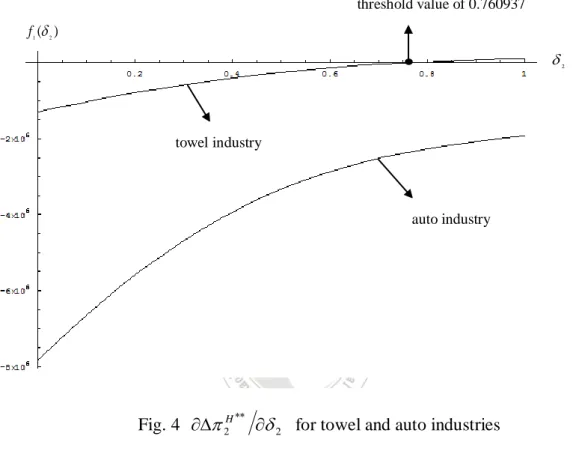
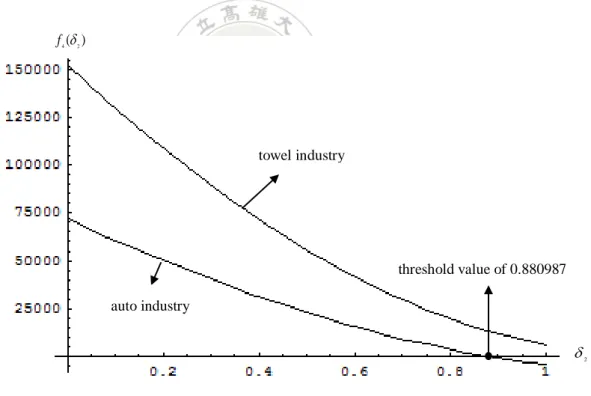
Fig. 4 2H 2 for towel and auto industries ... 32
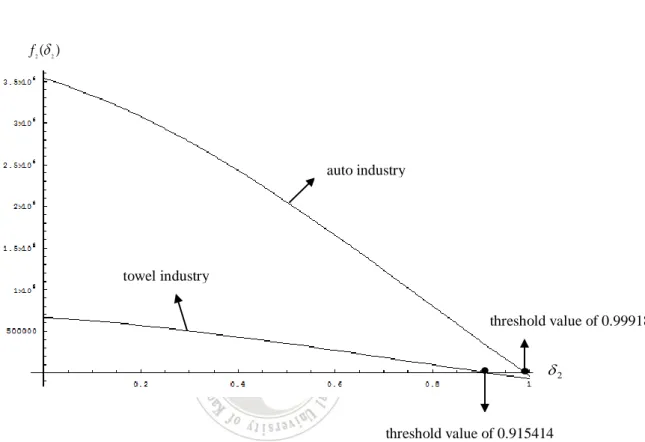
Fig. 5 CS 2 for towel and auto industries ... 33
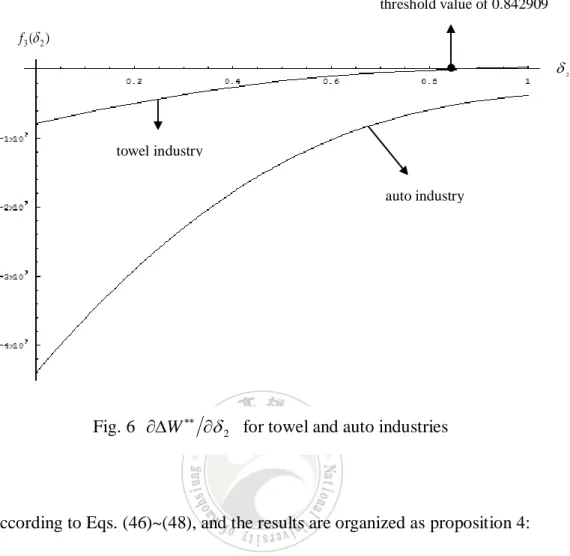
Fig. 6 W 2 for towel and auto industries ... 34
Fig. 7 The three-stage game of Case 3 ... 37
1
Chapter 1 Introduction
1.1 Research Background and Motivation
Since the end of World War II, nations around the world all vigorously push forward the free trade scheme to reconstruct the global trading order. Free trade means a country can freely produce and sell products to other countries without trade barriers such as tariff, quota, or non-tariff barrier to the imports of foreign goods, enabling the free products flow between countries and countries (Charles, 2009). Free trade can bring benefits and enhance the standard of live around the world since the outputs can be increased due to specialization. If the government sets legal restrictions on international trade or shuts down the international flow of products and services for the sake of protecting domestic industry, yet, it will also lead to inefficiently use the resources, reduce the productivity and social welfare, and diminish the competitiveness of a country.
As the rise of free trade, the economic integration1 has been the new trend around the world. Every country starts to seek trading partners to form economic grouping,2 aiming at congregating resources and abilities of the members to accelerate economic developments of the participating countries. In the early stage of economic integration, the members of economic bloc are composed of countries nearby, forming the regional economic grouping to reduce the cultural and language barrier (Krugman, 1991).
In the 1990s, the three major regional economic groupings are European Union
1
Economic integration has several forms, significantly in the degree of cooperation, dependence, and interrelationship among participating nations. Economic integration can be regional Cooperation Groups, free trade area, customs union, common market and political union (Cateora and Craham, 2005, p. 282).
2
If the economic grouping is classified according to the number of the member countries, it can be called multilateral (or multinational), meaning that there are more than two member countries in the group, or bilateral, referring that there are only two members in the group.
2
(EU), North American Free Trade Agreement (NAFTA)3 and ASEAN Free Trade Area (AFTA).4 The custom union5 model is adapted as the European Union’s core model and soon afterwards the European Monetary System (EMS) was set up.
The single currency, Euro, thus has been developed and formed the Euro-Zone, 6 proving impetus for the economic and trading development of the union’s members. North American Free Trade Agreement and ASEAN Free Trade Area are integrated by the model of Free Trade Area.7 Since 2001, the ASEAN negotiated and signed the China–ASEAN Free Trade Area with Chinese authority. Nowadays with the two new participants, Japan and Korea, joining the discussion of forming the ASEAN Plus Three Free Trade Area, the ASEAN is paving its way for the formation of Asian Economic Community. (Chirathivat, 2002)
After the year 2000, the economic integration is no longer confined to regions. Regional economic groupings and their participants begin to seek trade cooperation outside of their region. For example, European Union has signed Free Trade Agreement with Korea, Mexico, USA and Singapore. Right now there are various and many FTAs are discussed and every country keeps looking for new trading partners.
Most of the FTAs are often named as Free Trade Agreement. However, some countries may use alternative names due to political and historical concerns. For example, the Closer Economic Partnership Arrangement (CEPA)8 signed between
3
On August 15th, 1992, USA, Canada and Mexico officially formed a free trade zone based on the basic principles of GATT.
4
The idea of ASEAN free trade zone was first proposed in 1992. Currently the ten members include the six original ASEAN countries (Indonesia, Malaysia, Philippine, Singapore, Thailand and Brunei ) and four new members (Vietnam, Laos, Myanmar and Cambodia). The free trade zone has officially launched since 2002.
5
Custom union aims acting eliminates barriers among members and providing a common external trade policy (Charles, 2009).
6
The Euro Zone refers to the alliance of countries that adept Euro as the only official currency. It is the European Central Bank that formulates unified monetary policy for the Euro zone. Until 2010, there are 16 member states in the Euro Zone.
7
Within free trade area, all barriers to trade among members are removed and each country can determine its own trade policies toward nonmembers (Charles, 2009).
3
China and Hong Kong in 2003 and the Economic Cooperation Framework Agreement (ECFA)9 signed between China and Taiwan in 2010. Alt hough their names may be different fro m the commo n FTAs, in the essence they st ill are a kind of FTA.10
Even though the eco no mic integrat io n can boost the GDP, import and export volume and social welfare o f the participat ing countries (e.g. Baier and Bergstrand, 2007; Ornelas and Turner, 2008; Falvey et al., 2010), it is possible to bring negat ive impacts o n individual industries (e.g. Kortum, 1997; Kletzer, 2004). It is thus very common to see large-scale protests initiated by the suffered industries in countries that are to establish FTA related policies. For instance, in 2006 the large scale protest in Korea was initiated by Korean farmers worrying that after the formation of the FTA the cheap American agricultural products will dump to Korea, causing a serious blow at the local agriculture industry. In 2010, when the Taiwan government is to sign ECFA with China, many scholars and experts oppose to the agreement, questioning that this agreement will just benefit certain industries while depriving the vulnerable industries of their transformation opportunities.
fully by the WTO’s requirements on FTAs. While the Agreement eliminates trade and investment barriers between Hong Kong and the Chinese mainland, it does not raise any obstacles for other economies’ access to the two markets. CEPA covering three areas: (1) trade in goods; (2) trade in services; and (3) investment facilitation. CEPA opened up new business opportunities for Hong Kong’s manufacturing and services sectors, thus helping Hong Kong to revive some of its industrial activities and to strengthen its status as a commercial centre (Chiu, 2006, p. 276).
9
The Agreed Framework is aimed at the critical industries. Negotiation of the mutual exemption of tariffs or preferential market access conditions can be conducted firstly so that the part that has reached consensus can be implemented as priority. This is called the Early Harvest that can immediately respond to the desperate needs of eliminating tariff barriers for the industries facing difficulties in international market.
10
4
1.2 Research Purpose
In view of the above fact, this essay is thus motivated to discuss the influence of the FTA on a country’s strength and vulnerable companies, the profits of companies and social welfare. On the other hand, some companies might gain rents due to the policy turnaround by the government, whereas some may suffer for no reason. Government should take proper measures to reduce the negative impacts brought on to the vulnerable industries.
The establishment of the FTA will lead to different levels of impacts to the domestic industries. The main points of this essay are to discuss how the uncompetitive industries should respond to diminish the negative impacts after the government signing the FTA. Moreover, after signing FTA, the government should take measures based on social justice to shift the policy rents from the benefited firm to the uncompetitive firm. The shifted rent has to confine R&D budgets for lowering the production cost and reinforcing market competitiveness, then to boost the social welfare without the breach of WTO regulation. Thus the major points of this research are as follows:
1. Compare the home country’s social welfares before and after signing the FTA. How does the tariff reduction influence the home country’s competitive firm and uncompetitive firm?
2. After completing the FTA, what is the appropriate policy under WTO regulation for home country government to bailout domestic uncompetitive firm?
5
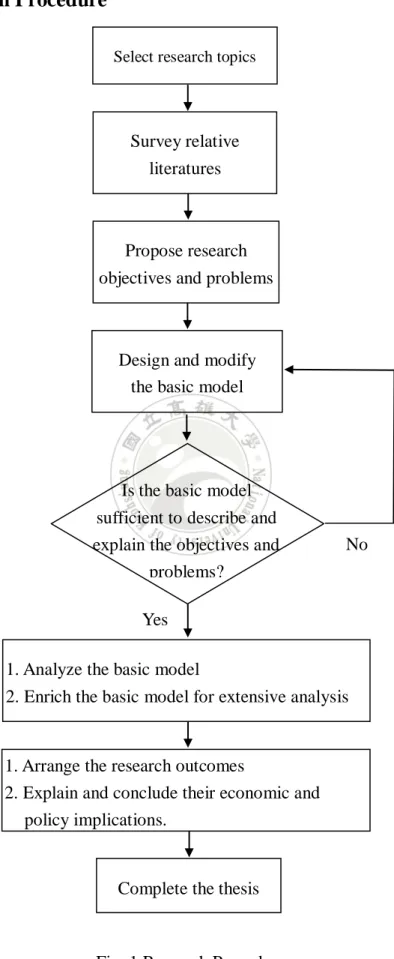
1.3 Research Procedure
Select research topics
Survey relative literatures
Propose research objectives and problems
Is the basic model sufficient to describe and explain the objectives and
problems?
No
Fig. 1 Research Procedure 1. Analyze the basic model
2. Enrich the basic model for extensive analysis
1. Arrange the research outcomes
2. Explain and conclude their economic and policy implications.
Complete the thesis Yes
Design and modify the basic model
6
1.4 Research Contributions
This paper compare the variation before and after signing the FTA, in the profits of the competitive and uncompetitive firms listed in the early harvest items. This paper can also measure the variation in the social welfare after the government and the uncompetitive firm adopts R&D supporting measures for reacting to the FTA. Our result will apply an available alternative for the government to bailout the uncompetitive firm from the negative impact of ECFA signed by Taiwan and China.
1.5 Article Structure
In chapter 2, we review the past literatures concerned about economic integration, effects of R&D investment, and R&D subsidies policy. In chapter 3, We following the non-actionable subsidies of the norms of WTO in R&D subsidy to analyze the cases to the effect of social welfare. Case 1: after signing FTA, the government and uncompetitive firm both stay in inertia state. Case 2: the uncompetitive firm struggle alone by investing R&D to raise its own competition. Case 3: the government adopts R&D subsidy measures. Chapter 4 is the conclusions.
7
Chapter 2 Literature Review
Trade liberalization and economic integration agreement will cause serious impacts on a country’s industries and, social welfare. In the past, many literatures discussed the influence of trade liberalization and economic integration agreement on the welfare system of the country. Some scholars, from the view of the government, had proposed strategic trade policies and industrial policy to protect domestic industries and maximize the national welfare after the opening of free trade. This essay is to probe the policies that governments can implement to subsidize the R&D expense for the uncompetitive industries to lower production costs via the non-prohibited subsidy while complying with the prohibited subsidy regulation of WTO.
2.1 Effects of economic integration
There are several forms of economic integration such as Preferential Trading Arrangement (PTAs), Free Trade Areas (FTAs), Custom Unions (CU), Common Market Economic Unions. According to relevant issues, different trade zones have independent agreements. PTAs, FTAs, and CU are the most popular forms. Besides, trade regulation of GATT/WTO also let worldwide trading change a lot. Related studies of effects on economic integration between member and non-member countries are reviewed as follows.
Currently, by judging the effects on worldwide welfare through economic integration, Viner (1950) indicated “trade creation” and “trade diversion” as the main issues. The concept of trade creation means that using imported products from low-cost member countries to replace domestic high-cost manufacturers. Trade
8
creation represents a movement in the direction of the free-trade allocation of resources and thus is presumably beneficial for welfare; Trade diversion decreases welfare because importers switch from low-priced world sources to higher priced member country sources after tariffs drop to zero on trade zone. Therefore, effects of welfare are dependent on the integration of trade creation and that of trade diversion. Most related studies only indicated the results of integration of trade creation and trade diversion for this issue, which are reviewed those pros and cons as follows.
Trade agreement can lead to trade creation. Kennan and Riezman (1990) found that all FTAs members are willing to reduce external tariffs after entering in an FTA. Under lower external tariffs, there is no discrimination for non-member country; therefore, trade diversion is able to be eliminated. Richardson (1993), Bagwell and Staiger (1999), and Ornelas (2002) further illustrate that FTAs have positive motivation to reduce external tariffs. Moreover, this can positively confirm that trade diversion can be eliminated after FTAs reduces external tariffs. Bohara et al. (2003) illustrate that trade liberalization can stimulate to reduce external tariffs. Krueger (2000) and Clausing (2001) indicate general equilibrium models result in an obvious outcome of preferential trading blocs and trade diversion is not existed. Krugman (1991) illustrated that most FTAs are formed by natural trading partners, so the influence of trade diversion is quite weak and “prospective moves toward regional free trade would almost surely do more good than harm to the members of the free trade areas”. Furthermore, relevant studies on European trade blocs, Asian and North American, and Latin America all represented that trade agreements can lead to a confirmative effect for trade creation (e.g., Aitken, 1973; Bergstrand, 1985; Thursby, 1987; Frankel and Wei, 1996; Frankel, 1997; Soloaga and Winters, 2001). Rose (2000), Feenstra et al. (2001) and Frankel and Rose (2002) all found that regional trade agreements, in general, is trade creating. Clausing (2001) illustrated that after
9
implementing trade integration, the effect of trade creation is larger than that of trade diversion. Baier and Bergstrand (2007) obviously pointed out a FTA approximately doubles two members’ bilateral trade after 10 years. Bastos and Kreickemeire (2009) indicate under the condition of free trading integration, the labor wages, social welfare of member and non-member countries are going up. If one economic integration with fewer member countries, it can create a larger welfare.
However, under the different economic integrations, those do not definitely generate welfare of trade creation effect. Soloaga and Winters (2001) represented the effects of 58 countries of import index signed Preferential Trade Agreement, PTAs during 1980 and 1996. The result indicated that EU and EFTA exists the effect of trade diversion. Kandogan (2009) found that there is an obvious trade diversion occurred in the European non-member developing countries that with similar industries of member countries. The trade diversions of these countries are obviously represented on GDP. Bond et al. (2004) illustrated reasons of why social welfare is getting less. They implemented simple three-country general-equilibrium trade model to analyze how the effect between two countries influences the tariff and welfare levels of all trade partners under FTA. Their results regard FTA as an agreement of economic integration such as NAFTA to increase business trading and welfare for member and non-member countries. It creates an incentive for member to reduce their external tariffs and imply relatively less aggressive tariff setting for their members. Thus, FTAs can elevate worldwide welfare. On the other hand, using tariff alliance as economical integration model such as Customs Union on, CU, there is a smaller external tariff reduction (or even an increase). When alliance members choose external tariffs, the main objective is to maximize welfare for member countries. Therefore, even though non-member countries manufacturing same products with lower production cost, its product price is still largely high due to external tariffs.
10
Therefore, by implementing tariff alliance, member countries still choose doing business with alliance members, resulting in inefficient resource distribution and elevation. Furthermore, FTA may be welfare-improving in the Pareto sence relative to no cooperation at all.
Different economic integrations generate different effects. Magee (2008) illustrates effects on tariff alliance among trading groups are large on a long term basis. By contrast, free trading agreements affect smaller on group by a shorter time. Moreover, Preferential trading arrangement creates fewer trading creation which is usually generated after few years of forming trading group
In conclusion, de Melo and Panagariya (1993) illustrate that regionalism can reduces protection but increases welfare. Peretto (2003) considers elements of technical skills and labor supply, economic integration can stimulate the growth of domestic companies and increase market competitiveness in order to achieve the development of domestic social welfare. Lawrence (1998, p. 59) wrote:
Free trade areas may well be an endogenous variable—that is, a response to, rather than a source of, large trade flows...Presumably, (governments) are more likely to form free trade areas, the benefits outweigh the costs.
Maoz et al. (2011) based on the two-sector growth model, used a relative price of consumable capital asset to discuss the effect of free trade between two countries. This study pointed out that under the FTA of rich-poor countries, the developed country exports capital goods and the developing one exports consumption goods. In a competitive market, signing FTA is able to alternate worldwide capital allocation and increase total world production. Thus, economic integration not only stimulates group development, but also maximizes effects of free trading as well as increasing worldwide welfare.
11
2.2 Effects of R&D investment and R&D subsidies policy
Under the free trade policy, each country adopts various trade policies that can enhance benefits or reduce the negative effects, in order to achieve the maximization of social welfare for the home country. Related strategic trade papers can be traced back to the research of Brander and Spencer (1981). The authors stipulated the strategic trade from the aspect of profit-shifting and found that the profits of foreign import companies can be reduced by levying the import tariff, which in turn can enhance the welfare of the home country. Helpman and Krugman (1993) believe that the implementation of export subsidy or strategic trade policies aiming at exports will both create profits and improve the welfare of the home country. However the implementation of the subsidy policy will lead to the prisons’ dilemma, and diminution the world’s social welfare. According to the regulation of WTO, these subsidies are against the prohibited subsidies rule of WTO.11
This paper is based on the category of the non-actionable subsidies to discuss the government subsidy of R&D aiming to advance the disadvantaged firms’ market competitiveness after the implementation FTA. Thus this passage will integrate all the R&D related researches from the earlier researches.
Cardoso and Teixeira (2009) believed that the major method of business innovation is to increase the R&D activity. When firms are dedicated to R&D investments, the threat of potential entrants can be reduced (e.g., Schumpeter, 1942;
11
Notified under article 5 of the WTO: The following subsidies shall be actionable subsidies: (a) injury to the domestic industry of another Member; (b) nullification or impairment of benefits accruing directly or indirectly to other Members under GATT 1994 in particular the benefits of concessions bound under Article II of GATT 1994; (c) serious prejudice to the interests of another Member. Serious prejudice in the sense of paragraph (d) of Article 5 shall be deemed to exist in the case of: (i) the total ad valorem subsidization of a product exceeding 5 per cent; (ii) subsidies to cover operating losses sustained by an industry; (iii) subsidies to cover operating losses sustained by an enterprise, other than one-time measures which are non-recurrent and cannot be repeated for that enterprise and which are given merely to provide time for the development of long-term solutions and to avoid acute social problems.
12
Arrow, 1962; Dasgupta and Stiglitz, 1980). Many research indicated that there are positive relationship between R&D investment and market share (e.g., Chan et al., 1990; Doukas and Switzer, 1992; Chauvin and Hirschey, 1993; Blundell et al., 1999; Bae and Non, 2001; Ho et al., 2005; Bae et al., 2008). Based on the raw U.S.A. firm-level data from the Compustat Global database, Griliches (1981) had applied market value as an indicator of a firm’s expected returns from R&D investment. This research has found a positive correlation between the firms’ proportion of R&D investments and their market share. Afterwards many studies are done in US (e.g., Hirschey, 1982; Jaffe, 1986; Cockburn and Griliches, 1988; Hall, 1993; Ehie and Olibe, 2010) and UK (e.g., Blundell et al., 1999; Toivanen et al., 2002), their studies all found that R&D investment positively affects firm performance. Aghion et al., (2005) indicated that innovation and market competitiveness is present an U-shape relationship, while companies are in a competitive market, a creative technique plays an important role in increasing profit if investing R&D. Morbey (1988) found R&D investment can promote the viability, growth, and competitiveness of an organization.
Many scholars had probed into the influences of R&D investments (e.g., Lee and Wide, 1980; Reinganum, 1982), and some of them considered that the effects of R&D can be divided into process innovation and product innovation. The process innovation resulted from R&D activity can help the firm to employ a more efficient production method and cost reduction technology. The accumulation of process innovation will reduce the product costs and enhance the marginal returns of the R&D investments, leading to a continual growth of profits (e.g., Spence, 1984; Grossman and Helpman, 1991; Lahiri and Ono, 1999; Toshimitsu, 2003; Asker and Baccara, 2010). Product innovation infers that the acquisition of new technology is applied to develop new products (Cassiman and Veugelers, 2006). Since this essay aims to discuss the reduction of production costs derived from government R&D subsidy, the
13
influence of product innovation will not be explored.
Levin and Reiss (1988) believed that when corporate devotes into R&D activities, it will bring change to the market demand and cost condition of the product. Spence (1984) assumed that develop new process technologies will directly reduce the production costs and thus provide consumers a more economical products. Although the R&D investments in the reduction of production costs is a huge fixed cost, yet in a market system, the investment of R&D indeed will result in great reduction of production costs. Lahiri and Ono (1999) applied the Cournot duopolists model and analyzed under the condition that each firm has various R&D investment conditions. The result showed that R&D investments will reduce the marginal cost. Moreover based on the Cournot competition, the firm investing more on manufacture process will acquire larger market share in a homogenous product market. Pereira (2001) deem that a firm can always benefit from reducing costs since the costs reduction brought about by R&D can enhance the company’s market power, whose rents are enough to cover the R&D investment expenditures. The more profits generate from cost reduction, the larger market power it will be and the greater incentives they are for corporate to invest in R&D.
The governments have used various policy measures to support R&D activities, such as R&D subsidies and government-sponsored research projects have been popular in Japan and European countries (Toshimitsu, 2003). The governments have two main reasons for focusing on R&D subsidies: First of all, while other non-member countries can set R&D subsidies autonomously, the participants of WTO and other international institutions are restrained from the trade policy production subsidies. Secondly, the authorities are to achieve the goal of defending the domestic economy while sustain the profits from trade (Impullitti, 2010). There are two motives for R&D subsidies as follows: First, the public good nature of R&D is associated with
14
the market failure (e.g., Grossman and Helpman, 1991; Segerstrom, 1998). In their model, innovation driven growth, consumer surplus can be enhanced by improving the quality of goods or reducing the price of the goods. Therefore, by fixing socially inefficient levels of R&D as a result of the presence of knowledge externalities, R&D subsidies can be applied to maximize consumer surplus. This is the motive of subsidies from the aspect of the consumer surplus. Second, the strategic incentive to subside is correlated to international competition. R&D subsidies are able to help domestic corporate to compete in global R&D races for market leadership, which in turn will help to guard the national income (e.g., Brander and Spencer, 1983; Eaton and Grossman, 1986). The effects of overseas competition on the most advantageous domestic subsidy work through the impact of foreign entry in R&D on these two motives for subsidies.
Lahiri and Ono (1999) have explored the formation of the best R&D taxes- subsidies, R&D investments will lessen the marginal costs of production with the help of process R&D. Under the Cournot competition model, and in a homogenous product market, the company with a minor (or superior) primary marginal cost invests more (or, respectively, less) in process R&D and hence enjoy larger (or smaller, respectively) market share. Under such situation, in order to maximize social welfare, the government ought to tax the minor firm with higher initial marginal costs and subsidize the larger one with lower marginal initial costs.
Toshimitsu (2003) based on the model of the Bertrand and Cournot duopoly to discuss the implications of subsidy policies targeted at R&D investments. The research found that no matter the product-market competition is Bertrand or Cournot, the R&D subsidy can maximize the total consumer and producer surplus and social welfare. Haaland and Kind (2008) indicated that on the optimal R&D subsidy, both the consumer surplus and firm’s competitiveness will be improved. With the premise
15
and hypothesis that government subside a fixed fund to companies, Asker and Baccara (2010) analyzed the results of R&D input of the companies. The research pointed out that if the company devotes the government funding into R&D, the production costs will thus be reduced so that the products can be sold with lower price, yet producing more profits. On the contrary, if the company fail to invest the fund into R&D, the price of the products will be higher and generate less income. Based on the above references, the implementation of government R&D subsidies will effectively lower the manufacturing costs so as to become more competitiveness.
16
Chapter 3 The Model
Suppose that there are two countries in a simplified world, one is considered a home country and the other is a foreign country (taking the two countries in abbreviation of H and F). Every country is composed by two different industries. Each of the two industries produces a separated good, Good 1 and Good 2, in the same country, but differentiated with other country. The two countries prepare to sign free trade agreement. In the following, the superscript of the variables represents the countries and the subscript represents the goods. We denote firms, production quantities and production cost as fiN, qiNand ciN, NH,F, i1,2. The market structure between the two countries before and after signing FTA is known as Fig. 2.
Foreign country
t
0
t
0
Home country
Panel (a) Before signing FTA Panel (b) After signing FTA Fig. 2: Market structure
F
f
1
f
2
F
H
f
1
f
2
H
F
f
1
f
2
F
H
f
1
f
2
H
17
3.1 The benchmark model - Before signing FTA
Denote f1Fand f1H are foreign and home firms specialized in producing Good 1 at foreign and home countries respectively. Before signing FTA, Good 1 is sold only in foreign country. That is f1Hproduces Good 1 in home country but exports all its products to foreign country. f1Fand f1H engage in Cournot competition in the foreign market. Foreign Good 2 is forbidden in the home market. Therefore, f2H is the domestic monopoly supplier of Good 2 (Refers to Fig.2 panel (a)). Assume that
H
f1 is the competitive firm in producing Good 1. And f2H is the uncompetitive firm in producing Good 2. f1H is more efficient than f1F, i.e. c1H c1F, whereas
H
f2 is less efficient than f2H , i.e. c2F c2H , let c1H 0 , c2F 0 , we have
0
1 1 c
cF and c2H c2 0.
Assume that the inverse demand functions of the two countries are:
M
i i N i N i i a q q p , N,M H,F, N M , i1,2 (1) where i(0,1] denote the degree of product differentiation of Good i . When1
i
means that both domestic and foreign firms produce completely homogeneous Good i . As i getting closer to 0, the domestic and foreign Good i are more cline
to become heterogeneous products. qiN and qMj represent the output of Good i produced in countries N and M, respectively.
Before signing the free trade agreement, f2H monopolistically supply Good 2 in home country, therefore, 2 0
F
q in Eq. (1). At the same time, foreign government will levy tariff t on the imported goods produced by f1H.
In the foreign market, the profit of f1H and
F f1 are:
H F H F H H q t q q a q t p1 1 1 1 1 1 1 1 ( ) (2)
F F F H F F q c q q a q c p1 1 1 1 1 1 1 1 1 1 ( ) (3)18
The response functions of f1H and f1F are given by:
0 2 1 1 1 1 q q t aF H F (4) 0 2 1 1 1 1 1 q q c aF F H (5) The equilibrium quantities, prices and optimal profits of f1H and f1F are:
2 1 1 1 1 1 * 1 4 2 ) 2 ( a t c q F H , 2 1 1 1 1 1 * 1 4 2 ) 2 ( a c t q F F 2 1 2 1 1 1 1 1 1 4 ) (2 ) 2 ( a c t p F H , 2 1 2 1 1 1 1 1 1 4 ) (2 ) 2 ( a t c p F F 2 2 1 2 1 1 1 1 1 ) (4 ] 2 ) 2 ( [ aF t c H , 2 2 1 2 1 1 1 1 1 ) 4 ( ] 2 ) 2 ( [ aF c t F (6) Since f2H monopolistically supply the home country market, the profit of f2H
is:
H H q c p2 2 2 2 =
a2H q2H c2
q2H (7) The response function of f2H is given by:0
2 2 2
2 q c
aH H (8) The optimal quality, price and profit of f2H are:
2 2 2 2 c a q H H , 2 2 2 2 c a p H , 4 ) ( 2 2 2 2 c aH H (9) The consumer surplus of Good 2 consumed in home country is:
8 ) ( ) ( 2 1 2 2 2 2 2 c a Q CS H H (10) The home country’s social welfare is:
CS 2 1 H H W 8 ) 3( ) (4 ] 2 ) 2 ( [ 2 2 2 2 2 1 2 1 1 1 1 t c a c aF H (11) Considering foreign tariff t and its impact on social welfare, will result of comparative static analysis on t is shown as:
0 ) (4 ] 2 ) 2 ( [ 4 2 2 1 1 1 1 1 t c a t W F (12)
19
From Eq. (12), we can realize that when the tariff imposed on domestic firm by foreign government is smaller, the domestic social welfare will become better. Therefore, there is incentive for home country government to sign FTA to enhance social welfare. However, home country government has to consider the outcomes which generated by foreign competitions entering into domestic market after signing FTA.
3.2 After signing FTA
If the two countries sign the free trade agreement, the government of home country may or may not adopt policies for supporting measures. Facing the foreign imported goods, uncompetitive domestic firms may or may not struggle for their survival. In this paper we investigate the situation while Good 1 and Good 2 are listed in the early harvest items and both goods are exempted for tariffs bilaterally (Refers to Fig.2 panel (b)). For further discussion the change of social welfare after signing FTA, we present three cases by the combination of government’s policy and uncompetitive firms’ efforts. Case 1, both government and uncompetitive firm do nothing and stay in an inertia state; Case 2, the uncompetitive firm struggles for its survival alone. Case 3, government of home country adopts R&D supporting measures accompany with the uncompetitive firm’s own R&D effort.
20
3.3 Case 1. All parties in home country stay in the inertia state
In this case, both government and f2H do nothing concerning imported Good 2. Therefore, f2H and f2F practice Cournot competition in domestic market while f1H and
F
f1 practice Cournot competition in foreign market as before signing FTA except f1H is exempted from paying tariff.
The profits of f1H and f1F in the foreign market are given by:
H F H F H H H q q q a q p1 1 1 1 1 1 1 1 ( ) (13)
F
F F F H F F q c q q a q c p1 1 1 1 1 1 1 1 1 1 ( ) (14) The response functions of f1H and f1F are:0 2 1 1 1 1 F H F q q a (15) 0 2 1 1 1 1 1 q q c aF F H (16) The equilibrium quantities, prices and optimal profits of the f1H and f1F are:
2 1 1 1 1 1 4 ) 2 ( a c q F H , 2 1 1 1 1 * 1 4 2 ) 2 ( a c q F F 2 1 1 1 1 4 ) 2 ( a c p F H , 2 1 2 1 1 1 4 ) 2 ( ) 2 ( a c p F F 2 2 1 2 1 1 1 1 1 ) (4 ] ) 2 ( [ aF c H , 2 2 1 2 1 1 1 1 ) (4 ] 2 ) 2 ( [ aF c F (17) The profits of f2H and f2F in the home market are given by:
H F H H H H H q c q q a q c p2 2 2 2 2 2 2 2 2 2 ( ) ( ) (18) F H F H F F F q q q a q p2 2 2 2 2 2 2 2 ( ) (19) The response functions of f2H and f2F in the home market are given by:
0 2 2 2 2 2 2 q q c aH H F (20) 0 2 2 2 2 2 H F H q q a (21)
21
The equilibrium quantities, prices and optimal profits of f2H and f2F are: 2 2 2 2 2 2 4 2 ) (2 a c q H H , 2 2 2 2 2 2 2 4 ) (2 a c q H F 2 2 2 2 2 2 2 2 4 ) 2 ( ) (2 a c p H H , 2 2 2 2 2 2 2 4 ) (2 a c p H F 2 2 2 2 2 2 2 2 ) (4 ] 2 ) (2 [ aH c H , 2 2 2 2 2 2 2 2 2 ) 4 ( ] ) 2 ( [ aH c F (22) The consumer surplus of Good 2 consumed in home country is:
2 2 2 2 2 2 2 ) 2 ( 2 ) 2 ( ) ( 2 1 Q a c CS H H (23) Home country’s social welfare is:
CS W 1H2H 2 2 1 2 1 1 1 1 ) (4 ] ) 2 ( [ aF c 2 2 2 2 2 2 2 ) (4 ] 2 ) (2 [ aH c + 2 2 2 2 2 ) 2 ( 2 ) (2 c aH (24)
From Eqs. (6) and (17), Eqs. (9) and (22), Eqs. (10) and (23) we can calculate the two home firms’ profit differences as well as consumer surplus before and after signing FTA. They are denoted as 1H, 2H, and CS :
H H H 1 1 1 0 ) (4 ] ) 2 ( [ 4 2 2 1 1 1 1 1 c t a t F (25) H H H 2 2 2 0 ) 4(4 )] 8 ( ) 2 (8 ][ ) 2 ( [ 2 2 2 2 2 2 2 2 2 2 2 2 2 2 2 aH c aH c (26) 0 ) 2 ( 8 )] ( ) 2 3 ( 2 ][ ) 2 ( [ 2 2 2 2 2 2 2 2 2 2 2 c a c a c a CS CS CS H H H (27)
From Eqs. (25) ~ (27), the change of home country’s social welfare before and after signing FTA is shown as:
W W W 1H2HCS 0 ) 8(4 ) 3 28 16 ( ) 3 6 36 24 ( ) (4 ] ) 2 ( [ 4 2 2 3 2 2 2 3 2 2 2 2 2 2 2 1 1 1 1 1 c t a c a t F H (28)
22
From Eq. (25) we can realize that after signing FTA, domestic competitive firm become more profitable by exempting from tariff when exporting to foreign market.
From Eq. (26) we can realize that if 2 0, then 2H 0; when 2 0, 0
2 H
. This means after signing FTA, domestic uncompetitive firm will be suffered by foreign competitive Good 2 while domestic and foreign Good 2 exist substitution. Only foreign and domestic Good 2 are perfectly independent, then uncompetitive firm can maintain their original profit after signing FTA.
From Eq. (27) we can realize that the consumer surplus is better off after signing FTA. The reason is that signing FTA can attract foreign competitive firm to enter into domestic market, and provide domestic consumers more inexpensive products, which in turn increase domestic consumer surplus.
From Eq. (28), we can see that signing FTA can increase domestic social welfare. The reason is that although signing FTA might hurt domestic uncompetitive firm, but it can simultaneously enhance profit of domestic exporting firm and consumer surplus. The total outcome still can enhance domestic social welfare. This finding is described as proposition 1.
Proposition 1: After signing FTA, if the government of home country and the
uncompetitive firm in home country remain in the inertia state:
(1) The profit of domestic competitive exporting firm and consumer surplus will increase, and the domestic social welfare will become better off;
(2) As long as the product of domestic uncompetitive firm can be substituted by foreign competitive products, then its profit will be worse.
23
After discussing the effects which are caused by tariff t to W , 12
comparative static analysis outcomes are shown as:
0 ) 4 ( 8 4 ) 2 ( 4 2 2 1 1 1 1 1 1 a c t t W t F H (29)
From Eq. (29) we can see that the change of t generates same positive impact on 1H and W . The reason is that foreign government lowers tariff can only
benefit domestic exporting firms. Because exporting firm has competition advantage abroad, foreign government lowers tariff t doesn’t have any effect on the other domestic uncompetitive firm or consumers, and only benefit exporting firm. Therefore, the differences of domestic social welfare and the differences of domestic exporting firms’ profits are totally the same before and after foreign government’s lowering tariff.
On the other hand, the effects of 2H, CS , and W caused by product
differentiation 2 of domestic market competition, comparative static analysis shows that: 0 ) 4 ( ] 4 ) 2 ( ][ 2 ) 2 ( [ 2 3 2 2 2 2 2 2 2 2 2 2 2 2 H aH c aH c 0 ) 2 ( ) 2 ( 3 2 2 2 2 2 c a CS H 0 ) 4 ( ] 2 ) 2 ( [ 8 ) 2 ( 4 ] 4 2 [ ) (2 3 2 2 2 2 2 2 2 2 2 2 2 2 2 2 2 2 3 2 2 c a c c a c c a a W H H H H (30) 12
The original tariff before signing FTA is assumed as t , and the tariff after signing FTA is assumed as 0, so the difference of tariff before and after signing FTA is tt0t. Therefore, we substitute
t
24
For social welfare, product differentiation does not related to 1H, but related to changes of 2H and CS. From the discussion mentioned above, we can know that the effects of signing FTA on domestic competitive firms mainly come from the amount of tariff levied by foreign government; and the major factor of affecting domestic uncompetitive firm is the substitution of foreign competitive products. This finding is described as proposition 2.
Proposition 2: Under the same background of Proposition 1:
1. If foreign government imposes on higher (lower) tariff before signing FTA, then exporting firm can get more (less) benefits from FTA;
2. If domestic uncompetitive firm and foreign competitor have higher (lower) product homogeneity,
(1) FTA will be more (less) harmful to domestic uncompetitive firm; (2) FTA can bring less (more) domestic consumer surplus;
(3) FTA can bring less (more) benefits to home country’s social welfare.
For f1H, after the two countries sign FTA, 1H increases largely compared with before signing FTA, and the increase of 1H can enhance home country’s social welfare. If the original tariff is higher, both 1H and social welfare can increase more. However, signing FTA not only affects domestic exporting firm but also domestic uncompetitive firm. For f2H, 2H decreases while signing FTA, and if domestic and foreign Good 2 have higher homogeneity, then f2H should be hurt worse. It might also cause more decreases on home country’s social welfare. For home country signing FTA may enhance consumer surplus and in turn increase social welfare, if foreign competitive product is more different with domestic product, then social welfare can get higher level. Therefore, domestic uncompetitive firm has to
25
differentiate its product, the result can hence fit its profit and increase consumer surplus and social welfare.
From case 1 we can realize that home country government’s policy of signing FTA can bring profits to domestic exporting firm and enhance domestic consumer surplus, and in turn increases domestic social welfare. However, when the products sold by foreign competitors to domestic market have some substitution with products of domestic firm, domestic uncompetitive firm will definitely be damaged. Under the consideration of how uncompetitive firm should handle this damage brought by FTA and what the home country government should do based on social justice and social welfare maximization, this article will discuss the effects on lowering cost of domestic uncompetitive firm. We will also discuss the topic on how the uncompetitive firm engaged in R&D by its own to enhance its market competitiveness (Case 2) and the topic on government subsidies R&D expenses to the victim firm (Case 3). By analyzing post-signing-FTA situations, we can find out available measures for the uncompetitive firm and the government.
26
3.4 Case 2. The uncompetitive firm struggles alone
In case 2, G still does nothing and leaves H f2H struggles alone. In such circumstance f2H may try to reduce their cost of production through R&D efforts. Therefore, the competition of H
f1 and
F
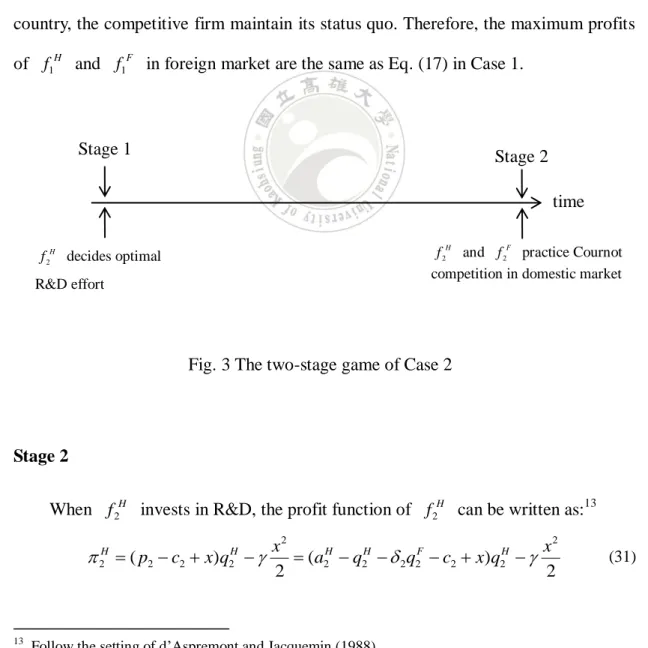
f1 in foreign market is the same as Case 1 while f2H may invest in R&D for cost reduction and competes with f2H in domestic market. In this case, we set up a two-stage game to explore the situation. Stage 1, f2H decides optimal R&D efforts. At stage 2, f2H and f2F practice Cournot competition in domestic market. The two-stage game is depicted as Fig. 3. We adopt the backward induction to solve the problem.
In Case 2, we discuss only the activities of the uncompetitive firm of the home country, the competitive firm maintain its status quo. Therefore, the maximum profits of f1H and
F
f1 in foreign market are the same as Eq. (17) in Case 1.
Stage 2
When f2H invests in R&D, the profit function of
H
f2 can be written as:
13 2 ) ( 2 ) ( 2 2 2 2 2 2 2 2 2 2 2 2 x q x c q q a x q x c p H H H F H H (31)
13 Follow the setting of d’Aspremont and Jacquemin (1988).
Stage 1
time
H
f2 decides optimal
R&D effort
Fig. 3 The two-stage game of Case 2
Stage 2
H
f2 and
F
f2 practice Cournot
27
where denotes the parameter of R&D efforts, x is the R&D performance of cost reduction while f2H, 0xc2,invests
2 2
x
.
The first-order conditions for profit maximization of f2H and f2F with respect
to their own output are given by:
0 2 2 2 2 2 2 q q c x aH H F (32) 0 2 2 2 2 2 H F H q q a (33) Solve Eqs. (32) and (33), the equilibrium quantities and prices are:
2 2 2 2 2 2 4 ) ( 2 ) 2 ( ˆ a c x q H H , 2 2 2 2 2 2 2 4 ) ( ) 2 ( ˆ a c x q H F 2 2 2 2 2 2 2 2 4 ) 2 )( ( ) 2 ( ˆ a c x p H H , 2 2 2 2 2 2 2 4 ) ( ) 2 ( ˆ a c x p H F (34)
At the preceding stage, f2H chooses R&D levels, profit can be written as 2 ) (4 )] ( 2 ) 2 ( [ 2 ˆ ) ˆ ( ˆ 2 2 2 2 2 2 2 2 2 2 2 2 2 x x c a x q x c p H H H 2 2 2 2 2 2 2 2 2 2 2 ) (4 )] ( ) 2 ( [ ˆ ˆ a c x q p H F F (35) This integrates a triple influence of the R&D levels: via the outputs, the unit production cost, and the R&D investment.
Stage 1
According to Eq. (35), the response functions of f2H and f2F are given by:
0 ) (4 ) ( 8 ) 2 ( 4 ˆ 2 2 2 2 2 2 2 x x c a x H H 14 (36) 0 ) (4 )] ( ) 2 ( [ 2 ˆ 2 2 2 2 2 2 2 2 2 a c x x H F (37)
14 Second-order conditions require that
2 2 2) (4 8
28
Solve Eq. (36) and (37) can obtain
2 ) 4 ( ) ( 2 2 2 2 2 c a x H (38) Substitute x into equilibrium quantities, prices and profits, we have: *
] 2 ) 4 ( )[ 4 ( ) 4 ( 2 ] 2 ) 2 ( ) 2 ( [ ˆ 2 2 2 2 2 2 2 2 2 2 2 2 2 c a q H H ] 2 ) 4 ( )[ 4 ( ) 4 ( ] 4 ) 2 ( ) 2 ( [ ˆ 2 2 2 2 2 2 2 2 2 2 2 2 2 c a q H F )] 2 ) 4 ( [ ) 4 ( ) 6 8 ( ] ) 4 ( 2 ) 2 ( ) 2 ( [ ˆ 2 2 2 2 4 2 2 2 2 2 2 2 2 2 2 2 2 c a p H H ] 2 ) 4 ( )[ 4 ( ) 4 ( ] 4 ) 2 ( ) 2 ( [ ˆ 2 2 2 2 2 2 2 2 2 2 2 2 2 c a p H F 2 ˆ ) ˆ ( ˆ 2 2 2 2 * * 2 p c x qH x H 2 2 2 2 2 2 2 2 2 2 2 2 2 2 2 2 2 2 2 2 2 ] 2 ) 4 ( [ ) ( 2 ] 2 ) 4 ( [ ) 4 ( )} 4 ( 2 ] 2 ) 2 ( ) 2 ( [ { c a c aH H (39)
Considering and its impact on profit of f2H
0 ] 2 ) 4 ( )[ 4 ( )} 8 2 16 ( )] 4 4 ( 2 ) 2 ( ) 2 ( [ ){ ( 2 ˆ 3 2 2 2 2 2 2 4 2 2 2 2 2 2 3 2 2 2 2 2 c a c aH H H (40)
Eq. (40) reveals that when the uncompetitive firm’s R&D investment increases, its profit will decrease.
The consumer surplus accrued by Good 2 in home country is: 2 2 2 2 2 2 2 2 2 2 2 2 2 2 ] 2 ) 4 ( [ ) 2 ( 2 )} 4 ( ] ) 4 ( 1 [ 2 { ) ( 2 1 ˆ c a Q S C H H (41)
The home country’s social welfare after signing FTA and H
f2 invests in D & R is: S C Wˆ ˆ1H ˆ2H ˆ
29 (42) ] 2 ) 4 ( [ ) 2 ( 2 )} 4 ( ] ) 4 ( 1 [ 2 { ] 2 ) 4 ( [ ) ( 2 ] 2 ) 4 ( [ ) 4 ( )} 4 ( 2 ] 2 ) 2 ( ) 2 ( [ { ) 4 ( ] ) 2 ( [ 2 2 2 2 2 2 2 2 2 2 2 2 2 2 2 2 2 2 2 2 2 2 2 2 2 2 2 2 2 2 2 2 2 2 2 1 2 1 1 1 1 c a c a c a c a H H H F
From Eqs. (22) and (39), Eqs. (23) and (41), we can separately calculate the differences of the uncompetitive firm’s profit and domestic consumer surplus after signing FTA and the uncompetitive firm engages in R&D effort, 2H and CS ,
as: (43) 0 ] 2 ) 4 ( [ ) 4 ( } ] 8 ) 16 ( [ ] 8 8 ) 2 ( ) 2 ( [ ){ ( 2 ˆ 2 2 2 2 2 2 4 2 2 2 2 3 2 2 2 2 2 2 2 c a c aH H H H H (44) 0 ] 2 ) 4 ( [ ) 2 ( ]} 1 ) 4 ( [ ] 3 ) 4 ( 2 [ ){ ( 2 ˆ 2 2 2 2 2 2 2 2 2 2 2 2 2 c a c a CS S C CS H H
In addition we can calculate the differences in social welfare when domestic uncompetitive firm with and without engaging in R&D investment after signing FTA, according to Eqs. (43) and (44), it is shown as:
(45) 0 ]} 12 ) 4 ( ) 2 8 16 ( 2 [ ] 20 ) 3 20 ( ) 2 ( ) 2 ( 3 [ { ] 2 ) 4 ( [ ) 4 ( ) ( 2 ˆ ˆ ˆ 2 2 4 2 3 2 2 2 2 2 2 3 2 2 2 2 2 2 2 2 2 2 2 1 c a c a S C W W W H H H H
From Eqs. (43)~(45), we can compare the difference in its profit when domestic uncompetitive firm with and without engaging in R&D investment, consumer surplus
30
as well as social welfare after signing FTA, and the results are organized as proposition 3:
Proposition 3: After signing FTA, the products of foreign superior firm is permitted to enter into domestic market, If domestic uncompetitive firm chooses to engage in R&D for lowering its production cost: the profit of the uncompetitive firm and social welfare will increase, but domestic consumer surplus will decrease.
After signing FTA, from Eq. (43), if domestic uncompetitive firm engages in R&D to lower its production cost when facing foreign superior firm enters into domestic market, the uncompetitive firm can enhance its own market competitiveness, and receive higher profit than case l. From Eq. (44) we can realize that the domestic uncompetitive firm will increase its market share after engaging in R&D. This results leads to domestic consumers have to consume higher price domestic products. In addition, the total quantity amount decreases. The two factors result in decreasing consumer surplus. However, the R&D effort engaged by domestic uncompetitive firm accrues more profit than the loss of consumer surplus, the net social welfare is higher. Therefore, after signing FTA, the social welfare in Case 2 is higher than in Case l.
In the discussion of effects on 2H, CS , and W affected by domestic
market product differentiation 2, comparative static analysis is shown as follows:
)]} 4 32 24 ( ) 2 )( 2 ( 16 [ )] 3 4 4 ( 4 ) 2 3 2 ( ) (2 ) 2 ( 8 ) 2 )( 1 ( ) 2 ( [ { ] 2 ) 4 ( [ ) 4 ( ) ( 8 4 2 2 2 2 2 2 2 2 2 2 2 2 2 2 2 2 2 2 4 2 2 2 3 2 2 3 2 2 2 2 2 2 c a c a H H H (46) )]} 2 2 4 3 )( 2 )( 2 ( [2 )] 14 9 4 4 16 16 )( 2 ( 6 [ { ] 2 ) 4 ( [ ) (2 ) ( 4 2 2 2 2 2 2 2 3 2 2 2 2 2 2 3 2 2 3 2 2 2 2 c a c a CS H H (47)