國立臺中教育大學事業經營研究所
碩士論文
Knowledge Transfer from the Parent Firms in Taiwan
to Their Subsidiaries in Vietnam: Mediating Effect of
Middle Management
從台灣母公司到越南子公司之知識移轉:
中階管理之中介效果
研究生:鄧青平
指導教授:林欣怡 博士
中華民國 100 年 07 月
Knowledge Transfer from the Parent Firms in Taiwan to Their
Subsidiaries in Vietnam: Mediating Effect of Middle Management
研 究 生:鄧青平 撰 Student:Dang Thanh Binh
指導教授:林欣怡 博士 Advisor:Dr. Shinyi Lin
國立臺中教育大學
事業經營研究所
碩士論文
A Thesis
Submitted to Graduate Institute of Business Administration
National Taichung University of Education
In Partial Fulfillment of the Requirements
For the Degree of
Master of Business Administration
June, 2011
Taichung, Taiwan, Republic of China
ACKNOWLEDGEMENTS
This research has not been completed without the assistances from many peoples who have given lots of experiences and knowledge.
I wish to express my deepest gratitude to my academic advisor, Prof. Dr. Shinyi Lin, for her invaluable advice, her insight and direction as well as other support beyond her academic duty. Her enthusiasm was a great inspiration to me and encouraged me to complete the study.
I would like to take this opportunity to express my sincere thanks to Prof. Dr. Chiu, Chou Kang, Prof. Dr. Phil Y. Yang, Prof. Dr. Lai for their constructive comments and accurate guidance.
I also owe special thanks to Mr Yang, Chun Yen – Shengheui Technology Construction Company Ltd. and staffs of Taiwanese companies in Vietnam for their enthusiasm in providing me information needed for conducting a survey research.
My appreciation is extended to Angela Simon and Bob Lepine for checking the language used in my thesis. I would also like to thank all my dear colleagues and friends from the National Taichung University of Education for their help and continuous encouragement.
Finally, I would like to express my special thanks to parent in-law, my husband, my mother and my little son for their support and unconditional love, which help me to overcome difficulties in my daily life and study and to realize my dream.
i
從台灣母公司到越南子公司之知識移轉:
中階管理之中介效果
指導教授:林欣怡 博士(教授) 國立臺中教育大學事業經營研究所 學生:鄧青平 國立臺中教育大學事業經營研究所 摘要 近來年,母公司與子公司知識移轉之相關研究引起許多研究者與管理者的重 視,其知識被認為是競爭優勢的重要因素,先前的研究著重於探究知識移轉影響 之因素,知識移轉的障礙與有效的管理行動,透過中階管理者的協助,對於知識 轉移的關連與影響尚未得到充分的審議或有足夠吸引的實證檢驗,知識移轉的障 礙因素集中在三個組合因素: 知識來源性質,知識接受的因素與中階管理者的關 係。 因此,本研究目的在探討影響知識轉移的因素,並檢視知識傳授中階管理者 之間的關係。透過理論與之前研究的結果,本研究針對母公司到子公司的知識轉 移,提出一個完整的理論模型,並透過假說,檢視在越南投資之中小企業。為了 達到此目標,本研究將採用量化方法,調查問卷來自於相關之文獻,與其回收 185 份問卷,研究對象包括公司管理者與工廠的員工,並透過多元迴歸分析方法來進 行分析。本研究發現對於子公司所屬員工的吸收能力、子公司的學習能力、子公 司對母公司的依賴是母公司到子公司的知識移轉之主要影響因素。本研究也發現 中階管理者扮演著關鍵角色,以提升知識移轉的程度。 關鍵字 關鍵字 關鍵字 關鍵字:知識轉移,母公司,子公司,障礙,中階管理ii
Knowledge Transfer from the Parent Firms in Taiwan to Their
Subsidiaries in Vietnam: Mediating Effect of Middle Management
Advisor(s): Dr. Shinyi Lin Institute of Business Administration National Taichung University of Education
Student: Dang Thanh Binh Institute of Business Administration National Taichung University of Education
Abstract
The knowledge transfer between parent firms and their subsidiaries has attracted much attention from researchers and practitioners in recent years since knowledge has been considered as a critical determinant of an organization’s capacity to get sustainable competitive advantage. Despite extensive research on knowledge transfer issues, the barriers as well the effective managerial action in the assisting of middle managers in knowledge transfer has not been fully examined or attracted adequate empirical testing.
Therefore, the objective of this study is to investigate the factors influencing
knowledge transfer, and to examine the relationship between knowledge transfer and the middle manager. The quantitative method was employed to test hypotheses in the
conceptual model derived from relevant literature. Data was collected from a survey of 185 employees working in the precision and electronic companies. Multiple regression techniques were used to analyze the data.
The main findings showed that the knowledge transfer from parent firm to their overseas subsidiaries is mainly affected by the characteristics of knowledge recipients, the dependence of the subsidiaries on the parent firm. This research also suggested that the managerial actions taken to overcome the barriers of the knowledge transfer and to contribute the increasing of the degree of knowledge transfer are the middle manager’s roles.
iii
Table of Contents
Chapter 1 Introduction ... 1
1.1 Rationale of the Study ... 1
1.2 Research Purpose and Questions ... 5
1.3 Research Method and Procedure ... 5
Chapter 2 Literature Review ... 7
2.1 Knowledge Concept ... 7
2.2 Cross-border Knowledge Transfer ... 10
2.3 Middle Management ... 17
2.4 Research Model ... 19
Chapter 3 Taiwanese Investment in Vietnam ... 33
3.1 Overview of Investment Environment ... 33
3.2 Situation of Taiwanese Investment in Vietnam. ... 40
3.3 SWOT analysis of Investment for Taiwanese investors ... 46
Chapter 4 Research Methodology ... 47
4.1 Objectives ... 47
4.2 Participants ... 47
4.3 Sampling Technique ... 48
4.4 Variables Measurement ... 48
4.5 Questionnaires ... 53
4.6 Data Collection and Analysis Techniques ... 53
Chapter 5 Finding and Discussion ... 56
5.1 Descriptive Analysis ... 56
5.2 Validity and Reliability Results ... 60
iv
5.4 Hypotheses Testing ... 66
5.5 Discussion ... 74
Chapter 6 Implication and Conclusion ... 79
6.1 Summary Finding ... 79
6.2 Practical Implication ... 82
6.3 Research Contributions ... 84
6.4 Limitations of the Research ... 85
References ... 87
Appendix 1 The Questionnaire ... 87
v
List of Tables
Table 1 Number of registration projects from 2005 to 2010 ... 45
Table 2 SWOT analysis of FDI environment for Taiwanese Investor ... 46
Table 3 Measurement of independent variables... 51
Table 4 Measurement of mediating variable ... 52
Table 5 Location of surveyed companies... 56
Table 6 Profile of respondents ... 57
Table 7 Mean results of degree of knowledge transfer ... 58
Table 8 Mean results of independent variables ... 59
Table 9 Mean results of middle manager’s role ... 60
Table 10 KMO and Bartlett’s for variables ... 61
Table 11 Results of reliability of factors ... 63
Table 12 Correlation analysis ... 65
Table 13 Result of characteristics of knowledge source, parent firms- subsidiaries relationship, characteristics of knowledge recipients and degree of knowledge transfer ... 67
Table 14 Result of characteristics of knowledge source and middle manager as translator ... 69
Table 15 Result of parent firms-subsidiaries relationship and middle manager as communication enhancer ... 69
Table 16 Result of characteristics of knowledge recipients and middle manager as facilitator ... 69
Table 17 Result of middle manager’s roles and degree of knowledge transfer ... 70
Table 18 Summary of simple regression ... 71
Table 19 Result of characteristics of knowledge source, middle manager and degree of knowledge transfer ... 72
vi
List of Figures
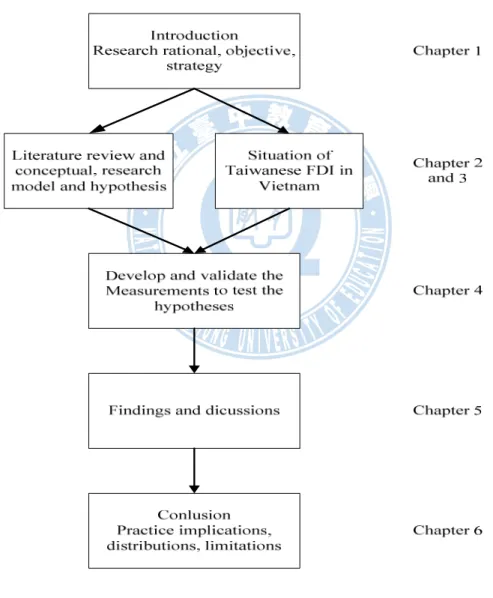
Figure 1 Research procedure ... 6
Figure 2 The knowledge conversion model ... 12
Figure 3 Model of knowledge transfer from parent firms to subsidiaries ... 15
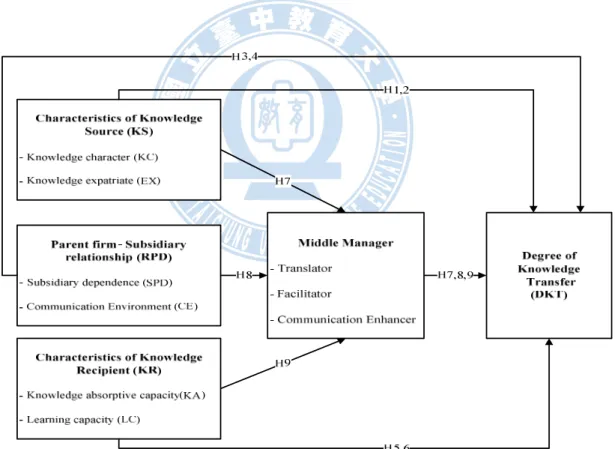
Figure 4 Research model ... 32
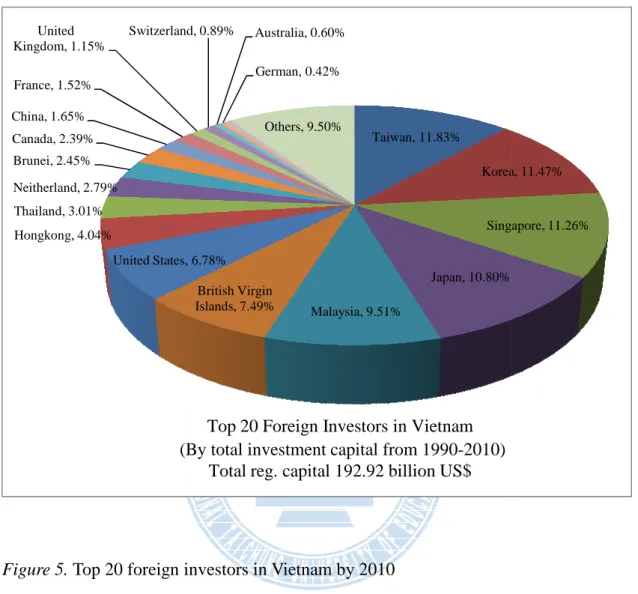
Figure 5 Top 20 foreign investors in Vietnam by 2010 ... 41
Figure 6 Growth of number of registration project up to 2010 ... 42
Figure 7 Investment capital by sector in 2010 ... 43
Figure 8 Moderator variable analysis steps ... 55
vii
List of Abbreviations
AFTA Association of South East Asian Nation’s Free Trade Area APEC Asia-Pacific Economic Cooperation
ASEAN Association of Southeast Asian Nations FDI Foreign Direct Investment
HCN Host countries
MNC Multinational Corporation MNCs Multinational Corporations
MPI Ministry of Investment and Planning SPSS Statistical Package for the Social Sciences WTO World Trade Organization
1
Chapter 1 Introduction
1.1.Rationale of the study
In order to gain certain improvements in direct investment overseas, most of multinational corporations (MNCs) have realized the significance of knowledge transfer. Today in the global competitive environment, knowledge is one of the most important assets of all the resources of a company (Martins & Antonio, 2010a). And knowledge is considered the most significantly important resource and a key
determinant of the company’s performance (Grant, 1996). The cross-border
knowledge transfer is considered an indispensable way to enhance competitiveness, exploit opportunities and promote development of subsidiaries. This is because most of the knowledge base of subsidiaries of MNCs operating in developing countries remains weak. Without knowledge transfer from MNCs headquarters, it is difficult for subsidiaries to improve capacities, survive and succeed (Wang, Tong, & Koh, 2003).
Based on the characteristics of knowledge transfer it can be seen that the knowledge transfer process from the parent firms in developed countries to their subsidiaries operating in developing countries depends on three groups of determinants: the characteristics of knowledge source, the characteristics of knowledge recipients and the relationship between transmitters and recipients (Martins & Antonio, 2010a; Minbaeva, 2007; Szulanski, 2000).
Regarding the knowledge characteristics-related factors abovementioned, the nature of the knowledge, the base of the knowledge, and the means of transfer, i.e., the competence of the expatriate (Szulanski, 1996; Wang et al., 2003) can make many variants in the knowledge transfer process. Moreover, this process is further
2
transfer ability of parent firms and the climate of cooperation between parent firms and their subsidiaries (Martins & Antonio, 2010a). Both the parent firms’ headquarters and their subsidiaries have realized that knowledge transfer is significant to current as well as future performance and to the development of subsidiaries.
In some cases, these factors of knowledge transfer either facilitate or hinder the effective knowledge transfer process (Szulanski, 1996). The knowledge transfer negatively correlates with the lack of communication channel, the inadequacy of knowledge transmitter’s ability and willingness, the deficiency of the recipient’s ability and motivation to acquire and absorb knowledge (Riege, 2007; Sun & Scott, 2005). Differential outcomes in knowledge transfer between transmitters and
recipients are often the result of language problems or communication styles (Narteh, 2008). The complexity of knowledge (i.e. Singh, 1997) and its stickiness (i.e.
Szulanski, 1996) also limit the knowledge transfer effectiveness. Thus it is still difficult to achieve successful total knowledge transfer (Costanzo & Tzoumpa, 2008; Hansen, 1999b). In some situations, differences in culture may also adversely affect proper knowledge transfer, because this process needs a mutual understanding between transmitters and recipients.
To smooth and harmonize these barriers, the parent firms could use middle managers to mediate, translate and facilitate knowledge transfer between the parent firms’ headquarters and their subsidiaries including expatriates, knowledge source and the rest of the foreign subsidiary employees (Farkas, 2003; Selmer, 1996). The middle managers can identify knowledge gaps and communication problems between
transmitters and recipients, acting as a bridge between parent firms and host country employees (Blumentritt & Hardie, 2000).
3
value systems, norms, and practices. At the personal level, middle managers can support and encourage knowledge transfer initiatives. Because of their strategic and operational function, they can recognize and understand human, organizational and technological issues and then can distribute to effective knowledge transfer (Riege, 2005). Within organization, the middle managers as the role of knowledge agents gather new knowledge, codify, adapt the new knowledge in to existing manufacturing, management procedures and distribute knowledge to the other employees within organization (Blumentritt & Hardie, 2000). The work place employees often do not codify their knowledge, they receive and articulate knowledge only (Riege & Zulpo, 2007). Middle managers attend to the process of codifying tacit knowledge and
articulating tacit into explicit knowledge (Nonaka & Takeuchi, 1995; Szulanski, 1996). Furthermore, the middle managers can maintain the motivation of sharing knowledge and creating knowledge (Kanter, 1982).
In recent years, Taiwan is one of the countries recognized as large foreign direct investment (FDI) in Vietnam. However, the investments are still facing challenges not only of political, economic, social, cultural and customs difficulties but also
management and technological competency of the local manpower (賀宮鈴, 2007). Therefore, parent firms now deem knowledge transfer as an important approach to deal with these difficulties. Many companies have continuously carried out a range of transferring measure involving technical and managerial knowledge to their
subsidiaries (Tran, 2004).
There are still many gaps between the literature and the empirical researches of cross-border knowledge transfer. The mechanism of knowledge transfer from MNEs to local companies has not been gained attention (Pak & Park, 2004). Empirical researches of knowledge transfer from the headquarters of MNCs to their subsidiaries
4
are still limited (Minbaeva, 2007) and still at early stage (Kotabe, Dunlap-Hinkler, Parente, & Mishra, 2007).
Several previous researches (i.e., Chen & McQueen, 2010; Gupta & Govindarajan, 2000; Khanseh & Jolly, 2008; Martins & Antonio, 2010a, 2010b; Minbaeva, Pedersen, Bjorkman, Fey, & Park, 2003; Minbaeva, 2007) have
concentrated on antecedent factors on knowledge transfer but few indicated clearly how headquarters and subsidiaries deal with these barriers influencing the knowledge transfer process. The research on middle management has proposed a new role for middle management as knowledge transfer facilitators but the impact of middle management on knowledge transfer has not been verified nor taken into account with other factors.
There is very little empirical evidence that suggests likely managerial actions or gives evidence about how to overcome diverse knowledge transfer barriers and the effectiveness of those actions, thereby assisting executives and middle managers in creating a more systematically knowledge-driven collaborative environment (Riege & Zulpo, 2007, p.29).
These issues lead to the suggestion that it is necessary to carry out an appropriate study of cross-border knowledge transfer applied to the subsidiaries of FDI companies in developing countries particularly focusing on Taiwan foreign direct investment companies in Vietnam. The findings of this research intend to be useful suggestions for those who are concerned in the cross-border knowledge transfer process in both parent firms and their subsidiaries. As the result, it is hoped that a favourable environment of knowledge transfer and organizational capacities in such companies will be built.
5
1.2. Research objective and questions
As abovementioned, the study aims to concentrate on cross-border knowledge transfer process from parent firms to overseas subsidiaries specifically Taiwan foreign direct investment companies in Vietnam. Fist, an assessment of cross-border
knowledge transfer process related factors involving knowledge source, knowledge recipients and relationships between the knowledge transmitters and the knowledge recipients was investigated. Then, linkage between middle management, factors of knowledge transfer and the degree of knowledge transfer in the context of subsidiaries of Taiwan’s MNCs in Vietnam was studied. And finally, an interactive pattern
focussing on Taiwan FDI companies in Vietnam was set up.
In order to build the pattern, a survey in several specific Taiwan companies in Vietnam was conducted. The research questions were as follows.
1. How do knowledge transfer’s factors affect the degree of knowledge transfer? 2. How do middle managers affect the knowledge transfer’s factor and the degree of knowledge transfer?
3. How do knowledge transfer’s factors affect the degree of knowledge transfer with the intervention of middle managers?
1.3. Research method and procedure
To achieve the objectives, quantitative studies were applied. A quantitative survey was employed to test hypotheses in the research model derived from relevant literature. The procedure included literature view and overview of Taiwanese FDI in Vietnam, quantitative research findings and conclusions (see Figure 1).
The literature of previous researches on determinants of knowledge transfer process, middle managers and knowledge transfer effectiveness were reviewed. Then
6
the research model and hypotheses were elaborated. An overview of the Taiwanese FDI was presented, followed by a brief analysis of current situation of Vietnam’s investment environment. The role of FDI to Vietnam’s economy development was also reviewed. Part of the quantitative research involved testing of the conceptual model in the context of Taiwanese companies operating in the precision and electronic sectors.
7
Chapter 2 Literature Review
2.1. Knowledge concepts 2.1.1. Knowledge definition
Nowadays, the concept of knowledge is widely recognized both in academic fields and in the society. It is difficult to determine an exact definition of knowledge since it is a multifaceted concept with multi-layered meanings (Nonaka, 1994). Moreover, there are many perspectives on how knowledge should be defined but an exact definition does not exist (Bratianu & Vasilache, 2009). Nonaka in 1991 and 1994 has highlighted knowledge as a justified belief that increases an individual’s capacity to take effective action. Knowledge’s result is a created capacity for
decision-making to achieve purposes which are relevant to each individual (De Long & Fahey, 2000). Knowledge has been introduced as information, data, document, concepts, rules, tools, routines and processes (Davenport, 1998). An individual or organization can obtain and enrich their knowledge through practical experience, education and training. Because of different perspectives of the knowledge concept, thus a general view of the knowledge concepts and knowledge types can provide the direction of the knowledge transfer research and the approach used in this study.
2.1.2. Knowledge classification
The dimensions of knowledge are not consistently identified within the literature. Within the human dimension (Nonaka, 1991; Nonaka & Takeuchi, 1995; Polanski, 1967) knowledge has been identified as of two types: tacit and explicit. The second way of defining knowledge refers to three different types: individual, organizational and social (De Long & Fahey, 2000; Malhotra, 2003). In the context of business
8
organization, knowledge can be classified according to business administration (Lane, Salk, & Lyles, 2001; Lyles & Salk, 1996).
2.1.2.1. Tacit knowledge and explicit Knowledge
Tacit knowledge, or so called personal knowledge, can be viewed as a form of awareness (Fisher & Mandell, 2009; Polanski, 1967). Tacit knowledge is often gained from actual experience (Nonaka, 1994), often hidden and embedded in an individual and difficult to be encoded into the text and transferred (Kogut & Zander, 1993). Tacit knowledge usually includes beliefs, personal values, experiences, know-how, skills and understanding. This type of knowledge exists within the knower’s mind (Nonaka & Takeuchi, 1995). Tacit knowledge consists of two components: cognitive and technical (Murray, 2007). Cognitive knowledge, also known as unstructured
knowledge, is used by the knower. This mental model cannot be expressed directly by data or by representation (Nonaka & Takeuchi, 1995). And the concrete concepts which can be expressed directly by knowledge representation are technical
components (Murray, 2007). Explicit knowledge can be defined as knowledge that has been or can be articulated and shown in books, manuals, printed documentation and guides that express information clearly through language, images, sounds, or other means of communication (Nonaka & Takeuchi, 1995).
2.1.2.2. Individual, organizational knowledge
At the organizational level, knowledge can be categorized into two distinct types: individual and organizational (Malhotra, 2003; Tsoukas & Vladimirou, 2001).
Individual knowledge refers to knowledge which takes place inside individual human heads (Simon, 1991) and is processed and can be released by the individual, it can be
9
tacit or explicit or a combination of both (Bratianu & Vasilache, 2009) and creates an individual activity (Grant, 1996). Individual knowledge refers to the knowledge held by an individual who is the primary (if not exclusive) handle and repository of what is known (Cook & Brown, 1999). Organizational knowledge, however, is a result of knowledge integration generated by the co-ordinated effort of individuals in the organization and from the knowledge flow coming from the external environment. Organizational knowledge is held in common by a group of people or by an organization (Cook & Brown, 1999).
However, individual knowledge can be detached from its owner, and at the level of group or organization this knowledge then can be processed to become
organizational knowledge (Bratianu & Vasilache, 2009; Riege, 2007). Each individual in an organization may not possess everything that is in the organization’s knowledge but this knowledge is possessed by the organization as a whole (Weick & Roberts, 1993). In accordance with the Japanese research view, organizational knowledge has been defined as the capacity of a companies or organization to create new knowledge and to disseminate it throughout the organization and to embody in its products, services and systems (Nonaka & Takeuchi, 1995). Organizational knowledge also includes operating routine, management rules, manufacturing technologies, customer data (Kogut & Zander, 1992).
2.1.2.3. Business knowledge
In the context of business organizations, according to different areas of business several categories of knowledge have been identified such as manufacturing
knowledge, knowledge of marketing, knowledge of management, and knowledge of technology (Lane et al., 2001; Lyles & Salk, 1996). The knowledge of management
10
refers the managerial strategies and practices that are used to manage the processes of production, and the operation within a company. The knowledge of external
environment relates to government laws and regulations, industrial policies, business procedures, and the political, social and economic environment. The knowledge of a company’s culture pertains to the social norms, values, and beliefs of employees' such as attitudes, and different communication styles. The knowledge of market concerns related products and service markets, such as market share, and typical behaviours of local customers. And the knowledge of technology includes tools, machines,
procedures, and processes involved in producing products or providing services.
2.2. Cross-border knowledge transfer 2.2.1. Knowledge transfer concept
Knowledge transfer is an important aspect of knowledge management. It is considered as the transmission of knowledge from the original location to where it is needed and is applied. The transfer of knowledge not only reflects the flow of
knowledge from the knowledge holders to knowledge recipients but also includes the application of the knowledge according to the need of the recipients (Gupta &
Govindarajan, 2000). Within a continuously changing environment, knowledge
transfer can provide a company with the grounding to develop sustainable competitive capacity (Argote & Ingram, 2000).
Previous research has presented two main models of knowledge transfer. The first one is spiral model, so called knowledge conversion model proposed by Nonaka and Takeuchi (1995), Nonaka and Toyama (2003). The other is communication model, which has been proposed by Sharon & Weaver and developed by Szulanski (1996, 2000) and expanded by Minbaeva (2007). This model specified the basic element of
11
knowledge transfer as: source, message, recipient and context. Both Szulanski (1996) and Minbaeva (2007) continue to identify aspects of knowledge transfer that take place is the physical transmission.
2.2.2. Knowledge conversion model
The knowledge conversion model, so called spiral of knowledge, is the processes by which knowledge can be transformed (Nonaka & Takeuchi,1995). This model is built on the distinction between tacit and explicit knowledge. This model supposes that although tacit knowledge is not easy to code. Nevertheless, it can be mobilized and converted. The model not only explains the knowledge creation process but also describes the process of transferring created knowledge within companies.
The knowledge conversion model has four phases including Socialization, Externalization, Combination and Internalization. All facilitate the knowledge’s conversion from the individual to the organizational levels (see Figure 2).
Socialization phase: tacit knowledge is converted to tacit knowledge. This phase emphasises the process of creation of tacit knowledge through sharing experiences. The main actors of this phase are individual. Socialization transfer of tacit knowledge most frequently takes place through joint activities, observation, imitation and
practice rather than written or verbal instructions (Murray, 2007; Nonaka & Takeuchi, 1995).
12 Figure 2. The knowledge conversion model
Note. From “A Dynamic Theory of Organizational Knowledge Creation” by Nonaka (1994), Organization Science, 5(1), 14-37, p. 19.
Externalization: tacit knowledge is converted to explicit knowledge. This is the process of articulating and transforming tacit knowledge. In this phase, the ability of using metaphoric language, analogies and models is very significant. Externalization may be seen as a key phase in the knowledge-creation activity and is considered as the concept creation phase. The knowledge in this phase is often presented in visible ways. Information technology is used to support individual to describe, and explain the concept (Murray, 2007; Nonaka & Takeuchi, 1995).
Combination (explicit to explicit) is a process of creating new explicit knowledge from a number of existing explicit knowledge. Explicit knowledge can be exchanged and combined through telephone conversations, meetings, memos, and so on. Thus
13
not only includes information technology but also networking which supports the information combination process. Organizations often use training as the most common way to achieve such combination (Murray, 2007; Nonaka & Takeuchi, 1995).
Internalization (explicit to tacit) is the process of converting explicit knowledge such as principles, procedures, methodology etc to new tacit knowledge in the form of sensations, memories and images. The explicit knowledge is embodied in action and practice by an individual and can be experienced by others. Internalization may take place in various ways, through real life experience, or simulation through the use of software (Murray, 2007; Nonaka & Takeuchi, 1995).
2.2.3. Communication model
The knowledge transfer process based on a communication model can be viewed as a message transmission from a source to a recipient in a given context. This is a process of dyadic exchanges of knowledge including just the transmitter and the recipient and referring to four basic elements as: source, message, recipient and context (Bratianu & Vasilache, 2009). The effectiveness of the transfer often depends on the disposition and ability of the source and recipient, on the strength of the relationship between them, and on the characteristics of the object that is being created. In the communication model the time factor needs to be considered. As the time-lag between transmitter and recipient is one of the critical features of modern knowledge management (Chini, 2004). Thus, interruption, postponement, restoration of knowledge transfer process may occur (Bratianu & Vasilache, 2009).
To describe the knowledge transmission process from a source to a recipient in a given context Szulanski (2000) has proposed four stages including: initiation,
14 implementation, ramp-up, and integration.
Initiation: This phase reflect the formation of the transfer idea and all events that lead to the decision of transfer. In this stage, organizational participants need to be aware of existing knowledge within the context of the organization and they can use this knowledge to address their needs. They also need to know what kind of
knowledge is needed, what knowledge can be used, who the knowledge belongs to, how knowledge can be collected, when and where the knowledge can be transferred (Szulanski, 2000; Murray, 2007).
Implementation: In this phase, the decision to transfer knowledge has been made knowledge can be released by the way of communication or documentation by one party and received by the other. In this stage, the adaptation of the knowledge occurs in both sources and recipient. Knowledge can be changed at the source location to meet the perceived need of the recipient. The easiness of this transferring approach depends on the previous experiences of both parties in transferring knowledge at the earlier transferring stages, the similarity of the source and recipient, and the quality of the knowledge itself (Szulanski, 2000; Murray, 2007).
Ramp-up: This stage begins when the recipient starts using the transferred knowledge, to solve the reality of daily problems in the working place. The recipient evaluates the knowledge value according to its easiness of implementation and application, and the success brings to solve the problems (Szulanski, 2000; Murray, 2007).
Integration: This stage begins after the recipient achieves satisfactory results of applying transferred knowledge. The recipients gradually apply the knowledge to solve problems that arise during their work. Use of the transferred knowledge gradually becomes a routine. As time passes, a shared history is developed and the
15
knowledge transfer between the source and the recipient is increased. The knowledge can flow more freely and new applications are added to existing knowledge
(Szulanski, 2000; Murray, 2007).
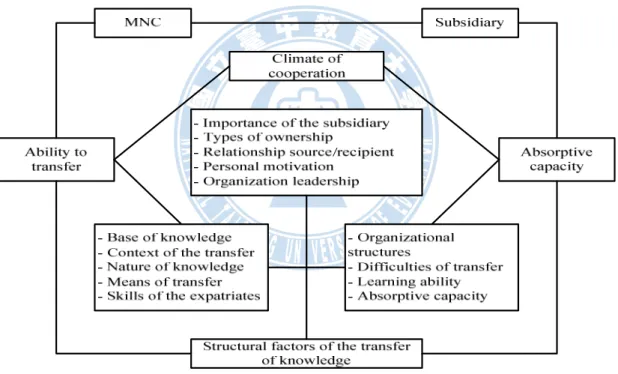
In a development of the knowledge transfer model of Szulanski, Minbaeva (2005) has recently redefined it as the knowledge transfer process within MNCs and Jose Martins and Nelson Antonio (2010) has supposed a model of knowledge transfer from parent firms to their overseas subsidiaries, that has shown in the following diagram (see Figure 3).
Figure 3.Model of knowledge transfer from the parent firms to the subsidiaries
Note. From “Knowledge transfer to the subsidiaries opearating in overseas” by Martins and Antonio (2010), Industrial Management & Data Systems, 110(4), 516-531, p. 2618
16
2.2.4. Effective cross-border knowledge transfer
When MNCs establish their subsidiaries in foreign countries, they often transmit part or all of their technology, management to their subsidiaries (Lee, 2004). But the cost and the result of transfer seems to be a controversy, so it is important for MNCs to identify ways to effectively manage their knowledge. MNCs have to understand the factors which influence knowledge flow between the parent firms and their overseas subsidiaries as well the managerial mechanism of knowledge transfer. The knowledge transfer is not simply the movement of useful knowledge from one location to another, but it must obtain the result of transferred knowledge in assisting MNCs themselves. The knowledge transfer is generally achieved through the process of collaborative problem solving directly and indirectly between people, and supported by networks and tools. The effectiveness of knowledge transfer increases with comprehension and learning of the transferred knowledge.
Most executives seem to realise that their organisations gain a greater benefit after effectively establishing knowledge transfer, because it leads to innovation, products enhancement, risk minimisation, and optimisation of overall profitability (Kotabe, Martin, & Domoto, 2003; Riege, 2007; Riege & Zulpo, 2007). In addition, international businesses in overseas subsidiaries also understand clearly that there will be a large potential benefit for business which creates effective knowledge exchanges (Riege, 2007). Some specific routines and processes may be relevant in other markets and they can provide substantial economic benefit and competitive advantages across borders (Riege, 2007). The transfer of knowledge to the subsidiaries may involve the development of a production process by installation of machinery and equipment. This process can develop the subsidiaries’ competencies in accordance with their strategies on the local market (Argote & Ingram, 2000).
17
2.3. Middle management
2.3.1. Middle management concept
It can be said that the concept of middle management has changed with time. Firstly, a discourse of the 1970s described middle management as presenting organizational core values and controlling organizational orientation through those values (Clegg & Auley, 2005). In a second discourse of the early 1980s, some authors proposed that middle managers are considered as a self- interested agent of control. In some cases middle managers can become just a redundant noise between the strategist of higher management and the employee (Clegg & Auley, 2005; Nguyen, 2001). A third discourse described the middle manager as a corporate bureaucratic agent of organization and senior management (Clegg & Auley, 2005). However, since the 1980s, in accordance with knowledge importance and revolution, the middle manager has been conceptualized as the transmitter of core strategic values of organizational knowledge (Clegg & Auley, 2005; Nguyen, 2001).
The middle management in an organization can be understood either as an impediment between higher management or as a moderator between them (Clegg & Auley, 2005; Jaeger & Pekruhl, 1998). The middle manager has been discussed as a general manager at the middle level of the corporation who has important
responsibilities in particular operational business units (Uyterhoeven, 1989). They are considered as coordinators of specific fields like marketing, production, sales and so on.
On the other hand, middle managers are not necessarily the experts in the department (Blumentritt & Hardie, 2000), but they are responsible to coordinate a functional department and ensure that the activities inside of an organization are properly carried out. The middle manager must ensure that the employees in the
18
organization work responsibly and the organization is able to deal effectively with its problems. Middle management needs to translate and put the organization's policies and strategies into practices and action (Clegg & Auley, 2005). By being involved in strategies of decision making at a high level of the organization, and in emotional management of the working place for the employee, the middle managers can play an important role and make positive contributions to the organization’s performance (Herzig & Jimmieson, 2006). Their role often involves supporting and facilitating communication between higher management and employees.
2.3.2. Role of middle management
As mentioned above, middle management has been considered a good channel through which knowledge can be distributed (Riege & Zulpo, 2007). Middle
managers can introduce knowledge sharing initiatives more effectively than other member of the organization because they not only understand and support the strategic and operational demands but also recognize the challenges of human and technological change. Particularly, middle managers know how to solve various difficulties by encouraging and motivating people to share their knowledge to share their knowledge more openly both within organization and outside (Riege, 2007).
The debates on the necessity for companies to flatten and de-layer the
organizational structure through reducing the number of middle managers have been continuing. Previous, some middle managers were considered to be obstacles to the learning, efficiency and competitiveness that the companies must face to survive (Savery & Choy, 1999). Recently, a considerable number of scholars and practitioners have shown that middle managers are capable of making transformational changes and creating knowledge that contributes to the companies’ competitive advantages
19 (Riege & Zulpo, 2007; Spreitzer & Quinn, 1996).
The middle manager’s influence knowledge transfer does not come from any hierarchical authority but from a unique knowledge base, and their ability to integrate both strategic and operating level information (Wai, Priem, & Cycyota, 2001). Middle managers have sometimes been called line managers. Line managers are both the suppliers of information to senior managers, and the recipients of final decisions taken by senior managers (Renwick, 2003). Line managers are involved in these strategic conversations and should build power of coalitions, gain insights and put it into the organisational sense making (MacNeil, 2004; Weick & Roberts, 1993). Middle managers also have access to and communicate with all organisational units thus allowing them to act as promoters or anchors of knowledge management initiatives (Riege & Zulpo, 2007).
2.4. Research model and hypothesis
The process of knowledge transfer is influenced by a combination of factors. These can be subdivided in three components: characteristics of the knowledge source; relationship between the source and the recipient; and characteristics of the
knowledge recipients. The middle managers are considered as critical agents to better assist management to overcome these potential factors that might have on the
knowledge transfer.
2.4.1. Characteristics of knowledge source and degrees of knowledge transfer
The knowledge nature varies in as degrees of tacitness, stickiness, and
complexity which influence directly and negatively to the knowledge transfer (Chia & Chang, 2009; Martins & Antonio, 2010a, 2010b; Szulanski, 1996, 2000; Szulanski &
20 Jensen, 2004).
The tacitness is one of the most widely recognized barriers to knowledge transfer (Kogut & Zander, 1992; Szulanski, 1996). The degree of knowledge codification and difficulty of teaching capabilities influence the speed of transferring capability. The higher degree of tacitness decreases the speed of transfer since tacit knowledge is hard to articulate with formal language or express ( Minbaeva, 2007).
Knowledge stickiness is concerned the barriers of the knowledge transfer process which the companies often face to (Chia & Chang, 2009; Szulanski, 1996). Some studies show that knowledge stickiness positively relates to knowledge transfer. Knowledge stickiness can facilitate problem-solving activities (Chia & Chang, 2009). Stickiness prevents the unintentional diffusion of valuable knowledge of the
companies to the competitor. However, most researchers have argued that knowledge stickiness creates a barrier to knowledge transfer from parent firms to their
subsidiaries. This is because stickiness sometime causes cost increment, knowledge transfer failure, and is more time consuming (Szulanski, 1996). Untransferred
knowledge blocks the knowledge flow within MNCs and decreases the probability of a subsidiaries survival (Szulanski, 1996; Szulanski, Cappetta & Jensen, 2004;
Szulanski & Jensen, 2004).
Complexity consists of a large number of interdependent elements. They include skills, routines, technologies and resources that are linked to a particular knowledge or asset (Reed & DeFillippi, 1990; Simonin, 1999). There have been a limited number of empirical findings on complexity and knowledge transfer. Simonin (1999) found that complexity is negatively related to knowledge transfer, more complex human or technological systems generate higher levels of ambiguity and, therefore, restrain imitation (Reed & DeFillippi, 1990). There are types of knowledge such as individual
21
knowledge, grouping knowledge and organizational knowledge. These types of knowledge exist in the companies and are often compartmentalized between various individuals, departments or groups. Therefore, the totality of knowledge cannot be easily integrated or comprehended by many people. The multiple interactions and non-decomposability of applied system could raise the complexity of knowledge (Singh, 1997).
On the whole, complex knowledge is difficult to transfer since it draws upon multiple kinds of interrelated competencies. If the knowledge consists both tacit and complex, it requires special mechanism and procedure of transfer.
Hypothesis 1: The lower the complexity and the tacitness of the knowledge of parent firms, the higher the degrees of knowledge transfer to subsidiaries.
Transferring of knowledge through sending expatriates from the parent firms can make the knowledge transfer more efficient when expatriates can be seen as a vehicle to facilitate the transfer. MNCs often use the expatriates as a strategic resource to facilitate knowledge transfer. The higher number of expatriates of the parent firms in the subsidiaries can help more knowledge to be transferred to subsidiaries (Thomas, 2000).
Tacit knowledge and embedded nature of organizational knowledge could cause barriers to the knowledge transfer (Polanski, 1967). The transfer of knowledge is also a complex process. It requires the utilization of expatriate individuals and their practices (Martins & Antonio, 2010a). Expatriates serve as conduits for knowledge transfer and facilitator for learning (Wang, Tong, Chen, & Kim, 2009).
In the initial phase of business in foreign countries, multinational corporations (MNCs) often send their engineering, managing expatriates to take the role of executives in subsidiaries and to transfer knowledge (Tran, 2004). When the transfer
22
of knowledge to the subsidiaries takes place in the developing countries. The process requires adaptability of the expatriate, not only a lot of the norms and standard of quality of the product of the parent MNCs but the local subsidiary’s necessities and context. MNCs in developed countries must be adaptable to the needs of the
subsidiaries located in less developed countries (Martins & Antonio, 2010a). And the expatriate executives need to integrate their own knowledge into the local context as well. The success of the transfer depends on the skills of the individual expatriate and on how they integrate their skills and knowledge into subsidiaries’ needs.
One of the barriers of to cross-border knowledge transfer is cultural discrepancy, which requires expatriate managers to be flexible and adapt managerial practices to local cultures (Selmer, 2001). Parent firms often send expatriates to the subsidiaries for a limited time, so there is a need for the expatriates and the local employees to get acquainted quickly (Selmer, 2001). This argues that subsidiaries should undergo cross-cultural training to support the expatriate assignee. The training needs to cover critical areas of the host country’s (HCN) subordinate–expatriate interaction which have either positive or negative potential outcomes depending on the skills and performance of the HCN employees (Selmer, 2001). The transfer of information between the expatriate predecessor and successor whether local or expatriate also can help the successor to know how to continue and adapt quickly to operating the
business in the specific cultural context which has been implemented during the predecessor’s assignment (Selmer, 2001).
One of the most difficult work-role transitions is perhaps associated with a foreign assignment (Black, Gregersen, & Mendenhall, 1992) for the expatriates their immediate HCN subordinates. While an international transfer usually requires the expatriate manager to adjust to a foreign subsidiary with a different organizational and
23
social culture and to a dissimilar general environment, an HCN middle manager has to adjust to his or her foreign bosses, who also tend to be replaced periodically as their expatriate contracts expire (Black et al., 1992; Selmer, 2001).
The assignment of expatriates to the subsidiary will enhance knowledge transfer and expatriates will mediate the knowledge to the subsidiary. However, it the
expatriates lack motivation and adaptability and understanding of the host country culture then a barrier to knowledge transfer to the subsidiary will arise (Wang et al., 2009). In order to avoid the failure of knowledge transfer, subsidiaries need to modify the knowledge transfer process properly to the local environment (Chia & Chang, 2009).
Hypothesis 2: The higher degree experience of the expatriate, the higher degree of knowledge transfer to subsidiaries.
2.4.2. Relationship between parent firms and subsidiaries and degree of knowledge transfer
There have been many difficult reasons for problems in cross-border knowledge transfer headquarters and subsidiaries. They can be cultural or structural. They can also concern the technological capacity transmitter and recipient of the knowledge. Therefore, successful cross- border knowledge transfer may possibly only conducted when a close relationship has been established between transmitter and recipient.
Another research on MNCs knowledge transfer also supports this point of view. Szulanski (1996) observes that that exchanges of knowledge are embedded in an organizational context so that a transfer of knowledge, especially having tacitness, may require numerous individual exchanges the communication between individual, team, group, and organization is carried out by visiting, meeting, discussion, and
24
talking. These means always were significant factors of inter-organization knowledge transfer (Bresman, Birkinshaw, & Nobel, 1999). Not only communication channels exist but also they can be rich in genuine in communication links. Informality,
openness, and density of communication have impact on the success of the knowledge transfer (Gupta & Govindarajan, 2000).
However, the distance between parent firms and their overseas subsidiaries and the different languages needed to communicate can both lead to decreased quality of communication, thus impacting on the degree of knowledge transfer. The existence and richness of lateral channels linking local subsidiaries with headquarters of the MNCs are positively associated with the knowledge transfer (Egelhoff, 1993). Likewise, the absence of direct linkage and extensive communication among people from different departments inhibits knowledge transfer.
Accordingly, it is expected that the parties’ willingness to communicate may increase the comprehension and learning of the transferred knowledge in accordance with the operational priorities (Hsu, 2006; Lin, 2002). Lack of motivation of
transmitter or of recipient or both would lead to the creation of obstacles in the process of knowledge transfer (Martins & Antonio, 2010a). For the transfer of the highly valuable tacit knowledge, it is very important for organizations to offer appropriate personal communication possibilities and channels. Such connections as occur through formal and informal relationships between individuals and groups can help to build a common language (Mühlbacher & Müller, 2008).
Mühlbacher & Müller (2008) suggested that connections and dependency between the parent firms and the subsidiaries must be mutual decrease in the connections and dependency can lead to the reduction of trust between the parent firms and the subsidiaries. The reduced trust might well diminish the process of
25
knowledge transfer to the subsidiary of MNCs (Mühlbacher & Müller, 2008). The higher the degree of autonomy of the subsidiaries the less the degree of knowledge transfer directly (Minbaeva, 2007; Bjorkman, Barner-Rasmussen, & Li, 2004).
Hypothesis 3: The better the communication environment between knowledge transmitter and recipient, the higher the degree of knowledge transfer to the
subsidiary.
Hypothesis 4: The greater dependence of subsidiaries on the parent firms, the higher the degree of knowledge transfer.
2.4.3. Characteristics of knowledge recipients and degree of knowledge transfer
Another group of factors related to knowledge transfer are those characteristics of the knowledge recipient. This group of factors can be defined as employee
absorptive capacity and subsidiary learning capacity (Anh, Baughn, Hang, & Neupert, 2006; Minbaeva, 2007).
There have been many definitions of absorptive capacity, but the most widely developed are those cited by Cohen and Levinthal (1990) stating that absorptive capacity is as the ability of recognizing the value of new, external information then assimilating it and applying it to commercial ends. Such absorptive capacity may be individual, group, organizational, or inter-organizational. The absorptive capacity can also be defined as the ability to understand, assimilate and apply new external
knowledge to a commercial end, and thus create the opportunity for profit (Lane & Lubatkin, 1998; Lane et al., 2001).
In the context of knowledge transfer within multinational corporations, an organization’s absorptive capacity should be comprised of not only its employees’ ability and motivation but also their relevant qualifications and traits, as well as their
26
perceptions (Minbaeva et al., 2003). In this case, organization’s absorptive capacity can be considered as a set of organizational routines and processes, by which companies acquire, assimilate, transform, and exploit knowledge to produce a dynamic organizational capability (Zahra & Gerard, 2002). Absorptive capacity also relates to the general knowledge or problem-solving or learning skills (Cohen & Levinthal, 1990).
As mentioned above, absorptive capacity is related to individual, group and organization in which the absorptive capacity of the individual plays the most
important consideration (Minbaeva et al., 2003). This is because the individual is the smallest and most basic member of the group and organization. Each part of the organization’s knowledge is derived from each individual’s knowledge. Job quality related skills, educational background, and personal ability all refer to the existing knowledge within the organization (Minbaeva et al., 2003).
The success of the knowledge transfer process largely depends on the absorptive capacity of subsidiaries. Employees need both ability and motivation because they are the knowledge recipient. Employees’ ability and motivation are the key aspects of the companies’ absorptive capacity these in turn facilitate internal knowledge transfer (Minbaeva et al., 2003). Therefore, if recipients lack the capacity to absorb new knowledge they will likely be incapable of recognizing the value of such knowledge. It will also be difficult to recreate and apply it into their everyday activities. This constraint may be one of the major impediments to knowledge transfer (Szulanski, 1996). According to Zahra and George, absorptive capacity also emphasizes the companies’ capacity to lever the knowledge (Zahra & Gerard, 2002).
It is important to recognize that insufficient or intensity knowledge because of lack of efforts in learning leads to failure to recognize the value of new external
27
information (Anh et al., 2006; Cohen & Levinthal, 1990; Foss & Pedersen, 2004). Intensity of effort is defined as effort expended in knowledge acquisition routines (Zahra & Gerard, 2002, p. 189). A direct measure of this effort would be the investment in training. Committing financial and other resources to support the acquisition and sharing of information can build up the learning capacity of
subsidiaries and can lead to more successful knowledge transfer (Anh et al., 2006). Hypothesis 5: The greater the employee’s absorptive capacity increase, the higher the degree of knowledge transfer.
Hypothesis 6: The more learning capacity is built up, the higher the degree of knowledge transfer.
2.4.4. Middle manager and degree of knowledge transfer
Knowledge is applied by the work place employees but the middle managers are the ones who facilitate the acquisition and transfer of knowledge because they are in direct contact with both parties and understand the operational tasks at the work place (Blumentritt & Hardie, 2000). To contribute to the process of knowledge transfer, the middle managers function as knowledge agents, knowledge facilitators,
communication enhancers (Blumentritt & Hardie, 2000; Nonaka, 1994; Nonaka & Takeuchi, 1995) and knowledge creators (Nonaka, 1991; Nonaka & Toyama, 2003). The role of middle managers can be represented as the process-based form by which knowledge is received and distributed; or as support-based form by which knowledge transfer is promoted and encouraged in different parts of an organization. At the same time, the middle managers therefore, function both roles as translating new knowledge and promoting the employees receiving new knowledge (Riege & Zulpo, 2007).
28
knowledge gap and to set up a necessary assessment to find how big the gap
especially in the context of changing knowledge. Middle managers need to establish what knowledge is necessary for a certain task, to be performed successfully and then decide how to apply this knowledge in practice (Blumentritt & Hardie, 2000).
Because of the different responsibilities between the parent firms and
subsidiaries, the subsidiaries need to take appropriate action to facilitate the successful knowledge transfer (Chia & Chang, 2009). The adjustment can be made through the human resource practice. For instance, a considerable number of scholars and practitioners have shown that middle managers are capable of strengthening the success of knowledge transfer. The middle manager’s strategic position within the organizational hierarchy is an excellent one exert to leverage and to encourage organization specifying knowledge transfer.
In the context of intense competition, if knowledge is considered as the key to survival and success, the parent firms need to transfer knowledge about customers, processes, competitors and technology to their subsidiaries. During this cross-border knowledge transfer, the middle manager is treated as a key player (Blumentritt & Hardie, 2000; Marshall, Prusak, & Shpilberg, 1997). The middle managers also are knowledge creators because they are the intersections of vertical and horizontal flow of information within the companies (Nonaka & Takeuchi, 1995).
As mentioned above, the tacitness and complexity of organization knowledge creates a barrier to its transfer. In order to deal with this problem, the parent firms need to send their engineering, functional middle managers to their subsidiaries. The best way is they must send expatriates who will work in the subsidiaries as executive manager or expatriate–middle managers (Hébert, Very, & Beamish, 2005). In the subsidiaries, the middle managers and front-line employees often are local peoples
29
who interact frequently and more easily. Moreover, middle managers are also members of the management team they frequently have access to top manager through meetings, discussions. In fact, the middle managers collect process and pass information up and down the hierarchy. The middle managers synthesize the tacit knowledge of both front-line employees and top manager, then convert it into explicit knowledge and incorporate it into new technologies and products (Blumentritt & Hardie, 2000). Therefore, knowledge can be presented to be read in new documents such as technical guides, marketing and financial regulations, standard operating procedures, which are applied in practice in the workplace. When the middle managers function as the facilitators of knowledge, their primary role is to gather knowledge discovered by other knowledge communities and then codify, implement and disperse this knowledge (Riege & Zulpo, 2007).
The middle managers also identify the location and the size of knowledge as well the barriers arising when knowledge is transferred. They are also responsible for appropriate action to solve the problems. Through establishing connections between different areas of knowledge, the middle managers may create linkages to other parts of the organization and thus foster a better understanding and so overcome the problems occurring.
As a knowledge facilitator, the middle manager not only needs to understand the recipients’ demands and their way of thinking, but also to comprehend the source of knowledge. The middle manager seek to understand companies’ culture with the aims of supporting diverse knowledge transfer methods, for instance, identify supporting activities, classifying existing norms and recognizing external new knowledge as well as understanding the barriers influencing on the successful knowledge sharing (Riege & Zulpo, 2007).
30
Within subsidiaries, there are two kinds of middle managers: foreign managers and HCN middle managers. Mutual comprehension of each other’s culture will improve the climate of cooperation. In order to ensure the effective running of foreign subsidiaries, expatriate managers should co-operate with their subsidiaries’
subordinates, who are often the HCN middle managers. Employees frequently contact with their HCN managers to get more and better relevant information on details. In the process they learn how to get along with others (Selmer, 2001).
In the subsidiaries, the expatriates are also the knowledge transmitters. However, sometimes it is difficult for them to transfer knowledge to the employees. This is not because they are unwilling to learn, but because they may lack the skills or
competencies or may have language deficiencies (Cabrera, 2003). Knowledge transfer is therefore limited by wrong interpretations of ideas or disruption in communication (Zellmer-Bruhn, 2003). HCN’s middle managers and expatriate managers work together during working time. So they often set up a close and mutual comprehension, and build up an appropriative language and a better cooperation. Effective knowledge transfer is actually easier when transmitters and recipients speak the same or similar language or share the same terminology. The middle managers who work as
translators having ability in both languages and in technical terminology will strengthen the knowledge transfer (Davenport, 1998).
On the other hand, when knowledge transmitters have good experience and strong abilities to transfer, but they are not willing to share knowledge (Minbaeva & Michailova, 2004) because they do not understand or trust each other enough. Knowledge transfer does not simply provide data to the right people, it also requires an understanding of the recipient's needs and ways of thinking, and a respect and trust by the recipients for the source of the information. In this case, because the HCN’s
31
middle managers are sufficiently close and frequently communicates with the expatriate managers, they may get a comprehensive and reliable impression of their leadership behaviour (Selmer, 1997) which can help overcome the barrier of trust. Thus, the middle managers who know how to overcome diverse barriers are very important. By encouraging and motivating people in the internal and external value chain to share their knowledge more openly, the middle managers can contribute to improved knowledge transfer (Riege, 2007).
The hypothesis is as following:
Hypothesis 7: The more the subsidiary makes use of the middle manager as a translator, which affects characteristics of knowledge source, the higher degree of knowledge transfer to the subsidiary.
Hypothesis 8: The more the subsidiary makes use of the middle manager as a communication enhancer, which affects relationship between parent firms and subsidiary, the higher degree of knowledge transfer to the subsidiary.
Hypothesis 9: The more the subsidiary makes use of the middle manager as a facilitator, which affects characteristics of knowledge recipient, the higher degree of knowledge transfer to the subsidiary.
32
2.4.5. Research model
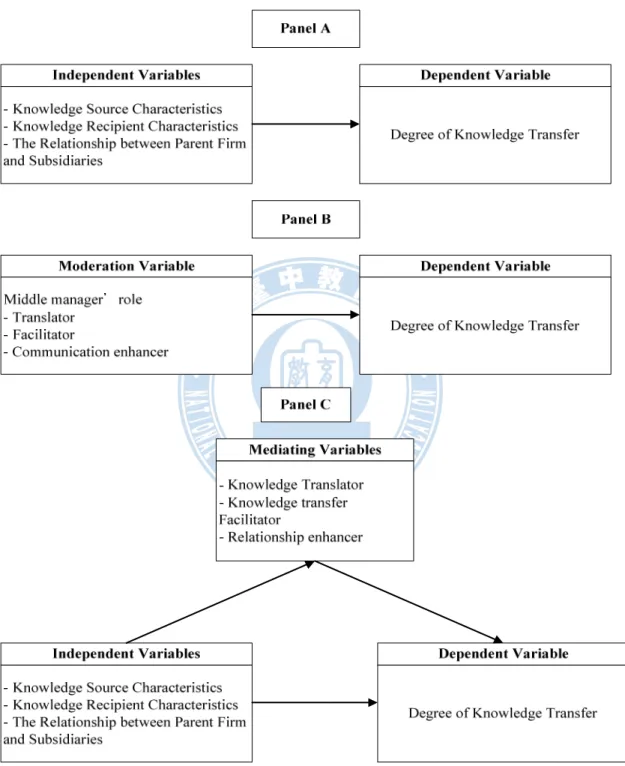
The research model is built on the literature reviewed above (see Figure 4). In this research model, the degree of knowledge transfer of the subsidiary is determined by a number of independent variables: the knowledge characters, the knowledge expatriates, the dependence of subsidiaries on parent firm, the communication environment between the parent firm and the subsidiaries, the knowledge absorptive capacity of the subsidiaries’ employees. The model also suggests the mediating role of middle manager to increase the degree of knowledge transfer from the Taiwanese parent firm to Vietnamese subsidiaries.
33
Chapter 3 Taiwanese Investment in Vietnam
3.1. Overview of investment environment
Over the past two decades, Vietnam has progressively opened its economy to foreign investors. The number of projects and the total of foreign investment capital have increased by years (see Figure 5). Foreign Direct Investment (FDI) has played an important role in Vietnam’s economic growth. The investments has lead Vietnam into a broad and deep integration into the global economy. The FDI capital flow has contributed more than 1/3 total social investment capital with 17 percent of GDP. Among them more than 45percent came from industrial and 54 percent came from exports demonstrating high proportion of crude oil, electronics-computers, leather goods, and textile etc. (General Statistics Office, 2010).
The FDI has promoted the advancement of technology in Vietnam and has had a large impact on other economic sectors. The FDI has provided an effective vehicle for the transference of technology to domestic manufactures. Through the cooperation of business or trade, foreign subsidiaries have effectively transferred technology, market and management knowledge to host country companies. They have helped to increase the growth of local companies’ productivity and contribute remarkably to the growth of the GDP (Varamini & Vu, 2007).
In order to obtain the result mentioned above, Vietnam has continuously improved its investment environment which has brought a lot of opportunities to investors. However, the investors have been still facing with challenges. According to the research result of the business environment of 2010, although there has been lack of skilled labors, weakness of infrastructure, slow improvement of land policy, tax
34
regulation and not enough improved administration system, the investors have been optimistic about Vietnam’s investment environment. Most of them will expand their investment in three following years (Ministry of Planning and Investment of Vietnam, 2010). Their expectation for future investment environment is relatively high
(Ministry of Planning and Investment of Vietnam, 2010).
3.1.1. More appropriate to international practice, more attractive to investors and towards sustainable development of legal system.
In order to maintain and attract more FDI capital flow, Vietnamese Government has undertaken the necessary, positive changes in its policies and laws. These changes aim to meet the actual requirements of the economy as well as international trade and investment standards. The enforcement of the Investment Law has been appraised as one of Vietnam’s efforts to meet the condition for accession to the World Trade
Organization (WTO). The Law has also provided a fair, equal investment environment to all economic sectors including domestic and foreign investments. This encourages both domestic and foreign investors to increase their investments in Vietnam. Besides the Law of Investment, the Vietnamese government has been improving law and regulations on trade, enterprise, fiscal, labor etc. All current laws and policies of Vietnam demonstrate preferences to attract more investments (Ha, 2006).
In particular, Vietnam has also applied different preferences to encourage
advanced and high-technology development and transfer in such exemption of income tax, import tax, valued added tax for organizations or individuals who invest in
technological fields. This favorable condition has attracted a new flow of foreign investment capital (Phuong, 2010).
35
investment, in general, Vietnam’s the legal system has been ongoing to be overall completed. In practice, the different treatments in policy implementation to the domestic and foreign companies somehow remained. Some regulations have not been clearly understood and have been difficult to enforce (United Nation, 2008). The consistence in understanding, interpretation and especially in the implementation of law, regulation of centre and local government’s agencies still have not caught up with the world’s standard (Phung, 2010). In some cases, there have been some officers of local government take advantage of the gap between laws and regulations. The bureaucracy, corruptions have occurred in both processes of investment registration and implementation (Son, 2011). These problems lead to reduction of foreign investor’s willingness to invest in Vietnam.
3.1.2. Political and social stability
Social and political stability, clear, specific action plans and plentiful, young and low cost of labor are factors which have strongly affected to the success of attracting of foreign investment in Vietnam (Son, 2011). With the high percentage of
working-aged people and the low cost of labor compared to other countries in the region, Vietnam has brought a good condition for foreign investment especially in light industries such as textile, garment, leather goods etc. Vietnamese always want to maintain social and working environment stability to attract more investment capital in the future (Thao, 2010).
Although the Vietnam’s labor source is large, the quality has not fully met the expectations of its investors. A high percentage of workers have not been trained in appropriate skills. More than 65 percent of the workforce in Vietnam is still lacking in technical skills, around 78 percent of the workforces aged from 20 to 24 have not had
36
sufficient expertise (Vietnam Business Forum, 2010). The lack of skilled workers, technicians, managers has reduced the competitiveness of Vietnam.
In addition to this problem, the relationship between employees working in the FDI sectors and the foreign managers has been strained. The conflicts between labors and companies on compensation and working conditions some time have occurred. Almost of 70 percent of strikes in the labor force in FDI companies have occurred because of low wage (Thao, 2010). Some FDI companies have taken advantage of Vietnam’s wage regulation limitation in order to exploit its labor force. Comparing minimum wage with the CPI, GDP per capita and living standards, the wage paid by FDI companies has been slowly improving. Added to this issue, the Government has not yet caught up with the world standards on how to build a long term legal
framework or the scheme to deal with this problem (Vietnam Business Forum, 2010). However, some points of view have indicated that the advantages of low cost labor source in Vietnam have been decreased because of the increasing of expenditure on social insurance and other costs for employees. According to the prediction of Vietnam Industrial and Commercial Chamber, the social insurance (including health care and unemployment insurance costs) will increase from 22% to 26 % in 2014. In addition, although the insurance costs will rise, but the significant benefits of
employee would not be increased as a result of inflation (Vietnam Business Forum, 2010).
Environmental pollution in Vietnam is another factor which has negatively impacted the investment trend. Recently, many industries, including FDI companies have been guilty of polluting the environment. If investors seriously pay attention to environment protection, their production will be costly (VnEconomy, 2010). As a result, a lot of companies have avoided implementing necessary environmental