行政院國家科學委員會補助專題研究計畫
■ 成 果 報 告
□期中進度報告
克雷白氏肺炎桿菌中 Fur 的功能性分析
計畫類別:■ 個別型計畫 □ 整合型計畫
計畫編號:NSC 97-2314-B-039-042-MY2
執行期間: 97 年 12 月 1 日至 99 年 7 月 31 日
計畫主持人:林靖婷
共同主持人:
計畫參與人員: 陳育聖
季佳
成果報告類型(依經費核定清單規定繳交):□精簡報告 ■完整報告
本成果報告包括以下應繳交之附件:
□赴國外出差或研習心得報告一份
□赴大陸地區出差或研習心得報告一份
■出席國際學術會議心得報告及發表之論文各一份
□國際合作研究計畫國外研究報告書一份
處理方式:除產學合作研究計畫、提升產業技術及人才培育研究計畫、
列管計畫及下列情形者外,得立即公開查詢
□涉及專利或其他智慧財產權,□一年□二年後可公開查詢
執行單位:中國醫藥大學
中 華 民 國 99 年 10 月 30 日
I
Contents
(目錄)
中文摘要 --- II Abstract --- III Introduction --- 1 Specific aims--- 3Materials and methods--- 4
Results--- 7 Discussion--- 11 References --- 13 Tables --- 18 Figures--- 22 計畫成果自評--- 33
II
中文摘要:
關鍵字:螯鐵系統、莢膜多醣體、克雷白氏肺炎桿菌、Fur、rmpA、 rmpA2、rcsA。 螯鐵系統和莢膜多醣體 (capsular polysaccharides, CPS)都是克雷白氏肺炎桿菌 (Kp) 的重要致病因子。大部分的 Kp 臨床菌株會產生厚實的 CPS 來幫助細菌躲 避免疫細胞及血清分子的攻擊,以及產生多組的螯鐵系統來獲得環境中的鐵,以 幫助其生長和感染宿主。雖然在革蘭氏陰性菌中,螯鐵系統的基因表現會受到 Fur 所抑制,但在 Kp 中,Fur 的調控角色仍然還是未知的。基於過去實驗室的研 究,我們發現 fur 突變後會增加菌體的黏度並且並提高 Kp 對於小鼠的毒性,因 此推測 Fur 在毒性因子的調控上扮演重要的角色。因此在本研究中,我們完成下 列的實驗來了解 Fur 在 Kp 中所扮演的角色。在顯型的分析上,我們發現 fur 突 變株不但會減緩細菌的沉澱速度、減少莢膜多醣體並且也會抑制細菌生物膜的生 合成,而經過完整 fur 基因的互補後即可恢復其原來的顯型表現。利用即時定量 PCR 和電泳膠遲滯實驗發現,Fur 會直接抑制參與 CPS 調控系統中 rmpA、rmpA2 以及 rcsA 的基因表現,然而有趣的是其中我們發現在 fur 的突變株下若 rmpA 或 者 rcsA 再突變,則會抑制 fur 突變後所造成細菌中 CPS 大量表現的現象,但 rmpA2 突變則不會有此結果。另一方面我們也證實了鐵的存在會影響細菌中 CPS 的含 量,並且 Fur 需要有鐵的狀態來調控 CPS 的生合成,然而 fur 突變後,也明顯了 增加細菌中抓鐵系統的表現。進一步我們利用 Fur titration assay 和即時定量 PCR 來發現在 Kp CG43 中的八套抓鐵系統中至少有六套抓鐵系統可以直接受到 Fur 所抑制,因此我們認為在 Kp 的 Fur 在調控細菌中兩個重要的毒性因子的表現-莢膜多醣體及抓鐵系統中扮演重要的雙重角色III
Abstract:
Key words
:
Iron-acquisition system, capsule polysaccaharides, Klebsiellapneumoniae, Fur, rmpA, rmpA2, rcsA.
Iron-acquisition system and capsule polysaccaharides (CPS) are important virulence factors in Klebsiella pneumoniae (Kp) infection. Most clinical isolated of Klebsiella strains produce large amounts of to protect the bacteria from phagocytosis and prevent from killing by serum factors, and develop several iron-acquisition systems for sequestering ferric iron from the environment to promote the growth and infection. In Gram-negative bacteria, iron-acquisition genes are negatively regulated by ferric uptake regulator (Fur). However, the regulatory roles of Fur in Kp remains large unknown. Base on the previous study, we have demonstrated that the fur deletion mutant rendered the bacteria more mucoid phenotype and slight reduced the LD50 using mouse lethality assay suggesting an involvement of Fur in virulence regulation. However, we have performed the following experiments to verify the functional role of Fur in Kp in this study. In phenotype analysis, the fur deletion mutant slowed the Kp precipitation rate, reduced the CPS biosynthesis, and reduced biofilm formation, while the fur complement stain could restore the phenotype. By using quantitative RT-PCR analyses (qPCR) and electrophoretic mobility shift assay showed that Fur repressed the expression of the CPS regulatory genes rmpA, rmpA2 and rcsA. Interestingly, deletion of rmpA or rcsA but not rmpA2 from the fur strain could
suppress the deletion effect of Fur. The availability of extracellular iron affected the CPS amount suggesting Fur regulates CPS biosynthesis in an Fe(II)-dependent manner. Increased production of siderophores was observed in the fur strain
suggesting the uptake of extracellular iron in Kp is regulated by Fur. Fur titration assay and qPCR analyses demonstrated that at least six of the eight putative iron-acquisition systems, identified by BLAST search in the contig database of Kp CG43, were directly repressed by Fur. Thus, we conclude that Fur has a dual role in the regulation of CPS biosynthesis and iron-acquisition in Kp.
1
INTRODUCTION:
Klebsiella pneumoniae is a rod-shaped Gram-negative bacterium that causes
community-acquired diseases including pneumonia, bacteremia, septicemia, and urinary and respiratory tract infections, occurring particularly in immune-compromised patients (42). In Asian countries, especially in Taiwan and Korea, Kpis the predominant pathogen responsible for pyogenic liver abscess in diabetic patients (24, 33, 57). Among the virulence factors identified in K.
pneumoniae, capsular polysaccharide (CPS) is considered as the major determinant
for Kpinfections. The pyogenic liver abscess isolates often carry heavy CPS that could protect the bacteria from phagocytosis and killing by serum factors (35, 44). Apart from the antiphagocytic function, Klebsiella CPS also helps bacterial colonization and biofilm formation at the infection sites (8, 20, 39).
Rcs system is a well-known two component system (2CS) that regulates the cps gene expressions in bacteria (49). Transcriptions of the cps genes are controlled by the response regulator, RcsB, in complex with the auxiliary regulatory protein, RcsA (22, 36). Recently, we have demonstrated that the cps expression in KpCG43 was affected by the 2CSs KvgAS, KvhAS, and KvhR in coordination while the regulation is independent of RcsB (34). Besides RcsA, the regulators RmpA and RmpA2 were also able to interact with RcsB for the CPS biosynthesis regulation. Moreover, the rmpA expression was shown to be repressed by Fur, the global regulator for the expression of iron uptake systems (13). Whether Fur affects RcsA or RmpA2 is yet to be investigated.
Under iron-repletion conditions, dimeric Fur in complex with Fe(II)binds to a 19-bp consensus DNA sequence, the Fur box (GATAATGATwATCATTATC; w=A or T), in the promoters of the genes required for iron uptake, thereby preventing transcription from these genes (23). The regulation helps bacteria to avoid iron overload that may lead to hydroxyl radical formations. Multiple iron-acquisition systems are commonly present in bacteria for the uptake of iron in the environment (5). In anaerobic environment, Fe(II) is prevalent and imported into the bacterial cytoplasm via Feo system (26). However, in aerobic condition and mammalian tissues (in vivo), the majority of iron is found as Fe(III), and iron in vivo is almost entirely sequestered by iron-binding proteins (transferrin and lactoferrin) and hemoproteins (hemoglobin and myoglobin) (55).
2
transport iron from the exogenous iron/heme sources or with siderophore and hemophore compounds released into extracellular medium to scavenge iron/heme from various sources (55). In K. pneumoniae NTUH-K2044, expressions of the ten putative iron acquisition genes were highly up-regulated in response to human serum and the bacterial virulence was decreased by the triple mutation of the siderophore genes (28). The siderophore genes iucABCDiutA and iroNDCB have also been reported as the determinants with statistical correlation to K. pneumoniae-caused liver abscess (KLA) (28, 30, 51). Nevertheless, regulation of the expressions of the iron acquisition genes in K. pneumoniae has not yet been studied.
In this study, regulatory roles of Fur on the expression of the cps regulators RmpA, RmpA2, and RcsA, and the expression of eight iron-acquisition systems in K.
3
SPECIFIC AIMS
1. Investigation of regulatory roles of Fur on mediating the cps expression in K.
pneumoniae;
(1.) To characterize the functional role of Fur on the gene expressions of the CPS synthesis in K. pneumoniae;
(2.) To study the interplay between Fur and other regulators involved in the
cps expression.
2. Investigation of regulatory roles of Fur on mediating the gene expressions of iron-acquisition systems in K. pneumoniae;
(1.) To determine the regulation of Fur on iron-acquisition systems by using quantitative PCR;
(2.) To demonstrate the effect of the putative Fur box in iron-acquisition systems by promoter activity assay and EMSA.
3. Genome-wide search of the downstream genes regulated by K. pneumoniae; (1.) To screen the presence of putative Fur box in the overall genes in K.
pneumoniae genome by bio-informatics analysis;
(2.) To search the downstream genes regulated by Fur by using cDNA subtractive hybridization and proteomic study;
4 MATERIAL AND METHODS
Bacterial strains, plasmids, and media. Bacterial strains and plasmids used in this
study are listed in Table 1. Bacteria were routinely cultured at 37°C in Luria-Bertani (LB) medium or M9 minimal medium supplemented with appropriate antibiotics. The antibiotics used include ampicillin (100 g/ml), kanamycin (25 g/ml), streptomycin (500 g/ml), and tetracycline (12.5 g/ml).
Construction of deletion mutants. Specific gene deletions were introduced into K.
pneumoniae CG43 using an allelic exchange strategy as previously described (32).
The pKAS46 system was used in the selection of the mutants (47), and the mutations were confirmed by PCR and Southern hybridization (data not shown).
Biofilm formation. Biofilm formation will be assessed by the ability of the cells to
adhere to the walls of 96-well microtitre dishes made of PVC (TPP 96 flat) with some modification of the reported protocol (41). The well of plates will be coated with optimal concentration of 0.109 mg/ml human extracellular matrix (HECM) that diluted in carbonate-bicarbonate buffer (pH 9.6) and incubated overnight at 4°C (8). The indicator medium (100 l/well) contained an aliquot of 1:10 diluted overnight bacteria culture and the plate will be incubated at 37℃ with gently shaking for 48 h for biofilm formation. The unadherent bacteria will be washed triply with 200 l PBS and then adherent bacteria will be stained with 200 l of 0.1% (w/v) crystal violet at room temperature for 15 min. The plates will be rinsed twice with deionised water to remove excess stain. Finally, the crystal violet stained biofilm will be solubilized in 200 l of 95% enthanol and the absorbance determined at a wavelength of 550 nm.
Real-time quantitative PCR (qPCR). Total RNAs were isolated from bacteria cells
grown to early exponential phase using the RNeasy midi-column (QIAGEN) according to the manufacturer’s instructions. RNA was treated with RNase-free DNase I (MoBioPlus) to eliminate DNA contamination. Hundred nanogram of RNA was reverse-transcribed with the Transcriptor First Strand cDNA Synthesis Kit (Roche) using random primers. qPCR was performed in a Roche LightCycler® 1.5 Instrument using LightCycler TaqMan Master (Roche). Primers and probes were designed for selected target sequences using Universal ProbeLibrary Assay Design Center (Roche-applied science) and are listed in Table 2. Data were analyzed using the real time PCR software of Roche LightCycler® 1.5 Instrument. Relative gene expressions were quantified using the comparative threshold cycle 2-CT method with 23S rRNA as the endogenous reference.
5 Electrophoretic mobility shift assay (EMSA)
Recombinant K. pneumoniae Fur protein was expressed in E. coli and purified as previously described (13). DNA fragments of the putative promoter regions of rmpA,
rmpA2, and rcsA were PCR amplified using specific primer sets. The purified
His6-Fur was incubated with 10-ng DNA in a 15-l solution containing 50 mM Tris-HCl (pH 7.5), 100 mM NaCl, 100 mM dithiothreitol, 200 M MnCl2, and 1
g/l BSA at room temperature for 20 min. The samples were then loaded onto 5% native (nondenaturing) polyacrylamide gel containing 5% glycerol in 0.5 TB buffer (45 mM Tris-HCl, pH 8.0, 45 mM boric acid) and electrophoresed at 20-mA constant current at 4°C for 2 hr. The gel was stained with SYBR Green EMSA stain (Invitrogen), and then visualized using the Safe Imager™ blue-light transilluminator.
Extraction and quantification of CPS. CPS was extracted and quantified as
previously described (17). The glucuronic acid content, representing the amount of K.
pneumoniae K2 CPS, was determined from a standard curve of glucuronic acid
(Sigma-Aldrich) and expressed as micrograms per 109 CFU (7).
Identification of the iron acquisition genes in K. pneumoniae CG43. The ten genes
encoding different iron acquisition systems in K. pneumoniae NTUH-K2044 (28) were used as query sequences to search for homologs in KpCG43 contig database (unpublished results from Dr. S.-F. Tsai, National Health Research Institutes, Taiwan) as assessed by the BLAST search program (http://blast.ncbi.nlm.nih.gov/Blast.cgi) (4).
Fur titration assay (FURTA). FURTA was performed according to the method
described by Stojiljkovic et al (48). DNA sequences containing a putative Fur box were PCR amplified with specific primer sets and then cloned into pT7-7. The resulting plasmids were introduced into the E. coli strain H1717, and the transformants were plated onto MacConkey-lactose plates containing 100 g/ml ampicillin and 30 M Fe(NH4)2(SO4)2. The indicator strain H1717 contained a chromosomal fhuF::lacZ fusion, and a low affinity Fur box has been demonstrated in the fhuF promoter. The introduction of pT7-7 derived plasmids carrying Fur-binding sequences could thus cause the removal of Fur from the fhuF Fur box (27). H1717 harboring pT7-7 was used as a negative control. Colony phenotype was observed after incubation at 37°C for 10 h. Red colony (Lac+) denoted a FURTA-positive phenotype and indicated the binding of Fur to the DNA sequence cloned into the pT7-7 plasmid.
6
Chrome azurol S (CAS) assay. The CAS assay was performed according to the
method described by Schwyn and Neilands (46). Each of the bacterial strain was grown overnight in LB medium, and then 5 l of culture was added onto a CAS agar plate. After 16 hr incubation at 37°C, effects of the bacterial siderophore production could be observed. Siderophore production was apparent as an orange halo around the colonies; absence of a halo indicated the inability to produce siderophores.
Statistical method. Unpaired t test was used to determine the statistical significance
and values of P < 0.001 were considered significant. The results of CPS quantification and qPCR analysis were derived from a single experiment which is representative of three independent experiments. Each sample was assayed in triplicate and the average activity and standard deviation are presented.
7 RESULTS
The phenotype of fur deletion mutant in K. pneumoniae CG43
In this study, the fur complement strain was performed the construction and compared with wild type (CG43S3), fur deletion mutant (fur), and fur complement
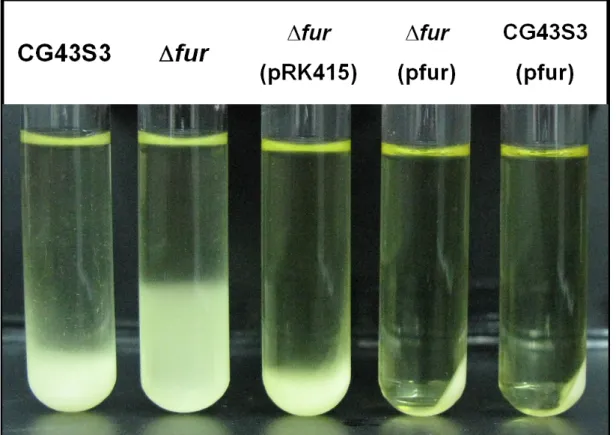
strain (the entire fur gene in pRK415, named pfur) in the viscous phenotype, CPS content, and biofilm formation. During low-speed centrifugation, the fur mutant strain exhibited much slower precipitation than the parental strain. While the fur mutant and wild type stain supplied with the plasmid pfur respectively, revealed that faster precipitation via low-speed centrifugation (Fig. 1). Subsequently, the CPS production in CG43S3, fur, and fur [pfur] was quantified by measuring the glucuronic acid
content, the core component of the K2 CPS. The production of extracellular polysaccharides in bacteria is important for the maturation of biofilms. In K.
pneumoniae, the interaction of CPS and fimbriae was able to modulate the bacteria
biofilm formation (45). Therefore, the biofilm formations in CG43S3, fur, and fur
[pfur] were detected in polyvinylchloride (PVC) plates by staining 1% crystal violet, which could be quantitatively measured at 595 nm for the absorbance. As shown in Fig. 2, the biofilm formation was significantly lower in fur than in wild type, and
supplied with the plasmid pfur restored the ability of biofilm synthesis. These results implied that Fur is involved in the regulation of CPS biosynthesis and affects the biofilm biosynthesis in K. pneumoniae CG43.
Expressions of RmpA, RmpA2, and RcsA are regulated by Fur
To investigate whether Fur affects the expression of the cps regulatory proteins RcsA, RcsB, RmpA2, KvgA and KvhR (13, 32, 34), other than RmpA (Cheng et al., 2010), qPCR analyses were carried out to compare their expression levels in K.
pneumoniae CG43S3 and its isogenic fur strain. As shown in Fig. 3A, when the
bacteria were grown in LB, the deletion of fur increased the expression of not only
rmpA but also rmpA2 and rcsA. By contrast, the fur deletion appeared to have no
effect on the expression of rcsB, kvgA, or kvhR. Inclusion of the iron chelator, 2, 2-dipyridyl (Dip), in the growth medium eliminated the effects caused by Fur deletion suggesting that a Fur-Fe(II) complex is involved in the regulation of the expression of
rmpA, rmpA2, and rcsA. While expression of rmpA or rcsA was increased upon the
addition of 200 micromolar Dip, no apparent change was found for the rmpA2 expression suggesting a novel mechanism to be studied.
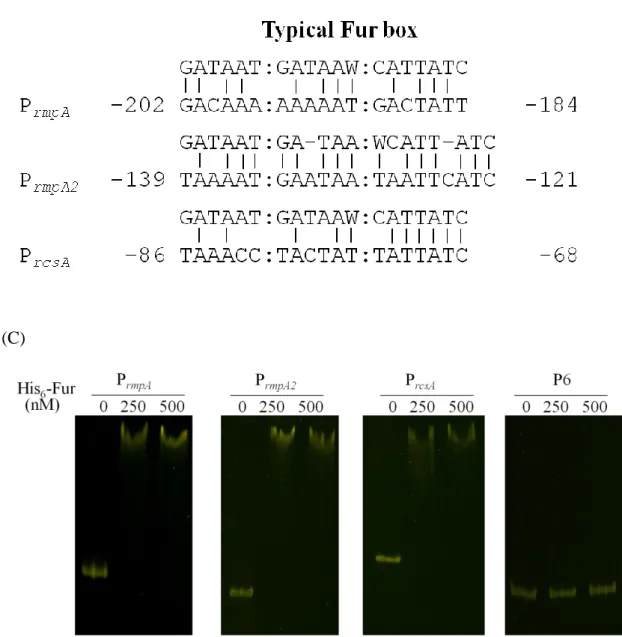
As in the PrmpA, the promoter of rmpA, putative Fur box sequences could be found in
8
the expressions of rmpA2 and rcsA, EMSA was performed. As shown in Fig. 3C, the purified recombinant His6-Fur protein was able to bind to the upstream regions of
rmpA as well as rmpA2 and rcsA, but not to the P6 DNA which did not contain a Fur
box (13). Addition of 200 micromolar EDTA in the reaction mixture appeared to abolish the interactions (data not shown), indicating the formation of Fur-Fe(II) complex was required for the specific binding.
Fur repressed the CPS biosynthesis via RmpA and RcsA
To investigate how Fur differentially regulates the expressions of the three CPS regulators, the double mutants with either deletion of rmpA, rmpA2, or rcsA from the
fur strain background were constructed and the mutation effects on the bacterial CPS
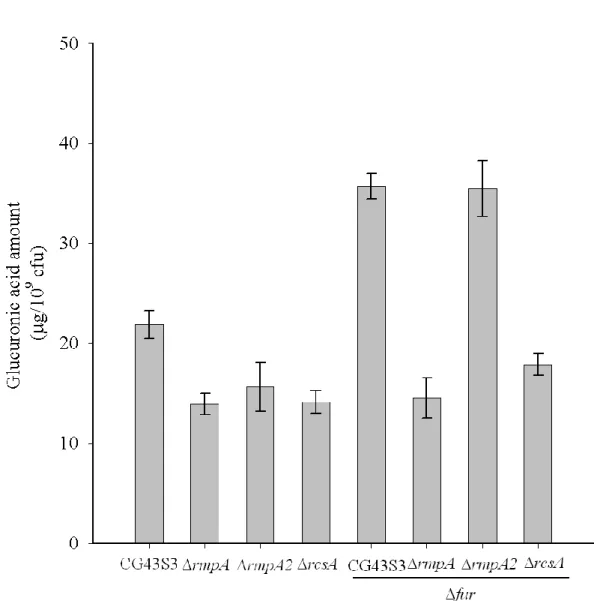
biosynthesis were assessed. Consistent with the previous reports (13, 18, 32), deletion of rmpA, rmpA2, or rcsA caused reduction in the amount of bacterial CPS (Fig. 4). By contrast, a significant increase in the CPS amount was found in fur strain.
Interestingly, the deletion of rmpA or rcsA, but not rmpA2 was found to suppress the
fur deletion phenotype (Fig. 4). The results suggested that activation of the CPS
biosynthesis in fur strain is mediated by RmpA or RcsA, but not RmpA2, under the
assay condition.
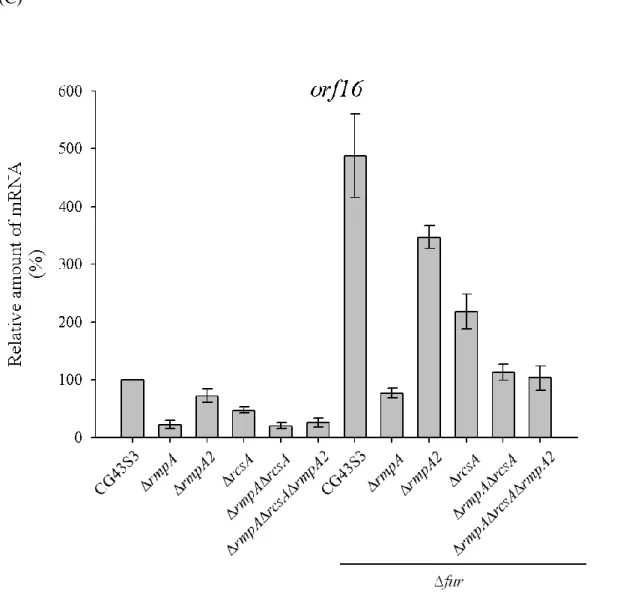
It has been reported that the K2 cps gene cluster of K. pneumoniae Chedid contained 19 ORFs organized into three transcription units, orf1-2, orf3-15, and orf16-17 (6). Analysis of the cps promoters revealed no conserved Fur box suggesting an indirect control of Fur on the transcription of cps. To investigate the possibility, transcripts of
orf1, orf3, and orf16 in wild-type (CG43S3), fur,rmpA, rmpA2, rcsA,
furrmpA, furrmpA2, furrcsA, furrmpArcsA, and
furrmpArmpA2rcsA strains were measured by using qPCR. As shown in Fig.
5A, 5B, and 5C, all three transcripts were differentially decreased in rmpA, rmpA2,
and rcsA strains. Compared to either rmpA or rcsA deletion, deletion of rmpA2 had
less effect on the transcriptions of orf1, orf3, and orf16. Interestingly, the deletion of
rmpA had more profound reducing effects on the transcriptions of orf1 and orf16 than
that of the rcsA deletion. Moreover, the cps expression levels in rmpA, rmpArcsA
and rmpArmpA2rcsA were similar suggesting a major regulatory role of RmpA
for controlling the cps expression. However, RcsA and RmpA2 may also play a major role on the cps expression at a not yet identified condition. Moreover, whether a regulatory interaction exists between RmpA, RmpA2, and RcsA remains to be investigated.
Consistent with the results shown in Fig. 4, the deletion effect of fur was eliminated in
9
5A and 5C). Deletion of rmpA from the fur strain significantly decreased the level of
all three cps transcripts. The amounts of the cps transcripts in furrmpArcsA or
furrmpArmpA2rcsA were similar to that of the furrmpA strain. These further
support that RmpA plays a major role in the Fur-mediated repression of the cps transcription. By contrast, no apparent difference of the cps expression between fur
and furrmpA2 was observed indicating a minor role, if any, of RmpA2 on the
Fur-mediated regulation of the cps expression. Nevertheless, the much higher expression levels of the cps observed in furrmpArmpA2rcsA than the strain
rmpArmpA2rcsA suggests an unknown regulator may be involved in the
Fur-mediated control of the cps expression.
Availability of iron affects CPS biosynthesis in K. pneumoniae
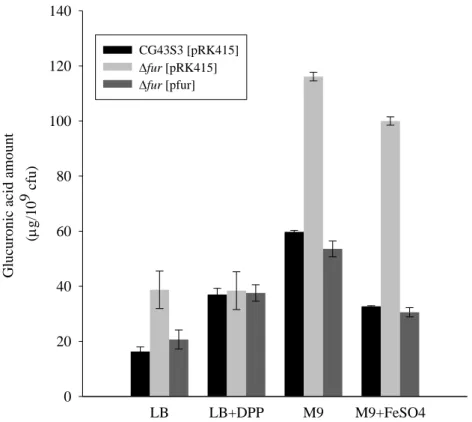
To determine whether Fur regulates the gene expressions in an Fe(II)-dependent manners (5, 19), we analyzed the effects of iron-depletion and iron-repletion on CPS biosynthesis. As shown in Fig. 6, when bacteria were grown in LB medium containing ~18 M iron (1), the CPS amount was increased in the fur strain. The fur deletion
effect was no longer observed in the fur-complement strain or when Dip was added to the growth medium. Besides, the addition of 60 M FeSO4 in M9 medium caused an apparent decrease in the amount of CPS in the wild-type strain compared to that grown in M9 medium. While the fur strain grown in M9 medium with or without
FeSO4 produced a higher CPS amount than the wild type strain indicating that the iron level of approximately 2 M in M9 medium (1) appeared to be sufficient for Fur activity on the repression of CPS biosynthesis. These results suggested that the iron-repletion increased Fur activity thereby repressing the biosynthesis of CPS.
The regulatory role of Fur in iron-acquisition systems of K. pneumoniae CG43
To assess whether Fur affects iron-acquisition in K. pneumoniae in other bacteria, a CAS assay was performed to analyze the activity of siderophore secreted. As shown in Fig. 7A, an orange halo around the colony of fur strain grown on a blue CAS
plate was observed. Introduction of the complement plasmid pfur into the fur strain
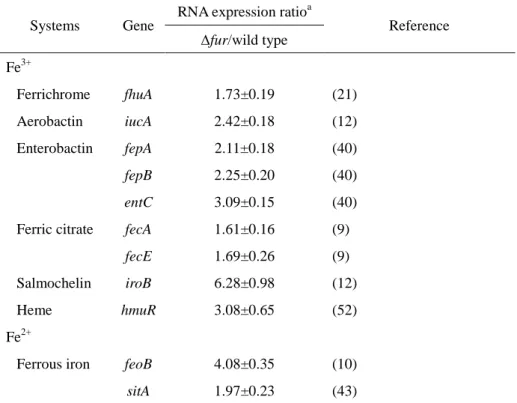
appeared to diminish the orange halo phenotype. A BLAST search using the DNA sequences of the iron-acquisition systems in K. pneumoniae NTUH-K2044 as templates (28) for the homologs in the contig database of K. pneumoniae CG43 (unpublished results from Dr. S.-F. Tsai, National Health Research Institutes, Taiwan) was subsequently performed. As shown in Table 3, eight putative iron-acquisition systems were identified. Expressions of the genes (iucA, fepA, fepB, entC, iroB, hmuR, and feoB), corresponding to five iron-acquisition systems assessed using qPCR, were increased at least two-fold in the fur strain. Expressions of fhuA, fecA, fecE, and sitA
10
were also activated in the fur strain, although with less than two-fold increase (Table
3).
As shown in Fig. 7B, homologous sequences of the Fur box (16) could be identified in the putative promoters PiroB, PentC, PhmuR, Pfeo, Pfec, Pfhu and Psit. A Fur box
homolog was also found in the coding region of iucA, at the position -4 to +15 relative to the start codon. These Fur box-containing DNA fragments were then cloned into pT7-7, and the resulting plasmids were introduced individually into the E. coli indicator strain H1717. As shown in Fig. 7C, the E. coli H1717 harboring the plasmid with PiucA, PiroB, PentC, PhmuR, Pfeo, or Pfec, showed FURTA-positive phenotypes. While
the H1717 strains harboring pT7-7 derivatives with the upstream regions of fhuA or
sitA exhibited a FURTA-negative phenotype. The results suggested that Fur is able to
bind to each of the predicted Fur box sequences on iroB, entC, iucA, hmuR, feoB, and
fecA to exert its regulatory function in vivo.
Extracellular Fe(II) has been demonstrated to be transported into bacteria via the iron acquisition systems FeoABC and SitABCD (10, 43). As shown in Fig. 7, expression of the feo but not the sit genes was affected by Fur. The feoB deletion mutant, which was predicted to decrease the bacterial Fe(II)-transport ability, was therefore generated to investigate if the Fe(II)-dependent regulation of the CPS biosynthesis is affected by the Feo system. However, no difference in the CPS amount between the wild-type and the feoB strains, grown in LB or M9 supplemented with various
concentrations of Dip or FeSO4, was found (data not shown). It is possible that the SitABCD or other iron acquisition systems are involved in the Fur-Fe(II)-dependent regulation on the CPS biosynthesis, which may then compensate the mutation effect of feoB.
11 DISCUSSION
In this study, we have shown that the expressions of CPS regulators RmpA, RmpA2, and RcsA were all under the direct control of Fur (Fig. 3). It has been reported previously that fur mutation did not cause obvious change in the rmpA2 promoter activity assessed using lacZ reporter system (13). By contrast, qPCR analysis revealed that the deletion of fur caused approximately two-fold increase in rmpA2 mRNA (Fig. 3A). The discrepancy may be due to the dosage effect of the plasmid-based lacZ reporter system for an over-estimation of the -galactosidase activity. The EMSA in Fig. 3C also supported a direct binding of Fur to the rmpA2 promoter. Since the
rmpA2 promoter does not fit so well to the Fur of E. coli, whether K. pneumoniae Fur
exerts less rigid recognition sequences is needed to be investigated.
The two homologous genes, rmpA and rmpA2, are located on pLVPK and both encode CPS regulators for the activation of the CPS biosynthesis (12, 32). Compared to RmpA, RmpA2 has an extended N-terminal region and different promoter sequence which implied differential functionality possessed by the two transcriptional factors. As shown in Fig. 4, the deleting effect of fur was eliminated by the further deletion of
rmpA or rcsA, but not rmpA2 suggesting their differential roles on the regulation of
CPS biosynthesis. Further investigation is needed to clarify the roles of the two homologous regulators in K. pneumoniae.
Fur has been demonstrated as a global regulator in many bacteria (15, 37, 38). Recently, the deletion of fur in Helicobacter pylori was shown to reduce the expression of Lon protease (14). Lon is able to affect the protein stability of RcsA and RmpA2 in E. coli and K. pneumoniae (32, 53). However, no obvious effect on the expression of lon was found by fur deletion in K. pneumoniae CG43 (data not shown). Low identity of Fur protein sequences was found between H. pylori and K.
pneumoniae (25.6% identity), suggesting a different regulatory circuit of Fur in the
two bacteria.
The K2 cps gene cluster is predicted to encode proteins which are involved in the synthesis, transport, assembly, and modification of CPS (56). As shown in Fig. 5, the differential regulations exerted by RmpA, RmpA2, and RcsA on the cps expression affect both the CPS amounts and compositions. The possibility that RmpA, RmpA2, and RcsA could also affect CPS modifications to influence interactions between bacteria and host cells awaits further investigations. The mutant
12
furrmpArmpA2rcsA had a higher level of the cps expression than that of the
mutant rmpArmpA2rcsA indicating an unknown regulator(s), besides RmpA,
RmpA2, and RcsA, is likely involved in the Fur-controlling of the cps transcription. This shows the regulation on the cps expression in K. pneumoniae is much complexed and awaits to be further explored.
In K. pneumoniae, Fur has been demonstrated to regulate the expression of flavodoxin FldA and CPS biosynthesis besides regulating its own expression (2, 3, 13). Here, we showed a repressor role of Fur in the regulation of at least eight iron-acquisition systems, although at different levels, in K. pneumoniae CG43 (Table 3). Analysis of the putative Fur boxes on iroB, entC, hmuR, iucA, feo, and fec revealed high identities to the consensus sequence (15 to 16 out of 19 positions), while those of fhuA and sitA exhibit relatively lower identities (13 out of 19 positions). This suggested a highly conserved sequence of the nineteen base pairs sequences is required for a positive phenotype of FURTA. During infection, differential expression of the iron-acquisition systems is anticipated to provide an adaptive advantage with flexibility in response to various environmental stimuli (11, 54). Therefore, a different coordination of the eight iron-acquisition systems in CG43 is predicted. Besides, whether CG43 harbors other iron-acquisition genes remains to be investigated.
In this study, we characterized the role of Fur in the CPS regulatory circuit of K.
pneumoniae CG43. Besides RmpA, RcsA and RmpA2 were found to be directly
regulated by Fur. We also demonstrated that Fur regulates the CPS biosynthesis via RcsA or RmpA, but not RmpA2, in an Fe(II)-dependent manner. Moreover, we report the deletion effect of fur on the expression of the eight iron-acquisition systems identified in K. pneumoniae CG43.
13 REFERENCES:
1. Abdul-Tehrani, H., A. J. Hudson, Y. S. Chang, A. R. Timms, C. Hawkins,
J. M. Williams, P. M. Harrison, J. R. Guest, and S. C. Andrews. 1999.
Ferritin mutants of Escherichia coli are iron deficient and growth impaired, and fur mutants are iron deficient. J Bacteriol 181:1415-28.
2. Achenbach, L. A., and E. G. Genova. 1997. Transcriptional regulation of a
second flavodoxin gene from Klebsiella pneumoniae. Gene 194:235-40.
3. Achenbach, L. A., and W. Yang. 1997. The fur gene from Klebsiella
pneumoniae: characterization, genomic organization and phylogenetic analysis. Gene 185:201-7.
4. Altschul, S. F., T. L. Madden, A. A. Schaffer, J. Zhang, Z. Zhang, W.
Miller, and D. J. Lipman. 1997. Gapped BLAST and PSI-BLAST: a new
generation of protein database search programs. Nucleic Acids Res
25:3389-402.
5. Andrews, S. C., A. K. Robinson, and F. Rodriguez-Quinones. 2003.
Bacterial iron homeostasis. FEMS Microbiol Rev 27:215-37.
6. Arakawa, Y., R. Wacharotayankun, T. Nagatsuka, H. Ito, N. Kato, and M.
Ohta. 1995. Genomic organization of the Klebsiella pneumoniae cps region
responsible for serotype K2 capsular polysaccharide synthesis in the virulent strain Chedid. J Bacteriol 177:1788-96.
7. Blumenkrantz, N., and G. Asboe-Hansen. 1973. New method for
quantitative determination of uronic acids. Anal Biochem 54:484-9.
8. Boddicker, J. D., R. A. Anderson, J. Jagnow, and S. Clegg. 2006.
Signature-tagged mutagenesis of Klebsiella pneumoniae to identify genes that influence biofilm formation on extracellular matrix material. Infect Immun
74:4590-7.
9. Braun, V., and S. Mahren. 2005. Transmembrane transcriptional control
(surface signalling) of the Escherichia coli Fec type. FEMS Microbiol Rev
29:673-84.
10. Cartron, M. L., S. Maddocks, P. Gillingham, C. J. Craven, and S. C.
Andrews. 2006. Feo--transport of ferrous iron into bacteria. Biometals 19:143-57.
11. Caza, M., F. Lepine, S. Milot, and C. M. Dozois. 2008. Specific roles of the
iroBCDEN genes in virulence of an avian pathogenic Escherichia coli O78 strain and in production of salmochelins. Infect Immun 76:3539-49.
12. Chen, Y. T., H. Y. Chang, Y. C. Lai, C. C. Pan, S. F. Tsai, and H. L. Peng.
14
Klebsiella pneumoniae CG43. Gene 337:189-98.
13. Cheng, H. Y., Y. S. Chen, C. Y. Wu, H. Y. Chang, Y. C. Lai, and H. L. Peng.
2010. RmpA regulation of capsular polysaccharide biosynthesis in Klebsiella pneumoniae CG43. J Bacteriol 192:3144-58.
14. Choi, Y. W., S. A. Park, H. W. Lee, and N. G. Lee. 2009. Alteration of
growth-phase-dependent protein regulation by a fur mutation in Helicobacter pylori. FEMS Microbiol Lett 294:102-10.
15. Cornelis, P., S. Matthijs, and L. Van Oeffelen. 2009. Iron uptake regulation
in Pseudomonas aeruginosa. Biometals 22:15-22.
16. de Lorenzo, V., S. Wee, M. Herrero, and J. B. Neilands. 1987. Operator
sequences of the aerobactin operon of plasmid ColV-K30 binding the ferric uptake regulation (fur) repressor. J Bacteriol 169:2624-30.
17. Domenico, P., S. Schwartz, and B. A. Cunha. 1989. Reduction of capsular
polysaccharide production in Klebsiella pneumoniae by sodium salicylate. Infect Immun 57:3778-82.
18. Ebel, W., and J. E. Trempy. 1999. Escherichia coli RcsA, a positive activator
of colanic acid capsular polysaccharide synthesis, functions To activate its own expression. J Bacteriol 181:577-84.
19. Escolar, L., J. Perez-Martin, and V. de Lorenzo. 1999. Opening the iron box:
transcriptional metalloregulation by the Fur protein. J Bacteriol 181:6223-9.
20. Favre-Bonte, S., B. Joly, and C. Forestier. 1999. Consequences of reduction
of Klebsiella pneumoniae capsule expression on interactions of this bacterium with epithelial cells. Infect Immun 67:554-61.
21. Ferguson, A. D., E. Hofmann, J. W. Coulton, K. Diederichs, and W. Welte.
1998. Siderophore-mediated iron transport: crystal structure of FhuA with bound lipopolysaccharide. Science 282:2215-20.
22. Gottesman, S., and V. Stout. 1991. Regulation of capsular polysaccharide
synthesis in Escherichia coli K12. Mol Microbiol 5:1599-606.
23. Griggs, D. W., and J. Konisky. 1989. Mechanism for iron-regulated
transcription of the Escherichia coli cir gene: metal-dependent binding of fur protein to the promoters. J Bacteriol 171:1048-54.
24. Han, S. H. 1995. Review of hepatic abscess from Klebsiella pneumoniae. An
association with diabetes mellitus and septic endophthalmitis. West J Med
162:220-4.
25. Hanahan, D. 1983. Studies on transformation of Escherichia coli with
plasmids. J Mol Biol 166:557-80.
26. Hantke, K. 2003. Is the bacterial ferrous iron transporter FeoB a living fossil?
15
27. Hantke, K. 1987. Selection procedure for deregulated iron transport mutants
(fur) in Escherichia coli K 12: fur not only affects iron metabolism. Mol Gen Genet 210:135-9.
28. Hsieh, P. F., T. L. Lin, C. Z. Lee, S. F. Tsai, and J. T. Wang. 2008.
Serum-induced iron-acquisition systems and TonB contribute to virulence in Klebsiella pneumoniae causing primary pyogenic liver abscess. J Infect Dis
197:1717-27.
29. Keen, N. T., S. Tamaki, D. Kobayashi, and D. Trollinger. 1988. Improved
broad-host-range plasmids for DNA cloning in gram-negative bacteria. Gene
70:191-7.
30. Koczura, R., and A. Kaznowski. 2003. Occurrence of the Yersinia
high-pathogenicity island and iron uptake systems in clinical isolates of Klebsiella pneumoniae. Microb Pathog 35:197-202.
31. Lai, Y. C., H. L. Peng, and H. Y. Chang. 2001. Identification of genes
induced in vivo during Klebsiella pneumoniae CG43 infection. Infect Immun
69:7140-5.
32. Lai, Y. C., H. L. Peng, and H. Y. Chang. 2003. RmpA2, an activator of
capsule biosynthesis in Klebsiella pneumoniae CG43, regulates K2 cps gene expression at the transcriptional level. J Bacteriol 185:788-800.
33. Lau, Y. J., B. S. Hu, W. L. Wu, Y. H. Lin, H. Y. Chang, and Z. Y. Shi. 2000.
Identification of a major cluster of Klebsiella pneumoniae isolates from patients with liver abscess in Taiwan. J Clin Microbiol 38:412-4.
34. Lin, C. T., T. Y. Huang, W. C. Liang, and H. L. Peng. 2006. Homologous
response regulators KvgA, KvhA and KvhR regulate the synthesis of capsular polysaccharide in Klebsiella pneumoniae CG43 in a coordinated manner. J Biochem (Tokyo) 140:429-38.
35. Lin, J. C., F. Y. Chang, C. P. Fung, J. Z. Xu, H. P. Cheng, J. J. Wang, L. Y.
Huang, and L. K. Siu. 2004. High prevalence of phagocytic-resistant
capsular serotypes of Klebsiella pneumoniae in liver abscess. Microbes Infect
6:1191-8.
36. Majdalani, N., and S. Gottesman. 2005. The Rcs Phosphorelay: A Complex
Signal Transduction System. Annu Rev Microbiol.
37. Mey, A. R., E. E. Wyckoff, V. Kanukurthy, C. R. Fisher, and S. M. Payne.
2005. Iron and fur regulation in Vibrio cholerae and the role of fur in virulence. Infect Immun 73:8167-78.
38. Moore, C. M., and J. D. Helmann. 2005. Metal ion homeostasis in Bacillus
subtilis. Curr Opin Microbiol 8:188-95.
16
J. Garmendia, and J. A. Bengoechea. 2010. Klebsiella pneumoniae capsule
polysaccharide impedes the expression of beta-defensins by airway epithelial cells. Infect Immun 78:1135-46.
40. Nassif, X., and P. J. Sansonetti. 1986. Correlation of the virulence of
Klebsiella pneumoniae K1 and K2 with the presence of a plasmid encoding aerobactin. Infect Immun 54:603-8.
41. O'Toole, G. A., and R. Kolter. 1998. Flagellar and twitching motility are
necessary for Pseudomonas aeruginosa biofilm development. Mol Microbiol
30:295-304.
42. Podschun, R., and U. Ullmann. 1998. Klebsiella spp. as nosocomial
pathogens: epidemiology, taxonomy, typing methods, and pathogenicity factors. Clin Microbiol Rev 11:589-603.
43. Sabri, M., S. Leveille, and C. M. Dozois. 2006. A SitABCD homologue from
an avian pathogenic Escherichia coli strain mediates transport of iron and manganese and resistance to hydrogen peroxide. Microbiology 152:745-58.
44. Sahly, H., R. Podschun, T. A. Oelschlaeger, M. Greiwe, H. Parolis, D.
Hasty, J. Kekow, U. Ullmann, I. Ofek, and S. Sela. 2000. Capsule impedes
adhesion to and invasion of epithelial cells by Klebsiella pneumoniae. Infect Immun 68:6744-9.
45. Schembri, M. A., J. Blom, K. A. Krogfelt, and P. Klemm. 2005. Capsule
and fimbria interaction in Klebsiella pneumoniae. Infect Immun 73:4626-33.
46. Schwyn, B., and J. B. Neilands. 1987. Universal chemical assay for the
detection and determination of siderophores. Anal Biochem 160:47-56.
47. Skorupski, K., and R. K. Taylor. 1996. Positive selection vectors for allelic
exchange. Gene 169:47-52.
48. Stojiljkovic, I., A. J. Baumler, and K. Hantke. 1994. Fur regulon in
gram-negative bacteria. Identification and characterization of new iron-regulated Escherichia coli genes by a fur titration assay. J Mol Biol
236:531-45.
49. Stout, V. 1994. Regulation of capsule synthesis includes interactions of the
RcsC/RcsB regulatory pair. Res Microbiol 145:389-92.
50. Tabor, S., and C. C. Richardson. 1985. A bacteriophage T7 RNA
polymerase/promoter system for controlled exclusive expression of specific genes. Proc Natl Acad Sci U S A 82:1074-8.
51. Tang, H. L., M. K. Chiang, W. J. Liou, Y. T. Chen, H. L. Peng, C. S. Chiou,
K. S. Liu, M. C. Lu, K. C. Tung, and Y. C. Lai. 2010. Correlation between
Klebsiella pneumoniae carrying pLVPK-derived loci and abscess formation. Eur J Clin Microbiol Infect Dis 29:689-98.
17
52. Thompson, J. M., H. A. Jones, and R. D. Perry. 1999. Molecular
characterization of the hemin uptake locus (hmu) from Yersinia pestis and analysis of hmu mutants for hemin and hemoprotein utilization. Infect Immun
67:3879-92.
53. Trisler, P., and S. Gottesman. 1984. lon transcriptional regulation of genes
necessary for capsular polysaccharide synthesis in Escherichia coli K-12. J Bacteriol 160:184-91.
54. Valdebenito, M., A. L. Crumbliss, G. Winkelmann, and K. Hantke. 2006.
Environmental factors influence the production of enterobactin, salmochelin, aerobactin, and yersiniabactin in Escherichia coli strain Nissle 1917. Int J Med Microbiol 296:513-20.
55. Wandersman, C., and P. Delepelaire. 2004. Bacterial iron sources: from
siderophores to hemophores. Annu Rev Microbiol 58:611-47.
56. Whitfield, C., and I. S. Roberts. 1999. Structure, assembly and regulation of
expression of capsules in Escherichia coli. Mol Microbiol 31:1307-19.
57. Yang, Y. S., L. K. Siu, K. M. Yeh, C. P. Fung, S. J. Huang, H. C. Hung, J.
C. Lin, and F. Y. Chang. 2009. Recurrent Klebsiella pneumoniae liver
abscess: clinical and microbiological characteristics. J Clin Microbiol
18
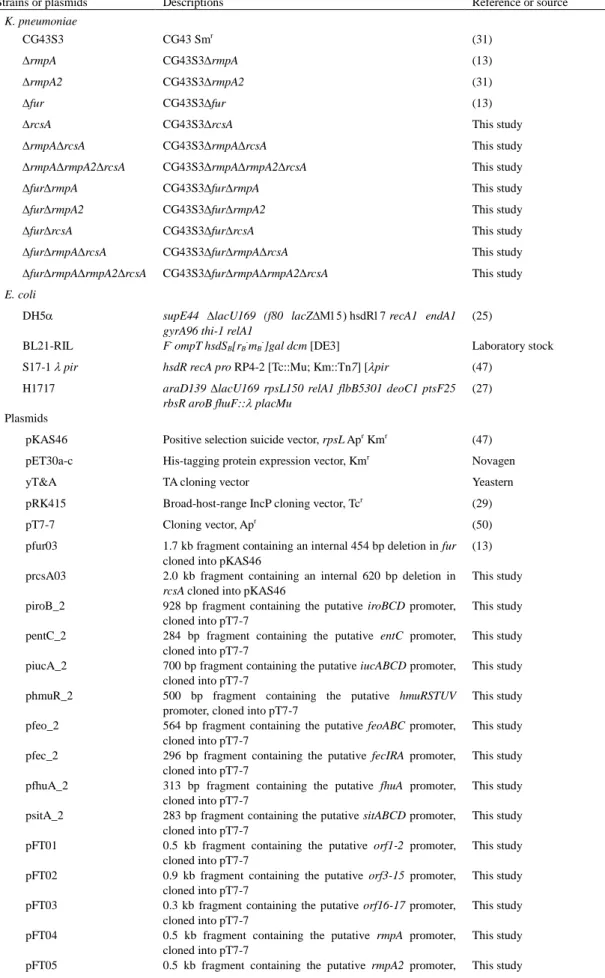
Table 1. Bacterial strains and plasmids used in this study
Strains or plasmids Descriptions Reference or source
K. pneumoniae
CG43S3 CG43 Smr (31)
rmpA CG43S3rmpA (13)
rmpA2 CG43S3rmpA2 (31)
fur CG43S3fur (13)
rcsA CG43S3rcsA This study rmpArcsA CG43S3rmpArcsA This study rmpArmpA2rcsA CG43S3rmpArmpA2rcsA This study
furrmpA CG43S3furrmpA This study
furrmpA2 CG43S3furrmpA2 This study
furrcsA CG43S3furrcsA This study
furrmpArcsA CG43S3furrmpArcsA This study furrmpArmpA2rcsA CG43S3furrmpArmpA2rcsA This study
E. coli
DH5 supE44 lacU169 (f80 lacZhsdRrecA1 endA1 gyrA96 thi-1 relA1
(25)
BL21-RIL F- ompT hsdSB[rB-mB-]gal dcm [DE3] Laboratory stock S17-1 pir hsdR recA pro RP4-2 [Tc::Mu; Km::Tn7] [pir (47)
H1717 araD139 lacU169 rpsL150 relA1 flbB5301 deoC1 ptsF25 rbsR aroB fhuF:: placMu
(27) Plasmids
pKAS46 Positive selection suicide vector, rpsL Apr Kmr (47) pET30a-c His-tagging protein expression vector, Kmr Novagen yT&A TA cloning vector Yeastern pRK415 Broad-host-range IncP cloning vector, Tcr (29) pT7-7 Cloning vector, Apr (50) pfur03 1.7 kb fragment containing an internal 454 bp deletion in fur
cloned into pKAS46
(13) prcsA03 2.0 kb fragment containing an internal 620 bp deletion in
rcsA cloned into pKAS46
This study piroB_2 928 bp fragment containing the putative iroBCD promoter,
cloned into pT7-7
This study pentC_2 284 bp fragment containing the putative entC promoter,
cloned into pT7-7
This study piucA_2 700 bp fragment containing the putative iucABCD promoter,
cloned into pT7-7
This study phmuR_2 500 bp fragment containing the putative hmuRSTUV
promoter, cloned into pT7-7
This study pfeo_2 564 bp fragment containing the putative feoABC promoter,
cloned into pT7-7
This study pfec_2 296 bp fragment containing the putative fecIRA promoter,
cloned into pT7-7
This study pfhuA_2 313 bp fragment containing the putative fhuA promoter,
cloned into pT7-7
This study psitA_2 283 bp fragment containing the putative sitABCD promoter,
cloned into pT7-7
This study pFT01 0.5 kb fragment containing the putative orf1-2 promoter,
cloned into pT7-7
This study pFT02 0.9 kb fragment containing the putative orf3-15 promoter,
cloned into pT7-7
This study pFT03 0.3 kb fragment containing the putative orf16-17 promoter,
cloned into pT7-7
This study pFT04 0.5 kb fragment containing the putative rmpA promoter,
cloned into pT7-7
This study pFT05 0.5 kb fragment containing the putative rmpA2 promoter, This study
19
cloned into pT7-7
pFT06 0.5 kb fragment containing the putative rcsA promoter, cloned into pT7-7
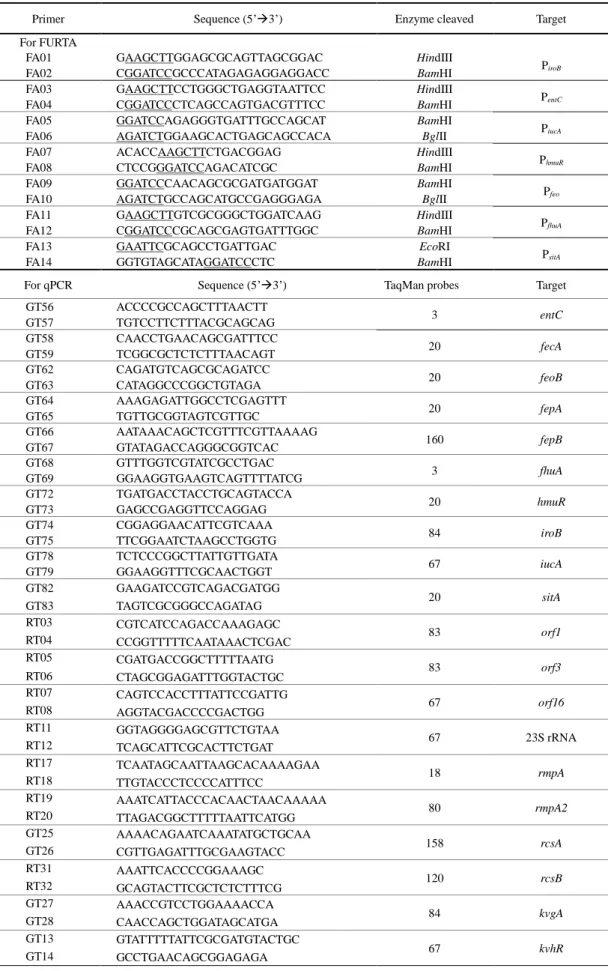
20 Table 2. Primers used in this study
Primer Sequence (5’3’) Enzyme cleaved Target For FURTA
FA01 GAAGCTTGGAGCGCAGTTAGCGGAC HindIII
PiroB
FA02 CGGATCCGCCCATAGAGAGGAGGACC BamHI
FA03 GAAGCTTCCTGGGCTGAGGTAATTCC HindIII
PentC
FA04 CGGATCCCTCAGCCAGTGACGTTTCC BamHI
FA05 GGATCCAGAGGGTGATTTGCCAGCAT BamHI
PiucA
FA06 AGATCTGGAAGCACTGAGCAGCCACA BglII
FA07 ACACCAAGCTTCTGACGGAG HindIII
PhmuR
FA08 CTCCGGGATCCAGACATCGC BamHI
FA09 GGATCCCAACAGCGCGATGATGGAT BamHI
Pfeo
FA10 AGATCTGCCAGCATGCCGAGGGAGA BglII
FA11 GAAGCTTGTCGCGGGCTGGATCAAG HindIII
PfhuA
FA12 CGGATCCCGCAGCGAGTGATTTGGC BamHI
FA13 GAATTCGCAGCCTGATTGAC EcoRI
PsitA
FA14 GGTGTAGCATAGGATCCCTC BamHI
For qPCR Sequence (5’3’) TaqMan probes Target GT56 ACCCCGCCAGCTTTAACTT 3 entC GT57 TGTCCTTCTTTACGCAGCAG GT58 CAACCTGAACAGCGATTTCC 20 fecA GT59 TCGGCGCTCTCTTTAACAGT GT62 CAGATGTCAGCGCAGATCC 20 feoB GT63 CATAGGCCCGGCTGTAGA GT64 AAAGAGATTGGCCTCGAGTTT 20 fepA GT65 TGTTGCGGTAGTCGTTGC GT66 AATAAACAGCTCGTTTCGTTAAAAG 160 fepB GT67 GTATAGACCAGGGCGGTCAC GT68 GTTTGGTCGTATCGCCTGAC 3 fhuA GT69 GGAAGGTGAAGTCAGTTTTATCG GT72 TGATGACCTACCTGCAGTACCA 20 hmuR GT73 GAGCCGAGGTTCCAGGAG GT74 CGGAGGAACATTCGTCAAA 84 iroB GT75 TTCGGAATCTAAGCCTGGTG GT78 TCTCCCGGCTTATTGTTGATA 67 iucA GT79 GGAAGGTTTCGCAACTGGT GT82 GAAGATCCGTCAGACGATGG 20 sitA GT83 TAGTCGCGGGCCAGATAG RT03 CGTCATCCAGACCAAAGAGC 83 orf1 RT04 CCGGTTTTTCAATAAACTCGAC RT05 CGATGACCGGCTTTTTAATG 83 orf3 RT06 CTAGCGGAGATTTGGTACTGC RT07 CAGTCCACCTTTATTCCGATTG 67 orf16 RT08 AGGTACGACCCCGACTGG RT11 GGTAGGGGAGCGTTCTGTAA 67 23S rRNA RT12 TCAGCATTCGCACTTCTGAT RT17 TCAATAGCAATTAAGCACAAAAGAA 18 rmpA RT18 TTGTACCCTCCCCATTTCC RT19 AAATCATTACCCACAACTAACAAAAA 80 rmpA2 RT20 TTAGACGGCTTTTTAATTCATGG GT25 AAAACAGAATCAAATATGCTGCAA 158 rcsA GT26 CGTTGAGATTTGCGAAGTACC RT31 AAATTCACCCCGGAAAGC 120 rcsB RT32 GCAGTACTTCGCTCTCTTTCG GT27 AAACCGTCCTGGAAAACCA 84 kvgA GT28 CAACCAGCTGGATAGCATGA GT13 GTATTTTTATTCGCGATGTACTGC 67 kvhR GT14 GCCTGAACAGCGGAGAGA
21
Table 3. qPCR analyses of expressions of iron acquisition genes in K. pneumoniae
wild-type and fur strains
Systems Gene
RNA expression ratioa
Reference fur/wild type Fe3+ Ferrichrome fhuA 1.73±0.19 (21) Aerobactin iucA 2.42±0.18 (12) Enterobactin fepA 2.11±0.18 (40) fepB 2.25±0.20 (40) entC 3.09±0.15 (40)
Ferric citrate fecA 1.61±0.16 (9)
fecE 1.69±0.26 (9)
Salmochelin iroB 6.28±0.98 (12)
Heme hmuR 3.08±0.65 (52)
Fe2+
Ferrous iron feoB 4.08±0.35 (10)
sitA 1.97±0.23 (43)
a. Mean expression ratio of fur mutant relative to wild-type parental strain CG43S3
22
Figure 1. Kp CG43S3 fur gene deletion rendered a more viscous phenotype by
using sedimentation assay. The bacteria containing Kp CG43S3 (wild type) and fur,
fur[pRK415], fur[pfur], CG43S3 [pfur] were cultured overnight in LB broth at
23
Figure 2. Knockout of fur decreases K. pneumoniae biofilm formation. Overnight
cultured bacteria were 100-fold diluted and inoculated into a 96-well microtiter dish. After 48 hr static incubation at 37 oC, the bacterial biofilm formation was quantified by crystal violet staining. The values correspond to the average from triplicate samples from a single trial. Error bars, standard deviations.
0 0.05 0.1 0.15 0.2 0.25 0.3
CG43S3 [pRK415] △fur [pRK415] △fur [pfur]
B io film f o rm a tio n (O D5 5 0 )
24
(A)
rmpA rmpA2 rcsA rcsB kvgA kvhR
Relative amo unt of m RNA 0 100 200 300 400 CG43S3 [pRK415] in LB fur [pRK415] in LB fur [pfur] in LB CG43S3 [pRK415] in LB+Dip fur [pRK415] in LB+Dip
25
(B)
(C)
Figure 3. Fur directly repressed the expressions of rmpA, rmpA2, and rcsA. (A)
qPCR analysis. The K. pneumoniae CG43S3 [pRK415], fur [pRK415], and fur
[pfur] strains were grown overnight in LB with or without 200 micromolar 2, 2-dipyridyl (Dip), then the relative expressions of rmpA, rmpA2, rcsA, rcsB, kvgA, and kvhR in bacteria were measured by qPCR analysis. (B) DNA sequence alignment between the E. coli typical Fur box and the putative Fur boxes in the upstream regions of rmpA, rmpA2, and rcsA. The relative positions to the translational start sites are indicated. (C) EMSA of the recombinant His6-Fur and its target promoters. DNAs of the upstream regions of rmpA, rmpA2, and rcsA were incubated with an increasing amount of the His6-Fur for 30 min and then loaded onto a 5% non-denaturing polyacrylamide gel. The DNA fragment P6 was used as a negative control. The gel was stained with SYBR Green EMSA stain and imaged.
26
Figure 4. Fur represses the CPS biosynthesis via RmpA and RcsA. Bacteria strains,
as indicated in the margin, were grown in LB medium at 37℃ with agitation. After 16 hr growth, the bacterial glucuronic acid contents were determined. Values are mean ± standard error of three independent experiments.
27
28
29
(C)
Figure 5. qPCR analyses of the expressions of the K2 cps genes. Bacteria strains,
as indicated in the margin, were grown in LB medium at 37℃ with agitation and then subjected to qPCR analyses for the detection of orf1 (A), orf3 (B), and orf16 (C) expression.
30
Figure 6. Fur affects the K. pneumoniae CPS biosynthesis in a Fe(II)-dependent manner. Bacteria were grown in media supplemented with or without 200
micromolar Dip or 60 micromolar FeSO4 as indicated. After 16 hr growth, the bacterial glucuronic acid contents were determined. Values are mean ± standard error of three independent experiments.
LB LB+DPP M9 M9+FeSO4
Glucuronic acid amount
( g/10 9 cfu) 0 20 40 60 80 100 120 140 CG43S3 [pRK415] fur [pRK415] fur [pfur]
31
32
Figure 7. Fur regulation on the iron acquisition in K. pneumoniae CG43. (A)
Deletion of fur increases the K. pneumoniae siderophore production assessed using CAS assay. Each bacterial strain assayed is indicated, and the orange halos formed around the colonies correspond to iron-chelating activity of siderophore in bacteria. (B) DNA sequence alignment between the E. coli typical Fur box and the putative Fur boxes in the upstream regions of the eight iron acquisition systems. Positions identical to the consensus sequences are underlined. (C) Assessment of the binding of Fur to the DNA sequences using FURTA. E. coli H1717 strains carrying the pT7-7 derivatives are indicated. Red colonies (Lac+) denoted FURTA-positive phenotypes. pT7-7, the FURTA-negative control.
33
計畫成果自評
本計畫在這一年八個月的執行過程中,順利的完成各項目標,我們利用 EMSA 和 qPCR 了解 Fur 會藉由直接抑制 RmpA 和 RcsA 的表現而影響莢膜多醣體的生 合成,另外對於其他曾經被證實與莢膜多醣體生合成的相關轉錄蛋白質,包含 RcsB、KvgA、KvhR 和 Lon 皆不會受到 Fur 所調控,而我們也證實了外在鐵的 存在可以幫助 Fur 對於下游基因的調控,因此在缺鐵的環境下,Fur 即缺少了對 於莢膜多醣體的抑制能力,使得菌體會大量產生莢膜多醣體,這也令我們推測在 克雷白氏費炎桿菌入侵到人體後,所面臨的是缺鐵環境的狀態,也因此莢膜多醣 體可以大量合成,並可躲避掉吞噬細胞的攻擊。再者我們也藉由目前已解碼的克 雷白氏肺炎桿菌 NTUH-K2044 (K1 serotype) 來進行分析在 CG43 (K2 serotype)中 抓鐵系統的套數,其中總共有八套抓鐵系統的存在,進一步利用 Qpcr 以及跟德 國的學者 Dr. Hantke 所拿到 H1717 來偵測大腸桿菌中 Fur 對於所構築出來的八 套抓鐵系統的啟動子在序列的結合與調控能力,其中發現六套可以直接受到 Fur 所抑制,因此我們在這一年多以來的研究可以發現在克雷白氏肺炎桿菌的入侵過 程中,Fur 扮演極為重要的角色,可以當作藥物開發的重要標的,因此未來我們 希望能進一步探討環境因子對於 Fur 表現上的影響,並且找尋可以調控 Fur 表現 的上游調控蛋白質,進一步可藉由促進 Fur 的表現來達到抑制菌體中毒性因子的 表現。目前我們將這一年多以來的研究已經在 2009 年和 2010 年美國 Gordon research conference 所舉辦的會議發表過兩次的論文,也得到相當好的回應,而 也將成果撰寫成文章投稿於 Microbiology 中,也得到了文章修正的機會,目前正 在針對編輯者對實驗內容的建議進行修正,相信可以得到一個好的結果。