植物生理
葉綠體
藻類起源與質體
Origins of Algae and their Plastids
李澤民
海洋植物生理暨生質能研究室 海洋生物科技暨資源學系
國立中山大學 高雄 台灣
Plastid origin and algal evolution
Hedges, S. Blair et al. (2004) "A molecular timescale of eukaryote evolution and the rise of complex multicellular life" BMC Evolutionary Biology 4:2
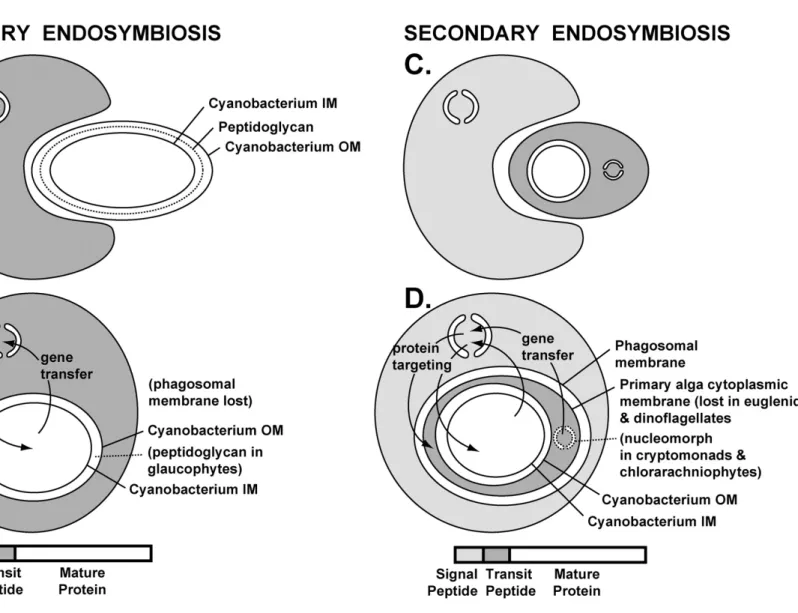
Fig. 2. Primary and secondary endosymbiosis.
Keeling P J Am. J. Bot. 2004;91:1481-1493
Primary endosymbiosis refers to the
original uptake and retention of a
cyanobacterium by a eukaryote
• The protein products of most of these nuclear genes
continue to function in the plastid, and they are
post-translationally targeted there by means of an N-terminal leader called a transit peptide.
• Transit peptides are recognized by protein complexes in the inner and outer membranes of the plastid
(called TICs and TOCs) that direct the translocation of proteins across the membranes (McFadden, 1999⇓). • Primary plastids are found in three major lineages:
glaucophytes, red algae, and green algae (including plants).
http://www.the- scientist.com/?articles.view/articleNo/33711/title/Steal-My-Sunshine/
plastid
•
Chloroplast
•
Chromoplast
•
Proplastid
•
Leuoplast, amyloplast
•
Chloroplast R.R.
•
Pyrenoid: RuBisco+stores
請看文章7.9. 補充資料 PSII PSI 演化假說
Major LhcII 是可以移動到PSI =state 2
綠藻保有此類的能力較高等植物大,綠藻
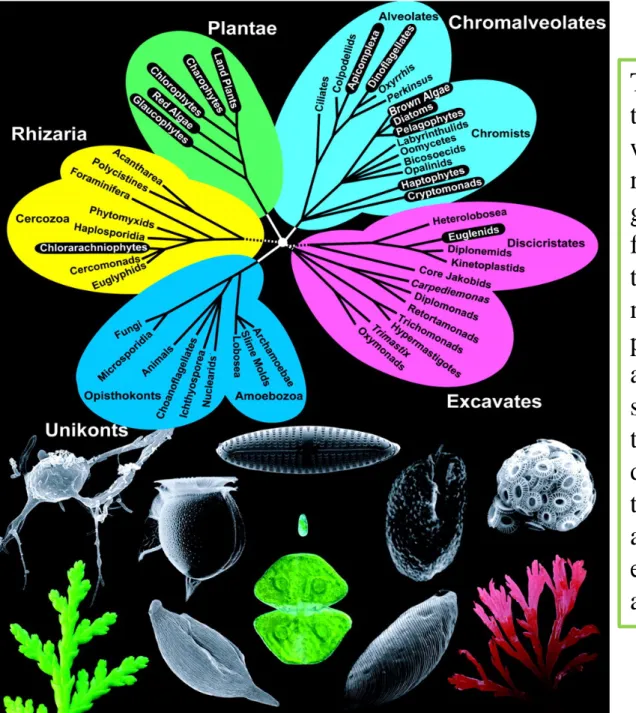
Fig. 1. Tree of eukaryotes and diversity of plastid-bearing eukaryotes.
Keeling P J Am. J. Bot. 2004;91:1481-1493
www.amjbot.org
the phylogenetic diversity of
plastid-bearing groups is clear: they are scattered across four of the five major groups of eukaryotes.
This was perhaps most obvious in the euglenids, whose plastids
were quickly recognized to share a number of characteristics with green algae, whereas their
flagellar apparatus was more akin to that found in the parasitic and nonphotosynthetic kinetoplastid protozoa (Leedale, 1967⇓; Kivic and Walne, 1984⇓). Molecular systematics further reinforced these contradictions by
demonstrating that euglenids and trypanosomes were closely related at the nuclear level to the
exclusion of green algae (Sogin et al., 1986⇓).
PRIMARY PLASTIDS
Primary endosymbiosis refers to the
original uptake and retention of a
cyanobacterium by a eukaryote
• These plastids are bound by two membranes, which are derived from the inner and outer membranes of the Gram-negative cyanobacterium (Jarvis and Soll, 2001⇓).
• The once free-living prokaryote was reduced and
transformed into the organelles we see today, partly
by the loss of much of its genome and the transfer of
most of the remaining genes to the nucleus of its host.
• Glaucophytes (glaucocystophytes) are a small group of microscopic algae found in freshwater
environments. There are only about 13 species of
glaucophytes, and although not particularly common in nature they are important because they occupy a pivotal position in the evolution of photosynthesis in eukaryotes (see later). They also represent an
intermediate in the transition from endosymbiont to plastid in that they are unique among plastids in
retaining the prokaryotic peptidoglycan layer
between their two membranes. Glaucophyte plastids contain photosynthetic pigments chlorophyll a,
phycobilins, and phycobilisomes, small particles
organized on the outer face of thylakoid membranes that are also found in cyanobacteria. (For a review on glaucophytes, see Bhattacharya and Schmidt, 1997⇓; Steiner and Loffelhardt, 2002⇓.)
•
Red algae are a very large and diverse group
of microscopic algae and macroalgae that are
present in freshwater and common in marine
environments. Red algal plastids contain
chlorophyll a, phycobilins, and phycobilisomes.
For a review of red algae, see Saunders and
•
Green algae are another large and diverse
group of predominantly freshwater algae
whose plastids harbor chlorophylls a and b.
Green algae are roughly divided into
chlorophytes and charophytes. Charophytes
are the ancestors of
land plants, which share a
great number of similarities to charophytes
and green algae as a whole. For a review of
green algae, see Lewis and McCourt (2004) in
this issue.
Chan, C. X. & Bhattacharya, D. (2010) The Origin of Plastids. Nature Education 3(9):84