
部落旅遊案例研究─卡地布部落 - 政大學術集成
50
0
0
全文
(2) 部落旅遊案例研究—卡地布部落 Tribal Tourism Study – Katipul Tribe Case. 研究生:陳健立. Student: Jerry Chen. 指導教授:吳文傑. Advisor: Jack Wu. 政 治 大. 學. ‧ 國. 立. 國立政治大學. ‧. 商學院國際經營管理英語碩士學位學程 碩士論文. sit. y. Nat. er. io. A Thesis. n. a l to International MBA Program Submitted iv n. C. i U e n g c hUniversity NationalhChengchi. in partial fulfillment of the Requirements for the degree of Master in Business Administration. 中華民國一百零一年一月 January 2012.
(3) Table of Contents 1.. Katipul Tribal Tourism ....................................................................................... 1. 2.. Katipul Tribe – Culture and Society .................................................................. 4 2.1. The Tribes .................................................................................................. 4. 2.2. Ancient Education and Male Club System ................................................ 5. 2.3. Governance and Families ........................................................................... 6. 2.4. Life Style and Arts ..................................................................................... 7. 2.5. 3.2. Tribal Tourism ......................................................................................... 10. y. er. io. The Bulaubulau Aboriginal Village ......................................................... 12. al. iv n C The Dessert Safari in UAE 15 h e ...................................................................... ngchi U n. 4.2. sit. Successful Tribal Tourism Samples ................................................................. 12 4.1. 5.. ‧ 國. Three Major Tourism Types .................................................................... 10. ‧. 3.1. Nat. 4.. Tribal Tourism ................................................................................................... 10. 學. 3.. 政 治 大 Major Ceremonies of Katipul Tribe ........................................................... 8 立. Katipul Tribal Tourism – Current Situation .................................................. 18 5.1. Organization ............................................................................................. 18. 5.2. Tour courses ............................................................................................. 20. 5.3. Tourists .................................................................................................... 21. 5.4. Marketing strategy ................................................................................... 23. 5.5. Financial status......................................................................................... 24. 5.6. Competition.............................................................................................. 26. I.
(4) 6.. Improvement Plan ............................................................................................. 29 6.1. Cost structure ........................................................................................... 29. 6.2. Tour courses re-design ............................................................................. 30. 6.3. Marketing Strategy................................................................................... 35. 6.4. Financial result estimation ....................................................................... 37. 7.. Conclusion .......................................................................................................... 42. 8.. Appendix and Reference List ............................................................................ 44. 立. 政 治 大. ‧. ‧ 國. 學. n. er. io. sit. y. Nat. al. Ch. engchi. II. i Un. v.
(5) 1. Katipul Tribal Tourism “Honestly speaking, we all know what and where the problems are.” Said Cheng-Jong Chen, the director of Katipul Culture Development Association, “But we just don’t know what effort we can make to change the situation.”. 政 治 大. 立. ‧. ‧ 國. 學 er. io. sit. y. Nat. al. n. iv n C Figure 1-1. Tourists attend the at Katipul Palakuwan Culture Park. h eevent ngchi U After slumped for almost two years, once again, in the third quarter of year 2011, Katipul Culture Development Association (KCDA) started to invite travel planners and managers from nearby hotels. [*1]. and travel agencies participated in the recently. re-designed Katipul tribal tour. The KCDA try to attract more tourists by cooperating with hotels and travel agencies where normally tourists get the tour information from. According to the survey from local government, there were over 3.5 million visitors visited Tai-Tung County. [*2]. in the year of 2010, only about thousand visitors. participated in the Katipul tribal tour.. 1.
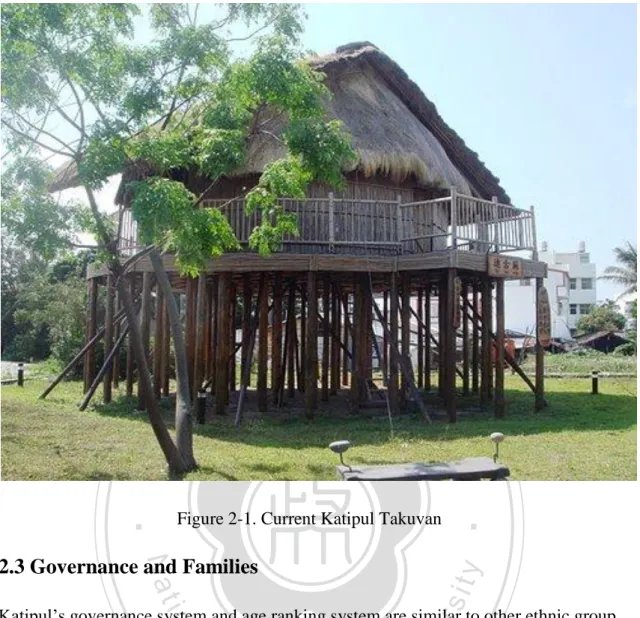
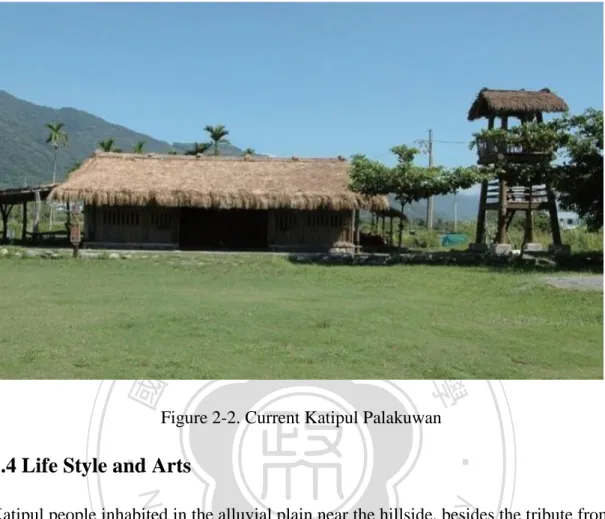
(6) Katipul, a Pinuyumayan. [*3]. tribe located in the sub urban area in south of Tai-Tung. City, is offering various tribal tourism courses to the public. The tour courses offered varies from half day historical and cultural site visiting, one full day culture experience with traditional tribal totem painting and handcraft practice, to two full days “off the city” camp site traditional tribal life experiencing. Price range for the tour courses are from 100 NT dollars to 1600 NT dollars depends on what tour course tourist takes. There are few major purposes for KCDA to build up the tribal tourism courses. The first one is to eliminate or at least reduce the bias against the tribal people from none tribal. KCDA believes that through the tour, none tribal people would learn the differences of culture, life style, and way of thinking. By gaining the understanding,. 政 治 大. the gap in between could be eliminated or at least, none tribal people would know. 立. what the gap really is.. ‧ 國. 學. The second purpose is to raise the fund for community public affair, and to boost the local economic activities by bringing more tourists to expend money. It will increase. ‧. the income and also create more opportunity for the people who chose to stay in the. io. sit. Nat. tribal people who have to leave home away for seeking jobs.. y. tribe, and make the tribe become self-sustained. Furthermore, it may bring back those. er. The third is to reduce the uncertainty of financial support from local and central. al. n. iv n C he per year for maintaining and running thenKatipulhPalakuwan g c i U Culture Park and also for government. The Katipul tribe needs around eight hundred fifty thousand NT dollars. holding the tribe ceremonies and events. Currently the KCDA has to apply for the financial support from different government agencies every single year, and it to use different subjects or events for the cases it submitted since government normally does not accept the KCDA to apply for the budget support for the same occasion in the consecutive years. The plan and goal which KCDA set looks perfect, but the real world is crucial. Without hiring full-time dedicated personnel from travel industry to plan the tour and to make a marketing plan and promote, the outcome of the current running tour business does not meet the original expectation. The KCDA current plan seems not realistic, and the goal seems not reachable.. 2.
(7) [*1] Katipul tribe is in the famous “hot-spring” area called “Chih-Pen”. Therefore there are many hotels in this area. [*2] The Tai-Tung County is in the south eastern Taiwan. The total population is around two hundred thirty thousand, and 30% of the population is indigenous, largest ratio among all the Counties in Taiwan. [*3] Pinuyumayan, also known as “Puyuma” or “Bei-Nan Chu”, is one of the 14 indigenous ethnic groups in Taiwan. The indigenous in Taiwan belongs to the Austronesian language system ethnic group.. 立. 政 治 大. ‧. ‧ 國. 學. n. er. io. sit. y. Nat. al. Ch. engchi. 3. i Un. v.
(8) 2. Katipul Tribe – Culture and Society Katipul, a Pinuyumayan tribe, has resided in the south eastern Taiwan for more than thousand years. Pinuyumayan is the one of the fourteen government formally recognized indigenous ethnic groups in Taiwan. (Please refer to the diagram on Appendix 1 for Taiwan Indigenous Ethnic Groups Distribution) The total population of indigenous people in Taiwan is slightly more than half a million; all the indigenous ethnic groups in Taiwan belong to the Austronesian language ethnic system. The Austronesian language ethnic system is the most widely spread out ethnic group from the geographic point of view; there are more than two hundred million Austronesian people live in different countries from Indian Ocean through almost all. 政 治 大 the diagram on Appendix. the South Pacific Ocean, for example, native Malaysian and Indonesian people are 2 for Austronesian 立 Distribution) From the result of linguistics research, all the Austronesian people Austronesian. (Please refer to. ‧ 國. 學. spread out from Taiwan, which means, Taiwan indigenous is the root of entire Austronesian. But the evidence archeologist found shows totally different result, the. ‧. archeology evidence shows that the Austronesian in Taiwan is actually migrated from. y. sit er. io. 2.1 The Tribes. Nat. South Pacific islands.. al. n. iv n C h e nplain them inhabiting in ten tribes on alluvial the hillside of Central Mountain h iin U g cand. Nowadays, the total population of Pinuyumayan is about eleven thousand; most of. Ridge in Tai-Tung County in Taiwan. According to the ancestral legends, these ten Pinuyumayan tribes can be divided into two major groups. One group consists of three tribes is derived from the “Bamboo Origin” ancestral legend, led by the tribe Puyuma; this group of people believes that while their ancestor came to this island, the place their ancestor went ashore is the place called Panapanayan. Another group consists of seven tribes is derived from the “Rock Origin” ancestral legend, led by the tribe Katipul; this group of people believes that while their ancestor came to this island, the place their ancestor went ashore is the place called Ruvua’an. In the ancient time, each tribe is similar to an independent state. The Katipul tribe was the largest and the most powerful tribe by the time Dutch invader entered eastern Taiwan in 1637 A.D. The Katipul tribe used to dominate almost all the tribes 4.
(9) inhabited in the alluvial plain and hillside of south eastern Taiwan. The dominated tribes were not only Pinuyumayan tribes, also other indigenous ethnic tribes such as Amis, Paiwan and Rukai tribes; those tribes been ruled had to pay tribute to Katipul every year. The reason why the Katipul tribe was so powerful was not the population; the reason was the Spartan education style, male age ranking system and governance system.. 2.2 Ancient Education and Male Club System In Katipul tribe, all the male teenagers from age twelve to fifteen had to live in Takuvan. [*1]. six months every year. Where teenagers learn the tribe rules, history,. hunting skills, basic fighting techniques, and the most important thing – absolutely. 治 政 大 for advanced martial had to move out their own family and live in Palakuwan 立 training; after finished the training and reached age 24, these young adults (called obey the instruction from elders. After graduated from Takuvan, young male adult [*2]. ‧ 國. 學. “Vangsarang” in Pinuyumayan) were allowed to get married. Before Vangsarang get married, he still needs to stay at Palakuwan. After the Vangsarang got married, he had. ‧. to move to his wife’s home since Pinuyumayan is a matriarchal society. After the long period of martial training, the young warriors were brave and skillful in fighting.. y. Nat. sit. Another unconfirmed reason might be unbelievable nowadays, that is the power of. al. er. io. black magic. Pinuyumayan was actually famous for its mysterious powerful black. n. magic, almost all other indigenous ethnic tribes afraid of it.. Ch. engchi. 5. i Un. v.
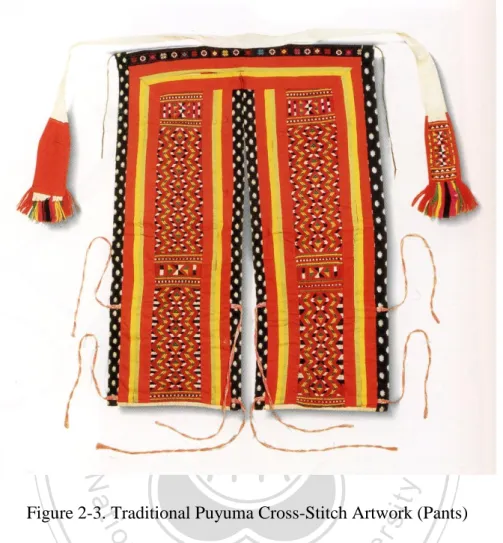
(10) 學 Figure 2-1. Current Katipul Takuvan. Nat. sit. y. 2.3 Governance and Families. ‧. ‧ 國. 立. 政 治 大. er. io. Katipul’s governance system and age ranking system are similar to other ethnic group,. al. n. iv n C U (leader h eKatipul, families in h i leaders n g cthe. but more subdivided and more efficient. Not like Paiwan’s hereditary noblesse system, there are three major. is “Ayawan” in. Pinuyumayan) of each subgroup are elected by the seniors and “Rahan” (Rahan is the Priest in Katipul, there are three major families, therefore there are Rahans for each families). Rahan is the one who has the right to make the final decision of all the tribe events, but Rahan normally would discuss with Ayawan and seniors before making the decision. The system makes sure the decisions and solutions are been discussed adequately. The age ranking system for male is divided into ten different group starting from age 12; each rank takes two to three years before age 24. Each age ranking group has their own job function, ranking group name and apparels; the lower ranking group has to obey the order from higher ranking group. The age ranking system is the way to ensure the instruction from parliament can be completely followed and executed.. 6.
(11) 學 Figure 2-2. Current Katipul Palakuwan. ‧. ‧ 國. 立. 政 治 大. 2.4 Life Style and Arts. y. Nat. sit. Katipul people inhabited in the alluvial plain near the hillside, besides the tribute from. er. io. other tribes, Katipul people also do hunting, gathering and had fundamental. al. n. iv n C hillside to hunt since hunting mighthbe very dangerous. e n g c h i UThe danger during the hunting agriculture. Women are not allowed to hunt, only the male adults are allowed to go. is not only come from the wild animal, but also the threatening from other unfriendly tribes. Invading hunting territory of unfriendly tribe may happen during chasing quarries, and it would cause war. The agriculture were mainly done by women, normally they grew millet and some vegetables. Since the Katipul tribe was ruling other tribes and received tributes from other tribes, Katipul people has more time to develop its handcrafting artworks, painting, carving, dancing and making chants. The colorful and complicated cross-stitch can be an example. Not like dyeing style apparel from Atayal or Bunun tribes, in Katipul tribe, no matter male or female, children or adults, the apparels and accessories are all decorated by massive cross-stitch artworks. The sheath is another good example. The Pinuyumayan sheath normally heavily decorated. Painting on the sheath is the. 7.
(12) minimal, the more you can see is the carving artwork or even the colorful gemstone inlayed.. 立. 政 治 大. ‧. ‧ 國. 學 sit. y. Nat. io. er. Figure 2-3. Traditional Puyuma Cross-Stitch Artwork (Pants). al. n. iv n C linked to religious rites and daily life. indigenous do not have characters, all h eSince n gthe chi U. The dance and songs are both very important to Katipul, dances and songs are heavily. the tribe rules, stories, legends and histories were narrated from old to young, generation by generation. And for easier to memorize, those tribe rules, stories, legends and histories were frequently been used as the subject and main line of the songs. There are also some taboos of the songs and dances, for example, some certain songs can only be sang at certain moment in certain event, such as new year ceremony.. 2.5 Major Ceremonies of Katipul Tribe The rite is also very important to the tribe. The rite is not only the way to worship but also to show the appreciation to other people and everything that helps the tribe to survive and grow. There are two major rites every year in Katipul. Each rite or said ceremony is reflecting certain topic and focus on different people.. 8.
(13) The first rite of the year is the “Kavarasa’an”, normally been held in middle of July (after the end of millet harvest season) and last for more than a week. The Kavarasa’an is the ceremony to deliver the gratefulness to the holy ancestor spirit and the Mother Nature for the plentiful harvest. During the ceremony, Vangsarang would also parade the entire village with traditional warrior dance, pray for peace for everyone. The second is the “Amiyan” (annual ceremony); the Amiyan is a series of rites. starting from the middle of December and ends on the New Year’s Day. The first one is the “Mangayangayaw”, which means the “Monkey Hunting”, for teenager from Takuvan; this rite is to demonstrate the braveness of teen warriors. The second rite of Amiyan is the “Mangayawa”, the grand hunting ceremony, it last. 政 治 大. for a week. Only male adults from age 18 to 60 are eligible to be the participants. Most of the quarries from the Mangayaw will share equally to all the hunters, and. 立. another half will be the award to those who make contribution to the tribe in the past. ‧ 國. 學. year. During the hunting week, young adult go out to hunt in the day time, seniors stay at the camp site; in the night time, after hunters back to the camp site, senior start. heroes, and also the history will be thought in these few nights.. Nat. y. ‧. to lead everyone to learn the traditional songs that describes the legends and praises. io. sit. The last ceremony of Amiyan is the most important one, which is “Remavaravas”. In. er. the ancient era, this ceremony is to worship the human head which tribe warriors take. al. n. iv n C U Remavaravas become a rite to h eit.nNowadays hunting enemy head and then worship g c h i the. back from battle. Katipul people believe that unclean things can be purified by. comfort those people in mourn during the past year. People in mourn cannot attend any tribe event before the Remavaravas.. [*1] Takuvan is the combination of school, clubhouse and training facility for boys. [*2] Palakuwan is the combination of school, clubhouse, and training facility for male adult; and also the lodge or meeting facility for tribe leaders, male seniors and sorcerers.. 9.
(14) 3. Tribal Tourism According to the recent survey done by World Tourism Organization (WTO), nowadays the tourism industry already becomes the largest one in the world. In 2010, more than 940 million international tourists travel around the world, and generated more than USD$919 billion in export earnings. [ *1]. 3.1 Three Major Tourism Types In general, the tourism industry can be divided into three major categories. The first one is the “General Tourism”, also known as “Industrial Tourism”. The general tourism simply focuses on the economic outcome from the tourism activities, but. 政 治 大. without considering the impact of environment and society. General speaking, most of the group tours can be found in the tourism market which provided by the tour agency,. 立. such as “10 days Japanese hot spring tour” or “15 days Europe tour”, are in this. ‧ 國. 學. category. The lodging and amenity are usually better than other tour categories. The second one is the “ECO-Tourism”. The ECO-Tourism is less harm to the. ‧. environment and society, normally focus on special interests and in some sort of. y. Nat. educational format. The people who lead the tour group or the instructors are the local. n. al. er. io. category.. sit. experts. For example, the wildlife viewing tour, hiking tour, and rafting are in this. Ch. i Un. v. The third one is the “Cultural Tourism”. The cultural tourism is defined as the tour. engchi. that helps the tourists learn about and experience different cultures. For example, the experience of making handcraft art, the regional language, music, history, and tradition can often be seen in the cultural tourism tour package. In this category, the tour normally run by local (regional) experts and usually only small amount of people in the tour group, or even walk-in guest.. [*2]. 3.2 Tribal Tourism The tribal tourism normally combines the ECO-Tourism and Cultural Tourism with more culture interpretation and integrity. The main purpose of the tribal tourism is not only for delivering the different experience of tradition, culture, art, music, and history, but also for supporting, maintaining, and strengthen the tribe’s heritage, traditional lifestyle and fundamental ethic value. The tribal lifestyle and history are 10.
(15) often become the main advertising point in the tribal tourism. Tourists are expected to be attracted by the differences of culture and lifestyle of the tribe. One of the designs for the tribe tourism is to help tribal or non-tribal people to realize and understand the differences between cultures. But it is also a good way to improve home-based economy in order to help the economy status of traditional tribe where usually does not have many economic activities. As long as the tribe people having enough working opportunity and economic activities, it is not hard to keep the tribe member to stay at the home tribe since they can gain incomes to support and secure their own living. Then the tribe people could strengthen local pride and build up the ethnicism from this self-supported local group.. 政 治 大. Here are the major attractions for tribal tourism:. 立. Culture. 2.. Lifestyle. 3.. History. 4.. Religion. 5.. Ceremony. 6.. Music & Art. 7.. Handcraft. 8.. Architecture. 9.. Apparel, ornaments, and accessory. ‧. ‧ 國. 學. 1.. n. er. io. sit. y. Nat. al. Ch. engchi. [*1] Data from WTO, http://unwto.org [*2] Data from ANKA, http://www.ankn.uaf.edu. 11. i Un. v.
(16) 4. Successful Tribal Tourism Samples There are many successful tribal tourism cases from tribes in foreign countries and in local tribes. Each of them may reside in different nature environment in different countries and areas; and may have different ways to run the tour, but they are all very successful. The successful tribal tourism cases may have the same design and may have different; there is no easy way to say in which unique model of running the tour can make the business successful. But sure we can learn something and come out some ideas from these successful stories.. 4.1 The Bulaubulau Aboriginal Village. 政 治 大. The Bulaubulau village is an Atayal tribe located in Yilan County in north-eastern Taiwan; it only takes forty minutes by driving from the nearest major big cities. The. 立. tour is aim to the urban people for weekend getaway trip or for the people who want. ‧ 國. 學. to get relax and enjoy the wonderful cuisine in the natural isolated tribe. In fact, there are only Bulaubulau village offers this sort of tour in Taiwan. The meaning of. ‧. “Bulaubulau” is “take a stroll”, it fully reflect the style of the tour – A relax and. io. sit. Nat. also the big attraction to the metropolitan tourists.. y. delightful escape experience tour. And the fusion style aboriginal organic cuisine is. er. The Bulaubulau village tour is hosted by an Atayal couple Wilang and Saya; the. al. n. iv n C h e ntogbuild he decides c h iupUthe tribe. ultimate goal is to build a financially self-supported tribe. Wilang is an experienced landscape designer, while. tour; he applies his. professional knowledge about landscape design on designing the tour site for the tribe tour. The tour site is consisting of dining area, agriculture area, mushroom area, pasturage area and living area, all the builds are built in traditional tribal style; the site is perfectly integrated in the isolated magnificent natural environment. In the village, where the Atayal tribe residents grow organic crop and raise animals in the natural non-polluted environment, the relax atmosphere is a great attraction to the tourists. Currently the Bulaubulau Village only offers one tour course, which is a one day course including lunch at the dining area. All the tourists have to form a group between ten to thirty people by themselves, and need to make reservation beforehand. The tour does not accept walk-in tourists and group less than ten persons. On the tour day, the tourists group has to reach the designated pick up point at 10:00AM, the 12.
(17) village does not allow tourists to drive in, and therefore all the tourists have to take the transportation vehicles arranged by the village. The village arranged vehicle takes the tourists pass through the river bank under the Han-Hsi suspension bridge and goes through a short hillside trail. Only less than twenty minutes drive, the tourists then reach the tableland of height 400 meters, the tribe sits in the tableland surrounded by the stunning natural scenes. The tour starts from a forty to fifty minutes tribal life walk through, which the tour guide will led the group to stroll in the village and show the guests the natural environment, plants, and life style. If you are lucky enough, you can see the old Atayal grandma weaving traditional clothes. After the short strolling tour, the host, Wilang, starts to invite tourists gathering at the dining area for the creative fusion style aboriginal organic lunch.. 立. 政 治 大. There is no menu for the lunch; all the tourists are served a set lunch consists of. ‧ 國. 學. seasonal natural organic ingredients. The fusion style set lunch is a great attraction to the tourist who visits Bulaubulau; the lunch comes with the millet wine and simple. ‧. tribal style entertainment. The lunch last for at least three to four hours since tourists are not only eating lunch, but also enjoy chatting with Wilang and other tribal people,. y. Nat. sit. and the unadorned tribal singing and dancing. Since the set lunch is consisting of. al. iv n C U After lunch, tourists are after thehlunch around eng c h i4:00PM.. n. Bulaubulau second time.. er. io. seasonal ingredients, most of the dishes served are different while the tourists visit. The tour basically ends. welcome to walk around the village to enjoy the natural environment. Then village arranged vehicles start to send tourists back to the meeting point near the Han-Hsi suspension bridge. The current charge for this one full day lunch included tribal tour is $1,800 NT dollars, $300 more than few year before, the price is not cheap, but the price does not scare people off, the tour still hot and has high return rate. The design of each part of the tour seems quite normal, nothing really special, and the price is high. But how come the result is extremely good? Here I conclude some advantages which were mentioned in the report from magazine, newspaper, and tourist’s testimony.. 13.
(18) 1. Not far from major city, but hard to get in by ourselves. The tour site is only less than one hour drive from Taipei, the capital city in Taiwan. But the last miles of the road is hard for regular car to get in, therefore the tribe also maintain its secrecy. The “Easier to access but still have its secrecy” does not seem to exist simultaneously in other tribes. 2. Magnificent fusion style lunch. The creative fusion style and great cooking skill combining with organic and healthy raised ingredient is very attractive for urban people. Urban people normally expect to have such great dining experience from high end restaurants in the city, not from the tour site in the middle of nowhere. Furthermore, the set lunch dishes varies almost every day, tourists never know. 政 治 大. what they would have in the lunch time, it creates expectation and surprise. 3. Different culture, natural environment and life style.. 立. The 40 minutes concentrated “before lunch tribe tour” brings the tourists to. ‧ 國. 學. experience different culture, natural environment and life style. The tour does not consist of heavy subjects such as the political and culture suppress. Instead. ‧. of that, the tour only brings the “soft topics” such as the bright side and positive image to the tourists.. y. Nat. sit. 4. No physical challenge.. al. er. io. Not like other tribal tour, the Bulaubulau village tour does not need tourists to. v. n. have excellent physical condition for hiking or rock climbing. Instead of that,. Ch. i Un. the tour only consists of light strolling and the duration is short enough so that. engchi. everybody can attend and easily enjoy it. 5. Well designed tour site.. Urban people often have the image that the tribe life is very primitive, the tribal people still live in the thatched cottage, no electricity, and no tab water in it. Unfortunately, that image is totally wrong. The current tribal life is almost the same as everyone live in the city; concrete house, TV, tab water, electricity, everything the same. But the Bulaubulau tour site is different, it is designed to replicate the ancient tribal life style; the site is consisting of several well designed thatched huts with Wilang’s nicely arranged landscape design. And of course, it perfectly fit into the natural environment. 6. Gourmets’ testimony and media exposure. The Bulaubulau village tour was occupying the major tour books is the past 14.
(19) few years. Through the effort from government and Bulaubulau village itself, journalists and gourmets have been invited to have the Bulaubulau village tour. It creates almost free media exposure. The effect is instant and effective since people normally see the reports from journalists and gourmets as authoritative information sources. And the nicely designed “Atayal Red” style Bulaubulau village tour webpage also increases the tourists’ curiosity of the tour.. 4.2 The Dessert Safari in UAE The Arabic tribal tour is another good but different example. This kind of tour is normally design for foreigners to experience the dessert tribal life combining with the modern dessert adventure. Even though the name is tribal tour, it does not really get. 治 政 大 of a group of tents sit in the their own created tour site; normally the tour site consists 立 manmade oasis in the dessert. The tour site is design to imitate the traditional Arabic into the real tribe normally. Instead of that, the tour company usually brings tourists to. ‧ 國. 學. tribal life style, tourists would have the feeling that they are in the real Arabic tribe but actually all the factors are been well controlled in the tour site.. ‧. Depends on the travel agency, the price and length of the tour are quite different. The. sit. y. Nat. most common tour course is eight hours long dessert safari with tribal cuisine and entertainment. The charge varies from $80 to $100 US dollars. There are two. io. n. al. er. Emirates which are well known as wealthy states – Dubai and Abu Dhabi; but the rest. i Un. v. five absolute monarchic Emirates are not as rich as their brothers, therefore the. Ch. engchi. desserts in these Emirates are the perfect destination for running the tribal tour. The life style and natural environment in the deep dessert in these five Emirates are still remaining old fashion and also the cost of running tour business there is lower than in the Dubai and Abu Dhabi. The tour normally starts in the afternoon around 3:00PM since the weather is more comfortable and acceptable for most of the tourists. The tour company sends 4X4 SUV with off-road capability to pick up tourists from hotels or any designated locations. Each SUV is able to carry up to six tourists at a time. The driver is also the tour guide. After the SUV leaves the city, on the road to the dessert, the driver (also the tour guide) starts to explain the history, life style and warnings to the tourists. After reach. 15.
(20) the dessert, it normally takes an hour; the driver starts to leave the main road and driving up and down in the dunes. Sits on the SUV and touring up and down in the dunes might be the most exciting activity for most of the people; many people think that it is even more exciting than roller coaster. There are tracks on roller coaster, people ride on it are able to predict where to go and when it is going to turn, but on the SUV touring in dunes, nothing predictable, no road, no rules, only the driver knows what the next move is. After reach the tour site in the manmade oasis, the tourists are invited to ride camel to experience how Arabic people travel in the dessert with the ancient style. There are also other modern activities offered, such as beach ATV ride and dune hiking.. 政 治 大. Soon after the tourists start to get into the tent, waiters start to serve Arabic brew coffee with dry date and Arabic goodies. At the same time, the Arabic folk band plays. 立. the tradition tune. The Middle East style dinner comes after the short tea break.. ‧ 國. 學. During the dinner, not only with the Arabic music, also the tour company arranges the belly dancing and the belly dancing girl interacts with tourists after belly dance. After. ‧. the dinner, the tour site prepare hookah for tourists to smoke outside the tent. The light will be turn off completely, tourists lay on the Persian carpet on the sands, get. y. Nat. sit. relax, smoke hookah, and watch the stars on the sky. The tour ends around 11:00PM,. er. io. the tour company than send tourists back to where they got picked up.. al. n. iv n C U safari. The rest of the activity h e n g cand tourists contact only handles the transportation h idune The tour site is actually shared by several tour companies. The tour company that the. all arranged by the tour site, here means the imitated tribe in the manmade oasis. The tour site does not in charge of promoting the tour; the tour site opens to all the tour companies that want to run tribal tour business. I try to get the actual number of how many people visit in average, the tour site told me that in the low season, four to five SUV get into the site daily, which means 20 to 30 tourists per day. In the peak season, the tourists count is double. 1. Oasis in dessert? Not something you can see everywhere! How often you can get into the deep dessert and stay at the oasis? .The answer from most of the people would be “None”. Therefore the oasis and the dessert itself already are the greatest attraction for the foreign tourists. The uniqueness of the natural environment is lethally attractive to most of the foreigners. 16.
(21) 2. Modern adventure combines with traditional factors. The modern 4X4 SUV runs off-road, up and down in the dessert dunes, you never know what direction the drive will bring you too. The modern SUV and beach ATV give tourists the fashion way of experiencing the modern Arabic adventure. And the camel ride, traditional belly dance, and the Arabic tune bring tourists back to the ancient Arabic world. The tour combines modern and tradition. 3. Tour site and tour companies are separated. The tour site only focus on bringing the services to the tourists, the cost and estimation is easier for company who is running the tour site. And for the tour agencies that runs the tour program. The tour site does not need to worry about. 政 治 大. the source of tourists, since tour site can cooperates with multiple tour agencies. It is also easier to control the business since the investment is low,. 立. they only need to buy or lease one or several 4X4 SUVs and recruit the drivers,. ‧ 國. 學. then they can start the business.. 4. No physical challenge. May need a little bit courage.. ‧. Normally the one day dessert tour is focus on bringing multiple experiences of every item they can offer, but only a little bit of each item. Most of the. y. Nat. sit. activities are light, and does not need special equipment and strong physical. al. n. get the excited dessert adventure in a relax form.. Ch. engchi. er. io. condition. Tourists can receive culture knowledge and at the same time, also. i Un. v. 5. Well designed tour site and activities.. The imitated tribe in the manmade oasis and well decorated tent bringing great Middle East taste to the tourists. No matter tourists sit in the tent or walk around the tour site, they would feel like getting into the ancient Arabic dessert tribe.. 17.
(22) 5. Katipul Tribal Tourism – Current Situation The Katipul tribal tour was initially started in the year 2000, funded by the Katipul culture association - a tribal developing oriented, none profit organization. The tour was originally designed for increasing the local economy activities in the tribe and also for bringing more non-tribal people into the tribe in order to gain the understanding in between tribal and non-tribal people. However, the semi-volunteer style working group never really achieved its original goal and never has enough income to gain self-sufficiency, not to mention to expand the tour influence; even it has quit even tourists coming throughout the whole year. The tour was unofficially ended in year 2002. The tribal tour guide group was then dismissed.. 5.1 Organization. 立. 政 治 大. In year 2008, through the Multi-Employment Promotion Program, four Katipul tribal. ‧ 國. 學. people were hired by the government to be the tribal working personnel whose major job is to work on the public affair in the Katipul tribe. In the year 2010, the Ayawan. ‧. (“leader” in Katipul language) of Katipul Tribe Culture Development Association (KCDA) decided to resume the temporarily suspended tribal tourism. This time, the. y. Nat. sit. association gathers the Multi-Employment personnel, volunteers from Katipul. al. er. io. tribe youth association, volunteers from Katipul tribe women association together. n. to form the team as the major organizer and executor for the renewal Katipul tribal. Ch. i Un. v. tourism. Other than this major team, there also several part time workers been hired if. engchi. needed, such as hunters for offsite activities.. There are two major team heads of the Katipul tribal tourism team; the first one is the KCDA director Mr. Chen, Cheng-Jong, the second one is the director of Katipul tribe women association, Ms. Lin,.Sheng-Ing. Both of them do not get paid by each association, both of them are volunteers. The two team leaders in charge of communicate with external parties, and also in charge of planning, arranging, and even guiding the tour. The rest three of the Multi-Employment personnel are in charge of the rest of the supporting work including purchase and cook meals for tourists. The hunters, teachers for handcraft arts, and the entertainment group for large events are all part time workers upon requests.. 18.
(23) Tourism Team Leaders Hunters. Mr. Chen Cheng-Jong Ms. Lin Sheng-Ing. Handcraft Art Teachers Tourism Team Member. Volunteers from Katipul tribe youth association. Multi-Employment personnel. Volunteers from Katipul tribe women association. 立. 政 治 大. The working model for this team is that, in the beginning, the leaders call meetings. ‧ 國. 學. with team member and some volunteers to discuss the courses of the tour that the tourism team plans to offer to the tourists. After the tour courses has been decided,. ‧. they will discuss and decide who will be the host of each tour, and who should be. sit. y. Nat. recruited into the team as the part time hunting instructor or handcraft arts teachers.. io. er. After the tour courses plan comes out and the supporting team recruiting completed, the team then start to settle the facilities. This part is easy since the KCDA is. n. al. Ch. i Un. v. managing the Katipul Palakuwan Culture Park; there is a multi function exhibition. engchi. room in it. And for the offsite camping location, they can use the camp site in the Chih-Ben trail. After the planning complete, two leaders start to post the information on the Facebook and website, and also release the information to the hotels, local government, and media for promotion. The rest of job is just waiting. Waiting for tourists to contact and make reservation for the tour. The major contact window is Mr. Chen, Cheng-Jong; the contact information has been listed on the website. Regarding the volunteers, there are mainly two groups. One is the Katipul tribe women association, they can support the tour during the weekdays, but hard to predict how many of them are available since most of the volunteers work in the field or at small workshop. And the volunteers from Katipul tribe youth association are mainly. 19.
(24) those who still study in the high school, which means, they can only support during the weekend. There is one more important issue, during the most attractive events, the tribe ceremonies, they are all unavailable since every one of them have to support and attend the ceremonies. In terms of that, all the tour courses have to be temporarily shut down. After all, the tribe cannot sell tickets to tourists to attend the ceremonies held in the public area.. 5.2 Tour courses There are several tour courses provided by KCDA: Tour Courses. Offsite trail tour. 2 hours strolling tour at Palakuwan. Tour the Palakuwan park. park. and history Item 2 included. n. al. 6. Ch Extra handcraft art experience. 7. Special event – ceremonies. (Single item). er. Half day Handcraft arts experience without lunch. Charge $1,500 $500 $100. $330. sit. with lunch. y. Half day Handcraft arts experience. io. 5. Half day hunter life experience. Nat. 4. hunting skill. ‧. 3. 立. experience. 學. 2. 2 days 1 night hunter life. ‧ 國. 1. Content 政 治 大 and Offsite camping. Item 2 included. iv n to order any course e n g Have chi U from 3 to 5.. Only the major tribal ceremonies. $180. $50. $500. Tourists need to make reservation beforehand, at least one week before the tour day on item 1 to 6; for item 7, tourists need to make reservation 2 weeks beforehand. Minimum attendee of each tour is 6 persons. Material and insurance are included in the fee. Tourists should prepare their own transportation. The tour will only be held if the reservation tourists exceed the minimum attendee requirement. This means, the tour may not be run daily.. 20.
(25) 1. Item 1, 2 days 1 night hunter life experience Tour content: hunting trail hiking, identify wild plants, seeking animal path, how to survive in the forest, campfire dinner, hunter story share, hunting skill, and making trap. Hunter and tourists ratio is 1:5. 2. Item 2, Half day hunter life experience Tour content: short hunting trail hiking, identify wild plants, hunter story. Hunter and tourists ratio is 1:5. 3. 2 hours strolling tour at Palakuwan park Tour content: tour guide led the tourists to visit Katipul Palakuwan Culture Park and narrates the history, tribe taboos, historical architectures and life style of the Katipul tribe.. 政 治 大. 4. Half day Handcraft arts experience with lunch. Tour content: Item 3 plus one handcraft art experience and aboriginal style. 立. lunch. The minimum attendee requirement is 10 persons. The millet cake. ‧ 國. 學. making also included.. 5. Half day Handcraft arts experience without lunch. ‧. Tour content: Item 4 without lunch. 6. Extra handcraft art experience (Single item). y. Nat. sit. There are three items can be added; those are cross stitch, stone panting, and. n. al. er. io. flower ring making with other tribal decoration.. Ch. 7. Special event – ceremonies. engchi. i Un. v. Tour is held a week before the real ceremony, normally focus on the philosophy, history, story and the process of the ceremony. Normally one day. On the ceremony day, tourists are welcome to join in some sections without charge.. 5.3 Tourists According to the survey from Tourism Bureau, in year 2007, there were more than 110 million domestic trips made by citizens. Among the 110 million trips, only 6.3% came to eastern Taiwan. And 69.9% of them were one day trip, which means the tourist did not come from places far away since the one day trip average expenditure was less than NT$2000, that’s not enough to pay flight ticket or even the train ticket.. 21.
(26) Indeed, from the survey shows there was 40% of the domestic trip been made in Taitung was done by people who live in Tai-tung. In terms of that, only 4 million trips were made by citizen from other counties. Among to the data from Tai-tung county government, there were nearly 4 million tourists came to Tai-tung in year 2010, the Katipul tribe only got nearly 1500 of tourists in year 2010. Since the Katipul tribe tour team does not collect any precise demography data, only rough estimation, the number below is for reference only. The pie below shows most of the tourists (60%) came visit during Kavarasa’an.. 立. 40%. 政 治 大. ‧ 國. 學. Kavarasa'an Ceremony Others. 60%. ‧. n. er. io. sit. y. Nat. al. Ch. engchi. 22. i Un. v.
(27) The chart below shows the rough tourists age distribution among these 1500 tourists. 80% of the tourists are students and young adults, that is 1200 people.. 20%. Student & young adult Other age group. 80%. 立. 政 治 大. ‧ 國. 學. Among these 1500 tourists, only 30 people attend the 2 days 1 night tour. And large amount of people are attending the ceremony experience tour arranged by education. ‧. foundation or university, these tourists are almost not making any financial. sit. y. Nat. contribution to the KCDA.. er. io. 5.4 Marketing strategy. al. n. iv n C U hotel managers to try the h e n g cand website, press release, informing government h i inviting. There is almost no marketing strategy at all. The tour team only relies on its own. tour. Even the tour team posts the information on the website, but no designated website maintainer, the information did get updated frequently. And compare with other tribal tourism website, the KCDA tribal tour website is away too simple and not attractive at all. The press release also not worked well. There is no PR working for the tour team; the story does not be communicated properly and efficiently. The tourism bureau of Tai-tung county government seems not focus on tribal tourism even the tribal culture is the largest undiscovered gold mine of its tour business. The press release and tourists information website only release and post the activities held by county and central government.. 23.
(28) The tour team now considers promoting the tour to hotels and tour agencies since the Katipul tribe is in a famous “hot-spring” area and surrounding by many hotels and resorts. There are many tourists stay in this area for sightseeing and enjoy the SPA and hot spring bath. Therefore the tour team tries to have hotels and tour agent to bring in tourists to the tribe. But the tour team only makes the managers from hotels and tour agencies to attend the tour, there is no any brochure can be given away. And from the tourists who attend the Katipul tribal tourism, large portion of them are students and you adults. KCDA tour team does not realize it and design the marketing campaign which aims to this group of people.. 5.5 Financial status. 政 治 大 accounting system does not立 been set up completely. Therefore while I visited the tribe. The tour team does not have any financial people to run the cost analysis, and the. ‧ 國. 學. and talked to the tour team, no one from the team was able to give me the exact financial data. The only thing they told me was the net profit ratio from the tribal tour is less than 10% from its total tour income. There was no detail break down cost. ‧. structure for each tour course, and the tour team actually adjusts the tour charge from. sit. y. Nat. time to time. For example, the team may raise the tour charge after losing money. io. al. er. in a single tour event.. v. n. The estimated total income was around 500 thousand NT dollars; the net profit from. Ch. i Un. the tour was around 50 thousand NT dollars. And if we add up the salary that the. engchi. government paid to the four Multi-employment team members and the cost of the jobs done by volunteers, the tour is not making money at all. Not to mention the maintaining cost of the tour site and budget to hold the ceremony, were also paid by the government projects. For example, if there are 2 separate group, each group is 6 persons, attending tour 3, the “2 hours strolling tour at Palakuwan Park” in different time in a day, the total profit will be NT1,200 since the KCDA does not paying salary to the tour guide and cost of using the tour site.. 24.
(29) A real tour company won’t have all the employees are part time employees and won’t have the financial support from the government. If we remove all the government support, and treat it as a real company, income statement should looks like: Total annual salary expenditure for 1 director and 4 full time employees: $24,000 X 5 X 12 = $1,440,000 Where $24,000 is the monthly salary currently paid to the employees of Multiemployment by government. The part time instructors costs: $1,000 X 3 X 52 = $156,000 (NTD). 政 治 大. Where we assume there are 3 part time instructors needed every week and the tour running 52 weeks per year. And the daily salary for part time instructor is $1,000.. 立. The total salary expenditure is:. ‧ 國. 學. $1,440,000 + $156,000 = $1,596,000 (NTD). ‧. The estimated total material cost for 1500 tourists: $150 X 1500 = $225,000 (NTD). y. Nat. io. sit. Where the number $150 material cost per head is referring to the current profit deduct. n. al. er. the part time salary and insurance.. Ch. The estimated total insurance cost for 1500 tourists: $50 X 1500 = $75,000 (NTD). engchi. i Un. v. The marketing and promotion cost: $200 X 50 = $10,000 (NTD) The number comes from the material cost times the guests which the tour team invited for the free trial.. 25.
(30) The pro forma income statement will be: Sales Sales Cost of goods sold. $500,000 $225,000. Gross Margin Gross Margin %. $275,000 55%. Expense Payroll Expense Depreciation Marketing and promotion Rent Utilities Insurance. $1,596,000 $0 $10,000 $0 $24,000 $75,000. 立. $1,705,000. 學. Net profit Net profit/Sales. ‧ 國. Total operating cost. 政 治 大 ($1,430,000) -286%. ‧ y. Nat. This business under current condition in the real world is actually losing big money.. n. al. er. io. 5.6 Competition. sit. Luckily the team can get government support.. Ch. engchi. i Un. v. In Tai-tung County, there are only few tribes having the tribal tourism courses. But among all 10 Pinuyumayan tribes, only Katipul is running tribal tour. Of course there are competitors in this area; they are Tarumak (Rukai), Lalaulan (Paiwan), Bunnun Village (Bunun), and Forest Museum (Bunun). The competition from both Lalaulan and Tarumak can be ignore since the financial condition and tour resources are worse than Katipul tribe, and both of the tribes are also not pushing this trvel business aggressively. The largest threaten should be the Bunun village. The Bunun village was built by a Bunun priest, the village is consists of restaurant, coffee shop, gift shop, archery, performance stage. The Bunun village opens daily, and has long history working with tour agencies. The Bunun village is more focus on providing the traditional singing. 26.
(31) and dancing show, the show content does not only cover the Bunun tradition, also includes dancing and songs from other ethnic group. Another competitor is the Forest museum. Even it is called “Museum”, in fact, there are only few cottages in Du-Lan hill. The reason why they call it “Forest Museum” is because of the various Eco-environments and many high raising old trees in the low elevation forest. The tour which the Forest Museum offered is a one day tour. The tour includes visiting several wild forests; the tour guide narrates the history and teaches tourists to identify plants. After the aboriginal Lunch in the open space, the tour guide will led the tourists into the “hunting trial” for hiking and mountain climbing for two hours.. 政 治 大. Compare with the major competitors, the advantages of Katipul tribe tour are:. 立. 1. Various tour content. Not like competitors, the Katipul tribe tour offers not only hiking, natural. ‧ 國. 學. scenes, but also handcraft art experience and hunting skill training. And even more, tourists would have the chance to experience the major tribal. ‧. ceremonies.. y. Nat. 2. Pinuyumayan tribe. al. er. io. Pinuyumayan tribe doing the tribal tour.. sit. Other competitors are all from other ethnic. The Katipul tribe is the only. n. iv n C harea The tribe is in the sub urban e nofgTai-tung c h i Ucity. Once tourists come to Tai-. 3. Easy to access. tung, they can reach the tour site without any transportation concern. 4. Government funding support The employees are mainly paid by government therefore the cost of tour is lower than competitors since other major competitors are private companies. 5. Complete tour site The Katipul Palakuwan Culture Park is fully equipped. There are classroom, rest rooms, exhibition cottage, Takuvan, Palakuwan, and kitchen in the Park. And the tour can use it with utility cost only.. 27.
(32) Compare with the major competitors, the disadvantages of Katipul tribe tour are: 1. Too many low price options Not like competitors, the Katipul tribe tour offers too many low price tours. The competitors either offer only one full day tour or only performance show combine with meal. Competitors are easier to estimate the costs since they are running the same tour daily. 2. No performance show Pinuyumayan tribes are proud of their traditional dancing and songs. Only the Puyuma tribes won 9 golden melody awards in the last 10 years. But Katipul tribe tour does not offer this most well known part of the traditional culture. 3. Too many resort and aboriginal restaurants around. 政 治 大 hotels will not recommend the 2 days 1 night, high price tour since the hotel 立. There are too many hot spring resorts and hotels around. These resort and. will lose the room charge for one night. And the aboriginal restaurants around. ‧ 國. 學. also reduce the tourists’ desire of trying the aboriginal food in Katipul tribe. Another challenge from hotel and resort is that the hotel and resort might offer. ‧. the same tours to the hotel guests since the KCDA tour site is a public park. sit. y. Nat. and open to everyone, and the offsite place that KCDA holds the hunter tour is also a public trail. The hotel can also hires or trains the instructor for. io. n. al. er. delivering handcraft arts DIY to guests. And regarding the hunter experience. i Un. v. tour, hotels can also do the same service as KCDA since the hotel can recruit hunters by itself.. Ch. engchi. 4. Not allow walk-in tourists Tourists need to make reservation at least a week beforehand. Other competitors allow walk-in tourists. For those tourists who know the tour information after they get into the area, it is very inconvenient since they cannot join the tour immediately. 5. Difficult to find the tour information The Katipul tour information can only be found on its own website. There is no brochure at hotels or government tourist service point.. 28.
(33) 6. Improvement Plan Since we already saw so many problems and difficulties from the study, but how to adjust the tour in order to make it profitable when the government funding is discontinued? Currently the major support from government is money, what if government cut the financial support? Can Katipul tribal tourism still survive? For example, if government cut the salary subsidies for the multiple-employment, is there can take in order to overcome the situation? And what if, instead of KCDA running the tour business, but we are, what can we do to deal with it? I think it won’t be easy, but we can try to make a plan and see if the plan can cover the government financial support, and in the end, make the business really profitable.. 6.1 Cost structure. 立. 政 治 大. At first, we should look into the financial support from the government. This financial. ‧ 國. 學. support is actually the most risky part of whole business since the subsidies may go away once the government stops the plan.. ‧. Here is the financial support from the government:. y. Nat. The current Multi-Employment support from government for 4 persons:. io. sit. 4(Persons) X $24,000(Monthly Salary) X 12 (Months) = NTD$1,152,000. n. al. er. The support to the Katipul Palakuwan Park per year is: NTD$850,000. Ch. i Un. v. The second part is the current cost structure of running the Katipul tribal tour. We. engchi. need to know the cost of current business in order to make the cost structure more reliable and profitable. Here is the estimation of current fixed cost for the Katipul tribal tour: Full time employee Salary expenditure =. NTD$1,152,000. Utility Cost = $2,000 X 12(Months) =. NTD$24,000. The “Utility Cost “listed above is currently covered by the financial support to the Katipul Palakuwan Park. Below is the current variable cost for the Katipul tribal tour: Insurance fee =. NTD$32/per day per tourist. Part time hunter =. NTD$800/per day per person. 29.
(34) Part time employee (Hourly rate) = NTD$100/per hour per person Material cost (handcraft art) =. NTD$40/per person per item. Material cost (offsite tour) =. NTD$400/per tourist per trip. Meal cost (offsite) =. NTD$100/per meal per tourist. Meal cost (In site) =. NTD$150/per meal per tourist. Miscellaneous cost =. NTD$30/per tourist per trip. Here we breakdown the cost for each items of fixed cost and variable cost. The financial analysis will base on the cost listed above in the following section.. 6.2 Tour courses re-design Before re-designing the tour courses, we should check the tourists’ behavior and. 政 治 大 2006. In year 2006, there 立 were more than 110 million travels occurred in Taiwan. distribution first. Here we take the survey from Taiwan Tourism Bureau done in year. ‧ 國. 學. made by Taiwanese citizens. Among these many trips, 78.3% (from chart 6-3) is for leisure and recreation travel. And the average travel day is 1.52 days, the average cost of each trip is NTD$1,989. From chart 6-1 we can see that 69.9% of the tour is. ‧. one day trip. Meanwhile 75% of the trips were occurred in weekend and national. sit. y. Nat. holiday; we can see the survey result from chart 6-2.. al. er. io. The survey data shows that most of the domestic tourists prefer to have one day trip. n. during the weekend and holiday. We should design the tour to fit in the tourists’ preference.. Ch. engchi. 30. i Un. v.
(35) 3.4%. Chart 6-1 : Domestic Travel Day 7.7%. 1 day. 18.9%. 2 days 3 days 69.9%. 立. 4 days and above. 政 治 大. Weekend. n. al. er. io. sit. Nat. National Holiday. y. 17%. 25%. ‧. ‧ 國. 學. Chart 6-2 : Domestic Travel Timing. 58%. Ch. engchi. 31. i Un. v. Weekday.
(36) Chart 6-3 : Domestic Travel Type Sightseeing. 19.7%. Sports Travel. 6.8%. Eco Travel. 2.7%. Meeting/Conference. 60.8%. 7.2%. Religious Travel Business Travel Visit Others. 治 政 大the average trip expenditure tourists might be better. Regarding the tour charge, since 立 is NT$1,989 each trip, that money is including the expenses for transportation, meals, For reducing the operation complexity and cost, not to offer too many options to the. ‧ 國. 學. and other expenses. If we want to decide how much we should charge tourists for the tour, besides the tour cost, the average expenditure is another great reference index.. ‧. That means, if the tourists spend more on transportation, they may then consider spending less on the paid-tour courses.. sit. y. Nat. io. er. From the data above, we can make the assumption that “Most of the Domestic Tourists prefer one day tour during weekend and national holiday“. Another. n. al. Ch. i Un. v. reason that supports the assumption is that the Katipul is surrounded by hot spring. engchi. hotels, having a overnight tour is actually direct compete with hotels’ major income – selling rooms for people to stay. The tour needs hotel to promote for us, not to compete with us. Therefore the new tour courses should go toward the target - the major trip courses should be offered during weekend and should be one day or half day only. Here is the re-designed tour course: Tour Courses 1 2. Content. One Day Hunter Life experience. Offsite, hunting skill. Half Day Palakuwan Park Tour + DIY. 2 time frames per day. + Lunch + Dance Show. (morning & noon). 32. Charge $1,000 $500.
(37) The plan is to offer two tour types only, one is one day offsite hunter life experiencing tour, and another one is the half day culture learning tour. The lunch of both tours are offered differently, the tour 1 offers outdoor picnic type lunch, and the tour 2 offers traditional aboriginal banquet dishes. All the fees are included, including safety insurances. Tour 1: One Day Hunter Life Experience The tour 1 is the offsite hunter life experience. The tour is consists of Chih-Ben trail hiking (1.5 hours), hunting skill learning (2 hours), animal trap set up (1.5 hours), plants identify, hunter story and picnic style lunch (2 hours). All the tourists need to arrive at the entrance of Chih-Ben trail at 9:00AM. The tour. 政 治 大. starts at 9:30AM. The lunch time is 12:00PM, last for two hours. The tour ends at. 立. 5:00PM.. ‧ 國. 學. Minimum participants per tour are 10 persons. Every five tourists led by one hunter. The cost of the tour for group of 10 is:. = NT$4,000. io. Lunch cost. = NT$100 X 10. = NT$1,000. n. al. The total cost of this group of 10 is NT$6,920.. Ch. y. Material cost = NT$400 X 10. engchi. sit. = NT$1,600. er. Hunter salary = NT$800 X 2. ‧. = NT$320. Nat. Insurance fee = NT$32 X 10. i Un. v. Tourists need to make reservation for the one day hunter life experience at least three days beforehand. The minimum capacity is 10, and the maximum is 30. The tour runs three days a week (Friday, Saturday and Sunday). The tour will be temporarily shut down during major ceremonies. Tour 2: Half Day Palakuwan Park Tour + DIY + Lunch + Dance Show The tour two is the half day tour; this tour is mainly staying at the Katipul Palakuwan Culture Park instead of going offsite. The tour is consists of Katipul Palakuwan Culture narrating, historical site visiting, handcraft arts DIY, and aboriginal banquet with traditional Katipul dancing performance.. 33.
(38) All the tourists need to arrive at the entrance of Katipul Palakuwan Culture Park at 9:00AM for the morning tour section. The morning tour starts at 9:10AM. The lunch time is 12:00PM, last for one and half hours. The tour ends at 1:30PM. The Katipul dancing performance starts from 12:40 during the lunch, and will invite tourists to dance together after the performance. The noon tour section For the noon section, tourists need to arrive at the Katipul Palakuwan Culture Park at 11:50AM. Then have lunch with the morning tour section group. After the lunch, at 1:30PM, the noon section starts the same tour contents as morning section. Since having the dancing performance costs money, if we combine the lunch for morning section and noon section will cost less compare with having morning group to eat lunch and noon group to eat dinner.. 政 治 大. Minimum participants per tour are 10 persons. No extra instructor needed during the. 立. tour, the tour team employee can cover the whole tour. The dancing show only. ‧ 國. 學. offered during the weekend and weekdays in summer vacation. The cost of the tour for group of 10 is:. = NT$400. = NT$150 X 10. = NT$1,500. io. n. al. er. Miscellaneous = NT$30 X 10 = NT$300 The total cost of this group of 10 is NT$2,520.. Ch. sit. Lunch cost. y. Material cost = NT$40 X 10. ‧. = NT$320. Nat. Insurance fee = NT$32 X 10. engchi. i Un. v. Tourists need to make reservation for this half day tour at least one day beforehand. The minimum capacity is 10, and the maximum is 40. The tour runs two days a week (Saturday and Sunday) throughout most of the year, and four days (Wednesday, Friday, Saturday and Sunday) a week during summer vacation (July and August). The tour will be temporarily shut down on the major day during major ceremonies. The special event tour is hosted by Katipul tribe ceremony committee, the tour team only helps, not led. And we also provide customized tour courses for large group, for example, a group of 50 to 100 guests. This part of tour does not happen frequently and unable to predict, so we do not put it in financial status calculation.. 34.
(39) 6.3 Marketing Strategy Before making the marketing strategy, again, let’s check the tourists survey and past records first, here is the fact: 1. 88.6% of the tour is planned by tourist itself. 2. 0.7% of the tour is the travel agency package tour. 3. 53% of the tourists get the travel information from friends, relatives, classmates, or co-workers. 4. 25.3% of the tourists get the travel information from internet. 5. Nearly 28% of the tourists also get the travel information from media. 6. Major and well known “Hot-Spring” area in Taiwan, many hotels and resorts. 治 政 The past record shows the major tourist source 大 of KCDA tour is teenagers and 立 young adults. around.. 學. ‧ 國. 7.. 8. Charity foundations are often arranging teenagers and young adults to visit tribes during winter and summer vacation.. ‧. y. sit. n. al. er. 53.0%. io. 60.0% 50.0% 40.0% 30.0% 20.0% 10.0% 0.0%. Nat. Chart 6-4 : Travel Information Sources. 25.3%. Ch. 16.1% 12.3%. e n g c3.0% hi. i Un. v. 2.1%. 0.7%. 0.7%. Tourists can make multiple choices of the information sources in the survey.. The survey and the past records should give us some hints while making the marketing strategy. Since the largest information source is the “mouth spreading”, that is very difficult to aim to at current stage. And from the past record, the major tourists. 35.
(40) group came to Katipul is teenagers and young adults that should be the major target we should aim to. Another target should be the internet users. According to the survey from FIND (Foreseeing Innovative New Digiservices), there were 14 million people using internet in year 2007, and 5.5 million of it is heavy users. We should design marketing campaign for teenagers and young adults on internet and Medias since this group are also believed to be affected by Medias. Another big target is the hotel concierges; we should pull in the concierges to help us spread out the information to their hotel customers. If we can build up a marketing strategy in each target mentioned above, we should be able to cover 50% of the travel information sources. Below is the marketing strategy and target: 1. Hotels. 政 治 大 commission to hotels that book the tour for hotel guests. Ask hotels to put our 立 Invites hotel managers and concierges to participate the tour and offers. trip brochure on their information booklet rack. The purpose is to make hotels. ‧ 國. 學. as our partners, help us to spread out the tour and encourage their guests to attend our tour; we deliver benefits to hotels instead of competing with them.. ‧. The commission is 10% of the fee paid for each tourist book through hotel.. y. io. sit. 2. Internet. Nat. The marketing campaign cost is NT$15,000 for 15 hotels per year.. er. Redesign the website; put more updated information and more pictures, clips. al. n. iv n C U tour h ewith cooperating n g other c h i tribal. from the tour activities. The website style should use the main tone of Katipul arts. Seeking for. websites is also very. important. Build up linkage with other tribal culture organization website. Offer free give away tours and gifts in some travel game contest. The marketing campaign cost is NT$10,000 per year. The design fee for the new website is free since we can rely on the volunteers from KCDA. 3. Media Offer free tour and train tickets to journalists from newspaper and magazine, and also to the production company for the travel or adventure TV show. The target is to invite 3 major newspaper journalists, 3 journalists from travel magazines, and 3 TV show production teams. The cost is NT$3,000 for each journalist and NT$6,000 for each TV show production team. The total cost is NT$36,000 per year.. 36.
(41) 4. Charity foundation The charity foundations, such as Fubon Cultural & Educational Foundation, often send teenagers and young adults to the tribes and experience the tribal life. We can contact the charity foundation and offer the discount of the tour to those who want to hold the event in Katipul tribe. Also, if possible, we would like to have this charity foundation to write our tribal tourism story in their foundation magazines and websites. 5. Government Another target that we can cooperate with is the government. Government is more encouraging people to travel inside the country in the recent years, therefore the central government and local government are often holding travel. 政 治 大. event to pump up the tourists volume. We can offer free gift and tours as a prize for the activities that government hold in order to be the partner of. 立. government activity. It will increase our visibility and also help to spread out. ‧ 國. 學. the tribal tour information. The cost estimation for this part is NT$10,000. For the brochure that we want to put on the rack at hotels and government tourists. ‧. service point, the content should at least cover the tribe legend, brief history, and tour. sit. y. Nat. pictures. The key is more pictures, less scripts. The plan is to print 2,000 copies at the first, each copy costs NT$10, so the total cost of brochures is NT$20,000.. er. io. 6.4 Financial result estimation a. n. iv l C n h e n gcalculation, detail financial c h i U let’s list. Before we run into the. marketing campaign cost again: Full time employee Salary expenditure =. NTD$1,152,000. Utility Cost = $2,000 X 12(Months) =. NTD$24,000. And the total marketing cost is: 15,000+10,000+36,000+10,000+ =. NTD$71,000. Case 1: Minimum participants and 70% tour run rate. Assumption: 52 weeks per year. 8 weeks for summer vacation. 37. the fixed cost and.
(42) 2 weeks for winter vacation. 2 weeks for major ceremonies. 10 tourists per tour group. 70% of the tour successfully formed 40% tourists come from hotels. (Need to pay 10% commission) For the tour 1, the one day hunter life experience, the total tourists, run rate, cost, and income is: 52 weeks – 2 weeks (shut down for ceremonies). =50 weeks per year. 50 weeks X 70% (actually formed the tour). =35 weeks per year. 35 weeks X 3 days (tour hold each week). =105 days per year. =1050 tourists/year 政 治 大. 105 days X 10 persons (minimum group) Total income will be:. 立. 1,050 X 0.4 X $900 + 1050 X 0.6 X $1,000. =NT$1,008,000. ‧ 國. 學. The total cost for this trip will be: $6,920 (total cost of 10 tourists)X 1050 / 10. =NT$726,600. ‧. For the tour 2, the Half Day Palakuwan Park Tour + DIY + Lunch + Dance Show, the. y =50 weeks per year. er. io. 52 weeks – 2 weeks (shut down for ceremonies). sit. Nat. total tourists, run rate, cost, and income is:. 50 weeks – 10 weeks (summer and winter vacation) =40 weeks per year. n. al. Ch. i Un. v. 40 weeks X 2 days (tour hold each week, regular time)=80 days per year. engchi. 10 weeks X 4 days (tour hold each week, vacation). =40 days per year. Total tour running day is: 80+40= 120days. And since there are 2 groups per day, each group is 10 persons, 70% run rate, the total tourists is: 120 days X 2 groups X 10 persons X 70% run rate = 1680 tourists/year Total income will be: 1680 X 0.4 X $450 + 1680 X 0.6 X $500. =NT$806,400. The material cost will be: $2,520 (total cost of 10 tourists)X 1680 / 10. =NT$423,360. The dancing performance team cost will be: 120 days X 70% X 4 dancers X 2 hours X $100. 38. =NT$67,200.
(43) The total cost for this trip will be: $423,360 + $67,200. =NT$490,560. Therefore in case one, the total variable cost and income is: Total income (tour 1 + tour 2) NT$1,008,000 + NT$806,400. = NT$1,814,400. Total variable cost (tour 1 + tour 2) NT$726,600 + NT$490,560. = NT$1,217,160. The pro forma income statement will be: Sales Sales Cost of goods sold. $1,814,400 $1,217,160. 33%. Expense Payroll Expense Depreciation Marketing and promotion Rent Utilities Insurance. n. y er. io. Net profit Net profit/Sales. al. ‧. $1,152,000 $0 $71,000 $0 $24,000 $0. Nat. Total operating cost. 學. ‧ 國. 立. 治 政$597,240 大. sit. Gross Margin Gross Margin %. Ch. $1,247,000. e($649,760) ngchi. i Un. v. -36%. The result, - NT$639,760, is still negative before the Multi-Employment salary subsidies. If we put the Multi-Employment salary subsidies amount back, the result will become NT$512,240. This amount is almost enough to pay two employees, which means if the government cut Multi-Employment salary subsidies into half, the Katipul tribal tour still can run without losing too much.. 39.
(44) Case 2: Maximum participants and 70% tour run rate. We can use the calculation from case 1. For the tour 1, the one day hunter life experience, the total tourists, cost, and income is: 105 days X 20 persons (maximum group). =2100 tourists/year. Total income will be: 2100 X 0.4 X $900 + 2100 X 0.6 X $1,000. =NT$2,016,000. The total cost for this trip will be: $6,920 (total cost of 10 tourists)X 2 X1050 / 10. =NT$1,453,200. For the tour 2, the Half Day Palakuwan Park Tour + DIY + Lunch + Dance Show, the total tourists, cost, and income is:. 立. 政 治 大. 120 days X 2 groups X 40 persons X 70% run rate = 6720 tourists/year. ‧ 國. 學. Total income will be:. 6720 X 0.4 X $450 + 6720 X 0.6 X $500. =NT$3,225,600. =NT$1,693,440. Nat. y. $2,520 (total cost of 10 tourists)X 4 X 1680 / 10. ‧. The material cost will be:. al. n. The total cost for this trip will be: $1,693,440 + $67,200. Ch. =NT$67,200. er. io. 120 days X 70% X 4 dancers X 2 hours X $100. sit. The dancing performance team cost will be:. engchi. i Un. v. =NT$1,760,640. Therefore in case one, the total variable cost and income is: Total income (tour 1 + tour 2) NT$2,016,000+ NT$3,225,600. = NT$5,241,600. Total variable cost (tour 1 + tour 2) NT$1,453,200 + NT$1,760,640. = NT$3,213,840. 40.
(45) The pro forma income statement will be: Sales Sales Cost of goods sold. $5,241,600 $3,213,840. Gross Margin Gross Margin %. $2,027,760 39%. Expense Payroll Expense Depreciation Marketing and promotion Rent Utilities Insurance. $1,152,000 $0 $71,000 $0 $24,000 $0. 立. $1,247,000. 學. ‧ 國. Total operating cost Net profit Net profit/Sales. 政 治 大 $780,760 15%. ‧. The result, NT$780,760, is the net profit even the government remove all the Multi-. Nat. sit. y. Employment salary subsidies. Below is the table for the income and gross profit. io. al. er. combination in different situation.. Tour 1 (maximum capacity). NT$4,500,000. NT$3,114,000. NT$1,386,000 30.8%. Tour 2 (minimum capacity). NT$1,200,000. NT$700,800. NT$499,200 41.6%. Tour 2 (maximum capacity). NT$4,800,000. NT$2,515,200. NT$2,284,800 47.6%. n. Gross Profit. Tour 1 (minimum capacity). iv n CIncome h e n g cVariable i UCost h NT$1,500,000 NT$1,038,000. Income & Gross Profit (running tour for all available day and no discount) %. NT$462,000 30.8%. Income & Gross Profit (running tour for all available day and with 10% discount) Income. Variable Cost. Gross Profit. %. Tour 1 (minimum capacity). NT$1,350,000. NT$1,038,000. NT$312,000 23.1%. Tour 1 (maximum capacity). NT$4,050,000. NT$3,114,000. NT$936,000 23.1%. Tour 2 (minimum capacity). NT$1,080,000. NT$700,800. NT$379,200 35.1%. Tour 2 (maximum capacity). NT$4,320,000. NT$2,515,200. NT$1,804,800 41.8%. For the reference, the breakeven amount without government salary subsidies is NT$1,247,000.. 41.
數據

相關文件
(2)Ask each group to turn to different page and discuss the picture of that page.. (3)Give groups a topic, such as weather, idols,
Information change: if there is any teaching hours change for employed foreign teacher during original approval period (at least 14 teaching hours per week in the original
• Using the remainder estimate for the Integral Test, answer this question (posed at the end of Group Exercise 2 in Section 12.2): If you had started adding up the harmonic series at
Write the following problem on the board: “What is the area of the largest rectangle that can be inscribed in a circle of radius 4?” Have one half of the class try to solve this
In particular, we present a linear-time algorithm for the k-tuple total domination problem for graphs in which each block is a clique, a cycle or a complete bipartite graph,
A subgroup N which is open in the norm topology by Theorem 3.1.3 is a group of norms N L/K L ∗ of a finite abelian extension L/K.. Then N is open in the norm topology if and only if
We explicitly saw the dimensional reason for the occurrence of the magnetic catalysis on the basis of the scaling argument. However, the precise form of gap depends
If the skyrmion number changes at some point of time.... there must be a singular point
