國
立
交
通
大
學
資訊科學與工程研究所
碩
士
論
文
條件式容錯超立方體下的邊泛迴圈之研究
Edge-bipancyclicity of conditional faulty hypercubes
研 究 生:王聖凱
指導教授:譚建民 教授
條件式容錯超立方體下的邊泛迴圈之研究
Edge-bipancyclicity of conditional faulty hypercubes
研 究 生:王聖凱 Student:Sheng-Kai Wang
指導教授:譚建民 Advisor:Jimmy J.M. Tan
國 立 交 通 大 學
資 訊 科 學 與 工 程 研 究 所
碩 士 論 文
A ThesisSubmitted to Institute of Computer Science and Engineering College of Computer Science
National Chiao Tung University in partial Fulfillment of the Requirements
for the Degree of Master
in
Institute of Computer Science and Engineering June 2006
Hsinchu, Taiwan, Republic of China
條件式容錯超立方體下的邊泛迴圈
之研究
研究生:王聖凱
指導教授:譚建民 博士
國立交通大學資訊科學與工程研究所
摘要
Xu et al.先前曾提過相關的論文研究,證明了當N大於四時,在n維度的超力 方體下若壞邊的數量小餘n-1 時,通過任意指定的一個邊,仍可找到從 6 到 2n這 樣各種長度的迴圈,而限制條件在於並非所有壞邊皆集中在同一個點,意即每個 點仍然存在有兩個好邊。 在這篇論文中,我們在相似的條件下,若壞邊不集中在同一個點,則壞邊個 數能夠增加到 2n-5 個,且通過任意指定的一個邊,仍可找到長度從 6 到 2n的 各種 的迴圈。此外我們仍證明了,當壞邊達到 2n-4 時,如此是無法被證明的,所以 我們的結論是最佳的結果。 關鍵字:迴圈,邊泛迴圈,條件式容錯超力方體,容錯Edge-bipancyclicity of conditional
faulty hypercubes
Student:
Sheng-Kai
Wang
Advisor:
Jimmy
J.M.Tan
Institute of Computer Science and Engineering
National Chiao Tung University
Abstract
Xu et al. showed that for any set of faulty edges F of an n-dimensional hypercube Qn
with |F|≦n-1, each edge of Qn-F lies on a cycle of every even length from 6 to 2n, n≧
4, provided not all edges in F are incident with the same vertex. In this paper, we find that under similar condition, the number of faulty edges can be much greater and the same result still holds. More precisely, we show that, for up to |F|=2n-5 faulty edges, each edge of the faulty hypercube Qn-F lies on a cycle of every even length from 6 to
2n with each vertex having at least two healthy edges adjacent to it, for n≧3. Moreover, this result is optimal in the sense that the result can not be guaranteed, if there are 2n-4 faulty edges.
Contents
1 Introduction 3
2 Some Preliminaries 6 3 Main theorem 12
List of Figures
1.1 Illustration for the Qn with (2n-4) edge fault. . . 5
3.1 Illustration for of Theorem Case 1.1. . . 13
3.2 Illustration for of Theorem Case 1.2. . . 14
3.3 Illustration for of Theorem Case 2.1. . . 15
3.4 Illustration for of Theorem Case 2.2.1(a). . . 16
3.5 Illustration for of Theorem Case 2.2.1(b). . . 17
Chapter 1
Introduction
The ring embedding problem, which deals with all the possible lengths of the cycles in a given graph, is investigated in a lot of interconnection networks [2, 3, 4].If a graph contains cycles of all lengths, it is called pancyclic [7]. Bipancyclicity is essentially a restriction of the concept of pancyclicity to cycle of even lengths. A bipartite graph is vertex-bipancyclic [6] if every vertex lies on a cycle of every even length from 4 to |V (G)|. Similarly, a bipartite graph is edge-bipancyclic if every edge lies on a cycle of every even length from 4 to |V (G)|. A bipartite graph is k-edge-fault-tolerant edge-bipancyclic if G − F remains edge-bipancyclic for any set of faulty edges F ⊂ E(G) with |F | ≤ k. A path P is a sequence of adjacent vertices, written as hv0, v1, ..., vmi. The length of a path P , denoted by l(P ), is the number of edges in P . A hamiltonian cycle is a graph with a spanning cycle.In addition we call e a healthy edge when e is fault-free in a graph.
Chan and Lee [1] considered an injured n-dimensional hypercube where each vertex is incident with at least two healthy edges, and proved that it still contains a hamiltonian cycle even it has (2n − 5) edge faults. Tsai [8] proved that such injured hypercube Qn contains a cycle of every even length from 4 to 2n, even if it has up to (2n − 5) edge faults.
Recently, Xu et al. [9] showed that for any set of faulty edges F od Qn with |F | ≤ n − 1, each edge of Qn− F lies on a cycle of every even length from 6 to 2n, n ≥ 4, provided not all faulty edges are incident with the same vertex. We observe that not all faulty edges a re incident with the same vertex is equivalent to stating that each vertex has at least two healthy edges adjacent to it, if |F | ≤ n − 1. In this paper, we consider a set of faulty edges satisfies the condition that each vertex of Qn− F is incident with at least two healthy edges. Such a set of faulty edges F is called a set of conditional faulty edges and Qn− F is called a conditional faulty hypercube. We find that under this condition, the number of faulty edges can be much greater and the same result still holds. We show that, for up to |F | = 2n − 5 conditional faulty edges, each edge of a faulty hypercube Qn− F lies on a cycle of every even length from 6 to 2n with each vertex having at least two healthy edges adjacent to it, for n ≥ 3. We observe that, if |F | < 2n − 5, we may arbitrarily delete some more edges to make a faulty edge set F0 ⊇ F and |F0| = 2n − 5. If our result holds for F0, it holds for F . From now on, we shall assume |F | = 2n − 5.
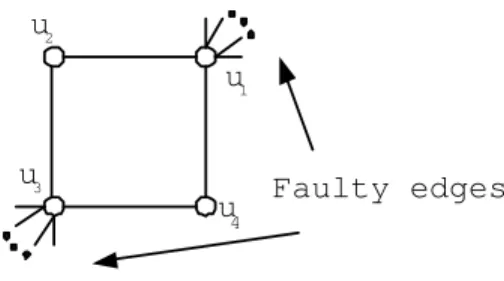
The above result is optimal in the sense that result can not be guaranteed, if there are 2n − 4 conditional faulty edges. For example, take a cycle of length four in Qn, let hu1, u2, u3, u4i be the consecutive vertices on this cycle. Suppose that all the (n − 2) edges incident to vertex u1(respectively vertex u3) are faulty except those two edges on the four cycle are healthy. There are 2(n − 2) conditional faulty edges. (see Fig.1.1) Then there does not exist a hamiltonian cycle in this faulty Qn, for n ≥ 3.
We now give a formal definition of a hypercube. An n-dimensional hypercube is denoted by Qn with the vertex set V (Qn) and the edge set E(Qn). Each vertex u of Qn can be distinctly labeled by a n-bit binary strings, u = un−1un−2...u1u0. There is an edge
u2
u4 u1
u3 Faulty edges
Figure 1.1: Illustration for the Qn with (2n-4) edge fault.
between two vertices if and only if their binary labels differ in exactly one bit position. Let u and v be two adjacent vertices. If the binary labels of u and v differ in ith position, then the edge between them is said to be in dimension i and the edge (u, v) is called an ith dimension edge. Let i be a fixed position, we use Q0
n−1 to denote the subgraph of Qn induced by {u ∈ V (Qn)|ui = 0} and Q1n−1 to denote the subgraph of Qn induced by {u ∈ V (Qn)|ui = 1}. We say that Qn is decomposed into Q0n−1 and Q1n−1 by dimension i, and Q0
n−1 and Q1n−1 are (n − 1)-dimensional subcube of Qn induced by the vertices with the ith bit position being 0 and 1 respectively. Q0
n−1 and Q1n−1 are all isomorphic to Qn−1. For each vertex u ∈ V (Q0
n−1), there is exactly one vertex in Q1n−1, denoted by u(1), such that (u, u(1)) ∈ E(Q
n). Conversely, for each u ∈ V (Q1n−1), there is one vertex in Q0
n−1, denoted by u(0), such that (u, u(0)) ∈ E(Qn). Let Di be the set of all edges with one end in Q0
n−1 and the other in Q1n−1. These edges are called crossing edges in the ith dimension between between Q0
n−1 and Q1n−1. We also call Di the set of all ith dimension edges. Consequently, |Di| = 2n−1 for all 0 ≤ i ≤ n − 1.
Chapter 2
Some Preliminaries
To prove our main theorem, we need some preliminary results.
Lemma 1 [5] Qn is edge-bipancyclic, and is (n-2)-edge-fault-tolerant edge-bipancyclic, for n ≥ 3.
Lemma 2 [9] Each edge of Q4− F lies on a cycle of every even length from 6 to 2n= 16 for any F ⊂ E(Q4) with |F | = 3, provided not all the faulty edges in F are incident with the same vertex.
Lemma 3 [9] Any two edges in Qn are included in a hamiltonian cycle, for n ≥ 2 . Proof. We prove the lemma by induction on n ≥ 2. Obviously, the lemma is true for n = 2. Assume that the lemma is true for every k with 2 ≤ k < n. Let e and e0 be two edges in Qn and express Qn = Lk Rk such that none of e and e0 is k-dimensional. Without loss of generality, we may assume e ∈ Lk. Furthermore, we can suppose that e0 is in Lk, otherwise consider e0L instead of e0. By the induction hypothesis, there exists a
Hamiltonian cycle C containing e and e0 in L
k. Let uLvL be an edge on C different from e and e0. The corresponding C0 is a Hamiltonian cycle in R
k containing uRvR, eRand e0R. Let P = C − uLvL and P0 = C0− uRvR. Then P + uLvL+ P0+ uRvR is a Hamiltonian cycle in Qn containing e and e0. 2 The above lemma can be improved; In addition to the hamiltonian cycle, there are cycles of smaller lengthes passing through these two edges. We have the following lemma. Lemma 4 Any two edges in Qn are included in a cycle of length 2n, 2n− 2 and 2n− 4 respectively, for n ≥ 3.
Proof. Let e1, e2 be two arbitrary edges in Qn. Since n ≥ 3, we can decompose Qn into two subcubes Q0
n−1 and Q1n−1 by some dimension i, such that e1 and e2 are not crossing edges. We then consider the following two cases:
Case 1: Both edges e1 and e2are in the same subcube Qin−1. Without loss of generality, we assume that {e1, e2} ⊆ E(Q0n−1). By Lemma 3, there exists a hamiltonian cycle C0 going through e1 and e2 in Q0n−1, and the length of C0 is 2n−1. Since n ≥ 3, there is a third edge (u, v) other than e1 and e2 on cycle C0. We write C0 as hu, P0, v, ui. It follows from the definition of the hypercubes, (u(1), v(1)) is an edge in Q1
n−1. By Lemma 1, in Q1
n−1, there exists a cycle C1 of every even length 4 ≤ l(C1) ≤ 2n−1 going through (u(1), v(1)). We write C
1 as hu(1), P1, v(1), u(1)i. Thus, hu, P0, v, v(1), P1, u(1), ui can form a cycle of length 2n, 2n− 2 or 2n− 4 respectively passing through edges e
1 and e2 in Qn, if we adjust the length of P1 properly.
Case 2: e1 and e2 are in different subcubes. Without loss of generality, we assume that e1 ∈ E(Q0n−1), e2 ∈ E(Q1n−1). By Lemma 1, there exists a cycle C0 of every even
length, 4 ≤ l(C0) ≤ 2n−1 going through e1 in Q0n−1. Since n ≥ 3, we can choose an edge (u, v) on cycle C0 and by definition, (u(1), v(1)) is an edge in Q1n−1 such that (u, v) 6= e1, and (u(1), v(1)) 6= e
2. We write C0 as hu, P0, v, ui. By Lemma 3, there exists a cycle C1 of length 2n−1 going through e
2 and (u(1), v(1)). We write C1 as hu(1), P1, v(1), u(1)i. Thus, we can adjust the length of P0 properly such that it produces a cycle hu, P0, v, v(1), P1, u(1), ui of length 2n, 2n− 2 or 2n− 4 respectively going through edges e
1, e2 in Qn.
This proves the lemma. 2 Lemma 5 Let Qn be an n-dimensional hypercube, n ≥ 2, and let e1 and e2 be two edges in the same dimension i. Then there exists another dimension j 6= i such that decomposing Qn into Q0n−1 and Q1n−1 by dimension j, we have (1) neither e1 nor e2 is crossing edges, (2) not e1 and e2 are in the same subcube.
Proof. Let e1 = (a, b) and e2 = (s, t) be two edges in the same dimension i. Let a = an...ai...a1 and s = sn...si...s1. Then b = bn...bi...b1 and t = tn...ti...t1. Since e1 6= e2 and n ≥ 2, there exists another dimension j 6= i, such that aj 6= sj. We decompose Qn into Q0
n−1 and Q1n−1 by dimension j. Then, e1 and e2 are not crossing edges and in the different subcubes. 2 In some special cases, Lemma 4 still holds even if there is one faulty edge. We need the following lemma later.
Lemma 6 Let Qn be an n-dimensional hypercube and e0 be a faulty edge in the ith di-mension. Any two healthy edges e1 and e2 in the ith dimension are included in a cycle of length 2n, 2n− 2 and 2n− 4 respectively, for n ≥ 4.
Proof. Since e0, e1 and e2 are all in the ith demension, and n ≥ 4. By Lemma 5, we can choose a dimension j different from i such that e1 and e2 are in different subcubes. Without loss of generality, we may assume that e1 is in Q0n−1 and e2 is in Q1n−1 and e0 is in Q0n−1. By Lemma 1, in Q0n−1 − {e0}, there exists a cycle C0 of every length 4 ≤ l(C0) ≤ 2n−1 going through e1. Since n ≥ 4, we can choose an edge (u, v) on cycle C0 such that (u, v) 6= e1, and (u(1), v(1)) 6= e2. We write C0 as hu, P0, v, ui. By Lemma 3, in Q1
n−1, there exists a hamiltonian cycle C1 going through e2 and (u(1), v(1)). We write C1 as hu(1), P1, v(1), u(1)i. Thus, hu, P0, v, v(1), P1, u(1), ui is a cycle of length 2n, 2n− 2 or 2n− 4 respectively, if we adjust the length of P
0 properly. 2 Let F be a set of faulty edges of Qn. Suppose that we decompose Qn into Q0n−1 and Q1
n−1 by dimension j, and let FL = F ∩ E(Q0n−1), FR = F ∩ E(Q1n−1). Suppose that F is a set of conditional faulty edges of Qn. If we arbitrarily decompose Qn into Q0n−1 and Q1
n−1 by a dimension, FL and FR may not be conditional faulty edges in Q0n−1 and Q1
n−1 respectively. However, we will show that it is always possible to find some suitable dimension such that decomposing by this dimension, both FL and FR are conditional faulty sets in Q0
n−1 and Q1n−1 respectively.
Lemma 7 Consider the n-dimensional hypercube Qn, for n ≥ 4. Let F be a set of conditional faulty edges with |F | = 2n − 5. There are at most two vertices in Qn incident with (n-2) faulty edges.
Proof. If there are three vertices in Qn incident with (n-2) faulty edges, the number of faulty edge F is at least 3n − 8. However, (3n − 8) > (2n − 5) for all n ≥ 4 which is a
Lemma 8 Consider the n-dimensional hypercube Qn, n ≥ 4. Let F be a set of conditional faulty edges with |F | = 2n − 5. If there are two vertices x and y both incident with n-2 faulty edges, then x and y are adjacent in Qn and the edge (x,y) is a faulty edge. Suppose that (x,y) is in dimension j. Then decomposing Qn into Q0n−1 and Q1n−1 by dimension j, both FL and FR are sets of conditional faulty edges in Q0n−1 and Q1n−1 respectively. Moreover, |FL| ≤ 2n − 6 and |FR| ≤ 2n − 6.
Proof. If there are two vertices x and y in Qnincident with (n−2) faulty edges, then these two vertices are connected by a faulty edge. Otherwise, |F | = 2(n − 2) = 2n − 4 > 2n − 5 which is a contradiction. Suppose the edge (x, y) is in dimension j, we decompose Qn into two subcubes. It is clearly that each vertex in Q0
n−1 and Q1n−1 is still incident with at least two healthy edges, and FL and FR are both conditional faulty edges in Q0n−1 and Q1
n−1 respectively. Then, |FL| = |FR| = n − 3 ≤ 2n − 6, for n ≥ 4. 2 Lemma 9 Consider an n-dimensional hypercube Qn, for n ≥ 4. Let F be a set of con-ditional faulty edges with |F | = 2n − 5. Suppose that there exists exactly one vertex x having (n-2) faulty edges indcident with it. Since n − 2 ≥ 2, let e1 and e2 be two faulty edges incident with x, and let e1 and e2 be jth and kth dimension edges respectively. Then decomposing Qn into Q0n−1 and Q1n−1 by either one of these two dimensions j and k, FL and FR are still sets of conditonal faulty edges in Q0n−1 and Q1n−1 respectively. Moreover, |FL| ≤ 2n − 6 and |FR| ≤ 2n − 6.
Proof. If there exists only one vertex x having (n − 2) faulty edges incident with it, there are at least two faulty edges e1 and e2 incident with it, since n ≥ 4. Obviously, these two faulty edges are in different dimensions. Without loss of generality, we may assume
that e1 is in dimension j and e2 is in dimension k, for j 6= k. We can decompose Qn into Q0
n−1 and Q1n−1 by either jth or kth dimension, and either e1 or e2 is a crossing edge. Therefore, each vertex in these two subcubes is incident with at least two healthy edges and |FL| ≤ 2n − 6 and |FR| ≤ 2n − 6. 2 Lemma 10 Let Qnbe an n-dimensional hypercube, F be a set of faulty edges with |F | ≥ 2, and e be a healthy edge, n ≥ 2. Then there exists a dimension j, decomposing Qn into Q0
n−1 and Q1n−1 by this dimension, such that e is not a crossing edge and not all the faulty edges are in the same subcube.
Proof. Suppose that e = (u, v) is in dimension i. If there is a faulty edge f not in dimension i, say in dimension j. We decompose Qn into Q0n−1 and Q1n−1 by dimension j. Then f is a crossing edge but e is not, and all the faulty edges are not in the same subcube. Otherwise, all the faulty edges are in the same dimension i as e is in. We now choose any two faulty edges f1 and f2 in F . By Lemma 5, Qn can be decomposed into Q0
n−1 and Q1n−1 by some dimension j 6= i such that edges f1 and f2 are not in the same subcube, and e0 is not a crossing edge. 2
Chapter 3
Main theorem
We now prove our main result.
Theorem 1 Let Qn be an n-dimensional hypercube, and F be a set of conditional faulty edges with |F | ≤ 2n − 5. Then each edge of the conditional faulty hypercube Qn− F lies on a cycle of every even length from 6 to 2n, for n ≥ 3.
Proof. We prove this lemma by induction on n. For n = 3, since 2n − 5 = n − 2, by Lemma 1, the result is true. For n = 4, 2n − 5 = n − 1, by Lemma 2, the result holds. Assume the lemma holds for n − 1, for some n ≥ 5, we shall show that it is true for n.
As we mentioned before, we may assume |F | = 2n − 5. Let e = (u, v) be an edge in Qn − F . We shall find a cycle of every even length from 6 to 2n passing through e in Qn− F . Assume that e is an ith dimension edge, e ∈ Di, for some i ∈ {1, 2, ..., n}. The proof is divided into three major cases:
Case 1: There are two vertices x and y in Qn incident with (n − 2) faulty edges. By Lemma 8, (x, y) is an edge in Qnand is a faulty edge. We denote this edge by ef. Suppose
ef P0 w P1 (1) w Q0 n-1 Q 1 n-1 e u v
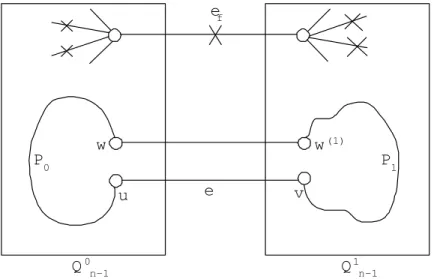
Figure 3.1: Illustration for of Theorem Case 1.1.
that ef is a jth dimension edge. We decompose Qn into Q0n−1 and Q1n−1 by dimension j. We then consider two further cases:
1.1 ef = (x, y) and e = (u, v) are in the same dimension. Thus, j = i and ef ∈ Di. (Fig. 3.1) In this case, e is an edge crossing Q0
n−1 and Q1n−1. Without loss of generality, assume that u ∈ V (Q0
n−1) and v ∈ V (Q1n−1). Since n ≥ 5, u has a neighbor vertex w ∈ Q0
n−1, by the definition of hypercube, w(1) is a neighbor of v such that the edge (w, w(1)) is a healthy edge and (w, w(1)) is a crossing edge between Q0
n−1 and Q1n−1. By lemma 1, there exists a cycle C0 in Q0n−1− FLpassing through (u, w) of every even length 4 ≤ l(C0) ≤ 2n−1 and a cycle C1 in Q1n−1 − FR going through (v, w(1)) of every even length 4 ≤ l(C1) ≤ 2n−1. We write C0 as hu, P0, w, ui, and C1 as hv, P1, w(1), vi. Thus, hu, P0, w, w(1), v, ui is a cycle of length 6 with l(P0) = 3. For every even l, 8 ≤ l ≤ 2n, we may choose C0 and C1 such that l(C0) = l(C1) = 2l. Thus, hu, P0, w, w(1), P1, v, ui can form a cycle of length l through e in Qn− F , if we adjust the length of P0and P1 properly.
P0 P1 s(1) s Q0 n-1 Q 1 n-1 ef t t(1) e
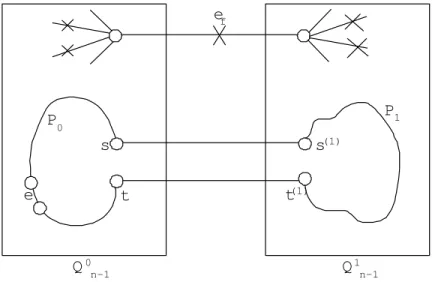
Figure 3.2: Illustration for of Theorem Case 1.2.
1.2 ef and e are in different dimension. Thus, j 6= i and ef ∈ D/ i. (Fig 3.2) In this case, e is in Q0
n−1 or Q1n−1. Without loss of generality, we may assume that e ∈ E(Q0n−1). By Lemma 1, there exists a cycle C in Q0
n−1− FL going through the edge e of every even length l, 6 ≤ l ≤ 2n−1. Let C
0 be a cycle of length 2n−1− 2 or 2n−1 passing through e in Q0
n−1− FL. Since n ≥ 5, there exists an edge (s, t) on C0 such that neither s nor t is adjacent to ef and (s, t) 6= e. We write C0 as hs, P0, t, si. By definition, (s(1), t(1)) is an edge in Q1
n−1, and (s, s(1)), (t, t(1)) are healthy edges. By Lemma 1, there exists a cycle C1 in Q1n−1− FR through (s(1), t(1)) of every even length 4 ≤ l(C1) ≤ 2n−1. We write C1 as hs(1), P
1, t(1), s(1)i. For every even l, 2n−1+ 2 ≤ l ≤ 2n. hs, P0, t, t(1), P1, s(1), si is a cycle of length l going through e in Qn− F if we adjust the length of P0 and P1 properly.
Case 2: There is exactly one vertex in Qn incident with (n − 2) faulty edges. Let x be the vertex having (n − 2) faulty edges incident with it. Let f1 and f2 be two faulty edges incident with x, so f1 and f2 are in different dimensions j and k. By Lemma
9, decomposing Qn into Q0n−1 and Q1n−1 by either jth or kth dimension, both FL = F ∩ E(Q0
n−1) and FR = F ∩ E(Q1n−1) are sets of conditional faulty edges in Q0n−1 and Q1
n−1 respectively. Between dimension j and k, we choose one to decompose Qninto Q0n−1 and Q1
n−1, say dimension j, such that the required edge e is not a crossing edge. Therefore, there is a faulty edge crossing Q0
n−1 and Q1n−1, we denote this edge by ef, and ef ∈ F ∩ Dj is incident with x. Without loss of generality, we may assume that x ∈ V (Q0
n−1). P0 P1 s(1) s Q0 n-1 Q 1 n-1 ef t t(1) e
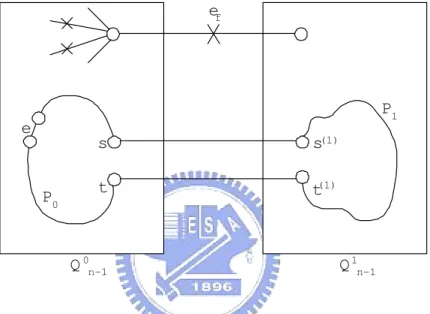
Figure 3.3: Illustration for of Theorem Case 2.1.
2.1: Suppose |FL| ≤ 2n − 7 and |FR| ≤ 2n − 7. (Fig. 3.3) Without loss of generality, we further assume that e ∈ E(Q0
n−1). By induction hypothesis, there exists a cycle C in Q0
n−1 − FL of every even length 6 ≤ l(C) ≤ 2n−1 passing through e. Let C0 be a cycle of length 2n−1 − 4 ≤ l(C
0) ≤ 2n−1 through e in Q0n−1 − FL. Since |C0 − e| ≥ 2n−1− 4 − 1 > 2(2n − 5) = 2|F ∩ D
j|, for all n ≥ 5. There exists an edge (s, t) on C0 such that (s, t) is not e, and both (s, s(1)) and (t, t(1)) are healthy edges. We write C
0 as hs, P0, t, si. By induction hypothesis, there exists a cycle C1 in Q1n−1− FR of every even length 6 ≤ l(C1) ≤ 2n−1 passing through (s(1), t(1)). We write C1 as hs(1), P1, t(1), s(1)i.
For every even l, 2n−1+ 2 ≤ l ≤ 2n, hs, P
0, t, t(1), P1, s(1), si can form a cycle of length l going through e in Qn− F , if we adjust the length of P0 and P1 properly.
2.2: |FL| = 2n − 6 or |FR| = 2n − 6, say the former case. In this case, |F ∩ Dj| = 1 and |F ∩ E(Q1 n−1)| = |FR| = 0. w w(1) u v (1)v e ef Q0 n-1 Q 1 n-1
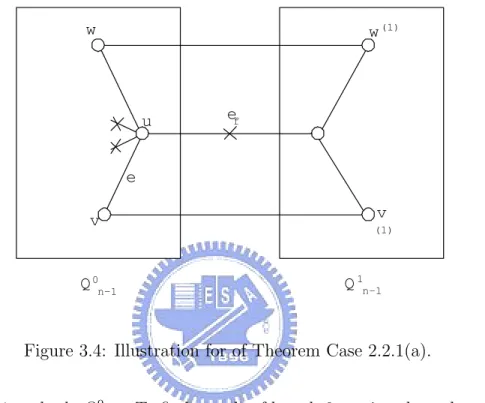
Figure 3.4: Illustration for of Theorem Case 2.2.1(a). 2.2.1: e is in subcube Q0
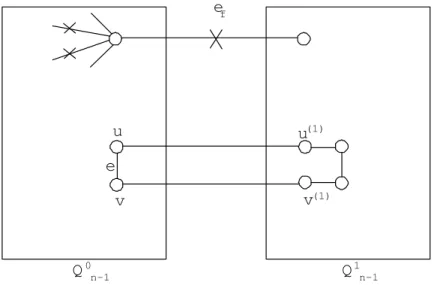
n−1. To find a cycle of length 6 passing through e = (u, v), we discuss the case that whether e is incident with x or not. If e is incident with x, without loss of generality, we assume that u = x. (Fig. 3.4) Thus, (v, v(1)) is a healthy edge. Since FLis a set of conditional faulty edges in Q0n−1, vertex u = x has two healthy edges incident with it. Let w be a neighbor of u in Q0
n−1 such that (w, u) and (w, w(1)) are healthy edges and w 6= v. Thus, hu, v, v(1), u(1), w(1), w, ui is a cycle of length 6 in Q
n− F . Otherwise, e is not incident with x, then (u, u(1)) and (v, v(1)) are healthy edges. (Fig. 3.5) By Lemma 1, there exists a cycle C1 = hu(1), P1, v(1), u(1)i of length four in Q1n−1 through the edge (u(1), v(1)). Thus, hu, u(1), P
Q0 n-1 Q 1 n-1 ef e u v u(1) v(1)
Figure 3.5: Illustration for of Theorem Case 2.2.1(b).
Let e1 be a faulty edge in Q0n−1 that is not adjacent to ef. Though e1 is a faulty edge, we treat it as a healthy edge temporarily, then the total number of faulty edge in Q0
n−1 is 2n − 7. By induction hypothesis, there exists a cycle C0 of every length 6 ≤ l(C0) ≤ 2n−1 going through e in Q0
n−1− {FL− {e1}}. If C0 passes e1, we choose e1 , or else, we choose any one edge on C0 which is not adjacent to ef. Let the chosen edge be denoted by (s, t). We write cycle C0 as hs, P0, t, si. Since |F ∩ Dj| = 1 and |FR| = 0, (s, s(1)), (t, t(1)) and (s(1), t(1)) are all healthy edges. Thus, hs, P
0, t, t(1), s(1), si is a cycle of length 8 in Qn− F if l(P0) = 6. Suppose that 10 ≤ l ≤ 2n and l is even. By Lemma 1, in Q1n−1, there exists a cycle C3 of length 4 ≤ l(C3) ≤ 2n−1 passing through (s(1), t(1)). We write C3 as hs(1), P
3, t(1), s(1)i. Thus, hs, P0, t, t(1), P3, s(1), s, ti is a cycle of length l through e in Qn− F , if we adjust the length of P0 and P3 properly.
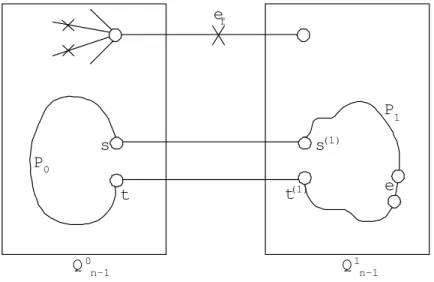
2.2.2: e is in subcube Q1
n−1. (Fig. 3.6) By Lemma 1, there exists a cycle C of every even length 4 ≤ l ≤ 2n−1 passing through e in Q1
P0 P1 s(1) s Q0 n-1 Q 1 n-1 ef t t(1) e
Figure 3.6: Illustration for of Theorem Case 2.2.2.
l is even. Since FL is a set of conditional faulty edges, there are at most (n − 3) faulty edges adjacent to ef in Q0n−1. For n ≥ 5, n − 3 ≥ 2, we can choose a faulty edge e2 = (s, t) in Q0
n−1such that e2 is not adjacent to ef and (s(1), t(1)) is not e. Treating the edge e2 as a healthy edge, by induction hypothesis, there exists a cycle C0 of length 6 ≤ l(C0) ≤ 2n−1 going through e2 in Q0n−1− FL. We write C0 as hs, P0, t, si, and observe that (s, s(1)) and (t, t(1)) are healthy edges. By Lemma 4, there exists a cycle C
1 of every length 2n−1− 4, 2n−1 − 2, or 2n−1 through (s(1), t(1)) and e in Q1
n−1. We write C1 as hs(1), P1, t(1), s(1)i. Thus, hs, P0, t, t(1), P1, s(1), si is a cycle of even length l through e in Qn− F , if we adjust the length of P0 and P1 properly.
Case 3: Every vertex in Qn is incident with at most (n − 3) faulty edges. In this case, suppose that e = (u, v) is in dimension i. By Lemma 10, Qn can be decomposed into Q0
n−1 and Q1n−1 by a dimension j different from i such that e is not a crossing edge and not all the faulty edges are in the same subcube. Then |FL| ≤ 2n − 6 and |FR| ≤ 2n − 6.
Next, we consider two further cases:
3.1: At least one faulty edge is a jth dimension edge. Thus, |F ∩ Dj| 6= 0.
We then consider two cases: (a)|FL| ≤ 2n − 7 and |FR| ≤ 2n − 7, and (b)|FL| = 2n − 6 or |FR| = 2n − 6. The proof of this subcase is exactly the same as that of case 2.
3.2: None of the faulty edges is a jth dimension edge. Thus, |F ∩ Dj| = 0.
3.2.1: |FL| ≤ 2n − 7 and |FR| ≤ 2n − 7. Without loss of generality, we may assume that e ∈ E(Q0
n−1). By induction hypothesis, there exists a cycle C of even length 6 ≤ l(C) ≤ 2n−1 in Q0
n−1− FL passing through e. Let C0 be a cycle of even length 2n−1− 4 ≤ l(C0) ≤ 2n−1 going through e in Q0n−1− FL. There exists an edge (s, t) other than e in C0. Since |F ∩ Dj| = 0, (s, s(1)) and (t, t(1)) are healthy edges. We write C0 as hs, P0, t, si. By induction hypothesis, there exists a cycle C1 of every even length 6 ≤ l(C1) ≤ 2n−1 in Q1
n−1− {FR− (s(1), t(1))} through (s(1), t(1)). We write C1 as hs(1), P1, t(1), s(1)i. For even l, 2n−1+ 2 ≤ l ≤ 2n, hs, P
0, t, t(1), P1, s(1), si can form a cycle of length l going through e in Qn− F , if we adjust the length of P0 and P1 properly.
3.2.2: Suppose |FL| = 2n − 6 or |FR| = 2n − 6, say the former case. In this case, |FR| = 1. We then consider two cases: (a) e is in subcube Q0n−1, and (b) e is in subcube Q1
n−1.
(a) e = (u, v) is in subcube Q0
n−1. Since |F ∩ Dj| = 0, both (u, u(1)) and (v, v(1)) are healthy edges. Let l be an even number with 6 ≤ l ≤ 2n−1. By Lemma 1, there exists a cycle C1 of every even length from 4 to 2n−1 passing through (u(1), v(1)) in Q1n−1− {FR− (u(1), v(1))}. We write C1 as hu(1), P1, v(1), u(1)i. No matter (u(1), v(1)) is healthy or not, hu, u(1), P
2n−1+ 2 ≤ l ≤ 2n. Let e
1 be a faulty edge in Q0n−1. We may treat e1 as a healthy edges temporarily. By induction hypothesis, there exists a cycle C0 of length 6 ≤ l(C0) ≤ 2n−1 going through e in Q0
n−1 − {FL − {e1}}. If C0 passes the edge e1, we choose e1 to be deleted. Otherwise, we choose another edge other than e on cycle C0. Let the chosen edge be denoted by (s, t). We write the cycle C0 as hs, P0, t, si. Treating (s(1), t(1)) as a healthy edge, by Lemma 1, there exists a cycle C3 of every even length from 4 to 2n−1 passing through (s(1), t(1)) in Q1
n−1− {FR− (s(1), t(1))}. We write C3 as hs(1), P3, t(1), s(1)i, then hs, P0, t, t(1), P3, s(1), si is the cycle of length l through e in Qn− F .
(b): e is in subcube Q1
n−1. Let e1 be the only faulty edge in Q1n−1. By Lemma 1, there exists a cycle C of every even length from 6 to 2n−1 through e in Q1
n−1− {e1}. Suppose that 2n−1+ 2 ≤ l ≤ 2n, and l is even. Let e
0 = (s, t) be a faulty edge in Q0n−1 such that (s(1), t(1)) 6= e. By induction hypothesis, there exists a cycle C
0 of length 6 ≤ l(C0) ≤ 2n−1 in Q0
n−1−{FL−{e0}} going through e. We write C0 as hs, P0, t, si. If (s(1), t(1)) = e1, treat e1 as a healthy edge temporarily, by Lemma 4, there exists a cycle C1 of length 2n−1− 4, 2n−1− 2, or 2n−1 respectively going through both (s(1), t(1)) and e in Q1
n−1. We write C1 as hs(1), P
1, t(1), s(1)i. Thus, hs, P0, t, t(1), P1, s(1), si can form a cycle of length l through e in Qn− F , if we adjust the length of P0 and P1 properly. Otherwise, if (s(1), t(1)) 6= e1, by Lemma 6, there exists a cycle C3 of length 2n−1, 2n−1− 2, or 2n−1− 4, respectively, going through both e and (s(1), t(1)) in Q1
n−1− {e1}. We write C3 as hs(1), P3, t(1), s(1)i. Thus, hs, P0, t, t(1), P3, s(1), si can form a cycle of length l through e in Qn− F , if we adjust the length of P0 and P3 properly.
Chapter 4
Conclusions
Since every component in the network may have different reliability, it is important to con-sider properties of a network with some conditional faults. We concon-sider the n-dimensional hypercube with some faulty edges such that each vertex is incident to at least two non-faulty edges. We use induction to prove that the n-dimensional hypercube Qn, n ≥ 3, is (2n − 5)-edge fault-tolerant conditional edge bipancyclic.
There exists an n-dimensional hypercube with (2n-4) edge faults, in which each vertex incident to at least two nonfaulty edges, such that for any pair of vertices does not exist path joining them. for example, let u = 00 . . . 0 and v = 100 . . . 1. One can consider the (2n − 4) faulty edge in Qn: ei(u) and ei(v) for all 1 ≤ i ≤ n − 2 (see Fig. 1.1). obviously, vertices u and v each have exactly two nonfaulty edges incident to them. Hence the four edges e0(u), en− 1(u), e0(v), and en− 1(v) from a 4-cycle by themselves. Therefore, in this Qn, n ≥ 3, it is impossible to make a faulty a hamiltonian cycle joining any pair of vertices. On the other hand, it is also impossible to make a hamiltonian cycle for n ≥ 3. There, our result are optimal.In our future work, there is a direction to be studied:
each integer 4 ≤ L ≤ 2n . We will discuss that whether they are mutually independent or not.
Bibliography
[1] M. Y. Chan, S. J. Lee, ”On the existence of hamiltonian circuits in faulty hyper-cubes,” SIAM J. Discrete Math. Vol. 4 pp. 511-527 1991.
[2] K. Day, A. Tripathi, ”Embedding of cycles in arrangement graph,” IEEE Trans. Comput. . Vol. 12 pp. 1002-1006 1993.
[3] A. Germa, M. C. Heydemann, D. Sotteau, ”Cycles in the cubeconnected cycles graph,” Discrete Appl. Math. Vol. 83 pp. 135-155 1998.
[4] S. C. Hwang, G. H. Chen, ”Cycle in butterfly graphs,” Networks Vol. 35 pp. 161-171 2000.
[5] Tseng-Kuei Li, Chang-Hsiung Tsai, Jimmy J. M. Tan, and Lih-Hsing Hsu, ”Bi-panconnectivity and edge-fault-tolerant bipancyclicity of hypercubes,” Information Processing Letters Vol. 87 pp. 107-110, 2003.
[6] J. Mitchem, E. Schmeichel, ”Pancyclic and bipancyclic graphs-a survery,” in: Proc. First Colorado Symp. on Graphs and Applications, Boulder, CO, Wiley-Interscience, New York, pp. 271-278 1985.
[8] C. H. Tsai, ”Linear array and ring embeddings in conditional faulty hypercubes,” Theoretical Computer Science. Vol. 314. 431-443 2004.
[9] Jun-Ming Xu, Zheng-Zhong Du, Min Xu, ”Edge-fault-tolerant edge-bipancyclicity of hypercubes,” Information Processing Letters Vol. 96 pp. 146-150, 2005.