• 沒有找到結果。

Chris Arney Associate Director,

N/A
N/A
Protected

Academic year: 2021

Share "Chris Arney Associate Director,"

Copied!
94
0
0

加載中.... (立即查看全文)

全文

(1)

UMAP Publisher Journal

COMAP, Inc. Vol. 30, No. 2

Executive Publisher Solomon A. Garfunkel ILAP Editor

Chris Arney Associate Director,

Mathematics Division Program Manager,

Cooperative Systems Army Research Office P.O. Box 12211

Research Triangle Park, NC 27709-2211 [email protected] On Jargon Editor Yves Nievergelt Dept. of Mathematics Eastern Washington Univ.

Cheney, WA 99004 [email protected] Reviews Editor James M. Cargal Mathematics Dept.

Troy University—

Montgomery Campus 231 Montgomery St.

Montgomery, AL 36104 [email protected] Chief Operating Officer Laurie W. Arag´on Production Manager George W. Ward Production Editor Joyce Barnes Distribution John Tomicek Graphic Designer Daiva Chauhan

Editor

Paul J. Campbell Beloit College 700 College St.

Beloit, WI 53511–5595 [email protected]

Associate Editors Don Adolphson Chris Arney Aaron Archer Ron Barnes Arthur Benjamin Robert Bosch James M. Cargal Murray K. Clayton Lisette De Pillis James P. Fink

Solomon A. Garfunkel William B. Gearhart William C. Giauque Richard Haberman Jon Jacobsen Walter Meyer Yves Nievergelt Michael O’Leary Catherine A. Roberts John S. Robertson Philip D. Straffin J.T. Sutcliffe

Brigham Young Univ.

Army Research Office AT&T Shannon Res. Lab.

U. of Houston—Downtn Harvey Mudd College Oberlin College Troy U.— Montgomery U. of Wisc.—Madison Harvey Mudd College Gettysburg College COMAP, Inc.

Calif. State U., Fullerton Brigham Young Univ.

Southern Methodist U.

Harvey Mudd College Adelphi University Eastern Washington U.

Towson University College of the Holy Cross Georgia Military College Beloit College

St. Mark’s School, Dallas

(2)

Table of Contents

Guest Editorial

Discrete Math First!

Chris Arney ... 93

Special Section on the ICM

Results of the 2009 Interdisciplinary Contest in Modeling

Chris Arney ... 99 Rebalancing Human-Influenced Ecosystems

YuanSi Zhang, ShuoPeng Wang, and

Ning Cui ...121 Striving for Balance: Why Reintroducing More Species

to Fish Farm Ecosystem Yields Bigger Profits Sean Clement, Timothy Newlin, and

Joseph Lucas ...141 Authors’ Commentary: The Outstanding Coral Reef

Papers

Melissa Garren and Joseph Myers ...159 Judges’ Commentary: The Outstanding Coral Reef

Papers

Sheila Miller, Melissa Garren, and Rodney Sturdivant.... 163

On Jargon

Ptolemy to Fourier: Epicycles

Fawaz Hjouj ...169

Reviews ...173

(3)

Guest Editorial

Discrete Math First!

Chris Arney

Division Chief, Mathematical Sciences Division Chief, Network Sciences

Program Manager, Cooperative Systems U.S. Army Research Office

P.O. Box 12211

Research Triangle Park, NC 27709–2211 [email protected]

Introduction

Recently, this Journal published several intriguing editorials on calculus and modeling. James Cargal established the bounds of modeling as a sci- ence and the limitations of mathematical problem solving [2007]. I certainly agree with his points on the art and science of modeling. Paul Campbell [2006] and Underwood Dudley [2008] debated the viability of the calculus course. I guess I am in an agreeable mood, since I also support Campbell’s statement that we really do need to change the way we teach calculus.

I agree so much with Dudley’s points made in rebuttal that I will be foolish (his word) and advocate for

discrete mathematics as the standard first-year college mathematics course (vs. a crappy or even a superb calculus course).

First, let me be clear: I love calculus (both as a liberal art and as a pro- fessional tool). It is wonderful mathematics that can enrich and empower one’s life. I also agree with Dudley that even though some students do not fully understand the concepts and theories of calculus, it should still be taught—and we should continue to reform, refine, improve, and enhance its teaching. And I strongly agree with him that mathematics is good for students because it can and does develop thinking and problem solving skills. I believe we (mathematics educators) should be pleased by what we are doing and confident we are having a positive impact on students in

The UMAP Journal 30 (2) (2009) 93–97. c !Copyright 2009 by COMAP, Inc. All rights reserved.

Permission to make digital or hard copies of part or all of this work for personal or classroom use

is granted without fee provided that copies are not made or distributed for profit or commercial

advantage and that copies bear this notice. Abstracting with credit is permitted, but copyrights

for components of this work owned by others than COMAP must be honored. To copy otherwise,

to republish, to post on servers, or to redistribute to lists requires prior permission from COMAP.

(4)

we would have even greater success if we taught discrete modeling as the standard course to our first-year students. Such a course should include copious modeling and modern interdisciplinary problem solving. If we do this well and prepare and motivate our students to take the calculus, that course can be more like the one that Campbell advocates—full of rich ideas and fuller applications, resulting in improved student understanding of mathematics.

Background and Perspective

Before I provide my case, let me give a little background and perspec- tive. Mathematics, as a tool for humans, has always been useful. Benjamin Franklin highlighted this in his 1735 essay “Of the usefulness of mathemat- ics” [1735]:

There has not been any science so much esteemed and honored as this of mathematics, nor with so much industry and vigilance become the care of great men, and labored in by the potentates of the world, viz.

emperors, kings, princes, etc.

Students who learn mathematics can understand, interpret, and pre- dict the behavior of real-life phenomena, and then share what they learn with people all over the world. Likewise, mathematics as a liberal art has always developed thinking skills. Mathematics requires one to think ab- stractly, conceptually, and systematically. Alfred North Whitehead in his Preface to Universal Algebra wrote ”The whole of mathematics consists in the organization of a series of aids to the imagination in the process of reasoning” [1898, as quoted in Moritz 1914, 6].

In today’s world, many people face thinking, reasoning, and quantita- tive challenges. Today’s college-educated managers and professionals are required to process data and synthesize information, use and understand in- formation technology, optimize elaborate plans, confront complexity, think through difficult challenges, and leverage new technologies. To meet these challenges and to insure that our future citizens anticipate and respond ef- fectively to the uncertainties of a changing world, college core mathematics programs need to develop students as

creative, confident, competent problem-solvers and clear, critical thinkers.

The essential components of modern undergraduate mathematics are

modeling (forming and analyzing problems, using technical tools, and implementing solutions) and

inquiry (formulating questions, moving toward answers and more ques-

tions, generalizing, seeking understanding, connecting topics and ideas).

(5)

every facet of life (physical sciences, life sciences, social sciences, behavioral sciences, political sciences, technology, and humanities). Our students need to study mathematics because of its importance in the everyday world and to develop their way of thinking. Undergraduate mathematics must challenge the mind to dream, to hope, to believe, and then provide the skills and the tools needed to achieve those dreams.

Beyond Just Mathematics

Also needed are interdisciplinary experiences that give students the op- portunity to connect their mathematics to real problems involving aspects of many disciplines. I believe what Descartes wrote:

Hence we must believe that all the sciences are so interconnected, that it is much easier to study them all together than to isolate one from all the others. If, therefore, anyone wishes to search out the truth of things in serious earnest, he ought not select one special science, for all the sciences are cojoined with each other and interdependent.

—Descartes [1629]

It is imperative that our nation’s colleges design and implement courses that integrate important topics and connect to other disciplines, along with developing skills in using technology, and solving problems. The curricu- lum needs to be tied together with student-growth threads of important attitudes and skills in student development as life-long learners who are able to formulate questions, research answers, reach logical conclusions, and make informed decisions.

I believe that discrete modeling is best suited to prepare students for success in the future era of the information age, where new concepts like complexity, network science, and information science will be prevalent. Such a course is most appropriate in scope and complexity to give students an awareness of the discipline of mathematics.

The basic concept in discrete dynamical modeling is that the future is

predicted by understanding the present and adding to it the hypothesized

change over the interval of interest. Discrete dynamical models (differ-

ence equations) are solvable numerically by iteration, so students are not

restricted by solution techniques but are free to think, model, and analyze

problems. The prerequisite mathematics to learn and perform elementary

discrete dynamical modeling is algebra. Therefore, this topic is accessi-

ble for first-year college students without an investment in learning the

more-sophisticated calculus concepts needed to study continuous dynam-

ics (differential equations). Many discrete mathematics topics, especially

the modeling, reasoning, and computing, that are traditionally covered in

higher-level courses are accessible to freshmen taking an introductory dis-

(6)

the core level.

A valuable set of goals for a core mathematics course might include:

students acquiring fundamental knowledge for future application;

students developing sound, logical thought processes relevant to future science; and

students learning how to solve problems.

By achieving these goals, successful students could formulate intelligent questions, reason and research solutions using scientific principles, and be confident and independent in their future work.

A discrete modeling course can accomplish these goals via study of

linear and nonlinear difference equations;

systems of equations, along with the matrix-algebra concepts of eigen- values and eigenvectors;

analytic, numeric, and graphic solution methods and analysis;

conjecturing;

long-term behavior through determination of equilibria and stability;

proportionality modeling; and

applied problem solving.

Throughout such a course, major mathematical themes can be studied, including functions, limits, dynamics, accumulation, vectors, and model- ing. The COMAP-sponsored team-written textbook Principles and Practice of Mathematics [Meyer 1997] (of which I was a co-author) presents these ideas; other books also cover this subject at a first-year level.

Mathematics is like life. Both are rewarding, challenging, offer great gifts, inspire great dreams, and hold great promise. I believe that discrete modeling is the best course to deliver that promise to our first-year students.

References

Campbell, Paul J. 2006. Calculus is crap. The UMAP Journal 27 (1) (2006) 415–430.

Cargal, James M. 2007. The art of modeling. The UMAP Journal 28 (1) (2007):

1–4.

Descartes, Ren´e. 1629. Regulae ad directionem ingenii [Rules for the di-

rection of the mind]. 1911. In The Philosophical Works of Descartes, vol. 1,

trans. Elizabeth S. Haldane and G.R.T. Ross, 2. Cambridge, UK: Cam-

bridge University Press.

(7)

(2008): 1–4.

Franklin, Benjamin. 1735. Of the usefulness of mathematics. The Pennsyl- vania Gazette 2 (30 October 1735). Quoted in Moritz [1914, 44]. Omitted

“for lack of evidence of Franklin’s authorship” from The Papers of Ben- jamin Franklin, vol. 2, edited by Leonard W. Labaree, Whitfield J. Bell, Jr., Helen C. Boatfield, and Helene H. Fineman, 126–127. New Haven, CT: Yale University Press, 1960.

Meyer, Walter (ed.). 1996. Principles and Practice of Mathematics. New York:

Springer-Verlag.

Moritz, Robert Edouard. 1914. Memorabilia Mathematica; or, The Philomath’s Quotation-Book. New York: Macmillan. 1942. Reprint. Mathematical Association of America. 1993. Reprint. Washington, DC: Mathematical Association of America. 1958. Reprint under the title On Mathematics and Mathematicians. New York: Dover.

About the Author

Chris Arney graduated from West Point and be- came an intelligence officer. His studies resumed at Rensselaer Polytechnic Institute with an M.S.

(computer science) and a Ph.D. (mathematics).

He spent most of his military career as a math- ematics professor at West Point, before becom- ing Dean of the School of Mathematics and Sci- ences and Interim Vice President for Academic Affairs at the College of Saint Rose in Albany, NY.

Chris has authored 20 books, written more than 100 technical articles, and given more than 200 presentations and 30 faculty development work- shops. His technical interests include mathemat-

ical modeling, cooperative systems, and the history of mathematics and sci-

ence; his teaching interests include using technology and interdisciplinary

problems to improve undergraduate teaching and curricula; his hobbies in-

clude reading and mowing his lawn. Chris is Director of the Mathematical

Sciences Division of the Army Research Office, where he researches co-

operative systems, particularly in information networks, pursuit-evasion

modeling, and robotics. He is co-director of COMAP’s Interdisciplinary

Contest in Modeling (ICM) ! R and the editor for the Journal’s ILAP (Inter-

disciplinary Lively Applications Project) Modules. In August 2009, he will

rejoin the faculty at West Point, where his daughter Kristin also teaches.

(8)
(9)

Modeling Forum

Results of the 2009 Interdisciplinary Contest in Modeling

Chris Arney, ICM Co-Director

Division Chief, Mathematical Sciences Division Program Manager, Cooperative Systems

Army Research Office PO Box 12211

Research Triangle Park, NC 27709–2211 [email protected]

Introduction

A total of 374 teams from four countries spent a weekend in February work- ing in the 11th Interdisciplinary Contest in Modeling (ICM) ! R . This year’s con- test began on Thursday, Feb. 5 and ended on Monday, Feb. 9, 2009. During that time, teams of up to three undergraduate or high school students researched, modeled, analyzed, solved, wrote, and submitted their solutions to an open- ended interdisciplinary modeling problem involving marine ecology. After the weekend of challenging and productive work, the solution papers were sent to COMAP for judging. Two of the top papers, which were judged to be Outstanding by the expert panel of judges, appear in this issue of The UMAP Journal.

COMAP’s Interdisciplinary Contest in Modeling (ICM), along with it sib- ling contest, the Mathematical Contest in Modeling (MCM) ! R , involves students working in teams to model and analyze an open problem. Centering its edu- cational philosophy on mathematical modeling, COMAP supports the use of mathematical tools to explore real-world problems. It serves society by de- veloping students as problem solvers in order to become better informed and prepared as citizens, contributors, consumers, workers, and community lead- ers. The ICM and MCM are examples of COMAP’s efforts in working towards its goals.

The UMAP Journal 30 (2) (2009) 99–120. c !Copyright 2009 by COMAP, Inc. All rights reserved.

Permission to make digital or hard copies of part or all of this work for personal or classroom use

is granted without fee provided that copies are not made or distributed for profit or commercial

advantage and that copies bear this notice. Abstracting with credit is permitted, but copyrights

for components of this work owned by others than COMAP must be honored. To copy otherwise,

to republish, to post on servers, or to redistribute to lists requires prior permission from COMAP.

(10)

modeling. The problem required teams to understand the complexity of ma- rine ecology and aquaculture systems and to model that complexity to reverse current environmental destruction while retaining financial prosperity of the aquaculture. To accomplish their tasks, the teams had to consider many diffi- cult and complex issues. The problem also included the requirements of the ICM to use thorough analysis, research, creativity, and effective communica- tion. The author of the problem was marine biology researcher Melissa Garren of the Scripps Institute of Oceanography.

All members of the 374 competing teams are to be congratulated for their excellent work and dedication to modeling and problem solving. The judges remarked that this year’s problem was challenging and demanding in many aspects of modeling and problem solving.

Next year, we will continue the environmental science theme for the contest problem. Teams preparing for the 2010 contest should consider reviewing interdisciplinary topics in the area of environmental issues.

Creating Food Systems: Rebalancing Human-Influenced Ecosystems

Background

Less than 1% of the ocean floor is covered by coral. Yet 25% of the ocean’s biodiversity is supported in these areas. Thus, conservationists are concerned when coral disappears, since the biodiversity of the region disappears shortly thereafter.

Consider an area in the Philippines located in a narrow channel between Luzon Island and Santiago Island in Bolinao, Pangasinan, that used to be filled with coral reef and supported a wide range of species (Figure 1). The once- plentiful biodiversity of the area has been dramatically reduced with the intro- duction of commercial milkfish (Chanos chanos) farming in the mid 1990s. It’s now mostly muddy bottom, the once living corals are long since buried, and there are few wild fish remaining, due to overfishing and loss of habitat.

While it is important to provide enough food for the human inhabitants of the area, it is equally important to find innovative ways of doing so that allow the natural ecosystem to continue thriving; that is, establishing a desir- able polyculture system that could replace the current milkfish monoculture.

The ultimate goal is to develop a set of aquaculture practices that would not only support the human inhabitants financially and nutritionally, but simulta- neously improve the local water quality to a point where reef-building corals could recolonize the ocean floor and co-exist with the farms.

A desirable polyculture is a scenario where multiple economically valuable

(11)

For example, the waste of a fin-fish can be eaten by filter feeders, and excess nutrients from both fish and filter feeders can be absorbed by algae which can also be sold, either as food or commercially useful byproducts. Not only does this reduce the amount of nutrient input from the fish farming into the surrounding waters, it also increases the amount of profit a farmer can make by using the fish waste to generate a greater quantity of usable products (mussels, seaweed, etc.)

For modeling purposes, the primary animal organisms involved in these biodiverse environments can be partitioned into

predatory fish (phylum Chordata, subphylum Vertebrata);

herbivorous fish (phylum Chordata, subphylum Vertebrata);

molluscs (such as mussels, oysters, clams, and snails) (phylum Mollusca);

crustaceans (such as crabs, lobsters, barnacles, and shrimp) (phylum Arthro- poda, subphylum Crustacea);

echinoderms (such as starfish, sea cucumbers, and sea urchins) (phylum Echinodermata); and

algae.

By feeding type, there are

primary producers (photosynthesizers—thesecan be single-cell phytoplank- ton, cyanobacteria, or multicellular algae);

filter feeders (they strain plankton, organic particles, and sometimes bacteria out of the water);

deposit feeders (they eat mud and digest the organic molecules and nutrients out of it);

herbivores (they eat primary producers); and

predators (carnivores).

Just as on land, most of the carnivores eat herbivores or smaller carnivores, but in the ocean they can also eat many of the filter feeders and deposit feeders.

Most animals have growth efficiencies of 10–20%, so 80–90% of what they ingest ends up as waste in one form or another (some dissipated heat, some physical waste, etc.).

The role of coral in this biodiverse environment is largely to partition the space and allow species to condense and coexist by giving a large number of species each its own chance at a livable environment in a relatively small space:

the aquatic analogue of high-rise urbanization. Coral also provides some filter feeding, which helps clean the water.

The ability of an area to support coral depends on many factors, the most

important of which is water quality. For example, corals in Bolinao are able to

(12)

The fish-pen channel currently sees levels upwards of 10 million bacteria per milliliter and 15 µ g chlorophyll per liter. Excess nutrients from the milkfish farms encourage fast-growing algae to choke out coral growth, and particulate influx from the milkfish farms reduces corals ability to photosynthesize. There- fore, before coral larvae can begin to grow, acceptable water quality must be established. Other threats to coral include degradation from increasing ocean acidity due to increased atmospheric CO 2 , and degradation from increasing ocean temperature due to global warming. These can be considered second- order threats, which we will not specifically address in this problem.

Problem Statement

The challenge for this problem is to come up with viable polyculture sys- tems to replace the current monoculture farming of milkfish, so as to improve water quality sufficiently that coral larvae could begin settling and recoloniz- ing the area. Your polyculture scenario should be economically interesting and environmentally friendly both in the short and long term.

1. Model the Original Bolinao Coral Reef Ecosystem before Fishfarm Introduction

Develop a model of an intact coral reef foodweb containing the milkfish as the only predatory fish species, one particular herbivorous fish (of your choice), one mollusc species, one crustacean species, one echinoderm species, and one algae species. Specify the numbers of each species present in a way that you find reasonable; cite the sources you use or show the estimates you make in arriving at these population numbers. In articulating your model, specify how each species interacts with the others. Show how your model predicts a steady-state level of water quality sufficient for the continued healthy growth of your coral species. If your model does not yield a high-enough level of water quality, then adjust your number of each species in a way that you find most reasonable until you do achieve a satisfactory quality level, and describe clearly which species numbers you adjusted and why your changes were reasonable.

2. Model the Current Bolinao Milkfish Monocutlure

a. First examine the impact if milkfish farming were to suppress other

animal species. Do this by removing (setting the population to zero of) all

herbivorous fish, all molluscs, all crustaceans, and all echinoderms. Set all other

populations to be the same as in your full model above. Since you have removed

the milkfish’s natural food supply, you will need to introduce a constant term

that models farmer-feeding of the penned milkfish; choose this term to keep

your model in equilibrium. What steady-state level of water quality does your

model now predict? Is water quality sufficient for the continued healthy growth

(13)

observations.

b. Milkfish farming does not totally suppress all other animal species and water quality is probably not as bad as your results from part 2a. suggest, so use your model to simulate the current Bolinao situation by reintroducing all deleted species and adjust only those populations until water quality matches that currently observed in Bolinao. Compare your populations with those currently observed in Bolinao and discuss what changes to your model could bring your population predictions into closer agreement with observations.

3. Model the Remediation of Bolinao via Polyculture

You now strive to replace the current monoculture with a polyculture indus- try, seeking to make the water clear enough that the original reef ecosystem that you modeled in part 1 can re-establish itself without any help from humans. The idea is to introduce an interdependent set of species such that, whatever feed the milkfish farmer puts in, the combination of all of the “livestock” will use it entirely so that there are no (or only minimal) leftover nutrients and particles (feed and feces) falling onto the newly-growing reef habitat below. Addition- ally, you seek to commercially harvest edible biomass from this polyculture in order to feed humans and increase value.

a. Develop a commercial polyculture to remediate Bolinao. Do this by starting with your “current” penned model from part 2b, and introduce into it additional species that both help clean the water and yield valuable, harvestable biomass. For example, you could line the pens with mussels, oysters, clams, or other economically-valuable filter feeder to remove some of the waste from the milkfish. Economically-valuable algae could be grown on the sides of the pens near the surface (where they get enough light), and some of these could feed the small herbivorous fish that feed the milkfish. Clearly present your model and its steady-state populations.

b. Report on the outputs of your model. What did you optimize, what constraints did you enforce, and why? What water quality does your model yield? How much harvest does your model yield, and what is its economic value? How much does it cost you to further improve water quality? In other words, from your optimal scenario, how many dollars of harvest does it cost to improve water quality by one unit?

4. Science

Discuss the harvesting of each species for human consumption. How do

we use your model for predicting or understanding harvesting for human con-

sumption? Does a harvested pound of carnivorous fish count the same as a

harvested pound of seaweed, so that we seek to maximize the total weight har-

vested; or do we differentiate by value (as measured by price of each harvested

species), so that we seek to maximize the value of the harvest? Or do we seek

to maximize the total value of harvest minus cost of milkfish feed? Should

(14)

5. Maximize the Value of the Total Harvest

We now wish to maintain an acceptable (maximal) level of water quality while harvesting a high (maximal) value of marketable biomass from all living species in the model for human consumption (edible and saleable byproducts are equally legitimate ways to maximize value). Change your model to harvest a constant amount from each species. What is the total value of biomass (as defined above) that you can harvest and the corresponding water quality? Try different harvesting strategies and different levels of milkfish feeding (always choosing values that will keep your model in equilibrium), and graph water quality as a function of harvest value. What strategy is optimal and what is the optimal harvest?

6. Call to Action

Write an information paper to the director of the Pacific Marine Fisheries Council summarizing your findings on the relationship between biodiversity and water quality for coral growth. Include a strategy for remediating an area like Bolinao and how long it will take to remediate. Present your optimal har- vesting/feeding strategy from part 5 above along with persuasive justification, and present suggested fishing/harvest quotas that will implement your plan.

Show the leverage of your strategy by presenting the ratio of the harvest value under your plan to the harvest value under the current Bolinao scenario. Dis- cuss the pros and cons from an ecological perspective of implementing your polyculture system.

Getting Started References

http://en.wikipedia.org/wiki/Integrated_Multi-trophic _Aquaculture

http://en.wikipedia.org/wiki/Coral_reef

http://www.seaworld.org/infobooks/Coral/home.html

Supplementary Information

Tables 1–3 are representative of the data that you will be able to find through public searches. These data may not be complete for your purposes and are intended only to help give you ideas on how to get started. You should use the best-suited and most complete data that you find.

References for Information found in the Tables

Cruz-Rivera, Edwin, and Valerie J. Paul. 2006. Feeding by coral reef mesograz-

ers: Algae or cyanobacteria? Coral Reefs 25 (4) (November 2006): 617–627.

(15)

Figure 1. Map of the Bolinao area and the sites sampled for water quality data listed in Tables 1 and 2. Sites A and B have fairly healthy coral reefs, while Site C has fairly degraded reefs, Site D has a few corals still holding on but is mostly dead coral and algae at this point in time, and the area under the fish pens no longer has live coral at all. In the fish pen channel, farmers employ nets measuring roughly 10 m × 10 m × 8 m with stocking densities of 50,000 fish per pen and 10 pens per hectare. (Source: Garren et al. [2008]).

Table 1.

Water characteristics of Bolinao sites (from Garren et al. [2008]).

Site Dissolved Total Chl a Particulate Total

Organic Carbon Nitrogen Organic Carbon Nitrogen

(DOC) (dissolved) (POC) (particulate)

(µM) (µM) (µg/L) (µg/L) (µg/L)

A 69.7 ± 1.3 7.4 ± 0.4 0.25 ± 0.03 106 ± 4 9 ± 15

B 80.4 ± 2.9 8.0 ± 0.2 0.28 ± 0.03 196 ± 57 39 ± 15

C 89.6 ± 1.7 14.2 ± 0.77 0.38 ± 0.03 662 ± 68 54 ± 17

D 141 ± 2.9 30.5 ± 1.3 4.5 ± 0.2 832 ± 338 86 ± 45

Fish pens 162 ± 18.5 39.8 ± 2.7 10.3 ± 0.2 641 ± 60 86 ± 18

(16)

Particle- % of total # of particles per ml

Site Virus-like Free-living attached bacteria (particle defined as Avg particles bacteria bacteria attached to larger than 3 µm) particle abundance abundance abundance particles Detritus Phytoplankton size

(#/ml) (cells/ml) (cells/ml) (%) (#) cells (#) (µm 2 )

× 10 7 × 10 5 × 10 2 × 10 3 × 10 2

A 1.0 ± 0.07 5.4 ± 0.3 5.3 ± 2.2 < 0.1 3.4 ± 0.2 1.6 ± 0.2 42.7 B 0.8 ± 0.04 4.2 ± 0.6 3.9 ± 0.6 < 0.1 4.4 ± 0.2 1.0 ± 0.1 19.7

C 1.7 ± 0.1 3.0 ± 0.04 113.7 ± 3.6 3.7 9.6 ± 0.8 1.1 ± 0.1 65.8

D 7.0 ± 0.3 6.1 ± 0.6 144.5 ± 5.6 2.3 14.4 ± 0.1 9.7 ± 0.7 576.1

Fish pens 6.1 ± 0.7 9.9 ± 0.3 583.2 ± 28.1 5.6 11.3 ± 0.5 78.4 ± 5.5 280.8

Fox, Rebecca J., and David R. Bellwood. 2008. Direct versus indirect methods of quantifying herbivore grazing impact on a coral reef. Marine Biology 154 (2) (April 2008): 325–334.

Garren, Melissa, Steven Smriga, and Farooq Azam. 2008. Gradients of coastal fish farm effluents and their effect on coral reef microbes. Environmental Microbiology 10 (9) (September 2008): 2299–2312.

Hawkins, A.J.S. R.F.M. Smith, S.H. Tan, and Z.B. Yasin. 1998. Suspension- feeding behaviour in tropical bivalve molluscs: Perna viridis, Crassostrea belcheri, Crassostrea iradelei, Saccostrea cucculata and Pinctada margarifera.

Marine Ecology Progress Series 166 (May 1998): 173–185.

Holmer, Marianne , N ´uria Marb´a, Jorge Terrados, Carlos M. Duarte, and Mike D. Fortes. 2002. Impacts of milkfish (Chanos chanos) aquaculture on car- bon and nutrient fluxes in the Bolinao area, Philippines. Marine Pollution Bulletin 44 (7) (Jly 2002): 685–696.

McPherson, B.F. 1968. Feeding and oxygen uptake of the tropical sea urchin Eucidaris tribuloides (Lamarck). Biological Bulletin 135 (October 1968): 308–

321.

Merino, German E., Raul H. Piedrahita, and Douglas E. Conklin. 2007. Ammo- nia and urea excretion rates of California halibut (Paralichthys californicus, Ayres) under farm-like conditions. Aquaculture 271 (1–4) (October 2007):

227–243.

Xu, Yongjian, Jianguang Fang, Qisheng Tang, Junda Lin, Guanzong Le, and Lv Liao. 2008. Improvement of water quality by the macroalga, Gracilaria lemaneiformis (Rhodophyta), near aquaculture effluent outlets. Journal of the World Aquaculture Society 39 (4): 549–555.

Yokoya, Nair S., and Eurico C. Oliveira. 1992. Temperature responses of eco-

nomically important red algae and their potential for mariculture in Brazil-

ian waters. Journal of Applied Phycology 4 (4) (December 1992): 339–345.

(17)

T able 3. Or ganism information. Or ganism Data sour ce Tr ophic What it eats How much it eats What it excr etes V alue when harvested classification Milkfish Homer et al. [2002] pr edator fish feed or In pens: 6.58 kg/m 2 of pen/ 242–493 g dry weight $1,278 USD/metric smaller fish 5 months of sediment/m 2 /day (fr om Agribusiness Herbivor ous fish Fox and Bellwood herbivor e macr o algae 18–22 cm 3 of algae material/ (Siganus doliatus ,a rabbitfish [2008] (fleshy algae) m 2 of reef/month as repr esentative) Cr ustaceans Cr uz-Rivera herbivor e macr o algae and 10–20 mg wet weight of food/ V alues on the W eb (data averaged over and Paul [2006] cyanobacteria individual/day one crab (Menaethius monocer os ) and one amphipod (Cymadusa imbr oglio )) Molluscs Hawkins et al. filter feeder particles 1–16 µ m They clear 5–7 L of water/hr V alues on the W eb (averaged over 5 species of [1998] in diameter of particles and absorb mussels and oysters) 4–15 mg or ganic material/ g dry soft tissue weight/hr Echinoderm Dy et al. [2002] herbivor e fleshy algae 0.05 g wet weight algae/ 0.2–1 1.5 mg dry weight feces/ (ur chin, Tripneustes gratilla , g dry weight ur chin/hr , g dry weight ur chin fr om the Philippines wher e average dry weight as repr esentative of an individual was 6.9 g Algae Y okoya and Oliveira primary sunlight, ∗∗ ∗∗∗ [1992] pr oducer carbon dioxide, nitr ogen, phosphor us This sediment is appr oximately 10% carbon, 0.4% nitr ogen, and 0.6% phosphor us dry weight. ∗∗ Depending on temperatur e, ecanomically important red algae can double their mass (wet weight) in as little as 2.8 days (Hypnea cornuta ) and as long as 50.0 days (Pter ocladia capillacea ). ∗∗∗ These or ganisms can extr ude excess photosynthate in the form of dissolved or ganic carbon but this is a dif ficult number to quantify . Simply keep in mind that this pr ocess is occurring as you think about the ecological perspective in part 6.

(18)

The 374 solution papers were coded at COMAP headquarters so that names and affiliations of the authors were unknown to the judges. Each paper was then read preliminarily by “triage” judges at the U.S. Military Academy at West Point, NY. At the triage stage, the summary, the model description, and overall organization are the primary elements in judging a paper. Final judging by a team of modelers, analysts, and subject-matter experts took place in April. The judges classified the 374 submitted papers as follows:

Honorable Successful

Outstanding Meritorious Mention Participation Total

Coral reef 2 36 144 192 374

The two papers that the judges designated as Outstanding appear in this special issue of The UMAP Journal, together with a commentary by the judges.

We list those two Outstanding teams and the 36 Meritorious teams (and advi- sors) below. The complete list of all participating schools, advisors, and results is provided in the Appendix.

Outstanding Teams

Institution and Advisor Team Members

“Rebalancing Human-Influenced Ecosystems”

China University of Mining and Technology Xuzhou, Jiangsu, China

Xingyong Zhang

YuanSi Zhang ShuoPeng Wang Ning Cui

“Striving for Balance: Why Reintroducing More Species to Fish Farm Ecosystems Yields Bigger Profits”

United States Military Academy West Point, NY

Kristen Arney

Sean Clement Timothy Newlin Joseph Lucas Meritorious Teams (36)

Asbury College, Mathematics and Computer Science, Wilmore, KY (Duk Lee) Asbury College, Mathematics and Computer Science, Wilmore, KY

(Kenneth P. Rietz)

Bandung Institute of Technology, Mathematics, Bandung, West Java, Indonesia (Agus Yodi Gunawan)

Beijing University of Posts and Telecommunications, Computer Science and Technology, Beijing, China (Hongxiang Sun)

California State University Monterey Bay, Mathematics, Seaside, CA (Hongde Hu)

(19)

(Kelly Cline)

Fudan University, Mathematical Sciences, Shanghai, China (Yuan Cao) Harbin Institute of Technology, Mathematics, Harbin, Heilongjiang, China

(Qi Guo)

Harbin Institute of Technology, Mathematics, Harbin, Heilongjiang, China (Yong Wang)

Harvey Mudd College, Mathematics, Claremont, CA (Zach Dodds)

Humboldt State University, Environmental Resources Engineering, Arcata, CA (Brad Finney)

Jinan University, Mathematics, Guangzhou, Guangdong, China (Daiqiang Hu) National University of Defense Technology, Applied Mathematics, Changsha,

Hunan, China (Lizhi Cheng)

National University of Defense Technology, Mathematics and System Science, Changsha, Hunan, China (Mengda Wu)

Northwestern Polytechnical University, Applied Mathematics, Xi’an, Shaanxi, China (Huayong Xiao)

Northwestern Polytechnical University, Applied Mathematics, Xi’an, Shaanxi, China (Min Zhou)

Olin College, Needham, MA (Burt S. Tilley)

Peking University, Health Science Center, Beijing China (Zhiyu Tang) Peoples’ Liberation Army University of Science and Technology,

Command Automation, Nanjing, Jiangsu, China (Zhao Ying)

Shandong University at Weihai, Mathematics and Statistics, Weihai, Shandong, China (Yang Bing and Cao Zhulou)

Simpson College, Biology, Indianola, IA (Pat Singer)

Simpson College, Mathematics, Indianola, IA (Debra Czarneski)

Southeast University, Mathematics, Nanjing, Jiangsu, China (Zhizhong Sun) Southeast University, Mathematics, Nanjing, Jiangsu, China (Jun Huang) Southeast University, Mathematics, Nanjing, Jiangsu, China (Feng Wang) Southwest University, Mathematics, Chongqing, China (Lin Wei)

University of International Business and Economics, International Trade and Economics, Beijing, China (Baomin Dong)

University of Science and Technology of China, Electronic Engineering and Information Science, Hefei, Anhui, China (Yu He)

Xidian University, Mathematics, Xi’an, Shaanxi, China (Xiaogang Qi) Xidian University, Science, Xi’an, Shaanxi, China (Hanwen Yu) Zhejiang University, Mathematics, Hangzhou, China (Biao Wu) Zhejiang University, Mathematics, Hangzhou, China (Yong Wu)

Zhejiang University, Mathematics, Hangzhou, China (Zhongfei Zhang) Zhengzhou Information Engineering Institute, Zhengzhou, Henan, China

(Jian Ping Du)

Zhuhai College of Jinan University, Mathematical Modeling Innovative Practice Base, Zhuhai, Guangdong, China (Advisor Team)

Zhuhai College of Jinan University, Mathematical Modeling Innovative Practice

Base, Zhuhai, Guangdong, China (Yuanbiao Zhang)

(20)

Each participating ICM advisor and team member received a certificate signed by the Contest Directors and the Head Judge. Additional awards were presented to the team from the China University of Mining and Tech- nology by the Institute for Operations Research and the Management Sci- ences (INFORMS).

Judging

Contest Directors

Chris Arney, Division Chief, Mathematical Sciences Division, Army Research Office, Research Triangle Park, NC

Joseph Myers, Computing Sciences Division, Army Research Office, Re- search Triangle Park, NC

Associate Director

Rodney Sturdivant, Dept. of Mathematical Sciences, U.S. Military Academy, West Point, NY

Judges

John Kobza, Dept. of Industrial Engineering, Texas Tech University, Lubbock, TX

Sheila Miller, Dept. of Mathematical Sciences, U.S. Military Academy, West Point, NY

Melissa Garren, Scripps Institution of Oceanography, La Jolla, CA

Frank Wattenberg, Dept. of Mathematical Sciences, U.S. Military Academy, West Point, NY

Triage Judges

Dept. of Mathematical Sciences, U.S. Military Academy, West Point, NY:

Amanda Beecher, Randy Boucher, Robert Burks, Pete Charbonneau,

Eric Drake, Aaron Elliott, Bill Fehlman, Douglas Fletcher, Andy Glen,

Tina Hartley, Alex Heidenberg, Donald Outing, Jon Roginski, Rodney

Sturdivant, Frank Wattenberg, and Brian Winkel

(21)

We thank:

INFORMS, the Institute for Operations Research and the Management Sciences, for its support in judging and providing prizes for the IN- FORMS winning team;

IBM for their support for the contest;

all the ICM judges and ICM Board members for their valuable and un- flagging efforts;

the staff of the U.S. Military Academy, West Point, NY, for hosting the triage and final judgings.

Cautions

To the reader of research journals:

Usually a published paper has been presented to an audience, shown to colleagues, rewritten, checked by referees, revised, and edited by a jour- nal editor. Each of the team papers here is the result of undergraduates working on a problem over a weekend; allowing substantial revision by the authors could give a false impression of accomplishment. So these pa- pers are essentially au naturel. Light editing has taken place: minor errors have been corrected, wording has been altered for clarity or economy, style has been adjusted to that of The UMAP Journal, and the papers have been edited for length. Please peruse these student efforts in that context.

To the potential ICM Advisor:

It might be overpowering to encounter such output from a weekend

of work by a small team of undergraduates, but these solution papers are

highly atypical. A team that prepares and participates will have an enrich-

ing learning experience, independent of what any other team does.

(22)

H = Honorable Mention M = Meritorious

O = Outstanding (published in this special issue) C denotes the ICM Problem

INSTITUTION DEPT. CITY ADVISOR C

CALIFORNIA

Calif. State U. Monterey Bay Math Seaside Hongde Hu M

Harvey Mudd C. Math Claremont Zach Dodds M

Harvey Mudd C. Math Claremont Francis Su H

Humboldt State U. Env’l Res. Eng. Arcata Brad Finney M

IOWA

Simpson C. Biology Indianola Clinton Meyer H

Simpson C. Biology Indianola Pat Singer M

Simpson C. Math Indianola Debra Czarneski M

Simpson C. Math Indianola William Schellhorn H

KENTUCKY

Asbury C. Math & CS Wilmore David L. Coulliette H

Asbury C. Math & CS Wilmore Duk Lee M

Asbury C. Math & CS Wilmore Kenneth P. Rietz M

MASSACHUSETTS

Frontier Regional Sch. Biology South Deerfield Bill Canaday H Frontier Regional Sch. Biology South Deerfield Bill Canaday P

Frontier Regional Sch. Math South Deerfield Steve Blinder H

Frontier Regional Sch. Math South Deerfield Steve Blinder H

Frontier Regional Sch. Math South Deerfield Garrett Deane H

Frontier Regional Sch. Math South Deerfield Garrett Deane P

Frontier Regional Sch. Math South Deerfield Bev MacLeod H

Frontier Regional Sch. Math South Deerfield Dave Mako P

Frontier Regional Sch. Math South Deerfield Dave Mako P

Frontier Regional Sch. Math South Deerfield Carol Pike H

Frontier Regional Sch. Math South Deerfield Carol Pike P

Frontier Regional Sch. Sci. South Deerfield Chevy Seney P

Frontier Regional Sch. Sci. South Deerfield Chevy Seney P

Olin College Needham Burt S. Tilley M

MINNESOTA

Bemidji State U. Math & CS Bemidji Colleen Livingston P

MONTANA

Carroll C. Math, Eng., & CS Helena Kelly Cline M

NEW JERSEY

Princeton U. Ops. Res. & Fin. Eng. Princeton Birgit Rudloff H NEW YORK

U.S. Military Acad. Math West Point Kristin Arney O

U.S. Military Acad. Math West Point Janet Braunstein P

WISCONSIN

Beloit C. Math & CS Beloit Paul J. Campbell H

(23)

INSTITUTION DEPT. CITY ADVISOR C CHINA

Anhui

Anhui U. Electron. Sci. & Tech. Hefei Zhixiang Huang H

Anhui U. Appl. Math Hefei Xuejun Wang H

Anhui U. Stats Hefei Ligang Zhou H

Anqing Teachers College Math & CS Anqing Ben Yue Su P

Hefei U. of Tech. Math Hefei Xueqiao Du H

Hefei U. of Tech. Appl. Math Hefei Huaming Su H

Hefei U. of Tech. Appl. Math Hefei Huaming Su P

U. of Sci. & Tech. of China Electron. Eng. & Info. Hefei Yu He M Beijing

Beihang U. Advanced Eng. Beijing Wei Feng P

Beihang U. Instr. Sci. & Opto-electron. Eng. Beijing Haifeng Dong P

Beihang U. Sci. Beijing Hongying Liu P

Beijing Forestry U. Sci. Beijing Li Hong Jun P

Beijing Forestry U. Sci. Beijing Mengning Gao P

Beijing Inst. of Tech. Math Beijing Huafei Sun P

Beijing Inst. of Tech. Math Beijing Chunlei Cao P

Beijing Inst. of Tech. Math Beijing Gui-Feng Yan P

Beijing Inst. of Tech. Math Beijing Yan Dong P

Beijing Jiaotong U. Chemistry Beijing Yongsheng Wei P

Beijing Jiaotong U. CS Beijing Xun Chen H

Beijing Jiaotong U. CS Beijing Xun Chen P

Beijing Jiaotong U. Math Beijing Dan Xue H

Beijing Jiaotong U. Math Beijing Dan Xue P

Beijing Jiaotong U. Physics Beijing Bingli Fan P

Beijing Jiaotong U. Physics Beijing Qiao Wang H

Beijing Jiaotong U. Traffic Eng. Beijing Wen Deng P

Beijing Jiaotong U. Traffic Eng. Beijing Wen Deng P

Beijing Lang. & Cult. U. CS Beijing Guilong Liu H

Beijing Lang. & Cult. U. CS Beijing Guilong Liu P

Beijing Lang. & Cult. U. CS Beijing Xiaoxia Zhao P

Beijing Lang. & Cult. U. CS Beijing Xiwen Zhang P

Beijing Lang. & Cult. U. CS Beijing Yanbing Feng H

Beijing U. of Chemical Tech. Math & Info. Sci. Beijing Guangfeng Jiang H

Beijing U. of Posts & Telecomm. Appl. Math. Beijing Zuguo He H

Beijing U. of Posts & Telecomm. Appl. Math. Beijing Zuguo He H

Beijing U. of Posts & Telecomm. Appl. Phys. Beijing Jinkou Ding H

Beijing U. of Posts & Telecomm. Appl. Phys. Beijing Wenbo Zhang H

Beijing U. of Posts & Telecomm. Comm. Eng. Beijing Lixia Wang P

Beijing U. of Posts & Telecomm. CS & Tech. Beijing Hongxiang Sun M

Beijing U. of Posts & Telecomm. CS & Tech. Beijing Lixia Wang H

Beijing U. of Posts & Telecomm. CS & Tech. Beijing Lixia Wang H

Beijing U. of Posts & Telecomm. CS & Tech. Beijing Wenbo Zhang H

Beijing U. of Posts & Telecomm. CS & Tech. Beijing Xiaoxia Wang H

Beijing U. of Posts & Telecomm. CS & Tech. Beijing Xiaoxia Wang H

Beijing U. of Posts & Telecomm. CS & Tech. Beijing Xinchao Zhao P

Beijing U. of Posts & Telecomm. CS & Tech. Beijing Xinchao Zhao P

Beijing U. of Posts & Telecomm. CS & Tech. Beijing Zuguo He P

Beijing U. of Posts & Telecomm. Electron. Eng. Beijing Jianhua Yuan H

Beijing U. of Posts & Telecomm. Electron. Eng. Beijing Qing Zhou H

Beijing U. of Posts & Telecomm. Electron. Info. Eng. Beijing Xueli Wang P

Beijing U. of Posts & Telecomm. Communication Eng. Beijing Zuguo He P

(24)

Capital U. of Econ. & Business Econ. Beijing Xue Li H

Capital U. of Econ. & Business Econ. Beijing Xue Li H

Capital U. of Econ. & Business Info. Mgmt Beijing Wei Shen P

Capital U. of Econ. & Business Stats Beijing Quan Zhang H

Central U. of Finance & Econ. Appl. Math Beijing Xianjun Yin P Central U. of Finance & Econ. Appl. Math Beijing Xiaoming Fan P Central U. of Finance & Econ. Appl. Math Beijing Xiuguo Wang H Central U. of Finance & Econ. Appl. Math Beijing Zhaoxu Sun H Central U. of Finance & Econ. Appl. Math Beijing Donghong Li P Central U. of Finance & Econ. Appl. Math Beijing Huiqing Huang H Central U. of Finance & Econ. Appl. Math Beijing Weihong Yu P Central U. of Finance & Econ. Appl. Math Beijing Xiuguo Wang H Central U. of Finance & Econ. Appl. Math Beijing Zongze Chai H Central U. of Finance & Econ. Appl. Math Beijing Xianjun Yin P Central U. of Finance & Econ. Appl. Math Beijing Xiaoming Fan H Central U. of Finance & Econ. China Econ. & Mgmt Acad. Beijing Yuanzhu Lu P

China Agricultural U. Sci. Beijing GuoHui Li P

China U. of Geosciences Info. Eng. Beijing Jiegen Feng P

China U. of Geosciences Info. Eng. Beijing Baozeng Chu P

China U. of Geosciences Info. Tech. Beijing Haiying Wang P

China U. of Geosciences Math Beijing Cuixiang Wang P

China U. of Geosciences Math Beijing Linlin Zhao P

North China Electr. Power U. Math Changping Zhang Keming H

Peking U. Electron. Eng. &CS Beijing Zhiwei Tong H

Peking U. Guanghua Schl of Mgmnt Beijing Xiao Fu H

Peking U. Math Beijing Yulong Liu H

Peking U. Physics Beijing Liqiang Sun H

Peking U. Physics Beijing Liqiang Sun H

Peking U. Physics Beijing Xiaodong Hu P

Peking U. Health Sci. Ctr Beijing Zhiyu Tang M

Peking U. Health Sci. Ctr Math Beijing Donghong Gao H

Peking U. Health Sci. Ctr Math Beijing Dongqi He P

Peking U. Health Sci. Ctr Math Beijing Jinbing An H

Peking U. Health Sci. Ctr Math Beijing Qiang Wang H

Peking U. Inst. Condensed Matter Physics Beijing Hongli Wang H

Tsinghua U. Math Beijing Jun Ye P

Tsinghua U. Math Beijing Mei Lu P

Tsinghua U. Math Beijing Zhiming Hu H

U. of Int’l Business & Econ. Info. Tech. & Mgmnt Eng. Beijing Wei Guo P U. of Int’l Business & Econ. Info. Tech. & Mgmnt Eng. Beijing Junlin Hao P U. of Int’l Business & Econ. Info. Tech. & Mgmnt Eng. Beijing Yanling Su H U. of Int’l Business & Econ. Int’l Trade & Econ. Beijing Baomin Dong M U. of Int’l Business & Econ. Int’l Trade & Econ. Beijing Hongyu Pan H U. of Int’l Business & Econ. Int’l Trade & Econ. Beijing Jin Zhang H U. of Int’l Business & Econ. Int’l Trade & Econ. Beijing Qiang Wang H U. of Int’l Business & Econ. Int’l Trade & Econ. Beijing Qiang Wang P U. of Int’l Business & Econ. Int’l Trade & Econ. Beijing Ye Dongya P U. of Int’l Business & Econ. Int’l Trade & Econ. Beijing Ye Dongya P U. of Int’l Business & Econ. Int’l Trade & Econ. Beijing Yiping Xu P U. of Sci. & Tech. Math & Mechanics Beijing Zhixing Hu P

U. of Sci. & Tech. Math Beijing Jin Zhu H

(25)

INSTITUTION DEPT. CITY ADVISOR C Chongqin

Chongqing U. Info. & Comp’l Sci. Chongqing Renbin He P

Chongqing U. Info. & Comp’l Sci. Chongqing Jian Xiao P

Chongqing U. Info. & Comp’l Sci. Chongqing Luosheng Wen P

Chongqing U. Sftwr Eng. Chongqing Li Fu P

Chongqing U. Stats & Act’l Sci. Chongqing Tengzhong Rong P

Southwest U. Math Chongqing Lin Wei M

Southwest U. Stats Chongqing Jianjun Yuan P

Southwest U. Stats Chongqing Xuegao Zheng H

Fujian

Fujian Agri. & Forestry U. Food Sci. Fuzhou Yongxue Chen P

Guangdong

Jinan U. Math Guangzhou Shizhuang Luo P

Jinan U. Math Guangzhou Daiqiang Hu H

Jinan U. Math Guangzhou Shizhuang Luo H

Jinan U. Math Guangzhou Chuanlin Zhang P

Jinan U. Math Guangzhou Daiqiang Hu M

Shenzhen Poly. Electron. & Info. Eng. Shenzhen Jianlong Zhong H Shenzhen Poly. Mech’l & Electr. Eng. Shenzhen Kanzhen Chen P

South China Agri. U. Math Guangzhou Shaomei Fang H

South China Agri. U. Math Guangzhou Qingmao Zeng P

South China Normal U. Math Guangzhou Hunan Li H

South China Normal U. Math Guangzhou Xiuxiang Liu H

South China U. of Tech. Appl. Math Guangzhou Manfa Liang P

South China U. of Tech. Appl. Math Guangzhou Weijian Ding H

South China U. of Tech. Appl. Math Guangzhou Yi Hong H

Xiamen U. Math & Appl. Math Xiamen Jianguo Qian H

Zhuhai C. of Jinan U. Math Modeling Innov. Pract. Zhuhai Advisor Team M Zhuhai C. of Jinan U. Math Modeling Innov. Pract. Zhuhai Advisor Team P Zhuhai C. of Jinan U. Math Modeling Innov. Pract. Zhuhai Yuanbiao Zhang M Zhuhai C. of Jinan U. Packaging Eng. Inst. Zhuhai Zhi-wei Wang H Zhuhai C. of Jinan U. Packaging Eng. Inst. Zhuhai Zhi-wei Wang H Hebei

North China Electr. Power U. Math & Phys. Baoding Po Zhang P North China Electr. Power U. Math & Phys. Baoding Yagang Zhang P Heilongjiang

Harbin Eng. U. Sci. Harbin Liyan Xu H

Harbin Eng. U. Sci. Harbin Jue Wang P

Harbin Eng. U. Sci. Harbin Lei Zhu P

Harbin Eng. U. Sci. Harbin Liyan Xu H

Harbin Eng. U. Sci. Harbin Xiaowei Zhang H

Harbin Eng. U. Sci. Harbin Xuguang Yang H

Harbin Inst. of Tech. Electron. Eng. Harbin Lin Li H

Harbin Inst. of Tech. Electron. Eng. Harbin Lin Li H

Harbin Inst. of Tech. Electron. Eng. department Harbin Liwei Song P

Harbin Inst. of Tech. Env’l Sci. & Eng. Harbin Tong Zheng H

Harbin Inst. of Tech. Management Sci. & Eng. Harbin Hong Ge H Harbin Inst. of Tech. Management Sci. & Eng. Harbin Wei Shang P

Harbin Inst. of Tech. Math Harbin Chiping Zhang H

(26)

Harbin Inst. of Tech. Math Harbin Guanghong Jiao P

Harbin Inst. of Tech. Math Harbin Guoqing Liu P

Harbin Inst. of Tech. Math Harbin Ping Jiang P

Harbin Inst. of Tech. Math Harbin Qi Guo H

Harbin Inst. of Tech. Math Harbin Qi Guo M

Harbin Inst. of Tech. Math Harbin Xianyu Meng H

Harbin Inst. of Tech. Math Harbin Yong Wang M

Harbin Inst. of Tech. Math Harbin Zhenfeng Shi H

Harbin Inst. of Tech. Municipal Eng. Harbin Junguo He H

Harbin Inst. of Tech. Network Proj. Harbin Xiaoping Ji P

Harbin Inst. of Tech. Software Eng. Harbin Yan Liu P

Harbin U. of Sci. & Tech. Math Harbin Shanqiang Li H

Inst. of Tech. Math Harbin Guanghong Gao P

Northeast Agri. U. CS & Tech. Harbin Yazhuo Zhang P

Northeast Agri. U. Food Sci. & Eng. Harbin Yueying Yang P

Northeast Agri. U. Life Sci. Harbin Fangge Li H

Henan

Henan Inst. of Sci. & Tech. Math Xinxiang Donge Bao P

Zhengzhou Info. Eng. Inst. Dept. 5 Zhengzhou Jian Ping Du M Hubei

Huazhong U. of Sci. & Tech. Math & Stats Wuhan Zhibin Han H

Wuhan U. Math & Stats Wuhan Liuyi Zhong P

Wuhan U. Math & Stats Wuhan Zhuangchu Luo P

Hunan

Central South U. Info. Sci. & Eng. Changsha Hongyan Zhang H Central South U. Metal. Sci. & Eng. Changsha Muzhou Hou H

Hunan U. Math & Econometrics Changsha Chuanxiu Ma H

Hunan U. Math & Econometrics Changsha Han Luo P

Hunan U. Math & Econometrics Changsha Yueping Jiang P

Hunan U. Sftwr Changsha Zhiqiang You P

National U. of Defense Tech. Appl. Math Changsha Lizhi Cheng M National U. of Defense Tech. Appl. Math Changsha Meihua Xie P

National U. of Defense Tech. Appl. Math Changsha Yi Wu H

National U. of Defense Tech. Math & Sys. Sci. Changsha Dan Wang H National U. of Defense Tech. Math & Sys. Sci. Changsha Mengda Wu H National U. of Defense Tech. Math & Sys. Sci. Changsha Mengda Wu M National U. of Defense Tech. Math & Sys. Sci. Changsha Wenqiang Yang P Inner Mongolia

Inner Mongolia U. Math Hohhot HaiTao Han H

Jiangsu

China Pharmaceutical U. Basic Sci. Nanjing Yan Fangrong H

China U. of Mining & Tech. Math Xuzhou Hu Shao P

China U. of Mining & Tech. Math Xuzhou Miao Han P

China U. of Mining & Tech. Math Xuzhou Shengwu Zhou H

China U. of Mining & Tech. Math Xuzhou Xingyong Zhang O

China U. of Mining & Tech. Math Xuzhou Xinli Suo P

China U. of Mining & Tech. Math Xuzhou Zongxiang Wu H

China U. of Mining & Tech. Info. & Electr. Eng. Xuzhou Dunwei Gong P

(27)

Nanjing U. Earth Sci. Nanjing Huiqun Zhou P Nanjing U. of Info. Sci. & Tech. Math Nanjing Guosheng Cheng P Nanjing U. of Posts & Telecomm. Math & Phys. Nanjing LiWei Xu P Nanjing U. of Posts & Telecomm. Math & Phys. Nanjing Jin Xu H Nanjing U. of Posts & Telecomm. Math & Phys. Nanjing Ye Jun P Nanjing U. of Sci. & Tech. Appl. Math Nanjing Chungen Xu P

Nanjing U. of Sci. & Tech. Appl. Math Nanjing Jun Zhang P

Nanjing U. of Sci. & Tech. Appl. Math Nanjing Wei Xiao P

PLA U. of Sci. & Tech. Comm. & Automation Nanjing Ying Zhao M

PLA U. of Sci. & Tech. Comm. Eng. Nanjing Kui Yao H

PLA U. of Sci. & Tech. Eng. Crops Nanjing Zuowei Tian P

Southeast U. Math Nanjing Dan He H

Southeast U. Math Nanjing Dan He P

Southeast U. Math Nanjing Daoyuan Zhu H

Southeast U. Math Nanjing Daoyuan Zhu H

Southeast U. Math Nanjing Feng Wang M

Southeast U. Math Nanjing Feng Wang P

Southeast U. Math Nanjing Jun Huang H

Southeast U. Math Nanjing Jun Huang M

Southeast U. Math Nanjing Rui Du P

Southeast U. Math Nanjing Rui Du P

Southeast U. Math Nanjing Zhizhong Sun H

Southeast U. Math Nanjing Zhizhong Sun M

Jilin

Jilin U. Math Changchun Chunling Chao P

Jilin U. Math Changchun Mingji Liu H

Jilin U. Math Changchun Peichen Fang P

Jilin U. Math Changchun Wenrui Zheng P

Jilin U. Math Changchun Xiuling Yao P

Liaoning

Dalian Maritime U. Math Dalian G. Chen P

Dalian Maritime U. Math Dalian Shuqin Yang P

Dalian Maritime U. Math Department Dalian Yunjie Zhang P

Dalian Nationalities U. Dean’s Office Dalian Xiaoniu Li P

Dalian Nationalities U. Innovation College Dalian Rixia Bai P

Dalian Nationalities U. Sci. Dalian Jinzhi Wang P

Dalian Nationalities U. Sci. Dalian Liming Wang P

Dalian Nationalities U. Sci. Dalian Rendong Ge P

Dalian U. Info. & Eng. Dalian Jiatai Gang H

Dalian U. Info. & Eng. Dalian Xiangyu Dong H

Dalian U. Info. & Eng. Dalian Guangzhi Liu P

Dalian U. Info. & Eng. Dalian Zixin Liu P

Dalian U. Info. & Eng. Dalian Zixin Liu P

Dalian U. Info. & Eng. Dalian Xinxin Tan H

Dalian U. Info. & Eng. Dalian Cheng Zhang P

Dalian U. of Tech. Appl. Math Dalian Lin Feng H

Dalian U. of Tech. Appl. Math Dalian Mingfeng He P

Dalian U. of Tech. Appl. Mathematica Dalian Liang Zhang H

Dalian U. of Tech. Innovation Experiment Dalian Dongjuan Fu H

Dalian U. Of Tech. Innovation Experiment Dalian Liang Zhang H

Dalian U. of Tech. Innovation Experiment Dalian Meng Du H

Dalian U. of Tech. Innovation Experiment Dalian Meng Du H

Dalian U. of Tech. Innovation Experiment Dalian Tao Sun H

Dalian U. of Tech. Innovation Experiment Dalian Xiaodan Zhang H

(28)

Dalian U. of Tech. Innovation Experiment Dalian Zhen Wang P

Dalian U. of Tech. Innovation Experiment Dalian Zhen Wang P

Dalian U. of Tech. Sftwr Dalian E Wang P

Dalian U. of Tech. Sftwr Dalian Jiaxin Zhao H

Dalian U. of Tech. Sftwr Dalian Ling Xie P

Dalian U. of Tech. Sftwr Dalian Tie Qiu H

Dalian U. of Tech. Sftwr Dalian Wenjie Liu P

Shenyang Inst. of Aero. Eng. Basic Sci. Shenyang Yunqing Chen P

Shenyang Inst. of Aero. Eng. CS Shenyang Limei Zhu P

Shenyang Inst. of Aero. Eng. Aero. Eng. Shenyang Shiyun Wang P

Shenyang Inst. of Aero. Eng. North School of Sci. & Tech. Shenyang Wang Dan P Shenyang Inst. of Aero. Eng. North School of Sci. & Tech. Shenyang Jiang Bo P Shenyang Inst. of Aero. Eng. North School of Sci. & Tech. Shenyang li Yanjie P Shenyang Inst. of Aero. Eng. North School of Sci. & Tech. Shenyang Liu Weifang H Shaanxi

Northwestern Poly. U. Appl. Math Xi’an Huayong Xiao M

Northwestern Poly. U. Appl. Math Xi’an Min Zhou M

Northwestern Poly. U. Appl. Math Xi’an Quanyi Lu P

Xi’an Jiaotong U. Math Xi’an Jiayin Wang H

Xi’an Jiaotong U. Math Xi’an Jicheng Li P

Xi’an Jiaotong U. Math Xi’an Yuan Yi P

Xi’an Jiaotong U. Math Xi’an Zhuosheng Zhang H

Xidian U. Math Xi’an Xiaogang Qi M

Xidian U. Math Xi’an Xuewen Mu H

Xidian U. Math Xi’an Youlong Yang H

Xidian U. Sci. Xi’an Feng Ye P

Xidian U. Sci. Xi’an Hanwen YU M

Shandong

China U. of Petroleum Math & Comp’l Sci. Dongying Hua Chen P

Harbin Inst. of Tech. Foreign Lang. Weihai Junping Wang P

Liaocheng U. Math LiaoCheng XianYang Zeng P

Shandong U. Math Jinan Jianliang Chen P

Shandong U. Math Jinan Yuhai Zhang P

Shandong U. Phys. Jinan Fuxun Wang P

Shandong U. at Weihai Math & Stats Weihai Li Jing H

Shandong U. at Weihai Math & Stats Weihai Sun Wei P

Shandong U. at Weihai Math & Stats Weihai JinTao Wang

& Bing Yang P Shandong U. at Weihai Math & Stats Weihai Bing Yang

& Zhulou Cao M Shanghai

Donghua U. Glorious Sun Schl of Bus. Shanghai Xiaofeng Wang P

& Mgmnt

East China U. of Sci. & Tech. Math Shanghai Lu Xiwen H

East China U. of Sci. & Tech. Math Shanghai Lu Yuanhong P

East China U. of Sci. & Tech. Math Shanghai Qian Xiyuan H

East China U. of Sci. & Tech. Sci. Shanghai Rende Yu P

East China U. of Sci. & Tech. Sci. Shanghai Wenbin Huang P

Fudan U. Appl. Math Shanghai Yongji Tan H

Fudan U. Math Shanghai Yuan Cao M

Fudan U. Math Shanghai Zhijie Cai P

(29)

INSTITUTION DEPT. CITY ADVISOR C

Shanghai Finance U. Appl. Math Shanghai Chungen Shen P

Shanghai Finance U. Appl. Math Shanghai Xiaobin Li P

Shanghai Finance U. Appl. Math Shanghai Yong Fang P

Shanghai Finance U. Math Shanghai Keyan Wang P

Shanghai Finance U. Math Shanghai Rongqiang Che P

Shanghai Jiao Tong U. Math Shanghai Baorui Song P

Shanghai U. of Finance & Econ. Int’l Trade Shanghai Yuying Jin P

Shanghai U. Math Shanghai Binwu He P

Sichuan

Chengdu U. of Tech. Info. Mgmnt Chengdu YouHua Wei P

Sichuan Agri. U. Math Ya’an Xudong Liu H

Sichuan Agricultural U. Math Yaan Shiping Du P

Sichuan U. Math Chengdu Qiong Chen H

U. of Elec. Sci. & Tech. of China Appl. Math Chengdu Hongfei Du H U. of Elec. Sci. & Tech. of China Appl. Math Chengdu Hongfei Du P U. of Elec. Sci. & Tech. of China Info. & Comp’n Chengdu Zhang Yong P Univ. of Elec. Sci. & Tech. of China Appl. Math Chengdu GuoLiang He P Zhejiang

Hangzhou Dianzi U. Info. & Math Hangzhou Chengjia Li P

Hangzhou Dianzi U. Info. & Math Hangzhou Hao Shen P

Hangzhou Dianzi U. Info. & Math Hangzhou Wei Li H

Hangzhou Dianzi U. Info. & Math Hangzhou Zheyong Qiu P

Hangzhou Dianzi U. Info. & Math Hangzhou Zhifeng Zhang H

Hangzhou Dianzi U. Info. & Math Hangzhou Zongmao Cheng P

Ningbo Inst. of Tech., Zhejiang U. Funda. Courses Ningbo Qi Wei P Ningbo Inst. of Tech., Zhejiang U. Funda. Courses Ningbo Zhening Li H

Shaoxing U. Math Shaoxing Jinghui He H

Shaoxing U. Math Shaoxing Jue Lu P

Zhejiang Gongshang U. Math Hangzhou Ling Zhu P

Zhejiang Gongshang U. Math Hangzhou Xuesong Zhou P

Zhejiang Gongshang U. Math Hangzhou Yinfei Li H

Zhejiang Gongshang U. Math Hangzhou Zhengzhong Ding P

Zhejiang Normal U. Math, Phys. & Info. Eng. Jinhua Youtian Qu H Zhejiang Normal U. Math, Phys. & Info. Eng. Jinhua Youtian Qu H

Zhejiang Sci-Tech U. Math Hangzhou Jueliang Hu P

Zhejiang U. Math Hangzhou Biao Wu M

Zhejiang U. Math Hangzhou Biao Wu P

Zhejiang U. Math Hangzhou Qifan Yang P

Zhejiang U. Math Hangzhou Yong Wu M

Zhejiang U. Math Hangzhou Zhiyi Tan H

Zhejiang U. Math Hangzhou Zhongfei Zhang M

Zhejiang U. City C. CS & Tech. Hangzhou Huizeng Zhang H

Zhejiang U. City C. CS & Tech. Hangzhou Xueyong Yu H

Zhejiang U. City C. Info. & CS Hangzhou Gui Wang H

Zhejiang U. City C. Info. & CS Hangzhou Xusheng Kang H

Zhejiang U. of Finance & Econ. Math & Stats Hangzhou Ji Luo P Zhejiang U. of Finance & Econ. Math & Stats Hangzhou Ji Luo P

Zhejiang U. of Tech. Foreign Langs. Hangzhou Yongqi Li H

Zhejiang U. of Tech. Jianxing C. Hangzhou Shiming Wang H

Zhejiang U. of Tech. Jianxing C. Hangzhou Shiming Wang P

Zhejiang U. of Tech. Jianxing C. Hangzhou Wenxin Zhuo P

Zhejiang U. of Tech. Math Hangzhou Minghua Zhou P

(30)

HONG KONG

Chinese U. of Hong Kong Math Shatin, New Territories Leungfu Cheung P

Hong Kong Baptist U. Math Hong Kong Man Lai Tang P

Hong Kong Baptist U. Math Hong Kong Kwong Ip Liu P

INDONESIA

Bandung Inst. of Tech. Math Bandung Agus Yodi Gunawan M

UNITED ARAB EMIRATES

American U. in Dubai Liberal Arts Dubai Jerry Lege P

American U. in Dubai Liberal Arts Dubai Jerry Lege P

數據

Figure 1. Map of the Bolinao area and the sites sampled for water quality data listed in Tables 1 and 2
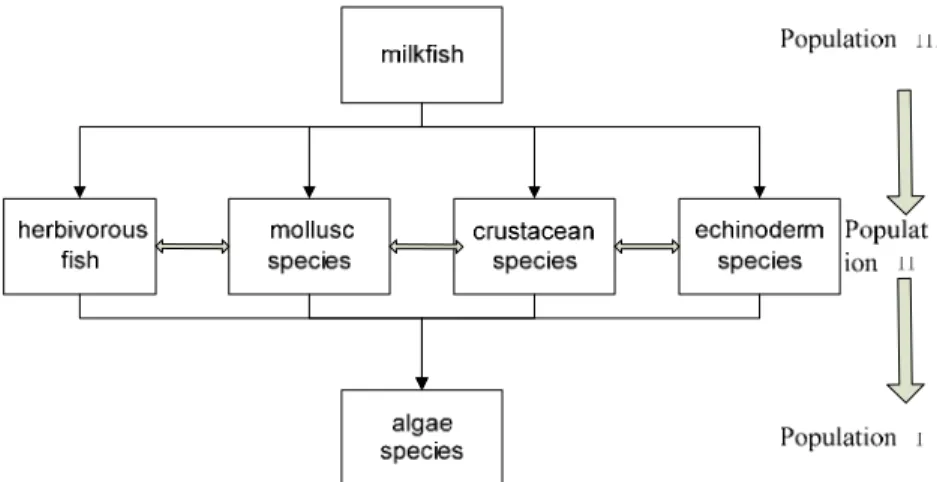
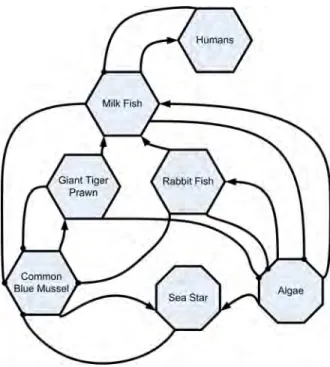
Figure 1. Interrelationships among three populations.
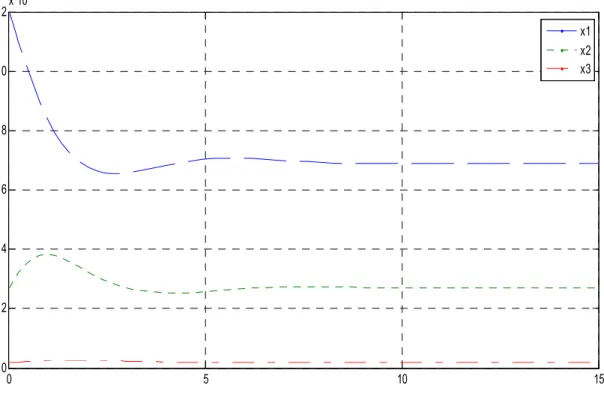
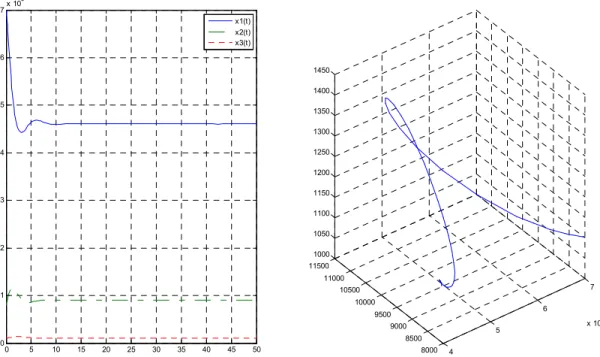
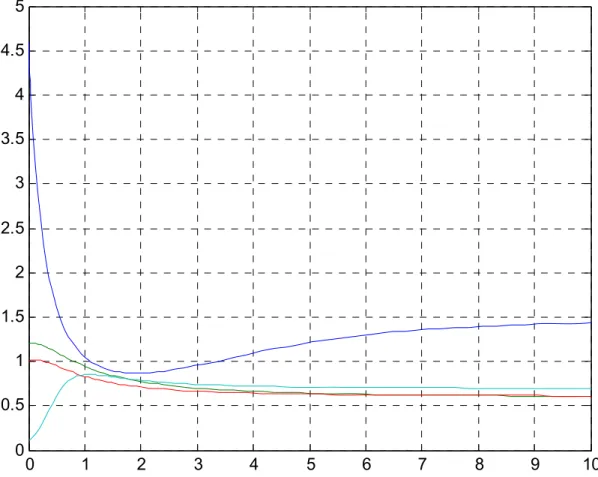
Figure 2. Numerical solutions for x i (t).
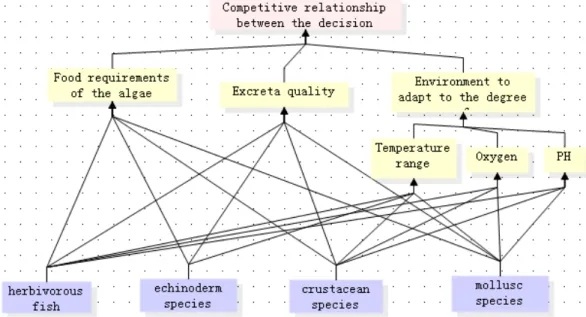
Figure 3. AHP stratification diagram.
+7

參考文獻

相關文件

Last but not least, a summary of the structure and characteristics of Venerable Master's thoughts of Humanistic Buddhism is presented to describe how Humanistic Buddhism, as

The main interest in the interpretation and discussion of passages from the sutra is to get a clear picture of how women are portrayed in the sutra and to find out

Reading Task 6: Genre Structure and Language Features. • Now let’s look at how language features (e.g. sentence patterns) are connected to the structure

A good way to lead students into reading poetry is to teach them how to write their own poems.. The boys love the musical quality of

Encouraging students to think purposefully about what they want, and how they’re getting there, is a great way to make creative writing assessable.. One more

Which of the following is used to report the crime of damaging the Great Wall according to the passage.

According to Shelly, what is one of the benefits of using CIT Phone Company service?. (A) The company does not charge

The disabled person can thus utilize this apparatus to integrate variety of commercial pointing devices and to improve their controllability in computer operation.. The