CHAPTER THREE METHODOLOGY
In this chapter, the methodology of the study including nature of the research,
research design, and research limitations will be discussed. The chapter begins with a
review of research hypotheses and definition of keywords. It is then followed by
discussion of the empirical nature of the study, research design, which includes a
detailed discussion of research subjects, sampling techniques, procedures, and data
processing. The end of the chapter is dedicated to a discussion of research limitations
including limited sample size, limited scope, non-random sampling method, and
cross-sectional sampling technique.
3.1 Review of Research Hypotheses
Formulation of research hypothesis and definition of keywords would not have
been possible without an in-depth review of personality and anxiety theories,
empirical studies in the field, and literature on the personality and anxiety of
conference interpreters. Careful review and analysis of related literature had helped
the researcher formulate the following hypotheses regarding participating interpreters’
personality profile and anxiety level and work:
Hypothesis 1: The most frequent three MBTI personality types among participating
interpreters are different from those of Taiwanese university
population and workers in other occupational settings.
Hypothesis 2: Participating interpreters’ average Trait Anxiety scores are statistically
lower than the normative data.
Hypothesis 3: Participating interpreters’ State Anxiety scores negatively correlate with
their years of experience.
Hypothesis 4: Participating interpreters’ Trait Anxiety scores positively correlate with
their State Anxiety scores.
3.2 Definition of Keywords
1. Conference interpretation or conference interpreting: Conference interpretation
(or conference interpreting) enables participants in a multinational meeting to
communicate with each other in a seamless fashion, making the language barrier
almost imperceptible. Such interpreting is generally performed in two modes:
consecutive and simultaneous.
2. Conference Interpreter: A conference interpreter is a professional language and
communication expert who, at multilingual meetings, conveys the meaning of a
speaker's message orally and in another language to listeners who would not
otherwise understand. The work of a conference interpreter is an oral intellectual
exercise which is quite distinct from written translation and requires different training
and qualifications. Conference interpreters use different modes of interpretation
(simultaneous, consecutive, and whispering) depending on the type of meeting and
working environment.
3. Personality: Personality is the system which underlies observable behavior which
is a result of the momentary condition of the individual and the structure of the
psychological situation.
4. Myers-Briggs Type Indicator (MBTI): Myers-Briggs developed the
Myers-Briggs Type Indicator based on Carl Jung’s theory of Typology. MBTI is
widely used in business and training, etc. and provides information and exercises for
better understanding one's own personality type and others with whom the individual
interacts and works. It is the psychometric instrument used in this research to evaluate
conference interpreters’ personality
5. Anxiety: Anxiety is a state of intense apprehension, uneasiness, uncertainty, or fear
resulting from the anticipation of a threatening event or situation, often to a degree
that the normal physical and psychological functioning of the affected individual is
disrupted.
6. State and Trait Anxiety: A distinction between State and Trait anxiety has become
commonplace. State anxiety is defined as an unpleasant emotional arousal in the face
of threatening demands or dangers. A cognitive appraisal of a threat is a prerequisite
for the experience of this emotion. Trait anxiety, on the other hand, reflects the
existence of stable individual differences in the tendency to respond with State
anxiety in the anticipation of threatening situations.
7. State-Trait Anxiety Inventory or State-Trait Anxiety Test (STAT): The State
Trait Anxiety Inventory (STAI) or State-Trait Anxiety Test (STAT) was initially
conceptualised as a research instrument for the study of anxiety in adults. It is a
self-report assessment device, which includes separate measures of State and Trait
anxiety. State anxiety (S-Anxiety) is defined as a transitory emotional state
characterized by consciously perceived feeling of tension and apprehension; Trait
anxiety (T-Anxiety) refers to relatively stable individual differences in anxiety
proneness.
3.3 Nature of the Study
The research presented here is a cross-sectional empirical study, which centers
around the collection and analysis of data collected within a narrow time span.
According to Daniel Gile, “in conference interpreting research, empirical
investigation can be classified as observational or experimental (Gile, 1998: 39-56).”
Observational research consists of studying “situations and phenomena as they occur
naturally in the field,” whereas experimental research “centers around situation or
phenomena that are generated for the specific purpose of studying them. The former
can be used for exploration, analysis and hypothesis-testing, and is either interactive
or non-interactive. Besides its conventional role of hypothesis-testing, the latter can
be exploratory. The main methodological problems in both are related to validity and
representativeness and to quantification.”
In this empirical study, volunteer conference interpreters were recruited to
report on their own personality profile and anxiety level by completing three
psychometric questionnaires. First, to investigate conference interpreters’
occupation-related as well as daily anxiety level, the subjects were asked to complete
two anxiety evaluation questionnaires, each with 20 self-report questions. The State
Anxiety Test was to be completed right before subjects enter a conference interpreting
situation to examine their anxiety at work; the Trait Anxiety Test was to be completed
during subjects’ spare time to measure their daily anxiety level. Second, to establish a
personality profile of conference interpreters in Taiwan, the volunteer interpreters
were also required to fill in Myers-Briggs Type Indicator (MBTI), a self-report
personality questionnaire, during their spare time.
Given that the data collected in this research is from “situations or phenomena
that naturally occur in the field”, collected during a short time span, instead of those
artificially generated, the study can be categorized as observational research with a
cross sectional nature. As Gile points out (Gile, 1998), “at this stage, the most
important contribution to interpreting research can be expected from observational
procedures, simple descriptive statistics and uncomplicated quantitative processing of
the data still have much to offer.” The data collected for the research was later
processed with aim to produce simple descriptive account of Taiwan-based
conference interpreters’ personality profile and anxiety level.
3.4 Scope of the Research
The study seeks to investigate the personality profile and anxiety level of
conference interpreters in Taiwan. Other types of interpreting such as escort,
community, medical, and court interpreting are not covered by the scope of the
research for the following reasons. First, certification programs or accreditation exams
for escort, medical, or court interpreters have long been absent in Taiwan, which made
defining and enumerating the population a daunting task. Second, no registered
associations, societies, or labor unions have ever been established for the said
population, making them almost impossible to reach. Third, in reality, escort, and
medical interpretation are very often performed by bilinguals (multi-linguals) who are
internal employees of an organization due to convenience and financial concerns of
the institution.
Even for professionally trained interpreters in Taiwan, escort, medical, or court
interpretation is more often than not practiced and viewed as an alternative source of
income. According to the 2004 Survey on T&I Industries in Taiwan (Government
Information Bureau, 2004), 71% of the conference interpreters surveyed almost never
worked as escort interpreters.
In addition to focusing the research on conference interpreters in Taiwan, the
researcher has also limited the target population to simultaneous conference
interpreting. As mentioned in chapter two, simultaneous interpretation requires the
interpreters to possess highly exceptional concentration abilities, excellent command
of language skills, and professional skills as a result of long-term and systematic
training. The possibility to find untrained amateur simultaneous interpreters who can
survive the competitive interpreting market is much slimmer than finding such
consecutive interpreters. In other words, targeting the research on interpreters who are
assigned to perform simultaneous conference interpreting would result in fewer
research variables arising from differing task difficulty and varying education and
training backgrounds of the subjects.
3.5 Research Design
3.5.1 Subjects
Target subjects of the research are limited to Taiwan-based freelance conference
interpreters who fall into either of the following two categories:
Category 1:
Freelance conference interpreters who were (1) on the interpreter lists provided
by Taiwan-based professional conference organizers that assign interpreters to
interpreting projects on a case-by-case basis, and (2) active in the interpreting scene
during the data collecting period of the research, i.e., interpreted simultaneously for at
least one conference between November 15 and December 15, 2004.
Category 2: Freelance Conference Interpreters who (1) were initially off the said lists,
but were identified as a freelance conference interpreter by any of the subjects
surveyed and (2) interpreted simultaneously for at least one conference between the
data collecting period of the research.
3.5.2 Sampling Techniques
Similar to escort, medical, and court interpreters, the actual population size of
conference interpreters have remained elusive for the following reasons. First,
certification programs or accreditation exams for conference interpreters have long
been absent in Taiwan, which made delimiting the population highly difficult. Second,
similar to escort, legal, and medical interpreters in Taiwan, no registered associations,
societies, or labor unions have ever been established for conference interpreters,
making them almost impossible to reach. Therefore, the “snowballing” method useful
for researches with an unidentified population was utilized in the sampling process of
this research.
Snowball Sampling
With non-probability sampling, population elements are selected on the basis of
their availability or because of the researcher's personal judgment that they are
representative. In this research, non-probability sampling is used, first, due to an
unidentified target population and, second, conference interpreters’ willingness and
availability in filling in the survey questionnaire on the day of an interpreting
assignment (Government Information Bureau, 2004).
Snowballing is a widely used method of recruiting individuals for participation
in focus groups, interviews, or surveys. The method builds upon initial contacts to
help identify further contacts for interviewing or surveying. To obtain initial contact
information of currently active conference interpreters, the researcher contacted
Taiwan-based professional conference organizers, because such agencies have a roster
of conference interpreters whom they assign to interpreting projects on a regular basis.
Two implications arise when the subjects are interpreters enlisted by the agencies.
First, the fact that the subjects are on the conference organizers’ roster indicates that
the conference organizers acknowledge and recognize the quality and consistency of
the subjects’ interpreting services. Second, the fact that the subjects interpreted at least
once during the 30-day data collecting period indicates that the subjects are not only
enlisted in the roster but also active conference interpreters at least during the data
collecting period of the research.
The researcher contacted the following professional conference organizers and
interpretation service centers to obtain lists of interpreters: GIS General Innovation
Service, Willy Event Consultants, SOAR Translation and Interpretation Center, TI
Service of Fu-Jen University, and Szy Yuan Translation Service of Wen Zao College
of Languages. The initial contacts provided by the said agencies led to some 44
interpreters. After approached by the researcher, 37 identified themselves as active
interpreters who would interpret for a conference before December 15th, 2004. 30
active interpreters volunteered after being invited to participate in the survey.
The 30 willing volunteers were then asked to nominate at least one interpreter
who they thought was in the best position to give information on the topic. The
interpreters surveyed almost always knew and were willing to provide further contacts
because simultaneous conference interpreting requires interpreters to work in pairs.
Hence, those who have engaged in the interpreting practice for a reasonable period of
time were always able to produce information regarding other practitioners in the
group, even when the "group" was not formally defined or established. More often,
the interpreters surveyed knew which interpreters were “active” at the moment, i.e.,
who were actively working on interpreting assignments at the time of the survey. This
helped to minimize sampling errors caused by mistakenly selecting a member outside
the target population, a research flaw common to studies using snowball sampling.
It is worth mentioning that, when asked to identify further contacts, roughly
60% of the initial contacts ended up nominating someone who was already known to
the researcher. The actual new interpreters nominated by the 30 interpreters in phase
one amounted to no more than 13. As the snowballing progressed, the more likely it
was for the interpreters to nominate contacts already known to the researcher, or even
contacts who had been repeatedly identified. This inevitably limited the actual number
of new contacts generated by way of snowballing.
Three sampling errors are common when using snowball sampling technique in
the research. First, the interviewee may belong to a special or minority group of the
total interpreter population; second, the initial interviewee may not belong to the
target population to begin with; third, certain groups of interpreters may be in a
completely segment of the market and may be left out of the sampling (Government
Information Bureau, 2004). To minimize the first kind of sampling error, the
researcher sought to generate as many contacts a possible by contacting as many
professional conference organizers as possible to obtain contact information leading
to active interpreters in the market. To reduce the second kind of sampling error, the
researcher has clearly defined the research scope and target population. After
interviewees were reached, they were asked to identify whether they are active
conference interpreters to strictly limit the research subjects to members in the target
group. The third kind of sampling error is reduced by limiting the target population to
simultaneous conference interpreters. Simultaneous conference interpreters always
work in a team of two, and they work with different partners on different assignment;
therefore, the chance for an active interpreter to be left totally unmentioned
throughout the snowballing process is slim.
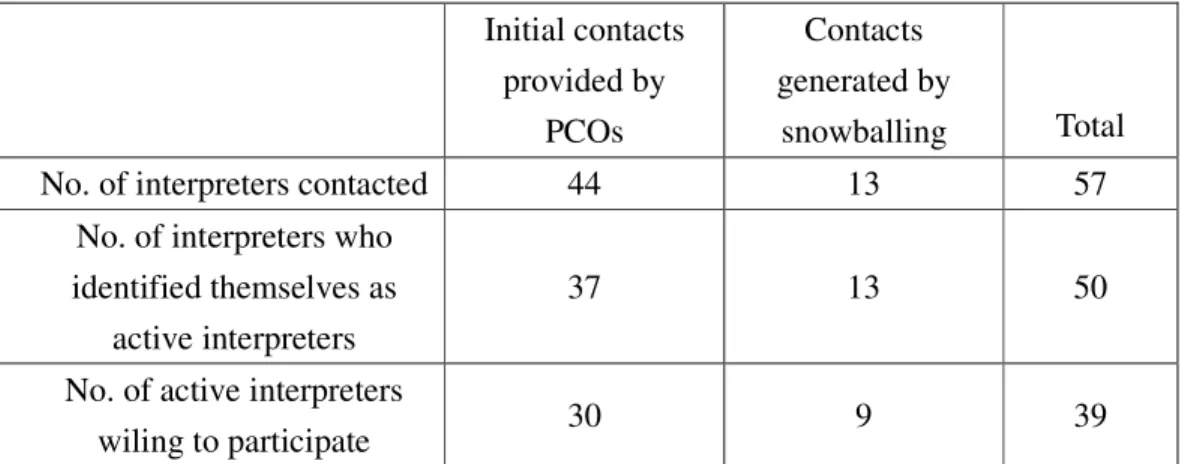
The researcher obtained information of 13 new candidates who were later
invited to participate in the survey. All 13 contacts identified themselves as active
interpreters. Nine active interpreters showed a willingness to participate in the
research. Table 3.2.2.1 presents the results of snowballing and the interpreters’
responses when invited to participate in the survey research.
Table 3.1 Results of Snowballing and Subjects’ Participation Rate
Initial contacts provided by
PCOs
Contacts generated by
snowballing Total
No. of interpreters contacted 44 13 57
No. of interpreters who identified themselves as
active interpreters
37 13 50
No. of active interpreters
wiling to participate 30 9 39
Source: Compiled by this study
3.5.3 Research Tools
In this empirical study, volunteer conference interpreters were recruited to report
on their own personality profile and anxiety level by completing 3 self-report
questionnaires: MBTI, State Anxiety, and Trait Anxiety Test, which were compiled
into a questionnaire booklet. Also included in the booklet was a brief introduction of
the research background, objectives, use of research data, and the confidentiality
clause. The questionnaire booklet also included explanation of the purpose and
administering guidelines of the three questionnaires in addition to a letter of consent
to be signed by the subjects.
The researcher has selected self-report psychometric tools to measure subjects’
personality and anxiety mainly because such tools do not involve the use of trained
personnel to administer. Self-report psychometric tools come with instruction on
administration and scoring, and extensive statistical data pertaining to the
standardization sample and normative data. With self-report tests, the examiners are
capable of administering the test to establish, compare, explain and analyze the test
result without much fear of misinterpretation and misadministration. Moreover, such
tools are easy to use, inexpensive, and take a short time to complete. They provide
subjective information that only the test takers themselves can reveal. Therefore, such
tools can be used in clinical settings, including mail returns by subjects (Kutash,
Schlesinger, and Associates, 1980). Based on the aforementioned reasons, the
researcher has opted for self-report personality test and anxiety test which are further
illustrated in the following paragraph.
3.5.3.1 State-Trait Anxiety Test
Among many instruments to assess anxiety, one stands out: the State-Trait
Anxiety Inventory. This does not mean that it is an ideal measure but it is the most
frequently used scale in research world-wide (Spielberger, 1980). The STAI is
recommended to be used for studying anxiety in research and clinical settings such as
psychological, sports psychological and health research, clinical diagnosis,
differentiating anxiety from depression and assessment of anxiety in medical, surgical,
psychosomatic, psychiatric and sports subjects. Over the past decade, the State Trait
Anxiety Inventory has been used in more than 2500 studies including numerous
investigations in a variety of sports, (Spielberger et al, 1969) and has become the
standard international measure of State and Trait Anxiety. Translations and
adaptations of the scale are available in more than 40 languages (Levitt, 1980). For
the aforementioned reasons, the researcher has selected the State Trait Anxiety Test as
the psychometric tools to measure subjects’ anxiety level.
The State-Trait Anxiety Test (STAT) is a self-report assessment device which
includes two separate scores, one for state anxiety, the other for trait anxiety. The
State and Trait Anxiety Test contain 20 questions each, these two subscales both use a
4 point Likert scale to allow the subject to show how often, or how much each
question applies to them in both situations. Also the test is designed to take only 20
minutes at the maximum to reduce the amount of fluctuations in State Anxiety that
could become apparent if the test was to go for a long period of time. Scores on the
STAT have a direct interpretation: high scores on their respective scales mean more
trait or state anxiety and low scores mean less (Speilberger, 1969).
S-T Anxiety Tests: Chinese version
The State-Trait Anxiety Test selected for the use of this research is the Chinese
version of STAT translated by Zhong and Long (Zhong and Long, 1984). The
stability of the STAT scales was assessed on male and female samples of junior high
school students for a 7-day test-retest interval. The test-retest reliability for State
Anxiety Test was 0.737, and 0.755 for Trait Anxiety Test. Reliability, in terms of
internal consistency, is also satisfactory with Cronbach alfa of 0.898 for State Anxiety
Test and 0.895 for Trait Anxiety Test. The results indicated that the Chinese version
of State Trait Anxiety Test possesses sufficient reliability and validity to justify its use
as a counseling and research instrument. In this research, volunteer interpreters were
required to complete the State Anxiety Test right before the subjects enter an
interpreting situation and the Trait Anxiety Test in the subjects’ spare time.
3.5.3.2 Myers-Briggs Type Indicator
The researcher has chosen the MBTI Chinese version for the purpose of the
study based on the following reasons. First; the MBTI is available in the U.S. and
Taiwan. Users of MBTI will be able to compare the test results with domestic and U.S.
normative data. Second, MBTI offers comparison data and normative scores derived
from Taiwanese workers in different industries after being tested in a wide variety of
occupational settings. Personality profile of subjects in this research can be compared
to that in other industries in order to understand the most dominant personality
presented by practitioners of the profession. Evaluating interpreters’ personality with
MBTI enables the researcher to generate a cross-industry and cross-cultural
comparison of subjects’ personality profile.
In this research, Myers-Briggs Type Indicator (Self-scorable, Form G) is used as
a psychometric instrument to evaluate conference interpreters’ personality trait. The
Indicator is based on four scales. Each scale represents two ends of a continuum of
two preferences. The four dichotomous scales—The Extraversion-Introversion Scale,
The Sensing-Intuitive Scale, the Thinking-Feeling Scale, and the Judging versus
Perceiving Scale— are intended to sort people into type categories, rather than to
measure strengths of individual traits or degrees of type development. All possible
combinations yield sixteen personality types, each with a distinct descriptive profile
of characteristic behavior patterns caused by the dynamic interaction of the individual
processes.
MBTI: Form G
The MBTI is written at an eighth grade reading level, and is appropriate for
adults and high school students. The instrument used in this research was the Chinese
MBTI Self-Scorable Form G (MBTI-G), a self-administering questionnaire that has a
95-item, forced-choice, self-scoring format in Chinese. The questions, though written
in a forced-choice format, are less aversive than other forced-choice instruments
because each item deals with only one polarity, and the responses reflect opposing,
rather than competing, choices (DeVito, 1985).
The MBTI form selected for use in this research was the Chinese MBTI-G
translated by Tseng and Huang following the APA procedure for translating
psychological testing (Tseng and Huang, 1999).Students in a university's management
school were recruited; among them, 90 Students took the test twice within a 5
week-interval. The internal consistency of split-half reliability for the four dimensions
ranged from 0.81 to 0.85. The test-retest reliability ranged from 0.74 to 0.93 for the
subscales. The criterion validity is obtained by correlated the subscales with an
Interest test. The results suggest that the local version has reasonable internal
consistency and test-retest reliability, and acceptable validity.
3.5.4 Implementation Procedure
3.5.4.1 Subject Recruiting
After the subjects were contacted, they were first asked whether they were
currently active in the conference interpreting scene in Taiwan. In other words, the
researcher first tried to identify whether the contact is a member of the target
population, which, in this research, is defined by working on at least one conference
interpreting assignment in the data collecting period of the research. Should the
subject identify himself or herself as an active interpreter who will interpret for a
conference before the deadline of data collecting, the researcher would then inquire
about the subject’s willingness and availability to complete the three self-report
questionnaires, MBTI and State-Trait Anxiety Tests. All subjects were also required
to nominate other interpreters as further contacts.
The subjects were told that the State Anxiety Test, designed to measure their
anxiety at work, would have to be completed “right before” the subjects start
simultaneously interpreting for a conference; the other two can be completed in their
free time.
3.5.4.2 Administering of State Anxiety Tests
Prior to a conference that a volunteer interpreter has been assigned to, the
participating interpreter would receive a questionnaire booklet composed of the three
survey questionnaires to be filled in: MBTI, State Anxiety, and Trait Anxiety Test.
The subjects were instructed specifically to complete the State Anxiety Test
questionnaire no earlier than one hour before the interpreting task commences in order
to minimize possible interference from variables outside the interpreting situation.
Conference interpreters are most likely to be found at the venue or at least on their
way to the venue one hour prior to the conference, because of the nature of conference
interpreting requires interpreters to arrive at the venue earlier so that they have time to
communicate with speakers, technicians, logistic staff, in addition to obtaining
information of any last-minute changes or announcements. Instructing the interpreters
to complete the questionnaire one hour before they start interpreting for a conference,
instead of, for example, one day prior to a conference, would minimize the potential
influence of interpreters’ non occupation-related experiences on his or her anxiety
level at the time of the test. Therefore, the subjects were instructed to complete the
questionnaire either no earlier than one hour prior to the morning session, or no earlier
than one hour prior to the afternoon session of a conference they interpret.
There was no time limit given though the subjects were reminded that the
anxiety test is designed to only take no more than 20 minutes at the maximum to
reduce the amount of fluctuations in State Anxiety that could become apparent if the
test was to go for a long period of time. The majority of the subjects reported that they
spent no more than 5 minutes to complete the State Anxiety Test.
3.5.4.3 Administering of Trait Anxiety Test and MBTI
In addition to the State Anxiety Test, the subjects were also required to fill in the
Trait Anxiety Test and the MBTI during subjects’ spare time to evaluate their
personality traits and daily anxiety level. As opposed to interpreting at a conference,
the subjects were instructed specifically to fill in the Trait Anxiety Test and the MBTI
in their spare time, whether it be earlier or later than the completion of the State
Anxiety Test.
There was no time limit given though the subjects were reminded that the
anxiety test is designed to take no more than 20 minutes at the maximum.
3.5.5 Data Processing
3.5.5.1 Categorization of Data
The 30 questionnaires returned by the deadline yielded data in the following
three categories:
1. Personality Type (MBTI):
As previously noted, the 95-question Indicator used in this research is based on
four dichotomous scales—The Extraversion-Introversion Scale, The Sensing-Intuitive
Scale, the Thinking-Feeling Scale, and the Judging versus Perceiving Scale. Each
question on MBTI G Self-scorable Form is designed to evaluate subject’s tendency in
one of the four scales. Each question contains either 2 or 3 choices, all of which are
given a pre-determined score which goes to one end of that particular scale. A scoring
key is available which specifies the pre-determined score allocated to every choice.
Four sets of scores containing 8 sub-scores for E, I, S, N, J, P, T, and F were generated
respectively. The subjects’ tendency on E-I Scale, for example, is determined by
comparing the E score with I score; should the E score exceeds the I score, the
subjects’ personality tendency is then determined to be E instead of I.
Each personality type, as mentioned earlier, is identified by four letters
represented by either E or I, S or N, T or F, J or P. The permutations of these four
preferences result in the 16 personality types as one’s preferred combination of four
letters. They are ISTJ, ISTP, ESTP, ESTJ, ISFJ, ISFP, ESFP, ESFJ, INFJ, INFP, ENFP,
ENFJ, INTJ, INTP, ENTP, and ENTJ. All subjects’ self-reported personality
characteristics were represented by one of the 16 types.
2. State and Trait Anxiety Scores:
Two scores regarding subjects’ anxiety level -State Anxiety and Trait Anxiety-
were obtained. The State and Trait Anxiety Test each contains 20 questions. A 4 point
Likert scale (1 as minimum score, 4 as maximum score) was used to allow the subject
to show how often or how much each question applies to them in both situations. If a
subject selects maximum anxiety in each question, he would be given a total score of
80 (4 points per 20 questions); if he selects minimum anxiety in each question, a total
score of 20 will be result. This renders the maximum score 80 and minimum score 20
for each test. All subjects’ State and Trait anxiety scores fell into the 20-80 range.
3. Demographic data:
Each subject was also required to provide the following data in addition to
completing the anxiety and personality tests: subjects’ years of experience in
conference interpreting, gender, age, T&I training, language combination and their
mother tongue.
3.5.5.2 Statistical Techniques
Processing techniques and statistical methods applied to the data are based on the
hypotheses of the study as previously mentioned: (1) The most frequent three MBTI
personality types among participating interpreters are different from those of
Taiwanese university population and workers in other occupational settings; (2)
Participating interpreters’ average Trait Anxiety scores are statistically lower than the
normative data; (3) Participating interpreters’ State Anxiety scores negatively
correlate with their years of experience; (4) Participating interpreters’ Trait Anxiety
scores positively correlate with their State Anxiety scores.
On the basis of the hypotheses, the following techniques were employed to
process the research data:
1. Processing of Personality Data:
After each subject’s personality type was determined, the percentage of subjects
who showed preference for E or I, S or N, J or P, and T or F was computed, along
with the percentage which each of the 16 types accounts for in the research population.
The results enabled us to approximate the consistency among personality
characteristics reported by the subjects, which is then compared with that of the
population norm and workers in other occupational settings both in Taiwan and the
United States in order to reveal the personality characteristics that distinguish
conference interpreters from practitioners in other industries. Student t-test was used
to investigate whether subjects’ personality type results in differential State Anxiety
scores, and the effect of personality when considered along with years of experience
was further examined with stepwise regression analysis.
2. Processing of Anxiety Scores:
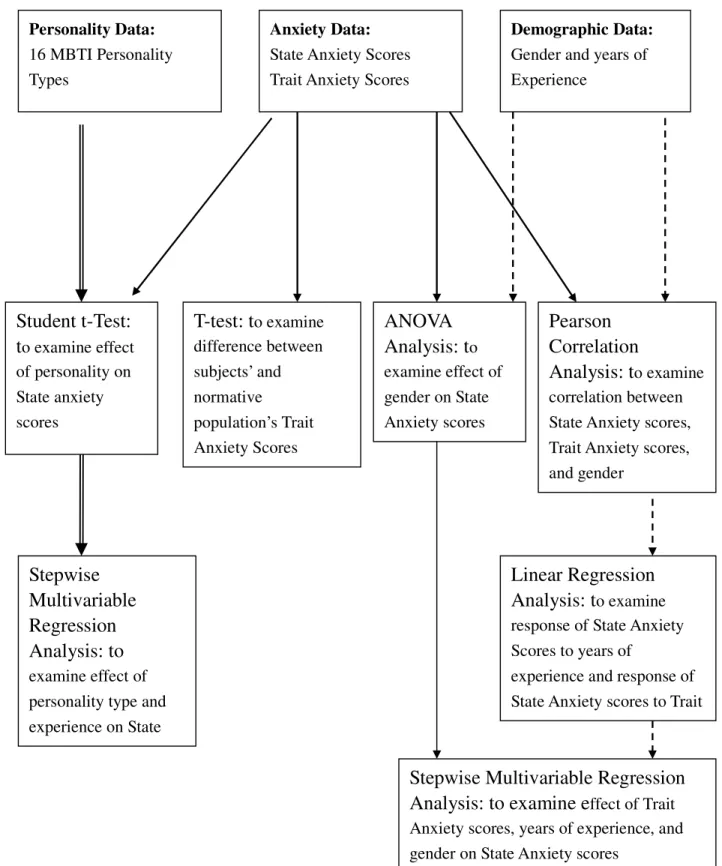
Figure 3.1 shows the statistic procedure adopted by the research. Each subject’s
State and Trait Anxiety scores were first calculated in preparation of further data
processing. T-test was used to statistically analyze the difference between subjects’
Trait Anxiety scores and those of the general population in order to verify whether
interpreters in general demonstrate less anxiety as part of their internal personality
trait.
To investigate the effect of different variables including subjects’ Trait anxiety
scores, experience, and gender on their State anxiety scores, statistical methods such
as ANOVA, Pearson Correlation Analysis, Linear Regression Analysis, and Stepwise
Analysis were applied to the data.
First, ANOVA analysis was performed to determine the effect of gender on
subjects’ state anxiety level. Second, the data was processed with Pearson correlation
coefficient to assess the correlation between the three variables: subjects’ state anxiety
score (dependent), trait anxiety score (independent), and years of experience
(independent). Third, linear regression analysis was used to examine the response of
subjects’ state anxiety to years of experience (independent) in addition to state
anxiety’s response to trait anxiety scores (independent). Lastly, stepwise multivariable
analysis were performed to determine the effects of trait anxiety score, years of
experience, and gender on State anxiety scores (dependent).
Figure 3.1 Statistic Procedures for Data Analysis
Anxiety Data:
State Anxiety Scores Trait Anxiety Scores
Demographic Data:
Gender and years of Experience
Student t-Test:
t
o examine effect of personality on State anxiety scoresT-test: t
o examine difference between subjects’ and normativepopulation’s Trait Anxiety Scores
ANOVA Analysis: t
o examine effect of gender on State Anxiety scoresPearson Correlation
Analysis: t
o examine correlation between State Anxiety scores, Trait Anxiety scores, and genderPersonality Data:
16 MBTI Personality Types
Linear Regression Analysis: t
o examine response of State Anxiety Scores to years ofexperience and response of State Anxiety scores to Trait
Stepwise Multivariable Regression Analysis: to examine e
ffect of Trait Anxiety scores, years of experience, and gender on State Anxiety scoresStepwise Multivariable Regression Analysis: to
examine effect of personality type and experience on State
3.6 Research Limitations
3.6.1 Limited Sample Size
Sample size is a key factor in reducing variability and increasing reliability of
findings. Generally, larger sample sizes are more reliable and produce lower
variability and error. However, limited population size has always been a grounded
limitation of research in conference interpreting. Apart from this present study, only
one other study has attempted to target the population size of conference interpreters
in Taiwan (Government Information Bureau, 2004). By way of snowball sampling, a
target population of no more than 53 conference interpreters was generated. Similar to
other observational or experimental studies in conference interpreting, the small
sample size in this research is largely due to the relatively small interpreter population
to begin with, which is a limitation constitutional to researches of the kind.
3.6.2 Limited Research Scope
The target population of the research is limited to conference interpreters who
simultaneously translated for a conference during the data collection period of the
research. First, the samples do not include court, medical, escort, or other types of
interpreters. This is largely due to the fact that court, medical, and escort interpreters
in Taiwan come with a wide spectrum of background in terms of their education,
training, interpreting techniques, and the actual difficulty of interpretation they are
required to perform on an ad hoc basis. Including them in the study would be to
investigate a population of which the size and members are yet to be defined.
Second, to investigate interpreters’ anxiety at work, the researcher has also
limited the research scope to a particular interpreting mode: simultaneous conference
interpreting for the convenience of data collecting. This is mainly because, first, over
90% of the interpreters approached by the researcher indicated that their next
interpreting assignment would be simultaneous rather than consecutive. Second, since
a team of two interpreters are required to perform simultaneous interpretation,
studying simultaneous conference interpretation greatly increases the researcher’s
chance to collect two research samples, instead of one in the case of consecutive
interpreting. Third, one sampling error often resulted from snowball sampling is that
certain groups out of the social or economic network of the initial contacts may be
accidentally left out. However, the fact that conference interpreters work in a team of
two helps minimize such sampling error. As a result, the personality profile and
anxiety level of court, medical, escort interpreters and consecutive conference
interpreters remain to be investigated.
3.6.3 Non-random Sampling Techniques
The representativeness of the 30 volunteer interpreters in this research remains
to be explored. Due to the absence of any interpretation certification exam and
conference interpreter’s labor unions or organizations of the kind, definition of
conference interpreters in Taiwan vary from one to another, and the actual population
of Taiwan-based conference interpreters have never been delimited. Faced with a
hard-to-reach population that is yet to be defined, the researcher’s only resort was to
employ non-random sampling techniques such as snowball sampling.
Snowball sampling has proved to be useful in identifying participants for the
research since it is a highly affordable and simple way for the researcher to build up
samples for data collection. To minimize sampling errors due to the non-probability
sampling method as mentioned in section 3.3.2, the researcher first strived to generate
as many contacts as possible in order to reduce the chance that the interviewees
belong to a special or minority group within the target population. Second, to make
sure that the initial interviewees are truly members of the target population defined by
this study, the researcher asked every interviewee to identify whether s/he is an active
conference interpreter. Third, to make sure that certain interpreters in different market
segments are not left out of the survey, the researcher requested interviewees to
nominate active interpreters outside their direct social and economic network, such as
asking interviewees to nominate those who did not graduate from the same
interpreters’ school as them.
Moreover, the research sampling is a direct result of the subjects’ willingness
and availability to participate. The researcher is only able to investigate the mental
quality of those who volunteered instead of every member known to the researcher.
The personality profile and anxiety level of those who declined the survey remain to
be examined.
As previously noted, the sampling technique is a non-probability method, which
therefore reduced external validity and the ability to generalize to the larger
population of conference interpreters in Taiwan. However, tentative broader
conclusions pertaining to conference interpreters’ personality and anxiety level may
be drawn which then can be tested in future research.
3.6.4 Lack of Long Term Observation
The research is a cross sectional empirical study that involved the measurement
of the subjects’ mental status within a narrow time span so that the measurements may
be collected and viewed as contemporaneous. In this research, data regarding
conference interpreters’ mental status were collected at only one point in time.
However, since one’s Trait anxiety and personality are “the relatively enduring
pattern of recurrent interpersonal situations which characterize a human life,” (Harry
Stack Sullivan, 1953) the cross-sectional can be considered acceptable under such
circumstances. The State Anxiety Test was administered one time before a volunteer
interpreter enters an interpreting situation. Limitations inevitably arise due to such
cross sectional research design: First, the test score is only representative of the
subject’s anxiety level prior to that particular conference; hence, the subject’s average
anxiety level in all conference interpreting situations remains unknown. Second, the
State Anxiety Test result is representative of the subject’s anxiety level no earlier than
one hour before the conference started. The test result can not be generalized to
represent the subject’s anxiety level out of that designated time frame. Nevertheless,
limiting the completion of the State Anxiety Test to one hour prior to a conference, as
previously noted, minimizes the potential influence of the interpreter’s
non-occupation-related experiences on his or her anxiety level as the interpreter fills
out the anxiety questionnaire. Third, a conference interpreter’s anxiety level at work
fluctuates as s/he gains experience and competency. Change in interpreters’ anxiety
level at work can only be examined with long term observation instead of a one-time
test.
It’s noteworthy that cross sectional design in this research is appealing for
reasons of economy of time and cost. The researcher was not face with the difficulty
and cost of maintaining contact with the subjects. For the participants, there was only
one period for data collection. It is also worth noting that the conference interpreters’
willingness to complete the questionnaire on a busy working day greatly increased
when they learned that there was going to be only one period for data collection.