Three-Dimensional Imaging Of Atmospheric Structure Using VHF Radar
J.-S. CHEN
Department of Computer and Communication Engineering, Chienkuo Technology University, Taiwan
Multiple-receiver and multiple-frequency techniques can improve, respectively, angular and range resolutions of targets inside the radar volume, yielding high resolution of three-dimensional (3-D) scattering structure when applying to the atmosphere [1]. In this study, simulation computation using the Capon method [2] was made to demonstrate 3-D imaging technique. More than previous works [1], this study has examined the weighting effects of radar beam and range weighting function on the imaging. It is shown that radar beam weighting effect on angular location of the scattering structure is apparent, but it gives different impacts on the range imaging (RIM) as accompanying with the range weighting effect: the higher the position of the scattering structure is, the smaller the synthetic influence of both weighting effects will be. Notice that “position” here means the vertical location with respective to the height of the radar volume center. Corrections of both weighting effects have been attempted. It is demonstrated that beamwidth adaptive to off-beam-direction angle [3] is necessary to get a structure center closer to the model one in angular direction; in the meanwhile correction of beam weighting effect deteriorates the RIM. Based on this, a beamwidth-dependent range weighting function seems to be needed for a further amendment of 3-D imaging.
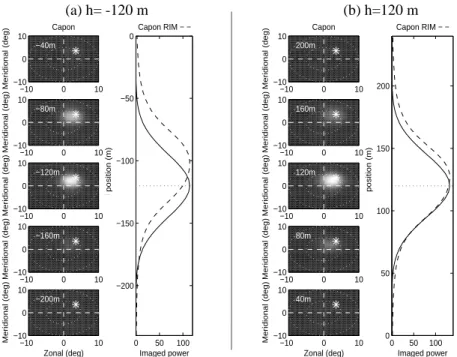
Fig. 1 shows a simulation of 3-D imaging for a 3
o-width, vertically-transmitted radar beam; the result is presented in angular and vertical directions, respectively, for the reason of clearer inspection. It is seen that the resultant angular and vertical centers are different from the model ones, demonstrating the bias of 3-D imaging caused by weighting effect; nevertheless, the RIM is closer to the vertical power distribution of the model structure when the model structure is located at a higher position.
Keywords: radar imaging; radar beam weighting effect; range weighting effect.
(a) h= -120 m (b) h=120 m
−10 0 10
−10 0 10
Capon
Meridional (deg)
−40m
−10 0 10
−10 0 10
Meridional (deg)
−80m
−10 0 10
−10 0 10
Meridional (deg)
−120m
−10 0 10
−10 0 10
Meridional (deg)
−160m
−10 0 10
−10 0 10
Zonal (deg)
Meridional (deg)
−200m
0 50 100
−200
−150
−100
−50 0
Capon RIM − −
Imaged power
Vertical position (m)
−10 0 10
−10 0 10
Capon
Meridional (deg)
200m
−10 0 10
−10 0 10
Meridional (deg)
160m
−10 0 10
−10 0 10
Meridional (deg)
120m
−10 0 10
−10 0 10
Meridional (deg)
80m
−10 0 10
−10 0 10
Zonal (deg)
Meridional (deg)
40m
0 50 100 0
50 100 150 200
Capon RIM − −
Imaged power
Vertical position (m)