pp. 81-111
面子意識如何影響微整型購買意願?
How Does Face Consciousness Affect Purchase Intention
of Cosmetic Surgery?
葉晶雯1
Ching-Wen Yeh 中華科技大學 企業管理系
Department of Business Administration, China University of Science and Technology
摘要:本研究旨在探究面子意識、物質主義、外表投資、年齡焦慮與微整型 購買意願的關係。本研究有三個目的:首先,探討物質主義在面子意識與外 表投資之間所扮演的中介角色,其次探討外表投資在物質主義與微整型購買 意願之間所扮演的中介角色;最後,探討年齡焦慮對外表投資與微整型購買 意願間關係的調節效果。研究樣本包含 600 位中年婦女,年齡介於 35-55 歲。 本研究主要研究結果有三:(1) 物質主義部份中介面子意識與外表投資的正 向關係;(2) 外表投資部份中介物質主義與微整型購買意願的正向關係;(3) 年齡焦慮調節外表投資與微整型購買意願的正向關係。研究結果建議業者實 施策略時,可以根據目標顧客的物質主義和外表投資程度,來改進產品定位。 在廣告中強調外表美麗是迷人的且可以帶來幸福,更容易吸引具有年齡焦慮 的中年女性。 關鍵詞:面子意識;物質主義;外表投資;年齡焦慮;微整型購買意願 Abstract: This study investigated the relationships among face consciousness, materialism, appearance investment, aging anxiety, and intention to purchase cosmetic surgery. Our three objectives were to (a) test the mediating effect of materialism on the relationship between face consciousness and appearance investment; (b) investigate the mediating effect of appearance investment on the relationship between materialism and intention to purchase cosmetic surgery; and (c) examine the moderating effect of aging anxiety on the relationship between
1
Corresponding author: Department of Business Administration, China University of Science and Technology, Nankang, Taipei, Taiwan, E-mail addresses: [email protected]
appearance investment and intention to purchase cosmetic surgery. The participants in this study were 600 middle-aged women in Taiwan, between 35 and 55 years of age. Here, we report three major findings. First, materialism partially mediates the positive relationship between face consciousness and appearance investment. Second, appearance investment partially mediates the positive relationship between materialism and the intention to purchase cosmetic surgery. Third, aging anxiety moderates the positive relationship between appearance investment and intention to purchase cosmetic surgery. These findings suggest that in order to improve product positioning, service providers can implement various strategies based on the target customers’ materialistic values and degree of investment in personal appearance. Middle-aged women typically exhibit aging anxiety, and thus they are readily attracted by advertisements that emphasize the view that physical beauty is enchanting and can bring happiness. Keywords: Face consciousness; Materialism; Appearance investment; Aging
anxiety; Purchase intention
1. Introduction
Globalization has accelerated materialism worldwide, and this particularly evident in developing countries. The materialism-related factors that affect consumers include beauty and cosmetic trends. Kasser and Ryan (1996) reported that materialistic values are exhibited when people aim for financial success, a high social status, or appealing physical appearance. Henderson-King and Brooks (2009) contended that materialistic people are likely to relate to their bodies as they might relate to objects. Thus, people who are highly materialistic find it extremely appealing to use new products and techniques that can alter their appearance. However, the effect of materialism on the intention of purchase cosmetic surgery has rarely been examined. In this study, we sought to fill this research gap.
Chinese consumers crave face and are extremely sensitive to the feelings of others, and thus these consumers exhibit high levels of face consciousness (Bao, Zhou and Su, 2003). Wong and Ahuvia (1998) argued that a higher concern for
face among Southeast Asian consumers than among Western consumers leads the Asian consumers to place comparatively greater emphasis on publicly visible possessions. Furthermore, high face consciousness makes Southeast Asian consumers more likely than Western consumers to use products as a symbolic social gesture rather than as a personal expression. Consumers who exhibit strong face consciousness are burdened with a high social requirement to purchase products and services. This social requirement makes consumers pay increased attention to products that fulfill their desire to present an appealing physical image (Belk, 1988). To the best of our knowledge, no study has investigated how face consciousness affects the intention to purchase micro-cosmetic surgery. This is another question that was addressed in this study.
Appearance investment refers to how people’s attention, thoughts, and actions focus on their personal appearance and thereby define their sense of self-worth (Cash, Melnyk and Hrabosky, 2004). Poor self-perceived attractiveness and high appearance investment lead to highly favorable attitudes toward cosmetic surgery (Delinsky, 2005; Swami et al.). People who exhibit face consciousness are aware that their physical exterior and their social interactions influence how they are evaluated (Sarwer and Crerand, 2004). Thus, face consciousness encourages these people to possess symbolic goods that increase their personal visibility within a social hierarchy. Face consciousness can motivate people to enhance their appearance or their self-image in the eyes of others in order to improve their own social prospects. To the best of our knowledge, previous studies have not investigated whether face consciousness affects appearance investment. This is a third research gap that we aimed to fill in this study. In 2010, Globe and Mail, a well-known Canadian newspaper, estimated that the medical cosmetology market in Taiwan was worth around NTD 60 billion, and that antiaging cosmetics occupied 8% (approximately NTD 4.6 billion) of this entire market (Lin, 2012). Experts have estimated that the development of cosmetology related to antiaging medicine in Taiwan will increase from NTD 4.6 billion in 2011 to NTD 16.8 billion, and in this period, the annual growth rate of hyaluronic acid micro-cosmetic surgery is expected to increase by 20% (Lin, 2012).
and quality of life improved, increasing numbers of people, after satisfying their basic requirements, have been pursuing a luxurious lifestyle, which includes high-level consumption and development of an appearance that elicits the admiration of others. Moreover, people have come to believe that medical cosmetology treatment can not only make them feel better about their appearance, but also enhance their social skills, promote self-esteem, stabilize emotions and feelings, and even increase self-confidence (Stokes and Frederick, 2003). The higher level of importance attached to beauty in women’s lives than in men’s lives makes women worry more than men about the effects of aging on their appearance (Gupta and Schork, 1993). Yang (2011) noted that the modern Chinese woman is constantly tempted to purchase beautification products and services such as cosmetics and cosmetic surgery that could make them appear younger, and thus presumably more sexually attractive, than they are. The aging of women has been negatively characterized in modern society, and thus women must devote considerable effort toward maintaining their youth in an effort to avoid losing their appeal. A substantial amount of evidence suggests that middle-aged women are often highly dissatisfied with their bodies (Tiggemann, 2004), and that aging women continue to consider their appearance a high priority. Collectively, these findings indicate that their personal appearance is crucial to women, and the dissatisfaction with their appearance that most women display suggests that the potential demand for medical cosmetology is considerably high.
Aging anxiety refers to the combined concern and anticipation of losses centered on one’s own aging process (Lasher and Faulkender, 1993). Advertising, television, movies, and print media heavily emphasize youth and beauty, as evidenced by the constant bombardment of images of young women and advertisements promising a perpetually youthful appearance. A culture immersed in youth worship can pose a dilemma for women as they age, and these women might thus suffer from, for example, low self-esteem, depression, and anxiety. Women appear to be more vulnerable than men to societal pressure to conform to society’s expectations, which might explain women’s doubts regarding their self-worth as they enter middle age. This raises the following research questions: Does the relationship between appearance investment and purchase intention vary
with aging anxiety? Is the relationship between appearance investment and purchase intention strong and weak in the case of consumers who exhibit high and low aging anxiety, respectively? The moderating role of aging anxiety in influencing appearance investment and intention to purchase cosmetic surgery has seldom been addressed, and thus we attempted to answer the aforementioned questions. Our three specific research objectives were to (a) test the mediating effect of materialism on the relationship between face consciousness and appearance investment; (b) investigate the mediating effect of appearance investment on the relationship between materialism and intention to purchase cosmetic surgery; and (c) examine the moderating effect of aging anxiety on the relationship between appearance investment and the intention to purchase cosmetic surgery.
Few previous studies have examined how face consciousness affects purchase intention of cosmetic surgery, and we attempted to fill this research gap. This study contributes to the current knowledge on purchase intention of cosmetic surgery, and its main strengths are that it tested (a) the roles of materialism and appearance investment as mediators in the relationship between face consciousness and purchase intention; and (b) the moderating role of aging anxiety in influencing appearance investment and intention to purchase cosmetic surgery.
2. Literature Review and Hypothesis Development
2.1 Face Consciousness
Ho (1976) posited that Mianzi is limited to the social situation in which a person is engaged in interactions; Mianzi exists in the group that a person belongs to, and it is a relationship that derives from nonpersonal factors. Face consciousness refers to the “desire to enhance, to maintain, and to avoid losing face in relation to significant others in social activities” (Bao, Zhou and Su, 2003). These social requirements cause consumers to emphasize extrinsic rather than intrinsic attributes of a product, because the consumers seek to project a certain
image, position, or feelings toward fellow group members (Belk, 1988). Face consciousness reflects a person’s desire to enhance, maintain, and avoid losing face in relation to significant others in social encounters (Bao, Zhou, and Su, 2003).
2.2 Materialism
Materialism refers to the extent to which a person believes that acquiring and possessing material objects is vital to achieving happiness in life; conversely, materialism reflects a person’s success in life (Richins and Dawson 1992). Pursuit of happiness is another goal that defines materialism; Richins and Dawson (1992), for example, stated that “it is the pursuit of happiness through acquisition rather than through other means (such as personal relationships, experiences, or achievements) that distinguishes materialism.”
Previous research on materialism has demonstrated that people who are highly materialistic tend to exhibit a more optimistic attitude toward shopping, debt accumulation, and money as compared with people who are not highly materialistic (Belk, 1985; Richins and Dawson, 1992). Fournier and Richins (1991) asserted that materialistic consumers might consider it impossible to achieve end states such as status recognition or happiness without owning adequate possessions. Pleasure or self-satisfaction is pursued mainly through acquisitions that symbolize materialism (Richins and Dawson, 1992). Materialism affects what consumers seek to gain from their possessions and which products they believe can satisfy their desires during consumption (Richins, 1994).
2.3 Appearance Investment
Appearance investment involves attitudes regarding the importance of appearance. Women who invest a large amount of money on their appearance spend a considerable amount of time either attending to their appearance or attempting to maintain or enhance their appearance (Cash, Melnyk and Hrabosky, 2004). Cash’s theory posits that the self-worth of people who invest substantial amounts of money on their appearance is contingent on evaluations of their weight and shape (Cash, Melnyk and Hrabosky, 2004). Forand et al. (2010)
suggested that a person’s high investment in appearance might be related to how others view that person, which could lead to the person becoming sensitive to perceived negativity even when interpersonal feedback is not related directly to appearance. An increase in appearance investment has been shown to increase women’s susceptibility to social comparisons (Hargreaves and Tiggemann, 2004), and such comparisons, particularly with people considered to be more attractive than these women are, lead to a progressively more negative disposition, dissatisfaction with their bodies, and plans for diet and exercise (Hargreaves and Tiggemann, 2002; Leahey, Crowther and Mickelson, 2007; Tiggemann and Polivy, 2010).
2.4 Aging Anxiety
Aging anxiety refers to the concern and anticipation of losses that people sense in relation to their aging process (Lasher and Faulkender, 1993). The prospect of aging is commonly associated with physical and psychological decline, and thus aging concerns can induce considerable fear and anxiety. The concept of self has been suggested to be more closely related to physical attractiveness and youthful appearance in women than in men, and aging is associated with higher anxiety levels in women than in men (Harris and Dollinger, 2001; McConatha, Schnell and McKenna, 1999; McConatha et al., 2003). Women are also socially oriented to more heavily emphasize their appearance than men are. Consequently, women tend to internalize social and cultural perspectives regarding their physical selves, which can potentially induce shame and anxiety over their aging bodies and ultimately increase anxiety regarding the aging process (Huebner and Fredrickson, 1999).
2.5 Purchase Intention
Purchase intention refers to the likelihood of consumers purchasing a product after receiving information from advertisements: the higher the purchase intention, the higher the likelihood of purchase (Dodds, Monroe and Grewal, 1991). Moreover, high consumer awareness of a product implies a high willingness to buy the product (Dodds, Monroe and Grewal, 1991). Consumers’
willingness to buy a product is frequently based on their perception of benefits and value (Dodds, Monroe and Grewal, 1991). While distinguishing between descriptive and predictive consumer characteristics, Reynolds and Wells (1977) asserted that in terms of buying behavior, willingness is more predictive than preference. Therefore, in this study, we attempted to forecast consumer buying decisions by using purchase intention as an indicator.
2.6 Hypothesis Development
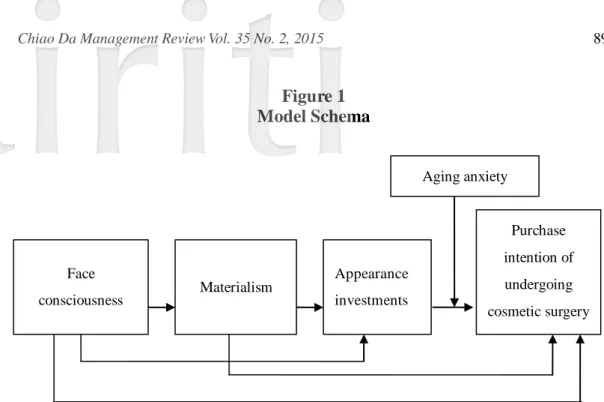
This study examined materialism and appearance investment as mediators in the relationship between face consciousness and purchase intention. The rationale for this model is based on need theory and social self-construction theory. At its core, “face” is a social self-construction concern that stresses people’s social requirements to a greater extent than their private needs (Wang and Ahuvia, 1998). Consumers who exhibit strong face consciousness display high social requirements in their consumption behavior (Bao, Zhou and Su, 2003). The social requirements make the consumers pay substantial amounts for products that can project their image, position, or feelings toward group members (Belk, 1988). Figure 1 outlines the conceptual model of this study.
People with face consciousness are cognizant that their physical exterior and their social interactions influence how they are evaluated (Sarwer and Crerand, 2004). Wong and Ahuvia (1998) asserted that face consciousness and materialism are linked. While face consciousness emphasizes prestige, recognition, and status, consumers with face consciousness prefer to purchase luxury products and brand names to gain face. Therefore, material products are their instruments to achieve this goal. Such social needs drive consumers to emphasize extrinsic rather than intrinsic attributes of a product (Belk, 1988). In essence, “face” is a belief that puts one’s visible attributes above one’s invisible inner quality (Wan et al., 2009). Physical attractiveness may be used as an important evaluation criterion for people with face consciousness because visible attributes are related to “face.” The value of social face asserts that owing symbolic goods can improve personal visibility within a social hierarchy (Wong and Ahuvia, 1998). We thus hypothesize the following:
Figure 1 Model Schema
H1: Face consciousness positively affects materialism.
Previous research has demonstrated that many reasons for valuing possessions are related to expressing, maintaining, and signaling one’s self-concept to others (Belk 1985; Holman 1981; Solomon 1983). According to both Kasser and Ryan (1996), materialist values are displayed in aspirations towards financial success, high social status, and appealing physical appearance. Materialists highly prioritize their possessions, especially those for use as markers to gauge personal success. Materialism accurately predicts behaviors associated with hedonistic, expressive, and status-enhancing products. Highly materialistic individuals are likely to lead to greater dissatisfaction with one’s appearance, likely causing individuals to forward to consumption and improve appearance. Highly materialistic individuals may highly prioritize their possessions, especially those for use to achieve a youthful, beautiful appearance. We thus hypothesize the following:
H2: Materialism positively affects appearance investment.
Individuals with a high face consciousness are heavily concerned with their social appearance, and are likely to engage in activities to improve, maintain, or protect their face (Bao, Zhou and Su, 2003). Such individuals also tend to be more
Face consciousness Materialism Appearance investments Purchase intention of undergoing cosmetic surgery Aging anxiety
susceptible to others’ opinions and evaluations, as well as eager to find ways to gain or protect their face. Individuals can gain face by purchasing luxury goods to appear wealthy (Wong and Ahuvia, 1998). Face consciousness plays a major role in the consumption of luxury goods in many parts of Asia, because individuals in these societies are likely under pressure to live up to the consumption expectations of others (Yau, 1988).
While extremely concerned with their appearance, individuals with a high face consciousness are expected to have expensive and beautiful clothing, and are highly concerned their appearance, leading to the purchase of related products. Individuals with a greater love of face are more likely to modify their external behavior and appearance in order to impress others. Individuals with a high face consciousness are heavily concerned with the gain and loss of face-related affairs, creating a greater motivation to have or protect face. Such social needs motivate consumers to more heavily emphasize appearance investment owing to their desire to express certain images, positions, or feelings towards group members (Belk, 1988). Individuals with a high face consciousness may more heavily emphasize appearance investment to improve their face or diminish psychological anxiety. For example, feeling unattractive in the eyes of important others could have a negative impact on face. We thus hypothesize the following:
H3: Face consciousness positively affects appearance investment.
Drawing on the aforementioned argument and H1, H2, H3, we can infer
that face consciousness positively affects materialism, which would further affect appearance investment. We thus hypothesize the following:
H4: Materialism partially mediated the relationship between face
consciousness and appearance investment.
Appearance investment is defined as how an individual’s attention, thoughts, and actions focus on their appearance and define their sense of self (i.e. the importance of appearance to self-worth; Cash, Melnyk and Hrabosky, 2004). Appearance investment refers to how individuals value and pay attention to their body, as well as how appearance affects their self-worth. A poorer perceived attractiveness and appearance investment imply a more favorable attitude towards cosmetic surgery (Delinsky, 2005; Swami et al., 2009). Individuals dissatisfied
with their body and with a high appearance investment may undergo micro-cosmetic surgery. Restated, individuals either dissatisfied with their appearance and who feel unattractive or those who value appearance investment imply a high purchase intention of undergoing micro-cosmetic surgery. We thus hypothesize the following:
H5: Appearance investment impacts the purchase intention of cosmetic
surgery positively.
According to Kasser and Ryan (1996), materialist values are exhibited aspirations toward financial success, high social status, and appealing physical appearance. Highly materialist individuals are likely to cycle through feelings of dissatisfaction and yearning that they attempt to ameliorate by purchasing consumer goods. People buy what they assume will make them happy, but once a product’s novelty and excitement has worn off and it has become dated, they begin to yearn again for something more (Henderson-King and Brooks, 2009). Watson (2003) found that materialistic individuals typically spend money and express positive attitudes toward borrowing money for luxury purchases, yet they are less likely to have a savings scheme (e.g., mutual funds) than less materialistic individuals. Sociocultural messages prioritizing attractiveness frequently emphasize the social and material gains one can acquire by increasing one’s attractiveness; considerable evidence suggests that attractive individuals obtain financial and social benefits (Langlois et al., 2000).
For materialistic individuals, the same cycle that can result from the pursuit of consumer goods might also occur with attempts to heighten one’s physical attractiveness. However, such attempts are unlikely to generate ongoing satisfaction because body alterations tend to be impermanent and there is always more that can be done. High materialism is also likely to cause individuals to spend considerable time focusing on their bodies and applying products to improve their appearance. Furthermore, the allure of new products and medical procedures to alter one’s appearance are likely more appealing to individuals with a materialist than non-materialist orientation (Henderson-King and Brooks, 2009). As anticipated, women with strong materialist values have a high purchase intention of undergoing micro-cosmetic surgery. We thus hypothesize the
following:
H6: Materialism positively affects the purchase intention of undergoing
micro-cosmetic surgery.
Drawing on the aforementioned argument and H2, H5, H6, we can infer
that materialism positively affects appearance investment, which would further affect purchase intention of undergoing micro-cosmetic surgery. We thus hypothesize the following:
H7: Appearance investment partially mediated the relationship between
materialism and purchase intention of undergoing micro-cosmetic surgery.
Chinese people tend to have strong face consciousness. This can affect many aspects—from physiological need to self-actualization needs (Belk, 1988). Wong and Ahuvia (1998) asserted that the concern for face in Southeast Asia has lead consumers to place focus on publicly visible possessions. Therefore, those with high face consciousness are likely to consume products as symbolic social gestures rather than as an expression of their inner selves. Consumers with strong face consciousness have high social needs when consuming. Such social needs make consumers pay more attention products that meet their desires and express their image or feelings toward group members. Consequently, consumers with strong face consciousness are likely to purchase cosmetic surgery. We thus hypothesize the following:
H8: Face consciousness positively affects the purchase intention of
cosmetic surgery positively.
The relationship between appearance investment and purchase intention of undergoing cosmetic surgery is strong for individuals with a high aging anxiety. Aging as a continuing process may affect women powerfully, owing to societal pressure to remain young and vibrant. Women must continually “work on themselves” to be significantly contributing a society devoted to productivity, beauty, and youth. Because modern females are taught to make the most of their looks to advance their career prospects (Saucier, 2004), middle aged women require assistance in coping with changes in their physical appearance and in handling emotions associated with such changes.
Over time, middle-aged women fear both the loss of physical attractiveness and weight gain; micro-cosmetic surgery can help them re-shape their body, enhance their face and eliminate wrinkles, explaining their positive attitude towards micro-cosmetic surgery. High anxiety towards aging leads to the realization of one’s aging, loss of youth, and worries over health, as evidenced by physical signs of aging, declining health, and changing appearance. High aging anxiety also increases the perception that with aging and changes in appearance, an attempt should be made to stimulate the appearance of their investments, possibly even through undergoing micro-cosmetic surgery to improve one’s appearance. In contrast, low aging anxiety may diminish the appeal to enhance one’s appearance, explaining their conservative attitude towards cosmetic surgery. We thus hypothesize the following:
H9: Aging anxiety moderates the relationship between appearance
investment and purchase intention of undergoing cosmetic surgery.
3. Method
3.1 Data Source
Subjects were middle-aged women from community universities in Taipei, Taiwan. Random samples were taken from six community universities, with subsequent telephone contact confirming community universities were prepared to distribute the questionnaire. In total, 1200 questionnaires were sent to these community universities, with 600 valid samples returned for a response rate of 50 %. Study participants were 600 middle-aged women, ranging from 35 to 55 years old (Mean = 44.61, Standard Deviation = 5.58). Of all participants, 33% graduated from junior high school; 40% graduated from senior high school, and the rest graduated from university. As for marital status, 75% were married, 12% divorced, 5% widowed, and 8% never married. ANOVA was applied to determine whether participants from different community universities had significant differences in terms of study variables. Analytical results show no significant differences existed between participants from different community universities in
terms of all study variables. The possibility of non-response bias was also assessed; test results show that responding and non-responding participants did not differ significantly in terms of age, education level, of marriage status. Thus, participants who comprised the sample population should not be biased.
3.2 Measures
Two way translations were performed by two bilingual experts in English and Chinese to ensure equivalency of meaning. Purchase intention was defined as the willingness of consumers to purchase a certain product, was measured on a five-point Likert-type scale. The questionnaire items were based on the study of Alexandris, Tsaousi and James (2007), with slight modifications for the needs of the present study. The survey comprised three questions (e.g., PI1, PI2 and PI3),
with question items asking respondents about their willingness to undergo micro-cosmetic surgery, such as “PI1: If my friends have micro-cosmetic surgery
that I like, I will take the initiative to ask about it”; “PI2: If I find quality
micro-cosmetic surgery, I will recommend it to my friends”; “PI3: If I find quality
micro-cosmetic surgery, I will purchase it.” In this study, the Cronbach’s α value for purchase intention was 0.93.
Face consciousness was measured using the four-item scale (e.g., FC1, FC2, FC3 and FC4)of Bao, Zhou and Su (2003). The scale items included “FC1:It is
important that others like the products and brands I buy”; “FC2:I occasionally
purchase a product or service because my friends do”; “FC3: Name-brand
purchases distinguish individuals from the crowd” and “FC4: Name products and
brand purchases bring a sense of prestige.” All items were rated on a seven-point Likert scale, and the consistency reliability was 0.87.
Materialism was evaluated using the 18-item materialism scale of Richins and Dawson (1992). Items were marked on a five-point scale, ranging from "strongly disagree" to "strongly agree," and items were summed up for a total score. Richins and Dawson (1992) found a three factor structure of the materialism measure (e.g., M1, M2 and M3). A nearly identical pattern of results
was obtained in this survey, with all but one of the 18 materialism items on the factors. These one items had mixed loadings and were excluded from further scale
analysis. Coefficient α for the summed materialism scale was 0.83.
Appearance investment was assessed using the revised version of the Appearance Schemas Inventor (Cash, Melnyk and Hrabosky, 2004). The 20-item scale presented statements such as “Before going out in public, I always pay attention to how I look” and “I am sexually appealing.” Participants used a 5-point Likert scale to indicate their level of agreement with these 20 statements. We performed exploratory factor analysis to item parcel the 20 items of the appearance investment scale (Kishton and Widaman, 1994), and the results suggested a three-factor structure (e.g., AI1, AI2 and AI3). Principal component
analysis revealed that the eigenvalues of the three factors exceeded 1; these factors accounted for 78% of the variance and were retained for subsequent analysis. The loading of the summed appearance investment scale items was 0.88.
The degree of anxiety about age-related changes to physical appearance was evaluated using the Anxiety about Aging Scale (Bousfield and Hutchison, 2010). Anxiety over personal aging was also measured by responses to four items (e.g., AN1, AN2, AN3 and AN4), such as ‘‘AN1:I am comfortable with becoming
elderly’’; ‘‘AN2: I am worried that I will lose my independence when I am
elderly’’; ‘‘AN3:I am concerned that my mental capacity will deteriorate when I
am elderly’’; and ‘‘AN4: I do not want to become old because I will be closer to
dying’’. The items were scored so that a higher score denoted higher aging anxiety, and were subsequently combined to form a single ‘‘aging anxiety’’ score (α = 0.83).
4. Results
Table 1 reports means, standard deviations, average extracted variances (AVEs) and correlations among study variables. Fornell and Larcker (1981) argue that the AVEs of any two constructs should be greater than their squared correlation. When the latent variable correlations in Table 1 are squared, none exceeds the AVE of the constructs. This supports the discriminant validity of the constructs.
Table 1
Descriptive Statistics and Correlations Mean Standard Deviation 1 2 3 4 5 1. Purchase intention of undergoing cosmetic surgery 2.74 1.09 0.82 2. Face consciousness 3.64 0.65 0.21** 0.62 3. Materialism 3.08 0.62 0.35** 0.23** 0.64 4. Appearance investment 2.64 0.90 0.70** 0.17** 0.37** 0.71 5. Aging anxiety 3.09 0.69 0.29** -0.05 0.16** 0.20** 0.56
Note: **p < 0.01; Diagonal entries indicate the square root of AVE.
4.1 Measurement Model Evaluation
Several methods were used to assess convergent and discriminant validity. First, on the basis of the aforementioned Confirmatory Factor Analysis (CFA) results, we assessed convergent validity by reviewing the t-test results for factor loading and item loading (Anderson and Gerbing, 1988). The factor loadings were all statistically significant, with the critical t values ranging between 18.51 and 41.27 (p < 0.001), and the values of the standardized factor loadings ranged between 0.72 and 0.96.
The study findings thus strongly support convergent validity. This study then examined the composite reliability and average extracted variances (AVEs) for all of the observed variables, and found the composite reliability to exceed 0.83 and all AVEs to exceed 0.55. The squared multiple correlations (SMCs) ranged between 0.51 and 0.91. Reliability assessment was conducted using Cronbach’s coefficient α to determine internal consistency; this was done to ensure the items for each factor were internally related. The final α values all exceeded 0.7, indicating good internal consistency. These findings strongly support the convergent validity of the scale (in Table 2).
4.2 Competing Models Analyses
To demonstrate an improved theoretical fit of our hypothetical model (Model 1 in Table 3), we tested alternative models. Model 2, which featured a
Table 2
Confirmatory Factor Analysis and Reliability Estimates Variable Dimension/ Indicator Standardized loading SMC Composite reliability Coefficient α Average variance extracted Purchase intention of undergoing cosmetic surgery PI1 PI2 PI3 0.94 0.96 0.81 0.88 0.91 0.65 0.93 0.93 0.82 Face consciousness FC1 0.82 0.67 FC2 0.88 0.78 0.87 0.87 0.62 FC3 0.72 0.52 FC4 0.72 0.52 Materialism M1 0.90 0.81 M2 0.73 0.53 0.84 0.83 0.64 M3 0.76 0.57 Appearance investment AI1 0.74 0.55 AI2 0.95 0.91 0.88 0.88 0.71 AI3 0.83 0.68 Aging anxiety AN1 0.77 0.59 AN2 0.73 0.51 0.84 0.83 0.56 AN3 0.72 0.52 AN4 0.78 0.61
single path from face consciousness to appearance investment through materialism, was removed. In Model 3, appearance investment provided the mediating path from materialism to purchase intention of cosmetic surgery; this model was also removed. Model 4 did not consider the direct effect of face consciousness on appearance investment. Model 5 did not consider the direct effect of materialism on intention to purchase cosmetic surgery. Overall measurement of model fit is assessed with six indices: the χ2 statistics, the chi-square/degrees of freedom (χ2
/df), the goodness-of-fit index (GFI), the
comparative fit index (CFI), the root mean square error of approximation (RMSEA), and the root mean square residual (RMR).
= 38.182, Δdf = 1, p < 0.001), indicating that the presence of materialism as a mediating path was significant. Compared to Model 1, the Δχ2 of Model 4 was also statistically significant (Δχ2 = 5.734, Δdf = 1, p < 0.05), suggesting that the direct effect of face consciousness on appearance investment was significant. Therefore, materialism partially mediated the relationship between face consciousness and appearance investment.
Compared to Model 1, the Δχ2 of Model 3 was statistically significant (Δχ2 = 308.163, Δdf = 1, p < 0.001), indicating that the presence of appearance investment as a mediating path was significant. Compared to Model 1, the Δχ2 of Model 5 was statistically significant (Δχ2 = 4.241, Δdf = 1, p < 0.05), suggesting that the direct effect of materialism on purchase intention of undergoing cosmetic surgery was significant. Therefore, appearance investment partially mediated the relationship between materialism and purchase intention of undergoing cosmetic surgery. Comparison results confirmed that materialism and appearance investment mediated the relationship between face consciousness and purchase intention of cosmetic surgery. Thus, we contend that our hypothesized model is meaningful and robust (in Table 3).
4.3 Hypotheses Testing
We conducted Structural Equation Modeling (SEM) to test our hypotheses. The SEM results show that the model provided an adequate fit to the data, χ2
= 173.01, p < 0.01; χ2/df = 2.93 (CFI = 0.98, NFI = 0.97, AGFI = 0.93, RMR =
0.03). The effect of face consciousness on materialism was significant (β = 0.31, p Table 3
Fit Indices for Alternative Models
Models χ2 ∆χ2 χ2
/df GFI CFI RMSEA RMR
Model 1 173.01 2.93 0.96 0.98 0.05 0.03 Model 2 211.19 38.18*** 3.52 0.95 0.97 0.07 0.08 Model 3 481.17 308.16*** 8.02 0.90 0.92 0.11 0.16 Model 4 178.74 5.73*** 2.98 0.96 0.98 0.06 0.04 Model 5 177.25 4.24*** 2.95 0.96 0.98 0.06 0.04 Note: ***p < 0.001, *p < 0.05
< 0.001). Properties of the causal paths (standardized path coefficients) are shown in Table 4. Thus, H1 was supported. Next, Materialism had a positive significant
influence on appearance investment (β = 0.30, p < 0.001). Thus, H2 was supported.
Face consciousness had a positive significant influence on appearance investment (β = 0.11, p < 0.05), suggesting support for H3.
H5 was also supported as p < 0.001 (β = 0.69). Appearance investment had a
positive and significant influence on purchase intention of cosmetic surgery positively. The effect of Materialism on purchase intention of undergoing micro-cosmetic surgery was significant (β = 0.08, p < 0.05). Thus, H6 was
supported. Next, Face consciousness had a positive significant influence on purchase intention of cosmetic surgery positively (β = 0.09, p < 0.01). Thus, H8
was supported.
To test the hypotheses that materialism mediates the relationship between face consciousness and appearance investment, we used the Preacher and Hayes (2008) multiple mediation bootstrapping approach. Bootstrapping (Diaconis and Efron, 1983) is a nonparametric approach that takes a large number of smaller samples of the original sample data. This approach examines both the combined indirect effect of all mediators and the effect of each individual mediator while controlling for the others. Contrary to other frequently used tests of mediation (Baron and Kenny, 1986), this approach does not rely on the assumption that the
Table 4
Path Analysis by SEM
Path Estimate Standard
Deviation
Critical Ratio
H1: Face consciousness materialism 0.31*** 0.06 6.25
H2: Materialism appearance investment 0.30*** 0.05 6.07
H3: Face consciousness appearance investment 0.11* 0.07 2.40
H5: Appearance investment purchase intention of cosmetic surgery positively
0.69*** 0.05 17.77
H6: Materialism purchase intention of undergoing micro-cosmetic surgery
0.08* 0.06 2.06
H8: Face consciousness purchase intention of cosmetic surgery positively
0.09** 0.07 2.65
results are normally distributed (Preacher and Hayes, 2008). This bootstrapping approach is an extension of the Sobel test, which compares the indirect effect of an independent variable on a dependent variable with the null hypothesis, which equals zero. From the original data sample, 2,000 random samples were selected using the bootstrapping technique; each value was replaced as it was sampled, and the indirect effect was computed for each sample. The point estimate of the indirect effect represents the mean path value computed over the samples. Next, a 95% confidence interval (CI) was calculated; if the upper and lower bounds of these bias-corrected values do not contain zero, the indirect effect is considered significant. The bootstrapping procedure was used to determine whether materialism mediates the relationship between face consciousness and appearance investment. The results of the bootstrapping analysis (see Table 5) indicated that face consciousness exerted a significant total effect on appearance investment, and the 95% bias-corrected confidence interval did not include zero (β = 0.29, CI = 0.17 to 0.42); this suggested that the mediation potentially existed. The results further showed that face consciousness exerted a significant indirect effect through materialism on appearance investment, and the 95% bias-corrected confidence interval did not include zero (β = 0.13, CI = 0.08 to 0.21); this suggested that the mediation occurred. Lastly, face consciousness exerted a significant direct effect on appearance investment, with the 95% bias-corrected confidence interval again not including zero (β = 0.16, CI = 0.03 to 0.29). Thus,
H4 was supported, and this suggests that materialism partially mediated the
relationship between face consciousness and appearance investment.
The bootstrapping procedure was used to determine whether appearance investment mediates the relationship between materialism and purchase intention of undergoing cosmetic surgery. The results of the bootstrapping analysis (see Table 6) indicated that materialism exerted a significant total effect on purchase intention, and the 95% bias-corrected confidence interval did not include zero (β = 0.48, CI = 0.31 to 0.66); this suggested that the mediation potentially existed. The results further showed that materialism exerted a significant indirect effect through appearance investment on purchase intention, and the 95% bias-corrected confidence interval did not include zero (β = 0.35, CI = 0.24 to 0.50); this
Table 5
Materialism as Mediator of Face Consciousness and Appearance Investment Variable Product of Coefficients
Bootstrapping Bias-Corrected 95% CI β Standard Deviation Z Value Lower Bound Upper Bound Total effect:
Face consciousness Appearance investment
0.29 0.06 4.83 0.17 0.42
Indirect effect:
Face consciousness Appearance investment
0.13 0.03 4.33 0.08 0.21
Direct effect:
Face consciousness Appearance investment
0.16 0.07 2.29 0.03 0.29
Table 6
Appearance Investment as Mediator of Materialism and Purchase Intention Variable Product of Coefficients
Bootstrapping Bias-Corrected 95% CI β Standard Deviation Z Value Lower Bound Upper Bound Total effect:
Materialism Purchase intention 0.48 0.09 5.33 0.31 0.66
Indirect effect:
Materialism Purchase intention 0.35 0.07 5.00 0.24 0.50
Direct effect:
Materialism Purchase intention 0.13 0.06 2.17 0.01 0.26
suggested that the mediation occurred. Lastly, materialism exerted a significant direct effect on purchase intention, with the 95% bias-corrected confidence interval again not including zero (β = 0.13, CI = 0.01 to 0.26). Thus, H7 was
supported, and this suggests that appearance investment partially mediated the relationship between materialism and purchase intention.
H9 asserted that aging anxiety moderates the relationship between
appearance investment and purchase intention of undergoing cosmetic surgery. The entire sample was divided into two groups using a median split for aging anxiety, a common procedure in literature (Bell and Luddington, 2006;
Evanschitzky and Wunderlich, 2006; Voorhees and Brady, 2005); that is, the median split method was used to divide the sample into high-aging-anxiety group and low-aging-anxiety group. The multi-group structural equation model was applied to test the significance of the relationship between appearance investment and purchase intention of undergoing cosmetic surgery for the high-aging-anxiety group and for the low-aging-anxiety groups. Two models were estimated: one in which paths between appearance investment and purchase intention of undergoing cosmetic surgery were constrained to be equal across groups; and one in which these paths were allowed to be estimated freely. H9 would be supported by a
chi-square difference test that showed significant difference between the free and constrained models. The chi-square difference test indicates that the free model is superior to the constrained model (∆χ2 = 18.60, ∆df = 1, p < 0.001). Therefore, H
9
was supported, suggesting that the effect of appearance investment on purchase intention of undergoing cosmetic surgery differs across the high- and low-aging-anxiety groups.
5. Discussion and Conclusions
Our results demonstrated that face consciousness affects materialism positively, and the results are similar to those of Wong and Ahuvia (1998). The finding implies that people who exhibit high face consciousness heavily emphasize publicly visible possessions. Thus, consumers whose face consciousness is high tend to use luxury products and name-brand goods as key visible possessions in order to enhance their social status. Furthermore, materialism was noted to be positively related to appearance investment, and thus our results agree with those of Kasser and Ryan (1996). Materialistic values are evident when people aspire to appear physically appealing. People who are highly materialistic are highly concerned with, and constantly attentive toward, their appearance; in this regard, our results are similar to those reported by Hirschman (1990), Netemeyer, Burton and Lichtenstein (1995), Durvasula, Lysonski and Watson (2001). Highly materialistic people attempt to present themselves at their highest possible level of attractiveness because they seek peer recognition, and
after gaining this recognition, they invariably strive to further increase their attractiveness. Eventually, these highly materialistic people commonly become overly absorbed with their appearance, and thus frequently seek information, products, and services for enhancing their appearance; ultimately, these people invest a considerable amount of time and energy on their appearance, and these activities become a central part of their daily life.
Our results indicate that face consciousness positively affects appearance investment. In the case of people who exhibit high face consciousness, self-esteem requirements commonly dictate personal decisions (Kunda, 1990); these people are concerned with not only how others evaluate them but they also care about whether others consider their appearance to be appealing. This finding explains why such people are extremely worried about how others view them. People who exhibit high face consciousness might choose to invest in appearance in order to enhance self-esteem or diminish psychological anxiety. The results of our analysis also indicate that appearance investment positively affects the intention to purchase cosmetic surgery. Women whose appearance investment is high tend to spend a considerable amount of time either attending to or attempting to maintain or enhance their appearance (Cash, Melnyk, and Hrabosky, 2004). Forand et al. (2010) noted that the perceptions of women who invest heavily on their appearance are likely to be influenced by appearance-related practices, including cosmetic surgery.
Our analysis results further indicated that materialism accurately predicts the intention to purchase cosmetic surgery: Women whose materialistic aspirations are high exhibit a high intention to pay for cosmetic surgery. Our findings correspond to Kasser’s work on materialism (Kasser and Ryan, 1996). People who are motivated by materialistic aspirations rather than intrinsic concerns are highly likely to readily focus on appearance and care about their appearance. This explains why such people invest in appearance in order to achieve their goal, which is to appear appealing to others. Our results suggest that people are likely to be highly willing to purchase cosmetic surgery as an effective means of increasing their attractiveness.
As expected based on previous findings, our results showed that face consciousness was positively related to the intention to purchase cosmetic surgery; this agrees with the results of Wong and Ahuvia (1998), who stated that high face consciousness makes Southeast Asians more likely than Westerners to purchase products as a symbolic social gesture rather than as an expression of their inner selves. Consumers who exhibit high face consciousness must endure the burden of high social requirements (Bao, Zhou, and Su, 2003), and this makes them pay substantial amounts of money for a product that can present their image, status, or feelings toward fellow group members (Belk, 1988).
Our results indicate that aging anxiety moderates the relationship between appearance investment and intention to purchase cosmetic surgery. People who exhibit high aging anxiety worry about growing older and losing their youth, and about their drooping eyelids and their wrinkled skin; this explains why these people might display a highly positive attitude toward enhancing and maintaining their appearance and why they are attracted to the “antiaging” properties of cosmetic surgery. This study also confirmed the mediating roles of materialism and appearance investment; our results showed that consumers’ materialism mediates the relationship between face consciousness and appearance investment, and appearance investment mediates the relationship between materialism and intention to purchase cosmetic surgery. These findings suggest that face consciousness directly influences consumers’ intention to purchase cosmetic surgery, and indirectly influences this purchase intention through materialism and appearance investment. On the basis of these findings, we present the following suggestions. Researchers can conduct attitude and value tests in order to identify the priorities of consumers in this value system. The test results might serve as an effective market-segmentation tool. Organizations could provide services or products that fulfill a social requirement and thus facilitate interaction among consumers. Organizations that emphasize the importance of attractiveness commonly highlight the social and material gains garnered as a result of enhancing attractiveness; considerable evidence suggests that attractive people accrue financial and social benefits (Langlois et al., 2000). Furthermore, as an advertising strategy, cosmetic surgery could be depicted as an effective method of
enhancing a person’s attractiveness in the eyes of others and improving the person’s social and career prospects. Lastly, to help service providers, various strategies could be implemented based on the differences between consumers’ materialistic characteristics and the level of appearance investment in order to effectively guide product positioning. For example, middle-aged women and women who exhibit aging anxiety could be targeted by means of advertisements that successfully attract these women: advertisements emphasizing that physical beauty is enchanting and can bring happiness.
Women are held to higher standards of attractiveness throughout their lives than men are, and thus women are more negatively affected than men are by ageism and the aging process. This predicament influences diverse aspects of women’s lives, including their concept of self and their mental health. Furthermore, women are more concerned about aging than men are, particularly during the period in which their physical appearance declines. In terms of public policy, we recommend that governments must help middle-aged women who worry about aging by supporting women who strive to refute negative cultural stereotypes and also by inviting middle-aged women to actively participate in efforts to enhance their personal growth and development (Degges- White, 2001).
Here, we stress that people have the right to make their own decisions regarding their bodies, but they must also note that elective surgical procedures pose risks. In the case of cosmetic surgery, a person who undergoes surgery must face short-term and long-term physical and psychological health risks associated with negative surgical outcomes. The limitations of this study are the following. The research sample comprised middle-aged women, and thus the conclusions might not be readily transferrable nationwide; this reduces the external validity of this study. Moreover, cross-sectional self-reported observations were used in this study, and thus it was not possible to consider the previous experiences of the participants that might have potentially biased their responses.
In this survey, all of the data were obtained from the same source, and thus the study might have suffered from common method variance (CMV); consequently, several procedural and statistical remedies were applied to
minimize and estimate the impact of CMV, as recommended in previous studies (Podsakoff et al., 2003). Specifically, to ensure complete anonymity, we did not collect any personal information from the participants; this allowed us to reduce the possibility of the participants providing socially desirable responses and exhibiting evaluation apprehension. Scales featuring distinct response formats were used (Likert for face consciousness; materialism; appearance investment; aging anxiety; purchase intention), which reduced method bias due to commonalities in scale endpoints and anchoring effects (Podsakoff et al., 2003). Furthermore, we used the single-common method-factor approach to estimate method biases at the measurement level and to control measurement error (Podsakoff et al., 2003): We assessed CMV by comparing fit indices between the basic measurement model and the model in which all items were loaded on a latent CMV factor. This method allows the response variance to a specific measure to be partitioned into three components: trait, method, and random error. Chi-square difference test showed that the model with the CMV factor had a poor fit (χ2 = 2392.85, df = 65, χ2
/df =36.83, RMSEA = 0.25, CFI = 0.54, GFI = 0.58)
and a significantly higher χ2
value than the basic measurement model (Δχ2 = 2096.76, Δdf = 2, p < 0.001). Therefore, the four constructs explained most of the variance in data, and CMV does not appear to have been a major problem in this study.
Future study should explore whether aging anxiety moderates the relationship between face consciousness and purchase intention of micro-cosmetic surgery; whether aging anxiety moderates the relationship between face consciousness and appearance investment; or whether aging anxiety moderates the relationship between materialism and purchase intention of micro-cosmetic surgery. Future studies could also ascertain whether advertisements induce middle-aged women to purchase micro-cosmetic surgery. Moreover, ethnic groups more diverse than the one studied here must be selected to examine what factors influence their intention to purchase cosmetic surgery, and studies must also explore how appearance investment affects the interpersonal functioning of men.
References
Alexandris, K., Tsaousi, E. and James, J. (2007), “Predicting Sponsorship Outcomes from Attitudinal Constructs: The Case of a Professional Basketball Event,” Journal Sport Marketing Quarterly, 16(3), 130-139.
Anderson, J. C. and Gerbing D. W. (1988), “Structural Equation Modeling in Practice: A Review and Recommended Two-step Approach,” Psychological
Bulletin, 103(3), 411- 423.
Bao, Y., Zhou, K. Z. and Su, Ch. (2003), “Face Consciousness and Risk Aversion: Do They Affect Consumer Decision-Making?” Psychology & Marketing, 20(8), 733-755.
Belk, R. W. (1985), “Materialism: Trait Aspects of Living in the Material World,”
Journal of Consumer Research, 12(3), 265-80.
Belk, R. W. (1988), “Possessions and the Extended Self,” Journal of Consumer
Research, 15(2), 139-168.
Bell, S. J. and Luddington, J. A. (2006), “Coping with Customer Complaints,”
Journal of Service Research, 8(3), 221-233.
Bousfield, C. and Hutchison, P. (2010), “Contact, Anxiety, and Young people’s Attitudes and Behavioral Intentions Towards the Elderly,” Educational
Gerontology, 36(6), 451-466.
Cash, T. F., Melnyk, S. E. and Hrabosky, J. I. (2004), “The Assessment of Body Image Investment: An Extensive Revision of the Appearance Schemas Inventory,” International Journal of Eating Disorders, 35(3), 305-316.
Degges-White, S. (2001), “Midlife Transitions in Women: Cultural and Individual Factors,” Adultspan Journal, 3(1), 4-11.
Delinsky, S. S. (2005), “Cosmetic Surgery: A Common and Accepted Form of Self-improvement?” Journal of Applied Social Psychology, 35(10), 2012-2028.
Diaconis, P. and Efron, B. (1983), “Computer-intensive Methods in Statistics,”
Scientific American, 248(2), 116-130.
Store Information on Buyers’ Product Evaluations,” Journal of Marketing
Research, 28(2), 307-319.
Durvasula, S., Lysonski, S. and Watson, J. (2001), “Does Vanity Describe Other Cultures? A Cross-Cultural Examination of the Vanity Scale,” Journal of
Consumer Affairs, 35(1), 180-199.
Evanschitzky, H. and Wunderlich, M. (2006), “An Examination of Moderator Effects in the Four-Stage Loyalty Model,”Journal of Service Research, 8(4), 330-345.
Forand, N. R., Gunthert, K. C., German, R. E. and Wenze, S. J. (2010), “Appearance Investment and Everyday Interpersonal Functioning: An Experience Sampling Study,” Psychology of Women Quarterly, 34(3), 380-393.
Fornell, C. and Larcker, D. F. (1981), “Evaluating Structural Equation Models with Unobservable Variables and Measurement Error,” Journal of Marketing
Research, 18(1), 39-50.
Fournier, S. and Richins, M. L. (1991), “Some Theoretical and Popular Notions Concerning Materialism,” Journal of Social Behavior and Personality, 6(6), 403-414.
Gupta, M. A. and Schork, N. J. (1993), “Aging-related Concerns and Body Image: Possible Future Implications for Eating Disorders,” International Journal of
Eating Disorders, 14(4), 481-486.
Hargreaves, D. A. and Tiggemann, M. (2002), “The Role of Appearance Schematicity in the Development of Adolescent Body Dissatisfaction,”
Cognitive Therapy and Research, 26(6), 691-700.
Hargreaves, D. A. and Tiggemann, M. (2004), “Idealized Media Images and Adolescent Body image: “Comparing” Boys and Girls,” Body Image, 4(1), 351-361.
Harris, L. A. and Dollinger, S. (200l), “Participation in a Course on Aging: Knowledge, Attitudes, and Anxiety about Aging in Oneself and Others,”
Educational Gerontology, 27(8), 657-667.
Henderson-King, D. and Brooks, K. D. (2009), “Materialism, Sociocultural Appearance Messages, and Paternal Attitudes Predict College Women’s
Attitudes about Cosmetic Surgery,” Psychology of Women Quarterly, 33(1), 133-142.
Hirschman, E. (1990), “Secular Immortality and the American Idealogy of Affluence,” Journal of Consumer Research, 17(6), 31-42.
Ho, D. Y. F. (1976), “On the Concept of Face,” American Formal of Sociology, 81(4), 867-884.
Holman, T. B. (1981), “The Influence of Community Involvement on Marital Quality,” Journal of Marriage and the Family, 43(1), 143-149.
Huebner, D. M. and Fredrickson, B. L. (1999), “Gender Differences in Memory Perspectives: Evidence for Self-objectification in Women,” Sex Roles, 41(5), 459-467.
Kasser, T. and Ryan, R. M. (1996), “Further Examining the American Dream: Differential Correlates of Intrinsic and Extrinsic Goals,” Personality and
Social Psychology Bulletin, 22(3), 280-287.
Kishton, J. M. and Widaman, K. F. (1994), “Unidimensional Versus Domain Representative Parceling of Questionnaire Items: An Empirical Example,”
Educational and Psychological Measurement, 54(3), 757-765.
Kunda, Z. (1990), “The Case for Motivated Reasoning,” Psychological Bulletin, 108(3), 480-498.
Langlois, J. H., Kalakanis, L., Rubenstein, A. J., Larson, A., Hallam, M. and Smoot, M. (2000), “Maxims or Myths of Beauty? A Meta-Analytic and Theoretical Review,” Psychological Bulletin, 126(3), 390-423.
Lasher, K. P. and Faulkender, P. J. (1993), “Measurement of Aging Anxiety: Development of the Anxiety about Aging Scale,” International Journal of
Aging and Human Development, 37(4), 247-259.
Leahey, T. M., Crowther, J. H. and Mickelson, K. D. (2007), “The Frequency, Nature, and Effects of Naturally Occurring Appearance-Focused Social Comparisons,” Behavior Therapy, 38(2), 132-143.
Lin, Tai-Liang. (2012), “The Sparks When Integrated Marketing Communications Meets Word-of-Mouth Marketing and Experience Marketing,” New York
McConatha, J. T., Schnell, F. and McKenna, A. (l999), “Description of Older Adults as Depicted in Magazine Advertisements,” Psychological Reports, 85(3), 1051-1056.
McConatha, J. T., Schnell, F., Volkwein, K., Riley, L. and Leach, E. (2003), “Attitudes toward Aging: A Comparative Analysis of Young Adults from the United States and Germany,” International Journal of Aging and Human
Development, 57(3), 203-215.
Netemeyer, R. G., Burton, S. and Lichtenstein, D. R. (1995), “Trait Aspects of Vanity: Measurement and Relevance to Consumer Behavior,” Journal of
Consumer Research, 21(4), 612-626.
Podsakoff, P. M., MacKenzie, S. B., Lee, J. and Podsakoff, N. (2003), “Common Method Biases in Behavioral Research: A Critical Review of the Literature and Recommended Remedies,” Journal of Applied Psychology, 88(5), 879-903.
Preacher, K. J. and Hayes, A. F. (2008), “Asymptotic and Resampling Strategies for Assessing and Comparing Indirect Effects in Multiple Mediator Models,”
Behavior Research Methods, 40(3), 879-891.
Reynolds, F. D. and Wells, W. D. (1977), Consumer Behavior, New York: McGraw-Hill Book Company.
Richins, M. L. (1994), “Special Possessions and the Expression of Material Values,” Journal of Consumer Research, 21(3), 522-533.
Richins, M. L. and S. Dawson (1992), “A Consumer Values Orientation for Materialism and Its Measurement: Scale Development and Validation,”
Journal of Consumer Research, 19(3), 303-316.
Sarwer, D. B. and Crerand, C. E. (2004), “Body Image and Cosmetic Medical Treatments,” Body Image, 1(1), 99-111.
Saucier, M. G. (2004), “Midlife and Beyond: Issues for Aging Women,” Journal
of Counseling and Developmen, 82(4), 420-425.
Solomon, M. R. (1983), “The Role of Products as Social Stimuli: A Symbolic Interactionism Perspective,” Journal of Consumer Research, 10(3), 319-329. Stokes, R. and Frederick, R. C. (2003), “Women’s Perceived Body Image:
Swami, V., Chamorro-Premuzic, T., Bridges, S. and Furnham, A. (2009), “Acceptance of Cosmetic Surgery: Personality and Individual Difference Predictors,” Body Image, 6(1), 7-13.
Tiggemann, M. (2004), “Body Image across the Adult Life Span: Stability and Change,” Body Image, 1(1), 29-41.
Tiggemann, M. and Polivy, J. (2010), “Upward and Downward: Social Comparison Processing of Thin Idealized Media Images,” Psychology of
Women Quarterly, 34(3), 356-364.
Voorhees, C. M. and Brady, M. K. (2005), “A Service Perspective on the Drivers of Complaint Intentions,” Journal of Service Research, 8(2), 192-204.
Watson, J. J. (2003), “The Relationship of Materialism to Spending Tendencies, Saving, and Debt,” Journal of Economic Psychology, 24(6), 723-739.
Wong, N. and Ahuvia, A. (1998), “Personal Taste and Family Face: Luxury Consumption in Confucian and Western Societies,” Psychology & Marketing, 15(5), 423-441.
Yang, J. (2011), “Nennu and Shunu: Gender, Body Politics, and the Beauty Economy in China. Signs,” Journal of Women in Culture and Society, 36(2), 333-357.
Yau, O. H. M. (1988), “Chinese Cultural Values: Their Dimensions and Marketing Implications,” European Journal of Marketing, 22(5), 44-57.