DOI: 10.1093/jac/dkg291
Advance Access publication 1 July 2003
194
. . . .
In vitro
antiviral activities of Caesalpinia pulcherrima and its related
flavonoids
L. C. Chiang
1, W. Chiang
2, M. C. Liu
1and C. C. Lin
3*
Departments of
1Microbiology and
2Clinical Pathology, and
3Graduate Institute of Natural Products, Kaohsiung
Medical University, Kaohsiung 807, Taiwan, Republic of China
Received 15 January 2003; returned 19 March 2003; revised 14 April 2003; accepted 15 April 2003
The aim of this study was to search for new antiviral agents from Chinese herbal medicine. Pure flavonoids and aqueous extracts of Caesalpinia pulcherrima Swartz were used in experiments to test their influence on a series of viruses, namely herpesviruses (HSV-1, HSV-2) and adenoviruses (ADV-3, ADV-8, ADV-11). The EC50 was defined as the concentration required to achieve 50% protection against virus-induced cytopathic effects, and the selectivity index (SI) was determined as the ratio of CC50 (concentration of 50% cellular cytotoxicity) to EC50. Results showed that aqueous extracts of C. pulcherrima and its related quercetin possessed a broad-spectrum antiviral activity. Among them, the strongest activities against ADV-8 were fruit and seed (EC50 = 41.2 mg/L, SI = 83.2), stem and leaf (EC50 = 61.8 mg/L, SI = 52.1) and flower (EC50 = 177.9 mg/L, SI = 15.5), whereas quercetin possessed the strongest anti-ADV-3 activity (EC50 = 24.3 mg/L, SI = 20.4). In conclusion, some compounds of C. pulcherrima which possess antiviral activities may be derived from the flavonoid of quercetin. The mode of action of quercetin against HSV-1 and ADV-3 was found to be at the early stage of multiplication and with SI values greater than 20, suggesting the potential use of this compound for treatment of the infection caused by these two viruses.
Keywords: HSV-1, HSV-2, ADV-3, ADV-8, ADV-11
Introduction
Many drugs have been approved by the US Food and Drug Adminis-tration for treatment of viral infections, of which most are synthetic nucleoside analogues. Resistance of virus to synthetic nucleoside analogues has been reported to develop in vitro and in vivo.1 It is
therefore necessary to find new alternative antiviral compounds. Adenoviral infections can occur throughout the year in all age groups and in many countries. Adenoviral pneumonia has been reported to result in a high mortality rate, especially in children of age below 2 years.2 Topical 5-iodo-2-deoxyuridine has been used in the
chemo-therapy of ocular adenoviral infection.3 Several investigators have
reported that some modified nucleoside analogues or cysteine protease inhibitors are effective in inhibiting adenoviral infection in
vitro.4,5 However, there is no chemotherapy that has proven effective
in preventing or interrupting this virus infection. In order to find more inhibitors for adenoviral infection, we have been looking for inhibit-ory substances from natural sources.6 Caesalpinia pulcherrima
Swartz (Leguminosae) is a common medicinal herb in Taiwan. The different parts of this herb have been used in common remedies for treatment of a number of disorders including pyrexia, menoxenia, wheezing, bronchitis and malarial infection.7 A recent study of this
folk remedy has shown that it possesses antibacterial and antifungal activities.8 The flower of C. pulcherrima contains numerous
com-pounds, such as lupeol, lupeol acetate, myricetin, quercetin and rutin.9
Lupeol and quercetin have been reported to inhibit proliferation of
Plasmodium falciparum.10,11 There are several reports of the efficacy
of quercetin against bacteria, fungi and viruses [human immuno-deficiency virus (HIV), poliovirus, herpes simplex virus (HSV)], suggesting that it may be an effective antibiotic agent for C.
pulcher-rima.12–16 Recently, rutin has also been found to inhibit multiplication
of parasites, bacteria, fungi and viruses (rotavirus and HSV).16–20
Some plant-derived flavonoids have been reported to possess activity against HSV16,21 and in this study, we demonstrate the ability of some
naturally occurring flavonoids from a Chinese herb, traditionally used in Chinese medicine, to inhibit the multiplication of HSV and adenoviruses.
Materials and methods
Extraction and purification of compounds
The different parts of C. pulcherrima were collected from the south-ern part of Taiwan. Their authenticity was confirmed by Professor . . . .
*Corresponding author. Tel: +886-7-3121101, ext. 2122; Fax: +886-7-3135215; E-mail: [email protected]
at KAOHSIUNG MEDICAL COLLEGE LIBRARY on April 16, 2012
http://jac.oxfordjournals.org/
Chun-Ching Lin (Graduate Institute of Natural Products, Kaohsiung Medical University) using morphological and anatomical techniques. A voucher specimen of the plant was deposited at the Herbarium of the Graduate Institute of Natural Products of Kaohsiung Medical University. A hot water extract of C. pulcherrima was prepared from three parts of the plant according to standard methods with minor modification as previously reported.22 In brief, dried crude drugs
(100 g) were boiled in 1000 mL of distilled water for 1 h, and the decoction obtained was then filtered through gauze. The same pro-cedure was repeated three times. The aqueous extract of three successive extractions was collected, combined and concentrated under vacuum and then lyophilized. The crude dried extract was dis-solved in distilled water and pure compounds were suspended in DMSO. Aciclovir, 2′,3′-dideoxycytidine (ddC), DMSO, quercetin (3,3′,4′,5,6-pentahydroxyflavone), rutin (quercetin-3-rutinoside) and cell culture medium RPMI 1640 were purchased from Sigma Chemical Co. XTT (2,3-bis[2-methoxy-4-nitro-5-sulphophenyl]-5-[(phenylamino)carbonyl-2H-tetrazolium hydroxide]) kits were obtained from Roche Diagnostics GmbH.
Virus and cells
Human skin basal cell carcinoma cell line (BCC-1/KMC), which was established in our laboratory,23 was used to provide target cells for
virus infection in the XTT assay. It was derived from undifferentiated carcinoma cells and grown in RPMI 1640 medium supplemented with 10% fetal calf serum (FCS), 100 units/mL penicillin G, 100 mg/L streptomycin and 0.25 mg/L amphotericin B. In the antiviral assay, the medium was supplemented with 2% FCS and the above mentioned antibiotics.
The strain of HSV type 1 (HSV-1 strain KOS) used in this study was obtained from the American Type Culture Collection (ATCC), Rockville, USA. HSV-2 strain 196 was kindly provided by Professor W. T. Liu, School of Medical Technology, National Yang-Ming Medical University. The clinical isolates of adenovirus (ADV), ADV-3, ADV-8 and ADV-11, were provided by Dr K. H. Lin, Kaoh-siung Medical University Hospital. HSV and ADV were propagated in BCC-1/KMC cells. Virus titres were determined by cytopathic effects in BCC-1/KMC cells and were expressed as 50% tissue culture infective dose (TCID50) per mL. All viruses were stored at –70°C until use.
Cytotoxicity
The BCC-1/KMC cells were seeded onto a 96-well plate at a concen-tration of 1.0 × 10⁵ cells/mL and a volume of 90 µL per well. Different
concentrations of crude aqueous extract or pure compounds were applied to culture wells in triplicate. DMSO was used as a negative control. After incubation at 37°C with 5% CO2 for 3 days, a mixture
of 0.1 mL phenazine methosulphate (PMS; electron-coupling reagent) and XTT 1 mg/mL was added to each well with a volume of 50 µL. The trays were further incubated for 2 h to allow XTT formazan pro-duction. The absorbances were determined with an ELISA reader (Multiskan EX, Labsystems) at a test wavelength of 450 nm and a reference wavelength of 690 nm. Data were calculated as the per-centage of inhibition using the following formula: inhibition % = [100 – (At/As) × 100]%. At and As refer to the absorbances of the test
substances and the solvent control, respectively. The concentration of 50% cellular cytotoxicity (CC50) of test substances was calculated
according to Chiang et al.6
Antiviral assay using XTT method
A sensitive and accurate method for rapid screening of antiviral agents, an automatic XTT tetrazolium-based colorimetric assay, was developed in 1989.24
The antiviral activity of C. pulcherrima and related flavonoids against HSV-1, HSV-2, ADV-3, ADV-8 and ADV-11 viruses was evaluated by the XTT method.4,6 BCC-1/KMC cells, treated with
trypsin, were seeded onto 96-well plates with a concentration of 1.0 × 10⁵ cells/mL and a volume of 70 µL per well. After incubation at
37°C with 5% CO2 for 6 h, 20 µL of test virus was added and incubated
for another 2 h. Different concentrations of test substances were then added to culture wells in triplicate. The maximum concentration of DMSO (0.1%) was used as a negative control. Aciclovir and ddC were used as a positive control for HSV and ADV assays, respectively. After incubation at 37°C with 5% CO2 for 3 days, the XTT test was carried out as previously described. Viral inhibition rate was calcu-lated as (Atv – Acv)/(Acd – Acv) × 100%. Atv indicates the absorbance of the test compounds with virus infected cells. Acv and Acd indicate the absorbance of the virus control and the absorbance of the cell control, respectively. The antiviral concentration of 50% effectiveness (EC50) was defined as the concentration which achieved 50% inhibition of virus-induced cytopathic effects. The amount of virus used in each experiment was based on infected target cells of 20–200 TCID50 (MOI of 0.002–0.025) of HSV or ADV to produce 50% XTT for-mazan products as in uninfected control cells.
Dose–response
HSV-1 (25 TCID50 per well) or ADV-3 (120 TCID50 per well) was absorbed onto confluent monolayers of BCC-1/KMC cells for 2 h. Different concentrations of quercetin were added to culture cells in triplicate at 0, 1 or 2 h after virus infection. After 3 days, XTT test and antiviral activity were carried out as previously described.
Time course
Various concentrations of quercetin were added to culture cells in triplicate at different times pre-infection or post-infection. HSV-1 (25 TCID50 per well) or ADV-3 (120 TCID50 per well) was inoculated
onto confluent monolayers of BCC-1/KMC cells for 2 h. After 3 days, XTT test and antiviral activity were carried out as previously described.
Statistical analysis
The selectivity index (SI) was determined as the ratio of CC50 to EC50. The statistically different effects of test compounds on the inhibition of HSV or ADV replication were compared with the control group or compared between different extracts using the Student’s t-test. The dose-dependent effect of antiviral activity of quercetin was deter-mined by linear regression.
Results
Assessment of anti-HSV activity
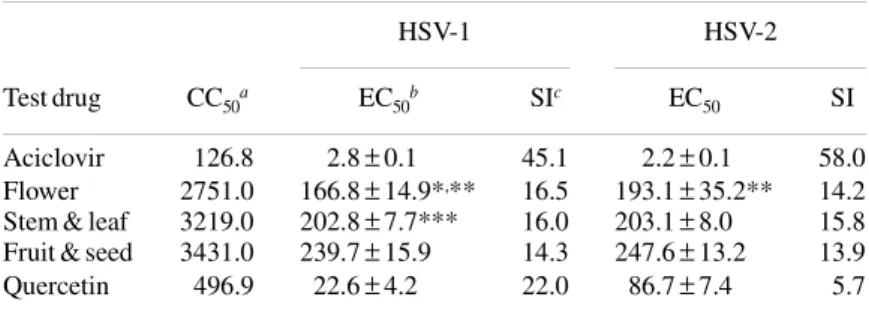
Table 1 shows the anti-HSV activity of crude aqueous extracts and flavonoids of C. pulcherrima. With the exception of rutin, aqueous extracts of C. pulcherrima and quercetin were found to exhibit anti-HSV activity. Among the different parts of this medicinal herb tested, the flower’s extract appeared to possess the strongest anti-HSV activity (P < 0.05). Quercetin was active against multiplication
at KAOHSIUNG MEDICAL COLLEGE LIBRARY on April 16, 2012
http://jac.oxfordjournals.org/
of both types of HSV but showed a lower activity in inhibiting HSV-2 replication (P < 0.05).
Assessment of anti-adenoviral activity
Table 2 shows the anti-adenoviral activity of crude aqueous extracts and flavonoids of C. pulcherrima. With the exception of ADV-11, aqueous extracts of different parts of this folk medicine were active against ADV-3 and ADV-8 replication. Interestingly, among extracts of three parts of the herb tested, all showed the strongest activity against ADV-8, especially fruit and seed, and stem and leaf. Quercetin was found to possess anti-adenoviral activity to inhibit all three viral types with an inhibitory effect (EC50) in the range of 24.3–44.8 mg/L.
Dose–effect of quercetin
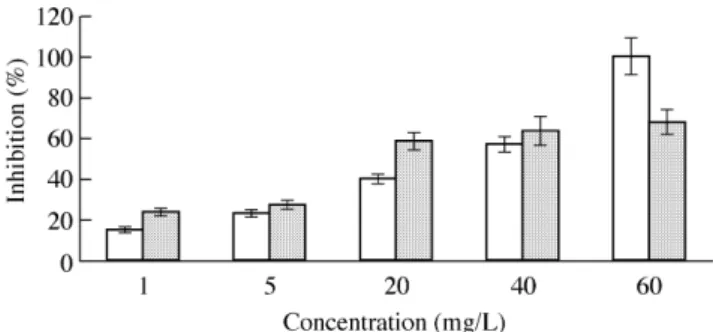
In order to confirm the direct activity against virus multiplication, a study was conducted to analyse the dose-dependent effect at three time intervals after viral infection at various concentrations of quer-cetin. The results showed that quercetin at concentrations between 1
and 60 mg/L exhibited a high correlation between drug concentration and inhibition rate [correlation coefficient (r) > 0.86] (Figure 1).
Time course of quercetin
In order to investigate the mechanism of how quercetin inhibits the infection of herpesviruses and adenoviruses, a study was conducted to investigate the time-course effect at 1 h before and 24 h after the virus infection and of treatment with various doses of quercetin. The results showed that quercetin at concentrations ≥20 mg/L exhibited the greatest inhibition against HSV-1 infection from 0 to 2 h, which was during the early period of virus replication (Figure 2). However, the inhibitory effect of quercetin on ADV-3 infection occurred between 0 and 4 h (Figure 3).
Discussion
The present study has demonstrated that C. pulcherrima aqueous extract and its related flavonoid quercetin possess antiviral activity in
vitro. The antiviral activity of crude drugs from this common Chinese Table 1. Assessment of anti-herpetic activity of Caesalpinia pulcherrima
aThe 50% cytotoxic concentration for target cells (BCC-1/KMC) in mg/L. bConcentration of compound in mg/L producing 50% inhibition of virus-induced
cytopathic effects of three separate experiments.
cSelectivity index (SI) = CC
50/EC50.
*Comparison between flower and stem & leaf (P < 0.05). **Comparison between flower and fruit & seed (P < 0.05). ***Comparison between stem & leaf and fruit & seed (P < 0.05).
HSV-1 HSV-2
Test drug CC50a EC
50b SIc EC50 SI
Aciclovir 126.8 2.8 ± 0.1 45.1 2.2 ± 0.1 58.0
Flower 2751.0 166.8 ± 14.9*,** 16.5 193.1 ± 35.2** 14.2
Stem & leaf 3219.0 202.8 ± 7.7*** 16.0 203.1 ± 8.0 15.8 Fruit & seed 3431.0 239.7 ± 15.9 14.3 247.6 ± 13.2 13.9
Quercetin 496.9 22.6 ± 4.2 22.0 86.7 ± 7.4 5.7
Table 2. Assessment of anti-adenoviral activity of Caesalpinia pulcherrima
aThe 50% cytotoxic concentration for target cells (BCC-1/KMC) in mg/L.
bConcentration of compound (mg/L) producing 50% inhibition of virus-induced cytopathic effects of three separate
experiments.
cSelectivity index (SI) = CC
50/EC50.
dMaximum concentration of compound to test did not find EC
50. *Comparison between flower and stem & leaf (P < 0.05). **Comparison between flower and fruit & seed (P < 0.05). ***Comparison between stem & leaf and fruit & seed (P < 0.05).
ADV-3 ADV-8 ADV-11
Test drug CC50a EC
50b SIc EC50 SI EC50 SI
ddC 259.2 7.5 ± 0.6 34.6 10.2 ± 1.6 25.3 14.2 ± 1.3 18.3
Flower 2751.0 343.9 ± 52.2*,** 8.0 177.9 ± 52.2*,** 15.5 >1000d Stem & leaf 3219.0 436.8 ± 19.9*** 7.4 61.8 ± 2.3 52.1 >1000 Fruit & seed 3431.0 483.0 ± 17.0 7.1 41.2 ± 15.5 83.2 >1000
Quercetin 496.9 24.3 ± 4.9 20.4 39.9 ± 5.4 12.5 44.8 ± 9.4 11.1
at KAOHSIUNG MEDICAL COLLEGE LIBRARY on April 16, 2012
http://jac.oxfordjournals.org/
medicinal herb was more potent and of a broader spectrum than found in our previous reports.25,26 According to previous reports, one study
showed that rutin was not active against HSV-1,27 whereas the other
demonstrated its positive anti-HSV activity.16 The results of this
study did not confirm the anti-HSV activity of rutin. The difference in results between those studies might be due to the use of different strains of virus.
Quercetin, 3,3′,4′,5,7-pentahydroxy flavone, is one of most widely distributed bioflavonoids in the plant kingdom and is a common constituent of most edible fruits and vegetables. The flower of
C. pulcherrima also contains quercetin and quercetin-3-rutinoside
(rutin).9 Previous reports of the anti-infective activity of quercetin
and rutin showed that they are active against bacteria, fungi, parasites and viruses, suggesting that they may be effective antibiotic agents for C. pulcherrima.12–20 However, our results showed that quercetin
possessed a broad spectrum of antiviral activities, whereas rutin did not express the same activity (Tables 1 and 2).
Despite the great advances in the synthetic nucleoside analogues or cysteine protease inhibitors for anti-adenoviral replication, cur-rently there is no proven chemotherapy treatment that interrupts this viral infection.4,5 New medications such as cidofovir, which is a
broad-spectrum nucleoside monophosphate, appear to be effective against the adenoviruses in non-human systems and may have some effect in man.28.29 However, resistance of adenovirus to cidofovir
treatment has also been reported.30
Although 5-iodo-deoxyuridine has been clinically applied in treating adenoviral ocular infection,3 it was found to be quite toxic
as its SI value was only 3.4.4 A popular anti-adenovirus plant drug,
ternatin, was reported to have an SI value of 20.31 Our study shows
that three crude drugs from C. pulcherrima including flower, stem and leaf, and fruit and seed possess anti-adenoviral activity; the strongest anti-ADV-3 activity was flower with an SI value of 8; strongest anti-ADV-8 activities were stem and leaf, and fruit and seed with SI values of 52.1 and 83.2, respectively. However, quercetin exhibited a broad-spectrum antiviral activity of ADV-3, anti-ADV-8 and anti-ADV-11 with SI values 20.4, 12.5 and 11.1, respect-ively (Table 2). These findings indicate that the effect of these drugs on adenoviruses is worthy of further investigation to find more potent natural components from this medicinal herb to treat this virus infection. This study has shown that quercetin possesses broad-spectrum antiviral activities. In order to understand how quercetin inhibits viral replication, dose-dependent and time-course studies of this com-pound were carried out. Interestingly, quercetin was found to inhibit HSV-1 replication in an obvious dose-dependent manner with EC50 22.6 mg/L and 100% inhibition at concentration 60 mg/L (Figure 2). Quercetin showed that it inhibited ADV-3 multiplication with a similar dose-dependent effect with EC50 24.3 mg/L but a 70% inhib-ition at concentration 60 mg/L (Figure 3).
According to the results of the time-course study, quercetin was found to possess a similar trend of inhibition of herpesvirus and adenovirus replication. This suggests that the mode of action is not derived from inhibiting the absorption of virus but results from Figure 1. Dose-dependent effect of antiviral activity induced by quercetin.
Different concentrations of quercetin were added 1 h after infection of herpes-virus (HSV-1, white bars) or adenoherpes-virus (ADV-3, grey bars) to BCC-1/KMC cells at 37°C. After 3 days, inhibition was evaluated by XTT method and expressed as the inhibition rate. The x-axis indicates the concentration of quercetin. Each bar represents the mean ± S.E.M. of triplicate samples of three independent experi-ments. The correlation coefficient (r) values from linear regression for HSV-1 and ADV-3 were 0.87 and 0.89, respectively.
Figure 2. Inhibitory effect of adding quercetin at various times pre-infection or
post-infection of herpesvirus (HSV-1) to BCC-1/KMC cells. Different concen-trations of quercetin [1 mg/L (open circles), 5 mg/L (filled squares), 20 mg/L (filled triangles), 40 mg/L (filled circles), 60 mg/L (open squares)] were added at various times pre-infection (–1 h), co-infection (0 h) or post-infection (1–24 h) of herpesvirus (HSV-1) to BCC-1/KMC cells at 37°C. After 3 days, inhibition was evaluated by XTT method and expressed as the inhibition rate. The x-axis indi-cates the time course of adding quercetin. Each point represents the mean ± S.E.M. of triplicate samples of three independent experiments. The asterisk indicates a significant difference between test and DMSO control (P < 0.01).
Figure 3. Inhibitory effect of adding quercetin at various times pre-infection or
post-infection of adenovirus (ADV-3) to BCC-1/KMC cells. Different concentra-tions of quercetin [1 mg/L (open circles), 5 mg/L (filled squares), 20 mg/L (filled triangles), 40 mg/L (filled circles), 60 mg/L (open squares)] were added at various times pre-infection(–1 h), co-infection (0 h) or post-infection (1–24 h) of adenovirus(ADV-3) to BCC-1/KMC cells at 37°C. After 3 days, inhibition was evaluated by XTT method and expressed as the inhibition rate. The x-axis indi-cates the time course of adding quercetin. Each point represents the mean ± S.E.M. of triplicate samples of three independent experiments. The asterisk indi-cates a significant difference between test and DMSO control (P < 0.01).
at KAOHSIUNG MEDICAL COLLEGE LIBRARY on April 16, 2012
http://jac.oxfordjournals.org/
inhibition at an early stage of viral replication after infection (Figures 2 and 3).
Among the flavonoids tested, only quercetin possessed significant activity against human herpesviruses and adenoviruses. According to a previous report, rutin (quercetin-3-rutinoside) did not express antiviral activity whereas quercitrin (quercetin-3-rhamnoside) pos-sessed similar activity to quercetin.25 Therefore, the antiviral activity
among the flavonoid glycosides containing the quercetin moiety might be correlated with the species of sugar group at the 3 position.
The present study concludes that C. pulcherrima, a herb used in traditional Chinese medicine, and the related quercetin, exhibited potent anti-HSV and -ADV activities. Among them, the crude drugs, namely stem & leaf and fruit & seed, and quercetin, were found to possess the strongest anti-adenoviral activity. As a result of the lack of approved drugs in treating adenoviral infection, these crude drugs and quercetin might be potential therapeutic agents for treating this disease. As indicated by the high SI value ranging between 7.1 and 83.2, these candidate drugs are considered to be less toxic than the current clinically used drug, 5-iodo-deoxyuridine (SI = 3.4). There-fore, the potential of these crude drugs and quercetin for use in treat-ing adenoviral infection merits greater attention.
References
1. Field, H. J. (2001). Herpes simplex virus antiviral drug
resist-ance—current trends and future prospects. Journal of Clinical Virology
21, 261–9.
2. Avila, M. M., Carballal, J., Rovaletti, H. et al. (1989). Viral etiology in acute low respiratory infections in children from a closed community.
American Review of Respiratory Diseases 140, 634–7.
3. Dudgeon, J., Bhargva, S. K. & Ross, C. A. C. (1969). Treatment of
adenovirus infection of the eye with 5-iodo-2-deoxyuridine. British Jour-nal of Ophthalmology 53, 530–3.
4. Kodama, E., Shigeta, S., Suzuki, T. et al. (1996). Application of a gastric cancer cell line (MKN-28) for anti-adenovirus screening using the MTT method. Antiviral Research 31, 159–64.
5. Sircar, S., Keyvani-Amineh, H. & Weber, J. M. (1996). Inhibition
of adenovirus infection with protease inhibitors. Antiviral Research 30, 147–53.
6. Chiang, L. C., Chiang, W., Chang, M. Y. et al. (2002). Antiviral activity of Plantago major extracts and related compounds in vitro. Anti-viral Research 55, 53–62.
7. Chiu, N. Y. & Chang, K. H. (Eds). (1992). The Illustrated Medicinal Plants of Taiwan, Vol. 3, p. 88. SMC Publishing Inc., Taiwan, Republic of China.
8. Ali, M. S., Azhar, I., Amtul, Z. et al. (1999). Antimicrobial screening of some Caesalpiniaceae. Fitoterapia 70, 299–304.
9. Duke, J. A. (Ed.). (1992). Handbook of Phytochemical Cons-tituents of GRAS Herbs and Other Economic Plants, p. 116. CRC Press, Boca Raton, FL, USA.
10. Khalid, S. A., Farouk, A., Geary, T. G. et al. (1986). Potential antimalarial candidates from African plants: an in vitro approach using
Plasmodium falciparum. Journal of Ethnopharmacology 15, 201–9.
11. Almeida Alves, T. A., Nagem, T. J., Carvalho, L. H. et al. (1997). Antiplasmodial triterpene from Vernonia brasiliana. Planta Medica 63, 554–5.
12. Wang, Y., Hamburger, M., Gueho, J. et al. (1989). Antimicrobial flavonoids from Psiadia trinervia and their methylated and acetylated derivatives. Phytochemistry 28, 2323–7.
13. Weidenborner, M., Hindorf, H., Jha, H. C. et al. (1990). Antifungal activity of flavonoids against storage fungi of the genus Aspergillus.
Phytochemistry 29, 1103–5.
14. Hu, C. Q., Chen, K., Shi, Q. et al. (1994). Anti-AIDS agents, 10. Acacetin-7-O-beta-D-galactopyranoside, an anti-HIV principle from Chry-santhemum morifolium and a structure–activity correlation with some related flavonoids. Journal of Natural Products 57, 42–51.
15. Vrijsen, R., Everaert, L. & Boeye, A. (1988). Antiviral activity of
flavones and potentiation by ascorbate. Journal of General Virology 69, 1749–51.
16. Lee, J. H., Kim, Y. S., Lee, C. K. et al. (1999). Antiviral activity of some flavonoids on herpes simplex viruses. Korean Journal of Pharma-cognosy 30, 34–9.
17. Calzada, F., Meckes, M. & Cedillo-Rivera, R. (1999). Antiamoebic
and antigiardial activity of plant flavonoids. Planta Medica 65, 78–80.
18. Pomilio, A. B., Buschi, C. A., Tomes, C. N. et al. (1992). Antimicro-bial constituents of Gomphrena martiana and Gomphrena boliviana.
Journal of Ethnopharmacology 36, 155–61.
19. Paulo, A., Gomes, E. T., Duarte, A. et al. (1997). Chemical and antimicrobial studies on Cryptolepis obtusa leaves. Fitoterapia 68, 558–9.
20. Bae, E. A., Han, M. J., Lee, M. et al. (2000). In vitro inhibitory effect of some flavonoids on rotavirus infectivity. Biological and Pharmaceutical Bulletin 23, 1122–4.
21. Amaral, A. C. F., Kuster, R. M., Goncalves, J. L. S. et al. (1999). Antiviral investigation on the flavonoids of Chamaesyce thymifolia. Fito-terapia 70, 293–5.
22. Chang, R. S. & Yeung, H. W. (1988). Inhibition of growth of human
immunodeficiency virus in vitro by crude extracts of Chinese medical herbs. Antiviral Research 9, 163–76.
23. Chiang, L. C., Chiang, W., Yu, H. S. et al. (1994). Establishment and characterization of a continuous human basal cell carcinoma cell line from facial skin. (I) Cytological behavior of early passages. Kaohsiung Journal of Medical Sciences 10, 170–6.
24. Weislow, O. S., Kiser, R., Fine, D. L. et al. (1989). New soluble-formazan assay for HIV-1 cytopathic effects: application to high-flux screening of synthetic and natural products for AIDS-antiviral activity.
Journal of the National Cancer Institute 81, 577–86.
25. Chiang, L. C., Chiang, W., Chang, M. Y. et al. (2003). In vitro cyto-toxic, antiviral and immunomodulatory effects of Plantago major and
Plantago asiatica. American Journal of Chinese Medicine 31, 1–10.
26. Chiang, L. C., Chang, J. S., Chen, C. C. et al. (2003). Anti-herpes simplex virus activity of Bidens pilosa L. var. minor (Blume) sherff and
Houttuynia cordata Thunb. American Journal of Chinese Medicine, in press.
27. Mucsi, I. & Pragai, B. M. (1985). Inhibition of virus multiplication
and alteration of cyclic AMP level in cell cultures by flavonoids. Experientia
41, 930–1.
28. De Oliverira, C. B. R., Stevenson, D., LaBree, L. et al. (1996). Evaluation of Cidofovir (HPMPC, GS-504) against adenovirus type 5 infection in vitro and in a New Zealand rabbit ocular model. Antiviral Research 31, 165–72.
29. Ribaud, P., Scieux, C., Freymuth, F. et al. (1999). Successful treatment of adenovirus disease with intravenous cidofovir in an unre-lated stem-cell transplant recipient. Clinical Infectious Diseases 28, 690–1.
30. Gordon, Y. J., Araullo-Cruz, T. P., Johnson, Y. F. et al. (1996). Isolation of human adenovirus type 5 variants resistant to the antiviral cidofovir. Investigative Ophthalmology and Visual Science 37, 2774–8.
31. Simose, C. M. O., Amoros, M., Girre, L. et al. (1990). Antiviral activity of ternatin and meliternatin, 3-methoxyflavones from species of Rutaceae. Journal of Natural Products 53, 989–92.
at KAOHSIUNG MEDICAL COLLEGE LIBRARY on April 16, 2012
http://jac.oxfordjournals.org/