人力資源管理活動與員工創新及生涯成就(第 3 年)
計 畫 類 別 : 個別型 計 畫 編 號 : NSC 99-2410-H-004-009-MY3 執 行 期 間 : 101 年 08 月 01 日至 102 年 10 月 31 日 執 行 單 位 : 國立政治大學企業管理學系 計 畫 主 持 人 : 黃家齊 計畫參與人員: 碩士級-專任助理人員:范志萍 報 告 附 件 : 出席國際會議研究心得報告及發表論文 公 開 資 訊 : 本計畫涉及專利或其他智慧財產權,2 年後可公開查詢中 華 民 國 102 年 09 月 20 日
cultural values (power distance) differentially moderate the relationship between mentoring (mentor presence) and career attainment (compensation and organizational position) among 390 managers and professionals in two contrasting cultures (Taiwan versus the U.S.). The four-way interaction of gender x mentor x power distance x country was significant for both dependent variables, supporting our
hypotheses based on theories of power distance and gender egalitarianism. In hierarchical cultures such as Taiwan's, mentored women with high power distance reported higher career returns than did mentored women with low power distance. In contrast, in egalitarian cultures such as the U.S.', mentored women with low power distance reported higher career returns than did mentored women with high power distance. Our findings demonstrate variation in mentoring outcomes, not just across but also within cultures for men and women. We discuss results along with implications for mentoring and cross-cultural theory, research, and practice.
中文關鍵詞: 性別、職涯導師關係、職涯成就、權力距離、文化價值觀 英 文 摘 要 : This paper examines how demographics (gender) and
cultural values (power distance) differentially moderate the relationship between mentoring (mentor presence) and career attainment (compensation and organizational position) among 390 managers and professionals in two contrasting cultures (Taiwan versus the U.S.). The four-way interaction of gender x mentor x power distance x country was significant for both dependent variables, supporting our
hypotheses based on theories of power distance and gender egalitarianism. In hierarchical cultures such as Taiwan's, mentored women with high power distance reported higher career returns than did mentored women with low power distance. In contrast, in egalitarian cultures such as the U.S.', mentored women with low power distance reported higher career returns than did mentored women with high power
cultures for men and women. We discuss results along with implications for mentoring and cross-cultural theory, research, and practice.
英文關鍵詞: gender, mentoring, career attainment, power distance, cultural values
行政院國家科學委員會補助專題研究計畫
■成果報告
□期中進度報告
人力資源管理活動與員工創新及生涯成就
計畫類別:
■個別型計畫 □整合型計畫
計畫編號:NSC 99 -2410-H-004-009-MY3
執行期間: 99年8 月1 日至 102年7月31日
執行機構及系所:國立政治大學企管系
計畫主持人:黃家齊
共同主持人:
計畫參與人員:范志萍
成果報告類型(依經費核定清單規定繳交):
■精簡報告 □完整報告
本計畫除繳交成果報告外,另須繳交以下出國心得報告:
□赴國外出差或研習心得報告
□赴大陸地區出差或研習心得報告
■出席國際學術會議心得報告
□國際合作研究計畫國外研究報告
處理方式:除列管計畫及下列情形者外,得立即公開查詢
□涉及專利或其他智慧財產權,□一年□二年後可公開查詢
中 華 民 國 102 年 7 月 31 日
Interaction of Gender, Mentoring, and Power Distance on Career Attainment: A Cross-Cultural Comparison
Abstract
This paper examines how demographics (gender) and cultural values (power distance) differentially moderate the relationship between mentoring (mentor presence) and career
attainment (compensation and organizational position) among 390 managers and professionals in two contrasting cultures (Taiwan versus the U.S.). The four-way interaction of gender x mentor x power distance x country was significant for both dependent variables, supporting our hypotheses based on theories of power distance and gender egalitarianism. In hierarchical cultures such as Taiwan’s, mentored women with high power distance reported higher career returns than did mentored women with low power distance. In contrast, in egalitarian cultures such as the U.S.’, mentored women with low power distance reported higher career returns than did mentored women with high power distance. Our findings demonstrate variation in mentoring outcomes, not just across but also within cultures for men and women. We discuss results along with implications for mentoring and cross-cultural theory, research, and practice.
Keywords: gender, mentoring, career attainment, power distance, cultural values Introduction
Mentoring-career attainment relationships could differ as a function of individual and contextual variables. There is growing recognition in mentoring theory of the cultural contexts within which mentoring relationships operate (Carraher et al., 2008). Yet, we do not have a complete understanding of whether the facilitators or inhibitors of effective mentoring
relationships, and the influence of mentoring on career outcomes, vary across cultures. Neither has the mainstream mentoring literature nor have the few studies that have used Asian data (e.g., Aryee & Chay, 1994; Aryee et al., 1996) examined the role of cultural values in the career success of mentored men and women. Consequently, we do not know whether or how cultural factors affect mentoring dynamics or outcomes.
This paper, therefore, addresses recent calls for mentoring research to use data from contrasting cultures where mentoring dynamics are studied within the backdrop of cultural context (Mezias & Scandura, 2005). Acknowledging that culture needs to be understood at both individual and societal levels (Tsui et al., 2007), in our comparison of mentoring among 390 employees in Taiwan and the U.S. we specifically ask the question: How does power distance influence the relationship between mentoring and career attainment for men and women in different cultures? We examine interactions of gender, mentoring, individual-level power distance, and country on career success indicators such as compensation and organizational position (Ng et al., 2005). Contextualizing this interaction in contrasting cultures such as Taiwan and the U.S. makes important theoretical and empirical contributions to the literature.
Power distance is the extent to which a society expects and accepts unequal distribution of power (Hofstede, 2001). Power distance is relevant because it defines the nature of relationships and authority structures in traditional hierarchical Asian/Chinese cultures (Farh et al., 1997) that could influence mentor-protégé interactions and outcomes (Pellegrini & Scandura, 2008;
Ramaswami & Dreher, 2010). Theimportance of gender and its implications for power dynamics in mentoring (Ragins, 1989, 1999; Ragins & Sundstrom, 1989) cannot be ignored Power distance and gender assume increased significance as socio-cultural variables that influence asymmetric role expectations and employee relationships. By focusing on power distance and gender, we also
acknowledge the individual-level intra-cultural variation in values associated with the larger society (Au, 1999; Tsui et al., 2007; Tung, 2008). The study, thus, highlights person-situation interactions and the significance of cultural context in predicting outcomes of mentoring.
In essence, the study provides a culture-specific perspective on power distance and mentoring, rooted in the cultural orientations of the countries and samples examined, enabling us to know whether, where, and for whom hierarchical attitudes and traditional gender expectations might still play a role in how authority relationships such as mentoring influences career outcomes. Our central thesis is that: a) to attain mentoring benefits, aligning oneself with cultural
expectations may be more important for mentored women than for mentored men, and b) how power distance moderates the career returns to mentoring for men and women may be a function of the cultural characteristics of the country they are working in.
The study also extends the sampling frame of mentoring research. The literature on mentoring and career attainment in the U.S. has already been extensively summarized in reviews and meta-analyses. Mentoring is associated with employee sponsorship and career progress, (Allen et al., 2004; Eby et al., 2008; Ng et al.
2005). However, a review of the literature suggests that we know little about mentoring and career attainment in Asian countries—we found just four studies (none using data from Taiwan; Aryee & Chay, 1994; Aryee et al., 1996; Dreher & Ryan, 2004; Gentry et al., 2008). Aryee and Chay (1994) showed that career satisfaction was higher among Singaporean employees with mentors compared to those without mentors. Aryee et al. (1996) found that, among Hong Kong Chinese professionals, career-oriented mentoring was positively related to promotions received and career satisfaction, but not to salary attainment. Although their study was conducted in the U.S., Dreher and Ryan (2004) found that mentoring had no association with career attainment among Asian-Americans. While these were among the first studies to include Asian or Asian-American samples in
mentoring research, they did not empirically test for moderating effects of demographic or cultural variables on mentoring-outcome relationships. An exception is Gentry et al.’s (2008) study using data from the Global Leadership and Organizational Behavior Effectiveness project, that included Asian samples from China, Hong Kong, India, Japan, Malaysia, Singapore, South Korea, and Thailand. They found that the positive relationship between managers’ provision of career-related mentoring (rated by direct reports) and bosses’ ratings of the managers’ performance was stronger in countries that scored higher in performance orientation than in countries that scored lower in performance orientation. Their study focused on mentors’ outcomes (and not protégés’) and did not measure cultural values at the individual level. In sum, the literature on mentoring and protégé career attainment presents gaps in understanding the role of cultural values in such relationships, motivating us to probe this area.
With increasing globalization and international business relations, Taiwan is becoming an interesting geographical area, earning the reputation of being the “hidden center of the global economy,” having risen to its current status through the confluence of Western technical education and Eastern values (BusinessWeek, 2005). Despite Taiwan’s economic and cultural changes, it still cherishes traditional values (Farh et al., 1997). Being representative of Chinese cultures, Confucian values pervade the Taiwanese way of life, which has traditionally been a high power distance culture (Bond & Hwang, 1987; Hofstede, 2001). Taiwan also represents a unique population that while being high on power distance now has a new generation of professionals who have been influenced by globalization, modernization, and industrialization and thus moved to assimilate Western culture and values (Hui-Chun & Miller, 2003). Due to these socio-economic forces, there might be individual differences in cultural values despite nationalistic cultural trends. This mix of
traditionality and modernity makes Taiwan an interesting setting to explore the role of power distance in mentoring. Since Taiwan and the U.S. are cultural contrasts—for example, Taiwan scores higher on power distance and collectivism, and lower on gender egalitarianism than the U.S. (Hofstede, 2001; House et al., 2004)—comparing them would provide insights into potential cultural differences in mentoring-outcome relationships.
Finally, employee development efforts may be enhanced if managers knew how and where mentoring phenomena are universal or culture-specific. Current research sheds little light on such factors. Studying the interactive effects of gender, mentoring, and power distance on career attainment can be invaluable in dealing with gender and cultural diversity especially for
organizations that have international employees and global operations.
Theory and Hypotheses
We draw on the cultural theory of power distance (Hofstede, 2001) a closely related concept of and gender egalitarianism (House et al., 2004) to explain how normative expectations from men and women could be different but the career-related consequences of deviance—
especially by women—from these expectations could be similar across cultures. Power distance is particularly important as it signals the inequality and power dynamics between social groups. In the context of understanding gender differences, it is pertinent to also consider the cultural characteristic of gender egalitarianism – the extent to which a society minimizes gender-role inequality and discrimination, and determines men’s and women’s roles in their homes, organizations, and communities (House et al., 2004).
Power distance and gender egalitarianism complement each other in describing the hierarchical culture of a society. Both variables capture underlying inequality between various traditionally hierarchical groups and classes – such as superior and subordinate, old and young, and man and woman. This is particularly relevant when considering Chinese Confucian societies such as Taiwan where inequality and hierarchy between social groups and classes is expected and accepted (Farh et al., 1997; House et al., 2004). In a sense, power distance and gender
egalitarianism are intertwined in such contexts, especially on dimensions of status, hierarchy, and equality. Power distance also correlates negatively with gender egalitarianism. Indeed, “high egalitarianism predominates in low power distance cultures. Low egalitarianism, in contrast, predominates in high power distance cultures” (Gudykunst & Lee, 2003, p. 20). Gender egalitarianism, therefore,adds further theoretical explanatory power for expecting gender differences between Taiwan and the U.S., as it may qualify the interaction of gender, power distance, and mentoring on career attainment. The configurations of an individual’s level of power distance and the level of level of power distance and gender egalitarianism attributed to a culture may result in different consequences of mentoring for men and women.
Due to conservative values and stereotypic sex-roles being more prevalent in low gender egalitarian, high power distant cultures such as Taiwan, than in high gender egalitarian, low power distant Western cultures such as the U.S. (House, et al., 2004), we suggest that high power distance (individual level) may be more important for positive career returns from mentoring for women than for men in Taiwan, and low power distance (individual level) may be more important for positive career returns from mentoring for women than for men in the U.S.
This is because managers’ assumptions and expectations of their employees are influenced by the socio-cultural environment (Aycan et al., 1999). In Taiwan’s cultural context, relationships with superiors may be based on respect, deference, and fear, and decisions that have organizational and employee consequences are made by superiors without the consultation of
subordinates (Silin, 1976). Also in Taiwan, superiors at all levels prefer to maintain interpersonal as well as professional distance between themselves and subordinates, and considerable formalism is expected and maintained in authority relationships. Such formalism, respect, and fear are
normative expectations about interactions between a superior and a subordinate, and more so for women than for men due to the low gender egalitarianism and clear and distinct gender roles (Gupta et al., 2002; Hofstede, 2001). Thus, in Taiwan, women, more than men, would be expected to be modest, less assertive, and more deferential and power distant. Women protégés’ attempts at creating an informal atmosphere may be interpreted by superiors as efforts to convert authority relationships into those of equality or friendship, thereby undercutting superiors’ or culture’s prerogatives (Silin, 1976). Such gender inequality may be supported by socialization, sexist ideologies, and social roles (Eagly et al., 2004). Thus, while power distance may be expected from protégés in Taiwan, the cultural context may also demand that women display more of this value than men.
However, in the context of workplace interactions in a relatively more egalitarian and less power distant culture such as the U.S., women’s demonstration of so-called masculine traits of non-submissiveness, confidence and assertiveness—characteristic of low power distance—signal women’s legitimacy and fit in the workplace (Hoobler et al., 2009), in line with “Think Manager Think Male”, the masculine stereotypes associated with leadership (Eagly & Carli, 2007), and the high performance orientation of U.S. culture (House et al., 2004). Consequently, low power distant women signal better fit to mentors and decision makers for managerial roles in the American workplace and are thus likely to have higher career attainment. On the other hand, high power distant women may be less likely to be perceived as ready for managerial roles (e.g., Eagly & Carli, 2007), and consequently report lower career attainment.
Thus, mentors in both Taiwan and the U.S. may be attentive, and therefore have a negative reaction, to women’s violations of power distance norms. That is, regardless of whether one is in Taiwan or the U.S., the positive relationship between mentoring and career attainment would be stronger for women who display the normatively expected levels of power distance than for women who do not. In Taiwan, high power distance in women improves their returns from a mentoring relationship because only high power distant women (in contrast to low power distant women) conform to cultural norms; the opposite may hold for women in the U.S. Mentors may consequently be comfortable with the relationship and senior-level decision makers may be willing to promote “culturally right-type” women subordinates, particularly if they are being sponsored by a mentor. Our argument is that women protégés with cultural alignment on power distance will be viewed as behaving appropriately and that such cultural alignment is required before women in Taiwan or the U.S. will reap the benefits of mentoring. Thus, we offer the following two hypotheses.
Hypothesis 1: Gender, mentoring, power distance, and country have a significant interaction on compensation.
Among women in high power distant cultures (Taiwan), the positive association between mentoring and compensation will increase as individual power distance increases, while in low power distance cultures (U.S.), this positive association will increase as individual power distance decreases. Among men (in both cultures), there will be a positive association between mentoring and compensation that will not be sensitive to individual levels of power distance.
Hypothesis 2: Gender, mentoring, power distance, and country have a significant interaction on organizational
position. Among women in high power distant cultures (Taiwan), the positive association between mentoring and organizational position will increase as individual power distance increases, while in low power distance cultures (U.S.), this positive association will increase as individual power distance decreases. Among men (in both
cultures), there will be a positive association between mentoring and organizational position that will not be sensitive to individual levels of power distance.
Because these hypotheses consider the interactive effects of gender, cultural values (cultural power distance, gender egalitarianism), individual level power distance, and mentoring, testing for the significance of four-way interaction terms will be the focus of subsequent analyses.
Method
Sample and Procedure
U.S. data were collected from alumni and part-time MBA students at a large public
university, and also from employees of an industrial manufacturing company. Completed
questionnaires were returned to a university address in the U.S. in stamped, pre-addressed return envelopes or emailed directly to the first author. Two weeks later, all sample members were sent reminders requesting their participation. The total number of surveys received was 225 (10.66% response rate). All respondents were employed full-time. The analysis sample’s mean respondent age was 35.58 years, 42% were male, average years of work experience was 11.57, and 60% had a graduate degree. Taiwan data were collected through a survey of graduates of a Taiwanese
university. Respondents’ completed questionnaires were returned to a university address in Taiwan in stamped, pre-addressed return envelopes. With reminder letters sent approximately three weeks after the original mailing, we received 293 questionnaires (15% response rate). Since all U.S. respondents worked full-time, part-time employees were deleted from the Taiwanese sample resulting in 232 cases. Mean respondent age was 41.14 years, 59% were male, average years of work experience was 17.07, and 34% had a graduate degree. In both samples, respondents were employed in a variety of industries.
The low response rates may be attributed to the use of primarily postal surveys to alumni (majority of the final U.S. sample). We did not find serious response bias. For example, for the U.S. sample, with respect to sex (the only demographic data easily available for all sample members)— 52% of those contacted were male, compared to the 41.89% of males in the final respondent sample. While there is an underrepresentation of males in the final U.S. respondent sample, it is unlikely to bias results. For Taiwan, the gender composition (59% male) and average age (41.34 years) of the respondent sample were comparable to those of the initial survey sample, which was 60.99% male with a mean respondent age of 43.46 years. U.S. respondents represented 42% of the combined U.S. and Taiwan sample.
Measures
For the Taiwanese sample, the survey was translated from English into Chinese by the second author and back-translated by another bilingual Chinese researcher unassociated with the study to ensure item equivalence.
Compensation. We gathered data on total annual cash compensation (salary, commission income, supplemental cash compensation, excluding benefits or indirect compensation). For the U.S. sample, 12 categories beginning with “$50,000 and below” coded as 1, with $20,000 increments were used (the last category being “$251,001 and above”, coded as 12). Salary in Taiwan was measured in Taiwanese dollars. To make the Taiwanese and U.S. salary data comparable, we performed the following transformation: we converted salaries from Taiwanese dollars to U.S. dollars based on purchasing power parity (Center for International Comparisons of Production, Income, and Prices, 2009), and assigned cases to their respective salary category from
1 to 12, as measured for the U.S. sample. Given this coding system, the distributional problems associated with salary data are minimized.
Organizational position. Respondents indicated their hierarchical position in their organization using the following scale: 1) Professional-technical/non-managerial position, 2) Manager, 3) Director, 4) Vice president, and 5) Senior-level executive (e.g., CEO, operating- company president, executive VP, CFO, COO, etc.).
Country. U.S. respondents were coded as 1 and Taiwanese respondents as 0. Gender. Men were coded as 1 and women as 0.
Mentor Yes/No. We defined mentoring and asked respondents to indicate whether they had experienced, in their careers to date, such a relationship. Respondents provided information about the person they considered to be their primary mentor and about the nature of this mentoring relationship. Following previous mentoring research, we defined a mentor as a senior, experienced individual with advanced experience and knowledge and who is committed to providing upward mobility and support to the respondent’s career. Recent research also suggests that mentoring is described similarly in Taiwan, and other Asian countries, compared to the U.S. (e.g., Hu et al., 2011; Ramaswami & Dreher, 2010). Protégés were coded 1 and others as 0. Seventy one percent of mentors were internal mentors (within the same organization as the protégé) and 83.1% of the mentoring relationships had a duration of at least one year (only 7.7% had a duration of less than six months, and 61.7% had a duration of more than two years), allowing opportunity and time for the anticipated benefits of mentoring to occur.
Power distance. This was measured at the individual level of analysis, avoiding the problem of levels confusion and ecological fallacy (Hofstede, 2001). We used a five-item measure by Yoo and Donthu (2002), rated on a five-point scale by the Taiwanese sample (1 = strongly disagree, 5 = strongly agree), and a seven-point scale by the U.S. sample (1 = strongly disagree, 7 = strongly agree). We rescaled the Taiwanese five-point scale to a seven-point scale (by
multiplying the score on each item by 7/5), to adjust for the different rating scales used and
potential response bias (Colman et al., 1997; Van de Vijver & Leung, 1997). A representative item includes – “People in higher positions should make most decisions without consulting people in lower positions.” Full sample α = .73, Taiwan sample α = .63, and U.S. sample α = .67. The mean for the Taiwanese sample (M = 2.90 SD = .83) was significantly higher (t = -13.22, p <.001) than that of the U.S. sample (M = 1.90, SD = .75).
We examined measurement invariance (configural and metric) of this construct using multi-group (Taiwan versus U.S.) confirmatory factor analysis in LISREL 8.8. Apart from the chi-square, other well-accepted indices such as non-normed fit index (NNFI), comparative fit index (CFI), and RMSEA (root mean square error of approximation) were used to judge model fit. While the chi-square of the configural invariance model was significant (χ2 = 20.52, df = 10, p < .05), other indices indicated adequate fit (NNFI = .95; CFI = .97; RMSEA = .07). Item loadings were significant at minimum p < .01 in both samples. The metric invariance model was then run with all item loadings constrained to be equal across both groups (χ2 = 39.50, df = 15, p < .001, NNFI = .91, CFI = .94, RMSEA = .09). Item loadings were again significant at minimum p < .01. These results suggest that item loadings can be reasonably assumed to be invariant across samples.
Control variables. Given the difficulties in perfectly matching samples from different cultures, Schaffer and Riordan (2003) suggest that researchers should statistically control for non-culture related demographic and work-related variables as a “best-practice” approach for establishing sample equivalence and comparability. To the extent that such demographic and work-related characteristics of the Taiwanese and U.S. samples are controlled for, there should be
more confidence in attributing cultural differences between countries in hypothesized relationships to theoretical dimensions of interest than to alternative explanations or extraneous factors.
We introduced five control variables that could co-vary with both mentoring and career attainment. First we included years of work experience and graduate degree (1 = any type of graduate degree, including MBA, 0 = undergraduate degree) as controls. We reasoned that human capital accumulation (Becker, 1975) including one’s professional experiences would be sensitive to one’s educational qualifications. Research suggests that educational qualifications may signal potential when allocating developmental resources (Whitely et al., 1992), and that mentors are more likely to choose protégés and provide mentoring based on the perceptions of the protégés competence, ability, and potential rather than need for help (Allen et al., 2000; Mullen & Noe, 1999). Training and educational level of employees may also signal increasing commitment to the career or organization. Highly educated employees may have more opportunities to get promoted or move geographically to another organization site (Higgins et al., 1992). Age and
work-experience were highly correlated (full sample r = .85, Taiwan sample r = .88, U.S. sample r = .77); so, we did not add age as an additional control.
Developmental opportunities and career outcomes cannot be fully understood without considering work-life issues or non-work variables (Powell & Mainiero, 1992). In one study, managers’ perceptions of women subordinates’ person-job fit and person-organization fit mediated the relationship between managers’ perceptions of these women’s work-family conflict (whether or not such conflict actually existed) and their nominations for promotion and manager-assessed promotability (Hoobler et al., 2009). In another study, managers perceived receiving the most benefits by mentoring, and were more inclined to mentor, married men and single women (Olian et al., 1993). Given such evidence, two family status variables (married without children, married with children) were controlled. We coded as 1 those who were married or in a committed
relationship, and 0 for those who were single (including divorced or widowed). Then, those with children were coded as 1 and those without children as 0. We constructed a dummy coding sequence to contrast those who were married with children (yes = 1, no = 0) and married without children (yes = 1, no = 0) with those who were single without children.
Recent meta-analytical reviews (e.g., Ng et al., 2005) note the importance of considering individual difference variables in predicting different career outcomes. Therefore, we included hours worked per week as a control as it may be a proxy for personality traits and career priority that signal one’s drive and motivation to be involved in one’s job and succeed in one’s career (Turban & Dougherty, 1994; Whitely & Coetsier, 1993; Whitely et al., 1991).
Previous research suggests that career success and dynamics of mentoring relationships may be influenced by organizational structure and environmental variables (e.g., Bozionelos, 2004; Ramaswami, Dreher, Bretz & Wiethoff, 2010). Since data were gathered from individuals in multiple industries, we wanted to control for macro-level organizational context effects. Those in service industries (coded 1) were contrasted with those in other industry positions (coded 0). Analyses and Results
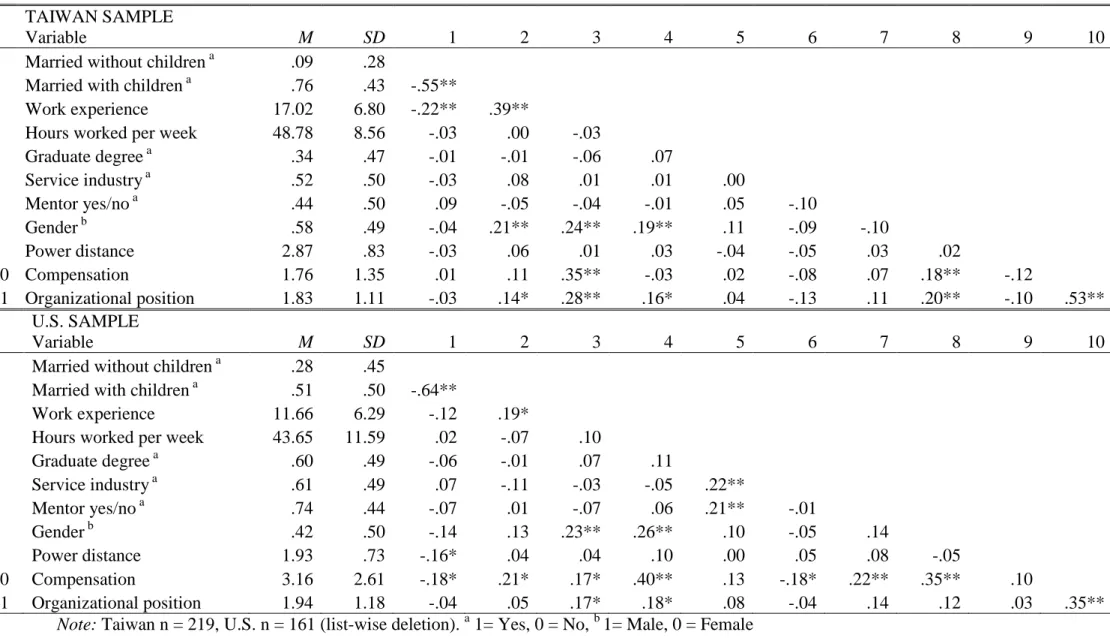
Table 1 provides descriptive statistics and correlations among analysis variables
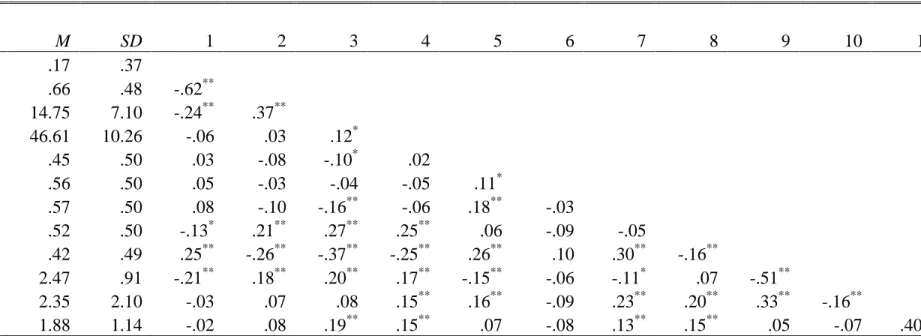
separately for the Taiwanese and U.S. samples. Descriptive statistics and correlations for the full sample are provided in Table 2. As shown in Table 2, among the independent and control
variables, all correlations were below .30, except that between married without children and married with children (r = -.62), work experience and married with children (r = .37), work experience and country (r = -.37), and power distance and country (r = -.51). Variance inflation factor (VIF) values for each independent variable revealed no problems of multicollinearity.
(INSERT TABLES 1 AND 2 ABOUT HERE)
We used OLS moderated multiple regression to test the four-way interaction hypotheses. Power distance was standardized before creating the interaction terms. Table 3 presents the
regression results. The cross-product term for gender x mentor x power distance x country was introduced last, after all control and independent variables, two-way interaction terms, and three-way interaction terms had been entered. As shown in Table 3, gender x mentor x power distance x country was significant for compensation (β = .36, p < .05) and organizational position (β = .53, p < .01). For compensation, significant main effects were work experience (β = .17, p < .001), hours worked per week (β = .21, p < .001), service industry (β = -.10, p < .05), mentor (β = .14, p < .01), gender (β = .15, p < .01), and country (β = .43, p < .001). The two significant two-way interaction terms were gender x country (β = .24, p < .01) and mentor x country (β = .28, p < .01). For
organizational position, significant main effects were work experience (β = .22, p < .001), hours worked per week (β = .15 p < .001), and mentor (β = .14, p < .01). Two-way or three-way interactions were not significant.
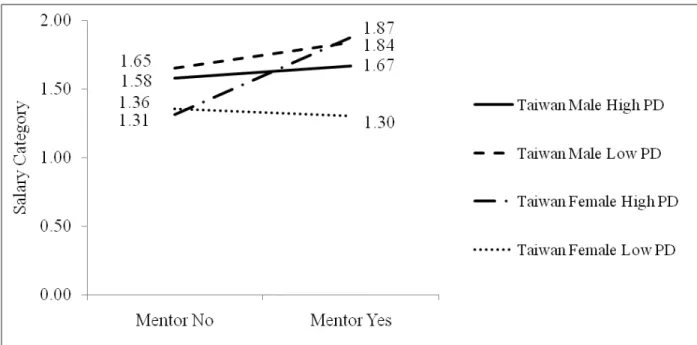
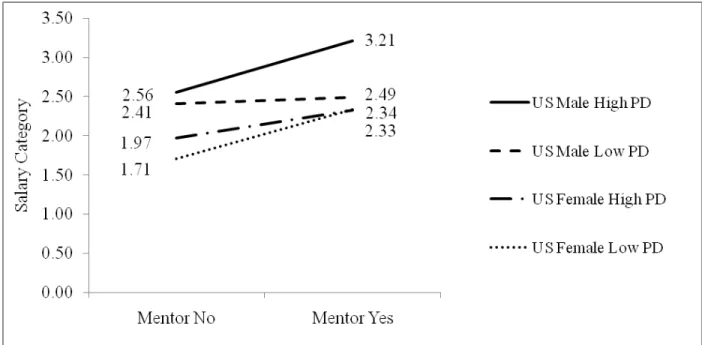
For each country, we plotted graphs of solved equations for the interaction of gender x mentor x power distance on compensation using unstandardized regression coefficients, using data from cases between 10th and 90th percentile of compensation (for Taiwan, n = 219; for U.S., n = 171). Figures support the hypothesized direction of the gender x mentor x power distance interaction in both countries. In Taiwan (Figures 1 and 2), having high power distance was particularly important for women. Mentored women with high power distance reported higher salary than did mentored women with low power distance. When comparing those with and without mentors, the return associated with having high power distance was stronger for women than it was for men. Men report higher salary when mentored, regardless of power distance levels. Also, mentored women with low power distance reported having lower organizational positions than non-mentored women with low power distance; low power distance did not make much difference to the organizational positions of mentored versus non-mentored Taiwanese men. In the U.S. (Figures 3 and 4), the opposite was true: having low power distance was more important for mentored women’s career attainment than for men’s. Mentored men and women report higher salary than non-mentored counterparts, and mentored women with high and low power distance report almost the same salary level. However, when comparing mentored versus non-mentored women with high and low power distance, the positive slope for compensation is steeper for women with low power distance. Indeed, mentored women with high power distance reported lower organizational positions than non-mentored women with high power distance. Mentoring again helped men regardless of their levels of power distance.
(INSERT TABLE 3 AND FIGURES 1 THROUGH 4 ABOUT HERE)
Discussion
This study examined the influence of power distance in the context of mentoring and career attainment for men and women in contrasting Taiwanese and U.S. cultures. Our findings address a question we raised earlier regarding the role and relevance of traditional hierarchical values such as power distance in authority relationships such as mentoring. The four-way interaction of gender x mentor x power distance x country was significant for both
compensation and organizational position. By demonstrating variation, not just across cultures but also within the same culture, in career attainment for mentored men and women who deviate from power distance norms, this study provides a nuanced understanding of how culture and cultural values influence mentoring-outcome relationships. For women in Taiwan and the U.S., having
culturally expected levels of power distance increased the positive association between mentoring and career attainment. Specifically, in Taiwan, the positive return associated with mentoring requires that women conform to hierarchical traditions and prescribed female role requirements and expectations, and have high power distance to reap the benefits of mentoring. If a junior female protégé displays modesty and deference to a mentor’s status or position, the senior person may expend more effort in furthering her career. However, in contrast to mentored women, mentored men with low power distance still had higher salaries and organizational positions than mentored men with high power distance. Because mentoring is typically a hierarchical relationship between individuals of unequal power, low power distance likely enables male protégés to build a stronger relationship with their mentors, especially in a highly traditional and low gender
egalitarian culture. These results suggest that the possibility for friendship to be the “bedrock” of mentoring (Kram, 1988) may exist for Taiwanese men, but not Taiwanese women. Indeed, , such gender differences were also found in the U.S., a low power distant and high gender egalitarian culture—the positive return associated with mentoring requires that women are less power distant, signaling less deference and more assertiveness with hierarchy or senior individuals. For men, mentoring had a positive association with career attainment, regardless of their power distance level.
Theoretical and Managerial Implications
Our study has several implications for mentoring theory, practice, and future research, as explained below. Firslty, the results highlight the importance of person x situation interactions in the context of mentoring especially since we observed variation in the positive and negative consequences of mentoring depending on the gender and power distance of the individual and the level of power distance and gender egalitarianism attributed to the larger cultural context (here country). Just having a mentor may not automatically reap positive career returns for women. While one would expect mentors to (ideally) have protégés’ interests in mind, it is indeed an interpersonal relationship with complex power dynamics that may also have negative
consequences for protégés. For example, mentored Taiwanese women with low power distance (and therefore in violation of cultural norms) have negative returns from mentoring, compared to high power distance women. It is possible that mentors might perceive protégés’ low power distance to be threatening or undercutting their authority, leading to negative mentoring dynamics. A lack of fit between female protégés and cultural norms may result in mentors engaging in manipulative or distancing behaviors including neglect, abuse of power, or sabotage (Eby et al., 2004). We speculate that when mentored Taiwanese women have low power distance, their mentors might be particularly sensitive to cultural norm violations in a traditional society and may want to stay consistent with social norms to demonstrate their endorsement of mainstream values.
Secondly, following the above, the results suggest that the use of mentoring as a developmental tool from a white-male perspective precludes our understanding of cultural perspectives on effective mentoring and career success (Dreher & Ryan, 2004; Ramaswami & Dreher, 2010). Asian models of mentoring and career attainment could be different from what is known in the West. Additional questions on the role of cultural norms and mentoring dynamics for men and women may be worthy of future inquiry. Combinations of micro-, macro-, and multi-level perspectives may provide interesting explanations for mentoring-outcome variations for men and women within and across cultures. The combined influence of socio-cultural characteristics of individuals and the culture at large on mentoring dynamics deserves further investigation, and might be particularly interesting and useful in the context of “cross-cultural interfaces” (Gelfand et al., 2007) between mentors and protégés who are culturally different or are located in cultures
different from their own. Culturally-influenced aspects of mentoring, thus, need further clarification. Until then, precise predictions of its relation to other variables cannot be made
(Ramaswami & Dreher, 2010; Tsui, 2004). Thirdly, mentoring theory lacks adequate consideration of boundary conditions, and systematic explanations for possible cultural variations are not fully articulated. As this study demonstrates, one way to better understand the role of culture in mentoring relationships is through the theoretical and empirical consideration of the role of cultural values such as power distance in relationships between senior and junior employees. Although the power distance variable had low alpha values (in the subsamples), the strength of our study lies in examining the role of power distance (especially measured at the individual level) in mentoring relationships using a cross-cultural sample. We also only measured power distance at the individual level and equated country with cultural characteristics of power distance and gender egalitarianism. Culture-as-nation studies still offer potential tests of theory about cultural
influences on mentoring dynamics. Given that there are other potential cultural moderator
variables apart from power distance, such as individualism/collectivism, this study only begins to explore the domain of value dimensions. As mentoring phenomena intersect with culture and demographic variables, mentoring theory would become more culturally inclusive by taking into account the diversity of individuals as well as the cultural contexts in which mentoring occurs. The real challenge for future research may be to understand where, and for which demographic groups, cultural norms differentially apply within the same culture in a specific organizational or social domain.
To that end, while single-country studies are useful, cross-cultural comparative research on mentoring is essential since we might miss critical insights if we do not compare samples from different countries. Given that there are few studies on mentoring using Asian samples, we ran the analyses with just the Taiwanese sample, but the results we get from comparing Taiwan and the U.S. seem far more insightful, also because of the increased analytical power from using larger combined samples. We found that for compensation, significant main effects were found only for but power-distance (β = -.13, p < .05), but not for mentoring or gender. The two-way interactions of gender x mentor, mentor x power distance, and gender x power distance, as well as three-way interaction of gender x mentor x power distance were not significant. For organizational position, significant main effects were found for mentoring (β = -.12, p = .06) and power distance (β = .12, p = .06), but not gender. Among the two-way interactions, only mentor x power distance was
significant, albeit marginally (β = -.15, p = .08). Other two-way or three-way interactions were not significant. Moreover, understanding cross-cultural models of mentoring may also inform us about contextually appropriate best practices in mentoring systems. A failure to examine how mentoring interacts with gender and cultural values such as power distance especially in Eastern cultures may limit our understanding of employee development and career outcomes in cross-cultural contexts. Given the multi-cultural nature of today’s workforce, the findings of this study would be
particularly applicable to understanding high-quality mentoring relationships and also be of practical value to human resource managers interested in gender and career attainment issues, and in creating culturally sensitive developmental initiatives. Identifying and developing protégés who not only possess the knowledge, skills, and potential for success that mentors often desire (e.g., Allen et al., 2000), but are also “culturally right-type” is essential for mentoring relationships to be successful or to yield positive returns to protégés. Employees and managers need to be sensitive to how cultural context influences the career attainment of mentored men and women with or without certain types of “valued” qualities. This is important because, interestingly, it appears that in the context of mentoring, Taiwan still cherishes traditional values such as power distance. Given
Taiwan’s exposure to Western values and customs due to globalization, as noted in the
introduction, other questions are ripe for exploration: Are junior (importantly, female) employees and protégés in agreement with the importance placed on traditional values? Despite the career benefits of being “culturally right-type”, do changing cultural values and the mix of traditionality and modernity represent relationship faultlines between senior and junior employees? In what organizational contexts and how are culturally non-conforming, but capable, individuals rewarded? One such reward, for example, is a valued expatriate assignment sponsored by a mentor. . A lack of attention to cultural factors and the mentoring dynamics they produce could create problems in expatriate selection, development, and adjustment, especially given the importance of host-country mentors and their influence on expatriate effectiveness (Carraher et al., 2008; Mezias & Scandura, 2005). Understanding differential cultural expectations from men and women will not only help in getting the most out of a mentoring relationship but might also reduce the stress associated with adjusting to relationships in a new cultural environment. Displaying normatively expected values through attitudes and behaviors may be essential to achieving certain career related outcomes, and perhaps more so for one gender than the other. However, by monitoring such culture related influences on mentoring outcomes, organizations may also stem potential sources of gender bias and discrimination in career advancement.
Limitations
We were unable to gather data directly from mentors on values or mentoring functions to have a fuller understanding of the mentoring-career attainment relationship. Recent meta-analyses (e.g., Allen et al., 2004; Eby et al., 2008) also provide justification for measuring mentoring as a dichotomous variable instead of mentoring functions, since the former was found to be a stronger predictor of career outcomes than the latter (Allen et al., 2004). Measures of mentoring functions are also suggested to be deficient in capturing all mentor behaviors (Allen et al., 2004). While we described mentoring similarly in both cultures, it is likely that mentoring means different things for different people across or even within the same culture (Haggard et al., 2011). Different cultures may have different mentoring needs, desires, provisions, and outcomes (Ragins, 1999) and these may play a key role in how mentoring influences and interacts with individual and context variables.
While we acknowledge that the dynamics of formal and informal mentoring may differ (Ragins & Cotton, 1999), we also included formal mentoring cases in our analyses because we did not have a strong theoretical rationale to expect gender and power distance to simultaneously interact in different ways with formal versus informal mentors. Therefore, the data included both formal and informal mentoring cases, and the pattern of results do not change if the formal cases are excluded. We did not consider the interaction of mentor gender and protégé gender in our analyses. Of all mentors, male mentors represented 71% (83% in the Taiwan sample, and 63% in the U.S. sample). Furthermore, in the Taiwanese mentored sample, 90% of men and 74% of women had male mentors, and the rest had female mentors; in the U.S. mentored sample, 88% of men and 48% of women had male mentors, and the rest had female mentors. If only those with male mentors (contrasted with those with no mentors) were included in analyses, we would have lost cases, and consequently power for analysis. Regardless of this limitation, we believe our arguments would be robust to the gender of the mentor since research indicates that male and female superiors have similar perceptions of and expectations from female subordinates (e.g., Allen et al., 2000; Hoobler et al., 2009). We also did not examine variation in respondents’ respective organizational cultures (although we controlled for industry), which could impact the path of success for men and women. The data were collected through self-report surveys using a
cross-sectional design. However, since the main analysis variables were mostly binary and/or objective (gender, mentor, country, compensation, and hierarchical position), they may not be susceptible to common-method or response biases. Lastly, we used data from only two countries. Future research could use larger samples of countries for better theory building efforts and generalizations (Franke & Richey, 2010). Conclusion
Despite limitations, this study has many positive features and the comparison of
mentoring in Taiwan and the U.S. is certainly informative. Also, rather than comparing randomly chosen countries, we selected countries that represent variability in the theoretical concepts of interest. Specifically, we accessed the individual level variance of a cultural value such as power distance and tested our hypothesis in two distinct cultural settings: the high power distant, low gender egalitarian Taiwanese culture and the low power distant, high gender egalitarian U.S. culture. Our findings demonstrate variation in mentoring outcomes across as well as within the same culture for men and women who do not conform to power distance norms. Such continued examination would enable us to know how individual and contextual features together influence the outcomes of mentoring. There seems to be no articulated theory or documented literature on cultural variables moderating mentoring-outcome relationships, and this paper brings forth the important need to develop such theory to more thoroughly understand developmental phenomena from a cultural perspective.
References
Allen TD, Eby LT, Poteet ML, Lentz E and Lima L (2004) Career benefits associated with mentoring for protégés: A meta-analysis. Journal of Applied Psychology, 89:127-136. Allen TD, Poteet ML and Russell JE (2000) Protégé selection by mentors: What makes the
difference? Journal of Organizational Behavior, 21:271-280.
Aryee S and Chay YW (1994) An examination of the impact of career-oriented mentoring on work commitment attitudes and career satisfaction among professional and managerial employees: An interactionist approach. British Journal of Management, 5:241-249. Aryee S, Wyatt T and Stone R (1996) Early career outcomes of graduate employees: The effect
of mentoring and ingratiation. Journal of Management Studies, 33:95-118. Aycan Z, Kanungo RN and Sinha JBP (1999) Organizational culture and human resource
management practices: The model of culture fit. Journal of Cross-Cultural Psychology, 30:501–526.
Au KY (1999) Intra-cultural variation: Evidence and implications for international business. Journal of International Business Studies, 30:799-812.
Becker GS (1975) Human capital: A theoretical and empirical analysis with special reference to education. New York: National Bureau of Economic Research.
Bond MH and Hwang K (1987) The social psychology of Chinese people. In MH Bond (Ed.), The psychology of Chinese people (pp. 213-266). New York: Oxford University Press.
BusinessWeek (2006, May 16) Why Taiwan matters. pp. 76-81.
Carraher SM, Sullivan SE and Crocitto MN (2008) Mentoring across global boundaries: An empirical examination of home- and host-country mentors on expatriate career outcomes. Journal of International Business Studies, 39:1310-1326.
Center for International Comparisons of Production, Income, and Prices (2009)
Colman AM, Norris CE and Preston CC (1997) Comparing rating scales of different lengths: Equivalence of scores from 5-point and 7-point scales. Psychological Reports, 80:355-362.
Dreher GF and Ryan KC (2004) Career attainment among Asian-American professionals: Does mentoring matter? Unpublished manuscript, Indiana University Bloomington.
Eagly AH, Wood W and Johannesen-Schmidt MC (2004) Social role theory of sex differences and similarities: Implications for the partner preferences of women and men. In AH Eagly, AE Beall, RJ Sternberg. The psychology of gender (pp. 269-295). New York: Guilford.
Eagly AH and Carli LL (2007) Women and the labyrinth of leadership. Harvard Business Review, 85:62-71.
Eby LT, Allen TD, Evans SC, Ng T and DuBois DL (2008) Does mentoring matter? A multidisciplinary meta-analysis comparing mentored and non-mentored individuals. Journal of Vocational Behavior, 72:254-267.
Eby LT, Butts M, Lockwood A, and Simon SA (2004) Protégés’ negative mentoring
experiences: Construct development and nomological validation. Personnel Psychology, 57:411-447.
Farh J, Earley C and Lin S (1997) Impetus for action: A cultural analysis of justice and organizational citizenship behavior in Chinese society. Administrative Science Quarterly, 42:421-444.
Gelfand MJ, Erez M and Aycan Z (2007) Cross-cultural organizational behavior. Annual Review of Psychology, 58:479-514.
Gentry WA, Weber TJ and Sadri G (2008) Examining career-related mentoring and managerial performance across cultures: A multilevel analysis. Journal of Vocational Behavior, 72: 241–253.
Gupta V, Surie G, Javidan M and Chhokar J (2002) Southern Asia cluster: Where the old meets the new? Journal of World Business, 37:16-27.
Haggard DL, Dougherty TW, Turban DB and Wilbanks JE? (2011) Who is a mentor? A review of evolving definitions and implications for research. Journal of Management, 37:280-304. Higgins C, Duxbury L, and Irving R (1992) Work-family conflict in dual career family.
Organizational Behavior and Human Decision Processes, 51:51-75.
Hofstede G (2001) Cultures consequences- Comparing values, behaviors, institutions, and organizations across nations. Thousand Oaks, CA: Sage Publications.
Hoobler JM, Wayne SJ and Lemmon G (2009) Bosses’ perceptions of family-work conflict and women’s promotability: Glass ceiling effects. Academy of Management Journal, 52:939-957.
House RJ, Hanges PJ, Javidan M, Dorfman PW and Gupta V (2004) Culture, leadership, and organizations- The GLOBE study of 62 societies. Thousand Oaks, CA: Sage Publications. Hu C, Pellegrini EK and Scandura TA (2011) Measurement invariance in mentoring
research: A cross-cultural examination across Taiwan and the U.S. Journal of Vocational Behavior, 78:274-282.
Hui-Chun Y and Miller P (2003) The generation gap and cultural influence - A Taiwan empirical investigation. Cross Cultural Management, 10: 23-41.
Kram KE (1988) Mentoring at work: Developmental relationships in organizational life. Lanham, MD, England: University Press of America.
development: A multiple mentoring perspective. Journal of International Business Studies, 36:519-538.
Mullen EJ and Noe RA (1999) The Mentoring information exchange: When do mentors seek information from their proteges? Journal of Organizational Behavior, 20:233-242. Ng TWH, Eby LT, Sorensen KL and Feldman DC (2005) Predictors of objective and subjective
career success: A meta-analysis. Personnel Psychology, 58:367-408.
Olian JD, Carroll SJ and Giannantonio CM (1993) Mentor reactions to proteges: An experiment with managers. Journal of Vocational Behavior, 43: 266-278.
Pellegrini EK and Scandura TA (2008) Paternalistic leadership: A review and agenda for future research. Journal of Management, 34:566-593.
Powell GN and Mainiero LA (1992) Cross-currents in the river of time: conceptualizing the complexities of women's careers. Journal of Management, 18:215-37.
Ragins BR (1989) Barriers to mentoring: The female manager’s dilemma. Human Relations, 42: 1–22.
Ragins BR (1999) Gender and mentoring relationships: A review and research agenda for the next decade. In GN Powell (Ed.), Handbook of gender and work (pp. 347-370). Thousand Oaks, CA: Sage Publications.
Ragins BR and Cotton JL (1999) Mentor functions and outcomes: A comparison of men and women in formal and informal mentoring relationships. Journal of Applied Psychology, 84:529-550.
Ragins BR and Sundstrom E (1989) Gender and power in organizations: A longitudinal perspective. Psychological Bulletin, 105: 51-88.
Ramaswami A and Dreher GF (2010) Developmental relationships in India: A qualitative, exploratory study. Human Resource Management, 49:501-530.
Ramaswami A, Dreher GF, Bretz R and Wiethoff C (2010) Gender, mentoring and career success: The importance of organizational context. Personnel Psychology, 63:385-405 Schaffer BS and Riordan CM (2003) A review of cross-cultural methodologies for organizational
research: A best-practices approach. Organizational Research Methods, 6:169-215. Silin RH (1976) The organization of large-scale Taiwanese enterprises. Cambridge, MA:
Harvard University Press.
Tsui AS (2004) Contributing to global management knowledge: A case for high quality indigenous research. Asia Pacific Journal of Management, 21:491-513.
Tsui AS, Nifadkar S and Ou AY (2007) Cross-national, cross-cultural organizational behavior research: Advances, gaps, and recommendations. Journal of Management, 33:426-478. Tung R (2008) The cross-cultural research imperative: The need to balance cross-national and
intra-national diversity. Journal of International Business Studies, 39:41-46.
Turban DB and Dougherty TW (1994) The role of protege personality in receipt of mentoring and career success. Academy of Management Journal, 37:688-702.
Van de Vijver F and Leung K (1997) Methods and data analysis of comparative research. In J W Berry, YH Poortinga, J Pandey (Eds.), Handbook of cross-cultural psychology Theory and method (vol. 1, pp. 257–300). Needham Heights, MA: Allyn and Bacon. Whitely WT and Coetsier P (1993) The relationship of career mentoring to early career
outcomes. Organization Studies, 14:419-441.
Whitely W, Dougherty TW and Dreher GF (1991) The relationship of career mentoring and socioeconomic origin to managers’ and professionals’ early career progress. Academy of Management Journal, 34:331-351.
Whitely W, Dougherty TW and Dreher GF (1992) Correlates of career oriented mentoring for early career managers and professionals. Journal of Organizational Behavior, 13:141-154.
Yoo B and Donthu N (2002) The effects of marketing education and individual cultural values on marketing ethics of students. Journal of Marketing Education, 24:92-103.
Table 1 Descriptive Statistics and Correlations for Taiwan and U.S. Samples Separately
TAIWAN SAMPLE
Variable M SD 1 2 3 4 5 6 7 8 9 10
1 Married without children a .09 .28
2 Married with children a .76 .43 -.55**
3 Work experience 17.02 6.80 -.22** .39**
4 Hours worked per week 48.78 8.56 -.03 .00 -.03
5 Graduate degree a .34 .47 -.01 -.01 -.06 .07 6 Service industry a .52 .50 -.03 .08 .01 .01 .00 7 Mentor yes/no a .44 .50 .09 -.05 -.04 -.01 .05 -.10 8 Gender b .58 .49 -.04 .21** .24** .19** .11 -.09 -.10 9 Power distance 2.87 .83 -.03 .06 .01 .03 -.04 -.05 .03 .02 10 Compensation 1.76 1.35 .01 .11 .35** -.03 .02 -.08 .07 .18** -.12 11 Organizational position 1.83 1.11 -.03 .14* .28** .16* .04 -.13 .11 .20** -.10 .53** U.S. SAMPLE Variable M SD 1 2 3 4 5 6 7 8 9 10
1 Married without children a .28 .45
2 Married with children a .51 .50 -.64**
3 Work experience 11.66 6.29 -.12 .19*
4 Hours worked per week 43.65 11.59 .02 -.07 .10
5 Graduate degree a .60 .49 -.06 -.01 .07 .11 6 Service industry a .61 .49 .07 -.11 -.03 -.05 .22** 7 Mentor yes/no a .74 .44 -.07 .01 -.07 .06 .21** -.01 8 Gender b .42 .50 -.14 .13 .23** .26** .10 -.05 .14 9 Power distance 1.93 .73 -.16* .04 .04 .10 .00 .05 .08 -.05 10 Compensation 3.16 2.61 -.18* .21* .17* .40** .13 -.18* .22** .35** .10 11 Organizational position 1.94 1.18 -.04 .05 .17* .18* .08 -.04 .14 .12 .03 .35**
Note: Taiwan n = 219, U.S. n = 161 (list-wise deletion). a 1= Yes, 0 = No, b 1= Male, 0 = Female * p < .05,** p < .01 (two-tailed)
Table 2 Descriptive Statistics and Correlations for the Full Sample
Variable M SD 1 2 3 4 5 6 7 8 9 10 11
1 Married without children a .17 .37
2 Married with children a .66 .48 -.62**
3 Work experience 14.75 7.10 -.24** .37**
4 Hours worked per week 46.61 10.26 -.06 .03 .12*
5 Graduate degree a .45 .50 .03 -.08 -.10* .02 6 Service industry a .56 .50 .05 -.03 -.04 -.05 .11* 7 Mentor yes/no a .57 .50 .08 -.10 -.16** -.06 .18** -.03 8 Gender b .52 .50 -.13* .21** .27** .25** .06 -.09 -.05 9 US versus Taiwan c .42 .49 .25** -.26** -.37** -.25** .26** .10 .30** -.16** 10 Power distance 2.47 .91 -.21** .18** .20** .17** -.15** -.06 -.11* .07 -.51** 11 Compensation 2.35 2.10 -.03 .07 .08 .15** .16** -.09 .23** .20** .33** -.16** 12 Organizational position 1.88 1.14 -.02 .08 .19** .15** .07 -.08 .13** .15** .05 -.07 .40**
Note: N = 380 (list-wise deletion). a 1= Yes, 0 = No, b 1= Male, 0 = Female, c 1 = U.S., 0 = Taiwan
*
Table 3 OLS Regression Results for Gender x Mentor x Power distance x Country
Variable
Compensation β Organizational Position β
Married without children -.02 .03
Married with children .09 .06
Work experience .17*** .22***
Hours worked per week .21*** .15***
Graduate degree .04 .03 Service industry -.10* -.06 Mentor yes/no .14** .14** Gender .15** .07 Country .43*** .11 Power distance -.02 -.07 R2, ΔF .28 14.38*** .11, 4.93*** Gender x Country .24** -.11 Mentor x Country .28** .13 Mentor x Gender .03 .05
Gender x Power distance .06 -.03
Mentor x Power distance .11 .10
Country x Power distance .12 .05
R2, ΔF .32 3.74*** .13, .74
Gender x Country x Power distance .14 .17
Mentor x Country x Power distance .03 -.09
Gender x Mentor x Power distance .03 .11
Gender x Mentor x Country .11 .25
R2, ΔF .32 .95 .14 1.71
Gender x Mentor x Country x Power distance .36* .53**
R2, ΔF .33 4.38* .16, 7.75**
Figure 1 Three-way interaction of gender x mentor x power distance on compensation for the
Taiwanese sample.
Figure 2 Three-way interaction of gender x mentor x power distance on organizational position
Figure 3 Three-way interaction of gender x mentor x power distance on compensation for the
U.S. sample.
Figure 4 Three-way interaction of gender x mentor x power distance on organizational position
1
報告人:黃家齊
一、參加會議經過
今年的
Asia Academy of Management Conference
是第 8 屆舉辦,此會議應屬 亞洲地區一般管理領域非常有代表性的研討會,許多一般管理領域的代表性學者均出 席此研討會。會議於 2012 年 12 月 10 日至 12 日於韓國首爾舉辦,區分 6 個 section 同時進行 各 項主 題的 研討,共進行 42 個場次的論文發表與研討。各場次探討主題涵 括 ”innovation and creativity” 、 ”entrepreneurship” 、 ”conterproductive behavior” 、 ”multilevel study” 、 ”strategic HRM” 、 ”Cross-cultural Management”、”Leadership”、”Goal orientation”、”team dynamics and faultline”等各
項一般管理領域相相關議題。
第一天傍晚短暫的出席了 welcome reception。第二天上午大會安排了 Poongsan Group 的 CEO and Chairman Jin Ryu 進行 Keynote speech,從實務界的觀點分享企業
領導與管理的概念,觀念頗有啟發性。下午先參與一場 interactive roundtable 論文發 表,主題是 work and family,緊接著就在下一個場次中進行了此次投稿論文的發表, 不過由於發表時間較緊迫,未能有充分時間進行討論,但與同場次的多位學者也有 非正式的討論與互動,仍頗有收獲。第三天分別參與了較有興趣的場次,包括 creativity、goal orientation、team dynamics and faultline 等主題。研討會期間亦尋求
與來自世界各國的學者交流、討論,感覺受益匪淺,對未來的學術研究工作實有相 當的啟發。同時亦藉參與此次研討會之便,與國外合作學者進行了一些研究想法的 溝通,因此亦構思了新的研究主題。研討會期間亦巧遇多位台灣前往與會的學者,
2 二、與會心得及建議 參加國際會議可以把個人的研究心得與各國的學者專家交流,擴大思考角度, 對於研究品質的提昇確實很有幫助。將經過一段時間準備的成果在國際上作公開發 表,對自己的研究工作也有相當的激勵作用。雖然國內也有不少嚴謹的論文研討會, 但在國際學術會議上發表論文,將更能促使學者更積極、嚴謹地從事研究工作。由 於晚近國內學術界對於研究工作的強調,國內學者的研究水準已具國際水準。參加 此研討會後讓我接觸到許多新的觀念與方法,對未來的研究方向不僅更有把握,自 我要求作好研究工作的動力似乎也更為增強。 個人除了藉由此次機會將研究成果發表,更與各地專家學者相互交流並討論各 項研究主題與研究心得,並藉此機會與國外學者尋求可能的國際合作機會,對於未 來之研究進行定能產生莫大助益。參加此次會議,個人的收獲相當豐碩,此研討會 對於從事組織行為、以及人力資源管理領域研究之學者而言,應具有極高的參與價 值。 三、攜回資料 (一) 大會議程 1 冊。 (二) 其它會議資料。
日期:2013/09/20
國科會補助計畫
計畫名稱: 人力資源管理活動與員工創新及生涯成就 計畫主持人: 黃家齊 計畫編號: 99-2410-H-004-009-MY3 學門領域: 人力資源管理無研發成果推廣資料
計畫主持人:黃家齊 計畫編號:99-2410-H-004-009-MY3 計畫名稱:人力資源管理活動與員工創新及生涯成就 量化 成果項目 實際已達成 數(被接受 或已發表) 預期總達成 數(含實際已 達成數) 本計畫實 際貢獻百 分比 單位 備 註 ( 質 化 說 明:如 數 個 計 畫 共 同 成 果、成 果 列 為 該 期 刊 之 封 面 故 事 ... 等) 期刊論文 0 0 100% 研究報告/技術報告 1 1 100% 研討會論文 0 0 100% 篇 論文著作 專書 0 0 100% 申請中件數 0 0 100% 專利 已獲得件數 0 0 100% 件 件數 0 0 100% 件 技術移轉 權利金 0 0 100% 千元 碩士生 0 0 100% 博士生 0 0 100% 博士後研究員 0 0 100% 國內 參與計畫人力 (本國籍) 專任助理 0 0 100% 人次 期刊論文 1 3 100% 研究報告/技術報告 0 0 100% 研討會論文 3 3 100% 篇 論文著作 專書 0 0 100% 章/本 申請中件數 0 0 100% 專利 已獲得件數 0 0 100% 件 件數 0 0 100% 件 技術移轉 權利金 0 0 100% 千元 碩士生 0 0 100% 博士生 0 0 100% 博士後研究員 0 0 100% 國外 參與計畫人力 (外國籍) 專任助理 1 1 100% 人次
(
無法以量化表達之成 果如辦理學術活動、獲 得獎項、重要國際合 作、研究成果國際影響 力及其他協助產業技 術發展之具體效益事 項等,請以文字敘述填 列。) 成果項目 量化 名稱或內容性質簡述 測驗工具(含質性與量性) 0 課程/模組 0 電腦及網路系統或工具 0 教材 0 舉辦之活動/競賽 0 研討會/工作坊 0 電子報、網站 0 科 教 處 計 畫 加 填 項 目 計畫成果推廣之參與(閱聽)人數 0請就研究內容與原計畫相符程度、達成預期目標情況、研究成果之學術或應用價
值(簡要敘述成果所代表之意義、價值、影響或進一步發展之可能性)
、是否適
合在學術期刊發表或申請專利、主要發現或其他有關價值等,作一綜合評估。
1. 請就研究內容與原計畫相符程度、達成預期目標情況作一綜合評估
■達成目標
□未達成目標(請說明,以 100 字為限)
□實驗失敗
□因故實驗中斷
□其他原因
說明:
2. 研究成果在學術期刊發表或申請專利等情形:
論文:■已發表 □未發表之文稿 □撰寫中 □無
專利:□已獲得 □申請中 ■無
技轉:□已技轉 □洽談中 ■無
其他:(以 100 字為限)
3. 請依學術成就、技術創新、社會影響等方面,評估研究成果之學術或應用價
值(簡要敘述成果所代表之意義、價值、影響或進一步發展之可能性)(以
500 字為限)
This paper examines how demographics (gender) and cultural values (power distance) differentially moderate the relationship between mentoring (mentor presence) and career attainment (compensation and organizational position) among 390 managers and professionals in two contrasting cultures (Taiwan versus the U.S.). The four-way interaction of gender x mentor x power distance x country was significant for both dependent variables, supporting our hypotheses based on theories of power distance and gender egalitarianism. In hierarchical cultures such as Taiwan's, mentored women with high power distance reported higher career returns than did mentored women with low power distance. In contrast, in egalitarian cultures such as the U.S.', mentored women with low power distance reported higher career returns than did mentored women with high power distance. Our findings demonstrate variation in mentoring outcomes, not just across but also within cultures for men and women.