國立交通大學
資訊工程學系
博士論文
WDM 網路中多點傳輸與波長指派問題研究
Multicast Routing and Wavelength Assignment in
WDM Networks
研 究 生: 陳明崇
指導教授: 曾憲雄 博士
中華民國九十五年十一月
WDM 網路中多點傳輸與波長指派問題研究
Multicast Routing and Wavelength Assignment in
WDM Networks
研 究 生: 陳明崇 Student:
Ming-Tsung
Chen
指導教授: 曾憲雄
Advisor: Dr. Shian-Shyong Tseng
國 立 交 通 大 學
資 訊 工 程 學 系
博 士 論 文
A Dissertation
Submitted to Department of Computer Science College of Computer Science
National Chiao Tung University in partial Fulfillment of the Requirements
for the Degree of Doctor of Philosophy
in
Computer Science November 2006
Hsinchu, Taiwan, Republic of China
WDM 網路中多點傳輸與波長指派問題研究
學 生: 陳明崇
指導教授: 曾憲雄
國立交通大學 資訊工程學系
摘要
在可見的未來,WDM 網路將被用來建置主幹網路,因此,建置多點傳輸功能, 以提供多變的網路應用需求是必要的。在本篇論文中,我們擴展路由與波長指派問題 (routing and wavelength assignment problem, RWA)的研究,重新定義在 WDM 網路具傳輸延遲限制的多點傳輸與波長指派的新問題,簡稱 MRWAP-DC。在此問題中,多點 傳輸需求具傳輸延遲限制且網路節點具不同的分光能力或波長轉換能力,多點傳輸代 價定義為傳輸代價與所需光波長數的線性加權,其目的為對每一個需求尋找一個光樹 狀傳輸路由集合(light-forest),在最小的多點傳輸代價下,使得這些多點傳輸需求可 以 在 傳 輸 延 遲 限 制 內 , 成 功 的 將 資 料 傳 輸 至 所 有 的 目 的 節 點 。 在 本 篇 論 文 中 , MRWAP-DC 將 被 完 整 定 義 與 描 述 , 提 出 一 個 整 數 線 性 規 劃 ( ILP ) 方 法 , 使 得 MRWAP-DC 問題可被轉換成條件定義最佳化問題,利用 CPLEX 線性規劃工具以找出 問題的最佳解。雖然 ILP 方法可用來找出滿足條件的最佳解,但只適合解決小規模的 網路路由與波長指派問題,因此,我們提出兩個啟發式演算法(meta-heuristic):螞蟻 演算法(Ant Colony Optimization)與基因遺傳演算法(Genetic Algorithm)以解決兩個 簡化的問題-URWAP-DC-SR 和 MRP-DC-WWC-SR。此外,針對動態網路路由與波長
指派問題,執行時間為重要的考慮因素,因此,我們提出兩個直覺演算法:k-最短路
徑 近 似 演 算 法 (Near-k-Shortest-Path-based Heuristic , NKSPH ) 與 反 覆 尋 解 模 型 (Iterative Solution Model,ISM),以處理大規模網路的動態路由與波長指派問題。由 實驗的數據結果,這兩個直覺演算法可以找到接近最佳解的近似解。
-ii-解決這類簡化問題的方法,透過利用 ILP 方法所得到的最佳解比較,這些方法可以找 到接近最佳解的近似解,但花費的執行時間卻遠比ILP 方法少。 關鍵詞: RWA、ACO、GA、WDM、多重傳輸路由、波長指派、多點傳輸需求、分頻 多工光纖網路、傳輸延遲限制、光樹狀傳輸路由、分光能力、整數線規劃、遺傳演算 法、螞蟻演算法。
Multicast Routing and Wavelength Assignment in WDM
Networks
Student: Ming-Tsung Chen Advisor: Dr. Shian-Shyong Tseng
Department of Computer Science National Chiao Tung University
Abstract
Because optical wavelength division multiplexing (WDM) networks are expected to be realized for building up backbone in the near future, multicasting in WDM networks needs to be addressed for various network applications. This dissertation studies an extended routing and wavelength assignment (RWA) problem called multicast routing and wavelength assignment problem with delay constraint (MRWAP-DC) that incorporates delay constraints in WDM networks having heterogeneous light splitting capabilities. The objective is to find a light-forest for a multicast whose multicast cost, defined as a weighted combination of communication cost and wavelength consumption, is minimal. An integer linear programming (ILP) formulation is proposed to formulate and solve the special problem of MRWAP-DC, MRWAP-DC-WWC. Experimental results show that using CPLEX to solve the ILP formulation can optimally deal with small-scale networks. Therefore, we develop two heuristics, Near-k-Shortest-Path-based Heuristic (NKSPH) and Iterative Solution Model (ISM), to solve the problem in large-scale networks. Numerical results indicate that the proposed heuristic algorithms can produce approximate solutions of good quality in an acceptable time. This dissertation also investigates two special problems, URWAP-DC-SR and MRP-DC-WWC-SR by two meta-heuristics ant colony optimization (ACO) and genetic algorithm (GA). We compare the performance of the proposed algorithms with the ILP
-iv-formulations. Solutions found by these meta-heuristics are approximately equal to those found by the ILP formulations, and the elapsed execution times are far less than that demanded by the ILP formulations.
Keywords: Multicast routing, wavelength assignment, multicast request, WDM network,
delay bound, light-tree, light splitting capacity, integer linear program, genetic algorithm, ant colony optimization.
誌 謝
首先感謝恩師曾憲雄教授多年來的指導與鼓勵,沒有曾教授的指導,本論文將無 法完成;在曾教授不厭其煩的指導與鼓勵,引導與訓練獨立研究的方法及技巧,不僅 完成本論文,同時也讓我瞭解到研究的本質與程序。此外,要感謝許多人的協助、體 諒與鼓勵,本校財務金融研究所林妙聰教授、資工系陳榮傑教授與簡榮宏教授的建 議,使得本篇論文的理論與實務內容,更加趨於完整與堅實。其中,特別感謝林妙聰 教授給予的鼓勵和指導,啟發我能從其他觀點去檢閱自己研究上的盲點和不足,不僅 對論文結構提供建議,更進而協助完成 ACO 相關論文。同時也要感謝論文口試委員清 華大學資工系黃能富教授、台灣大學電機系王勝德教授、高雄大學電機系洪宗貝教 授、中央研究院資訊所陳孟彰教授等提供的精闢見解與建議,才能讓本篇論文更加完 整。成功大學統計系趙昌泰副教授提供 CPLEX 線性規劃工具,使得本論文中相關實驗 得以順利完成。同實驗室的學長、同學、學弟妹、與助理的幫忙,使得本篇論文實際 的研究探索過程,能夠順利地進行與論文完成。而中華電信研究所的長官與同事長期 的支持與包容,亦是不可或缺的精神支柱。 進入交通大學資科所攻讀博士學位時,正是開發公司內重要資訊系統的關鍵時 期,每天焚膏繼晷的不停工作與念書,一切仍歷歷在目、彷彿昨日,當時小朋友才就 讀幼稚園,如今已是國中一年級的新生了,非常感謝家人的鼓勵與支持,由其是我的 太太淑英,在我攻讀博士學位與工作的雙重壓力之下,若沒有她的任勞任願、無怨無 悔的奉獻付出,我將無法心無旁騖的專心於博士論文的研究,將眼前遭遇的困難轉化 成為克服困境的動力,衝破難關,繼續堅持到底而完成學業。 僅將這一篇論文,獻給老師、實驗室的學長與學弟妹、口試委員、以及最親愛的 父母、家人淑英、宣劭、芃穎,與每一位給予我幫助及支持我的人。
-i-Contents
List of Figures ... iv List of Tables ... vi Chapter 1 Introduction ...1 1.1 Motivation ...1 1.2 Contribution ...3 1.3 Reader’s Guide ...4Chapter 2 Overview of Optical Networks...8
2.1 Characteristics of Optical Networks ...8
2.2 Optical Multiplexing Transmission System ...11
2.3 Optical Equipment...13
2.4 Evolution of Optical Networks ...16
2.5 Multicast...19
Chapter 3 Preliminaries of Routing and Wavelength Assignment Problem...23
3.1 Routing and Wavelength Assignment Problem (RWAP)...23
3.2 Unicast RWAP (URWAP)...25
3.3 Multicast RWAP (MRWAP) ...27
3.4 RWAP Problem Model...29
Chapter 4 Multicast Routing and Wavelength Assignment Problem with Delay Constraints ...31
4.1 Formulation of MRWAP-DC...32
4.2 Studied Problems and Methods ...42
4.3 Simulation Scheme ...44
Chapter 5 ILP Formation for MRWAP-DC-WWC ...46
5.1 Formulation ...47
5.2 Proof of the ILP Formulation ...51
5.3 Experiments...55
5.3.1 Comparisons of Different Wavelength Consumption Ratios ...56
5.3.2 Performance Assessment of ILP ...57
5.4 Conclusion...58
6.1 Concept of the ACO ...64
6.2 Initialization in the ACO ...66
6.3 State Transition Rule ...67
6.4 Pheromone Updating Rule ...69
6.5 Stopping Criterion ...71
6.6 Computational Experiments...71
6.6.1 Introduction of Transmission Delays to the ILP Formulation ...72
6.6.2 Comparisons between the ACO and the ILP Formulation...72
6.6.3 Comparisons of Iterations...75
6.7 Conclusion...76
Chapter 7 Genetic Algorithm (GA) for MRP-DC-WWC-SR...89
7.1 Problem Formulation...90 7.2 Concept of GA ...98 7.2.1 Selection / Reproduction...99 7.2.2 Crossover ...100 7.2.3 Mutation...101 7.3 GA for MRP-DC-WWC-SR...101
7.3.1 Chromosomal Encoding Scheme...101
7.3.2 Crossover Operator ...104
7.3.3 Mutation...105
7.3.4 Fitness Function Definition ...108
7.3.5 Chromosome Repair ...109
7.3.6 Replacement Strategy ...110
7.3.7 Termination Rules...110
7.4 Experiments ...111
7.4.1 Performance Assessment of the GA model...112
7.4.2 Comparisons between GA, 3PM, and ILP...115
7.4.3 Comparisons among Four Mutation Heuristics ...115
7.5 Conclusion...125
Chapter 8 Heuristics for MRWAP-DC-WWC-SR ...126
8.1 NKSPH for MRWAP-DC-WWC-SR ...127
8.2 ISM for MRWAP-DC...131
8.1.1 Selecting Wavelength Procedure (SWP)...131
8.1.2 Finding Assigned Light-Tree Procedure (FALP)...133
8.3. Experiments...138
8.3.1 Comparisons for Different Values of k in NKSPH ...138
8.3.2 Comparisons among ILP, NKSPH, and ISM...139
-iii-8.3.4 Comparisons between MaxE and MinR ...142
8.4. Conclusion...143
Chapter 9 Conclusion and Future Work...147
List of Figures
Figure 2-1: Essential optical network... 9
Figure 2-2: WDM for three wavelengths ... 11
Figure 2-3: Wavelength add/drop multiplexer (WADM)... 14
Figure 2-5: Three multicast schemes ... 21
Figure 4-1: WDM network and multicast trees for a request r, (v9, {v0, v5, v8, v10}, 3.3) ... 40
Figure 4-2: Problem Lattice ... 43
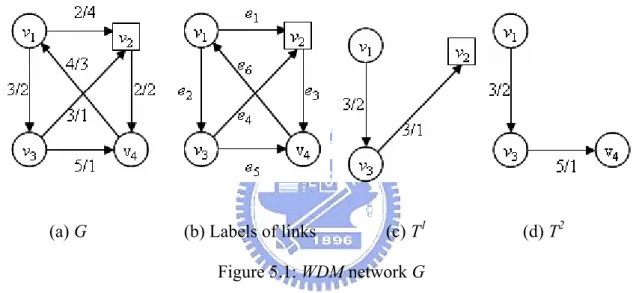
Figure 5.1: WDM network G ... 49
Figure 6-1: ACO framework ... 65
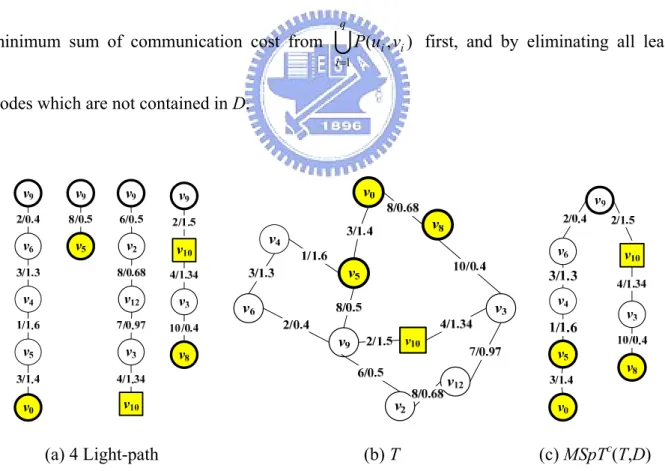
Figure 7-1: Example of MSpTc(T,D = {v0, v5, v8, v10}) ... 91
Figure 7-2: Sample of multicast tree T ... 95
Figure 7-3: Two light-trees converted from Figure 7-2... 97
Figure 7-4: GA procedure ... 98
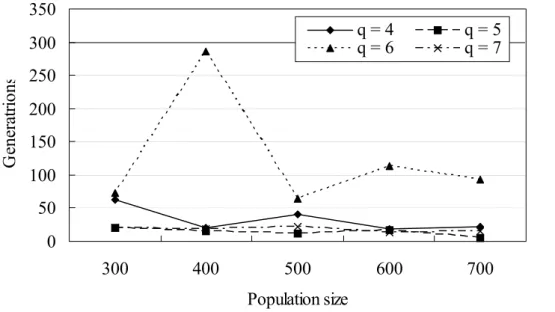
Figure 7-5: Demanded generations for different PSs and different requests in net1.. 116
Figure 7-6: Demanded generations for different PSs and requests in net2... 116
Figure 7-7: Multicast costs for different generations in net1... 117
Figure 7-8: Multicast costs for different generations in net2... 117
Figure 7-9: Promotion Percentages of multicast costs for different requests ... 118
Figure 7-10: Elapsed execution times for different mutation probabilities (MPs) in net1 ... 118 Figure 7-11: Average generations for different mutation probabilities (MPs) in net1119 Figure 7-12: Elapsed execution times for different crossover probabilities (CPs) in net1
-v-... 119
Figure 7-13: Average generations for different crossover probabilities (CPs) in net1120 Figure 7-14: Multicast costs for different requests in net1... 120
Figure 7-15: Multicast costs for different requests in net1... 121
Figure 7-16: Multicast costs for different generations in net2... 121
Figure 7-17: Multicast costs for different requests in net2... 122
Figure 7-18: Average promotion percentages of multicast cost for different requests ... 122
Figure 7-19: Elapsed execution times for different requests ... 123
Figure 7-20: Multicast costs for different generations in net1... 123
Figure 7-21: Multicast costs for different generations in net1... 124
Figure 7-22: Elapsed execution times for different requests in net1... 124
Figure 8-1: A weak candidate Tˆ ... 133 d Figure 8-2: Tˆ ∪Pd c(v,u) ... 134
Figure 8-3: Comparisons of execution time for different requests ... 141
List of Tables
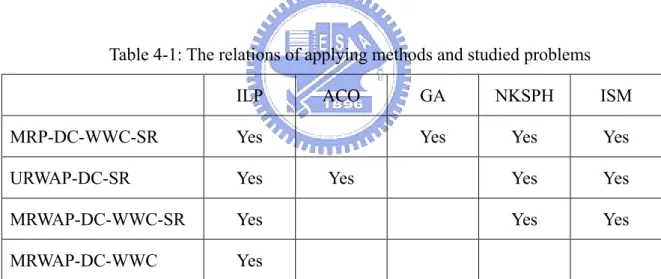
Table 4-1: The relations of applying methods and studied problems ... 44
Table 5-1: Experimental results for different β/α... 60
Table 5-2: Experimental results for different networks by using ILP... 60
Table 6-1: Average execution time (sec.) for different χ values and different networks ... 77
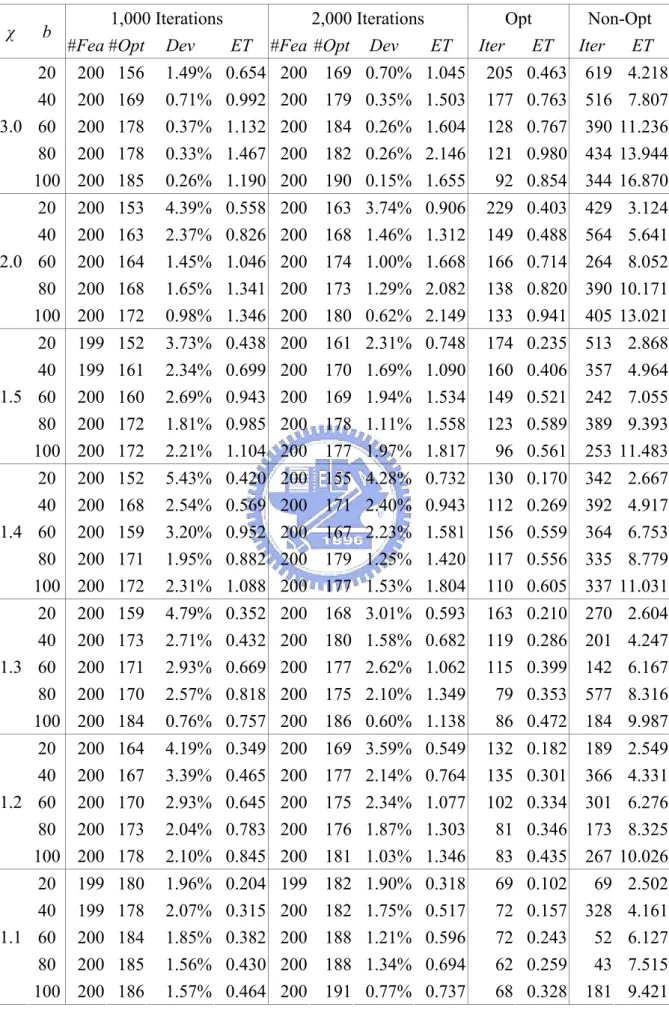
Table 6-2: Experimental requests of 200 requests routed in 40 nodes ... 78
Table 6-3: Experimental requests of 200 requests routed in 50 nodes ... 79
Table 6-4: Experimental requests of 200 requests routed in 60 nodes ... 79
Table 6-5: Results of 200 requests routed in 40 nodes ... 81
Table 6-6: Results of 200 requests routed in 50 nodes ... 83
Table 6-7: Results of 200 requests routed in 60 nodes ... 85
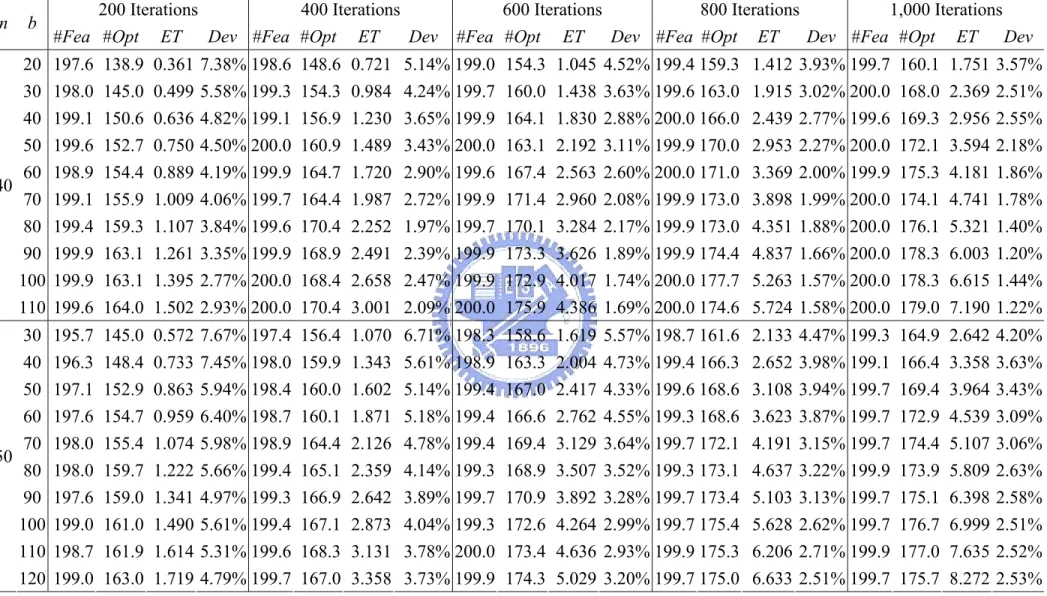
Table 6-8: Average results for different networks (n=40, 50, 60) ... 87
Table 8-1: Experimental results for different values of k in NKSPH ... 144
Table 8-2: Experimental results among ILP, NKSPH, and ISM... 145
Table 8-3: Worst cases of NKSPH and ISM among test groups ... 146
Table 8-4: Comparisons of MaxE and MinR... 146
Table 9-1: The further works in extending proposed methods or proposing new methods ... 150
Chapter 1 Introduction
1.1 Motivation
Due to the explosive growth of the Internet and bandwidth-intensive applications, such as HDTV, videoconferencing, and video-on-demand system, a new technology to provide high-bandwidth transport is required. By the help of optical technologies and optical fibers to provide an excellent medium for transmitting tremendous amount of data in the speed of fifty terabits per second, the requirement can be realized by optical networks which are a type of high-capacity telecommunication networks. Among the proposed network architectures, WDM (wavelength division multiplexing) network has undoubtedly become the solution adopted in order to increase the capacity of long-haul wide area networks; furthermore, the deployment of WDM networks has also recently been considered in the metro networks. However, despite the fact that many commercially available systems are ready to be installed, there are still many challenges that have to be resolved before WDM can be widely deployed in the metro network environment.
Based on the attractive communication bandwidth in WDM networks, many new network applications are inspiring new communication models in which multicast is an important communication of a point to multipoint to distribute multimedia content (or data). Several commercial protocols including synchronous digital hierarchy (SDH), synchronous optical network (SONET), asynchronous transfer mode (ATM), and internet protocol (IP), are
investigated to implement them in WDM network. These protocols form a WDM protocol stack. The preliminary requirement in these protocols is how to find a route and how to assign one or more wavelengths to all links in the route such that the data will be sent to all destinations. The route is a set of transmission connections between two nodes and the union of the connections can be viewed as a multicast tree. The problem of finding a multicast tree and assigning wavelengths to transmit data is an important and interesting research topic in transporting data. The multicast tree and assigned wavelengths may be determined in different layer in the protocol stack; for example, in the protocol IP over WDM, they will be determined in IP layer.
The problem of determining a multicast tree and assigning wavelengths to links in the tree is called the multicast routing and wavelength assignment problem (MRWAP). In previous research, the well known problem, routing and wavelength assignment problem (RWAP) has been shown to be NP-hard, where the RWAP is to find a light-path from a source to a destination for each request and assign a wavelength to each link in the light-path for a set of connection requests. Therefore, the MRWAP is also NP-hard and expected to be computationally challenging. Although the MRWAP has been studied since the 1990s in traditional copper networks and since the 1999s in WDM networks, using different features including network topology (ring, mesh, star, tree, or graph), the routers with or without the capacity of optical wavelength conversion and with or without electric wavelength conversion, the routers with or without light splitting capability, the multicast request being static or dynamic, and different objective functions, will introduce different MRWAP instances in WDM networks.
In WDM networks, deploying the light splitting capability and the wavelength conversion capability to optical routers implies to demonstrate a WDM network in different construction costs. Due to the sophisticated architecture of the routers with light splitting
capability, using the routers with superior light splitting capacities to build a network is usually more expensive than using those with inferior light splitting capacities or without ones. Therefore, a WDM network with heterogeneous light splitting capabilities (WDM-He network), in which the light splitting capacities of all routers could be different, can better reflect the real-world requirement.
For the new network applications, such as videoconferencing and video-on-demand system, to guarantee video and audio signals to be efficiently transmitted in interactive multimedia applications is very important. Therefore, transmission delays from a source to each destination need to be limited under a given delay bound (value), where the delay bound may be determined according to the degree of emergence, data priority, or application type of the data. Delay bound constraints are thus realistic to reflect the demand about data transmission in the future. A request with delay bound dictates that it needs to be successfully transmitted before its given delay constraint is violated. To combine the real-world requirements in constructing WDM networks and transmitting requests, we will extend these previous researches by adding delay bound constraints in WDM-He networks. The MRWAP to route requests subject to delay constraints is denoted by MRWAP-DC. In this dissertation, not only the MWRAP-DC is well formulated but also integer linear programming (ILP) and two meta-heuristic, ant colony optimization (ACO), genetic algorithm (GA), and two heuristics are proposed to explore different variants of the MRWAP-DC.
1.2 Contribution
The major contributions conveyed in this dissertation are outlined as follows: (1) A new problem, MRWAP-DC, is defined and formulated.
MRP-DC-WWC-SR, and MRWAP-DC-WWC-SR are studied.
(3) Four methods, ILP, GA, ACO, two heuristics (Near-k-Shortest-Path-based heuristic (NKSPH) and Iterative Solution Model (ISM)), are proposed to examine the WWC, URWAP-DC-SR, MRP-DC-WWC-SR, and MRWAP-DC-WWC-SR, respectively.
(4) In the ILP formulation, the formulation has been not only shown to find optimal solution but also demonstrated by the CPLEX.
(5) A well-known simulation model is used to simulate these proposed methods. For the different problems, the experimental results are conducted to compare GA, ACO, and two heuristics with the ILP formulations. The statistics of the experiments reveal that the proposed algorithms are effective as well as efficient.
(6) According to the problem lattice of the variants of MRWAP-DC, these proposed methods may be refined to apply to solve the other variants.
1.3 Reader’s Guide
The remainder of this dissertation is organized as follows. In Chapter 2, the characteristics of optical networks, multiplexing transmission systems, optical equipment, evolution of optical networks, and multicast will be introduced. The introduction not only gives an overview of what is the optical network but also helps us to understand that the studied problems in this dissertation are reasonable. The preliminaries of routing and wavelength assignment problem (RWAP) are given in Chapter 3. According to the number of destinations required to be routed, the RWAP is divided into two types, unicast RWAP (URWAP) and multicast RWAP (MRWAP). Previous research on the URWAP and MRWAP will be surveyed. In the end of this chapter, a model of the RWAP will be proposed such that the complexity and relationship among previous studies can be compared. The problems
discussed in this dissertation can be represented by this model.
In Chapter 4, the MRWAP-DC will be formulated to define as a general problem. Nevertheless, due to this generalization, the MRWAP-DC is hard to solve in an affordable execution time. The variants, including the MRWAP-DC-WWC, URWAP-DC-SR, MRP-DC-WWC-SR, and MRWAP-DC-MRP-DC-WWC-SR, are special cases of the MRWAP-DC by setting the request set to only contain single request, setting the multicast request to be a unicast request, and setting the network without wavelength conversion. These variants will be explored by different methods introduced in following chapters.
In Chapter 5, an ILP (Integer Linear Programming) formulation will be proposed to solve the MRWAP-DC which is more difficult than the RWAP-DC due to the multicasting feature. The tool CPLEX will be used to implement the ILP formulation. The simulation results obtained by the ILP method will be viewed as a baseline for the comparison with meta-heuristics. Although the ILP model can be deployed to find optimal solutions, the execution time is not affordable for large-scale networks. Moreover, the MRWAP-DC exhibits much more complicated structures; it is unlikely to follow the ILP approach to produce optimal solutions in an acceptable time.
Chapter 6 will address a design of ant colony optimization (ACO), which is a meta-heuristic developed in early 1990s. The ACO uses natural metaphor inspired by the behavior of ant colonies to solve complex combinatorial optimization problems for finding near-optimal solutions. It has demonstrated significant strengths in many application areas, such as the traveling salesman problem, graph coloring problem, quadratic assignment problem, generalized minimum spanning tree problem, scheduling problems, and minimum weight vertex cover problem. An ACO algorithm will be designed for the URWAP-DC-SR and comparisons between ACO and ILP will be made. Therefore, our study will not only extend the application areas of the ACO approach but also suggest a new viable method for coping
with the complex optimization problems arising from the WDM domain
In Chapter 7, a genetic algorithm (GA) will be introduced for the MRP-DC-WWC-SR. The set of possible solutions of the problem is the search space in GA. A solution in the search space is called an individual whose genotype is composed of a set of chromosomes represented by sequences of 0’s and 1’s. These chromosomes of individuals could dominate phenotypes of individuals. Each individual is associated with an objective function value called fitness. A good individual is the one that has a high or low fitness value depending upon the problem’s goal as maximization or minimization. The strength of a chromosome in the individual is represented by its fitness value and the chromosomes of the individuals are to be carried to the next generation. A set of individuals with associated fitness values is called the population. This population at a given stage of GA is called a generation. The best individual was found in each generation at which the individual with that best fitness value was discovered. The general GA proceeds to include five basic operations, individual coding, selection/reproduction, crossover, mutation, and replacement. A GA algorithm will be developed to solve the MRP-DC-WWC-SR. We will compare its performance with the ILP model.
For routing a set of requests in a large-scale network, where the network provides more wavelengths, more requests are issued and the requests have enormous destinations, the ILP, ACO and GA are all time–demanding in solving the MRWAP-DC or the UEWAP-DC. In Chapter 8, two efficient heuristics, Near-k-Shortest-Path-based Heuristic (NKSPH) and Iterative Solution Model (ISM), will be proposed to find feasible approximate solutions. Based on the k-shortest light-paths between the source and each destination, NKSPH can find near optimal solutions and reduce the failure opportunity by using the adjustment in the value of k according to the execution time, where increasing the value of k will enlarge the searching space but provide a better opportunity of reaching the optimal solution. Conclusion
and future work will be given in Chapter 9 to make a summary and review about these proposed methods. In this chapter, we will outline several works worthy to research further including extending the proposed methods to solve the other variants, relaxing these integral variables in the ILP formulation to be real variables to become a relaxed-ILP formulation, and introducing simulated annealing (SA) algorithm.
Chapter 2 Overview of Optical Networks
Apart from providing high transport capacity at low costs (approximately $0.3 per yard), optical fibers has low bit error rate (received fraction in error is approximated to 10-12, compared to 10-6 in copper cable), low signal attenuation (0.2 decibels per kilometer, 0.2
dB/km), low signal distortion, low power requirement, low material, small spatial requirement, and high immune to interference and crosstalk in the view of material characteristic. Based on optical technologies, different optical equipments are developed to provide the functions of signal generating, signal regenerating, signal shaping, adding/dropping signal, wavelength splitting, multiplexing, and wavelength conversion. By the exploration in the transmission bandwidth and coordination in optical equipments, different types of optical networks are demonstrated; for examples, point-to-point optical network, Gigabit Ethernet, broadcast-and-select network, linear lightwave networks, and wavelength routing network. A good survey on growth of optical networks can be found in [10]. In this Chapter, the characteristics of optical networks, multiplexing transmission system, optical equipments, evolution of optical networks, and multicast are introduced. The introduction not only gives an overview of optical networks but also justifies the problems studied in this dissertation.
2.1 Characteristics of Optical Networks
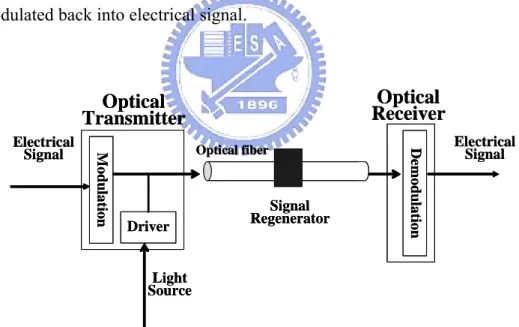
through copper cable, data in optical networks is converted to bits of light called photons and then transmitted over optical fibers. Optical networks provide faster transmission than traditional networks because photons moving in a fiber do not affect the others and are not affected by stray photons outside the fiber. An essential optical network is shown in Figure 2-1. Four elements including optical transmitter, optical fiber, signal regenerator, and optical receiver are required. The optical transmitter consists of a modulation circuit for coding input electric signal and a driver circuit to drive light source (LED, Light Emitting Diode, or laser) to produce a beam of light. That is, electrical binary information will be modulated into a sequence of on/off light pluses, and then they will be transmitted into the optical fiber. The light beam will become attenuant in a long transmission; thus, the signal regeneration will amplify the power of the beam. When the signal pluses are propagated to the receiver, they will be demodulated back into electrical signal.
Signal Regenerator Optical Receiver Electrical Signal Demodu lation Optical Transmitter Electrical Signal Modu lation Driver Light Source Optical fiber Signal Regenerator Optical Receiver Electrical Signal Demodu lation Optical Transmitter Electrical Signal Modu lation Driver Light Source Optical fiber
Figure 2-1: Essential optical network
Optical fiber consists of three parts, core glass, cladding glass, and plastic jacket. Due to the characteristic, the code glass with a higher index of refraction than the cladding glass, a ray of light from the core glass approaches the surface of the cladding glass will result in reflection which partial ray is reflected back into the core glass and refraction which partial
ray go through the surface of the cladding glass. When the incident angle is less than a specified value, refraction will not occur such that the ray of light is completely reflected back into the core glass. It is called total internal reflection. Using total internal reflection in optical fibers, a ray can be propagated at the core glass over a long distance in low signal attenuation. Because indexes of refraction for different wavelengths are different, the indecent angle to produce total internal reflection will be different for rays with different wavelength. A mode is defined as a ray of light that enters an optical fiber at a particular angle. According to the number of modes provided in an optical fiber, optical fibers are classified into two types, multi-mode and single-mode. Multi-mode fiber whose code glass will be 50 microns or so allows multiple modes of light to propagate through the fiber. Single-mode fiber whose code glass will be 8 microns or so allows only one. Multi-mode fiber uses LED as the light-generating device, while single-mode fiber generally uses laser.
The photons transmitted in optical fibers will be affected by attenuation and dispersion. Attenuation, which is the loss of signal power propagated over some distance and computed as 10log10(transmitted power/received power)), limits the maximum transmitted data rate or bandwidth
capacity, and maximum distance. Attenuation is primarily caused by three factors; (1) scattering of light from molecular level irregularities in the glass structure; (2) light absorbed by residual materials, such as metals or water ions [8], within the core glass and cladding glass; and (3) light leakage due to bending, splices, connectors, or other outside forces. Dispersion, which is time distortion of an optical signal that results in pulse broadening, causes a waveform to become significantly distorted and can result in unacceptable levels of composite second-order distortion. There are two dispersions, modal dispersion [70] and
chromatic dispersion [18], in transmitting signal in fibers. The two types can be balanced to
produce a wavelength of zero dispersion anywhere within the 1,310 nm to 1,650 nm. In order to overcome attenuation and dispersion, electrical or optical signal regenerators (repeaters) are
used to amplify the power of rays. Apart from amplifying signal power at full wavelength simultaneously, the function of operation in amplification can be classified into signal reshaping and signal reclocking. The former reproduces the attenuated signal by reshaping the plus shape of each bit and eliminating noise. The latter reproduces the attenuated signal by synchronizing the signal to its original bit pattern and bit rate. Three types of signal regenerators are implemented to provide the corresponding operations: 3R (including signal reshaping and signal reclocking operations), 2R (only including signal reshaping operation), and 1R (simple generator without signal reshaping and signal reclocking operations).
2.2 Optical Multiplexing Transmission System
The way to exploit the fiber’s huge bandwidth is to introduce concurrency among multiple user transmissions. The concurrency may be provided according to wavelength, time slots, or wave shape, and thus the technologies of wavelength-division multiplexing (WDM), optical time-division multiplexing (O-TDM), and optical code-division multiplexing (O-CDM) are developed to provide flexibility.
Mux
3 2 1,
λ
,
λ
λ
1λ
2λ
3λ
1λ
2λ
3λ
Optical fiber
Demux
TE TE TE TE TE TE TE :Terminal Equipment
Mux
3 2 1,
λ
,
λ
λ
1λ
2λ
3λ
1λ
2λ
3λ
Optical fiber
Demux
TE TE TE TE TE TE TE :Terminal Equipment
Figure 2-2: WDM for three wavelengths
electric speed, the WDM provides the function in which each signal is modulated and several signals will be combined and transmitted simultaneously in a same optical fiber. As shown in Figure 2-2, three user’s terminal equipment can be multiplexed on the same fiber. WDM systems are popular with telecommunications companies because they allow them to expand the capacity of the network without laying more fiber links. According to market segments, WDM systems are divided into dense and coarse WDM. Systems with more than eight active wavelengths per fiber are generally considered Dense WDM (DWDM) systems; otherwise, they are classified as coarse WDM (CWDM). Since DWDM is more expensive than CWDM, DWDM tends to be used at a higher level in the communications hierarchy.
O-TDM is a technique used to increase the bandwidth of a single wavelength channel. In O-TDM, communication channels are assigned based on time slots in a frame. Incoming electronic data is imprinted upon the pulse stream via an electro-optic modulator. Thus, the time-multiplexed data can be encoded inside a sub-nanosecond (ns) time slot. Many such timeslots are time-interleaved into a frame format, sent through the optical fiber, and demultiplexed at the receiver. Under O-TDM, each end-user should be able to synchronize to within one time slot.
The basic concept of O-CDM is found from spread-spectrum communication technique [58], which is a means of transmission, where the signal occupies a bandwidth in excess of the minimum necessary to send the information; the band spread is accomplished by means of a code that is independent of the data, and a synchronized reception with the code at the receiver is used for dispreading and subsequent data recovery. O-CDM provides a class of new multiplexing techniques extending the technique of CDMA (code-division multiple-access) [73]. In O-CDM, each data in channel is encoded with the specific code such that only intended user with the corrected code can recover the encoded information. The selection of the desired signal from among all of the other signals on the channel is based on matched
filtering. The output of the optical decoder is the correlation between the input signal and the matched filter. Thus, a proper choice of optical codes allows signals from all connected network nodes to be carried without interference between signals. Therefore, simultaneous multiple access can be achieved without complex network protocols. In sum,TDM and O-CDM are relatively less attractive than WDM, and then WDM is the current favorite multiplexing technology for long-haul communications in optical communication networks.
2.3 Optical Equipment
For a single-mode fiber whose potential bandwidth is nearly 50 Tb/s, the data rate is nearly ten thousand times of electronic data rates of a few gigabits per second (Gb/s) in traditional network using copper fiber. Because end-user’s equipment operates at electronic rate and the optical signals are transmitted in media (optical fibers) at optical data rate, the effort should be elapsed to tap into this huge mismatch of data rate between optic and electron. In the past years, there are several optical equipments are developed such that the optical networks can provide more bandwidth and complexity. Erbium-doped fiber amplifier (EDFA), wavelength add/drop multiplexer (WADM), and optical wavelength crossconnect (OXC) are significant equipment.
A conventional repeater puts a modulated optical signal through three stages: (1) optical-to-electronic conversion, (2) electronic signal amplification, and (3) electronic-to-optical conversion. The three stages usually are abbreviated to OEO conversions. The repeaters limit the bandwidth of the signals that can be transmitted in long spans of optical fiber. Eliminating complex and inefficient OEO conversion, an Erbium-doped fiber amplifier (EDFA) is an optical repeater that amplifies a modulated beam directly without OEO conversions. The device uses a short length of optical fiber doped with the rare-earth element erbium. When the
signal-carrying beams pass through this fiber, external energy (called optical pump laser) is applied to energize the erbium irons. Because the light beams carried by a fiber are attenuated as they travel through the material, this necessitates the use of repeaters in spans of optical fiber longer than about 100 kilometers. Using EDFA, the WDM networks will provide the way of amplifying all wavelengths at the same time to increase the realizable bandwidth and transmitting distance. Demux 3 2 1
,
λ
,
λ
λ
Mux 3 2 1,
λ
,
λ
λ
S1 S2 S3 Demux 3 2 1,
λ
,
λ
λ
Mux 3 2 1,
λ
,
λ
λ
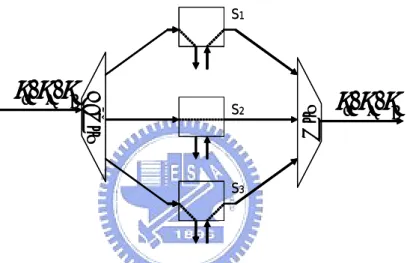
S1 S2 S3Figure 2-3: Wavelength add/drop multiplexer (WADM)
While EDFA and WDM technology is used to provide a large scale network in which two nodes may be connected in more than 300 kilometers distance, it is necessary to drop or to add some traffic at internal nodes. Based on the requirement, the wavelength add/drop multiplexer (WADM) can be realized by using demultiplexers, switches, and multiplexers. For example, the WADM with three wavelengths shown in Figure 2-3 requires a demultiplexer, three 2×2 switches (one switch per wavelength), and a multiplexer. Two statuses, ‘bar‘ state and ‘cross’ state, are respectively provided the function of the signal on corresponding wavelength passing through the WADM, and the function of the signal on the corresponding wavelength being dropped locally and another signal being added to the same
wavelength at the WADM. In Figure 2-3, because switches S1 and S3 are in ”cross” status, the
signals in λ1 and λ3 will be added/dropped in the WADM. Using the WADM, the unusable
signals will be dropped such that the user’s signals can be added to the data beam to transmit. When a wavelength is used to carry user’s signals, the data will be switched from a specified input port to a specified output port in the same wavelength. It is not realistic to require that the same wavelength is occupied from the source node to the destination node. This type of switch is incapable of converting the data from one wavelength to anther one; otherwise, the switch must have the capability of wavelength conversion [63] and it is called a OXC with wavelength conversion shown in Figure 2-4 which includes two input ports and two output ports to connect two input fiber links and two output fiber links with three wavelengths. Using appropriate fiber interconnection devices can provide the flexibility of routing signals between different wavelengths. For providing the capability, several pulses generated to convert the wavelength will give rise to transmission delays. In earlier research [75], the delayed-interference signal-wavelength converter (DISC) was proposed to provide 3.8-THz-shifted (from 1530 to 1560-nm) by generating more than 14-ps-long pulses. Recently, 40Gb/s all-optical wavelength converters comprising an SOA (semiconductor optical amplifier) and a plus reformatting optical filter were demonstrated in [44]. The pulses are generated or reformatted and thus cause delayed transmission. Although eliminating wavelength conversion capability can significantly reduce the cost of constructing a switch, it may result in reduction of network efficiency because the same wavelength must be available on each link of the constructed route. Therefore, it may be more realistic to construct switches with wavelength conversion. Deploying a part of switches with wavelength conversion in networks can be a viable alternative to balance the installation cost and efficiency. Networks of this type are called a WDM network with sparse wavelength conversion.
Optical Switch Demu x De mu x 3 2 1,
λ
,λ
λ
3 2 1,λ
,λ
λ
Mu x Mu x 3 2 1,λ
,λ
λ
3 2 1,λ
,λ
λ
Optical Switch Optical Switch 3λ
2λ
1λ
Optical Switch Demu x Demu x De mu x De mu x 3 2 1,λ
,λ
λ
3 2 1,λ
,λ
λ
Mu x Mu x 3 2 1,λ
,λ
λ
3 2 1,λ
,λ
λ
Mu x Mu x 3 2 1,λ
,λ
λ
3 2 1,λ
,λ
λ
Optical Switch Optical Switch 3λ
3λ
2λ
2λ
1λ
1λ
Figure 2-4: OXC with 2 input ports and 2 output ports
2.4 Evolution of Optical Networks
In multi-mode fibers, different wavelengths can be propagated in a certain distance. Different optical networks implementing different technologies and architectures are demonstrated in the evolution of optical networks. Since optical fibers had been manufactured in 1970s, a variety of optical networks have come into existence to replace traditional networks using copper cables. Optical networks can be classified according to different criteria. According to network topology, they can be ring, mesh, or star. Ring topology is superior to mesh topology in many ways: (1) the number of rings increases linearly with the number of nodes, (2) fault tolerance, (3) load sharing, and (4) reduced load at the router and no need for buffering. According the number of hops in optical networks, they are classified into single-hop networks and multi-hop networks. Nevertheless, according to evolution of optical networks, there are three generations in the trend of optical network development. The first generation started when fibers were chosen to replace copper media. The second generation emerged by providing network functionality by electronics. The third generation demonstrated in 1999 was intelligent optical networks to provide the capacity of routing and signaling for optical paths.
converted between optical and electronic equipment and the protocols used in copper-based network are still deployed. Due to the burden of OEO conversions, only a small fraction of bandwidth, less than 0.1 percent, is utilized. FDDI (Fiber Distributed Data Interface) and Gigabit Ethernet are two major products in this generation to provide 100~200 Mb/s and 1~10Gb/s bandwidths.
Breakthroughs in technologies of WDM and EDFA, the second generation networks exploit the bandwidth of optical fibers by traditional electric network equipment, such as switches, amplifiers, and so on. The broadcast-and-select network (BASN) [28] is a representative product which consists of a passive star coupler (PSC) and connected nodes to form a star-like network. Each node equipped with one or more fixed-tuned or tunable optical transmitters and one or more fixed-tuned or tunable optical receivers. Each transmitter in each source node will be tuned to use a different wavelength such that all the signals are transmitted simultaneouslyto PSC. All transmitted signals will be combined in the PSC, and then broadcasted to all nodes. All destination nodes will tune their receivers to the corrected wavelength such that the signals propagated in the wavelength will be received by the receiver. The requirement of fast tunability is required in transmitters and receivers. Because each transmission in BASN needs to be broadcasted to all other nodes, not only most of the transmitted power is wasted on receivers but also the number of transmitted messages is limited by the number of wavelengths in the network. Therefore, although BASN is suitable for local or metropolitan area networks, it is not suitable for wide area networks.
The third generation is wavelength-based routing networks that are presented as a scalable alternative by the help of optical WADM and optical crossconnecter (OXC) [84]. To avoid wastage of transmit power, channeling a signal from the transmitter of a source node to the receiver of destination node along a restricted route is needed instead of letting it spread out over the entire network as in BSAN. Therefore, at each intermediate node on the route,
light coming in at one incoming port in a given wavelength is routed out of one and only one outbound port by a wavelength router. Not only the need for traffic is groomed but also the capacity gain provided by wavelength conversion is justified. In order to transmit signals more efficiently, the problem of the virtual topology design for offline traffic environment and the problem of finding a route and assigning a wavelength are imperative problems. By the different technologies adopted to build wavelength-based routing networks, there can be linear lightwave networks (LLN) and wavelength routing networks (WRN).
In LLN discussed in [3], nodes are classified into two types end nodes and routing nodes.
Routing nodes provide the function to multiplex and to demultiplex optical signals in
wavebands but not in wavelengths, where wavebands partitioned from lower attenuation band (for examples, 1550 nm band) consist of a number or eight wavebands transmitted in fibers. Each waveband can be partitioned into a number of wavelengths. End nodes provide the function to multiplex and to demultiplex optical signals in wavelengths but not wavebands. The objective of the architecture is to provide purely optical connections on demand, supporting a high degree of flexibility, including user-chosen modulation formats (digital or analog) and user-chosen bitrates (or bandwidths).
To build a more flexible multipoint optical network such that the signal can be routed based on wavelength level, the wavelength routing networks (WRN) [70] is developed by deploying optical wavelength crossconnect (OXC) in networks. Three problems in BASN, lacking of wavelength reuse, power splitting loss, and scalability to WAN (wide area network) can be resolved. Using point-to-point optical fiber links to connect input ports and output ports in OXCs, a WRN with an arbitrary topology can be established and data can be rerouted to other optical switches based on wavelengths. Data will be sent from one node to another according to the wavelength-level connections that exist between every two consecutive switches. A WRN which carries data without any intermediate OEO conversion is called an
all-optical transparent WRN [8][70]. The type of optical networks deploying the WDM technology is called WDM networks, including BASN, LLN, and WRN.
2.5 Multicast
To provide high bandwidth network communication, several commercial protocols including synchronous digital hierarchy (SDH), synchronous optical network (SONET), asynchronous transfer mode (ATM), and internet protocol (IP), are investigated to implement them in WDM networks [74]. For example, in the protocol IP over WDM, the transmitted data will be packeted based upon IP protocols. To provide more flexibility of services, various existing protocols over WDM could be directly supported in wavelength channels.
Due to the attractive communication bandwidth in WDM networks, many new network applications (distributed databases [9], replicated file systems [51], resource allocation in distributed systems [26], distributed process management [13], distributed games [6], replicated procedure calls [15], and teleconferencing [55], and so on) are inspiring new communication models, among which multicast is an important communication of a point to multipoint to distribute multimedia content or data. In multicast, data will be sent from a single source (transmitter) to multiple destinations (receivers) and the route of transmitting the type of requests is tree-like structure called a multicast tree.
Multicast in traditional copper networks has been well studied since the 1990s. Multicast Backbone (MBONE) [24], which can be seen as an overlay of the internet exploring applications of multicast over IP layer by using the reliable multicast transport protocol (RMTP) [57] for IP, is the first demonstrator. RMTP is used to reliability guarantee in application development. For example, distributed databases which need to be certain that all members of a multicast group agree on which packets have been received. The only service demanded by RMTP from the underlying network is the establishment of a multicast tree
from the sender to the receivers, where the multicast tree can be set up by multicast routing protocols (such as, DVMRP [61], PIM [66], or CBT[5]). The function of RMTP is to deliver packets from the sender to the receivers in sequence along the multicast tree, independent of how the tree is created and resources are allocated. Roca, et al. [77], gave an overview of most of the directions taken by research in multicast research. Mir [52] gave a survey of techniques, architectures, and algorithms for multicasting data in communication switch networks.
Nevertheless, a realistic demonstrator of multicast in WDM networks seems in development. For the protocol stack, multicast can be implemented at different layers; for example, WDM layer, SDH/SONET layer, ATM layer, or IP layer. Three schemes, IP multicast, Multiple-unicast (or IP multicast via WDM multicast), and WDM multicast for multicasting data in IP over WDM networks, were introduced by Qiao et al. [62]. In IP multicast, the multicast tree is constructed in the IP layer, and each node will make copies of data and transmit each copy to each successor. As shown in Figure 2-5 (a), v2 is a branch node
to pass data to v3 and v4. Therefore, it is necessary to make a copy in v3, to send the copy to
passing through v2 to v4. Because it requires OEO conversions of packing data at each router,
this scheme is not only inefficient but also unaffordable. To avoid these OEO conversions, Multiple-unicast is proposed to construct a virtual topology consisting of a set of light-paths from the source to all destinations, where the number of light-paths may equal the number of destinations. Because data will only be copied in the source node, the transmission delay of OEO conversion is still required. Besides, if some link is shared by more than one light-path, each light-path would need a different wavelength for routing the data. As shown in Figure 2-5(b), two light-paths, v1-v2-v3 and v1-v2-v4, would need two different wavelengths λ1 and λ2
because the link between v1 and v2 is shared. If each light-path requires one specific
scheme is thus proposed to reduce wavelength consumption. v1 v3 v4 v2 λ1 v1 v3 v4 v2 λ1 λ1 v1 v3 v4 v2 λ1 λ2 v1 v3 v4 v2 λ1 λ1 λ2λ2 v3 v1 v4 λ1 v2 v3 v1 v4 λ1 λ1 v2
(a) IP multicast scheme (b) Multiple-unicast scheme (c) WDM multicast scheme Figure 2-5: Three multicast schemes
To avoid making copies in the source node and sending a separate copy to each receiver using different wavelength, light signals need to be duplicated using optical splitters [53] or tap [60] for providing multicasting in the WDM layer; that is, WDM multicast is implemented by using a multicast tree in the WDM layer, in which the root represents the multicast source. Following the links in the multicast tree, the same data is transmitted only once on each link. Nevertheless, the optical splitters make the switch architecture complex and also cause power loss that requires optical amplifiers, but no OEO conversion is required and wavelength consumption is thus saved.
In an optical network, a tap [60] is an optical device which taps a small amount of the power of the signal from an optical fiber, and allows the signal to continue with negligible power degradation. An n-way splitter [53] is an optical device which splits an input signal among n outputs, but the power of each output will be reduced to
n
1
th of the original signal. The ability to split the signal without the knowledge of the signal’s characteristics allows an optical network to realize multicasting without the need for buffering. Therefore, all-optical networks are much more powerful than electronic networks in which
store-and-forward is necessary to achieve multicasting. In general, a node implementing optical splitter is called an MC (multicast capable) node as introduced in [62]; otherwise, it is called an MI (multicast incapable) node. For a multicast tree, if each branch nodes with more than two outbound links to connect the other nodes is an MC node, the multicast tree will be a light-tree [67]. Because the split signals can be transmitted by links to other nodes concurrently, locating an MC node for routing data to several destinations would have significant wavelength saving over multiple-unicast. To describe the splitting capacity, the light splitting
capacity of a node is used to indicate the maximum number of split signals at an output port.
The light splitting capacity of an MC node (respectively, MI node) is greater than (respectively, equal to) 1. As shown in Figure 2-5(c), since v2 is an MC node,only wavelength
Chapter 3 Preliminaries of Routing and Wavelength
Assignment Problem
To demonstrate the applications in WDM networks, several issues consisting of topology design (employing OXC, optical fiber, generator, and so on) and reconfigure, routing and wavelength assignment, multicast routing and wavelength assignment, traffic grooming, and IP-over-WDM need to be investigated. In this chapter, preliminaries of routing and wavelength assignment problem (RWAP) are introduced. According to the number of destinations required to be routed to, the RWAP is divided into two types, unicast RWAP (URWAP) and multicast RWAP (MRWAP). Besides, relevant research into the URWAP and MRWAP are surveyed. In the end of this chapter, an RWAP model is proposed such that the relationship to previous studied problems can be compared. The problems discussed in this dissertation can be demonstrated using this model.
3.1 Routing and Wavelength Assignment Problem (RWAP)
In optical networks, the traffic is usually grouped into sessions, and a session is a workstation engaged in specified activity which requires data transmission, which can be classified into two types, one-to-one (unicast) and one-to-many (multicast). A session can be described by an ordered pair (s, D), where s is the source (a ‘send’ workstation from which data is transported) and D is a set of destinations (‘receive’ workstations to which data is
transported). According to the number of destinations in D, m = |D|, the activity is unicast when m = 1; otherwise, it is multicast. In order to complete each session successfully, how to construct a route and assign wavelengths to each link in the route is an important and interesting research topic. The problem is called the Routing and Wavelength Assignment problem (RWAP) that has been shown to be NP-hard [14]. Preliminarily, RWAP can be partitioned into two sub-problems: (1) routing problem (RP) – discussing the way to find the route of transmitting one or more sessions and (2) wavelength assignment problem (WAP) – discussing how to assign wavelengths to the links in the fixed or given routes.
In general, the features in WDM networks include network topology (ring, mesh, star, tree, or arbitrary graph), the routers with or without the capacities of optical wavelength conversion or electric wavelength conversion, the routes with or without light splitting capability. Different variants of RWAP will be issued from discussing the WDM networks with different features. In RWAP, the requirement which establishes a session for transmitting data is called a (connection) request. Typically, requests can be static or dynamic, depending on whether they are known in advance or not. The RWAPs for discussing static requests and dynamical requests are called a static RWAP and a dynamical RWAP, respectively. Besides, different objectives will result in different methods or algorithms proposed to examine these RWAPs.
For the entire set of given static requests, the static RWAP is to set up routes for these requests while minimizing network resources (such as the numbers of links and wavelengths). Alternatively, the objective can also be to set up as many of these connection sessions as possible for a given network topology. It is worthy to node that the goal is usually to predict a long-term traffic requirement among routers in networks. Nevertheless, dynamic multicast requests arrive at the network one by one in a random way. It is necessary to tear down some connected route and establish new routes in response to the traffic change in the network.
Unlike static RWAP, dynamic RWAP must be processed online and responsively when a new request arrives. The algorithms for dynamic RWAP usually perform more poorly than those for static RWAP due to no information about network status and the requirement of short response time. The objective is usually to minimize the amount of connection blocking or the number of connected links in the route, or to maximize the number of connection sessions that are established in the network at any times.
Nevertheless, according to the variation between routes in unicast sessions which can be carried on a light-path and routes in multicast sessions which can be carried on one or a set of multicast trees, the studies on RWAP can be classified into unicast RWAP (URWAP) and multicast RWAP (MRWAP). Because the variation of routes is more significant than the variation of connection requests (static requests vs. dynamical requests), the preliminary of RWAP will be introduced with unicast session and multicast session.
3.2 Unicast RWAP (URWAP)
Because a unicast session can be carried on a light-path, the URWAPs are known as the Static Light-path Establishment (SLE) problem or the Dynamical Light-path Establishment (DLE) problem for the static and the dynamical connection requests. RWAP needs to follow the wavelength-continuity constraint that the wavelength used in the input port in a router is the same as that used in the output port. Based on the constraint, two integer linear program (ILP) formulations were proposed in [40][64] to maximize the number of established connections for a fixed number of wavelengths and a given set of unicast requests. A new ILP formulation [54] can be used for networks without wavelength conversion and easily extended for networks with sparse wavelength conversion. In [54], a dynamic and stochastically varying demand model which takes into account the effect of the uncertain future demands and availability of resources. The scenario of the demand model is considered
as follows: (1) a set of unicast requests is first required to be established (static traffic); (2) additional unicast requests arrive randomly one a time and are assigned routes and wavelengths without rerouting the existing light-paths; (3) unicast requests are terminated randomly as well. However, since the number of wavelengths is limited, some of the unicast requests will be blocked. Assuming that there is a penalty associated with blocking a light-path, the goal is to minimize the expected value of the sum of the blocking penalty. A survey of URWAP can be found in [43].
As the wavelength-continuity constraint is removed by the use of wavelength converters [84], network blocking performance is reduced, wavelength reuse is increased, higher loads are supported, and network throughput is enhanced. The benefits of wavelength conversion provided in WDM networks were introduced in [38]. Due to the complexity of wavelength converters, wavelength converters remain expensive such that it may not be economically viable to equip all the routers in a WDM network with these devices. Two architectures, share-per-node and share-per-link, were proposed for switches sharing converters in [42]. In the share-per-node structure, all converters at the switching node are collected in a converter bank, where the converter bank is a collection of a few wavelength converters which can convert any input wavelength to any output wavelength. In this architecture, only the wavelengths which require conversion are directed to the converter bank and converted wavelengths are then switched to the appropriate outbound link by the second (small) optical switch. In the share-per-link structure, each outbound link is provided with a dedicated converter bank which can be accessed only by those light-paths traveling on that particular outbound fiber link. Yoshima, et al. [83] proposed and demonstrated a packet-based optical multicasting. In this paper, an optical code (OC) label in the packet header combined with multicast-capable packet switch enables packet-based optical multicasting.
wavelength converters are shared by more than one links, or the wavelength converter with limited wavelength conversion that the parts of wavelengths can be converted, where the former is usually called sparse wavelength conversion. The problem of designing a WDM network with limited wavelength conversion was introduced by Iness et al. [31]. The effect of sparse wavelength conversion on connection blocking was examined in Subramaniam et al. [72]. Optimal placement of limited wavelength converters in mesh networks and arbitrary networks was discussed in Arora [2] and Iness [32][60], respectively. For the placement of full wavelength converters and the placement of limited-range converters introduced in Yates [82], Houmaidi and Bassiouni [30] who developed the HYBRID algorithm by extending the k-MDS algorithm, which is used to select the best set of nodes that will be equipped with full-conversion capability. Ho and Lee [29] proposed a dynamic algorithm to minimize the number of wavelength translations in WDM networks with full-range converters and in WDM networks with limited-range converters. A hybrid algorithm based on the combination of mobile agents technique and genetic algorithm was proposed by Lei and Jiang [43] to explore the dynamic RWA problem in WDM networks with sparse wavelength conversion. Using mobile agents to cooperatively explore the network states and to continuously update the routing tables, the hybrid algorithm determined the first population of routes for a new request based on the routing table of its source node.
3.3 Multicast RWAP (MRWAP)
For the multicast session, the routing problem which explores the way to find a multicast tree is usually called a multicast routing problem (MRP) [3][38][81]. For the case that the route is fixed or given, how to assign wavelengths to links in the route is called a multicast wavelength assignment problem (WAP) [17][25]. The problem of combining MRP and WAP is called a multicast routing and wavelength assignment problem (MRWAP) [1][12][33][45]
[46][47][[50][67][68] [71][84][85]. Although the MRP in IP networks has been well studied [7][34][36][37] and efficient multicast routing algorithms or protocols [28][79] have been developed in use for many years, a commercial algorithm or protocol used in WDM layer seem in development. However, several algorithms or heuristics have been proposed to explore the MRWAP.
In previous research, Ali and Deogun [1] have investigated the MRP in networks employing tap-and-continue switches which have limited multicast capabilities. Liang and Shen [46] have investigated the problem of finding minimum-cost for traversing a link on some wavelength and for wavelength conversion when the path has to switch to a different wavelength at some nodes. Sahin and Azizoglu [68] have investigated the problem under various splitting policies, and Malli et al. [50] have investigated the problem under a sparse splitting model. Sahasrabuddhe and Mukherjee [67] have formulated the RWAP for multi-hop multicast routing in packet-switched networks as a mixed-integer linear programming problem. In [85], the MRWAP with sparse light splitting is studied. Four heuristic algorithms Reroute-to-Source, Reroute-to-Any, Member-First, and Member-Only, were proposed to construct routing tree. However, the focus in is on building a multicast tree meeting all the predetermined constraints rather than on the optimal use of wavelength converters. How to minimize the number of wavelengths used in a multicast session was discussed. The argument is that the fewer the number of wavelengths in a multicast tree will lead to the fewer the number of wavelength conversions.
In the study [85], the nodes in networks were assumed to lack for the capability of wavelength conversion. Furthermore, the MRWAP deploying the nodes with wavelength conversion were studied by Sreenath et al. [71]. The MC nodes with wavelength conversion were called virtual sources in [71]. The virtual source approach consisting of two phases, networking partitioning phase and tree generation phase, was proposed to construct a
multicast tree. Minimizing communication cost, wavelength conversion cost and wavelength consumption of light-forest subject to a transmission delay bound was not discussed in [85] and [71]. The multicast routing problem involving in wavelength assignment is called the multicast routing and wavelength assignment problem. Jia et al. [33] and Chen [12] solved the problem by decomposing the problem into two sub-problems, multicast routing and wavelength assignment, so as to reduce the complexity. In [33], the problem for routing a request with a delay bound was solved under the assumption that every node in network has light splitting capability. Two integrated algorithms corresponding to the two sub-problems were proposed to minimize the sum of wavelength cost and communication cost. Considering wavelength cost, conversion cost, and initial transmission cost, Chen [12] proposed an integrated approximation algorithm to deal with the problem without delay bounds and to subject to minimize the total cost of a multicast session. For routing on a network with power splitters having full range wavelength conversion and with wavelength converters having an unlimited splitting capacity, a mixed integer programming model was proposed by Yang et al. [84] to solve the multicast routing and wavelength assignment for light-trees with delay bounds. In their dissertation, the objective was not only to minimize the number of used fibers and to obtain the optimal placement of power splitters but also to design the logical topology based on light-trees for multiple connection demands. The study of [84] is based on the assumption that a multicast request is routed only by a tree. It is possible that no light-tree can be found to satisfy the delay bound constraint and to cover all destinations in the network without enough power splitters or enough wavelength converters.
3.4 RWAP Problem Model
In order to distinguish these problems, a six-field notation RWAP(S, R, L, D, W, T) is used to represent the RWAPs. The fields are described as follows.
S : session type, S = {unicast, multicast}. R : request type, R = {static, dynamical}.
L : light splitting capacity, L = {no, sparse, limited}. D : requests with delay bound, D = {no, delay}.
W : wavelength conversion capability, W = {no, sparse, share, limited-range}. T : network topology, T = {ring, mesh, star, tree, graph}.
Chapter 4 Multicast Routing and Wavelength
Assignment Problem with Delay Constraints
In [12][33][71][84] and [85], all MC nodes were assumed to have the capability of splitting an input signal to multiple output signals. The number of output signals in each MC node is no smaller than the outbound edges of the MC node so that all destinations connecting to the MC node can be routed successfully. In this dissertation, MC nodes of this type are called unrestricted MC (UMC) nodes. Due to the sophisticated architecture [10] of MC nodes, using the MC nodes with superior light splitting capacities to build network is usually more expensive than using those with inferior light splitting capacities or MI nodes. Therefore, a WDM network with heterogeneous light splitting capabilities (WDM-He network), in which the light splitting capacities of all nodes could be different, addressed in this dissertation can better reflect the real-world requirement.
To the best of our knowledge, only a limited number of papers have been reported on the MRWAP for routing multicast requests with a delay bound in a WDM-He network with or without wavelength conversion incorporating the objective of minimizing the total cost incorporating communication cost and wavelength consumption. This type of problem is called MRWAP-DC. To better provide a realistic objective function to reflect the cost for routing a request, a linear combination of communication cost and wavelength consumption,