行政院國家科學委員會專題研究計畫 成果報告
利用基因體方法研究人類病原白色念珠菌致病化因素之功
能(3/3)
研究成果報告(完整版)
計 畫 類 別 : 個別型 計 畫 編 號 : NSC 98-3112-B-009-001- 執 行 期 間 : 98 年 05 月 01 日至 99 年 04 月 30 日 執 行 單 位 : 國立交通大學生物科技學系(所) 計 畫 主 持 人 : 楊昀良 共 同 主 持 人 : 藍忠昱 計畫參與人員: 學士級-專任助理人員:蔡鋘 碩士班研究生-兼任助理人員:陳柏伶 碩士班研究生-兼任助理人員:陳妍寧 碩士班研究生-兼任助理人員:李淑萍 碩士班研究生-兼任助理人員:許淑貞 碩士班研究生-兼任助理人員:王毓駿 博士班研究生-兼任助理人員:柯惠菁 博士班研究生-兼任助理人員:蔡馨儀 報 告 附 件 : 出席國際會議研究心得報告及發表論文 處 理 方 式 : 本計畫可公開查詢中 華 民 國 99 年 06 月 17 日
行政院國家科學委員會補助專題研究計劃
期末報告
利用基因體方法研究人類病原白色念珠菌致病化因素之功能
計畫類別:個別型計畫
計畫編號:
NSC 96-3112-B-009-004
NSC 97-3112-B-009-001
NSC 98-3112-B-009-001
執行期間: 96 年 05 月 01 日至 99 年 04 月 30 日
計畫主持人:楊昀良
共同主持人:藍忠昱
計畫參與人員:柯惠菁、許淑貞、李淑萍、陳伯伶、蔡鋘、陳亦達
成果報告類型(依經費核定清單規定繳交):完整報告
本成果報告包括以下應繳交之附件:
□赴國外出差或研習心得報告一份
□赴大陸地區出差或研習心得報告一份
□出席國際學術會議心得報告及發表之論文各一份
□國際合作研究計畫國外研究報告書一份
執行單位:國立交通大學生物科技學系
中 華 民 國 99 年 06 月 18 日
目
錄
一、 計畫摘要
1a. 中文摘要 (一頁為限) ---
page 31b. 英文摘要 (一頁為限) ---
page 4二、 背景介紹
2a. 研究目的 ---
page5
2b. 文獻探討 ---
page6
2c. 研究方法 ---
page10
三、 研究內容
3a. 研究成果 ---
page16
3b. 分析與討論 ---
page3c. 所遭遇之困難與因應對策 ---
page28
四、 成果自評
(整合型計畫之總計畫主持人需另針對整體計畫評估)4a. 研究成果與原設定目標之相符程度 ---
page29
4b. 達成預期目標情形 ---
page29
4c. 研究成果之學術或應用價值 ---
page29
4d. 學術期刊發表情形 ---
page30
五、 參考文獻 ---
page31
六、 附件
6a. 學術論文 ---
page 366b. 可供推廣之研發成果資料表 ---
page一、計畫摘要
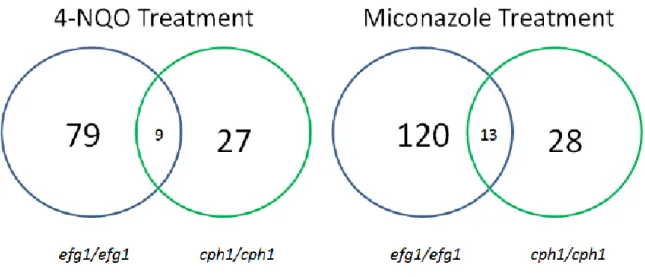
1a. 中文摘要 (請於五百字內就本計畫要點作一概述,並依本計畫性質自訂關鍵詞;一頁為限。) 近年來,人類真菌感染 (fungal infections) 的情形有日益增加的趨勢。這其中以白色 念珠菌(Candida albicans) 為最大宗-在美國相關的醫療費用估計為每年 10 億美金。雖然 臨床上有抗真菌藥物,然而這些藥物普遍有副作用、對新出現及一些特定的菌株無效、及 造成抗藥性流行等問題,再加上白色念珠菌為伺機型病原。因此,發展及引進新的觀念及 策略,由不同的角度及方法來瞭解真菌感染的問題是有必要的。 目前已知與調控白色念珠菌致病機制有關的因素有環境刺激、營養之取得、抗藥性、 及毒性因子(virulence factors)等。但是對整個致病機制的調控及各別因素間彼此的關連 仍有很多不清楚的地方。因此,我們以功能性基因組的角度來分析及探索致病化 (pathogenesis) 過程中,這些因素的訊號傳遞途徑及其與致病化整體調控迴路 (regulatory network)的關係。 在已知的白色念珠菌主要的致病化調控因之中,Efg1 同時調控幾個致病化因素,是一個 主要的調控樞紐。因此,我們進行的第一個目標就是由受其調節的 CaEno1 切入,對 Efg1 途徑(pathway)展開功能性研究。CaEno1 本身是多功能性的蛋白,最早是以醣解酵素的功 能被發現。它不但是白色念珠菌細胞壁的主要成分,也是白色念珠菌感染寄主時的主要抗 原,因此它在 Efg1 途徑中所扮演的角色就很耐人尋味了。我們在啤酒酵母菌中建立 EGFP reporter,將 CaENO1 與 EGFP 作 fusion,成功的證實此重組基因除可留置於細胞質中,尚 可被分泌至細胞外,與在白色念珠菌中一致。經 deletion analysis 後發現,只有完整的 enolase 可以被分泌至胞外。我們更進一步以同源置換的方式直接對白色念珠菌基因體進 行 gene targeting 而達成突變的目的。發現此 eno1/eno1 功能缺損株不能在有 glucose 或 fructose 的培養基中生長,表現出 glucose suppression 的現象。此外它對 amphotericin B 及 miconazole 還有 NaCl 的感受性也有顯著的改變。在小鼠的系統性感染實驗中也發現 CaENO1 null mutant 的致病力基本上消失。因此,CaENO1 除涉及碳氮的代謝及藥物感受性, 並可能涉及滲透壓或離子通道的調控外,也對在小鼠上的致病力有重要影響。接著,我們 以去氧核糖核酸微陣列為工具,刻劃前述之特定致病機制及環境因素對白色念珠菌造成的 整體基因組的表現。成功建立 microarray screening 的流程,若以表現量差異在三倍以上 做為門檻,則涉及 Efg1 與 Cph1 調控的 4NQO 及 Miconazole 抗藥性與型態變化的基因(及 ORF)涉及 4-NQO 者在EFG1 pathway 中有 79; 而 CPH1 的則有 27; 共同的基因有 9 個。在 Miconazole 則分別為 120,28,13 基因。關鍵詞:致病機制調控、訊號傳遞途徑、基因同源置換、致病力、去氧核糖核酸微陣列、 功能性基因組
一、計畫摘要
英文摘要
Currently, the known factors associated with C. albicans pathogenesis include environmental cues, nutrition, drug resistance, and virulence. Although extensive researches have been devoted to individual factors, the global networking and the
coordination among those pathways contributing to the pathogenesis is not clear. Hence, we employ the techniques of homologous replacement and DNA microarray to explore the following: (1) the function of genes involved in the signaling/regulatory pathways
contributing to pathogenesis and (2) their roles in the network of pathogenesis.
We started with the functional study of CaEno1, under the pathways regulated by Efg1, the key regulatory factor of several pathogenesis pathways. CaEno1p appeared in several cellular locations yet there is no known localization signal. Hence, we have established a reporter system in baker yeast to identify the sequences on CaENO1 responsible to various locations, which are tightly connected to the pathogenesis and virulence of C. albicans. After performing deletion analysis, we found that only the full-length CaEno1 protein could be secreted into media. Next, we have constructed Caeno1/Caeno1 null mutants and found them not able to grow on glucose or fructose, displaying the phenotype of glucose
suppression. The null mutation also affected the susceptibility to amphotericin B, miconazole, and NaCl stress. In a mouse model of systemic infection, the CaENO1 null mutant has diminished its virulence. Our next objective is the fabrication and application of DNA microarray to study the global networking of pathogenesis and environmental responses surrounding Cph1p and Efg1p, the two major regulatory axis of the pathogenesis in Candida albicans. We have identified genes whose expressions are influenced by drugs. Among the six thousand strong genes tested, there were about 500 genes whose expression showed more than 3 fold differences between wild type and cph1/cph1 or efg1/efg1 mutants. Among them, the number of genes affected by 4-NQO in the efg1/efg1 strain was 79, and
cph1/cph1 27. There were 9 genes appeared in both. The numbers for miconazole were
120, 28, and 13.
Keywords: Pathogenesis, Regulatory network, virulence, DNA microarray, Functional
二、背景介紹
2a. 研究目的
The over-all long-term goal of this research is to elucidate the mechanisms of
pathogenesis of Candida albicans. For current study, we propose to employ molecular genetics and functional genomics tools, particularly DNA microarray, to analyze and explore the signaling/regulatory pathways contributing to the pathogenesis of C. albicans including the sensing of host environmental changes, iron and nitrogen availability, anti-microbial stresses, and morphogenesis/virulence. We are particularly interested in the connection between those factors and the yeast to filament morphotypes transition and back, commonly believed to be associated with the commensal to pathogen transition. The first objective of this study is tofocus on the functional study of the Efg1 pathway, known to involve in the regulation of this transition and the second objective is to establish a microarray platform to study the whole-genome profiling of the regulatory pathways and their global effects on
Candida albicans. We are particularly interested in the interactions among morphogenesis,
virulence, and drug resistance. In addition, this research may allow us to define particular gene products or signal transduction pathways that can be used as targets to block the
transition or kill the fungal cells specifically. Therefore, the information obtained from this study would help us to understand the molecular mechanisms of fungal
virulence/morphogenesis and in the next stage, to design and develop new antifungal drugs and/or new antifungal strategies on the molecular level.
Our specific aims for this proposal are:
Specific Aim 1. DNA microarrays for gene expression profiling concerning pathogenesis of C. albicans
a. Constructing DNA microarrays and optimizing them for analyzing gene expression profile of C. albicans. Data pre-processing and normalization will be initiated shortly after the construction of DNA microarrays such that it can be used to compare expression patterns across different experimental conditions and different strains.
b. Revealing the connection between different environmental cues known to affect the pathogenesis and the virulence/morphogenesis of C. albicans. We will employ the DNA microarray to compare responses of C. albicans to different stresses and conditions mimicing that of selected host and physical environments, including iron and nitrogen availability, sera, and antimicrobial mediators.
c. Using DNA microarray to identify potential target genes and compare expression profiles mediated by different environmental cue and stress-responsive transcriptional regulators.
Specific Aim 2. Unveiling the molecular involvement of Efg1 and Cph1 pathways in the pathogenesis of C. albicans
and drug resistance in C. albicans, which establishes their positions as the key players in the pathogenesis of C. albicans. Therefore, we would like to determine the role of Efg1 pathway in the pathogenesis of C. albicans by investigating the functions of CaEno1, a multi-functional glycolytic protein regulated by Efg1, which is also a major component of cell wall as well as a secreted antigen in Candida infections. We are also interested in studying the connection between Cph1 and drug resistance pathways since it is known that CPH1 expression affecting drug resistance activities. We will approach these goals in the following steps:
a. Understanding the molecular function of the Efg1-regulated CaEno1 with genetics study.
(1). By constructing Caeno1/Caeno1 homozygous mutant and to determine the effects on C.
albicans.
(2). By investigating the signals on CaEno1 responsible for its various localities.
b. Identifying target genes of Efg1 transcription factor by DNA microarray.
(1). By comparingthe gene expression patterns between the wild-type cells and the
efg1/efg1 mutant cells using microarray analyses.
(2). By identifying interested target genes involved in either virulence/morphological switch or drug resistance, and/or both.
c. Identifying target genes of Cph1 transcription factors in the presence of drugs by DNA microarray.
(1). By comparingthe gene expression patterns between the wild-type cells and the
cph1/cph1 mutant cells using microarray assay.
(2). By identifying interested target genes involved in drug response and morphogenesis.
Specific Aim 3. Functional characterization of genes of interest to map the gene networks and regulatory/signaling pathways.
a. Construction of stains containing mutations on each selected gene to determine the effects of mutations on host cells to elucidate the functions of the genes.
b. Elucidation of the signal transduction pathways regulating the control of pathogenesis, especially those associated with virulence/morphological switch, environmental stress, or drug resistance by mapping and correlating the functional of the selected genes.
2b. 文獻探討
Yeast infections in human have increased significantly in recent years. Among the pathogens, Candida albicans is the most dominant one. Currently, the available antifungal
drugs have undesirable issues such as side effects, ineffective against new or reemerging fungi, and leading to the rapid development of resistance (White et al., 1998; Yang and Lo, 2001). Candida albicans is an opportunistic fungal pathogen, commensally colonizes various anatomical sites in humans. In the immunocompromise individuals, such as the ones with HIV infection, diabetes, organ transplantation and cancer chemotherapy, C.
albicans can become virulent and invasive (Edwards, 1990). Candida albicans not only
causes mucosal diseases (such as oropharyngeal/esophageal and vulvovaginal candidiasis), but can also invade the bloodstream (candidaemia). It has emerged as the fourth most common cause of nosocomial infection (Beck-Sague and Jarvis, 1993). The estimated cost for treating this Candida nosocomial infection approaches 1 billion US Dollars per year in the United States (Miller et al., 2001). Understanding the regulatory mechanisms and gene functions of pathogenesis-related pathways may provide us the knowledge and drug targets for anti-fungal application. Although several factors associated with pathogenesis, such as environmental cues, nutrition availability, drug resistance, and virulence factors (for
examples, morphogenesis, extracellular hydrolytic activities, and phenotype switch) have been identified in C. albicans, the picture of the global networking and coordination of those regulations and signaling pathways contributing to pathogenesis in Candida albicans is still lacking. Noteworthy, those pathways are intertwined and only numbered controlling points are known to modulate the global activities. There are the well-known major controlling points EFG1 and CPH1, and the lesser candidate, TUP1. In this project, we will focus on the relationship between environmental cues, stress, and morphogenesis, with emphasis on the connection to the major pathogenesis control points, Efg1 and Cph1 pathways.
Complexity of pathogenesis in C. albicans and Efg1 as a major controlling point
Signaling pathways commonly sense and transfer environmental signals to downstream regulators that lead to the expression of subsets of genes potentially related to Candida pathogenesis. Those subsets of genes are known as virulence factors. Several virulence factors of C. albicans have been proposed, including hyphal morphogenesis, extracellular hydrolytic activities (e.g. secreted aspartyl proteinases and lipases) (Calderone and Fonzi, 2001; Gow et al., 2002; Naglik et al., 2004; Stehr et al., 2004; Sundstrom, 2002; Yang, 2003), and phenotypic switching. In hyphal morphogenesis, cells transit from an ovoid yeast shape to filament forms (pseudohyphae and hyphae); both filamentous forms are able to produce yeast forms again (Lo et al., 1997). Hyphal morphogenesis can be induced by a number of environmental cues, including the presence of serum, N-acetylglucosamine (GlcNAc), proline, neutral pH and elevated temperature (Ernst, 2000). The secreted aspartyl proteinases are encoded by a large SAP gene family of ten members, each differentially regulated under a variety of conditions (e.g. pH, temperature and cell morphology) (Naglik et al., 2004). Finally, C. albicans reversibly switches phenotypes with a high frequency (Soll, 2002) known as the phenotypic switching. It occurs spontaneously and is also induced by temperature and low doses of UV irradiation (Soll,
1997). These cells that undergo the switch of phenotypes vary in morphology, physiology, metabolism and pathogenicity (Lan et al., 2002; Soll, 1997).
But then how do these "factors" connect to the pathogenesis? In C. albicans
yeast-hyphae morphogenesis, the presence of serum activates adenylate cyclase (Cdc35), and thus promotes cyclic adenosine monophosphate (cAMP) production. Cyclic AMP acts as an intracellular regulator and in turn activates protein kinase A (PKA) that mediates its downstream signal via Efg1. Expression of the C. albicans HMX1 gene, which encodes a heme oxygenase required for utilization of exogenous heme and hemoglobin, is shown to be strongly de-regulated in an EFG1-null mutant (Santos et al., 2003). In C. albicans, the pH response is governed in part by the transcription factor Rim101. Rim101 promotes alkaline responses by repressing expression of Nrg1, itself a transcriptional repressor (Bensen et al., 2004). Rim101 and Nrg1 are also shown to act in parallel pathways to control hyphae morphogenesis. Interestingly, an alkaline pH condition induces expression of subsets of genes, including several iron acquisition genes also mediated by Rim101 (Bensen et al., 2004). Moreover, in the yeast model system, Saccharomyces cerevisiae, cAMP controls the activity of ferrireductases, components of a high-affinity iron uptake system. Another example is the Tpk2, a catalytic subunit of protein kinase A, whose expression negatively regulates iron uptake genes (Lesuisse et al., 1991; Robertson et al., 2000). And the complication does not stop here. Recently, we have reported that in addition to being a virulence factor, Efg1 is also involved in drug resistance (Lo et al., 2005). Together, these studies implicate that the decision-making presides over the onset of pathogenesis is made of a complex signaling and regulatory network, which includes multiple components and each of them may controls subsets of gene expression. However, those studies also point out the fact that situating among this complex network, there is the key regulator Efg1, which through coordination of different components/pathways, regulates various cell functions (ie. drug resistance, morphogenesis, and gene expression) in response to different environmental cues (e.g. iron availability, serum, and temperature). Hence, we are interested in what is the networking centering at Efg1.
Recently, we have reported that Efg1 and its downstream target CaEno1 have multiple functions in C. calbicans (Lo et al., 2005; Yang et al., 2006). CaENO1 encodes enolase and is under the control of Efg1 (Nantel et al., 2002). Enolase is a highly conserved protein throughout the phylogenetic tree (Van der et al., 1991). In addition to the known function in the glycolytic pathway, enolase is a major glucan-associated protein found in the fungal cell wall. It also serves as a receptor for human plasmin/plasminogen (Jong et al., 2003) and the major immunogen of Candida infection. In different cellular locations, its function varies. Interestingly, the locality of enolase in cancer cells is associated with the ability for metastasis. Since CaENO1 is under the control of Efg1, which is known to control morphogenesis, virulence, and drug susceptibility, we are interested to know whether
CaENO1 is connected to those pathogenesis factors in addition to be involved in the
the function of CaEno1 in connection to pathogenesis and the locality-function relationship.
The adaptation of C. albicans to the environments and its relation to the pathogenesis factors.
The ability of C. albicans to sense and adapt to alterations in host environments is
integrated in its survival and pathogenicity (Soll, 2002). As it has been mentioned, several environmental conditions are known to affect cellular growth and morphogenesis. In fact, they can even have direct impact on pathogenicity. Those factors include various forms of stress and the availability of nutrients, for example, iron. The iron-free forms of host lactoferrin and transferrin inhibit C. albicans growth and render it more susceptible to damage by neutrophils (Okutomi et al., 1998). Iron deprivation affects the adhesive properties and cell wall compositions of C. albicans (Paul et al., 1989; Sweet and Douglas, 1991) and studies on suspension cultures and biofilms indicate that drug resistance of C.
albicans is affected by iron availability (Baillie and Douglas, 1998; Paul et al., 1991). The
high-affinity iron permease (CaFtr1) is required for systemic infection in a mouse model whereas the siderophore transporter (CaArn1) is required for epithelial invasion. Besides the endothelial cell injury caused by C. albicans is iron-dependent (Fratti et al., 1998; Heymann et al., 2002; Ramanan and Wang, 2000). Moreover, in the human host, iron is mostly bound to high-affinity ligands (e.g. transferrin, hemoglobin, lactoferrin and ferritin), and there is virtually no free iron available. This iron-withholding is an important defense mechanism for the host; the availability of iron has shown to be a common signal to induce the expression of virulence factors of pathogens (Paul et al., 1991). But how do the signals from those environmental cues link to the pathogenesis pathway? Do they achieve this by sending signal to one of the virulence factors? To study the molecular mechanism of stimulus-responsive gene regulation in C. albicans using iron availability as the model, we have identified iron-regulated genes and a potential DNA-binding protein, Sfu1, which negatively regulates gene expression under iron-repletion conditions (Lan et al., 2004). Recently, the cellular levels of iron are shown to be crucial for the mode of action of a topical antifungal agent ciclopirox olamine, while the detail mechanism is most unknown (Sigle et al., 2005). Therefore, we are interested in how does the iron availability affect the pathogenesis of C. albicans, especially regarding to the Efg1 pathway.
Another nutritional signal comes from the nitrogen related regulation. The Ras
superfamily of small GTPases exists ubiquitously in eukaryotes and has been implicated in nearly all cellular processes (Aspuria and Tamanoi, 2004). Within the Ras branch of the small GTPase family, Rheb (Ras homolog enriched in brain) is a novel and unique small G protein that is conserved in a wide variety of organisms (Aspuria et al.,2007). Orthologs of human Rheb have been identified in fungi recently. In Saccharomyces cerevisiae Rhb1 is involved in controlling cell resistance to canavanine, a toxic analog of arginine, and the uptake of arginine (Urano et al, 2000). In the fission yeast Schizosaccharomyces pombe,
Rhb1 protein regulates amino acid uptake, mating, cell growth, cell cycle progression and stress response (Machet al., 2000; Urano et al., 2005; Urano et al., 2007; Uritani et al., 2006). Mutations in S. pombe TSC2 cause defects in the uptake of arginine and leucine (van Slegtenhorst et al., 2004; Weisman et al., 2005) and show a delayed response in nitrogen starvation-mediated G1 arrest (Matsumoto et al., 2002; van Slegtenhorst et al., 2005). Hence, we are interested to identify and characterize the function of RHB and TSC2 homologs in C.
albicans.
Another system we are interested to study is the response of Candida albicans to the stimuli from the host. In addition to growth and proliferation on mucosal surfaces, ingestion by human immune cells exposes C. albicans to novel environments. The cells respond to phagocytosis of neutrophils by inducing genes related to arginine and methionine pathways, suggesting that the phagosome of the neutrophil is an amino acid-deficient
environment; however, neither pathway is induced upon phagocytosis by monocytes. An analysis of its transcriptional response upon internalization by macrophages reveals that C.
albicans activates alternate metabolic pathways, represses translation and induces genes
related to the oxidative stress response, DNA damage repair, arginine biosynthesis and peptide utilization (Lorenz et al., 2004). These results suggest that the environment of the macrophage phagosome lacks usable nutrients (e.g. glucose) and contains reactive oxygen and nitrogen species, as part of its antimicrobial burst (Fang, 2004). Moreover, C. albicans encounters many antimicrobial proteins/peptides and innate defense molecules that act synergistically to combat infections. For example, some host proteins secreted onto the oral surface can directly inhibit Candida growth, morphogenesis, and adhesion through the action of antimicrobial peptides, including calprotectin (Sweet and Douglas, 1991),
lysozyme (Laibe et al., 2003), low molecular weight salivary mucins (Satyanarayana et al., 2000), secretory leukocyte protease inhibitor (Chattopadhyay et al., 2004), lactoferrin
(Samaranayake et al., 2001), and histatins (Lupetti et al., 2004). Finally, in the treatment of candidiasis, C. albicans also encounter various therapeutically antifungal drugs. All those stresses or cues induce the response of C. albicans cells and eventually via drug resistance and virulence/morphogenesis pathways send the signal to the controlling points of
pathogenesis. Do all those signals eventually go to the well-known Efg1? Or do some of them go to other controlling points? For example, there are two potential candidates, Cph1 and Tup1. Therefore, we are interested in knowing which of those pathways linked to Efg1 and if not, where do those responses send their signals.
In conclusion, this research is to study the Efg1 and Cph1 pathways by using genome-wide analysis to explore the networking and cross-talk between multiple components/pathways.
2c. 研究方法
To construct DNA microarrays of C. albicans, the QIAGEN Operon 70mer probe sets (Array-Ready Genome Oligo Set and Candida Genome AROS Upgrade Set) will be used. This oligo set contains 7,925 optimized probes that represent the entire genome of C. albicans and 10 different controls. The oligo set has been successfully used in studies of C. albicans biology and pathogenesis (Cao et al., 2006; Chen et al., 2004; Magee et al., 2003; Zhao et al., 2005).
a. RNA isolation, sample labeling and microarray hybridization.
Recognizing that one of the most important aspects of microarray analysis is the source and quality of the RNA used in these experiments, we will use standardization of protocols for RNA isolation as previously described (Lan et al., 2002; Lan et al., 2004). In general, cells grown at different conditions will be collected throughout lag, log and stationary phases of growth. RNA isolation, sample labeling and microarray hybridization will be performed using established protocols (http://microarrays.org). Briefly, cells are harvested by centrifugation immediately after sampling; pellets are either snap-frozen in dry ice/ethanol or extracted in the presence of 15% SDS and buffered phenol:chloroform (1:1). Total RNA is precipitated with absolute ETOH. After centrifugation, the RNA pellet is air dried and suspended in DEPC-treated water. For
labeling, cDNA containing a T7 RNA polymerase recognition sequence are prepared from total RNA amplified with T7 RNA polymerase. After processing, blunt-ended cDNAs are used as templates to produce antisense RNA using a T7 Ampliscribe kit from Epicentre Technologies (Phillips and Eberwine, 1996). A second round of double-stranded cDNA synthesis is performed in the presence of random hexamer primers, reverse transcriptase and aminoallyl-dUTP. Cy3-/Cy5- dyes are incorporated into single-stranded cDNAs with
monofunctional NHS esters that bind to free amino groups. Un-incorporated dye is removed by ultrafiltration using a Centricon 30 unit (Amicon). DNA microarrays will be analyzed using GenePix 4000B scanner and GenePix Pro 6.0 software (Molecular Device).
b. Experimental design and statistical analysis for expression profiling.
To derive accurate signals for the gene expression profiling, the first issue is the proper experimental design. Since the main purpose of this proposal is to understand the
signaling/regulatory network involved in C. albicans response to environmental stimuli, especially the host environments, the number of time points measured is crucial to the
characterization for the upstream and downstream components. For most studies, at least five time points will be measured. Some effort will also be made in meta-analysis of the existing data to understand the variation and to decide the number of replicates needed for the expected significance level. At least five replicates are considered at this point and the number is subjected to change. With the high cost of microarray experiments, properly arranging the samples hybridized together with loop design in oligo spotted arrays can reduce the arrays needed without loss of too much information (Churchill, 2002). If not enough samples or arrays are available, pooling the samples is considered as a choice to get more reliable signals (Kendziorski et al., 2005).
recognized as standard approach for the normalization. The data derived will be analyzed with several different statistically solid algorithms. Image segmentation results from GenePix™, Spot (Jain et al., 2002), and model-based approaches will be compared and the one with the most reproducibility of replicates will be chosen for the next step. For the spotted oligo arrays proposed in this proposal, we will use ANOVA model (Wolfinger et al., 2001) to adjust for systematic noises. Also, global intensity-based patterns will be corrected with loess or quantile normalization when needed.
Gene expression profiles will be compared across a variety of conditions. Comparisons will include, for example, wild type and mutants strains, drug-treated and un-treated, and various environmental conditions. Since the experiment is designed according to the statistical
significance needed, we will follow the longitudinal model decided well ahead of the experiment and to choose genes that show differential expression among the control and experimental group. Given the large number of genes compared, care will also be exercised to avoid proportionately large numbers of false positives. To properly assess differential gene expression, we will employ at least two approaches: (1) Significance Assessment for Microarrays (SAM) (Tusher et al., 2001) to control the false discovery rate (2) the one controls the family wise error rate, but avoids the conservatism of Bonferroni correlation by utilizing a step-down method (Dudoit and Speed, 2000).
Exploratory data analyses using cluster methods can allow us to find patterns embedded in the data set and provide us some clues of the major targets. There exist a number of publicly available programs that allow one to cluster genes on the basis of similarity of their expression patterns across multiple experiments. This type of analysis has proven a very useful predictor of the function of unknown genes, and determined previously unknown linkages between different signaling/regulatory pathways. Analysis of the promoter region of members of a cluster is another criterion that has been used to strengthen a case for possible physiological connections between its members (Bussemaker et al., 2001). Datasets from our microarray analysis will be analyzed using various methods such as hierarchical cluster analysis (Eisen et al., 1998),
self-organizing maps (Tamayo et al., 1999), k-means clustering (Tavazoie et al., 1999) and principal component analysis (Raychaudhuri et al., 2000).
2. Understanding the molecular involvement of Efg1-CaEno1 pathway in the pathogenesis of C. albicans
Studies of C. albicans and its potential mechanisms of pathogenesis have relied heavily on the expression of various phenotypes induced by environmental changes or by its morphogenetic transitions. The relationship of these conditions/pathways to one another is complex. Here, we propose to study the molecular mechanism of the Efg1-CaEno1 pathway in drug resistance and virulence using molecular genetic tools and to identify Efg1 target genes using gene expression profiling.
Since there is no known plasmid of C. albicans, homology recombination will be the main approach to generating knockout and knock-in mutations and other genetic manipulation. And since C. albicans is a diploid organism without known sexual cycle, both alleles of a given gene will have to be replaced at the same time to generate mutations. A homozygous Caenol/Caeno1 mutant will be constructed by gene disruption method based on the homology recombination
strategy described previously (Gerami-Nejad et al., 2001; Wilson et al., 2000; Wilson et al., 1999). The first copy of CaENO1 gene will be replaced by ARG4. A DNA fragment containing the
ARG4 construct flanked with short homology regions (70 bps) of CaENO1 at two extremities will
be transformed into the C. albicans strain BWP17. The second copy of REP1 will be replaced by the URA3-dpl200-based cassette (Wilson et al., 2000).
The PCR product containing the URA3-dpl200 sequence flanking with the CaENO1 short homology regions (70 bps) at two extremities will be transformed into CaENO1/Caeno1::ARG4 strain to generate the Caeno1/Caeno1 homozygous mutant via homology recombination. Since CaEno1 is required for cell growth in the presence of glucose (Yang et al., 2006), the
Caeno1/Caeno1 homozygous mutant will be constructed by selecting for Ura+ transformants on
the selective medium using glycerol as the carbon source. Then, a DNA fragment containing the wild-type CaENO1 will be transformed into the Caeno1/Caeno1 homozygous mutant to generate the Caeno1/Caeno1::CaENO1 strain.
b. Determining whether CaENO1 is involved in morphogenesis, virulence, drug resistance in
Candida albicans and other characterization of the Caeno1/Caeno1 mutant
To determine if CaENO1 regulates the morphogenesis of C. albicans, we will compare the wild-type and the Caeno1/Caeno1 mutant about their morphology, germ tube formation, colony formation, and cellular growth under filament-inducing condition including the addition of serum, temperature, pH, and other environment cues. Since the Efg1 also involved in drug resistance, we will also test the drug susceptibility of the Caeno1/Caeno1 mutant by Etest and/or agar dilution to unveil the connection between those pathways.
c. Characterization of new interested genes obtained by DNA microarray.
DNA microarray will be also employ to find out other genes regulated by Efg1. The interested candidates will be subjected to mutagenesis by homologous replacement as described in (1). Heterozygous and homozygous null mutants will be functional characterized by
comparing their phenotypes with that of the wild type strain. The phenotypes to be studied include cell growth, cell morphogenesis, susceptibility to antifungal drugs and sensitivity to different stress conditions. Finally, the correlation of the genes of interest with virulence will be assessed using a mouse model of systemic infection.
d. Elucidation of the relationship between CaENO1 and other genes
Making double mutations on two genes to assess whether they have related function is an approach commonly used for studying gene functions (Lo et al., 1997). Thus, first of all, we will construct Caeno1/Caeno1 and new target gene double mutant. A PCR product containing
the URA3-dpl200 sequence with the short homology regions (70 bps) flanking at the two
extremities of another interested gene (NEW) will be transformed into Caena/Caeno1 to generate
NEW/new::dpl200-URA3-dpl200 Caeno1::ARG4/Caeno1::dpl200 strain. The
NEW/new::dpl200 Caeno1::ARG4/Caeno1::dpl200 cells will be selected by growing the
NEW/new::dpl200-URA3-dpl200 Caeno1::ARG4/Caeno1::dpl200 cells into a medium containing
5FOA.
The presence of 5FOA will select for the recombinants that have lost URA3. Again, the same PCR product containing the URA3-dpl200 sequence with the NEW short homology regions (70 bps) at two extremities will be transformed into NEW/new::dpl200
Caeno1::ARG4/Caeno1::dpl200cells to generate new::dpl200-URA3-dpl200/new::dpl200 Caeno1::ARG4/Caeno1::dpl200 double mutant by selecting for Ura+ transformants.
3. The response of C. albicans to the environmental stimuli
Since the relationship of conditions/pathways of pathogenesis to one another is complex, we intend to study the possible cross-talk between the Efg1 pathway and other pathways of our interest.
a. Cell morphogenesis.
Efg1, Rim101, Nrg1 have been indicated to control cell morphogenesis. As described above, we will identify target genes of Efg1. To reveal genes that are commonly regulated by all three transcriptional factors or subsets of genes that are specifically regulated by one of the three factors, the target genes of Rim101 and Nrg1 will be also studied. Experiments will be performed by comparing expression profiles between wild-type and mutants lacking functions of each transcriptional factor, and that between cell growth of yeast and hyphal forms. The mutant strains will be generated using the SAT1-flipper method (as described below) or the methods described above.
b. Iron-responsive gene regulation.
In the regulation of morphogenesis, Efg1 receives its upstream signal via a cAMP/PKA (protein kinase A)-dependent pathway (Ernst, 2000). Although that has not been studied in C.
albicans, components of the cAMP/PKA pathway not only affect morphogenesis, but also affect
iron-acqusition gene expression in S. cerevisiae. To explore the possibility of the cAMP/PKA and Efg1 pathway to control iron-responsive gene expression, we will also generate null mutant of PKA. We will compare patterns of gene expression between wild-type and mutants lacking functions of PKA and Efg1, and that between cell grown in iron-limiting and iron-repletion conditions. In addition to cAMP/PKA and Efg1 pathway, other potential transcriptional factors controlling gene expression in response to iron availability will also be examined. We are generating deletion mutation of C. albicans Orf19.2272, which encodes a protein with a high homology with S. cerevisiae Aft1p. InS. cerevisiae, Aft1p is an activator for iron acquisition and
many other iron-responsive genes. The media representing iron-limiting and iron repletion conditions are used as previously described (Lan et al., 2004).
c. Other stress responses.
In the host, the survival of C. albicans is also dependent on evasion of the host’s immune system, including the microbial killing mechanisms of phagocytosis. Macrophages and neutrophils are the main components of the innate immune system and use reactive oxygen and nitrogen species to protect the host (Nathan and Shiloh, 2000). Superoxide readily dismutates to hydrogen peroxide or combines with nitric oxide to form strong oxidant peroxynitrite, which is fungicidal (Vazquez-Torres and Balish, 1997). In the presence of transition metals such as iron, hydrogen peroxide can even break down to form the highly reactive hydroxyl radical. Therefore, the regulation of iron may be of great importance to C. albicans to deal with oxidative stress.
To study the cross-talk between cell responses to iron availability and to oxidative stress, C.
albicans will be treated with 0.4 mM H2O2 or 0.5 mM menadione (a superoxide generating agent) that allows the organism to tolerate ordinarily lethal levels of these oxidants (Jamieson et al., 1996). A comparison of S. cerevisiae and C. albicans indicate that the latter can adapt much higher levels of reactive oxygen species (Jamieson et al., 1996). This analysis will be the identification of genes that may functionally confer this ability. Revealing the overlap or difference between cell responses to iron and oxidative stresses will be important for our understanding to the survival/persistence of C. albicans in its host environment.
d. Functional characterization of genes of interest
It is the expectation that DNA microarray data obtained will allow us to identify
significantly expressed ORFs of both known and unknown functions. From these data, we will be possible to identify a limited number of ORFs which are related to general functions of interest. To analyze functions of these genes of interest (GOI), we will construct target gene disruptions using the SAT1-flipper method (Reuss et al., 2004). This method relies on the use of a cassette that contains a dominant nourseothricin-resistance marker (CaSAT1) for the selection of
integrative transformants and an inducible FLP recombinase system for subsequent excision of the cassette (Reuss et al., 2004). Briefly, the flanking sequences of GOI are located at the both sides of the cassette. Following integration of the marker cassette by homologous
recombination of the GOI flanking sequences, transformants were grown in a medium containing 10% BSA (bovine serum albumin) to induce the recombinase for marker construct excision. Cells were plated at a low nourseothricin concentration (25g/ml) to identify SAT1-negative colonies which grew to a smaller size under these conditions than the colonies from SAT1-positive cells. Selecting the small colonies and plating on the high drug concentration (100g/ml) dish to make sure it is SAT1-negative indeed. Two roundsof integration/excision result in the disruption of both alleles of the GOI.
Heterozygous and homozygous null mutants will be functional characterized by comparing their phenotypes with that of the wild type strain. The phenotypes to be studied include cell growth, cell morphogenesis, and susceptibility to antifungal drugs and sensitivity to different stress conditions. Finally, the correlation of the genes of interest with virulence will be assessed using a mouse model of systemic infection.
三、研究內容
3a. 研究成果 及分析與討論
1: Construction and application of DNA microarrays for gene expression profiling concerning the pathogenesis of C. albicans
a. We have completed the construction of a set of DNA microarray of Candida albicans as well as the tuning of noise and normalization of the background of the data obtained from the array.
b. We have established a standard experimental procedure and operation platform for employment of the DNA microarray.
c. We have applied the DNA microarray and completed the screening process to study the interactions between morphogenesis, virulence and drug resistance under efg1/efg1 and
cph1/cph1 conditions.
d. We have applied the DNA microarray to analyze the response of C. albicans to iron availability.
In order to study the response of C. albicans to its host environments and the functions of virulence factors of Candida albicans, we have set out to generate DNA microarrays representative of the whole genome of this pathogen (an overview see Fig. 1). After application of the microarray for expression profile studies, we have reached several goals in this study.
(1) C. albicans DNA microarrays. We have constructed spotter arrays for C. albicans using the
QIAGEN Operon C. albicans Array-Ready Oligo Set (AROS) (v. 1.2) containing 6,266 probes and C. albicans AROS upgrade set (v. 1.1) containing 1,659 probes. These 70mer oligo sets contain a total of 7,925 optimized probes that represent the entire genome of C. albicans and more than 10 different controls. Briefly, the C. albicans oligos were spotted onto the UltraGAPS coated slides (Corning, New York, NY) with the use of the OmniGrid 100 microarrayer (Genomic Solutions, Ann Arbor, MI), according to the manufacturer’s instructions. At this stage, we have generated about one hundred such C. albicans spotted arrays and optimized the procedures for sample preparation and microarray processing.
(2) To study the responses of C. albicans to iron and nitrogen availability. The control of C.
albicans virulence gene expression is largely related to its responses to the environmental
changes. These environmental regulations are complex and require many transcriptional
regulators. We have focused on an important condition which is iron availability. Iron restriction mimics the condition within the host cells and is reported to play an important role to induce virulence gene expression in the pathogen. However, the gene regulation of C. albicans in response to iron availability is largely unknown. As for the nitrogen signaling, the Ras
superfamily of small GTPases exists ubiquitously in eukaryotes and has been implicated in nearly all cellular processes (Aspuria and Tamanoi, 2004). Within the Ras branch of the small GTPase family, Rheb (Ras homolog enriched in brain) is a novel and unique small G protein that is
conserved in a wide variety of organisms (Aspuria et al., 2007). Orthologs of human Rheb have been identified in fungi recently. In Saccharomyces cerevisiae Rhb1 is involved in controlling cell resistance to canavanine, a toxic analog of arginine, and the uptake of arginine (Urano et al, 2000). In the fission yeast Schizosaccharomyces pombe, Rhb1 protein regulates amino acid uptake, mating, cell growth, cell cycle progression and stress response (Mach et al., 2000; Urano et al., 2005; Urano et al., 2007; Uritani et al., 2006). Hence, we are interested to identify and characterize the function of RHB and TSC2 homologs in C. albicans.
In our study, we have identified a gene that encodes a putative transcription factor, CaAft1. The S.
cerevisiae homologue of CaAft1 controls the expression of genes related to iron acquisition. To
study the functions of C. albicans AFT1 gene, we have generated AFT1-deletion mutant C.
albicans strains using a sequential gene-targeted deletion method. In addition, using DNA
microarray analysis, we compared the gene expression profiles between the wild-type and
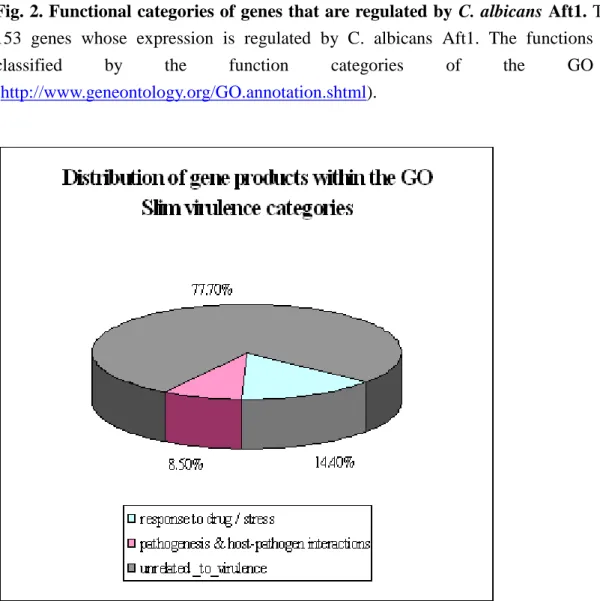
C.albicans AFT1-deletion strains. The results indicated that 153 genes were differentially
expressed. C. albicans Aft1 not only controls genes related to iron homeostasus, but also controls genes with a wide variety functions, including cell metabolism and cell wall organization and biogenesis. The summary of the results are shown in Fig. 2. Also, many of them may be related to host-pathogen interactions (Fig. 3). These results laid the foundation of further detail analysis and verification of the function for future studies.
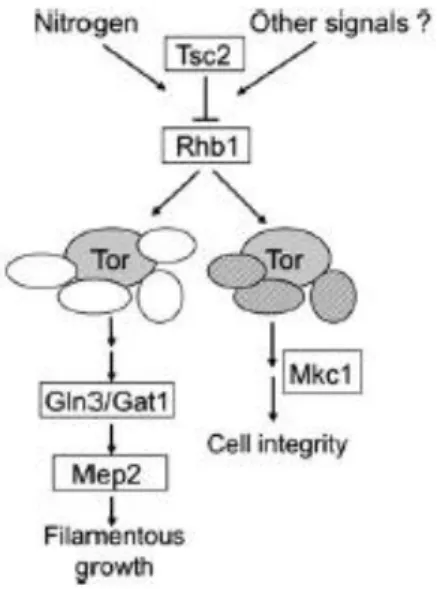
In this study, we have identified Candida albicans homologs of Rheb (named as Rhb1) and Tsc2. Deletion of the RHB1 gene showed enhanced sensitivity to rapamycin (an inhibitor of TOR kinase), suggesting that Rhb1 is associated with the TOR signaling pathway in C. albicans. Further analysis indicated RHB1 and TSC2 are involved in nitrogen starvation-induced
filamentation, likely by controlling the expression of MEP2 whose gene product is an ammonium permease and a sensor for the nitrogen signal. Moreover, we have demonstrated that Rhb1 is also involved in cell wall integrity pathway, by transferring signals through the TOR kinase and the Mkc1 MAP kinase pathway. Together, this study brings new insights into the complex interplay of signaling and regulatory pathways in C. albicans (Fig. 4; Tsao et al., 2009).
Figure 1. An overview for working on the C. albicans oligo microarrays and data analysis.
Microarray scan & data analysis
Total RNA
Synthesis of ds-cDNA
CyDye coupling to aa-aRNA
Purify Labeled aa-aRNA
UV Cross-linking
Baking for 6 hrs
Pre-Hybridization
42
C, 1hr
Hybridization
65
C, 16hr
Wash II
Pre-warm prehybridization
buffer, 42
C, 1hr
Wash I
Prepare pre-hyb
wash buffer I
DNase I treatment
Synthesis of
aa-aRNA
purification purificationPrepare wash buffer II pre-warm at 65
C
Sample preparation
DNA microarrays
Fig. 2. Functional categories of genes that are regulated by C. albicans Aft1. There are total
153 genes whose expression is regulated by C. albicans Aft1. The functions of genes are classified by the function categories of the GO ontology (http://www.geneontology.org/GO.annotation.shtml).
Fig. 4. Model of the Tsc2/Rhb1/TOR signaling pathway involved in nitrogen starvation-induced morphogenesis and cell wall integrity of C. albicans.
2: Unveiling the molecular involvement of Efg1 pathway in the pathogenesis of C.
albicans
a. We have constructed Caeno1/Caeno1 homozygous mutant for the purpose of understanding the effects of the null mutation on C. albicans.
b. We have conducted genetic and phenotypic analyses to determine the involvement of Caeno1 in morphogenesis, virulence, and drug resistance along with other physiological
phenotypes.
c. We have performed deletion analysis on CaENO1 for the purpose of determination of the signals on CaEno1 responsible for its various localities and found that truncated Eno1
products were not detectable outside the cells.
CaEno1 is a multi-functional glycolytic protein regulated by Efg1 and it is also a major component of cell wall as well as a secreted antigen in Candida infection. Its location in the cell is related to its function and subjected to the regulation of Efg1. Hence, understanding the signal and mechanism will help to reveal the role of the Efg1 pathway and the controlling mechanism of pathogenesis. The approach we used is the mutagenesis analysis to unveil its functions.
We started by constructing the knockout mutation of CaENO1 to understand the role of CaEno1p in morphogenesis/virulence. At the same time, we also fused various sequence fragments of CaENO1 to reporter GFP to monitor the location of the GFP to determine the sequences necessary for the various locations of CaEno1p, which may be in connection to the virulence and pathogenesis of C. albicans.
(1). Constructing Caeno1/Caeno1 homozygous mutant and determining the effects on C.
albicans.
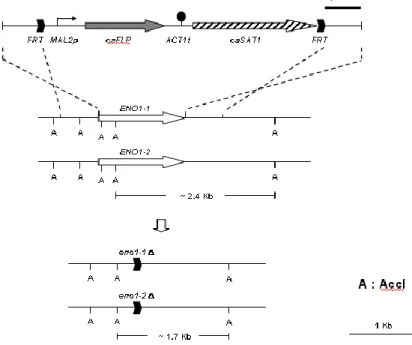
Due to the diploid-only nature of C. albicans and the lack of known plasmid, the homozygous mutation on CaENO1 is in fact a null mutation constructed by knock-out procedure based on homologous replacement using an SAT1 expression cassette flanked by the 5’ and 3’ sequences of
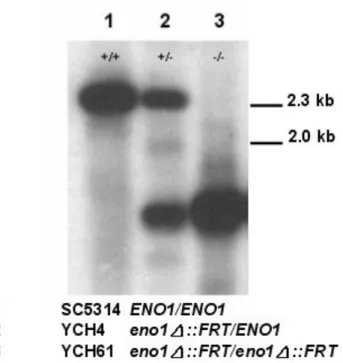
CaENO1 (Fig. 5). The resultants were assessed by PCR and Southern analysis (Fig. 6). In
short, we have obtained the homozygous mutant strains. We then proceeded to characterize the
Caeno1/Caeno1 mull mutation strains focusing on the involvement in morphogenesis and
virulence.
When grown on agar media and allowed to form colonies, the wild-type cells formed colonies with fuzzy edge with filamentous formation spreading out. However, with the Caeno1/Caeno1 mutants, the edge of colonies was smooth. Introduction of a wild-type copy of CaENO1 restore the phenotype (Fig. 7).
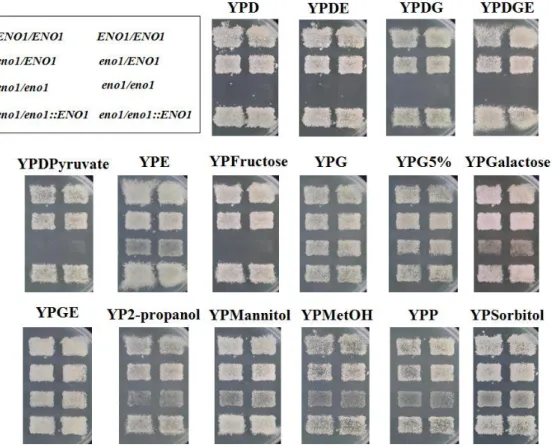
Next, we tested the utilization of carbon source since enolases are known to be involved in the glycolytic pathway. Various carbon sources and their combinations were tested. It was
observed that Caeno1/Caeno1 mutants could not grow in the presence of glucose, but was able to utilize carbon sources in non-fermentable pathway such as glycerol, ethanol. In addition, the mutants could not grow on media supplemented with pyruvates (Fig. 8).
Since Efg1 pathway is suggested to be involved in drug resistance, we then tested the effect of mutations on the drug susceptibility. The null mutations enable the cells to become more
susceptible to amphotericin B, miconazole, and voriconazole (Fig. 9). The results are consistent with the idea that EFG1 as well as CaENO1 are involved in the regulation of drug resistance. In addition, we have also observed that the null mutations also render the cells to become more susceptible to NaCl stress.
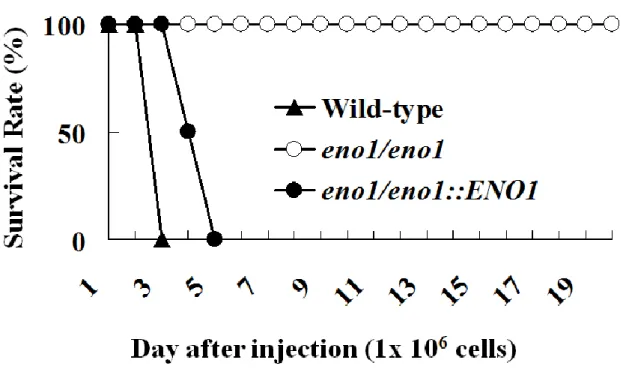
Since enol1/eno1 is defective in filamentous growth, we have determined it’s virulence with a mouse systemic infection model and found that indeed, it is avirulent (Fig. 10).
for Southern analysis.
Fig. 6. Southern Analysis of CaENO1 locus in various strains.
Fig. 8. Mutations on CaENO1 affect the utilization of different carbon sources for growth.
Fig. 11. Candida albicans defective in ENO1 is avirulent in mice.
(2). Investigating the signals on CaEno1 responsible for its various cellular localizations.
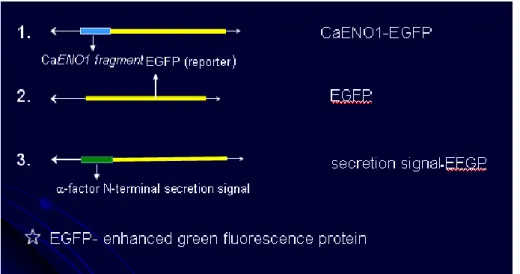
The attempt is to perform deletion analysis to narrow the sequences responsible for the locations of CaENO1 till the minimal sequences are defined. However, due to the difficulty of molecular manipulation in C. albicans, our strategy is to perform the deletion analysis in the baker yeast first, and then assess the result in C. albicans. Therefore, we have fused the sequence of
CaENO1 to EFGP in a S. cerevisiae expression vector (Fig. 11) and then determined whether the
CaEno1p expressed in S. cerevisiae could still be retained in cytoplasm as well as secreted into media. Plasmids carrying the secretion signal of -factor fused to the 5’ of EGFP and plasmids carrying the EGFP gene alone serve as controls. The cells transformed with plasmids carrying the sequence of CaENO1-EGFP fusion can be seen to express EGFP (Fig. 12A), so does the plasmids carrying EGFP (Fig. 12B). Hence, the fusion of EGFP and CaENO1 can be expressed and the EGFP can serve as the reporter. In addition, cells transformed with plasmids carrying
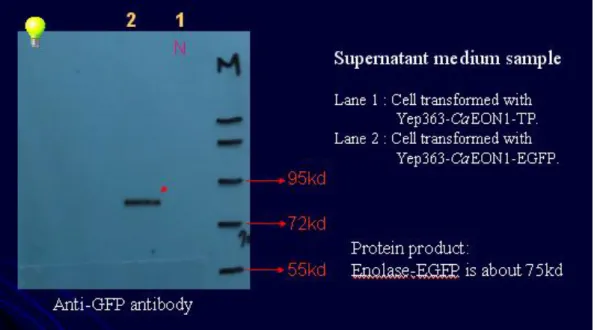
-factor secretion signal fused to the 5’ of EGFP was also expressed but a lower intensity (Fig. 12C). One possible reason for the lower intensity is that the fusion proteins were indeed secreted. Hence, we decided to collect the media from the culture and analyzed with Western blot against EGFP. As it is shown in figure 13, Western analysis was able to reveal a band with the size of about 75 kD in the culture media of cells carrying the sequence of CaENO1-EGFP fusion. Hence, the CaEno1p-EGFP is secreted into media as the wild-type CaEno1p shall have. We have completed the construction of various truncated CaENO1 fused with EGFP to determine whether different portions of the sequence can direct EGFP to different cellular location (Fig. 14). However none of the truncated proteins were detected in media (data not shown), indicating the possibility that the secretion required the whole protein.
Fig. 11. Schematic representation of fusion construct of CaENO1 on baker yeast expression vector YEP363.
Fig. 12. Plasmid-based CaENO1-EGFP can express in S. cerevisiae. Cells carrying
different plasmids were observed under fluorescence microscope. A, cells contain plasmid carrying CaENO1-EGFP; B, cells contain plasmid carrying EGFP alone; C, cells contain plasmid carrying secretion signal-EGFP.
Fig. 13. Western analysis revealed that CaENO1-EGFP can be detected in media.
Fig. 14. Schematic representation of constructs for deletion analysis.
(3) Investigation of drug-induced regulatory networks under Efg1 or Cph1.
Among the six thousand strong genes tested, there were about 500 genes whose expression
showed more than 3 fold differences between wild type and cph1/cph1 or efg1/efg1 mutants. Among them, the number of genes affected by 4-NQO in the efg1/efg1 strain was 79, and
cph1/cph1 27. There were 9 genes appeared in both. The numbers for miconazole were 120,
3b. 所遭遇之困難與因應對策
1. Microarray analyses showed that about 2000 genes are involved in response to drugs, efg1, or cph1 mutations. Mutations of EFG1 and/or CPH1 affect morphogenesis, which
involving cell growth, cell cycle, cellular re-structure, and all biochemistry processing associated with them. Adding of drugs further complicated the situation. Hence, to reduce the complexity, we have tried to look for genes of which the expressions were different in more than one conditions. Admittedly, certain interested genes are removed from the lists, but this has reduced the number to a reasonable level (Fig. 15.).
2. Detection of Eno1 truncated proteins has yielded negative results. The research was set out to search for secretion signal on the Eno1 protein by deletion analyses. The rationale was that most secretion signals were embedded in the protein sequences. However, even thought we could detect the EGFP signals inside the cells expression the truncated EGFP fusion proteins, we were not able to detect them in the media. There were several possibilities: 1) The signal for secretion requires the protein to be intact. 2) EGFP affects the secretion of the truncated proteins. It may be necessary to replace EFGP with other reporter genes.
四、成果自評
(如為整合型計畫,請各子計畫主持人分別撰寫結案報告之評估;另請總計畫主持人整合各 子計畫之執行進度與總計畫之相關性後,撰寫整體計畫之結案評估。) 4a. 研究成果與原設定目標之相符程度 4b. 達成預期目標情形 4c. 研究成果之學術或應用價值 4d. 學術期刊發表情形In the first year of this project, we have successfully generated spotted oligo microarrays representative of the entire C. albicans genome. In the second year, we have optimized protocols for RNA isolation, sample processing and hybridization. And we have used DNA microarrays to study C. albicans gene regulation in response to environmental cues and stimulation, such as depletion of iron, nitrogen, drugs either wild-type or mutant strains. Candidate genes were chosen for mutagenesis construction. In the third year, microbiological and biochemical analyses were applied to characterize the functions of the chosen ones. We have successfully completed the construction of the knock-out strains and have assessed the mutants to our satisfaction based on the result of PCR, Southern analyses, and physiological activities. We have also completed the characterization of the phenotypes related to morphogenesis/virulence. In sum, we have a good progress that matches well with the planned schedules with the part of molecular genetics study of the genes involved in the pathogenesis. We have successfully studied the involvement of CaENO1, CaAFT1, CaTSC2 and several other genes in Candida pathogenesis.
On the other hand, the plan to identify the various localization signals of CaEno1p has run into obstacles. Here we have successfully established the baker yeast system for our investigation of Candida gene and the CaENO1-EGFP was able to express in the baker yeast as well as secreted into the surround media. However, the recombinant truncated fusion proteins appeared to be retained inside the cells and we were not able to define the signals response to various cellular locations of CaENO1.
Our results reveal the connection of the regulatory network upstream of EFG1/CPH1(the result of TSC2) and downstream (the result of ENO1), expand the current knowledge of the global regulation of Candida pathogenesis. In addition, those genes and their products are potential drug targets for future development.
Publication:
Yang, Y.-L., Wang, C.-W., Chen, C.-T., Wang, M.-H., Hsiao, C.-F., Lo, H.-J. (2009). Non-lethal
Candida albicans cph1/cph1 efg1/efg1 Mutant Partially Protects Mice from Systemic Infections by Lethal Wild-type Cells. Mycological Research 113:388-390 (March) [changing title as Fungal Biology in 2010]. SCI
Chen, C.-G., Yang, Y.-L., Tseng, K.-Y., Shih, H.-I., Liou, C.-H., Lin, C.-C., Lo, H.-J. (2009). Rep1p Negatively Regulating MDR1 Efflux Pump Involved in Drug Resistance in Candida
albicans. Fungal Genetics and Biology 46:714-720 (Sept). SCI
Li, S.-Y., Yang, Y.-L., Lin, Y.-H., Ko, H.-C., Wang, A.-H., Chen, K.-W., Wang, C.-W., Chi, H., Lo, H.-J., TSARY Hospitals. (2009). Two Closely Related Fluconazole-resistant Candida
tropicalis Clone Circulating in Taiwan from 1999 to 2006. Microbial Drug Resistance
15:205-210 (Sept). SCI
Hui-Ching Ko, Ting-Yin Hsiao, Chiung-Tong Chen, and Yun-Liang Yang*. ENO1 Null Mutations of Candida albicans Affect Drug Susceptibility and Are Avirulent in Mice. Submitted.
Chang-Chih Tsao, Yu-Ting Chen, Chung-Yu Lan*. A small G protein Rhb1 and a
GTPase-activating protein Tsc2 involved in nitrogen starvation-induced morphogenesis and cell wall integrity of Candida albicans. Fungal Genetics and Biology 46 (2009) 126–136. SCI.
碩士學生論文:
許淑貞 (2009 交通大學碩士論文): 在啤酒酵母菌內利用重組基因方式尋找
CaENO1
上的分泌訊號位置
蔡馨儀(2009 交通大學碩士論文):: Effect of
ENG1
null mutations in
Candida albicans
李淑萍(2009 交通大學碩士論文)::白色念珠菌
CaGPM1
醣解酵素基因對細胞
型態及抗藥性之影響
五、參考文獻
Baillie,G.S. and Douglas,L.J. (1998). Iron-limited biofilms of Candida albicans and their susceptibility to amphotericin B. Antimicrob. Agents Chemother. 42, 2146-2149.
Beck-Sague,C. and Jarvis,W.R. (1993). Secular trends in the epidemiology of nosocomial fungal infections in the United States, 1980-1990. National Nosocomial Infections Surveillance System. J. Infect. Dis. 167, 1247-1251.
Bensen,E.S., Martin,S.J., Li,M., Berman,J., and Davis,D.A. (2004). Transcriptional profiling in
Candida albicans reveals new adaptive responses to extracellular pH and functions for
Rim101p. Mol. Microbiol. 54, 1335-1351.
Berman,J. and Sudbery,P.E. (2002). Candida Albicans: a molecular revolution built on lessons from budding yeast. Nat. Rev. Genet. 3, 918-930.
Bussemaker,H.J., Li,H., and Siggia,E.D. (2001). Regulatory element detection using correlation with expression. Nat. Genet. 27, 167-171.
Calderone,R.A. and Fonzi,W.A. (2001). Virulence factors of Candida albicans. Trends Microbiol.
9, 327-335.
Cao,F., Lane,S., Raniga,P.P., Lu,Y., Zhou,Z., Ramon,K., Chen,J., and Liu,H. (2006). The Flo8 transcription factor is essential for hyphal development and virulence in Candida albicans. Mol. Biol. Cell. 17, 295-307.
Chattopadhyay,A., Gray,L.R., Patton,L.L., Caplan,D.J., Slade,G.D., Tien,H.C., and Shugars,D.C. (2004). Salivary secretory leukocyte protease inhibitor and oral candidiasis in human
immunodeficiency virus type 1-infected persons. Infect. Immun. 72, 1956-1963. Chen,C.G., Yang,Y.L., Cheng,H.H., Su,C.L., Huang,S.F., Chen,C.T., Liu,Y.T., Su,I.J., and
Lo,H.J. (2006). Non-lethal Candida albicans cph1/cph1 efg1/efg1 transcription factor mutant establishing restricted zone of infection in a mouse model of systemic infection. International Journal of Immunopathology and Pharmacology In press.
Chen,C.G., Yang,Y.L., Shih,H.I., Su,C.L., Lo,H.J., and . (2004). CaNdt80 is involved in drug resistance in Candida albicans by regulating CDR1. Antimicrob. Agents Chemother. 48, 4505-4512.
Churchill,G.A. (2002). Fundamentals of experimental design for cDNA microarrays. Nat. Genet.
32 Suppl:490-5., 490-495.
Csank,C., Costanzo,M.C., Hirschman,J., Hodges,P., Kranz,J.E., Mangan,M., O'Neill,K., Robertson,L.S., Skrzypek,M.S., Brooks,J., and Garrels,J.I. (2002). Three yeast proteome databases: YPD, PombePD, and CalPD (MycoPathPD). Methods Enzymol. 350:347-73., 347-373.
De,B., Magee,P.T., and Pla,J. (2000). Recent developments in molecular genetics of Candida
albicans. Annu. Rev. Microbiol. 54:463-98., 463-498.
Dudoit,S. and Speed,T.P. (2000). A score test for the linkage analysis of qualitative and quantitative traits based on identity by descent data from sib-pairs. Biostatistics. 1, 1-26. Edwards,E.J.J. (1990). Candida species. In Prinicples and Practice of Infectious Diseases.
Eisen,M.B., Spellman,P.T., Brown,P.O., and Botstein,D. (1998). Cluster analysis and display of genome-wide expression patterns. Proc. Natl. Acad. Sci U. S. A. 95, 14863-14868.
Ernst,J.F. (2000). Transcription factors in Candida albicans - environmental control of morphogenesis. Microbiology. 146, 1763-1774.
Fang,F.C. (2004). Antimicrobial reactive oxygen and nitrogen species: concepts and controversies. Nat. Rev. Microbiol. 2, 820-832.
Fratti,R.A., Belanger,P.H., Ghannoum,M.A., Edwards,J.E., Jr., and Filler,S.G. (1998).
Endothelial cell injury caused by Candida albicans is dependent on iron. Infect. Immun. 66, 191-196.
Gerami-Nejad,M., Berman,J., and Gale,C.A. (2001). Cassettes for PCR-mediated construction of green, yellow, and cyan fluorescent protein fusions in Candida albicans. Yeast 18, 859-864. Gow,N.A., Brown,A.J., and Odds,F.C. (2002). Fungal morphogenesis and host invasion. Curr.
Opin. Microbiol. 5, 366-371.
Heymann,P., Gerads,M., Schaller,M., Dromer,F., Winkelmann,G., and Ernst,J.F. (2002). The siderophore iron transporter of Candida albicans (Sit1p/Arn1p) mediates uptake of ferrichrome-type siderophores and is required for epithelial invasion. Infect. Immun. 70, 5246-5255.
Jain,A.N., Tokuyasu,T.A., Snijders,A.M., Segraves,R., Albertson,D.G., and Pinkel,D. (2002). Fully automatic quantification of microarray image data. Genome Res. 12, 325-332.
Jamieson,D.J., Stephen,D.W., and Terriere,E.C. (1996). Analysis of the adaptive oxidative stress response of Candida albicans. FEMS Microbiol. Lett. 138, 83-88.
Jones,T., Federspiel,N.A., Chibana,H., Dungan,J., Kalman,S., Magee,B.B., Newport,G.,
Thorstenson,Y.R., Agabian,N., Magee,P.T., Davis,R.W., and Scherer,S. (2004). The diploid genome sequence of Candida albicans. Proc. Natl. Acad. Sci U. S. A. 101, 7329-7334. Jong,A.Y., Chen,S.H., Stins,M.F., Kim,K.S., Tuan,T.L., and Huang,S.H. (2003). Binding of
Candida albicans enolase to plasmin(ogen) results in enhanced invasion of human brain
microvascular endothelial cells. J Med. Microbiol. 52, 615-622.
Kendziorski,C., Irizarry,R.A., Chen,K.S., Haag,J.D., and Gould,M.N. (2005). On the utility of pooling biological samples in microarray experiments. Proc. Natl. Acad. Sci U. S. A. 102, 4252-4257.
Laibe,S., Bard,E., Biichle,S., Vielle,J., Millon,L., Drobacheff,C., Seilles,E., and Meillet,D. (2003). New sensitive method for the measurement of lysozyme and lactoferrin to explore mucosal innate immunity. Part II: time-resolved immunofluorometric assay used in HIV patients with oral candidiasis. Clin. Chem. Lab Med. 41, 134-138.
Lan,C.Y., Newport,G., Murillo,L.A., Jones,T., Scherer,S., Davis,R.W., and Agabian,N. (2002). Metabolic specialization associated with phenotypic switching in Candida albicans. Proc. Natl. Acad. Sci. U. S. A 99, 14907-14912.
Lan,C.Y., Rodarte,G., Murillo,L.A., Jones,T., Davis,R.W., Dungan,J., Newport,G., and
Agabian,N. (2004). Regulatory networks affected by iron availability in Candida albicans. Mol. Microbiol. 53, 1451-1469.