546
DOI 10.1095/biolreprod.105.039651
Demonstration of a Glycoprotein Derived From the
Ceacam10 Gene in Mouse
Seminal Vesicle Secretions
1Sheng-Hsiang Li,
3,4,6Robert Kuo-Kuang Lee
3Ya-Ling Hsiao,
5and Yee-Hsiung Chen
2,5,6Department of Medical Research,
3Mackay Memorial Hospital, Tamshui 251, Taiwan
Mackay Medicine, Nursing and Management College,
4Taipei 112, Taiwan
Institute of Biochemical Sciences,
5College of Life Science, National Taiwan University and Institute of Biological
Chemistry,
6Academia Sinica, Taipei 106, Taiwan
ABSTRACT
CEACAM10 was purified from mouse seminal vesicle secre-tions by a series of purification steps that included ion exchange chromatography on a DEAE-Sephacel column and ion exchange high-performance liquid chromatography on a sulfopropyl col-umn. It was shown to be a 36-kDa glycoprotein with anN-linked carbohydrate moiety. The circular dichromoism spectrum of CEACAM10 in 50 mM phosphate buffer at pH 7.4 appeared as one negative band arising from the b form at 217 nm. CEA-CAM10 was expressed predominantly in seminal vesicles of adult mice. Both CEACAM10 and its mRNA were demonstrated on the luminal epithelium of the mucosal folds in the seminal vesicle. The amount ofCeacam10 mRNA in the seminal vesicle was correlated with the stage of animal maturation. Castration of adult mice resulted in cessation of Ceacam10 expression, while treatment of castrated mice with testosterone propionate in corn oil restoredCeacam10 expression in the seminal vesicle. During the entire course of pregnancy, Ceacam10 might be si-lent in the embryo. A cytochemical study illustrated the pres-ence of the CEACAM10 binding region on the entire surface of mouse sperm. CEACAM10-sperm binding greatly enhanced sperm motility in vitro.
male reproductive tract, seminal vesicles, sperm motility and transport
INTRODUCTION
Mammalian sperm display an intriguing sense of timing
in undergoing some modification during their transit in the
reproductive tract before encountering an egg. Studying
how the lumen of the reproductive tract affects sperm
func-tion is a prerequisite to unraveling the molecular
mecha-nisms underlying the complex modification of sperm.
Fac-tors that affect sperm motility have been reported in the
seminal plasma of several mammals including the pig [1–
3], bovine [4], mouse [5], and human [6].
The seminal vesicle is a male accessory sexual gland
found in many species of more than 4000 mammalian
spe-cies alive on the earth today. After puberty, the gland
se-1Supported in part by grants 92-2311-B-002-019 and 92-2311-B-001-089
from the National Science Council, and by grant MMH 9341 from the Mackay Memorial Hospital, Taipei, Taiwan.
2Correspondence: Yee-Hsiung Chen, Institute of Biological Chemistry,
Ac-ademia Sinica, P.O. Box 23-106, Taipei 106, Taiwan. FAX: 886 2 2363 5038; e-mail: [email protected] Received: 7 January 2005.
First decision: 29 January 2005. Accepted: 3 May 2005.
Q 2005 by the Society for the Study of Reproduction, Inc. ISSN: 0006-3363. http://www.biolreprod.org
cretes a fluid called seminal vesicle secretion (SVS), which
accumulates in its lumen. SVS contains both protein and
nonprotein components. When ejaculated, SVS squirts into
the urethra, contributing the major part of the liquid portion
of seminal plasma, which is the complex biological fluid
formed from mixing of various fluid in the male
reproduc-tive tract. It has been found that extirpation of the seminal
vesicle from mice and rats greatly reduces fertility [7, 8],
demonstrating the importance of SVS to sperm
modifica-tion under natural circumstances. SVS differs extensively
in terms of volume and composition in various species of
mammals. However, rodents have proven to be good
ex-perimental animals for the molecular study of mammalian
reproduction, so attempts have been made to isolate the
proteins involved in sperm modification by mouse SVS,
which contains several minor proteins and seven
well-fined major proteins designated SVS I–VII, named in
de-creasing order of molecular mass according to their
mobil-ity in SDS-PAGE [9]. Previously, we demonstrated that
SVS VII enhances sperm motility [10], and two of the
mi-nor proteins modulate sperm activity. One is a caltrin-like
trypsin inhibitor/P12, which suppresses Ca
21uptake by
sperm [11], and the other is a seminal vesicle autoantigen,
which serves as a decapacitation factor [12, 13].
Here we report the purification and identification of an
androgen-stimulated 36-kDa glycoprotein, a minor protein
component of mouse SVS that is able to enhance sperm
motility in vitro. We have demonstrated that its core protein
is derived from the Ceacam10 gene [14], which is a
mem-ber of the cell adhesion molecule (CAM) subgroup
belong-ing to the carcinoembryonic antigen (CEA) family.
MATERIALS AND METHODS
Materials
The following materials were obtained from commercial sources: DEAE-Sephacel (Amersham Pharmacia Biotech, Uppsala, Sweden); Pro-tein PAK SP 5PW column (Waters, Milford, MA); Vydac 218TP54 C18 column (Separations Group, Hesperia, CA); AminoLink coupling gel, bi-cinchoninic protein assay kit (Pierce, Rockford, IL); testosterone propio-nate, nitroblue tetrazolium, 5-bromo-4-chloro-3-indolyl phosphate (BCIP), PMSF, periodic acid Schiff reagent, and silanated glass slides (Sigma Chemical Co., St Louis, MO); cDNA integrity kit, alkaline phosphatase-conjugated streptavidin, and biotin-phosphatase-conjugated goat anti-rabbit immuno-globulin G (IgG; Kirkegaard & Perry Laboratories, Gaithersburg, MD); rhodamine-conjugated goat anti-rabbit IgG (Zymed Laboratories, San Francisco, CA); Nuclear Fast Red (Vector Laboratories, Burlingame, CA); enhanced chemiluminescent substrate and [a-32P]dATP (NEN Life Science Products, Boston, MA); Tissue-Tek OCT medium (Miles Inc., Elkhart, IN); HistoGene laser capture microdessection (LCM) frozen section stain-ing kit, CapSure HS LCM caps, Picopure RNA Isolation kit (Arcturus Engineering, Mountain View, CA);L-(tosylamido-2-phenyl) ethyl chloro-methyl ketone (TPCK) modified trypsin, DNase I, Prime-a-Gene kit and
FIG. 1. Purification of 36-kDa glycoproteins from mouse SVS proteins. A) Fractionation of soluble mouse SVS proteins by ion exchange chro-matography on a DEAE-Sephacel column. B) Resolution of fraction III sample from A by ion-exchange HPLC on an SP column. C) Demonstra-tion of the glycoprotein nature. Each of the a-to-d peaks from B were digested with N-glycosidase F. The parent proteins (lane 1, peak a; lane 3, peak b; lane 5, peak c; lane 7, peak d) and their deglycosylated forms (lanes 2, 4, 6, and 8) were identified by SDS-PAGE on a 12% polyacryl-amide gel slab. The proteins in the gel were stained with Coomassie bril-liant blue.
pGEM-T-easy vector (Promega, Madison, WI); Ultraspec-II RNA isolation kit (Biotecx Laboratories, Inc., Houston, TX); Thermoscript reverse tran-scriptase (Invitrogen Life Technologies, Carlsbad, CA); N-glycosidase F,
Taq DNA polymerase (TaKaRa, Shiga, Japan); and mouse embryo-stage
blots designed to observe gene expression during pregnancy (Seegene, Inc., Korea). All other chemicals were reagent grade.
Animals and Hormone Treatment
Outbred ICR mice were purchased from Charles River Laboratories (Wilmington, MA) and were maintained and bred in the animal center at the College of Medicine, National Taiwan University. Animals were treat-ed according to institutional guidelines for the care and use of experimen-tal animals. They were housed under controlled lighting (14L:10D) at 21– 228C and were provided with water and NIH-31 laboratory mouse chow ad libitum.
For investigation of androgenic effects, 8-wk-old adult male mice, which had been castrated 3 wk earlier, received a daily s.c. injection of testosterone propionate in corn oil (5 mg/kg body weight) for 8 consecu-tive days. Control animals received corn oil only. Seminal vesicles were removed from the animals 12 h after the last injection.
Protein Purification
Normal adult mice (8 to 12 wk old) were killed by cervical dislocation. The seminal vesicles of 30 mice were carefully dissected to free them from the adjacent coagulating glands, and the secretions were squeezed directly into 50 ml of ice-cold 10 mM Tris-HCl in the presence of 1 mM PMSF at pH 8.0. After centrifugation at 10 000 3 g for 15 min, the su-pernatant was resolved by ion exchange chromatography on a DEAE-Sephacel column (123 2.6 cm) that had been pre-equilibrated with 10 mM Tris-HCl at pH 8.0. After the nonretarded fractions were washed out, the column was eluted with 0.5 M NaCl in the same buffer at a flow rate of 18 ml/h. Fractions (4 ml) were collected, and their absorbance at 280 nm was recorded (Fig. 1A). Fraction III was further subjected to ion-exchange high-performance liquid chromatography (HPLC) on a sulfo-propyl (SP) column (7.5 cm 3 7.5 mm). The column was sequentially eluted with three linear gradients, including 0%–15%, 15%–40%, and 40%–80% of 0.6 M NaCl in 20 mM sodium acetate at pH 6.0 at a flow rate of 1.0 ml/min for 60 min (see Fig. 1B). Thirty micrograms of each peak (a–d) in 50ml of 100 mM Tris-HCl pH 8.6 were digested with 0.6 mg of trypsin-TPCK at 378C for 18 h. The reaction was stopped by adding 100ml of 0.1% trifluoroacetic acid and the reaction mixture was resolved by a reverse-phase C18column (4.63 250 mm). The column was eluted with a linear gradient of 0%–80% acetonitrile at a flow rate of 1.0 ml/min for 60 min (see Fig. 2A).
Protein Analysis
The N-glycoconjugate was removed from a glycoprotein by following the method described by Tarentino and Plummer [15]. The protein was boiled in 1.0% SDS and incubated with N-glycosidase F (40 U/mg of protein) in 20 mM sodium phosphate at pH 7.2 in the presence of 50 mM EDTA, 0.5% Nonidet P-40, and 10 mM sodium azide for 16 h at 378C. The concentration of CEACAM10 was determined using the bicinchoninic acid protein assay [16] according to the manufacturer’s instructions. The amino acid sequence was determined using automated Edman degradation with a 492 protein sequencer with an online 140 C analyzer (Applied Biosystems, Foster City, CA). The circular dichromoism (CD) spectra were measured with a Jasco J-700 spectropolarimeter under constant flush-ing with N2 at room temperature. The mean residue elipticity (u) was estimated from the mean residue weight, which was calculated from the primary structure.
Western Blot Analysis and Immunohistochemical Staining
Antisera against CEACAM10 were raised in New Zealand White rab-bits. The anti-CEACAM10 antibody was purified from the antiserum on a column (2.5 3 1.0 cm) of AminoLink gel coupled with the purified antigen according to our previously described method [17].
Proteins were resolved using SDS-PAGE on a 12% gel slab (8.23 7.33 0.075 cm) according to the method described by Laemmli [18]. The proteins on the gel were stained with Coomassie brilliant blue or trans-ferred to a nitrocellulose membrane using an electroblotting method, which was conducted at 35 V at 48C for 18 h in a solution of 25 mM Tris-HCl, 197 mM glycine, and 13.3% methanol. Membranes were blocked with 10% normal goat serum in PBS for 2 h, and then incubated with
anti-CEACAM10 antibody (0.5mg/ml) in the blocking solution for 1 h at room temperature. After gently agitating in four changes of PBS for 15 min each, they were immunoreacted with horseradish peroxidase-conjugated goat anti-rabbit IgG diluted to 1:15 000 in the blocking solution for 1 h. Immunoreactive bands were revealed using an enhanced chemiluminescent substrate according to the manufacturer’s instructions.
Mouse seminal vesicles were fixed in Bouin solution, embedded in paraffin, and 8-mm serial cross-sections were mounted on silanated glass slides. Deparaffinized sections were blocked in blocking solution for 1 h at room temperature and then incubated with affinity-purified anti-CEA-CAM10 antibody at a concentration of 1mg/ml in the blocking solution for 1 h. The slides were gently agitated in three changes of washing so-lution for 10 min each and then treated with biotin-conjugated goat anti-rabbit IgG (1mg/ml) in the blocking solution for 1 h at room temperature. The slides were washed again as described above and then incubated with alkaline phosphatase-conjugated streptavidin (1mg/ml) in blocking solu-tion for 1 h at room temperature. Protein signals were observed after the slides were incubated for 10 min with 0.0375% nitroblue tetrazolium and 0.0188% BCIP in a solution of 100 mM Tris-HCl, 100 mM NaCl, and 5 mM MgCl2at pH 9.5. The slides were washed in three changes of water for 3 min each and then counterstained with Nuclear Fast Red for 3 min.
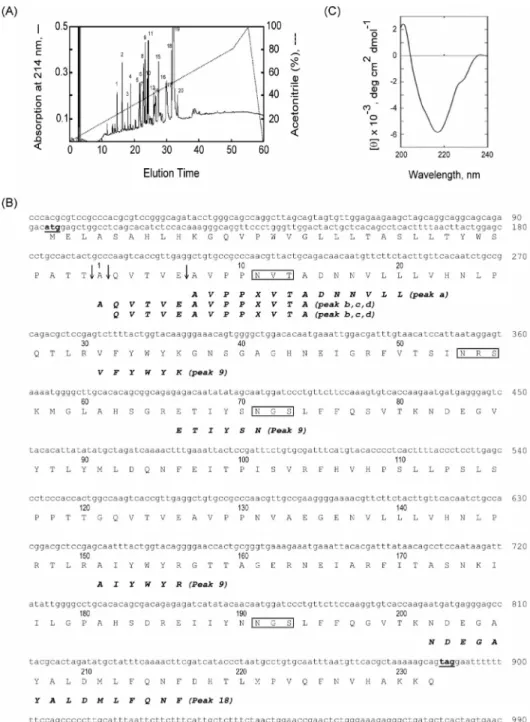
FIG. 2. Identification of the 36-kDa gly-coprotein derived fromCeacam10 and its circular dichroism. A) The trypsin-digested sample of peak c from Figure 1B was re-solved by reverse-phase HPLC on a C18
column (seeMaterials and Methods). B) The protein sequence was deduced from the reading frame ofCeacam10 cDNA (GenBank accession number NM 007675). The initial and stop codons are underlined. The potentialN-linked glyco-sylation sites are denoted by open boxes. The deduced protein sequence and the amino acid sequences determined directly from protein analysis for peaks a to d in Figure 1B and peaks 9 and 18 in Figure 2A agree in all positions except that Asn11
from the cDNA-deduced protein was not identified in protein sequencing. The cleavage points for the generation of ma-ture protein are indicated by an arrow. C) Circular dichroism of CEACAM10 in 50 mM phosphate buffer at pH 7.4 at room temperature.
Finally, the slides were briefly washed with water and photographed using a brightfield microscope (AH3-RFCA; Olympus, Tokyo, Japan).
Laser Capture Microdissection and Detection
of Ceacam10 mRNA
Seminal vesicle tissues were oriented in a small aluminum foil cup and frozen immediately in Tissue-Tek OCT medium. Embedded samples were then stored at2808C before further processing. Serial 8-mm cryostat sec-tions were mounted on uncoated glass slides and stored at2808C. Before use, sections were fixed in 70% ethanol and stained with a HistoGene LCM frozen section-staining kit following the supplier’s protocol. Slides were dipped in xylene twice for 5 min each time and then air-dried. Mu-cosal folds or smooth muscle cells were harvested using a PixCell II LCM system (Arcturus Engineering, Mountain View, CA). Captured tissues from three sections were collected on CapSure HS LCM caps containing transfer film. Tissue samples from three different animals were pooled for subsequent analysis.
Total RNA was extracted from the captured cells by using the Picopure RNA Isolation kit, followed by treatment with DNase I before cDNA
synthesis. The total RNA was reverse-transcribed using Thermoscript re-verse transcriptase for first-strand cDNA synthesis according to the man-ufacturer’s instructions. A cDNA integrity kit was employed to examine the quality of the cDNA. The qualified cDNA samples were used as tem-plates for PCR. The primer pair for amplification of a 237-base pair (bp)
Ceacam10 gene fragment was a forward primer (5
9-TATGCTATTT-CAAAACTTCGATCAT-39), which corresponds to sequence 822–846, and a reverse primer (59-GTTATGCGGACTTTATTG-39), which corresponds to sequence 1058–1041 (GenBank accession number NM 007675). The primer pair for amplification of a 557-bp mouse glyceraldehyde-3-phos-phate dehydrogenase (Gapd) DNA fragment was a forward primer (5 9-CGGCAAATTCAACGGCACAGT-39), which corresponds to sequence 199–219, and a reverse primer (5 9-TGGGGGTAGGAACACGGAAGG-39), which corresponds to sequence 755–735 (GenBank accession number XM 194302). PCR reaction mixtures consisted of 2ml of template, 1.25 units of Taq DNA polymerase, 0.2 mM dNTP, and 0.2mM primer pair in a 50-ml final solution of 10 mM Tris-HCl, 50 mM KCl, and 1.5 mM MgCl2 at pH 8.3. PCR was performed in a GeneAmp PCR System 2400 thermal cycler (Perkin-Elmer, Boston, MA) with the following parameters: 3 min at 948C followed by 30 cycles of melting for 30 sec at 958C, annealing
for 30 sec at 538C, extension for 30 sec at 728C, and a final extension for 7 min at 728C. The polymerase chain reaction (PCR) products were ana-lyzed by electrophoresis on a 2.0% agarose gel. The identity of PCR prod-ucts was confirmed by cloning and sequencing. DNA sequencing was carried out with an ABI PRISM 377-96 DNA sequencer using the ABI PRISM BigDye Terminator cycle sequencing ready reaction kit (Applied Biosystems).
RNA Isolation and Northern Blot Analysis
Total RNA was extracted from tissue homogenates using an Ultraspec-II RNA isolation kit. A PCR-amplified fragment of Ceacam10 cDNA (237 bp), which was inserted in pGEM-T-easy, and a cDNA fragment of the mouse Gapd gene (1233 bp), which was inserted in pGEM3 vector, were used as a template to prepare a32P-labeled cDNA probe using a Promega random-priming kit. RNA samples (20mg) were subjected to denaturing by 1.0% agarose-formaldehyde gel electrophoresis and then blotted onto nylon membranes by capillary transfer as previously described [19]. After incubation with the prehybridization buffer (50% deionized formamide, 63 SSC, 53 Denhardt solution, 1.0% SDS, and 100 mg/ml of sheared salmon sperm DNA) for 2 h at 508C, the membranes were hybridized with one labeled probe overnight at 508C. Following hybridization, the mem-branes were washed using standard procedures. RNA messages on one filter membrane were observed after autoradiography and the probes were removed from the membranes as previously described [19]. The same membrane was then hybridized with another labeled probe. Thus, hybrid-ization with Ceacam10 or Gapd cDNA probe was performed on the same filter membrane.
Cytological Observation and Assay of Sperm Motility
In accordance with a method previously used [20], a modified Tyrode buffer, which consisted of 124.7 mM NaCl, 2.7 mM KCl, 0.5 mM MgCl2, 0.4 mM NaH2PO4, 5.6 mM glucose, 0.5 mM sodium pyruvate, 15 mM NaHCO3, 10 mM Hepes, 100 IU/ml penicillin, and 100 mg/ml strepto-mycin was adjusted to pH 7.3–7.4 by aeration with humidified air/CO2 (19:1) in an incubator for 48 h at 378C before use. Mouse epididymides were removed and immersed in the medium. After careful dissection from the connective tissue, spermatozoa were extruded from the distal portion of the tissues for 10 min at 378C. The cells were gently filtered through two layers of nylon gauze, layered on top of a linear gradient of 20%– 80% Percoll (v/v), and centrifuged at 2753 g for 30 min at room tem-perature [21, 22]. Three distinct cell layers formed. The lowest layer, which contained cells with progressive motility, was washed with three volumes of the medium and collected using centrifugation at 603 g for 10 min at room temperature. The sperm were resuspended and centrifuged two more times in a similar manner. The cell pellets were resuspended, and CaCl2was added to the culture medium at a final concentration of 1.8 mM before the sperm were assayed.
Freshly prepared epididymal spermatozoa (106cells/ml) were blocked in PBS containing 10% normal goat serum for 30 min at room tempera-ture. The cells were further incubated with 1 mM CEACAM10 for 1 h. At the end of incubation the cells were centrifuged and the cell pellets were washed with PBS to remove the unbound ligands. The cells were air-dried on a glass slide and washed twice with PBS. The slides were incubated with the affinity-purified anti-CEACAM10 antibody at a con-centration of 1mg/ml in blocking solution for 1 h. The slides were washed three times with PBS to remove excess antibody before they were incu-bated with rhodamine-conjugated goat anti-rabbit IgG diluted to 1:500 in blocking solution for 40 min. All slides were then washed with PBS, covered with 50% (v/v) glycerol in PBS, and photographed with a fluo-rescence microscope (Axioplan 2 Imaging; Carl Zeiss, Oberkochen, Ger-many).
Ejaculated sperm were collected from semen that existed in the uterine cavity of three vagina-plugged female mice. After extensive washing with PBS the ejaculated sperm without incubation with the exogenous CEA-CAM10 were smeared onto slides for immunolocalization of CEACEA-CAM10 as mentioned above.
Sperm motility was determined using a computer-assisted sperm assay (CASA) with a sperm motility analyzer (IVOS version 10; Hamilton-Thorne Research, Beverly, MA). A 10-ml sample was placed in a 10-mm-deep Makler chamber at 378C. The analyzer was set as follows: negative phase-contrast optics and recording at 60 frames/sec; minimum phase-contrast, 40; minimum cell size, 4 pixels; size gate, 0.2; high-size gate, 1.5; low-intensity gate, 0.5; high-low-intensity gate, 1.5; nonmotile head size, 29; non-motile head intensity, 76; medium average path velocity, 50mm/sec; low
path velocity, 7.0mm/sec; slow motile cells, yes; and threshold straight-ness, greater than 80%. Ten fields were assessed for each sample.
RESULTS
Protein Characterization of CEACAM10 Purified From
Mouse SVS
The fresh preparation of soluble SVS was divided into
fractions. I to IV by ion exchange chromatography on a
DEAE-Sephacel column (Fig. 1A). The fraction III sample
was further resolved into peaks a–e (Fig. 1B) by ion
ex-change HPLC on an SP column. Peak e was a
FAD-depen-dent sulfhydryl oxidase (unpublished observation). On
re-ducing SDS-PAGE gel, each of the a-to-d peak samples
gave one rather broad 36-kDa band that could be stained
with either Coomassie brilliant blue or periodic acid-Schiff
reagent, demonstrating their glycoprotein nature (Fig. 1C,
lanes 1, 3, 5, and 7). Each protein sample could be
degly-cosylated either by trifluoromethane sulfonic acid or
ex-haustive digestion with N-glycosidase F to a core protein
that was identified as a sharp band between 26 and 28 kDa
by SDS-PAGE (Fig. 1C, lanes 2, 4, 6 and 8), indicating a
similar molecular mass of the protein cores. Apparently,
peaks a–d were glycoproteins with an N-linked
carbohy-drate moiety. They were purified to homogeneity.
Automated Edman degradation for each a-to-d peak
sam-ples for 14 cycles gave reliable data, which were assembled
to the N-terminal sequences. AVPPXVTADNNVLL was
de-termined from the peak a sample. Two amino acids were
detected in each cycle during protein analysis for each peak
(b to d). The actual yield of the two sequences in an
indi-vidual cycle was such that the ratio of the major sequence
to the minor one was estimated to be 2.5–3.0:1. Assembly
of the major and minor sequences gave a peptide sequence
of AQVTVEAVPPXVTA and QVTVEAVPPXVTA,
re-spectively. The three N-terminal peptides were completely
confirmed in the Ceacam10-deduced protein consisting of
265 amino acid residues in all positions except that X
(as-paragine), one potential site for an N-linked carbohydrate
in CEACAM10, was not identified in the protein
sequenc-ing (Fig. 2B). The post-translational cleavage at the peptide
bond between Glu and Ala, Thr and Ala, or Ala and Gln
in the signal peptide of the putative CEACAM10 sequence
gives rise to a peak a protein or to peak b-to-d proteins. As
a result, peaks a to d share a very similar protein core with
a slight difference in their N-terminal sequences. Thereafter,
we combined them for further study. Among the SVS
pro-tein components on SDS-PAGE gel, antibody against
CEA-CAM10 immunoreacted only to a 36-kDa protein band
cor-responding to the antigen, showing high specificity of the
antibody. Taken together, these data indicate that peaks a
to d are translational products of the Ceacam10 gene.
Each peak (a to d) was digested with trypsin, and the
digests were subjected to HPLC on a C
18column. The
chro-matographic patterns of the four trypsin-digested samples
were very similar. One representative chromatogram is
shown in Figure 2A. Three amino acids were identified in
each cycle of automated Edman degradation of peak 9 on
Figure 2A. These data could be assembled to three peptide
sequences of VFYWYK, ETIYSN, and AIYWYR in
CEA-CAM10. The peptide sequence of NDEGAYALDMLFQNF
in CEACAM10 was completely confirmed by automated
Edman degradation of peak 18 (see Fig. 2B).
CEACAM10 was stable in 10 mM Tris-HCl at pH 8.0,
but it was degraded to an 18-kDa protein component in 5%
acetic acid (not shown). The CD spectrum of this protein
FIG. 3. Distribution ofCeacam10 and its protein among the reproduc-tive glands. Total RNA (20mg) or protein extract (50 mg) prepared from the homogenates of each sexual gland were analyzed by Northern blot procedure (A) or Western blot procedure (B) (seeMaterials and Methods).
at pH 7.4 shows a negative band with a minimum mean
residue ellipticity of 12 000 deg cm
2dmol
21at 217 nm (Fig.
2C). In addition, a positive band appeared as the CD profile
extending below 200 nm. The spectral profile in the UV
region shows some resemblance to that of the
b form of
protein conformation [23–26], suggesting the presence of a
considerable amount of
b form, a b turn, or both in the
protein molecule.
Predominant Ceacam10 Expression in the Luminal
Epithelium of the Seminal Vesicle
We examined the distribution of CEACAM10 and its
RNA message in the tissue homogenates of reproductive
glands, including the seminal vesicle, epididymis, testis,
co-agulating gland, vas deferens, prostate, uterus, and ovary.
The RNA message was predominantly detected in the
sem-inal vesicles (Fig. 3A). This was confirmed by the results
of Western blot analysis showing that CEACAM10 was
abundant in the seminal vesicle; a trace appeared in the
epididymis and prostate only after over autoradiography
(Fig. 3B). When equal amounts of total RNA from the
ho-mogenate of a nonreproductive organ were compared with
those of the seminal vesicle, very litter to no Ceacam10
mRNA was found in brain, heart, lung, liver, spleen,
kid-ney, stomach, small intestine, muscle, skin, and thymus (not
shown).
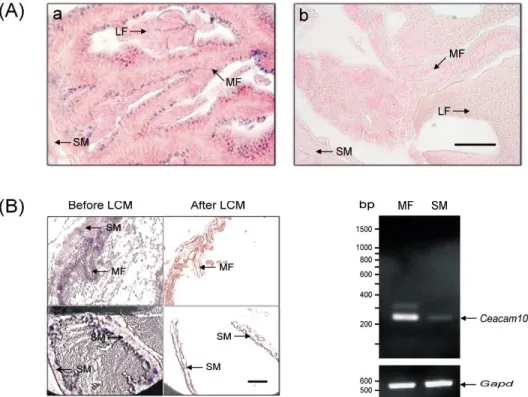
CEACAM10 was immunolocalized primarily to the
lu-minal epithelium of the mucosal folds in the selu-minal vesicle
slides of adult mice (Fig. 4A). The smooth muscle layer
contained almost none. The strong immunochemical
stain-ing in the lumen supports the view that CEACAM10
ac-cumulates in the lumen as a result of its secretion from the
luminal epithelium. Further, we separated mucosal
epithe-lial cells and smooth muscle cells from the tissue slices by
LCM. Ceacam10 transcripts were relatively abundant in the
mucosal cells, but only trace amounts of the RNA message
appeared in the smooth muscle cells (Fig. 4B).
Developmental Profiles of Ceacam10 mRNA in Seminal
Vesicles and Embryos
The amounts of Ceacam10 mRNA in the seminal
vesi-cles of mice at different ages were compared. The RNA
message first appeared at a considerable level in 3-wk-old
mice. Thereafter, the amount of transcript began increasing
rapidly at 4 wk and reached a maximum in 7-wk-old mice
(Fig. 5A).
We analyzed mouse embryos from 4.5 to 18.5 days
post-coitus (d.p.c.). The 4.5–6.5 d.p.c. samples included early
stage embryos, extraembryonic tissue, and maternal uterus;
the 7.5–9.5 d.p.c. samples included embryos and
extraem-bryonic tissues, and the 10.5–18.5 d.p.c. samples were
sole-ly embryos. The RNA message in the embryo samples was
present in trace amounts on 5.5 d.p.c, increased remarkably
from 6.5 d.p.c. to a maximum on 9.5 d.p.c., and rapidly
declined thereafter to an almost undetectable level until
de-livery (Fig. 5B).
Because seminal vesicle growth is known to be
andro-gen-dependent, we examined how androgen influenced
Ceacam10 expression in the seminal vesicles of adult mice
that had been castrated 3 wk earlier (Fig. 6). Ceacam10
mRNA was undetectable in the total RNA prepared from
the control castrates that had received a daily injection of
corn oil only compared with that of normal adults.
Induc-tion of Ceacam10 mRNA was observed in the castrates
treated with testosterone (5 mg/kg per day) for 8
consecu-tive days.
Enhancement of Sperm Motility by CEACAM10 In Vitro
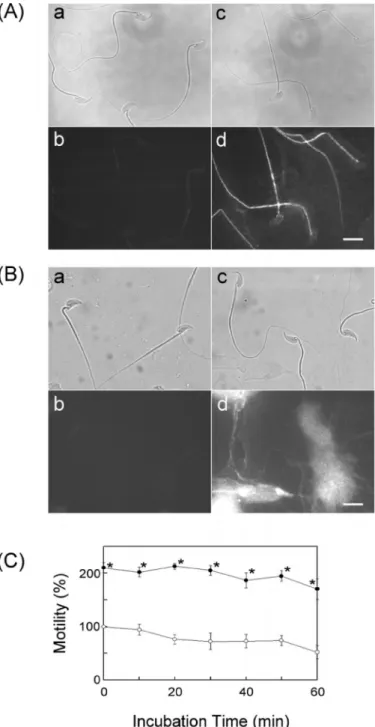
Figure 7A shows micrographs of epididymal
spermato-zoa with indirect fluorescence staining. No fluorescence
was observed on the cells after they were treated
succes-sively with the CEACAM10 antibody and
rhodamine-con-jugated anti-rabbit IgG, demonstrating a lack of
CEA-CAM10 on the cell surface. When spermatozoa were
pre-incubated with 1
mM CEACAM10 in a blocking solution
at room temperature for 45 min, rhodamine fluorescence
was prominent on the middle piece, relatively weak on the
tail, and faint on the head (Fig. 7A, d). Apparently, sperm
have CEACAM10-binding sites that cover the entire cell
surface. To access the binding of CEACAM10 to
epididy-mal sperm upon ejaculation, the ejaculated sperm were
di-rectly stained with the antibody. CEACAM10 was
immu-nodetected on the surface of the ejaculated sperm, in spite
of high fluorescence background due to the free
CEA-CAM10 that was difficult to removed completely during
cell preparation (Fig. 7B, d).
Most spermatozoa freshly retrieved from the caudal
ep-ididymis of mice in modified Tyrode buffer were mobile
with visible tail beating. The result of CASA for the cell
incubation at specified conditions revealed that 90.0
mM
CEACAM10 in cell culture greatly enhanced sperm
motil-ity relative to the motilmotil-ity of control cells at any incubation
time (Fig. 7C).
DISCUSSION
This work is the first to purify CEACAM10 from mouse
SVS. We demonstrated it to be a 36-kDa protein with an
FIG. 4. Ceacam10 expression in the luminal epithelium of the seminal vesicle. A) Immunolocalization of CEACAM10 to the luminal epithelium of the seminal vesicle. Tissue slices were histochemically stained for CEACAM10 with antibody against the protein, biotin-conjugate goat anti-rabbit IgG, and alkaline phosphatase-conjugated streptavidin a. The specimens were stained as in a except that the antibody was replaced by normal serum (b). For contrast, the specimens were further stained with Nuclear Fast Red. Photographs were taken with brightfield illumination. MF, mucosal fold; SM, smooth muscle; LF, luminal fluid. The staining of Nuclear Fast Red is in pink and the signals of CEACAM10 protein, demonstrated by staining of alkaline phosphatase activity, are in dark blue. Bar5 20 mm. B) Demonstration of Ceacam10 mRNA in the luminal epithelial cells of the seminal vesicle. The epithelial cells of MF or SM cells in a tissue slice (8mm) of mouse seminal vesicle were selectively captured and transferred to films by LCM. The tissue slides before and after LCM were stained and observed (see text for details). ACeacam10 cDNA fragment (237 bp) or a Gapd cDNA fragment (557 bp) was amplified from the total RNA of MF or SM by reverse transcription-polymerase chain reaction. The level ofGapd mRNA was used as an internal control. Bar5 100 mm.
N-linked glycoconjugate. Asn
11, Asn
54, Asn
71, and Asn
191,
each being part of consensus Asn-Xaa-(Ser/Thr) [27, 28] in
the protein molecule, are the potential acceptor sites for the
attachment of the carbohydrate moieties. Our results of
Ed-man degradation support Asn
11as being one
N-glycosylat-ed site but rule out Asn
71in that role. Removal of the
hy-drophobic leader sequence from the putative form of this
protein gives a protein core consisting 226, 231, or 232
amino acid residues that sum to have a molecular mass of
25 270, 25 827 or 25 898 daltons, which is close to the
mo-lecular size of the deglycosylated proteins as determined by
SDS-PAGE (Fig. 1C).
The CEA family consists of CEACAM and
pregnancy-specific glycoprotein subfamilies. These evolutionarily and
structurally divergent glycoproteins of mammals share
many common structural features [29]. They are
character-ized by the assembly of immunoglobulin variable
(IgV)-like domain and immunoglobulin constant (IgC)-(IgV)-like
do-mains in each member of the family. According to the
mo-lecular model established by Watt et al. [30] and Tan et al.
[31], there are nine
b strands in one immunoglobulin-like
domain involved in the maintenance of the
three-dimen-sional architecture. In the CEACAM10 molecule, residues
2–96 form one IgV-like domain and residues 122–216 form
another [14]. This may account for the characteristic CD
shown in Figure 2C. Many members of the murine and
human CEACAM family contain either a transmembrane
domain or a glycosyl PtdIns moiety, but no such structural
element is present in the Ceacam10-deduced protein
se-quence, suggesting that CEACAM10 is not a
membrane-bound protein [32]. This is substantiated by our
demon-stration of its secretion from the luminal epithelium of
sem-inal vesicle (Fig. 4).
In the sexual glands of adult mice, the Ceacam10 gene
is predominantly transcribed and translated in the seminal
vesicle. On ejaculation, the CEACAM10-sperm binding
may take place in the semen to enhance sperm motility.
Finkenzeller et al. [33] demonstrated that Ceacam10
2/2male and female mice developed indistinguishably from
wild-type litter mates with respect to sex ratio, weight gain,
and fertility, but a significant reduction by 23% of litter
size was observed in Ceacam10
2/2mating. Although this
may be partially attributed to the lack of CEACAM10 in
the semen of Ceacam10-inactivated males, it remains
ar-guable whether in vitro CEACAM10-enhanced sperm
mo-tility may play a significant role after coitus under natural
circumstances.
The maternal decidua surrounding the implantation site
was not removed from the mouse conceptus that was used
to prepare the commercially available embryo-stage blot for
the observation of gene expression during pregnancy. As a
result, the appearance of Ceacam10 mRNA in embryo
sam-ples at the blastula or gastrula stage (6.5–9.5 d.p.c.) (Fig.
5B) may arise from the maternal decidua as suggested in
the study by Finkenzeller et al. [33]. This finding, together
with the lack of an RNA message in embryo samples at
4.5 and 10.5–18.5 d.p.c. (Fig. 5B) implies that Ceacam10
might be weakly expressed if not silent during the entire
course of embryonic development. In fact, we were unable
to immunodetect the presence of CEACAM10 in the
em-FIG. 5. Developmental profile of Ceacam10 mRNA in embryos and seminal vesicles.Ceacam10 mRNA and Gapd mRNA in the total RNA prepared from mouse seminal vesicles at different ages (A) or in mouse embryos collected on various days postcoitus (B). The RNA messages were measured by Northern blot as described in the text.
FIG. 7. Analysis of sperm motility under the influence of CEACAM10. A) Demonstration of the CEACAM10-binding zone on epididymal sper-matozoa. Fresh sperm were incubated with or without CEACAM10 as described inMaterials and Methods. The cells on slides were incubated with normal serum (a and b) or affinity-purified anti-CEACAM10 antibody (c and d). The slides were then incubated with rhodamine-conjugated anti-rabbit IgG and observed via light microscopy (a and c) or fluores-cence microscopy (b and d). Bar5 10 mm. B) Illustration of CEACAM10 on ejaculated sperm. Freshly prepared cells (seeMaterials and Methods) on slides were incubated with normal serum (a and b) or the CEACAM10 antibody (c and d) and followed by incubation with rhodamine-conju-gated anti-rabbit IgG. The slides were observed via light microscopy (a and c) or fluorescence microscopy (b and d). Bar5 10 mm. C) Freshly prepared mouse spermatozoa in modified Tyrode solution (105cells/ml)
containing 1.8 mM CaCl2were incubated alone (C) or in the presence of
90mM CEACAM10 (●) at 378C for 0 to 60 min. Cell motility determined at each specified incubation time was expressed as a percentage of con-trol cell motility at time zero. Points are mean6 SD for three determi-nations. *P, 0.01 in a paired statistical comparison with the correspond-ing control. Values were evaluated uscorrespond-ing one-way analysis of variance. FIG. 6. Androgen dependence ofCeacam10 mRNA expression in
sem-inal vesicles of adult mice. Northern blot analysis for 1.1-kilobase Cea-cam10 mRNA in total RNA from seminal vesicles from normal adult mice (lane 1), adults castrated 3 wk previously and treated only with corn oil (lane 2), and adults castrated 3 wk previously and treated testosterone propionate in corn oil for 8 consecutive days (lane 3). Total RNA (20mg) was used for each experiment.Gapd mRNA was used as an internal con-trol.
bryo samples obtained by carefully microdissecting the
ex-traembryonic tissues from the conceptus at 8.5 to 18.5
d.p.c. Cytochemical observations shown in Figure 7
sug-gest the presence of CEACAM10-binding sites on the
en-tire sperm surface. Considering the presence of CEACAM1
on human sperm cells [34], it raises a possibility that
het-erophilic adhesion exists between CEACAM10 and other
CEACAM molecules on the mouse sperm surface. This is
unlike the action of other sperm motility effectors in the
mouse SVS, such as SVS VII, which binds neutral
phos-pholipid to enhance sperm motility [10], and SVA, which
predominantly binds membrane phosphatidylcholine to
suppress sperm motility [12].
REFERENCES
1. Nichol R, Hunter RH, de Lamirande E, Gagnon C, Cooke GM. Mo-tility of spermatozoa in hydrosalpingeal and follicular fluid of pigs. J Reprod Fertil 1997; 10:79–86.
2. Iwamoto T, Tsang A, Luterman M, Dickson J, de Lamirande E, Okuno M, Mohri H, Gagnon C. Purification and characterization of a sperm motility-dynein ATPase inhibitor from boar seminal plasma. Mol Re-prod Dev 1992; 31:55–62.
3. Jeng H, Liu KM, Chang WC. Purification and characterization of re-versible sperm motility inhibitors from porcine seminal plasma. Biochem Biophys Res Commun 1993; 191:435–440.
4. Al-Somai N, Vishwanath R, Shannon P, Molan PC. Low molecular weight components in bovine semen diffusate and their effects on motility of bull sperm. Reprod Fertil Dev 1994; 6:165–171. 5. Peitz B. Effects of seminal vesicle fluid components on sperm motility
in the house mouse. J Reprod Fertil 1988; 83:169–176.
6. Robert M, Gagnon C. Purification and characterization of the active precursor of a human sperm motility inhibitor secreted by the seminal vesicles: identity with semenogelin. Biol Reprod 1996; 55:813–821. 7. Pang SF, Chow PH, Wong TM. The role of the seminal vesicles,
coagulating glands and prostate glands on the fertility and fecundity of mice. J Reprod Fertil 1979; 56:129–132.
8. Peitz B, Olds-Clarke P. Effects of seminal vesicle removal on fertility and uterine sperm motility in the house mouse. Biol Reprod 1986; 35: 608–617.
9. Chen YH, Pentecost BT, McLachlan JA, Teng CT. The androgen-dependent mouse seminal vesicle secretory protein IV: characteriza-tion and complementary deoxyribonucleic acid cloning. Mol Endo-crinol 1987; 1:707–716.
10. Luo CW, Lin HJ, Chen YH. A novel heat-labile phospholipid-binding protein, SVS VII, in mouse seminal vesicle as a sperm motility en-hancer. J Biol Chem 2001; 276:6913–6921.
11. Chen LY, Lin YH, Lai ML, Chen YH. Developmental profile of a caltrin-like protease inhibitor, P12, in mouse seminal vesicle and char-acterization of its binding sites on sperm surface. Biol Reprod 1998; 59:1498–1505.
12. Huang YH, Chu ST, Chen YH. Seminal vesicle autoantigen, a novel phospholipid-binding protein secreted from luminal epithelium of mouse seminal vesicle, exhibits the ability to suppress mouse sperm motility. Biochem J 1999; 343:241–248.
13. Huang YH, Chu ST, Chen YH. A seminal vesicle autoantigen of mouse is able to suppress sperm capacitation-related events stimulated by serum albumin. Biol Reprod 2000; 63:1562–1566.
14. Keck U, Nedellec P, Beauchemin N, Thompson J, Zimmermann W. The cea10 gene encodes a secreted member of the murine carcinoem-bryonic antigen family and is expressed in the placenta, gastrointes-tinal tract and bone marrow. Eur J Biochem 1995; 229:455–464.
15. Tarentino AL, Plummer TH Jr. Enzymatic deglycosylation of aspara-gine-linked glycans: purification, properties, and specificity of oligo-saccharide-cleaving enzymes from Flavobacterium meningosepticum. Methods Enzymol 1994; 230:44–57.
16. Smith PK, Krohn RI, Hermanson GT, Mallia AK, Gartner FH, Prov-enzano Fujimoto EK, Goeke NM, Olson BJ, Klenk DC. Measurement of protein using bicinchoninic acid. Anal Biochem 1985; 150:76–85. 17. Li SH, Chen YH. Various forms of mouse lactoferrins: purification
and characterization. J Chromatogr B 1999; 762:45–52.
18. Laemmli UK. Cleavage of structural proteins during the assembly of the head of bacteriophage T4. Nature 1970; 227:680–685.
19. Maniatis T, Fritsch EF, Sambrook J. Molecular Cloning. Cold Spring Harbor, NY: Cold Spring Harbor Laboratory Press; 1989:7.46, 9.58. 20. Bellve AR, Zheng W, Martinova YS. Recovery, capacitation,
acro-some reaction, and fractionation of sperm. Methods Enzymol 1993; 225:113–136.
21. Ruiz-Romero J, Antich M, Bassas L. Choosing among different tech-nical variations of Percoll centrifugation for sperm selection. Androl-ogia 1995; 27:149–153.
22. Miyake M, Coney P, Iritani A, Kling OR. Motility and fertilizing ability of rat epididymal spermatozoa washed by a continuous gradient of Percoll. Gamete Res 1989; 24:49–57.
23. Chen YH, Yang JT, Martinez HM. Determination of the secondary structures of proteins by circular dichroism and optical rotatory dis-persion. Biochemistry 1972; 11:4120–4131.
24. Chen YH, Yang JT, Chau KH. Determination of the helix and beta form of proteins in aqueous solution by circular dichroism. Biochem-istry 1974; 13:3350–3359.
25. Chang CT, Wu CS, Yang JT. Circular dichroic analysis of protein conformation: inclusion of the beta-turns. Anal Biochem 1978; 91: 13–31.
26. Perczel A, Park K, Fasman GD. Analysis of the circular dichroism spectrum of proteins using the convex constraint algorithm: a practical guide. Anal Biochem 1992; 203:83–93.
27. Marshall RD. Glycoproteins. Annu Rev Biochem 1972; 41:673–702. 28. Gavel Y, von Heijne G. Sequence differences between glycosylated and non-glycosylated Asn-X-Thr/Ser acceptor sites: implications for protein engineering. Protein Eng 1990; 3:433–442.
29. Hammarstrom S. The carcinoembryonic antigen (CEA) family: struc-tures, suggested functions and expression in normal and malignant tissues. Semin Cancer Biol 1999; 9:67–81.
30. Watt SM, Teixeira AM, Zhou GQ, Doyonnas R, Zhang Y, Grunert F, Blumberg RS, Kuroki M, Skubitz KM, Bates PA. Homophilic adhe-sion of human CEACAM1 involves N-terminal domain interactions: structural analysis of the binding site. Blood 2001; 98:1469–1479. 31. Tan K, Zelus BD, Meijers R, Liu JH, Bergelson JM, Duke N, Zhang
R, Joachimiak A, Holmes KV, Wang JH. Crystal structure of murine sCEACAM1a[1,4]: a coronavirus receptor in the CEA family. Embo J 2002; 21:2076–2086.
32. Beauchemin N, Draber P, Dveksler G, Gold P, Gray-Owen S, Grunert F, Hammarstro¨m S, Holmes KV, Karlson A, Kuroki M, Lin SH, Lucka L, Najjar SM, Neumaier M, O¨ brink B, Shively JE, Skubitz KM, Stan-ners CP, Thomas P, Thompson JA, Virji M, von Kleist S, Wagener C, Watt S, Zimmermann W. Redefined nomenclature for members of the carcinoembryonic antigen family. Exp Cell Res 1999; 252:243–249. 33. Finkenzeller D, Fischer B, Lutz S, Schrewe H, Shimizu T,
Zimmer-mann W. Carcinoembryonic antigen-related cell adhesion molecule 10 expressed specifically early in pregnancy in the decidua is dispensable for normal murine development. Mol Cell Biol 2003; 23:272–279. 34. Draberova L, Cerna H, Brodska H, Boubelik M, Watt SM, Stanners
CP, Draber P. Soluble isoforms of CEACAM1 containing the A2 do-main: increased serum levels in patients with obstructive jaundice and differences in 3-fucosyl-N-acetyl-lactosamine moiety. Immunology 2000; 101:279–287.