Preparation and Characterization of Nicotine / Ca-alginate Composite Microcapsules for the Enteric Controlled Drug
Release
Su Jong Chen
1Chiu Lan Chen
1Hung Hong Lin
1*
1Department of Pharmacy,
Chia-Nan University of Pharmacy and Science, Tainan, Taiwan 71710, R.O.C.
Abstract
The aim of the present study was to develop drug-loaded microcapsules to increase drug bioavailability at target site especially for colon-targeted oral delivery. Nicotine was selected as a model lipophilic drug.
Additives such as gelatin, glycerin and PEG 6000 were added into Ca-alginate composite to prepare microcapsules by using a modification of the emulsion technique. The effect of additives on process yield, encapsulation efficiency, physical-chemical properties of microcapsules as well as drug release was investigated.
The results show that a mean particle size ranging from 40 μm to 500 μm was obtained and nicotine-loaded microcapsules were spherical in shape. The preparing condition would affect particle size but not additives added. Encapsulation efficiency of microcapsules is well relative to the particle size. The FTIR spectra of microcapsules indicated that the chemical interaction does not occur among the components of nicotine-loaded microcapsules. The effect of additives on retarding release of drug from microcapsules in pH 1.2 medium conformed to the following order: PEG 6000 > glycerin > gelatin. At pH 7.4, the degree of swelling increased dramatically even degradation that cause accelerated drug release. The properties of the microcapsules are suitable for bowel disease targeting. To get more control over the drug delivery the current composite of microcapsules could be improved by increasing alginate content and adding additives such as PEG 6000 or glycerin.
Key words: Nicotine; Ca-alginate; Microcapsules; Enteric; Controlled release
*Correspondence: Department of Pharmacy, Chia-Nan University of Pharmacy and Science, Tainan, Taiwan 71710, R.O.C.
Tel: +886-6-2664911 Ext 2227 Fax: +886-6-2667318
E-mail: [email protected]
Introduction
Inflammatory bowel diseases are chronic inflammation conditions, which result in disruption of the epithelial barrier and may cause endothelial damage (Danese et al. 2006). There is increasing evidence that nicotine, an anti-inflammatory alkaloid, could be mediated via the expression of several nicotinic acetylcholine receptors (nAChRs) on a particular target cell for the treatment of ulcerative colitis (Murakami et al. 2009, Lakhan et al. 2011). Novel topical agents such as nicotine enemas have been proposed for the management of resistant distal colitis (DC) and proctitis (Coulie et al. 2001, Gionchetti et al. 2004, Lawrance 2011). It is well known that rectal self-administered methods
are limited to the treatment of bowel disease, and patients often have difficulty retaining the liquid enema secondary to its high volume and consistency (Arlander et al. 2003, Cortot et al. 2008, Abbes et al. 2011). Oral colon delivery is currently considered of importance for the treatment of local pathologies, such as primarily inflammatory bowel disease (Yehia et al. 2009, Vandenbroucke et al.
2010, Dahan et al. 2010, Rajpurohit et al. 2010, Varshosaz et al. 2011, Kshirsagar et al. 2011).
However, it is difficult to ensure that an oral preparation disintegrates specifically in the human lower intestinal tract. In previously study, the calcium alginate beads which swelling/degradation
аϫᐂࢱ!
behavior was response to pH variation had demonstrated potential to be used for colon- targeted oral delivery (Ramdas et al. 1999, Xing et al. 2003, Xu et al. 2007, Schellekens et al. 2008, Moustafine et al. 2009, Lai et al. 2011). In the present work, we selected nicotine as a model lipophilic drug, gelatin, glycerin or polyethylene glycol (PEG) as additives, and to incorporate it in the alginate composite to prepare microcapsules.
The desired particle size of microcapsules will be obtained by using a modification of the emulsion technique. The effect of additives on process yield, encapsulation efficiency, physical-chemical properties of microcapsules as well as drug release was investigated. We attempted to develop drug- loaded microcapsules to increase drug bioavailability at target site, reduce drug dose and systemic adverse effects.
Materials and Methods Materials
Nicotine, Gelatin, Glycerin, Tween 80, Polyethylene glycol 400 (PEG 400) and Polyethylene glycol 6000 (PEG 6000) were purchased from E Merk Co. (Darmstadt, Germany).
Sodium alginate, Calcium chloride and 4- Phenylphenol were purchased from Sigma Chemical Co. (St. Louis, USA). All other reagents, edible oil and solvents were of analytical or equivalent grade.
The preparation of nicotine-loaded microcapsules
The formulations used in the experiments are shown in Table 1. For each formulation, nicotine was dissolved in edible oil. An aqueous mixture of alginate, PEG 400, gelatin, Tween 80, PEG 6000 and glycerin was prepared. The mixture was added into the same part of oil solution to make nicotine 0.05% (w/w). The mixture was stirred vigorously (17000 rpm, homogenizer, ULTRA-TURRAX T8, Germany) till it was emulsified. For producing the particle size smaller than 1000 μm in diameter, we used a modification of the emulsion technique (Wyss et al. 2004, Maiti et al. 2009). Such an
emulsion was then rapidly injected through 27 gauge needle into a well stirred 0.1M calcium chloride solution in a rotational round bottom flask for 15 minutes. Subsequently, the resulted microcapsules were stored in the form of lyophilized powder through the freezing dry process until use.
Microcapsule morphology
Morphology and surface appearance of nicotine microcapsules were examined by an optical microscope (Olympus, BX40, Japan) and the scanning electron microscopy ( SEM ) ( JEOL, 6330TF, Japan ). Samples for SEM were mounted on metal stubs and coated with gold to a thickness of 200-500 Angstrom. Pictures were taken and the microcapsules sizes were determined according to a reference scale. Mean particle size and size distribution of the microcapsules were determined by photon correlation spectroscopy (Zetasizer 3000-HS; Malvern Instrument, Malvern, UK) at 25°C, a fixed angle of 90° and a wavelength of 750 nm; range 0.4~2000μm.
The assay of the entrapped nicotine
The nicotine-loaded microcapsules were separated from the untrapped nicotine by filtering microcapsules dispersion with filters 0.45μm (Millipore, MA, USA) under vacuum (5mHg). The filtrate containing free drug was estimated by HPLC. The % encapsulation efficiency of nicotine in microcapsules of various formulations was calculated using the following expression (Yue et al. 2004):
% Encapsulation efficiency = (Total drug – free drug in aqueous phase) ×100 / Total drug
Table 1. Formulae of nicotine-loaded microcapsule Formulation Nicotine
(% w/w)
Alginate (% w/v)
Gelatin (% w/v)
PEG400 (% w/v)
Tween80 (% w/v)
PEG6000 (% w/v)
Glycerin (% w/v)
F1 0.05 0.75 1 3 0.5 10 4
F2 0.05 1 1 3 0.5 10 4
F3 0.05 2 1 3 0.5 10 4
F4 0.05 1 0 3 0.5 10 4
F5 0.05 1 2 3 0.5 10 4
F6 0.05 1 1 3 0.5 0 4
F7 0.05 1 1 3 0.5 20 4
F8 0.05 1 1 3 0.5 10 0
F9 0.05 1 1 3 0.5 10 8
The swelling studies of reconstituted microcapsules
Lyophilized microcapsules were hydrated with HCl-KCl solution (pH=1.2) or phosphate buffer solution (pH=7.4) at 37℃ ±0.5℃. For a given time, reconstituted microcapsules were collected by the filtration / separation stage. Any remaining moisture of particles surface was patted dry on filter paper. The % swelling ratio of reconstituted microcapsules with various formulations was calculated using the following expression:
% Swelling weight ratio = (Wf–Wi ) ×100 / Wi
where Wi is initial weight of the microcapsule and Wf is weight of the microcapsule after water uptake for a given time.
Fouier transform infared spectroscopy (FTIR) analysis
Physical chemical properties of the microcapsule and its components were analyzed by FTIR. The spectra were obtained using a FTIR spectrometer (PERKIN-ELMER 2000 Infrared Spectrophotometer). The transparent KBr discs were prepared by compressing the powder of microcapsules, and Ca-alginate was used as a reference. FTIR spectra were obtained at a resolution of 2 cm-1 from 4000-370 cm-1 wave number.
In vitro release studies
The release of nicotine from the prepared microcapsules was determined in a way similar to the apparatus of the Franz diffusion assembly at 700 rpm. 15 ml of HCl-KCl solution (pH=1.2) or phosphate buffer solution (pH=7.4) at 37℃ ±0.5℃
was used as a dissolution medium. At predetermined time intervals, an aliquot of sample was withdrawn from the receiver compartment at appropriate times, and the concentration of nicotine
was determined by HPLC method. After each sampling, the same volume of fresh phosphate buffer was added to the receiver compartment to keep the volume constant. Triplicate runs were carried out for each study.
Analytical methods
The amount of nicotine in each sample was determined by high-performance liquid chromatography. 4-Phenylphenol was used as an internal standard. The conditions were as follows:
pump, model L-6000 (Hitachi); column, 4.0 x 250 mm Spheris C18 (LiChrospher, Phase Separations Ltd., United Kingdom); mobile phase, Na2HPO4/citric acid buffer solution (pH 3, 10 mM):
methanol (35 : 65 v/v); UV detector, model L-4000 (Hitachi); wavelength, 260 nm; flow rate, 1ml/min.
Peak areas were calculated by using a chromato- integrator, model D-2500 (Hitachi).
Results and Discussion
Nicotine is a liquid alkaloid which is freely soluble in water or the fixed oils in its base form. In order to investigate the encapsulation efficiency of oily drug in alginate microcapsules and to evaluate its release profile, we selected nicotine as a model lipophilic drug to incorporate into the alginate composite by using a modification of the emulsion technique to prepare microcapsules. It was shown that the nicotine loaded microcapsules were spherical in shape as illustrated in Figure 1 (a). The shapes of most microcapsules remained spheroid after the freezing dry process ﹝Figure 1 (b)﹞
and hydrated with aqueous solution ﹝Figure 1 (c)﹞. Upon drying, the lyophilized microcapsules appeared to shrink slightly. SEM images of the microcapsules are shown in Figure 2 (a) and (b).
Surface roughness is visible on lyophilized microcapsules and multilayer core-shell architecture avoided structural collapse in cross section view.
a) Optical microscopy photograph of nicotine- loaded microcapsule (magnification 400X)
b) Optical microscopy photograph of lyophilized microcapsule
c) Lyophilized microcapsules were hydrated with phosphate buffer solution (pH=7.4) for 10 minutes.
Figure1. Optical microscopy photograph of nicotine-loaded microcapsule
a) microsurface profile of lyophilized microcapsule
b) Cross-section profile of lyophilized microcapsule
Figure2. Scanning electron micrograph of nicotine-loaded microcapsule
A modified microencapsulation method based on emulsion technique was investigated in the study to produce nicotine-loaded microcapsules yielded a mean particle size ranging from 40 μm to 500 μm with a narrow size distribution is shown in Figure 3. In Table 2, the increase in amount of alginate would cause a significant increase in particle size as well as an increase in the efficiency of encapsulation. In addition, gelatin, glycerin, PEG400, and PEG6000 were selected as additives to adjust viscosity of emulsion to optimize the process yield. However, there is no significant correlation between the viscosity of emulsion and
the particle size of microcapsules. Larger size of particles is associated with higher encapsulation efficiencies.
Figure3. Size distribution of nicotine-loaded microcapsule with various formulations (F1, F2and F3).
Table 2. Effect of amount of alginate on particle size and nicotine entrapment efficiency of microcapsules.
Formulation particle size (μm) (mean±sd)
entrapment efficiency (%)
(mean±sd)
F1 336.8±1.3 53.4±1.9
F2 340.8±1.5 59.6±1.7
F3 464.4±1.3 76.7±2.3
The FTIR spectra of microcapsules are presented in Figure 4. The comparison of the spectrum of Na-alginate and microcapsules, additional bands can be observed, corresponding to the presence of gelatin and PEG6000. Figure 4 (c) shows the FTIR spectroscopy spectrum of physical mixture of nicotine and microcapsules with 2:1 ratio (w/w). Similar characteristic bands are appeared in the spectrum of nicotine-loaded microcapsules. The result indicated that the chemical interaction does not occur among the components of nicotine-loaded microcapsules during manufacturing processes and reconstituting lyophilized powder.
Figure 4. FTIR spectroscopy spectrum of the pure nicotine; microcapsule; nicotine and microcapsule physical mixture; nicotine- loaded microcapsule, respectively.
The influence of environment pH value on the swelling behavior of microcapsules and nicotine release profile was performed by diluting the nicotine-loaded microcapsules with a large volume of pH 1.2 or pH 7.4 buffer solutions, respectively.
As previously reported (Al-Zoubi et al. 2011) , at pH 1.2, the same swelling profile of all test groups were obtained swelling ratio around 3-8% without any degradation for 2 hours as shown in Figure 5.
The presence of additive such as gelatin, glycerin or PEG 6000 in microcapsules would be slightly increase swelling weight ratio. When the pH value changed from pH1.2 to pH7.4, the degree of swelling increased dramatically even degradation more than 20 minutes. The increase in the swelling ratio of the microcapsule by incorporated with additives conformed to the following order:
glycerin > gelatin > PEG6000.
Figure5. Effect of pH on swelling ratio of reconstituted microcapsules. (△)F1; (■)F2;
(▲)F3; (×)F4; ( ◆ )F5; (●)F6; ( + )F7;
(-)F8; (-)F9;
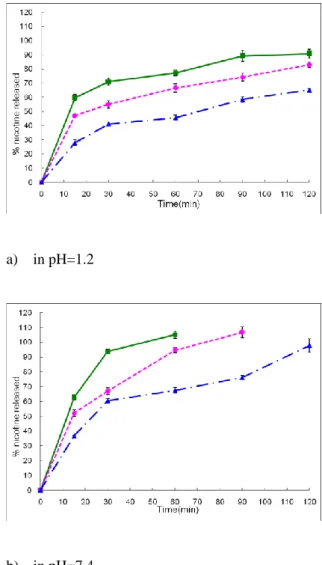
Figure 6 (a) shows the percentage of nicotine release from microcapsules in pH 1.2 medium.
Nicotine is a diacidic base (pKa=3.4 and pKa=8.2) drug. The ionized nicotine was leading to drug release rapidly at low pH value (Hukkanen et al.
2005). Here the maximum 90% of drug release was obtained for microcapsule containing 0.75%
alginate without additives for 2 hours. The content of alginate increasing to 2 % in microcapsules seemed to yield slower drug release near 40% with the same particle size. The percentage of nicotine release was significantly reduced around 30-50%
and a slower release rate was achieved due to addition additives into the microcapsules. The effect of additives on retarding release of drug from microcapsules in pH 1.2 medium conformed to the following order: PEG6000 > glycerin > gelatin.
Because no significant difference in shape of microcapsules was observed in release process, thus the kinetic behavior was controlled by diffusion but not degradation. The release rate of nicotine from microcapsules was highly dependent on the solubility of nicotine in medium. Figure 6 (b) shows the percentage of nicotine release from microcapsules at pH 7.4 medium. Compared to the result of swelling study, the degree of swelling increased dramatically even degradation that cause accelerated drug release. The higher content of alginate in microcapsules was found slower drug release. But there is no significantly difference in drug release among the additives incorporated into microcapsules.
a) in pH=1.2
b) in pH=7.4
Figure 6. The release-time profile of nicotine from microcapsules in (a) pH 1.2 and (b) pH 7.4 medium. (■)F1 (0.75% alginate); (●)F2 (1% alginate); (▲)F3 (2% alginate)
Points and vertical bars represent the mean±S.D. (n=3), respectively.
Conclusion
The desired particle size of microcapsules and high yield will be obtained by using a modification of the emulsion technique without using organic solvent. The results show that the encapsulation efficiency of microcapsules is relative to the particle size. The properties of the microcapsules are suitable for bowel disease targeting. To get more control over the drug delivery the current composite of microcapsules could be improved by increasing alginate content and adding additives such as PEG 6000 or glycerin.
References
Abbes Orabi N, Paterson HM, Goncette L, Danse E, Saey JP, Kartheuser A. 2011. Malone
appendicostomy: an unexpected complication.
Tech Coloproctol. 15(1):81-83.
Al-Zoubi NM, AlKhatib HS, Obeidat WM. 2011.
Evaluation of hydrophilic matrix tablets based on Carbopol(® ) 971P and low-viscosity sodium alginate for pH-independent controlled drug release.
Drug Dev Ind Pharm. 37(7):798-808.
Arlander E, Sjövall J, Sörstad J, Norsten-Höög C, Gustafsson LL. 2003. Rectal ropivacaine is absorbed proportionally to the dose, with low intraindividual variability. Br J Clin Pharmacol.
55(1):14-22.
Cortot A, Maetz D, Degoutte E, Delette O, Meunier P, Tan G, Cazals JB, Dewit O, Hebuterne X, Beorchia S, Grunberg B, Leprince E, D'Haens G, Forestier S, Idier I, Lémann M. 2008. Mesalamine foam enema versus mesalamine liquid enema in active left-sided ulcerative colitis. Am J Gastroenterol. 103(12):3106-14.
Coulie B, Camilleri M, Bharucha AE, Sandborn WJ, Burton D. 2001. Colonic motility in chronic ulcerative proctosigmoiditis and the effects of nicotine on colonic motility in patients and healthy subjects. Aliment Pharmacol Ther. 15(5):653-663.
Danese S, Fiocchi C. 2006. Etiopathogenesis of inflammatory bowel diseases. World J
Gastroenterol. 12(30):4807-4812.
Dahan A, Amidon GL, Zimmermann EM. 2010.
Drug targeting strategies for the treatment of inflammatory bowel disease: a mechanistic update.
Expert Rev Clin Immunol. 6(4):543-550.
Gionchetti P, Rizzello F, Morselli C, Campieri M.
2004. Review article: problematic proctitis and distal colitis. Aliment Pharmacol Ther. 20 Suppl 4:93-96.
Hukkanen J, Jacob P 3rd, Benowitz NL. 2005.
Metabolism and disposition kinetics of nicotine.
Pharmacol Rev. 57(1):79-115.
Kshirsagar SJ, Bhalekar MR, Umap RR. 2011.
Design, development and in vitro-in vivo study of a colon-specific fast disintegrating tablet. Pharm Dev Technol. 16(5):449-56.
Lai H, Zhu F, Yuan W, He N, Zhang Z, Zhang X, He Q. 2011. Development of multiple-unit colon- targeted drug delivery system by using alginate: in
vitro and in vivo evaluation. Drug Dev Ind Pharm.
37(11):1347-56.
Lakhan SE, Kirchgessner A. 2011. Anti- inflammatory effects of nicotine in obesity and ulcerative colitis. J Transl Med. 9:129.
Lawrance IC. 2011. Topical agents for idiopathic distal colitis and proctitis. J Gastroenterol Hepatol.
26(1):36-43.
Maiti S, Dey P, Kaity S, Ray S, Maji S, Sa B. 2009.
Investigation on processing variables for the preparation of fluconazole-loaded ethyl cellulose microspheres by modified multiple emulsion technique. AAPS PharmSciTech. 10(3):703-715.
Moustafine RI, Salachova AR, Frolova ES, Kemenova VA, Van den Mooter G. 2009.
Interpolyelectrolyte complexes of Eudragit E PO with sodium alginate as potential carriers for colonic drug delivery: monitoring of structural transformation and composition changes during swellability and release evaluating. Drug Dev Ind Pharm. 35(12):1439-1451.
Murakami I, Hamada Y, Yamane S, Fujino H, Horie S, Murayama T. 2009. Nicotine-induced neurogenic relaxation in the mouse colon: changes with dextran sodium sulfate-induced colitis. J Pharmacol Sci. 109(1):128-138
Ramdas M, Dileep KJ, Anitha Y, Paul W, Sharma CP. 1999. Alginate encapsulated bioadhesive chitosan microspheres for intestinal drug delivery. J Biomater Appl. 13(4):290-296.
Rajpurohit H, Sharma P, Sharma S, Bhandari A.
2010. Polymers for colon targeted drug delivery.
Indian J Pharm Sci. 72(6):689-696.
Schellekens RC, Stellaard F, Mitrovic D, Stuurman FE, Kosterink JG, Frijlink HW. 2008. Pulsatile drug delivery to ileo-colonic segments by structured incorporation of disintegrants in pH- responsive polymer coatings. J Control Release.
132(2):91-8.
Vandenbroucke K, de Haard H, Beirnaert E, Dreier T, Lauwereys M, Huyck L, Van Huysse J,
Demetter P, Steidler L, Remaut E, Cuvelier C, Rottiers P. 2010. Orally administered L. lactis secreting an anti-TNF Nanobody demonstrate efficacy in chronic colitis. Mucosal Immunol.
3(1):49-56.
Varshosaz J, Emami J, Ahmadi F, Tavakoli N, Minaiyan M, Fassihi A, Mahzouni P, Dorkoosh F.
2011. Preparation of budesonide-dextran conjugates using glutarate spacer as a colon-
targeted drug delivery system: in vitro/in vivo evaluation in induced ulcerative colitis. J Drug Target. 19(2):140-153.
Wyss A, von Stockar U, Marison IW. 2004.
Production and characterization of liquid-core capsules made from cross-linked acrylamide copolymers for biotechnological applications.
Biotechnol Bioeng. 86(5):563-572.
Xing L, Dawei C, Liping X, Rongqing Z. 2003.
Oral colon-specific drug delivery for bee venom peptide: development of a coated calcium alginate gel beads-entrapped liposome. J Control Release.
93(3):293-300.
Xu Y, Zhan C, Fan L, Wang L, Zheng H. 2006.
Preparation of dual crosslinked alginate-chitosan blend gel beads and in vitro controlled release in oral site-specific drug delivery system. Int J Pharm.
336(2):329-37.
Yehia SA, Elshafeey AH, Sayed I, Shehata AH.
2009. Optimization of budesonide compression- coated tablets for colonic delivery. AAPS PharmSciTech. 10(1):147-157.
Yue IC, Poff J, Cortés ME, Sinisterra RD, Faris CB, Hildgen P, Langer R, Shastri VP. 2004. A novel polymeric chlorhexidine delivery device for the treatment of periodontal disease. Biomaterials.
25(17):3743-3750.
用於腸道藥物控釋之尼古丁/藻酸鈣微粒膠囊的製備與特性研究
陳素容
1陳秋蘭
1林恆弘
1*1嘉南藥理科技大學藥學系
摘要
本研究之目的擬發展一具有結腸標靶特性之口服微粒膠囊藥物輸移系統以增進生體可用率,文中選 用尼古丁為親脂性模式藥物,明膠、甘油與聚乙烯二醇6000為添加物分別加入藻酸鈣中,採用改良乳化 技術製成微粒膠囊,進而探討添加物對微粒膠囊之產率、包埋率、理化性質以及藥物釋離的影響。結果 顯示,所製成之圓形含尼古丁的微粒膠囊其平均粒徑介於40 μm 至 500 μm,粒徑大小可藉由製備條件 加以控制,包埋率則與粒徑大小有關。微粒膠囊FTIR 光譜圖指出,負載尼古丁的微粒膠囊各成分間未 有化學性交互作用發生。添加物對延遲藥物在pH 1.2的條件下自微粒膠囊釋出之影響依序為: 聚乙烯二 醇6000> 甘油>明膠,在pH 7.4的條件下,微粒膠囊的膨脹度急劇增加甚至造成粒子崩解,導致藥物釋 離加速,此種微粒膠囊性質適合用於腸道疾病之標靶作用。為了更有效的控制藥物自微粒膠囊之釋離,
可藉由增加藻酸鹽含量以及添加甘油與聚乙烯二醇6000加以改善。
關鍵字: 尼古丁; 藻酸鈣; 微粒膠囊; 腸道; 控制釋放
*通訊作者: 嘉南藥理科技大學藥學系 Tel: +886-6-2664911Ext2227
Fax: +886-6-2667318
E-mail: [email protected]