Optical and electrical properties of PPV/SiO
2
and PPV/TiO
2
composite materials
S.H. Yang
a,b, T.P. Nguyen
a,*, P. Le Rendu
a, C.S. Hsu
baLaboratoire de Physique Cristalline, Institut des Mate´riaux Jean Rouxel, 2 rue de la Houssinie`re BP32229, 44322 Nantes, France bDepartment of Applied Chemistry, National Chiao Tung University, Hsinchu, Taiwan, ROC
Abstract
Composites made by incorporation of SiO2or TiO2nanoparticles into poly(p-phenylene vinylene) (PPV) have been fabricated and their
optical and electrical properties have been investigated. The UV–vis absorption band of the composite films showed a large blue-shift with SiO2nanoparticles, but only little difference with TiO2nanoparticles. Photoluminescence (PL) spectra showed the same blue-shift trend for
SiO2composites, and in addition, an increase in intensity of the high energy shoulder (515 nm) when the concentration of nanoparticles
increased. Raman spectra showed a reduction of the 1547/1625 cmK1band ratio in SiO2composites but not in TiO2ones. These results
suggest that SiO2nanoparticles reduced the PPV conjugation length, while TiO2nanoparticles did not. For SiO2particles, the reduction of
conjugation lengths is more pronounced on increasing the oxide concentration or on decreasing the particle size. Fourier-transform Infrared (FT-IR) spectra showed that both types of nanoparticles reduced the formation of carbonyl groups in PPV main chains. Current-voltage characteristics measured in ITO–composite–MgAg diodes exhibit different electrical behavior of the composites depending on the particle size and the nature of the oxide. The composite-electrode contact morphology, the polymer–dielectric particle contact and the change in the polymer chain length are the possible explanations for these changes in behavior of the diodes.
q2004 Published by Elsevier Ltd.
Keywords: A. Polymer-matrix composites (PMCs); A. Thin films; B. Optical properties/techniques; B. Electrical properties
1. Introduction
Conjugated polymers are nowadays used in several display applications[1–4], resulted from intensive research works over the last decade since the first report on
polymer-based light emitting diodes [5]. Among them,
poly(p-phenylene vinylene) (PPV) and its derivatives have attracted a great deal of attention because of their particular structure and their highly interesting electroluminescent
properties[6]. To enhance the performance of PPV-based
devices, several studies have been carried out on composites made with polymers and nano-oxide particles such as silicon oxide (SiO2) or titanium oxide (TiO2). The former is
found to have a good effect on the conductivity of the polymer host while the second can influence its photovoltaic properties. The use of composites is believed to increase the electrical conduction of the polymer[7]and in addition, to
improve its stability [8], which is of prime importance in devices. For both oxides, modifications of the polymer luminescence were observed. However, contradictory results have been reported. For example,
poly(2-methoxy-5-(20-ethylhexyloxy)-1,4-phenylene vinylene) (MEH-PPV)
blended with SiO2 was found to have an improved
conductivity as compared to the bare polymer [9], while
PPV with similar nanoparticles shows a lower conductivity than the polymer alone[10].
Besides, the effects of the nanoparticles on the structure of the polymer are still a subject of research. Baraton et al. [11]found that blends using TiO2nanoparticles do not break
the PPV conjugation and possess the potential of gas sensing applications. Zhang et al.[12]observed that the TiO2
nano-aggregates took the form of a sphere and finally ellipsoid with an alignment, as the content of TiO2increased.
In this work, we have studied some composites made by incorporation of SiO2 or TiO2 nanoparticles of different
concentrations and sizes in PPV. We have examined the optical and electrical properties of the hybrid materials 1359-835X/$ - see front matter q 2004 Published by Elsevier Ltd.
doi:10.1016/j.compositesa.2004.10.008
www.elsevier.com/locate/compositesa
* Corresponding author. Tel.: C33 240373976; fax: C33 240373991. E-mail address: [email protected] (T.P. Nguyen).
using the same polymer host in order to check the influence of the nature and the size of the particles on the behavior of the composites.
2. Experimental
The precursor polymer of PPV was prepared by the classical Wessling–Zimermann method reported previously [13]. SiO2nanoparticles dispersed in ethylene glycol (EG)
were provided from SPCI S.A. and TiO2nanoparticles from
Degussa. Dispersion of nanosized TiO2was carried out in
distilled water under ultrasonication for 8 h. All SiO2and
TiO2dispersed solutions were filtered with a 10-mm filter.
Four PPV precursor solutions were mixed with diameter 100 nm SiO2/EG solutions in different weight ratios (1, 2, 4
and 8%). The mixtures were prepared under ultrasonication for 1 h and then spin-coated on the pre-cleaned glass substrates. The thermal conversion of the precursor films was performed under vacuum at 300 8C for 3 h. Four other
PPV/SiO2nanocomposites (20 nm, 1, 2, 4 and 8%) and four
PPV/TiO2nanocomposites (20 nm, 1, 2, 4 and 8%) were
prepared by the similar procedure.
UV–vis absorption spectra of the samples were measured with a CARY 5G spectrophotometer. FT-IR and Raman experiments were performed by using a BRUKER IFS 28 and a BRUKER RFS 100 spectrophotometer, respectively. Photoluminescence (PL) spectra were obtained with a Fluorolog 3 spectrophotometer.
Diodes were prepared by depositing the composite thin film onto indium tin oxide (ITO) substrates followed by thermal evaporation of MgAg cathode of thickness 500 nm. Current–voltage (I–V) characteristics of devices were
recorded using a setup already described [14] and were
performed with the samples in vacuum and at room temperature.
3. Results and discussion 3.1. UV–vis spectra
For pristine PPV, the maximum of the absorption band
was found at 433 nm. In PPV/SiO2composites of different
oxide concentrations, the UV–vis absorption peaks were
from 430 to 419 nm with 100 nm SiO2particles, and from
426 to 403 nm with 20 nm SiO2 particles. The shift in
energy became larger as the content of SiO2increased. This
variation suggests that SiO2nanoparticles would reduce the
conjugation lengths of PPV, and the reduction becomes significantly important as the content of SiO2 increases.
Besides, we observe that smaller nanoparticles induce a larger blue-shift for an identical oxide concentration. It is possible that smaller nanoparticles are inserted in polymer chains more easily and produce a greater hindrance thus reduce the conjugation lengths.
Similarly, in PPV/TiO2 composites of different oxide
concentrations, the UV–vis absorption peaks were from 429
to 426 nm. As the shift is small, TiO2 nanoparticles
apparently have little or no effect on the conjugation of PPV. This result is in agreement with that obtained by
Zhang et al.[12]who found that the absorption of PPV in
the nanocomposites was not perturbed by the presence of the TiO2nanoparticles.
3.2. FT-IR spectra
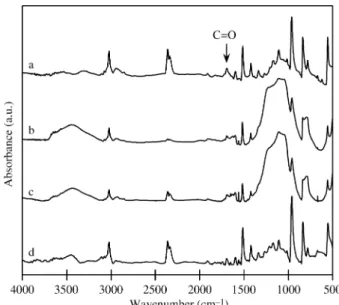
Fig. 1 shows the FT-IR spectra of PPV and some nanocomposites. In PPV/SiO2systems, the band centered at
3450 cmK1corresponds to O–H stretching of Si–OH; those
at 1107 and 794 cmK1 were assigned to Si–O–Si
asym-metric and symasym-metric vibrations, respectively[15]. In PPV/ TiO2composites, one broad band was found at 3445 cmK1,
which was attributed to O–H stretching of Ti–OH. We also noted a small band at 1107 cmK1, which may be related to Ti–O–C stretching mode. Zhang et al.[12]claimed that they
observed two additional bands at 1623 and 1105 cmK1,
which were assigned to Ti–O and Ti–O–C stretching modes. They concluded that Ti organic compound was formed and could result in an alignment structure of TiO2particles. In
our samples, this alignment was not observed. Scanning electron microscopy images (not shown) support this observation and show a fair homogeneous repartition of the oxide particles in the polymer host matrix.
On the other hand, we notice that the band at 1693 cmK1 decreases in intensity as compared with that of pristine PPV films. This band is related to the carbonyl groups CaO which were formed during the thermal conversion of the polymer precursor [11]. The decrease in intensity of this
band indicates that the presence of TiO2 nanoparticles
Fig. 1. FT-IR spectra of PPV and nanocomposite thin films: (a) PPV; (b) PPV/SiO2(100 nm, 2%); (c) PPV/SiO2(20 nm, 2%); (d) PPV/TiO2(20 nm,
2%).
S.H. Yang et al. / Composites: Part A 36 (2005) 509–513 510
would prevent the oxidation of the PPV chains and the composites would be more stable than the pristine polymer.
The IR spectra of PPV/SiO2 samples showed similar
features but the 1693 cmK1intensity reduction is smaller. 3.3. Raman spectra
Fig. 2 shows the Raman spectra of PPV and some nanocomposites. The main difference between PPV films and its composites is the modification of the triplet between 1500 and 1700 cmK1. In PPV films, the intensity of the band at 1547 cmK1(band 1) is comparable to that at 1625 cmK1 (band 3), and the (band 3/band 1) intensity ratio is approximately unity[16]. In all the PPV/SiO2composites
(100 and 20 nm), this ratio is significantly reduced when the oxide concentration increased. From our previous study on PPV oligomers[16], the change in this triplet is related to the conjugation length of PPV: when the conjugation length is reduced, the intensity of band 3 grows stronger than that of band 1. Hence, the change observed in the composite films suggests that introduction of SiO2nanoparticles into
PPV would reduce the conjugation length of the polymer chains.
In contrast, the Raman spectra of PPV/TiO2
nanocom-posites are similar to that of pristine PPV films whatever the concentration used. This result suggests that the presence of TiO2nanoparticles in the composite film has no effect on the
conjugation length of PPV chains. 3.4. PL spectra
Figs. 3–5show the photoluminescence spectra of PPV and the nanocomposites. The main emission band of PPV is located at 551 nm, with two shoulders at 514
and 596 nm. For the PPV/SiO2nanocomposites, the main
band is blue-shifted from 544 to 538 nm with 100 nm SiO2
particles, and from 533 to 527 nm with 20 nm SiO2
particles. The peak shift in energy became larger with increasing concentrations or decreasing particle size. This evolution is compatible with that observed in the UV–vis absorption spectra. We also note an increase in intensity of the 515 nm shoulder, which becomes the dominant
emission band as the SiO2 concentration increases. The
enhancement of this band was previously observed in
several PPV/nanoparticle composites [17,18]. Two
poss-ible explanations were proposed to account for this observation. First, the high energy of the 515 nm peak may indicate that the short segments of the polymers are Fig. 3. Photoluminescence spectra of PPV/(100 nm SiO2) composite thin
films with different particle concentrations: (a) 0; (b) 1; (c) 2; (d) 4; (e) 8%. Fig. 2. Raman spectra of PPV and nanocomposite thin films: (a) PPV;
(b) PPV/SiO2 (100 nm, 2%); (c) PPV/SiO2(20 nm, 2%); (d) PPV/TiO2
(20 nm, 2%).
Fig. 4. Photoluminescence spectra of PPV/(20 nm SiO2) composite thin
involved in the emission process. Therefore, an increase in intensity of this peak reflects the formation of new segments resulted from a scission of the polymer chains
upon introduction of the nanoparticles [17]. This
expla-nation is in agreement with the results obtained from both UV–vis absorption and Raman scattering experiments. The second process to be considered in PPV is the reduction of the film thickness, which also increases the emission of the
515 nm band [19]. This process is compatible with the
morphology of the composite thin film, and does not imply a modification of the polymer conjugation length. In fact, when particles are introduced into a polymer film, their spatial repartition will create in the host polymer, thin and small areas, whose thickness decreases with increasing particle concentrations or increasing particle sizes. This explanation is compatible with the evolution of the PL spectra on the concentration and the size of the particles. It does not, however, explain the shifts observed in UV–vis absorption and Raman spectra. It should be noted that from the sole PL point of view, one process does not exclude the other, and considering together all the results in PPV/SiO2
nanocomposites both processes may occur in these systems.
For the PPV/TiO2nanocomposites, the emission bands
vary from 550 to 548 nm. The position of the 515 nm band did not change with the increase of the particle concen-tration but its intensity increases. In addition, as the conjugation length is found to be preserved in these samples from UV–vis absorption and Raman experiments, the enhancement in intensity of the 515 nm band can be assigned to the formation of thin polymer zones in the composite films.
3.5. Electrical characteristics of ITO–PPV composite– MgAg devices
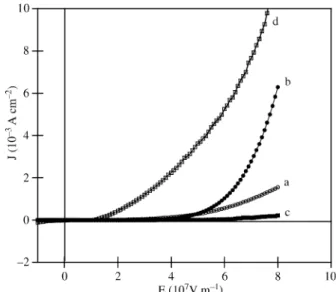
Fig. 6shows the current density versus the applied field for devices using PPV and different composites as an active
layer. In devices using PPV/SiO2 composites, we observe
different current variations depending on the particle size. For small size particles (20 nm), the conductivity of the composite decreased with the increasing concentration, while for a larger size (100 nm), it increased with the concentration. A possible explanation for this result is the strong reduction of the polymer conjugation length when using small size particles which alter the intrachain conduction. In contrast, the presence of large size particles in the polymer would favor the interchain conduction by favoring the formation of conducting pathways between the chains.
As for the PPV/TiO2composites, the fact that the PPV
conjugation length was not changed by incorporation of the particles, suggests that the carrier transport along the polymer chains would not be affected by the oxide. In addition, using an identical particle size (20 nm), we
obtained a higher conductivity in PPV/TiO2 composites
than in PPV/SiO2ones. Here, the nature of the oxide seems
to be at play, and it is possible that the acidic properties of the particles may change charge carrier transport at the
contact between the polymer and the particles [20].
However, further investigations using various oxide nano-particles are needed to elucidate the influence of the nature of the inorganic materials on the conduction mechanisms in composites.
Fig. 5. Photoluminescence spectra of PPV/(20 nm TiO2) composite thin
films with different particle concentrations: (a) 0; (b) 2; (c) 4%. The spectra of samples with 1 and 8% TiO2concentrations are very close to curves (b)
and (c), respectively, and are not shown for clarity.
Fig. 6. Current density versus applied field of ITO–composite–MgAg diodes: (a) PPV; (b) PPV/SiO2(100 nm, 2%); (c) PPV/SiO2(20 nm, 2%);
(d) PPV/TiO2(20 nm, 2%).
S.H. Yang et al. / Composites: Part A 36 (2005) 509–513 512
4. Conclusion
In this work, we have investigated the optical and electrical properties of composites made by incorporation
of SiO2 and TiO2 nanoparticles into PPV. We have
observed that SiO2 nanoparticles reduce the conjugation
lengths of the polymer, and the reduction is more significant when the particle concentration increases
and/or when their size decreases. Incorporation of TiO2
nanoparticles in PPV did not significantly affect the structure of the polymer, and in contrast, seems to stabilize it by reducing the formation of carbonyl groups. The photoluminescence spectrum of the polymer was modified upon incorporation of the oxide particles with an increase of emission near 515 nm. The electrical characteristics of studied devices showed different variation tendencies depending on the nature and the size of the particles used. Several factors can influence the charge injection into the polymer and their move-ments inside the composites: the morphology of the contact between the film and the electrode, the dielectric and chemical properties of the particles, and the rupture of the polymer chain length. The use of different kinds of dielectric materials of various sizes and the use of different polymer host matrices would be necessary to fully understand the role of the nanoparticles in these composites.
References
[1] Peng Z, Bao Z, Galvin ME. Adv Mater 1998;10:680.
[2] Bliznyuk V, Ruhstaller B, Brock PJ, Scherf U, Carter SA. Adv Mater 1999;11:1257.
[3] Bernius MT, Inbasekaran M, O’Brien J, Wu W. Adv Mater 2000;12:1737. [4] Politis JK, Curtis MD. Chem Mater 2000;12:2798.
[5] Burroughes JH, Bradley DDC, Brown AR, Marks RN, Mackay K, Friend RH, et al. Nature 1990;347:539.
[6] Woodruff M. Synth Met 1996;80:257. [7] Kicklbick G. Prog Polym Sci 2003;28:83.
[8] Neugebauer H, Brabec C, Hummenen JC, Sariciftci NS. Solar Energy Mater Solar Cells 2000;61:35.
[9] Carter SA, Scott JC, Brock PJ. Appl Phys Lett 1997;71:1145. [10] Ho PKH, Friend RH. J Chem Phys 2002;116:6782.
[11] Baraton MI, Merhari L, Wang J, Gonsalves KE. Nanotechnology 1998;9:356.
[12] Zhang J, Wang BJ, Ju X, Liu T, Hu TD. Polymer 2001;42:3697. [13] Tran VH, Nguyen TP, Massardier V, Davenas J. Polymer 1996;37:
2061.
[14] Nguyen TP, Spiesser M, Garnier A, De Kok M, Tran VH. Mater Sci Eng B 1997;60:76.
[15] Hernandez-Padron G, Rojas F, Garcia-Garduno M, Canseco MA, Castano VM. Mater Sci Eng A 2003;355:338.
[16] Nguyen TP, Tran VH, Destruel P, Oelkrug D. Synth Met 1999;101:633. [17] Ago H, Shaffer SP, Ginger DS, Windle AH, Friend RH. Phys Rev B
2000;61:2286.
[18] Lakehal M, Le Rendu P, Nguyen TP, Joubert P, Destruel P. Synth Met 2001;121:1631.
[19] Cimrova V, Neher D. J Appl Phys 1996;79:3299.
[20] Chung SH, Wang Y, Persi L, Croce F, Greenbaum SG, Scrosati B, Plichta E. J Power Sources 2001;97:644.