Determinants of Post-purchasing Disposable Diaper
In Ulaanbaatar, Mongolia
Master Thesis
Student: Bayarmagnai Erdenejargal
Advisor: Chien-Hsing Wu
Acknowledgement
First of all, I would like to thank Prof. James Wu for accepting me as his student and being my supervisor to helping me accomplish my master thesis in the National University of Kaohsiung. Also, I would like to thank other professors who encouraged me to be strong during my studies. And thank especially my friends who always helped me through all those good and bad days...
Sincerely yours Bayarmagnai Erdenejargal June, 2016
Determinants of Post-purchasing Disposable Diaper
In Ulaanbaatar, Mongolia
Advisor: Chien Hsing Wu
Department of Information Management National University of Kaohsiung
Students: Bayarmagnai Erdenejargal International Master of Business Administration
National University of Kaohsiung
Abstract
Literature has paid limited attention to the determinants that influence post
purchase satisfaction toward post purchase decision of disposable diapers in
Mongolia. The main purpose of this research thesis is to propose and empirically
examine a research model that describes the determinants of post purchase
satisfaction toward decision of diaper consumers in Mongolia. The study considers
culture value, social value and product attributes as the antecedents of post
purchase satisfaction. Based on the data analysis of 194 valid samples, the main
research findings are as follows: (1) the consumer’s post purchase satisfaction of
diaper in Mongolia is significantly associated with the post purchase decision. (2)
Social value is a significant key to the post purchase satisfaction. (3) Product
quality is a significant determinant that diaper customers may consider for buying
or not buying the products again. Discussion and implications are also addressed.
Keywords: Post purchase decision, Post purchase satisfaction, Culture value,
I
Table of Contents
List of Tables...I List of Figures...II
Chapter One: Introduction……….…...1
1.1 Background.………..…...1
1.2 Motivation and Objective……….……..4
1.3 Research Procedure ……….…..6
1.4 Thesis Overview………...7
Chapter Two: Literature review ………..8
2.1 Disposable Diaper in Mongolia………...8
2.2 Expectation-Confirmation Theory ……….……11
2.3 Culture Issue……….….14
2.4 Social Issue………..……..16
2.5 Functional Issue………..……...17
Chapter Three: Research Method………...….….….21
3.1 Research Model………..…...21
3.2 Sampling Plan………....23
3.3 Measure……….24
3.4 Data Analysis Techniques………..………...24
Chapter Four: Result and Discussion………...……….………….25
4.1 Descriptive Statistics……….…25
4.2 Reliability and Factor Analysis………..………..…….27
4.3 Hypothesis test……….…….31
4.4 Discussion and Implications………..…...33
Chapter Five: Conclusion……….….36
5.1 Research Finding……….……….36
5.2 Research Suggestion……….36
II
References………..………38
Appendix………42
Appendix A: Research Questionnaire (In Mongolia)………..…..42
III
List of Tables
Table 3.1: Operational definition for variables………..………22
Table 4.1: Overall Descriptive Statistics for the Valid Samples………..………26
Table 4.2: Cronbach's Alpha for Independent Variables……….………...28
Table 4.3: Cronbach's Alpha for Dependent Variables……….…….29
Table 4.4: Factor Analysis for the dependent variables……….……29
Table 4.5: Factor Analysis Result for Independent Variables (Product)………...…30
Table 4.6: Factor Analysis Result for Independent Variables (Culture and Social)..……31
Table 4.7: Test result for H1………...………31
Table 4.8: Test result for H2, H3, and H4……….……32
IV
List of Figures
Figure 1.1: Global top 5 companies market share in 2014……….…………2
Figure 1.2: Mongolian market share (brand in 2014)……….3
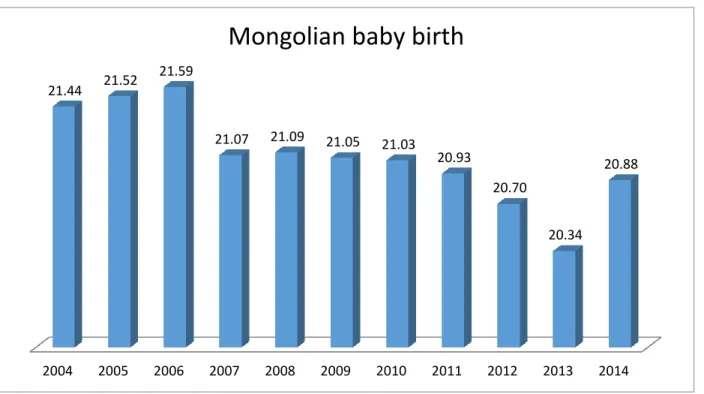
Figure 1.3: Mongolian birth rate (births/1.000 population)………..….4
Figure 1.4: Research procedure……….13
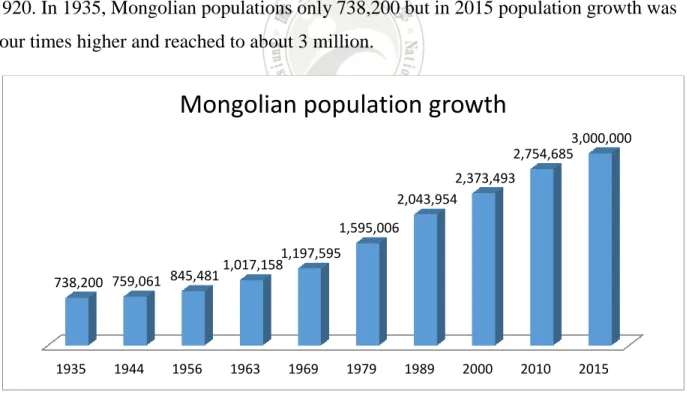
Figure 2.1: Mongolian population growths (National registration and statistics office NRSO)...………...…8
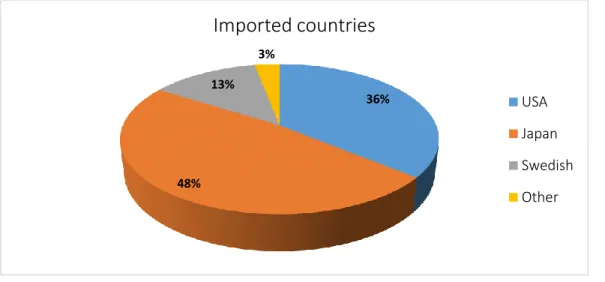
Figure 2.2: Countries importing diapers by percentage………..10
Figure 2.3: Expectation Confirmation Theory Model……….………..……….13
Figure 3.1: Research Model……….………..21
Figure 4.1: Validated Model……….……….34
1
Chapter One: Introduction
1.1 Research Background
The diaper, also known the nappy in South Africa, Ireland, the United Kingdom, New Zealand, Australia and Zimbabwe is an undergarment that allows a stool or urine. In 1956, Procter & Gamble began to study the disposable diaper. Mills (2014), who is a general chemist engineer at Procter & Gamble also grandfather, frequently changed, washed and dried his grandson’s wet cotton cloths. So, in order to make easier this job he invented producing diapers that were trademarked as "Pampers". However, Pampers were not marketed until 1961. To date, the disposable diaper has been accounting for more than $10 billion in annual income for the Procter & Gamble (Bloomberg 2014). In the next few decades, it is believed that the disposable diaper industry will be gradually expanded. Competitions among Procter & Gamble's Pampers and their competitors will be resulting this product in lower prices, which makes the market dynamic and unpredictable.
It is generally believed that increasing the disposable income and rising medical expenses is the main factors that develop the needs of baby diapers. They are also crucial to help the market growth of baby diaper, such as the use willingness of diapers to prevent the baby's skin hygiene from rashes. Furthermore, raising the birth rate, rapid urbanization and the continuous improvement of the economic situation of developing countries has been also an important factor that helps baby diaper industry growth.
Global baby diaper market is estimated. By 2020, it will reach to $59.4 billion (Allied MR 2014). The developed countries have been seen the largest areas that share the most market. However, with the rise in disposable income, developing countries are expected to witness significant growth in the forecasted period. Their disposable diapers market would be increased to a significant market share around 63 percent of the estimated global market by 2020 (Allied MR, 2014). However, environment protection
2
consciousness will very possibly limit the use of disposable diapers in the future; and on the other hand, will increase the use of the biodegradable diaper. Importantly, the global market is segmented into cloth baby diapers, disposable diapers, training nappy, trunks and biodegradable diapers. In 2013, the disposable diaper has accumulated into 66 percent of the global market, which is the largest market share (Allied MR, 2014). By geographic regions, the market is divided into North America, Europe, and Asia Pacific. Baby diaper market in Asia Pacific is expected, compared to such regions as North America and Europe, with the rapid growth of 8.3% annual growth rate. Global diaper net sales were around $25 billion in 2011 and expected growth will be $33.4 billion in 2017 (Vocus PRW Holdings, LLC, 2011). Currently, among the global diapers brands who hold the biggest five are P&G, Kimberly-Clark, Unicharm, SCA, Kao, occupying almost 70% market share in total (Gosreports 2015), as shown in Figure 1.1.
Figure1.1: Global top 5 companies market share in 2014.
(Gosreports 2015 http://www.gosreports.com/global-disposable-diapers-market-analysis/)
Despite the decreasing world population birth, the global diapers net sale is still growing, mainly due to the population density, urbanization and people who likely choose using disposable diaper more conveniently than a traditional cloth diaper. As we know, on the one hand, the disposable diaper has its advantages and disadvantages, such as polluting environment, harm baby health, consumers’ financial problems, and so on so
35% 23% 6% 3% 2% 31%
Global market share (percentage)
P&G Kimberly Clark Unicharm SCA Kao Other
3
forth. On the other hand, the traditional cloth diapers (e.g., Mongolia) are more inconvenient to use than disposable diapers, such as they need to be washed over and over again. More importantly, parents will choose the easier way to take care of their baby. In this case, the disposable diaper may be the best candidate. However, parents will very possibly be unaware of the consequences that disposable diaper may cause. To deepen this issue factors that influence the post purchase behavior. The global trend of premium manufacturer’s brand of diapers such as Pampers, Libero, Huggies, MamyPoko and Helen Harper sales are making up higher portions of market share in Mongolia (Tsolmon 2015). The pie chart (Figure 1.2) indicates that Pampers and MamyPoko hold the biggest market share in Mongolia. Recently, many of Mongolian consumers purchase more disposable diaper than traditional cloth diaper, especially for the young families who tend to purchase disposable diapers because of the working environment and their living style has been changing. In fact, there are lots of economy issues happening in Mongolia, which makes members of the young family working to have more income for their family. Although the elder people make use of traditional cloth diaper from time to time, they still purchase disposable diaper because of the concerns of convenience and efficiency.
Figure1.2: Mongolian market share (brand in 2014) (Tsolmon 2015
http://www.slideshare.net/tsolmontsoggerel/mamy-poko) 31% 36% 12% 13% 5% 3%
Mongolian Market share
Mamypoko Pampers Huggies Libero Merries Others
4
In Mongolia, there are about 8 to 9 million disposable diapers per month are sold out and all of the products are imported from other countries (NRSO, 2016). This costs about an average of 9 billion MNT, which equals to an average of 45 million USD. This indicates that Mongolia has a potential disposable diaper market. Mongolian population is just reached three million in 2015 and birth rate grows increasingly for the last ten years (NRSO, 2016).
Figure 1.3: Mongolian birth rate (births/1.000 population), (Source: NRSO, 2016)
1.2 Motivation and Objectives
In Mongolian, people still regard diapers as a special present for new-born babies and infants. Even though times have changed and the economy improved, most parents still wash dirty cloths today and use diapers during night-time. The diaper is in fact so far a necessity of everyday life for parents who are growing infants and very young children. Mongolia people still regard diapers as a luxury product. Stores sell for varied brands of
2004 2005 2006 2007 2008 2009 2010 2011 2012 2013 2014 21.44 21.52 21.59 21.07 21.09 21.05 21.03 20.93 20.70 20.34 20.88
Mongolian baby birth
5
diapers, such as Pampers and MamyPoko. For the past decade, marketers, or even business runners, are trying to look for determinants that influence the consumers’ buying decision due to increasingly intense competition.
There are around 3 million and 49 thousand people and one to a third of the population living in the capital city (March, 2015), which makes a centralized and limited market in Mongolian. Cultural impact and the high price of a product are usually the critical buying barriers, which in consequence may force consumers back to the traditional ways. Recently, a new opening of a disposable diaper manufacturer, “TODI”, is trying to share market that Pampers and Mamypoko hold. With almost equally qualified products as Pampers and Mamypoko provide, the “TODI” imports disposable diaper, and many consumers are satisfied with this product. This signifies that competition is increasingly intense and marketing strategy is particularly important to fit the needs and wants of consumers in Mongolian
Most research that examines the antecedents of post purchase behaviour in diapers industry focus mainly on price, competitors, quality, and brand (NRSO. 2016). Limited attention has been paid to the determinants of consumers’ post-purchase decision of diapers in Mongolian. The purpose of the research thesis is to explore Mongolian consumers’ behaviour towards disposable diaper products and examine the relevant behavioural patterns that could emerge from the stages of the decision-making process. The findings would help to understand how the decision-making process of Mongolian consumers is and what cultural, social, personal and functional factors influence the post purchase decision.
To derive the findings, the research thesis proposes and empirically examines a research model to describe the post purchase decision by considering such factors as culture, social, and product. The main objectives of this research thesis are as follows:
(1) To propose a research model to describe the post purchase decision by considering the culture, social, and product.
(2) To empirically examine the research model and provide research findings and suggestions for marketers in the domain of disposable diaper in Mongolian
6
1.3 Research procedure
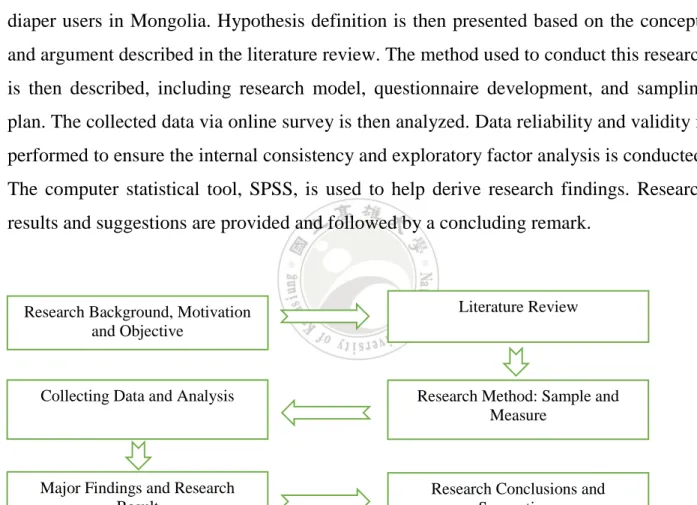
The research aims at the determinant examination for the post-purchase behavior of disposable diaper consumers in Mongolia. The research procedure of the thesis is shown in Figure 1.4. After topic and objectives are identified, a literature review is conducted to learn more details and issues about factors that link with the behavior of disposable diaper users in Mongolia. Hypothesis definition is then presented based on the concepts and argument described in the literature review. The method used to conduct this research is then described, including research model, questionnaire development, and sampling plan. The collected data via online survey is then analyzed. Data reliability and validity is performed to ensure the internal consistency and exploratory factor analysis is conducted. The computer statistical tool, SPSS, is used to help derive research findings. Research results and suggestions are provided and followed by a concluding remark.
Figure 1.4: Research procedure
Research Method: Sample and Measure
Collecting Data and Analysis
Major Findings and Research Result
Research Conclusions and Suggestions Research Background, Motivation
and Objective
7
1.4 Thesis overview
There are five chapters that are included in this research thesis. Chapter One: Introduction
Chapter Two: Literature review. Journals and articles are reviewed in this chapter to address concepts and research arguments. Hypothesis development is also presented.
Chapter Three: Research method.
Chapter Four: Results and discussions. The software SPSS is utilized to get results. Chapter Five: Conclusion and suggestion. Major findings and suggestions are made and
8
Chapter Two: Literature Review
2.1 Disposable Diaper in Mongolia
Mongolians used to cradle babies since long time ago. Cradling can keep babies from infections and keep them warm in Mongolian extreme bad weather. Cradling with sheep wool has advantages to keeping babies safe and healthy. Australian scientists said that cradling with sheep wool can make babies grow healthy and strong. Nowadays, Mongolians are still adopting the traditional way to cradle baby with sheep wool to make babies safer and healthier.
Since the independent day (1920), Mongolian population had grown rapidly since 1920. In 1935, Mongolian populations only 738,200 but in 2015 population growth was four times higher and reached to about 3 million.
Figure 2.1 Mongolian population growths (Source: NRSO, 2016)
1935 1944 1956 1963 1969 1979 1989 2000 2010 2015 738,200 759,061 845,481 1,017,158 1,197,595 1,595,006 2,043,954 2,373,493 2,754,685 3,000,000
Mongolian population growth
9
Upon the relatively high population growth and better national economy, the needs of living goods become not only diverse but also urgent. Among the living goods is the diaper which is very important to the way Mongolians use to grow babies. The domestic diaper market increasingly grows since last decade. Importantly, Mongolia’s market collapsed when free market economy occurred in early 1990’s, and consequently manufacturing industries dominated by Soviet were suddenly closed, which were sold and left in the dust. Nowadays, goods in Mongolia’s market from fuel, groceries, toys, to napkins, and even diaper, are mostly based on import. The diaper is one of the newer things that are introduced the same way. In Mongolians, the total amount of importing disposable diaper is about 4.5 million USD per year, which accounts for about 8 to 9 million pieces of diaper per month in the market (NRSO, 2014). In average, the number of disposable diapers that a baby consumes until 24 months old is about 2,000 to 8,000 pieces (WHO, 2010).
As aforementioned in Chapter One, there are 5 companies that are importing diapers from USA, Japan, Swedish and others, which indicates that only five companies share diapers market in Mongolia, as shown in Figure 2.2. However, in the beginning of 2016, a new National diaper brand has established in Mongolia, named TODI. The company is doing very well in the market with various sizes available, such as children S (3.6 kg), M (5.10 kg), L (9.14 kg) and XL (15 kg). One piece of “TODI” disposable diaper costs 360-390MNT (0.20 USD), depending on the size. TODI was opened on January 28th and its production capacity is about 200,000 pieces per month. Therefore, company’s sales have grown up 30 times higher than the beginning. Right now, TODI disposable diaper shares 5% of the market and they plan to share 80-90% of the disposable diaper market in Mongolia. The TODI, in fact, has potentials in the market because Mongolians start to support national products because purchasing diapers are very convenient, the products are cheaper and have better quality for users in Mongolia.
However, due to the small population in Mongolia, firms are facing the increasingly tense competition and starting to consider what factors that influence the consumers’
10
decision of post purchase to maintain, or even enhance their market share. To address this issue, one of the antecedents that affect purchasing behavior is a social exchange. In fact, consumers in Mongolia who buy diapers are according to mostly to members of online and offline communities. However, most retailers do not provide detailed information or even lack of explanation for their products, such as how to use and pros and cons in comparison with alternatives provided by competitors, and from time to time the problems are mainly because of languages. This irrelevant service quality makes consumers looking for solutions by asking people like friends, online users in Facebook fan page, or even their neighbors. Therefore social exchange would be a critical factor that influences whether or not consumers will be purchasing the diapers again and again.
Figure 2.2 Countries importing diapers by percentage.(Source: NRSO, 2016)
Another factor that consumers in Mongolia may also care about is the product itself (Sheth, Newman, Gross, 1991) because it is directly related to the use fit. To deepen this issue, the research thesis considers attributes of the diaper, including price, quality, provider, size, and color. The argument of this is attributes of a product will be likely linked to purchase satisfaction or dissatisfaction. As aforementioned above, there are a number of brands for a diaper, which implies that the price and quality may be inconsistent, and in consequence developing various perceptions of consumers toward
36% 48% 13% 3%
Imported countries
USA Japan Swedish Other11
use and post purchase satisfaction. To explore such kinds of information may be useful for diaper marketers in Mongolia.
Moreover, the factor that also influences post purchasing decision of diaper consumers is Culture. The NRSM (2015) reported that mothers’ age in Mongolia presents a wide range, showing that 20 years old or below is 9%, 20-29 is 51%, 30-39 is 35%, and 40-49 is about 5%. This implies that Mongolia is one of the early married nations. Usually, young and inexperienced new mothers usually get help from their parents who mostly follow the traditional ways to raise the babies. In most case, they will be likely avoid using disposable diapers because of the concepts and expenses. In other words, they are conservative and prefer using sheepskin to cradle babies. There are advantages. First, the traditional way will be able to protect babies from being bandy legs when they grow up. Second, it helps babies learning to walk faster, which implicitly improves babies’ self-confidence. Finally, baby’s father has to prepare for sheepskins for the first baby by kneading raw sheepskins with hand until becoming soft. By doing so, he is accepted to be a true dad by his parent-in-law. To date, this custom is still not uncommon in Mongolia. Moreover, as aforementioned above, the main purpose of the research thesis is to investigate the factors such as culture, social and product that influence post purchase satisfaction toward post purchase decision in Mongolian disposable diapers industry. To deepen the concepts, the theory, expectation-confirmation theory is used to describe the post- purchasing behavior. Details are described below.
2.2 Expectation-Confirmation Theory
In dealing with the purchasing behavior, consumers usually will be expecting certain outcomes by which they can evaluate satisfied or not satisfied. Importantly, when a consumer is noticed to be certain negative attributes of the product (e.g., cheaper) or receive information of better alternatives, he or she tends to feel cognitive dissonance (Kotler et al., 2008). In this case, he or she will be very possibly dissatisfied, and
12
thereafter determines not buying again. That is why companies put many efforts on developing customer communication to maintain loyalty with their products or services. According to (Solomon, 2010), even though satisfaction comes from the actual performance of the purchased product, the basic function does not necessarily imply the higher satisfaction. Consumer expectations, however, quite often influence satisfactions more than the basic function itself. As such perceived satisfaction is the interplay between consumer’s expectations and product’s perceived performance (Oliver, 2006), on the one hand, satisfied consumers are more likely to repurchase the product again and tend to give positive feedback about the product and brand to their peers. On the other hand, for the dissatisfied consumers consequences may be taking place, such as return the product or abandon it, stop buying the product and influence others to do so, seek justification of its value, take public actions such as complaint to the company, other public, private and government agencies, and seek for lawyer and legal action against the company (Hirschman, 1970).
Moreover, another major factor identified by (Solomon, 2010) is the prior experience of the product or lack of it. Previous experience of the product usually builds a certain level of expectation levels from its performance. Upon this situation, when there is a new product enters a market and consumers have no prior experience with are they will evaluate according to their expectations or reputation. As such, in the very localized or domestic market, only the multinational companies (e.g., big companies) with global reputation will be possibly entering that market. However, in emerging markets, companies may build very high expectations when products are introduced to the market if consumers do not verify the information that companies deliver. High expectations that are unsustainable will ultimately generate dissatisfactions.
Consumer’s intention can be taken as the pre-purchase intention and post- purchase intention. When linking to satisfaction it is always referred to the post-purchase intention (Oliver, 1980). The Expectation Confirmation Theory (ECT) developed by (Oliver, 1977) and (Bhattacherjee 2001) in marketing domain is widely used to describe the relation
13
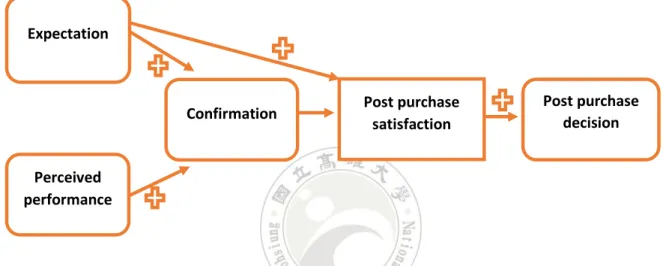
between consumer’s satisfaction and their re-use or post-purchase decision (Oliver 1977, 1980; Bhattacherjee, 2001; Hossain & Quaddus, 2012; Westbrook & Reilly, 1983; Lin et al., 2005). The theory suggests that if the consumer perceives the perceived performance is higher than the expectation, then satisfaction will be higher as well and in consequence positive relation with consumer’s reuse or post purchase decision is produced. Details are shown in Figure 2.1.
Figure 2.3 Expectation Confirmation Theory Model
Basically, the arguments of ECT are linked with three questions; they are why consumer choose to buy a certain product or not, and do it again and again? Why consumers prefer one product type over another, and do it again and again? and why consumer makes their choice of one brand over another and remains the same. The satisfaction plays the main role that links to variables that are used to describe products and non-product issues (e.g., culture, social). While the research thesis is attempting to borrow the notion of the right-hand half of the theory, the argument is whether or not this theory can use to describe the post purchasing behavior of diaper in Mongolia. Therefore, the first hypothesis is defined as follow. Three factors that are linked to the post-purchase
Post purchase satisfaction Confirmation Expectation Perceived performance Post purchase decision
14
satisfaction toward post purchase decision. They are culture value, social value, and product functions.
H1: Post-purchase satisfaction significantly influences post purchase decision of diaper
2.3 Culture value
Culture covers a very wide area that encompasses the whole society with its language, religions, laws, cuisine, art, technology, patterns and artifacts that give society its identity. (Schiffman and Kanuk 2004) indicated that culture is the total of learned beliefs, values, and customs that serve to direct the consumer behavior of members in a particular society. Beliefs and values are projections in the consumer mind that influence their attitudes which in turn influence how a person responds to purchase decision (O'Guinn & Shrum, 1997). When evaluating alternative brands of the product, final purchase decision of the consumer is affected by their values such as perception of quality, and country of origin, and their beliefs. For example, German manufactured cars quite well, and therefore highly attracts consumers’ beliefs. This, in consequence, helps enhance the willingness of post purchase. It is natural that people usually act according to the type of culture. This implies that a consumer’s buying behavior is very possibly linked to his or her culture. Therefore, it is reasonable that culture will be likely related to the perception of post satisfaction. For example, in Mongolia people cradle babies by using sheepskins, which is regarded as the culture. With respect to the willingness of using diaper, the power of such a culture may be a barrier for marketers to promote their products. In this case, culture may lower the degree of post-purchase satisfaction, and thereafter may be no longer buying the diaper.
Usually, a culture has its own subcultures that include nationality, religion, racial group, and geographic regions. These differences can result in varied purchase behaviors in a specific region. Particularly, when a subculture is gradually accepted by people, its influence power will likely become higher, which may develop and transform into the
15
main culture in that region (e.g., Country). In fact, Mongolia has few subcultures due to the dominant Khalka people which occupy about 94.9% of the total 3.2 million populations, and the minority Kazakh people (5%) is considered as subculture due to their small numbers, religious beliefs (Muslim Kazakh and Buddhist Khalka), and geographical region (e.g., most Kazakh people live in east part of the country) (CIA, 2013).
Almost human societies have developed social classes which divide the society in hierarchical orders similar values, beliefs, and behavior. For example, American social classes are divided into seven levels: lower lowers, upper lowers, working class, middle class, upper class, lower uppers and upper uppers (Coleman, 1983). Unlike America, Mongolia does not have an obvious social class structure, but the country can be seen as having a three social class using an available data; lower class (29.8% living below poverty line, sharing 3% of the household income), middle class (60.2% sharing 68.5% of household income) and upper class (10% with 28.4% of the household income) (CIA, 2013).
Because of the social status, individual differ in preferences for goods and behavior, such as cars, clothing, groceries, and buying behaviors. Similarly, media preferences also differ between social classes (Kotler et al., 2008). Thus, marketers should develop their marketing strategies by considering the targeted social classes. In other words, segmentation is quite important to marketing program development. Culture may be a barrier for consumers to continue using products, especially Mongolia just moves forward to the free market economy. Culture is one of the important factors that influence post-purchase intention in Mongolian diapers market. On the one hand, grandparents may suggest to growing their grandchildren with old traditional ways, avoid using disposable diapers because of baby’s health. On the other hand, usually, parents start using diapers right at the time their baby was born until around 2-3 years old. It is so convenient because their baby can freely pee when walking or play with no care. However, parents thought if they use diapers quite often, their baby may lose sensation and thereafter
16
disables the independence development. To avoid such a negative effect, parents may reject using diapers very often for their second baby, or they use diaper only at night or when they really need. This various needs and wants make the post purchase decision quite unpredictable for marketers in Mongolia. To deepen the understanding of such a situation, the research thesis argues that culture is one of the factors that influence post purchase satisfaction of consumers in Mongolia. The second hypothesis is then defined as below:
H2: Culture significantly influences post purchase satisfaction of diaper.
2.4 Social value
Generally, people living together will develop and form a society via interactions. These interactions will very possibly influence daily life such as buying goods, producing things, etc. Most consumers quite often seek out for opinions of buying products and services from people in physical or virtual communities. These interactions can help the consumer in various ways. There are advantages. Consumers can reduce time to search for information and make a comparison, and eventually reach the best solutions or options that fit their needs and wants. Consumers can also seek for guidance for the case that there is no sufficient information, especially when they have to take risks. (Schiffman & Kanuk, 2004).
Therefore, a group, or a small society, is important to members for exchanging concepts, learning knowledge, or even imitating behaviors. In other words, members will be very possibly influencing other members in a group. However, whether or not the influence is significant depends highly on how they interact. The purposes of the group for particular purposes may be friendship group for friendship development, shopping groups for sharing shopping experience and information, work groups for sharing or exchanging working knowledge or concepts, spokespersons and social media group such as Facebook for reputation and marketing promotion development, etc. Particularly, the
17
family group is also an important group that greatly influences members’ behaviors because members are so close to each other with almost daily life. As such, marketers are putting most efforts on the family group for their products, services, and advertisements.
(Kotler, 2008) indicated that there are two types of family that influence consumers’ behavior. The first type is personal-oriented consumption in which family members acquire guidance for self-worth, love, ambition and economics, politics, and religion (Palan & Wilkes, 1997). Therefore, paternal influence on individual can be significant even a low interaction level. The second type is human-oriented consumption, where everyday purchase behavior is directly influenced by family members’ spouse and children. In a traditional family, wife acts as a family’s main purchaser, especially for groceries, sundries and clothing products. However, when it comes to expensive products such as cars and housing, decision making is done by both husband and wife (Su et al., 2003). Therefore, group members are probably the most influential factor that determines to buy or not buying (Burns, 1992). Therefore, marketers are usually targeting the groups for their products or services due to the social value that is produced by group members. The argument of the research thesis is that satisfaction or not satisfaction may be determined by the extrinsic influence represented by member’s opinions, comments, and experiences from the social group.The third hypothesis is defined as below.
H3: Social value significantly influences post purchase satisfaction of diaper.
2.5 Functional value
A product has its own attributes that are defined as the functional value (Sheth et al., 1991). The functional value has been shown a critical factor that links with purchase satisfaction (Sheth et al., 1991; Chen, 2006; Pan, 2009). The argument is that if consumers are satisfied with the functions of products they purchased, they will be likely willing to purchase, which therefore produces positive intention to purchase again and again. By considering the characteristics of the diaper and particular environment in
18
Mongolia, the functional value is developed into five sub values; they are a provider, quality, size, price, and color. Concepts and research arguments are described below.
In marketing, the price is one of the important appearances for a certain product. It is the amount of money that a consumer sacrifices to get the product (Zeithaml, 1988). Usually, people will make their decision of whether they buy the product or not depend on their own perception of what is undervalued or reasonable or just a premium price. (Zeithaml, 1998) mentioned that price-seekers (or consumers) who are looking for low prices will also look for inexpensive ways to get a high value. However, some consumers may prefer lower prices with lower quality. Importantly, consumers who regard price as an indicator of quality. Therefore, sellers may lower down the product quality to minimize costs. Therefore, a higher price would signify a better product quality (Bao and Sheng, 2011). However, reducing price may not be a good solution to improve value for money perception. (Broekhuizen, and Anselm, 2002) reported that customers are willing to pay a premium for customized products because of fully satisfaction. (Turel et al., 2010). In economics, people judge on what is the equilibrium price by considering the poser between supply and demand (Callan and Thomas, 2007). Therefore, price sensitivity may differ in situations, which makes sellers hard to adjust the price from time to time.
Price is classified into two parts, objective price, and price perception. Price target is the actual price of the product while the price that individual perceives believe reasonable when it is compared to product quality (Lichtenstein & Scot, 1989). As mentioned earlier, consumer perception compared to the price is different and has a positive and a negative influence on purchasing behavior. According to the recession has an impact on the purchasing behavior when income decreases and consumers are aware that it is advantageous to move their preference from choosing domestic brands to imported brands. This implies that price will be one of the important factors that influence satisfaction or dissatisfaction.
19
The quality is another factor that affecting consumers’ post-purchase satisfaction toward post purchase decision. Like price, people perceive quality differently (Brucks et al. 2000; Burgess, 1996). In marketing, accepted quality implies that the quality meets or exceeds the lowest standard of product or customers’ expectations (De Feo, 2001; Deming, 1982; Finlay, Hackman, & Schwarz, 1996). (Smith and Wright, 2004) reported that the quality of the product can meet customer expectations, and argued that improving the quality of the product will likely lead to customer satisfaction, and thereafter enhances higher sales. Product quality generally considers the product design and customer requirements (Flynn et al. 1994; Lynch 1999; Porter and van der Linde 1995; Nadia 2001; Wagner 2005). In order to meet expectation or deliver satisfaction to customers, the design of the product is important, named “quality of design” (Juran, 1974). Always, product quality is being thought to contribute to the expansion of competitive advantages whereas the product is to be designed and also manufactured to achieve customer requirements in enhancing the product performance (Benson et al., 1991; Flynn et al., 1994).
For instance, diaper research report suggests that one of the important factors in product development is to identify user needs and integrate them into product quality like what kind of material they use (Callahan and Lasry 2004). Customers expect products to be free from harmful substances, and the evidence indicates that consumers are willing to pay more for them (Gunningham, 1994; Mirvis, 1994). (Gunningham, 1994) argued that firms should respond to this evidence on consumer preferences by redesigning their products to make them less bad effects on the skin. This indicates that the competitive advantages of a company benefiting from these improvements in product quality such as materials are considered completely safe for young skin. Some brands improve inner lining with aloe and vitamin E and compounds skin-friendly often used as well. When demand increases the pressure of the increasing quality rises (Nagurney et al., 2014), leading to higher quality of the products. However, higher quality will require higher price (Zeithmani, 1988), which presents likely positive relationship. If customers
20
expectation confirmed by quality then satisfaction will increase, and therefore post purchase willingness will be positive.
Another subfactor that affects customers’ satisfactions is the product’s size and appearance, although they might be a minor issue. While using the products, consumers usually ask for two main questions which are: (a) satisfied with product content (size) or appearance (color). For example, diaper size is important to the fitting baby and being comfortable for movement, which may contribute to the degree of satisfaction or dissatisfaction. Moreover, most girls prefer pink and boy blue, which also contribute to the willingness of post-purchase, and (b) satisfied with the ease of use. For example, whether the diaper is easy to use for parents is also a considerable factor that determines satisfaction of consumers. In fact, if a consumer does not need to spend much time to go over the instruction book and can adapt to using it easily they will perceive with positive feelings towards the product (Karahana, 1999). In this regard, in diaper industry providers (e.g., manufacturer or importers) should provide “usage instruction” with a convenient explanation in Mongolian language, like diagrams-oriented process. In particular, if the diapers that consumers purchase do not provide a useful instruction or explanation for users to follow, a barrier may be produced and thereafter will likely stop consumers buying again. In other words, the negative influence may occur and will be negatively influenced post purchase decision (Azzone and Bertele, 1994). Therefore, the current study attempts to reveal whether attributes of diaper (provider, quality, size, price, and color) affects post purchase satisfaction towards post purchase decision, the fourth hypothesis, and its sub-hypotheses are defined as follows:
H4: Product significantly influences post purchase satisfaction of diaper. H4-1: Provider significantly influences post purchase satisfaction of diaper.
H4-2: Quality significantly influences post purchase satisfaction of diaper. H4-3: Size significantly influences post purchase satisfaction of diaper.
21
H4-4: Price significantly influences post purchase satisfaction of diaper. H4-5: Color significantly influences post purchase satisfaction of diaper.
Chapter Three: Methodology
In this chapter, the research methodology is presented, in which research model is illustrated and the variables used in the research model are defined. The research hypotheses are developed. The sampling plan that addresses how subjects are selected and sampled described. The instrument used to collect data is presented. Finally, the techniques used to analyze the collected are also delineated.
3.1 Research Model
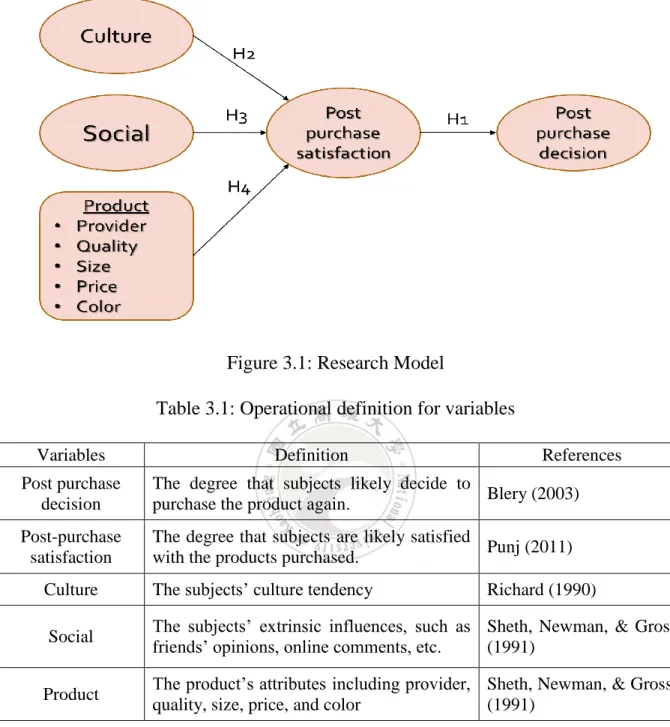
According to the defined hypotheses, the research model is developed, as shown in Figure 3.1. It contains independent variables that are Culture, Social and Product and two dependent variables, Post-purchase satisfaction, and Post purchase decision. The factor of the product contains a provider, quality, size, price, and color. The operational definition for each variable used in the current research is presented in Table 3-1. It is used to help develop questionnaire items for variables
22
Figure 3.1: Research Model
Table 3.1: Operational definition for variables
Variables Definition References
Post purchase decision
The degree that subjects likely decide to
purchase the product again. Blery (2003) Post-purchase
satisfaction
The degree that subjects are likely satisfied
with the products purchased. Punj (2011) Culture The subjects’ culture tendency Richard (1990)
Social The subjects’ extrinsic influences, such as friends’ opinions, online comments, etc.
Sheth, Newman, & Gross (1991)
Product The product’s attributes including provider, quality, size, price, and color
Sheth, Newman, & Gross, (1991)
Based on the literature review described in Chapter 2, the research hypotheses are developed as follows. There are four hypotheses, of which the H4 has five sub-hypotheses.
H1: Post-purchase satisfaction significantly influences post purchase decision of diaper. H2: Culture significantly influences post purchase satisfaction of diaper.
23
H3: Social significantly influences post purchase satisfaction of diaper. H4: Product significantly influences post purchase satisfaction of diaper.
H4-1: Provider significantly influences post purchase satisfaction of diaper. H4-2: Quality significantly influences post purchase satisfaction of diaper. H4-3: Size significantly influences post purchase satisfaction of diaper. H4-4: Price significantly influences post purchase satisfaction of diaper. H4-5: Color significantly influences post purchase satisfaction of diaper.
3.2 Sampling Plan
Sampling technique is used to help researcher collecting relevant and suitable data for the current research thesis (Malhotra, 2009). In this research, quota sampling method in non-probability sampling technique is chosen because a specific group of consumer had to be chosen to get more in-depth understanding of the disposable diaper consumers. Furthermore, because the key issue is the post purchasing, the research, therefore, targets on the consumers in Ulaanbaatar city, Mongolia who is experienced in purchasing disposable diaper. The chosen sample consumer criteria are as follows:
(1) Couples with children under 2 years old (married or not married) (2) Single parents with children under 2 years old.
(3) Already having experience on purchasing diaper.
Data collection is based on online questionnaire due to that first, the geographical problem that the study is being done in the context of Ulaanbaatar, Mongolia and second it is convenient to digitize the collected data. The study expects 200 valid samples from Ulaanbaatar, the capital city of Mongolia (the largest city with 1/3 of the population). A research questionnaire was developed following the literature review to reduce any disconnection from the secondary data as literature research was theoretical. English
24
questionnaire was first drawn out and translated into the Mongolian language. Questionnaire design consists of ranking and rating scales. However, Likert rating scale is used in the majority of the questions as its multiple choices can give more practical and reliable data. Subjects are welcome to provide comments if they have. As of the Likert rating scale is suitable for this research through its non-affection towards the age and gender differences. (Roster, 2006).
3.3 Measure
The research measured by adopting 5 Likert Scale (all of the operational definitions and one point=Strongly Disagree, seven point=Strongly Agree) Culture, Social and product (provider, quality, size, color, and price) were measured by using a scale of 1-7 points. 3-4 questions will be developed for Culture and Social factors. For instance: I take care of baby according to the old ways that parents suggest (culture factor) and I purchase diapers according to the comments and opinions in online or offline communities (social factor). Furthermore, 3-4 questions will be developed for each sub-factor which are a provider, quality, size, color, and price such as I pay much attention to the providers or importers when purchasing diapers.
3.4 Data Analysis Techniques
There is 4 part of statistical analysis techniques will use to analyze the collected research data in this study. The first part which is a descriptive analysis that used to describe the basic features of the data. It provides simple summaries about the sample and the measures. Together with simple graphics analysis, they form the basis of virtually every quantitative analysis of data. The second part which is Cronbach’s alpha that sees if reliability and validity of the defined variables are consistent, Cronbach’s alpha coefficient value above 0.9 is considered excellent 0.8 is considered very good 0.8 till 0.5
25
which is still acceptable but if a coefficient value below 0.5 is considered low reliability that means it would be rejected (Hair et al., 1998). The third part is factor analysis that derives the actual variable composites which mean reduce the measurement scales into certain factors. Last part is Structural Equation Modeling (SEM) to test the defined hypotheses. More details in Chapter 4.
Chapter Four: Data Analysis Results
4.1 Descriptive analysis
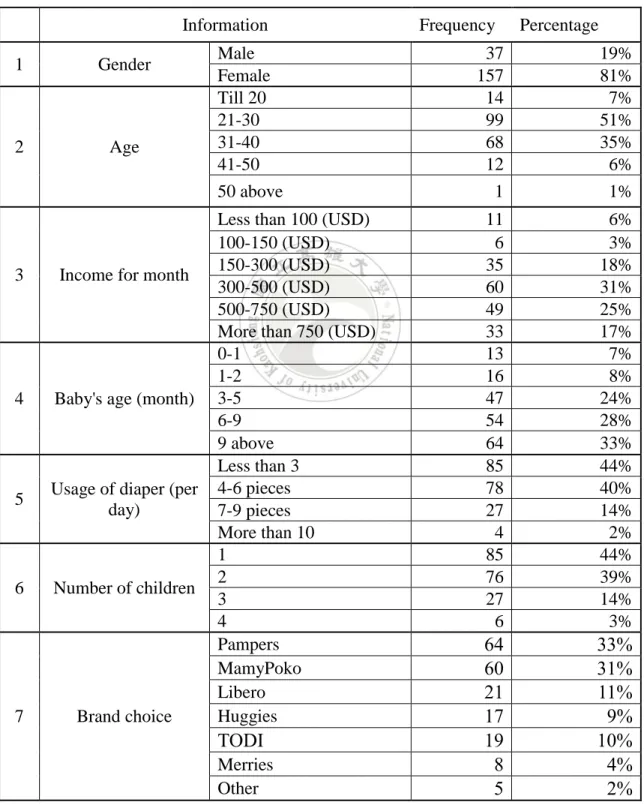
The demographic data of the samples include gender, ages, income, how many children they have, brand choice, baby’s age and years of using diaper. Questionnaires were available online from April 15 to May 29. Questionnaires were posted in the online communities (e.g., Facebook, and Google+). The number of samples collected was 221 in total. Of the total collected samples, 27 were invalid mainly because of incomplete item or singular answer, indicating 194 valid samples, which indicates a validity rate of approximately 87.8%.
The descriptive analysis results are presented in Table 4-1. It shows that females are more than 80% of respondent valid number; that is 157 out of 194 participants. In this case, the result represents that most of the females take care of babies in the home and only a few percentage of male respondents take care of babies in the home. For the age, the result shows that 21-30 years of respondents mostly participated in the survey of disposable diaper numbered 51 percentage followed by 31-40 years of respondents, and next young generation who under 20 years old numbered 14 respondents.
The monthly income respondents the ability that the respondent family could afford to purchase a disposable diaper in Mongolia. The result shows that 60 respondents who have a monthly income of 300-500USD, followed by 49 of survey respondents get 500-750USD monthly. Thirdly, 35 respondents get a monthly salary of 150-300USD, and
26
finally 33 respondents get more than 750USD. This implies that the majority income of the respondents is between 300 and 750 (i.e., 56%). Regarding the age of baby, the results shows that majority age is more than 3 months old (i.e., 85%)
Table 4.1 Descriptive statistics
Information Frequency Percentage
1 Gender Male 37 19% Female 157 81% 2 Age Till 20 14 7% 21-30 99 51% 31-40 68 35% 41-50 12 6% 50 above 1 1%
3 Income for month
Less than 100 (USD) 11 6%
100-150 (USD) 6 3%
150-300 (USD) 35 18%
300-500 (USD) 60 31%
500-750 (USD) 49 25%
More than 750 (USD) 33 17%
4 Baby's age (month)
0-1 13 7%
1-2 16 8%
3-5 47 24%
6-9 54 28%
9 above 64 33%
5 Usage of diaper (per day) Less than 3 85 44% 4-6 pieces 78 40% 7-9 pieces 27 14% More than 10 4 2% 6 Number of children 1 85 44% 2 76 39% 3 27 14% 4 6 3% 7 Brand choice Pampers 64 33% MamyPoko 60 31% Libero 21 11% Huggies 17 9% TODI 19 10% Merries 8 4% Other 5 2%
27
The usage of disposable diaper is to see how many diapers are used in a day. The result shows that 85 respondents use of less than 3 pieces in one day and 78 respondents use 4-6 pieces of disposable diaper a day. The followed by 27 of respondents’ uses 7-9 pieces of a disposable diaper in one day. The rest are more than 10 pieces of a disposable diaper in one day. This result shows that one baby most frequently uses an average of 1-6 pieces of a disposable diaper in a day in Mongolia (i.e., 84%). For the number of children in the respondent’s family, the result shows that 85 respondents have 1 child with 44 percentages of the survey participants. Followed by 76 respondents have 2 children with 39 percentage of the survey participants. Only 27 of respondents have 3 children in one family and the rest have 4 children in one family. Lastly, the brand choice of survey participants for the 5 brands in Mongolian shows that Pampers shares most of the disposable diaper market and the result proved that 64 respondents chosen Pampers for their use. Followed by 60 respondents choose Mamypoko with 31 percentages. The Berries have only 8 respondents, TODI has 19 respondents out of 10 percentages, Libero and Huggies have an average of 23.5 respondents.
4.2 Reliability and Factor Analysis
For the reliability analysis and factor analysis, the research used software of SPSS 22 to derive the data analysis results. Testing the reliability is to ensure that the data in variable are internally consistent. The Cronbach’s Alpha is used to determine whether acceptable or unacceptable. Details are shown in Table 4.2.
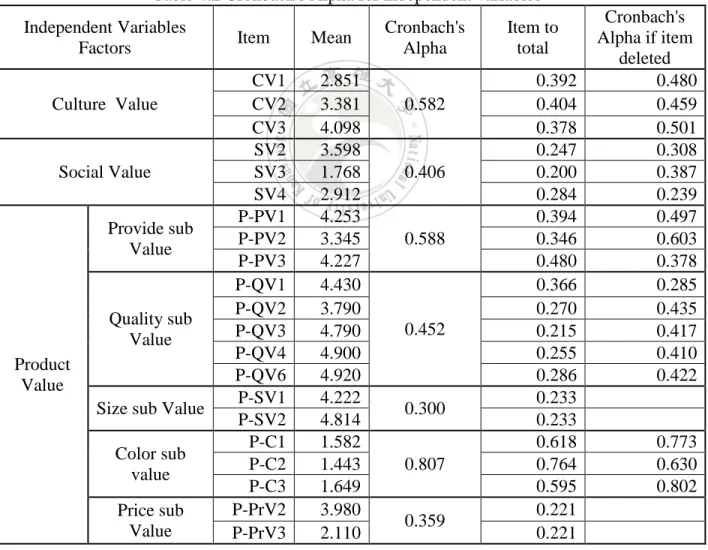
For the independent variables, the Culture contains 3 items, Social has 3 items, and Product has 5 sub-factors; they are provider, quality, size, color, and price. Reliability for the 5 sub-factors are also included. According to Table 4.2, the Cronbach’s alpha for Culture is 0.582 and item to total between 0.378 and 0.404. If any item deleted alpha will be decreased, so no item needs to be deleted. Social’s Cronbach’s alpha is 0.406 and item
28
to total in SV1 is quite low, and thereafter the SV is deleted. However, the Cronbach’s alpha of the remaining items are still not high (i.e., from 0.200 to 0.284). To avoid losing the information collected for the analysis step, the research keeps them, although it is realized that doing so may influence the hypothesis tests. For the Product variable, the Cronbach’s alpha is 0.588; 0.452; 0.300; 0.807 and 0.359. Item to total between 0.215 and 0.764. Since if any item deleted Cronbach’s alpha will decrease, so there is no item need to be removed except price. In order to increase reliability, P-PrV1 deleted from sub-factor Price.
Table 4.2 Cronbach's Alpha for independent variables Independent Variables
Factors Item Mean
Cronbach's Alpha Item to total Cronbach's Alpha if item deleted Culture Value CV1 2.851 0.582 0.392 0.480 CV2 3.381 0.404 0.459 CV3 4.098 0.378 0.501 Social Value SV2 3.598 0.406 0.247 0.308 SV3 1.768 0.200 0.387 SV4 2.912 0.284 0.239 Product Value Provide sub Value P-PV1 4.253 0.588 0.394 0.497 P-PV2 3.345 0.346 0.603 P-PV3 4.227 0.480 0.378 Quality sub Value P-QV1 4.430 0.452 0.366 0.285 P-QV2 3.790 0.270 0.435 P-QV3 4.790 0.215 0.417 P-QV4 4.900 0.255 0.410 P-QV6 4.920 0.286 0.422
Size sub Value P-SV1 4.222 0.300 0.233 P-SV2 4.814 0.233 Color sub value P-C1 1.582 0.807 0.618 0.773 P-C2 1.443 0.764 0.630 P-C3 1.649 0.595 0.802 Price sub Value P-PrV2 3.980 0.359 0.221 P-PrV3 2.110 0.221
29
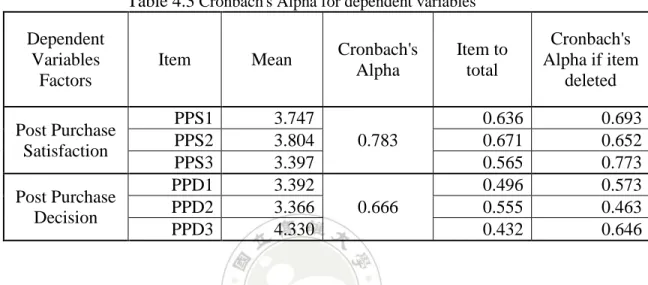
The Table 4.3 shows the Cronbach’s alpha for dependent variable including post purchase satisfaction and post purchase decision. Cronbach’s alphas are 0.783 and 0.666. Item to total is from 0.565 to 0.671 for the post purchase satisfaction. There is no item deleted. Another item to total is between 0.432 and 0.555 for the post purchase decision, in which no item is removed.
Table 4.3 Cronbach's Alpha for dependent variables
Dependent Variables
Factors
Item Mean Cronbach's Alpha Item to total Cronbach's Alpha if item deleted Post Purchase Satisfaction PPS1 3.747 0.783 0.636 0.693 PPS2 3.804 0.671 0.652 PPS3 3.397 0.565 0.773 Post Purchase Decision PPD1 3.392 0.666 0.496 0.573 PPD2 3.366 0.555 0.463 PPD3 4.330 0.432 0.646
For the factor analysis, first the KMO coefficient is one of the ways to examine whether the data is suitable or not for factor analysis. It requires a value higher than 0.5. For the dependent variables, post purchase satisfaction and post purchase decision, the KMO coefficient is 0.756, which means they are suitable to proceed with factor analysis. After factor loading generated value should be at least 0.5, if not we delete the item for it is not meaningful. The result of factor analysis is presented in Table 4.4, which shows the items of both post purchase satisfaction and post purchase decision are well separated into two factors.
Table 4.4: Factor Analysis for the dependent variables
Factor loading 1 2 SAT2 0.864 0.148 SAT1 0.838 0.155 SAT3 0.746 0.24 PPD2 0.157 0.819 PPD1 0.136 0.776 PPD3 0.208 0.685
30
1. Extraction method: Principal component analysis. 2. Rotation Method: Varimax with Kaiser Normalization 3. Sat: Satisfaction; PPD: Post purchase decision
For the independent variables, the research regards Culture and Social as a group and Product with 5 sub-factors as single group. The reason to do so is because the research had tried all possibility to reach acceptable results, but failed. It is realized that doing so may influence hypothesis tests results; it might be the only way that the research can move forward.
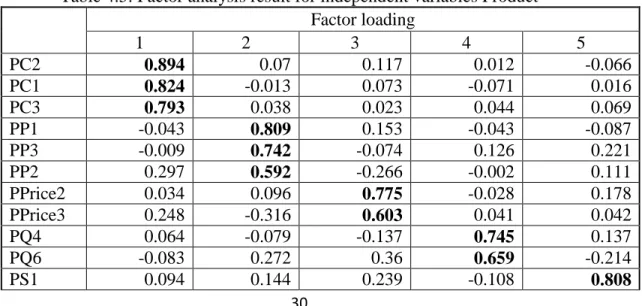
The first group is the product itself with five sub-factors. The KMO coefficient is 0.638 which is suitable to continue the analysis. The results are presented in Table 4.5. The Color has 3 item, the provider has 3 items also, and the Size has 2 original items. For the Quality and Price, because some items are not acceptable they are deleted. Items in Color are 0.894, 0.824 and 0.793 as PC2, PC1, and PC3 which are acceptable. The Provider containing PPA1, PPA3, and PPA2, which are 0.809, 0.742, and 0.592. The Price items are 0.775 (PPrice2) and 0.603 (PPrice3), which is also acceptable. The Quality remains 2 items which are PQ4 0.745 and PQ6 0.659. The last Size PS1 and PS2 are 0.808 and 0.620, which are also acceptable.
Table 4.5: Factor analysis result for independent variables Product
Factor loading 1 2 3 4 5 PC2 0.894 0.07 0.117 0.012 -0.066 PC1 0.824 -0.013 0.073 -0.071 0.016 PC3 0.793 0.038 0.023 0.044 0.069 PP1 -0.043 0.809 0.153 -0.043 -0.087 PP3 -0.009 0.742 -0.074 0.126 0.221 PP2 0.297 0.592 -0.266 -0.002 0.111 PPrice2 0.034 0.096 0.775 -0.028 0.178 PPrice3 0.248 -0.316 0.603 0.041 0.042 PQ4 0.064 -0.079 -0.137 0.745 0.137 PQ6 -0.083 0.272 0.36 0.659 -0.214 PS1 0.094 0.144 0.239 -0.108 0.808
31
PS2 -0.105 0.041 -0.013 0.468 0.620
1. Extraction method: Principal component analysis. 2. Rotation Method: Varimax with Kaiser Normalization
3. PC: Product sub color value; PP: Product sub provider value; PPrice: Product sub price value; PQ: Product sub quality value; PS: Product sub size value
The second group contains Social and Culture. The KMO coefficient of these variables is 0.627 which is suitable to proceed with factor analysis. The results are shown in Table 4.5, indicating that value of all items exceed 0.5 which is quite acceptable. The values of all items are between 0.634 and 0.736.
Table 4.6: Factor analysis result for independent variables (Culture and Social)
Factor loading 1 2 CA3 0.736 0.071 CA2 0.736 -0.159 CA1 0.727 -0.057 SA4 -0.18 0.704 SA2 -0.056 0.676 SA3 0.083 0.634
1. Extraction method: Principal component analysis. 2. Rotation method: Varix with Kaiser Normalization 3. CA: Culture value; SA: Social value
4.3 Hypothesis test
For the hypothesis, the first hypothesis that defines posts purchase decision as the dependent variable and post purchase satisfaction as the independent variable is examined and the result is presented in Table 4.7. The R square is little low but still significant with p-value 0.000, implying that post purchase satisfaction is significantly associated with the post purchase decision.
Table 4.7 Test result for H1
Dependent variable Post purchase decision
Independent variable R Square Beta t P-value Post purchase Satisfaction 0.17 0.412 6.267*** 0.000 Note: ***p<0.01
32
For the test of hypothesis H2, H3, and H4 as present in Figure 3.1 which are culture value toward post-purchase satisfaction, social value toward post purchase satisfaction and functional value toward post purchase decision. The result is shown in Table 4.8. It is found that only H3 shows significant, and culture value and product value show insignificant. Particularly, the t-value of Culture is negative, although not significant, implying that Culture would be somewhat a barrier that reduce the post purchase willingness. Moreover, in Mongolia the factor that diaper consumers consider for whether buy diaper again or not depends highly on the opinion, comments, and information of online communities.
Table 4.8: Test result for H2, H3, and H4
Depend variable Post-purchase satisfaction
Independent variable R Square Beta t P-value
Culture (H2) 0.119 -0.069 -0.993 0.322 Social (H3) 0.297 4.191*** 0.000 Product (H4) 0.097 1.372 0.172 Note: ***p<0.01
For the tests of sub-factors of variable Product, the test results are presented in Table 4.9. It is found that only Quality shows significant, although weak. This implies that among attributes of diaper that contribute to the predication of post purchase satisfaction in Mongolia is just the diaper quality. Although there are arguments in literature review that possible factors such as price, color, size, and provider may influence the willingness of buying diaper again and again, surprisingly the finding does not in accordance with the research expetation. It is not saying that they are not totally related to post purchase satisfaction; instead they may be not as important as determining the post purchase behavior. Moreover, as aforementioned, problems that may occur while using diaper are materisals, bad side-effect, skin rash, etc. This implies that what Mongolian consumers at this particular time care mostly is the product quality.
33
Table 4.9: Test result for sub-factors of product toward post purchase satisfaction. Dependent variable Post purchase satisfaction
Independent variable R square Beta t p-value Provider 0.053 -0.037 -0.474 0.636 Quality 0.142 1.754* 0.081 Size 0.115 1.488 0.138 Price -0.06 -0.789 0.431 Color 0.113 1.543 0.125 Note: *p<0.1
4.4 Discussion and Implications
The Figure 4.1 illustrates the hypothesis test results for the variables of culture, social, and product. Of which, only variable social presents significant. Moreover, the Figure 4.2 illustrates the test results of factors of variable Product. Among sub-factors only quality is significantly associated with the post purchase satisfaction. Surprisingly, most hypotheses test results are not according to the research arguments. For example, based on the general understanding the Mongolia culture is quite unique that traditional ways to grow babies are still popular. This particular type of culture could slow down the steps of shifting from sheep skin to diaper. However, subjects do not likely present the significant traditional power of growing babies; instead they seems not regarding the culture as one of the determinants that influence to buy or not to buy diaper. Moreover, the research targeted subjects only from the capital of Mongolia that is, comparatively, in the higher degree of urbanization. These subjects would be developing their own ways to grow babies by considering convenience, fast, and fashion. On the other hand, online communities have been also developing their increasing power of influencing the ways people communicate in Mongolia. This trend may be another way
34
that diaper consumers decide what brand to buy, quality to accept, and even decision to repurchase. The test result for the variable Social gives an evidence for this particular phenomenon.
Figure 4.1: Hypothesis test results for Culture, Social and Product
Figure 4.2: Hypothesis test results for Sub-factors of Product Culture
Post purchase satisfaction
Social purchasePost
decision Product H2 -0.993 H3 4.191*** H4 1.372 H1 6.267*** Post purchase satisfaction 1.754* 1.488 -0.789 Size -0.474 1.543 Provider Color Price Quality
35
There are implications. Based on the research findings, the social value and product quality are significant toward post purchase satisfaction, which means that Mongolian diapers consumers mostly consider opinions of online and offline people about the product features, quality, and use experiences, or news about promotion. In particular, their post purchase behaviors likely depend highly on the information and perception from social communications. Main reasons could be the lack of the information, like explanation or usage of the product in several kind of language except Mongolian language about the product because most products are imported from outside Mongolia.
Therefore, the research suggests that diaper marketers and importers should pay special attention to how to build up a better communication environment in which language is not the barrier for consumers to be able to directly read information about products. To do so, they can have product with sticky labels in Mongolian language on each product. Another suggestion is to pass a message to the manufacturers that diaper quality is the key problem to the decision of purchasing again and again. To do so, they can frequently conduct market surveys to catch up the needs and wants of consumers.
In addition, to deepen the effect of social value, promotion activities are also needed for marketers. To do so, they can give sample products to the new born babies at the hospitals during mother’s day or special holiday events. Building up a baby care center at the department store is also an aid to the enhancement of social value. Furthermore, for the online consumers promoting the products and holding some small contests that are related to product use, like photo of the baby who is using a certain brand diaper, is also an alternative to expend the effect of social value. More importantly, big retailers (e.g., domestic manufacturers or importers) can collect used diapers to protect environment from being polluted by exchanging new products as rewards while product quality remains acceptable. Winners like Friendly Environment Mother can be arranged either in the online communities or in the physical events. Doing so may very possibly increase the brand reputation in Mongolian societies.
36
Chapter Five: Conclusion
The main propose of this research is to investigate the factors that affect Mongolian consumer’s post purchase satisfaction toward post purchase decision by considering the culture, social and product attributes (provider, quality, price, color, size). The conclusion is described in this Chapter.
5.1 Research Findings
The main research findings are as follows.
1. The consumer’s post purchase satisfaction for diaper in Mongolia is significantly associated with the post purchase decision.
2. Social value is a significant key to the post purchase satisfaction.
3. Product quality is a significant determinant that diaper customers may consider for buying or not buying the products again.
5.2 Research Suggestions
Based on the analysis results and research findings, there are some research suggestions for diaper manufacturers and marketers.
1. From the industry point of view, the result reveals that product quality is significantly linked with the post purchase satisfaction toward post purchase decision. It suggests that retailing companies or marketers should focus more on product quality; in other words, they should import diapers by comparing with others in the same market and choose better quality brand in certain country (i.e., import from certain countries). Also, one of the features that diaper product should have is that it need to suit for Mongolian changeable weather. For instance, providers from Japan focus mostly on