1
Pre and Post-Convergence with IFRS and Value Relevance of
Financial Statements: Evidence from Two Decades’ Accounting
Standard Setting in Taiwan
TsingZai C. Wu
* National Cheng Kung UniversityWan-Ting Hsieh
†National KaoHsiung University of Applied Sciences
Chun-Chan Yu
††National Cheng Kung University
Hsin-Ti Chu
††Southern Taiwan University
Department of Accountancy National Cheng Kung University
1 University Road, Tainan City, Taiwan, Republic of China Tel: +886-6-275-7575 x 53426
Fax: +886-6-274-4104 Email:[email protected]
November 2013 __________________________
* Corresponding author, professor Accountancy and a member of Taiwan Financial Accounting Standards Committee (1996-2013). † Associate Professor, †† Ph. D. candidates.
We are grateful to comments from participants of Annual meetings of Taiwan Accounting
Association and Japan Accounting Association. Financial support was from the National Science Committee, Taiwan, Republic of China. (Research grant No. NSC 9424-16- H006- 031).
2
ABSTRACT: Although many countries around the world have adopted IFRS, convergence is
still an option for some countries (e.g., the U.S., Japan, and India). We examine whether the
value relevance of financial statements, especially before and after the convergence with IFRS
(“country-specific version of IFRS”) over the past two decades, have improved in Taiwanese
firms. Two differential methods are used to strength our results: Traditional adjusted R2
comparison and abnormal pricing errors. In summary, although we find a replacement effect
between earnings and book value of equity, convergence with IFRS does not lead to a further
increase in the joint value relevance of financial statements. Considering U.S. GAAP has
constituted the infrastructure of twGAAP, our findings are consistent with the notion that
financial reporting system is a function not only of accounting standards, but also of other
institutional factors. The empirical evidence from Taiwan may provide implications to
international standard setters and regulators, especially for countries which have not decided to
adopt or converge with IFRS.
3
I. INTRODUCTION
The purpose of this paper is to examine whether the value relevance of financial statements,
especially before and after the convergence with IFRS1, has improved over the past two decades
in Taiwan. Taiwan’s accounting standard setting body, the Taiwan Financial Accounting
Standards Committee (TFASC) of the independent Accounting Research and Development
Foundation (ADRF), was set up and started to issue financial accounting standards for firms in
Taiwan since 19842. The mission of ADRF is to enhance the quality of accounting and auditing
practices for public firms in Taiwan. Up to 2013, TFASChas issued 41 statements of financial
accounting standards (twSFAS) and more than 800 interpretations to the standards. From 1984 to
1999, Taiwan’s generally accepted accounting principles (twGAAP) basically follows U.S.
GAAP to ensure that twGAAP could be compatible with accounting standards with good
reputations. Realizing the importance of having globally acceptable standards for public firms in
Taiwan, TFASC initiated a project to review and modify all announced twSFAS in accordance
with the principles of IFRS (then IAS) in 1999. From then on, twGAAP began to converge3 with
IFRS until 2012. Although most of countries around the world have mandated or permitted the
1 Throughout this study, the term “IFRS” refers not only the narrowly defined International Financial Reporting
Standards issued by the International Accounting Standards Board (IASB), but also International Accounting Standards (IAS) issued by the IASB’s predecessor body, the International Accounting Standards Committee, some of which have been amended by the IASB.
2 Taiwan’s Securities and Futures Bureau (SFB) of the Financial Supervisory Commission (FSC) delegates
authority of setting up twGAAP to the ARDF.
3 In this study, we refer convergence to the definition of Ramanna and Sletten (2013) that “a country’s efforts to
4
adoption of IFRS (IASB 2012) now, some countries, such as the U.S., Japan, and India, are still in the stage of “limited convergence” with IFRS4. Given the complexity of cost-benefit analysis
based on individual country’s circumstances, the decision to adopt IFRS is difficult. Among
options, one strategy is to adopt a “country-specific version of IFRS”. Under this strategy,
although IFRS is the foundations of domestic GAAP, each jurisdiction still keeps the power to
issue accounting standards, interpretations, and related implementation guidance. In addition,
there can be supplemental disclosure requirements and standards that augment IFRS (Hail et al.
2010). Coincidentally, this is what TFASC adopted in its “IFRS-Convergence Period” during
2000–2012. Taiwan’s unique standard setting environment provides a feasible empirical testing
for the strategy suggested by Hail et al. (2010).
To focus on the long-term relations between stock price and financial statements, we
employ the Ohlson model (Feltham and Ohlson 1995) to investigate the value relevance of
accounting numbers. Two measures are used to examine the trends in value relevance of earnings
and book value of equity in the price model during 1990–20115. First, we use traditional adjusted
R2 comparison of cross-sectional regressions along years to test the joint and incremental value
Convergence projects often result in adopting IFRS with modifications and exceptions” (p.1).
4 We use the term “limited convergence” because compared with convergence strategy used by TFASC and
suggested by Hail et al. (2010), the differences with IFRS in accounting standards per se are relatively high in the present U.S, Japan, and India.
5 In this study, we refer “Developing Period” to year 1984–1999 and “IFRS Convergence Period” to year
5
relevance of earnings and book value of equity (Collins et al. 1997; Francis and Schipper 1999;
Ely and Waymire 1999). Second, we use abnormal pricing errors suggested by Gu (2007) to
eliminate the across-sample incomparability problem of adjusted 2
R and the scale effect
problem caused by direct usage of residuals. Considering there are still other factors affecting
value relevance, we also provide two alternative empirical results to control the stability of
economy and the incidence of negative earnings in our main analysis in addition to full sample
results.
The results indicate that, although a statistically increasing trend of joint value relevance is
found in the whole period (1990–2011), this trend is primarily driven by increase of value
relevance in the Developing Period (1984–1999). Since U.S. GAAP has constituted the
infrastructure of twGAAP in this Developing Period, the stated results are consistent with the
notion that financial reporting system is a function not only of accounting standards, but also of
interpretations, auditing, incentives, and the law environments (Ball et al. 2000; Ball et al. 2003;
Leuz et al. 2003; Lang et al. 2006; Bradshaw and Miller 2008). Hence, the marginal benefits of
convergence with IFRS in joint value relevance are limited. In terms of incremental value
relevance, the incremental relevance of earnings exhibits a significant downward trend during
the IFRS-Convergence Period (2000–2012), yet the incremental relevance of book value of
6
relevance of earnings is slowly being replaced by that of book value of equity, which is
consistent with what IFRS focuses on (i.e., asset/liability view rather than revenue/expense view).
To sum up, although convergence with IFRS does not lead to a further significant increase in the
joint value relevance of financial statements, the replacement effect in the IFRS-Convergence
Period show that at least the efforts of TFASC to stress the relevance of balance sheet have been
paid off. We also conduct three robustness tests: First, we use return model to explore short-term
relations between changes of stock price and accounting numbers. Second, we examine the
effects of nonrecurring earnings on value relevance in price model. Finally, to ensure accounting
information is available to the public, we use the stock price on the final regulatory
announcement dates of annual financial reports as the dependent variable in the price model. In
sum, the long-term relations between stock price and financial statements are robust, although
we do not find consistent results in the return model. This may be due to the different relations
between accounting numbers in explaining stock price in the short term, or the increase in
volatility of stock returns suggested by Francis and Schipper (1999).
Our study contributes the accounting literature in two aspects. First, we provide empirical
evidence for the “country-specific version of IFRS” (convergence) strategy proposed by Hail et
al. (2010). Specifically, in the context that a country had already followed a set of high quality
7
relevance of financial statements for investors. Although convergence with IFRS may bring other
benefits in qualitative characteristics (e.g., increases in comparability of financial statements
between domestic and foreign companies), countries with larger economic size continuously
using their domestic standards still can attract international investment (Ramanna and Sletten
2013). Thus, comparability of financial statements may be not a decisive concern in determining
convergence with or adoption of IFRS. The empirical evidence from Taiwan in the
IFRS-Convergence Period may provide implications to international standards setters and
regulators (especially for countries which have not decided to adopt or converge with IFRS).
Second, given the potentially mixed results caused by the use of different methods to measure
value relevance, the consistent results between adjusted R2 and abnormal pricing errors measures
in our study strengthen our inferences.
The rest of the paper is organized as follows. In Section Ⅱ, we describe the development of
accounting standards in Taiwan and review literature on the convergence with and adoption of
IFRS. The research design is described in Section Ⅲ. Section Ⅳ illustrates our sample data
and shows the empirical results. Section Ⅴ presents the results of robustness tests. Section Ⅵ
8
II. BACKGROUND AND RELATED LITERATURE
Financial Accounting Standard Setting History in TaiwanBased on changes in accounting standard setters, the development of twGAAP can be
divided into three periods: (1) the AIC period (1969–1980), (2) the FAB period (1981–1983),
and (3) the TFASC period (1984–2012)6.
The AIC (or Initial) Period, 1969–1980
In 1969, Taiwan government invited E. Waldo Mayritz, the U.S. finance and economics
expert, to visit Taiwan for providing suggestions and assistance to the accounting profession in
Taiwan. Urged by Mayritz, the CPA Association of Taiwan Province and the CPA Association of
Taipei City7 jointly organized the Accounting Issues Committee (AIC) on September 9, 1969. The AIC’s missions were to issue twGAAP, twGAAS (Taiwan’s Generally Accepted Auditing Standards), codify professional conducts, and conduct research on special accounting issues. In
November 1970, the first (and the only) twSFAS, The Preparation of Financial Reports, was
issued by the AIC. This statement was a general guideline on accounting treatments.
The TFAB (or Transition) Period, 1981–1983
6 In response to the adoption of IFRS in 2013 for listed companies and financial institutions (except for credit
cooperatives, credit card companies and insurance intermediaries) supervised by the Taiwan FSC, a new committee called “T-IFRS Committee” was organized by ADRF to substitute TFASC in 2012. However, the main function of T-IFRS Committee is to translate English IFRS into traditional Chinese version. Therefore, we do not regard it as an accounting standard setter.
7 There are four accounting profession organizations in Taiwan based on practice territories: the CPA Association of
9
In 1980, John C. Burton, Dean of the Business School of the Columbia University in the U.S.,
was invited to Taiwan. After observing Taiwan’s securities market and visiting the accounting
profession, he suggested that Taiwan should establish a permanent organization to promulgate
twGAAP. This organization should consist of CPAs, university professors, and representatives of
financial institutions, government institutions, and industrial and commercial communities.
Following his suggestions, in 1981, a new standard setter called Taiwan Financial Accounting
Board (TFAB) was organized to be responsible for issuing and revising twSFAS. During its
short-lived tenure (two years), the FAB issued four standards and two interpretations.
The TFASC Period, 1984–2012
During early 1980s, some financial scandals occurred in Taiwan8 shook the credibility and
reputations of public audit industry in Taiwan. The ARDF was set up in 1984 to restore the
public trust and enhance the setting of accounting standards. The ARDF had two subordinate
committees: TFASC and TASC (Taiwan Auditing Standards Committee). The TFASC, which
took over the function of FAB, was responsible for promulgating twSFAS. The TFASC
Federation of CPA Association, Republic of China (Taiwan).
8 For example, in early 1981, Taiwan branches of the Chase Manhattan Bank and several other foreign banks
incurred severe bad debts from loans based upon unqualified opinion of audit reports issued by Taiwan’s CPAs. The audit quality of practicing CPAs in Taiwan was highly questioned. The minister of Taiwan’s Ministry of Finance, Mr. Li-De Siu, interviewed with chairmen of CPA Associations in Taiwan and determined to form a four-member task force to study the issue of accounting quality. After visiting the U.S. Securities and Exchanges Commission, major exchanges, big CPA firms and Financial Accounting Foundation, this task force suggested to establish an independent accounting institution to issue accounting and auditing standards and to train the accountants in Taiwan for the improvement of professional services.
10
consisted of 13 committee members and 13 advisors selected from academia, CPA firms,
industry, and government agencies. Up to 2012, the TFASC has issued 41 twSFAS and more
than 800 interpretations9. Under the efforts of its constituents, the TFASC has established its
professional reputation and public trust in Taiwan. Most importantly, it obtained the legal
endorsement from the Taiwan’s Securities Exchange Law and authorization from Taiwan’s SFB
of the FSC to establish twGAAP. From the perspective of accounting standards development in
Taiwan, the TFASC period can be divided into two sub-periods:
Developing Period (1984–1999): During this period, twSFAS was basically in conformity
with U.S. GAAP, except for some carve-outs due to law requirements or special business
practices in Taiwan. This strategy ensured twGAAP to align a set of accounting standards with
good reputations and minimized the costs of trial and error. Important examples included
TFASC’s SFAS No. 18: Accounting for Pensions and SFAS No.22: Accounting for Income Taxes,
which were based on U.S. FASB’s SFAS No.87 and SFAS No.109 respectively.
IFRS-Convergence Period (2000–2012): In response to globalization and increasing
demand of comparability of financial information between domestic and foreign companies, the
TFASC initiated a project in 1999 to review and compare the differences between international
and Taiwan accounting standards, and then decided to revise twSFAS based on IFRS principles
11
(i.e., converge with IFRS) instead of conformity with U.S. GAAP. From then on, all old twSFAS
issued before 1999 were revised gradually per IFRS according to urgency, materiality, and
generality to transactions; new accounting standards converged with contemporaneous IFRS
(with some degree of carve-outs) since 2000. A milestone of convergence was the issuance of
twSFAS No.34: Accounting for Financial Instruments (2003), which was based on IAS No. 39:
Financial Instruments: Recognition and Measurement. New founding concepts such as fair value
for derivatives are introduced. By and large, there were three intended changes in the
fundamentals of twGAAP. First, twGAAP switched from the income statement approach
(revenue/expense view) to the balance sheet approach (asset/liability view) in measuring
accounting elements. Second, twGAAP switched from historical cost basis to fair value basis.
Finally, twGAAP switched from rule-based standards to principle-based standards. As we know,
the IASB (previous IASC) approach relies more on principles, whereas the FASB’s approach
relies more on rules (Barth et al. 2012).
IFRS: Convergence or Adoption?
In response to the trend of globalization, many countries around the world strive for
achieving a single set of high quality accounting standards in past decades. Since 2001, almost
120 countries have required or permitted the use of IFRS (IASB 2012). However, there are some
12
countries, such as the U.S., Japan, and India10, still in the stage of “limited convergence” with
IFRS. According to extant literature, positive effects from the adoption of IFRS can be attributed
to the benefits of increasing in comparability (e.g., Yip and Young 2012; Barth et al. 2012) and
accounting quality, such as less earnings management, timely loss recognition, and higher value
relevance (e.g., Barth et al. 2008; Chen et al. 2010)11. Concrete benefits brought by adoption of
IFRS include capital market benefits, for example, higher market liquidity, improvements in
equity valuation, lower cost of capital, more efficient capital markets, positive stock market
reaction, greater analyst coverage (e.g., Daske et al. 2008; Drake et al. 2010; Li 2010; Armstrong
et al. 2010; Kim and Shih 2012; Joos and Leung 201312; Daske et al. 2013); other benefits
include more favorable private debt contracting terms (Kim et al. 2011), decreases in information
processing costs (Chi 2009), and perceived lower transaction costs (Ramanna and Sletten 201313).
Ramanna and Sletten (2013) also find that the perceived network benefits due to the adoption of
IFRS are more relevant to small-size than large countries.Their findings may in part explain why
10 In the U.S., according to a staff report issued by the Office of the Chief Accountant of the U.S. SEC on July 13,
2012, the SEC postponed the decision of whether to adopt IFRS (SEC 2012). All the major convergence projects will be completed by the middle of 2013. In Japan, the Accounting Standards Board of Japan (ASBJ) and the IASB announced their achievements under “The Tokyo Agreement” which targeted June 2011 to reduce differences in specific items between Japan GAAP and IFRS. The ASBJ will issue new Japan GAAP in line with the new IFRS are issued in the future. In India, the Ministry of Corporate Affairs (MCA), a part of the Government of India had announced in January 2010 a multi-phase plan for transition beginning April 1, 2011 to the new Converged Indian Accounting Standards (India’s attempt to converge to IFRS, which has carve-outs that distinguish it from IFRS, and is now known as “Ind AS”). For the details, see PWC (2012).
11 However, comparability and accounting quality may not be independent events. Increases in accounting quality
may be the potential sources of increases in comparability. For empirical evidence, see Barth et al. (2012).
12 Joos and Leung (2013) is one of few studies which use data of U.S. firms. Although they find a positive market
reaction to the events that increase the likelihood of adoption, however, they also note that it cannot whereby infer that actual adoption can bring real benefits.
13
large countries such as the U.S., Japan, and India still do not adopt IFRS until now.
However, we have to realize factors that determine the extent of benefits mentioned above
and the incremental costs along with the adoption of IFRS. Financial reporting system is a
function not only of accounting standards, but also of interpretation, auditing, incentives, and the
law environment (e.g., Ball et al. 2000; Ball et al. 2003; Leuz et al. 2003; Lang et al. 2006;
Bradshaw and Miller 2008; Daske et al. 2008). In a recent study, Barth et al. (2012) find that
IFRS-based accounting amounts generally are comparable to U.S. GAAP-based accounting
amounts based on accounting quality for firms located in common law and high enforcement
countries. In terms of incremental costs, Kim et al. (2012) and De George et al. (2013) uses data
of EU countries and Australian companies respectively and find that IFRS triggers a significant
increase in audit fees at the time of adoption. Their findings may resort to increased audit efforts,
increased investment in audit resources, and an increased audit risk premium (De George et al.
2013).
Compared with direct adoption, converging with IFRS may be less costly because of
gradual, rather than overall and immediate, impact on financial reporting system. Moreover,
since the national standard setters and regulators still keep the authorities to promulgate
accounting standards, flexibility and exceptions for local circumstances could be allowed. For
14
example, no matter in the Developing Period or in the IFRS-Convergence Period, the TFASC
keeps the power to issue twGAAP, interpretations, and related implementation guidance. Finally,
although convergence cannot achieve the full comparability of accounting standards per se, it
still could improve comparability of accounting amounts to some degree. For example, Barth et
al. (2012) find that in contrast to earlier data (2005–2006), the comparability of accounting
amounts between U.S. firms and their matched counterparts that adopt IFRS has a further
increase in more recent years (2007–2009). Barth et al. (2012) argue that their findings are
consistent with efforts to converge accounting standards.
To summarize, it can be seen at least for the countries that do not adopt IFRS yet, cost
benefit analysis is still a complicated and difficult work. The stance of SEC confirmed this view:
…the Staff will gather information using a variety of methods, including, but not limited to, performing its own research; seeking comment from, holding discussions with, and analyzing information from constituents, including investors, issuers, auditors, attorneys, other regulators, standard setters, and academics; considering academic research; and researching the experiences of other jurisdictions that have incorporated or have committed to
incorporate IFRS into their financial reporting systems and foreign private issuers who currently report under
IFRS…
(SEC 2010, Appendix p.2)
After considering the political and economic environment of the U.S., Hail et al. (2010)
develop several scenarios (or strategies) for the evolution of accounting standards in the U.S.
15
replaced by IFRS as the foundations for U.S. accounting standards, but the authority to issue
accounting standards, interpretations, and implementation guidance is still complemented by a
SEC/FASB overlay. Hail et al. (2010) argue that “U.S.-specific version of IFRS” is likely to
result in a better fit with the U.S. institutional environment. Even in countries with complete
and/or well-recognized accounting standards, this strategy still requires a deeper and more
comprehensive convergence with IFRS. However, to our knowledge, there is no available
empirical evidence of the consequences of convergence strategy. As mentioned earlier, before
2000, twGAAP was based on U.S. GAAP; and in the next thirteen years (2000–2012), twGAAP
converged comprehensively with IFRS. This unique setting provides an environment to test the
strategy suggested by Hail et al. (2010). The empirical evidence of value relevance from Taiwan
may provide implications to countries which have not decided to adopt or converge with IFRS
yet.
III. Research Design
Valuation Model
Value relevance is frequently used as a summary measure of how well accounting amounts
reflect the underlying economics of a firm (Barth et al. 2008; Ewert and Wagenhofer 2009).
16
whether these accounting information reflect stock prices in this study.
We employ the Ohlson model (Feltham and Ohlson 1995). As suggested by Collins et al.
(1997) and Ely and Waymire (1999), stock price is the dependent variable, and earning per share
and value of equity per share are independent variables in the cross-sectional regression (1a) ,
referred as the price model. We use this model to focus on the long-term relations between stock
price and financial statements14.
it it it it EPS BVPS P
0
1
2
(1a) where:
Pit = the price of a share of firm i at the end of year t.
EPSit = the earnings per share of firm i during the year t.
BVPSit = the book value of equity per share of firm i at the end of year t.
Measuring Trend in Value Relevance along Years
Since accounting standard setting is a continuous process, time itself becomes an
appropriate proxy for investigating the achievement of accounting standards. In order to test
whether the quality of financial statements is improved after the setup of TFASC in Taiwan from
1990 to 2011, we use two measures to examine the trend in value relevance of accounting
17
information over the past two decades. The first method examines adjusted R2 of annual
cross-sectional regression to study the comparative explanatory powers of accounting
information over years; the second method examines the abnormal pricing errors proposed by Gu
(2007).
Comparing Adjusted R2 of Cross-sectional Regressions
We use adjusted R2 of (1a) to measure the degree of value relevance over years. In addition,
we decompose adjusted R2 to investigate whether the incremental explanatory powers of
earnings and book value of equity would change over time. This decomposition is derived
theoretically by Theil (1971) and used in Easton (1985) and Collins et al. (1997) as follows:
it it it
EPS
P
0
1
(1b) it it itBVPS
P
0
1
(1c)The adjusted R2 from (1a), (1b), and (1c) are denoted as Joint_R2, EPS_R2, and BVPS_R2respectively. Then, BVPS_ IncrR2(=Joint_R2– EPS_R2) represents the incremental explanatory power provided by book value of equity, and EPS_IncrR2 (=Joint_R2– BVPS_R2) represents the incremental power provided by earnings. We regress these adjusted R2 on the trend variable (Yeart) to examine the significance of time trend in equation (2a):
t t
t a b Year c
18 where: 2 t R = Joint_ 2 R , EPS_IncrR2, or BVPS_ IncrR2
Yeart = trend variable equal to one for 1990, two for 1991, etc.
For the interest of this study, we further separate the sub-period 2000–2011 (belongs to the
IFRS-Convergence Period) to check whether there is a structural change in equation (2b).
R
t2
a
b
1(
Y e a r
t)
b
2S
2
b
3S
2
Y e a r
t
c
t (2b) where:S2 = dummy variable representing the IFRS-Convergence Period (if the sample period is during
2000–2011, S2=1, and 0 otherwise)
The definitions of other variables are the same with equation (2a).
Examining Abnormal Pricing Errors
The across-sample adjusted R2 comparisons are commonly used in accounting research15.
However, econometricians have long argued that regression R2 is incomparable across different
samples. It is mainly because R2 gives “a measure of the explanatory power of an economic
15 Other studies examining R2 comparison include Basu (1997), Collins et al. (1997), Brown et al. (1999), Francis
and Schipper (1999), Ely and Waymire (1999), Lev and Zarowin (1999), Ali and Hwang (2000), Ball et al. (2000), Core et al. (2003), Ball et al. (2003), and Barth et al. (2012).
19
model only specific to a sample and the underlying population. For two separate samples that are
typically drawn from two different populations, a difference in the R2 could mechanically arise
even if the economic relations underlying the two samples are identical” (Gu 2007, 1074).
Therefore, it is difficult for us to attribute different adjusted R2 to a change in the value relevance
or to mere sampling differences16. Econometricians suggest that, rather than subjecting the
residual variances to the sample variance of the dependent variable to obtain the R2 metrics, it is
better to use directly the variance of residuals itself as the indicator for explanatory power
comparisons among different samples (Goldberger 1991). Chang (1999) also uses residual
variance as his value relevance measure and adopts the loglinear valuation model. In value
relevance studies, variance or magnitude of residuals are referred as the pricing errors that are
components in prices (or returns) not explained by independent variables. The larger the pricing
error is, the lower the value relevance of that year’s accounting information would be (Gu 2007).
However, residuals itself can be affected by scale effect too. High price (return) usually
produces high pricing errors. If stock price (return) levels change significantly over time, the
scale effects must be controlled properly. Recognizing this problem, Chang (1999) assumes that
normal pricing errors are proportional to the magnitude of price levels. Under this assumption,
16 Brown et al. (1999) argue that empirical test of Collins et al. (1997) ignored the scale effect and that the larger
(smaller) the scale effect is, the higher (lower) the expectable R2 will be. In addition, sample heterogeneity can also
20
pricing errors can be standardized to obtain comparable value-relevance measures.
However, the proportionality assumption may not be valid. Results of our study show that
pricing errors are not proportional to stock price (see Table 3). Since the available sample of
firms in our study does not have linear change in scales, using either the raw pricing errors or
standardized pricing errors is likely to yield misleading results. To account for the nonlinear scale
effect, we use abnormal pricing errors proposed by Gu (2007) as the measure of value relevance.
Abnormal pricing errors measure is similar to the size-adjusted abnormal return used in finance
research. First, normal or benchmark pricing errors are obtained from pooled observations based
on deciles of absolute fitted values of prices17. Second, the abnormal pricing error of an
individual observation is measured as the absolute value of difference between the actual pricing
error and the benchmark with a comparable scale (See the Appendix for detailed information
about the calculation of abnormal pricing errors). Finally, the OLS regression of (3a) reveals
trend in abnormal pricing errors during the whole period:
t t t
a
b
Year
c
AbPerr
(
)
(3a) where tAbPerr = abnormal pricing errors of year t.
Yeart = trend variable equal to one for 1990, two for 1991, etc.
17 Here, we use the absolute fitted value rather than the actual values of stock prices as the scale. Gu (2007) argues
21
Again, we further separate the sub-period 2000–2011 (IFRS-Convergence Period) to check
whether there is a structural change in equation (3a). The only difference between this equation and (2b) is that the dependent variable in (2b) is replaced byAbPerrt.
Other Factors Affecting Value Relevance
In addition to the across sample incomparability of R2 and scale effect problems existing in
abnormal pricing error method, there are some factors that are believed to have influences on
value relevance beyond accounting standards per se. For example, changes in industry
composition (Francis and Schipper 199918), the incidence of negative earnings (Collins et al.
1997), the frequency and magnitude of nonrecurring items (Collins et al. 1997), stability of
economics, and competing sources of financial information (Francis et al. 2002). Therefore, in
addition to the full sample (hereafter, scenario 1), we also provide two alternative empirical
results to control stability of economics and the incidence of negative earnings in our main
analysis. First, we delete observations of negative EPS (hereafter, scenario 2). Second, we
further delete results of year 2007 and 2008 to avoid the effects of global financial crisis
(hereafter, scenario 3). We deal with the problem of nonrecurring items in section Ⅴ.
18 Francis and Schipper (1999) partition their sample firms into high-technology industries and low- technology
industries. The underlying reason is that many potential assets (such as R&D expenditure) are not allowed to be recognized in financial statement under current GAAP. Therefore, financial statements for high-technology companies might be more value irrelevant. However, results for these two subsamples are similar to the findings for the full sample.
22
IV. Empirical Results
Sample and Descriptive Statistics
Data used in this study are retrieved from Taiwan Economic Journal (TEJ) databanks. We
take firms listed in the Taiwan Stock Exchange Corporation as our sample because these
companies have longer financial data streams than those listed in the GreTai Securities Market
(OTC). We delete firms in the utilities and financial service industries due to their special
accounting practices. The sample period covers 1990–2011. We take 1990 as the starting year for
two reasons. First, it is the first year that sample size is more than 100 complete financial data for
all of our models. Second, although a total of 12 SFAS had been released by 1989, most of them
are related to specific accounting issues, such as construction contracts and troubled debt
restructuring, rather than general applicable standards for financial reporting. We take year 2011
rather than 2012 as the last year of our study to avoid confounding effect, since 2012 is a
transition year to adopt IFRS in Taiwan19. We winsorize all variables at the 1% and 99% levels to
mitigate the effects of outliers on our inferences. The sample selection process yields 10,037
firm-year observations for the scenario 1 (full sample). In scenario 2 (eliminating firms with
negative EPS) and scenario 3 (eliminating firms with negative EPS and in years 2007 and 2008),
19 According to IFRS No.1, “First-time Adoption of International Financial Reporting Standards” and regulatory
requirements in Taiwan, firms adopt IFRS in 2013 will prepare two sets of financial statements per twGAAP and IFRS in 2012.
23
the sample sizes are reduced to 8,211 and 7,108 respectively.
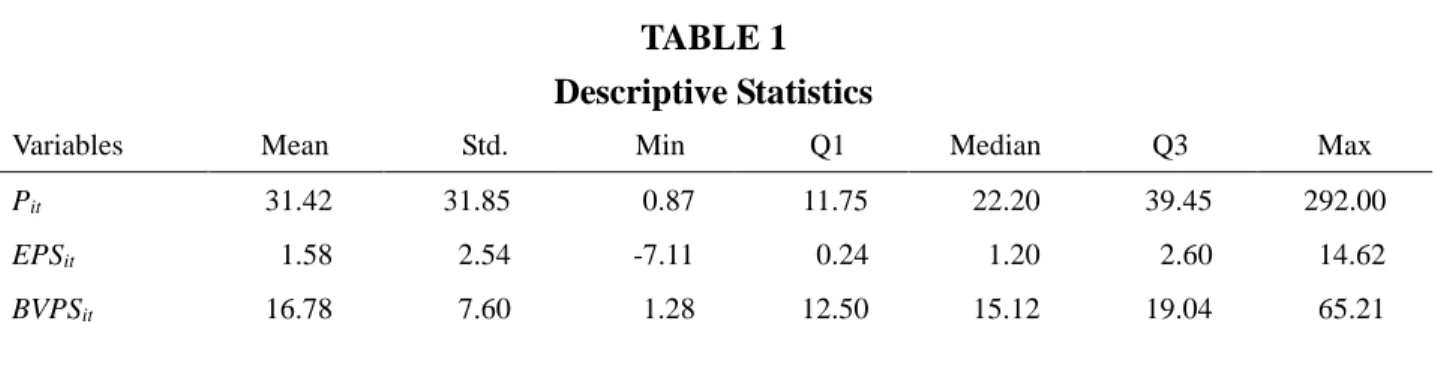
Table 1 presents descriptive statistics for variables used in the price model (1a) of scenario
120. The distributions of stock price, earnings per share and book value of equity per share are
typically skewed to right-hand tails, similar to prior literature such as Collins et al. (1997) and
Brown et al. (1999).
【Insert Table 1】
Tests on the Value Relevance of Earnings and Book Value of Equity: Adjusted R2 of
Cross-sectional Regressions
Figure 1 shows the trend in joint (PANEL A) and incremental (PANELB) explanatory
power of earnings and book values of equity across time for scenario 1. In Panel A of Figure 1,
the joint value relevance of financial statements generally shows an upward trend in the
Developing Period, especially during 1990–1996, but this increasing trend seems to cease in the
IFRS-Convergence Period. Two sudden decreases (1998–1999 and 2008–2009) coincide with the
East Asian and global financial crisis respectively. However, percentage of such a decline is
small, and joint adjusted R2 is still over 50%. In Panel B of Figure 1, the incremental relevance
of earnings per share (EPS) during 1990–1997 exhibited a steady upward trend, whereas the
24
incremental relevance of book value of equity per share (BVPS) did not show such trend.
However, the incremental relevance of EPS started to go down gradually from 2000 on, whereas
that of BVPS showed a slight growth. Combined with the results of the IFRS-Convergence
Period in Panel A of Figure 1, although the incremental value relevance of BVPS is not as high
as that of EPS, it shows the trend that information on income statements is being replaced by that
on the balance sheets. The effect of changing focus in accounting principles evidently reflects in
the financial reports.
【Insert Figure 1】
Panel A of Table 2 shows the estimated coefficients and joint, separate, and incremental
adjusted R2 of the price model for Scenario 1 (full sample). Regression coefficients are all
positive and significant except the book value of equity of equation (1a) in 2000. This indicates
that financial statements are value relevant generally and investors use such information.
In order to investigate whether separate value relevance of earnings and book value of
equity increase over the past two decades, we calculate the incremental relevance of earnings and
book value of equity as demonstrated in section Ⅲ. Panel B of Table 2 lists the results of
regressing adjusted R2 on time variables (equation 2a) for the years included in Scenarios 1, 2,
25
and 3. For joint adjusted R2 (Joint_R2), the coefficients of Year are positive and statistically
significant at the 0.01 level in all scenarios. This indicates an increasing trend of value relevance
in earnings and book value of equity in our sample period. The incremental adjusted R2
(EPS_IncrR2 and BVPS_ IncrR2), however, do not show any significant trend for the time
periods included in Scenario1, 2, and 3 respectively.
In Panel C of Table 2, we further divide sample period into two sub-periods, 1990–1999
(belongs to the Developing Period) and 2000–2011 (belongs to the IFRS-Convergence Period).
For Joint_R2, the significantly increasing trend in the Developing period does not change.
However, we do not find any trend in the IFRS-Convergence Period. For incremental adjusted R2,
EPS_IncrR2 exhibits a significantly upward trend in the Developing Period, but switch to a
significantly downward trend in the IFRS-Convergence Period in all scenarios; in contrast,
BVPS_ IncrR2 reported a statistically insignificant downward trend during the Developing
Period, but started its significantly increasing trend in the IFRS-Convergence Period in all
scenarios.
Overall, there are two main findings from the results above. First, the increasing trends of
Joint_R2 in Panel B of table 2 are primarily driven by increases of value relevance in the
Developing period, this results are consistent with prior literature that financial reporting system
26
and the law environments (Ball et al. 2000, 2003; Leuz et al. 2003; Lang et al. 2006; Bradshaw
and Miller 2008). Compared with the vacuity before 1990, U.S. GAAP has constituted the
infrastructure of twGAAP in the Developing Period. Key accounting standards, such as
long-term investment in equity securities, pensions, startup period, disclosure on segment
information, income taxes, interim financial reports, earning per share, and business
combinations, had been promulgated or revised during this period. The marginal benefits of
convergence with IFRS are limited. Second, the opposite movements between EPS_IncrR2 and
BVPS_Incr R2 in the IFRS-Convergence Period demonstrate the replacement effect of
accounting principles switching focus from income statement to balance sheet, consistent with
the preference of TFASC of switching from the revenue/expense view to the asset/liability view. 【Insert Table 2】
Tests on the Value Relevance of Earnings and Book Value of Equity: Abnormal Pricing
Errors
Considering problems that may occur while comparing adjusted R2 over different samples
(in section Ⅲ), we further employ the abnormal pricing errors suggested by Gu (2007) to
analyze the value relevance of financial statements for the last two decades in Taiwan’s history of
27
We first examine whether the linear proportionality assumption between pricing errors and
prices is valid or not. We pool all observations across years and divided them into ten classes
based on the absolute fitted value of stock prices. For each class, we calculate the normal pricing
error (the benchmark) which is the mean of the absolute value of the residuals in that class. The results are summarized in Table 3. We notice that (1) a positive association between mean Pˆ
and normal pricing errors is observed (except class 2), showing that the scale effect of pricing
errors does exist in the price model; (2) the increase in the pricing errors is not proportional to
stock price. For example, the scale measures of deciles 10 and 1 are approximately 19:1; yet the
pricing errors are only slightly more than 3.6:1 (Table 3). This indicates that the assumption that
pricing errors are linearly proportional to the stock prices is not valid. In other words, using
standardized pricing errors to interpret value relevance may lead to biased conclusions. 【Insert Table 3】
Figure 2 depicts the temporal changes of the abnormal pricing errors in years 1990–2011 for
the price model (1a). Notice that the abnormal pricing errors exhibit a downtrend from 1990 to
1996, and a sudden up and a down happen in 1999 and 2008 respectively (notice that the lower
the abnormal pricing errors was, the higher the value relevance would be). This result is
28
and accounting numbers may be affected by unusual economic conditions. 【Insert Figure 2】
Panel A of Table 4 shows the regression results of abnormal pricing errors in three scenarios
under the price model. All slope coefficients are negative and statistically significant. These
results are generally consistent with the method using adjusted R2 comparison of cross-sectional
regression. Panel B of Table 4 further divides the sample period into two sub-periods to test the
trend of abnormal pricing errors in each sub-period. The slope coefficients (b1) in the Developing
Period are all negative and statistically significant in two of the three scenarios. In the
IFRS-Convergence Period, however, the slopes (b1+b3) turn to be positive but are not significant
in all scenarios.
Overall, using abnormal pricing errors suggested by Gu (2007), we find evidence that the
strategy selected by TFASC increase only the value relevance of financial statements in the
Developing Period. The consistent results between adjusted R2 and abnormal pricing error
measures strengthen our inferences.
29
V. Robustness Tests
In this section, we conduct three additional robustness tests. First, we use return model to
check whether the short-term relations between stock returns and financial statement numbers
are similar to long-term relations of the price model. Second, we investigate the effects of
nonrecurring items on value relevance of the price model. Finally, instead of using balance sheet
date as the event date, we use the stock price on the regulatory final announcement dates of
annual financial reports (four months after the balance sheet date) as dependent variable in the
price model.
Short-term Relations between Stock Price and Financial Statements- the Return Model
We use the following model suggested by Barth et al. (2001) and employed in Gu (2007)21:
t i t i t i t i t i t i t i P EPS P BVPS P P, / , 1
0
1 , / , 1
2 , / , 1
, (4a)Equation (4a) is referred as the return model.
Similar to the price model, we decompose adjusted R2 in equations (4b) and (4c) to
investigate whether the incremental explanatory powers of changes in earnings and book value
of equity would respectively change over time22.
21 Mathematically, (4a) is just the first-differenced equation of (1a), and then be deflated by 1 ,t i
P .
22 In the return model, we do not use abnormal pricing errors to compare value relevance over years. Take Scenario
1 for example, except measures in decile 10 ( P /ˆ P =1.278, normal pricing errors=0.717), we do not find a positive association between normal pricing errors and corresponding mean P /ˆ P , this result suggests that methods that control for scale effect in return model is not applicable to our sample.
30 t i t i t i t i t i P EPS P P, / , 10 1 , / , 1 , (4b) t i t i t i t i t i P BVPS P P, / , 10 1 , / , 1, (4c) where
ΔPi,t = the price of a share of firm i at the end of year t minus the price of
a share of firm i at the end of year t-1.
ΔEPSit = the earnings per share of firm i during the year t minus the
earnings per share of firm i during the year t-1.
ΔBVPSit = the book value of equity per share of firm i at the end of year t
minus the book value of equity per share of firm i at the end of
year t-1.
Pi,t-1 = the price of a share of firm i at the end of year t-1.
Untabulated results indicate that, for joint adjusted R2 (Joint_ 2
R ), there are no significant
trends in the whole or sub-periods for three scenarios. Although we find consistent increasing
trends for BVPS_ Incr 2
R in the IFRS-Convergence Period, they are not statistically significant
in all scenarios. Most importantly, the replacement effects between BVPS_ Incr 2
R and
EPS_Incr 2
R do not exist in the IFRS-Convergence Period. Overall, we do not find consistent
31
relations between accounting numbers in explaining return (short term) and stock price (long
term), or increasing volatility of stock returns compared to stock price as suggested by Francis
and Schipper (1999).
The Cross-sectional Effects of Nonrecurring Items
Collins et al. (1997)document that the value relevance of earnings is lower when the
incidence of nonrecurring items is higher. The impact of nonrecurring items on our result will
depend on the magnitude of these items and their directional impact on earnings. Items which are
larger in absolute terms will have a greater dampening effect on the adjusted R2 from the
cross-sectional valuation model. Nonrecurring items which reduce earnings should dampen the
strength of association between earnings and stock prices further since they increase the
possibility of losses. However, this problem does not result in significant influence on our
original study. For example, among the 10,037 firm-year observations under the price model in
Scenario 1 (full sample), absolute value of total nonrecurring items only account for 0.14%
percent of total after-tax earnings. The impacts of nonrecurring items on the value relevance of
earnings may be ignored. Therefore, the possibility that the replacement effect of incremental
value relevance between earnings (decreasing) and book value of equity (increasing) during the
IFRS-Convergence Period is due to more frequent occurrence of nonrecurring items could be
32
Using Stock Prices on the Final Announcement Dates of Annual Financial Reports
In previous models, we conduct our tests by using the stock prices at the yearend. However,
the deadline of submitting annual financial reports to Taiwan’s SFB for listed companies is April
30. To ensure accounting information is in the public domain, we reconduct our tests by using
the stock prices in the end of the fourth month after fiscal yearend. The regression results are
shown in Table 5 and 6. The sample sizes for Scenarios 1, 2, and 3 are 10,285, 8,455, and 7,334
respectively. Except two insignificant but identical sign coefficients (BVPS_ IncrR2 in Scenario
3, Panel B of Table 5 and Joint_AbPerr in Scenario 1, Panel A of Table 6), the results are
basically consistent with those using stock prices at the yearend. Overall, our findings that the
increasing trends in value relevance of the price model and the replacement effect between
BVPS_ IncrR2 and EPS_IncrR2 are robust when using stock prices on the final announcement
dates of annual financial reports in Taiwan.
【Insert Table 5 and 6】
VI. Conclusion and Discussion
In this study, we investigate the trend of accounting quality for firms listed in the Taiwan
Stock Exchange Corporation during 1990–2011. As mentioned above, before 2000, twGAAP
33
with IFRS. This strategic swift is no doubt seminal. By focusing on the important dimension of
accounting quality, value relevance of financial statements, this study try to verify if TFASC has
succeeded in improving accounting quality of public firms in Taiwan.
We use two measures to examine the changes in joint value relevance of earnings and book
value of equity in the price model during 1990–2011: adjusted R2 comparison of cross-sectional
regression and abnormal pricing errors proposed by Gu (2007). We also decompose adjusted R2
to investigate whether the incremental explanatory powers of earnings and book value of equity
would respectively change over time. In terms of joint value relevance, the empirical findings
show that, although there is a statistically increasing trend during the whole period, it is primarily
driven by increases of value relevance in the Developing period. Due to U.S. GAAP has been the
infrastructure of twGAAP in the Developing Period, the results are consistent with prior
literature showing that financial reporting system is a function not only of accounting standards,
hence the marginal benefits of convergence with IFRS are limited. In terms of incremental value
relevance, the incremental relevance of earnings exhibits a significant downward trend during
the IFRS-Convergence Period, yet the incremental relevance of book value of equity reports a
significant upward trend in the meantime. This indicates that the incremental relevance of
earnings is slowly being replaced by that of book value of equity. However, consistent evidence
34
accounting numbers in explaining stock price in the short term, or increasing volatility of stock
returns suggested by Francis and Schipper (1999). Overall, empirical results in this study
indicate that, although convergence with IFRS does not lead to a further increase in the joint
value relevance of financial statements, the replacement effect in the IFRS-Convergence Period
show that at least the efforts of TFASC to stress the relevance of balance sheet have been paid
off.
There are some countries still in the stage of limited convergence with IFRS (e.g., the U.S.,
Japan, and India), and one of the possible alternatives is to adopt a “country-specific version of IFRS” (Hail et al. 2010). Taiwan’s unique standard setting history provides an environment to test the strategy. Specifically, in the context that a country had already followed a set of high
quality accounting standards, convergence with IFRS cannot significantly improve the joint
value relevance of financial statements for investors. Although convergence with IFRS may
bring other qualitative characteristic benefits (for example, increases in comparability between
domestic and foreign companies’ financial statements), however, countries with larger economic
size continuously using domestic standards still have the ability to attract international
investment and trade (Ramanna and Sletten 2013). Thus, comparability of financial statements
may be not a decisive concern in determining convergence with or adoption of IFRS. The
35
regulators.
There are some caveats to note here. First, to what extent our conclusions from Taiwan can
generalize to firms in other countries is not clear. Every country has its own unique institutional
features as well as economic development stage. Findings in emerging markets like Taiwan may
not be necessarily applicable to developed markets like the U.S. Second, as prior literature (e.g.,
Collins et al. 1997; Francis and Schipper 1999; Francis et al. 2002) has suggested, there may be
many factors influencing the magnitude of value relevance. Although we try to consider some of
them in this study (incidence of negative earnings, stability of economics, and nonrecurring
items), some omitted variables may still exist. Therefore, the findings of this study should be
interpreted with caution. Finally, we provide evidence with only one dimension of accounting
quality (i.e., value relevance), and it cannot substitute for a comprehensive quality analysis.
Naturally, this study cannot prove which one is better between convergence with and adoption of
36
APPENDIX
We use the abnormal pricing errors suggested by Gu (2007) to examine the value relevance
of earnings and book value of equity. The abnormal pricing errors are estimated as follows:
Step 1: Run the price model (1a) each year and find the residuals for each firm.
Step 2: Classify all absolute fitted values of stock prices/returns ( Pˆ ) across years into 10 classes
according to the size.
Step 3: For each class, normal pricing errors (benchmarks) are mean value in that class, calculated as
ii /n, where n is the number of observations of the class.Step 4: Each individual observation’s abnormal pricing error is calculate as the absolute value of difference between i and normal (benchmarks) pricing error.
Step 5: Then, we average the individual abnormal pricing errors of year t to generate the abnormal pricing errorAbPerrt.
37
REFERENCES
Ali, A., and L. Hwang. 2000. Country-specific factors related to financial reporting and the value relevance of accounting data. Journal of Accounting Research 38 (1): 1–21.
Armstrong, C. S., M. E. Barth, A. D. Jagolinzer, and E. J. Riedl. 2010. Market reaction to the adoption of IFRS in Europe. The Accounting Review 85 (1): 31–61.
Ball, R., S. P. Kothari, and A. Robin. 2000. The effect of international institutional factors on properties of accounting earnings. Journal of Accounting and Economics 29 (1): 1–51.
Ball, R., A. Robin, and J. S. Wu. 2003. Incentives versus standards: Properties of accounting income in four East Asian countries. Journal of Accounting and Economics 36 (1-3): 235–270.
Barth, M. E., W. H. Beaver, and W. R. Landsman. 2001. The relevance of the value-relevance literature for financial accounting standard setting: Another view. Journal of Accounting and Economics 31 (1–3): 77–104.
Barth, M. E., W. R. Landsman, and M. H. Lang. 2008. International accounting standards and accounting quality. Journal of Accounting Research 46 (3): 467–498.
Barth, M. E., W. R. Landsman, M. H. Lang, and C. Williams. 2012. Are IFRS-based and US GAAP-based accounting amounts comparable? Journal of Accounting and Economics 54 (1): 68–93.
Basu, S. 1997. The conservatism principle and the asymmetric timeliness of earnings. Journal of Accounting and Economics 24 (1): 3–37.
Bradshaw, M.T., and G. S. Miller. 2008. Will harmonizing accounting standards really harmonize accounting? Evidence from non-US firms adopting US GAAP. Journal of Accounting, Auditing and Finance 23 (2): 233–263.
Brown, S., K. Lo, and T. Lys. 1999. Use of 2
R in accounting research: Measuring changes in value relevance over the last four decades. Journal of Accounting and Economics 28 (2): 83–115.
Chang, J. 1999. The Decline in Value Relevance of Earnings and Book Value. Working paper, University of Pennsylvania.
Chen H., Q. Ting, Y. Jiang, and Z. Lin. 2010. The role of International Financial Reporting Standards in accounting quality: Evidence from the European Union. Journal of International Financial Management and Accounting 21 (3): 220–278.
Chi, S. 2009. Simultaneous presence of different domestic GAAPs and investors’ limited attention bias in U.S. equity Markets: Implications for convergence. Working paper, 2010 AAA Financial Accounting and Reporting Section.
Collins, D. W., E. L. Maydew, and I. S. Weiss. 1997. Changes in the value-relevance of earnings and book values over the past forty years. Journal of Accounting and Economics 24 (1): 39–67.
Core, J.E., W.R. Guay and A.V. Buskirk. 2003. Market valuation in the new economy: An investigation of what has changed. Journal of Accounting and Economics 34 (1–3): 43–67.
38
Daske, H., L. Hail, C. Leuz, and R. Verdi. 2008. Mandatory IFRS reporting around the world: Early evidence on the economic consequences. Journal of Accounting Research 46 (5): 1085–1142. Daske, H., L. Hail, C. Leuz, and R. Verdi. 2013. Adopting a label: heterogeneity in the economic
consequences around IAS/IFRS adoptions. Journal of Accounting Research 51 (3): 495–547. De George, E. T., C. B. Ferguson, and N. A. Spear. 2013. How much does IFRS cost? IFRS adoption and
audit fees. The Accounting Review 88 (2): 429–462.
Drake, M. S., L. A. Myers, and L. Yao. 2010. Are Liquidity Improvements Around the Mandatory Adoption of IFRS Attributable to Comparability Effects or to Quality Effects? Working paper, 2010 AAA Financial Accounting and Reporting Section.
Easton, P. 1985. Accounting earnings and security valuation: Empirical evidence of the fundamental links. Journal of Accounting Research 23 (Supplement): 54–77.
Ely, K., and G. Waymire. 1999. Accounting standard setting organizations and earnings relevance: longitudinal evidence from NYSE common stock, 1927-93. Journal of Accounting Research 37 (2): 293–317.
Ewert, R., and A. Wagenhofer. 2009. Earnings quality metrics and what they measure. Working paper, University of Graz.
Feltham, G. A., and J. A. Ohlson, 1995. Valuation and clean surplus accounting for operating and financial activities. Contemporary Accounting Research 11 (2): 689–731.
Francis, J., and K. Schipper. 1999. Have financial statements lost their relevance? Journal of Accounting Research 37 (2): 319–352.
Francis, J., K. Schipper, and L. Vincent. 2002. Earnings announcements and competing information. Journal of Accounting and Economics 33 (3): 313–342.
Goldberger, A. 1991. A Course in Econometrics. Boston: Harvard University Press.
Gu, Z. 2007. Across-sample incomparability of R2 and additional evidence on value relevance changes over time. Journal of Business Finance and Accounting 34 (7&8): 1073-1098.
Hail, L., C. Leuz, and P. Wysocki. 2010. Global accounting convergence and the potential adoption of IFRS by the U.S. (Part II): Political factors and future scenarios for U.S. accounting standards. Accounting Horizons 24 (4): 567–588.
International Accounting Standards Board (IASB). 2012. Who We Are and What We Do. Available at:
http://www.ifrs.org/The-organisation/Documents/WhoWeAre2012MarchEnglish.pdf
Joos, P. P. M., and E. Leung. 2013. Investor perceptions of potential IFRS adoption in the United States. The Accounting Review 88 (2): 577-609.
Kim, J-B., J. Tsui, and C. H. Yi. 2011. The voluntary adoption of International Financial Reporting Standards and loan contracting around the world. Review of Accounting Studies 16 (4): 779–811. Kim J-B., X. Liu, and L. Zheng. 2012. The impact of mandatory IFRS adoption on audit fees: Theory and
39
Kim, J-B., and H. Shi. 2012. Voluntary IFRS adoption, analyst coverage, and information quality: International evidence. Journal of International Accounting Research 11 (1): 45–76.
Lang, M. H., J. S. Raedy, and W. Wilson. 2006. Earnings management and cross listing: Are reconciled earnings comparable to US earnings? Journal of Accounting and Economics 42 (1–2): 255–283. Leuz, C., D. Nanda, and P. Wysocki 2003. Earnings management and investor protection: An
international comparison. Journal of Financial Economics 69 (3): 505–527.
Lev, B., and P. Zarowin. 1999. The boundaries of financial reporting and how to extend them. Journal of Accounting Research 37 (2): 353–385.
Li, S. 2010. Does mandatory adoption of International Financial Reporting Standards in the European Union reduce the cost of equity capital? The Accounting Review 85 (2): 607–636.
PricewaterhouseCoopers LLP (PwC). 2012. IFRS Adoption by Country. Available at:
http://www.pwc.com/en_US/us/issues/ifrs-reporting/publications/assets/pwc-ifrs-by-country-apr-2 012.pdf
Ramanna, K., and E. Sletten. 2013. Network Effects in Countries’ Adoption of IFRS. Working paper, Harvard Business School.
Securities and Exchange Commission (SEC). 2010. Commission Statement in Support of Convergence and Global Accounting Standards. Release No. 33-9109. Washington, DC: SEC.
Securities and Exchange Commission (SEC). 2012. Work Plan for the Consideration of Incorporating International Financial Reporting Standards into the Financial Reporting System for U.S. Issuers: Final Staff Report. Washington, DC: Government Printing Office.
Theil, H. 1971. Principles of Econometrics. New York: John Wiley.
Yip, R. W. Y., and D. Young. 2012. Does mandatory IFRS adoption improve information comparability? The Accounting Review 87(5): 1767-1789.
40 TABLE 1 Descriptive Statistics
Variables Mean Std. Min Q1 Median Q3 Max
Pit 31.42 31.85 0.87 11.75 22.20 39.45 292.00
EPSit 1.58 2.54 -7.11 0.24 1.20 2.60 14.62
BVPSit 16.78 7.60 1.28 12.50 15.12 19.04 65.21
This table presents descriptive statistics for variables used for the following cross-sectional price model of scenario 1 (full sample, N=10,037):
(1a) Sample period: 1990–2011.
Variable Definitions:
Pit = the price of a share of firm i at the end of year t;
EPSit = earnings per share of firm i for year t;
BVPSit = the book value of equity per share of firm i at the end of year t; it
it it
it EPS BVPS