
屏東縣三族群之國小三年級學生英語讀寫能力之研究
159
0
0
全文
(2) 摘要. 一些研究報告指出外籍配偶子女於國語科目上的學業成就不如其他族群 (林璣 萍,2003;柯淑慧,2004;鍾文悌,2005),亦有研究指出,外籍配偶子女在國語的 學業成就與一般學生並無顯著差異 (陳湘淇、張麗君,民 93),然而沒有研究是比較 漢民族學生與外籍配偶子女在英語學業成就上是否有差異情況。屏東縣因為特殊的地 理與社會因素,擁有為數不少的原住民與外籍配偶學生,本研究之主要目的為探討屏 東縣三種族群之國小三年級學生其英語讀寫能力之研究。此三種族群為漢民族學生、 原住民學生、以及外籍配偶子女。除了探求此三種族群學生之英語讀寫能力彼此間是 否有差異存在,本研究亦探討影響不同族群之國小三年級學生其英語讀寫能力的因 素。在本研究中,學生進行一份英語紙筆測驗以及一份國語紙筆測驗作為學生英語讀 寫能力與國語能力之依據。此外,學生與家長各填寫一份問卷以探討其影響因素。所 有的測驗與問卷於 21 所國小實施並於民國 94 年 6 月份完成。研究結果顯示三個族群 間之英語讀寫能力彼此間存在顯著差異,同時學生的英語讀寫能力也受到變數不同程 度的影響。. 關鍵字:族群,英語讀寫能力。. i.
(3) Abstract. Some studies reported that child-of-interracial-marriage (COIM) students did not perform as well as others in Chinese subject (林璣萍,2003;柯淑慧,2004;鍾文悌, 2005). On the contrary, a report showed that there was no significant difference between the COIM students and the general students in Chinese achievement (陳湘淇、張麗君, 2004). However, no related studies were carried out to examine whether there was a significant difference among the Han students and the COIM students in English learning achievement. The main purpose of this study was to investigate the English literacy proficiency of third graders from three ethnic groups in Pingtung County. These three ethnic groups were the Han students, the indigenous students, and the COIM students. This study was designed to examine the differences in English literacy proficiency among the three ethnic groups, as well as to investigate how students’ English literacy proficiency was influenced. Student-related variables and parent-related variables were used to examine the correlation with English literacy proficiency or the effect upon students’ English performance. Two paper-pencil tests were administered to students to obtain their English literacy proficiency and Chinese proficiency. Two questionnaires, one for students and one for parents, were used to profile students’ and parents’ background information and their attitudes towards English learning. The participants were selected from 21 elementary. ii.
(4) schools and all the tests and questionnaires were administered in June, 2005. The findings revealed that there were significant differences in English literacy proficiency among the three ethnic groups. At the same time, there were significant correlations between English literacy proficiency and these variables.. Key words: ethnic groups, English literacy proficiency. iii.
(5) Acknowledgements To complete a thesis is much harder than I think. Likewise, it is hard for me to imagine how happy I will be when I complete my thesis. To me, the joy of completing this thesis is beyond description. I would like to thank many people who made this thesis possible. First of all, I would like to express my deepest gratitude to my advisor, Dr. Shwu-Mei Hwang. She was always kind and patient to instruct me and give me the biggest support. Without her help and encouragement, I probably gave up my degree and I could not finish my thesis successfully. Secondly, I would like to thank my committee members, Dr. Shih-Chung Lin and Dr. Li-Hung Chang, for their valuable comments and suggestions to improve my thesis. Finally, I would like to thank my family for their endless support. I would like to send special thanks to my wife and my lovely daughter for sharing my tear and laughter in the past three years. This thesis is dedicated to my parents.. iv.
(6) Table of Contents Abstract (Chinese)…………………………………………………………………………. i Abstract…………..…………………………………………………………………………ii Acknowledgements………………………………………………………………………...iv Table of Contents……………………………………………………………………………v Figures……………………………………………………………………………………viii Tables………………………………………………………………………………………ix. CHAPTER 1………………………………………………………………………………...1 Introduction……………………………………………………………………………1 Background and Motivation……………………………………………………...1 Purpose of the Study……………………………………………………………...8 Research Questions ............................................................................................... 9 Significance of the Study …………………………………………………...….. 9 Limitation of the Study………………………………………………………….11 Definition of Terms……………………………………………………………..12 CHAPTER 2……………………………………………………………………………….14 Literature Review…………………………………………………………………….14 English Education in Elementary School…………………………………….…14. v.
(7) Vocabulary and Language Learning…………………………………………….18 Minority Students and Learning Achievement……………………………….....22 Age and Language Learning……………. ……………………………………..25 Motivation and Language Learning…………. …………………..… ………..30. Gender and Language Learning …………………………..……………………34 Cram School Attendance and Learning Achievement…………………………..35 SES and Learning Achievement……………………………………………...…37 Parental Factors and Learning Achievement……………………………...…….40 CHAPTER 3……………………………………………………………………………….43 Methodology…………………………………………………………………………43 Research Design………………………………………………………………...43 Participants……………………………………………………………………...43 Instruments……………………………………………………………………...44 Procedures……………………………………………………………………....50 Data Analysis……………………………………………………………………53 CHAPTER 4……………………………………………………………………………….56 Results and Discussion.……………………………………………………………....56 Comparisons of English Literacy Proficiency Test……………………………..56 Comparisons of Chinese Proficiency Test………………………………………67 Comparisons on the Student-Related Variables…………………………...……75 vi.
(8) Comparisons on the Parent-Realted Variables…………..……………………...84 Discussion.…..……………………………………………………………….... 93 CHAPTER 5……………………………………………………………………………...101 Conculsion………………………………… ……………… ……………………... 101 Conclusions of the Study...………………………………………….…….…...101 Implications of the Study……………………………………………………...109 Suggestions for Further Study…………………………………………………112 References………………………………………………………………………………..114 Appendix A The Subgoals of the Four Skills in Elementary School………………….…137 Appendix B English Literacy Proficiency Test…………………………………………..139 Appendix C Chinese Proficiency Test……………………………………………………141 Appendix D Students' Questionnaire…………………...………………………………..142 Appendix E Parents' Questionnaire………………………………………………….…...144 Appendix F Calssification of Vocation and Education………………………….………..146 Appendix G Guidelines of the Study.……………………………………………….……147. vii.
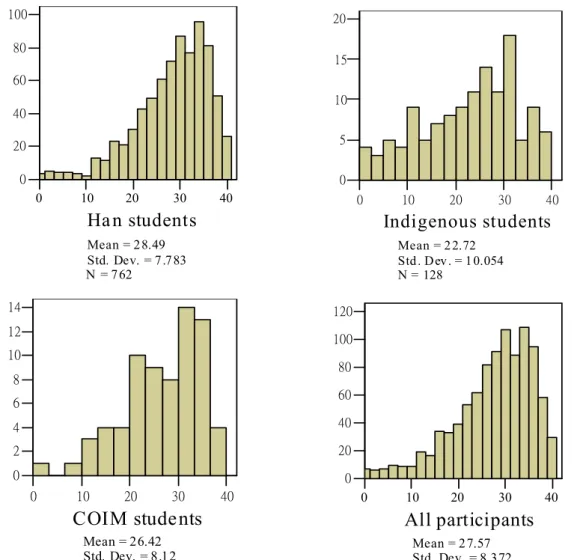
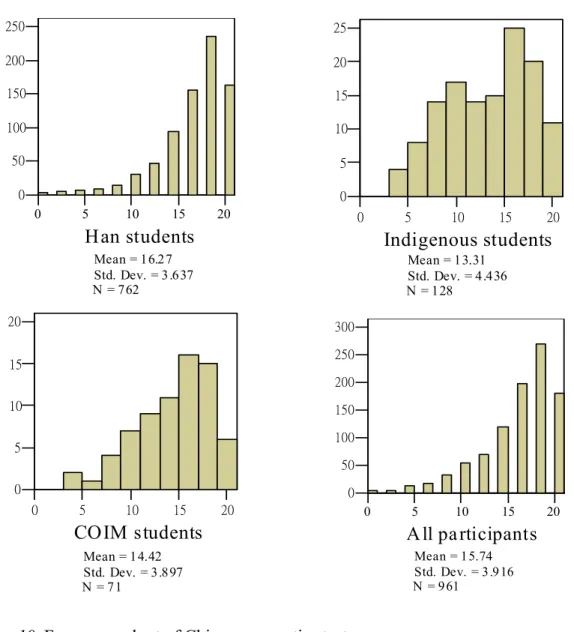
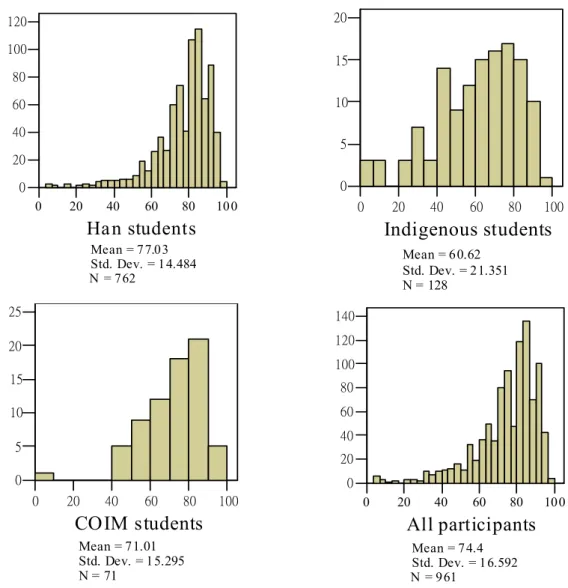
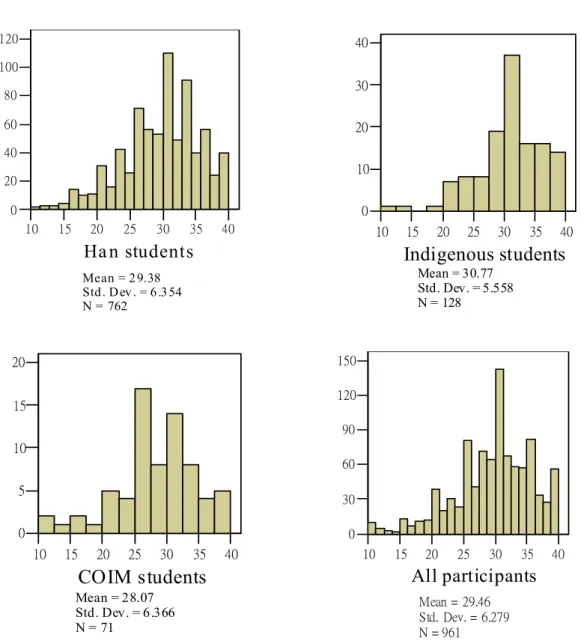
(9) Figures. Figure 1 Framework of Research Design………………………………………………. ...44 Figure 2 Flow Chart of the Study………………… …………………………….………...53 Figure 3 Frequency Chart of the Letter-Related Konwledge Test……………… ………..58 Figure 4 Frequency Chart of the English Semantics Test…………… …………………...60 Figure 5 Frequency Chart of the Vocabulary Recognition Test………… …………..……62 Figure 6 Frequency Chart of English Spelling Test………… ……………………………64 Figure 7 Frequency Chart of English Literacy Proficiency Test…………… ……………66 Figure 8 Frequency Chart of Chinese Characters Test…..………… ……..……………...68 Figure 9 Frequency Chart of Chinese Phonetics Test…………… …………………….…70 Figure 10 Frequency Chart of Chinese Semantics Test…………… ……………………..72 Figure 11 Frequency Chart of Chinese Proficiency Test………… …………....…………74 Figure 12 Frequency Chart of Students' Motivation/Awareness…… …………………....81 Figure 13 Frequency Chart of Students’ Effort…………………… ……………………...83 Figure 14 Frequency Chart of Parents' Expectation…………… ………………………...88 Figure 15 Frequency Chart of Parents' Support…………… …………………………..…91. viii.
(10) Tables. Table 1 Descriptive Summary of Participants…………………………………………… .45 Table 2 Participants of Three Ethnic Groups……………………………………………...46 Table 3 Results of One-Way ANOVA for Three Groups on the Letter-Related Knowledge Test…………………………………………………………………………...…58 Table 4 Results of One-Way ANOVA for Three Groups on English Semantics Test……..60 Table 5 Results of One-Way ANOVA for Three Groups on the Vocabulary Recognition Test……………………………………………………………………………...62 Table 6 Results of One-Way ANOVA for Three Groups on English Spelling Test……….64 Table 7 Results of One-Way ANOVA for Three Groups on English Literacy Proficiency Test……………………………………………………………………………...66 Table 8 Results of One-Way ANOVA for Three Groups on Chinese Characters Test….…68 Table 9 Results of One-Way ANOVA for Three Groups on Chinese Phonetics Test……..70 Table 10 Results of One-Way ANOVA for Three Groups on Chinese Semantics Test…...72 Table 11 Results of One-Way ANOVA for Three Groups on Chinese Proficiency Test….74 Table 12 Correlation Between English Literacy Proficiency and Chinese Proficiency…..75 Table 13 Mean Score of Males and Females in Three Groups……… ………… …….… 76 Table 14 Results of T-Test for English Literacy Proficiency on Gender .…………………76. ix.
(11) Table 15 Descriptive Summary of Age of Starting Learning English…………………….77 Table 16 Results of One-Way ANOVA for English Literacy Proficiency Literacy on Age of Learning English …………………………………………………………...78 Table 17 Descriptive Summary of Cram School Attendance……………………………...79 Table 18 Results of T-Test for English Literacy Proficiency on Cram School Attendance.80 Table 19 Results of One-Way ANOVA for Three Groups on Students' Motivation/Awareness…………………………………………………………..82 Table 20 Correlation Between English Literacy Proficiency and Students' Motivation/Awareness…………………………………………………………..82 Table 21 Results of One-Way ANOVA for Three Groups on Students’ Effort………...….84 Table 22 Correlation Between English Literacy Proficiency and Students’ Effort………..84 Table 23 Descriptive Summary of SES……………………………………………...…….86 Table 24 Results of One-Way ANOVA for English Literacy Proficiency on SES………...86 Table 25 Results of One-Way ANOVA for Three Groups on Parents' Expectation……….88 Table 26 Correlation Between English Literacy Proficiency and Parents' Expectation…...89 Table 27 Results of One-Way ANOVA for Three Groups on Parents' Support…………...90 Table 28 Correlation Between English Literacy Proficiency and Parents' Support…….....90 Table 29 Summary of the Main Results and Findings……………………………….…... 92. x.
(12) CHAPTER 1 Introduction Background and Motivation The wave of globalization has made English an essential language in the global village (Petras & Veltmeyer, 2000). There were about 570 million people using English as first, second or foreign language worldwide. The most significant impact might be that most nations with strong nation-power use English as the first or the official language. English is absolutely the world’s second language. For example, the number of countries which use English as their second language of first foreign language was more than one hundred (戴維揚,1999a). The usage of language in the cyber world, the Internet, could also clearly demonstrate the dominance of English. In 2000, more than 75% of websites were English interface or compatible to English. About 80% of information was distributed or delivered all over the world in English (Press, 2000). The similar situation appeared in the academic community. According to the statistics of 1997, approximate 95% of research papers cited in the Science Citation Index were written in English and the number was still growing (Krashen, 2003). Hence, some economists even advocated that English should be regarded as one of the important indicators for nation power (吳曜州,2003). They believed that English was an important tool to receive the new knowledge and information to maintain nation’s competitiveness (龍應台,2005).. 1.
(13) Countries especially in Asian-Pacific region such as Japan, Korea, and Taiwan, did not worry about the threat of English invasion but fear of being left behind in the competition of globalization economically and politically (Philipson, 1992). The result was that students in those nations begin learning English in elementary school (戴維揚,1998). A very unique phenomenon was English fever, implying one was eager to learn English or ensure his/her children to learn English successfully (Krashen, 2003). With no exception, Taiwanese government made some adjustments in English education policy to maintain students’ competitiveness. The most significant policy should be that English was the compulsory subject in elementary school in 2001 (教育部,2001a). English was taught in fifth and sixth grade at least once a week. Soon after, the schools in urban area not only started English much earlier but also provided more teaching hours for students (張錦弘、 孫榮華,2005). Accordingly, the education authorities planed to extend English education from fifth grade to third grade in 2005 (黃以敬,2002). Meanwhile, the new English curriculum would be deepened and broadened so that students could upgrade their English proficiency both qualitatively and quantitatively (劉偉瑩,2004a). However, English education reform in Taiwan seems to trigger a lot of problems. The entry grade of English education was not always the same in every elementary school. According to the guidelines of the Grade 1-9 Curriculum of Elementary and Junior High School Education in 2001, elementary school students began learning English in fifth. 2.
(14) grade. However, it was reported that about 89% of elementary schools began English class before fifth grade and about 61% of elementary schools began English class in first grade (簡文吟,2003). Moreover, the results revealed that Pingtung County was one of the “worst” districts of English education because of the percentage of English teaching before fifth grade was the lowest, which was only 50%. Supposedly students’ English proficiency should be improved because of the increase of exposure time of English. Unfortunately, the outcome of English education reform was not satisfactory. Despite a portion of students improved their English proficiency, a great number of population was left far behind from the average. It was reported that students did not benefit from the new curriculum, the Grade 1-9 Curriculum of Elementary and Junior High School Education. Students suffered from the discrepancy in English proficiency because teachers often faced the dilemma of how to teach students English effectively when the discrepancy of English proficiency was huge (陳康宜,2005). That is to say, the needs of many students in English were not considered, implying the designs/contents of English curriculum or the teaching pedagogies probably were not suitable for the majority of students. For example, in the entrance examination of senior high school in 2005, the top level of students (about 1%) made a six-point progress from 268 to 274 points, and the average score of the low level students (about 10%) decreased eight points, from 65 to 53 points (孟祥傑、李名揚,2005). Moreover, the majority of the students who got a perfect score, 300 points, came from the. 3.
(15) metropolitan cities like Taipei and Kaohsiung. On the contrary, approximate 30% of testees, equivalent to 100,000 students, scored less than 100 points. Most low achievers came from rural areas (國語日報,2005). A recent study showed that there was a significant difference between urban and rural students in English performance. Junior high school students in Taipei could score 72 points out of 100 points, but students in Nantou County just could get 18 points in the same examination (陳一珊,2005). However, a large-scale diagnostic test conducted by Kaohsiung Education Department in 2004 revealed that the situation seemed worse than what the public thought. Two standardized tests were given to the rookie students of junior high school in Kaohsiung to measure their Chinese proficiency and mathematics competence. The results showed that more than 50% of the testees failed two tests. The bimodal distribution phenomenon, which means that two main subjects fall in two extreme opposite positions, did happen in such a resource-abundance city (徐如 宜,2004). Furthermore, this unique bimodal distribution phenomenon of students’ academic performance was aggravated gradually islandwide (陳洛薇,2005;張武昌, 2002;周中天,2002). In a large-scale survey of English education in elementary school, the results revealed that the most serious problems were the inconsistency of curriculum between elementary school and junior high school, the huge discrepancy of students’ English proficiency, and the lack of qualified English teachers in rural area (簡文吟,2003). The disadvantage of academic achievement of the indigenous students were. 4.
(16) frequently concerned (譚光鼎,1998;湯仁燕,1998;張善楠、黃毅志,1999;王天佑, 2002). The major reasons for this inferiority were the cultural differences such as low parents’ education expectation and the unique lifestyle (洪希勇,2004), the financial disadvantage such as low family income (巫有鎰,1996;王天佑,2002) and the family structure disadvantage such as single parent family, grandparent bleeding family and too many siblings in their family (陳枝烈,1997,2001). Regarding foreign language learning, it was deeply believed that beginning ESL/EFL learners would have more difficulties in learning English if the necessary help was not offered to the low achievers. For example, August and Hatuka (1997) indicated that non-native students usually encountered degrees of difficulty in developing their English proficiency. They thought it was important to provide effective intervention for at-risk students in early grade no matter first language or second/foreign language would be taught. It was also reported that if students had difficulty in reading in first grade, there was a 90% of possibility for them to remain poor readers in fourth grade, and a 75% of probability to be poor readers in high school (Francis, Shaywitz, Stuebing, Shaywitz, & Flecther, 1996). Similarly, a survey conducted in 2000 revealed that approximate 60% of fourth grade students who were eligible for free or reduced price lunch did not reach the basic level in a nationwide English proficiency test in America (U.S. Department of Education, 2000). In Bogler and Somech’s study (1999), the results also showed that undergraduate students from high SES families could reach higher. 5.
(17) academic achievement than those from low SES families. Accordingly, Taiwanese government began enforcing the Education Opportunity Zones program in 1995, which was designed to help the low academic achievers by means of providing free remedial or afterschool program (教育部,2005a). In 2005, the target students in this program were the indigenous students and students from low income families, single parent families, grandparent-breeding families, the students in the proximal islands or remote areas where traffic was not convenient, and students in such schools which the rate of teacher turnover was high. For two decades, a new racial fusion has been undergoing and changes the structure of Taiwanese society. More and more female foreigners immigrated into Taiwan through the cross-nation marriage (夏曉鵑,1997;洪茗馨,1998;盧美杏,1996). According to the statistics released by the Ministry of the Interior in 2005, the foreign spouses in Taiwan were more than 130,000 persons and they became the fifth ethnic group in Taiwan (黃筱 珮,2005). The percentage of cross-nation marriage increased sharply from 15.69% in 1987 to 32.14% in 2004, which implied almost one third of marriage spouses were foreigners (蘇永耀,2004). As a result, the population of foreign spouses’ offspring increased at a steady rate every year. For example, the percentage of the newborn babies from cross-nation-marriage families increased from 5.12% in 1998 to 13.37% in 2004. It meant that more than 10,000 babies were born in cross-nation-marriage families annually (陳康. 6.
(18) 宜、陳玉珊,2004;林進修,2005). Because of the differences in language, culture, and believes between two countries, there were many problems for cross-nation-marriage families to overcome. The most significant problem for them might be how to educate their children (曾俊彰,2004;許正欽,2003). For example, most foreign spouses were responsible for not only chores but also educating their children. However, most foreign spouses could not speak Chinese fluently, nor were they well-educated. According to the official figures, more than 60% of the foreign spouses’ highest education attainment was junior high school and only one seventh of them received the Chinese remedial programs. At least more than 80,000 foreign spouses were illiterate in Chinese (內政部,2003). In an islandwise survey, it was reported that 15.2% of foreign spouses were illiterate, only 5.8% of them graduated from university or college. In addition, 13.4% of foreign spouses had difficulty in oral communication (教育部,2005b).Therefore, they usually encountered a difficulty in instructing their children at home and communicating with teachers at school. Unfortunately, many COIM students came from low socio-economic status (SES) families, whose parents usually could not provide sufficient support and resources for them to facilitate their education (許正欽,2003). For example, 22.6% of the cross-nation-marriage families were low income families (教育部,2005b). Because of this social and educational disadvantage in cross-nation-marriage family, many COIM students could not adjust themselves well in the mainstream society. Some COIM students even had difficulty in. 7.
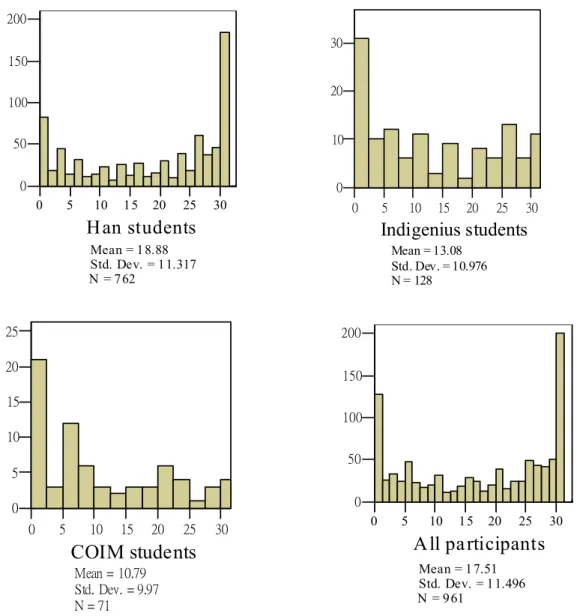
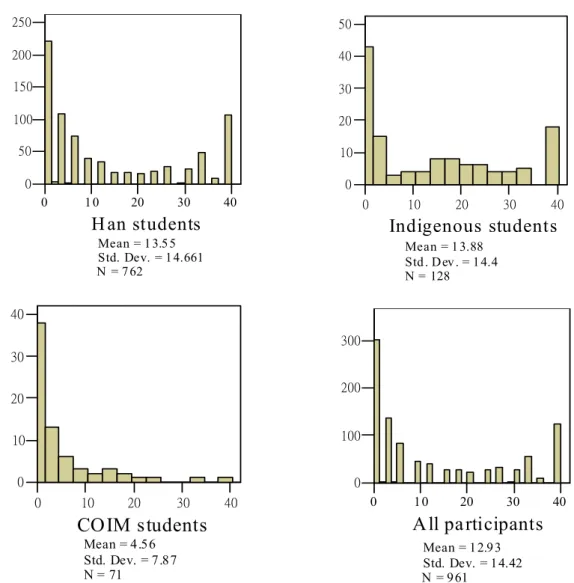
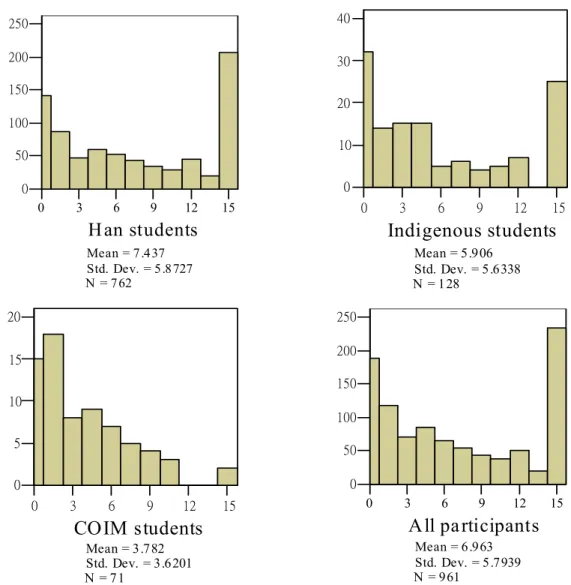
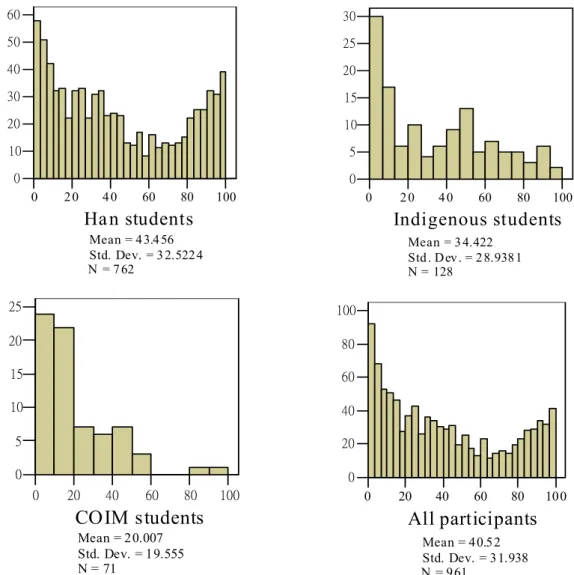
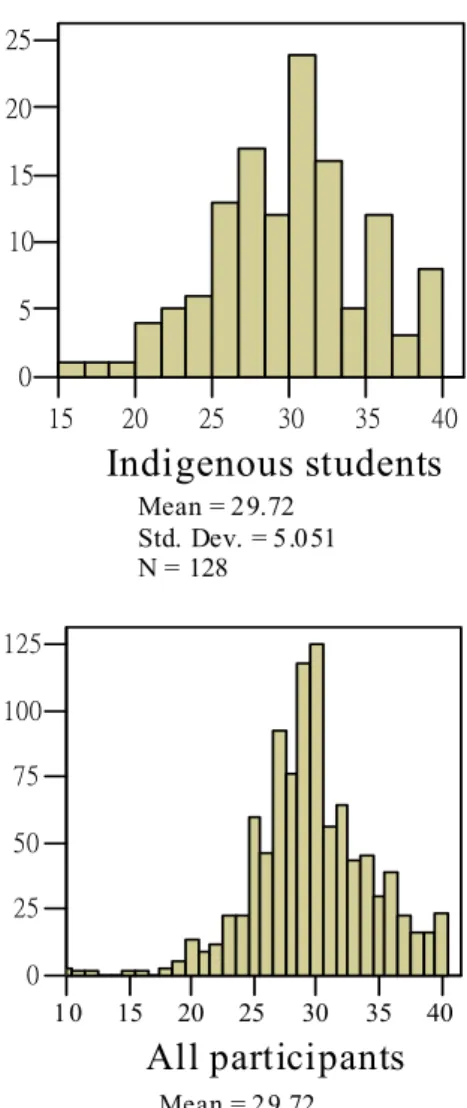
(19) developing their oral ability. In some studies, the researchers reported that COIM students in Taiwan were low academic achievers (林璣萍,2003;柯淑慧,2004;鍾文悌,2005). Generally speaking, the public had a negative stereotypical impression about the COIM students and labeled them as low achievers in academic performance, not to mention English. However, no related studies could prove that this stereotypical impression was true. Ironically, the COIM students regarded as helpless at-risk students did not receive any extra assistance from the government. In the Education Opportunity Zones program of Pingtung County in 2005, the COIM students were not the target students. In order to understand more about English performance of third elementary graders, the Han students and indigenous students were selected to compare with the COIM students. If students’ English performance did not show a normal distribution, it was hoped that the results of this study could urge educational decision makers to concern this problem. In addition, it was hoped that the needs of the COIM students would be taken into consideration in the future. Purpose of the Study The purpose of this study was to investigate whether there were differences among the three ethnic groups in English literacy proficiency and to examine whether a bimodal distribution existed in the three ethnic groups, or in all participants as a whole. To get a better understanding of how students’ English achievement was influenced, variables were. 8.
(20) used to examine whether there were correlations or involvements between those variables and English literacy proficiency in the three ethnic groups. Research Questions As mentioned above, the purpose of this study was to survey the characteristics of English learning in the three ethnic groups. The research questions were stated as follows: 1. To what extent does a bimodal distribution exist in each ethnic group and in all participants as a whole regarding English and Chinese proficiency? 2. What is the relationship between English literacy proficiency and Chinese proficiency in each ethnic group and in all participants as a whole? 3. What is the relationship between student-related variables and English literacy proficiency in each ethnic group and in all participants as a whole? 4. What is the relationship between parent-related variables and English literacy proficiency in each ethnic group and in all participants as a whole? Significance of the Study The significance of this study could be stated in six aspects. Firstly, it was reported that the bimodal distribution of students’ English learning achievement was aggravating over time (陳康宜,2005). In this study the writer tried to explore the current situation of students’ English achievement. Besides, few studies explored to seek reasons to understand the English learning situation of the COIM students, a growing ethnic group in Taiwan.. 9.
(21) This study was in the hope of providing information for those who concerned about this situation. Secondly, in this study the writer tried to find out how students’ English literacy proficiency was influenced. Education authorities tried many solutions such as increasing teaching hours, extending English class from sixth grade to third grade, and modifying the curriculum several times to improve students’ English learning achievement. However, students’ English achievement was not improved a lot. Therefore, it was necessary to investigate the reasons why a bimodal distribution was caused. Thirdly, the results of this study might be a reference for education authorities when they make decisions. It is reasonable to ask them to make use of the limited teaching resources. What is the optimal age of learning English in Taiwan? Is “the earlier, the better” hypothesis a paradox or the truth? Are social factors or personal characteristics essential to English learning? What can we do to at-risk students or low achievers in English education? Fourthly, the results of this study might be an examination of the validity of the current curriculum. Based on the Grade 1-9 Curriculum of Elementary and Junior High School Education, was English education in elementary school effective? How well did elementary school students learn English? Were they competent learners in the following English classes? This writer tried to examine whether the Grade 1-9 Curriculum of. 10.
(22) Elementary and Junior High School Education was suitable to elementary school students. Fifthly, the COIM students did not receive much assistance from the government even though many studies reported academic disadvantages of those students. For example, the COIM students were not the target students of the Education Opportunity Zones program since 2005 in Pingtung County. The study provided an opportunity to examine how well the COIM students learned English. By comparing with three different ethnic students, the results were in hope of provided some insight for education-policy makers. Finally, the results of this study might draw more public attention to the low English achievers and help them out with more teaching resources. Limitation of the Study Most elementary schools in Pingtung County evaluated students’ English learning achievement by traditional paper-pencil test. Hence, this study was designed to focus on students’ writing and reading abilities. The other rationale to exclude listening and speaking abilities from this study was feasibility and practicality. To measure students’ listening and speaking abilities was a costly and time-consuming task. The students whose mothers came from the developed countries such as Japan, United States, or Singapore, did not regard as the COIM students because their background were not similar to those whose mothers came from the under-developed countries. Due to the limitation of time, money, and manpower, the participants were not selected. 11.
(23) at random but by the stratified random sample. The stratified random means that the population is divided into some strata (subpopulations), groups of individuals that are similar in some way that is important to the response. The combination of each stratum represents the full sample. The target participants were the three ethnic students thus the location of school would be the first priority to be considered. In other words, the results of this study perhaps could not seek out the real situation of English education of third graders because the sample size of the participants was not large enough. As to the measurement of SES, the family income was not taken into consideration because it was a sensitive issue and it was hard to get the correct answer in the pilot study. Definition of Terms The definition of the terms used in this study are given as follows: 1. Ethnic Group: Three ethnic groups are included in this study. The Han students are those whose parents are Chinese. The indigenous students are those whose parents are indigenous people. The COIM students are those who come from the cross-nation-marriage families. 2. Bimodal Distribution: Bimodal distribution is featured by its unique two-peak curve of frequency chart, which suggests that two opposite masses exist (張武昌,2002). 3. English Literacy Proficiency: It refers to one’s ability to process reading and writing task in English (Webster’s New World College Dictionary, 2000).. 12.
(24) 4. Chinese Proficiency: It refers to one’s ability to use Chinese characters, Chinese phonetic symbols, and Chinese phrases. 5. SES: SES is the abbreviation of socio-economic status. SES is an indicator that stands for the social and financial support a family could offer for its members. SES is measured by a formula of parents’ vocation and education attainment (林生傳,1996). 6. Cram School Attendance: It refers to the students attend cram school classes to reinforce their English achievement by means of intense learning (盧曉娟,1997). 7. Students’ Motivation/Awareness: It represents a student’s passion and attitude towards English learning. 8. Students’ Effort: It refers to the degree of time and labor a student will spend on English learning. 9. Parents’ Expectation: It reflects the way in which parents have hope in children’s English achievement. 10. Parents’ Support: It refers to the assistance parents can offer to help children in English learning.. 13.
(25) CHAPTER 2 Literature Review The purpose of this chapter is to give the review of the development of English education in elementary school, and the review of literature related to factors such as motivation, vocabulary learning, age, gender, SES, and parental factors, which might influence on students’ English literacy proficiency. To provide a better understanding of current situation of English education in Taiwan, the issues regarding education of the indigenous students and the CIOM students would be discussed as well. English Education in Elementary School At present, English becomes one of the most important languages in the world. For example, more than 45% of the scientific books were published in English (Holden, 1987). In 2000, more than 75% websites were English interface or compatible to English and more than 80% of cyber information were distributed all over the world in English (Press, 2000). Therefore, it was advocated that elementary school students should learn foreign language to reach the ultimate goal, increasing the competitiveness of nation (Wardle, 1992). Accordingly, some scholars contended that it was necessary for students to learn foreign language in elementary school. For example, Johnstone (1994) thought that it would take a long time to acquire a new language. Learning a foreign language in elementary school implied increasing the exposure time to the target language. The. 14.
(26) possibility of the successful language learning would increase. Another advantage to teach English in elementary school was that the young children usually felt less anxious about learning a new language. They would be more interested in participating in the language learning activities than the adult learners. They also felt free to use the new language even thought they would make mistakes. Besides, the young learners had a higher possibility to reach a native-like accent. Moreover, the young learners could learn the target language and acquired the target language in a natural way, just like the native speakers. Brumfit, Moon, and Tongue (1991) also indicated that it was the optimal time to learn a foreign language in childhood. They thought that it was impossible to acquire or master a new language in a short time. A safe way to ensure learners had sufficient exposure time to the target language was to learn the new language at an early age. Besides, by way of learning new languages, children could access to different cultures and learn to appreciate and respect different cultures. Moreover, children could use the new language to learn new knowledge. In Taiwan, it was proposed that English must be a compulsory subject in elementary school (曹素香,1993). The reason was very simple, the equality of education opportunity. For example, more than 80% of elementary school students’ in Taipei City began learning English in cram school or language school in 1992. The percentage was far higher than other areas. For the last decade, more and more countries advanced the foreign language learning. 15.
(27) from junior high school to elementary school (戴維楊,1999b). In Korea, third graders began learning English in 1997. In 2000, English class would begin in first grade (Park, 1997). In Japan, English class was available in elementary school in 2002 (楊思偉,1999). In Mainland China, English class was not provided for every elementary school students. However, in some metropolitan cities such as Shanghai and Beijing English class would begin in third grade or later (曹素香,1997). In response to the demand of national development, the expectation of the people, and the trend of global education reform, Taiwanese English education was reformed and made some adjustments to ensure students to maintain their competitiveness in the future. In 1998, it was the first time to teach English in elementary school (教育廳,1998). In 2001, it was legislated that English was one of the compulsory subjects in elementary school. English class would begin in fifth grade (教育部,2001a). In 2005, English class would extend from fifth grade to third grade (黃以敬,2002). According to the guidelines of the Grade 1-9 Curriculum of Elementary and Junior High School Education (教育部, 2003a), English class begins in third grade in elementary school. The goal of English education is to foster students’ ability of using the simple English in the authentic environment, to activate students’ motivation and interest of learning English, to foster students’ ability of learning English effectively, to broaden students’ understanding of Chinese culture and different cultures, and to foster students’ appreciation and respect of. 16.
(28) different cultures as well. There were 11 subgoals for the listening skill, 14 subgoals for the speaking skill, 11 subgoals for the reading skill, and 7 subgoals for the writing skill (See Appendix A). Overall, the goals are (1) to recognize and articulate the English letters (2) to recognize the words leaning in the writing and the listening tasks (3) to learn 300 words for the receptive ability and 180 words for the productive ability at least (4) to use English as communicative tool in daily life (5) to spell the word by the rules of the phonics (6) to express messages in written from for different purposes. The pedagogies for English class in the elementary school should be meaningful and diversified so teachers should provide an English-enrichment environment to help students to learn and acquire English in a natural way. The teaching activities could be presented in the form of lecture, song, chant, story, game, and drama, etc. Teachers should not be the knowledge providers but the mediators. It means that teachers should have good interactions with students and provide the different media for students to access to English. After implementing English education in elementary school for years, there are still some problems to overcome. First, the government extended English class from fifth grade to third grade in 2005. Even so, the official figures revealed that many elementary schools still provided English class in first grade (教育部,2003b). The discrepancy of entry grade would result in the different exposure time to English, implying students’ English proficiency would be different form region to region.. 17.
(29) Second, according to an islandwide survey, the teaching hour in first grade to fourth grade was highly different from area to area. For example, 57.4% of schools had one English class weekly, 35.3% of them had two classes, 5.7% of them had three, and 1.5% of them had four or more every week. Most schools provided two English classes for the fifth and sixth graders per week (全國教師會,2003). Third, it was claimed that English teachers would had the difficulty in teaching because there were great differences in English proficiency among students (陳淳麗,1999). English teachers would not provide the proper teaching materials to meet the needs of individual. Many related researches also reported the same result (林于雯,2003;李漢文, 2003;何福生;2003;謝一謙,2002). Fourth, the Ministry of Education planed to recruit English teachers to prepare for the implementation of English education in elementary school in 1999. About 3,600 people passed the qualifying exam, but less than 2000 people received the further training and became the qualified teachers (教育部,2003c). Approximate 50% of English teachers were not qualified teachers. In addition, this problem happened in ten counties. By estimation, about 1800 qualified English teachers were wanted (韓國棟,2004). Vocabulary and Language Learning Vermeer (1992) claimed that the most effective communication did not lie in the elaboration of the grammatical rules but in the precise usage of the vocabulary.. 18.
(30) Zimmerman (1997) mentioned that vocabulary was the very core to any language learners. Like what McCarthy (1990) claimed that for an L2 learner no matter how well the grammar of L2 was learned, and no matter how perfectly the sounds of L2 were produced, without sufficient words the learner could not express himself/herself precisely and could not communicate with others meaningfully in L2. Laufer (1986) proposed that the language fluency was never achieved without adequate lexical knowledge. The key to learn a language well was lying on the vocabulary learning. The comprehension would be hampered greatly due to the insufficient vocabulary. It was proven that there was a significant correlation between vocabulary and reading comprehension (Nation, 1990). Furthermore, Laufer (1997) indicated that vocabulary played an important role in the listening, speaking, reading, and writing skill. Likewise, DeCarrico (2001) claimed that vocabulary learning might be the most important part in first, second, and foreign language learning. Lewis (1993) believed that vocabulary was very important for communication because the exchange of messages among talkers would be greatly hampered when one failed to comprehend the meaning of keywords even though s/he had adequate knowledge of morphology and syntax. Traditionally, vocabulary learning in L1 was treated as the consequence of human instinct. Namely, human could learn vocabulary in L1 context naturally. However, vocabulary learning was not easy. For example, Swanborn and de Glopper (1999) contended that the rate of learning unfamiliar words in an incidental article. 19.
(31) just only reached the level of 15% at the first time. They concluded that the rate could be improved by reading the article about eight times. Vocabulary learning was a crucial part in English learning for Taiwanese elementary graders. According to the guidelines of the Grade 1-9 Curriculum of Elementary and Junior High School Education, every elementary graduate must learn 300 words for receptive ability and 180 words for productive ability at least. However, the main question of vocabulary learning for Taiwanese elementary school students is not how many words they must learn but how effectively they learn vocabulary. Unfortunately, vocabulary instruction was not an easy task at all. Meara (1980) claimed that the greatest part of ESL/EFL learning was vocabulary learning. Haynes and Baker (1993) indicated that the most serious problem, which an L2 learner would encounter in the reading task, was not ineffective reading strategies but inadequate vocabulary knowledge. Huang (1997) indicated that many Taiwanese students felt difficult when they read their English textbooks. Taiwanese students believed that the difficulty should result from the lack of vocabulary knowledge. Even though some words recurred frequently in the contexts. Many EFL learners did not have a good understanding of these words (Verhallen & Schoonen, 1993). Vocabulary knowledge could facilitate vocabulary learning. The knowledge of morphology could allow learners to learn vocabulary from the viewpoint of word’s structure. When learners encountered a novel word in the context, they could memorize the. 20.
(32) novel word by the morphological rules (Nagy & Scott, 2000). Phonological knowledge could help learners figure out the written form of the word they heard (Service, 1992; Service & Kohonen, 1995). Phonemic awareness instruction and phonics instruction played a crucial role in reading and listening. Phonemic awareness instruction was to teach students to manipulate the minimize unit of sound, phoneme. Students could combine different phonemes to create a syllabus, or break a syllabus into different phonemes. Phonics instruction was to teach student to realize the link between letter and sound. Phonics instruction helped students establish the correct letter-sound correspondences and the spelling patterns (National Reading Panel, 2000). Because of the limitation of children intellectual development, children could not learn vocabulary well by rote. The read-aloud skill was highly appreciated for children. Through read- aloud, children could build their listening skill, vocabulary, and other language skills (Lennox, 1995). For example, Adam (1990) thought that read-aloud provided the opportunity for learners to practice those words which were irregular in their spelling or pronunciation patterns. For young learners, storybook reading was one of the effective and efficient ways to learn novel words (Duke, 2003). Robbins and Ehri (1994) reported that children could easily understand the meanings of the unfamiliar words in storybooks. In a meta-analysis research related to vocabulary learning, it suggested that vocabulary instruction for children must be authentic and meaningful. The words teachers taught must. 21.
(33) be closely related to children’s experience. In addition, children used to learn things by repetition. Vocabulary should appear repeatedly in different contexts (National Reading Panel, 2000). Minority Students and Learning Achievement For decades, many studies reported that the indigenous students did not perform as well as the Han students in academic achievement (巫有鎰,1996;譚光鼎,1998;林清 標,1998;陳枝烈,1997,2001;王天佑,2002;洪希勇,2004). According to the official figures, the percentage of attending each kind of school for the indigenous students was lower than the Han students over time. In 2004, for example, 8.43% of all students and 7.37% of the indigenous students attended senior high school; 4.75% of all students and 3.50% of the indigenous students attended vocational college; 18.40% of all students and 6.00% of the indigenous students attended university/college; and 2.80% of all students and .22% of the indigenous students graduate school (原住民族委員會,2005). It was clear that the there was a great difference between the indigenous and the non-indigenous students in academic achievement. Mainly, the reasons caused this discrepancy between the Han students and the indigenous students in academic achievement were the cultural difference, the financial difference, and the family structure difference. In the indigenous society, there was not a clear cut between the attitude towards work and leisure. In general, they had a notion of pursuing pleasure. It implied that the. 22.
(34) indigenous people always mixed the work and play together. As a result, they usually did not have a habit of making good use of time. However, this lifestyle was a very big disadvantage for the indigenous students to learn in school because one must spend a huge amount of time and effort to success in school learning (楊國賜、黃富順、楊仁煌,1992). On the other hand, the indigenous students usually learned in the mainstream school settings. In the mainstream school settings, the indigenous students must learn a new language and a new culture. Namely, the indigenous students would face more differences than the Han students in school learning (王木榮,1999). Besides, the value of education was not highly appreciated in the indigenous tradition. In general, the indigenous parents spent less time and effort on supervising children’s learning. There were a few contacts between teachers and parents. Hence, it was concluded that most indigenous parents did not have high educational expectation for their children. For example, the indigenous parents showed more enthusiasm on children’s sports, singing and dancing competition. Relatively, they were more unenthusiastic about the affairs related to academic learning (陳 枝烈,2001). It was widely believed that low parents’ educational expectation was one of the reasons why lots of indigenous students were low achievers (傅仰正,1994;巫有鎰, 1996;陳建志,1998;高淑芳、何秀珠,1997;陳枝烈,1997,2001;張善楠、黃毅 志,1999;洪希勇,2004). According to the official figures, in 2002 the average of family monthly income in. 23.
(35) Taiwan was 92,372 NT dollars and the average income of the indigenous families was 38,665 (行政院,2003). In a recent survey, the results showed that the indigenous families were more economically and socially disadvantaged than the general families. In 2004, the percentage of students from low-income families was 1.58% on average. However, 8.63% of the indigenous students came from low-income families. In addition, 1.64% of all students and 5.41% of the indigenous students were from grandparent bleeding families. 8.58% of all students and 18.05% of the indigenous students were from single parent families. In order to improve the indigenous students’ academic achievement, Taiwanese government started the Education Opportunity Zones program to provide free remedial or afterscool programs for the indigenous students since 1995 (教育部,2005a). The similar situations of the COIM students were frequently reported. According to the official figures, a large portion of the cross-nation-marriage families were low-income families. In addition, the COIM students’ parents had a lower education attainment (內政 部,2003). It implied that most COIM students were financially, socially and educationally disadvantaged. It was also reported that the main reasons foreign spouses could not participate in children’s school learning might be the limitation of language and their education attainment (黃琬玲,2004;蔡奇璋,2004;許殷誠,2005). As a result, the COIM students did not perform as well as the others in academic achievement (林璣萍,2003;柯 淑慧,2004;鍾文悌,2005). In comparison with the indigenous students, the educational. 24.
(36) help for the COIM students were ignored. For example, the population of the indigenous people was 460,000 and the population of the foreign spouses was 365,000. In the near future, the COIM students will be the biggest minority group in elementary school. The population was more than 60,000 (黃以敬,2006). Ironically, the COIM students were not treated equally. Unlike the indigenous students, not all the COIM students were eligible for the Education Opportunity Zones program in 2005. Hopefully, the results of this study might provide some insight for education decision makers. Age and Language Learning It has always been argued about how age influences both L1 and L2 learning (Lightbown & Spada, 2003). Most researches in early language acquisition examined the question already. The main issue about age in L1/L2 learning is spotted upon the critical period. Is there a critical period for language learning or acquisition? In other words, is human’s biological maturation a critical dominant to make human uniquely capable of learning or acquiring languages? Form the biological point of view, a person has the instinct to learn and speak any language since he was born. If babies or infants are exposed to only one language, they probably fail to develop some specific language ability. For example, most native Japanese had serious difficulty in distinguishing the difference between two English consonants, /l/ and /r/ (洪蘭,2002;Cochran, 1980). As a matter of fact, a normal newborn could recognize the difficult sounds of human languages (張美. 25.
(37) 惠,2003). Therefore, it was recommended that it was good for children to be exposed to a multilingual environment to enhance their language development (Otero, Pliego-Rivero, & Ricardo, 2003). One of the well-known theories is the critical period hypothesis (CPH) proposed by Penfield and Roberts in 1959 (cited in Hoff-Ginsberg, 1998). They claimed that one could easily and effectively learn or acquire a language during a specific period, and the leaning or acquisition would become more difficult and ineffective beyond the period. Childhood was the best time to learn language. Some Taiwanese scholars also agreed with this “ the earlier, the better” viewpoint. They claimed that the best time for Taiwanese children to learn English was childhood (學 前教育,1997;Lou, 2000). It was proposed that English should be taught in first grade (戴 維揚,2002). It seemed to be overemphasized that children were better language learners than adults. Therefore, “ the earlier, the better” became one of the most acceptable notions for the general public in English learning. However, “ the younger, the better” hypotheses was not always acceptable by all scholars. For example, it could not explain the phenomenon why adults were effective learners than children in grammar or syntax learning (Ellis, 1986). In cognitive consideration, Piaget (1972) asserted that at the formal operational stage a person became more competent in hypothetic-deductive, propositional, and combinational reasoning while facing an unfamiliar situation. According to Piaget’s cognitive development theory, it. 26.
(38) implied that adolescents might outperform children in language learning (cited in 張春 興,1999). Burstall (1975) found that senior high school students had a better performance in L2 learning than elementary school students (cited in Collier, 1988). Ellis (1986) reported that the abilities to imitate sound patterns decreased over time. On the contrary, the abilities to learn grammatical/semantic rules increased gradually. Snow and Hoefnagel-Höhle (1987) conducted an experiment in Dutch to examine the language competence of children, adolescents, and adults by using nine different tasks. The findings showed that adolescents outperformed adults in every task all the time except in pronunciation task at the early stage. Children did not perform well in all tasks at early stage. At the final stage, however, children caught up with others or even surpassed them in every task, especially in pronunciation task. In Chou and Hsu’s study (1989), there was no significant relationship between English competence and the age of starting learning English. They concluded that the key to improve students’ language competence did not depend on how old they start to learn, but on how and what teaching settings were provided for students. In a recent research, the researchers believed that “the earlier, the better” hypothesis might be not suitable for Taiwanese students. According to the results, there was no significant difference in Taiwanese college students’ English achievement between who started learning English in preschool and who started in elementary school, implying the critical period of English learning for Taiwanese students was not childhood. 27.
(39) but puberty (江昭青,2005). As what Morrison and King commented, critical period still remained an unanswered question in language learning. Age perhaps, not absolutely, played a significant role in L2 learning. They believed a sound L2 competence was based on a sound L1 development (陳昭玲,2005). “The younger, the better” hypothesis could not be always true for every language learner in every condition. Larsen-Freeman and Long (1991) concluded in a meta-analysis research that young learners would reach a higher ultimate attainment in language learning and have an overwhelming advantage in oral development from a long-term point of view. However, children were not always superior to adults in every aspect. Brown (2000) summarized some children’s characteristics in language learning. Children’s learning was limited by their intellectual development. Children tended to focus on the things that happened around them. They did not care about things that happened in the past but now. Besides, they usually picked up new language which was meaningful to them. Children would ignore the language which they did not use immediately. In the normal condition, they were not interested in things such as rules, explanations, and abstract concepts. For example, they could not concentrate themselves on learning rules and grammar for a long span. However, teaching activities could be more attractive to children when teaching activities were presented in different forms. Play, games, songs, real objects, pictures, and audiovisual aids would be very useful to help children internalize what they learned in class. A common. 28.
(40) misunderstanding was rooted in people’s mind. Children had less language anxiety than adults. In fact, children were very sensitive to other’s response when they learned language. Sometimes they were much more sensitive than adults. They cared about what others, especially their peers, though of them. Someone’s criticism or sneer about children’s language mistakes would damage their self-esteem. When children’s self-esteem was damaged, they probably refused to learn language anymore. The debate of what age students should start learning English was still raging on in Taiwan (陳雅玲,2003). We could see that education authorities modified the entry grade of English class in elementary school from sixth grade to third grade, but actually more and more schools started English class in first grade. Confusingly, education authorities claimed that it would be harmful to children’s Chinese development when children started learning English at preschool age. Accordingly, any English teaching programs were banned in preschool (陳宜康,2004). However, Hung (2004) reported that students learning English in first grade did not had difficulty in developing their Chinese literacy. As a matter of fact, more than one third of students learned English before third grade. It was reported that 41.4% of children started learning before they went to elementary school (張錦弘,2006). Most teachers agreed that it became an unstoppable trend to learn English at preschool age (劉偉瑩,2004b). Hence, it was worthwhile to examine to what extent age influenced students’ English learning in elementary school.. 29.
(41) Motivation and Language Learning For decades, a great number of studies proved that motivation was one of the most essential dominants in L2 learning (Deci & Ryan, 1991; Brown, 2000; Dörnyei, 1994, 1997, 1998, 2001,2003; Masgoret & Gardner, 2003). Likewise, it was also proven that motivation was associated with students’ reading and behaviors (Baker & Wigfield, 1999; Guthrie, Wigfield, Metsala, & Cox, 1999; Lepper & Henderlong, 2000; Stipek, 2001). However, the definition of motivation was different for scholars. For example, in 1964 Atkinson claimed that motivation comprised the need to succeed and the need to avoid failure (cited in Au, 1988). According to Atkinson’s theory, people were regarded as scientists who evaluate the possibility of success or failure prior to action was taken. Meanwhile, Atkinson also provided complicated equations to transfer the abstract motivation into concrete figures (cited in Mayer, 1987). Maslow proposed a need-hierarchy theory that contented motivation was a sort of continuum of seven human needs. Humans would try to satisfy the seven needs one by one in a straight order. It was impossible for people to pursuit a higher need without satisfying the fundamental needs. The seven needs were physiological need, safety need, belongingness and love need, self-esteem need, need to know, aesthetic need, and the ultimate goal, self-actualization need (Franken, 2001). Keller (1983) regarded motivation as the choices that people wanted to achieve or avoid, and the degree of effort people devoted themselves to their choices. Keller identified four. 30.
(42) aspects constructing the motivation. They were relevance, interest, expectancy, and outcome. Furthermore, Keller (1987) proposed the ARCS model to activate learner’s motivation. A stood for attention, R was relevance, C was Confidence, and S was satisfaction. For a teacher, s/he must keep in mind that every activity undergoing in the class should be closely related to these four elements. Regarding language learning motivation, Gardner (1959) might be one of the most significant and influential revelators of motivation theory in L2 learning. He claimed that individual’s motivation played a more important role than the individual’s genetic intelligence in learning. In a follow up study, Gardner and Lambert further explained that motivation could be categorized into integrative motivation and instrumental motivation. The integrative motivation referred to that learners viewed L2 as one of the media to make themselves more involved with the culture of target language, or to integrate themselves into the community of the native speakers. In short, one could be called integratively motivated when s/he learned the target language not for the purpose of external rewards or punishments but for the personal interests and desires to interact with native speakers. On the contrary, the instrumental motivation referred to that learners regarded L2 as one of the media to obtain the external or instrumental rewards, or to avoid punishments. Namely, one could be called instrumentally motivated when s/he learned the target language for the purpose of job promotion, prize, and praise from others (cited in Brown, 2000).. 31.
(43) Many studies reported that both integrative and instrumental motivation were key factors to a successful L2 learning. Generally speaking, some scholars believed that integrative motivation was much more contributive to a long-term retention than instrument motivation (Crookes & Schmidt, 1991; Spolsky, 1989). For example, a study was conducted to explore the relationship between motivation and Japanese achievement of 195 college students in America. The results revealed that there was a significant difference in Japanese achievement between students with high integrative motivation and those with low integrative motivation (吳致秀,2003). However, in some particular situations the instrumental motivation was much more crucial than the integrative motivation in L2 learning. Lambert and Gardner (1972) reported that Philippine students devoted themselves to learning English because of their desire to master English (cited in Brown, 2000). Oller, Baca, and Vigil (1997) also reported the similar results. Another well-known definition of motivation might be the proposition of Ryan and Deci (2000). They thought that motivation included two subcategories, the intrinsic motivation and the extrinsic motivation. The intrinsic motivation referred to that a person did something not for the purpose of the external rewards of punishments but for his/her own sake. In other words, one could be called intrinsically motivated when s/he learned a target language for the purpose of the self-fulfillment and self-determination. The extrinsic motivation referred to that a person pursued the external rewards or avoided punishments.. 32.
(44) For example, one could be called extrinsically motivated when s/he learned the target language to obtain the prize or job promotion. No matter how people defined the motivation, many studies showed that there was a positive correlation between learners’ motivation and their language achievement (張玉 茹,1997;張美美,2002;潘詩婷,2002;Su, 2002). As what McDonough (2002) claimed, language learners with a high motivation usually could be more active to participate the learning activity. They were also more tolerant to frustration and boredom. As a result, they were usually successful language learners. However, students’ English learning motivation was not always the same. For example, it was reported that most Taiwanese senior high school students were passive English learners with weak motivation (Liao,2000). In Liu’s study (2003), she reported that most Taiwanese junior high school students were active English learners with strong motivation. Kan (2005) reported that students’ English learning motivation decreased over time. In addition, junior high school students had a weaker English learning motivation than elementary school students. It was reported that there was a significant difference in English learning motivation between the Han students and the indigenous students in elementary school. The Han students had stronger English learning motivation than the indigenous students (余龍豪,2002). However, very few studies explore the COIM students’ English motivation. It would be an interesting question. What’s English learning motivation of the COIM students? What’s the relationship. 33.
(45) between English learning motivation and English achievement in the three ethnic groups? To what extent did students’ motivation influence their English achievement? Gender and Language Learning Gender has always been an important issue in investigating academic achievement. In general, the majority had a stereotypical impression that male students outperformed females students in mathematics and science and female students had a better performance in language (Jackson, Hodge, & Ingram, 1994). Hence, language was always regarded as a girl’s subject. Pajares and Valiante (2001) claimed that female students usually were more confident of language learning. They had more positive and active attitude towards language learning than male students. As a result, they could perform better than male students in language learning. In Taiwan, many studies also reported such a result. For example, in some islandwide survey researches the results revealed that female elementary school students had a better Chinese academic achievement than males (周台傑,1993;吳 裕益,1993). It was also reported that there was a huge and significant difference between elementary school boys and girls in Taiwan (陳怡華,2001). In other words, female students had the language advantage over male students (李淑萍,2005;張錦鶴,2003; 陳雅雯,2003;何美瑤,2001). Regarding English learning, results also revealed the difference between boys and girls (鍾筱美,1997;王曉慧,2000;林于雯,2003;Nieh, 2004). In addition, the results were not all the same. It was reported that there was a. 34.
數據
+7

相關文件
• To introduce the use of the LPF as a tool for planning the school English Language curriculum; and
Understanding and inferring information, ideas, feelings and opinions in a range of texts with some degree of complexity, using and integrating a small range of reading
help students develop the reading skills and strategies necessary for understanding and analysing language use in English texts (e.g. text structures and
• e‐Learning Series: Effective Use of Multimodal Materials in Language Arts to Enhance the Learning and Teaching of English at the Junior Secondary Level. Language across
• helps teachers collect learning evidence to provide timely feedback & refine teaching strategies.. AaL • engages students in reflecting on & monitoring their progress
refined generic skills, values education, information literacy, Language across the Curriculum (
Besides, although the elements of STEM education are embedded in individual KLAs of Science, Technology and Mathematics Education of the local school curriculum, the coherence
Hope theory: A member of the positive psychology family. Lopez (Eds.), Handbook of positive
Most of teachers agree with positive effects of the 99 curriculum on practical instruction in school, however, they seem to concern inequalities of content between volumes and
