College of Management
I-Shou University
Master Thesis
Factors Influencing Job Choice for International School
Staff in Asia
Advisor: Dr. Heidi Chang
Graduate Student: Ledy Aherne (Lydia)
Acknowledgements
This thesis has been the culmination of a tremendous effort for me. My success in this undertaking would not have been possible without the support of those around me. I would like to acknowledge the help those people have provided me.
First, I would like to thank my family for their constant encouragement. They provided me with the push that I needed in order to accomplish this intellectual endeavor. My children motivated me to do the best I could, and helped me to let go of my stress when I felt overwhelmed. My husband helped me also, with his ideas, and most of all, with his
proofreading. My English is not perfect, but he helped by staying up late and helping me fix my grammatical mistakes, even though he had his own jobs to do. I would also like to thank my parents, for their sacrifices to allow me to get my education. Without their love and sacrifice, I would not have been able to finish high school, let alone my masters degree.
Next, I would like to thank my professors at ISU. They provided me with the understanding I needed of business in order to complete this research. They were tough, but they helped me when I needed it.
Finally, I would like to give special mention to Dr. Heidi Chang. Her patience with me was great, and she supported me throughout the research process. She helped me with ideas of how to conduct my research, how to analyze the results, and how to write about them effectively. Without her assistance, I would not have been able to complete this thesis, and she deserves special recognition for her efforts. I truly appreciate her caring words, and the time she spent on me.
Abstract
A study was undertaken to research the factors that affect the job choices of teachers in international schools in Asia. International schools can be defined as educational
institutions following non-local (U.K., American, or International Baccalaureate) curriculums, the language of instruction is English, and where a majority of the teachers come from western countries. Due to an increase in expatriate employees and their children and perceived differences in the quality of international schools over local schools, the number of international schools has increased dramatically over recent decades.
The research methodology included interviewing experienced international staff about the relative importance of various factors in determining their choice of where to work and whether to move from their current position. The results of the survey were that teachers job choices are influenced by salary and other financial benefits, location, and working
conditions. Working conditions are likely the most important of these factors. This can be understood by using decision theory. Teachers tend to behave rationally when making job choices.
Table of Contents
Signature Page ... 錯誤! 尚未定義書籤。
Acknowledgements ... iii
Abstract ... iv
List of Tables ... vi
List of Figures ... vii
CHAPTER 1 INTRODUCTION ... 1
Research Background ... 1
Research Objective ... 2
Research Significance ... 3
CHAPTER 2: LITERATURE REVIEW ... 4
2.1 Job Choice ... 4 2.2 Decision Theory ... 6 CHAPTER 3: METHODOLOGY... 11 3.1 Research Design ... 11 3.2 Sampling ... 13 3.3 Data Collection ... 15 CHAPTER 4: RESULTS ... 17
4.1 Factors Affecting Job Choice- Accepting a Job Salary and Other Financial Benefits ... 17
Location ... 19
Working Conditions ... 20
4.2 Factors Affecting Job Choice in Staff Retention ... 21
Salary and Other Financial Benefits ... 21
Location- Family Influence ... 22
Location- Lifestyle ... 22
Working Conditions ... 23
CHAPTER 5: CONCLUSIONS AND SUGGESTIONS ... 26
5.1 Research Summary ... 26
5.2 Conclusions ... 29
5.3 Theoretical Contribution ... 31
5.4 Practical Contribution ... 32
5.5 Limitations and Further Research ... 32
REFERENCES ... 34
List of Tables
Table 1: Summary of factors that affect job choice ... 6
Table 2: Demographic data of teachers and administrators who participated in the study ... 14
Table 3: Selected quotes about salary from interviews ... 19
Table 4: Summary of attitudes towards working conditions on hiring and sample quotes ... 21 Table 5: The number of times each of the codes and subcodes were identified in MAXQDA . 25
List of Figures
Figure 1: A theoretical model of how teachers in international schools in Asia make job
CHAPTER 1 INTRODUCTION
International schools can be defined as schools that offer an international curriculum, have a multinational and mobile staff and student body, and offer instruction in English (Volk, 2000).They have experienced rapid growth in recent years (International School Consultancy Group, 2014). Recent trends have seen the mobilization of labor as companies expand into new markets and employees move between countries (Costello & Costello, 2014). Expatriate employees demand quality education for their children, and local parents enroll their offspring in order to prepare them for tertiary education abroad (Siaw, 2003). In any school, teacher payroll represents a significant portion of overhead costs, this is
especially true in international schools which usually recruit foreign teachers for the majority of teaching positions (Superville, 2014). International schools seek to maximize the quality of education through recruiting professional educators while minimizing costs of teacher payroll by retaining teachers for multiple years. With these characteristics in mind, in this paper we will seek to better understand the factors that influence the job choices of international staff in Asia.
Research Background
International schools are organized in myriad ways. Individuals, corporations, embassies, or non-profits may own them. Tuition fees, grants, endowments, and donations may fund them (Bunnell, 2005). In spite of their diversity, all international schools are similar
in that each offers the same product: education.
Professional teachers deliver that product, education. International schools are a relatively recent phenomenon, only emerging in the 20th century. Western diplomats
demanded that their children receive education that would be transferable between countries and to their country of origin. Initially, international schools were set up and run by
embassies to meet that demand. In the early stages of international education, there were generally few international schools, and they tended to be located in the capital city of a country, since that is the location of embassies and often are regional centers of business.
internationally, and the children of expatriate businessmen also started to attend international schools. Additionally, since these schools offered a western education and were often located in developing countries, the education they offered was perceived as being superior to the education provided by local school systems. Consequently, wealthy and well-connected locals would sometimes send their children to international schools in order to take advantage of the benefits these schools offered (Bunnell, 2005).
This situation eventually resulted in the rapid expansion of international schools. It has been estimated that the number of international schools increased to more than 7,000 worldwide in 2014 (International School Consultancy Group, 2014). In order to set the context for this study, the characteristics of international schools must be described. According to Search Associates, a major international teacher recruitment agency, most international schools share several important characteristics. English is the language of instruction, the student body is diverse and mobile, the teaching staff is multinational, a curriculum such as the American, British, or International Baccalaureate is used, and academic standards are very high (Search Associates, n.d.).
The study of factors that influence people’s employment decisions is called job choice. Most of the research on job choice has occurred in the past 40 years. Theories on job choice suggest that decisions are a result of both attraction and selection (Rynes & Boudreau, 1986). Job choice for teachers often involves the extrinsic factors such as attractiveness of school and its compensation package (Newton & Witherspoon, 2007). Staffing in
international schools is interesting because some research suggests that teachers prefer to teach in locations near where they grew up, or barring that, in areas that are similar to their hometown (Boyd, Lankford, Loeb, & Wyckoff, 2005).
Research Objective
The purpose of this thesis is to investigate and analyze the relative effects of the benefits package and work conditions offered to international school staff on job choices. The specific research objectives are to:
1. To investigate and explore the various factors that affect job choice when accepting a job for internationalschool staff in Asia.
international school and staff in Asia.
Research Significance
There are myriad factors that affect international school staff’ job choices. This research will compare the relative importance of various factors involved in job choice when teachers accept a job for international school staff in Asia and when they decide whether or not to stay at an international school teaching job. The result of the study is going to help international school principals and human resource departments to develop effective strategies for recruitment and retention.
CHAPTER 2: LITERATURE REVIEW
2.1
Job Choice
Job choice for teachers is primarily affected by their motivations (Milanowski, Longwell-Grice, Saffold, Jones, Schomisch, & Odden, 2009). Motivations for international staff include factors such as salary, working conditions, and location. These motivating factors can exert either a positive influence and a negative influence on teachers (Mieilă, Popescu, Tudorache, & Toplicianu, 2015).
Salary is a primary issue for job seekers (Tetrick, Weathington, Silva, & Hutcheson, 2010). Job seekers are inclined to move to locations where their value is at a premium in relation to other places. Additionally, it appears that other financial incentives also play an important role in teachers’ job choices. However, small increments in salary do not have a significant effect on teachers’ choice in jobs (Milanowski et al., 2009). Interestingly, higher salaries have a positive correlation with teacher retention; teachers who earn more are less likely to move to another school (Feng, 2014). Indeed, Ashiedu and Scott-Ladd (2010) report that increased financial benefits can have a significant effect on the hiring and retention of teachers. They looked at issues surrounding how schools in Western Australia can attract and retain teachers. Their findings imply that schools can attract more highly qualified teachers and reduce their turnover by improving the financial rewards offered to teachers. Finally, Swain and Garasky (2007) found that families are likely to migrate when the economic benefits outweigh the financial costs of moving to a new location. Compensation plans are seen as an essential element of teacher motivation (Eckert & National Institute for Excellence in Teaching (NIET), 2013). Beyond that, however, rewards that teachers receive from doing their job well and building relationships with their students and colleagues have a tremendous influence on teachers’ motivation (Taylor, McNaney-Funk, Jardine, Lehman, & Fok-Chan, 2014)
Working conditions are another important factor in teachers’ job choices (Berry & Fuller, 2007). Working conditions for teachers encompasses many factors, including work/life balance, administrative support, time demands, classroom autonomy and
professional development (Froese-Germain & Canadian Teachers’ Federation, 2014; Gersten, 1995; Klassen & Anderson, 2009; Stuit, Smith, & Vanderbilt University, 2010; Thibodeaux,
Labat, Lee, & Labat, 2015). All of these are influential in teachers’ feelings regarding
working conditions, and have a significant effect on teachers’ job choices in both accepting a job and retention. Teachers also are more likely to stay at their job if the working conditions are favorable. Indeed, based on the research, working conditions appear to be one of the most important factors in determining teachers’ job choices.
Location is another factor that has a large effect on job choice. According to Jin, Mjelde, and Litzenberg (2014), job seekers tend to prefer to be in urban areas over rural areas. Moreover, some research suggests that residence location is more important than work location in job choice. In other words, people prefer to find a job in the places they live or want to live as opposed to living in the place where they find a job (2014). Housing costs are also related to location. Job seekers tend to prefer locations with affordable housing when making choices about job location when migrating (Rabe & Taylor, 2012). Different locations have different costs of living. Therefore, the cost of living in various potential locations is an important element of job choice. Job seekers must decide if they will be able to afford to live in a new city (Keegan, 2010). Lastly, lifestyle preferences and preferences for location have a large impact on job seekers’ decisions (Rogers, Searle, & Creed, 2010). Research has shown that people’s willingness to take an overseas assignment varies on many factors, one of which is the local conditions of the new location. The research found that expatriates prefer
locations that are culturally similar to home, English speaking, and economically developed (Dickman & Mills, 2010; Kim & Froese, 2012).
The value that teachers receive can be said to motivate them to perform at the professional level required of their school, and in turn, affect teachers’ job satisfaction (Shields & Lewis, 2012).In his paper A Study of Decision Making: Job Choice, Soelberg (1967) elucidates four phases related to the job search. In the first phase, people identify their ideal occupation. For the purposes of our study, this will be assumed to be an international school teacher in Asia. In the second phase of the job search, people plan their job search. For our research, this means that teachers will think about what conditions they desire, such as financial benefits, location, and working conditions. They will also plan the means by which they will apply for jobs, such as using a recruitment agency like Search Associates or sending resumes to schools identified from the internet. In the third phase, people begin their job search and make choices. Our teachers will target their search to international schools in Asia that match their philosophy and desires. The search will be focused on collecting information
and applying for jobs at schools that offer the financial benefits, location, and working
conditions that the teacher wants. The search will end when a position that meets their criteria is found. In the fourth and final phase, people will confirm and commit to their choice.
Teachers may negotiate for a better offer. They will then commit to the school, and come to rationalize their choice as the correct one.
Finally, there are opportunity costs associated with job choices as a teacher (Murnane & Olsen, 1990). Research shows that teachers with better skill sets, as measured by
performance on tests, tend to stay in teaching for fewer years than other teachers (Rumberger, 1987). Moreover, teacher salaries are related to opportunity costs. Lower salaries incur higher opportunity costs, which explains why there is a negative correlation between higher salaries and teacher attrition (Duflo, Hanna, & Ryan, 2012).
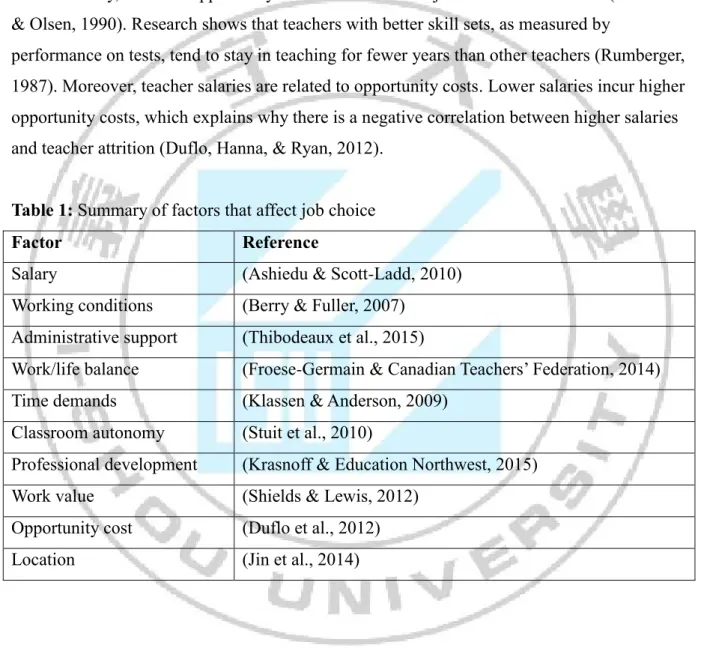
Table 1: Summary of factors that affect job choice Factor Reference
Salary (Ashiedu & Scott-Ladd, 2010)
Working conditions (Berry & Fuller, 2007) Administrative support (Thibodeaux et al., 2015)
Work/life balance (Froese-Germain & Canadian Teachers’ Federation, 2014) Time demands (Klassen & Anderson, 2009)
Classroom autonomy (Stuit et al., 2010)
Professional development (Krasnoff & Education Northwest, 2015) Work value (Shields & Lewis, 2012)
Opportunity cost (Duflo et al., 2012)
Location (Jin et al., 2014)
2.2 Decision Theory
Decision theory is a set of tools which we can use to better understand how people measure the relative risks and rewards of the decisions that they make . One way in which this theory can be useful is to analyze the teachers’ decisions about whether to accept a job in a school, or whether to continue to be employed. This is particularly applicable to turnover in the labor markets. Traditional turnover theory was developed in the 1970s and 1980s, but the
core of those models is still useful when analyzing contemporary labor markets such as international teaching (Steel, 2002).
Decision theory essentially sets forth a pathway that people may follow when making decisions. The events include:
1. Identification of the problem 2. Obtaining necessary information 3. Production of possible solutions 4. Evaluation of such solutions
5. Selection of a strategy for performance (Hansson, 2005)
Decision theory can be separated into rational decisions, limited rationality, and intuitive decisions. Rational decisions can be defined as the decision that will result in the best chance of the decision maker to meet a specific objective. “Rational behavior is behavior that maximizes the value of consequences” (Hastie & Dawes, 2010, p. 237). This means that in a teacher’s job search, a rational choice is the one in which there is the highest total value for the teacher. The values for an international teacher may be some mixture of financial benefits, location, or working conditions. In a simplistic example, if a teacher’s sole objective is to find work in a school with the best overall location, the rational decision would be to choose the opportunity with the highest likelihood of meeting that objective. It is important to note that the objective is external to decision theory (Peterson, 2009).
Limited rationality can be defined as setting values for various decision making possibilities as they are found, and comparing them to predefined aspirations. In limited rationality, a decision maker will have set aspirations, and then search for opportunities until one is found that meets that aspiration. When a situation is found which satisfies the
aspiration, that option will be chosen (Rapoport, 2013). In limited rationality, the person may operate with limited or incomplete information (Spiegler, 2011). An example of how limited rationality might work for a teacher is if a teacher wants to find a job that earns at least USD$50,000 per year. She might search for a job until she obtains such a one that pays that amount, not knowing if there are other, better paying jobs available.
Finally, in intuition, decision makers make choices without being able to clearly articulate the reasons for their decisions. They make choices based on their feelings about
what is right, but are therefore unable to defend their decisions if they later prove to be wrong (Ríos, 2012). Intuitive decisions may be based on experiential, tacit learning, but only if the person cannot explain why or where they have had the experience (Plessner, Betsch, & Betsch, 2011). In the case of an international school teacher, an intuitive decision about a job would be one in which the teacher chooses a job based on a gut feeling, without having a clear explanation for why they made that decision.
Though there are variations on these stages, and they need not happen sequentially, these stages are relevant to our investigation because they help us to see the valuation that teachers have placed on different aspects of the decision making process. For example, teachers may value gross salary most of all, which would, in theory, lead them to accept the highest paying job available to them if they act rationally. Another teacher may value cultural experiences over money, and would be expected to select schools in culturally rich locations if they act based on intuition. Our research aims to understand the priorities of teachers in order to make generalizations about their choices.
This decision making theory helps us to understand the motivations of teachers when looking at salary and other financial benefits in comparison to the price of goods and the cost of living in different locales. Teachers have to weigh up the potential costs against their benefits in different locations. The differences in prices can be significant, particularly for housing. Chen, Yong, and Rosenthal (2008) conducted research that young and educated individuals tend to migrate towards urban locations with good weather and dynamic business opportunities. They suggest that the opportunities provided by large cities, along with the opportunity to earn a good salary is more important than having fun. Additionally, good amenities and weather, things that tend to be associated with a good quality of life, are attractive to workers (Berger, Blomquist, & Sabirianova Peter, 2008). Thus, we can expect international school staff to act rationally when it comes to money, but intuitively when it comes to quality of life issues that are harder to quantify, such as social life and cultural attractions.
Adding complexity to the picture of decision theory is the fact that situations are dynamic, and people do not usually have complete information. However, in general, it can be said that people make decisions with the intent of maximizing their returns. People are constantly evaluating their options, looking for ways in which they can get the greatest
benefit with the least amount of negatives (Christopoulos & Schrater, 2015). In international teaching, factors such as insurance, flights, professional development, and housing benefits must be weighed up against one another, with uncertainty added with by currency
fluctuations and variations in the cost of living. Hey and Panaccione (2011) show that most people act resolutely, which they define as people who show commitment to a decision even when situations change unexpectedly. A small but significant number of people show
sophistication, changing their decisions based on the changing circumstances, and a few people behave naively or myopically by not showing understanding of dynamic situations or by acting in ways that are not effective for their long-term benefit. In the context of teachers in international schools, this is useful for helping us to understand retention, because it informs us of their decision making process in regards to continued employment.
We can also use decision theory to understand international staff as migrants. According to Kumpikaite and Zickute (2012), migrants are human capital, and make their decisions by analysis of where their skills are most valuable. Teachers in international schools, in this context, evaluate their choices based on their value. Through the process of searching for schools, teachers receive feedback about the strengths and weaknesses of their skills as teachers, and the demand they attract. People can be expected to act strategically in order to get the maximum reward in a job search (Ramsey, 2009).
Integrating Soelberg’s model for decision making in a job search with Hansson’s model for decision making, we can create a model for the steps taken by international staff in Asia in job choice as follows.
1. Choosing to initiate a job search for a teaching position at an international school in Asia
2. Identifying relative priorities of the desired job- financial benefits, location, and working conditions
3. Selecting a method for the search- ie. Use a recruiting agency or use the internet to apply directly to schools
4. Obtaining information about potential schools’ financial benefits, location, and working conditions
5. Applying to schools and interviewing
benefits, location, and working conditions
7. Confirming and committing to the offer (Hansson, 2005; Soelberg, 1967)
Figure 1: A theoretical model of how teachers in international schools in Asia make job
choices
1. Choosing to initiate a job search
2. Identifying relative priorities of the desired job
3. Selecting a method for the
search 4. Obtaining
information about potential schools 5. Applying to schools and
interviewing
6. Evaluating job offers and accepting the one with the greatest value
CHAPTER 3: METHODOLOGY
3.1 Research Design
The method of study will be to perform structural interviews with seven teachers and five administrators in international schools in order to determine which factors affect
teachers’ choice of school at which to teach when moving abroad. The interviews were done face-to-face, via Skype, and via email. Those teachers and administers will be queried about which factors affect teacher retention from year to year. The proposition is that economics and the total benefits package offered to teachers will prove to be one of the most significant factors affecting the whether international school staff accept a job. However, working conditions will be shown to have a larger impact on whether teachers choose to remain at a school from year to year. The teachers interviewed are chosen from international schools from various locations around Asia- Kaohsiung, Manila, Suzhou, Kuala Lumpur, Bangkok, and Abu Dhabi.
The teachers and administrators were asked a series of 12 questions regarding their motivation and job choice according to the decision theory. The questions are designed to answer two questions: job choice factors and how they make decisions.The questions are open ended and meant to extract the teachers’ feelings about financial benefits & working conditions.
The questions were designed based on the literature about motivation theory, which suggested that financial benefits and working conditions were the primary factors in motivating teachers’ job choices. For example, the questions sought to determine to what degree salary motivated international school staff to accept a job, or to stay at a job. Extrinsic motivations, such as salary, other financial benefits, and working conditions are given as important motivations in the literature, so questions were designed to explore how much each of these factors motivated staff job choice. A high salary was thought to be a positive
motivation for staff, and a low salary was thought to be a negative motivation; good working conditions and a good location were also thought to be a positive motivation for job choice.
Location is not mentioned explicitly in the questions because it is not part of the literature on what motivates teachers. Instead, teachers are expected to mention it organically
within the context of the discussion of the factors that influence their job choices. Questions were asked about accepting a job and retention to give teachers opportunities to discuss their opinions of job choice in depth and in different situations.
The following questions were asked in a structural interview. First set of questions is to investigate and explore the various factorsthat affect job choice when accepting a job for international school staff in Asia. It includes 7 items for the structural inteview.
1) Describe how important the salary was for you in selecting your current position? 2) Describe how important work value was for you when deciding whether or not to take a
job?
3) How important is administrative support to teachers when they decide whether or not to take the job?
4) How important are working conditions for you when you decide whether to accept a job at an international school?
5) What working conditions are important to you when deciding whether to accept a job? 6) How important is work/life balance and time demands when teachers decide to accept a
job at an international school?
7) How much of an impact did other financial benefits play in your decision to take your current job?
Second se of questions further investigate the priority of factors influencing the job choice for international school staff in Asia. These questions are:
8) To what degree is salary important when teachers in international schools decide whether to stay on at a school for another contract?
9) To what degree are teachers at international schools influenced by other financial benefits when they decide whether to stay on at a school for another contract?
10) What working conditions are important to other teachers when deciding to accept a job at an international school?
11) How important are work/life balance, administrative support, and classroom autonomy to you when you make a decision about working at an international?
12) How important do you think work value, location, and opportunity cost are to teachers when they make decisions to work at an international school?
3.2 Sampling
For the sample, experienced international staff were interviewed, and their responses recorded. The number of staff surveyed for the sample was 7. Their average length of time teaching in international schools was 7 years. Five administrators were also interviewed. Their average length of time working in international schools was 16 years. The teachers were all from Western countries and work in various locations throughout Asia. See table 1 below for demographic information of the sample.
This sample was selected based on their experience in education and professional competence (Lucas, 2012). They were representative of the international teaching community in Asia, though it is likely subject to some amount of selection bias. Experienced teachers are placed higher on their school’s pay scale, and will therefore be less likely to worry about salary as a factor in job acceptance; they earn more money than inexperienced teachers, so it is more likely that their salary is sufficient for their needs, resulting in a greater level of importance to be placed on other working conditions. Additionally, there is likely a selection bias in retention, because experienced teachers have become accustomed to the demands of teaching in an international setting. However, these biases are offset by the fact that
experienced teachers know more about the topic of job acceptance and retention, and have had more time to develop informed opinions on the subject. Other biases exist in the marital status and gender of the teachers and administrators, with all but one being married and 10 of 12 respondents being male.
Table 2: Demographic data of teachers and administrators who participated in the study Educator Present Role Educational
attainment Years of international teaching experience Years in Current Position
Nationality Gender Current Teaching location Previous international locations Family status #1 Teacher M.A.-
Education 8 1 Australia Male Thailand Vietnam, Taiwan Married, 2 children
#2 Teacher M.A.-
Education 7 3 Australia Male China Indonesia Married, 1 child
#3 Teacher M.S.- Biology 10 2 U.S.A. Male Philippines United Arab
Emirates, Taiwan, Pakistan
Married, no children
#4 Teacher M.Ed-
Education 7 1 U.S.A. Male Malaysia Indonesia, Taiwan Married, 2 children
#5 Teacher M.A.-
Education
5 3 U.S.A. Male Taiwan - Married, 2
children
#6 Teacher M.S.-
Fisheries Science
8 3 U.S.A. Male Taiwan Bangladesh Married, no
children
#7 Teacher B.S. Physics 6 2 Canada Male Malaysia China, United Arab
Emirates, Indonesia
Single #8 Administrator B.A.-
Education
15 7 Australia Female Taiwan China Married, 2
children
#9 Administrator B.A-
Education
22 3 New
Zealand
Female Malaysia Fiji, China,
Mongolia, Thailand
Married, 5 children
#10 Administrator M.S.- Physics 15 3 Australia Male Malaysia China, Holland Married, no
children #11 Administrator M.A.-
Business 12 5 U.S.A. Male United Arab Emirates Nepal, Ecuador Married, 2 children #12 Administrator M.A-
3.3 Data Collection
Following the interviews, transcripts were written in order to facilitate qualitative data analysis using MAXQDA 12 software. Qualitative data analysis is appropriate to this topic and this topic because it allows us to view the richness of the stories and ideas that motivate international staff to take jobs and whether or not to stay at them. Indeed, “The point of research is not to tell people what they already know. The point is to help our subjects and readers understand more broadly and deeply their experiences” (Baptiste, 2001, p. 13). However, traditional methods of manipulating and analyzing large quantities of qualitative data manually are not efficient (Lawrence & Tar, 2013) (Yin, 1984). Therefore, software such as MAXQDA can facilitate the coding and analysis of data in ways that may not be apparent to a researcher who uses traditional methods (Cambra-Fierro & Wilson, 2011).
The transcripts were coded in MAXQDA 12 to view trends and themes within the responses. The codes that were created included several broad categories. Those broad categories were created with always keeping in mind our goal of answering the question relevant to this research (Curry, 2015). The question was ‘What factors affect the job choices of teachers in international schools in Asia?’ The categories created each had several
subcategories that allowed for the broad trends to be seen and analysis to be performed. An integrative approach was used in which the broad categories were started with as a
preliminary organizing framework, with subcodes derived from the data as the transcripts were analyzed (Curry, 2015). The codes used are shown below:
1) Financial Benefits- Accepting a job a) Salary b) Other benefits i) Savings potential ii) Flights iii) Insurance iv) Housing v) Tuition vi) Bonuses
2) Working Conditions- Accepting a job a) Location
c) Administrative support
d) School organization & facilities 3) Financial Benefits- Retention of teachers
a) Salary b) Other benefits i) Savings potential ii) Flights iii) Insurance iv) Housing v) Tuition vi) Bonuses
4) Working Conditions- Retention of teachers a) Location
b) Professional development c) Administrative support
CHAPTER 4: RESULTS
4.1 Factors Affecting Job Choice- Accepting a Job Salary and Other
Financial Benefits
One of the goals of this research is to explore the factors that affect job choice for teachers at international schools in Asia. Based on the interviews with teachers and
administrators, several themes emerged about the role of salary in teachers’ job choices when they decide to accept a job. Nearly all teachers identified salary playing an important or very important role in their decision to accept a job at an international school (see Table 2).
A common theme amongst teachers and administrators was that the salary should be sufficient to cover the cost of living in the country in which the school is located. Staff looked at their saving potential of working at a school by relating the net salary to tax rates and the local cost of living. Indeed, the savings potential of a school was mentioned 21 times throughout the interviews when teachers discussed their job search (job acceptance), and 14 times for the retention of employees. For example, teacher #4 related that in terms of
lifestyle, it would be better to earn an average salary in a city with a low cost of living than it would be to earn a large salary in an expensive city. This shows that teachers show some degree of sophistication when weighing up their options. They consider the raw salaries relative to one another, but also in relation to the local conditions. Teachers, as skilled laborers, can help to be a positive factor in productivity and growth (Arora, 2014), and therefore seek to be paid according to the benefits they add to the school.
One of the propositions was that the total benefits package offered by schools would be one of the most significant factors affecting the choices of teachers on where to work. Other financial benefits did not usually play a large role in the choices of the teachers or
administrators to accept a job at a school; however, many claimed that they looked at these things as being expected, and chose to weigh up the total benefits package as a whole rather than the individual components. Housing, flights, insurance, and children’s tuition were the most frequently cited other benefits that teachers sought. Teacher #10, an administrator, revealed that,
“I think that rent, medical, and provision of child/children’s education are probably the three most expected and important factors as these are generally unknown to someone
before they arrive in a country. Most teachers would hope these are covered to an international standard so that they don’t have to figure out how to compensate these from their salary without doing extensive research.”
Teacher #11 cited housing as an important part of his benefits package, since housing was expensive in Abu Dhabi, where he lives. Teacher #2 said that medical insurance for his entire family and housing were important for him. Teacher #8 claimed to try to consider the value of the entire benefits package as a whole, while teacher #4 said that other financial benefits such as insurance and tuition were very important for him when he had to compare offers from different schools.
Table 3: Selected quotes about salary from interviewers
Interviewee Selected quotes from teachers and administrators
#1, teacher It was a contributing factor but not the most important. I knew the salary was an improvement from my previous position so I was not too concerned. #2, teacher In my current position, the salary was third on the list of priorities, after the
location and the fit of the school for my family.
#3, teacher Salary was important. I need to earn enough money to support myself and to pay for my mortgage on my house back in the U.S. but it was only one of a few factors that I looked at when I decided where to work.
#4, teacher Salary was an important part of why I accepted the position at my current school. The main thing that I considered in regard to salary was that it was more than what I was earning in my previous school, and how much it was in relation to the cost of living in the new location.
#5, teacher I received a significant salary increase when I joined (this school), about 50%. So for me, that was huge, and probably one of the biggest reasons I took the job.
#6, teacher I think that salary is the most important thing for teachers when they decide whether or not to take a job. A lot of teaching jobs don’t pay very much, so they’re always looking out for something that pays better.
#7,
administrator
(Salary is) Fairly important. I am young and need to make sure to save money before I become married and have children. If the money is not good enough (no matter how good the job) I will not take it.
#8,
administrator I did not want to go ‘backwards’ with regard to salary, especially as there were additional responsibilities involved. However, with changing currency exchange rates, making decisions based on salary alone results in a variable outcome – maybe I would be better off, maybe worse.
#9,
administrator
My salary was an important factor for me, but it was not everything. I looked at the total benefits package, as well as the lifestyle that was available.
#10,
administrator
Semi-important. I rarely ask about salary until I am convinced the
school/position fits my philosophy of education. I am content to sacrifice salary for conditions.
#11,
administrator
It was very important. I’m at the stage of my career where I want to be able to put away some money, and this school allows me to do that.
#12,
administrator
Salary is definitely important. Schools need to adjust their salary scale for inflation and increases in the cost of housing, for example.
Location
Another theme that emerged from the data analysis was that location plays a large role in the decisions that teachers make about where to work. Several teachers and administrators identified location as being one of the primary factors that teachers use in deciding whether to take a job in a country. This appears to agree with Cox (2012) when he identified
“wanderlust” as a significant factor that affects recruiting at international schools. Teachers in international schools seek out novel locations and cultural experiences in order to fulfill a
sense of adventure.
Several themes can be seen from analysis of the locations that were mentioned in the interviews. This group of teachers and administrators has mainly experienced working internationally in Asian countries. From their choices of location in which they have worked, and from their interviews, it appears that locations in Southeast and East Asia are more desirable than the Middle East and South Asia.
These educators expressed a preference for living in places with a low cost of living, and high savings potential in relation to their salary, and the countries listed in the previous paragraph generally fit that description (Ciarniene & Kumpikaite, 2011). As stated by teacher #4, “I want to be able to have a comfortable lifestyle. I want to be able to eat out sometimes, travel, and have entertainment.” Teacher #1 said when asked about salary, “It probably has more to do with the location. We were moving to Bangkok and know this is a cheap city to live in.” The teachers prefer to live in places where their salary can go further, so that they can experience more of the locality than they could in more expensive places.
Working Conditions
Working conditions were a significant factor that affected the educators’ decision making process about accepting a job in international schools. Many of the teachers identified working conditions as being very important or the most important factor when choosing whether or not to work in a school. Table 3 summarizes their attitudes and some sample quotes.
The interviewees often mentioned that professional development is important to them as a working condition. They wanted to make sure that it would be made available to them during their tenure at the school, with several going so far as to ask that it be guaranteed. Professional development, in the case of teachers, includes training, classes, or workshops intended for educators to improve their professional knowledge or skills (“Professional Development Definition,” n.d.).
was administrative support. Teachers felt that it was important the school administration support their effort in the classroom by removing obstacles from their jobs. Teacher #6 exclaimed that he wanted to limit the amount of meetings and paperwork, which he viewed as having less value than his core role of teaching. An administrator, #10, commented that work/life balance, the number of work hours per day, and the required number of workdays per year was important. He also said that working conditions very important to him when making choices about a job.
Table 4: Summary of attitudes towards working conditions on hiring and sample quotes
4.2 Factors Affecting Job Choice in Staff Retention
Salary and Other Financial Benefits
Total benefits package was mentioned often in the interviews when the educators discussing how much financial factors affected their decision to continue working at a school for additional contracts after their initial two-year placement. The teachers and administrators mentioned several factors that might affect their decision about whether or not to stay. First was inflation and annual increases in total remuneration based on years of experience. They
Attitude Selected quotes from teachers and administrators
Very Important
Teachers often want to know about the opportunities for professional
development, the kind of technology that is available in the school, and what systems we have in place for assessment and reporting. (#9, administrator) …respect from administration as a professional, freedom for creativity as a teacher, and organized systems and structures (#2, teacher)
(I look at) curriculum, professional development spent on teachers, resources at school, what is the school’s mission, school co-curricular programs, sports available for students, location of the school and country. (#1, teacher) For me, after my last school, I wanted to go somewhere where there was a “normal” school day of 8am-3pm, and to have “normal” school holidays like Christmas and Easter. (#4, teacher)
Very important, but it’s really hard to judge that before you work at a school. (#3, teacher)
Important I think it depends, but professional development is important. (#3, teacher) (it depends on) school facilities. I want there to be sports, activities, and music. (#5, teacher)
I think working conditions are important to teachers. They want to be in a place that they are respected. Nobody wants to wake up and say ‘I don’t want to go to work today’. (#11, administrator)
said that they might look to move to another school if they felt like they were not earning as much money as they were previously, when compared to the cost of living. The teachers expected that their financial compensation should increase with each passing year, and that they would look to move if that did not happen. Second, changes in a teacher’s circumstances could affect their desire to stay in a school for an additional contract. If, as teacher #2
mentioned, there was a change in the teacher’s status, such as getting married or having a child, they might feel that their current benefits were no longer sufficient. The teacher would then be likely to look for another job.
Several of the interviewees also mentioned that the benefits package, particularly salary, was made available to the teacher before the start of their first contract. Consequently, the teacher would know how much they would be earning for the duration of their stay at the school. Therefore, it would be somewhat unlikely for financial reasons to suddenly become a cause for a teacher to move to another school.
Location- Family Influence
The influence of family was mentioned as a factor that affected job choice in regard to location. Several teachers mentioned that they preferred locations that would be a good fit for their whole family. A reason for this, mentioned by teachers #1 and #2, was that their children would have opportunities to mix with children of other nationalities and learn new languages. Additionally, The nationality of a spouse was given as one reason to move to a certain
country. For example, teacher #3 is married to a woman from the Philippines, so one of the reasons why they chose a school in Manila was because the teacher’s spouse wanted to be close to her family and friends.
Location- Lifestyle
Lifestyle in a location was identified as a significant reason for teachers to move to a different school. #9, the most experienced international educator in the cohort, has worked in 6 different countries, as well as visiting schools in many other countries. She and other teachers mentioned seeking to try new, desirable locations that offered a good lifestyle. Though few specific reasons were mentioned, Middle Eastern counties such as Saudi Arabia and Pakistan, as well as Bangladesh were singled out as being undesirable countries in which
to work. In contrast, it can be deduced from the demographic data that some counties in East and Southeast Asia are more desirable, though the scope of this paper does not allow us to investigate reasons why this is the case. It is worth noting, however, that all the countries mentioned as undesirable prohibit the use of alcohol.
One teacher cited inertia as a reason for staying at a school. Teacher #7 said, “Once at a school, moving is hard, it is a lot of work. Once at a school and in a city, there are many other factors that you are familiar with to make you stay.”
Working Conditions
Working conditions appeared to be the most substantial reason for teachers in determining whether or not to sign an additional contract. Teachers seemed to base their decisions about whether to continue to work at a school on whether or not the working conditions were good. Most of the teachers and administrators identified working conditions as being important or very important in influence on the decision to sign another contract. Teacher #9 said that “teachers are professionals, and I think they need to be treated as professionals so they can do their job without thinking too much about other things.”
The interviewees gave several examples of working conditions that were unfavorable. They mentioned that their manager or principal was not effective or nice. Moreover, teacher #5 said that it was not pleasant to have a principal who the teacher did not get along with. Teachers did not want to have meetings and paperwork deemed as unnecessary. In contrast, teachers did want to be free of micromanagement; they wanted to be able to do their jobs without interference from administrators. Finally, schools that did not allow for a good balance between work and personal life were deemed unfavorable. Teacher #6 gave as a reason,
“I work hard, and I like to play hard too. I want to be able to have some balance in my life. I don’t want to work all the time, but I think it’s really easy to get caught up in that sometimes as a teacher.”
Teacher #7 said that working conditions were…”extremely important. Probably more than salary.” However, this opinion was tempered by teacher #3 who said that if a teacher was looking for more money or a nice location, working conditions might not be as important.
When analyzing the transcripts from the interviews, one thing that became apparent was that some codes were used more frequently than others. The frequency of the codes identified helped in the qualitative data analysis by showing which topics were mentioned most frequently. However, the numbers are somewhat misleading in the sense that an
integrative approach was used for coding, and the main codes were chosen using the answers expected from the questions. Nevertheless, working conditions and financial benefits were the most used codes.
Table 5: The number of times each of the codes and subcodes were identified in MAXQDA. Codes and Subcodes Frequency Identified
1) Financial Benefits- Accepting a job 124
a) Salary 47 b) Other benefits 74 i) Savings Potential 21 ii) Flights 8 iii) Insurance 9 iv) Housing 14 v) Tuition 7 vi) Bonuses 2
2) Working Conditions- Accepting a job 131
a) Location 31
b) Professional development 16
c) Administrative support 24
d) School organization & facilities 35
3) Financial Benefits- Retention 54
a) Salary 18 b) Other benefits 31 i) Saving Potential 14 ii) Flights 4 iii) Insurance 2 iv) Housing 5 v) Tuition 1 vi) Bonuses 1
4) Working Conditions- Retention 76
a) Location of school 19
b) Professional development 7
c) Administrative support 10
CHAPTER 5: CONCLUSIONS AND SUGGESTIONS
5.1 Research Summary
Job Choice when Accepting an International School Teaching Job in Asia
The research has several salient features. Perhaps the least surprising is that salary, other financial benefits, and working conditions all play an important role in teachers’ job choices. Of those three factors, there were several important trends.
(1) Salary and Other Financial Benefits
Salary, by itself, is not a good predictor of whether or not educators will accept a job at a school. A better predictor is the total benefits package offered in relation to the local cost of living and tax rate. The total benefits package includes salary, housing, flights, insurance, and tuition benefits. Joined together with the cost of living, these can be called savings potential. Savings potential was a major influence on whether or not teachers accepted a job. Teachers tended to look at whether or not they would be able to afford a good quality of life in their new city, and whether they would be able to save any money.
(2) Location
Second, location was another important variable in the choices that teachers made in where to work. By itself, location is difficult to define because it encompasses elements of other factors. A city and school may be an attractive location because it has a good savings potential, because it offers many opportunities to engage in an active social life, or because the language and cultural barriers are perceived to be low. Nevertheless, it was one of the major factors that teachers often identified as playing a major role in teachers’ decisions.
(3) Working Condition
Third, working conditions seem to be very important to educators when they make decisions about whether to accept a job at a school and also whether to continue working there. The main working conditions that are important are treatment by the schools administration, the freedom to teach without interference, and professional development. Teachers tend to think that working conditions are very important to both themselves and to others. For administrators, working conditions are less important for themselves, but they acknowledge that they play an important role in the decisions of others. This suggests that
teachers and administrators have different expectations for working conditions. Teachers place a higher level of importance on being able to perform their core responsibility of teaching than administrators do. Administrators expect to work hard at their jobs, perhaps because of their experience in the field of education.
Job Choice when Deciding to Stay at an International School Teaching Job in Asia
(1) Salary and Other Financial Benefits
The factors that mainly affected the retention of teacher appear to have been similar to those that affected accepting a job, though there are some important differences. Salary and other financial benefits such as flights, insurance, and tuition appear to be slightly reduced in their effect. The educators interviewed recognized that their salary and other benefits did not change significantly from year to year, since they were based on a set scale. Therefore, teachers start working at a school knowing what their salary would be for the duration of their tenure, with slight upward adjustments made for inflation. Therefore, the financial package offered to teachers was not the main factor amongst the teachers interviewed. This must be tempered however, with a caveat; several teachers mentioned that if their
circumstances changed, for example by having a child, that they would consider looking for a job with a higher salary.
(2) Location
Location was a variable that several teachers identified as being important to them in deciding whether or not to sign another contract to work at a school. Cultural and travel opportunities were presented as being a factor that affects the attractiveness of a location. The precise reasons that some locations were unfavorable were not given in the interviews, but from anecdotal, personal conversations with some of the teachers at other times, the lack of social opportunities for the teacher or spouse may be a contributing cause. Additionally, the Teachers who did not like the city or country that they lived in often did not sign an
additional contract. Moreover, if a teacher’s spouse was unhappy in a location, some teachers mentioned that they would choose to move.
(3) Working Condition
A final reason why teachers chose to leave a school or to stay at a school for an additional contract was working conditions. Indeed, this was often mentioned as the most important reason. Teachers, if they did not like the working conditions in a school, said that they would choose not to sign another contract. Specific working conditions most cited were
treatment by the school’s administration, professional development, and the ability to perform their core duties of teaching without undue obstacles. Obstacles mentioned that were onerous to teachers included too many meetings, too much paperwork, or micromanagement that prevented creativity in the classroom. Additionally, teachers expected to work hard, but they also expect to be able to maintain a balance between work and life. Teacher #8 said “…we need to expect that we will be required to do the equivalent of about 48 – 50 weeks work in 40 weeks.” Teacher #4 said, “(I wanted) to have a supportive administration who cares about their teachers as people, who helps you to have a work-life balance.”
There are many similarities between the factors that affect job choice when teachers accept a job and decide to stay at a job at an international school in Asia. The first similarity is that salary and other financial benefits have a strong influence on teachers’ decisions. In both cases, however, savings potential is more important than salary by itself. The second similarity is that location is important in both hiring and continuing at a job. Teachers prefer locations that offer social, cultural, and travel opportunities. Finally, working conditions are also very important to teachers when they are both searching for a job or deciding to stay at the one they already have. Teachers want a supportive school administration, autonomy when teaching, professional development, and a good work/life balance.
There are a few differences between the factors that affect job choice when teachers decide to accept a new job and decide to sign an additional contract at their current school. Firstly, salary and other financial benefits are more important when teachers are searching for a new job than when they decide to stay at their current job. Teachers like jobs that offer them a good savings potential and a good lifestyle in their new location. Secondly, working conditions are more important to teachers when they decide to stay at their current school than when they are searching for a new job. Teachers know the working conditions at their current school well, and it has the biggest influence on whether or not they want to stay for another contract. On the other hand, teachers do not have any first-hand knowledge of the working conditions of a new school, so it is of reduced importance. Administrators expect to work more than teachers.
5.2 Conclusions
By looking at the results of this investigation in reference to job choice and decision theory, we can begin to understand the factors that affect international staff’ choice in jobs. The research question was about what factors influence job choice for international staff in Asia. Teacher motivation can be described as a result of the value proposition of the position. Salary and working conditions are an essential part of what motivates teachers for what they get out of the job. As the previous research on job choice suggests, salary, location, and working conditions all play an important part in teachers’ decisions.
This study indicates that salary has a large effect on teachers’ choice of schools. However, salary by itself does not give a complete answer to the question, and teachers’ choices are more nuanced. It is more accurate to say that teachers consider the total financial packages offered by schools in relation to the local cost of living. The interviews showed that teachers prefer to choose schools that offer high benefits packages in locations with a low cost of living. This combination, which we have called ‘savings potential’, appeals to teachers because it affords them a better lifestyle while still being able to save money. Teachers said they want to be able to live comfortably, to engage in social activities and entertainment, and to travel.
Location was also an important factor that affected teachers’ job choice. Teachers prefer to live in attractive locations; consequently, they try to find jobs in cities and countries that are nice to live in. Locations in Southeast Asia and East Asia seem to be more attractive than locations in the Middle East and South Asia. Also, teachers want to live in places that offer good social activities, opportunities to engage in local culture, and chances to travel to interesting places within the region. Interestingly, the literature suggested that expatriate workers prefer locations that are economically developed and which use English (Kim & Froese, 2012), but these factors were not mentioned by any of the teachers interviewed for this research.
Favorable working conditions were perhaps the most important factor in determining international staff choices of places to work. Indeed, working conditions including a positive career pathway, built on professional development and recognition appear to go further than salary and financial compensation alone in motivating teachers (National Board Resource
Center at Stanford University & Stanford Center for Opportunity Policy in Education
(SCOPE), 2012). Teachers try to choose locations in which they think the working conditions are good. Working conditions that teachers want include a supportive school administration, autonomy to teach as professionals, regular professional development, and a good balance between work and personal life. In this context, quality working conditions means that the school administration is supportive of teachers by removing any obstacles that reduce
teachers’ ability to perform their core function of teaching (Zhang, 2006). This means that the time spent on non-essential meetings and paperwork must be limited. Furthermore, school administrators should be seen as having a positive relationship with teachers, not interfering with the teachers’ classroom by micromanaging or by stifling creativity in teaching methods (Cox, 2012).
Teachers can be said to act rationally with regard to the factors that affect their job choice. They add up the value of all of their choices, especially regarding financial benefits, location, and working conditions, and select the one that has the greatest total benefits in relation to their preferences (Peterson, 2009). A job may offer poor savings potential in a good location, but have great working conditions. However, we have shown that working conditions are probably the most important factor for teachers’ job choice, so this scenario would offer a high value to the teacher. Thus, teachers tend to behave rationally with regard to job choice.
In answer to the second research question about factors that affect teacher recruitment in international schools in Asia, we can say that the factors are very similar to those that affect job choice. Salary, however, is probably more important in the recruitment of teachers than when teachers are making choices about whether or not to stay at a school. Again, however, it is better to describe the savings potential of a school rather than raw salary by itself. Location is the second most important factor for teachers when searching for jobs. Teachers seek to find places where they can have an active social life and where there are cultural and travel opportunities. Finally, working conditions are also important for teachers when they are recruiting for jobs. However, in regard to working conditions, teachers must necessarily behave with limited rationality or intuition. This is because there are many unknowns about the working conditions in a new school. Thus, with limited information, they must make choices that will meet their standards, or act intuitively (Plessner et al., 2011; Spiegler, 2011)
The third research question was about the influence of salary, housing allowance, flight allowance and tuition benefits for dependents, and other factors on international staff’ job choices. The effect of these things has been seen to be important, but not as important as salary, location, and working conditions. Moreover, teachers do not usually consider these other benefits separately from their salary; they consider their total benefits package as a whole rather than as component parts. This agrees with the job choice theory which suggests that salary, location, and working conditions should be more important.
5.3 Theoretical Contribution
The theoretical contribution of this study to the body of research is in helping us to understand how teachers in international schools in Asia make their decisions about jobs. This study developed a potential theory of how teachers formulate their values when
selecting an international school at which to work, or when they decide to stay at a school for an additional contract. The theory for this can be diagramed as a flow chart as in figure 1.
A theory for job choice can be formed from the research. Job choice is a complex, multidimensional decision making process with many contributing factors. We can use job choice and decision theory to suggest a theoretical model by which international school staff in Asia make decisions about their employment. The steps are as follows and are based on the ideas of Hansson (2005) and Soelberg (1967).
1. Choose to look for a job.
2. Identify priorities from salary, working conditions, and location 3. Select the job search method
4. Obtain information about potential schools and narrow search based on salary, working conditions, and location
5. Apply to and interview with schools that match criteria 6. Evaluate and accept job offers
5.4 Practical Contribution
The practical contributions of this study are mainly appropriate for various people working in international schools- teachers, principals, and hiring managers. International staff can use this model to understand better their priorities when making decisions. Principals can use this model as a tool to predict their hiring needs and to understand teachers motivations. They can use it to better understand which teachers will return, and their hiring needs if teachers do not return. Additionally, international school principals can use it to improve their school’s teacher recruiting and turnover. If their school has a trouble hiring good international school staff, or if there is a high turnover, they can improve the financial benefits package and improve the school’s working conditions. There is obviously little that a school can do about its location, but if a school is in an unappealing location such as the Middle East or South Asia, the benefits package and working conditions should be modified in order to make the school more attractive to international school staff.
This is a tool for school improvement. Teachers are the most important human capital aspect of a school, and they are at the forefront of a school’s mission to educate children. In this manner, those involved with international education can use this study to try to improve schools. They can use the information to attract and retain better teachers, by understanding the school’s strengths and weaknesses.
5.5 Limitations and Further Research
Perhaps the most important findings of this research is that salary, other financial benefits, location, and working conditions all have a significant effect on international staff’ job choices. However, there are several limitations to this research. The first limitation is the data that was obtained was qualitative in nature. While this is useful in describing what teachers think when making decisions, it does not inform us of quantitative data. For example we know that salary is important, but how much salary is considered to be sufficiently
attractive in a location? Which cities and countries are considered to be attractive locations, and what are the ordinal positions of those locations? The second limitation is that the research was limited in its geographical scope to teachers in East and Southeast Asia. Teachers in the Americas, Europe, and Africa were not interviewed. The findings of this
research may or may not be applicable to staff at international schools in other regions. A third limitation to this research is that it is directed at the staff members themselves rather than the human resources strategies used by the schools. It is difficult to gain perspective on effective management strategies from looking only at the employees’ opinions.
Based on the results of this investigation and its limitations, quantitative research should be done to answer some of those questions. The researcher could determine the quantitative effect of money on teachers’ decisions. Also, a ranking system could be created to determine locations’ attractiveness. Furthermore, research could be done to investigate job choices of international school staff in different regions other than Asia. Finally, research could be done from the perspective of management to see what human resources strategies are effective in recruitment of staff for international schools.